World

Eurozone stocks sink as inflation accelerates to record high

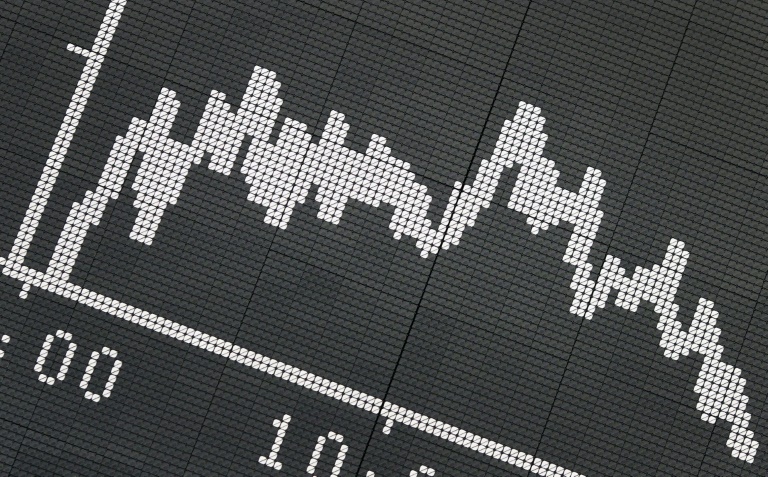
Eurozone equity markets sank Tuesday on news that the region’s inflation rate has spiked to another record high in May on fallout from Russia’s invasion of Ukraine.

The eurozone’s increase in consumer prices hit 8.1 percent, up from 7.4 percent in April, official data showed Tuesday, with energy surging the fastest.

Sentiment took another battering on fears of harsh economic fallout after the European Union reached a deal on a partial embargo of Russian oil imports in punishment for its assault on Ukraine.

The embargo also sent oil prices spiking to two-month peaks, in turn fuelling more inflationary fears and pressuring central banks to tighten monetary policy and prevent consumer prices rocketing even higher.

However, the resurgent oil market lifted the London stock market because it boosts profits and revenues for energy majors BP and Shell.

– Energy ‘may soar faster’ –

“Inflation in the eurozone increased even further,” said Jonas Keck, economist at UK-based research group the Centre for Economics and Business Research.

“As the EU reached an agreement on new sanctions targeting Russian oil supplies, energy prices may well soar even faster in the coming months.”

Markets have been rocked this year as the Ukraine conflict has fuelled massive price gains for energy and food, translating into spiking inflation that threatens to derail the post-pandemic economic recovery.

Red-hot eurozone inflation intensified calls for interest rate hikes from the European Central Bank (ECB), which has already flagged plans to hike borrowing costs in July.

“Over recent months, the ECB has faced growing pressure to shift away from its pandemic stimulus position, which has seen it hold its main policy rates at their current historic lows,” added Keck.

“This stands in contrast to other major central banks including the US Federal Reserve and Bank of England, both of which have seen at least two rate rises this year.”

With Wall Street closed for a holiday on Monday, there were few catalysts to help extend the gains enjoyed in recent days, allowing inflation and borrowing costs to take centre stage.

– Brent oil tops $124 –

In reaction to the EU’s partial embargo, Brent oil briefly broke above $124 per barrel and WTI crude breached $119.

European chiefs said the latest sanctions would ban purchases of Russian oil delivered by sea, though there would be a temporary exemption for pipelines.

While widely expected, the agreement adds further upside to crude just as China begins to ease Covid restrictions in Shanghai and Beijing, raising the likelihood of a jump in demand from the world’s number two economy.

There was some much-needed cheer from data showing China’s manufacturing shrunk in May at a slower rate than expected.

The Purchasing Managers’ Index (PMI) — a key gauge of manufacturing activity — hit 49.6 last month, improving from April’s 47.4, which was the worst reading since early 2020.

However, it remained below the 50-point mark separating growth from contraction and showed the Chinese economy was still struggling.

– Key figures at around 1115 GMT –

Frankfurt – DAX: DOWN 0.8 percent at 14,462.95

Paris – CAC 40: DOWN 1.0 percent at 6,500.16

EURO STOXX 50: DOWN 0.8 percent at 3,810.35

London – FTSE 100: UP 0.2 percent at 7,618.33 points

Brent North Sea crude: UP 1.7 percent at $123.78 per barrel

West Texas Intermediate: UP 3.1 percent at $118.65

Tokyo – Nikkei 225: DOWN 0.3 percent at 27,279.80 (close)

Hong Kong – Hang Seng Index: UP 1.4 percent at 21,415.20 (close)

Shanghai – Composite: UP 1.2 percent at 3,186.43 (close)

New York – Dow: Closed for a holiday

Euro/dollar: DOWN at $1.0698 from $1.0779 on Monday

Pound/dollar: DOWN at $1.2590 from $1.2652

Euro/pound: DOWN at 84.99 pence from 85.20 pence

Dollar/yen: UP at 128.01 yen from 127.59 yen

burs-rfj/kjm
China-backed Myanmar rebels call on junta to embrace peace talks

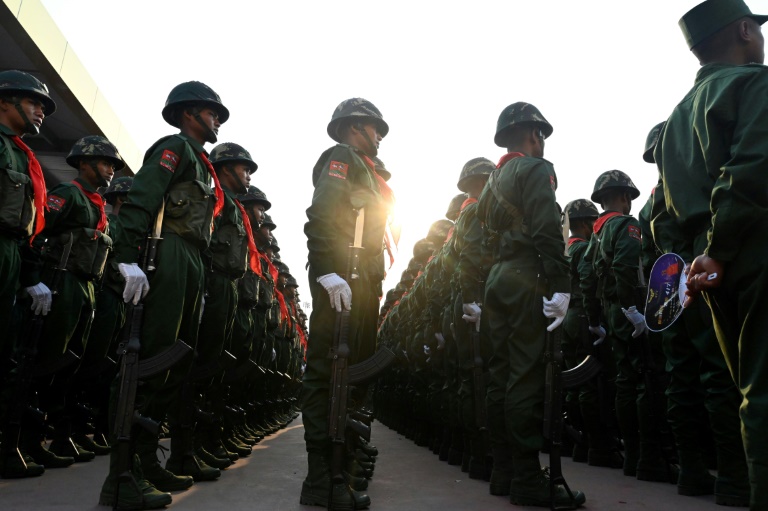
A powerful Myanmar ethnic rebel group with close ties to China called on Tuesday for the junta to engage in dialogue with anti-coup fighters to end 15 months of bloodshed.

With a standing force of around 25,000, the United Wa State Army is one of the world’s largest non-state militaries, manufacturing its own guns and conscripting a member from each household in areas under its control.

But the UWSA largely sticks to its autonomous enclave on Myanmar’s northern border with China, and has so far had little involvement in the fighting sparked by the toppling of Aung San Suu Kyi’s government by the military last year.

The UWSA made an “appeal to all parties in the conflict for resolving it by negotiation as soon as possible”, it said in a statement following talks with junta officials in the capital Naypyidaw.

Internal conflicts in the borderlands that have plagued Myanmar since independence from Britain “have proved that any fundamental problems cannot be solved by military force”, it said.

It added the UWSA would remain outside the conflict between the junta and its opponents, which has plunged the country into turmoil and displaced hundreds of thousands of people.

Myanmar has about 20 ethnic rebel armies — many of which control swathes of remote border territory — that have fought each other and the military for decades over the drug trade, natural resources and autonomy.

Some have condemned the ouster of Suu Kyi’s government, and offered shelter and weapons training to the “People’s Defence Forces” (PDF) that sprung up after the coup.

Analysts say the PDFs have surprised junta forces with their effectiveness.

Wa forces dwarf the collage of other ethnic rebel groups, posing a deterrent to the military and providing Beijing with a useful bridgehead into its resource-rich neighbour.

China remains a major ally of the Myanmar junta and has refused to label the military’s power grab a coup.

In April, Beijing said it would help safeguard Myanmar’s sovereignty, independence and territorial integrity “no matter how the situation changes”.

Ex-Tory leader predicts UK's Johnson to face confidence vote

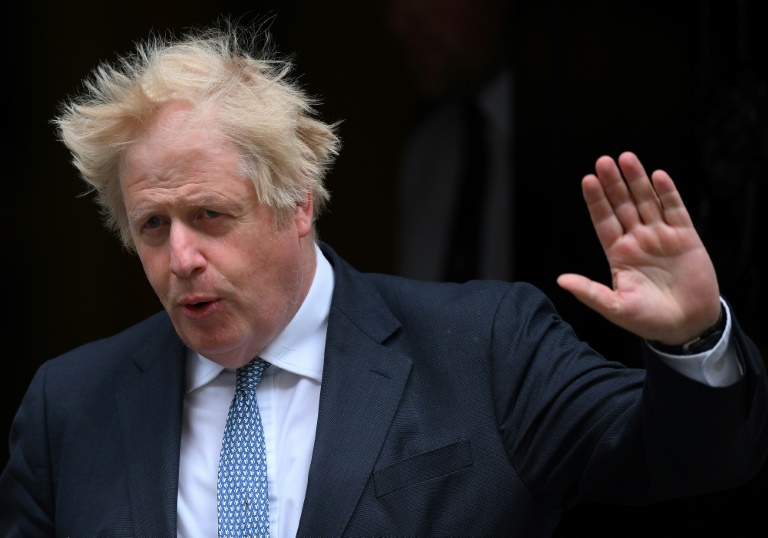
British Prime Minister Boris Johnson could face a vote among his own MPs to end his tenure in power as soon as next week, former Conservative leader William Hague said on Tuesday.

The prediction came after more Tory lawmakers, including two former cabinet ministers, expressed doubts about Johnson’s continued leadership in the wake of the “Partygate” scandal. 

Dozens of his MPs have now publicly criticised their embattled leader over the numerous lockdown-breaching parties held in Downing Street in 2020 and last year under his watch.

If 54 of them write a letter of no-confidence in Johnson to a powerful backbench committee of Tory MPs, that will trigger a vote of all 359 Conservatives lawmakers on whether he should continue as leader and thereby prime minister.

Nearly 30 MPs are publicly known to have submitted such a letter but the process is shrouded in secrecy and the real tally is impossible to gauge.

Parliament is not sitting this week and with four days of celebrations for Queen Elizabeth II’s Platinum Jubilee beginning on Thursday, any announcement about a possible vote would not come until next week at the earliest. 

The latest heavyweight Tories to express doubts about Johnson include former attorney general Jeremy Wright, who on Monday urged him to resign, and ex-cabinet minister Andrea Leadsom.

Hague said Leadsom’s intervention — a letter to her constituents on Tuesday in which she criticised “unacceptable failings of leadership” over “Partygate” — had lit a “slow fuse” on a no-confidence vote.

“The fuse is getting closer to the dynamite here and it’s speeding up,” Hague told Times Radio, adding it was “just another indication the Conservative Party is moving faster towards a vote”. 

“A few more letters like that and it will come next week,” the former foreign secretary said.

– Pressure –

The “Partygate” controversy, about Downing Street officials partying while the public was under Covid lockdown or under tight social restrictions, caused outrage.

Johnson himself became the first serving UK prime minister found to have broken the law while in office and was fined for attending a birthday party in 2020.

Although he has apologised, he has repeatedly refused to resign.

Support for him among Conservatives is ebbing away following last week’s publication of an internal inquiry. The probe found he presided over a culture of parties that ran late into the night and even featured a drunken fight among staff.

Johnson secured a thumping 80-seat majority at the last general election in December 2019, on a promise to take the UK out of the European Union.

But despite that, an increasing number of Tory MPs have come forward to say they do not believe the party can win the next election, which is due by 2024, under his leadership.

Opinion polls have shown deep public disapproval over the scandal, with large majorities of people saying Johnson knowingly lied about “Partygate” and that he should resign.

The Tories have suffered several electoral setbacks during his tenure, including losing traditionally safe seats to the Liberal Democrats in by-elections and hundreds of councillors in local elections in early May.

The party is also predicted to lose two more by-elections in June, in southwest and northern England.

Israel signs UAE free trade deal, its first in Arab world

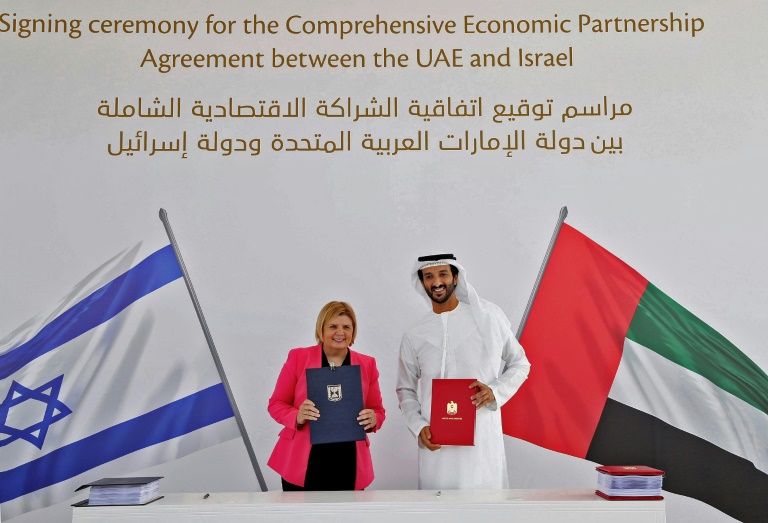
Israel signed a free trade deal with the United Arab Emirates on Tuesday, its first with an Arab country, building on their US-brokered normalisation of diplomatic relations in 2020. 

Israel’s ambassador to the oil-rich UAE, Amir Hayek, tweeted “mabruk” — congratulations in Arabic — with a photo of Emirati and Israeli officials holding documents at a signing ceremony in Dubai.   

The Emirati envoy to Israel, Mohamed Al Khaja, hailed as an “unprecedented achievement” the deal that, according to the Israeli side, scraps customs duties on 96 percent of all products traded.

“Businesses in both countries will benefit from faster access to markets and lower tariffs as our nations work together to increase trade, create jobs, promote new skills and deepen cooperation,” Khaja tweeted.

The 2020 deal was part of the US-brokered Abraham Accords that also saw Israel establish diplomatic ties with Bahrain and Morocco. 

Two-way trade between Israel and the UAE last year totalled some $900 million dollars, according to Israeli figures.

UAE-Israel Business Council president Dorian Barak predicted that trade would soon multiply between the regional powerhouse economies.

“UAE-Israel trade will exceed $2 billion in 2022, rising to around $5 billion in five years, bolstered by collaboration in renewables, consumer goods, tourism and the life sciences sectors,” he said in a statement.

“Dubai is fast becoming a hub for Israeli companies that look to South Asia, the Middle East and the Far East as markets for their goods and services.”

Nearly 1,000 Israeli companies will be working in and through the UAE by year’s end, he said.

– Trade diplomacy –

The UAE was the first Gulf country to normalise ties with Israel and only the third Arab nation to do so after Egypt and Jordan.  

Talks for a free trade agreement began in November and concluded after four rounds of negotiations.

The latest was held in March in Egypt between Israeli Prime Minister Naftali Bennett and Sheikh Mohammed bin Zayed Al-Nahyan, UAE’s long-time de facto ruler who became president this month after the death of his half-brother Sheikh Khalifa. 

Israel had in March hosted a meeting of the top diplomats from the United States, UAE, Bahrain and Morocco. 

Sudan in 2020 also agreed to normalise ties with Israel, but the strife-torn northeast African country has yet to finalise a deal.

Israel has already struck free trade agreements with other countries and blocs, including the United States, European Union, Canada and Mexico. 

In February, Israel signed a trade deal with Rabat to designate special industrial zones in Morocco.

– Palestinian issue –

The Abraham Accords broke with long-standing pan-Arab policy to isolate Israel until it withdraws from the occupied territories and accepts Palestinian statehood.

Palestinians condemned the agreements struck under then US president Donald Trump, and the conflict continues to inflame tensions, including between Israel and the UAE.

Tuesday’s signing came two days after thousands of flag-waving Israelis marched through Jerusalem’s Old City during a nationalist procession marking Israel’s 1967 capture of east Jerusalem. 

Israel annexed east Jerusalem in 1980, a move never recognised by the international community.

The UAE on Monday “strongly condemned” what it called Israel’s “storming” of Jerusalem’s Al Aqsa mosque compound, one of Islam’s holiest sites.

The UAE “reiterated its firm position on the need to provide full protection for Al Aqsa Mosque and halt serious and provocative violations taking place there”, reported the official WAM news agency. 

Israel signs UAE free trade deal, its first in Arab world

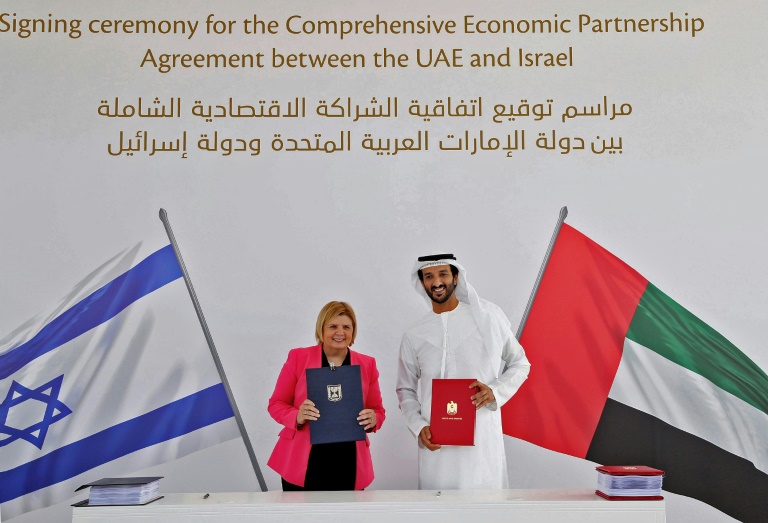
Israel signed a free trade deal with the United Arab Emirates on Tuesday, its first with an Arab country, building on their US-brokered normalisation of diplomatic relations in 2020. 

Israel’s ambassador to the oil-rich UAE, Amir Hayek, tweeted “mabruk” — congratulations in Arabic — with a photo of Emirati and Israeli officials holding documents at a signing ceremony in Dubai.   

The Emirati envoy to Israel, Mohamed Al Khaja, hailed as an “unprecedented achievement” the deal that, according to the Israeli side, scraps customs duties on 96 percent of all products traded.

“Businesses in both countries will benefit from faster access to markets and lower tariffs as our nations work together to increase trade, create jobs, promote new skills and deepen cooperation,” Khaja tweeted.

The 2020 deal was part of the US-brokered Abraham Accords that also saw Israel establish diplomatic ties with Bahrain and Morocco. 

Two-way trade between Israel and the UAE last year totalled some $900 million dollars, according to Israeli figures.

UAE-Israel Business Council president Dorian Barak predicted that trade would soon multiply between the regional powerhouse economies.

“UAE-Israel trade will exceed $2 billion in 2022, rising to around $5 billion in five years, bolstered by collaboration in renewables, consumer goods, tourism and the life sciences sectors,” he said in a statement.

“Dubai is fast becoming a hub for Israeli companies that look to South Asia, the Middle East and the Far East as markets for their goods and services.”

Nearly 1,000 Israeli companies will be working in and through the UAE by year’s end, he said.

– Trade diplomacy –

The UAE was the first Gulf country to normalise ties with Israel and only the third Arab nation to do so after Egypt and Jordan.  

Talks for a free trade agreement began in November and concluded after four rounds of negotiations.

The latest was held in March in Egypt between Israeli Prime Minister Naftali Bennett and Sheikh Mohammed bin Zayed Al-Nahyan, UAE’s long-time de facto ruler who became president this month after the death of his half-brother Sheikh Khalifa. 

Israel had in March hosted a meeting of the top diplomats from the United States, UAE, Bahrain and Morocco. 

Sudan in 2020 also agreed to normalise ties with Israel, but the strife-torn northeast African country has yet to finalise a deal.

Israel has already struck free trade agreements with other countries and blocs, including the United States, European Union, Canada and Mexico. 

In February, Israel signed a trade deal with Rabat to designate special industrial zones in Morocco.

– Palestinian issue –

The Abraham Accords broke with long-standing pan-Arab policy to isolate Israel until it withdraws from the occupied territories and accepts Palestinian statehood.

Palestinians condemned the agreements struck under then US president Donald Trump, and the conflict continues to inflame tensions, including between Israel and the UAE.

Tuesday’s signing came two days after thousands of flag-waving Israelis marched through Jerusalem’s Old City during a nationalist procession marking Israel’s 1967 capture of east Jerusalem. 

Israel annexed east Jerusalem in 1980, a move never recognised by the international community.

The UAE on Monday “strongly condemned” what it called Israel’s “storming” of Jerusalem’s Al Aqsa mosque compound, one of Islam’s holiest sites.

The UAE “reiterated its firm position on the need to provide full protection for Al Aqsa Mosque and halt serious and provocative violations taking place there”, reported the official WAM news agency. 

EU's Russian oil ban unlikely to affect OPEC+ decision

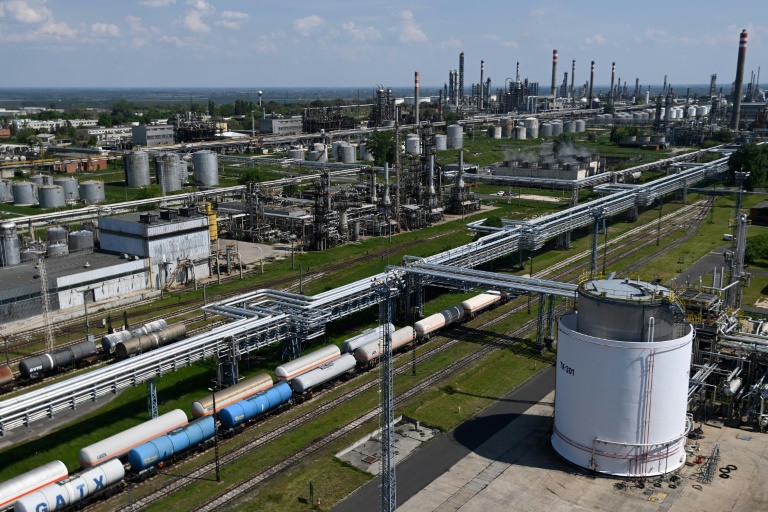
Saudia Arabia, Russia and their allies are likely to stick to their policy of modest oil output increases when they meet Thursday after the EU banned most imports from Moscow.

European Union leaders agreed on Monday to ban more than two-thirds of Russian oil imports, tightening economic screws on the country over its invasion of its neighbour Ukraine.

This has caused oil prices, which have already hit record highs so far this year, to soar further amid pressure on the 23-member OPEC+ to open tabs more widely and relieve the market.

Brent, the international benchmark, hit a two-month high above $124 per barrel while the US contract, WTI, topped $119.

But analysts say OPEC+ will stick to its strategy of only slightly increasing output when it holds its monthly videoconference on Thursday as it remains united with Moscow.

“With Russia being one of the two most important members of the alliance (alongside Saudi Arabia), any decision on increasing output has become highly political,” Craig Erlam, analyst at trading platform OANDA, told AFP.

“Both because (Russia) cannot sell what it’s already producing as a result of sanctions and perhaps even because it wants prices to be uncomfortably high and maintain pressure on countries it considers ‘unfriendly’,” he said.

The 13 members of the Organization of the Petroleum Exporting Countries chaired by Saudi Arabia and their 10 partners led by Russia drastically slashed output in 2020 as demand slumped because of the coronavirus pandemic and worldwide lockdowns.

They have been increasing output modestly to the tune of around 400,000 barrels per day each month since last year and have resisted pressure by top consumers, including the US, to open the tabs wider.

Ipek Ozkardeskaya, an analyst with Swissquote bank, said Thursday’s meeting “looks like a formality”.

“There is little hope to see OPEC countries announcing anything that would give a relief to the market,” she said.

– Unable to meet quotas –

Analysts have also noted even if the group was willing to increase its output, several of its members have fallen short of the quotas, resulting in a lower supply to the market.

“Ultimately, the group is missing its already modest targets by increasingly large margins every month so you have to question just how impactful any increase would be if countries simply don’t have the capacity to increase further,” Erlam said.

In a statement Friday, the Group of Seven wealthy countries noted OPEC’s “key role” and once again called on “oil and gas producing countries to act in a responsible manner and to respond to tightening international markets”.

OPEC was set up in 1960 and joined by the 10 partners through a 2016 declaration. Its mission is to “ensure the stabilisation of oil markets”.

But OPEC+ is “expected to push back against calls by the West to speed up its oil output increases, sticking to its existing plans instead,” said Victoria Scholar, an analyst at Interactive Investor.

Shanghai prepares to lift more Covid curbs after lengthy lockdown

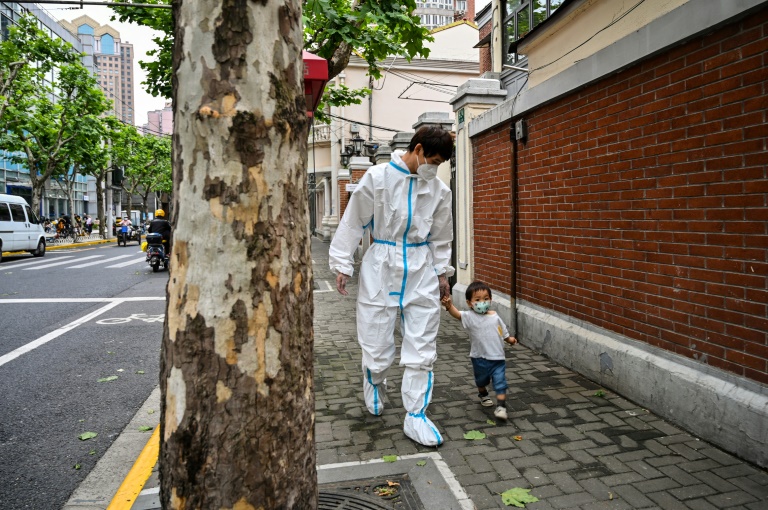
Shanghai authorities said Tuesday they will lift more restrictions in steps to return the Covid-hit city to normality, after two months of heavy-handed restrictions that throttled businesses and locked down residents.

The commercial hub of 25 million was shuttered in sections from late March, when the spread of the Omicron variant prompted China’s worst outbreak since the virus first emerged in the country in late 2019.

China is wedded to a zero-Covid strategy of hard lockdowns, mass testing and long quarantine periods to wipe out clusters.

But after gradually relaxing some rules over past weeks, officials said on Tuesday that residents living in areas deemed low risk will be allowed to move around the city freely, a major step toward ending the curbs.

The easing of restrictions will apply to around 22 million people, deputy mayor Zong Ming told reporters. 

“From June 1, the city will enter the third stage, that is, the stage of fully restoring the normal production and living order of the city,” Zong said. 

Malls, convenience stores, pharmacies and beauty salons will be allowed to operate at 75 percent capacity, while parks and other scenic spots will gradually reopen, she added. 

But cinemas and gyms remain closed, and schools — shut since mid-March — will slowly reopen on a voluntary basis.

E-commerce professional Chen Ying said she still planned to work from home but might treat her two-year-old son to a long-awaited walk outside.

“We should have been free to begin with, so don’t expect me to be deeply grateful now they’ve given it back to us,” she told AFP.

– Caution and barriers –

Local media showed photos of orange-clad workers dismantling some of the barriers that had penned in districts across the city for weeks.

Shanghai resident Anita Xu told AFP she was nonplussed about the curbs lifting.

“Even if you can go out, I don’t know what you can do,” the 32-year-old marketing professional said.

“I feel a little caught unawares.”

Previously, residents in areas without any coronavirus cases had to carry passes that only allowed them to go out for a few hours to buy essentials.

Taxi services and private cars will also be allowed in low-risk areas, permitting people to visit friends and family outside their district.

Buses, subway and ferry services will also resume, transport officials said.

Shanghai residents travelling to other cities in China still need to quarantine, and residents need a negative test taken within 72 hours to enter most public places.

Communities considered “high risk” will also still have stringent restrictions on movement.

Factories and businesses were also gearing up to restart work after being dormant for weeks, with the gruelling measures bringing the city to a standstill.

Shanghai official Wu Qing told reporters Sunday that the city would “eliminate unreasonable restrictions” and announced a slew of measures to shore up its virus-battered economy.

But residents and business owners have complained of discrepancies between official announcements and enforcement.

China’s biggest city has reported over 63,000 Covid infections and nearly 600 deaths since mid-March, and the heavy-handed lockdown led to an outpouring of online anger.

Big tobacco's environmental impact is 'devastating': WHO

The tobacco industry is a far greater threat than many realise as it is one of the world’s biggest polluters, from leaving mountains of waste to driving global warming, the WHO said Tuesday.

The World Health Organization accused the industry of causing widespread deforestation, diverting badly needed land and water in poor countries away from food production, spewing out plastic and chemical waste as well as emitting millions of tonnes of carbon dioxide. 

In its report released on World No Tobacco Day, the UN agency called for the tobacco industry to be held to account and foot the bill for the cleanup.

The report, “Tobacco: poisoning our planet”, looks at the impacts of the whole cycle, from the growth of plants to the manufacturing of tobacco products, to consumption and waste.

While tobacco’s health impacts have been well documented for decades — with smoking still causing more than eight million deaths worldwide every year — the report focuses on its broader environmental consequences.

The findings are “quite devastating,” Ruediger Krech, WHO director of health promotion, told AFP, charging that the industry is “one of the biggest polluters that we know of.”

– Poison –

He slammed tobacco companies’ frequent efforts to rehabilitate their image through beach cleanups and funding environmental and disaster relief organisations as “greenwashing”.

“The tobacco industry dumps toxic waste into communities and depletes natural resources,” he told a press conference.

“Tobacco is not only poisoning people, it’s poisoning our planet.”

The industry is responsible for the loss of some 600 million trees each year — or five percent of global deforestation — while tobacco growing and production uses 200,000 hectares of land and 22 billion tonnes of water annually, the report found.

It also emits around 84 million tonnes of carbon dioxide, it said.

In addition, “tobacco products are the most littered item on the planet, containing over 7,000 toxic chemicals, which leech into our environment when discarded,” Krech said.

– 4.5 trillion cigarette butts –

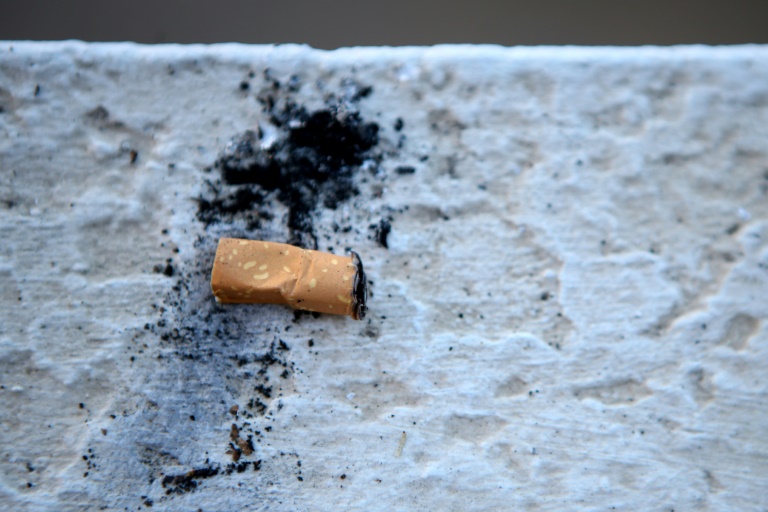
He pointed out that each one of the estimated 4.5 trillion cigarette butts that end up in the oceans, rivers, sidewalks and beaches every year can pollute 100 litres of water. 

And up to a quarter of all tobacco farmers contract so-called green tobacco sickness, or poisoning from the nicotine they absorb through the skin.

Farmers who handle tobacco leaves all day consume the equivalent of 50 cigarettes worth of nicotine a day, Krech said.

This is especially worrying for the many children involved in tobacco farming.

“Just imagine a 12-year-old being exposed to 50 cigarettes a day,” he said.

Most tobacco is grown in poorer countries, where water and farmland are often in short supply, and where such crops are often grown at the expense of vital food production, the report said.

UN agencies have launched a project to try to help farmers transition to other crops.

– Plastic pollution –

At the same time the processing and transportation of tobacco account for a significant share of global greenhouse gas emissions — with the equivalent of one-fifth of the global airline industry’s carbon footprint.

In addition, products like cigarettes, smokeless tobacco and e-cigarettes also contribute significantly to the global build-up of plastic pollution, WHO warned.

Cigarette filters contain microplastics — the tiny fragments that have been detected in every ocean and even at the bottom of the world’s deepest trench — and make up the second-highest form of plastic pollution worldwide, the report said.

Stressing that there is no evidence filters provide any proven health benefits over smoking non-filtered cigarettes, the UN agency urged policy makers worldwide to consider banning them.

The WHO also called for governments to immediately halt the some $500 billion in subsidies the tobacco industry receives each year, and also urged them to stop allowing taxpayers to foot the bill for cleaning up the industry’s mess.

Each year, China for instance dishes out around $2.6 billion and India around $766 million, while Brazil and Germany pay some $200 million each to clean up littered tobacco products, the report found.

It is important, Krech said, that “the industry pay actually for the mess that they are creating.”

Europe court condemns Turkey over Amnesty activist's 'unlawful' detention

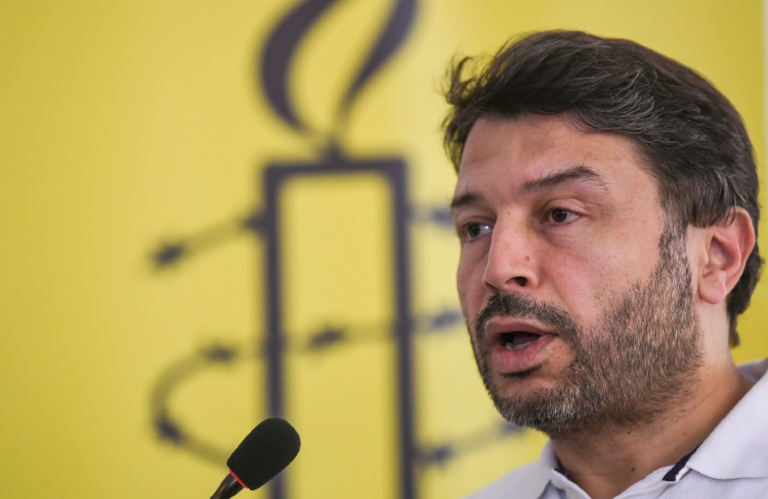
The European Court of Human Rights on Tuesday condemned Turkey over the arrest in 2017 of the head of the Turkish branch of rights group Amnesty International, ruling his detention was unlawful.

The court said there was no indication an offence had been committed.

Taner Kilic was detained in June 2017 on charges of links to  US-based preacher Fethullah Gulen, who Turkey accuses of staging a failed coup in 2016 against the government of President Recep Tayyip Erdogan.

Kilic was released in August 2018. But in July 2020, he was convicted of belonging to a terror group and sentenced to six years and three months in prison. Kilic, who is currently not in detention, has appealed against the verdict.

In its latest damning ruling against Turkey, the ECHR said his pre-trial detention had been “unlawful and arbitrary” and there had been “no reasonable suspicion that Mr Kilic had committed an offence.”

The chamber’s verdict was agreed unanimously by seven judges, including Saadet Yuksel of Turkey.

The court said Kilic’s detention violated the European Convention on Human Rights on four counts. The ECHR enforces the convention and all 46 member nations of the Council of Europe must adhere to it.

“This long-awaited European Court ruling confirms what we have known from the start — that Taner Kilic was arbitrarily deprived of his liberty when jailed in a high security prison on trumped-up charges,” said Amnesty International’s Europe director, Nils Muiznieks.

He said the conviction must be “quashed”, warning that Kilic risks another two-and-a-half years in prison if it is upheld by the Turkish Court of Cassation.

The verdict was the latest ECHR ruling against Turkey. Concerns remain over freedom of expression in the country in the wake of the 2016 coup bid, which saw an unprecedented crackdown against opponents of Erdogan.

The Council of Europe has begun disciplinary proceedings against Turkey — only the second time such a process has been launched in its history — over its refusal to release philanthropist Osman Kavala in defiance of an ECHR ruling.

Ukraine war boosts Africa's humanitarian emergency: UN official

The war in Ukraine is heaping further pressure on Africa’s fast-growing population of vulnerable people, a UN refugee official says.

Cereal prices have surged because of the slump in exports from one of the world’s bread baskets.

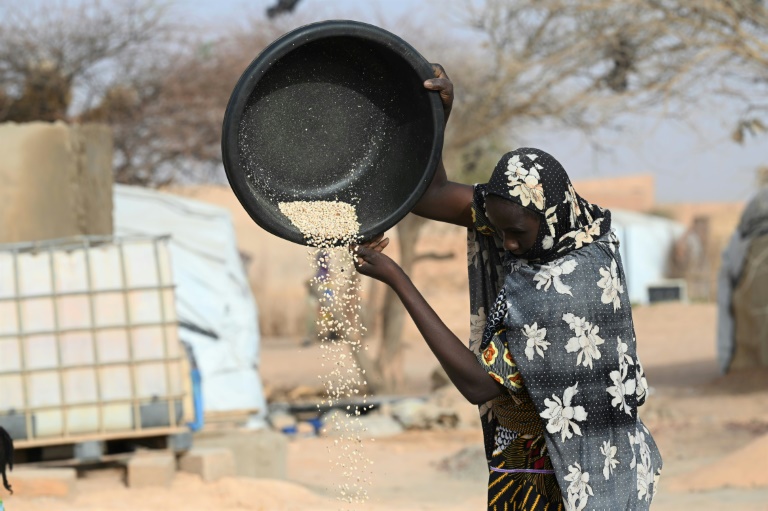
In Africa, rising food costs are sharpening the impact of conflict and climate change, which have already driven millions into poverty or forced them from their homes, Raouf Mazou, assistant high commissioner at the UNHCR refugee agency, told AFP.

“Across Africa, rising prices and reduced food aid caused by the war in Ukraine will increase the vulnerability of refugees and other forcibly displaced populations and increase the risk of inter-communal tensions,” Mazou said in an interview.

“Food, fuel and fertiliser costs have skyrocketed and the decline in purchasing power is hitting the most vulnerable households the hardest, including refugees and displaced people.”

Mazou spoke by telephone from Malabo, the capital of Equatorial Guinea, where he attended a special summit of the African Union at the weekend to discuss the continent’s humanitarian crises.

Mazou said Africa already faced “displacement on an unprecedented scale” through the double crunch of climate-related disasters and conflicts.

The AU Commission estimates that 113 million people will need urgent assistance in 2022, while 48 million of those affected are refugees and internally displaced.

“Floods and droughts are becoming more frequent and intense, seriously affecting countries such as Ethiopia, Kenya, Somalia and South Sudan,” said Mazou, a diplomat from the Republic of Congo, also known as Congo-Brazzaville.

– Climate-conflict cycle –

“Disasters linked to climate change risk not only worsening poverty, hunger and access to natural resources such as water, but also increasing instability and violence,” he added.

He gave the example of Cameroon’s Far North region, where herders, fishermen and farmers have begun to fight over access to scarce water resources.

At least 100,000 people have fled their homes, moving inside Cameroon or to neighbouring countries.

In the southeast of the continent, cyclones have battered Mozambique, where growing violence and unrest in the north have displaced hundreds of thousands of people, said Mazou.

“The Sahel is on the front line of the climate crisis, with temperatures rising 1.5 times faster than the global average. This only worsens conflicts over limited resources, making life even more difficult for those who have been forced to flee their homes,” he added.

Mazou said humanitarian aid was falling far behind the accelerating needs.

“We are already seeing this with further cuts in food aid to refugees in Mozambique and Zambia,” he said.

“Rations will also be reduced for refugees in Sudan next month, among other countries.”

In the longer term, more needed to be done to shore up protection against climate change and to open up suitable land for farming, he said.

“The impact of the war in Ukraine on the cost and availability of food around the world… highlights the importance of taking advantage of the vast amount of fertile land available in Africa to end unnecessary dependence on imports,” said Mazou.  

Close Bitnami banner
Bitnami