World

Ukraine war boosts Africa's humanitarian emergency: UN official

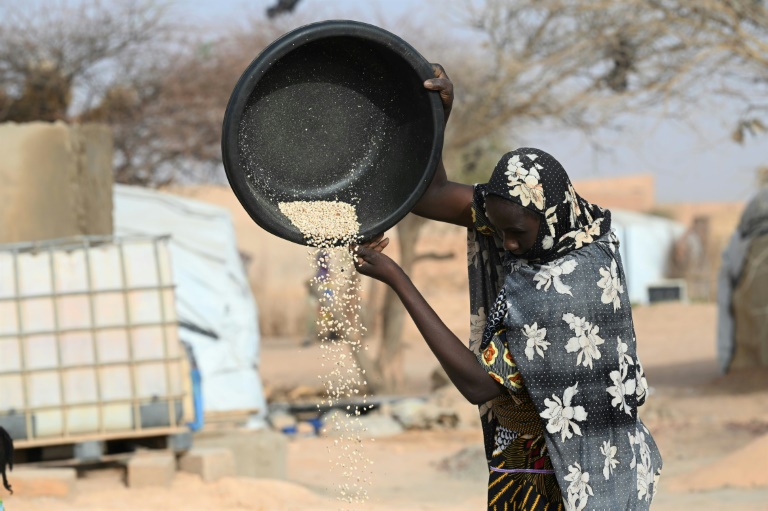
The war in Ukraine is heaping further pressure on Africa’s fast-growing population of vulnerable people, a UN refugee official says.

Cereal prices have surged because of the slump in exports from one of the world’s bread baskets.

In Africa, rising food costs are sharpening the impact of conflict and climate change, which have already driven millions into poverty or forced them from their homes, Raouf Mazou, assistant high commissioner at the UNHCR refugee agency, told AFP.

“Across Africa, rising prices and reduced food aid caused by the war in Ukraine will increase the vulnerability of refugees and other forcibly displaced populations and increase the risk of inter-communal tensions,” Mazou said in an interview.

“Food, fuel and fertiliser costs have skyrocketed and the decline in purchasing power is hitting the most vulnerable households the hardest, including refugees and displaced people.”

Mazou spoke by telephone from Malabo, the capital of Equatorial Guinea, where he attended a special summit of the African Union at the weekend to discuss the continent’s humanitarian crises.

Mazou said Africa already faced “displacement on an unprecedented scale” through the double crunch of climate-related disasters and conflicts.

The AU Commission estimates that 113 million people will need urgent assistance in 2022, while 48 million of those affected are refugees and internally displaced.

“Floods and droughts are becoming more frequent and intense, seriously affecting countries such as Ethiopia, Kenya, Somalia and South Sudan,” said Mazou, a diplomat from the Republic of Congo, also known as Congo-Brazzaville.

– Climate-conflict cycle –

“Disasters linked to climate change risk not only worsening poverty, hunger and access to natural resources such as water, but also increasing instability and violence,” he added.

He gave the example of Cameroon’s Far North region, where herders, fishermen and farmers have begun to fight over access to scarce water resources.

At least 100,000 people have fled their homes, moving inside Cameroon or to neighbouring countries.

In the southeast of the continent, cyclones have battered Mozambique, where growing violence and unrest in the north have displaced hundreds of thousands of people, said Mazou.

“The Sahel is on the front line of the climate crisis, with temperatures rising 1.5 times faster than the global average. This only worsens conflicts over limited resources, making life even more difficult for those who have been forced to flee their homes,” he added.

Mazou said humanitarian aid was falling far behind the accelerating needs.

“We are already seeing this with further cuts in food aid to refugees in Mozambique and Zambia,” he said.

“Rations will also be reduced for refugees in Sudan next month, among other countries.”

In the longer term, more needed to be done to shore up protection against climate change and to open up suitable land for farming, he said.

“The impact of the war in Ukraine on the cost and availability of food around the world… highlights the importance of taking advantage of the vast amount of fertile land available in Africa to end unnecessary dependence on imports,” said Mazou.  
Ukraine war boosts Africa's humanitarian emergency: UN official

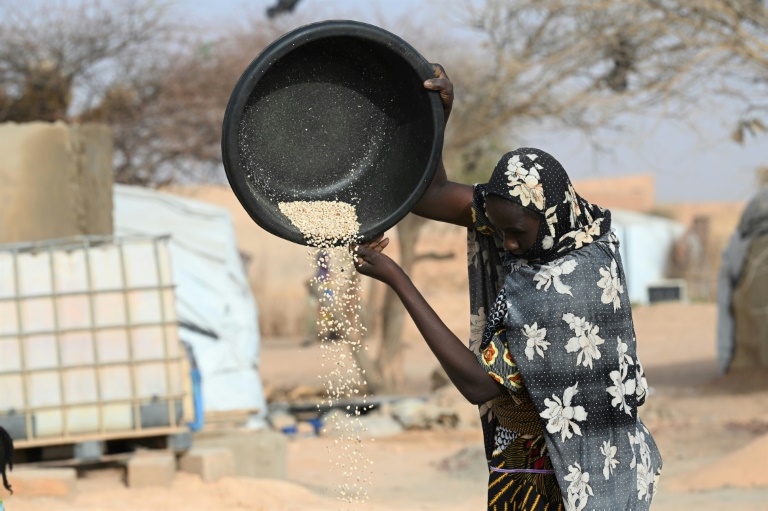
The war in Ukraine is heaping further pressure on Africa’s fast-growing population of vulnerable people, a UN refugee official says.

Cereal prices have surged because of the slump in exports from one of the world’s bread baskets.

In Africa, rising food costs are sharpening the impact of conflict and climate change, which have already driven millions into poverty or forced them from their homes, Raouf Mazou, assistant high commissioner at the UNHCR refugee agency, told AFP.

“Across Africa, rising prices and reduced food aid caused by the war in Ukraine will increase the vulnerability of refugees and other forcibly displaced populations and increase the risk of inter-communal tensions,” Mazou said in an interview.

“Food, fuel and fertiliser costs have skyrocketed and the decline in purchasing power is hitting the most vulnerable households the hardest, including refugees and displaced people.”

Mazou spoke by telephone from Malabo, the capital of Equatorial Guinea, where he attended a special summit of the African Union at the weekend to discuss the continent’s humanitarian crises.

Mazou said Africa already faced “displacement on an unprecedented scale” through the double crunch of climate-related disasters and conflicts.

The AU Commission estimates that 113 million people will need urgent assistance in 2022, while 48 million of those affected are refugees and internally displaced.

“Floods and droughts are becoming more frequent and intense, seriously affecting countries such as Ethiopia, Kenya, Somalia and South Sudan,” said Mazou, a diplomat from the Republic of Congo, also known as Congo-Brazzaville.

– Climate-conflict cycle –

“Disasters linked to climate change risk not only worsening poverty, hunger and access to natural resources such as water, but also increasing instability and violence,” he added.

He gave the example of Cameroon’s Far North region, where herders, fishermen and farmers have begun to fight over access to scarce water resources.

At least 100,000 people have fled their homes, moving inside Cameroon or to neighbouring countries.

In the southeast of the continent, cyclones have battered Mozambique, where growing violence and unrest in the north have displaced hundreds of thousands of people, said Mazou.

“The Sahel is on the front line of the climate crisis, with temperatures rising 1.5 times faster than the global average. This only worsens conflicts over limited resources, making life even more difficult for those who have been forced to flee their homes,” he added.

Mazou said humanitarian aid was falling far behind the accelerating needs.

“We are already seeing this with further cuts in food aid to refugees in Mozambique and Zambia,” he said.

“Rations will also be reduced for refugees in Sudan next month, among other countries.”

In the longer term, more needed to be done to shore up protection against climate change and to open up suitable land for farming, he said.

“The impact of the war in Ukraine on the cost and availability of food around the world… highlights the importance of taking advantage of the vast amount of fertile land available in Africa to end unnecessary dependence on imports,” said Mazou.  
Eurozone inflation soars to new record over Ukraine war

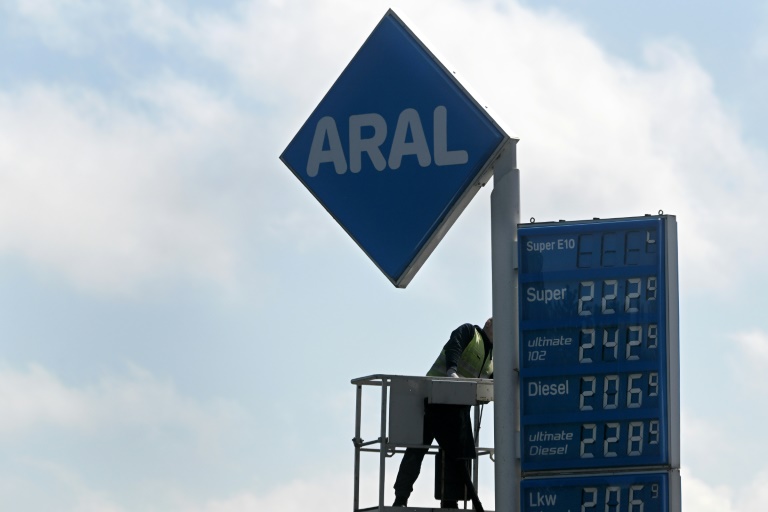
Eurozone inflation accelerated to another record high in May, data showed Tuesday, as the war in Ukraine stoked energy and food prices and threatened to flatline the economy.

The EU’s Eurostat data agency said that the increase in consumer prices in the 19 countries that use the euro reached 8.1 percent compared to the year before, up from 7.4 percent in April. 

The uninterrupted rise in prices heaped pressure on the European Central Bank to speed up interest rate rises for the first time in over a decade.

The ECB has said it plans to hike interest rates in July in order to cool the pressure on prices and is expected to officially end its bond-buying stimulus policies as early as next week.

By raising rates, the ECB would be playing catch-up with other major central banks that have already made moves to tame inflation that has spread globally.

The US Federal Reserve raised rates by an unusually large 50 basis points at the beginning of May, while the Bank of England sealed its fourth consecutive hike.

The chief economist of the European Central Bank, Philip Lane, indicated on Monday that interest rates in the eurozone will rise more cautiously, going up by 0.25 percent in July and again in September.

This would lift the ECB’s bank deposit rate out of negative territory, meaning lenders would no longer pay to park their excess cash at the central bank.

The ECB had previously argued that sharp leaps in consumer prices, driven also by the waning effect of Covid-19 pandemic, were likely to let up, downplaying the inflationary threat.

Russia’s war in Ukraine disrupted that view, worsening already disrupted supply chains and throwing up new shortages in essential material from wheat to metals.

This remained that case in May with energy prices spiking by a hair-raising 39.2 percent from a year earlier. Food prices went up by 7.5 percent. 

– Energy crunch –

Western economies including Germany — the eurozone’s biggest — are scrambling to wean themselves off Russian energy, which will also have its effects on inflation.

The EU on Monday agreed to ban two-thirds of its oil dependency by the end of the year — and German and Polish pledges to voluntarily forgo pipeline deliveries could push the cut to 90 percent — which could put still more upward pressure on prices.

The ban on Russian oil swiftly hit the market price for oil which means “that risks (to inflation) are skewed once again to the upside”, said Oxford Economics in a note.

“We think headline inflation will peak in the second quarter but will slow only gradually throughout 2022,” it added.

Policymakers will also be keeping an especially close eye on wages for fear pay increases to help workers meet high prices could stoke inflation further.

Despite the challenges, Lane on Monday stood by the ECB’s assessment that inflation in the eurozone would find its way back to its two percent target in the medium term. 

Meanwhile, fears of negative or zero growth in Europe will be fuelled by data showing the French economy contracted 0.2 percent in the first quarter from the previous three months, in a downward revision.

The European Commission this month sharply cut its eurozone growth forecast for 2022 to 2.7 percent, but warned the outlook was highly uncertain because of the war in Ukraine.

French ex-chambermaid runs for MP after labour battle

Former chambermaid Rachel Keke took on her employers and won a gruelling battle for better working conditions in the Paris hotel where she cleaned. Now she’s running to be an MP.

Keke, 48, will run on a ticket for a new left-wing alliance in France’s parliamentary polls in June. 

She faces French President Emmanuel Macron’s former sports minister, Roxana Maracineanu, in the fight for a seat in the southeastern Paris suburbs. 

“I will beat her. She doesn’t live here. She’s not from the working-class suburbs,” Keke told AFP as she campaigned in the district of Chevilly-Larue on the outskirts of the capital.

“What are you coming here for?,” Keke said, as if addressing her rival. 

“We are the ones who live in deprived areas and do key jobs. We are the ones who are held in contempt and are exploited. So let us defend ourselves in parliament.”

Centrist Macron is seeking a legislative majority to push through his domestic agenda following his re-election in April. The left-wing alliance, made up of new faces such as Keke’s, threatens to block his programme.

Keke was one of around 20 chambermaids — most originally from sub-Saharan Africa — who defied their employers at an Ibis hotel in northwestern Paris to demand better pay and working conditions. 

Nearly two years later, in May 2021, the fight against global hotel giant Accor, which owns the Ibis brand, ended in victory. They won a pay increase of between 250 and 500 euros ($270-540) per month. 

-‘Leader of the masses’-

MPs from the far-left France Unbowed (LFI) party supported the women throughout the campaign, leading Keke to campaign for them during the presidential election. 

But running for MP was not part of her plans, until local LFI official Hadi Issahnane suggested it to her. 

“We’re not far from her being a symbol of our political struggle — quite literally. She naturally embodies it,” Issahnane told AFP. 

LFI MP Eric Coquerel said Keke “has something magnetic about her”.

“She’s strong, she finds the right words and doesn’t need to read from cues when she speaks”. 

“She’s what I call a leader of the masses,” he added. 

Keke was born in Ivory Coast. Her mother who sold clothes and her father was a bus driver.

After her mother died when she was 12, she looked after her brothers and sisters. 

The mother-of-five arrived in France, aged 26, in 2000. 

“I love France,” Keke said, recalling the stories she heard as a child about her grandfather, who fought in World War II in the southwestern French city of Pau. 

Keke started off as a hairdresser before becoming a hotel cleaning lady.

“After my first day I came home aching all over. It was as if I’d been hit everywhere. It was really hard,” she said.

Cleaning is a job that “destroys the body”, she said. 

-‘Symbolic importance’-

LFI leader Jean-Luc Melenchon emerged as the dominant force on the left in April’s presidential election. 

He missed out on the run-off vote against Macron by a whisker, beaten into third place by far-right candidate Marine Le Pen. 

After Macron’s win, Melenchon immediately urged voters to hand the left a parliamentary majority to block the president’s pro-business reforms. He himself is seeking to become prime minister.

Part of Melenchon’s strategy is to push forward new faces such as Keke — a candidate of “symbolic importance”, according to Emeric Brehier, a former Socialist lawmaker now with the Fondation Jean-Jaures think-tank.

“The left are saying, ‘We represent the real working classes and we have representatives of these classes,'” Brehier told AFP.

Stephane Ravacley, a baker who went on hunger strike in eastern France to protest at the planned deportation of his young Guinean apprentice, is also running on the left-wing ticket. 

Recent opinion polls show the presidential majority and the left-wing alliance are neck-and-neck in the popular vote. 

But the two-stage election — the first round on June 12 and run-offs on June 19 — and the fact the LFI’s popularity is concentrated in specific geographic areas, suggest Macron’s bloc is likely to retain a majority in parliament.

Keke said she was not afraid of being surrounded by professional politicians, mostly from a different social class. 

“People know the status of a chambermaid. They know I don’t have a Master’s degree,” she said. 

“If I’m asked a question I don’t understand, I won’t answer. The media need to get used to it.” 

burs-ech/sjw/gil

Survival, hope and desperation in Ukraine's war of attrition

A retired doctor pulling weeds from her flower garden in the heart of the Ukraine war zone had a maxim: men with guns come and go but life is never-ending.

Valentyna Prys’s life was filled with the types of painful contradictions shared by scores of other families in the fourth month of Russia’s invasion.

She loved Russia but no longer spoke to her Moscow relatives because they refused to believe the Kremlin could unleash the type of devastation that had ruined her town of Barvinkove.

The 71-year-old’s remaining neighbours — too poor or sick to flee — came from older generations that had halcyon memories of an orderly Soviet life.

The ghostly streets outside her front door were patrolled by tense Ukrainian soldiers who were fighting for their country’s survival in a region where the locals’ sympathies were split.

And the town itself was almost equidistant from one front, where Ukraine’s outgunned forces were pushing back the Russians near Kharkiv, and another, where they were retreating near Severodonetsk.

“I am trying to keep going,” Prys said after looking up with a smile from her weedy follower arrangement.

“For us, this war is temporary, but life is eternal.”

– Capturing ruins –

Russia’s invasion has turned into a war of attrition that has seen very little ground change hands — but a whole lot of it get destroyed.

Ukraine’s resolve and breakdowns in Russian logistics and morale have forced the Kremlin to focus almost all its energy on the capture of a ruined industrial corner of the east.

The Russians are slowly fighting their way through the smouldering remains of Severodonetsk after pounding its highrises and factories from all sides with artillery.

The pulverised chemical production centre is still believed to hold thousands of trapped families in basements with almost no access to medicine or water.

Severodonetsk’s more intact coal mining neighbour Lysychansk represents Ukraine’s last pocket of control in the smaller of the two regions comprising the Donbas war zone.

Military analysts believe the Russians will try to surrounded it and then use the two cities as an outpost from which to link their forces with those fighting further west.

But analysts have seen only marginal success in Russia’s new objective — greatly scaled back from the first weeks of war — of capturing Ukraine’s eastern administrative centre in Kramatorsk.

“Russian troops have been unable to make progress on any other axes for weeks and have largely not even tried to do so,” analysts from the US-based Institute for the Study of War wrote one of their closely-followed daily dispatches.

– Playing for time – 

Frontline Ukrainian soldiers getting pummelled by rocket and artillery fire seem to share one dream: precision-guided weapons that could hit the Russians from long range.

“If you know you have a heavy weapon behind you, everyone’s spirits rise,” said one soldier who uses the nom de guerre Luzhniy.

“Otherwise, you just sit in the trench staring at the horizon.”

Washington had shied away from such advanced weapon deliveries because of the implied risk of nuclear-armed Russia’s response.

But US media suggest some shipments may be approved as early as this week thanks to a growing sense that Ukraine could — with a little extra help — beat back the Russians.

Ukrainian troops say such systems usually require a month’s training to use effectively in the field.

“Look, at this stage, our guys are ready to fire anything after playing with it for a couple of weeks,” said another soldier with the nom de guerre Moder.

Analysts think Russia’s halting gains and the eventual supply of bigger Western guns might mean time is on Ukraine’s side.

“Ukraine can afford to trade space for time in the Donbas without significantly damaging its strategic position,” said senior Foreign Policy Research Institute fellow Rob Lee.

“But it is critical that Ukraine doesn’t allow its forces to get encircled.”

– Waiting for news –

Yevgen Onyshchenko certainly does not feel like time is on his side.

The 42-year-old plumber stared out the ground floor window of his powerless Lysychansk apartment and wondered who controlled the surrounding streets.

“We do not know anything,” he said before gratefully accepting a bowl of soup prepared by his neighbour over an open fire in the building’s backyard.

The shells flying in at his city from Russian positions around Severodonetsk were getting more frequent and a sense of peril was growing by the day.

Raging battles across the main road leading to other parts of government-controlled Ukraine meant that Onyshchenko’s older neighbours had no access to life-saving heart medication.

“We see some cars driving around with Ukrainian flags so we figure that means we are still part of Ukraine,” said the Lysychansk plumber.

“But otherwise, we are in the dark.”

War in Ukraine: Latest developments

Here are the latest developments in the war in Ukraine:

– 

EU agrees ban on most Russian oil –

EU leaders agree to ban most Russian oil imports, after reaching a deal with Hungary that allows it to keep receiving Russian crude.

The deal bans oil imports delivered by tankers but exempts pipeline deliveries, a key demand of landlocked Hungary, whose leader Viktor Orban had warned that a full oil blockade would be an “atomic bomb” for his country’s economy.

European Commission chief Ursula von der Leyen says the accord will cut around 90 percent of the EU’s Russian oil imports by the end of the year.

– Russians seize part of Severodonetsk –

After weeks of bombardments Russian forces take partial control of the eastern city of Severodonetsk, the Ukrainian official in charge of the region says. 

Governor Sergiy Gaiday says that Ukrainian forces still retain some areas within the industrial city, which has been emptied of most of its pre-war population of 100,000, but that the situation is “extremely complicated”.

Capturing Severodonetsk would give Russia de-facto control over Lugansk, one of two eastern regions which Moscow has vowed to “liberate”.

– Mariupol port resumes business – 

A cargo ship bound for Russia has reportedly set sail from occupied Mariupol, less than two weeks after the last Ukrainian defenders of the strategic port city surrendered.

The city’s new pro-Russian leadership says the ship was carrying 2,500 tonnes of sheet metal.

Russia last week said it had demined the port as a first step to resuming shipments from the port, a key exit point for Ukrainian grain.

Dozens of container ships are blocked in Ukrainian ports which have been blockaded by Russian vessels. Russia is in talks with Turkey about creating a secure corridor for shipping companies.

– Russia’s biggest bank shrugs off sanctions –

Russia’s largest bank Sberbank says it has not been affected by the EU’s sixth round of sanctions, which excluded the bank from the SWIFT financial messaging system, making it difficult for it to receive or make international payments.

“We are working as normal — the main restrictions are already in place,” the bank says, referring to earlier US and UK sanctions that have already isolated its financial system. 

– French journalist killed – 

A 32-year-old French television journalist is killed while covering the evacuation of civilians near Severodonetsk for news channel BFM.

Frederic Leclerc-Imhoff is the eighth journalist killed while covering the war, according to a count by the Reporters without Borders NGO and AFP.

BFM says he was killed by shrapnel from the bombing of a humanitarian bus on which he was travelling with evacuees and that a French colleague of his was wounded.

– Gazprom cuts Dutch gas supplies –

Russia’s Gazprom cuts supplies to the Netherlands after Dutch energy firm GasTerra refuses to pay for the gas in rubles, a key demand of the Kremlin.

Gazprom has already cut off gas to Finland, Poland and Bulgaria over their refusal to pay for gas in rubles, which Moscow is pushing as a way to sidestep Western sanctions on its central bank.

Danish energy company Orsted warns Russia could cut gas supplies to Denmark after it also refused to pay in rubles.

burs-cb/yad

French economy shrinks as inflation dents confidence

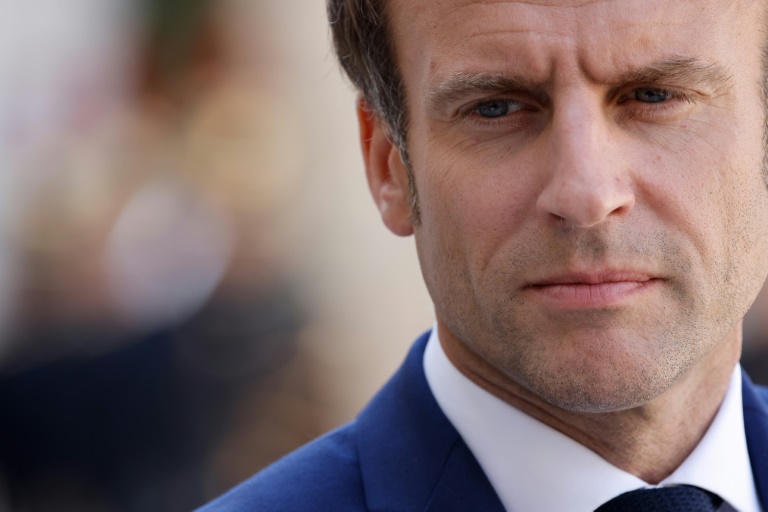
France’s economy contracted in the first quarter under the impact of soaring inflation, data showed Tuesday, increasing the risks for President Emmanuel Macron in key parliament elections less than two weeks away.

The economy shrank 0.2 percent from the previous quarter compared with a flat reading initially, statistics office INSEE said, a cold shower after last year’s strong 6.8 percent recovery as the Covid pandemic eased.

Russia’s invasion of Ukraine has derailed growth across Europe, sparking inflationary pressures that are prompting consumers to hold back on purchases of all kinds — a crucial driver of the French economy.

Household spending power dropped 1.9 percent in the first three months of the year, and price increases have only accelerated since then, with inflation hitting 5.2 percent in May compared with the same period last year.

It was the first time prices overall had crossed the five percent threshold since 1985, and before Tuesday’s data release, INSEE had been tabling on further acceleration to 5.4 percent for June.

Macron won re-election in April with a promise to defend spending power, and is hoping to secure a majority for his centrist party in the parliament elections beginning June 12.

His new government has already vowed “food checks” for needy households, pension increases and higher social subsidies, measures that will not be implemented until after the vote.

But his rivals on the left and right say the former investment banker fails to fully appreciate the pocketbook worries of the vast majority of voters, and are promising more concrete measures to lift incomes against the inflation threat.

– Energy fears –

INSEE expects the economy to edge up just 0.25 percent in the second quarter, after household spending slipped 0.4 percent in April, though that was less than the 1.4 percent drop in March. 

Fuel and food prices in particular have jumped as Europeans prepare a ban on Russian oil purchases, and the forced halt of Ukraine’s grain exports stoke worries of food shortages rippling through global markets.

Food prices climbed 4.2 percent in May while energy prices jumped 28 percent year-on-year — a brutal shock for the millions of French in smaller cities and rural areas who depend heavily on their cars.

High petrol costs were main factor behind the fiery “yellow vest” revolts against Macron’s government in 2018 and 2019, which saw him cut taxes and lift wages for the lowest workers in a string of fiscal concessions.

Inflation in France is not as bad as in neighbouring eurozone countries — Germany has reported a new record of 7.9 percent for May, while Spanish inflation jumped to 8.7 percent for the month.

But the INSEE reports helped push the CAC-40 stock index down 0.5 percent to 6,532.37 points on Tuesday morning, with the Paris benchmark falling 8.7 percent since the start of the year.

China makes second largest Taiwan defence zone incursion this year

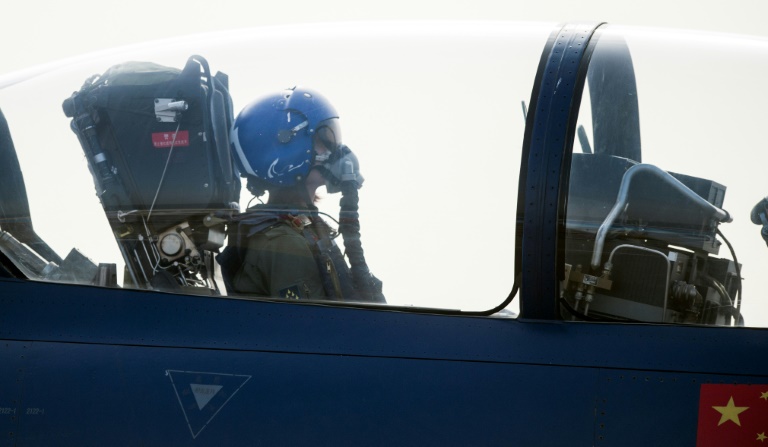
China has made the second largest incursion into Taiwan’s air defence zone this year with Taipei reporting 30 jets entering the area, including more than 20 fighters. 

Taiwan’s defence ministry said late Monday it had scrambled its own aircraft and deployed air defence missile systems to monitor the latest Chinese activity.  

In recent years, Beijing has begun sending large sorties into Taiwan’s defence zone to signal dissatisfaction, and to keep Taipei’s ageing fighter fleet regularly stressed.

Self-ruled democratic Taiwan lives under the constant threat of invasion by China, which views the island as its territory and has vowed to one day seize it, by force if necessary.

Monday’s incursion was the largest since January 23, when 39 planes entered the air defence identification zone, or ADIZ. 

The ADIZ is not the same as Taiwan’s territorial airspace but includes a far greater area that overlaps with part of China’s own air defence identification zone and even includes some of the mainland.

A flight map provided by the Taiwanese defence ministry showed the planes entering the southwestern corner of the ADIZ before looping back out again.

– ‘Increasingly provocative’ –

The United States last week accused Beijing of raising tensions over the island, with Secretary of State Antony Blinken specifically mentioning aircraft incursions as an example of “increasingly provocative rhetoric and activity”. 

Blinken’s remarks came after US President Joe Biden appeared to break decades of US policy when, in response to a question on a visit to Japan, he said Washington would defend Taiwan militarily if it is attacked by China. 

But the White House has since insisted its policy of “strategic ambiguity” over whether or not it would intervene has not changed. 

There is growing bipartisan discussion in Washington over whether to switch to “strategic clarity” given Beijing’s increasingly aggressive approach to cross-strait relations, epitomised by the air incursions.  

US senators have made multiple trips to the island in a show of support — a group led by Republican Lindsey Graham visited in April, and Democrat Tammy Duckworth landed in Taipei on Monday.

Duckworth was one of the main sponsors of the Taiwan Partnership Act, which aims to deepen security ties between Taipei and Washington. It has yet to be voted on or become law. 

But after a meeting with Duckworth on Tuesday, Taiwanese President Tsai Ing-wen suggested that some form of link-up was already happening. 

“As a result (of the Act), the US Department of Defence is now actively planning cooperation between the National Guard and Taiwan’s defence forces,” Tsai said in a statement, without explaining further. 

– Constant alert –

Last year, Taiwan recorded 969 incursions by Chinese warplanes into its ADIZ, according to an AFP database — more than double the roughly 380 carried out in 2020.

The most number of aircraft China has sent in a single day was 56 on October 4, 2021. 

That month saw a record 196 incursions, mostly around China’s annual national day celebrations. 

So far in 2022 Taiwan has reported 465 incursions, a near 50 percent increase on the same period last year.

The sheer number of sorties has put the air force under immense pressure, and it has suffered a string of fatal accidents in recent years. 

On Tuesday local media reported that a pilot had died after crashing a trainer jet in southern Kaohsiung. 

It is not the first deadly crash this year — in January one of Taiwan’s most advanced fighter jets, an F-16V, plunged into the sea. 

Last March, Taiwan grounded all military aircraft after a pilot was killed and another went missing when their fighters collided mid-air in the third fatal crash in less than six months.  

Markets mixed as inflation, rate worries temper rally

Stock markets were mixed Tuesday as investors battled to maintain a global rally, with inflation still niggling over a pick-up in oil prices while a top Fed official pressed for a series of sharp rate hikes.

But optimism was boosted by data indicating an improvement in China’s crucial manufacturing sector, helped by the easing of some strict Covid containment measures in major cities including Shanghai.

With Wall Street closed for a holiday, there were few catalysts to help extend the gains enjoyed in recent days, allowing inflation and borrowing costs to take centre stage.

Crude prices built on Monday’s advance after the European Union reached a deal on a partial embargo of Russian imports as part of a punishment for its invasion of Ukraine.

Brent broke above $122 for the first time in two months and WTI sat around $117 as European chiefs said the latest sanctions would ban purchases of Russian oil delivered by sea, though there would be a temporary exemption for pipelines.

While widely expected, the agreement adds further upside to crude just as China begins to ease Covid restrictions in Shanghai and Beijing, raising the likelihood of a jump in demand from the world’s number two economy.

The lift in oil prices will help fan already elevated inflation and pile further pressure on central banks to tighten monetary policy to prevent prices from running out of control.

In a sign of the struggle policymakers face, German prices are rising at their fastest pace ever while Spain’s topped forecasts. 

In the United States, the chances of an extended period of rate hikes were increased after Federal Reserve Governor Christopher Waller said he favoured half-point hikes “for several meetings” until inflation slows towards the bank’s two percent target. 

Waller added that his goal was in line with market expectations, which is about 2.75 percent in December.

President Joe Biden is due to hold talks with Fed boss Jerome Powell on Tuesday to discuss the inflation situation.

Jobs data on Friday will provide an update on the state of the US economy in light of soaring prices and rising rates.

– ‘A big if’ –

The prospect of a period of rates rising higher for longer lifted the dollar against the euro, pound and yen as well as other currencies.

In Asia, there was some much-needed cheer from data showing China’s manufacturing shrunk in May at a slower rate than expected.

The Purchasing Managers’ Index (PMI) — a key gauge of manufacturing activity — hit 49.6 last month, improving from April’s 47.4, which was the worst reading since early 2020.

However, it remained below the 50-point mark separating growth from contraction and showed the Chinese economy was still struggling.

Jeffrey Halley at OANDA said: “A less worse than expected set of data has prompted a modest rally in China equities today, holding the promise of an accelerating recovery in June if the virus situation remains benign.”

But he warned: “That’s a big if.”

Hong Kong and Shanghai rose more than one percent, while Seoul, Singapore, Taipei, Jakarta, Bangkok and Wellington also advanced.

Tokyo, Sydney, Mumbai and Manila fell.

London edged up but Paris and Frankfurt dipped.

AXA Investment Managers’ Chris Iggo warned that another 10-15 percent retreat for stocks could still be a possibility.

“The mood is temporarily better in markets,” he said, adding that “I think the worst is over for bond markets but picking the bottom in equities is trickier.”

– Key figures at around 0810 GMT –

Tokyo – Nikkei 225: DOWN 0.3 percent at 27,279.80 (close)

Hong Kong – Hang Seng Index: UP 1.4 percent at 21,415.20 (close)

Shanghai – Composite: UP 1.2 percent at 3,186.43 (close)

London – FTSE 100: UP 0.2 percent at 7,618.02

Euro/dollar: DOWN at $1.0740 from $1.0779 on Monday

Pound/dollar: DOWN at $1.2616 from $1.2650

Euro/pound: DOWN at 85.13 pence from 85.21 pence

Dollar/yen: UP at 127.90 yen from 127.59 yen

Brent North Sea crude: UP 1.4 percent at $123.31 per barrel

West Texas Intermediate: UP 3.1 percent at $118.63

New York – Dow: Closed for a holiday

Russian troops take 'control' in part of key city as oil embargo agreed

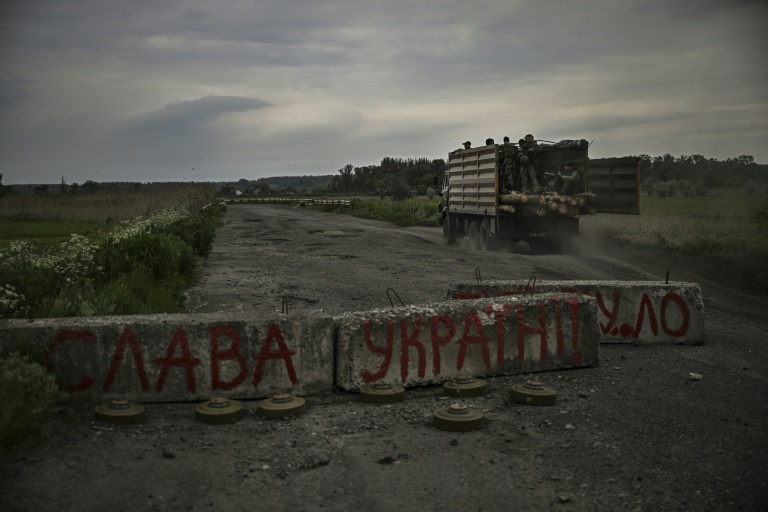
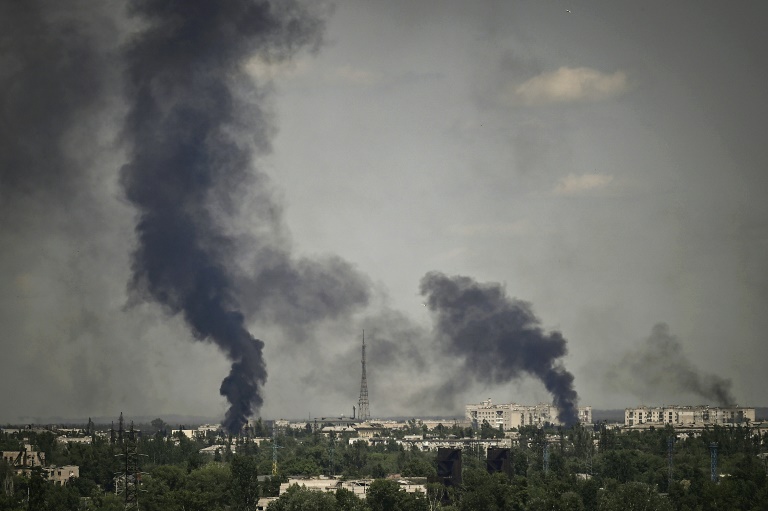
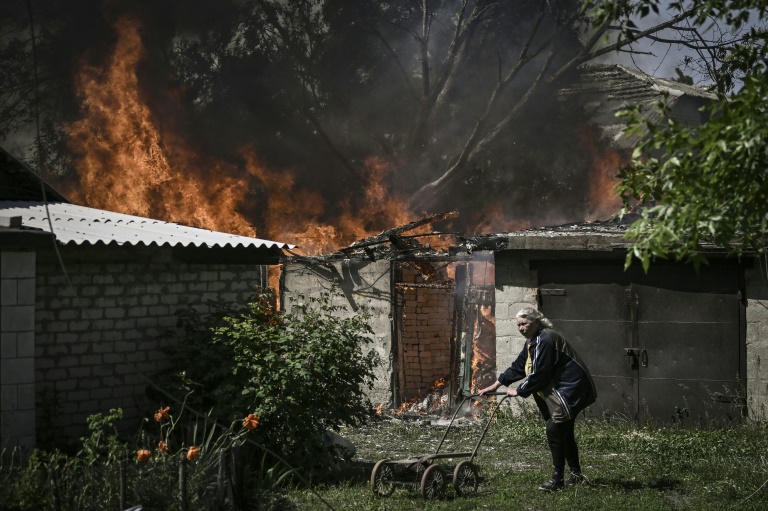
Russian forces have taken partial control of a key industrial city in eastern Ukraine, a regional governor said Tuesday, hours after European Union leaders struck a deal to ban more than two-thirds of Moscow’s oil imports.

Severodonetsk is one of several urban hubs that lie on Russia’s path to capturing the Donbas’s Lugansk region, where Moscow has shifted the bulk of its firepower since failing to capture Kyiv in the war’s early stages.

“The situation is extremely complicated. Part of Severodonetsk is controlled by the Russians,” Lugansk regional governor Sergiy Gaiday said in a statement on social media, adding that Ukrainian troops still retained some areas.

But as Russian troops edged closer to the Severodonetsk city centre, officials in Brussels were tightening the economic screws on Moscow.

A compromise deal reached late Monday, meant to punish Russia for its invasion three months ago, cuts “a huge source of financing for its war machine,” European Council chief Charles Michel tweeted.

“Maximum pressure on Russia to end the war,” he said. 

Leaders of the 27-nation bloc met to negotiate the long-sought deal amid concerns raised by Hungary and other neighbouring countries reliant on Russian fuel.

The agreement also includes plans for the EU to send nine billion euros ($9.7 billion) in “immediate liquidity” to Kyiv, Michel announced.

Hours earlier, Ukrainian President Volodymyr Zelensky had called an oil embargo the “key point” to any sanctions package.

“I believe that Europe will have to give up Russian oil and oil products in any case, because this is about the independence of Europeans themselves from (weaponised) Russian energy,” he said in his daily address to the nation.

The Netherlands on Tuesday became the latest European country to have its Russian gas shipments halted after refusing to pay in rubles, a demand Moscow is making of “unfriendly countries” in a bid to sidestep crippling Western sanctions. 

“Gazprom has completely stopped gas supplies to (Dutch Energy Firm) GasTerra due to non-payment in rubles,” the Russian gas giant said in a morning statement.

– ‘Must never happen again’ –

As Europe announced its new sanctions on Moscow, Washington was taking a cautious line regarding weaponry for Ukraine.

Ukraine has received extensive US military aid, with legislators approving another $40 billion assistance package in May.

But US President Joe Biden said he would not send long-range rocket systems that could hit Russian territory, despite urgent requests from Kyiv for exactly that.

“We are not going to send to Ukraine rocket systems that can strike into Russia,” Biden told reporters in Washington.

His comments came as new US ambassador to Ukraine Bridget Brink — filling a position vacant since 2019 — and French Foreign Minister Catherine Colonna both arrived in Kyiv. 

France will “continue to reinforce arms deliveries,” Colonna said at a news conference with her Ukrainian counterpart Dmytro Kuleba.

The highest-ranking French official to visit the capital since Russia’s invasion began February 24, Colonna also visited Bucha, near Kyiv, where Russian troops have been accused of committing war crimes against civilians.

“This should never have happened,” Colonna told reporters after visiting an Orthodox church in the town. “It must never happen again.”

Her visit came as a French journalist was killed while working in Ukraine.

Frederic Leclerc-Imhoff was “on board a humanitarian bus” when “he was mortally wounded,” French President Emmanuel Macron said on Twitter.

– Oil sanctions –

Participants in Monday’s EU summit hatched a compromise deal that exempts deliveries by pipeline from the oil import ban, after Hungarian President Victor Orban warned halting supplies would wreck the country’s economy.

EU chief Ursula von der Leyen said the ban “will effectively cut around 90 percent of oil imports from Russia to the EU by the end of the year”.

Michel said the sanctions also involved disconnecting Russia’s biggest bank, Sberbank, from the global SWIFT system, banning three state broadcasters and blacklisting individuals blamed for war crimes.

Russia’s Gazprom, meanwhile, turned off the tap to the Netherlands on Tuesday, halting gas shipments after Dutch energy firm GasTerra ignored a demand that gas supplied from April 1 be paid for in rubles.

The partly state-owned firm revealed the looming shut-off a day earlier, saying it would not comply with payment requirements that breach EU sanctions.

The cutoff means that two billion cubic metres of gas will not be supplied to the Netherlands between now and October, GasTerra said, adding it had purchased gas elsewhere in anticipation of the move.

Danish energy company Orsted has also warned its gas shipments could be cut off when a Tuesday payment deadline had passed.

Russia has previously halted deliveries to Finland, Bulgaria and Poland, a move blasted by the EU as “blackmail”.

– Referendum cancelled  –

With Russia facing the oil import ban, a Georgian breakaway region delivered another blow to Moscow’s hopes for further unity among local allies, with the leader of South Ossetia scrapping a planned July referendum on joining Russia.

The Moscow-controlled enclave’s president, Alan Gagloev, warned Monday about “uncertainty of the legal consequences of the issue submitted to a referendum.”

Since failing to capture Kyiv in the war’s early stages, Russia’s army has narrowed its focus, hammering Donbas cities with relentless artillery and missile barrages.

At least three people were killed and six wounded in an overnight rocket attack on the city of Slovyansk, Donetsk regional governor Pavlo Kirilenko said Tuesday on Telegram.

“I repeat once again that there are no safe places in the Donetsk region, so I call again: evacuate — save your lives,” he said. 

But Ukrainian forces have pushed back in the southern region of Kherson, the country’s military leadership has said.

On Monday, Ukraine’s southern command centre said they had driven Russian troops from the village of Mykolayivka.

A day earlier, the army claimed to have pushed Russian forces into “unfavourable positions” around the villages of Andriyivka, Lozovo and Bilohorka, forcing Moscow to send reserves to the area.

burs-sea/cwl/je

Close Bitnami banner
Bitnami