World

Asian markets mixed as inflation, rate worries temper rally

Asian markets were mixed Tuesday as investors battled to maintain a global rally, with inflation continuing to niggle owing to a pick-up in oil prices while a top Federal Reserve official pressed for a series of sharp interest rate hikes.

But optimism was given a boost by data indicating China’s crucial manufacturing sector was improving, helped by the easing of some strict Covid containment measures in major cities including Shanghai.

With Wall Street closed for a holiday there were few catalysts to help extend the gains enjoyed in recent days, allowing inflation and borrowing costs to take centre stage.

Crude prices built on Monday’s advance after the European Union reached a deal on a partial embargo of Russian imports as part of a punishment for its invasion of Ukraine.

Brent broke above $122 for the first time in two months and WTI was sitting around $117 as European chiefs said the latest sanction would ban purchases of Russian oil delivered by sea, though there would be a temporary exemption for pipelines.

While widely expected, the agreement adds further upside to crude just as China begins to ease Covid restrictions in Shanghai and Beijing, raising the likelihood of a jump in demand from the world’s number two economy.

The lift in oil prices will help fan already elevated inflation and pile further pressure on central banks to tighten monetary policy to prevent it running out of control.

In a sign of the struggle policymakers face, German prices are rising at their fastest pace ever while Spain’s topped forecasts. 

In the United States, the chances of an extended period of rate hikes were increased after Federal Reserve Governor Christopher Waller said he favoured half-point hikes “for several meetings” until inflation slows towards the bank’s two percent target. 

He added that his goal was in line with market expectations, which is about 2.75 percent in December. 

Joe Biden is due to hold talks with Fed boss Jerome Powell on Tuesday to discuss the inflation situation. US jobs data Friday will provide an update on the state of the US economy in light of soaring prices and rising rates.

The prospect of a period of rates rising higher for longer lifted the dollar against the euro, pound and yen as well as other currencies. 

In Asia there was some much-needed cheer from data showing China’s manufacturing shrunk in May at a slower rate than expected.

The Purchasing Managers’ Index (PMI) — a key gauge of manufacturing activity — hit 49.6 last month, improving from April’s 47.4, which was the worst reading since early 2020.

However, the reading remained stuck below the 50-point mark separating growth from contraction and showed the world’s number two economy was still struggling.

Jeffrey Halley at OANDA said: “A less worse than expected set of data has prompted a modest rally in China equities today, holding the promise of an accelerating recovery in June if the virus situation remains benign.”

But he warned: “That’s a big if.”

Hong Kong and Shanghai rose more than one percent, while Seoul, Singapore, Taipei, Jakarta, Bangkok and Wellington also advanced. Tokyo, Sydney, Mumbai and Manila fell.

In early trade London edged up at the open but Paris and Frankfurt dipped.

But AXA Investment Managers’ Chris Iggo warned that another 10-15 percent retreat for stocks could still be a possibility.

“The mood is temporarily better in markets,” he said, adding that “I think the worst is over for bond markets but picking the bottom in equities is trickier.”

– Key figures at around 0720 GMT –

Tokyo – Nikkei 225: DOWN 0.3 percent at 27,279.80 (close)

Hong Kong – Hang Seng Index: UP 1.1 percent at 21,353.80

Shanghai – Composite: UP 1.2 percent at 3,186.43 (close)

London – FTSE 100: UP 0.1 percent at 7,604.24

Euro/dollar: DOWN at $1.0745 from $1.0779 on Monday

Pound/dollar: DOWN at $1.2609 from $1.2650

Euro/pound: UP at 85.23 pence from 85.21 pence

Dollar/yen: UP at 128.00 yen from 127.59 yen

Brent North Sea crude: UP 1.7 percent at $123.72 per barrel

West Texas Intermediate: UP 3.4 percent at $118.97

New York – Dow: Closed for a holiday

Starling bank's Anne Boden takes fintech out of London

Gazing out from the new offices of online bank Starling, Anne Boden sees the familiar, modest surroundings of the Welsh capital Cardiff rather than the skyscrapers of London’s City financial district.

“We have great universities in Cardiff, and we have great talents here, we’re using that talent to create something that’s really special for the customers,” say Boden.

Boden is the head of Starling, which has just opened the Cardiff site, where about half of its 1,800 employees will be based.

With almost three million customers and eight percent of UK business banking market share, Starling has managed to carve out a niche in the hugely competitive world of fintech, and, unlike many competitors, turn a profit.

Born into a modest family 42 miles (67 kilometres) from Cardiff in Swansea where she also studied, Boden calls the bank she started in 2014 “a force to be reckoned with”.

The same description could apply to Boden who regularly describes herself as a “five-foot (1.5-metre) Welsh woman”.

In the very masculine world of finance, she defends the position of women business leaders and has been put in charge of a government study group on the matter.

“I’m not a typical banker,” says Boden, who wants to offer her customers an experience different from that of the traditional banks she worked for until 2013.

But in the wake of the 2008 financial crisis, the former Royal Bank of Scotland (RBS) employee had to set herself apart from all the other entrepreneurs seeking to move on from the old world of finance.

Already aged over 50, Boden teamed up with Tom Blomfield, a young Oxford University graduate typical of the world of London startups. 

But in 2015, Blomfield jumped ship with much of Starling’s management team just months before its launch to start rival bank Monzo.

Boden writes in her autobiography about her struggle to keep control of Starling and of her vision: a profitable but “responsible” online bank with top-notch customer service that respects the environment.

Starling says it uses only renewable energy and recycled plastic.

The bank’s market capitalisation of £2 billion ($2.5 billion, 2.3 billion euros) is far behind Revolut ($33 billion) or Monzo ($4.5 billion), but often beats its competitors for customer satisfaction. 

– ‘No crypto gimmicks’ –

“It’s friendly rivalry, I think,” Boden says of her relationship today with the big names of British fintech, while not shy of criticising them and vaunting Starling’s more prudent approach.

In her book, “Banking On It: How I Disrupted an Industry”, she describes the tedious job of getting Starling a banking licence — the Holy Grail that permits a bank to use customers’ deposits to issue loans — to set Starling apart from some of its competitors in the UK.

Fintech giant Revolut is in fact not recognised as a bank in the UK, although it does have that status in several other European countries, and the financial press regularly reports on its efforts to obtain a licence.

Without the licence, banking startups struggle to turn a profit.

“Some of these new fintechs are trying to find ways of monetising their costumer base and are coming up with trading apps or crypto as a way of earning a revenue,” she says.

“We are not seeking gimmicks, we’re all about providing what the costumers really want.”

Although she won’t answer questions about a possible stock market flotation initially planned for the end of the year or early 2023, Boden happily discusses the bank’s future.

“If I look forward to five years’ time, people will be talking about Starling as being this global technology company that owns a very successful bank in the UK and it all started here in Cardiff,” she says.

“We go towards a future where tech is pervasive and things are happening all around you, banks have to respond,” she says. 

“Instead of paying your insurance bill by the quarter perhaps you’ll pay by the minute. Perhaps you’ll pay for your self-driving car as you self-drive down the road.”

EU leaders ban most Russian oil, as Moscow advances in Donbas

European Union leaders have agreed to ban more than two-thirds of Russian oil imports, tightening economic screws on the country even as Moscow’s forces press their offensive in Ukraine’s eastern Donbas region.

The compromise deal reached late Monday, meant to punish Russia for its invasion three months ago, cuts “a huge source of financing for its war machine,” European Council chief Charles Michel tweeted.

“Maximum pressure on Russia to end the war,” he said. 

Leaders of the 27-nation bloc had met to negotiate the long-sought deal earlier Monday in Brussels, amid concerns raised by Hungary and other neighboring countries reliant on Russian fuel.

The agreement also includes plans for the EU to send nine billion euros ($9.7 billion) in “immediate liquidity” to Kyiv, Michel announced.

Hours earlier, Ukrainian President Volodymyr Zelensky had called an oil embargo the “key point” to any sanctions package.

“I believe that Europe will have to give up Russian oil and oil products in any case, because this is about the independence of Europeans themselves from (weaponised) Russian energy,” he said in his daily address to the nation.

The Netherlands and Denmark on Tuesday were expected to join the growing list of European countries who have seen their gas shipments halted after refusing to pay Russian giant Gazprom in rubles, a demand meant to sidestep crippling Western sanctions.

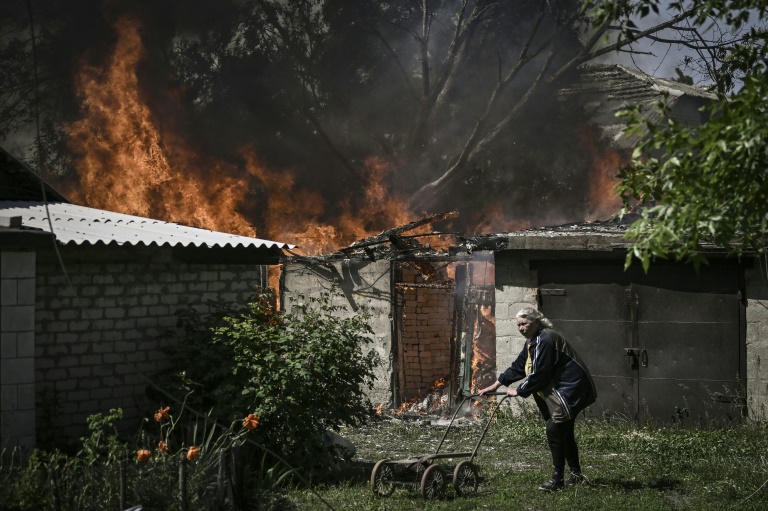
On the ground, Russian forces were making incremental gains in the Donbas region, including the industrial city of Severodonetsk, where they were edging closer to the city centre.

“The situation in Severodonetsk is as complicated as possible,” Lugansk regional governor Sergiy Gaiday said on Telegram, saying the entire region was under continuous bombardment — “air bombs, and artillery, and tanks. Everything”.

– ‘Must never happen again’ –

As Europe announced its new sanctions on Moscow, Washington was taking a cautious line regarding weaponry for Ukraine.

Ukraine has received extensive US military aid, with legislators approving another $40 billion assistance package in May.

But US President Joe Biden said he would not send long-range rocket systems that could hit Russian territory, despite urgent requests from Kyiv for exactly that.

“We are not going to send to Ukraine rocket systems that can strike into Russia,” Biden told reporters in Washington.

His comments came as new US ambassador to Ukraine Bridget Brink — filling a position vacant since 2019 — and French Foreign Minister Catherine Colonna both arrived in Kyiv. 

France will “continue to reinforce arms deliveries,” Colonna said at a news conference with her Ukrainian counterpart Dmytro Kuleba.

The highest-ranking French official to visit the capital since Russia’s invasion began February 24, Colonna also visited Bucha, near Kyiv, where Russian troops have been accused of committing war crimes against civilians.

“This should never have happened,” Colonna told reporters after visiting an Orthodox church in the town. “It must never happen again.”

Her visit came as a French journalist was killed while working in Ukraine.

Frederic Leclerc-Imhoff was “on board a humanitarian bus” when “he was mortally wounded,” French President Emmanuel Macron said on Twitter.

– Oil sanctions –

Participants in Monday’s EU summit hatched a compromise deal that exempts deliveries by pipeline from the oil import ban, after Hungarian President Victor Orban warned halting supplies would wreck the country’s economy.

EU chief Ursula von der Leyen said the ban “will effectively cut around 90 percent of oil imports from Russia to the EU by the end of the year”.

Michel said the sanctions also involved disconnecting Russia’s biggest bank, Sberbank, from the global SWIFT system, banning three state broadcasters and blacklisting individuals blamed for war crimes.

Russia’s Gazprom, meanwhile, was set to halt gas supplies to the Netherlands on Tuesday, with Denmark likely to see the tap turned off as well.

The Netherlands’ partly state-owned energy firm GasTerra revealed the looming shut-off Monday, saying it would not comply with payment requirements that breach EU sanctions.

Moscow has demanded clients from “unfriendly countries” — including EU member states — pay for gas in rubles as it attempts to avoid Western financial sanctions.

Danish energy company Orsted also warned its gas shipments could be cut off when a May 31 payment deadline passed.

Russia has previously halted deliveries to Finland, Bulgaria and Poland, a move blasted by the EU as “blackmail”.

– Referendum cancelled  –

With Russia facing the oil import ban, a Georgian breakaway region delivered another blow to Moscow’s hopes for further unity among local allies, with the leader of South Ossetia scrapping a planned July referendum on joining Russia.

The Moscow-controlled enclave’s president, Alan Gagloev, warned Monday about “uncertainty of the legal consequences of the issue submitted to a referendum.”

Since failing to capture Kyiv in the war’s early stages, Russia’s army has narrowed its focus, hammering Donbas cities with relentless artillery and missile barrages.

At least three people were killed and six wounded in an overnight rocket attack on the city of Slovyansk, Donetsk regional governor Pavlo Kirilenko said Tuesday on Telegram.

“I repeat once again that there are no safe places in the Donetsk region, so I call again: evacuate — save your lives,” he said. 

But Ukrainian forces are pushing back in the southern region of Kherson, the country’s military leadership has said.

On Monday, Ukraine’s southern command centre said they had driven Russian troops from the village of Mykolayivka.

A day earlier, the army claimed to have pushed Russian forces into “unfavourable positions” around the villages of Andriyivka, Lozovo and Bilohorka, forcing Moscow to send reserves to the area.

burs-sea/cwl/mtp

All 22 bodies retrieved from Nepal plane crash

Nepali rescuers have retrieved the bodies of all 22 people from a plane that crashed in the Himalayas, authorities said Tuesday as they began identifying the victims.

“All bodies have now been found,” Civil Aviation Authority spokesman Deo Chandra Lal Karn told AFP.

Air traffic control lost contact with the Twin Otter plane shortly after it took off from Pokhara in western Nepal on Sunday morning and headed for Jomsom, a popular trekking destination.

The wreckage was found a day later strewn across a mountainside at around 14,500 feet (4,420 metres). 

Ten of the bodies were brought by helicopter to the capital Kathmandu on Monday with the remaining 12 still at the hard-to-reach crash site, with poor weather hampering the operation, officials said.

About 60 people were involved in the search mission, including the army, police, mountain guides and locals, most of whom trekked uphill for miles to get there. Many spent the night camped at the high-altitude site.

– On holiday –

The cause of the crash has yet to be confirmed, but Pokhara Airport spokesman Dev Raj Subedi said on Monday that the aircraft operated by Nepali carrier Tara Air did not catch fire in the air.

Four Indians and two Germans in their fifties were onboard the twin-prop aircraft, along with 16 Nepalis, including a computer engineer, his wife and their two daughters who had just returned from the United States.

The four Indians were a divorced couple and their daughter and son, aged 15 and 22, on a family holiday.

“There was a court order for (the father) to spend time with the family for 10 days every year, so they were taking a trip,” Indian police official Uttam Sonawane told AFP. 

– Poor safety record –

According to the Aviation Safety Network website, the aircraft was made by Canada’s de Havilland and took its first flight more than 40 years ago.

Tara Air is a subsidiary of Yeti Airlines, a privately owned domestic carrier that services many remote destinations across Nepal. 

It suffered its last fatal accident in 2016 on the same route when a plane with 23 onboard crashed into a mountainside.

Nepal’s air industry has boomed in recent years, carrying goods and people between hard-to-reach areas as well as foreign trekkers and climbers. 

But it has been plagued by poor safety due to insufficient training and maintenance. 

The European Union has banned all Nepali airlines from its airspace over safety concerns.

The Himalayan country also has some of the world’s most remote and tricky runways, flanked by snow-capped peaks with approaches that pose a challenge even for accomplished pilots.

The weather can also change quickly in the mountains, creating treacherous flying conditions.

In March 2018, a US-Bangla Airlines plane crash-landed near Kathmandu’s notoriously difficult international airport, killing 51 people and seriously injuring 20.

That accident was Nepal’s deadliest since 1992, when all 167 people aboard a Pakistan International Airlines plane died when it crashed on approach to Kathmandu airport.

Just two months earlier a Thai Airways aircraft had crashed near the same airport, killing 113 people.

China makes second largest Taiwan defence zone incursion this year

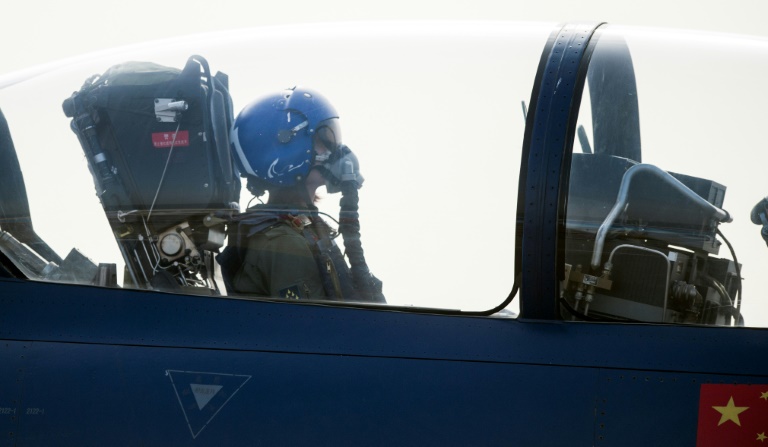
China has made the second largest incursion into Taiwan’s air defence zone this year with Taipei reporting 30 jets entering the area, including more than 20 fighters. 

Taiwan’s defence ministry said late Monday it had scrambled its own aircraft and deployed air defence missile systems to monitor the latest Chinese activity.  

In recent years, Beijing has begun sending large sorties into Taiwan’s defence zone to signal dissatisfaction, and to keep Taipei’s ageing fighter fleet regularly stressed.

Self-ruled democratic Taiwan lives under the constant threat of invasion by China, which views the island as its territory and has vowed to one day seize it, by force if necessary.

The United States last week accused Beijing of raising tensions over the island, with Secretary of State Antony Blinken specifically mentioning aircraft incursions as an example of “increasingly provocative rhetoric and activity”. 

Blinken’s remarks came after US President Joe Biden appeared to break decades of US policy when in response to a question on a visit to Japan he said Washington would defend Taiwan militarily if it is attacked by China. 

But the White House has since insisted its policy of “strategic ambiguity” over whether or not it would intervene has not changed. 

Monday’s incursion was the largest since January 23, when 39 planes entered the air defence identification zone, or ADIZ. 

The ADIZ is not the same as Taiwan’s territorial airspace but includes a far greater area that overlaps with part of China’s own air defence identification zone and even includes some of the mainland.

A flight map provided by the Taiwanese defence ministry showed the planes entering the southwestern corner of the ADIZ before looping back out again.

– Constant alert –

Last year, Taiwan recorded 969 incursions by Chinese warplanes into its ADIZ, according to an AFP database — more than double the roughly 380 carried out in 2020.

The most number of aircraft China has sent in a single day was 56 on October 4, 2021. 

That month saw a record 196 incursions, mostly around China’s annual national day celebrations. 

So far in 2022 Taiwan has reported 465 incursions, a near 50 percent increase on the same period last year.

The sheer number of sorties has put the air force under immense pressure, and it has suffered a string of fatal accidents in recent years. 

On Tuesday local media reported that a pilot had died after crashing a trainer jet in southern Kaohsiung. 

It is not the first deadly crash this year — in January one of Taiwan’s most advanced fighter jets, an F-16V, plunged into the sea. 

Last March, Taiwan grounded all military aircraft after a pilot was killed and another went missing when their fighters collided mid-air in the third fatal crash in less than six months.

Hurricane Agatha drenches Mexican beach resorts

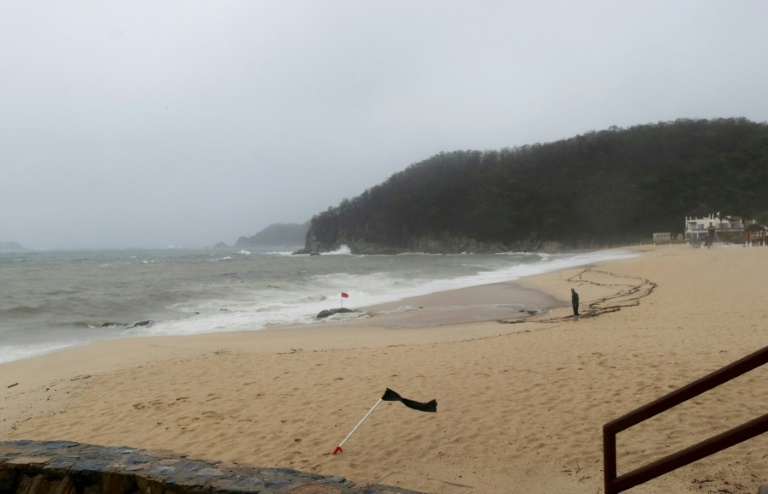
Hurricane Agatha, the first of the season, lashed a string of beach resorts on Mexico’s Pacific coast as it barreled ashore Monday, bringing strong winds, heavy rain and flood warnings.

Agatha was the strongest storm to make landfall along Mexico’s Pacific coast in May since record keeping began in 1949, the US National Hurricane Center (NHC) said.

The storm had maximum sustained winds of 110 kilometers (68 miles) per hour and was moving at 13 kilometers an hour.

It made landfall near Puerto Angel in the southern state of Oaxaca as a Category Two hurricane — the second lowest on a scale of five — but later weakened to a Category One storm.

“Further weakening is expected, and Agatha is forecast to dissipate over Mexico by Tuesday afternoon,” the NHC said.

Small landslides were reported in parts of Oaxaca, civil protection coordinator Oscar Valencia told the Milenio Television channel.

Residents along the coast had stocked up on food and water and boarded up windows of homes and businesses as Agatha approached.

Seaports in the area closed and airlines canceled flights.

Authorities opened around 200 storm shelters with room for up to 26,800 people, while hotels provided refuge to the estimated 5,200 national and foreign tourists in the danger zone.

“We are already on red alert. This is coming and it is coming strong,” Roberto Castillo, a civil protection official in Huatulco, told AFP as the storm neared.

A hurricane warning was issued for a stretch of coastline including Puerto Escondido and other surf towns popular with Mexican and foreign tourists, leaving normally busy beaches deserted.

“Storm surge is expected to produce extremely dangerous coastal flooding” and will be accompanied by “large and destructive waves,” the NHC said.

“Agatha will produce heavy rains over portions of southern Mexico through Tuesday night,” as well as “life-threatening surf and rip current conditions.” 

In Oaxaca and neighboring Chiapas state, “life-threatening flash flooding and mudslides may occur,” the NHC added.

The region is home to several major rivers and Mexico’s meteorological service warned of possible overflows and landslides.

Mexico is regularly lashed by tropical storms on both its Pacific and Atlantic coasts, generally between the months of May and November.

The deadliest storm to hit Mexico last year was a Category Three hurricane called Grace that killed 11 people in the eastern states of Veracruz and Puebla in August.

Hurricane Agatha drenches Mexican beach resorts

Hurricane Agatha, the first of the season, lashed a string of beach resorts on Mexico’s Pacific coast as it barreled ashore Monday, bringing strong winds, heavy rain and flood warnings.

Agatha was the strongest storm to make landfall along Mexico’s Pacific coast in May since record keeping began in 1949, the US National Hurricane Center (NHC) said.

The storm had maximum sustained winds of 110 kilometers (68 miles) per hour and was moving at 13 kilometers an hour.

It made landfall near Puerto Angel in the southern state of Oaxaca as a Category Two hurricane — the second lowest on a scale of five — but later weakened to a Category One storm.

“Further weakening is expected, and Agatha is forecast to dissipate over Mexico by Tuesday afternoon,” the NHC said.

Small landslides were reported in parts of Oaxaca, civil protection coordinator Oscar Valencia told the Milenio Television channel.

Residents along the coast had stocked up on food and water and boarded up windows of homes and businesses as Agatha approached.

Seaports in the area closed and airlines canceled flights.

Authorities opened around 200 storm shelters with room for up to 26,800 people, while hotels provided refuge to the estimated 5,200 national and foreign tourists in the danger zone.

“We are already on red alert. This is coming and it is coming strong,” Roberto Castillo, a civil protection official in Huatulco, told AFP as the storm neared.

A hurricane warning was issued for a stretch of coastline including Puerto Escondido and other surf towns popular with Mexican and foreign tourists, leaving normally busy beaches deserted.

“Storm surge is expected to produce extremely dangerous coastal flooding” and will be accompanied by “large and destructive waves,” the NHC said.

“Agatha will produce heavy rains over portions of southern Mexico through Tuesday night,” as well as “life-threatening surf and rip current conditions.” 

In Oaxaca and neighboring Chiapas state, “life-threatening flash flooding and mudslides may occur,” the NHC added.

The region is home to several major rivers and Mexico’s meteorological service warned of possible overflows and landslides.

Mexico is regularly lashed by tropical storms on both its Pacific and Atlantic coasts, generally between the months of May and November.

The deadliest storm to hit Mexico last year was a Category Three hurricane called Grace that killed 11 people in the eastern states of Veracruz and Puebla in August.

China makes second largest Taiwan defence zone incursion this year

China has made the second largest incursion into Taiwan’s air defence zone this year with Taipei reporting 30 jets entering the area, including more than 20 fighters. 

Taiwan’s defence ministry said late Monday it had scrambled its own aircraft and deployed air defence missile systems to monitor the latest Chinese activity.  

In recent years, Beijing has begun sending large sorties into Taiwan’s defence zone to signal dissatisfaction, and to keep Taipei’s ageing fighter fleet regularly stressed.

Self-ruled democratic Taiwan lives under the constant threat of invasion by China, which views the island as its territory and has vowed to one day seize it, by force if necessary.

The United States last week accused Beijing of raising tensions over the island, with Secretary of State Antony Blinken specifically mentioning aircraft incursions as an example of “increasingly provocative rhetoric and activity”. 

Blinken’s remarks came after US President Joe Biden appeared to break decades of US policy when in response to a question on a visit to Japan he said Washington would defend Taiwan militarily if it is attacked by China. 

But the White House has since insisted its policy of “strategic ambiguity” over whether or not it would intervene has not changed. 

Monday’s incursion was the largest since January 23, when 39 planes entered the air defence identification zone, or ADIZ. 

The ADIZ is not the same as Taiwan’s territorial airspace but includes a far greater area that overlaps with part of China’s own air defence identification zone and even includes some of the mainland.

A flight map provided by the Taiwanese defence ministry showed the planes entered the southwestern corner of the ADIZ before they looping back out again.

– Constant alert –

Last year, Taiwan recorded 969 incursions by Chinese warplanes into its ADIZ, according to an AFP database — more than double the roughly 380 carried out in 2020.

The most number of aircraft China has sent in a single day was 56 on October 4, 2021. 

That month saw a record 196 incursions, mostly around China’s annual national day celebrations. 

So far in 2022 Taiwan has reported 465 incursions, a near 50 percent increase on the same period last year.

The sheer number of sorties has put the air force under immense pressure, and it has suffered a string of fatal accidents in recent years. 

On Tuesday local media reported that a pilot had died after crashing a trainer jet in southern Kaohsiung. 

It is not the first deadly crash this year — in January one of Taiwan’s most advanced fighter jets, an F-16V, plunged into the sea. 

Last March, Taiwan grounded all military aircraft after a pilot was killed and another went missing when their fighters collided mid-air in the third fatal crash in less than six months.

EU leaders ban most Russian oil, as Moscow advances in Donbas

European Union leaders have agreed to ban more than two-thirds of Russian oil imports, tightening economic screws on the country even as Moscow’s forces press their offensive in Ukraine’s eastern Donbas region.

The compromise deal reached late Monday, meant to punish Russia for its invasion three months ago, cuts “a huge source of financing for its war machine,” European Council chief Charles Michel tweeted.

“Maximum pressure on Russia to end the war,” he said. 

Leaders of the 27-nation bloc had met to negotiate the long-sought deal earlier Monday in Brussels, amid concerns raised by Hungary and other neighboring countries reliant on Russian fuel.

The agreement also includes plans for the EU to send nine billion euros ($9.7 billion) in “immediate liquidity” to Kyiv, Michel announced.

Hours earlier, Ukrainian President Volodymyr Zelensky had called an oil embargo the “key point” to any sanctions package.

“I believe that Europe will have to give up Russian oil and oil products in any case, because this is about the independence of Europeans themselves from (weaponised) Russian energy,” he said in his daily address to the nation.

The Netherlands and Denmark on Tuesday were expected to join the growing list of European countries who have seen their gas shipments halted after refusing to pay Russian giant Gazprom in rubles, a demand meant to sidestep crippling Western sanctions.

On the ground, Russian forces were making incremental gains in the Donbas region, including the industrial city of Severodonetsk, where they were edging closer to the city centre.

“The situation in Severodonetsk is as complicated as possible,” Lugansk regional governor Sergiy Gaiday said on Telegram, saying the entire region was under continuous bombardment — “air bombs, and artillery, and tanks. Everything”.

– ‘Must never happen again’ –

As Europe announced its new sanctions on Moscow, Washington was taking a cautious line regarding weaponry for Ukraine.

Ukraine has received extensive US military aid, with legislators approving another $40 billion assistance package in May.

But US President Joe Biden said he would not send rocket systems that could hit Russian territory, despite urgent requests from Kyiv for exactly that.

“We are not going to send to Ukraine rocket systems that can strike into Russia,” Biden told reporters in Washington.

His comments came as new US ambassador to Ukraine Bridget Brink — filling a position vacant since 2019 — and French Foreign Minister Catherine Colonna both arrived in Kyiv. 

France will “continue to reinforce arms deliveries,” Colonna said at a news conference with her Ukrainian counterpart Dmytro Kuleba.

The highest-ranking French official to visit the capital since Russia’s invasion began February 24, Colonna also visited Bucha, near Kyiv, where Russian troops have been accused of committing war crimes against civilians.

“This should never have happened,” Colonna told reporters after visiting an Orthodox church in the town. “It must never happen again.”

Her visit came as a French journalist was killed while working in Ukraine.

Frederic Leclerc-Imhoff was “on board a humanitarian bus” when “he was mortally wounded,” French President Emmanuel Macron said on Twitter.

– Oil sanctions –

Participants in Monday’s EU summit hatched a compromise deal that exempts deliveries by pipeline from the oil import ban, after Hungarian President Victor Orban warned halting supplies would wreck the country’s economy.

EU chief Ursula von der Leyen said the ban “will effectively cut around 90 percent of oil imports from Russia to the EU by the end of the year”.

Michel said the sanctions also involved disconnecting Russia’s biggest bank, Sberbank, from the global SWIFT system, banning three state broadcasters and blacklisting individuals blamed for war crimes. 

Russia’s Gazprom, meanwhile, was set to halt gas supplies to the Netherlands on Tuesday, with Denmark likely to see the tap turned off as well. 

The Netherlands’ partly state-owned energy firm GasTerra revealed the looming shut-off Monday, saying it would not comply with payment requirements that breach EU sanctions.

Moscow has demanded clients from “unfriendly countries” — including EU member states — pay for gas in rubles as it attempts to avoid Western financial sanctions.

Danish energy company Orsted also warned its gas shipments could be cut off when a May 31 payment deadline passed.

Russia has previously halted deliveries to Finland, Bulgaria and Poland, a move blasted by the EU as “blackmail”.

– Referendum cancelled  –

With Russia facing the oil import ban, a Georgian breakaway region delivered another blow to Moscow’s hopes for further unity among local allies, with the leader of South Ossetia scrapping a planned July referendum on joining Russia.

The Moscow-controlled enclave’s president, Alan Gagloev, warned Monday about “uncertainty of the legal consequences of the issue submitted to a referendum.”

Since failing to capture Kyiv in the war’s early stages, Russia’s army has narrowed its focus, hammering Donbas cities with relentless artillery and missile barrages. 

But Ukrainian forces are pushing back in the southern region of Kherson, the country’s military leadership has said.

On Monday, Ukraine’s southern command centre said they had driven Russian troops from the village of Mykolayivka.

A day earlier, the army claimed to have pushed Russian forces into “unfavourable positions” around the villages of Andriyivka, Lozovo and Bilohorka, forcing Moscow to send reserves to the area.

burs-sea/cwl/mtp

War in Ukraine: Latest developments

Here are the latest developments in the war in Ukraine:

– EU agrees ban on most Russian oil –

EU leaders back a ban on most Russian oil imports, after a compromise deal with Hungary that will exempt deliveries arriving by pipeline.

“This will effectively cut around 90 percent of oil imports from Russia to the EU by the end of the year,” European Commission President Ursula von der Leyen tweeted after agreement on the sixth package of sanctions against Moscow over its invasion of Ukraine.

– EU bans Russia’s biggest bank from SWIFT –

EU leaders also agree to ban Russia’s biggest lender, Sberbank, from the SWIFT financial messaging system.

SWIFT’s messaging system allows banks to communicate rapidly and securely about transactions, and cutting the bank off makes it difficult to receive or make international payments.

– Donbas situation ‘extremely difficult’ –

Ukraine’s Donbas is in an “extremely difficult” situation, President Volodymyr Zelensky says as Russian forces advance in the eastern region that has been under relentless bombardment.

“The situation in Donbas remains extremely difficult. The Russian army is trying to gather overwhelming forces in certain areas to put more and more pressure on our defenders. There, in Donbas, the maximum combat power of the Russian army is now gathered,” Zelensky says in his nightly address.

– Russians advance into eastern city –

Russian forces advance closer to the centre of the eastern Ukrainian city of Severodonetsk, which has been under bombardment for weeks in the battle for Ukraine’s industrial heartland.

“The Russians are advancing into the middle of Severodonetsk. The fighting continues. The situation is very difficult,” Lugansk governor Sergiy Gaiday says on Telegram.

Severodonetsk is the easternmost city still in Ukrainian hands. Capturing it would give Russia de-facto control over Lugansk, one of two eastern regions that make up the coveted Donbas.

– French journalist killed – 

A 32-year-old French television journalist is killed while covering the evacuation of civilians near Severodonetsk for news channel BFM.

Frederic Leclerc-Imhoff is the eighth journalist killed while covering the war, according to a count by the Reporters without Borders NGO and AFP.

BFM says he was killed by shrapnel from the bombing of a humanitarian bus on which he was travelling with evacuees and that a French colleague of his was wounded.

– Biden says no to long-range rockets –

US President Joe Biden says he will not send Ukraine rocket systems that could hit targets well inside Russian territory, despite urgent requests from Kyiv for long-range weapons. 

“We are not going to send to Ukraine rocket systems that can strike into Russia,” Biden, who has announced billions of dollars in military aid for Ukraine, tells reporters in Washington. 

Kyiv has asked the United States for rocket launchers with a range of up to 300 kilometres (187 miles).

– Gazprom set to cut Dutch supplies –

Dutch energy firm GasTerra says it will be cut off from Russian gas for refusing to pay in rubles, a key demand of the Kremlin since the invasion began.

GasTerra says Russian gas giant Gazprom had informed the company it would turn off the tap on May 31.

Gazprom has already cut off gas to Finland, Poland and Bulgaria over their refusal to pay for gas in rubles, which Moscow is pushing as a way to sidestep Western sanctions on its central bank.

Danish energy company Orsted warns Russia could cut gas supplies to Denmark after it also refused to pay in rubles.

burs/mtp/cwl

Close Bitnami banner
Bitnami