World

Killer whale stranded in France's River Seine dies

A killer whale stranded for weeks in France’s River Seine was found dead Monday after attempts to guide it back to sea failed and revealed it was severely sick, local authorities said.

Regional officials had already decided to euthanise the killer whale — also known as an orca — to end its suffering, but a sailor spotted the animal lying on its side Monday morning. 

Sea Shepherd France, who went out to the animal and confirmed its death, said on Twitter they were watching over the orca’s body to prevent it from being hit by a ship, which would compromise the autopsy.

The investigation will try to establish why the orca got stranded and how it died, as well as gather information on its illness, local authorities said. 

A group of experts attempted to use sonar techniques to help guide the animal back into its natural salt-water habitat this weekend, after its appearance in the iconic French river that flows through Paris astonished onlookers.

But the operation seeking to save the animal encountered “a lack of alertness, inconsistent reactions to sound stimuli and erratic and disoriented behaviour,” regional authorities said in a statement. 

“The sound recordings also revealed vocal calls similar to cries of distress,” it said, adding that the animal appeared to be in a “critical state of health”.

“Her skin was so ulcerated… She must have been in agony. Pieces of skin were falling off, there was nothing that could be done,” said Gerard Mauger, vice-president of GECC, a Cherbourg-based association for the conservation of marine animals in the Channel.

“Everything was ready to euthanise her” when she was found dead, Mauger added. 

The animal appeared to be suffering from mucormycosis, a fungal infection increasingly seen among marine mammals and which causes them severe distress.

Killer whales, which, despite their name belong to the dolphin family, are occasionally spotted in the English Channel but such sightings are considered rare, and even rarer in a river.

Experts said that while being in a river helped the animal to conserve energy, it also complicated its search for prey, especially for a species known to hunt in packs.

French journalist killed during Russian bombardment in Ukraine

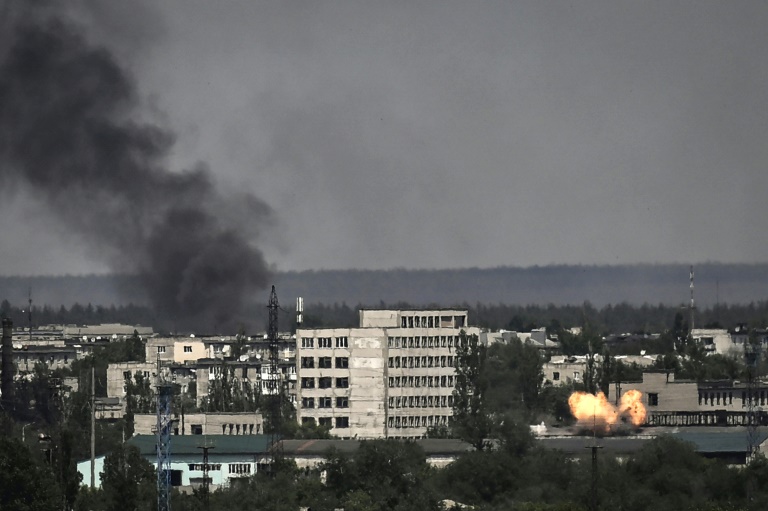
A French journalist was killed Monday during a Russian bombardment that struck a vehicle evacuating civilians from eastern Ukraine, French and Ukrainian officials said.

“Frederic Leclerc-Imhoff was in Ukraine to show the reality of war,” French President Emmanuel Macron wrote on Twitter.

“Onboard a humanitarian bus with civilians forced to flee to escape Russian bombings, he was mortally wounded.” 

Leclerc-Imhoff was working for the BFM television news channel, which said he was 32 years old and on his second Ukraine reporting trip since the war began on February 24.

He was near Severodonetsk, a city in Ukraine’s east that has been pounded by advancing Russian troops in recent weeks, the French and Ukrainian foreign ministries said in separate statements.

Foreign Minister Catherine Colonna, who visited Kyiv on Monday, said on Twitter that Leclerc-Imhoff had been killed “by a Russian bombardment of a humanitarian mission while he was carrying out his duty to inform.

“I have spoken with the government of Lugansk and asked President [Volodymyr] Zelensky for an inquiry, and they assured me of their help and support,” she wrote.

Lugansk governor Sergiy Gaidai said on Telegram that “our armoured evacuation vehicle was going to pick ten people up from the area and came under enemy fire”.

– Journalists ‘must be protected’ –

BFM said its journalist had been hit by shrapnel from the bombing, and his colleague Maxime Brandstaetter wounded. Their local fixer Oksana Leuta was not hurt.

“This tragic event reminds us of the dangers faced by all journalists who have been risking their lives to describe this conflict for more than three months now,” BFM said in a statement.

“Frederic wasn’t a hothead. He weighed every moment of his mission” and “judged it was secure enough to go along”, the broadcaster’s chief Marc-Olivier Fogiel said on air.

He added that the first reaction of Leclerc-Imhoff’s mother on hearing of his death was to ask if his colleagues were unharmed.

“She understood her son’s job… with a form of pride,” Fogiel said.

Macron wrote: “I share the grief of his family, relatives and colleagues,” adding that “to those who ensure the difficult mission of reporting in combat zones, I want to reiterate France’s unconditional support”.

Reporters Without Borders, an international media advocacy group, says at least eight journalists have been killed while reporting on the Ukraine conflict.

The chief of the United Nations cultural body UNESCO, Audrey Azoulay on Monday condemned the killing of Leclerc-Imhoff and called for journalists working in conflict zones to be protected in line with past UN Security Council resolutions.

“Journalists who work tirelessly in Ukraine to inform us about the reality of war must be protected from attack,” she said.

Hurricane approaches Mexican Pacific beach resorts

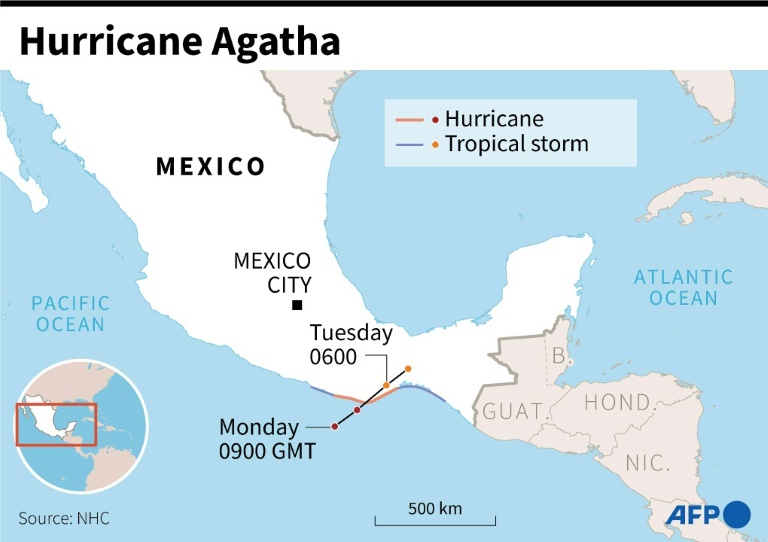
The first hurricane of the East Pacific season on Monday barreled towards a string of beach resorts in southwest Mexico, where authorities opened shelters for thousands of people in its projected path.

At 1500 GMT, Hurricane Agatha was located 80 kilometers (50 miles) southwest of Puerto Angel in Oaxaca state, packing maximum sustained winds of 175 kilometers per hour, according to the US National Hurricane Center (NHC).

The Category 2 hurricane — the second weakest on a scale of five — was expected to make landfall on Monday afternoon or evening and rapidly weaken as it moves inland, forecasters predicted.

Residents along the coast stocked up on food and water and took measures to protect their homes and businesses.

Seaports in the area closed and airlines canceled flights to an international airport in Huatulco.

A hurricane warning was in effect for a stretch of coastline including Puerto Escondido and other surf towns popular with national and foreign tourists.

“Storm surge is expected to produce extremely dangerous coastal flooding” and will be accompanied by “large and destructive waves,” the NHC warned.

In Oaxaca and neighboring Chiapas state, “life-threatening flash flooding and mudslides may occur,” it added.

Authorities opened around 200 storm shelters with room for up to 26,800 people, while hotels prepared to provide refuge to tourists.

“The shelters are already open and people are arriving,” Roberto Castillo, a civil protection official in Huatulco, told AFP.

Mexico is buffeted by hurricanes on both its Pacific and Atlantic coasts, generally between the months of May and November.

Hurricane approaches Mexican Pacific beach resorts

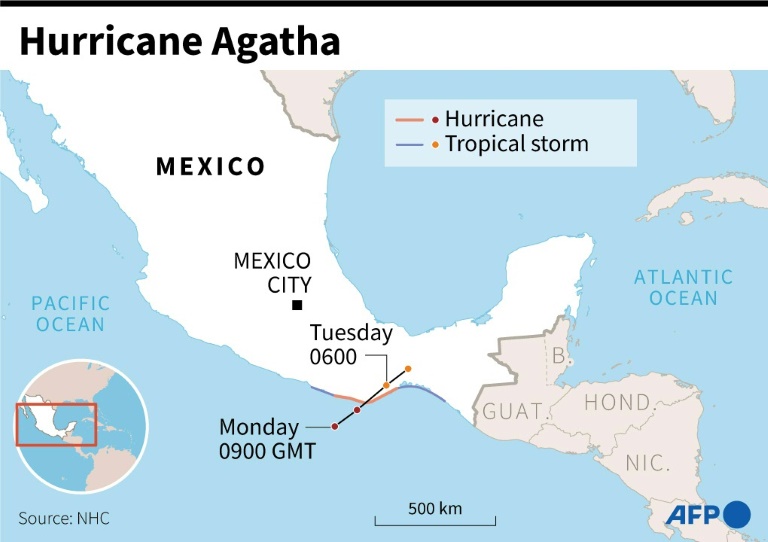
The first hurricane of the East Pacific season on Monday barreled towards a string of beach resorts in southwest Mexico, where authorities opened shelters for thousands of people in its projected path.

At 1500 GMT, Hurricane Agatha was located 80 kilometers (50 miles) southwest of Puerto Angel in Oaxaca state, packing maximum sustained winds of 175 kilometers per hour, according to the US National Hurricane Center (NHC).

The Category 2 hurricane — the second weakest on a scale of five — was expected to make landfall on Monday afternoon or evening and rapidly weaken as it moves inland, forecasters predicted.

Residents along the coast stocked up on food and water and took measures to protect their homes and businesses.

Seaports in the area closed and airlines canceled flights to an international airport in Huatulco.

A hurricane warning was in effect for a stretch of coastline including Puerto Escondido and other surf towns popular with national and foreign tourists.

“Storm surge is expected to produce extremely dangerous coastal flooding” and will be accompanied by “large and destructive waves,” the NHC warned.

In Oaxaca and neighboring Chiapas state, “life-threatening flash flooding and mudslides may occur,” it added.

Authorities opened around 200 storm shelters with room for up to 26,800 people, while hotels prepared to provide refuge to tourists.

“The shelters are already open and people are arriving,” Roberto Castillo, a civil protection official in Huatulco, told AFP.

Mexico is buffeted by hurricanes on both its Pacific and Atlantic coasts, generally between the months of May and November.

Norwegian buys 50 Boeing 737 MAX, ending dispute

Low-cost carrier Norwegian Air Shuttle said Monday it would buy 50 Boeing 737 MAX 8 planes, ending a dispute between the companies and helping revive the US-made aircraft after two deadly crashes.

The jets will be delivered between 2025 and 2028, or around the same time that Norwegian’s aircraft leasing deals come to an end, and the contract includes an option for 30 more, the company said in a statement.

The order is welcome news for the US manufacturer’s flagship Boeing 737 MAX 8, which was grounded for 20 months following two fatal accidents and has been gradually returning to service since late 2020. 

Norwegian’s order is part of “the resolution of a dispute we have” with Boeing, the company’s chief executive Geir Karlsen told broadcaster TV2.

The Nordic low-cost carrier and Boeing have been locked in a legal battle for several years, with the Norwegian carrier launching legal proceedings against the US giant for compensation following setbacks related to its 737 MAX and 787 Dreamliner long-range jets.

Without giving further details, Karlsen mentioned “a compensation of two billion kroner ($212 million, 197 million euros) that we used to buy planes under advantageous conditions.”

According to Karlsen, the price paid is “much lower” than the one Norwegian had to pay a few years ago for its first 737 MAX — which it has since sold — but also than the one offered by European competitor Airbus.

Norwegian said the deal remains subject to “various closing conditions” that it hopes will be concluded by the end of June.

The company, which currently operates 61 aircraft, plans to ramp up operations to have 70 in service this summer and 85 in the summer of 2023. 

– ‘Becoming more normal’ –

Plagued by over-ambitious expansion, technical problems and the Covid pandemic, the company narrowly avoided bankruptcy last year via an extensive restructuring that led it, among other things, to give up its long-haul flight, reduce its fleet and cancel numerous orders.

Securing the 50 aircraft means Norwegian is also returning to fully owning its own fleet after it was forced to rely on leased aircraft due to its financial woes.

Unless the option to buy more aircraft is implemented, Norwegian’s flight capacity is not expected to increase beyond what has already been announced. 

“This is rather a sign of an airline that is becoming more normal, that no longer lives exclusively on leased aircraft but owns part of its fleet itself,” Sydbank analyst Jacob Pedersen commented to business website e24.no. 

For Boeing, this order solidifies the revival of the 737 MAX aircraft.

The 737 MAX was temporarily grounded worldwide following two crashes in Indonesia and Ethiopia, in 2018 and 2019, that killed a combined 346 people.

After Caribbean Arajet and American Allegiant Air put in orders for the aircraft, British carrier IAG — parent company of British Airways — also just ordered 50 planes with an option for 100 more.

Norwegian on Monday also noted that the Boeing 737 MAX 8 is “approximately 14 percent more fuel-efficient compared to the previous-generation aircraft,” thus limiting emissions and cutting energy costs in view of rising fuel prices.

Colombian 'Trump' threatens leftist's presidential ambitions

The surprise electoral surge of a man dubbed Colombia’s Donald Trump could scupper the left’s hopes of a historic takeover of the presidency in a race now between two anti-establishment candidates, analysts say. 

Maverick millionnaire Rodolfo Hernandez, 77, finished second in presidential elections Sunday with 28 percent of votes cast.

He denied the frontrunner, leftist Gustavo Petro, an outright first-round victory and eliminated right-wing establishment candidate Federico “Fico” Gutierrez, whom most opinion polls had placed in clear second place.

While former-guerrilla Petro, 62, came out on top as projected with more than 40 percent of the vote, the outcome has raised the final hurdle to him becoming Colombia’s first leftist president.

“This makes it harder for Petro, most likely, because that significant segment of the population that is… voting based on disgust toward the entire political class, now they have two candidates to choose from,” said Elizabeth Dickinson, Colombia analyst with the International Crisis Group.

“It divides the… anti-establishment, populist-leaning vote and really sets a ceiling in some ways on how far Petro is likely to rise in the second round.”

A challenge for Petro is that many Colombians are historically distrustful of the political left, associated with guerrilla groups that sowed decades of terror through bombs, kidnappings and mass civilian displacement.

And support from Petro’s biggest fans — the poor, the marginalized and young people — may not be enough to stave off the challenge from Hernandez, the self-proclaimed “King of TikTok” running on an anti-corruption platform.

– ‘Nervous about Petro’ –

Hernandez, former mayor of the small northern city of Bucaramanga, is not on the political left, nor the right. 

He ran under the banner of the Anti-Corruption League, a young and marginal party with two seats on the 168-member Chamber of Representatives, Colombia’s lower house of parliament.

Hernandez’s program is described as inscrutable, but he has a reputation for calling out endemic corruption by Colombia’s long-ruling political and economic elite.

Among his best known proposals: closing embassies to pay off student loans and making a visit to the sea at least once in a lifetime a right for all Colombians.

Hernandez recently had to retract an expressed admiration for Adolf Hitler, explaining that he had actually meant to say “Albert Einstein.”

“I don’t think it was his policies that got him this strong vote, I think it was more his rhetoric and appealing to a lot of disenchanted voters who were very nervous about Petro, basically,” said analyst Michael Shifter of the Inter-American Dialogue think tank.

Hernandez’s rhetoric has proved appealing at a time Colombians are reeling from high poverty and unemployment rates worsened by the coronavirus pandemic.

There is real anger at a sense of being abandoned by the government, as illustrated by mass protests last year that were violently suppressed.

Hernandez’s strategy to blame corruption for the country’s problems “has resounded with voters,” said political science professor Felipe Botero of the Los Andes University.

“Also, he has a very colloquial way of connecting with people. He is not a member of the traditional elite using elaborate, complex, guarded language… Rodolfo speaks like the people, who understand what he is saying.”

Hernandez is himself under investigation for graft allegedly committed during his mayoral term.

– People are ‘disgusted’ –

Petro, a former mayor of the capital Bogota, based his campaign on rooting out poverty and inequality, and moving away from oil exploration — a major income generator for Colombia.

Gutierrez, who promised a “strong state” response to high levels of violence and crime, appears to have been hurt by his association with the traditional political class that backed his candidacy.

“The mood of the electorate is so clearly anti-establishment, anti-political class,” said Dickinson.

This means that if Gutierrez had come in second, as expected, many of Hernandez’s first-round votes would have likely gone to Petro in the runoff.

“He (Petro) would have been a lot stronger” against Gutierrez in the second round, said Shifter. 

“He would have benefited from a lot of people who are disgusted with politics as usual.”

Gutierrez and Hernandez garnered 52 percent of the vote between them — almost 11 million ballots cast to Petro’s 8.5 million.

And Gutierrez on Sunday threw his lot in with Hernandez, saying Petro represented “a danger for democracy.”

“A very high percentage (of voters) will make the transit… from Fico to Hernandez,” said Botero.

“So the big challenge for Petro is going to be first to show who Rodolfo Hernandez is, to highlight his weaknesses as a candidate. It is a difficult challenge.”


Game over for English tech jargon as France overhauls rules

French officials on Monday continued their centuries-long battle to preserve the purity of the language, overhauling the rules on using English video game jargon.

While some expressions find obvious translations — “pro-gamer” becomes “joueur professionnel” — others seem a more strained, as “streamer” is transformed into “joueur-animateur en direct”.

The culture ministry, which is involved in the process, told AFP the video game sector was rife with anglicisms that could act as “a barrier to understanding” for non-gamers.

France regularly issues dire warnings of the debasement of its language from across the Channel, or more recently the Atlantic.

Centuries-old language watchdog the Academie Francaise warned in February of a “degradation that must not be seen as inevitable”.

It highlighted terms including train operator SNCF’s brand “Ouigo” (pronounced “we go”) along with straightforward imports like “big data” and “drive-in”.

However, Monday’s changes were issued in the official journal, making them binding on government workers.

Among several terms to be given official French alternatives were “cloud gaming”, which becomes “jeu video en nuage”, and “eSports”, which will now be translated as “jeu video de competition”.

The ministry said experts had searched video game websites and magazines to see if French terms already existed.

The overall idea, said the ministry, was to allow the population to communicate more easily.

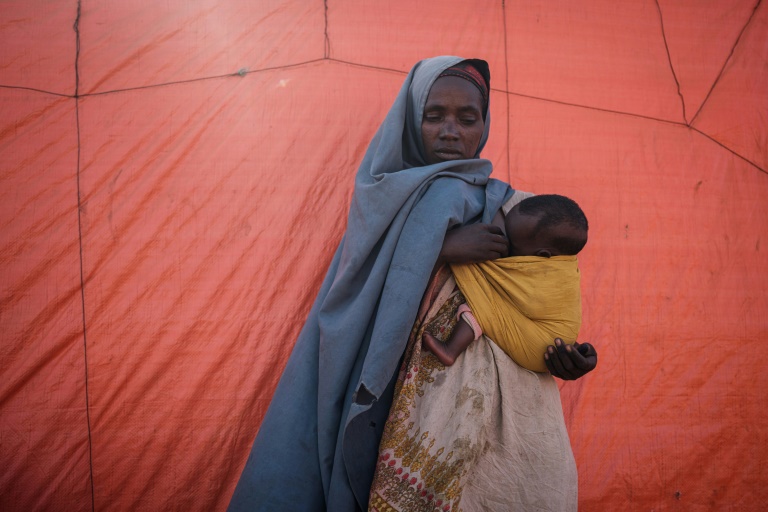
Famine looms in Horn of Africa after four seasons of poor rains: agencies

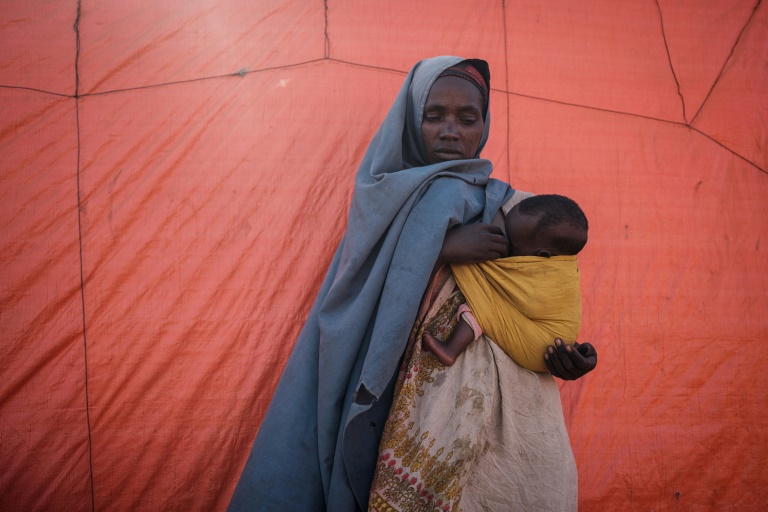
Four consecutive seasons of poor rains have left millions of drought-stricken people in Kenya, Somalia and Ethiopia facing starvation, aid agencies and meteorologists said Monday, warning that the October-November monsoon “could also fail”.

The unprecedented drought is “a climatic event not seen in at least 40 years”, said the statement by meterological experts and humanitarian groups including UN agencies.

“The 2022 March-May rainy season appears likely to be the driest on record,” it said.

Insufficient rainfall has destroyed crops, killed livestock and forced huge numbers of people to leave their homes in search of food and water, with the prospect of a fifth failed monsoon threatening to plunge the troubled region even deeper into catastrophe. 

“Should these forecasts materialise, the already severe humanitarian emergency in the region would further deepen,” the agencies said.

The drought has already wiped out 3.6 million livestock in parts of Kenya and Ethiopia where local populations rely heavily on pastoralism to eke out a living. Meanwhile, one in three animals have died in Somalia since mid-2021.

More than 16.7 million people in the three countries are experiencing acute hunger with the number projected to rise to 20 million by September.

The dire conditions have been exacerbated by the conflict in Ukraine, which has contributed to soaring food and fuel costs, the statement added. 

Without funding to scale up the aid response, an already dire situation will get worse, it said. 

“A rapid scaling up of actions is needed now to save lives and avert starvation and death.”

Current appeals to respond to the drought remain well underfunded, it added. 

A previous appeal in February by the UN’s World Food Programme raised less than four percent of the cash needed.

East Africa endured a harrowing drought in 2017 but early humanitarian action averted a famine in Somalia.

In contrast, 260,000 people — half of them children under the age of six — died of hunger or hunger-related disorders when a famine struck the country in 2011.

Experts say extreme weather events are happening with increased frequency and intensity due to climate change.

Famine looms in Horn of Africa after four seasons of poor rains: agencies

Four consecutive seasons of poor rains have left millions of drought-stricken people in Kenya, Somalia and Ethiopia facing starvation, aid agencies and meteorologists said Monday, warning that the October-November monsoon “could also fail”.

The unprecedented drought is “a climatic event not seen in at least 40 years”, said the statement by meterological experts and humanitarian groups including UN agencies.

“The 2022 March-May rainy season appears likely to be the driest on record,” it said.

Insufficient rainfall has destroyed crops, killed livestock and forced huge numbers of people to leave their homes in search of food and water, with the prospect of a fifth failed monsoon threatening to plunge the troubled region even deeper into catastrophe. 

“Should these forecasts materialise, the already severe humanitarian emergency in the region would further deepen,” the agencies said.

The drought has already wiped out 3.6 million livestock in parts of Kenya and Ethiopia where local populations rely heavily on pastoralism to eke out a living. Meanwhile, one in three animals have died in Somalia since mid-2021.

More than 16.7 million people in the three countries are experiencing acute hunger with the number projected to rise to 20 million by September.

The dire conditions have been exacerbated by the conflict in Ukraine, which has contributed to soaring food and fuel costs, the statement added. 

Without funding to scale up the aid response, an already dire situation will get worse, it said. 

“A rapid scaling up of actions is needed now to save lives and avert starvation and death.”

Current appeals to respond to the drought remain well underfunded, it added. 

A previous appeal in February by the UN’s World Food Programme raised less than four percent of the cash needed.

East Africa endured a harrowing drought in 2017 but early humanitarian action averted a famine in Somalia.

In contrast, 260,000 people — half of them children under the age of six — died of hunger or hunger-related disorders when a famine struck the country in 2011.

Experts say extreme weather events are happening with increased frequency and intensity due to climate change.

Irish court finds ex-soldier Lisa Smith guilty of joining IS

Three judges at the Special Criminal Court in Dublin on Monday found former soldier Lisa Smith guilty of joining the so-called Islamic State group in Syria.

Smith, 40, wept in the dock as judge Tony Hunt read the panel’s decision, which was delivered after a nine-week trial.

The Muslim convert, who wore a hijab to court, pleaded not guilty to membership of an unlawful terrorist group between October 28, 2015 and December 1, 2019.

Judge Hunt said the prosecution had established beyond reasonable doubt that she travelled to Syria “with her eyes open” and pledged allegiance to the group, led by Abu Bakr al-Baghdadi.

She was acquitted of a separate charge of financing terrorism by sending 800 euros ($900) to aid medical treatment for a Syrian man in Turkey.

Hunt said there was reasonable doubt that she intended the money to be used for humanitarian purposes rather than to fund terrorism.

He granted her bail until a sentencing hearing on July 11.

During the trial, which began in January, prosecutors detailed how Smith, who was a member of the Irish Defence Forces from 2001 to 2011, travelled to IS controlled territory in 2015 after converting to Islam.

In 2012, she went on pilgrimage to Mecca, and expressed a desire on an Islamic Facebook page to live under Sharia law and to die a martyr.

The court was told that she bought a one-way ticket from Dublin to Turkey, crossing the border into Syria and living in Raqqa, the capital of the Islamic State’s self-styled caliphate.

At the time, the hardline Islamists ruled over vast swathes of Syria and Iraq, attracting thousands of foreign fighters to their cause before the group’s territorial defeat in the region.

After failing to convince her husband to join her, Smith divorced him in 2016 and married a UK national involved in the group’s armed patrols.

As IS lost ground to a US-led coalition on the battlefield and towns and cities under its sway fell, Smith was forced to flee Raqqa and then Baghouz, their last remaining stronghold, before returning to Ireland.

She was arrested on arrival at Dublin airport on December 1, 2019 with her young daughter.

Defence lawyers argued that Smith’s presence in IS territory did not make her a de facto member of the extremist Sunni group.

They have said it could only be argued “at a stretch” that she provided some sort of assistance to the group because she had kept a home for her husband.

The three judges sat without a jury at the Special Criminal Court, which adjudicates on cases involving terrorism and organised crime offences. 

Close Bitnami banner
Bitnami