World

Famine looms in Horn of Africa after four seasons of poor rains: agencies

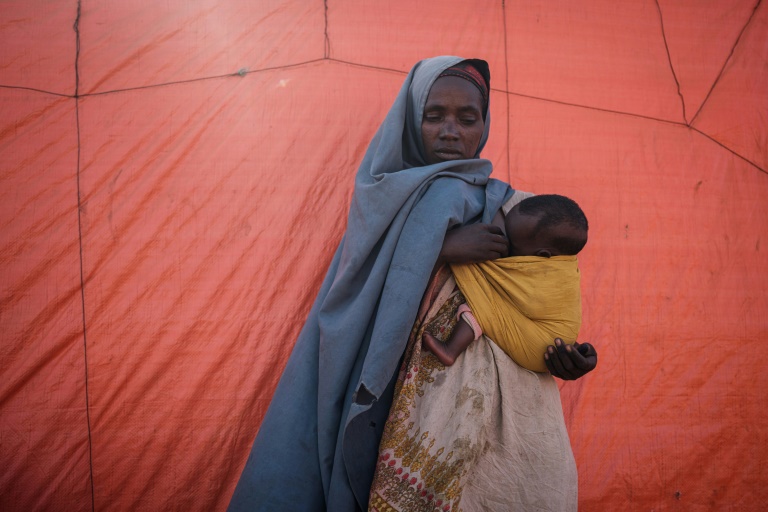
Four consecutive seasons of poor rains have left millions of drought-stricken people in Kenya, Somalia and Ethiopia facing starvation, aid agencies and meteorologists said Monday, warning that the October-November monsoon “could also fail”.

The unprecedented drought is “a climatic event not seen in at least 40 years”, said the statement by meterological experts and humanitarian groups including UN agencies.

“The 2022 March-May rainy season appears likely to be the driest on record,” it said.

Insufficient rainfall has destroyed crops, killed livestock and forced huge numbers of people to leave their homes in search of food and water, with the prospect of a fifth failed monsoon threatening to plunge the troubled region even deeper into catastrophe. 

“Should these forecasts materialise, the already severe humanitarian emergency in the region would further deepen,” the agencies said.

The drought has already wiped out 3.6 million livestock in parts of Kenya and Ethiopia where local populations rely heavily on pastoralism to eke out a living. Meanwhile, one in three animals have died in Somalia since mid-2021.

More than 16.7 million people in the three countries are experiencing acute hunger with the number projected to rise to 20 million by September.

The dire conditions have been exacerbated by the conflict in Ukraine, which has contributed to soaring food and fuel costs, the statement added. 

Without funding to scale up the aid response, an already dire situation will get worse, it said. 

“A rapid scaling up of actions is needed now to save lives and avert starvation and death.”

Current appeals to respond to the drought remain well underfunded, it added. 

A previous appeal in February by the UN’s World Food Programme raised less than four percent of the cash needed.

East Africa endured a harrowing drought in 2017 but early humanitarian action averted a famine in Somalia.

In contrast, 260,000 people — half of them children under the age of six — died of hunger or hunger-related disorders when a famine struck the country in 2011.

Experts say extreme weather events are happening with increased frequency and intensity due to climate change.

Pacific nations reject China security pact

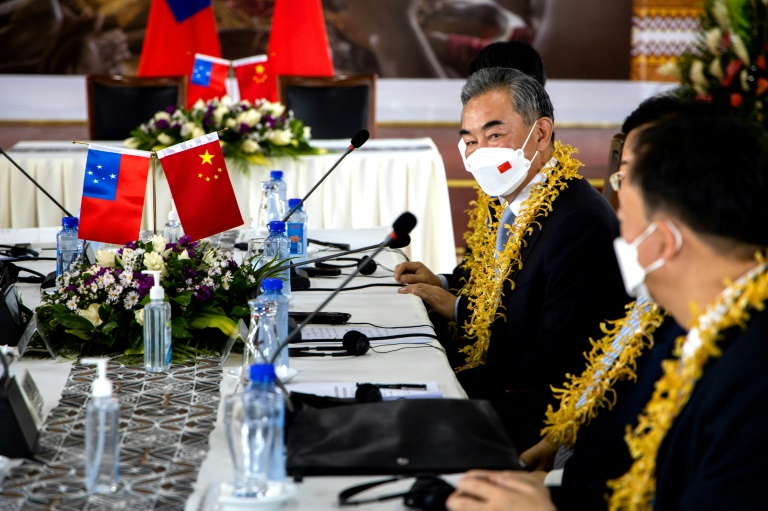
Ten Pacific island nations rebuffed China’s push for a wide-ranging regional security pact Monday, amid worries the proposal was designed to pull them into Beijing’s orbit.

Talks in Fiji between Chinese Foreign Minister Wang Yi and leaders from the small island nations failed to reach an agreement, in a high-profile diplomatic setback for Beijing.

China is offering to radically ramp up its activities in the South Pacific, directly challenging the influence of the United States and its allies in the strategically vital region.

The proposed pact would see Beijing train Pacific island police, become involved in cybersecurity, expand political ties, conduct sensitive marine mapping and gain greater access to natural resources on land and in the water.

As an enticement, Beijing is offering millions of dollars in financial assistance, the prospect of a potentially lucrative China-Pacific islands free trade agreement and access to China’s vast market of 1.4 billion people.

Behind the scenes, Pacific leaders have voiced deep misgivings about the offer.

In a recent letter to fellow leaders, David Panuelo, the President of the Federated States of Micronesia, warned the offer was “disingenuous” and would “ensure Chinese influence in government” and “economic control” of key industries. 

A more soft-spoken public rebuke came after the talks, when leaders said they could not agree to Beijing’s proposed “Common Development Vision” due to a lack of regional consensus.

“As always, we put consensus first,” co-host and Fijian Prime Minister Frank Bainimarama said after the meeting, indicating that broad accord would be needed before inking any “new regional agreements”.

Papua New Guinea, Samoa and the Federated States of Micronesia were said to be among those concerned about the proposals, along with Taiwan-recognising Palau, which was not invited.

“We would rather deal with our own security issues with China”, Papua New Guinea Foreign Minister Soroi Eoe told AFP, indicating concern about any region-wide pact.

Chinese officials — working frantically to secure support during Wang’s 10-day diplomatic blitz of the region — admitted their entreaties had fallen short.

“There has been general support from the 10 countries,” Chinese ambassador to Fiji Qian Bo told reporters in Suva. “But of course, there are some concerns on some specific issues and we have agreed that these two documents will be discussed afterwards until we have reached an agreement.”

Speaking from Suva, Wang made the face-saving announcement that the 10 countries had agreed to memorandums of understanding on China’s “Belt and Road” infrastructure initiative. 

The two sides will “continue to have ongoing and in-depth discussions and consultations to shape more consensus on cooperation”, he said, urging those worried by Beijing’s intentions not to be “too anxious and don’t be too nervous”.

The full proposal has not been made public, but was leaked to media including AFP ahead of Monday’s meeting. 

China has said it will release a “position paper” highlighting the proposals to the public in the coming weeks. 

– Balancing act –

Western powers have bristled against China’s move into the region, with the US State Department warning South Pacific nations to be wary of “shadowy, vague deals with little transparency”.

Australia joined the United States in urging a spurning of China’s attempts to expand its security reach deep into the region, with the country’s new foreign minister warning of the “consequences” of such deals.

Many in the Pacific are uneasy at being thrust to the centre of a geopolitical tussle between China and US allies.

Most capitals are keen to maintain amicable ties with China, balancing relations between Beijing, Washington, Canberra and Wellington, while focusing on the more urgent threat of climate change and day-to-day economic issues.

During a joint appearance with Wang, Bainimarama hit out at those engaged in “geopolitical point-scoring”.

It “means less than little to anyone whose community is slipping beneath the rising seas, whose job has been lost to a pandemic or whose family is impacted by the rapid rise in the price of commodities”, he said.

All but a few of the Pacific Islands are low-lying and deeply vulnerable to sea-level rises caused by climate change.

Before the meeting, President Xi Jinping sent a message that China would be “a good brother” to the region and that they shared a “common destiny”, according to state broadcaster CCTV.

War in Ukraine: Latest developments

Here are the latest developments in the war in Ukraine:

– Russians advance into eastern city –

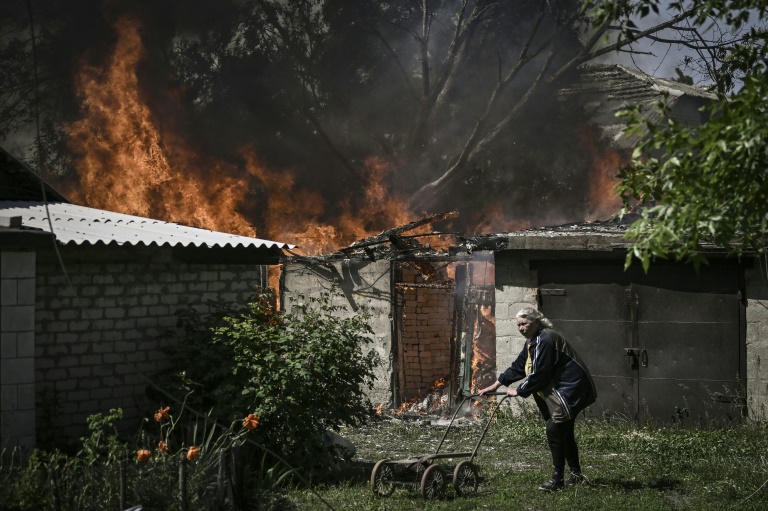
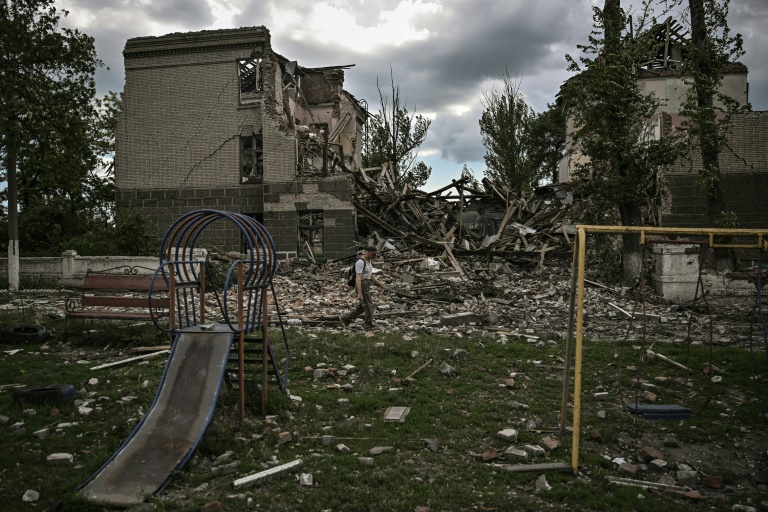
Russian forces advance closer to the centre of the eastern Ukrainian city of Severodonetsk, which has been under bombardment for weeks in the battle for Ukraine’s industrial heartland.

“The Russians are advancing into the middle of Severodonetsk. The fighting continues. The situation is very difficult,” Lugansk governor Sergiy Gaiday says on Telegram.

Severodonetsk is the easternmost city still in Ukrainian hands. Capturing it would give Russia de-facto control over Lugansk, one of two eastern regions that make up the coveted Donbas.

– EU offers compromise oil embargo –

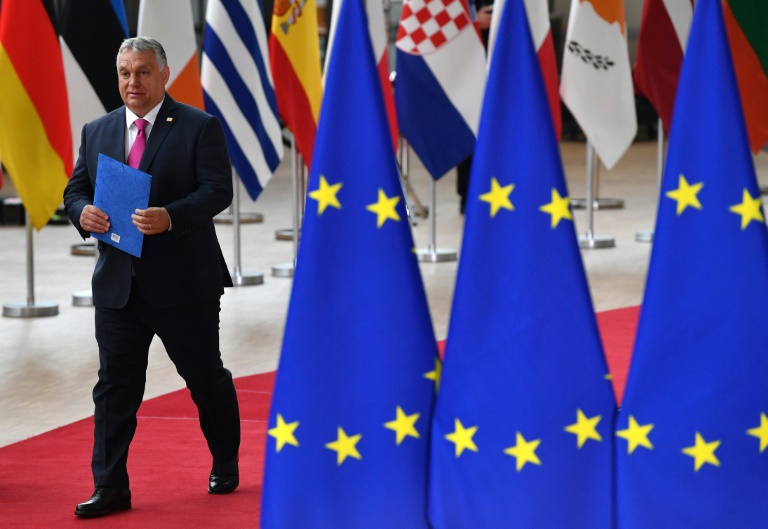
EU leaders gathered in Brussels hoping to persuade Hungarian Prime Minister Viktor Orban to accept a watered-down oil embargo against Russia as part of a sixth package of sanctions against Moscow that has been held up by Budapest.

Hungary, which imports 65 percent of its oil consumption from Russia through the Druzhba pipeline, is seeking an exemption from the import ban.

EU members have proposed to exclude the Druzhba pipeline from the embargo “for the time being” and only impose sanctions on oil shipped to the EU by tanker.

Orban calls it a “good solution” but seeks further safeguards on his country’s energy supply.

– French journalist killed – 

A 32-year-old French television journalist is killed while covering the evacuation of civilians near Severodonetsk for BFM news channel.

Frederic Leclerc-Imhoff is the eighth journalist killed while covering the war, according to a count by the Reporters without Borders NGO and AFP.

BFM says he was killed by shrapnel from the bombing of a humanitarian bus on which he was travelling with evacuees and that a French colleague of his was wounded.

– Biden’s No to long-range rockets –

US President Joe Biden says he will not send Ukraine rocket systems that could hit targets well inside Russian territory, despite urgent requests from Kyiv for long-range weapons. 

“We are not going to send to Ukraine rocket systems that can strike into Russia,” Biden, who has announced billions of dollars in military aid for Ukraine, tells reporters in Washington. 

Kyiv asked the United States for rocket launchers with a range of up to 300 kilometres (187 miles).

– First French ministerial visit –

France’s new foreign minister Catherine Colonna says on a visit to Kyiv that Paris is ready to boost its military aid to Ukraine.

Colonna is the first French minister to visit Ukraine since the Russian invasion. Most major Western countries have already sent their top diplomats. 

Colonna is due to hold talks with Ukrainian President Volodymyr Zelensky, who has accused his French counterpart Emmanuel Macron of pressuring Ukraine to offer territorial concessions to Russia in return for peace.

France rejects the claims.

– Gazprom set to cut Dutch supplies –

Dutch energy firm GasTerra says it will be cut off from Russian gas for refusing to pay in rubles, a key demand of the Kremlin since the invasion began.

GasTerra said Russian gas giant Gazprom had informed the company it would turn off the tap on May 31.

Gazprom has already cut off gas to Poland and Bulgaria over their refusal to pay for gas in rubles, which Moscow is pushing as a way to sidestep Western sanctions on its central bank.

Danish energy company Orsted warns Russia could cut gas supplies to Denmark after it also refused to pay in rubles.

– Netflix quits Russia –

Russians lose access to streaming giant Netflix, which is the latest Western company to pull out of the country over the war in Ukraine.

“This is the fulfilment of the withdrawal from the Russian market,” a Netflix spokesperson tells AFP, referring to the company’s announcement in March that it would withdraw from Russia.

– Eurovision trophy auctioned for army –

Ukraine’s Kalush Orchestra, which won the Eurovision song contest this year, auctions off its trophy on Facebook to raise funds for the Ukrainian army.

The trophy — a large crystal microphone with the song contest’s logo — nets $900,000 (835,000 euros) after a bidding process won by Ukrainian bitcoin company WhiteBIT.

burs/cb/raz

Equity markets extend rally as China eases curbs

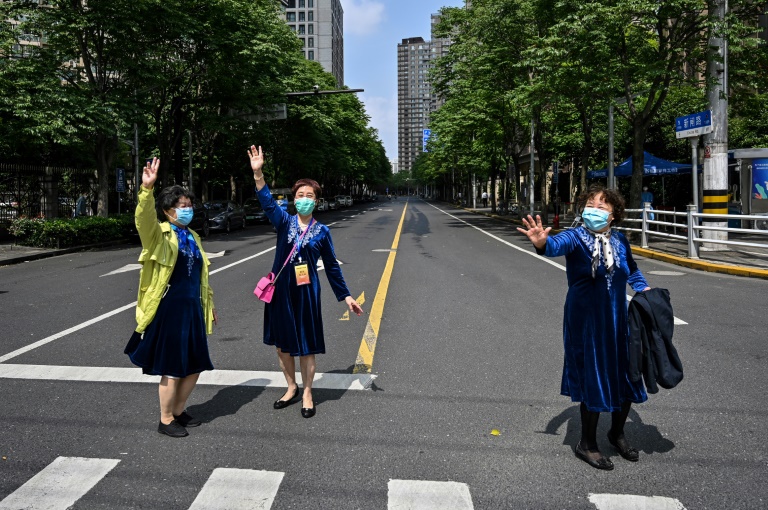
Stock markets in Asia and Europe were higher Monday as investors were cautiously optimistic, despite concerns over inflation, as China eases some of its strict Covid curbs in Shanghai and Beijing.

After Tokyo and Hong Kong closed more than two percent higher, London equities added 0.2 percent while Frankfurt and Paris closed up by more than 0.7 percent.

Fears over the soaring cost of living cast a shadow, however, as oil rose back above $120 a barrel for the first time in two months, deepening fears that central banks could raise interest rates aggressively and drag down economic recovery.

Oil prices are rising on the back of European efforts to ban Russian supplies over the Ukraine war, but also from signs that China’s economic activity could pick up as Covid-related restrictions are eased.

New data on Monday showed inflation in both Germany and Spain soaring on higher energy and food prices, turning up the pressure on the European Central Bank to speed up monetary tightening, with a first rate hike expected in July.

“Worries about global growth have eased — and hopes (are) that China’s worst Covid woes may be over,” boosting the world’s number-two economy, said Hargreaves Lansdown analyst, Susannah Streeter.

“There was a ripple of relief across European markets after authorities in Shanghai announced a lifting of restrictions from Wednesday, with more production now expected to begin across the manufacturing and tech hub.”

– Eyes turn to US –

The gains on Monday added to growing hope that a months-long sell-off may have run its course.

Markets have been pummelled this year as soaring prices forced central banks to hike interest rates and warn of more to come.

As investors look for signs on whether the inflation surge may have passed in the US, May jobs data — due for release on Friday — should provide a fresh snapshot of the economy and possibly an idea about the US Federal Reserve’s next policy moves.

European leaders began a summit Monday to discuss a Russian oil embargo, but Hungarian Prime Minister Viktor Orban warned that the bloc has yet to come up with a compromise that he could agree to.

The 27 are “not managing to reach agreement on a ban on Russian energy as Hungary continues to refuse to wean itself off Russian oil,” said Ipek Ozkardeskaya, analyst with Swissquote.

– Key figures at around 1600 GMT –

London – FTSE 100: UP 0.2 percent at 7,600.06 points (close)

Frankfurt – DAX: UP 0.8 percent at 14,575.98 (close)

Paris – CAC 40: UP 0.7 percent at 6,548.71 (close)

EURO STOXX 50: UP 0.8 percent at 3,841.62

Tokyo – Nikkei 225: UP 2.2 percent at 27,369.43 (close)

Hong Kong – Hang Seng Index: UP 2.1 percent at 21,123.93 (close)

Shanghai – Composite: UP 0.6 percent at 3,149.06 (close)

New York – Dow: UP 1.8 percent at 33,212.96

Euro/dollar: UP at $1.0779 from $1.0735 on Friday

Pound/dollar: UP at $1.2650 from $1.2631

Euro/pound: UP at 85.21 pence from 84.99 pence

Dollar/yen: UP at 127.59 yen from 127.11 yen

Brent North Sea crude: UP 1.2 percent at $119.82 per barrel

West Texas Intermediate: UP 1.0 percent at $116.19

burs-rfj-cdw/spm

Bolsonaro visits disaster zone after deadly Brazil rains

President Jair Bolsonaro sent his condolences Monday to the families of 91 people who died in torrential rains in northeastern Brazil, as rescue workers continued a grim search for victims.

Releasing an updated toll, authorities said 26 people remained missing in the region around the city of Recife, where days of downpours triggered flooding and landslides that swept up virtually everything in their path.

Bolsonaro posted a video on Twitter that showed him flying in a helicopter over a disaster zone where brown floodwater still inundated large areas and gashes of mud scarred hillsides where houses once stood.

“I tried to land, but the pilots’ recommendation was that, given the instability of the soil, we could have an accident. So we decided against it,” the far-right president told a news conference.

He recalled a string of devastating floods in Brazil that have killed hundreds of people in recent months, which experts say are being aggravated by climate change.

“We send our condolences to the families. Our top priority is comforting the families and getting aid to the population,” he said.

The government has allocated a total of one billion reais ($210 million) in emergency and reconstruction funds, said Regional Development Minister Daniel Ferreira.

“The forecast is for more rain in the coming days. We urge people to respect the alerts issued by the authorities” and evacuate if necessary, the minister added.

The risk of floods in and around Recife, the capital of Pernambuco state, remains “very high” for Monday, said the national disaster monitoring center, Cemaden.

– Ocean of muck –

The force of the landslides ripped apart houses in neighborhoods such as Jardim Monteverde, on the far outskirts of Recife.

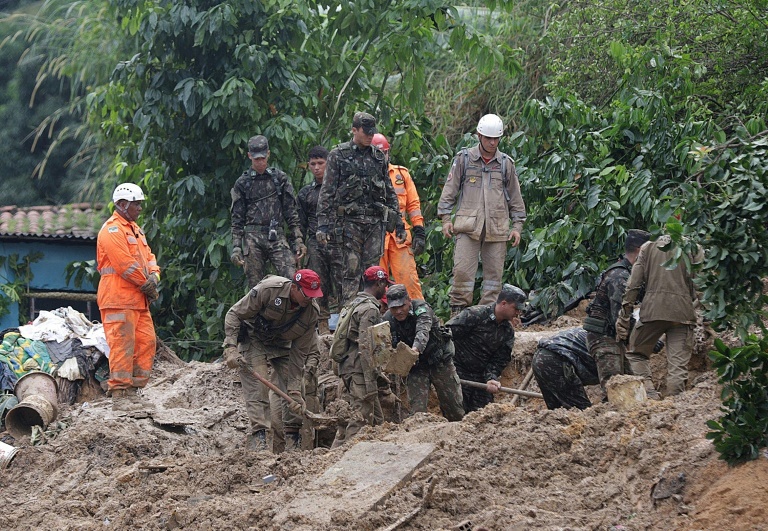
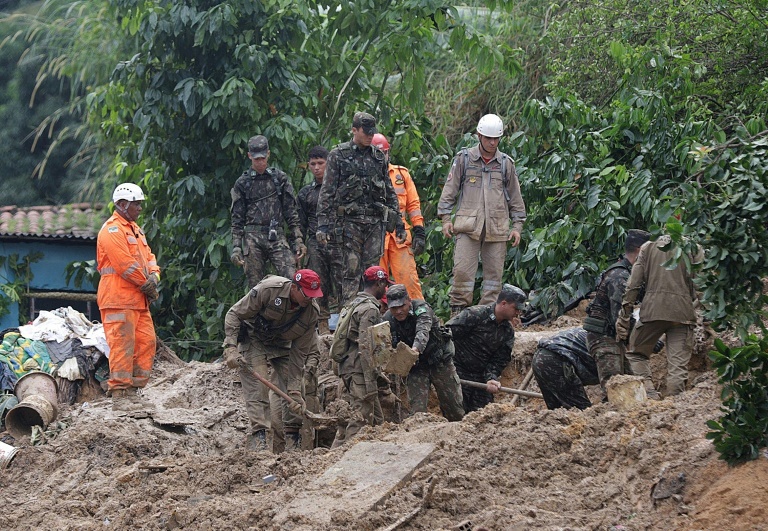
Rescue workers have found more than 20 bodies buried in the mud that tore through the neighborhood Saturday, and said they expect to find more.

Dozens of emergency workers are still digging through the ocean of muck, as clean-up crews in yellow uniforms clear the streets, slowly working their way through the wreckage, an AFP photographer said.

In just hours on Friday and Saturday, parts of Pernambuco received 70 percent of the rain they usually get in the entire month of May.

Such tragedies are becoming a familiar script in Brazil.

In February, 233 people were killed in floods and landslides in the southeastern city of Petropolis, in Rio de Janeiro state.

In January, floods and landslides killed at least 28 people in southeastern Brazil, mostly in Sao Paulo state.

And in December, torrential rains killed 24 people in the northeastern state of Bahia.

On that occasion, Bolsonaro — who is trailing leftist ex-president Luiz Inacio Lula da Silva in the polls ahead of elections in October — faced criticism for not interrupting his year-end beach vacation to visit the disaster zone.

“Unfortunately these tragedies happen, a country the size of a continent has its share of problems,” Bolsonaro said Monday.

Meteorologists say the heavy rains lashing Pernambuco and, to a lesser extent, four other northeastern states are the product of a typical seasonal phenomenon called “eastern waves” — areas of atmospheric disturbance that move from Africa to Brazil’s northeastern coastal region.

Experts say the rains are now being augmented by climate change. Because a hotter atmosphere holds more water, global warming increases the risk and intensity of flooding from extreme rainfall.

In Brazil, such tragedies have tended to hit hardest in poor neighborhoods, especially hillside “favelas,” or slums.

Bolsonaro visits disaster zone after deadly Brazil rains

President Jair Bolsonaro sent his condolences Monday to the families of 91 people who died in torrential rains in northeastern Brazil, as rescue workers continued a grim search for victims.

Releasing an updated toll, authorities said 26 people remained missing in the region around the city of Recife, where days of downpours triggered flooding and landslides that swept up virtually everything in their path.

Bolsonaro posted a video on Twitter that showed him flying in a helicopter over a disaster zone where brown floodwater still inundated large areas and gashes of mud scarred hillsides where houses once stood.

“I tried to land, but the pilots’ recommendation was that, given the instability of the soil, we could have an accident. So we decided against it,” the far-right president told a news conference.

He recalled a string of devastating floods in Brazil that have killed hundreds of people in recent months, which experts say are being aggravated by climate change.

“We send our condolences to the families. Our top priority is comforting the families and getting aid to the population,” he said.

The government has allocated a total of one billion reais ($210 million) in emergency and reconstruction funds, said Regional Development Minister Daniel Ferreira.

“The forecast is for more rain in the coming days. We urge people to respect the alerts issued by the authorities” and evacuate if necessary, the minister added.

The risk of floods in and around Recife, the capital of Pernambuco state, remains “very high” for Monday, said the national disaster monitoring center, Cemaden.

– Ocean of muck –

The force of the landslides ripped apart houses in neighborhoods such as Jardim Monteverde, on the far outskirts of Recife.

Rescue workers have found more than 20 bodies buried in the mud that tore through the neighborhood Saturday, and said they expect to find more.

Dozens of emergency workers are still digging through the ocean of muck, as clean-up crews in yellow uniforms clear the streets, slowly working their way through the wreckage, an AFP photographer said.

In just hours on Friday and Saturday, parts of Pernambuco received 70 percent of the rain they usually get in the entire month of May.

Such tragedies are becoming a familiar script in Brazil.

In February, 233 people were killed in floods and landslides in the southeastern city of Petropolis, in Rio de Janeiro state.

In January, floods and landslides killed at least 28 people in southeastern Brazil, mostly in Sao Paulo state.

And in December, torrential rains killed 24 people in the northeastern state of Bahia.

On that occasion, Bolsonaro — who is trailing leftist ex-president Luiz Inacio Lula da Silva in the polls ahead of elections in October — faced criticism for not interrupting his year-end beach vacation to visit the disaster zone.

“Unfortunately these tragedies happen, a country the size of a continent has its share of problems,” Bolsonaro said Monday.

Meteorologists say the heavy rains lashing Pernambuco and, to a lesser extent, four other northeastern states are the product of a typical seasonal phenomenon called “eastern waves” — areas of atmospheric disturbance that move from Africa to Brazil’s northeastern coastal region.

Experts say the rains are now being augmented by climate change. Because a hotter atmosphere holds more water, global warming increases the risk and intensity of flooding from extreme rainfall.

In Brazil, such tragedies have tended to hit hardest in poor neighborhoods, especially hillside “favelas,” or slums.

EU leaders seek to break oil ban deadlock as Russia advances in Donbas

European Union leaders met in Brussels on Monday seeking to overcome Hungarian opposition to an embargo on Russian oil, as Moscow’s forces made gains in the eastern Donbas region of Ukraine. 

Ukrainian President Volodymyr Zelensky was set to address leaders at the emergency summit, expected to press the block “to kill Russian exports” as he seeks to crank up international pressure on Moscow.

In Washington, US President Joe Biden said he would not send rocket systems to Ukraine that could hit Russian territory, despite urgent requests from Kyiv for such weapons and extensive US military aid for Ukraine since the war began.

EU diplomats have drafted a watered-down agreement that would see pipeline oil exempted from the ban, in the hopes of unblocking talks on the bloc’s sixth round of Russian sanctions.

Ahead of the meeting, Hungarian Prime Minister Viktor Orban told reporters the proposal was a “good solution” but warned there was “no agreement at all” as things stood.

On the ground, Russian forces pressed their offensive in Donbas.

The situation in Severodonetsk, just across the Donets river from its sister city of Lysychansk, was “very difficult”, the local Lugansk regional governor Sergiy Gaiday said in a statement on social media.

“The Russians are advancing into the middle of Severodonetsk”, while the fighting continued, Gaiday said.

– Weapons supplies –

“We are not going to send to Ukraine rocket systems that can strike into Russia,” Biden told reporters in Washington.

Ukraine has received extensive US military aid since with legislators approving another $40 billion (37.1 billion euros) assistance package earlier in May.

France’s new foreign minister Catherine Colonna said on a visit to Kyiv that Paris was ready to boost military aid to Ukraine to help it counter Russia’s invasion.

France will “continue to reinforce arms deliveries,” Colonna said at a news conference with her Ukrainian counterpart Dmytro Kuleba.

The arms would arrive “in the coming weeks”, she said.

The highest-ranking French official to visit the capital since Russia invaded Ukraine on February 24, Colonna also visited the town of Bucha, where Russian troops have been accused of committing war crimes against the civilian population.

“This should never have happened. It must never happen again,” Colonna told reporters after visiting an Orthodox church in the town.

The foreign minister’s visit came as a French journalist was killed while working in Ukraine.

Frederic Leclerc-Imhoff was “on board a humanitarian bus” when “he was mortally wounded,” French president Emmanuel Macron wrote on Twitter on Monday.

– Oil sanctions –

Speaking alongside Colonna, Kuleba said he hoped “divisions will be overcome” at the EU leaders meeting.

A sixth wave of EU measures against Moscow was put on the table weeks ago, but has been rejected by Orban and resisted by neighbouring countries also reliant on pipelined Russia oil.

Macron cautiously told reporters that a long-sought-after deal was “getting closer”, but others doubted that the Hungarian leader was ready to sign on at this stage.

“I don’t think we’ll reach an agreement today,” Estonian Prime Minister Kaja Kallas said at a political meeting ahead of the summit

Hungary has asked for at least four years and 800 million euros ($860 million) in EU funds to adapt its refineries and increase pipeline capacity for alternative suppliers, like Croatia.

But under the compromise proposal the Druzhba pipeline could be excluded from a sanctions package “for the time being”, an EU official told AFP.

– ‘We’re close!’ –

Since failing to capture Kyiv in the war’s early stages, Russia’s army has narrowed its focus, hammering Donbas cities with relentless artillery and missile barrages as it seeks to consolidate its control.

But Ukrainian forces pushed back over the weekend in the southern region of Kherson, the country’s military leadership said.

The Ukrainian general staff claimed the move had put their adversary into “unfavourable positions” around the villages of Andriyivka, Lozovo and Bilohorka and forced Moscow to send reserves to the area.

“Kherson, hold on. We’re close!” it tweeted Sunday.

At the same time, two people were injured following an explosion in the Moscow-controlled city of Melitopol in south-eastern Ukraine, with local pro-Kremlin authorities blaming Kyiv.

Russia-installed authorities said the city had been targeted by a “terrorist attack”.

“The Ukrainian government continues its war on the civilian population and the infrastructure of cities,” a statement said.

At least five people died following strikes on civilian infrastructure in Ukraine’s separatist-controlled city of Donetsk, according to Russian investigators.

Authorities in the DNR said on Telegram that two apartment blocks and three schools were hit in the attack, accusing Kyiv of using artillery and rockets with cluster munitions.

burs-sea/jm

Statuette of architect among new cache of ancient Egyptian artifacts

Egypt on Monday unveiled a cache of sarcophagi and bronze statuettes — including one of pioneering architect Imhotep — at the Saqqara archaeological site south of Cairo.

They were the latest in a series of discoveries made in the area.

Saqqara is a vast necropolis of the ancient Egyptian capital Memphis, a UNESCO World Heritage site home to more than a dozen pyramids, animal burial sites and ancient Coptic Christian monasteries.

Among the 150 bronze statuettes unearthed in the latest findings is one of Imhotep, who “revolutionised architecture” in the ancient world, Mostafa Waziri, head of Egypt’s Supreme Council of Antiquities, told reporters.

Imhotep, who lived in the third millenium BC, built the Djoser step pyramid, one of the earliest in ancient Egypt. He later became the god of medicine. 

Waziri revealed a goal for the archaeological mission, which has so far undertaken four seasons of excavations in the area: “To find the tomb of Imhotep.”

Other unearthed statuettes depict various gods and goddesses including Bastet, Anubis, Osiris, Amunmeen, Isis, Nefertum and Hathor, according to a statement from the Ministry of Tourism and Antiquities.

The mission also unveiled “250 wooden sarcophagi with mummies inside, dating back to the Late Period,” around the fifth century BC, Waziri said.

Inside one sarcophagus, the team found an untouched and sealed papyrus, he said. It has been transferred to the laboratory of the Egyptian Museum in central Cairo for full restoration and study, Waziri said. 

He added the papyrus — estimated at nine metres (9.9 yards) long — likely contains chapters of the Book of the Dead, collections of funerary texts composed of spells that Egyptian used to guide the dead through the underworld.

The sarcophagi will be moved to the Grand Egyptian Museum, which authorities hope to inaugurate near Cairo’s Giza pyramids later this year after repeated delays.

Hopes are high that the new museum, in addition to archaeological discoveries of recent years, will help revive the country’s vital tourism industry.

The sector has been battered by successive blows, including the 2011 revolution and ensuing unrest, the coronavirus pandemic, and now a halt of Russian and Ukranian tourists, who accounted for a large portion of the country’s visitors.

Among other findings at Saqqara, Egypt in March unveiled five ancient Pharaonic tombs, and in January last year announced the discovery of more than 50 wooden sarcophagi dating from the New Kingdom which ended in the 11th century BC.

Statuette of architect among new cache of ancient Egyptian artifacts

Egypt on Monday unveiled a cache of sarcophagi and bronze statuettes — including one of pioneering architect Imhotep — at the Saqqara archaeological site south of Cairo.

They were the latest in a series of discoveries made in the area.

Saqqara is a vast necropolis of the ancient Egyptian capital Memphis, a UNESCO World Heritage site home to more than a dozen pyramids, animal burial sites and ancient Coptic Christian monasteries.

Among the 150 bronze statuettes unearthed in the latest findings is one of Imhotep, who “revolutionised architecture” in the ancient world, Mostafa Waziri, head of Egypt’s Supreme Council of Antiquities, told reporters.

Imhotep, who lived in the third millenium BC, built the Djoser step pyramid, one of the earliest in ancient Egypt. He later became the god of medicine. 

Waziri revealed a goal for the archaeological mission, which has so far undertaken four seasons of excavations in the area: “To find the tomb of Imhotep.”

Other unearthed statuettes depict various gods and goddesses including Bastet, Anubis, Osiris, Amunmeen, Isis, Nefertum and Hathor, according to a statement from the Ministry of Tourism and Antiquities.

The mission also unveiled “250 wooden sarcophagi with mummies inside, dating back to the Late Period,” around the fifth century BC, Waziri said.

Inside one sarcophagus, the team found an untouched and sealed papyrus, he said. It has been transferred to the laboratory of the Egyptian Museum in central Cairo for full restoration and study, Waziri said. 

He added the papyrus — estimated at nine metres (9.9 yards) long — likely contains chapters of the Book of the Dead, collections of funerary texts composed of spells that Egyptian used to guide the dead through the underworld.

The sarcophagi will be moved to the Grand Egyptian Museum, which authorities hope to inaugurate near Cairo’s Giza pyramids later this year after repeated delays.

Hopes are high that the new museum, in addition to archaeological discoveries of recent years, will help revive the country’s vital tourism industry.

The sector has been battered by successive blows, including the 2011 revolution and ensuing unrest, the coronavirus pandemic, and now a halt of Russian and Ukranian tourists, who accounted for a large portion of the country’s visitors.

Among other findings at Saqqara, Egypt in March unveiled five ancient Pharaonic tombs, and in January last year announced the discovery of more than 50 wooden sarcophagi dating from the New Kingdom which ended in the 11th century BC.

EU leaders plead with Orban to back Russian oil ban

EU leaders were hoping Monday to persuade Prime Minister Viktor Orban to back a watered-down oil embargo against Russia after a month of haggling over a blocked sanctions package.

But the Hungarian leader, who has demanded an exemption from the ban and guarantees for his country’s energy supply, warned on arrival at the EU summit that no compromise had yet been reached.

Orban confirmed that the proposal on the table would see Russian oil arriving in the EU and in Hungary by pipeline, rather than by sea, exempted from the sanctions.

“For Hungary this is a good solution, it means that an atomic bomb won’t be thrown on the Hungarian economy,” he said. But he warned that this would not be enough to guarantee supply.

“What causes us a problem is that in the case that something happens to the pipeline carrying Russian oil, which is something that the Ukrainians and others have spoken about,” he said. 

“If Russian oil does not arrive by pipeline, then we would have the right to receive oil by sea, and have it arrive from elsewhere, that is the guarantee that we need.”

Orban said “there is no agreement at all”. He did not, however, threaten to veto the leaders’ planned summit statement, arguing that it was the European Commission’s job to fine-tune the sanctions package.

— ‘Exceptions’ being negotiated —

A sixth wave of EU measures against Moscow was put on the table weeks ago, but has been rejected by Orban and resisted by neighbouring countries also reliant on pipelined Russia oil.

French President Emmanuel Macron cautiously told reporters that a long-sought-after deal was “getting closer”, but others doubted that.

“I don’t think we’ll reach an agreement today,” Estonian Prime Minister Kaja Kallas said at a political meeting Monday ahead of the summit.

“Of course, we’re going to have discussions, but everybody needs to be on board,” she said, adding that she did not expect a solution before a summit in late June. 

EU sanctions require the backing of all 27 member states and ambassadors fell short of finalising a deal just hours before the start of the summit. 

A senior EU diplomat described the failure as the “elephant in the room”, especially given that Ukrainian President Volodymyr Zelensky was also slated to address the leaders by video link.

An EU official said the leaders would attempt to find a “political agreement” on the Russian oil ban, with exceptions for specific countries worked out “as soon as possible”.

– ‘Orban’s antics’ –

Landlocked Hungary imports 65 percent of its oil from Russia through the Druzhba pipeline and, along with Slovakia and the Czech Republic, have asked for an exception from the import ban.

Diplomats said a two-year delay to the embargo has been granted to the countries concerned, but that Budapest wants at least four years and nearly 800 million euros ($860 million) in EU funding to adapt its refineries.

“There is quite a lot of sympathy for Hungary’s oil supply issues, which are great, despite the antics by Orban,” an EU diplomat said on condition of anonymity.

The latest compromise solution would exclude the Druzhba pipeline from the embargo and only impose sanctions on oil shipped to the EU by tanker vessel, which counts for two-thirds of Russian oil imports.

“The European Council aims to reach a political agreement today on an embargo on Russian oil,” an EU official told reporters.

“Some temporary exceptions have been granted to ensure security of supply for certain member states.”

Hungary’s intransigence comes on the back of Orban’s recent resounding re-election to a fourth term and some experts are sceptical about the official claims of alarm over a Russian oil ban.  

Also complicating the stand-off is Hungary’s share of the EU’s 800-billion-euro recovery fund, which Brussels has yet to approve due to disagreements over Budapest’s respect for the rule of law and human rights.

A senior diplomat warned that some leaders had accused negotiators of going too far in their efforts to placate Orban, who before the war was Russian President Vladimir Putin’s closest EU ally.

The question of how we answer Russia is always “emotional” for certain member states and will be “one of the most sensitive issues” at the summit, the diplomat added.

Close Bitnami banner
Bitnami