World

War in Ukraine: Latest developments

Here are the latest developments in the war in Ukraine:

– Zelensky visits Ukraine’s east – 

Ukraine’s President Volodymyr Zelensky visits the country’s war-ridden east for the first time since the Russian invasion, on a trip to Kharkiv region, from where Moscow has retreated in recent weeks. 

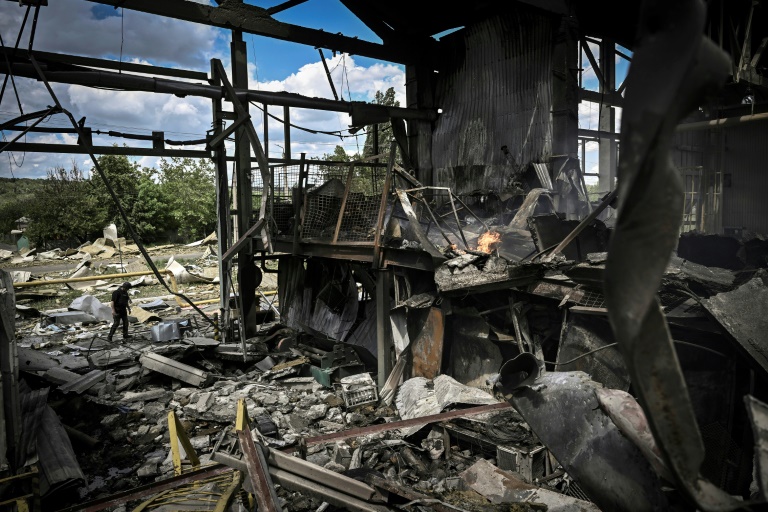
Zelensky’s office posted a video on Telegram of him wearing a bullet-proof vest and being shown heavily destroyed buildings in Kharkiv and its surroundings. 

– Russian onslaught in eastern Ukraine –

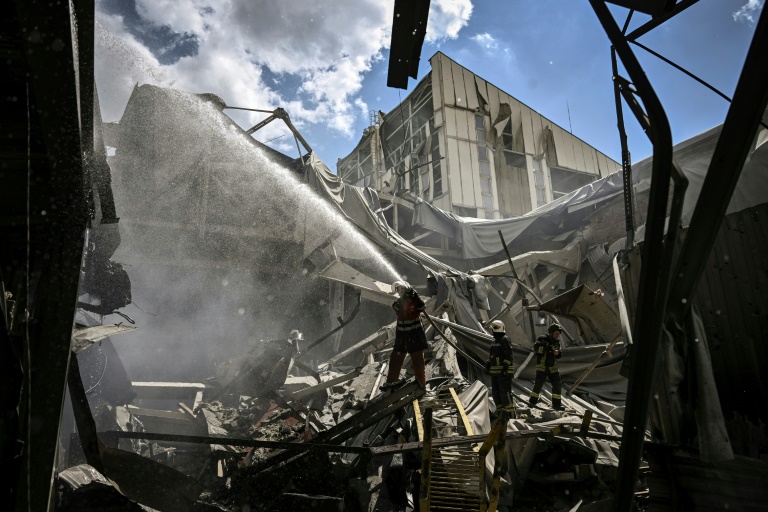
Russia says it has captured the strategic town of Lyman and claims to have surrounded the urban centre of Severodonetsk, as it wages an all-out war for the eastern Donbas — Ukraine’s industrial heartland.

But a Ukrainian official denies the claim that Severodonetsk has been encircled, saying government troops had repelled Russian forces from the outskirts of the key city.

– ‘Constant shelling’ in Severodonetsk –

In Severodonetsk, where an estimated 15,000 civilians remain, a local official says “constant shelling” has made it increasingly difficult to get in or out.

Evacuation is “very unsafe”, with priority given to the wounded and those in need of serious medical assistance, says Oleksandr Stryuk, head of the city’s military and civil administration.

The water supply is also increasingly tenuous, as a lack of electricity means the pumps at city wells no longer function, and residents have gone more than two weeks without a cellphone connection, he says.

– Situation ‘very difficult’, says Zelensky –

In his daily address to the nation, Zelensky says the situation is “very difficult, especially in those areas in the Donbas and Kharkiv regions, where the Russian army is trying to squeeze at least some result for itself”.

He says Ukraine is doing “everything” to defend Donbas.

– Lithuanians raise millions for Ukraine drone –

Lithuanians have donated more than five million euros to a public fundraising campaign designed to buy a combat drone for Ukrainian forces fighting Russia’s invasion.

The money needed to buy a Turkish Bayraktar TB2 drone was raised in three-and-a-half days in the country of 2.8 million people. 

– Serbia signs gas deal with Russia –

Serbia, which has been trying to tread a delicate balancing act between East and West since Moscow invaded Ukraine, says it has secured a new long-term contract with Russia to ensure that it has sufficient gas supplies next winter.

As energy prices soar across the globe, the exact terms of the deal — which will ensure Serbia has “a safe winter when it comes to gas supply” — will be announced in the coming days, President Aleksandar Vucic says.

The deal comes as the European Union is trying to reduce its dependence on Russia for energy following Moscow’s invasion of Ukraine, and is scheduled to discuss a possible embargo on Russian oil at an emergency summit on Monday.

burs-po/pvh
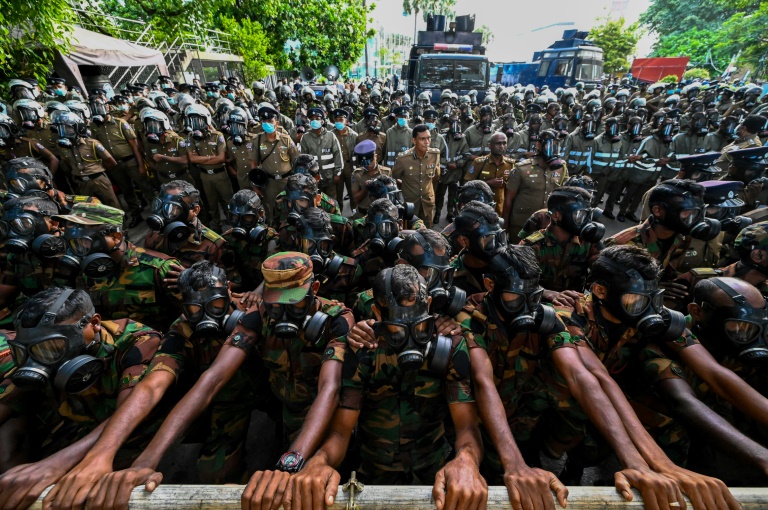
Sri Lanka police tear-gas students in fresh clashes

Police fired tear gas to disperse thousands of students trying to storm the Sri Lankan president’s home Sunday as the government offered an olive branch to demonstrators demanding his resignation.

Anti-riot squads used water cannon followed by tear gas, as protesters pulled down yellow iron barricades across a road leading to President Gotabaya Rajapaksa’s official residence in Colombo.

Nearby, thousands of men and women demonstrated for the 51st straight day outside Rajapaksa’s seafront office on Sunday, demanding that he step down over the country’s worst economic crisis since independence. 

Prime Minister Ranil Wickremesinghe went on national television on Sunday evening offering young protesters a greater say in how the country is administered.

“The youth are calling for a change in the existing system,” Wickremesinghe said, laying out plans for 15 committees that would work with parliament to decide national policies.

“I propose to appoint four youth representatives to each of the 15 committees,” he said, adding that they could be drawn from the current protestors.

Wickremesinghe is not from Rajapaksa’s party, but was given the job after the president’s elder brother Mahinda resigned as prime minister on May 9 after weeks of protests, when no other legislator agreed to step in.

Wickremesinghe is the sole parliamentary representative of the United National Party, a once-powerful political force that was nearly wiped out in Sri Lanka’s last elections. 

Rajapaksa’s party, which has a majority in the legislature, has offered to provide him with the necessary support to run a government.

Sunday’s student action came a day after a similar clash when protesters tried to storm Rajapaksa’s heavily guarded colonial-era official residence, where he has bunkered down since thousands surrounded his private home on March 31.

An unprecedented shortage of foreign exchange to import even the most essential supplies, including food, fuel and medicines, has led to severe hardships for the country’s 22-million population.

The government last month asked the IMF for urgent financial assistance and talks are still underway. 

The country has also defaulted on its $51-billion foreign debt. 

Its currency has depreciated by 44.2 percent against the US dollar this year, while inflation hit a record 33.8 percent last month.

Search paused in Nepal for missing plane with 22 on board

Nepali rescuers called off their hunt for a missing passenger plane with 22 people on board late Sunday, planning to resume search operations at first light.

The Tara Air plane had taken off from the western town of Pokhara on Sunday morning but lost control with air traffic after 15 minutes, the airline said. 

Nepal’s air industry has boomed in recent years, carrying goods and people between hard-to-reach areas as well as foreign trekkers and climbers, but it has a poor safety record.

Rescuers unsuccessfully scoured a remote mountainous area in western Nepal by helicopter and on foot all day Sunday, as weather hampered search flights. 

Nepal Army official Baburam Shrestha told AFP that ground troops would stop at a local school for the night and be joined by additional forces in the morning.

“We will also resume the search operation from our helicopter tomorrow morning once the weather is clear,” he said.

Dev Raj Subedi, a spokesman for Pokhara Airport, told AFP that three helicopters had had to turn back. 

“Right now we cannot say where exactly where the aircraft is and in what condition,” he said. 

“There has not been any reporting or information from locals about a big fire or any other such indications.”

There were 19 passengers and three crew members on board the missing plane, which left for the town of Jomson at 9:55 am (0410 GMT), airline spokesman Sudarshan Bartaula told AFP. 

The passengers included two Germans and four Indians, with the remainder Nepali. 

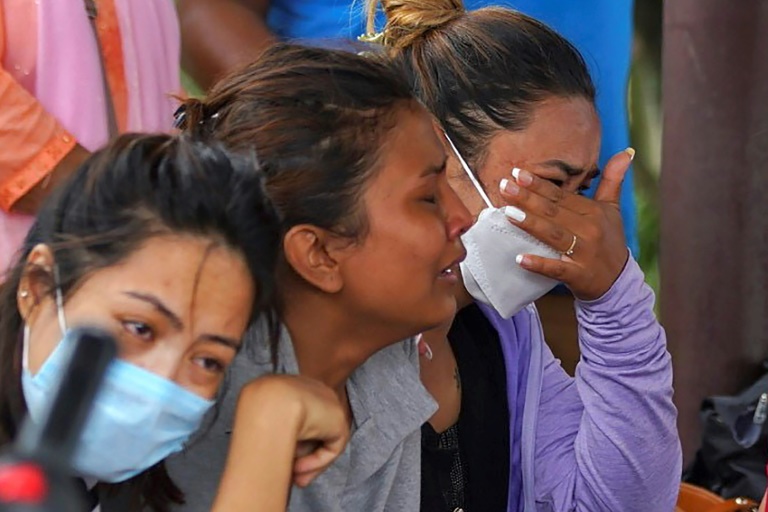
Relatives of those on board gathered outside Pokhara airport, consoling each other as they wept and waited for news. 

The Twin Otter aircraft’s last known location was in an area around Ghorepani, a village at 2,874 metres (9,429 feet) above sea level, according to the aviation authority.

– Poor record –

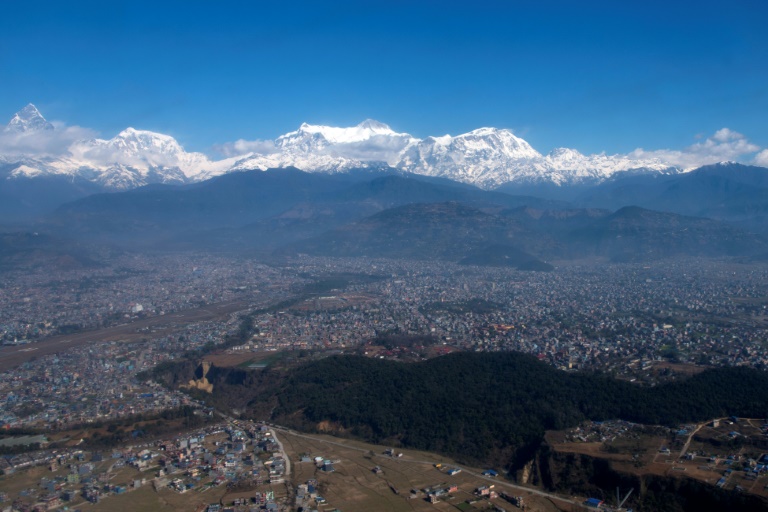
Jomsom is a popular trekking destination in the Himalayas about 20 minutes by plane from Pokhara, which lies 200 kilometres (120 miles) west of the capital Kathmandu.

Tara Air is a subsidiary of Yeti Airlines, a privately owned domestic carrier which services many remote destinations across Nepal.

It suffered its last fatal accident in 2016 on the same route when a plane with 23 on board crashed into a mountainside in Myagdi district.

Nepal’s aviation industry has long been plagued by poor safety due to insufficient training and maintenance.

The European Union has banned all Nepali airlines from its airspace over safety concerns.

The Himalayan country also has some of the world’s most remote and tricky runways, flanked by snow-capped peaks with approaches that pose a challenge even for accomplished pilots.

The weather can also change quickly in the mountains, creating treacherous flying conditions.

– History of crashes –

In March 2018, a US-Bangla Airlines plane crash-landed near Kathmandu’s notoriously difficult international airport, skidded into a football field and burst into flames.

Fifty-one people died and 20 miraculously escaped the burning wreckage but sustained serious injuries.

An investigation found that the captain suffered an emotional breakdown during the flight, distracting the freshly qualified co-pilot who was at the controls when it crashed.

That accident was Nepal’s deadliest since 1992, when all 167 people aboard a Pakistan International Airlines plane died when it crashed on approach to Kathmandu airport.

Just two months earlier a Thai Airways aircraft had crashed near the same airport, killing 113 people.

In 2019 Nepal’s tourism minister Rabindra Adhikari was among seven people killed when a helicopter crashed in the country’s hilly east.

This month Nepal’s second international airport opened at Bhairahawa, aiming to give Buddhist pilgrims from across Asia access to the Buddha’s birthplace at nearby Lumbini and easing pressure on Kathmandu airport.

Pacific 'very positive' on Australian re-engagement: PM

Australia’s newly elected prime minister has said Pacific leaders have been “very positive” about his government’s renewed engagement, even as Beijing continues its diplomatic blitz across the increasingly contested region.

The comments from Anthony Albanese — aired Sunday in an interview with Sky News — came as Chinese Foreign Minister Wang Yi visited Fiji for closely watched meetings with the island nation’s leaders and other Pacific foreign ministers.

Wang, who began his South Pacific tour Thursday in Solomon Islands, is expected to discuss with his fellow foreign ministers a wide-ranging draft agreement and five-year plan, which was leaked last week.

The leaked drafts, obtained by AFP, were circulated to at least 10 Pacific nations ahead of the Fiji meeting, sparking concern about Beijing’s ambitions to dramatically expand security and economic cooperation within the South Pacific. 

– Australia ‘dropped the ball’ –

Albanese was scathing in his assessment of the former Australian government’s Pacific plan, saying it had “dropped the ball” in the region — blaming both foreign aid cuts and “a non-engagement on values”.

“For our Pacific Island neighbours, the issue of climate change is an absolute national security issue,” he said.

In addition to increased action on the environment, Albanese touted a boost in aid and a plan to set up a defence training school in the Pacific. 

During Australia’s recent election campaign, Albanese’s centre-left Labor party said the school would involve forces from Papua New Guinea, Fiji, Tonga, Timor-Leste, Vanuatu and Solomon Islands.

Albanese said Australia’s renewed diplomatic push in the Pacific, which began with a visit to Fiji by new foreign minister Penny Wong, had been well-received.

“The response has been very positive,” he said.

Australia and China have been locked in a tense duel for influence in the Pacific, after Beijing last month surprised Canberra by securing a wide-ranging security pact with Solomon Islands.

Foreign Minister Wong urged South Pacific nations to spurn China’s attempts to extend its security reach across the region while in Fiji on Friday.

“We have expressed our concerns publicly about the security agreement,” Wong told reporters in the capital of Suva.

– Climate change key focus –

Chinese foreign minister Wang said China was willing to work with other major powers in the Pacific region to help island nations develop.

“China is willing to carry out more tripartite cooperation with other countries, especially countries with traditional influence in the region” to help island countries accelerate their development, Wang said when he met Sunday with Pacific Islands Forum Secretary General Henry Puna.

“It is a trip of peace, friendship and cooperation,” Wang said, according to a statement about the meeting by the Chinese foreign ministry. 

Wang is expected to remain in Fiji’s capital until at least Tuesday, meeting with the country’s leaders and hosting the second China-Pacific Island Countries Foreign Ministers’ meeting.

Puna said economic recovery from the pandemic and “urgent and ambitious climate change action” were key issues for their discussion.

“We welcome China’s climate change commitments,” Puna said.

Wang’s whistle-stop tour of the Pacific previously took him to Kiribati, where he signed 10 memorandums of understanding covering climate change, economic cooperation and other issues — although a security agreement was not among them.

He also visited Samoa, where he signed a bilateral agreement on Saturday promising “greater collaboration”.

Wang is expected to visit Tonga, Vanuatu and Papua New Guinea to round out his tour.

Left eyes historic win in Colombian presidential election

Colombians headed to the polls Sunday in a first round of presidential elections, with a leftist poised for victory for the first time in the country’s troubled history.

The vote takes place in a tense atmosphere, a year after a brutal security crackdown on street protests fueled by deepening socioeconomic woes.

Polls opened at 8:00 am (1300 GMT) for eight hours of voting.

Just under 39 million of Colombia’s 50 million people are eligible to cast their ballot, though the recent abstention rate has been high, at around 50 percent.

Opinion polls show that many Colombians are pinning their hopes on Gustavo Petro, an ex-guerrilla and former mayor of Bogota, to address poverty, rural violence, urban crime and endemic corruption.

Petro, 62, is hoping to avoid a June 19 run-off against 47-year-old Federico Gutierrez, a former mayor of second city Medellin who represents an alliance of right-wing parties.

To do so, Petro would need to garner more than 50 percent of first-round votes cast.

About 300,000 armed police and soldiers were deployed to keep the peace at 12,000 polling stations countrywide, under the watchful eye of observers from the Organization of American States and the European Union.

– Colombia ‘needs change’ –

Ivan Duque — who beat Petro in a runoff election in 2018 — is leaving with record disapproval numbers. Colombian presidents serve only one four-year term.

Around 40 percent of Colombians today live in poverty, and the country has one of the highest levels of income inequality in the world, according to the World Bank.

The economy was hard hit by the coronavirus pandemic, and one in six city dwellers is unemployed.

The Duque government’s image was not helped by its internationally denounced response to weeks of anti-poverty protests last year that saw dozens of civilians killed.

“Colombia needs change,” office cleaner Petrona Guzman, 43, told AFP on the eve of the vote, in which she will make her mark for Petro.

“The rich have priority over us, the middle class. It has always been like that. The majority of people are lost.”

Petro, in his third presidential race, has promised to address poverty and to make Colombia’s economy more environmentally friendly, including by phasing out crude oil exploration.

Gutierrez’s focus has been on a “strong state” response to crime in the world’s biggest cocaine producer.

A key voter concern is a flare-up of rural violence, despite a 2016 peace agreement that officially ended a near six-decade civil conflict.

Areas abandoned by the now-defunct FARC guerrilla group became battlegrounds for control of drug and illegal mining resources between other armed groups, with civilians in the crossfire.

Petro, a former member of the M-19 urban rebel group that laid down arms in 1990, has vowed to pursue peace talks with the last remaining guerrilla group, the ELN, which were suspended under Duque.

Crime is a problem in the cities too, where residents complain of a rise in robberies they blame in large part on an influx of nearly two million migrants from neighboring Venezuela.

– ‘Change’ –

On Friday, Petro told voters the country had a choice “either to keep things as they are in Colombia, or change,” leaving behind “corruption, violence and hunger.” 

In the same TV debate, Gutierrez agreed change was needed “but this change must happen safely… without putting at risk families, homes… jobs.”

In a country marked by a deep-rooted fear of the political left — associated with guerrilla groups that sowed decades of misery — the pushback against Petro has been fierce, with rivals seeking to paint him as a radical, Hugo Chavez-style populist.

In with an outsider chance in third place, according to opinion polls, is 77-year-old anti-corruption candidate Rodolfo Hernandez.

Three other candidates, each with support in the single-digits, complete the picture.

The campaign has been marred by suspicions of fraud following counting irregularities reported in a primary voting round in March, and Petro on Friday expressed fresh concerns about the software used by Colombia’s vote count body.

Petro and Gutierrez have both received death threats, as has the leftist’s running mate Francia Marquez, who could become Colombia’s first ever black woman vice-president.

Five presidential candidates were assassinated by opponents, drug traffickers or paramilitary groups in Colombia in the 20th century.

Plane with 22 on board missing in Nepal

Nepali rescuers scoured a remote area of the lower Himalayas by helicopter and on foot Sunday after a passenger plane with 22 people on board went missing.

Nepal’s air industry has boomed in recent years, carrying goods and people between hard-to-reach areas as well as foreign trekkers and climbers. But it has a poor safety record.

The Twin Otter aircraft operated by Tara Air took off from the western town of Pokhara for Jomsom on Sunday at 9:55 am (0410 GMT) but air traffic control lost contact after 15 minutes, the airline said.

There were 19 passengers on board and three crew members, airline spokesman Sudarshan Bartaula told AFP. The passengers included two Germans and four Indians, with the remainder Nepali.

The aircraft’s last known location was in an area around Ghorepani, a village at 2,874 metres (9,429 feet) above sea level, according to the aviation authority.

The Civil Aviation Authority said that in addition to two choppers, personnel from the army, police and the Himalayan Rescue Association had been deployed to conduct search operations on foot.

“Right now we cannot say where exactly where the aircraft is and in what condition. There has not been any reporting or information from locals about a big fire or any other such indications,” said Dev Raj Subedi, a spokesman for Pokhara Airport.

“Search operations have been hampered by the weather. Three helicopters have had to return. An army helicopter is now trying to reach the area,” he told AFP as light began to fade in the region.

– Poor record –

Jomsom is a popular trekking destination in the Himalayas about 20 minutes by plane from Pokhara, which lies 200 kilometres (120 miles) west of the capital Kathmandu.

Tara Air is a subsidiary of Yeti Airlines, a privately owned domestic carrier which services many remote destinations across Nepal.

It suffered its last fatal accident in 2016 on the same route when a plane with 23 on board crashed into a mountainside in Myagdi district.

Nepal’s aviation industry has long been plagued by poor safety due to insufficient training and maintenance.

The European Union has banned all Nepali airlines from its airspace over safety concerns.

The Himalayan country also has some of the world’s most remote and tricky runways, flanked by snow-capped peaks with approaches that pose a challenge even for accomplished pilots.

The weather can also change quickly in the mountains, creating treacherous flying conditions.

– Emotional breakdown –

In March 2018, a US-Bangla Airlines plane crash-landed near Kathmandu’s notoriously difficult international airport, skidded into a football field and burst into flames.

Fifty-one people died and 20 miraculously escaped the burning wreckage but sustained serious injuries.

An investigation found that the captain suffered an emotional breakdown during the flight, distracting the freshly qualified co-pilot who was at the controls when it crashed.

That accident was Nepal’s deadliest since 1992, when all 167 people aboard a Pakistan International Airlines plane died when it crashed on approach to Kathmandu airport.

Just two months earlier a Thai Airways aircraft crashed near the same airport, killing 113 people.

In 2019 Nepal’s tourism minister Rabindra Adhikari was among seven people killed when a helicopter crashed in the country’s hilly east.

This month Nepal’s second international airport opened at Bhairahawa, aiming to give Buddhist pilgrims from across Asia access to the Buddha’s birthplace at nearby Lumbini and easing pressure on Kathmandu airport.

Tension in Jerusalem ahead of Israeli 'flag march'

A tense Jerusalem braced for Israel’s “flag march” on Sunday as Palestinian groups threatened retaliation over the annual rally that sparked a war last year.

Israel deployed 3,000 police on the day that marks its 1967 capture of east Jerusalem, home of the Al-Aqsa mosque compound located on what Jews revere as the Temple Mount.

Flag-waving Jewish nationalists chanting pro-Israel slogans, among them a far-right lawmaker, in the morning visited Al-Aqsa, where Israeli police said several Palestinians threw rocks toward the officers.

Isolated clashes also broke out at the Old City’s Damascus Gate where dozens of Jewish nationalists danced in front of Palestinians, one of whom raised his shoe in an Arab insult. Police reported 18 arrests over “disorderly conduct”.

Across annexed east Jerusalem, many Palestinian flags flew from rooftops ahead of the “Jerusalem Day” march due to start at 4:00 pm (1300 GMT).

The march last year sparked unrest that led the Islamist armed group Hamas to fire rockets from the blockaded Gaza Strip, triggering an 11-day war.

Hamas warned last week that marchers must not pass through the Al-Aqsa mosque compound, saying it would use all means to confront them.

The route of the march has never included Al-Aqsa, a site which Jewish groups are permitted to visit but where they are not allowed to pray.

Prime Minister Naftali Bennett said Sunday the march would be held “along the regular route” and urged participants to be “respectful”.

– Pro-Israel chants –

Police said that in the morning some 1,800 people ascended to the compound during a regular visitation window — more than normal, but made up mostly of tourists. 

Some Jews had “violated visitation rules” and several people were detained, police said without providing further details, before the day’s time window for visits concluded. 

One group sang pro-Israel chants including “Yerushalayim rak shelanou” or “Jerusalem belongs to us only”.

Far-right nationalist lawmaker Itamar Ben Gvir, who was among those who went to Al Aqsa, later said his visit aimed “to reaffirm that we, the State of Israel, are sovereign” in the Holy City.

Most of the international community does not recognise Israeli control over east Jerusalem, which Palestinians see as the capital of a future state. 

Some participants in Sunday’s march were set to pass through Damascus Gate on their way to the Western Wall, a controversial route for which police force Palestinians businesses to close. 

Israel has since April been hit by a series of attacks targeting mostly civilians and has in turn launched military raids targeting armed groups in the occupied West Bank.

Despite the recent violence, tensions have been more muted in the run-up to Sunday’s rally compared to last year.  

– Fear of war –

Security analyst Shlomo Mofaz judged that Bennett was betting on the likelihood that for now “Hamas does not have any interest in another war”.

“The main policy of Hamas today is to encourage people inside Israel (to attack), while they continue to reconstruct the Gaza Strip,” said the former intelligence officer.

Some observers believe unrest could be fuelled by fallout from last week’s killing of Iranian Revolutionary Guards colonel Sayyad Khodai in Tehran. 

According to The New York Times, Israel has informed the United States that the Jewish state’s operatives were responsible for gunning him down.

Without addressing Khodai’s killing, Bennett said that “the era of the Iranian regime’s immunity is over … Whoever arms terrorists … will pay the full price”.

Iran backs Hamas, and Mofaz argued that Tehran may “encourage” Palestinian armed factions to launch rockets at Israel.

Gaza resident Mohamed Al Moughrabi, 20, said that although fear of a new war was high, he expected that “the situation will not be like last year”.

Russia tightens grip on key cities as battle for Donbas rages

The battle for control of the eastern Ukrainian region of Donbas raged on Sunday as Russian forces tightened their grip around the key cities of Severodonetsk and Lysychansk.

The situation in Lysychansk had become “significantly worse”, the regional governor of the Lugansk region, Sergiy Gaiday, said on the messaging service, Telegram. 

“A Russian shell fell on a residential building, a girl died and four people were hospitalised,” he said.

Meanwhile, on the eastern bank of the Donets river, Russian forces “carried out assault operations in the area of the city of Severodonetsk,” according to the Ukrainian general staff. 

Fighting was advancing street-by-street in the city, Gaiday said. 

More than three months after Moscow invaded its pro-Western neighbour, French President Emmanuel Macron and German Chancellor Olaf Scholz called for “direct serious negotiations” between Russian leader Vladimir Putin and his Ukrainian counterpart Volodymyr Zelensky. 

The two European leaders also “insisted on an immediate ceasefire and a withdrawal of Russian troops” in an 80-minute phone call with the Russian leader on Saturday, the German chancellor’s office said.

– ‘Very difficult’ –

Since failing to capture the capital Kyiv in the early stages of the war, Russia has shifted its focus to the eastern Donbas region as it attempts to consolidate areas under its control.

“The situation is very difficult, especially in those areas in the Donbas and Kharkiv regions, where the Russian army is trying to squeeze at least some result for itself,” Zelensky said in his daily address to the nation late Saturday. 

Earlier, Russia’s defence ministry had said the “town of Krasny Liman (Moscow’s name for Lyman) has been entirely liberated from Ukrainian nationalists.”

Lyman lies on the road to Kramatorsk and Severodonetsk, which is “now surrounded,” according to a police official in Lugansk province cited by Russian state media. 

But governor Gaiday insisted that “Severodonetsk has not been cut off.

“There is still the possibility to deliver humanitarian aid,” he told Ukrainian television.

– ‘Constant shelling’ –

In Severodonetsk, where an estimated 15,000 civilians remain, a local official said “constant shelling” made it increasingly difficult to get in or out.

“Evacuation is very unsafe, it’s isolated cases when we manage to get people out. Now the priority is for the wounded and people who need serious medical assistance,” said Oleksandr Stryuk, head of the city’s military and civil administration.

The water supply was also increasingly unstable, as a lack of electricity meant the pumps at city wells no longer functioned, he said. 

Residents had gone more than two weeks without a mobile phone connection, he added.

Governor Gaiday said the sole road link to the outside world was expected to be the focus of continued Russian attacks. 

“Next week will be very hard, as Russia puts all its resources into seizing Severodonetsk, or cutting off the (area) from communication with Ukraine,” he said.

– Putin ‘ready’ to export grain –

In their call with Putin, Scholz and Macron pointed to a looming global food security crisis. 

In addition to capturing key ports such as Mariupol, Russia has used its warships to cut off other cities still in Ukrainian hands, blocking grain supplies from being transported out.

Russia and Ukraine supply about 30 percent of the wheat traded on global markets.

Russia has tightened its own exports and Ukraine has vast amounts stuck in storage, driving up prices and reducing availability across the globe.

Putin has repeatedly rejected any responsibility, instead blaming Western sanctions.

But on Saturday, he told Macron and Scholz that Russia was “ready” to look for ways to allow more wheat onto the global market.

“Russia is ready to help find options for the unhindered export of grain, including the export of Ukrainian grain from the Black Sea ports,” the Kremlin quoted him as saying.

He also called for the lifting of sanctions to allow “an increase in the supply of Russian fertilisers and agricultural products” to the global market.

– Zelensky to speak to EU –

Urgent calls by Zelensky for more advanced weaponry from Ukraine’s Western allies appear to paying off, with Washington agreeing to send advanced long-range rocket systems, according to US media reports.

Pentagon spokesman John Kirby did not confirm the plans to deliver the M270 Multiple Launch Rocket System, highly mobile equipment capable of firing up to 300 kilometres (186 miles) that Kyiv has said it badly needs.

But he said Washington was “still committed to helping them succeed on the battlefield”.

Putin warned Macron and Scholz that ramping up arms supplies to Ukraine would be “dangerous” and risk “further destabilisation”.

On Sunday, the Russian defence ministry said it had destroyed a Ukrainian armed forces arsenal in the southeastern city of Kryvyi Rih with “long-range high-precision missiles”.

Russian forces also targeted a Ukrainian anti-air defence system near Mykolaivka in the Donetsk region, as well as a radar station near Kharkiv and five munitions depots, one of which was close to Severodonetsk.

As Zelensky seeks to ramp up international pressure on Moscow, he will speak to EU leaders at an emergency summit Monday on an embargo on Russian oil. 

Agreement is being held up by Hungary, whose Prime Minister Viktor Orban has close relations with Putin.

burs-sea/spm

War in Ukraine: Latest developments

Here are the latest developments in the war in Ukraine:

– Russian onslaugt in eastern Ukraine –

Russia says it has captured the strategic town of Lyman and claims to have surrounded the urban centre of Severodonetsk, as it wages an all-out war for the eastern Donbas — Ukraine’s industrial heartland.

But a Ukrainian official denies the claim that Severodonetsk has been encircled, saying government troops had repelled Russian forces from the outskirts of the key city.

– ‘Constant shelling’ in Severodentsk –

In Severodentsk, where an estimated 15,000 civilians remain, a local official says “constant shelling” has made it increasingly difficult to get in or out.

Evacuation is “very unsafe”, with priority given to the wounded and those in need of serious medical assistance, says Oleksandr Stryuk, head of the city’s military and civil administration.

The water supply is also increasingly tenuous, as a lack of electricity means the pumps at city wells no longer function, and residents have gone more than two weeks without a cellphone connection, he says.

– Situation ‘very difficult’, says Zelensky –

In his daily address to the nation, Ukrainian President Volodymyr Zelensky says the situation is “very difficult, especially in those areas in the Donbas and Kharkiv regions, where the Russian army is trying to squeeze at least some result for itself”.

He says Ukraine is doing “everything” to defend Donbas.

– France, Germany urge direct talks –

German Chancellor Olaf Scholz and French President Emmanuel Macron ask Russian President Vladimir Putin to hold “direct serious negotiations” with Zelensky.

During an 80-minute conversation with the Russian president, the two EU leaders “insisted on an immediate ceasefire and a withdrawal of Russian troops,” the German chancellor’s office said.

They also demand Russia free 2,500 Ukrainian fighters taken as prisoners of war after surrendering earlier this month at a sprawling steelworks in the ravaged port city of Mariupol.

– Russia ‘ready’ to help ship grain –

With a looming global food crisis exacerbated by the war in Ukraine, Putin says Moscow is “ready” to look for ways to ship grain stuck in Ukrainian ports, but demands the West lift sanctions.

“Russia is ready to help find options for the unhindered export of grain, including the export of Ukrainian grain from the Black Sea ports,” Putin tells Macron and Scholz, the Kremlin says.

Putin says the difficulties in supplying grain to world markets were the result of “erroneous economic and financial policies of Western countries”.

– Putin says more Western arms ‘dangerous’ –

Putin warns the West that ramping up weapons supplies to Ukraine is “dangerous” and could further destabilise the situation in the pro-Western country.

His remarks come on the heels of US media reports that Washington is preparing to send advanced long-range rocket systems to further help Ukraine.

Pentagon spokesman John Kirby did not confirm the plans to deliver the M270 Multiple Launch Rocket System, a highly mobile system capable of firing up to 300 kilometres (186 miles) that Kyiv has said it badly needs.

But he said Washington was “still committed to helping them succeed on the battlefield”.

– Russia tests hypersonic missile –

Russia announces the latest test of its Zircon hypersonic cruise missile, which it says dashed across some 1,000 kilometres (625 miles) and “successfully hit” a target in the Arctic.

– Australian aid worker killed –

As Ukraine faces an increasingly desperate humanitarian situation, an Australian man was reported to have been killed this week while supplying aid. 

A death notice appeared in Tasmania’s Mercury newspaper identifying the man as Michael Charles O’Neill, 47, with a tribute on Facebook saying he had been “driving the wounded and injured from the front line”. An Australian foreign affairs department spokesperson confirmed the death.

burs-po/yad

Jerusalem on high alert ahead of Israeli 'flag march'

Jerusalem braced for a controversial “flag march” on Sunday as Israelis mobilised to commemorate the city’s unification and Palestinian groups threatened retaliation over the annual rally that sparked a war last year.

Hours before the march was to begin, tensions were high in Jerusalem’s Old City, where an extreme-right Jewish lawmaker and other Jewish nationalists visited the flashpoint Al-Aqsa mosque compound chanting pro-Israel slogans.

Al-Aqsa is Islam’s third holiest place and also Judaism’s holiest site.

Israeli police said a small group of Palestinians threw large rocks towards officers from inside the Al-Aqsa mosque. There were no reported injuries.  

Last year on what Israelis call “Jerusalem Day,” Hamas Islamists fired rockets at the city, prompting Israeli retaliatory strikes and triggering an 11-day war between the Jewish state and armed groups in the Gaza Strip, which is blockaded by Israel and ruled by the Hamas movement.  

Fighting cost the lives of 260 Palestinians, including 66 children, according to the Hamas-run health ministry. Fourteen people were killed in Israel, including two children, Israeli authorities said. 

Hamas warned last week against marchers passing through the Al-Aqsa mosque compound, saying it would use “all possibilities” to confront them. 

The path of the march has never included Al-Aqsa, which Jews call the Temple Mount.

Jewish groups are, however, permitted to visit the site provided they do not pray there.

One group that arrived early Sunday sang pro-Israel chants as they left the compound including, “hierushalayim rak shelanou”, or “Jerusalem belongs to us, only.”

Across east Jerusalem, many Palestinians raised Palestinians flags on the roofs of their homes, in an apparent act of protest against Israelis celebrating the capture of the city. 

Palestinians want east Jerusalem as the capital of their own future state.

Some of the Jewish marchers are expected to enter the Old City via Damascus Gate, heavily used by Palestinians, before making their way to the Western Wall, a controversial route that sees police force Palestinians businesses to close. 

Most of the shops in the Old City had already shut ahead of the march.  

Itamar Ben Gvir, the nationalist lawmaker who visited Al Aqsa, told reporters elsewhere in the Old City that his visit was aimed “to reaffirm that we, the State of Israel, are sovereign (in Jerusalem).”

Most of the international community does not recognise Israeli control over east Jerusalem. 

– ‘Calculated policy’ –

Despite waves of clashes in Al-Aqsa and elsewhere over the past two months, tensions have been more muted in the run-up to this year’s rally.  

Prime Minister Naftali Bennett has said the march would “take place according to the planned route, as it has for decades”.

About 3,000 police officers had been deployed ahead of the procession, due to begin at 4:00 pm (1300 GMT).

The event has been described by leading Israeli daily Yediot Aharonot as a “personal test” for Bennett, marking a departure in strategy compared with that of his predecessor Benjamin Netanyahu.

Whereas Netanyahu chose a “noisy policy of capitulation” that ended with Hamas firing rockets at Israel, Bennett was adopting a “calm and calculated policy”, the daily said.

According to security analyst Shlomo Mofaz, Bennett was betting on the likelihood that “Hamas does not have any interest in another war”.

“The main policy of Hamas today is to encourage people inside Israel (to attack), while they continue to reconstruct the Gaza Strip,” added the former intelligence officer.

But unrest could be fuelled by fallout from the killing of Iranian Revolutionary Guards colonel Sayyad Khodai in Tehran last week.  

According to The New York Times, Israel has informed the United States that it was responsible for gunning him down.

Iran backs Hamas, and Mofaz argued that Tehran may “encourage” Palestinian armed factions to launch rockets at Israel.

Close Bitnami banner
Bitnami