World

Nepal flight missing with 22 on board

A passenger plane with 22 people on board went missing in Nepal on Sunday, the operating airline and officials said, as poor weather hampered a search operation.

Nepal’s air industry has boomed in recent years, carrying goods and people between hard-to-reach areas as well as foreign trekkers and climbers. But it has a poor safety record.

The Twin Otter aircraft operated by Tara Air took off from the western town of Pokhara bound for Jomsom at 9:55 am (0410 GMT) but air traffic control lost contact after 15 minutes.

“We are trying to locate the possible area where the aircraft might be,” Sudarshan Bartaula, spokesman for Tara Air, told AFP.

“Search and rescue teams from both the police and the army are heading towards that direction.”

He said there were 19 passengers on board and three crew members. The passengers included two Germans and four Indians, with the remainder Nepali.

Jomsom is a popular trekking destination in the Himalayas about 20 minutes by plane from Pokhara, which lies 200 kilometres (120 miles) west of the capital Kathmandu.

Phanindra Mani Pokharel, a spokesman at the Ministry of Home Affairs, said two helicopters had been deployed for a search operation.

But he said visibility was low. 

“The bad weather is likely to hamper the search operation. The visibility is so poor that nothing can be seen,” Pokharel said.

– Poor record –

Nepal’s aviation industry has long been plagued by poor safety due to insufficient training and maintenance.

The European Union has banned all Nepali airlines from its airspace over safety concerns.

The Himalayan country also has some of the world’s most remote and tricky runways, flanked by snow-capped peaks with approaches that pose a challenge for even accomplished pilots.

The weather can also change quickly in the mountains, creating treacherous flying conditions.

In March 2018, a US-Bangla Airlines plane crashed near Kathmandu’s notoriously difficult-to-approach international airport, killing 51 people. 

The flight from the Bangladeshi capital Dhaka crash-landed and skidded into a football field where it burst into flames. 

Twenty passengers miraculously escaped the burning wreckage but sustained serious injuries.

An investigation found that the captain suffered an emotional breakdown during the flight, distracting the freshly qualified co-pilot who was at the controls when it crashed.

The report said air traffic control also confused the two ends of the runway, but concluded this had no impact on the flight.

– Pakistan Airlines –

The accident was Nepal’s deadliest since 1992 when all 167 people aboard a Pakistan International Airlines plane died when it crashed on approach to Kathmandu airport.

Just two months earlier a Thai Airways aircraft crashed near the same airport, killing 113 people.

In 2019 three people died when a plane veered off the runway and hit two helicopters while taking off near Mount Everest.

The accident happened at Lukla airport which is the main gateway to the Everest region and is reputed to be one of the most difficult in the world for landing and take-off.

Also in 2019 Nepal’s tourism minister Rabindra Adhikari was among seven people killed when a helicopter crashed in the country’s hilly east.

This month Nepal’s second international airport opened at Bhairahawa, aiming to give Buddhist pilgrims from across Asia access to the Buddha’s birthplace at nearby Lumbini.

The $76 million project will ease pressure on the overburdened Kathmandu international airport.

Pacific 'very positive' on Australian re-engagement: PM

Australia’s newly elected prime minister has said Pacific leaders have been “very positive” about his government’s renewed engagement, even as Beijing continues its diplomatic blitz across the increasingly contested region.

The comments from Anthony Albanese — aired Sunday in an interview with Sky News — came as Chinese Foreign Minister Wang Yi visited Fiji for closely watched meetings with the island nation’s leaders and other Pacific foreign ministers.

Wang, who began his South Pacific tour Thursday in Solomon Islands, is expected to discuss with his fellow foreign ministers a wide-ranging draft agreement and five-year plan, which was leaked last week.

The leaked drafts, obtained by AFP, were circulated to at least 10 Pacific nations ahead of the Fiji meeting, sparking concern about Beijing’s ambitions to dramatically expand security and economic cooperation within the South Pacific. 

– Australia ‘dropped the ball’ –

Albanese was scathing in his assessment of the former Australian government’s Pacific plan, saying it had “dropped the ball” in the region — blaming both foreign aid cuts and “a non-engagement on values”.

“For our Pacific Island neighbours, the issue of climate change is an absolute national security issue,” he said.

In addition to increased action on the environment, Albanese touted a boost in aid and a plan to set up a defence training school in the Pacific. 

During Australia’s recent election campaign, Albanese’s centre-left Labor party said the school would involve forces from Papua New Guinea, Fiji, Tonga, Timor-Leste, Vanuatu and Solomon Islands.

Albanese said Australia’s renewed diplomatic push in the Pacific, which began with a visit to Fiji by new foreign minister Penny Wong, had been well-received.

“The response has been very positive,” he said.

Australia and China have been locked in a tense duel for influence in the Pacific, after Beijing last month surprised Canberra by securing a wide-ranging security pact with the Solomon Islands.

Foreign Minister Wong urged South Pacific nations to spurn China’s attempts to extend its security reach across the region while in Fiji on Friday.

“We have expressed our concerns publicly about the security agreement,” Wong told reporters in the capital of Suva.

– Climate change a key focus –

Chinese Foreign Minister Wang is expected to remain in Fiji’s capital until at least Tuesday, meeting with the country’s leaders and hosting the second China-Pacific Island Countries Foreign Ministers’ meeting.

Wang met Sunday with Pacific Islands Forum Secretary-General Henry Puna, who said economic recovery from the pandemic and “urgent and ambitious climate change action” were key issues for their discussion.

“We welcome China’s climate change commitments,” Puna said.

Wang’s whistle-stop tour of the Pacific previously took him to Kiribati, where he signed 10 memorandums of understanding covering climate change, economic cooperation and other issues — although a security agreement was not among them.

He also visited Samoa, where he signed a bilateral agreement on Saturday promising “greater collaboration”.

Wang is expected to visit Tonga, Vanuatu and Papua New Guinea to round out his tour.

Ex-mayor eyes historic leftist conquest of Colombian presidency

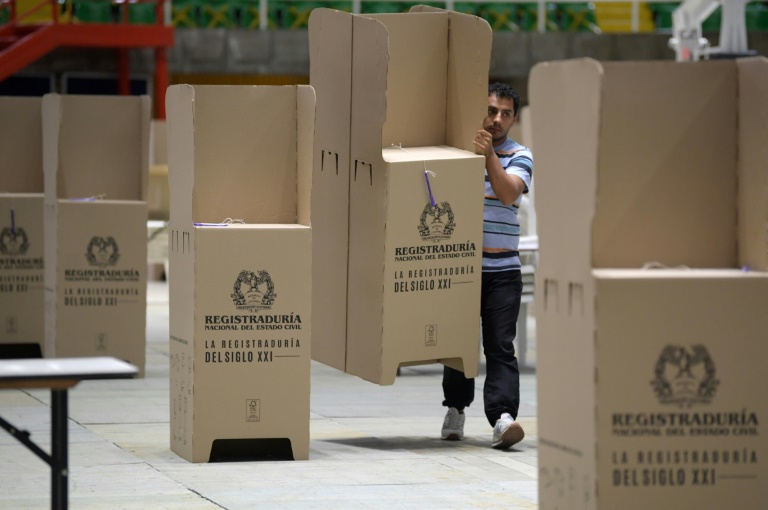
Colombians vote Sunday in a first round of presidential elections, with a leftist poised for victory for the first time in the country’s troubled history.

The vote takes place in a tense atmosphere, a year after a brutal security crackdown on street protests that were fueled by deepening socioeconomic woes.

Polls show that many Colombians are pinning their hopes on Gustavo Petro, an ex-guerrilla and former mayor of Bogota, to address poverty, rural violence, urban crime and endemic corruption.

Petro, 62, is hoping to avoid a June 19 run-off against 47-year-old Federico Gutierrez, a former mayor of second city Medellin who represents an alliance of right-wing parties.

To do so, he would need to garner more than 50 percent of first-round votes cast.

About 300,000 armed police and soldiers will keep the peace at 12,000 polling stations countrywide, under the watchful eye of observers from the Organization of American States and the European Union.

Just under 39 million of Colombia’s 50 million people are eligible to cast a vote between 8:00 am and 4:00 pm (1300-2100 GMT), though the recent abstention rate has been high at around 50 percent.

“I do not vote because it is always the criminals who win,” 30-year-old street vendor Andrea Perez told AFP.

– Colombia ‘needs change’ –

Ivan Duque — who beat Petro in a runoff election in 2018 — is leaving with record disapproval numbers. Colombian presidents serve only one four-year term.

Around 40 percent of Colombians today live in poverty, and the country has one of the highest levels of income inequality in the world, according to the World Bank.

The economy was hard hit by the coronavirus pandemic, and one in six city dwellers is unemployed.

The Duque government’s image was not helped by its internationally denounced response to weeks of anti-poverty protests last year that saw dozens of civilians killed.

“Colombia needs change,” office cleaner Petrona Guzman, 43, told AFP on the eve of the vote, in which she will make her mark for Petro.

“The rich have priority over us, the middle class. It has always been like that. The majority of people are lost.”

Petro has promised to address poverty and to make Colombia’s economy more environmentally friendly, partly by phasing out crude oil exploration.

Gutierrez’s focus has been on a “strong state” response to crime in the world’s biggest cocaine producer.

A key voter concern is a flare-up of rural violence, despite a 2016 peace agreement that officially ended a near six-decade civil conflict.

Areas abandoned by the now-defunct FARC guerrilla group became battlegrounds for control of drug and illegal mining resources between other armed groups, with civilians in the crossfire.

Petro, a former member of the M-19 urban rebel group which laid down arms in 1990, has vowed to pursue peace talks with the last remaining guerrilla group, the ELN, which were suspended under Duque.

Crime is a problem in the cities too, where residents complain of a rise in robberies they blame in large part on an influx of nearly two million migrants from neighboring Venezuela.

– ‘Change’ –

On Friday, Petro told voters the country had a choice “either to keep things as they are in Colombia, or change,” leaving behind “corruption, violence and hunger.” 

In the same TV debate, Gutierrez agreed change was needed “but this change must happen safely… without putting at risk families, homes… jobs.”

In a country marked by a deep-rooted fear of the political left — associated with guerrilla groups that sowed decades of misery — the pushback against Petro has been fierce, with rivals seeking to paint him as a radical, Hugo Chavez-style populist.

“He (Petro) is very close to communism,” 42-year-old businessman Freddy Montoya, who intends to vote for 77-year-old anti-corruption candidate Rodolfo Hernandez, told AFP.

Three other candidates, each with support in the single-digits according to opinion polls, complete the picture.

The campaign has been marred by suspicions of fraud following counting irregularities reported in a primary voting round in March, and Petro on Friday expressed fresh concerns about the software used by Colombia’s vote count body.

Petro and Gutierrez have both received death threats, as has the leftist’s running mate Francia Marquez, who could become Colombia’s first ever black woman vice-president.

Five presidential candidates were assassinated by opponents, drug traffickers or paramilitary groups in Colombia in the 20th century.

Toxic smoke and suspicious plastic plant fires in Turkey

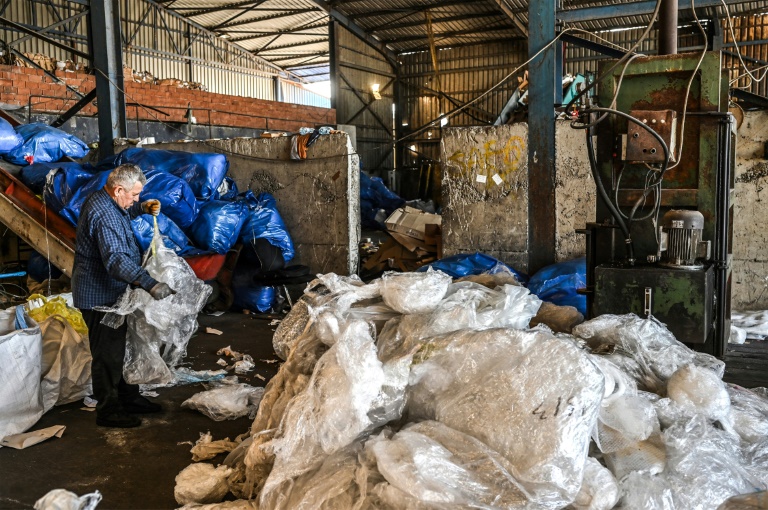
The number of fires breaking out in plastic recycling plants has soared in Turkey.

Experts and activists suspect it’s not a coincidence, believing that some entrepreneurs want to get rid of unwanted rubbish sometimes imported from Europe.

In Kartepe, an industrial town in the country’s north-west, one of these sites was closed by the authorities in December after the outbreak of three fires in less than a month. 

One burned for more than 50 hours, spewing toxic black smoke over the area wedged between the mountains and the Sea of Marmara.

“We don’t want our lakes and springs to be polluted,” said Beyhan Korkmaz, an environmental activist in the city.

She is concerned about the polluting dioxin emissions from a dozen similar fires within a five-kilometre (three-mile) radius in less than two years.

“Should we wear masks?” she said.

There was a fire every three days in Turkey’s plastic reprocessing plants on average last year. The number rose from 33 in 2019 to 121 in 2021, according to Sedat Gundogdu, a professor specialising in plastic pollution at Cukurova University in the southern city of Adana.

– ‘Plastic lobby’ –

Over the same period, Turkey became the leading importer of European plastic waste — ahead of Malaysia — after China banned imports at the start of 2018.

Nearly 520,000 tonnes arrived in Turkey in 2021, adding to the four to six million tonnes the country generates each year, according to data compiled by the Turkish branch of the NGO Greenpeace.

Much of this waste ends up in the south of the country, especially in Adana province, where companies operating illegally have been closed down in recent years.

Other waste containers arrive at the ports of Izmir in the west and Izmit, not far from Kartepe.

“The problem is not importing plastic from Europe, the problem is importing non-recyclable or residual plastics,” said Baris Calli, professor of environmental engineering at Marmara University in Istanbul.

“My feeling is that most of these fires are not just a coincidence,” he said.

He explained only 20 to 30 percent of imported plastic waste is recyclable. 

“The remaining residues should be sent to incineration plants but the incineration plants charge some money… that’s why when some companies have significant amounts of residues on their hands they try to find some easy way to get rid of them,” he said.

Gundogdu finds it curious that “most of these fires are happening at night” and in outlying storage sections of reprocessing centres, away from the machines.

In a report published in August 2020, international police organisation Interpol expressed concern about an “an increase in illegal waste fire and landfills in Europe and Asia”, citing Turkey in particular.

Following an October 2021 regulation, companies in the sector found guilty of arson can have their permits withdrawn. 

The environment ministry and the vice-president of the waste and recycling branch of the Union of Chambers of Commerce of Turkey did not respond when asked by AFP how many companies have been sanctioned.

“The ministry cannot investigate really carefully, or maybe they don’t want to find” out, Calli said.

He said the plastic industry lobby has grown stronger in Turkey in recent years.

According to Turkish recyclers’ association GEKADER, the plastic waste sector generates $1 billion a year and employs some 350,000 people in 1,300 companies.

– ‘A ray of sunlight is enough’ –

In her office overlooking a shabby warehouse in Kartepe, where plastics are sorted before being recycled or legally incinerated, Aylin Citakli rejected accusations of arson.

“I don’t believe it,” the sorting centre’s environmental manager said.

“These are easily flammable materials, anything can start a fire, a ray of sunlight is enough,” she said.

Turkey announced a ban on the import of plastic waste in May 2021 following outcry after the publication of images of waste from Europe dumped in ditches and rivers.

The ban was lifted a week after it came into force.

Back in Kartepe, environmental activist Korkmaz is worried about the future of her region, where she has lived for 41 years.

She cited the example of Dilovasi, a town 40 kilometres (25 miles) away that houses many chemical and metal factories. Scientists have found abnormally high cancer rates there. 

“We don’t want to end up like them,” she said.

Decline in North Sea puffins causes concern

The Isle of May, off Scotland’s east coast, is home to one of the UK’s biggest colonies of seabirds. Some 200,000 birds, from kittiwakes to guillemots can flock to the rocky outcrop at the height of the breeding season.

But conservationists are concerned about dwindling numbers of one of the island’s most distinctive visitors — the Atlantic puffin.

“The population was really booming in the 80s and 90s and then suddenly, a crash,” David Steel, a manager at the nature reserve, told AFP.

“We lost nearly 30 percent of all puffins in the mid-2000s and since then the population has slowly increased but nothing compared to what it used to be.”

Just over 50 miles (80 kilometres) down the coast on the Farne Islands, off Northumberland in northeast England, there are similar concerns.

In both places, global warming, high winds, rains, coastal erosion, pollution and overfishing of its favoured food — sand eels — is being blamed for dwindling numbers.

“Climate change is having a big effect with prey items in the sea,” affecting sand eels which feed on plankton in the North Sea, said Steel. 

“The plankton is moving north as the sea temperature increases. So if there are less sand eels the puffins are going to struggle.”

– Census –

On a meadow on one of the Farne Islands, rangers slowly slide their arms into narrow sandy burrows, searching for signs of nesting pairs of puffins, which are known locally as “tommy noddies”.

“Quite often you will get a bit of a nip, which is a good sign because it means then that the burrow is occupied,” said one of the rangers, Rosie Parsons.

In 2015, the International Union for the Conservation of Nature gave puffins “vulnerable” status, after large declines over much of their European range.

Rising sea temperatures have caused sand eels to move north to cooler waters, forcing the birds to follow but where more extreme weather can be fatal for them.  

The traditional enemies of puffins, which grow to just under 30 centimetres (one foot) tall and weigh around 450 grams (around a pound), are seagulls and seals.

Puffins mate for life and lay a single egg in April or May. 

Due to their low reproductive rate, populations can take decades to recover from a sudden knock.

A full puffin census is being carried out on the Farne Islands and the Isle of May this year.

Concerns were raised last year when a limited count recorded 36,211 breeding pairs across four of the Farne Islands compared to 42,474 pairs in 2018.

Puffin numbers on the islands peaked at 55,674 pairs in 2003 before a sudden crash to 36,835 in 2008 a due to an extremely low number of sand eels.

Zoologist Richard Bevan, from Newcastle University, hopes the resumed annual count will provide a more accurate estimate of puffins on the islands.

“Up until 2018 surveys were done on the Farnes every five years, which means you don’t know what’s happening in the four years in between,” he told AFP.

Before 2018, teams of researchers would check every burrow they came across on an island and form an estimate from that.

The university then found a way to subsample to form an accurate estimate of the population. This has sped up the count and made the task far less arduous.

– Concern –

Measuring puffin numbers is difficult, said Bevan.

Sometimes it will be easy to spot one of the birds, returning to nests with a sand eel clamped in its beak, but puffins are often underground.

“Often the only way to do it is to stick your arm into a burrow and check,” he said. 

The 2022 census will give scientists a picture of how the puffin population is being affected by factors such as climate change and local changes in sand eel availability, Bevan says.

“Looking at the data, it is worrying to see that over the last four years we have seen a downward trend,” he says.

“However, these are data for a short time period and compared to the population counts in the early 1990s they are still reasonable numbers.”

Although there is not an immediate danger of the puffins becoming extinct, the fact that their numbers are falling “triggers concern”.

“With a declining population you have to keep your eye on it to make sure that doesn’t continue,” he said. 

“If it does continue we have to be aware of the factors that contribute to it and how we can ameliorate those.”

US 'concerned' after UN human rights chief visits China

The United States expressed concern on Saturday over China’s “efforts to restrict and manipulate” the UN human rights chief’s visit to the Xinjiang region where Beijing is accused of detaining over a million people in indoctrination camps.

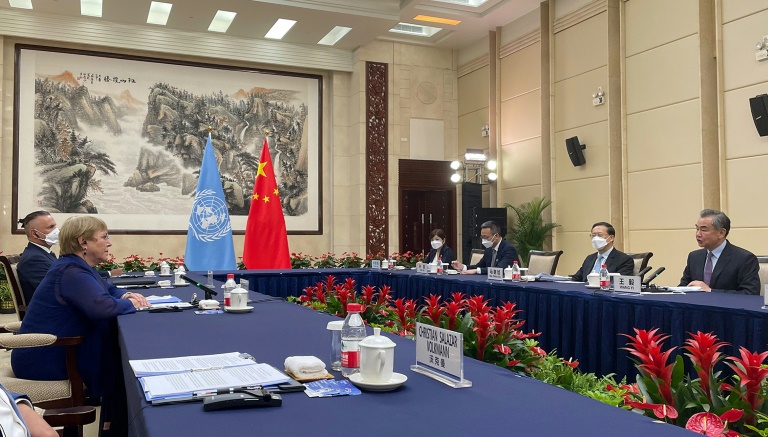
Michelle Bachelet’s long-planned trip this week took her to the far-western Xinjiang region, where the United States has labeled China’s detention of a million Uyghurs and other Muslim minorities a “genocide.”

“We are concerned the conditions Beijing authorities imposed on the visit did not enable a complete and independent assessment of the human rights environment in (China), including in Xinjiang, where genocide and crimes against humanity are ongoing,” US Secretary of State Antony Blinken said in a statement.

The top US diplomat reiterated his country’s stance that Chinese authorities would not allow Bachelet full access during her long-planned trip, saying the United States was “concerned” about China’s “efforts to restrict and manipulate her visit.” 

Bachelet defended her visit earlier on Saturday while still inside China, saying it was “not an investigation” but called on Beijing to avoid “arbitrary and indiscriminate measures” in its crackdown in Xinjiang.

She said the trip was a chance for her to speak with “candour” to Chinese authorities as well as civil society groups and academics.

Her visit was the first to China by a UN high commissioner for human rights in 17 years and comes after painstaking negotiations over the conditions of the visit.

– ‘Warned not to complain’ –

“We are further troubled by reports that residents of Xinjiang were warned not to complain or speak openly about conditions in the region, that no insight was provided into the whereabouts of hundreds of missing Uyghurs and conditions for over a million individuals in detention,” Blinken said. 

“The High Commissioner should have been allowed confidential meetings with family members of Uyghur and other ethnic minority diaspora communities in Xinjiang who are not in detention facilities but are forbidden from traveling out of the region.”

Bachelet’s remarks were also swiftly criticised by activists and NGOs, who accused her of providing Beijing with a major propaganda win.

“Resignation is the only meaningful thing she can do for the Human Rights Council,” said Dilxat Raxit, spokesperson for the World Uyghur Congress advocacy group, while US-based Uyghur activist Rayhan Asat called it a “total betrayal” on Twitter.

The trip included a virtual meeting with President Xi Jinping in which state media suggested Bachelet supported China’s vision of human rights.

Her office later clarified that her remarks did not contain a direct endorsement of China’s rights record.

Witnesses and rights groups say more than one million people have been detained in indoctrination camps in the western Chinese region that aim to destroy the Uyghurs’ Islamic culture and forcibly integrate them into China’s Han majority. 

Beijing denies the allegations and says it is offering vocational training to reduce potential for Islamist extremism.

Russia presses battle for eastern Ukraine, claims key city surrounded

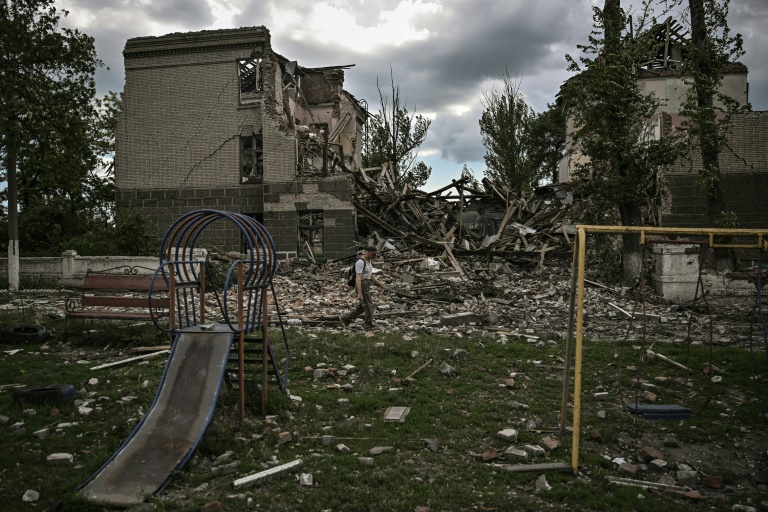
Russian forces engaged in an all-out battle in eastern Ukraine have captured the strategic town of Lyman and surrounded a key industrial centre, Moscow has claimed.

But a Ukrainian official has denied that the city of Severodonetsk — the focus of weeks of fierce fighting — has been encircled, saying government troops had repelled Russian forces from its outskirts.

As the battle for Ukraine’s industrial heartland raged on Saturday, French President Emmanuel Macron and German Chancellor Olaf Scholz called for “direct serious negotiations” between Russian leader Vladmir Putin and his counterpart Volodymyr Zelensky.

The EU leaders also “insisted on an immediate ceasefire and a withdrawal of Russian troops” in an 80-minute phone call with the Russian leader, the German chancellor’s office said. 

Since failing in its bid to capture the capital Kyiv in the war’s early stages, Russia has shifted its focus to the eastern Donbas region as it attempts to consolidate areas under its control.

“The situation is very difficult, especially in those areas in the Donbas and Kharkiv regions, where the Russian army is trying to squeeze at least some result for itself,” Ukrainian President Zelensky said in his daily address to the nation.

Earlier Saturday, Russia’s defence ministry said the “town of Krasny Liman has been entirely liberated from Ukrainian nationalists”, using Moscow’s name for Lyman.

Lyman lies on the road to Kramatorsk and Severodonetsk, which a police official in Lugansk province cited by Russian state media said was “now surrounded”.

But regional governor Sergiy Gaiday told Ukrainian television “Severodonetsk has not been cut off… there is still the possibility to deliver humanitarian aid.”

His remarks came as Russia, in another exercise in military muscle-flexing, said it had successfully tested hypersonic missiles in the Arctic.

– Noose tightens –

Inside Severodentsk, where an estimated 15,000 civilians remain, a local official said “constant shelling” made it increasingly difficult to get in or out.

“Evacuation is very unsafe, it’s isolated cases when we manage to get people out. Now the priority is for the wounded and people who need serious medical assistance,” said Oleksandr Stryuk, head of the city’s military and civil administration.

The water supply was also increasingly tenuous, as a lack of electricity meant the pumps at city wells no longer functioned, he said, adding residents had gone more than two weeks without a cellphone connection. 

The sole road maintaining contact with the outside world, meanwhile, was expected to be the focus of continued Russian attacks, Lugansk governor Gaiday said Saturday night.

“Next week will be very hard, as Russia puts all its resources into seizing Severodonetsk, or cutting off the oblast from communication with Ukraine,” he said.

– France, Germany urge talks –

As France and Germany called for talks aimed at ending a war that has created millions of refugees, Saturday’s phone call with Putin also focused on a looming global food security crisis.

In addition to capturing key port cities such as Mariupol, Russia has used its warships to cut off others still in Ukrainian hands, blocking grain supplies from being transported out.

Russia and Ukraine supply about 30 percent of the wheat traded on global markets.

Russia has tightened its own exports and Ukraine has vast amounts stuck in storage, driving up prices and cutting availability across the globe.

Putin has repeatedly rejected any responsibility, instead blaming Western sanctions.

But on Saturday, he told Macron and Scholz that Russia was “ready” to look for ways to allow more wheat onto the global market.

“Russia is ready to help find options for the unhindered export of grain, including the export of Ukrainian grain from the Black Sea ports,” the Kremlin quoted him as saying.

He also called for the lifting of sanctions to allow “an increase in the supply of Russian fertilisers and agricultural products” onto the global market.

– Putin warns on weapons –

Urgent calls by Zelensky for more advanced weaponry from Ukraine’s Western allies, meanwhile, appear to paying off, with Washington agreeing to send advanced long-range rocket systems, according to US media reports.

Pentagon spokesman John Kirby did not confirm the plans to deliver the M270 Multiple Launch Rocket System, highly mobile equipment capable of firing up to 300 kilometres (186 miles) that Kyiv has said it badly needs.

But he said Washington was “still committed to helping them succeed on the battlefield”.

In a phone call Saturday, British Prime Minister Boris Johnson told Zelensky his country would continue to help “provide the equipment they need”, his office said.

But Putin warned Macron and Scholz that ramping up arms supplies to Ukraine would be “dangerous” and risk “further destabilisation”.

He spoke after Russian forces said they had successfully fired one of their Zircon hypersonic cruise missiles some 1,000 kilometres across the Arctic.

As Zelensky seeks to ramp up international pressure on Moscow, he will speak to EU leaders at an emergency summit Monday on an embargo on Russian oil. 

Agreement on the measure is being held up by Hungary, whose Prime Minister Viktor Orban has close relations with Putin.

burs-ah/cwl/mtp

Traffic jams just a maths problem, says Israeli AI firm

Israel’s traffic congestion ranks near the worst among developed economies but an algorithm can help, says one of the country’s IT firms engaged in the auto and mobility sector.

ITC, or Intelligent Traffic Control, was one of the artificial intelligence players at Tel Aviv’s recent EcoMotion showcase where high-tech and AI firms hope to make transport more efficient and cleaner.

Its AI software collects real-time data from road cameras and then sends instructions to manipulate traffic lights based on vehicle flows.

“ITC managed to prove mathematically that many traffic jams can be prevented –- if you intervene early enough,” said its co-founder and chief technology officer Dvir Kenig, citing a 30 percent drop in traffic at the two junctions using their system.

The company says road congestion is a global scourge, calculating that the average driver spends three days a year stuck in traffic, also pumping out greenhouse gas emissions. 

The problem is acute in Israel where, the Organisation for Economic Cooperation and Development says, “transportation infrastructure lags significantly behind” most member countries and “road congestion is one of the worst in the OECD”.

– Military innovations –

EcoMotion’s founder Meir Arnon told AFP that surging global interest in smart mobility had made Israel an auto industry player, even though it doesn’t manufacture any cars. 

“Cars changed,” said the industrialist turned investor. “Cars were metal and wheels and a radio. Today these things don’t matter, they’re all mass produced by the same companies for everyone. 

“What differentiates car manufacturers today is the driving experience… the vehicle’s ability to adapt itself to the driver,” he said. 

Systems developed by Israel’s army and private defence industry — notably surveillance, communication and sensory technology — have become central to automakers, Arnon said.  

With over 600 start-ups in the field — “second only to Silicon Valley” — Israel has become a “centre of mobility,” Arnon said, noting that 35 global auto companies have operations in the country, including General Motors.       

“The future of vehicles lies outside vehicles — in the cloud, our phones, in the cars to some extent, and all these elements create an open platform,” said Gil Golan, head of GM’s local technical centre.

“This open platform is a place for innovation and creativity, which Israelis are good at.” 

– Engineers needed –

Also at EcoMotion was Rider Dome, whose cameras mounted on the front and back of motorcycles use artificial intelligence to warn riders of nearby dangers.

“A driving assistant that has become a standard in nearly every car does not exist in motorcycles,” chief executive Yoav Elgrichi said. “That’s why we decided to found Rider Dome.”

But some observers warn that Israel’s technology sector, including smart mobility, could run out of steam.

The Israel Innovation Authority says the tech sector, which accounts for half the country’s exports and one in 10 jobs, is “maturing” and the number of new startups is on the decline.

Israel needs more engineers, argues Lisya Bahar Manoah, a partner at Catalyst Investments, if it wants to keep pace with the growing mobility sector that is expected to “double in size” globally over the coming years. 

“The way that we can overcome the problem is — like in Europe, especially in Germany and Austria -– they are creating professional schools,” she said. 

“Israel needs to stop and think now about a way to create more engineers in order to support the start-up system. We need to adjust our education system accordingly.”  

Traffic jams just a maths problem, says Israeli AI firm

Israel’s traffic congestion ranks near the worst among developed economies but an algorithm can help, says one of the country’s IT firms engaged in the auto and mobility sector.

ITC, or Intelligent Traffic Control, was one of the artificial intelligence players at Tel Aviv’s recent EcoMotion showcase where high-tech and AI firms hope to make transport more efficient and cleaner.

Its AI software collects real-time data from road cameras and then sends instructions to manipulate traffic lights based on vehicle flows.

“ITC managed to prove mathematically that many traffic jams can be prevented –- if you intervene early enough,” said its co-founder and chief technology officer Dvir Kenig, citing a 30 percent drop in traffic at the two junctions using their system.

The company says road congestion is a global scourge, calculating that the average driver spends three days a year stuck in traffic, also pumping out greenhouse gas emissions. 

The problem is acute in Israel where, the Organisation for Economic Cooperation and Development says, “transportation infrastructure lags significantly behind” most member countries and “road congestion is one of the worst in the OECD”.

– Military innovations –

EcoMotion’s founder Meir Arnon told AFP that surging global interest in smart mobility had made Israel an auto industry player, even though it doesn’t manufacture any cars. 

“Cars changed,” said the industrialist turned investor. “Cars were metal and wheels and a radio. Today these things don’t matter, they’re all mass produced by the same companies for everyone. 

“What differentiates car manufacturers today is the driving experience… the vehicle’s ability to adapt itself to the driver,” he said. 

Systems developed by Israel’s army and private defence industry — notably surveillance, communication and sensory technology — have become central to automakers, Arnon said.  

With over 600 start-ups in the field — “second only to Silicon Valley” — Israel has become a “centre of mobility,” Arnon said, noting that 35 global auto companies have operations in the country, including General Motors.       

“The future of vehicles lies outside vehicles — in the cloud, our phones, in the cars to some extent, and all these elements create an open platform,” said Gil Golan, head of GM’s local technical centre.

“This open platform is a place for innovation and creativity, which Israelis are good at.” 

– Engineers needed –

Also at EcoMotion was Rider Dome, whose cameras mounted on the front and back of motorcycles use artificial intelligence to warn riders of nearby dangers.

“A driving assistant that has become a standard in nearly every car does not exist in motorcycles,” chief executive Yoav Elgrichi said. “That’s why we decided to found Rider Dome.”

But some observers warn that Israel’s technology sector, including smart mobility, could run out of steam.

The Israel Innovation Authority says the tech sector, which accounts for half the country’s exports and one in 10 jobs, is “maturing” and the number of new startups is on the decline.

Israel needs more engineers, argues Lisya Bahar Manoah, a partner at Catalyst Investments, if it wants to keep pace with the growing mobility sector that is expected to “double in size” globally over the coming years. 

“The way that we can overcome the problem is — like in Europe, especially in Germany and Austria -– they are creating professional schools,” she said. 

“Israel needs to stop and think now about a way to create more engineers in order to support the start-up system. We need to adjust our education system accordingly.”  

UK companies to trial four-day workweek

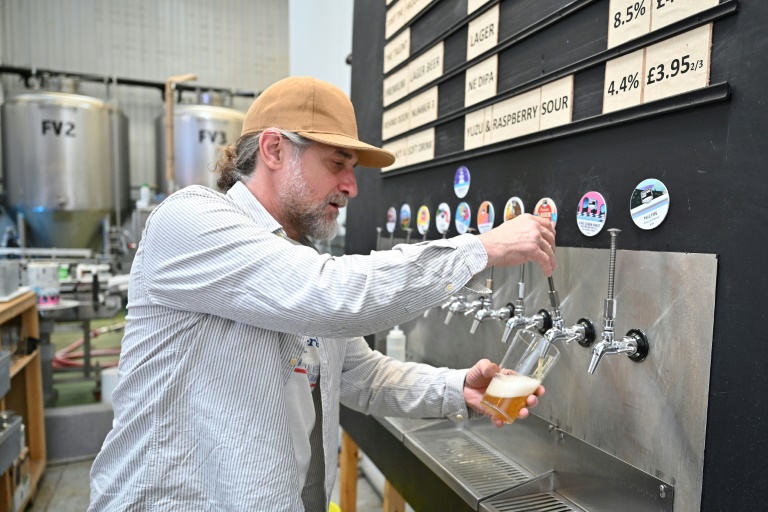
Louis Bloomsfield inspects the kegs of beer at his brewery in north London, eagerly awaiting June, when he will get an extra day off every week.

The 36-year-old brewer plans to use the time to get involved in charity work, start a long-overdue course in particle physics, and spend more time with family.

He and colleagues at the Pressure Drop brewery are taking part in a six-month trial of a four-day working week, with 3,000 others from 60 UK companies.

The pilot — touted as the world’s biggest so far — aims to help companies shorten their working hours without cutting salaries or sacrificing revenues.

Similar trials have also taken place in Spain, Iceland, the United States and Canada. Australia and New Zealand are scheduled to start theirs in August. 

Alex Soojung-Kim Pang, a programme manager at 4 Day Week Global, the campaign group behind the trial, said it will give firms “more time” to work through challenges, experiment with new practices and gather data.

Smaller organisations should find it easier to adapt, as they can make big changes more readily, he told AFP.

Pressure Drop, based in Tottenham Hale, is hoping the experiment will not only improve their employees’ productivity but also their well-being.

At the same time, it will reduce their carbon footprint.

The Royal Society of Biology, another participant in the trial, says it wants to give employees “more autonomy over their time and working patterns”.

Both hope a shorter working week could help them retain employees, at a time when UK businesses are confronted with severe staff shortages, and job vacancies hitting a record 1.3 million. 

– Not all rosy –

Pressure Drop brewery’s co-founder Sam Smith said the new way of working would be a learning process.

“It will be difficult for a company like us which needs to be kept running all the time, but that’s what we will experiment with in this trial,” he said.

Smith is mulling giving different days off in the week to his employees and deploying them into two teams to keep the brewery functioning throughout. 

When Unilever trialled a shorter working week for its 81 employees in New Zealand, it was able to do so only because no manufacturing takes place in its Auckland office and all staff work in sales or marketing.

The service industry plays a huge role in the UK economy, contributing 80 percent to the country’s GDP.

A shorter working week is therefore easier to adopt, said Jonathan Boys, a labour economist at the Chartered Institute of Personnel and Development. 

But for sectors such as retail, food and beverage, healthcare and education, it’s more problematic.

Boys said the biggest challenge will be how to measure productivity, especially in an economy where a lot of work is qualitative, as opposed to that in a factory.

Indeed, since salaries will stay the same in this trial, for a company to not lose out, employees will have to be as productive in four days as they are five.

Yet Aidan Harper, author of “The Case for a Four Day Week”, said countries working fewer hours tend to have higher productivity.

“Denmark, Sweden, the Netherlands work fewer hours than the UK, yet have higher levels of productivity,” he told AFP. 

“Within Europe, Greece works more hours than anyone, and yet have the lowest levels of productivity.”

– ‘Hiring superpower’ –

Employees in the UK work roughly 36.5 hours every week, against counterparts in Greece who clock in upwards of 40 hours, according to database company Statista. 

Phil McParlane, founder of Glasgow-based recruitment company 4dayweek.io, says offering a shorter workweek is a win-win, and even calls it “a hiring superpower”.

His company only advertises four-day week and flexible jobs.

They have seen the number of companies looking to hire through the platform rise from 30 to 120 in the past two years, as many workers reconsidered their priorities and work-life balance in the pandemic. 

Close Bitnami banner
Bitnami