World

Mexico confirms its first monkeypox case

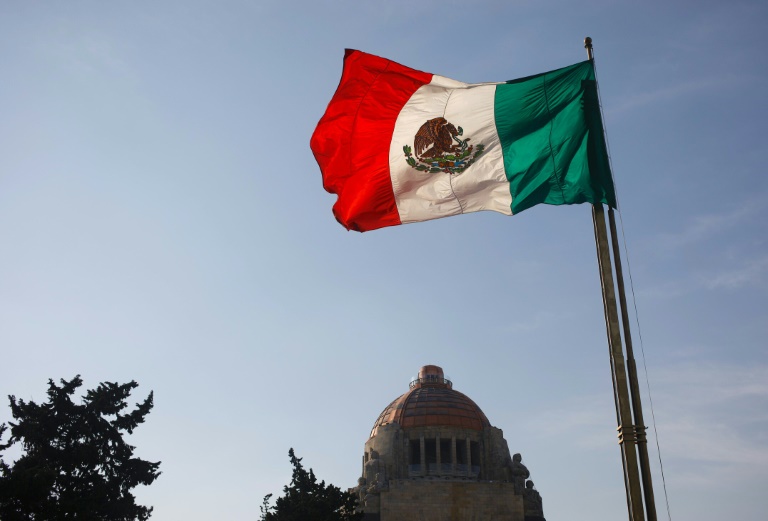
Health officials in Mexico confirmed Saturday the country’s first known case of monkeypox, in a 50-year-old US resident being treated in Mexico City. 

The man, a permanent resident of New York City, “was probably infected in the Netherlands,” Hugo Lopez-Gatell, an undersecretary of health, said on Twitter.

“Fortunately, he is stable and in preventive isolation,” Lopez-Gatell said. “We hope he will recover without complications.”

He provided no information on the patient’s possible contacts with other people.

On Friday, health authorities in Argentina confirmed the first two known cases of the disease anywhere in Latin America — those of a 40-year-old man who had returned to Argentina from Spain, and of a Spaniard who was visiting Buenos Aires.

The two cases apparently were unconnected.

The monkeypox virus can be transmitted to humans by infected animals. Person-to-person transmission is possible but rare.

Monkeypox is related to smallpox but is much less severe. Initial symptoms include a high fever, swollen lymph nodes and a chickenpox-like rash. 

There is no specific treatment but vaccination against smallpox has been found to be about 85 percent effective in preventing monkeypox.

Monkeypox was first detected in the Democratic Republic of Congo in 1970 and is considered endemic in around a dozen African countries.

Its appearance in non-endemic countries has worried experts, although those cases reported so far have been mostly mild and there have been no deaths.

There have been at least a half-dozen confirmed or suspected cases in the US.

Mexico confirms its first monkeypox case

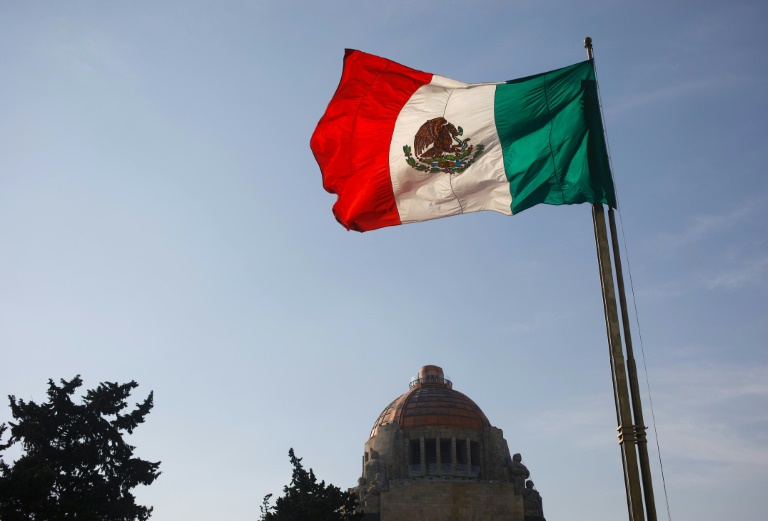
Health officials in Mexico confirmed Saturday the country’s first known case of monkeypox, in a 50-year-old US resident being treated in Mexico City. 

The man, a permanent resident of New York City, “was probably infected in the Netherlands,” Hugo Lopez-Gatell, an undersecretary of health, said on Twitter.

“Fortunately, he is stable and in preventive isolation,” Lopez-Gatell said. “We hope he will recover without complications.”

He provided no information on the patient’s possible contacts with other people.

On Friday, health authorities in Argentina confirmed the first two known cases of the disease anywhere in Latin America — those of a 40-year-old man who had returned to Argentina from Spain, and of a Spaniard who was visiting Buenos Aires.

The two cases apparently were unconnected.

The monkeypox virus can be transmitted to humans by infected animals. Person-to-person transmission is possible but rare.

Monkeypox is related to smallpox but is much less severe. Initial symptoms include a high fever, swollen lymph nodes and a chickenpox-like rash. 

There is no specific treatment but vaccination against smallpox has been found to be about 85 percent effective in preventing monkeypox.

Monkeypox was first detected in the Democratic Republic of Congo in 1970 and is considered endemic in around a dozen African countries.

Its appearance in non-endemic countries has worried experts, although those cases reported so far have been mostly mild and there have been no deaths.

There have been at least a half-dozen confirmed or suspected cases in the US.

Cash-strapped Sri Lanka gets Russian oil to ease shortages

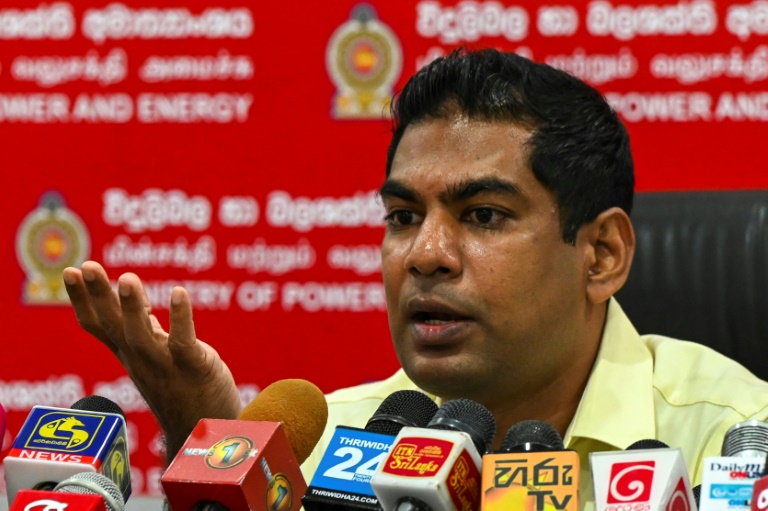
Cash-strapped Sri Lanka took delivery Saturday of Russian oil — which could soon be subject to a European embargo — to restart operations at the country’s only refinery, the energy minister said.

The island nation is suffering its worst economic meltdown since independence, with shortages of fuel and other essentials making life miserable for its 22 million people. 

The state-run Ceylon Petroleum Corporation (CPC) refinery was shuttered in March following Sri Lanka’s foreign exchange crunch, which left the government unable to finance imports, including crude. 

The Russian crude delivery had been waiting offshore of the capital Colombo’s port for over a month as the country was unable to raise $75 million to pay for it, energy minister Kanchana Wijesekera said.

Colombo is also in talks with Moscow to arrange direct supplies of crude, coal, diesel and petrol despite US-led sanctions on Russian banks and a diplomatic outcry over Russia’s invasion of Ukraine.

“I have made an official request to the Russian ambassador for direct supplies of Russian oil,” Wijesekera told reporters in Colombo. 

“Crude alone will not fulfil our requirement, we need other refined (petroleum) products as well.”

Around 90,000 tonnes of Siberian light crude will be sent to Sri Lanka’s refinery after the shipment was acquired on credit from Dubai-based intermediary Coral Energy.

Wijesekera said Ceylon Petroleum Corporation (CPC) was already in arrears of $735 million to suppliers and no one came forward to even bid for its oil tenders.

He added that the Siberian grade was not an ideal match for the refinery, which is optimised for Iranian light crude, but no other supplier was willing to extend credit. 

Sri Lanka will nonetheless call for fresh supply tenders in two weeks before the stock of Siberian light runs out, Wijesekera said.

The Sapugaskanda refinery on Colombo’s outskirts will resume work in about two days to produce about 1,000 tonnes of diesel daily to meet an acute shortage.

European Union leaders are meeting on Monday in an effort to negotiate a fresh round of sanctions against Russia over the Ukraine conflict, including an oil embargo.

Russian oil is already subject to a US embargo and its barrels have traded at a steep discount from international benchmarks, which have risen substantially since the conflict began. 

– Protest milestone –

Sri Lanka’s economic crisis has seen long queues of motorists outside gas stations, waiting hours and sometimes even days for scant supplies of petrol and cooking gas. 

Its people are also grappling with a serious lack of imported food and pharmaceuticals, along with record inflation and lengthy daily blackouts.

Anti-government protests erupted into riots earlier this month, leaving nine people dead and many more wounded.

A demonstration outside President Gotabaya Rajapaksa’s office in Colombo demanding his resignation over the government’s economic mismanagement entered its 50th day Saturday.

Meanwhile thousands of activists led by university students marched through the streets of Colombo and clashed with police guarding access roads to Rajapaksa’s official residence.

Police fired tear gas and water cannon to disperse the protesters who pulled down yellow-painted iron barricades.

Two people were briefly detained by police and later released, according to witnesses.

There were no reports of serious casualties, but ambulances were seen ferrying some people affected by tear gas.

Cash-strapped Sri Lanka gets Russian oil to ease shortages

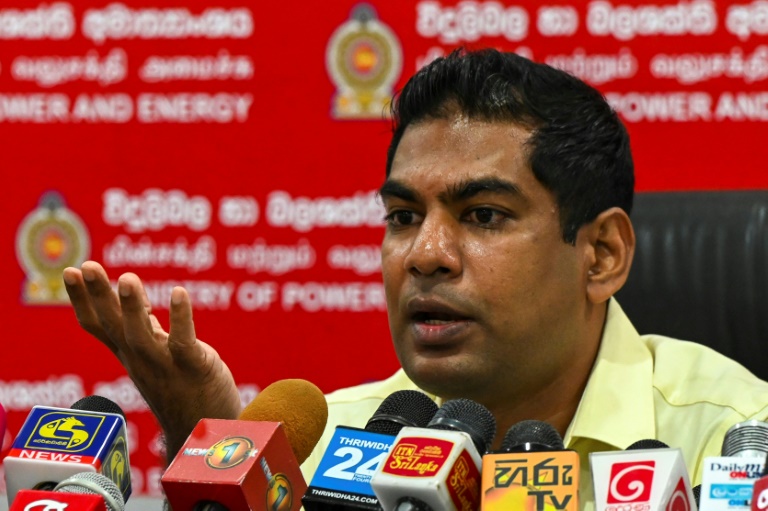
Cash-strapped Sri Lanka took delivery Saturday of Russian oil — which could soon be subject to a European embargo — to restart operations at the country’s only refinery, the energy minister said.

The island nation is suffering its worst economic meltdown since independence, with shortages of fuel and other essentials making life miserable for its 22 million people. 

The state-run Ceylon Petroleum Corporation (CPC) refinery was shuttered in March following Sri Lanka’s foreign exchange crunch, which left the government unable to finance imports, including crude. 

The Russian crude delivery had been waiting offshore of the capital Colombo’s port for over a month as the country was unable to raise $75 million to pay for it, energy minister Kanchana Wijesekera said.

Colombo is also in talks with Moscow to arrange direct supplies of crude, coal, diesel and petrol despite US-led sanctions on Russian banks and a diplomatic outcry over Russia’s invasion of Ukraine.

“I have made an official request to the Russian ambassador for direct supplies of Russian oil,” Wijesekera told reporters in Colombo. 

“Crude alone will not fulfil our requirement, we need other refined (petroleum) products as well.”

Around 90,000 tonnes of Siberian light crude will be sent to Sri Lanka’s refinery after the shipment was acquired on credit from Dubai-based intermediary Coral Energy.

Wijesekera said Ceylon Petroleum Corporation (CPC) was already in arrears of $735 million to suppliers and no one came forward to even bid for its oil tenders.

He added that the Siberian grade was not an ideal match for the refinery, which is optimised for Iranian light crude, but no other supplier was willing to extend credit. 

Sri Lanka will nonetheless call for fresh supply tenders in two weeks before the stock of Siberian light runs out, Wijesekera said.

The Sapugaskanda refinery on Colombo’s outskirts will resume work in about two days to produce about 1,000 tonnes of diesel daily to meet an acute shortage.

European Union leaders are meeting on Monday in an effort to negotiate a fresh round of sanctions against Russia over the Ukraine conflict, including an oil embargo.

Russian oil is already subject to a US embargo and its barrels have traded at a steep discount from international benchmarks, which have risen substantially since the conflict began. 

– Protest milestone –

Sri Lanka’s economic crisis has seen long queues of motorists outside gas stations, waiting hours and sometimes even days for scant supplies of petrol and cooking gas. 

Its people are also grappling with a serious lack of imported food and pharmaceuticals, along with record inflation and lengthy daily blackouts.

Anti-government protests erupted into riots earlier this month, leaving nine people dead and many more wounded.

A demonstration outside President Gotabaya Rajapaksa’s office in Colombo demanding his resignation over the government’s economic mismanagement entered its 50th day Saturday.

Meanwhile thousands of activists led by university students marched through the streets of Colombo and clashed with police guarding access roads to Rajapaksa’s official residence.

Police fired tear gas and water cannon to disperse the protesters who pulled down yellow-painted iron barricades.

Two people were briefly detained by police and later released, according to witnesses.

There were no reports of serious casualties, but ambulances were seen ferrying some people affected by tear gas.

War in Ukraine: Latest developments

Here are the latest developments in the war in Ukraine:

– Russia confirms capture of Lyman town – 

Russia’s army confirms it has seized the strategic town of Lyman in eastern Ukraine, on the road to two key cities still under Kyiv’s control.

Lyman lies on the road to the urban centres of Severodonetsk and Kramatorsk still in Moscow’s sights.

Russian forces have been closing in on Severodonetsk and nearby Lysychansk in Lugansk province, with conflicting reports about the extent of their advance.

– Ukraine doing ‘everything’ to defend Donbas –

Ukraine says it is doing “everything” to defend Donbas, the country’s industrial heartland where Russia is leading an intensifying offensive.

In his daily address to Ukrainians, President Volodymyr Zelensky said the Russians had “concentrated maximum artillery, maximum reserves in Donbas”.

“We are protecting our land in the way that our current defence resources allow,” he added. “We are doing everything to increase them.”

– France, Germany urge direct talks –

German Chancellor Olaf Scholz and French President Emmanuel Macron ask Russian President Vladimir Putin to hold “direct serious negotiations” with Zelensky.

During an 80-minute conversation with the Russian president, the two EU leaders “insisted on an immediate ceasefire and a withdrawal of Russian troops,” the German chancellor’s office said.

They also demand Russia free 2,500 Ukrainian fighters taken as prisoners of war after surrendering earlier this month at a sprawling steelworks in the ravaged port city of Mariupol.

– Russia ‘ready’ to help ship grain –

With a looming global food crisis exacerbated by the war in Ukraine, Putin says Moscow is “ready” to look for ways to ship grain stuck in Ukrainian ports, but demands the West lift sanctions.

“Russia is ready to help find options for the unhindered export of grain, including the export of Ukrainian grain from the Black Sea ports,” Putin tells Macron and Scholz, the Kremlin says.

Putin says the difficulties in supplying grain to world markets were the result of “erroneous economic and financial policies of Western countries”.

– Putin says more Western arms ‘dangerous’ –

Putin warns the West that ramping up weapons supplies to Ukraine is “dangerous” and could further destabilise the situation in the pro-Western country.

His remarks come on the heels of US media reports that Washington is preparing to send advanced long-range rocket systems to further help Ukraine.

Pentagon spokesman John Kirby did not confirm the plans to deliver the M270 Multiple Launch Rocket System, a highly mobile system capable of firing up to 300 kilometres (186 miles) that Kyiv has said it badly needs.

But he said Washington was “still committed to helping them succeed on the battlefield”.

– Russia tests hypersonic missile –

Russia announces the latest test of its Zircon hypersonic cruise missile, which it says dashed across some 1,000 kilometres (625 miles) and “successfully hit” a target in the Arctic.

– Australian aid worker killed –

As Ukraine faces an increasingly desperate humanitarian situation, an Australian man was reported to have been killed this week while supplying aid. 

A death notice appeared in Tasmania’s Mercury newspaper identifying the man as Michael Charles O’Neill, 47, with a tribute on Facebook saying he had been “driving the wounded and injured from the front line”. An Australian foreign affairs department spokesperson confirmed the death.

– Orthodox Church cuts Russia ties –

The Moscow branch of Kyiv’s Orthodox Church says it is cutting ties with Russia over the invasion, in a historic move against Russia’s spiritual authorities.

After holding a council focused on Russia’s “aggression”, the church declares “full independence” from Russian Patriarch Kirill, the second Orthodox schism in Ukraine in recent years.

Ukraine has been under Moscow’s spiritual leadership since at least the 17th century.

burs-po/ah

UN rights envoy defends controversial China visit

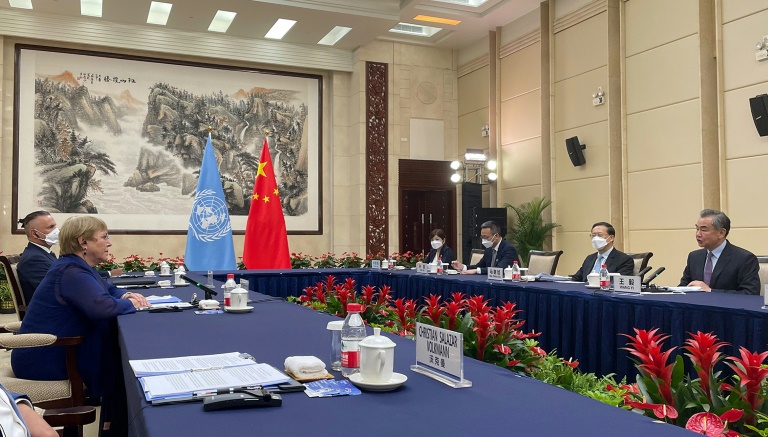
The UN rights envoy on Saturday defended her contentious visit to China, but urged authorities to avoid “arbitrary and indiscriminate” measures in Xinjiang, a region where Beijing is accused of widespread human rights abuses.

Michelle Bachelet’s remarks were swiftly criticised by activists and NGOs, who accused her of providing Beijing with a major propaganda win. 

Bachelet’s long-planned trip this week has taken her to the far-western Xinjiang region, where China is alleged to have detained over a million Uyghurs and other Muslim minorities, as well as carried out forced sterilisation of women and coerced labour. 

But she insisted on Saturday that her visit was “not an investigation”, while China’s vice foreign minister boasted that it had achieved “positive concrete results”.

The United States has labelled China’s actions in Xinjiang a “genocide” and “crimes against humanity”, allegations vehemently denied by Beijing which says its security crackdown was a necessary response to extremism.

“Certain Western countries… went to great lengths to disrupt and undercut the High Commissioner’s visit, their plot didn’t succeed,” Chinese vice foreign minister Ma Zhaoxu said in an online statement after Bachelet’s briefing ended.

Speaking at the end of her trip while still inside China, Bachelet framed her visit as a chance for her to speak with “candour” to Chinese authorities as well as civil society groups and academics.

The trip was the first to China by the UN’s top rights envoy in 17 years and comes after painstaking negotiations over the conditions of her visit.

– ‘Pretty transparent’ –

In her strongest comments aimed at Beijing, Bachelet urged China to avoid “arbitrary and indiscriminate measures” in its crackdown in Xinjiang — but also said she recognised the damage caused by “violent acts of extremism”.

“This visit was not an investigation,” she told reporters, later insisting she had “unsupervised” access to sources the UN had arranged to meet in Xinjiang. 

She said she had met the provincial Communist Party boss as well as security chiefs in one of the most tightly surveilled places on earth. 

Rights groups accuse Beijing of mass detentions of entire communities of mainly Uyghurs, many of whom have had no chance to communicate with their families outside for several years.

“We are aware of the number of people seeking news on the fate of loved ones… This and other issues were raised with authorities,” Bachelet said, declining to add detail given the sensitivity of the issue to China’s security apparatus.

Bachelet stopped in the Xinjiang cities of Urumqi and Kashgar, where she visited a prison and a former re-education camp, as well as the touristic Kashgar Old Town, a counter-terrorism exhibition and cotton fields.

Ma said these visits allowed her to “experience progress … in preserving and promoting ethnic minority traditions”, adding that “Xinjiang is not at all a human rights issue”.

Bachelet said she saw prisoners and an internal court of appeal in Kashgar Prison, describing her access as “pretty open, pretty transparent”. 

The Xinjiang government had assured her that a network of “vocational training centres” — which rights groups say are forced re-education camps — have “been dismantled”, she said, adding she was “unable to assess the full scale”.

Beijing announced in 2019 that all “trainees” had graduated from “vocational training centres”, but rights groups allege that many detainees were transferred to factories as forced labour, or instead moved to Xinjiang’s ballooning network of prisons. 

Bachelet did not address the long-stalled release of her report into alleged Xinjiang abuses, and pledged to maintain further contact with Chinese authorities on human rights issues. 

– ‘Total betrayal’ –

Bachelet had already come under fire from rights groups and Uyghurs overseas, but her press conference sparked a new round of criticism. 

“Resignation is the only meaningful thing she can do for the Human Rights Council,” said Dilxat Raxit, spokesperson for the World Uyghur Congress advocacy group, while US-based Uyghur activist Rayhan Asat called it a “total betrayal” on Twitter.

Human Rights Watch’s Executive Director Kenneth Roth dismissed Bachelet’s argument that the trip had been valuable in allowing her to speak frankly to Chinese officials. 

“Such quiet backroom conversation is just what Beijing wants — no public reporting, no pressure to end its intense repression of Uyghurs and others,” Roth tweeted. 

“The High Commissioner’s visit has been characterized by photo opportunities with senior government officials and manipulation of her statements by Chinese state media, leaving an impression that she has walked straight into a highly predictable propaganda exercise for the Chinese government,” Amnesty International’s Secretary General Agnes Callamard said in a statement. 

Bachelet’s trip included a virtual meeting with President Xi Jinping in which state media suggested she supported China’s vision of human rights. 

Her office later clarified that her remarks did not contain a direct endorsement of China’s rights record. 

Russia steps up battle for eastern Ukraine

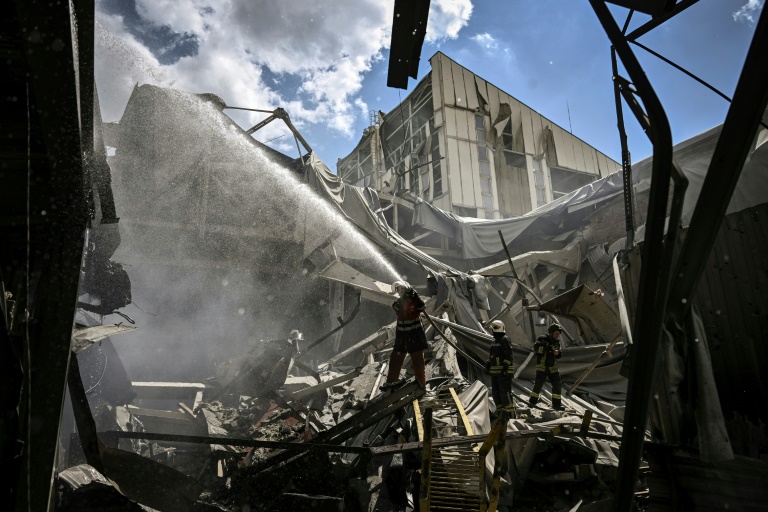
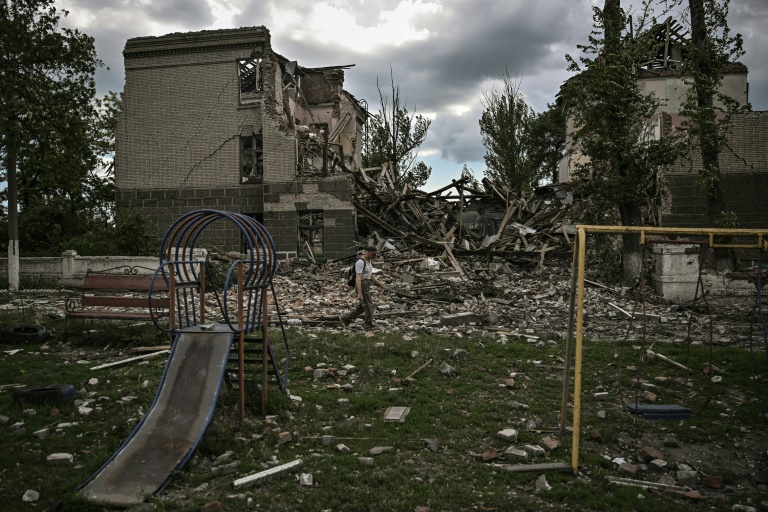
Russia pressed its onslaught on eastern Ukraine Saturday, saying it had captured the strategic town of Lyman and had successfully tested hypersonic missiles in the Arctic.

Ukrainian forces battled to repel Russian forces from the outskirts of the key city of Severodonetsk, a Ukrainian official said, however denying claims it had been surrounded.

Russia is waging all-out war for the eastern Donbas region — Ukraine’s industrial heartland where President Volodymyr Zelensky has accused Moscow of carrying out a “genocide”.

“The town of Krasny Liman has been entirely liberated from Ukrainian nationalists,” the Russian defence ministry said, using the Russian name for Lyman and confirming an announcement made a day earlier by pro-Moscow separatists.

Lyman lies on the road to the urban centres of Severodonetsk and Kramatorsk.

Russian forces have been closing in on Severodonetsk and nearby Lysychansk in Lugansk province, with conflicting reports about the extent of their advance.

Regional governor Sergiy Gaiday said Russian shelling continued on Severodonetsk as Ukrainian soldiers fought to oust the invading forces from a hotel on its edges, but rejected claims the city had been  encircled.

“Severodonetsk has not been cut off… there is still the possibility to deliver humanitarian aid,” he told Ukrainian television.

A Lugansk police official, cited by Russia’s state news agency RIA Novosti, late Friday said Severodonetsk was “now surrounded” and Ukrainian troops could no longer leave the city.

– France, Germany urge talks –

Three months after Russia launched its invasion on February 24, leaving thousands dead on both sides and forcing 6.6 million people out of the country, Moscow has gained control over swathes of eastern and southern Ukraine, including port cities Kherson and Mariupol.

Other Ukrainian ports have been cut off from the world by Russian warships, preventing key grain supplies from being transported out.

Russia and Ukraine supply about 30 percent of the wheat traded on global markets.

Russia has tightened its own exports and Ukraine has vast amounts stuck in storage, driving up prices and cutting availability for importers across the globe.

President Vladimir Putin has repeatedly rejected any responsibility, instead blaming Western sanctions.

But on Saturday he told French President Emmanuel Macron and German Chancellor Olaf Scholz in a phone call Russia was “ready” to look for ways to allow more wheat onto the global market.

“Russia is ready to help find options for the unhindered export of grain, including the export of Ukrainian grain from the Black Sea ports,” the Kremlin reported him as saying.

He called for the lifting of sanctions to allow “an increase in the supply of Russian fertilisers and agricultural products” onto the global market.

Macron and Scholz urged Putin to hold “direct serious negotiations” with Zelensky, the German chancellor’s office said.

And they demanded Russia free 2,500 Ukrainian fighters taken as prisoners of war after surrendering earlier this month at a sprawling steelworks in the ravaged port city of Mariupol.

– More weapons ‘dangerous’ –

Zelensky late Friday said his country was doing everything to defend the Donbas from intense artillery and missile strikes.

“We are protecting our land in the way that our current defence resources allow. We are doing everything to increase them,” he added. 

To further help the Ukrainians, Washington was preparing to send advanced long-range rocket systems, US media reports said.

Pentagon spokesman John Kirby did not confirm the plans to deliver the M270 Multiple Launch Rocket System, highly mobile equipment capable of firing up to 300 kilometres (186 miles) that Kyiv has said it badly needs.

But he said Washington was “still committed to helping them succeed on the battlefield”.

British Prime Minister Boris Johnson pledged his country’s continued support “including helping provide the equipment they need” in a call Saturday with Zelensky, his office said.

But Putin warned Macron and Scholz that ramping up arms supplies to Ukraine would be “dangerous” and risk “further destabilisation”.

He spoke after his army said it had successfully fired one of its Zircon hypersonic cruise missiles some 1,000 kilometres (625 miles) across the Arctic.

– Ship docks in Mariupol –

As he seeks to ramp up international pressure on Moscow, Zelensky will speak to EU leaders at an emergency summit Monday as they try to agree on an embargo on Russian oil, which is being held up by Hungary, whose Prime Minister Viktor Orban has close relations with Putin.

“We need to act until they stop their policy of aggression,” Zelensky told a think tank in Indonesia.

But Moscow said Russia expects to receive one trillion rubles ($15 billion) in additional oil and gas revenues this year, a windfall from the sharp rise in oil prices caused in part by its invasion of Ukraine.

In Ukraine, a spokesman for the Russian-controlled Mariupol port said a first ship had docked there on Saturday.

“It will be loaded up with 2.7 tonnes of steel,” he told Russian state news agency TASS.

There was however no official announcement from either the Russian or separatist authorities.

burs-ah/ach 

Harrowing new accounts emerge from Uvalde's young survivors

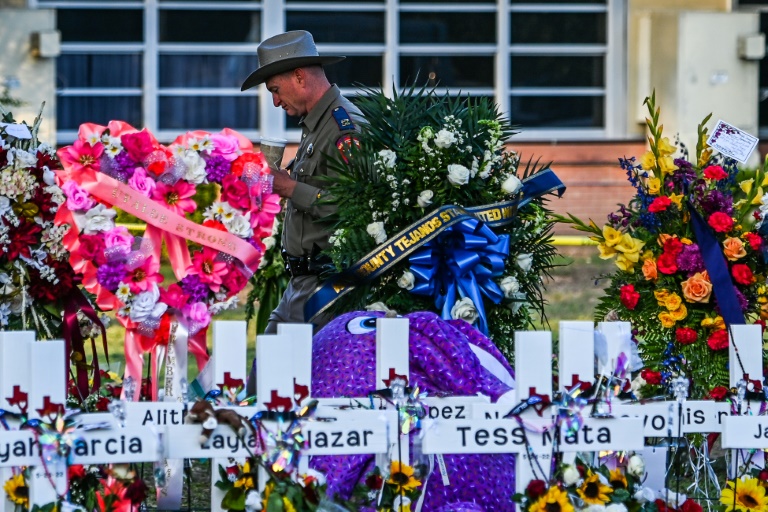
Fresh harrowing accounts emerged Saturday of the ordeal faced by survivors of the school shooting in Uvalde, Texas, fanning public fury over the massacre even as the deeply traumatized town prepared for a visit Sunday by US President Joe Biden.

The haunting stories told by young students who were forced to play dead as a heavily armed gunman continued a methodical spree — killing 19 students and two teachers — have been underscored by accounts of the slow reaction by police during the drama. 

Ten-year-old Samuel Salinas was sitting in his fourth-grade classroom when the shooter, later identified as Salvador Ramos, 18, barged in with a chilling announcement: “You’re all going to die.”

Then “he just started shooting,” Salinas told ABC News.

Texas authorities belatedly admitted Friday that as many as 19 police officers were in the school hallway for more than an hour without acting, thinking the shooter had ended his killing.

“From the benefit of hindsight… it was the wrong decision, period,” said Texas Department of Public Safety director Steven McCraw.

Ramos, who carried two assault-style rifles, was finally killed by police.

Uvalde survivors have described making desperate, whispered pleas for help in 911 phone calls during his assault. Many played dead to avoid drawing the shooter’s attention.

Eleven-year-old Miah Cerrillo even smeared the blood of a dead friend on herself as she feigned death. 

Samuel Salinas said he thinks Ramos fired at him, but the bullet struck a chair, sending shrapnel into the boy’s leg. “I played dead so he wouldn’t shoot me,” he said.

Another student, Daniel, whose mother would not provide his last name, said he saw Ramos fire through the glass in the classroom door, striking his teacher.

The bullets were “hot,” he told the Washington Post, and when another bullet ricocheted and struck a fellow student in the nose, he said he could hear the sickening sound it made.

Though his teacher lay on the floor bleeding, she repeatedly told the students, “‘Stay calm. Stay where you are. Don’t move,'” Daniel recalled.

He was finally rescued by police who broke the windows of his classroom. Since then, he has had recurrent nightmares.

– A troubling timeline –

President Joe Biden will visit Uvalde on Sunday to again make the case for gun control, as activists set about galvanizing voters on the issue in the run-up to November’s midterm election.

Despite the scourge of mass shootings, efforts at nationwide gun control have repeatedly failed, though polls show broad support from Americans.

Speaking at a University of Delaware commencement on Saturday, Biden — himself a grieving father twice over — evoked the image of parents preparing to bury their children in Texas, and lamented “too much violence. Too much fear. Too much grief.”

“We have to stand stronger,” he told the graduates at his alma mater. 

The Uvalde shooting was the deadliest since 20 children and six staff were killed at the Sandy Hook school in Newtown, Connecticut in 2012.

McCraw revealed a series of emergency calls — including by a child begging for police help — that were made from two adjoining classrooms where the gunman was barricaded.

But he said the on-scene commander believed at the time that Ramos was in there alone, with no survivors, after his initial assault.

“I’m not defending anything, but you go back in the timeline, there was a barrage, hundreds of rounds were pumped in in four minutes, okay, into those two classrooms,” McCraw said.

“Any firing afterwards was sporadic and it was at the door. So the belief is that there may not be anybody living anymore.”

McCraw separately told reporters, however, that a 911 call received at 12:16 pm reported eight or nine children still alive. 

As many as 19 officers were outside the classroom door at that time, according to McCraw’s timeline.

McCraw said one caller — a child who dialed 911 multiple times — begged for police to come. Her final call was cut off as she made it outside.

Texas Governor Gregg Abbott told journalists who grilled him during a testy news conference Friday that he was given inaccurate information in the wake of the massacre.

“I was misled,” Abbott said. “The information that I was given turned out in part to be inaccurate, and I’m absolutely livid about that.”

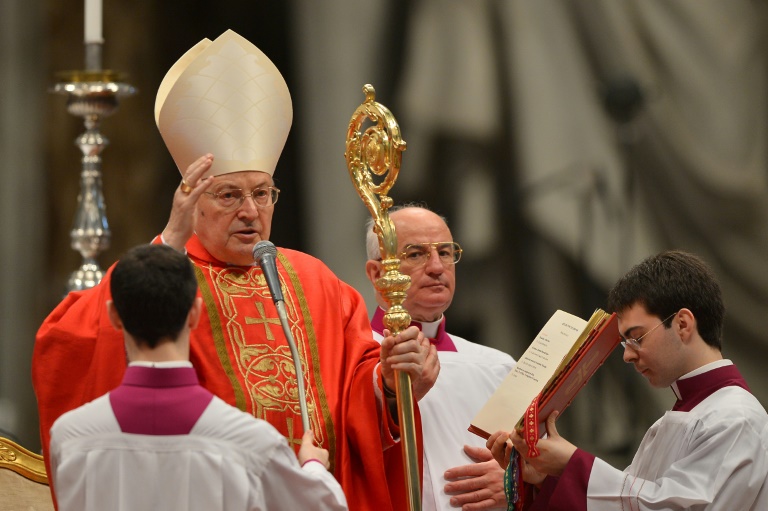
Cardinal Sodano, controversial right-hand man to two popes, dies

Italian cardinal Angelo Sodano, right-hand man to former popes John Paul II and Benedict XVI, has died at the age of 94, the Vatican announced on Saturday.

The Vatican power-broker cut a controversial figure in recent years, linked to many controversies, but wielded great influence over the church under the two popes in the 1990s and 2000s.

Pope Francis paid tribute to “this esteemed man of the Church, who fulfilled his priesthood with generosity… in the service of the Holy See,” in a telegram addressed to the family and published by the Vatican.

Sodano died on Friday in Rome where he had been hospitalised since May 9 after testing positive for Covid-19, according to the official news website Vatican News. 

The Vatican did not provide details on his cause of death.

His funeral will be held on Tuesday at St Peter’s Basilica, with Pope Francis attending.

John Paul II made Sodano his second-in-command when he named him secretary of state in 1991. Sodano accompanied him on around 50 foreign trips.

After Benedict XVI’s appointment in 2005, Sodano stayed in the post until September 2006.

The then pope also approved Sodano’s election as Dean of the College of Cardinals in 2005, remaining in the post at the time of Benedict XVI’s resignation in 2013. 

Pope Francis then accepted Sodano’s resignation in 2019 after he garnered criticism over his support for priests accused of wrongdoing.

Critics condemned Sodano’s involvement in many scandals. In one expose, National Catholic Reporter weekly alleged that Sodano protected Father Marcial Maciel, the Mexican-born founder of the Legion of Christ religious order.

Maciel lived for years with a woman with whom he had a child and was also accused of having sexually abused children and seminarians. He died in 2008.

Sodano was also one of the central characters of French journalist Frederic Martel’s book, “In the Closet of the Vatican: Power, Homosexuality, Hypocrisy”, which referred to the cardinal’s lifestyle in Rome and his links to Chilean dictator Augusto Pinochet during his time in Chile.

Born on November 23, 1927, Sodano was the second of six children in a family living in the town of Isola d’Asti in Piedmont region, northwestern Italy. His father was a lawmaker between 1948 and 1963.

Sodano studied theology and canon law and was ordained a priest in 1950. 

He then began a diplomatic career with the Vatican in 1959 with several posts abroad, especially in South America.

In 1977, the then pope, Paul VI, appointed Sodano as apostolic nuncio in Chile.

He also previously served in Ecuador and Uruguay. He returned to Rome in 1988 before taking on a role similar to that of foreign minister in 1989.

UN rights envoy defends controversial China visit

The UN rights envoy on Saturday defended her contentious visit to China, but urged authorities to avoid “arbitrary and indiscriminate” measures in Xinjiang, a region where Beijing is accused of widespread human rights abuses.

Michelle Bachelet’s long-planned trip this week has taken her to the far-western region, where China is alleged to have detained over a million Uyghurs and other Muslim minorities, as well as carried out forced sterilisation of women and coerced labour. 

But Bachelet insisted Saturday her visit was “not an investigation”. 

The United States has labelled China’s actions in Xinjiang a “genocide” and “crimes against humanity”, allegations vehemently denied by Beijing which says its security crackdown was a necessary response to extremism.

Bachelet has come under fire from rights groups and Uyghurs overseas, who say she has stumbled into a six-day Communist Party propaganda tour, including a virtual meeting with President Xi Jinping in which state media suggested she supported China’s vision of human rights. 

Her office later clarified that her remarks did not contain a direct endorsement of China’s rights record. 

Speaking at the end of her trip while still inside China, Bachelet framed her visit as a chance for her to speak with “candour” to Chinese authorities as well as civil society groups and academics.

“This visit was not an investigation,” she told reporters, later insisting she had “unsupervised” access to sources the UN had arranged to meet in Xinjiang. 

She said she had met the provincial Communist Party boss as well as security chiefs in one of the most tightly surveilled places on earth. 

China says it has been forced to conduct “counter-terrorism” operations in Xinjiang, but rights group allege mass detentions of entire communities of mainly Uyghurs, many of whom have had no chance to communicate with their families outside for several years.

“We are aware of the number of people seeking news on the fate of loved ones… This and other issues were raised with authorities,” Bachelet said, declining to add detail given the sensitivity of the issue to China’s security apparatus.

It is the first trip to China by the UN’s top rights envoy in 17 years and comes after painstaking negotiations over the conditions of her visit, which the UN says is neither a fact-finding mission nor a probe. 

– ‘Pretty transparent’ –

In her strongest comments aimed at Beijing, Bachelet urged China to avoid “arbitrary and indiscriminate measures” in its crackdown in Xinjiang — but also said she recognised the damage caused by “violent acts of extremism.”

Bachelet visited the Xinjiang cities of Urumqi and Kashgar, but no photos or further details of her itinerary were released during the trip.

The envoy said she had visited a prison in Kashgar, where she saw prisoners and an internal court of appeal, describing her access as “pretty open, pretty transparent”.

The Xinjiang government had assured her that a network of “vocational training centres” — which rights groups say are forced re-education camps — have “been dismantled”, she said, adding that she had visited a former re-education centre. 

Beijing announced in 2019 that all “trainees” had graduated from “vocational training centres”, but rights groups allege that many detainees were transferred to factories where forced labour was used, or instead moved to Xinjiang’s ballooning network of prisons. 

A Chinese foreign ministry spokesperson said earlier this week that Bachelet’s activities were “arranged according to her will and on the basis of thorough consultations of the two sides”.

State media has only covered meetings with Xi and foreign minister Wang Yi, during which he gave her a book of Xi quotes on human rights.

Her trip has taken place under a “closed loop”, ostensibly due to Covid-19 risks.

The United States has reiterated its view that Bachelet’s visit was a mistake after the release of thousands of leaked documents and photographs from inside the system of mass incarceration this week, while the UK and Germany have voiced their concerns at the visit.

Close Bitnami banner
Bitnami