World

Cannes set to pick Palme d'Or from 'wildly divisive' entries

The 75th edition of the Cannes Film Festival draws to a close on Saturday with one of the tightest races in recent memory and critics fiercely divided over the 21 films competing for the Palme d’Or.

The 12 days of the world’s foremost film fest have been a blast of technicolour grandeur, kickstarted by Tom Cruise with his first trip to Cannes in 30 years to launch “Top Gun: Maverick”, accompanied by a French Air Force display team.

It was a great year for music-lovers — Baz Luhrmann shaking things up with his much-anticipated rock’n’roll biopic, “Elvis”, and critics blown away by an ultra-immersive documentary about David Bowie, “Moonage Daydream”.

In the main competition, the most searing images were no doubt in “Triangle of Sadness” with its extended sequence of projectile vomiting and violent diarrhoea on a cruise ship, that left audiences either howling with laughter or turning green. 

Elsewhere, the entries tackled everything from a serial killer “cleansing” an Iranian holy city of prostitutes (“Holy Spider”) to the difficulties faced by migrants in Romania (“RMN”) and Belgium (“Tori and Lokita”) to a film told entirely from the point of view of a donkey (“EO”).

There was a wealth of Korean talent on the red carpet, with “Squid Game” star Lee Jung-Jae showing his directorial debut, “Hunt”, while Song Kang-ho (“Parasite”) and K-pop superstar Lee Ji-eun starred in touching adoption tale “Broker”. 

– ‘Wildly divisive’ –

The war in Ukraine cast a shadow over proceedings from the start. 

There was bitter debate over the nomination of a Russian director, Kirill Serebrennikov, for his film “Tchaikovsky’s Wife”.  

Even though he explicitly condemned the war, some Ukrainians at the festival argued there was no such thing as “a good Russian” in the current context, while others — such as documentary-maker Sergei Loznitsa — said such attitudes were “inhumane”.

Meanwhile, critics seemed unable to coalesce around any of the films in competition. 

The possible exceptions were “Armageddon Time”, a story about the friendship between a young Jewish American boy and his Black schoolmate in 1980s Queens, starring Anthony Hopkins and Anne Hathaway. 

Also gaining mostly strong reviews was “Decision to Leave” — another Korean entry. The Hitchcockian tale about a detective falling for a murder suspect comes from Park Chan-wook, known for his wild thriller “Oldboy”.

There was also a huge amount of buzz around one of the last films to show at the festival, “Close”, the tender, tragic story of two young boys learning to grapple with their budding sexuality.  

“Kind of loving that there’s barely a film in Cannes… this year which isn’t wildly divisive,” tweeted Britain’s Telegraph critic Tim Robey, listing eight entries that were “despised AND adored”. 

Some of the biggest buzz happened outside the main competition, with a lot of love for “Joyland”, a daring portrait of a transgender dancer in Pakistan. 

It won the “Queer Palm” prize for best LGBT film — an award that has controversially never been fully recognised by the festival organisers — late Friday. 

The main Cannes jury of nine film professionals, led by French actor Vincent Lindon and including two-time Oscar-winning Iranian director Asghar Farhadi, Indian superstar Deepika Padukone, have retired to a remote villa somewhere around the Cote d’Azur resort for deliberations. 

Last year, the jury led by US director Spike Lee gave the Palme to a woman for only the second time in the festival’s history — French director Julia Ducournau for the gory and radical “Titane”.

Only five of the 21 films this year have a female director — though that is still a record for Cannes — with American Kelly Reichardt arguably the most likely of them to win a prize for her low-key story of artistic frustrations, “Showing Up”, starring Michelle Williams. 
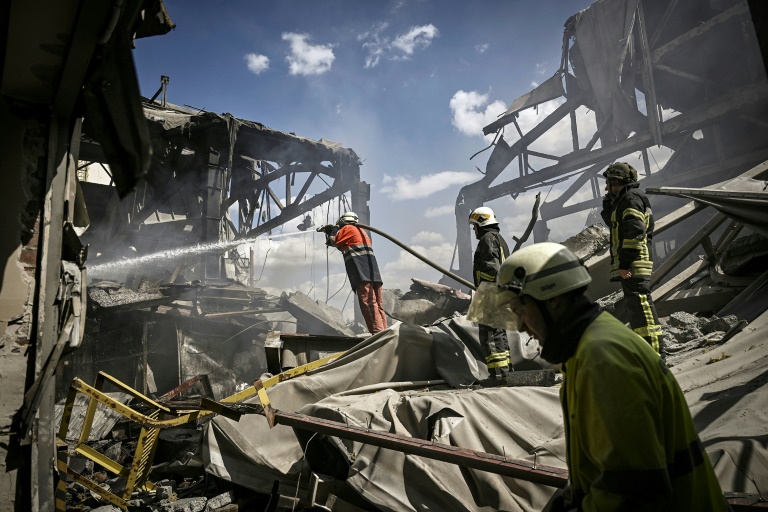
Russia steps up battle for eastern Ukraine

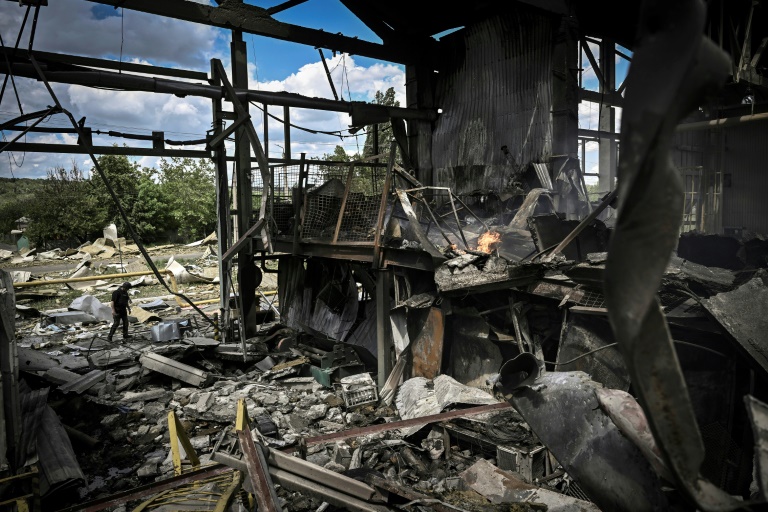
Russia pressed its onslaught on eastern Ukraine Saturday, saying it had captured the strategic town of Lyman and had succesfully tested hypersonic missiles in the Arctic.

Ukrainian forces down the road battled to repel Russian forces from the outskirts of the key city of Severodonetsk, a Ukrainian official said, however denying claims it had been surrounded.

Russia is waging all-out war for the eastern Donbas region — Ukraine’s industrial heartland where President Volodymyr Zelensky has accused Moscow of carrying out a “genocide”.

“The town of Krasny Liman has been entirely liberated from Ukrainian nationalists,” the Russian defence ministry said, using the Russian name for Lyman and confirming an announcement a day earlier by pro-Moscow separatists.

Lyman lies on the road to the urban centres of Severodonetsk and Kramatorsk still in Moscow’s sights.

Russian forces have been closing in on Severodonetsk and nearby Lysychansk in Lugansk province, with conflicting reports about the extent of their advance.

Regional governor Sergiy Gaiday said Russian shelling continued on Severodonetsk as Ukrainian soldiers fought to oust invading forces from a hotel on its edges, but rejected claims the city had been completely encircled.

“Severodonetsk has not been cut off… there is still the possibility to deliver humanitarian aid,” he told Ukrainian television.

A Lugansk police official, cited by Russia’s state news agency RIA Novosti, late Friday said Severodonetsk was “now surrounded” and Ukrainian troops could no longer leave the city.

But Zelensky late Friday said his country was doing everything to defend the Donbas from intense artillery fire, “missile strikes and aircraft attacks”.

“We are protecting our land in the way that our current defence resources allow,” he added. 

“We are doing everything to increase them.”

– Australian killed –

As the country faces an increasingly desperate humanitarian situation, an Australian man was on Saturday reported to have been killed this week while supplying aid. 

Tasmania’s Mercury newspaper identified the man as Michael Charles O’Neill, 47, with a tribute on Facebook saying he had been “driving the wounded and injured from the front line”. An Australian official confirmed the death.

Three months after Russia launched its invasion on February 24, leaving thousands dead on both sides and forcing 6.6 million people out of the country, Moscow has gained control over swathes of eastern and southern Ukraine, including port cities Kherson and Mariupol.

Russia Saturday announced the latest test of its Zircon hypersonic cruise missile, which it said had dashed across some 1,000 kilometres (625 miles) and “successfully hit” a target in the Arctic.

To further help Ukraine fight back, Washington was preparing to send advanced long-range rocket systems, according to US media reports.

Pentagon spokesman John Kirby did not confirm the plans to deliver the M270 Multiple Launch Rocket System, a highly mobile system capable of firing up to 300 kilometres (186 miles) that Kyiv has said it badly needs.

But he said Washington was “still committed to helping them succeed on the battlefield”.

Mykhaylo Podolyak, an adviser to President Zelensky, said on Twitter that some of Ukraine’s partners “avoid giving the necessary weapons because of fear of the escalation. Escalation, really?”

– Russian ship in Mariupol –

Seeking to increase international pressure on Russia, Zelensky will speak with EU leaders at an emergency summit Monday as they try to agree on an embargo on Russian oil, which is being held up by Hungary, whose Prime Minister Viktor Orban has close relations with Russian President Vladimir Putin.

“Rather than continue trading with (Russia), we need to act until they stop their policy of aggression,” Zelensky told a think tank in Indonesia.

But in Moscow, Finance Minister Anton Siluanov said Russia expects to receive one trillion rubles ($15 billion) in additional oil and gas revenues this year, a windfall from the sharp rise in oil prices caused in part by its invasion of Ukraine.

As his navy blockades Ukrainian ports, Putin also rejected claims he was disrupting food supplies worldwide.

Russia and Ukraine supply about 30 percent of the wheat traded on global markets.

Russia has tightened its own exports and Ukraine has vast amounts stuck in storage, driving up prices and cutting availability for importers across the globe.

But a spokesman for the Russian-controlled port of Mariupol said a first ship had docked there on Saturday, barely a week after the last Ukrainian fighters surrendered and left the city.

“It will be loaded up with 2.7 tonnes of steel,” he told Russian state news agency TASS.

A correspondent for staunchly pro-Kremlin Russian newspaper Izvestia said it was accompanied by two warships.

There was however no official announcement from either the Russian or separatist authorities.

Russian forces battered the port city for months before the last Ukrainian fighters at its sprawling steelworks finally laid down their weapons last week.

burs-ah/lc

Ukraine shelter residents mark each day alive with a red cross

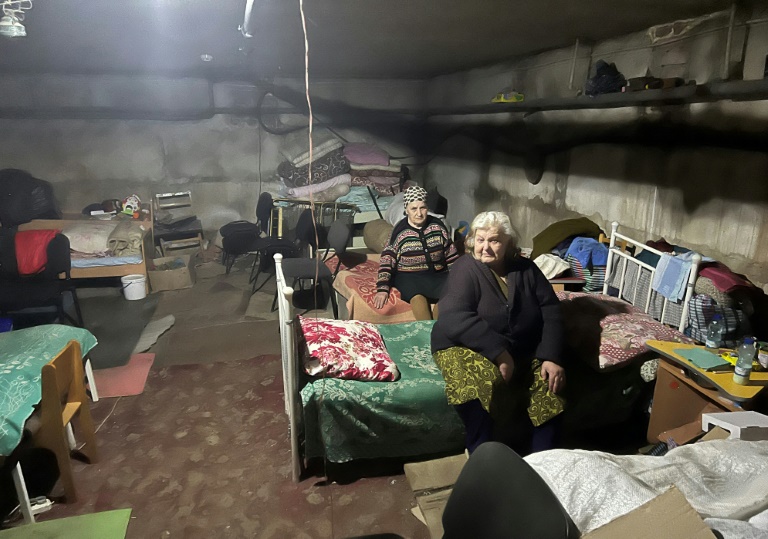
“We put a cross for every day spent here alive,” says Nadia Ryjkova, 76, in a dark underground shelter in the northeastern Ukrainian village of Kutuzivka, where she lives with about 50 people.

Ryjkova points to the calendar marked with red crosses since February 24, the day Russian began its invasion of Ukraine, before stroking her stretching cat, Murchik, (“Purrer”).

The beds in the shelter are lined up in three large rooms where most residents are elderly women. 

Electric wires hang from the concrete ceiling, connecting a few dim lightbulbs to car batteries placed under some chairs.

A wood-burning stove emits a stifling heat, but away from the fire, a cold damp air envelops the surroundings.

But Marfa Khyjniak, 72, is happy with this austere comfort, after countless shells fell on the village of 1,500 residents on March 25 at the start of Ukraine’s counter-offensive.

“It was frightening, I was so scared. There are no words. It was unbearable. I was sitting in my bathroom and I was praying. Then I came here for refuge. Even a small space, a chair would have been enough for me,” she says.

“Today some return to the village but what for? Everything is destroyed,” Khyjniak adds, shedding a few tears before explaining she has suffered “depression” and is taking medication.

Without a telephone connection, she has no news of her children and loved ones, but reassures herself: “I live with hope that they are alive. It’s the only thing keeping me alive.”

– Relentless fire –

Russian troops ended their push for Kharkiv but they maintain positions east of the city, firing on the eastern areas and the neighbouring villages. Artillery exchanges continue, especially at night.

The bombardments have destroyed a school, the town hall and several homes in the past few days during the Russian advance and the counter-offensive by Ukrainian forces.

“It’s dangerous for sure. Shots are fired, there is shelling, but we’re used to it. We don’t pay too much attention to it anymore,” says Vlad, 35, a tractor driver, while delivering a tank of water to the shelter’s residents who rush to fill their cans and bottles.

“Before, they had to fetch water from the well.”

Hundreds of metres from the shelter, soldiers get some well-deserved rest in a house which has been hit by a shell, leaving a gaping hole in a wall.

Despite some sporadic cannon fire, the atmosphere is calm with men and women lounging on chairs. They have returned from the front line around 20 kilometres (12.5 miles) away.

“It’s raging on the front line. Very hot. We were there for seven days, I don’t really remember, for me, it was like one long day,” says Laska, a 36-year-old military nurse.

A businesswoman preparing to study for a science doctorate before the invasion, she gave it all up to help the war effort.

“I don’t see what else I could do. Everyone must volunteer or defend the country,” she says, waiting for the call to return to the front.

– ‘Unbreakable!’ –

“I’ll go back for sure, as soon as the orders come in. Our guys are there, we can’t leave them alone!” Laska says.

In the same place, the battle-hardened deputy squadron leader nicknamed “Chekist” has much fighting experience.

“I spent a lot of time in the war. It’s my job. I defend my native country,” says the soldier who has fought against pro-Russian separatists in eastern Ukraine since 2014.

When “I am fighting, images of my children appear and I know then why I am fighting,” he says, adding that the Ukrainian army was now calling on young, inexperienced soldiers.

“Many come and they have never held a gun. Before, we could train them but right now, they learn on the front. Unfortunately, we lose a lot of people,” he says as he lights a cigarette.

But he remains defiant.

“We will win the war. It will be hard but our morale is unbreakable. Unbreakable! Unbreakable!” he says. “We will not give in.”

Ukraine says doing 'everything' to defend Donbas from Russian onslaught

Ukraine said it is doing “everything” to defend the eastern Donbas region, where Russia confirmed Saturday it had captured a strategic town in its intensifying offensive.

Russia is waging all-out war for the Donetsk and Lugansk regions that make up Donbas — Ukraine’s industrial heartland where President Volodymyr Zelensky has accused Moscow of carrying out a “genocide”.

Zelensky said late Friday the Russians had “concentrated maximum artillery, maximum reserves in Donbas”.

“There are missile strikes and aircraft attacks — everything,” he said. 

“We are protecting our land in the way that our current defence resources allow,” he added. 

“We are doing everything to increase them.”

Moscow’s army said Saturday it had seized control of Lyman town, on the road to the two key cities of Severodonetsk and Kramatorsk still under Kyiv’s control, confirming an announcement a day earlier by pro-Moscow separatists. 

Russian forces are also closing in on Severodonetsk and Lysychansk in Lugansk province, with conflicting reports about the extent of their advance.

Regional governor Sergiy Gaiday insisted Ukrainian forces would be able to resist for at least another two or three days — but said troops may have to withdraw from some areas to avoid being surrounded.

“Most probably they (Russian troops) will not seize (Lugansk), because there’s enough strength and means to hold the defence,” he said on Telegram.

“Maybe even to avoid encircling there might be a command to our troops to retreat.”

– ‘No longer scared’ –

A Lugansk police official, cited by Russia’s state news agency RIA Novosti, said Severodonetsk was “now surrounded” and Ukrainian troops could no longer leave the city.

That was denied by senior city official Oleksandr Stryuk, though he acknowledged the situation was “very difficult” with incessant bombing.

“People are willing to risk everything to get food and water,” said the head of the main aid distribution centre in Lysychansk, Oleksandr Kozyr.

“They are so psychologically depressed that they are no longer scared. All they care about is finding food.” 

As the country faces an increasingly desperate humanitarian situation, an Australian man was on Saturday reported to have been killed this week while supplying aid. 

Tasmania’s Mercury newspaper identified the man as Michael Charles O’Neill, 47, with a tribute on Facebook saying he had been “driving the wounded and injured from the front line”.

An Australian foreign affairs department spokesperson confirmed the death.

Three months after Russia launched its invasion on February 24, leaving thousands dead on both sides and forcing 6.6 million people out of the country, Moscow has gained control over swathes of eastern and southern Ukraine, including port cities Kherson and Mariupol.

“Russian forces have made steady, incremental gains in heavy fighting in eastern Ukraine in the past several days, though Ukrainian defences remain effective overall,” said the US-based Institute for the Study of War.

To further help Ukraine fight back, Washington was preparing to send advanced long-range rocket systems, according to US media reports.

Pentagon spokesman John Kirby did not confirm the plans to deliver the M270 Multiple Launch Rocket System, a highly mobile system capable of firing up to 300 kilometres (186 miles) that Kyiv has said it badly needs.

“We are still committed to helping them succeed on the battlefield,” Kirby said.

Mykhaylo Podolyak, an adviser to President Zelensky, said on Twitter that some of Ukraine’s partners “avoid giving the necessary weapons because of fear of the escalation. Escalation, really?” 

– ‘Suffering’ –

In a historic move against Russia’s spiritual authorities, the Moscow branch of Kyiv’s Orthodox Church said Friday it was cutting ties with Russia over its invasion of Ukraine.

Ukraine has been under Moscow’s spiritual leadership since at least the 17th century, but part of its Orthodox Church broke with Moscow in 2019 over Russia’s annexation of Crimea and support for separatists in Donbas.

Seeking to increase international pressure on Russia, Zelensky will speak with EU leaders at an emergency summit Monday as they try to agree on an embargo on Russian oil, which is being held up by Hungary, whose Prime Minister Viktor Orban has close relations with Russian President Vladimir Putin.

“Rather than continue trading with (Russia), we need to act until they stop their policy of aggression,” Zelensky told a think tank in Indonesia.

But in Moscow, Finance Minister Anton Siluanov said Russia expects to receive one trillion rubles ($15 billion) in additional oil and gas revenues this year, a windfall from the sharp rise in oil prices caused in part by its invasion of Ukraine.

As his navy blockades Ukrainian ports, Putin also rejected claims he was disrupting food supplies worldwide. Russia and Ukraine supply about 30 percent of the wheat traded on global markets.

Russia has tightened its own exports and Ukraine has vast amounts stuck in storage, driving up prices and cutting availability for importers across the globe.

In a call Friday with Austrian Chancellor Karl Nehammer, Putin put the blame on “anti-Russian sanctions by the United States and the European Union, among other things”, the Kremlin said.

He also accused Kyiv of “sabotaging” negotiations and urged Ukraine to de-mine ports “as soon as possible” to allow the passage of grain-carrying vessels, the Kremlin said.

burs-ah/jv

Samoa signs China agreement amid South Pacific push

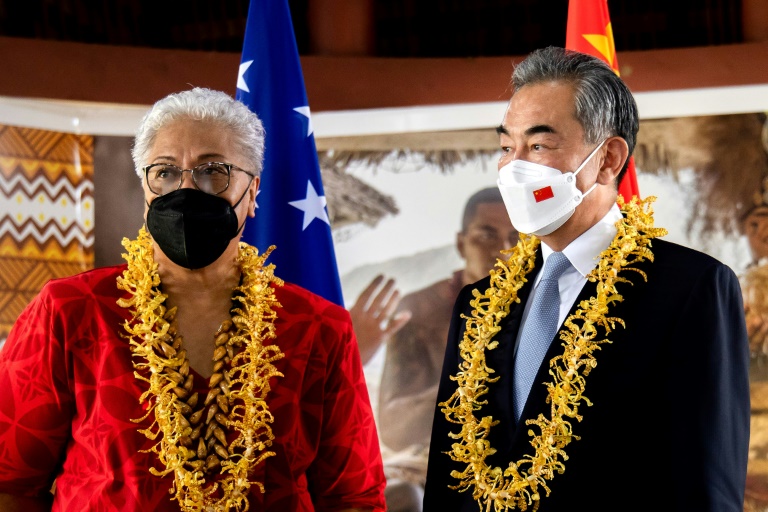
Samoa signed a bilateral agreement with China on Saturday, promising “greater collaboration” as Beijing’s foreign minister continues a tour of the South Pacific that has sparked concern among Western allies.

The deal’s details are unclear, coming midway through a Chinese delegation’s eight-nation trip — but an earlier leaked draft agreement sent to several Pacific countries outlined plans to expand security and economic engagement.

The mission has prompted Western leaders to urge regional counterparts to spurn any Chinese attempt to extend its security reach across the region.

A press release from the Samoan government confirmed that Chinese Foreign Minister Wang Yi and Samoan Prime Minister Fiame Naomi Mata’afa had met and discussed “climate change, the pandemic and peace and security”.

Local media were invited to witness the signing of a deal, but no questions were taken.

The deal also contained an agreement to help build a police fingerprinting lab in addition to an already announced police academy in the country, which follows earlier commitments of “capacity building” for law enforcement in the Solomon Islands.

The release said that China would continue to provide infrastructural development support to various Samoan sectors and there would be a new framework for future projects “to be determined and mutually agreed”.

“Samoa and the People’s Republic of China will continue to pursue greater collaboration that will deliver on joint interests and commitments,” the release said.

The Chinese delegation has already visited the Solomon Islands and Kiribati this week.

It arrived in Samoa on Friday night before flying on Saturday afternoon into Fiji, where Wang will visit Prime Minister Frank Bainimarama and attend a group meeting of foreign ministers from Pacific countries.

Other stops are expected in Tonga, Vanuatu, Papua New Guinea and East Timor.

In a duel for influence, Australia’s new Foreign Minister Penny Wong was in Fiji on Friday, seeking to woo island states after the Solomon Islands took Canberra by surprise last month by signing a wide-ranging security pact with China.

“We have expressed our concerns publicly about the security agreement,” Wong told reporters in the capital of Suva.

“As do other Pacific islands, we think there are consequences. We think that it’s important that the security of the region be determined by the region. And historically, that has been the case. And we think that is a good thing.”

At the first stop in Honiara on Thursday, Wang lashed out at “smears and attacks” against the security pact already signed with the Solomon Islands.

While the wide-ranging draft agreement and a five-year plan circulated to several pacific nations, both obtained by AFP, would give China a larger security footprint in a region seen as crucial to the interests of the United States and its allies.

In a stark letter to fellow Pacific leaders, Federated States of Micronesia President David Panuelo warned the agreement seems “attractive” at first glance but would allow China to “acquire access and control of our region”.

Iran police tear-gas protesters after building collapse: media

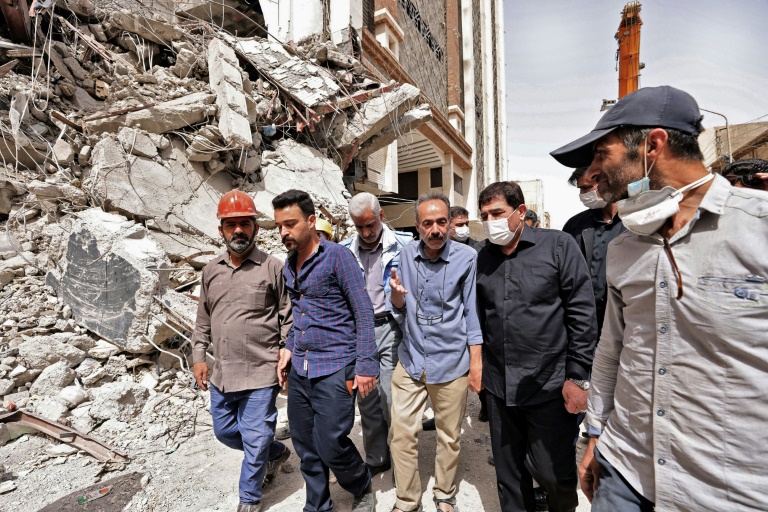
Iranian police fired tear gas and warning shots to disperse protesters in the southwestern city of Abadan where a tower block collapse killed 28 people, local media reported on Saturday.

A large section of the 10-storey Metropol building that was under construction in Abadan, Khuzestan province, crumbled on Monday in one of Iran’s deadliest such disasters in years.

It was the third night of protests in Abadan and other cities of the province which borders Iraq, local media reported.

Security forces in Abadan “used tear gas and shot in the air near the collapse site” on Friday night to disperse hundreds of protesters, who were mourning the lives lost and demanding justice for the perpetrators of the incident, Fars news agency said.

A number of people shouted “death to incompetent officials” and “incompetent officials must be executed”, similar to calls in protests on Wednesday and Thursday nights, it added.

Elsewhere in Khuzestan another protest, in the city of Bandar-e Mahshahr, saw people chanting while banging on traditional drums and hitting cymbals, images published by Fars showed.

People also took to the streets further afield including in the central Iranian cities of Isfahan, Yazd and Shahin Shahr on Friday to express sympathy with the victims of the tragedy, Fars news agency said.

On Thursday night, a shop in Abadan belonging to the family of the building’s owner “was set on fire and destroyed by unknown individuals,” Tasnim news agency reported earlier.

Interior Minister Ahmad Vahidi, who is in Abadan, said on Saturday that “two more bodies were recovered” and sent for identification, raising the death toll to 28, according to state news agency IRNA.

Officials, however, have not announced how many are people still trapped under the rubble.

The number of suspects has also risen.

Khuzestan’s provincial judiciary said on Saturday that 13 people have now been arrested in relation with the incident, including the mayor and two former mayors, IRNA said.

In a statement posted on his official website on Thursday, Iran’s supreme leader Ayatollah Ali Khamenei called for those responsible to be prosecuted and punished.

First Vice President Mohammad Mokhber told state television that “widespread corruption existed between the contractor, the builder, the supervisor and the licensing system”.

In January 2017, 22 people, including 16 firefighters, died in a blaze that engulfed the 15-storey Plasco shopping centre in Tehran.

Climate change effect on Peruvian glaciers debated in German court

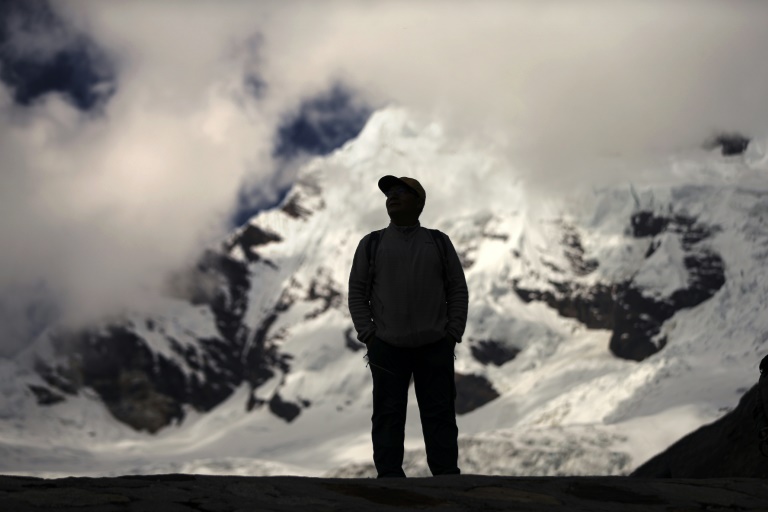
German judges and experts have arrived at the edge of a melting glacier high up in the Peruvian Andes to examine a complaint made by a local farmer who accuses energy giant RWE of threatening his home by contributing to global warming.

The visit by the nine-member delegation to the region is the latest stage in a case the plaintiffs hope will set a new worldwide precedent.

Leading the demand for “climate justice” is 41-year-old Peruvian farmer Saul Luciano Lliuya, who lives in the mountains close to the city of Huaraz.

He has filed suit against the German firm RWE, saying its greenhouse gas emissions are responsible for the melting of nearby glaciers.

The trip was ordered by the Higher Regional Court in the northern German city of Hamm, where Lliuya submitted his claim against RWE, having previously had his case dismissed by another court in Essen.

The delegation must determine what risk the melting glaciers pose to the city of Huaraz and its 120,000 inhabitants below the Palcacocha glacier.

“We want the RWE company to be held responsible for environmental damages,” Lliuya, a farmer and tourist guide supported by the German environmental NGO Germanwatch, told AFP.

“In general they have polluted all over the world and with this claim we are trying to do something,” added Lliuya.

RWE operates in 27 countries in the world, including Chile and Brazil, but not Peru.

The claim “was rejected in the first instance because it did not have any legal basis and did not respect German civil law,” RWE spokesman Guido Steffen told AFP.

“We are confident this will happen again with the appeal.” 

RWE insists that “according to law, individual emitters are not responsible for universal processes, that are effectively global, such as climate change.”

Lliuya and Germanwatch met during the COP20 climate change conference in Lima in 2014, after which the German NGO’s activists traveled to Huaraz to discuss a potential claim in Germany.

– Feeling ‘impotent’ –

Lliuya says his greatest fear is that the melting glaciers result in the Palcacocha lake overflowing.

At an altitude of 4,650 meters (15,000 feet), the huge blue-turquoise lake sits below the Palcaraju and Pucaranra glaciers in the Huascaran national park, and could flood Huaraz below if it bursts its banks.

“As a farmer and citizen I don’t want these glaciers to disappear, they’re important,” said Lliuya.

But he says he feels “impotent” because “you know you’re in a risk zone and there are businesses and industries that have caused this.”

Lliuya owns a half hectare “chacra” — the Quechua word for a small farmstead — on the slopes of the mountain.

He owns chickens and sheep and grows corn and quinoa.

Lliuya lives a modest life with his wife and two children. Their kitchen has few utensils and a wide tree trunk that serves as the dining table.

He is also afraid that a drought in the underground aquifers could threaten local agriculture and Huaraz’s water provisions.

– Battle in German courts –

The case against RWE was brought in 2015 and the German company won at the first instance the following year. But in 2017, the court in Hamm agreed to hear the case.

The visit by experts, which was ordered in 2019, was delayed by the Covid-19 pandemic.

Germanwatch and Lliuya want RWE to pay for the costs to protect Huaraz from any eventual flooding.

“This case refers to our historic emissions of greenhouse gases, and we have always complied with governmental limits, including our carbon dioxide emissions,” says RWE, which has stated a goal of becoming carbon neutral by 2040.

Peru has lost 51 percent of its glaciers over the last 50 years, the national water authority said in 2020.

Noah Walker-Crawford, a climate change researcher at University College London (UCL) and Germanwatch analyst, told AFP that 1,800 people died in 1941 when Palcacocha flooded Huaraz due to a glacial avalanche.

Since then, the volume of Palcacocha dropped by 96 percent over three decades. 

“But then, due to the rapid recession of the glaciers due to global warming, the lake has grown rapidly,” said Walker-Crawford.

Climate change effect on Peruvian glaciers debated in German court

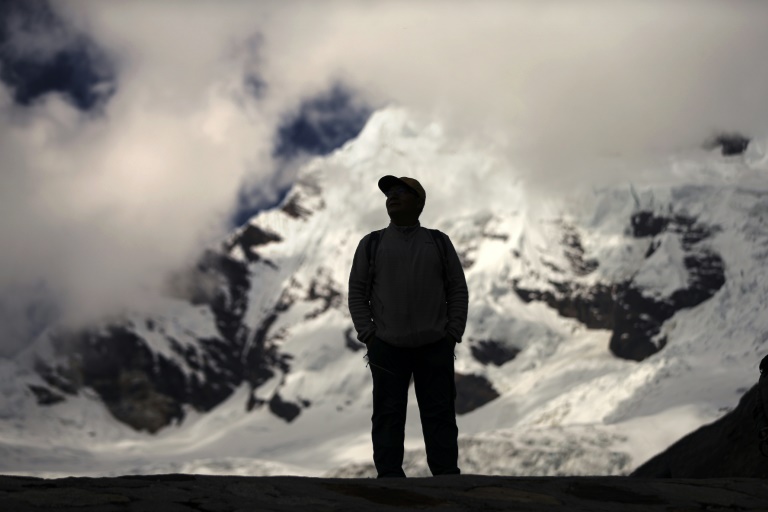
German judges and experts have arrived at the edge of a melting glacier high up in the Peruvian Andes to examine a complaint made by a local farmer who accuses energy giant RWE of threatening his home by contributing to global warming.

The visit by the nine-member delegation to the region is the latest stage in a case the plaintiffs hope will set a new worldwide precedent.

Leading the demand for “climate justice” is 41-year-old Peruvian farmer Saul Luciano Lliuya, who lives in the mountains close to the city of Huaraz.

He has filed suit against the German firm RWE, saying its greenhouse gas emissions are responsible for the melting of nearby glaciers.

The trip was ordered by the Higher Regional Court in the northern German city of Hamm, where Lliuya submitted his claim against RWE, having previously had his case dismissed by another court in Essen.

The delegation must determine what risk the melting glaciers pose to the city of Huaraz and its 120,000 inhabitants below the Palcacocha glacier.

“We want the RWE company to be held responsible for environmental damages,” Lliuya, a farmer and tourist guide supported by the German environmental NGO Germanwatch, told AFP.

“In general they have polluted all over the world and with this claim we are trying to do something,” added Lliuya.

RWE operates in 27 countries in the world, including Chile and Brazil, but not Peru.

The claim “was rejected in the first instance because it did not have any legal basis and did not respect German civil law,” RWE spokesman Guido Steffen told AFP.

“We are confident this will happen again with the appeal.” 

RWE insists that “according to law, individual emitters are not responsible for universal processes, that are effectively global, such as climate change.”

Lliuya and Germanwatch met during the COP20 climate change conference in Lima in 2014, after which the German NGO’s activists traveled to Huaraz to discuss a potential claim in Germany.

– Feeling ‘impotent’ –

Lliuya says his greatest fear is that the melting glaciers result in the Palcacocha lake overflowing.

At an altitude of 4,650 meters (15,000 feet), the huge blue-turquoise lake sits below the Palcaraju and Pucaranra glaciers in the Huascaran national park, and could flood Huaraz below if it bursts its banks.

“As a farmer and citizen I don’t want these glaciers to disappear, they’re important,” said Lliuya.

But he says he feels “impotent” because “you know you’re in a risk zone and there are businesses and industries that have caused this.”

Lliuya owns a half hectare “chacra” — the Quechua word for a small farmstead — on the slopes of the mountain.

He owns chickens and sheep and grows corn and quinoa.

Lliuya lives a modest life with his wife and two children. Their kitchen has few utensils and a wide tree trunk that serves as the dining table.

He is also afraid that a drought in the underground aquifers could threaten local agriculture and Huaraz’s water provisions.

– Battle in German courts –

The case against RWE was brought in 2015 and the German company won at the first instance the following year. But in 2017, the court in Hamm agreed to hear the case.

The visit by experts, which was ordered in 2019, was delayed by the Covid-19 pandemic.

Germanwatch and Lliuya want RWE to pay for the costs to protect Huaraz from any eventual flooding.

“This case refers to our historic emissions of greenhouse gases, and we have always complied with governmental limits, including our carbon dioxide emissions,” says RWE, which has stated a goal of becoming carbon neutral by 2040.

Peru has lost 51 percent of its glaciers over the last 50 years, the national water authority said in 2020.

Noah Walker-Crawford, a climate change researcher at University College London (UCL) and Germanwatch analyst, told AFP that 1,800 people died in 1941 when Palcacocha flooded Huaraz due to a glacial avalanche.

Since then, the volume of Palcacocha dropped by 96 percent over three decades. 

“But then, due to the rapid recession of the glaciers due to global warming, the lake has grown rapidly,” said Walker-Crawford.

Country music stars distance themselves from NRA after school massacre

Country music has long been closely linked to America’s pro-gun lobby, but several stars have distanced themselves from the National Rifle Association following the mass shooting at a Texas school.

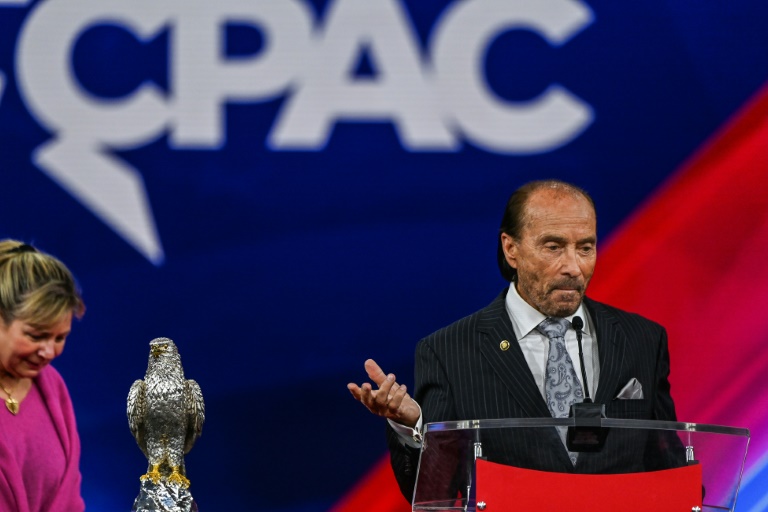
At least five country musicians, including “God Bless the USA” performer Lee Greenwood, pulled out of the NRA’s annual convention that opened Friday in Texas. “American Pie” singer-songwriter Don McLean also withdrew.

Their initial billing highlights the close links between country music and the gun-supporting right in the United States, but experts say their withdrawal is indicative of shifting attitudes.

McLean, 76, said it would be “disrespectful and hurtful” to perform at the convention’s “Grand Ole Night of Freedom” concert scheduled for Saturday after 19 students and two teachers were killed at an elementary school in the small town of Uvalde.

Greenwood, whose patriotic signature song regularly rings out at Donald Trump rallies, said he canceled “out of respect” for those mourning, while Larry Gatlin said he couldn’t perform “in good conscience.”

T. Graham Brown and Larry Stewart, lead singer of country band Restless Heart, also withdrew, according to statements carried by USA Today.

– ‘Not monolithic’ –

Conjuring up images of stetson hats, cowboy boots and the Stars and Stripes flag, country has traditionally been the favorite music of conservative white Americans.

Its fan base is predominantly white, with roots in the largely Republican southern US states.

“Country music is not monolithic by any means,” Professor Mark Brewer, who teaches a class on music and American politics at the University of Maine, told AFP.

“But I think it’s safe to say that the predominant themes over the years have been more conservative, maybe with a hint of libertarian populism mixed in.”

Brewer says there have been “longstanding connections” between country music, conservative politics, and gun culture. One of the reasons is geography.

“There’s a big regional overlap. Country music has its origins in the American south and southern American politics have always been conservative.

“The United States as a whole has a pretty prevalent gun culture, but it’s even more pronounced in the south,” he added.

Professor Joel Schwindt, who teaches country music history at the Boston Conservatory at Berklee, said the genre was “very specifically marketed” to white America from the start.

Adding to its appeal amongst white working class groups was a “firm support for the military.”

-2017 Las Vegas shooting –

Unlike Hollywood and the US pop music industry, which lean left, country music has plenty of conservative artists.

The musicians who withdrew from the NRA convention were careful not to criticize the gun body in their statements.

Stewart praised it as a “great organization” as he defended the US constitution’s famous Second Amendment right to bear arms.

Numerous country musicians have called for more gun regulations though, including Eric Church, Jason Isbell, Maren Morris and Kacey Musgraves.

Several spoke out after a man opened fire from his hotel on a Las Vegas country music festival in 2017, killing 60 people in the deadliest mass shooting in modern US history.

Rosanne Cash, singer-songwriter and daughter of late country musician Johnny Cash, wrote an Op-Ed in the New York Times later that year calling on country musicians to stand up to the NRA.

“I think we’ve had more genuinely progressive stands in the last decade than we’ve probably ever had before,” including on LGBTQ issues, said Brewer.

Although there are no conclusive studies, he thinks this might be because younger performers tend to be more progressive, as are the fans they are trying to attract.

Schwindt notes that while country music’s fan base is primarily white, “regular listenership among non-white listeners, Black listeners and Hispanic listeners in particular, has grown pretty significantly over the past 10 to 20 years.”

Could that lead to more country stars taking progressive stances in the future?

“It’s something we’re seeing more of,” said Brewer. “I don’t know if I’d say that’s the dominant position still by any means. But it’s becoming more and more visible,” he added.

In Bogota, trash of the rich becomes lifeline for the poor

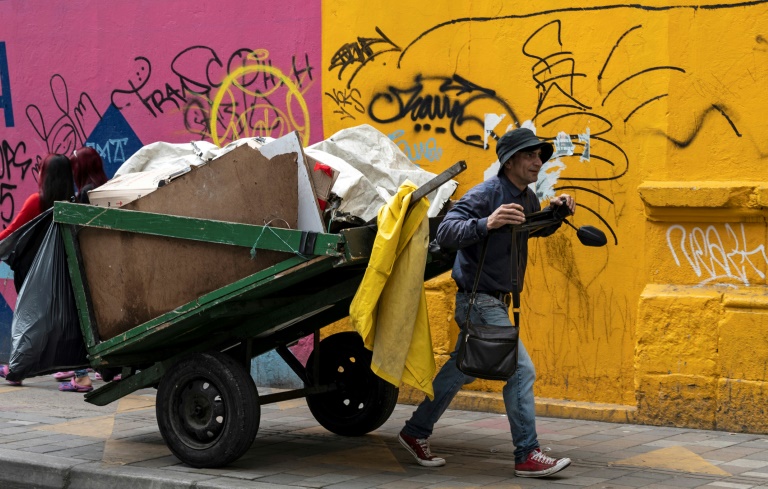
They appear at nightfall, dragging heavy carts from dustbin to dustbin in the affluent northern suburbs of the Colombian capital Bogota.

Informal recyclers, they rifle through the trash of the rich looking for waste plastic, glass bottles and cardboard they can sell for a handful of pesos.

It is back-breaking work for little reward, but a salvation for thousands in a country where one in eight city dwellers is unemployed, and the poverty rate approaches 40 percent.

“This life is hard, but it is my only option to survive,” Jesus Maria Perez, 52, told AFP.

Men, women and even children: these waste pickers are the face of the misery that candidate after candidate for Sunday’s first round of presidential elections has vowed to eradicate.

Many, Perez included, are among the estimated 1.8 million migrants to have fled neighboring Venezuela in search of a better life in Colombia — Latin America’s fourth-largest economy but one of the world’s most unequal.

In 2020, according to the Bogota city council, 25,000 of the capital’s eight million inhabitants worked as informal rubbish recyclers.

On average, each earns between 12,000 and 18,000 pesos ($3 to $4.50) daily for their efforts, according to Alvaro Nocua of the “Give Me Your Hand” association set up to help this community.

– Human work horses –

For Perez, who used to be a cook in Venezuela, it is a struggle to meet his daily goal of 40,000 pesos — about $10 — to cover his one meal a day, a bed for the night and parking for his wooden cart.

He has no horse or donkey to pull the heavy burden: the Bogota municipality banned the practice eight years ago to combat animal abuse.

And as few can afford a self-propelled vehicle, it is people who do the heavy lifting, pulling their carts for kilometers every day.

Whole families take part in the endeavor; the parents wading through the garbage as little ones wait in the cart, playing among the rubbish.

Bogota produces nearly 7,500 tons of waste every day, of which as much as 16 percent, municipal data shows, is recycled by people like Perez. 

Nearly 80 percent of Colombian households did not recycle or even separate their waste at home, according to 2019 figures.

– A small income –

Martha Munoz, 45, runs a small recycling station where she buys waste from the informal collectors before reselling it to one of 15 large centers in Bogota.

“Many of those who come here live on the street; this allows them to have a small income,” she told AFP.

Munoz said she raised her seven children with her recycling income — one is a lawyer today and another an engineer.

Perez’s expectations are shorter term.

On the day AFP met him, he had managed to earn only 25,000 pesos, just over half of what he needs.

Subtracting the rent for his room in a filthy boarding house in a rough neighborhood and expenses for parking his cart, Perez is left with just 1,000 pesos — about a quarter of a US dollar.

To make up the difference, he sets out again, this time to sell candy and bin bags on the street.

In this way, he collects enough to pay for his first and only meal of the day: a small sachet of rice with a bit of meat.

According to the World Bank, Colombia is one of the countries with the highest income inequality and biggest informal labor markets in Latin America.

Colombians go to the polls Sunday for elections in which deepening economic woes — which gave rise to deadly protests last year — are a key campaign issue.

Close Bitnami banner
Bitnami