World

Mexican judge suspends bullfights in world's largest ring

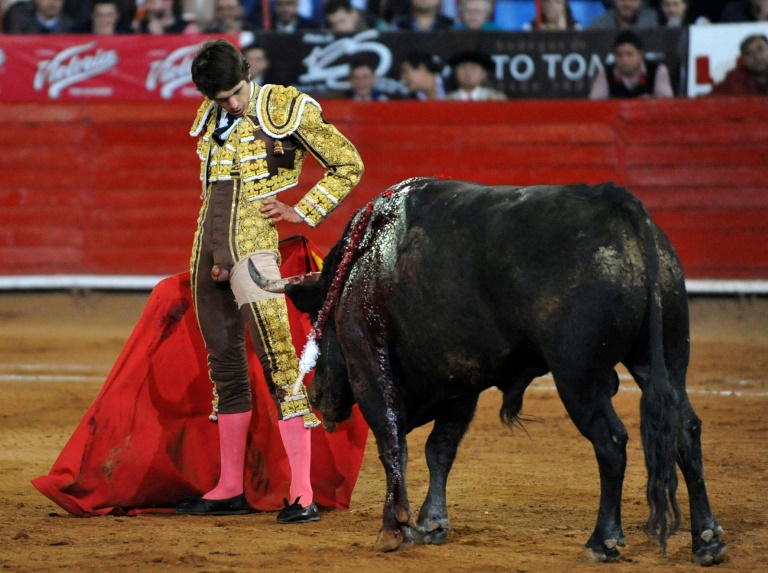
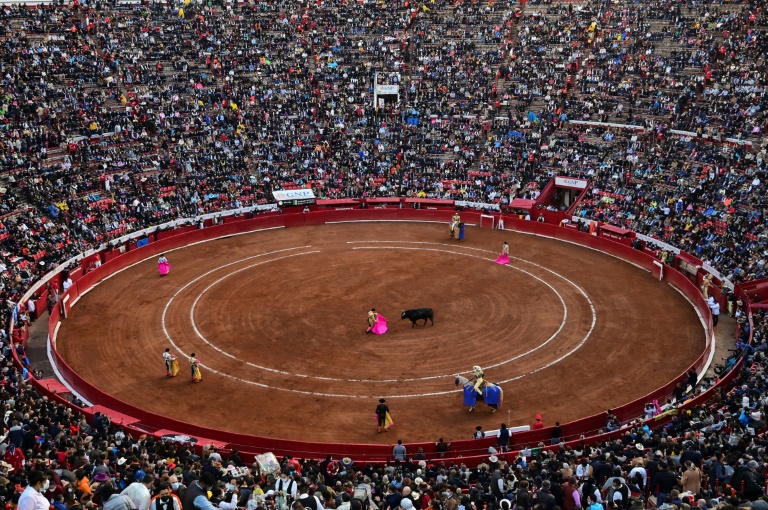
A Mexican judge on Friday ordered a suspension of bullfighting in Mexico City’s Plaza de Toros, the world’s largest bullring, after activists filed a lawsuit against the centuries-old practice.

Organizers “must immediately suspend bullfighting shows… as well as the granting of permits,” the federal court ruled in response to a petition by the group Justicia Justa.

Another hearing is due to be held on Thursday to consider arguments and evidence from the two sides, ahead of the next scheduled event at the Plaza de Toros on July 2.

It is the first time that a court has ordered such a suspension, following years of legal action by civil organizations seeking a ban.

Mexico is a bastion of bullfighting but the tradition — and the 50,000-capacity Plaza de Toros — face an uncertain future.

In December, an animal welfare commission in Mexico City’s legislature approved a proposal to prohibit the tradition in the capital.

Lawmakers have yet to vote on the plan, which dismayed supporters of bullfighting as well as the multimillion-dollar industry surrounding it.

So far, only a handful of Mexico’s 32 states have banned the practice, which was brought by the Spanish conquistadors in the 16th century.

Global stocks push higher as US inflation shows signs of moderating

Global stocks pushed higher on Friday, with US indices snapping a slump of weekly losses, while oil prices rallied to their highest level in two months.

Following a positive day in European and Asian stock bourses, Wall Street stocks enjoyed another session entirely in positive territory, finishing higher for a third straight session.

It’s been a blistering 2022 thus far for US equities as the Federal Reserve has launched aggressive steps to tighten monetary policy in response to inflation.

But the Dow finished at 33,212.96, up 1.8 percent for the day or 6.2 percent for the week. The index had posted weekly losses the last eight weeks.

“The market itself was oversold and we knew that we were overdue for a bounce,” Quincy Krosby, chief equity strategist of LPL Financial.

A catalyst was Commerce Department data that showed the personal consumption expenditures (PCE) price index climbed 0.2 percent after several months of accelerating at more than twice that pace.

The data gives support to the argument from stock market bulls that the US economy is moving past — or has progressed from — a period of “peak inflation” — indicating there will be less grim consumer price news in the months ahead.

The report also showed US personal income rose 0.4 percent in April compared to March, and consumers continued to increase spending.

“Encouragingly, the latest US personal spending data showed that US consumers were still inclined to spend money with a rise of 0.9 percent, which was slightly higher than markets had been expecting,” said Michael Hewson at CMC Markets.

Meanwhile, oil prices also forged higher, with Brent futures ending up 1.7 percent at $119.43 a barrel. Analysts cited speculation of a compromise deal in the European Union to ban Russian crude imports.

Back in Asia, investors were in a buying mood as Hong Kong jumped more than two percent, with market heavyweight Alibaba piling on more than 11 percent and search engine Baidu advancing 15 percent.

The two firms posted better-than-expected sales growth in the January-March quarter, soothing fears about the impact of Covid and inflation on their bottom lines.

Hong Kong’s tech index jumped nearly three percent, with other giants also enjoying buying interest with JD.com and Meituan sharply up.

The reports were much-needed pieces of good news out of the world’s second-biggest economy, which is being battered by lockdowns in major cities as leaders refuse to budge from their zero-Covid strategy.

– Key figures at around 2100 GMT –

New York – Dow: UP 1.8 percent at 33,212.96 (close)

New York – S&P 500: UP 2.5 percent at 4,158.24 (close)

New York – Nasdaq: UP 3.3 percent at 12,131.13 (close)

London – FTSE 100: UP 0.3 percent at 7,585.46 (close)

Frankfurt – DAX: UP 1.6 percent at 14,462.19 (close)

Paris – CAC 40: UP 1.6 percent at 6,515.75 (close)

EURO STOXX 50: UP 1.8 percent at 3,808.86 (close)

Tokyo – Nikkei 225: UP 0.7 percent at 26,7781.68 (close)

Hong Kong – Hang Seng Index: UP 2.9 percent at 20,697.36 (close)

Shanghai – Composite: UP 0.2 percent at 3,130.24 (close)

Euro/dollar: UP at $1.0739 from $1.0725 on Thursday

Pound/dollar: UP at $1.2631 from $1.2600

Euro/pound: DOWN at 84.99 pence from 85.12 pence

Dollar/yen: DOWN at 127.09 yen from 127.12 yen 

Brent North Sea crude: UP 1.7 percent at $119.43 per barrel

West Texas Intermediate: UP 0.9 percent at $115.07 per barrel

burs-jmb/mdl

US regulators scrutinize Musk's Twitter stock buys

US market authorities have asked Elon Musk to explain an apparent delay in reporting his Twitter stock buys, the agency revealed Friday, the latest questions on the methods and intent of his troubled bid for the platform.

Musk became a major Twitter stockholder following the purchase of 73.5 million shares in early April, and less than two weeks later launched a hostile takeover bid.

He went on to ink a $44 billion deal to buy the San Francisco-based company, but has since given mixed signals regarding how committed he is to following through.

The Securities and Exchange Commission (SEC) letter to Musk showed regulators asked him to explain why he didn’t disclose within a required 10-day time period his increased stake in Twitter, especially if he planned to buy the company.

“Your response should address, among other things, your recent public statements on the Twitter platform regarding Twitter, including statements questioning whether Twitter rigorously adheres to free speech principles,” regulators said in the letter dated April 4.

Neither Musk nor the SEC immediately responded to requests for comment.

The Tesla chief is a frequent Twitter user, regularly firing off inflammatory and controversial statements about issues or other public figures with remarks that are whimsical or business-focused. 

He has sparred repeatedly with federal securities regulators, who cracked down on his social media use after a purported effort to take Tesla private in 2018 fell apart.

Musk has cited the right to freedom of speech as a driver of his efforts to undo an agreement with the SEC that tightened his use of the social media platform following his August 2018 tweet that funding was “secured” to take Tesla private.

Musk also faces a lawsuit filed this week accusing him of pushing down Twitter’s stock price in order to either give himself an escape hatch from his buyout bid, or room to negotiate a discount.

The suit alleges Musk tweeted and made statements intended to create doubt about the deal, which has roiled the social media platform for weeks.

“Musk proceeded to make statements, send tweets, and engage in conduct designed to create doubt about the deal and drive Twitter’s stock down substantially,” according to the complaint.

His aim was to gain leverage to get Twitter at a much cheaper price, or back out of the deal without suffering any penalty, the suit argued.

Deminers race to clear lake favoured by bathers near Kyiv

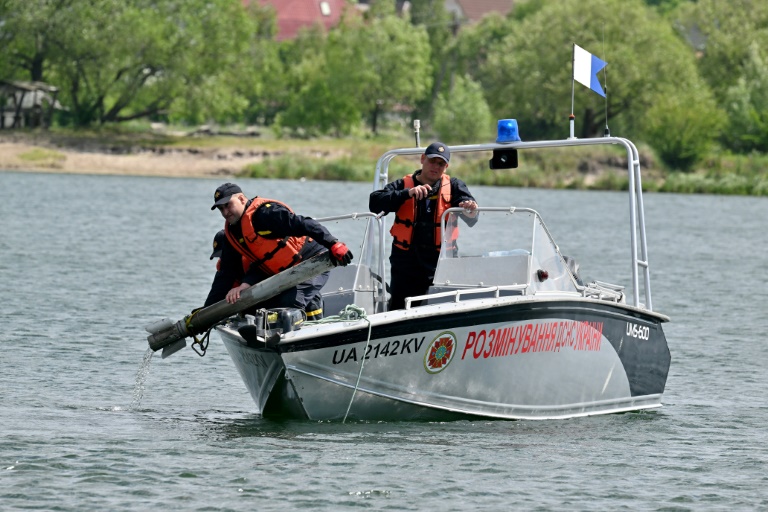
Deminers are racing against time to clear lake Horenka on the fringes of the Ukrainian capital Kyiv of unexploded shells and missiles before the start of the summer season to prevent any casualties.

A wooden pontoon allows them to jump into the azure  waters of the bucolic lake, which drew hordes of anglers and picnickers in more peaceful times.

Now two boats skim the surface as a diver and an amphibious drone explore its depths.

Between Thursday and Friday, the team found 10 heavy projectiles, the remains of heavy fighting in this area which was the frontline in the early days of the war, unleashed by Russia on February 24.

None of them exploded due to the “soft landing” on the water, Serhii Reva, head of the pyrotechnical unit of the State Rescue Service of Ukraine, told AFP.

“If an item falls into water, it does not explode because it’s not hitting something very hard,” he said.

The unexploded projectiles are gingerly carried to trucks and transported to an uninhabited area about 20 kilometres (12 miles) away where they are detonated.

The deminers are fighting the clock.

“If you wait one or two months, they will be covered in mud and it will be impossible to see them, that’s why it’s urgent,” said Viktor Pohorilyi, showing on his video screen a rocket found at a depth of 6.5 metres (21 feet).

Summer is fast approaching and that is another reason for haste.

Reva said picnickers will flock here and “they will start diving” despite being warned of the risks.

The Kyiv region boasts several picturesque bathing spots — on the banks of the Dnipro river and the many lakes dotting the area.

At Horenka, there are gazebos for picnickers and although no one has ventured here so far, Reva fears there will be visitors soon as the Russian campaign has moved away from Kyiv to Ukraine’s separatist east.

Another source of worry? Anglers.

“Line fishing is not a problem, but for people fishing with nets, they could pull out some dangerous items,” Reva said.

His teams, equipped with two amphibious drones, cannot cover the entire expanse of the shimmering blue lake, he conceded.

The clearing up operation is due to end on Sunday.

Venezuela, Cuba rally after rejection from Los Angeles summit

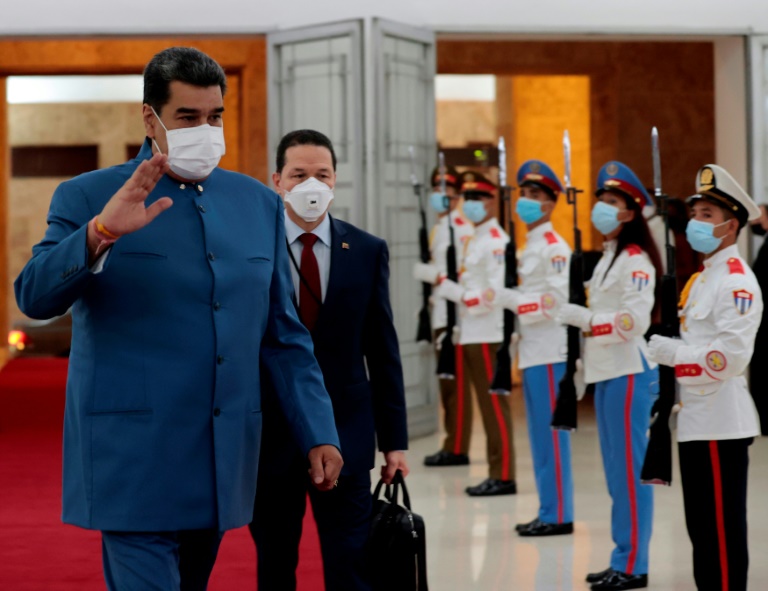
The leftist leaders of Cuba, Venezuela and Bolivia railed against the United States Friday in Havana, days ahead of the Summit of the Americas in Los Angeles, whose invitation list has overshadowed the agenda.

US President Joe Biden has described the June 6-10 summit, being held in the United States for only the second time, as an opportunity to champion democracy over authoritarianism and has not invited the leaders of Cuba, Venezuela or Nicaragua.

Cuban President Miguel Diaz-Canel, who has said he will “under no circumstances” go to Los Angeles, held an alternative summit of sorts in Havana.

Entering the Palace of the Revolution, Venezuelan President Nicolas Maduro called the gathering “a firm, forceful and absolute rejection of the imperial vision that seeks to exclude peoples from the Americas.”

Bolivian President Luis Arce said of the Los Angeles gathering: “If they want to have a meeting among friends, let them do it, but don’t call it the Summit of the Americas.”

The talks in Havana were part of the ALBA grouping, set up in 2004 by Maduro’s late predecessor Hugo Chavez and Cuban revolutionary leader Fidel Castro to counter a US proposal for a pan-American free trade area.

The bloc’s grievances received a boost from the leader of Latin America’s second most populous nation, Mexican President Andres Manuel Lopez Obrador, who said he would not travel to Los Angeles unless all nations were invited.

On a visit to Havana on May 8, the leftist Mexican leader said it should be for “each country to decide freely if they will attend.”

In Havana, Maduro hailed Lopez Obrador for “standing up for the entire continent’s truth, morals and dignity.” 

Mexico may still send its foreign minister to LA, but the leaders of Argentina, Bolivia, Honduras and the 14-nation bloc of Caribbean states have also put their attendance in doubt.

– Engagement or isolation? –

Testifying to a US Senate committee on Thursday, summit coordinator Kevin O’Reilly said the United States would “absolutely not” invite representatives from the government of Maduro, whom Washington considers illegitimate following a widely criticized 2018 election.

Nicaraguan President Daniel Ortega — who did not travel to Havana — has also been accused of rising authoritarianism, with his main rival in last year’s elections arrested and later sentenced to eight years in prison for alleged financial crimes.

The Biden administration recently eased visa and family remittance restrictions for Cuba, a bugbear of Washington since the 1959 revolution.

But the administration, pointing to human rights concerns, has stopped well short of reviving the thaw of former president Barack Obama and reversing pressure tactics of Biden’s predecessor Donald Trump, who made inroads with anti-communist Hispanic voters in the 2020 election.

Republican Senator Marco Rubio, a Cuban-American and vociferous critic of Latin American leftists, at the Thursday hearing urged the Biden administration not to be “bullied” by Mexico into inviting a “trifecta of tyranny.”

“If we have a summit where we don’t invite dictators and the people who wanted dictators to come decide to boycott it, then we’ll just know who our real friends are in the region,” he said.

But three leading lawmakers from Biden’s Democratic Party including Representative Gregory Meeks, chairman of the House Foreign Affairs Committee, warned that the exclusions “could undermine the US’s standing in the region” by forcing other nations to choose.

In a letter to Biden, Meeks and Representatives Jim McGovern and Barbara Lee said that inviting Cuba, Nicaragua and Venezuela would not be “an endorsement” of their ideologies but would show the United States is a “good-faith negotiator” in the hemisphere.

“We believe that a policy of engagement will yield more fruitful results than a continued policy of isolation,” they wrote.

The Biden administration hopes that the summit will reach an agreement to coordinate on migration, a key domestic priority for Washington.

Other items on the agenda include promoting green energy and improving health infrastructure in the wake of the Covid-19 pandemic.

Mexican judge suspends bullfights in world's largest ring

A Mexican judge on Friday ordered a suspension of bullfighting in Mexico City’s Plaza de Toros, the world’s largest bullring, after activists filed a lawsuit against the centuries-old practice.

Organizers “must immediately suspend bullfighting shows… as well as the granting of permits,” the federal court ruled in response to a petition by the group Justicia Justa.

Another hearing is due to be held on Thursday to consider arguments and evidence from the two sides, ahead of the next scheduled event at the Plaza de Toros on July 2.

It is the first time that a court has ordered such a suspension, following years of legal action by civil organizations seeking a ban.

Mexico is a bastion of bullfighting but the tradition — and the 50,000-capacity Plaza de Toros — face an uncertain future.

In December, an animal welfare commission in Mexico City’s legislature approved a proposal to prohibit the tradition in the capital.

Lawmakers have yet to vote on the plan, which dismayed supporters of bullfighting as well as the multimillion-dollar industry surrounding it.

So far, only a handful of Mexico’s 32 states have banned the practice, which was brought by the Spanish conquistadors in the 16th century.

Russia moves on key city amid Ukraine church schism

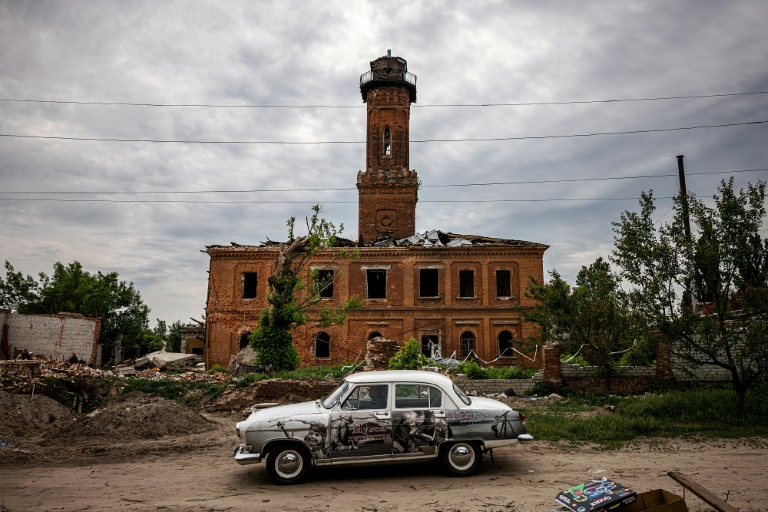
Russian troops were approaching the strategic city of Severodonetsk on Friday in a relentless offensive to control Ukraine’s eastern Donbas region, as the war triggered a historic schism in the Ukrainian Orthodox Church’s Moscow branch.

Pro-Russian separatists said they had captured the town of Lyman between Severodonetsk and Kramatorsk, on the road leading to the key cities still under Kyiv’s control.

Russian forces were also closing in on Severodonetsk and Lysychansk in the pro-separatist Lugansk province, which stand on the crucial route to Ukraine’s eastern administrative centre in Kramatorsk.

The war caused the Moscow-backed branch of Ukraine’s Orthodox Church to sever ties with Russia, in a historic move against the Russian spiritual authorities.

A church council focused on Russia’s “aggression” condemned the pro-war stance of Patriarch Kirill of Moscow and declared “full independence”. Ukraine has been under Moscow’s spiritual leadership since at least the 17th century.

“Not only did he (Kirill) fail to condemn Russia’s military aggression but he also failed to find words for the suffering Ukrainian people,” church spokesman Archbishop Kliment told AFP.

It is the second Orthodox schism in Ukraine in recent years, with part of the Ukrainian Orthodox Church breaking away from Moscow in 2019 over Russia’s annexation of Crimea and support for separatists in Donbas. 

– Severodonetsk ‘surrounded’ –

Three months after Russia launched its invasion on February 24, leaving thousands dead on both sides and forcing 6.6 million Ukrainians out of the country, Moscow is focusing on the east of Ukraine after failing in its initial ambition to capture Kyiv.

Observers believe Russia’s gains have been far paltrier than President Vladimir Putin hoped, though Moscow has gained control over a handful of cities in southern Ukraine, such as Kherson and Mariupol.

“Russia is pressuring the Severodonetsk pocket although Ukraine retains control of multiple defended sectors, denying Russia full control of the Donbas,” the British defence ministry said in its latest briefing.

A Lugansk police official, cited by Russia’s state news agency RIA Novosti, said Severodonetsk was “now surrounded” and Ukrainian troops could no longer leave the city.

That was denied by senior city official Oleksandr Stryuk, though he acknowledged the situation was “very difficult” with incessant bombing.

Lugansk’s regional governor Sergiy Gaiday said in a Telegram video that at least five civilians had been killed in his region in the past 24 hours.

“People are willing to risk everything to get food and water,” said Oleksandr Kozyr, the head of the main aid distribution centre in Lysychansk.

“They are so psychologically depressed that they are no longer scared. All they care about is finding food,” he said.

Around 10 people were killed in Russian strikes on a military facility in the central Ukrainian city of Dnipro, far from the frontline, the regional head of the national guard said.

– Sanctions under discussion –

The Kremlin is now seeking to tighten its grip over the parts of Ukraine it occupies, including fast-tracking citizenship for residents of areas under Russian control.

Russian authorities in Mariupol, which was taken over this month after a devastating siege that left thousands dead and reduced the city to rubble, cancelled school holidays to prepare students to switch to a Russian curriculum, according to Kyiv.

There has been speculation that Russia could seek to annex areas of eastern and southern Ukraine it now controls, possibly in referendums during Russian regional elections held nationwide in September.

Ukraine’s President Volodymyr Zelensky will speak with EU leaders at an emergency summit Monday as they try to agree on oil sanctions against Russia, which are being held up by Hungary, whose Prime Minister Viktor Orban has close relations with Putin.

Zelensky said in a virtual address to a think tank in Indonesia, which is hosting this year’s G20 summit, that “rather than continue trading with (Russia), we need to act until they stop their policy of aggression”.

– ‘Fear of escalation’ –

There have also been tensions between Kyiv and some Western nations, in particular Germany, over a perceived reluctance to supply more weapons to Ukraine lest the conflict intensify further.

Ukraine has also bristled at suggestions that Putin should be offered an “off-ramp” to save face in a compromise deal that would see Kyiv concede some territory.

“Some partners avoid giving the necessary weapons because of fear of the escalation. Escalation, really?” Zelensky’s adviser Mykhaylo Podolyak wrote on Twitter, saying it was “time to respond” by giving Kyiv multiple launch rocket systems (MLRS).

British Prime Minister Boris Johnson said he feared Putin was “continuing to chew through ground in Donbas” and that further military support for Kyiv was “vital”.

– Food supply concerns –

Concerns are also growing over global food shortages due to the conflict, exacerbating problems for the world’s poor at a time of rising energy prices.

Russia and Ukraine alone produce 30 percent of the global wheat supply, with grain-carrying vessels unable to leave ports in Ukraine.

But Putin rejected claims that Russia was blocking Ukraine’s grain exports as “groundless” in a telephone call Friday with Austrian Chancellor Karl Nehammer, the Kremlin said.

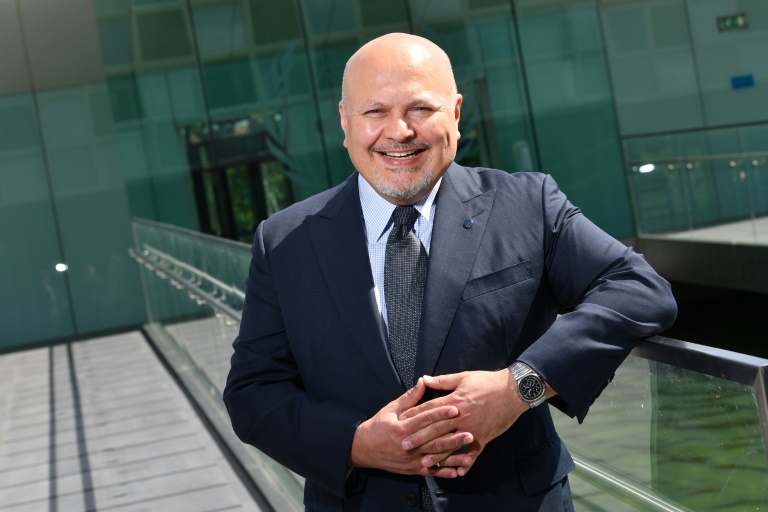
ICC prosecutor urges Russia to cooperate on Ukraine probe

Russia should cooperate with the International Criminal Court’s investigation into alleged war crimes carried out during Moscow’s invasion of Ukraine, the tribunal’s prosecutor told AFP on Friday.

Prosecutor Karim Khan said Russia, which is not a member of the Hague-based court, had declined to work with the ICC on Ukraine but added that his “door is open” if it wants to help.

The British barrister also insisted that war crimes culprits could be brought to justice although he refused to say whether President Vladimir Putin himself could one day be a suspect.

“The invitation is there. My door is open, and I will also keep knocking on the door of the Russian Federation,” Karim Khan said in an interview.

“If there are allegations that the Russian Federation have, if there’s information that they have, if they are conducting their own investigations or prosecutions or have information that’s relevant — share it with us.”

Like Russia, Ukraine is not an ICC member, but it has accepted the court’s jurisdiction and is working with Khan’s office as it probes possible war crimes and crimes against humanity.

Russia says allegations of war crimes by its troops are fake, and Russian President Vladimir Putin justified the February 24 invasion by saying that Ukraine was overseeing a “genocide” in the east of the country.

“If one makes those allegations, cooperate, share the information, cooperate with us,” said Khan. 

“If there’s been fake news, we will expose the fake news.”

– ‘Battlefield but a crime scene’ –

The ICC was created in 2002 to try the world’s worst crimes where states are unable or unwilling to. It does not have its own police force and so relies on individual countries to enforce any arrest warrants it issues.

Khan — who took over as the ICC’s third-ever prosecutor last year — announced an investigation four days after Russia’s invasion and the probe has since been backed by 42 countries.

He later visited Bucha, a town outside Kyiv where AFP journalists discovered 20 bodies in civilian clothing lying in a street, and where officials later said hundreds of other people had been killed.

Last week Khan sent the largest ever investigative team in the ICC’s nearly 20-year history to Ukraine, comprising 42 staff including forensics experts.

“The reality is it’s a battlefield, but it’s also a crime scene,” Khan said.

The team were “looking at mass graves” and seeking satellite and radar evidence, taking testimony from witnesses, and helping Ukrainian authorities unlock seized phones so they can be “scrubbed” for information, he said.

But questions remain about where war crimes trials will be carried out — and how suspects will be brought to justice.

Kyiv has already started its own war crimes trials, sentencing a 21-year-old Russian soldier to life last week for killing a civilian.

Ukraine’s chief prosecutor has suggested that the ICC could deal with higher profile cases, but Khan said the ICC was still working with Ukraine and international partners on the best path.

He refused to give “artificial timelines” for when the ICC could bring any of its own indictments, saying it was a “recipe for a disaster”.

He also insisted that the court was “not here to target a particular country” but wanted to “get to the truth”.

Ukrainian troops have also faced war crimes allegations over a video in which Russian soldiers appeared to be shot in the legs.

– ‘Difficult to hide’ –

Moscow’s refusal to cooperate and the fact that it is not a member of the ICC have raised questions about how any eventual suspects could be brought to trial.

But Khan pointed to previous “significant successes” by international tribunals in bringing fugitives to justice, such as Slobodan Milosevic, Radovan Karadzic and Ratko Mladic over the wars in the former Yugoslavia, and suspects in the 1994 Rwandan genocide.

“In this day and age we know it’s difficult to hide, it needs cooperation from states to ensure warrants are executed,” said Khan.

Meanwhile suggestions that Putin himself could one day end up in the dock have been made by both Ukraine’s chief prosecutor and former war crimes prosecutor Carla del Ponte.

But Khan said he was “not going to talk about individuals”. 

“It’s very dangerous to succumb to popular demand — it’s very important to follow the evidence,” he said. 

“The clear starting position is every individual in the conflict — whether a low level soldier, a pilot, a battlefield commander, a general, a military commander or a civilian superior — they all have responsibilities.”

Police 'wrong' not to breach door during Texas shooting

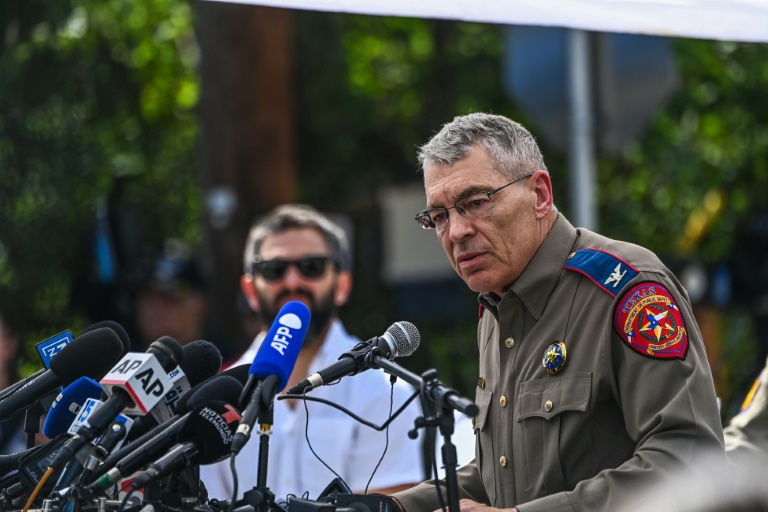
A top Texas security official said Friday that police were wrong to delay storming the classroom where a teen gunman was holed up with dead and wounded children — fueling fears that police inaction cost lives in Uvalde.

Police in the small town have come under intense criticism since Tuesday’s tragedy over why it took well over an hour to neutralize the gunman — who ultimately killed 19 children and two teachers at Robb Elementary School.

“From the benefit of hindsight… it was the wrong decision, period,” Texas Department of Public Safety director Steven McCraw told an emotional news conference, at which his voice broke repeatedly as he was assailed by questions over the delay.

“From what we know, we believe there should have been an entry as soon as you can,” McCraw said, adding: “If I thought it would help, I’d apologize.”

McCraw revealed in harrowing detail that a series of emergency calls were made from inside the two adjourning classrooms where the gunman was barricaded, begging for police help — as desperate parents outside pleaded with officers to go in.

But in seeking to explain the delay, he also said the on-scene commander believed at the time that the 18-year-old gunman Salvador Ramos was in there alone, with no survivors, after his initial assault.

“I’m not defending anything, but you go back in the timeline, there was a barrage, hundreds of rounds were pumped in in four minutes, okay, into those two classrooms,” McCraw said.

“Any firing afterwards was sporadic and it was at the door. So the belief is that there may not be anybody living anymore.”

McCraw separately told reporters, however, that a 911 call received at 12:16 pm — one of several made from inside the classrooms — reported eight or nine children still alive. 

He did not identify the caller, who he said called at least four times.

As many as 19 officers were outside the classroom door at that time, plus an unknown number of tactical team members who had just arrived, according to McCraw’s timeline.

The door was eventually breached at 12:50 pm.

McCraw said a second caller — a child — called 911 multiple times begging for police to come. During one of her calls, at 12.21, three shots could be heard, he said. 

Her final call was cut off as she made it outside, he said.

– NRA kicks off gun convention –

McCraw’s press conference came as the powerful National Rifle Association kicked off a major convention in Houston Friday, but a string of high-profile no-shows underscored deep unease at the timing of the gun lobby event.

Former president Donald Trump was among the scheduled speakers at the three-day annual convention, held around four hours drive from Uvalde.

Thousands of gun enthusiasts descended on the event, filling a vast convention hall packed with booths of gun, walls of semi-automatic rifles and hunting products.

“This is it, this is the mega,” said a man in his 60s, as he handled a new Hellion rifle he was considering purchasing.

But with millions of Americans grieving and angry following the Uvalde shooting, “American Pie” singer Don McLean led a wave of country music dropouts from the event, while the Republican state governor, Greg Abbott, said he would no longer appear in person.

McLean said it would be “disrespectful and hurtful” to perform at the “Grand Ole Night of Freedom” concert scheduled during the convention on Saturday. At least five other country music stars, including Lee Greenwood and Larry Gatlin, have also reportedly pulled out.

Facing mounting scrutiny, the gun manufacturer Daniel Defense — which made the assault rifle purchased by Ramos — also decided to stay away.

– ‘Don’t forget them, please’ –

The Uvalde shooting was the deadliest since 20 children and six staff were killed at the Sandy Hook school in Newtown, Connecticut in 2012.

Its victims included 10-year-old Amerie Garza — a little girl who loved her classes, drawing, and playing with clay.

“She was an innocent little girl, loving school and looking forward to summer,” her 63-year-old grandmother, Dora Mendoza, told reporters after paying respects at a makeshift memorial outside the school.

Mendoza pleaded for urgent action to prevent future shootings — as the country plunges again into the deeply divisive debate over guns.

“They need to do something about it. They need to not forget us, the babies… Don’t forget them, please,” she said through tears.

President Joe Biden will visit Uvalde on Sunday to once again make the case for gun control, as activists set about galvanizing voters on the issue in the run-up to November’s midterm election.

Despite the scourge of mass shootings, efforts at nationwide gun control — from banning assault rifles to mandating mental health and criminal background checks on buyers — have repeatedly failed, although polls show support from a majority of Americans.

Rio airport screens show porn movies in apparent hack

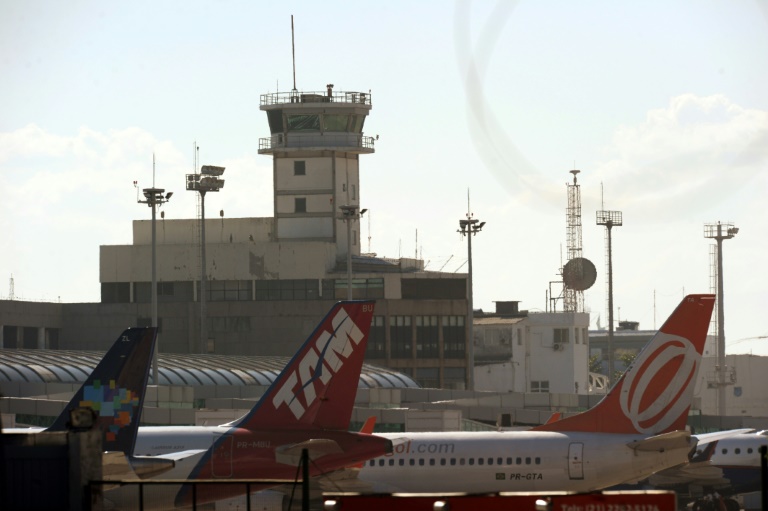
With its thong-covered beaches, flesh-flaunting carnival and sultry nightlife, Rio de Janeiro has a racy reputation, but it rose to a new level Friday when porn films started playing on screens at the Brazilian city’s central airport.

News of the apparent hack first broke on social media, when shocked and bemused travelers posted images of screens inside Santos Dumont Airport playing explicit videos that were decidedly not safe for work — or travel.

“It seems a lot of people missed their flights today,” cracked one Twitter user.

“Welcome to Santos Dumont Airporn,” wrote another.

Brazil’s airport operator, Infraero, said the monitors were advertising screens run by a private company, not official information displays.

“Infraero has taken appropriate legal action and filed a case with the federal police,” it said in a statement.

“The monitors in question will remain turned off in our airport network until the company responsible for them guarantees their security.”

Not everyone was laughing over the incident.

“Imagine people traveling with children,” one social media user wrote. “What a lack of respect.”

Others were more amused.

“I love Rio,” wrote one.

Close Bitnami banner
Bitnami