World

Iran Revolutionary Guards say seized two Greek tankers in Gulf

Iran’s Revolutionary Guards seized two Greek oil tankers in the Gulf Friday, days after Athens confirmed it would deliver to Washington Iranian oil it had seized from a Russian tanker.

“The IRGC naval forces today (Friday) seized two Greek oil tankers in the Persian Gulf due to violations that were committed,” the Guards — the ideological arm of the military — said in a statement on their official website.

It did not elaborate on what the “violations” were.

Greece swiftly accused Iran of “piracy”. The foreign ministry said Iranian helicopters had landed commandos on the two tankers.

One of them, the Delta Poseidon, was sailing in international waters at the time, the ministry said.

A spokeswoman for the Athens-based company Polembros identified the second tanker as the Prudent Warrior.

“The ship has been seized by the Iranian authorities. We have no communication with them at this time,” she told AFP.

The Greek foreign ministry said the second tanker was near the Iranian coast when seized.

The ministry said nine Greeks were among the crews of the two vessels, but did not give a number for the other sailors on board.

Iran’s action against the Greek-flagged tankers marks a sharp escalation in a diplomatic row that has raged since Greece seized a Russian-flagged oil tanker and its Iranian cargo last month.

Iran’s foreign ministry demanded earlier Friday that Greece release the vessel, saying the planned transfer of its cargo to the US was a “clear violation” of international law.

Athens confirmed on Wednesday it intended to send the 115,000 tonnes of Iranian oil from the tanker Pegas to the United States at the request of the Treasury which overseas the enforcement of US sanctions on Iran.

Iran’s foreign ministry summoned the Swiss charge d’affaires, whose country has handled US interests in Iran ever since ties were cut between Tehran and Washington following the 1979 Islamic revolution.

The ministry protested “the US government’s pressure and intervention” that led to the seizure of the ship by Greek authorities last month.

EU member Greece said at the time it was enforcing sanctions the bloc had imposed on Russia following its invasion of Ukraine in February.

Iran accused the United States of a “clear violation of the law of the sea and the relevant international conventions” and “called for the immediate lifting of the seizure of the ship and its cargo.”

A source in the Greek coastguard told AFP the transfer of the cargo to a Liberian-flagged vessel for onward delivery to the United States had began on Thursday.

The operation is going to “take some days”, the source added.

The Iranian foreign ministry already summoned the Greek charge d’affaires to protest the seizure on Wednesday.

The United States reimposed crippling sanctions on Iran after then president Donald Trump pulled out of a nuclear agreement between Tehran and major powers in 2018. Its once-lucrative oil exports are a major target.
Why South America's breadbasket isn't the answer to global wheat crisis

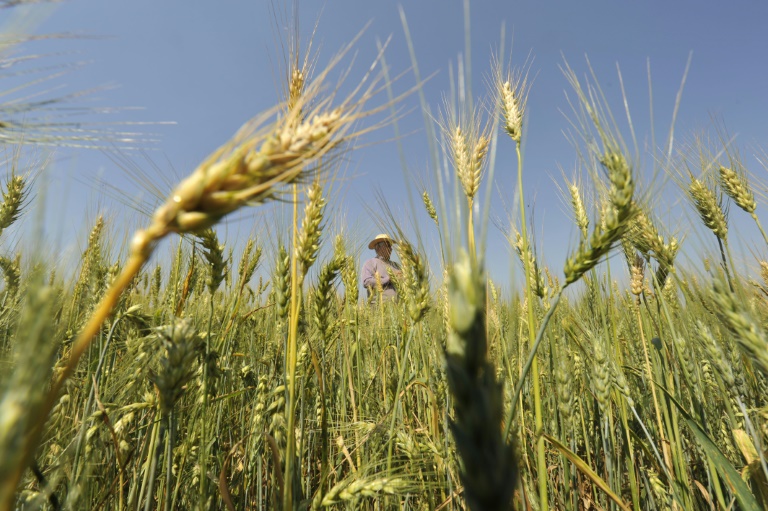
As the world faces a growing food crisis provoked by Russia’s invasion of Ukraine, many have looked to South America’s “breadbasket” — major wheat producers Brazil and Argentina, along with Uruguay and Paraguay — as a possible solution.

But experts and analysts say a variety of factors — climate, cost, domestic needs — make such a solution highly unlikely.

Russia and Ukraine alone produce 30 percent of the world’s wheat supply.

Moscow’s military offensive in Ukraine and subsequent sanctions on Russia have disrupted supplies of fertilizer, wheat and other commodities from both countries, pushing up prices for food and fuel, especially in developing nations.

A suspension of India’s exports have further exacerbated the problem.

Here’s a look at the major wheat producing countries in South America, and how they might, or might not, be able to help alleviate the crisis:

– Brazil: higher yield, but big needs at home –

Agricultural giant Brazil is due to increase its wheat crop coverage by between three and 11 percent this year, according to Embrapa Wheat, a state-run research unit affiliated with the Brazilian agriculture ministry.

Record prices, surging demand and the “expectation of favorable weather, strengthen the projection of an increase in the planted area” from 2.7 million hectares in 2021 (6.7 million acres) to a little over three million in 2022, said Embrapa Wheat.

But the country of 213 million people is already unable to meet domestic demand — estimated at 12.7 million tons a year, and rising.

Internal logistical and transport costs have pushed many farmers, particularly in the south, to favor exporting, thus ramping up the need to import.

Brazil is actually the world’s eighth largest importer of wheat, most of which (87 percent) comes from Argentina.

– Argentina: lack of water reserves –

Argentina, home to 45 million people, is also traditionally a major wheat producer — but current climatic conditions are unfavorable, meaning it is unlikely to help fill the global void.

“We expect about an eight percent drop in the land area planted with wheat,” Tomas Rodriguez Zurro, an analyst at the Rosario grains exchange, told AFP.

That amounts to a drop from 6.8 million to 6.3 million hectares, due mostly to a drought affecting the country, Rodriguez Zurro explained.

“In general, we plant wheat to then plant soybean, but the water reserves are very low, so the producers don’t want to risk planting wheat in case it reduces the humidity reserves even more” for subsequent plantings, said Rodriguez Zurro.

On top of that, farmers say they will use less fertilizer due to soaring prices — another factor limiting production, the analyst said.

Russia is the world’s largest exporter of fertilizers with more than 12 percent of the global market, but its sales have been virtually paralyzed by sanctions.

– Paraguay and Uruguay: small global impact –

Both Paraguay, a country of 7.5 million, and Uruguay (population: 3.5 million) enjoy good wheat yields — but they have a much smaller global impact and neither expects to increase production. 

“Wheat production is expensive, very expensive,” said a source at Uruguay’s agriculture ministry.

Farmers there expect a yield “similar to last year, or slightly higher,” the source said — a total that should satisfy domestic demand and allow exports to remain at roughly one million tons a year.

In Paraguay, production should also remain stable, according to Hector Cristaldo, president of Paraguay’s farmers’ union, but he added: “Our volumes are not significant on the world stage.”

Paraguay consumes 700,000 tons and exports as much again, almost exclusively to Brazil.

In mid-May, when India banned exports, wheat reached a record price of 438.25 euros ($456.68) per ton in European trading.

Despite losing leg in Mariupol, fighter eyes return to Ukraine frontline

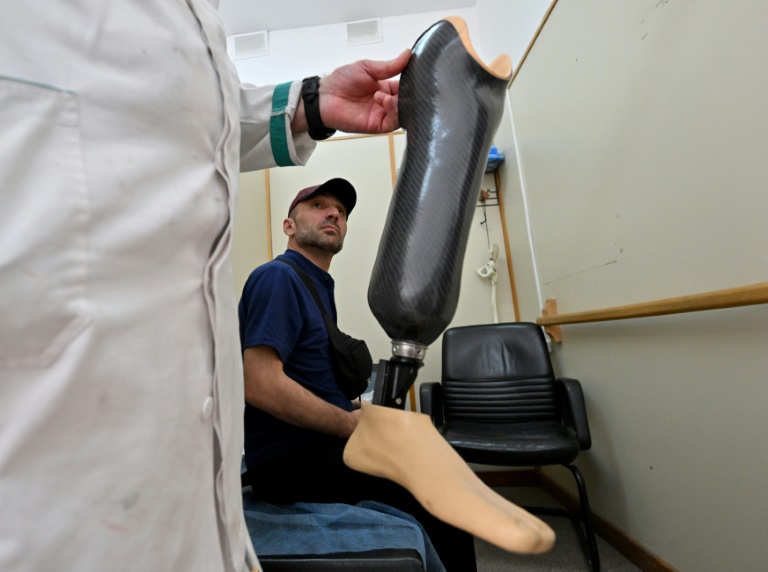
In a small orthopaedic clinic in Kyiv, Daviti Suleimanishvili listens as doctors describe various prostheses that could replace his left leg, torn off during the battle for Mariupol.

Born in Georgia but with Ukrainian citizenship, Suleimanishvili — whose nom-de-guerre is “Scorpion” — is one of countless people who have lost arms or legs in the war and now impatiently awaiting a replacement limb. 

A member of the Azov regiment, he was based in the city of Mariupol, which underwent a relentless battering by Russian forces for three months before the last troops at the Azovstal steelworks finally laid down their arms last week. 

He was badly wounded on March 20 when a Russian tank located about 900 metres away fired in his direction. 

“The blast threw me four metres and then a wall fell on top of me,” he told AFP, saying he was also hit by shrapnel.

“When I tried to stand up, I could not feel my leg. My hand was injured and a finger was gone.”

Carried by his comrades into a field hospital in the heart of the sprawling steelworks, his leg was amputated just below the knee.

He was then evacuated by helicopter to a hospital in Dnipro in central Ukraine. 

Two months later he’s getting around with crutches and hopes to soon have a prosthetic leg fitted, funded by the Ukrainian government. 

“If possible, I want to continue serving in the army and keep fighting,” he explains. 

“A leg is nothing because we’re in the 21st century and you can make good prostheses and continue to live and serve,” he says.  

“I know many guys in the war now have prostheses and are on the front lines.”

– Resources needed –

On Wednesday afternoon, he had his first consultation with the medics who will fit him with a new limb. 

Inside the clinic at a rundown building in Kyiv, a dozen specialists are making prosthetic limbs inside a workshop covered in plaster, while in the consultation rooms, doctors are considering which might be the right model for each of their patients. 

But Suleimanishvili’s case is not so straightforward. 

One suggests a vacuum-attached prosthesis in which a pump draws out the air between the residual limb and the socket, creating a vacuum; another pushes for a different type of attachment which he says would be better for war-time conditions, that is “stable, flexible and easy to clean”.

“There were almost no military people two weeks ago, but now they’re coming,” explains doctor Oleksandr Stetsenko, who heads the clinic.

“They weren’t ready before as they needed to be treated for injuries to other parts of their bodies.”

President Volodymyr Zelensky said in mid-April that 10,000 soldiers had been wounded while the United Nations has given a figure of more than 4,600 injured civilians.

Amplitude Magazine, a specialist American publication aimed at amputees, said Ukraine would need significant resources. 

“To assist the hundreds or thousands of Ukrainian amputees who reportedly need treatment, aid volunteers will need to work from centralised locations that are well stocked,” it said.

However, “there are a limited number of such clinics within Ukraine, and the supply chains that serve them are spotty at best.”

– ‘Up and running in weeks’ –

Stetsenko said Ukraine has around 30 facilities that made prostheses, with his own clinic normally producing around 300 every year. 

The clinic won’t be able to step up production because each prosthesis is “customised” to suit the injury and needs of each patient. 

In the case of Suleimanishvili, who is a gunner, the doctors will add 15 kilogrammes to the weight of his new leg so it can support his use of heavy weaponry. 

“I want the prosthetic so I can do most manoeuvres,” he insists. 

In a week’s time, he will be back to have a temporary prosthesis fitted so he can start learning to walk.

“In two or three weeks, he will be running,” another doctor, Valeri Nebesny, told AFP, saying that like Suleimanishvili, “90 percent” of military amputees want to get back to the battlefield as quickly as possible. 

Global stocks push higher

Global stocks pushed higher on Friday as investors hoped that rising global interest rates may curtail sky-high inflation.

The latest data from the United States showed inflation was moderating, helping boost sentiment.

The PCE price index slowed sharply in April, increasing just 0.2 percent after several months of accelerating at more than twice that pace and 0.9 percent in March.

Over the last 12 months, the key inflation measure slowed to 6.3 percent from 6.6 percent in the prior month, according to the data. 

Excluding volatile food and energy goods, the increase in the “core” PCE price index was a more modest 4.9 percent.

The PCE is the US Federal Reserve’s preferred price gauge, and the central bank has launched a counter-offensive against inflation with a series of aggressive interest rate hikes to cool the economy.

Those have battered stock markets in recent months as investors worried that the sharp hikes in interest rates will push the global economy into a recession.

“The key takeaway from the report… is that there was a moderation in the year-over-year rates for the price indexes, which will support the peak inflation narrative,” said market analyst Patrick J. O’Hare at Briefing.com.

The report also showed US personal income rose 0.4 percent in April compared to March, and consumers continued to increase spending.

“Encouragingly the latest US personal spending data showed that US consumers were still inclined to spend money with a rise of 0.9 percent, which was slightly higher than markets had been expecting,” said Michael Hewson at CMC Markets.

– ‘Tentative green shoots’ –

Stock markets have bounced higher this week after the minutes of the last Federal Reserve meeting indicated that it could take a breather in hiking interest rates if inflation shows signs of easing later in the year.

“After a torrid few months, there are some tentative signs of green shoots emerging as investors become more comfortable with the stance of the central banks in tackling inflation,” said Richard Hunter, head of markets at Interactive Investor.

Back in Asia, investors were in a buying mood as Hong Kong jumped more than two percent, with market heavyweight Alibaba piling on more than 11 percent and search engine Baidu advancing 15 percent.

The two firms posted better-than-expected sales growth in the January-March quarter, soothing fears about the impact of Covid and inflation on their bottom lines.

Hong Kong’s tech index jumped nearly three percent, with other giants also enjoying buying interest with JD.com and Meituan sharply up.

The reports were much-needed pieces of good news out of the world’s second-biggest economy, which is being battered by lockdowns in major cities as leaders refuse to budge from their zero-Covid strategy.

– Key figures at around 1530 GMT –

New York – Dow: UP 1.0 percent at 32,946.04points

EURO STOXX 50: UP 1.8 percent at 3,808.60

London – FTSE 100: UP 0.3 percent at 7,585.46 (close)

Frankfurt – DAX: UP 1.6 percent at 14,462.19 (close)

Paris – CAC 40: UP 1.6 percent at 6,515.75 (close)

Tokyo – Nikkei 225: UP 0.7 percent at 26,7781.68 (close)

Hong Kong – Hang Seng Index: UP 2.9 percent at 20,697.36 (close)

Shanghai – Composite: UP 0.2 percent at 3,130.24 (close)

Euro/dollar: DOWN at $1.0711 from $1.0725 on Thursday

Pound/dollar: UP at $1.2614 from $1.2600

Euro/pound: DOWN at 84.92 pence from 85.12 pence

Dollar/yen: DOWN at 127.10 yen from 127.12 yen 

Brent North Sea crude: UP 0.6 percent at $118.07 per barrel

West Texas Intermediate: UP 0.2 percent at $114.07

burs-rl/ah

War in Ukraine: Latest developments

Here are the latest developments in the war in Ukraine:

– Pro-Russian forces claim key eastern town – 

Moscow-backed separatist forces in eastern Ukraine say they have captured Lyman, a strategic town situated between the city of Severodonetsk and the eastern administrative centre of Kramatorsk, which remain under Kyiv’s control.

The pro-Russian separatists in the Donetsk region said they had “liberated and taken full control of 220 settlements, including Krasny Liman”, using an old name for Lyman.

Ukrainian forces are also battling to hold onto Severodonetsk, with senior local official Oleksandr Stryuk saying Russian forces control two-thirds of the city’s outskirts.

After failing to take Kyiv and being driven back from the outskirts of the second city of Kharkiv, Russia is waging all-out war for the Donetsk and Lugansk regions, which together make up Donbas, Ukraine’s industrial heartland.

– 10 killed in central city – 

The national guard says around 10 people have been killed in strikes on a military facility in the central city of Dnipro, which had so far been relatively spared by the fighting.

Earlier this week, Ukrainian President Volodymyr Zelensky revealed that 87 people had been killed in Russian strikes on a military base north of Kyiv on May 17. 

In a sign that Kharkiv is not yet out of harm’s way, nine people were killed in shelling of the northeastern city on Thursday.

– Zelensky warns of ‘genocide’ in Donbas –

Ukraine’s President Volodymyr Zelensky accuses Moscow of carrying out a “genocide” in Donbas, where Russian forces are also closing in on the cities of Severodonetsk and Lysychansk.

In his daily televised address, Zelensky warns that Russia’s offensive could empty Donbas of its population.

“All this, including the deportation of our people and the mass killings of civilians, is an obvious policy of genocide pursued by Russia,” he says.

Foreign Minister Dmytro Kuleba accuses allies of dragging their feet on arms deliveries, telling his German counterpart that Ukraine needs heavy weapons “as soon as possible.”

– Ukraine flag removed from Putin Peak –

Kyrgyzstan’s climbing federation said Friday that it has removed a Ukrainian flag from a mountain named after Russian President Vladimir Putin, following a police investigation of the stunt, and replaced it with the Kyrgyz flag.

A climber earlier this week posted a video of the flag on the mountain dubbed Putin Peak, which rises 4,446 metres (14,587 feet) above sea level.

– Two Russian lawmakers urge ‘immediate withdrawal’ –

Two Communist lawmakers in Russia’s far east urge Putin to put an end to Moscow’s offensive in Ukraine in a rare public show of dissent.

“We demand an immediate withdrawal of the Russian troops,” lawmaker Leonid Vasyukevich says in the assembly of the Primorsky Krai region, warning that if they do not “there will be even more orphans in our country.” He is backed by another lawmaker.

The head of the local Communist faction says the statement had not been agreed with the party and promises to take “the toughest measures” against the pair.

– Russian to boost grain exports –

Russia says it plans to ramp up grain exports against the backdrop of a looming global food crisis exacerbated by the war in Ukraine. 

Agriculture Minister Dmitry Patrushev says Russia will increase its grain exports from over 37 million tonnes in the 2021-2022 season ending June 30 to 50 million tonnes in the new season starting July 1.

Kyiv and the West blames Russia’s blockade of Ukrainian ports for stalling grain exports from Europe’s breadbasket.

President Vladimir Putin tells Austrian Chancellor Karl Nehammer in a telephone call that the accusations are “groundless” and blamed Western sanctions on Russia for spiralling food prices.

burs-cb/cdw

Russian forces close in on key Ukraine city in east

Russian troops were moving in on the strategic city of Severodonetsk Friday in a relentless offensive to control Ukraine’s eastern Donbas region, bombing residential areas and claiming the capture of a key town.

At least nine people were killed a day earlier in shelling of Kharkiv, Ukraine’s second-largest city, raising fears that Russia had not lost interest in the northeastern hub even after Ukraine managed to take back control.

Around 10 people were also killed in Russian strikes on a military facility in the central Ukrainian city of Dnipro, well away from the frontline of the offensive, the regional head of the national guard said.

Three months after Russia launched its invasion on February 24, leaving thousands dead on both sides and forcing 6.6 million Ukrainians out of the country, Moscow is focusing on the east of Ukraine after failing in its initial ambition to capture Kyiv. 

Russian forces were closing in on Severodonetsk and also Lysychansk in the pro-separatist Lugansk province, which stand on the crucial route to Ukraine’s eastern administrative centre in Kramatorsk.

“Russia is pressuring the Severodonetsk pocket although Ukraine retains control of multiple defended sectors, denying Russia full control of the Donbas,” the British defence ministry said in its latest briefing.

A Lugansk police official, cited by Russia’s state news agency RIA Novosti, said Severodonetsk was “now surrounded” and Ukrainian troops could no longer leave the city.

That was denied by senior city official Oleksandr Stryuk, though he acknowledged that the situation was “very difficult” with incessant bombing.

Pro-Russian separatists said they had captured the town of Lyman that lies between Severodonetsk and Kramatorsk, on the road leading to the key cities that are still under Kyiv’s control.

Lugansk’s regional governor Sergiy Gaiday said in a video on Telegram that at least five civilians had been killed in his region in the past 24 hours alone.

“People are willing to risk everything to get food and water,” said Oleksandr Kozyr, the head of the main aid distribution centre in Lysychansk.

“They are so psychologically depressed that they are no longer scared. All they care about is finding food,” he said.

– ‘Won’t stop the metro’ –

Oleg Sinegubov, governor of the Kharkiv region, said that nine civilians had been killed in the Russian shelling on Thursday.

A five-month-old child and her father were among the dead, while her mother was gravely wounded, he said on social media channels.

The city of Kharkiv’s mayor, Igor Terekhov, said its metro system, which resumed work this week after being used mainly as a shelter since the Russian invasion, would continue operating while still providing a safe space for residents.

“We will not stop the metro, but we will allocate special sectors where you can stay and shelter from bombing,” Terekhov said.

Observers believe that Russia’s gains in over three months of war have been far more paltry than President Vladimir Putin hoped, though Moscow has gained control over a handful of cities in southern Ukraine, such as Kherson and Mariupol.

The Kremlin is now seeking to tighten its grip over the parts of Ukraine it occupies, including fast-tracking citizenship for residents of areas under Russian control.

Russian authorities in Mariupol, which was taken over this month after a devastating siege that left thousands dead and reduced the city to rubble, cancelled school holidays to prepare students to switch to a Russian curriculum, according to Kyiv.

There has been speculation that Russia could seek to annex areas of eastern and southern Ukraine it now controls, possibly in referendums during Russian regional elections held nationwide in September.

Ukraine’s President Volodymyr Zelensky will speak with EU leaders at an emergency summit Monday as they try to agree on oil sanctions against Russia, which are being held up by Hungary, whose Prime Minister Viktor Orban has close relations with Putin.

Zelensky said in a virtual address to a think tank in Indonesia, which is hosting this year’s G20 summit, that “rather than continue trading with (Russia), we need to act until they stop their policy of aggression”.

– ‘Fear of escalation’ –

There have also been tensions between Kyiv and some Western nations, in particular Germany, over a perceived reluctance to supply more weapons to Ukraine lest the conflict intensify further.

Ukraine has also bristled at suggestions that Putin should be offered an “off-ramp” to save face in a compromise deal that would see Kyiv concede some territory.

“Some partners avoid giving the necessary weapons because of fear of the escalation. Escalation, really?” Zelensky’s adviser Mykhailo Podolyak wrote on Twitter, saying it was “time to respond” by giving Kyiv multiple launch rocket systems (MLRS).

British Prime Minister Boris Johnson said he feared that Putin was “continuing to chew through ground in Donbas.”

“And therefore, it is absolutely vital that we continue to support the Ukrainians militarily,” he said.

– ‘Need to act’ –

Concerns are also growing over global food shortages due to the conflict, exacerbating problems for the world’s poor at a time of rising energy prices.

Russia and Ukraine alone produce 30 percent of the global wheat supply, with grain-carrying vessels unable to leave ports in Ukraine.

But Putin rejected claims that Russia was blocking Ukraine’s grain exports as “groundless” in a telephone call Friday with Austrian Chancellor Karl Nehammer, the Kremlin said.

On Thursday, Putin told Italian Prime Minister Mario Draghi that Moscow was ready to make a “significant contribution” to averting a looming food crisis if the West lifts sanctions imposed since the Ukraine invasion.

But the United States scoffed at Putin’s offer, with Pentagon spokesman John Kirby accusing Moscow of “weaponizing economic assistance.” 

NRA gun lobby convenes in Texas in wake of school massacre

America’s powerful National Rifle Association kicked off a major convention in Houston Friday, days after the horrific massacre of children at a Texas elementary school, but a string of high-profile no-shows underscored deep unease at the timing of the gun lobby event.

Former president Donald Trump was among the scheduled speakers at the annual convention, held around four hours drive from the small town of Uvalde, where a teenage gunman killed 19 students and two teachers on Tuesday with an AR-15 assault rifle.

Thousands of gun enthusiasts descended on the meeting, filling a vast convention hall packed with booths of gun and gear manufacturers, walls of semi-automatic rifles and hunting products.

“This is it, this is the mega,” said a man in his 60s, as he handled a new Hellion rifle he was considering purchasing — as loud music blared from speakers nearby.

But with millions of Americans grieving and angry following the worst school shooting in a decade, “American Pie” singer Don McLean led a wave of country music dropouts from the three-day event, while the Republican state governor, Greg Abbott, said he would no longer appear in person.

McLean said it would be “disrespectful and hurtful” to perform at the “Grand Ole Night of Freedom” concert scheduled during the convention on Saturday. At least five other country music stars, including Lee Greenwood and Larry Gatlin, have also reportedly pulled out.

Abbott — who has brushed aside increasingly emotional calls for tougher gun laws in Texas, where attachment to the right to bear arms runs deep — is expected to make a pre-recorded video address instead. The governor’s lieutenant Dan Patrick also canceled plans to speak at the event.

Facing mounting scrutiny, the gun manufacturer Daniel Defense — which made the assault rifle purchased by the Uvalde shooter Salvador Ramos shortly after his 18th birthday — also decided not to attend in light of the “horrifying tragedy.”

The cancellations came as Texas police faced angry questioning over why it took an hour to neutralize the gunman, while video emerged of desperate parents begging officers to storm the school.

Daniel Myers and his wife Matilda — both local pastors — told AFP they saw parents growing frantic at the scene.

“One family member, he says: ‘I was in the military, just give me a gun, I’ll go in,'” said Daniel Myers, 72. 

– ‘Don’t forget them, please’ –

Facing rapid-fire questioning on the police response to the tragedy, Victor Escalon of the Texas Department of Public Safety said Thursday that investigators were still piecing together the timeline of events.

According to the accounts provided so far, Ramos first shot his grandmother, then drove and crashed her vehicle near the school, firing on bystanders before entering.

Officers went in minutes later, but were held back by gunfire and called for backup. About an hour later, a tactical team entered and killed the gunman.

In the interim, officers evacuated students and teachers and unsuccessfully tried to negotiate with Ramos, who kept firing while barricaded in a classroom.

The gunman’s victims included 10-year-old Amerie Garza — a little girl who loved her classes, drawing, and playing with clay.

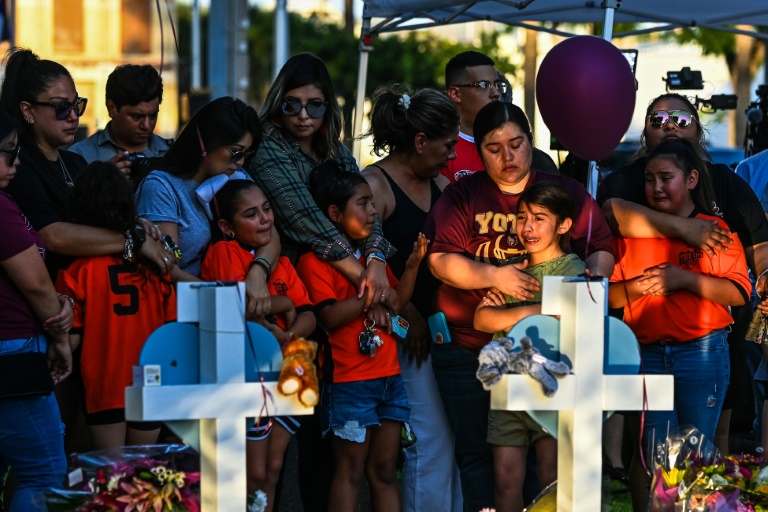
“She was an innocent little girl, loving school and looking forward to summer,” her 63-year-old grandmother, Dora Mendoza, told reporters after paying respects at a makeshift memorial outside the school.

Mendoza pleaded for urgent action by authorities to prevent future shootings — as the country plunges again into the deeply divisive debate over guns.

“They need to do something about it. They need to not forget us, the babies… Don’t forget them, please,” she said through tears.

The Uvalde shooting was the deadliest since 20 children and six staff were killed at the Sandy Hook school in Newtown, Connecticut in 2012.

Despite the scourge of mass shootings, efforts at nationwide gun control — from banning assault rifles to mandating mental health and criminal background checks on buyers — have repeatedly failed, although polls show support from a majority of Americans.

President Joe Biden will visit Uvalde on Sunday to once again make the case for gun control, as activists set about galvanizing voters on the issue in the run-up to November’s midterm election.

And the March for Our Lives advocacy group — founded by survivors of the 2018 Parkland school shooting in Florida — has called for nationwide protests on June 11 to press the cause.

bur-st/ec

US price surge eased in April as shoppers continued to spend

The US inflation wave showed signs of waning last month, posting the smallest increase since late 2020, as rising wages supported continued spending by American shoppers, according to government data released Friday.

The relief was good news for consumers who have been the key support for the US economy, but also for President Joe Biden who has made battling rising prices his top domestic priority.

Surging prices at the grocery store and at the gas pump have hit families and become a political liability for Biden and his Democratic party heading into midterm congressional elections in November.

The personal consumption expenditures (PCE) price index slowed sharply in April, increasing just 0.2 percent — the smallest monthly rise since November 2020, according to the Commerce Department report.

The world’s largest economy has been battered for months by a cresting inflation wave, made more painful by the surge in energy prices sparked after Russian leader Vladimir Putin ordered the invasion of Ukraine in late February.

Over the last 12 months, the key inflation measure slowed to 6.3 percent, according to the data. 

Excluding volatile food and energy goods, the increase in the “core” PCE price index also lost speed, falling to 4.9 percent.

Biden cheered the signs of progress.

“This morning’s decline in inflation is a sign of progress, even as we have more work to do,” he said in a statement. 

“At the same time, inflation is still too high and Putin’s price hike continues to impact food and energy prices.”

He noted that annual core inflation for the latest three months averaged around four percent compared to six percent in the three months before it. 

PCE price index is the Federal Reserve’s preferred inflation gauge, as it reflects consumers’ actual spending, including shifts to lower cost items, unlike the more well-known consumer price index, which jumped 8.3 percent in April.

The central bank has launched a counter-offensive against inflation with a series of aggressive interest rate hikes to cool the economy.

The process began in March and was followed early this month by a half-point increase, the biggest since 2000, and the Fed signaled similar big hikes are likely in June and July.

– Consumers are resilient –

Fed policymakers argue that the US economy is strong enough to withstand the increased borrowing costs, and though the hot housing market has cooled, consumers show no signs of reducing spending.

Buoyed by rising wages, US personal income rose 0.4 percent compared to March, while personal consumption expenditures (PCE) increased 0.9 percent, slower than the prior month but far stronger than analysts were expecting.

But economists caution it may be too early to declare victory on inflation, given the continued pressure from the conflict in Ukraine on food and energy prices, and ongoing impact on supply chains from the Covid-19 lockdowns in China.

“Consumer spending remained resilient in April. That is a double-edged sword as those gains are creating a floor for how much inflation can moderate on its own,” said Diane Swonk, chief economist at Grant Thornton.

“In response, the Fed will have to more aggressively rein in demand to align with a supply-constrained economy.”

She said central bankers aim “to avert rather than repeat the mistakes of the 1970s.”

Outlays on services were the biggest element of the increase in spending last month, led by food services, but also travel, hotels, housing and utilities.

The report said spending rose across all categories, except for gasoline, led by outlays on autos.

Personal income increased $89.3 billion in April, while disposable personal income rose $48.3 billion and expenditures increased $152.3 billion, the report said.

US targets N.Korea missiles with sanctions on Russian banks

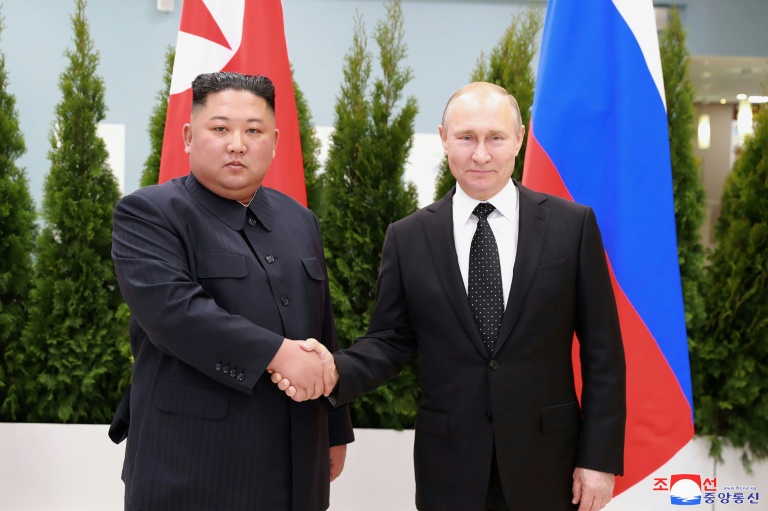
The United States on Friday imposed fresh sanctions over North Korea’s missile launches, including on two Russian banks, after Russia and China blocked action by the UN Security Council.

The Treasury Department said it was freezing any US assets and criminalizing transactions with the Far Eastern Bank and Bank Sputnik, Russian institutions accused of working with North Korea.

It also targeted Jong Yong Nam, alleged to be working out of Moscow-allied Belarus for North Korea’s weapons research body, and a trading company affiliated with state carrier Air Koryo, which is already under sanctions.

Senior Treasury official Brian Nelson said the banks were targeted as they “knowingly provided significant financial services” to the North, formally known as the Democratic People’s Republic of Korea.

“The United States will continue to implement and enforce existing sanctions while urging the DPRK to return to a diplomatic path and abandon its pursuit of weapons of mass destruction and ballistic missiles,” he said in a statement.

The United States and South Korea have said that North Korea tested three rockets, including an intercontinental ballistic missile, on Wednesday and that it could be preparing its first nuclear test since 2017.

The United States on Thursday forced a vote at the Security Council on toughening sanctions, saying that North Korea had brazenly violated a unanimous 2017 resolution that warned of consequences for further tests.

But Russia, whose relations with the West have sharply deteriorated over the Ukraine war, and China vetoed the US-drafted resolution, saying that sanctions would heighten tensions.

The US ambassador to the United Nations, Linda Thomas-Greenfield, accused Beijing and Moscow of emboldening North Korea and said the United States would take unilateral measures against Pyongyang.

Russia closes in on key Ukraine Donbas city

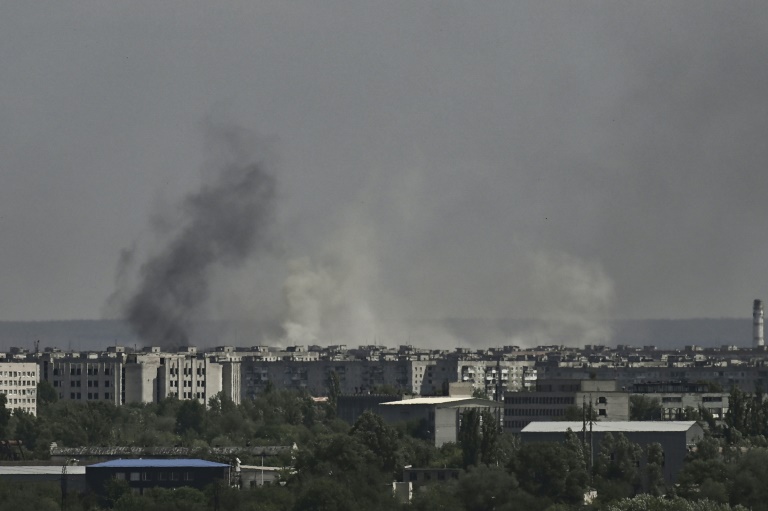
Russian forces were closing in Friday on the strategic city of Severodonetsk in a relentless offensive to control Ukraine’s Donbas region, bombing residential areas and claiming the capture of a key town.

At least nine people were killed in shelling of Kharkiv, Ukraine’s second-largest city, raising fears that Russia had not lost interest in the northeastern hub even after Ukraine managed to take back control.

Around 10 people were also killed in Russian strikes on a military facility in the central Ukrainian city of Dnipro, well away from the frontline of the offensive, the regional head of the national guard said.

Three months after Russia launched its invasion on February 24, leaving thousands dead on both sides and forcing 6.6 million Ukrainians out of the country, Moscow is focusing on the east of Ukraine after failing in its initial ambition to capture Kyiv. 

Russian forces were closing in on Severodonetsk and also Lysychansk, which stand on the crucial route to Ukraine’s eastern administrative centre in Kramatorsk.

“Russia is pressuring the Severodonetsk pocket although Ukraine retains control of multiple defended sectors, denying Russia full control of the Donbas,” the British defence ministry said in its latest briefing.

Oleksandr Stryuk, the head of the military and civilian administration of Severodonetsk, said two-thirds of its perimeter was already occupied by Russian forces and its chemical factory Azot had been bombed.

“The Russians have been trying to capture the city for a week-and-a-half. It is resisting thanks to the incredible efforts of our fighters,” he added, describing the Russian bombing as “incessant.”

Pro-Russian separatists said they had captured the town of Lyman that lies between Severodonetsk and Kramatorsk, on the road leading to the key cities that are still under Kyiv’s control.

Lugansk regional governor Sergiy Gaiday said in a video on Telegram that at least five civilians had been killed in his region — part of Donbas — in the last 24 hours alone.

Four had been killed in Severodonetsk and one in Komyshovakha, 50 kilometres (30 miles) away, he said, accusing Russia of “ceaselessly shelling residential areas.”

“People are willing to risk everything to get food and water,” said Oleksandr Kozyr, the head of the main aid distribution centre in Lysychansk.

“They are so psychologically depressed that they are no longer scared. All they care about is finding food,” he said.

– ‘Won’t stop the metro’ –

Oleg Sinegubov, governor of the Kharkiv region, said that nine civilians had been killed in the Russian shelling on Thursday.

A five-month-old child and her father were among the dead, while her mother was gravely wounded, he said on social media channels.

The city of Kharkiv’s mayor, Igor Terekhov, said its metro system, which resumed work this week after being used mainly as a shelter since the Russian invasion, would continue operating while still providing a safe space for residents.

“We will not stop the metro, but we will allocate special sectors where you can stay and shelter from bombing,” Terekhov said.

Observers believe that Russia’s gains in over three months of war have been far more paltry than President Vladimir Putin hoped, though Moscow has gained control over a handful of cities in southern Ukraine, such as Kherson and Mariupol.

The Kremlin is now seeking to tighten its grip over the parts of Ukraine it occupies, including fast-tracking citizenship for residents of areas under Russian control.

Russian authorities in Mariupol, which was taken over this month after a devastating siege that left thousands dead and reduced the city to rubble, cancelled school holidays to prepare students to switch to a Russian curriculum, according to Kyiv.

There has been speculation that Russia could seek to annex areas of eastern and southern Ukraine it now controls, possibly in referendums during Russian regional elections held nationwide in September.

– ‘Fear of escalation’ –

There have been tensions between Kyiv and some Western nations, in particular Germany, over a perceived reluctance to supply more weapons to Ukraine lest the conflict intensify further.

Ukraine has also bristled at suggestions that Putin should be offered an “off ramp” to save face in a compromise deal that would see Kyiv concede some territory.

“Some partners avoid giving the necessary weapons because of fear of the escalation. Escalation, really?” Zelensky’s adviser Mykhailo Podolyak wrote on Twitter, saying it was “time to respond” by giving Kyiv multiple launch rocket systems (MLRS).

British Prime Minister Boris Johnson said he feared that Putin was “continuing to chew through ground in Donbas.”

“And therefore, it is absolutely vital that we continue to support the Ukrainians militarily,” he said.

– ‘Need to act’ –

Ukraine’s President Volodymyr Zelensky said in a virtual address to a think tank in Indonesia, which is hosting this year’s G20 summit, that “rather than continue trading with (Russia), we need to act until they stop their policy of aggression.”

Concerns are also growing over global food shortages due to the conflict, exacerbating problems for the world’s poor at a time of rising energy prices.

Russia and Ukraine alone produce 30 percent of the global wheat supply, with grain-carrying vessels unable to leave ports in Ukraine.

Putin said in a telephone call with Italy’s Prime Minister Mario Draghi that Moscow was ready to make a “significant contribution” to averting a looming food crisis if the West lifts sanctions imposed on his country over Ukraine.

Agriculture Minister Dmitry Patrushev said Friday that Russia was looking to ramp up its production of grain to export in the coming season.

But the United States scoffed at Putin’s offer, with Pentagon spokesman John Kirby accusing Moscow of “weaponizing economic assistance.” 

Close Bitnami banner
Bitnami