World

World voices horror as latest massacre dents US image

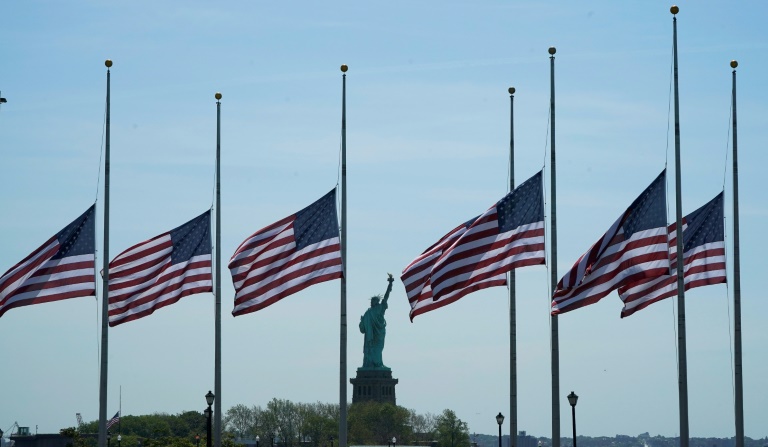
The world voiced revulsion Wednesday at the massacre of Texas schoolchildren, which for some raised new questions on whether the United States can legitimately promote itself as a global model.

President Joe Biden, who has made championing democracy a key priority, appeared conscious of the damage to the US reputation in an impassioned plea for action late Tuesday moments after returning from Asia.

“What struck me on that 17-hour flight, what struck me, was these kinds of mass shootings rarely happen anywhere else in the world,” said Biden, who had mourned victims of another mass shooting in Buffalo on the eve of his trip.

US allies as well as UN Secretary-General Antonio Guterres, who rarely weigh in on US domestic affairs, all voiced horror over a teenage gunman’s killing of 19 children and two teachers in Uvalde, Texas.

Ukrainian President Volodymyr Zelensky — who has been relying on US weapons to repel a Russian invasion — called such peacetime deaths “terrible,” while French President Emmanuel Macron said he shared “the rage of those who are fighting to end the violence.”

Some allies questioned, politely, why the United States — with its constitutional right to bear arms and powerful gun lobby — cannot tackle gun violence, which claims on average 111 lives a day.

New Zealand’s Prime Minister Jacinda Ardern, who was visiting the United States, pointed to how her government tightened gun laws after a white supremacist killed 51 people at two mosques in Christchurch in 2019.

“We are a very pragmatic people. When we saw something like that happen, everyone said, ‘Never again,'” she told the CBS “Late Show.”

In Australia, which banned semi-automatic weapons after a mass shooting in 1996, Treasurer Jim Chalmers told reporters: “It is hard to imagine that a great country like the United States can go on like this, with this gun violence, these mass atrocities.”

– China takes aim –

Like during other recent episodes in the United States, including the attack on the US Capitol by supporters of Donald Trump and the police killing of George Floyd in Minneapolis, US adversaries went on the offensive.

China — which faces constant US criticism on human rights, including over what Washington considers “genocide” against the Uyghur minority — said it was “unacceptable” that the United States has not addressed gun violence or racial discrimination.

“How can one expect the US government, (which) doesn’t even care about the human rights of its people, to genuinely concern itself with the human rights situation in other countries?” foreign ministry spokesman Wang Wenbin said.

The Global Times, a nationalist state-controlled newspaper, said the Texas shooting exposed the “failure” of the United States which it called “the most dangerous place in the world.”

Asked about China’s statement, State Department spokesman Ned Price said that events in the United States can be “a source of schadenfreude” for US adversaries.

“When we’re at our best, that example is one that countries around the world would seek to emulate,” Price said, while adding that the opposite can also be true.

“That will have implications for our standing and we’re very mindful of that.”

– ‘Dysfunctional’ democracy –

The United States has long faced accusations of double standards in boasting of its democracy.

During the Cold War, the Soviet Union pointed to Jim Crow-era systemic racism and, more recently, allies have voiced revulsion that the United States is the last Western nation to practice capital punishment.

Jeremi Suri, a professor of history and public affairs at the University of Texas at Austin, said it was commonplace for authoritarian leaders to say they keep citizens safe, pointing to arguments presented by Russian President Vladimir Putin.

But he said the level of gun violence in the United States made it increasingly difficult to dismiss the issue as just “one of the oddities of American society, that we’re cowboys and carry guns.”

“The inability to manage basic safety for citizens contributes to an image that we are, unfortunately, seeing more and more evidence of, of people in foreign societies who believe that democracy is a dysfunctional form of government,” he said.

“Even though we’ve always fallen short at home, democracy nonetheless is an important part of our international brand, and this definitely diminishes that.”

Gerard Araud, the outspoken former French ambassador to the United States, on Twitter described gun violence as a “craziness without any prospect of improvement.”

“Nothing. Nothing will happen. There will be more massacres,” he wrote.
Fed officials stressed 'determination' to bring down inflation

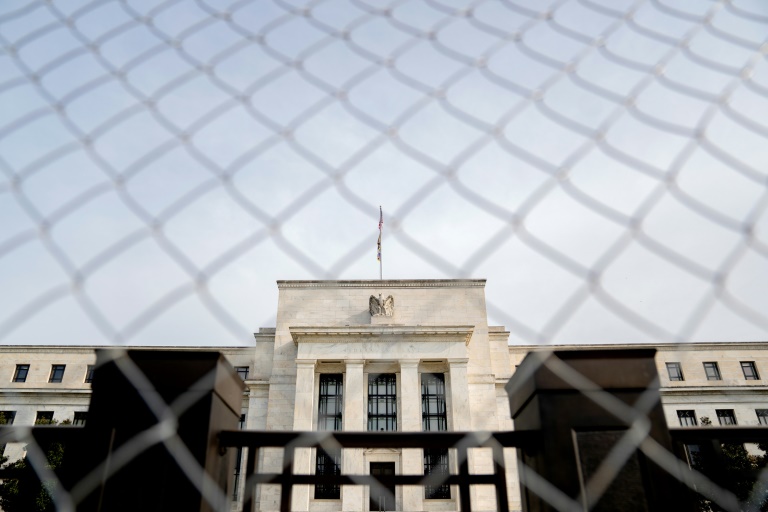
US central bankers stressed their “strong commitment and determination” to bring raging inflation under control including with more big interest rate increases, according to the minutes of the latest policy meeting released Wednesday.

With US inflation rising at the fastest pace in nearly four decades, the Fed’s policy committee early this month hiked the key rate by a half point — the biggest increase since 2000 — and most members said similar increases “would likely be appropriate at the next couple of meetings.”

The comments solidify expectations raised after Fed chair Jerome Powell said additional big moves should be “on the table” in coming discussions, and could help quiet critics who have been sounding the alarm about the inflation threat.

But the minutes show members of the Federal Reserve’s policy committee are fully aware of the danger of rising prices, which erodes incomes, and say they must move “expeditiously” to increase the benchmark borrowing rate and offload the massive bond holdings to tamp down inflation, which they said was “too high.”

While the pace of consumer price increases slowed slightly last month, jumping 8.3 percent compared to April 2021 after hitting 8.5 percent the prior month, Fed officials warned that “price pressures remained elevated and that it was too early to be confident that inflation had peaked.”

The Fed slashed interest rates to zero at the start of the pandemic to prevent a severe economic downturn and also ramped up bond purchases to pump liquidity into the financial system, but began to reel in those measures as prices accelerated as the economy recovered.

The process started in March with a quarter-point rate increase, and starting June 1, it will start to reduce its asset holdings. The next policy meeting is June 14-15.

The minutes confirm central bankers are committed to a series of moves to remove stimulus to the economy but said they may have to go even further and hit the brakes on the economy depending on how the outlook evolves.

– Less hawkish? –

“All participants reaffirmed their strong commitment and determination to take the measures necessary to restore price stability,” the minutes said.

However, there was no mention of the possibility of an even more aggressive three-quarter-point rate hike.

In fact, Ian Shepherdson of Pantheon Macroeconomics said he expects “a less hawkish tone to emerge in June” and sees potential for a smaller rate hike at the July meeting, especially amid the slowdown in the US housing market in response to rising borrowing costs and high prices.

“We can’t stress enough that the housing data are nowhere near bottom yet, and we doubt policymakers have the stomach” to continue with big rate hikes, he said.

But others said the Fed is ready to do whatever it takes to rein in the price increases.

“The Fed is focused on derailing the inflation… they know it will require heavy lifting and some ‘pain,'” Grant Thornton chief economist Diane Swonk said on Twitter.

While Fed officials say the world’s largest economy is in a solid position, they cautioned that the outlook is highly uncertain.

Russia’s invasion of Ukraine and the Covid-19 lockdowns in China “posed heightened risks for both the United States and economies around the world,” including worsening supply chain snarls and fanning inflation flames, notably prices for energy and other commodities, the minutes said.

They said “supply constraints overall were still significant and would likely take some time to be resolved.”

The current goal is to quickly move the benchmark rate to neutral, where it is neither stimulating nor restricting the economy; however, the officials said “a restrictive stance of policy may well become appropriate.”

Four bombs kill at least 12 in Afghanistan

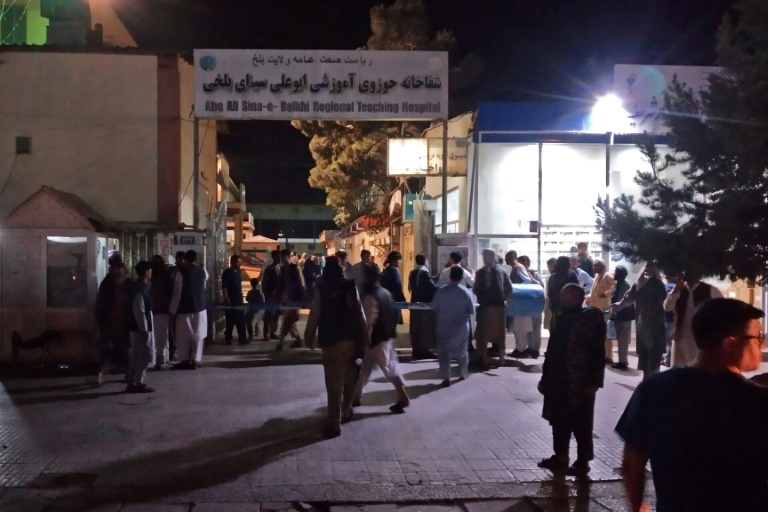
Four bombs ripped through minibuses and a mosque in Afghanistan on Wednesday, killing at least 12 people, officials said, with at least some of the attacks claimed by the Islamic State group.

The number of bomb attacks have dropped across the country since the Taliban seized power last year in August, but several deadly bombings had rocked the country during the holy month of Ramadan.

On Wednesday, at least 10 people were killed when three bombs placed on board separate minibuses exploded in the northern city of Mazar-i-Sharif, a health official and police said.

“The bombs were placed on three minibuses in different districts of the city,” Balkh provincial police spokesman Asif Waziri told AFP, adding that 15 other people were wounded.

Najibullah Tawana, head of the Balkh health department, said three women were among the 10 killed in the blasts on board the vehicles.

Hours after the explosions, the so-called Islamic State group (IS) claimed responsibility for the minibus attacks on social media. 

It said on Telegram its “soldiers” were behind the three bombings.

Another bomb exploded inside a mosque in the capital Kabul late on Wednesday, killing at least two people and wounding 10 others, the interior ministry said.

Kabul’s Emergency hospital tweeted that five people had been killed in the mosque blast and 22 others wounded.

Several ambulances rushed to the mosque in Kabul to ferry the victims, witnesses said.

The ministry said the bomb was placed inside a fan in the mosque.

It was still unclear whether Wednesday’s bombings targeted any specific community.

Dozens of civilians were killed in Kabul and other cities during Ramadan that ended on April 30 in Afghanistan in the primarily sectarian attacks — some also claimed by IS.

On April 29, at least 10 people were killed in a Sunni mosque in Kabul in an attack that appeared to have targeted members of the minority Sufi community who were performing rituals.

On April 21, a bomb at a Shiite mosque in Mazar-i-Sharif had killed at least 12 worshippers and wounded scores more.

The deadliest attack during Ramadan was in the northern city of Kunduz when a bomb tore through a mosque also targeting Sufi worshippers on April 22.

At least 33 people were killed in that blast and scores more were wounded.

The regional branch of IS in Sunni-majority Afghanistan has repeatedly targeted Shiites and minorities such as Sufis, who follow a mystical branch of Islam.

IS is a Sunni Islamist group, like the Taliban, but the two are bitter rivals.

The biggest ideological difference is that the Taliban pursued an Afghanistan free of foreign forces, whereas IS wants an Islamic caliphate stretching from Turkey to Pakistan and beyond.

Taliban officials insist their forces have defeated IS, but analysts say the jihadist group remains a key security challenge. 

Venezuela's state bank announces partial share sale

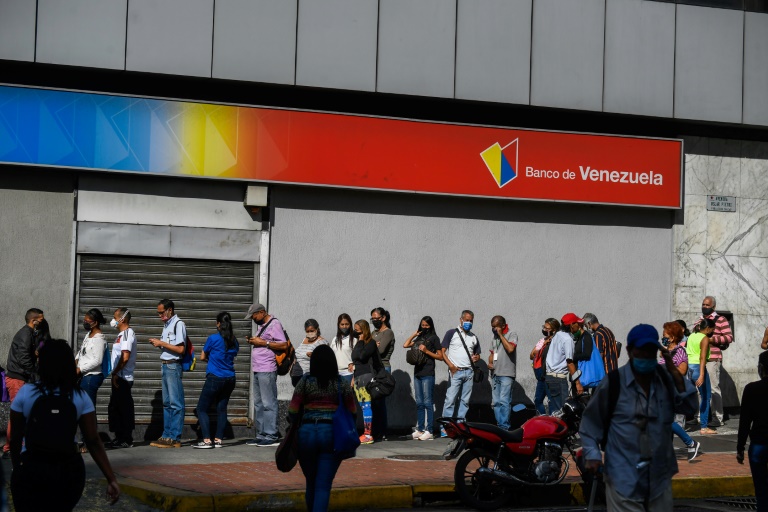
Venezuela’s state bank said on Wednesday it would sell up to 10 percent of its shares as part of the government’s plan to inject capital into public companies struggling due to a lack of investment.

Two weeks ago, Venezuela President Nicolas Maduro announced a plan to sell off parts of public companies.

The Bank of Venezuela is the only state firm so far to have declared a share sale, although it gave no details as to when that would be.

It said in a statement shared on social media that it would “begin the public offer of 5 percent progressively up to 10 percent of its social capital.”

“It is the first step by Venezuelan public companies to offer on the stock market the possibility for citizens, and national and international private economic actors, to take part in the country’s development through instruments of economic democratization.”

The first share sale was supposed to take place on May 16 with the CANTV telephone company, but it never happened and no explanation was ever given.

The Bank of Venezuela is the largest in the country with 15 million customers and was nationalized under the presidency of the late Hugo Chavez (1999-2013.)

It was under the control of the Spanish Santander Group from 1994 until the transfer of its shares to the state in 2009.

Since last year, several NGOs such as Transparency Venezuela have claimed that the government has been negotiating with the private sector with regards to state companies in fields such as farming, tourism and manufacturing.

With the collapse of Venezuela’s vital oil industry and the punishing effects of US sanctions aimed at forcing Maduro from power, the government has been forced to relax various state controls imposed under Chavez.

US files formal trade complaint against Canada over dairy

The United States on Wednesday filed a second formal trade complaint against Canada over Ottawa’s dairy import policies, which Washington says harms American producers.

Washington has requested dispute settlement consultations under the US-Mexico-Canada Agreement, saying the changes to the dairy quota system which Ottawa announced last week do not resolve the long-standing complaints and violate the trade agreement.

The policy continues to “prevent US workers, producers, farmers, and exporters from getting the full benefit of the market access that Canada committed to under the USMCA,” US Trade Representative Katherine Tai said in a statement.

Canada’s policies limit a large share of American dairy exports — including milk, butter, yogurt and ice cream — to Canadian processors under a system known as tariff rate quotas (TRQs), which US officials say restrict market access for US producers.

“I am deeply troubled by Canada’s decision to expand its dairy tariff-rate quota restrictions,” Tai said.

A TRQ applies a preferential tariff to a set volume or quota of product, and a higher duty for amounts above that level. Canada was permitted to use the system for 14 dairy product lines under USMCA — known in Canada as CUSMA — which came into force July 1, 2020, replacing the 1994 North American Free Trade Agreement.

Washington filed a first complaint in December 2020 and said it prevailed in the panel ruling released in late December 2021.

However, Ottawa says the changes announced last week fulfill the panel’s findings.

“Canada has met its obligations under CUSMA to ensure our TRQ system is compliant,” Canada’s trade minister Mary Ng said in a statement.

She said her government “will actively participate in CUSMA’s consultation process and standby our position to administer our TRQs in a manner that supports our dairy supply management system.”

If the disagreement cannot be resolved through consultations, Washington can request another dispute settlement panel to arbitrate, and potentially authorize the United States to retaliate if Canada fails to comply.

American dairy groups have called for the administration to impose punitive tariffs on Canadian goods, saying it is required by the USMCA trade pact.

US Agriculture Secretary Tom Vilsack said Canada’s “protectionist dairy policies are a top concern.” 

“Canada has failed to honor and implement its USMCA commitments by removing the trade restrictions that disadvantage and deter US dairy producers and exporters from enjoying real and meaningful access to the Canadian market,” he said in the statement.

Ousted PM Khan leads protest march to Pakistan capital

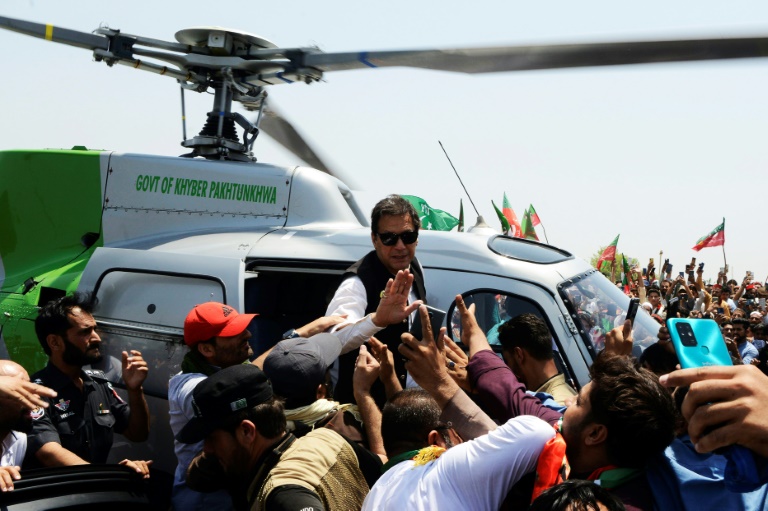
Pakistan’s ousted prime minister Imran Khan on Thursday arrived in the capital Islamabad with a convoy of thousands of supporters for a major rally the new government has attempted to shut down, with clashes breaking out between police and protesters.

Since being removed from power through a no-confidence vote last month, the cricket star turned politician has heaped pressure on the country’s fragile new coalition rulers by staging mass protests, touting a claim he was ousted from office in a “foreign conspiracy”.

In a centrepiece showdown with his rivals, Khan had called for supporters of his Pakistan Tehreek-e-Insaf (PTI) party to convoy to Islamabad and stage a sit-in until fresh elections are announced.

“I want to remind you that we are doing jihad, not politics. This is our struggle for true freedom,” Khan said in a video message.

Khan joined the march in dramatic fashion, arriving in a helicopter that touched down on a motorway clogged with supporters outside the city of Mardan, 100 kilometres (62 miles) northwest of Islamabad.

His convoy of around 25,000 supporters, which started in his powerbase of Khyber Pakhtunkhwa province, inched along the motorway before reaching Islamabad shortly after midnight on Thursday.

The government headed by Prime Minister Shehbaz Sharif had pledged to stop the protesters from entering the capital, calling the rally an attempt to “divide the nation and promote chaos”.

But in an emergency Supreme Court hearing on Wednesday afternoon, judges granted permission for the rally on the edge of the city, though Khan said he would press on with plans to reach the centre.

Police have since relaxed some routes into Islamabad, which was blockaded throughout the day with shipping containers on major entry and exit points. 

“We voted for him and foreign powers threw him out of power. We won’t let this injustice take place,” Afzal Ali, 29, told AFP, after joining the convoy.

Thousands more have also gathered in Islamabad in anticipation of Khan’s arrival.

– Tear gas deployed –

Clashes broke out between police and protesters throughout the day — with both sides armed with sticks and stones — as supporters attempted to break through barriers and clear the roads, including with a digger truck.

Police deployed tear gas in the capital and several other cities where supporters had gathered. 

One senior PTI leader said her car windows were smashed by police as she attempted to travel from Lahore to the capital.

The Supreme Court also ordered the government and PTI leaders to hold urgent negotiations over the political crisis and the release of supporters detained by police.

The Human Rights Commission of Pakistan said it was “deeply concerned by the highhandedness of law enforcement agencies” in disrupting the march.

“The state’s overreaction has triggered, more than it has prevented, violence on the streets,” it tweeted.

More than 1,700 people have been arrested since police began raiding the homes of PTI supporters on Monday night, said Interior Minister Rana Sanaullah, who has previously accused protesters of planning to carry weapons at the march.

The blockades around Islamabad caused major disruption on Wednesday, with schools closed and hospitals put on alert. 

Salon worker Sawera Masih said daily wage workers like herself were hit the hardest.

“Whoever is in power doesn’t make a difference to us, but not earning even for a single day affects me and my family,” the 23-year-old said.

Khan came to power in 2018, voted in by an electorate weary of the dynastic politics of the country’s two major parties.

The former popular sports star — who enjoyed the backing of the nation’s powerful military — had promised to sweep away decades of entrenched corruption and cronyism but is believed to have fallen out with Pakistan’s generals.

He was brought down by opposition parties in part by his failure to rectify the country’s dire economic situation, including its crippling debt, shrinking foreign currency reserves and soaring inflation.

But he retains mass support throughout the country, particularly among the youth. 

In Davos, Ukraine says it 'badly' needs rocket systems

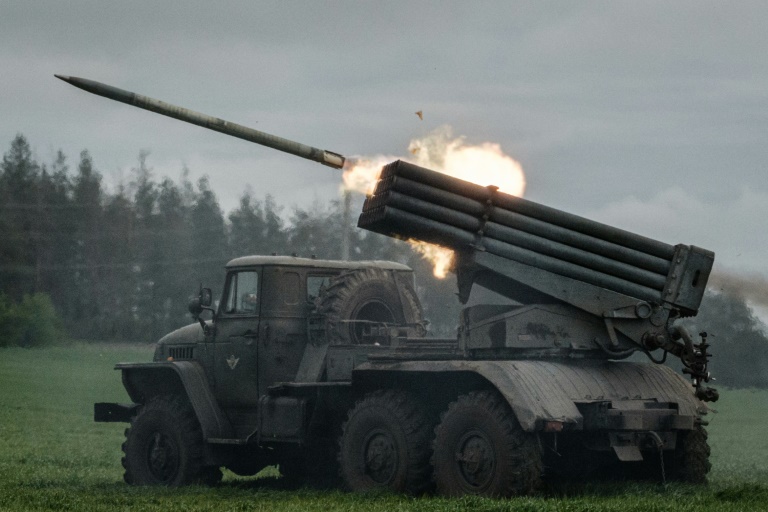
Ukraine’s foreign minister said Wednesday his country “badly” needed multiple launch rocket systems to match Russian firepower as he pressed Western allies for heavy weapons at the World Economic Forum in the Swiss Alps.

Foreign Minister Dmytro Kuleba said he had come to Davos at a “very difficult moment on the frontline” as fighting rages in the eastern Donbas region.

“The battle for Donbas is very much like the battles of the Second World War,” Kuleba told journalists following talks with a slew of government officials and business leaders.

“Some villages and towns, they do not exist anymore,” he said.

“They were all turned into rubble by Russian artillery fire, by Russian multiple launch rocket systems. It’s devastating.”

Russia overwhelms Ukraine in a number of heavy weapons, but the biggest imbalance is with MLRS, mobile batteries of long-range rockets, he added.

Washington and European countries have poured billions of dollars’ worth of arms into Ukraine to help the country’s outgunned forces beat back the better-armed Russian invaders.

But Kuleba said that the MLRS “is really the weapon that we badly need.

“Those countries who are dragging their feet with the issue of providing Ukraine with heavy weapons, they have to understand that every day they spend deciding, weighing different arguments, people get killed.”

Ukraine has asked Washington for the MLRS.

— Need for unity —

Earlier, Ukrainian President Volodymyr Zelensky made his second video appearance at Davos, this time to ask the West to show more unity behind his country.

“Unity is about weapons. My question is, is there this unity in practice? I can’t see it. Our huge advantage over Russia would be when we are truly united,” Zelensky told a traditional “Ukraine Breakfast” event on the sidelines of the WEF.

Ukraine was grateful for support from US President Joe Biden, he said — but resolve was lagging closer to home.

“We are on the European continent, and we need the support of a united Europe,” he added.

Zelensky specifically named neighbouring Hungary, which has voiced opposition to a European Union-wide embargo on Russian oil, another key Ukrainian demand.

“Hungary is not as united as the rest of the EU,” Zelensky said.

He also pointed to a lack of consensus over Sweden’s and Finland’s historic bid to join NATO, which has been called into question by Turkey.

“Is there this unity regarding the accession of Finland and Sweden to NATO? No, no. So, is there a strong joint West? No,” the Ukrainian leader said.

– Food corridor –

Appearing in person at the same Davos event, Kuleba said Ukraine wanted the West to “to finally accept the idea that the ultimate goal of this war should be the victory of Ukraine.

“Even some very good friends of Ukraine who help us really a lot, they’re still hesitant,” Kuleba said.

Kuleba also called on the West to step up sanctions to “kill Russian exports”.

“Every dollar and euro Russia makes on this trade is then invested on upholding the Putin regime and in keeping the Russian machine of war crimes running,” he said.

Addressing concerns over Ukraine’s inability to ship wheat and grains due to a Russian sea blockade, Kuleba told reporters Ukraine was in talks with the United Nations over the possibility of having a safe passage in the port of Odessa.

The harbour would have to be demined and Kyiv would need security guarantees that Russia would not then attack the port.

“In the end the whole story with this corridor is an issue of trust with Russia,” he said, adding that Moscow had not proposed such an initiative.

“We are working with the United Nations to find a way to address this security concern.”

US files formal trade complaint against Canada over dairy

The United States on Wednesday filed a second formal trade complaint against Canada over Ottawa’s dairy import policies, which Washington says harms American producers.

Washington has requested dispute settlement consultations under the US-Mexico-Canada Agreement, saying the changes to the dairy quota system announced last week do not resolve the long-standing complaints and violate the trade agreement.

The policy continues to “prevent US workers, producers, farmers, and exporters from getting the full benefit of the market access that Canada committed to under the USMCA,” US Trade Representative Katherine Tai said in a statement.

Canada’s policies limit a large share of American dairy exports — including milk, butter, yogurt and ice cream — to Canadian processors under a system known as tariff rate quotas (TRQs), which US officials say restrict market access for US producers.

“I am deeply troubled by Canada’s decision to expand its dairy tariff-rate quota restrictions,” Tai said.

A TRQ applies a preferential tariff to a set volume or quota of product, and a higher duty for amounts above that level. Canada was permitted to use the system for 14 dairy product lines under USMCA — known in Canada as CUSMA — which came into force July 1, 2020, replacing the 1994 North American Free Trade Agreement.

Washington filed a first complaint in December 2020 and said it prevailed in the panel ruling in January.

Ottawa says the changes announced last week “fully comply with the panel’s findings.”

US Agriculture Secretary Tom Vilsack said Canada’s “protectionist dairy policies are a top concern.” 

“Canada has failed to honor and implement its USMCA commitments by removing the trade restrictions that disadvantage and deter US dairy producers and exporters from enjoying real and meaningful access to the Canadian market,” he said in the statement.

After wheat, India caps sugar exports

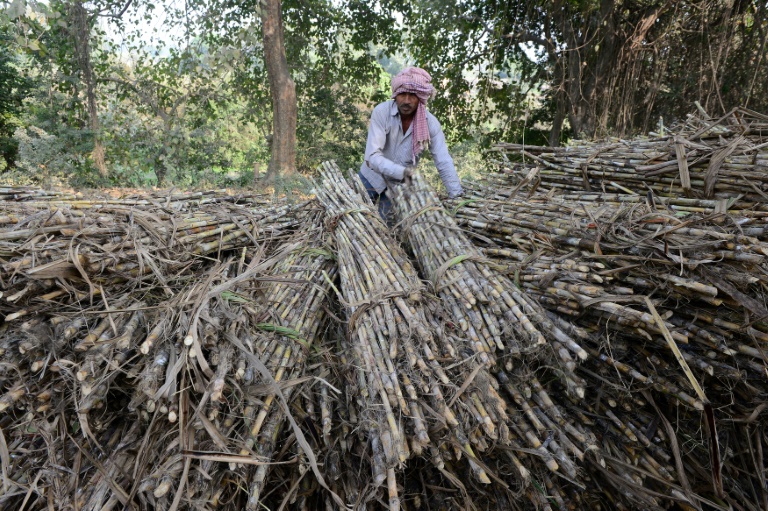
India said it has capped sugar exports to safeguard its own supplies and ease inflation, days after a ban on wheat shipments sent global prices soaring in the wake of the Ukraine war.

India — which according to the International Sugar Organization is the world’s second-largest sugar producer and exporter after Brazil — said on Tuesday that shipments would be limited to 10 million tonnes for the current marketing year to September.

The decision was taken “with a view to maintain the domestic availability and price stability during the sugar season,” the food ministry said in a statement.

Sugar exports are forecast to hit a record high this marketing year, with contracts signed for around nine million tonnes, and 7.8 million tonnes already shipped, it said.

Citing inflation and its own food security needs, in mid-May India banned any new wheat exports without government approval after the hottest March on record — blamed on climate change — hit harvests.

Although India is a marginal player on the global market, the move sparked a further surge in already-soaring global food prices since Russia’s February invasion of agricultural powerhouse Ukraine, which previously accounted for 12 percent of global exports.

The decision also stoked fears of growing protectionism in the wake of the conflict. 

The export ban also left hundreds of thousands of tonnes of wheat stranded at a major port in western India, with long lines of thousands of trucks waiting to unload.

Authorities stressed that government-to-government requests for wheat from other countries reeling from record high prices would be permitted.

Elsewhere in Asia, Indonesia temporarily halted palm oil exports and Malaysia banned chicken exports.

Boeing's Starliner faces one more challenge as it returns to Earth

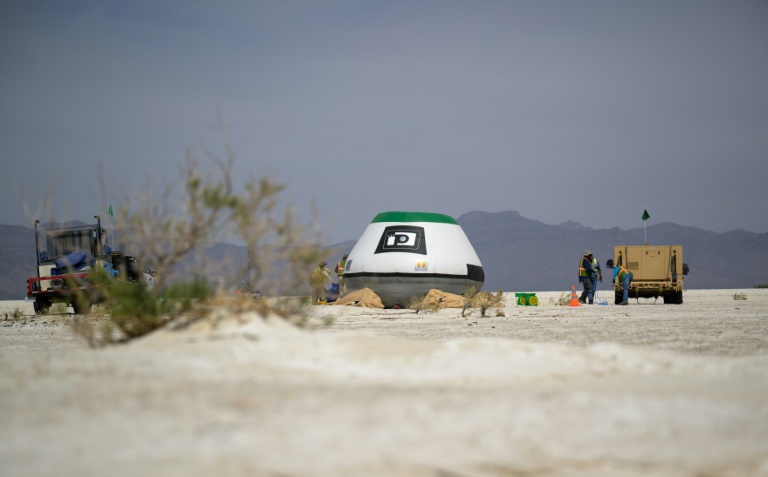
Boeing’s Starliner capsule headed back to Earth Wednesday in the final step of a key test flight to prove itself worthy of providing rides for NASA astronauts to the International Space Station.

The spaceship autonomously undocked at 2:36 pm Eastern time (1836 GMT) and was set to touch down in New Mexico just over four hours later, at 2249 GMT, wrapping up a six-day mission crucial to restoring Boeing’s reputation after past failures.

“#Starliner separation confirmed,” tweeted Boeing Space.

Orbital Flight Test-2 (OFT-2) is the last hurdle for Starliner to clear before it carries humans in another test flight that could take place by the end of this year.

Starliner docked with the ISS on Friday, a day after blasting off from the Kennedy Space Center in Florida.

Over the weekend, astronauts living aboard the research platform opened the hatch and “greeted” the capsule’s passengers: Rosie the Rocketeer, a sensor-equipped mannequin, and a plush toy named Jebediah Kerman, a video game character and the ship’s zero-g indicator.

The mission hasn’t been without its hiccups.

Two thrusters responsible for placing Starliner in a stable orbit failed, though officials insisted there was plenty of redundancy built into the system to overcome the problem.

On the day of docking, the vessel missed its scheduled contact time by more than an hour, after a ring responsible for latching on to the station failed to deploy correctly. Engineers had to retract the ring and pop it out again before it worked the second time.

– Second taxi service –

Still, the glitches are minor compared to the troubles Starliner saw during its first test launch, back in 2019, when one software bug caused it to burn too much fuel to reach its destination, and another almost meant that the vehicle was destroyed during re-entry.

The second error was caught in time to upload a patch, and the vessel was able to achieve a gentle landing, slowed by its enormous parachutes, at White Sands Space Harbor — the same spaceport where the space shuttle Columbia once landed, and where Starliner is once more expected for touchdown.

The spacecraft will bring back more than 600 pounds (270 kilograms) of cargo, including reusable tanks that provide breathable air to station crew members, which will be refurbished and taken back up on a future flight.

Boeing and NASA also tried to launch Starliner in August 2021, but the capsule was rolled back from the launchpad to address sticky valves that did not open as they should, and the ship was eventually sent back to the factory for fixes.

NASA is looking to certify Starliner as a second “taxi” service for its astronauts to the space station — a role that Elon Musk’s SpaceX has provided since succeeding in a test mission for its Dragon capsule in 2020.

Both companies were awarded fixed-price contracts — $4.2 billion to Boeing and $2.6 billion to SpaceX — in 2014, shortly after the end of the space shuttle program, during a time when the United States was left reliant on Russian Soyuz rockets for rides to the orbital outpost.

Close Bitnami banner
Bitnami