World

War in Ukraine: Latest developments

Here are the latest developments in the war in Ukraine:

– Putin eyes long conflict, allies say –

Top allies of Russian President Vladimir Putin say Moscow is ready for a prolonged conflict in Ukraine in order to achieve the Kremlin’s goals.

“We will continue the special military operation until all the objectives have been achieved,” Defence Minister Sergei Shoigu tells regional counterparts from the Russia-led Collective Security Treaty Organization.

Separately, the secretary of Russia’s Security Council, Nikolai Patrushev, says Moscow’s offensive will last as long as necessary and that “We are not rushing to meet deadlines.”

– Hungary opposes EU oil embargo –


Budapest is unlikely to drop its opposition to an EU embargo on Russian oil soon and leaders should not discuss the issue at an upcoming summit, Hungary’s leader Viktor Orban tells Brussels in a letter.

Landlocked Hungary relies on Russian oil from a single pipeline and Orban insists the proposed sixth package of EU sanctions against Moscow would have a devastating impact on his country’s economy. 

Orban later imposes a new state of emergency in the country, citing the challenges posed by the war in neighbouring Ukraine.

– Military age limit –

Russia’s parliament is to consider scrapping the upper age limit for signing up to join the army, in a sign Moscow may be looking to recruit more troops for its military campaign in Ukraine.

Under current legislation, only Russians aged 18 to 40 and foreign nationals aged 18 to 30 have the right to sign their first military service contract, but a draft bill could raise the limit.

“Highly professional specialists are needed to use high-precision weapons and operate weapons and military equipment,” says a note accompanying the draft bill.

– Fighting in east –

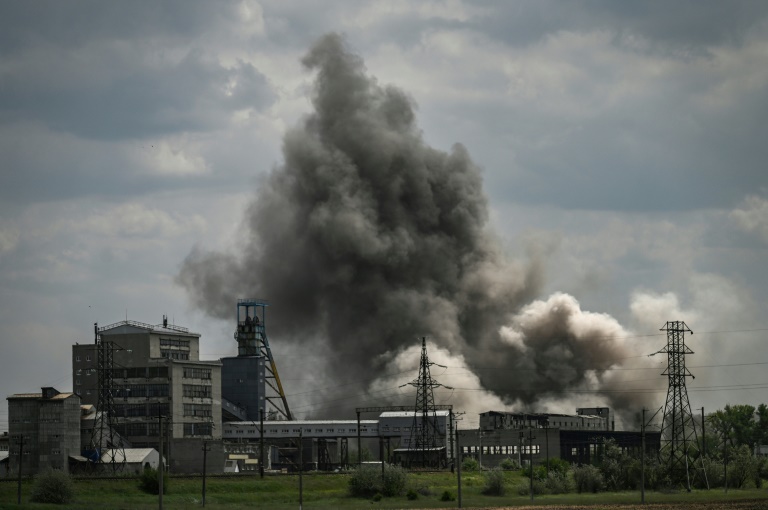
The self-proclaimed leader of the Moscow-backed separatist region of Donetsk says Russian and separatist forces are fighting to take full control of the town of Lyman and have already captured half of it.

Lyman lies on the road to Sloviansk and Kramatorsk, the capital of the Ukrainian-controlled part of the region of Donetsk.

Russia is focused on securing and expanding its gains in the eastern Donbas region, near the border and home to pro-Russian separatists, as well as the southern coast.

Separately, the Ukrainian army announces that Russians are now in control of the town of Svitlodarsk, also in the Donetsk region. 

– Kharkiv metro reopens –

The metro in Ukraine’s second city of Kharkiv reopens after months of use as a bomb shelter.

The Kharkiv metro, with 30 stations, has sheltered thousands of residents seeking to escape indiscriminate shelling on the city, which is adjacent to the Russian border.

– Blogger arrests ordered –

A Moscow court orders the arrests in absentia of Russian bloggers Michael Nacke and Veronika Belotserkovskaya, accused of discrediting the army and its offensive in Ukraine. 

Nacke, a 28-year-old Kremlin critic who tells AFP he is currently in Lithuania, hosts a YouTube channel with more than 700,000 subscribers where he discusses Russia’s military actions in Ukraine.

He says he risks up to 10 years in prison if he returns to Russia, adding his arrest is “part of the massive pressure on journalists and analysts who objectively describe the course of the current war”.

burs-qan-cdw-jmy/imm
Cuba, Venezuela, Nicaragua to attend allied, regional summit: Havana

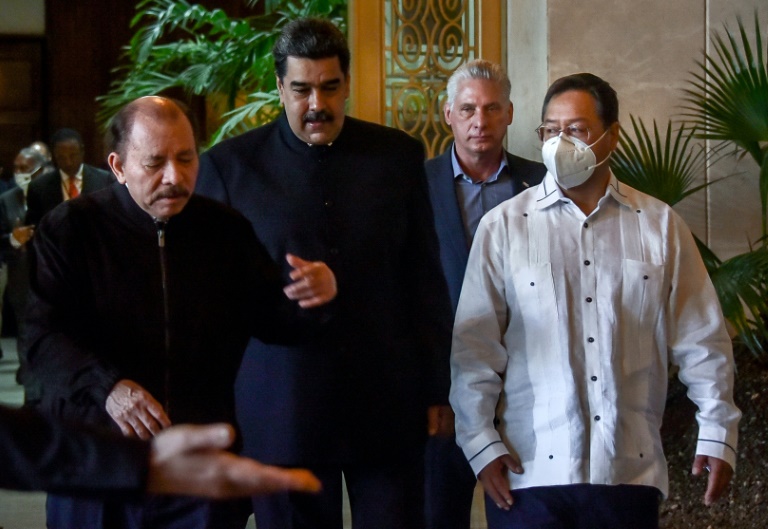
The leaders of Cuba, Venezuela and Nicaragua — which risk not being invited to an Americas summit in Los Angeles next month — will gather in Havana Friday with allied counterparts, the Cuban foreign ministry said.

Heads of state or government will meet under the umbrella of the Bolivarian Alliance for the Peoples of Our America (ALBA) economic bloc.

The group also comprises Bolivia, Dominica, Antigua and Barbuda, Saint Vincent and the Grenadines, Saint Lucia, Saint Kitts and Nevis, and Grenada.

“On Friday, May 27, the 21st Summit of Heads of State and Government of ALBA will be held in Havana,” the foreign ministry said in a short statement.

On the agenda: “common development strategies” and an analysis of the “regional political situation.”

The ministry did not provide an attendance list.

ALBA was created in 2004 in response to a US-proposed Free Trade Area of the Americas, which never materialized.

Washington has not yet confirmed who would, or would not, be invited to the June 6-10 summit in Los Angeles.

But President Joe Biden’s administration has insisted a “commitment to democracy” would be a prerequisite for attendance.

The leaders of Mexico, Bolivia, Guatemala, Honduras and others have threatened not to attend the summit unless all countries are invited.

Argentina and Chile have also asked that no one be excluded.

From Caracas, Venezuelan Foreign Minister Carlos Faria tweeted he would meet ALBA executive secretary Sacha Llorenti “to review the joint work agenda” with the aim to “consolidate the sovereignty and autonomy of the peoples of Latin America and the Caribbean.”

The United States has stepped up criticism of Cuban authorities following the arrest of hundreds of people for taking part in anti-government protests last July.

The Biden administration does not recognize Venezuelan President Nicolas Maduro or Nicaraguan President Daniel Ortega due to alleged election irregularities.

In Kharkiv's Gorky Park, a war crimes investigation

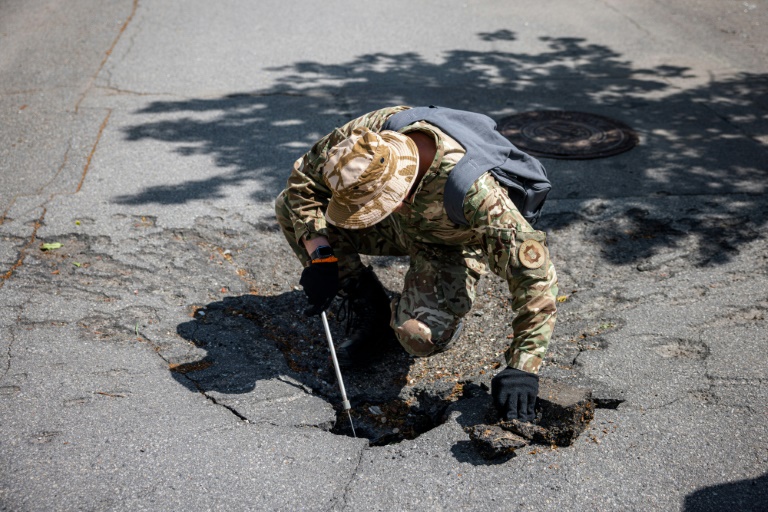
Ukrainian prosecutor Roman Petrenko inspects the remains of Russian rockets that fell on the popular Gorky Park in the country’s second city Kharkiv. 

Petrenko, a prosecutor from the city’s Shevchenkivsky district, is wearing a gilet with “War Crimes. Kharkiv” written in large white letters. 

Kharkiv’s peaceful Gorky Park is full of winding alleys and has a small amusement park, with pavilions and a Ferris wheel. It is reputed to be one of the best parks in Ukraine. 

Gorky Park was hit by around 50 shells in three months of war.  

Prosecutors took up the case to ensure that the park could be open without the public being at risk and, above all, determine whether the attacks constitute a war crime. 

Even if there were no victims, “hitting civilian targets, civilian infrastructure, trying to kill civilians and destroy cultural heritage, are considered war crimes”, Petrenko said. 

“An error can happen once or twice, but there are 56 hits recorded,” he said. 

“It’s not an accident. They were targeting the park.”

With a team of deminers, assistants, ushers and workers, the prosecutor notes down each crater. 

He has the ammunition dug up after an inspection by deminers, then photographs it, writes it down and determines the angle of fire and the origin of the weapon.  

The shells also hit a small theatre and a closed restaurant in the park. 

The shrapnel even reached and damaged bronze sculptures of children scattered around the park. 

A duo of American deminers from the Bombs Tech Without Borders advise their Ukrainian counterparts at the scene.  

For John Culp, a retired US soldier, there was no doubt the Russians were targeting the park deliberately:

“We are in Gorky Park.. With its paths, its stages etc.. We are investigating the fact that many rockets and shells were fired in and near the park.”

“There is no military target here. It was done knowingly to cause terror and fear among the civilian population,” he charged.

Fighting rages as Russia eyes prolonged war in Ukraine

Russia signalled on Tuesday it was bedding in for a long war in Ukraine as the conflict entered its fourth month with heavy fighting in the east but signs of some normality returning elsewhere.

“We will continue the special military operation until all the objectives have been achieved,” Russian Defence Minister Sergei Shoigu said, using Moscow’s name for the war.

Three months after Moscow’s invasion, Western funds and weapons have helped Ukraine hold off its neighbour’s advances in many areas, including the capital Kyiv.

Russia is now focused on securing and expanding its gains in the eastern Donbas region, near the border and home to pro-Russian separatists, as well as the southern coast.

Ukrainian Foreign Minister Dmytro Kuleba warned that the “Russian offensive in the Donbas is a ruthless battle, the largest one on European soil since WWII.”

“The coming weeks of the war will be difficult,” Ukraine’s President Volodymyr Zelensky said Monday after regional leaders and residents reported heavy bombardments.

“The most difficult fighting situation” was in Donbas, he said, singling out the worst-hit towns of Bakhmut, Popasna and Severodonetsk.

Ukraine’s armed forces said Russian troops were conducting non-stop “offensive operations” in the region.

In the village of Yakovlivka, on a major stretch of the eastern front, 55-year-old Ukrainian soldier Andriy hid in a ditch as shells fired by encroaching Russians whistled past.

– Too late to leave –

“Our guys have stopped firing back,” he whispered after glancing up and down the road.

“We do not want to provoke them because then the Russians will start shooting at us even harder.”

The governor of Lugansk said Russia had sent thousands of troops to capture his region and that Severodonetsk was under massive attack.

Sergiy Gaidai warned an estimated 15,000 civilians still in the city that it was too late to leave.

“Stay in a shelter, because such a density of shelling will not allow us to calmly gather people and come for them,” he said on Telegram.

He later said four people died on Tuesday after Russian forces fired on the Azot chemical plant in Severodonetsk, where several bomb shelters had been set up.

Another resident who was injured in a central part of the city later died, he added.

More than six million people have fled Ukraine and eight million have been internally displaced since the war broke out, according to the United Nations.

Speaking to regional counterparts from the Russia-led Collective Security Treaty Organization, Russia’s Shoigu blamed his country’s slow advance on a “deliberate” attempt to avoid civilian casualties. 

– Kharkiv metro reopens –

“We are not rushing to meet deadlines,” added the secretary of Russia’s Security Council, Nikolai Patrushev, in an interview.

Kyiv has pleaded with Western allies to send more weapons faster and take tougher action against Moscow.

The head of Ukrainian military intelligence, Kyrylo Budanov, said delays in getting to the frontline had left Kyiv “catastrophically short of heavy weapons”.

He said, however, that he expected a “turning point” by August as they come through, in an interview to news outlet Ukrainska Pravda.

Speaking to political and business elites at the World Economic Forum in Davos on Monday, Zelensky urged an international oil embargo on Russia, as well as punitive measures against all its banks and the shunning of its IT sector.

The EU has proposed a ban on Russian oil imports, although Hungary is blocking the measure.

Some semblance of normality returned to Ukraine’s second city of Kharkiv, where the metro was reopened Tuesday after months of use as a bomb shelter.

“We decided to relaunch services because we have to relaunch the economy,” mayor Igor Terekhov told journalists, adding that train rides would be free for the next two weeks.

– ‘State terrorist’ –

The Kharkiv metro, with 30 stations, has sheltered thousands of residents seeking to escape indiscriminate shelling on the city, which is adjacent to the Russian border.

Three stations in areas that are occasionally shelled remain shuttered.

In Mariupol, the strategic southern port city that finally fell after a devastating siege, the Russian army said it had begun a de-mining operation.

“To date, more than 50 kilometres of the coast along the Sea of Azov has been examined and more than 300 various munitions have been neutralised,” it said.

Mariupol Mayor Vadym Boychenko said 100,000 people were without water, without food, without electricity.

Speaking to Davos via video-link, he accused Russia of behaving like a “state terrorist”, and warned disease risked further fatalities.

Referring to Ukraine’s estimated death toll from the siege of Mariupol, he said: “We see that war already took lives of 20,000 people, and epidemics could take the lives of thousands more.”

The siege has become emblematic of the horror of the conflict, along with towns such as Bucha, where the discovery of bodies dressed in civilian clothes after Russian troops withdrew prompted claims of war crimes.

A Kyiv court on Monday found a 21-year-old Russian soldier guilty of killing an unarmed civilian in northeast Ukraine, in the first verdict of its kind since the invasion began.

Vadim Shishimarin was handed a life sentence in a trial, as international institutions and Ukrainian authorities investigate thousands of other alleged war crimes.

burs-ar/jm

'Everything Russian must go': Ukraine's Kharkiv renames streets

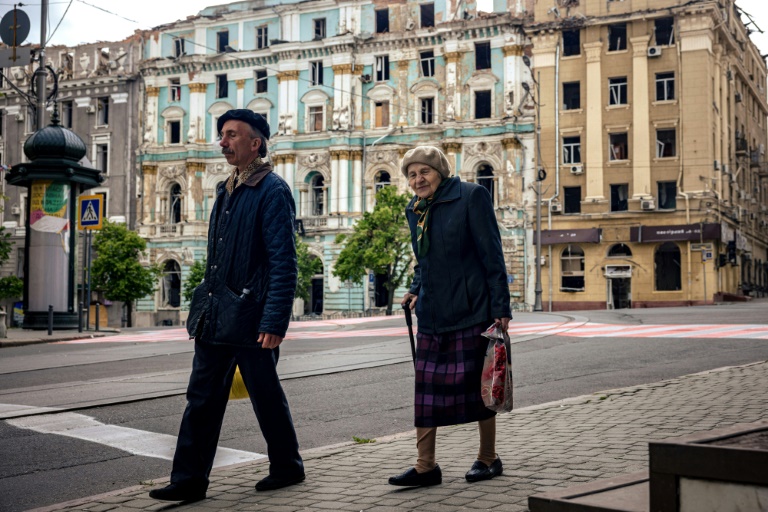
Before the war, it was called “Moscow Avenue”. But now this wide boulevard which runs through Ukraine’s second city has been renamed “Heroes of Kharkiv” in honour of those fighting against invading Russian forces.

“Here in Kharkiv, there is no place for an avenue named after the capital of the occupier that is killing our people,” explains arts student Evgen Deviatka on the newly named street running through the heart of the northeastern city. 

Kharkiv has already renamed three of its streets and toppled a statue of Alexander Nevsky, a medieval Russian hero celebrated for his military victories.

In time, more than 200 streets or squares could be renamed or come under scrutiny.  

Lying some 50 kilometres (30 miles) from the Russian border, Kharkiv came under attack at the start of the February 24 invasion, enduring long weeks of deadly bombardment before Ukrainian forces were able to push the Russians back. 

But the city, which counted 1.4 million residents before the war began, remains under threat. 

“Names are associated with a certain nation or country. What is being done by this country, we can all see. So everything Russian must go,” declared 59-year-old engineer Laryssa Vassylchenko. 

Soldier Mykyta Gavrylenko is standing in front of what remains of the pedestal where Alexander Nevsky’s statue stood until it was pulled down by a truck a few days ago, smashing the paving stones as it fell. 

“These are people who oppose Ukrainians and try to attack us, they kill our citizens, they hurt us, they just humiliate us,” he muses. 

– ‘No Russian names on Kharkiv map’ –

For Yury Sidorenko, spokesman for Kharkiv’s city hall, “the time has come” for such change. 

“Russian toponyms, names for squares, streets and towns, we must be clear: they won’t be on any map of Kharkiv,” he told AFP. 

But city officials don’t want to rush into it, he says. 

“There are many names at stake, I can’t say how many because that’s a question which must be decided by city authorities together with the public,” said Sidorenko. 

And it’s not as simple as it seems. 

If changing the name of Moscow Square or Belgorod Avenue seems obvious — Belgorod being the city over the border from which Russia launched part of its initial attack — other changes are less straightforward. 

What of those places named after historical Russian writers or artists who have nothing to do with the country’s modern history? 

“It’s about imperialist culture. The Russians imposed their culture, their writers, everything,” says a passerby on Pushkin Street who does not want to give his name.

Although he says he has nothing against the 19th-century Russian poet Alexander Pushkin, the street was clearly named after him “because he is Russian”. 

Here the walls now feature artwork and graffiti by Ukrainian street artist Gamlet, who has written “British Street” underneath several of the name plaques, in a nod to the United Kingdom’s staunch support for Kyiv since the war began. 

– ‘It’s complicated’ –

On the road formerly known as Moscow Avenue, local residents preempted city hall by covering the name plaques with makeshift signs reading: “Grigory Skovoroda Avenue” after an 18th-century Ukrainian philosopher. 

But “Heroes of Kharkiv” is the name of choice, with the new moniker even showing up on Google Maps. 

“It’s a good name, better than Moscow Avenue,” chuckles Yulia Butenko, a local craftswoman. “I said ages ago that these names should be changed,” she added, while acknowledging the complications. 

Take the celebrated 19th-century Russian writer Nikolai Gogol, who is revered in both countries. “He wrote about Ukraine but in Russian,” she said. 

And the same was true of Kyiv-born Russian author and playwright Mikhail Bulgakov (1891-1940). “So it’s complicated.”

As for Tchaikovsky, Russia’s most famous composer, “he didn’t do anything bad to Ukraine, but it’s also Russian culture”.

And then there’s the case of writer and satirist Ostap Vyshnia (1889-1956). 

“He’s Ukrainian, but he wrote a lot about the Soviets in a positive way!” she says, exasperated. 

Such questions even intrude on mundane day-to-day life.

“I didn’t buy (a certain yellow) cheese today because it’s still called ‘Russian’ cheese,” she sighed.  

“It’s all very ambiguous. I’m worried about ‘Pushkin Street’ because I like Pushkin but I’ll accept it if it’s renamed.” 

Haiti's colonial debt burden sparks debate — but official silence

A newspaper expose has reignited debate over the ongoing legacy of debts that Haiti was forced to pay to former colonial ruler France in the 19th century — but the country’s elites are surprisingly keen to bury the issue.

After months of poring over archives, The New York Times estimated that debt payments starting in 1825 cost poverty-stricken Haiti between $21 billion and $115 billion — or as much as eight times its GDP in 2020.

In Haiti, the figures have added fresh fuel to a fierce debate that stands in stark contrast to the silence from authorities in the capital Port-au-Prince and the political opposition.

“Haitian politicians have the unfortunate tendency to work only in the present,” Haitian historian Pierre Buteau told AFP.

“Men and women in politics are only interested in the fight to gain power.”

Haitian leaders’ reluctance to speak out about the country having to pay France back after it gained independence also partly stems from a pattern of Western intervention in Haiti in the recent past.

In 2003, then president Jean-Bertrand Aristide made the debt issue a rallying cry, and estimated that France took in more than $21 billion from Haiti.

But, facing a military insurrection and a popular revolt alleging human rights violations, Aristide was overthrown in 2004, under strong pressure from the United States, France and Canada.

Questioned nearly 20 years later by The New York Times, the French ambassador at the time, Thierry Burkard, admitted that Aristide’s removal was “probably a bit about” his call for reparations from France.

When it declared independence in 1804, Haiti became the world’s first black-ruled republic and an outcast in an era dominated by countries that engaged in slavery.

It had to pay France for the freedom of its citizens who had been slaves — and was pitched into impossibly heavy repayments, rapid defaults and toxic loans from France.

“The way in which over the course of 150 years Haiti had to pay France for having wanted to be free… compromised Haiti’s very insertion on the international scene,” French economist Thomas Piketty said in 2019 as he promoted his book “Capital and Ideology” in which he tackled how Haiti incurred colossal debt.

– ‘Shine a light on this past’ –

The payments to France not only denied Haiti critically needed resources — they also helped build up France itself.

The Times showed that in the late 19th century a bank called CIC repatriated money from the new Haitian national bank that came from loans that were supposed to help Haiti pay off its debt.

The money in turn helped Parisian banks to finance the construction of the Eiffel Tower.

The current parent company of CIC, Credit Mutuel, released a statement Monday in response to the Times investigation.

“As it is important to clarify all the components of the history of colonization, including in the 1870s, the bank will finance independent university research to shine a light on this past,” Credit Mutuel said.

Reaction to the New York Times investigation was mixed, with some experts and academics accusing it of downplaying Aristide’s crimes to emphasize the narrative that he was ousted for seeking for reparations from France.

US former diplomat Patrick Gaspard, whose parents were from Haiti, said it was “an inexplicable whitewashing on the internal violence and corruption in the Aristide era that can’t just be explained away by pointing to France and the US.”

In its articles, the Times also showed that Haiti’s gold reserves were raided by American soldiers at the start of the 20th century.

“In the drowsy hours of a December afternoon, eight American Marines strolled into the headquarters of Haiti’s national bank and walked out with $500,000 in gold, packed in wooden boxes,” the Times wrote.

This was prior to a full scale US invasion of Haiti by the US army, which occupied the country from 1915 to 1934.

The US retained direct control over Haiti’s finances for more than a decade after US troops went back home.

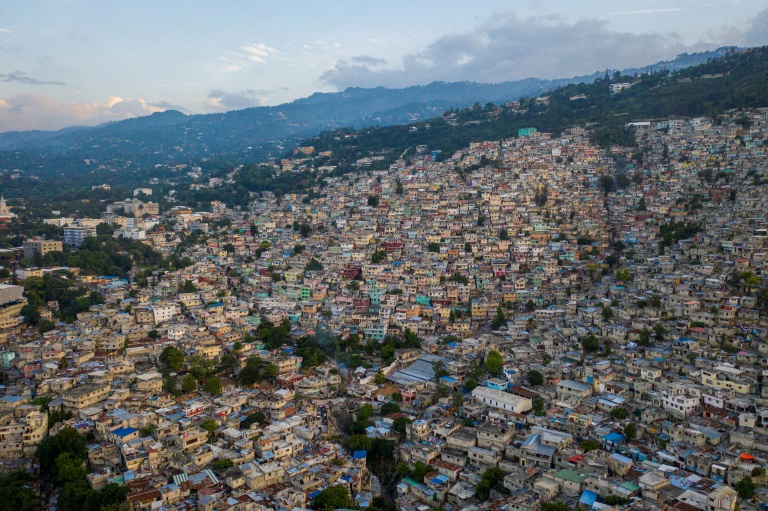
Haiti today is mired by grinding poverty, murderous gangs who control large parts of the capital, and political chaos that included the assassination of the president last year.

US new home sales fall sharply in April amid rising prices

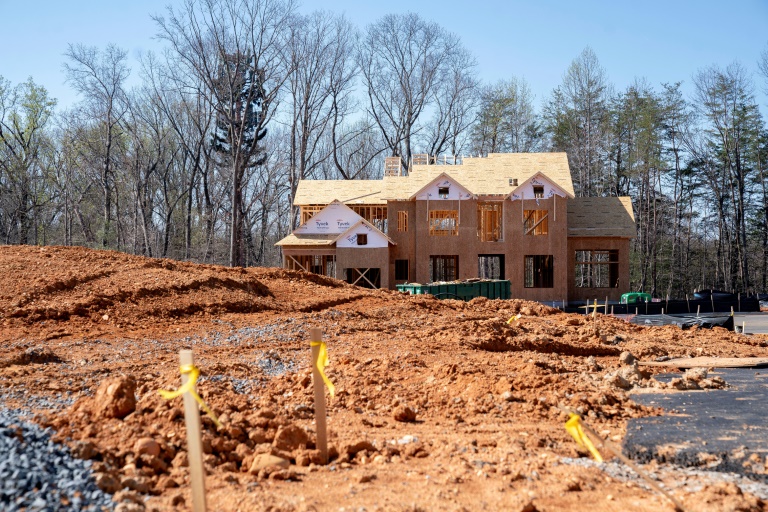
US new home sales plunged in April to their lowest in two years, even as prices continued to climb, according to government data released Tuesday, as would-be buyers felt the heat of soaring inflation and rising interest rates.

Home sales have been booming throughout the Covid-19, but with inflation at its highest since the early 1980s, the Federal Reserve has begun raising interest rates aggressively to cool the economy, which is pushing borrowing costs higher.

Sales of new single-family homes fell 16.6 percent in April to an annual rate of 591,000, seasonally adjusted, the Commerce Department reported, the lowest rate since April 2020.

The decline was far worse than analysts had projected, and compounded by the downward revision to the sales figures for March.

“It’s pretty scary,” said Gregory Daco, chief economist at Ernst & Young.

“I was expecting a decline, but not this steep a drop,” he told AFP, noting that new home sales had slowed for the fourth consecutive month.

All regions saw sales fall sharply, though the South saw the steepest decline.

Last month’s sales pace was a 26.9 percent drop compared to April 2021, the report said.

However, even amid higher borrowing costs that are cooling demand from homebuyers, prices continued to rise in April, reaching a median of $450,600 from $435,000 in the prior month.

The popularity of remote work as well as increased household savings during the pandemic prompted many families to move out of congested urban areas and purchase larger houses or vacation homes.

The surge in demand sent prices soaring as potential homebuyers competed to snap up properties — even paying cash — in an increasingly tight market hindered by global supply chain snarls that held back new construction.

– ‘Recession warning’ –

Home sales are a key driver of activity, spurring sales of many categories of goods, including furniture and appliances, so a slowdown could have broader effects on the economy, economists say.

“The April drop for new home sales is a clear recession warning,” said Robert Dietz, chief economist at the National Association of Home Builders (NAHB).

“While the nation needs additional housing, home sales are slackening as tightening monetary policy continues to put upward pressure on mortgage rates and supply chain disruptions raise construction costs.”

As the sales pace dropped sharply, the supply of new homes on the market rose last month, jumping to a nine months’ supply from 6.9 months in April, the report said.

Existing home sales have also slowed over the past several months, falling 2.4 percent in April, the National Association of Realtors (NAR) reported last week.

The average rate on a 30-year, fixed-rate mortgage was 4.98 percent in April, up from 4.17 percent in March, and far above the 2021 average of 2.96 percent, according to Freddie Mac.

“Higher mortgage rates and lofty prices are making housing more expensive, particularly for first-time buyers,” said Oren Klachkin, the lead US economist at Oxford Economics. “Looking ahead, income gains won’t keep up with rising borrowing costs and elevated home prices, pushing down affordability and pressuring home sales.”

“Builders will add to the housing stock, but not sufficiently enough to meaningfully tilt housing market dynamics in favor of buyers.”

Danish Jehovah's Witness released after 5 years in Russian jail

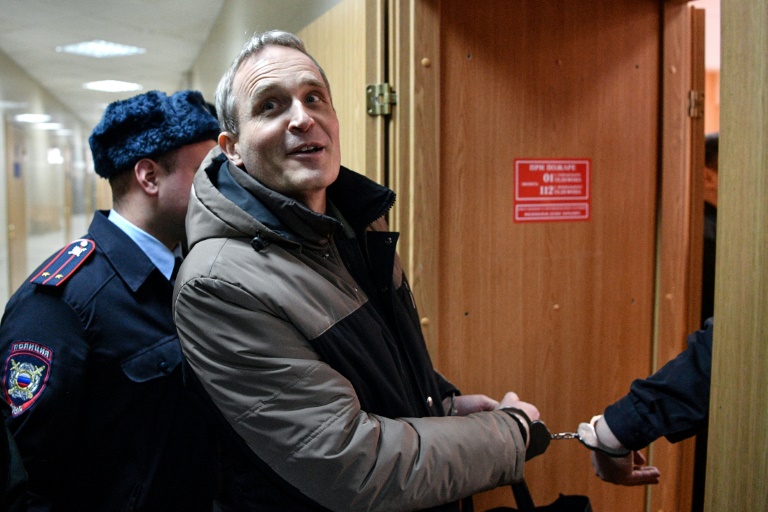
Dennis Christensen, a Danish Jehovah’s Witness, was released from Russian jail on Tuesday and will have to leave the country, the US-based Christian evangelical movement said.

In the first such conviction since Russia outlawed the religious movement in 2017, Christensen was sentenced to six years in prison in 2019.

His case has drawn worldwide condemnation.

“Dennis Christensen has been released from prison. For his faith, he spent a total of 5 years behind bars,” the movement said in a statement Tuesday.

Christensen must leave Russia overnight n the night of May 24-25, the statement said.

About 130 people gathered in front of a penal colony in the town of Lgov in the region of Kursk in central Russia to greet Christensen but members of Russia’s migration service took him to Moscow, the religious movement said.

Christensen —  who is married to a Russian — was arrested during a prayer meeting in the southern Russian city of Oryol in 2017.

Russia brands the US evangelical Christian movement, which was set up in the late 19th century and preaches non-violence, as a totalitarian sect and in 2017 designated it an extremist organisation and ordered its dissolution in the country.

11 killed in latest Brazil police raid on Rio favela

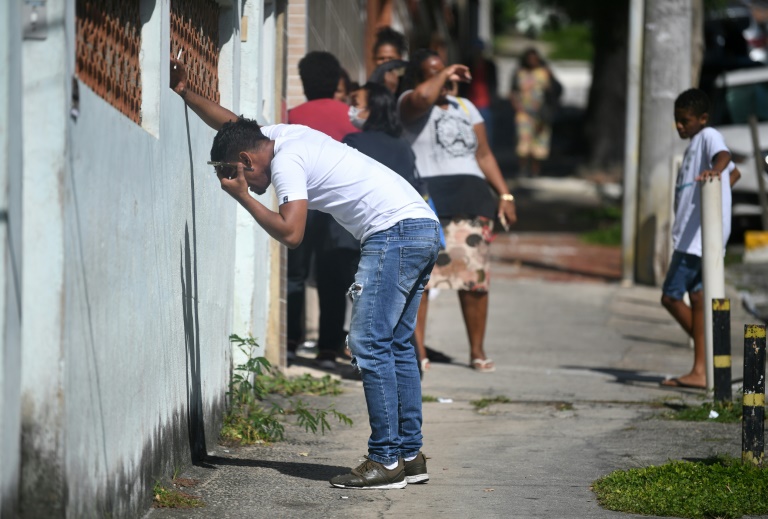
One year after the bloodiest-ever police raid of a favela in Rio de Janeiro’s history, a forceful new operation by Brazilian officers on Tuesday has left 11 people dead including a bystander.

Military police said they came under gunfire as they planned to enter a slum called Vila Cruzeiro in the north of the city with the mission of locating and arresting “criminal leaders.”

In the ensuing gun battle, 10 alleged criminals died, as did a female resident of the favela who was hit by a stray bullet.

Police often carry out raids in Rio’s teeming slums to fight drug trafficking.

They said that this time they were looking for gang leaders hiding out in Vila Cruzeiro that were from other parts of Brazil.

This was the deadliest police raid in a year in Rio.

Last May, a police raid in a favela called Jacarezinho left 28 people dead including a police officer. It was the largest such toll in the city’s history.

Vila Cruzeiro, a favela crowded onto a hillside not far from Rio de Janeiro’s international airport, had already been the scene of violent confrontation in February, when police killed eight people.

Tuesday’s pre-dawn raid targetted the Comando Vermelho, or Red Command, one of Brazil’s most powerful crime gangs “responsible for more than 80 percent of the shootings in Rio,” a police spokesman told TV Globo.

Police said there were gun battles in high-ground areas of the favela itself and in wooded grounds which dot the hillside.

– No body cameras –

Officers seized seven assault rifles, five pistols, 10 motorcycles and six cars in Tuesday’s raid.

But the muscular operation was criticized for its use of overwhelming force.

“Another massacre. Schools closed, thousands of people terrorized,” tweeted left-wing city councilman Tarcisio Motta.

“The policy of extermination runs its course in Rio.”

During such military police operations, residents and activists often denounce authorities’ abuse including extrajudicial killings of suspects, illicit acts which mostly go unpunished.

Rio police officers were supposed to wear body cameras on their uniforms beginning this month, but use of the equipment has been postponed.

Security experts believe cameras can prevent abuse but will not solve all the problems, and their use should be accompanied by comprehensive police reform.

The experts advocate for abandoning the cycle of confrontation in the endless fight against drug trafficking, opting instead for more efforts to disrupt the crime gangs’ financial resources.

Brazilian police are among the world’s deadliest, responsible for more than 6,100 fatalities in 2021, or an average of 17 per day, according to the G1 violence monitor’s count in partnership with the University of Sao Paulo and the non-governmental Public Safety Forum.

Stocks fall after sentiment Snap-ped

Stock markets retreated Tuesday on renewed concerns over weak global growth following a profit warning from the owner of Snapchat that spooked investors and further shocked the tech sector.

It comes amid concerns over the impact of China’s Covid-19 restrictions on the world’s second-largest economy after the United States.

Monday’s strong Wall Street rally, where the Dow closed up two percent failed to carry over into Tuesday as Snap, the parent of social media app Snapchat, warned overnight that it saw the economic outlook as having darkened considerably.

Its share price plummeted 41.3 percent in late morning trading.  

“Snap provided a shock,” noted Neil Wilson, chief market analyst at Markets.com.

The company “spooked the market with a macroeconomic warning that dented tech the most and pointed to earnings revisions that could drag the market lower for longer”, he added. 

The tech-heavy Nasdaq Composite quickly sank more than three percent. Shares in Facebook-parent Meta fell 8.9 percent and Google-owned Alphabet shed 6.7 percent.

Patrick J. O’Hare at Briefing.com said that Snap’s warning impacted the broader market as investors are worried about the economic trajectory.

“The real issue hitting the market in terms of the Snap warning is the context for the warning: ‘the macroeconomic environment has deteriorated further and faster than anticipated,'” he said.

– Pound lashed –

The pound also took a knock after an S&P Global’s economic sentiment survey for Britain fell to a 15-month low. 

“The extent of the fall points to a UK economy hitting the buffers hard as the combined effect of surging energy prices, and tax rises starts to curtail economic activity,” said Michael Hewson, chief market analyst at CMC Markets.

Shares in British energy firms slumped following reports that the UK government may impose a windfall tax on excess profits enjoyed by electricity producers.

Prime Minister Boris Johnson has so far indicated he does not want to impose such a tax on oil and gas producers despite them also earning vast sums as prices soar.

Shares in Drax fell by 16.1percent, SSE by 7.7 percent and Centrica by 7.6 percent.

Johnson argues an exceptional levy on the likes of BP and Shell would harm their efforts to invest in greener fuels like solar and wind power.

In China, Beijing’s announcement Monday of a fresh raft of measures to stimulate the economy did little to calm investors’ nerves.

China’s economy has taken a hit from Beijing’s zero-Covid approach to the pandemic, which has resulted in lengthy lockdowns of major cities and mass testing of millions of people.

Prolonged virus lockdowns have constricted supply chains, dampened demand and stalled manufacturing.

Investment banks UBS Group and JPMorgan Chase have responded by cutting their China economic growth forecasts.

“The lingering restrictions and lack of clarity on an exit strategy from the current Covid policy will likely dampen corporate and consumer confidence and hinder the release of pent-up demand,” UBS economists including Tao Wang wrote in a research note.

Concerns over the Chinese economy and its impact on oil demand weighed on crude prices Tuesday.

– Key figures at around 1530 GMT –

New York – Dow: DOWN 1.3 percent at 31,460.55 points

EURO STOXX 50: DOWN 0.9 percent at 3,579.31

London – FTSE 100: DOWN 0.4 percent at 7,484.35 (close)

Frankfurt – DAX: DOWN 1.8 percent at 13,919.75 (close)

Paris – CAC 40: DOWN 1.7 percent at 6,253.14 (close)

Tokyo – Nikkei 225: DOWN 0.9 percent at 26,748.14 (close)

Hong Kong – Hang Seng Index: DOWN 1.8 percent at 20,112.10 (close)

Shanghai – Composite: DOWN 2.4 percent at 3,070.93 (close)

Euro/dollar: UP at $1.0733 from $1.0692 at 2030 GMT Monday

Pound/dollar: DOWN at $1.2519 from $1.2587

Euro/pound: UP at 85.72 pence from 84.92 pence

Dollar/yen: DOWN at 126.52 yen from 127.90 yen 

Brent North Sea crude: UP 0.4 percent at $113.77 per barrel

West Texas Intermediate: DOWN less than 0.1 percent at $110.23 per barrel

burs-rl/pvh

Close Bitnami banner
Bitnami