World

Japan hosts Quad summit seeking unity on countering China

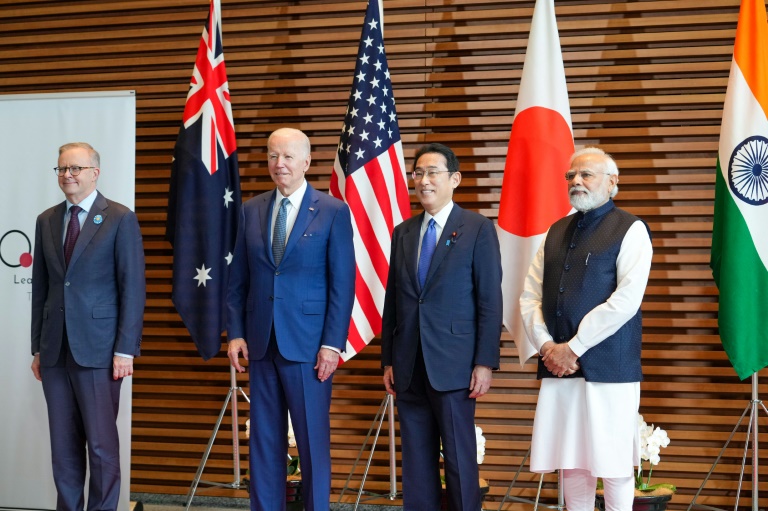
Leaders of Japan, India, Australia and the United States met in Tokyo on Tuesday, looking to put China on notice as it expands its military and economic influence in the region.

The summit of the grouping known as the Quad comes a day after US President Joe Biden said Washington would be ready to intervene militarily to defend Taiwan, prompting China to accuse him of “playing with fire”.

Tuesday’s gathering is expected to produce fewer fireworks but still be clearly directed at China.

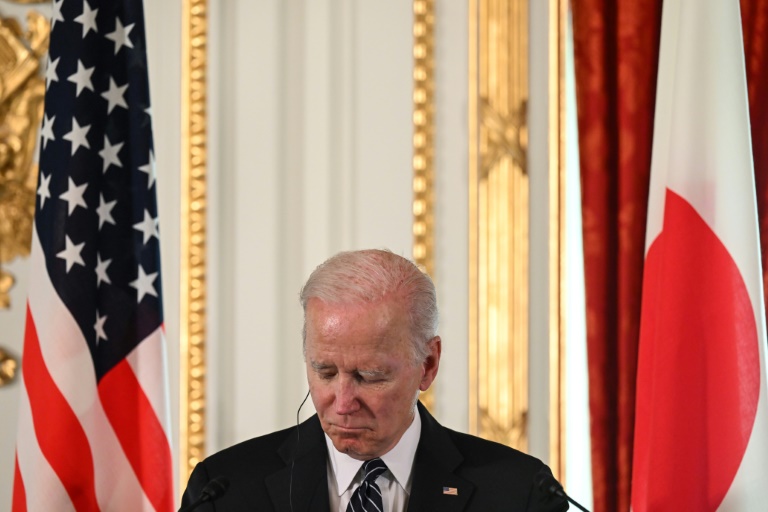
“This is about democracies versus autocracies, and we have to make sure we deliver,” Biden said as the Quad summit began.

There is growing regional discomfort with Chinese military activity including sorties, naval exercises and encroachments by fishing vessels that are viewed as probing regional defences and red lines.

Adding to concerns are China’s efforts to build ties with Pacific nations including the Solomon Islands, which sealed a wide-ranging security pact with Beijing last month.

China’s foreign minister will visit the Solomon Islands this week, with reports suggesting he could add other countries including Vanuatu, Samoa, Tonga and Kiribati.

In a nod to those concerns, Japanese Prime Minister Fumio Kishida urged Quad members to “listen carefully” to regional neighbours, including the Pacific islands, “to help resolve the immediate challenges they face”.

“Without walking together with countries in the region, the Quad cannot be successful,” he said.

Australia’s newly elected Prime Minister Anthony Albanese also pledged more support for Pacific nations including aid to deepen “our defence and maritime cooperation”.

The Quad nations are expected to agree Tuesday on a deal to monitor regional maritime movement, a White House official said.

The “major initiative” will track “what is happening in countries’ territorial waters and exclusive economic zones”, the official told reporters.

Collected data will be unclassified and shared with “a wide range of partners” to help monitor activities like illegal fishing.

– ‘Candid, direct conversations’ –

Biden, Kishida, Albanese and Indian Prime Minister Narendra Modi will be looking to present a united front, but there are divisions behind the scenes.

India is the only Quad member that has not condemned Russia’s invasion of Ukraine, and Biden has repeatedly described a strong response to Moscow as a deterrent to other nations considering unilateral military action — like China.

US strategy is for a “free, open, connected, secure and resilient Indo-Pacific. Russia’s assault on Ukraine only heightens the importance of those goals — the fundamental principles of the international order,” he said.

Biden will meet Modi and Albanese one-on-one later Tuesday and “is very aware that India has its own history, its own views”, the White House official said.

“The question is how they’re addressed and how they’re managed. And I think the president is very much of the view that the way to do this is to have candid, direct conversations,” the official added.

India is expected to seek a softer overall tone to any joint Quad statement, shying away from the more muscular language employed by Washington, Canberra and Tokyo in recent months.

But Biden said the grouping was of growing importance, calling it a “central” partnership.

“In a short time, we’ve shown the Quad isn’t just a passing fad. We mean business,” he said.

Biden arrived in Japan on Sunday after a stop in Seoul as he tries to reassure Asian allies his administration has not been distracted by the war in Ukraine.

Hanging over the regional tour has been the threat that North Korea could be planning fresh missile launches or even a nuclear test.

Speculation that a launch could happen when Biden was in Seoul did not materialise, but Washington has said it remains “prepared”, and Pyongyang’s missile programme is also likely to be on the Quad agenda.
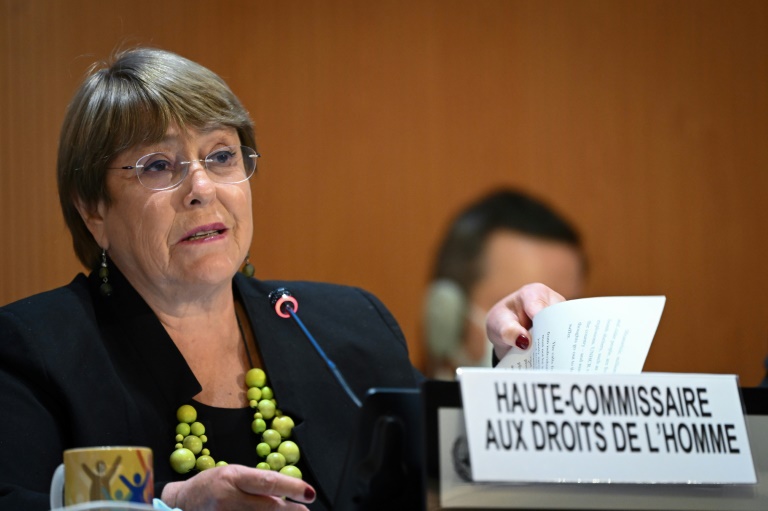

UN envoy's access to China's Xinjiang under scrutiny as trip begins

China has called a mission by the UN rights chief a chance to “clarify misinformation” ahead of her visit on Tuesday to Xinjiang as Uyghurs warned a public relations stunt may lie in wait.

The ruling Communist Party is accused of detaining over one million Uyghurs and other Muslim minorities in the far-western region as part of a years-long crackdown the United States and lawmakers in other Western countries have labelled a “genocide”.

China vehemently denies the allegations, calling them the “lie of the century”.

Bachelet is expected to visit the Xinjiang cities of Urumqi and Kashgar on Tuesday and Wednesday as part of a six-day tour.

She met Foreign Minister Wang Yi ahead of her journey to Xinjiang, who also “expressed the hope that this trip would help enhance understanding and cooperation”, according to a readout of the meeting released late Monday.

But Uyghurs, the main victims of an alleged campaign of repression, raised doubts about her presence if her trip is as highly-controlled as expected.

Nursimangul Abdureshid, a Uyghur living in Turkey, said she was “not very hopeful that her trip can bring any change”.

“I request them to visit victims like my family members, not the pre-prepared scenes by the Chinese government,” she told AFP.

“If the UN team cannot have unlimited access in Xinjiang, I will not accept their so-called reports.”

Another Uyghur, Jevlan Shirememet, called on Bachelet to help him contact his mother who he has not seen for four years.

The Turkey-based 31-year-old — from the province’s northern reaches near the border with Kazakhstan — also said he hoped Bachelet would venture further than her itinerary.

“I don’t know why she can’t visit these places,” he told AFP.

– ‘Unfettered access’ –

Regional capital Urumqi — population four million — houses major government bodies believed to have orchestrated the province-wide campaign China described as a crackdown on religious extremism.

It is home to a sizeable Uyghur community and was the site of deadly ethnic clashes in 2009 as well as two terrorist attacks in 2014.

Meanwhile, Kashgar — home to 700,000 people — lies in the Uyghur heartland of southern Xinjiang.

An ancient Silk Road city, it has been a major target of Beijing’s crackdown, researchers and activists say, with authorities accused of smothering the cultural hub in a high-tech security blanket while bulldozing Uyghur homes and religious sites.

The outskirts of both cities are pockmarked with what are believed to be detention camps, part of a sprawling network of recently built facilities stretching across the remote province.

Campaigners have voiced concern that Chinese authorities will prevent Bachelet from conducting a thorough probe into alleged rights abuses and instead give her a stage-managed tour with limited access.

The US has said it is “deeply concerned” that she had not secured guarantees on what she will see, adding that she was unlikely to get an “unmanipulated” picture of China’s rights situation.

Bachelet also gave assurances on her access to detention centres and rights defenders during a Monday virtual meeting with the heads of dozens of diplomatic missions in China, according to diplomatic sources in Beijing.

Caroline Wilson, the UK’s Ambassador to China, was on the call and said she stressed “the importance of unfettered access to Xinjiang and private conversations with its people”.

“There is no excuse for preventing UN representatives from completing their investigations,” Wilson wrote on Twitter. 

Bachelet’s office has also said she will meet with civil society organisations, business representatives and academics.

In addition to mass detentions, Chinese authorities have waged a campaign of forced labour, coerced sterilisation and the destruction of Uyghur cultural heritage in Xinjiang, researchers and campaigners say.

Uyghurs overseas have staged rallies in recent weeks pressing Bachelet to visit relatives believed to be detained in Xinjiang.

Gaffes or trial balloons? Biden loose lips rattle world stage

From promising to defend Taiwan militarily to suggesting regime change in Russia, US President Joe Biden has developed a knack for off-the-cuff pronouncements that have rattled diplomacy.

For journalists following Biden abroad, it has almost become routine — the frank-speaking US president making headlines with a loaded or brusque answer, and the White House then quickly insisting he was not setting new policy.

In the last moments of a news conference in Tokyo on Monday, Biden answered affirmatively that the United States would defend Taiwan militarily if it is attacked by China, which claims the self-governing democracy as its own.

It was not the first time Biden has made waves with a formulation on Taiwan. For more than four decades, under a policy set when he was a senator, the United States has provided the island weapons for its self-defense but stayed deliberately ambiguous on whether it would intervene.

Both a White House official and Defense Secretary Lloyd Austin swiftly said that US policy had not changed, as Beijing voiced fury and Taiwan saluted what it considered evidence of ironclad commitment.

The episode comes two months after Biden ad-libbed in a speech in Poland about Russian President Vladimir Putin, “For God’s sake, this man cannot remain in power.”

The White House promptly denied that Biden was advocating the removal of Putin, which would be a major escalation of the US campaign that Biden himself had said was limited to supporting Ukraine.

Before Putin invaded Ukraine in February, Biden, who had been warning of dire consequences if Russia went ahead with an attack, also raised eyebrows by suggesting a lighter Western reaction for a “minor incursion.”

But Biden, who throughout his life in politics has been known for wearing his emotions on his sleeve and has limited the opportunities at home for verbal blunders, sometimes digs in.

Biden has stood firm on accusing Russia of “genocide” in Ukraine and, well before the rest of his administration, accused Moscow of “war crimes.”

– ‘Two-level game’? –

Each time, Biden’s remarks prompt questions. Is the 79-year-old simply speaking from his heart? Or is he setting a new policy — or perhaps testing one out?

“It’s very hard to say whether these are gaffes or a two-level game. But if it is a two-level game, it is incredibly dangerous,” said Joshua Shifrinson, an associate professor of international relations at Boston University.

“It can exacerbate tensions; it generates uncertainty,” he added.

Biden took office with more experience in foreign affairs than any president in decades and had promised more predictability than his voluble and volatile predecessor Donald Trump.

Trump frequently stunned the world with his undiplomatic pronouncements, from insulting leaders of allied nations to threatening war over Twitter.

“With Trump there was no predictability but Biden was expected to be the very consistent kind of guy,” Shifrinson said.

“Bluntness can be a very good thing but in a situation like Taiwan it can be quite dangerous.”

Bonnie Glaser, an expert on Taiwan at the German Marshall Fund of the United States, said that Biden no doubt believed what he was saying.

“But it is a gaffe in the sense that he is misstating US policy,” she said.

“I don’t think it serves US interests to have the president misstating what our policy is,” she added.

“I think that it is more effective if our policy is clear and understandable to our friends, our allies and our enemies.”

Some hawks that usually feud with Biden gave him credit for his remarks.

Republican Senator Lindsey Graham tweeted that Biden’s statement was “the right thing to say and the right thing to do.”

But others saw risks in seemingly loose talk after months of US-backed efforts to rally support for Ukraine.

“The West’s robust response to Russian aggression in Ukraine could serve to deter China from invading Taiwan,” tweeted Stephen Wertheim, a senior fellow at the Carnegie Endowment for International Peace.

“But Biden’s statement risks undoing the potential benefit and instead helping to bring about a Taiwan conflict.”

Iconic Iran river threatened by droughts, diversions

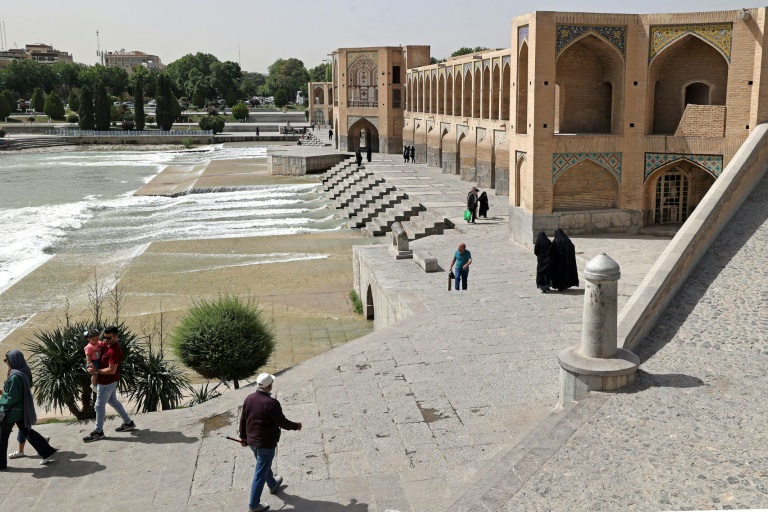
The famed river bridges of the Iranian city of Isfahan are a beloved tourist draw — but much of the time their stone arches span just sand and rocks, not water.  

Drought and upstream water diversions have seen the Zayandeh Rood, “fertile river” in Persian, run dry since 2000, with only rare exceptions.

Sitting on a quay with two friends, 60-year-old Jalal Mirahmadi gazed with melancholy at the riverbed, which became the site of a farmers’ protest late last year.

“When I was a child, the water flowed under the arches of the bridge and sometimes overflowed to spill into the surrounding streets,” he sighed.

The river runs nearly 400 kilometres (250 miles) from the Zagros Mountains in the west to Lake Gavkhouni in the east, making it the longest waterway in central Iran.

On its way through Isfahan, it meanders under several beautifully crafted bridges from the 17th century, the city’s golden age when it was the Persian capital.

“When the water of Zayandeh Rood flows, the bridges have a special appearance and beauty,” said Ali Mohammad Fassihi of the Ministry of Heritage and Tourism.

“These historic bridges are meaningless without water.”

– Heat and drought –

Largely arid Iran, like other nearby countries, has suffered chronic dry spells and heat waves for years, which are expected to worsen with climate change.

Iran is sometimes hit by summertime blackouts when the blistering heat drives up air conditioner use while low rainfall reduces the water reservoirs of hydro-electric dams.

The reduced flow of the Zayandeh Rood, however, is also man-made because much of its water has been diverted to supply neighbouring Yazd province.

Last November, tens of thousands of people, including farmers, gathered in the dry riverbed to complain about the drought and blame officials for diverting water. 

Security forces fired tear gas when the protest turned violent and said they arrested 67 people.

The municipality later launched an awareness campaign on the fate of the river, with several signs erected in Isfahan, the country’s third-largest city with two million people.

Young people in the city say they are used to only seeing the river’s dry bed. 

High school student Amir, 18, said he rarely goes there because it “is no longer pleasant without water”.

“Most of my memories and those of my generation are associated with the dryness of the river,” he lamented.

– Riverside selfies –

From time to time, authorities briefly open the upstream dam’s floodgates to irrigate wheat fields east of Isfahan — to the delight of thousands who quickly flock to the river.

This happened in mid-May when locals and tourists rushed to the waterway to capture the ephemeral views with their eyes and with selfies.

Under the shade of trees on the banks, families drank tea and smoked shisha. Some strolled and others pedalled swan-shaped boats, which were back in use after baking in the dust.

At the majestic Si-o-Se Pol Bridge, portrait painter Mohammad-Reza Abdollahi, 50, drew the yellow-brick bridge while awaiting clients.

“I hadn’t been to Isfahan for 10 years because there were few tourists due to the drought in Zayandeh Rood,” he said. 

He had only planned to stay for a week or two, but said that when the dams were opened, “I extended my stay”.

Mahnaz, a 27-year-old art student holding her camera, said she was delighted to capture the river’s beauty.

“I didn’t have good photos of the bridge’s reflection in the river because it’s been dry since I learnt photography,” he said.

– ‘Like a mother’ –

Mirahmadi, the 60-year-old man, looked on at visitors to the river with mixed feelings.

“Do you see this crowd today?” he said. “In a few days, when there is no more water in the river, you will only see old men like us. And we will come just to remember.”

The floodgates had been closed again and already the change was obvious: water flowed only under two arches of the Khajou Bridge, which is known for its decoration and its steps descending into the current.

“Zayandeh Rood is the meeting place for all the people of Isfahan,” said Borna Moussavi, who campaigns for the preservation of the river and the heritage of Isfahan.

“When they are happy, they come to this river and its bridges to celebrate. And if they are sad, they come here to calm down.”

For him, the complete disappearance of the river would be akin to the loss of a loved one. 

“Zayandeh Rood is like a mother to us,” Moussavi said.

Mirahmadi felt similarly: “This river has kept Isfahan alive.

“If there is no river, Isfahan will become a desert, and in four or five years everyone will abandon the city.” 

Young Lebanese voters shake grip of traditional parties

Lebanese law student Charbel Chaaya spent the election campaign distributing flyers in Beirut and trying to convince his parents to vote for independents to shake the grip of established parties.

The 21-year-old activist is one of many young voters who went against their parents’ political views, and helped propel at least 13 independents to parliament last week for the first time in decades.

“My parents think I’m too idealistic, that this country will never change,” he said, adding that his father voted for a traditional Christian party, the Lebanese Forces.

“There is a generational gap,” Chaaya said. “Our generation knows that sectarian and traditional politics simply don’t work anymore.”

Chaaya is part of a new generation seeking a progressive approach to politics, blaming established parties dating from Lebanon’s 1975-1990 civil war for an economic meltdown that has pushed thousands to flee the country.

This has widened a generational gap between young people voting for change and an older generation often attached to civil war-era parties.

The Iran-backed Shiite Hezbollah group and its allies fell just short of the 65 seats needed to control the 128-seat parliament, losing their clear-cut majority.

This time, the May 15 polls brought in a record number of independents to parliament, totalling a small but significant tenth of the assembly.

– ‘Different language’ –

Chaaya headed his university’s secular club, one of dozens of political groups bringing together young supporters of a mass protest movement that began in October 2019.

In his Chouf-Aley district, southeast of Beirut, voters ousted Hezbollah ally Talal Arslan in favour of independent newcomer Mark Daou, a university lecturer and advertising professional.

A massive number of those campaigning for his list were young people in their twenties, Daou said.

“We speak a different language than the traditional parties, that’s why people like us,” said Daou. “We don’t speak in sectarian terms.”

Lebanon shares power among its 18 recognised religious communities, and politics are often treated as a family business.

This was a clear break from voting patterns in Lebanon, where each community usually supports politicians from their own religious sect.

Polling expert Rabih Haber of Statistics Lebanon said that while voter data could not be broken down by age, on social media young people seemed to express far greater support for independent candidates than established parties.

Newly-elected independent MP Elias Jarade, a 54-year-old Harvard-educated ophthalmologist, said most voters who came up to him were young people from different political backgrounds.

“All those who came to our tents and said they voted for us were young men and women, from different regions, religions and political backgrounds,” Jarade said.

He was one of two independent MPs who snatched seats from allies of the powerful Hezbollah in its south Lebanon strongholds.

The independent MPs are mostly university professors and respected professionals who entered politics after the 2019 mass protests.

– ‘Space to have a conversation’ –

Karl, a 30-year-old Beirut resident, went against his parents’ wishes and voted for an independent in the country’s south, after growing disillusioned with the Christian Free Patriotic Movement of President Michel Aoun, a Hezbollah ally.

Karl, asking that only his first name be used, said that there is a trend of younger people voting for independents, despite their limited gains in the south.

“At the same time the older generation is also transmitting its own war trauma to their children,” he said.

On his way to vote in his hometown, Karl passed by the southern town of Ghazieh, where he saw children chanting slogans and bearing flags for Hezbollah and its ally the Shiite Amal movement.

The scene was emblematic of the tight hold the two groups have in south Lebanon, where independents are often threatened and intimidated, according to observers and rights groups.

Sami, 21, who also asked for his first name to be used, said he had failed to dissuade his parents from voting for Hezbollah and Amal.

“I thought I had convinced my mother, but in the end there is always something that pulls her back to her beliefs,” he said, a common complaint among young voters AFP spoke to.

But Sami said he was cautiously optimistic about the independents’ modest victory in the south.

“Our region was monochrome, there was no space for debate on alternatives to these parties,” Sami said. “This opened up, at least, some space to have a conversation.”

Biden angers China with vow to defend Taiwan

President Joe Biden vowed Monday that US forces would defend Taiwan militarily if China attempted to take control of the island by force, prompting Beijing to warn that America was “playing with fire.” 

Speaking in Tokyo, Biden compared China’s threat to self-ruled Taiwan to the Russian invasion of Ukraine, delivering his strongest remarks to date on the issue amid rising tensions over Beijing’s growing economic and military power.

Asked if Washington was willing to get involved militarily to defend Taiwan, he gave the unequivocal reply: “Yes… That’s the commitment we made.” 

“We agreed with the One China policy, we signed on to it,” Biden said — referring to Washington’s diplomatic recognition of Beijing as the sole government of China. 

“But the idea that it can be taken by force is just not appropriate,” he said of Taiwan. “It would dislocate the entire region and would be another action similar to Ukraine.” 

Beijing, which considers Taiwan a rebellious province and has recently intensified military pressure on the island, warned that Washington is playing a risky game.

Foreign ministry spokesman Wang Wenbin declared that China “has no room for compromise or concession,” when it comes to its sovereignty and territorial integrity.

The United States is “playing with fire,” warned the Chinese State Council’s Taiwan Affairs Office.

Washington is “using the ‘Taiwan card’ to contain China, and will itself get burned,” said Zhu Fenglian, a spokeswoman for the office.

Zhu “urged the United States to stop any remarks or actions” that violate previously established principles between the two countries.

– Comparing Taiwan to Ukraine –

Biden’s remarks, in a press conference together with Japanese Prime Minister Fumio Kishida, offered democratic Taiwan its loudest reassurance in decades but also brought more uncertainty to the US stance.

Since switching recognition to Beijing in 1979, the United States has committed to providing Taiwan with the means to defend itself but has kept a “strategic ambiguity” on whether it would intervene militarily.

The policy was designed both to keep Beijing from declaring war and to stop Taiwan from formally declaring independence.

But a growing constituency in the United States advocates a switch to “strategic clarity,” believing an explicit promise to defend Taiwan is needed to deter an increasingly assertive and powerful Beijing.

Biden compared Taiwan’s situation directly with Ukraine, which has received billions of dollars worth of arms and aid from the United States since the Russian invasion on February 24.

He said Western sanctions on Russia must exact a “long-term price,” because otherwise “what signal does that send to China about the cost of attempting to take Taiwan by force?”

He warned Beijing was already “flirting with danger right now by flying so close and all the manoeuvres undertaken” — referring to a growing number of Chinese sorties, naval exercises and other power projections in the Taiwan Straits.

– ‘Policy has not changed’ –

US Secretary of Defense Lloyd Austin insisted however that US “policy has not changed.”

Biden “reiterated that policy, and our commitment to peace and stability across the Taiwan Strait,” Austin said.

“He also highlighted our commitment under the Taiwan Relations Act, to help provide Taiwan the means to defend itself,” he added.

Biden’s remarks overshadowed his rollout of a new, 13-nation regional trade framework aimed at offsetting Chinese commercial power as well as Tuesday’s meeting of the Quad group, an endeavor by India, Australia, Japan and the US to check China’s growing naval power in the Indo-Pacific region.

Kishida meanwhile called for stability in the Taiwan Strait and said Tokyo was committed to boosting its defence spending.

“Japan will fundamentally strengthen its defence capacity, and to back that up will significantly increase its defence spending,” he said.

“We don’t rule out any options, including (acquiring) the capacity to counter-attack,” he added.

Airbnb stops booking stays in China: source

Home rental service Airbnb is shutting down its business in China as a pandemic lockdown shows no sign of ending there, a source close to the company told AFP Monday.

Airbnb will no longer book stays or visitor “experiences” in China, focusing instead on helping people there with travel plans outside the country, the source said.

The San Francisco based company declined to comment.

Airbnb launched its business in China six years ago, and has booked stays at homes there for some 25 million guests. Bookings at residences in China have accounted for only one percent of Airbnb bookings in recent years, the company has reported.

Airbnb faced strong competition in China, and Covid-19 made its operations there more complicated and expensive.

China has persisted with its zero-Covid policy, imposing hard lockdowns and movement restrictions on several cities, even as much of the rest of the world has transitioned to living with the coronavirus.

The curbs, including stay-at-home orders in the economic hub of Shanghai and creeping restrictions across Beijing, have inflicted a heavy economic toll.

Airbnb expects outbound tourism from China that had been booming prior to the pandemic to rebound as Covid-19 restrictions ease and borders reopen.

Bookings on Airbnb hit a new high in this year’s first quarter, the firm said in a recent earnings report, signalling that travel demand stifled by the Covid-19 pandemic is being unleashed.

Despite the Omicron surge and a persistent level of infections, Airbnb bookings for lodging and travel “experiences” topped 102 million in the first three months of this year, setting a new quarterly record, the company said in an earnings release.

“Guests are booking more than ever before,” Airbnb told shareholders in a letter.

“Looking ahead, we see strong sustained pent-up demand.”

The company said that trends of people booking stays away from urban areas and staying relatively close to home continue, but that guests are returning to cities and making cross-border trips.

Blessings counted after losing all on Ukrainian front

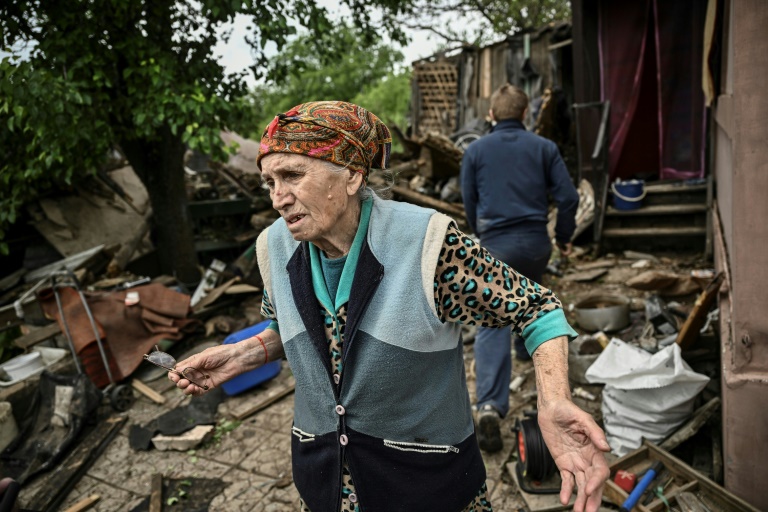
The willowy Ukrainian grandmother was praying for God to spare her life when a missile imploded her kitchen and cratered her vegetable garden.

Maria Mayashlapak scanned the devastation and counted her blessings — a response shared by countless others who have lost almost everything but their lives three months into Russia’s invasion.

“I was reciting my morning prayer for God to keep me from getting hurt,” the 82-year-old recalled next to the splintered remains of her cottage kitchen in Ukraine’s eastern city of Bakhmut.

The family’s mewing kitten was still trapped somewhere in the rubble and the once-leafy backyard resembled an open-pit mine.

The half of the house still standing looked in danger of either caving or sliding into the muddy crater left by the missile.

Rows of trees stood bowing with their crowns blown off by the force of the morning blast.

More rumblings on the horizon signalled the slow but steady pace of Russia’s advance deep into the inner reaches of the Donbas war zone.

“I looked up from my prayers and heard a frightening sound,” the grandmother said.

“Every day I pray to God asking to avoid injuries. God heard me. God is watching over me.”

– ‘Under aerial attack’ –

Mayashlapak’s relief is making life difficult for Bakhmut’s deputy mayor Maksim Sutkovoi.

The 40-year-old was theoretically meant to be pulling civilians out from a series of towns in the Bakhmut area that have come within range of Russian fire in the past week.

But he stood with his hands in his pockets on a deserted square selected as the daily gathering point for evacuees.

“People do not want to leave,” Sutkovoi said next to a half-empty bus waiting to take civilians to more peaceful parts of Ukraine.

“We have reached the point where we are making evacuation mandatory,” added Bakhmut military administration chief Sergiy Kalyan.

The two local leaders estimate that 100,000 of the district’s 220,000 residents — many of them living along a north-south road now under Russian assault — were still clinging on to their homes.

Those staying behind say the missile strikes and bombings start every morning around sunrise and continue until lunch.

“Thankfully the Russian artillery has not reached us yet,” Kalyan said next to the evacuation bus.

“But otherwise we are under aerial attack.”

– ‘Survivors’ –

Taxi driver Maksim Taran stared at a couch protruding from the sheared off section of a building that once held his apartment and expressed many of the same emotions as the grandmother on the other side of town.

The 33-year-old said his father was meant to have been sleeping on that couch the night something crashed through the five-story apartment complex.

The entire middle section of it collapsed.

No one was injured because most of the block’s 200 residents had already moved out.

But Taran was back at the site three days later to determine which of the remaining apartments he could still use.

“My father is alive because he got delayed on the road,” Taran said with his gaze fixed on the protruding couch.

“I am probably more relieved than anything else. We lost property. That can be restored.”

His neighbour Roman Ognev wrapped his arm around the taxi driver’s shoulder and broke out into a merry laugh.

“We are survivors,” the 51-year-old businessman said.

– Tightening noose –

Bakhmut’s fall would give the Russians control of a crucial junction that now serves as an impromptu command centre for much of the Ukrainian war effort.

Its roads offer a direct route to all sections of the front as well as Kramatorsk — the government’s increasingly besieged administrative centre for the east.

The Russians have been battling for days to cut off Bakhmut’s link to the twin industrial cities of Lysychansk and Severodonetsk to its north.

Long stretches of that road are now shrouded by plumes of noxious smoke rising over burning oil refineries and destroyed Ukrainian military outposts.

The highways heading south are being shelled by local forces that have been fighting a Russian-backed insurgency since 2014.

The noose is tightening and the Ukrainian forces fortifying their positions in the surrounding forests are digging in for a fierce defence.

So are Bakhmut’s remaining residents.

“We set our alarms for 6:00 am because that is the time to head to the bunker,” Ognev said outside the ruined apartment block.

“And then we go back up and get a few more hours of sleep.”

TikTok lets creators charge monthly subscriptions

TikTok on Monday said it will start letting some popular accounts at the video-snippet streaming star charge subscriptions for live streams.

Similar money-making tools have been added to rivals such as Instagram and Facebook as the social media platforms compete for online personalities that attract audiences.

“LIVE Subscription is an extension of our efforts to build diversified creator monetization opportunities that suit a range of creator needs,” TikTok said in a blog post.

TikTok said the subscription feature being introduced this week will only be available to creators by invitation for now but will be expanded globally in coming months. The company did not disclose pricing.

Creators will be able to switch into a chat mode exclusive to subscribers, “enhancing an even more personal connection between creator and viewer,” the company said.

To access the LIVE Subscription feature, creators will need to be at least 18 years old, while users will have to be at least the same age to subscribe, TikTok said in the post.

Subscriber perks will include digital badges and, in some cases, the ability to control camera angles during streamed sessions, according to video clips posts by TikTok creators invited to take part.

TikTok early this month announced an ad revenue-sharing program with the social media platform’s most prominent creators, moving closer to a model already used by its competitors.

The short-video format app has become wildly popular in recent years with more than a billion active users globally, but has been criticized for not providing a way for creators to effectively monetize content.

Under a TikTok Pulse program to be rolled out in the United States next month, companies can place their ads next to user content in specific categories and creators will get a cut.

“We will begin exploring our first advertising revenue share program with creators, public figures and media publishers,” the company, a subsidiary of Chinese tech firm ByteDance, said in a statement.

Other major social networks that focus on video, such as YouTube, Instagram and Snapchat, have already implemented revenue-sharing systems.

Workers endorse union at Activison Blizzard game studio

Quality control workers at a studio owned by Activision Blizzard voted Monday to form a union in the first such win at a major US video game company.

Members of the small team at Raven Software voted 19 to three in favor of banding together as employees to be represented by the Communications Workers of America (CWA).

“We respect and believe in the right of all employees to decide whether or not to support or vote for a union,” an Activision spokesperson said in response to an AFP inquiry.

But the spokesperson went on to contend that “an important decision that will impact the entire Raven Software studio of roughly 350 people should not be made by 19 Raven employees.”

Activision has the option of challenging the outcome of the vote before it is finalized by US labor officials.

The Game Workers Alliance bargaining group formed at Raven is the first union victory at Activision, and also reported to be the first at a US video game giant.

“Our biggest hope is that our union serves as inspiration for the growing movement of workers organizing at video game studios to create better games and build workplaces that reflect our values and empower all of us,” the alliance said in a release.

Earlier this year, Raven workers announced the formation of Game Workers Alliance after going on strike for five weeks. The strike began December 6, when over 60 Raven Software workers walked out in protest after Activision Blizzard laid off 12 of the studio’s quality assurance testers.

“Quality assurance workers at Raven Software are bringing much-needed change to Activision and to the video game industry,” said CWA secretary-treasurer Sara Steffens.

Activision, the California-based maker of “Candy Crush,” has been hit by employee protests, departures, and a state lawsuit alleging it enabled toxic workplace conditions and sexual harassment against women. 

In July of last year California state regulators accused the company of condoning a culture of harassment, a toxic work environment, and inequality.

Meanwhile, the video game industry overall has a reputation of being a world ruled by men and harsh for women.

Microsoft early this year announced a landmark $69 billion deal to purchase Activision Blizzard, grabbing the scandal-hit firm as the tech colossus seeks to boost its power in the video game field.

Merging with troubled Activision will make Microsoft the third-largest gaming company by revenue, behind Tencent and Sony, it said, a major shift in the booming world of gaming.

Close Bitnami banner
Bitnami