World

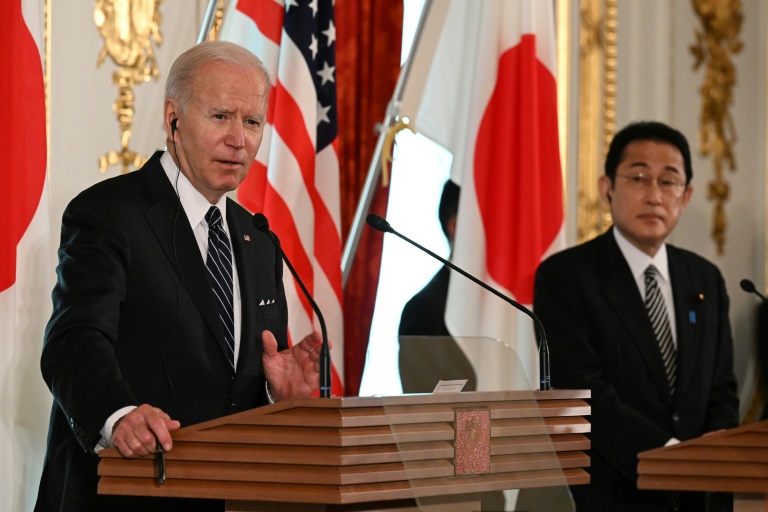
Japan hosts Quad summit seeking unity on countering China

The leaders of Japan, India, Australia and the United States meet in Tokyo on Tuesday seeking common ground on countering China’s growing regional economic and military clout.

The summit of the so-called Quad grouping takes place with Beijing beefing up its military and carrying out exercises and manoeuvres around disputed territory, including Taiwan.

On Monday, US President Joe Biden warned China it was “flirting with danger” as it steps up military activity around the self-ruled island, which Beijing considers part of its territory.

Biden said Washington would be ready to intervene militarily to defend Taiwan, prompting China to warn the United States it was “playing with fire” and not to underestimate the country’s “firm resolve, staunch will and strong ability”.

Japan too has gradually upped its rhetoric on Beijing’s military moves, cautioning China against attempts to “unilaterally change the status quo by force”.

Tokyo is partnering with Washington to monitor Chinese naval activity, and is particularly concerned about movement around the disputed territory that Japan calls the Senkaku islands and Beijing the Diaoyu islands.

Against this backdrop, Japan’s Prime Minister Fumio Kishida will welcome Biden, India’s Prime Minister Narendra Modi and Australia’s newly elected Prime Minister Anthony Albanese.

Among some of the four, there are hopes that the loose alliance is being transformed into a more formidable bloc capable of presenting a unified front to Beijing.

“The Quad is showing the world that cooperation among democracies can get big things done,” Biden said Monday after talks with Kishida.

But that unity is complicated by divisions with India — the only Quad member that has not condemned Russia’s invasion of Ukraine.

– ‘A neutral stance’ –

Biden and his allies have linked a strong response to Moscow’s war to Beijing’s regional ambitions, insisting sanctions on Russia are a deterrent to other powers considering unilateral military action.

That has made India’s pointed refusal to pick sides in the conflict all the more delicate a subject.

And India is likely to push for a softer overall tone to any joint Quad statement, shying away from the more muscular language employed by Washington, Canberra and Tokyo in recent months.

Past statements have focused on calling for a “free and open Indo-Pacific” and warnings against “unilateral” moves in the region — without directly naming China.

“The Quad gives the impression that it is focused on ways to counter China. But India will likely take a neutral stance,” Kazuhiro Maeshima, a professor of US politics at Tokyo’s Sophia University, told AFP.

“In order not to pressure India, (Japan and the US) might focus on things like economy and climate change,” he added.

The meeting will be something of a diplomatic trial by fire for Australia’s Albanese, who flew to Tokyo within hours of being officially inaugurated as prime minister.

The 59-year-old centre-left Labor Party leader said the Tokyo talks would be “a good way to send a message to the world that there’s a new government in Australia”.

Biden arrived in Japan on Sunday after a stop in Seoul as he tries to reassure Asian allies his administration has not been distracted by the war in Ukraine.

Hanging over the regional tour has been the threat that North Korea could be planning fresh missile launches or even a nuclear test.

Speculation that a launch could happen when Biden was in Seoul did not materialise, but Washington has said it remains “prepared” and Pyongyang’s missile programme is also likely to be on the Quad agenda.
Uyghurs urge UN rights chief to ask hard questions in Xinjiang

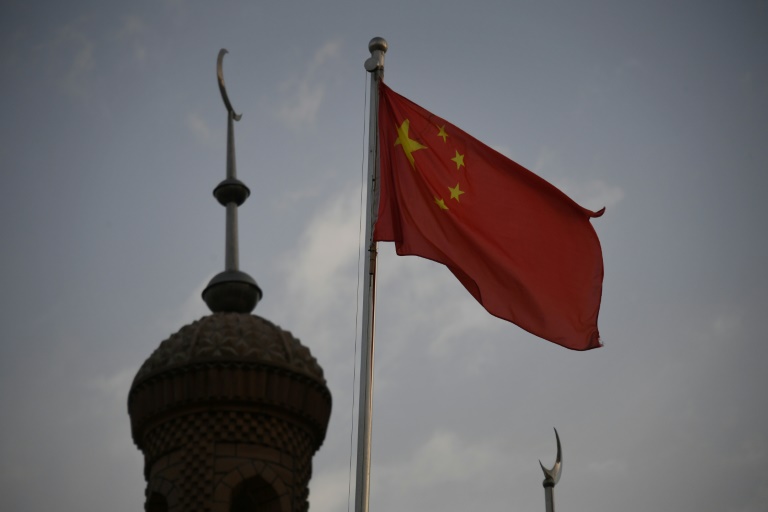
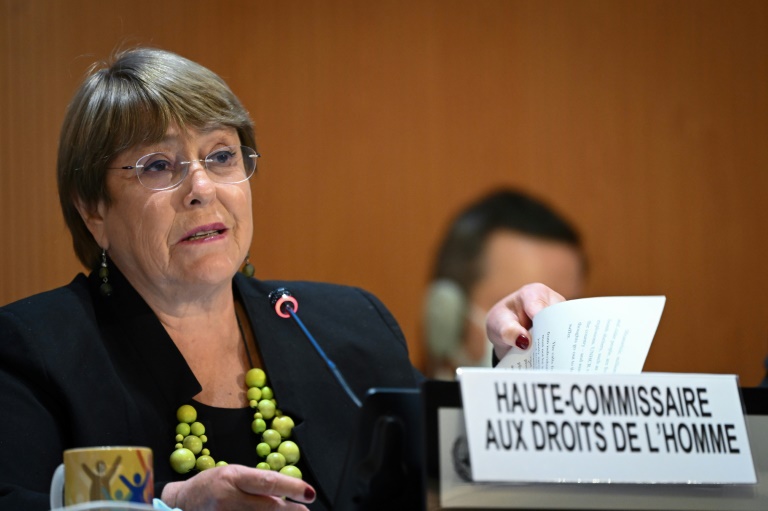
Uyghurs have urged UN human rights chief Michelle Bachelet to avoid falling victim to a public relations stunt as her trip to China enters a delicate new phase on Tuesday with a visit to the remote Xinjiang region.

The ruling Communist Party is accused of detaining over one million Uyghurs and other Muslim minorities in the far-western region as part of a years-long security crackdown the United States has labelled a “genocide”.

China vehemently denies the allegations, calling them the “lie of the century”.

Bachelet is expected to visit the Xinjiang cities Urumqi and Kashgar on Tuesday and Wednesday as part of a six-day tour.

“I hope she can also ask the Chinese government for the whereabouts of my mother,” said Jevlan Shirememet, adding that he had not been able to contact her in four years.

The Turkey-based 31-year-old — from the province’s northern reaches near the border with Kazakhstan — also said he hoped Bachelet would venture further than her itinerary.

“I don’t know why she can’t visit these places,” he told AFP.

Nursimangul Abdureshid — another Uyghur living in Turkey — was “not very hopeful that her trip can bring any change”.

“I request them to visit victims like my family members, not the pre-prepared scenes by the Chinese government,” she told AFP.

“If the UN team cannot have unlimited access in Xinjiang, I will not accept their so-called reports.”

– ‘Unfettered access’ –

Regional capital Urumqi — population four million — houses major government bodies believed to have orchestrated the province-wide campaign China described as a crackdown on religious extremism.

It is home to a sizeable Uyghur community and was the site of deadly ethnic clashes in 2009 as well as two terrorist attacks in 2014.

Meanwhile, Kashgar — home to 700,000 people — lies in the Uyghur heartland of southern Xinjiang.

An ancient Silk Road city, it has been a major target of Beijing’s crackdown, researchers and activists say, with authorities accused of smothering the cultural hub in a high-tech security blanket while bulldozing Uyghur homes and religious sites.

The outskirts of both cities are pockmarked with what are believed to be detention camps, part of a sprawling network of recently built facilities stretching across the remote province.

Campaigners have voiced concern that Chinese authorities will prevent Bachelet from conducting a thorough probe into alleged rights abuses and instead give her a stage-managed tour with limited access.

The US has said it is “deeply concerned” that she had not secured guarantees on what she will see, adding that she was unlikely to get an “unmanipulated” picture of China’s rights situation.

Speaking in Guangzhou where she met with Chinese Foreign Minister Wang Yi on Monday, Bachelet said she would be “discussing some very important issues and sensitive issues”. 

“I hope this will help us build confidence, and enable us to work together,” she added.

Bachelet also gave assurances on her access to detention centres and rights defenders during a Monday virtual meeting with the heads of dozens of diplomatic missions in China, according to diplomatic sources in Beijing.

Caroline Wilson, the UK’s Ambassador to China, was on the call and said she stressed “the importance of unfettered access to Xinjiang and private conversations with its people”.

“There is no excuse for preventing UN representatives from completing their investigations,” Wilson wrote on Twitter. 

Bachelet’s office has also said she will meet with civil society organisations, business representatives and academics.

In addition to mass detentions, Chinese authorities have waged a campaign of forced labour, coerced sterilisation and the destruction of Uyghur cultural heritage in Xinjiang, researchers and campaigners say.

Uyghurs overseas have staged rallies in recent weeks pressing Bachelet to visit relatives believed to be detained in Xinjiang.

Beaten-down US stocks rally as Lagarde comments lift euro

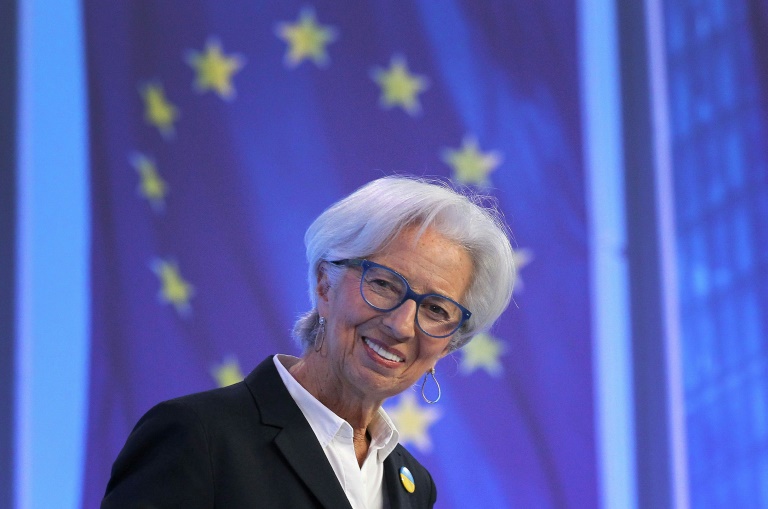
Beaten-down Wall Street stocks rallied Monday amid hopes that equities have bottomed, while the euro advanced after European Central Bank chief Christine Lagarde signaled the end of negative interest rates.

US stocks, which have spent much of 2022 in the red and have seen relatively few quietly benign sessions, spent almost the entire day in positive territory before finishing solidly higher.

“It’s a day where the market has finally been able to catch its breath, at least for now,” said Art Hogan, strategist at National Securities.

US stocks began with momentum following gains in Europe as President Joe Biden hinted at relief in trade tariffs.

Appearing in Tokyo for the launch of a new Asia-Pacific trade initiative, US President Joe Biden said he was considering removing some of the punitive import duties enacted by former president Donald Trump on China.

Biden also announced that 13 countries had joined a new, US-led Asia-Pacific trade initiative.

Adding to that positive, some market watchers pointed to technical factors that suggest stocks may have reached a short-term bottom, setting the stage for a rebound.

The S&P 500 finished up 1.9 percent at 3,973.75. The broad-based index briefly tumbled into a bear market on Friday, a drop of more than 20 percent from its peak.

“After seven straight weeks of declines, bargain hunters are out in force, snapping up stocks after they fell to fresh 18-month lows on Friday,” said Fiona Cincotta, senior financial markets analyst at City Index.

Meanwhile, the euro jumped more than one percent against the dollar after Lagarde said the central bank would probably draw a line under the era of negative interest rates by September owing to soaring eurozone inflation.

The ECB is “likely to be in a position to exit negative interest rates by the end of the third quarter,” Lagarde wrote in a blog post.

“That’s something that we were waiting for, so long,” noted Swissquote analyst Ipek Ozkardeskaya.

“Lagarde is finally showing that the (inflation) situation is serious in Europe as well,” she told AFP.

Central banks around the world are increasing interest rates to tackle the highest inflation in decades, but the ECB has so far refused to follow the likes of the Federal Reserve and Bank of England in hiking borrowing costs from record-low levels.

Eurozone inflation soared by an all-time high 7.5 percent in April.

The surge has been driven by soaring energy and food prices, as economies reopen from pandemic lockdowns and following Russia’s invasion of Ukraine.

– Key figures at around 2030 GMT –

New York – Dow: UP 2.0 percent at 31,880.24 (close)

New York – S&P 500: UP 1.9 percent at 3,973.75 (close)

New York – Nasdaq: UP 1.6 percent at 11,535.27 (close) 

London – FTSE 100: UP 1.7 percent at 7,513.44 (close) 

Frankfurt – DAX: UP 1.4 percent at 14,175.40 (close)

Paris – CAC 40: UP 1.2 percent at 6,358.74 (close)

EURO STOXX 50: UP 1.4 percent at 3,708.39 (close)

Tokyo – Nikkei 225: UP 1.0 percent at 27,001.52 (close)

Hong Kong – Hang Seng Index: DOWN 1.2 percent at 20,470.06 (close)

Shanghai – Composite: FLAT at 3,146.86 (close)

Euro/dollar: UP at $1.0692 from $1.0564 on Friday

Pound/dollar: UP at $1.2587 from $1.2480

Euro/pound: UP at 84.92 pence from 84.64 pence

Dollar/yen: UP at 127.90 yen from 127.88 yen 

Brent North Sea crude: UP 0.8 percent at $113.42 per barrel

West Texas Intermediate: FLAT at $110.29 per barrel

burs-jmb/bfm

US says seeking ways to include Cuba, Venezuela voices in summit

The United States said Monday it was looking for ways to represent the people of Cuba, Venezuela and Nicaragua in a summit next month following threats to boycott over their governments’ exclusion.

The United States is welcoming Latin American leaders to Los Angeles for the June 6-10 Summit of the Americas, part of President Joe Biden’s efforts to promote democracy and tackle migration and climate change.

US officials said that they reached out formally last week to other nations to attend and that further invitations could come.

“We are still evaluating options on how to best incorporate the voices of the Cuban, Venezuelan and Nicaraguan people into the summit process,” an administration official said.

The State Department has previously voiced confidence at “robust” participation in Los Angeles, without divulging the invitation list so far.

The top US official for Latin America, Brian Nichols, earlier said he did not expect invitations for officials from Cuba, Nicaragua and Venezuela as the governments do not respect the 2001 Inter-American Democratic Charter.

But Cuba was invited to summits in 2015 in Panama and 2018 in Peru. Since then, Biden has mostly kept in place a reversal by his predecessor Donald Trump of a US opening to the communist-run island.

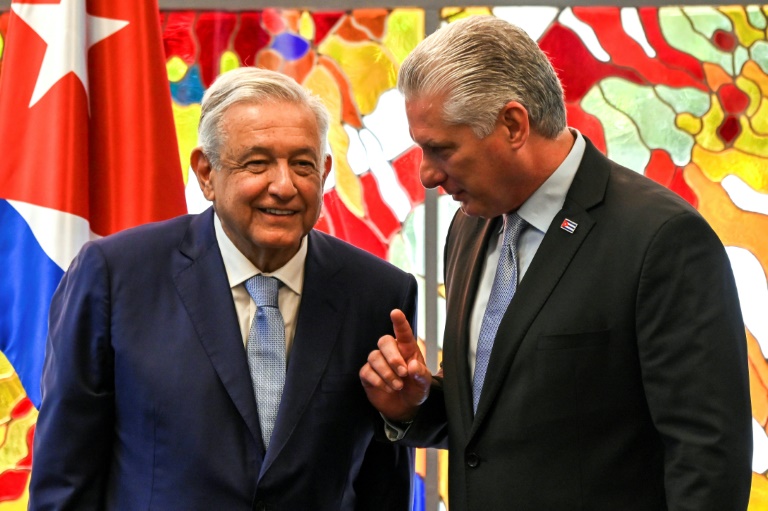
Mexican President Andres Manuel Lopez Obrador, a leftist, has threatened to boycott the summit if the United States does not invite all countries.

Since then, the leaders of Argentina, Bolivia, Honduras and the 14-nation bloc of Caribbean states have also put their participation in doubt, while Chile has joined calls for the widest possible participation.

Mexican Foreign Secretary Marcelo Ebrard said that Lopez Obrador raised the issue in virtual talks last week with former US senator Chris Dodd, who is serving as Biden’s special advisor on the summit.

“It was a pretty frank conversation,” Ebrard said.

He said the Mexican president made clear “there should be no exclusions” and that the region was set to “enter a new historical stage” of unity similar to the European Union.

Another question mark is whether Biden will invite Juan Guaido, the opposition leader whom Washington considers the legitimate interim president of Venezuela.

Climate change made S. Asia heatwave 30 times more likely

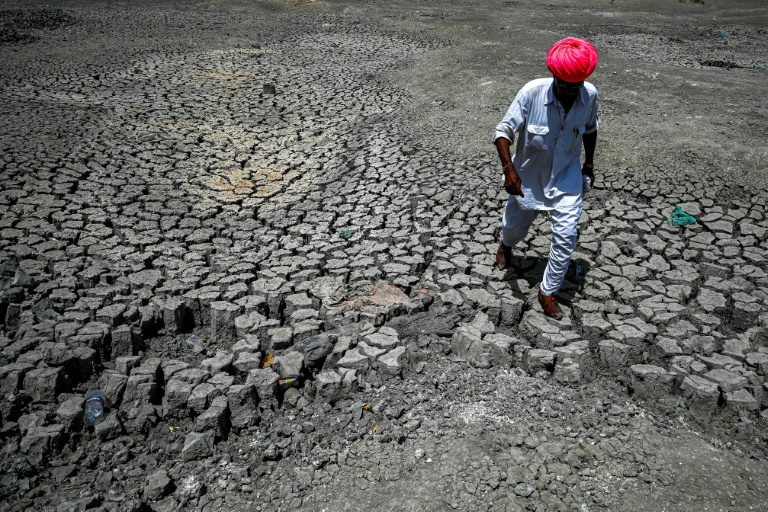
The punishing heatwave that scorched India and Pakistan in March and April was made 30 times more likely by climate change, experts in quantifying the impact of global warming on extreme weather events said in a rapid-response report Monday.

Before the onset of human-caused climate change, the chances of such an event occurring would have been roughly once every 3,000 years, senior author Friederike Otto, a scientist at Imperial College London’s Grantham Institute, told AFP.

Global warming to date of 1.2 degrees Celsius has shortened the so-called return period for extreme heat of similar duration and intensity in South Asia to once-a-century, she and colleagues in the World Weather Attribution (WWA) consortium found.

But as the planet continues to heat up, the interval between such killer heatwaves will shrink even further.

If Earth’s average surface temperature rises another four-fifths of a degree to 2C above preindustrial levels,  “a heatwave like this one would be expected as often as once every five years”, they concluded.

A 2C world is an unsettlingly plausible scenario: current national commitments to curb carbon pollution under the Paris Agreement would see global warming of 2.8C.

“Whether today’s most impactful heatwaves could have occurred in a pre-industrial climate is fast becoming an obsolete question,” said Otto. 

“The next frontier for attribution science is to inform adaptation decision-making in the face of unprecedented future heat,” she said by email. 

“This means the most important aspect of our study is what it says about a 2C world.”

The March-April period was the hottest on record for that time of year in Pakistan and India.

It will be months before the full toll of lives lost and economic damage can be calculated, including hospitalisations, lost wages, missed school days, and diminished working hours. 

More than 90 deaths have been directly attributed to the heatwave, but earlier hot spells over the last decade suggest that number will climb far higher, perhaps into the thousands.

One impact was immediate. 

The withering heat combined with 60 to 70 percent less rain than usual turned what promised to be a bumper wheat crop in India into an agricultural disaster.

– ‘Existential threat’ –

As a consequence, India last week blocked millions of tonnes earmarked for sale abroad, pushing up global prices already hit hard by war-torn Ukraine’s crippled wheat exports.

The unprecedented duration of the heatwave, which saw power outages as temperatures soared into the high 40s, suggests climate vulnerable countries are racing against the clock to prepare for a climate-addled future, the report said.

Already today, “the limits to adaptation are being breached for a large, poor population of the region,” cautioned Islamabad-based climate scientist and co-author Fahad Saeed. 

“One can imagine how bad it would be even for a 1.5C-warmer world,” he said, referring to the aspirational Paris treaty target for capping the rise in global temperatures.

Any warming beyond 1.5C, he added, would pose an “existential threat” for vulnerable populations without access to air conditioning or other ways to keep cool.

The new report — which calculated the average of daily maximum temperatures in March and April across a large swathe of northwestern India and southern Pakistan — may underestimate the frequency of such heatwaves, today and in the future, the authors noted.

Indeed, an assessment by Britain’s Met Office using somewhat different methods concludes that warming to date increased the likelihood of the India/Pakistan scorcher 100-fold.

Scientists have long predicted such impacts, but only recently has more data, better models and increased computing power made it possible to calculate to what extent is a particular weather disaster is made worse by global warming.

The WWA determined, for example, that the heatwave that gripped western North America last June — sending temperatures in Canada to a record 49.6C (121F) — would have been “virtually impossible” without human-induced climate change.

“As long as greenhouse gas emissions continue, events like these will become an increasingly common disaster,” said Otto.

Heatwaves, she noted, are today the deadliest of extreme weather events. 

UN human rights chief begins contentious China visit

The UN human rights chief met China’s top diplomat Monday as she began a six-day trip to the country that will include the remote Xinjiang region, stirring fears over access and the propaganda value the visit offers to the Chinese Communist Party.

The tour by Michelle Bachelet marks the first by the UN’s top rights official in nearly two decades and comes as Beijing stands accused of widespread abuses of Muslims in far-western Xinjiang.

The ruling Communist Party is alleged to have detained over one million Uyghurs and other Muslim minorities there under a years-long security crackdown the United States calls a “genocide”.

China vociferously denies the accusations, calling them “the lie of the century”.

“I look forward to the exchanges I will have with many different people during my visit. I will be discussing some very important issues and sensitive issues. I hope this will help us build confidence,” Bachelet said at a meeting with Chinese Foreign Minister Wang Yi in Guangzhou.

Bachelet conducted virtual meetings with the heads of around 70 diplomatic missions in China on Monday, according to diplomatic sources in Beijing, who said she gave assurances over her access to detention centres and rights defenders.

Later in the week, she is due to travel to the Xinjiang cities of Urumqi and Kashgar.

Welcoming Bachelet, foreign ministry spokesman Wang Wenbin said her trip was taking place in a “closed-loop” due to the pandemic and both sides agreed not to have reporters trail the visit.

She is expected to meet Chinese leaders and “have extensive exchanges with people from various sectors”, Wang said, without giving more details.

UN officials have been locked in negotiations with the Chinese government since 2018 in a bid to secure “unfettered, meaningful access” to Xinjiang.

But fears have swirled of a whitewash offering a tightly controlled glimpse into life in the region, which China says it has pacified with “re-education centres” and uplifted with an economic rejuvenation drive.

– Access or cover-up? –

The United States led criticism ahead of her trip, saying it was “deeply concerned” that Bachelet had failed to secure guarantees on what she can see.

“We have no expectation that the PRC will grant the necessary access required to conduct a complete, unmanipulated assessment of the human rights environment in Xinjiang,” State Department spokesman Ned Price told reporters, referring to the People’s Republic of China.

Instead of a thorough probe into alleged abuses, rights advocates also fear Bachelet is in store for a stage-managed tour.

Her visit will be “a running battle against Chinese government efforts to cover up the truth”, said Agnes Callamard, secretary general of Amnesty International.

“The UN must take steps to mitigate against this and resist being used to support blatant propaganda.”

The last such visit, in 2005, came when Beijing was keen to soften its global image as it prepared to host the 2008 Olympic Games — but much has changed since then.

President Xi Jinping has become the most authoritarian Chinese leader in a generation and is working on securing an unprecedented third term at the end of this year.

In addition to mass detentions, Chinese authorities have waged a campaign of forced labour, coerced sterilisation and the destruction of Uyghur cultural heritage in Xinjiang, researchers and campaigners say.

Chinese state media has given muted coverage of the visit so far.

But an article on Sunday by state news agency Xinhua lauded the country’s “remarkable achievements in respecting and protecting human rights”.

A more combative article on CGTN — the English-language arm of China’s state broadcaster — blasted what it called the West’s “false Xinjiang narrative” and questioned the basis of allegations.

Iraq sandstorm grounds flights, sends 1,000 to hospitals

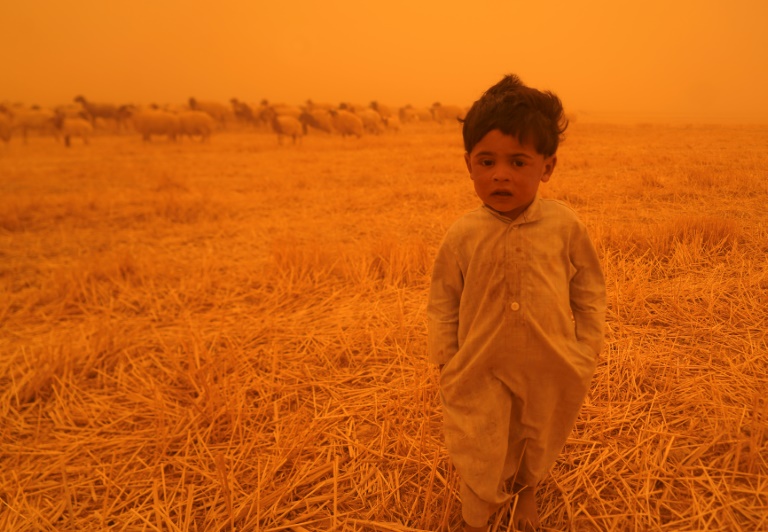
Iraq closed public buildings and temporarily shut airports Monday as another sandstorm — the ninth since mid-April — hit the country.

More than 1,000 people were hospitalised across the nation with respiratory problems, health ministry spokesman Seif al-Badr told AFP.

Flights were also grounded in neighbouring Kuwait for a second time this month, as the region grapples with the increasingly frequent weather phenomenon.

Later the same day, the second heavy sandstorm in less than a week descended on Saudi Arabia’s capital Riyadh, obscuring iconic buildings like the Kingdom Centre in a grey haze.

The Iraqi capital Baghdad was enveloped in a giant dust cloud that left usually traffic-choked streets largely deserted and bathed in an eery orange light, AFP correspondents said.

South of the capital, near the Shiite shrine city of Najaf, shepherds found themselves shrouded in sheets of ochre-coloured dust.

– ‘Violent sandstorms’ –

Iraqi Prime Minister Mustafa al-Kadhemi ordered all work to cease in state-run institutions, except for health and security services, citing “poor climatic conditions and the arrival of violent sandstorms”.

Air traffic was suspended at the international airports in Baghdad, Arbil and Najaf, before flights resumed in the capital and Arbil.

Later on Monday evening, Arbil’s airport closed again “due to thick dust”, according to the state news agency INA.

Iraq is ranked as one of the world’s five most vulnerable nations to climate change and desertification.

The environment ministry has warned that over the next two decades Iraq could endure an average of 272 days of sandstorms per year, rising to above 300 by 2050.

“These dust storms usually come in the summer, but not at the same rate as recently,” said Seif al-Hamza, a doctor at a Baghdad hospital, adding that cases of respiratory problems “have increased significantly compared to previous seasons”.

Iraq’s previous two sandstorms sent nearly 10,000 people to hospital with respiratory problems and killed one person.

– More trees needed –

The Middle East has always been battered by sandstorms, but they have become more frequent and intense in recent years.

The trend is associated with rising temperatures and water scarcity, the overuse and damming of rivers, as well as overgrazing and deforestation.

Oil-rich Iraq is known in Arabic as the land of the two rivers, the Tigris and Euphrates, where the ancient civilisations of Mesopotamia flourished.

Iraq’s environment ministry has said the increased sandstorms could be countered with more vegetation cover, including trees that act as windbreaks.

A major duststorm last week swept across the region, also reaching Iran and the United Arab Emirates.

In Dubai, the world’s tallest building was engulfed in a cloud of dust, while more than 1,200 people were hospitalised in Riyadh alone.

Saudi authorities warned Monday of persistent heavy sandstorm conditions until after nightfall in Riyadh and surrounding areas.

Experts predict the phenomenon will worsen as climate change warps regional weather patterns, further dries out and degrades soils and speeds up desertification across much of the Middle East.

Kyiv court convicts Russian of war crimes as Zelensky woos Davos

A Ukrainian court found a young Russian soldier guilty of war crimes Monday for killing a civilian and handed him a life sentence, in the first verdict of its kind since Russia’s invasion three months ago.

The judgement came as President Volodymyr Zelensky urged political and business elites at the World Economic Forum to end all trade with Russia and keep supplying his country with weapons.

Russian attacks have been pummelling eastern Ukraine for weeks, but all eyes Monday were on the capital Kyiv, in the landmark trial against 21-year-old Russian serviceman Vadim Shishimarin.

The sergeant from Siberia had admitted in court to killing a 62-year-old civilian, Oleksandr Shelipov, in the village of Chupakhivka in northeast Ukraine.

He claimed he shot Shelipov under pressure from another soldier as they tried to retreat and escape back into Russia in a stolen car on February 28.

Shishimarin apologised and asked Shelipov’s widow for forgiveness, adding: “I was nervous about what was going on. I didn’t want to kill.”

But prosecutors claimed he shot between three and four bullets with the intention of killing the civilian.

Judge Sergiy Agafonov announced the life sentence for war crimes against Shishimarin as the Russian looked on from the glass defence box.

– Davos appeal –

He was also found guilty of premeditated murder, which Agafonov said had been committed with direct intent.

Shishimarin’s lawyer Viktor Ovsyannikov said he would appeal the “most severe” verdict, adding that “you can feel societal pressure” on the decision.

The landmark ruling is expected to be followed by others. Ukraine has opened thousands of war crimes cases since Moscow’s invasion.

International institutions are also probing abuses allegedly committed by Russian forces in places such as Bucha and Mariupol, which have become emblematic of the destruction and suffering of the war.

At the World Economic Forum in Davos, from which Russians have been barred this year, Zelensky made a fresh appeal to Western gatherings and parliaments for them to maintain support for his country.

He revealed that 87 people had been killed in a Russian attack earlier this month on a military base in northern Ukraine, in what would be one of the largest single recorded strikes of the war.

Ukraine, he said via videolink, “is paying dearly for freedom and independence and for this struggle”. 

– Destroying territory –

Western countries have sent huge amounts of weapons and cash to Ukraine to help it repel Russia’s assault, and punished Moscow with unprecedented economic sanctions.

But Zelensky said tens of thousands of lives would have been saved if Kyiv had received “100 percent of our needs at once back in February”, when Russia invaded.

“This is why Ukraine needs all the weapons that we ask (for), not just the ones that have been provided,” said Zelensky.

Later Monday, US Secretary of Defense Lloyd Austin announced that 20 nations pledged arms, ammunition and other supplies to support Kyiv.

Others, he said, were offering training for Ukraine’s military.

Zelensky also called for an oil embargo on Russia, punitive measures against all its banks and the shunning of its IT sector, adding that all foreign companies should leave the country.

Numerous firms have already abandoned Russia, and US coffee giant Starbucks on Monday said it would close all its 130 cafes there, following a similar move by McDonald’s last week.

Western support has helped Ukraine in many areas hold off Russia forces which, after initially moving on Kyiv, are now focused on securing and expanding their gains in the eastern Donbas region and on Ukraine’s southern coast.

Ukraine’s defence ministry on Monday reported “active hostilities” as Russia advanced with artillery and aircraft towards the eastern city of Severodonetsk and said there was also heavy fighting towards nearby Bakhmut.

In Kherson, the first major city to fall, the local administration announced the introduction of the ruble as the official currency, alongside the Ukrainian hryvnia.

– Morning prayer –

More than six million people have fled Ukraine and eight million have been internally displaced since the war broke out, according to the United Nations.

For the civilians left behind near the front, prayer is often the only comfort left.

In Bakhmut, Maria Mayashlapak scanned the devastation of her home, where a missile imploded her kitchen and cratered her vegetable garden.

“I was reciting my morning prayer for God to keep me from getting hurt,” the 82-year-old recalled, as the family’s kitten mewed from somewhere in the rubble.

The impact of the war is also being felt far beyond Ukraine, particularly the impact of a Russian blockade that has left one of the world’s breadbaskets unable to export its grain.

“It’s savagery for one country to have food spoiling like this and for other people to be left poor and hungry,” said Dmitriy Matulyak, a farmer near the Black Sea port of Odessa.

UN Secretary-General Antonio Guterres warned last week that the war threatened food insecurity for “tens of millions of people”.

On Monday, the African Development Bank said it had approved a $1.5-billion emergency programme to alleviate the impact of worsening food insecurity, as the continent faces a shortage of at least 30 million metric tonnes of food.

burs-jj/imm

Pressure mounts on French disabilities minister accused of rape

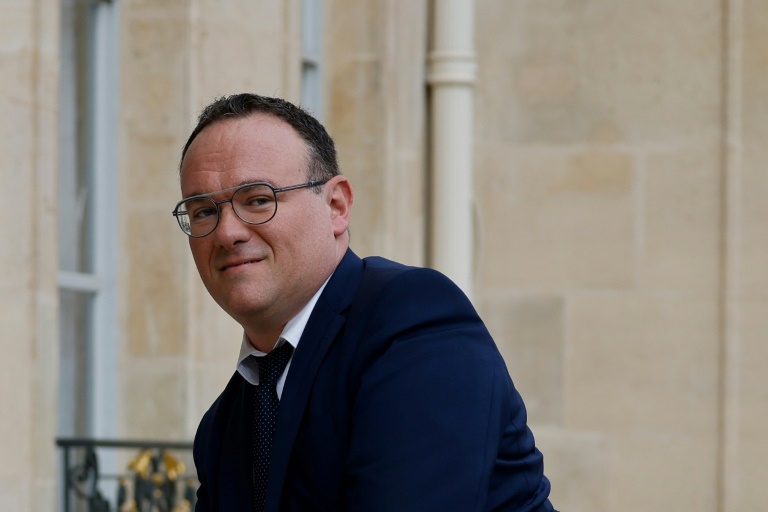
French President Emmanuel Macron’s newly appointed disabilities minister rejected accusations of rape against him Monday and said he would not be resigning.

“Should an innocent man resign? I don’t think so,” he told reporters in his constituency of Ain in eastern France on Monday.

“I contest the accusations against me with the greatest firmness… I have never raped a single woman in my life.” 

The controversy over Damien Abad is a major headache for Macron and his new Prime Minister Elisabeth Borne, as they try to maintain political momentum ahead of June parliamentary elections.

They also come after several politicians running for parliament stepped down in recent weeks over alleged violence against women.

Abad was responding to the weekend publication of rape allegations against him from more than a decade ago.

The appointment of Abad as minister for solidarities and people with disabilities in a reshuffle Friday was seen as a major coup for Macron, as the 42-year-old had defected from the right-wing opposition.

But the next day, the Mediapart news site reported that a politics watchdog group created by members of France’s #MeToo movement had informed prosecutors — and Macron’s LREM party — of rape claims against Abad by two women in 2010 and 2011.

– ‘Preferred to look away’ –

The government’s new spokeswoman Olivia Gregoire denied Monday that Macron and his government had been aware of the allegations when Abad was appointed.

One of the Abad’s accusers told Mediapart that in 2010 she had blacked out after accepting a glass of champagne and woke up in her underwear in pain with Abad in a hotel room. She believes she may have been drugged. 

She did not file an official complaint, but prosecutors are looking into the case following a report filed by the Observatory of Sexist and Sexual Violence in Politics.

The other woman, named only as Margaux, said her sexual encounter with Abad in 2011 began as consensual, but she accuses him of having then forced anal sex on her.

The report said she had informed the police in 2012 but had declined to make a formal complaint. Her subsequent claim in 2017 was dismissed by prosecutors.

“I’m relieved that it’s come out, because I knocked on quite a few doors so that someone would do something after the case was dismissed, as I thought it was unfair,” Margaux told AFP Sunday.

“A lot of people knew but some preferred to look away rather than ask more questions,” she added.

In an earlier statement denying the allegations, Abad said his own disability meant he was incapable of sexually assaulting anyone.

He has arthrogryposis, a rare condition that affects the joints, which he says means sexual relations can only occur with the help of a partner.

– ‘Immense courage’ –

The allegations overshadowed the new cabinet’s first meeting Monday, with Gregoire facing a string of questions on the case. 

“The government is with those who, following an assault or harassment, have the immense courage to speak out,” Gregoire told reporters. 

It is up to the judicial system to establish the truth, she added. To her knowledge, “no other procedure against Damien Abad is in the works”.

Opposition politicians called for his immediate resignation. 

“The very fact of repeatedly behaving inappropriately with women should disqualify you from a job,” said far-right leader Marine Le Pen, who lost to Macron in last month’s presidential election run-off.

Socialist Party leader Olivier Faure told France Inter radio that he would ask Abad not to be part of the government if he were prime minister. “I have no particular reason to believe the women are lying,” he said.

And Green politician Sandrine Rousseau told RTL radio: “We need to send a loud enough message to women, that their voices count.” 

Borne said Sunday there could be no impunity for harassment and sexual assault.

“If there is new information, if a new complaint is filed, we will draw all the consequences,” Borne said.

In 2020, Macron’s decision to appoint Gerald Darmanin as interior minister — although he was accused of rape, sexual harassment and abuse of power — drew heavy criticism, even sparking demonstrations. 

Darmanin, who kept his job in the reshuffle, has denied any wrongdoing and prosecutors in January asked for the case to be dropped.

US says 20 countries offer new arms packages for Ukraine

Some 20 countries offered new security assistance packages for Ukraine to battle invading Russian forces in a meeting of allies on Monday, US Secretary of Defense Lloyd Austin announced.

In their second gathering, nearly four dozen countries and organizations forming the Ukraine Defense Contact Group met online to discuss helping Ukraine, and 20 nations pledged arms, ammunition and other supplies to support Kyiv.

The group was briefed by Ukraine Defense Minister Oleksiy Reznikov on the current situation of the three-month-old war, in which the two sides are fighting along a long front line over territory Russia has seized in Ukraine’s east and south.

“Today, together with Minister Reznikov and his team, we’ve gained a sharper and shared sense of Ukraine’s priority requirements and the situation on the battlefield,” Austin said.

“Many countries are donating critically needed artillery ammunition, coastal defence systems and tanks and other armoured vehicles,” he said.

Others, he said, are offering training for Ukraine’s military.

He said that Denmark committed to send Ukraine Harpoon anti-ship missile systems, and the Czech Republic was offering attack helicopters, tanks and rocket systems.

But Austin would not provide details of what is included in a new $40 billion US assistance package for Ukraine, amid speculation that it could include high-precision, long-distance rockets that could be used to hit Russian territory.

Since the first meeting of the group at a US base in Germany four weeks ago, Austin said, “the momentum of donations and deliveries has been outstanding.”

He said Ukraine’s needs have not changed much since the previous meeting, that the war continues to be driven by artillery, supported by tanks, drones, and other equipment.

“The fight is really shaped by artillery in this phase, and we’ve seen serious exchanges of artillery fires over the last several weeks,” Austin said.

“Everyone here understands the stakes of this war and they stretch far beyond Europe.

“Russia’s aggression is an affront to the rules-based international order,” he said.

He added the Ukraine Defense Contact Group would meet next in person on June 15 during the NATO ministerial meeting in Brussels.

Close Bitnami banner
Bitnami