World

Six dead, dozens injured in Iran tower-block collapse

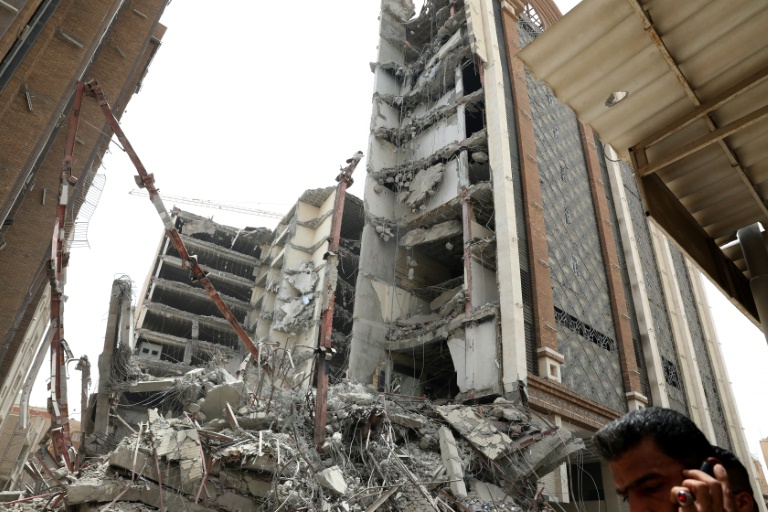
At least six people died and dozens were injured or missing under rubble after an unfinished high-rise building collapsed in southwestern Iran, officials said.

Choking white dust swirled from where the tower-block had stood, covering surrounding vehicles, as shocked onlookers stared at the wreckage in horror, some screaming.

“Parts of the 10-storey Metropol building, located in Abadan in Khuzestan province, collapsed,” state television said. “Six people lost their lives and 27 others were injured in the disaster.”

Rescuers clambered over huge slabs of shattered concrete and tangles of twisted metal bars.

The Iranian Red Crescent, in an initial report, said that as many as 80 people could be trapped under the rubble, but hours after the collapse, rescuers lowered the missing to “tens” of people. 

Sniffer dogs were being used to search for them.

“Today is a day of mourning for poor Abadan,” residents shouted in a video posted on social media.

– Cars squashed flat – 

Rescuers were seen on television rushing out some of the wounded who had been pulled from the wreckage on stretchers.

Several cars were crushed by blocks of falling debris — some apparently with their occupants still inside, according to images.

A crane began work to try to clear some of the debris, including picking up a car squashed flat by the falling tonnes of concrete.

Authorities have not provided further details about the victims.

“About 40 percent of the building has been destroyed, and (the rest) is in danger of completely collapsing,” city governor Ehsan Abbaspour said on television, ordering the evacuation of neighbouring buildings.

The rest of the building still standing, with floors sagging, towered over the pile of debris.

– Shattered concrete –

State television broadcast live images of the tragedy, showing several teams of firefighters clearing twisted metal.

The building is located on Abadan’s busiest street where “commercial, medical and office” buildings predominate, according to state television. 

President Ebrahim Raisi, on a visit Oman, ordered the fire brigade to “immediately deploy rescue forces and equipment necessary for the removal of debris” in Abadan, the official IRNA news agency reported.

The cause of the collapse was under investigation, and the owner of the tower-block and the building contractor have been arrested, city prosecutor Hamid Maranipour said.

Abadan, a city of some 230,000 people, lies 660 kilometres (410 miles) southwest of the capital Tehran.

In January 2017, 22 people died — including 16 firefighters — after fire engulfed the Plasco building, a 15-story shopping centre and the oldest high-rise in Iran’s capital.

Mbappe says he consulted Macron over PSG deal

Kylian Mbappe made the startling revelation Monday that he had talked over his potential transfer to Real Madrid with Emmanuel Macron, saying he appreciated the “good advice” of the French president, who wanted the Paris Saint-Germain star to stay in France.

World Cup winner Mbappe had for months seemed certain to sign for Real Madrid before being persuaded to sign a new three-year deal at PSG, the club he joined in 2017.

“We talked quite a bit,” Mbappe said of his exchanges with Macron. “You can say that it was good advice.

“He wanted me to stay, that’s part of the negotiations.”

Mbappe said that Macron was one of a number of different people to whom he had talked.

“It’s then that you see that football has changed and has an important place in society. It’s important to also know how to stay in one’s place despite the importance that can be given to me in the country.”

With that in mind, Mbappe also revealed that PSG would not block him from playing in the 2024 Paris Olympics.

The Paris-born Mbappe was raised in the northeastern Parisian surburb of Bondy, part of the Seine-Saint-Denis department that is home to not only the Stade de France, but also several other Olympic sites including the Olympic Village.

There is no doubt that the potential participation of a star-quality, home-grown talent in the Summer Games would be a massive boost for organisers.

“First of all I have to be picked,” Mbappe said of the possibility of taking part in Paris 2024. “We talked about it with the club.

“The club are not against it, they are for it. There weren’t any problems with regard to that in negotiations.”

– No say on transfers –

There has been speculation that as well as a gigantic, undisclosed financial package, PSG’s Qatari owners had persuaded Mbappe to remain with his hometown club by agreeing to give the 23-year-old forward some say in which players to sign for next season.

Mbappe however denied any such agreement had been made.

“I remain a footballer, who is part of a team, and I will not go beyond this role. I won’t go beyond my role as a player,” he said at a press conference seated alongside PSG president Nasser Al-Khelaifi.

“Everyone knows that last year, I wanted to leave and I was convinced that it was the best choice, but the years go by and things change. 

“I am French and there is this sentimental side to leaving my country which would have been difficult. 

“The project has changed, my club wants to build a new sporting ambition and I think there are other great stories to write here, that’s what matters.”

Hours after Mbappe announced on Saturday that he was staying at the club came the news that PSG’s powerful sporting director Leonardo — heavily criticised by supporters — had been sacked.

Al-Khelaifi said Mbappe’s decision to stay at the French champions sent “a very strong sign”.

“We are keeping the best player in the world,” the president said.

“This is a great day for Paris Saint-Germain, for our supporters in France and in the whole world — Kylian is staying at PSG for the next three seasons and that is important for us and for Ligue 1.”

UN human rights chief begins contentious China visit

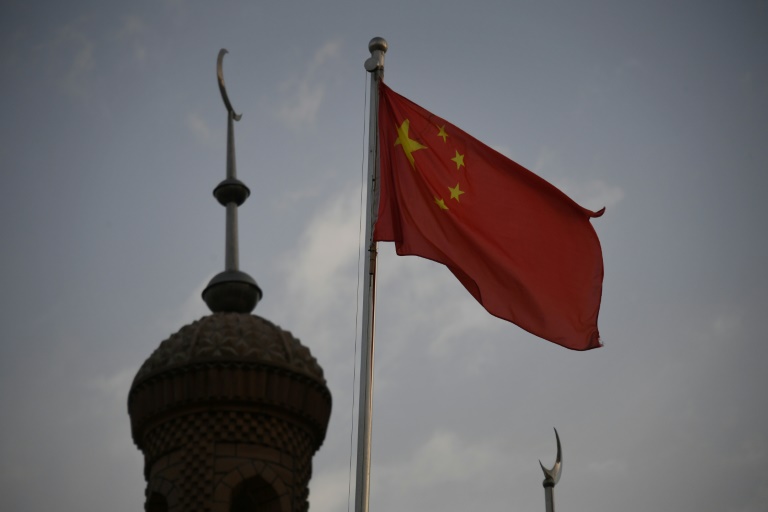
The UN human rights chief began a six-day trip to China on Monday that will include the remote Xinjiang region, stirring fears over access and the propaganda value the visit offers to the Chinese Communist Party.

The tour by Michelle Bachelet marks the first by the UN’s top rights official in nearly two decades and comes as Beijing stands accused of widespread abuses of Muslims in far-western Xinjiang.

The ruling Communist Party is alleged to have detained over one million Uyghurs and other Muslim minorities there under a years-long security crackdown the United States calls a “genocide”.

China vociferously denies the accusations, calling them “the lie of the century”.

“I look forward to the exchanges I will have with many different people during my visit. I will be discussing some very important issues and sensitive issues. I hope this will help us build confidence,” Bachelet said at a meeting with Chinese Foreign Minister Wang Yi in Guangzhou.

Bachelet conducted virtual meetings with the heads of around 70 diplomatic missions in China on Monday, according to diplomatic sources in Beijing, who said she gave assurances over her access to detention centres and rights defenders.

Later in the week, she is due to travel to the Xinjiang cities of Urumqi and Kashgar as well as the southern city of Guangzhou.

Welcoming Bachelet, foreign ministry spokesman Wang Wenbin said her trip takes place in a “closed-loop” due to the pandemic and both sides agreed not to have reporters trail the visit.

She is expected to meet Chinese leaders and “have extensive exchanges with people from various sectors,” Wang said, without giving more details.

UN officials have been locked in negotiations with the Chinese government since 2018 in a bid to secure “unfettered, meaningful access” to Xinjiang.

But fears have swirled of a whitewash offering a tightly-controlled glimpse into life in the region, which China says it has pacified with “re-education centres” and uplifted with an economic rejuvenation drive.

– Access or cover-up? –

The United States led criticism ahead of her trip, saying it was “deeply concerned” that Bachelet had failed to secure guarantees on what she can see.

“We have no expectation that the PRC will grant the necessary access required to conduct a complete, unmanipulated assessment of the human rights environment in Xinjiang,” State Department spokesman Ned Price told reporters, referring to the People’s Republic of China.

Instead of a thorough probe into alleged abuses, rights advocates also fear Bachelet is in store for a stage-managed tour.

Her visit will be “a running battle against Chinese government efforts to cover up the truth,” said Agnes Callamard, secretary general of Amnesty International.

“The UN must take steps to mitigate against this and resist being used to support blatant propaganda.”

The last such visit, in 2005, came when Beijing was keen to soften its global image as it prepared to host the 2008 Olympic Games — but much has changed since then.

President Xi Jinping has become the most authoritarian Chinese leader in a generation and is working on securing an unprecedented third term at the end of this year.

In addition to mass detentions, Chinese authorities have waged a campaign of forced labour, coerced sterilisation and the destruction of Uyghur cultural heritage in Xinjiang, researchers and campaigners say.

Chinese state media has given muted coverage of the visit so far.

But an article on Sunday by state news agency Xinhua lauded the country’s “remarkable achievements in respecting and protecting human rights”.

A more combative article on CGTN — the English-language arm of China’s state broadcaster — blasted what it called the West’s “false Xinjiang narrative” and questioned the basis of allegations.

Didi shareholders vote to delist from New York stock exchange

Shareholders of Chinese ride-hailing giant Didi Global voted Monday to delist the company in New York, the firm said in a statement, nearly one year since it was hit by a sweeping tech clampdown.

Didi, once known as China’s answer to Uber, got into hot water after ploughing ahead with an initial public offering in the United States in June 2021, reportedly against the wishes of regulators in Beijing.

Days after Didi raised $4.4 billion in its initial public offering, Chinese authorities launched cybersecurity investigations into the company, sending shares plunging. Its service was ordered off Chinese app stores soon after.

Monday’s decision came after an extraordinary general meeting in Beijing, where shareholders voted to “delist the company’s American Depositary Shares from the New York Stock Exchange as soon as practicable,” Didi said in a statement on Monday.

The resolution also stated that Didi’s shares “will not be listed on any other stock exchange before the delisting is completed,” so as to “better cooperate” with authorities’ cybersecurity review and rectification measures.

The statement did not offer any details as to why Didi was backtracking from its decision to raise funds in the United States.

The move is expected to pave the way for a Hong Kong listing, which was reportedly put on hold after China’s top internet watchdog told executives their proposals to prevent security and data leaks were insufficient.

Didi has dominated the Chinese ride-hailing market since winning a costly turf war against US titan Uber in 2016.

Its app claims to have more than 15 million drivers and nearly 500 million users.

Several US-listed China tech companies — including Alibaba — have held initial public offerings in Hong Kong in recent years as the United States stepped up scrutiny of Chinese firms.

Kim Jong Un carries coffin at N. Korean military officer's funeral

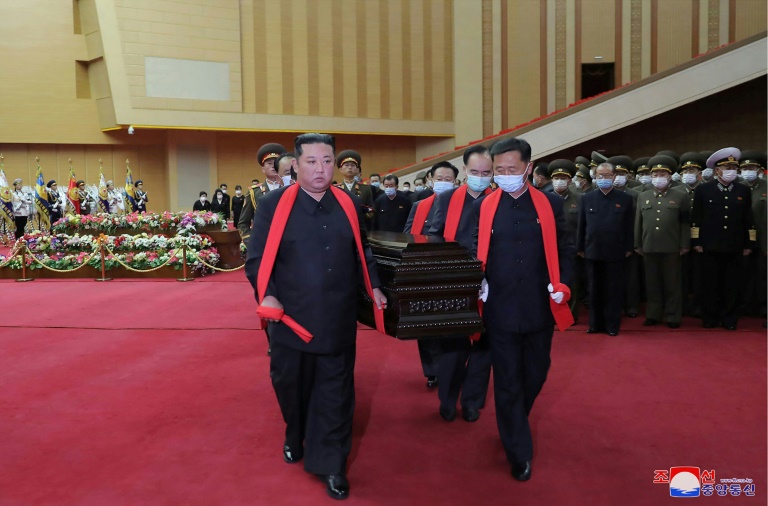
A maskless Kim Jong Un was one of the pallbearers at the state funeral for a top military officer, North Korean state media reported Monday, days after Pyongyang claimed the country’s Covid-19 outbreak was now under control.

Kim on Sunday attended the funeral of Hyon Chol Hae, a Korean People’s Army marshal who reportedly mentored the North Korean leader to take over from his father Kim Jong Il.

The official Korean Central News Agency (KCNA) released photos of Kim, not wearing a face mask, hoisting up Hyon’s casket along with other regime officials, who were masked.

Hyon died of multiple organ failure at the age of 87, according to KCNA.

The North Korean leader has put himself front and centre of his country’s Covid response, blaming lazy state officials for worsening the Omicron variant-fuelled outbreak. 

Over the weekend, KCNA said the epidemic was now “being stably controlled”, and reported the death toll “sharply decreased day by day”.

Experts question the official claim and tally, given that the impoverished country has one of the world’s worst healthcare systems and no Covid-19 drugs or mass testing ability.

It has not vaccinated any of its roughly 25 million people, having rejected jabs offered by the World Health Organization.

North Korea announced its first coronavirus case on May 12, despite a two-year blockade maintained since the start of the pandemic.

Pyongyang reported 167,650 “fever” cases on Monday via KCNA, a notable drop from the peak of around 390,000 reported about a week before.

It reported one more death and claimed the fatality rate for the “fever” was 0.002 percent. 

State media reports do not specify how many of the cases and deaths have tested positive for the coronavirus.

Pyongyang has so far not responded to an offer of help from Seoul, according to South Korea’s unification ministry.

During his visit to Seoul at the weekend, US President Joe Biden said Washington had also offered Covid-19 vaccines to Pyongyang but “got no response”.

Despite the virus outbreak, new satellite imagery has indicated North Korea has resumed construction at a long-dormant nuclear reactor.

The United States and South Korea have both warned that Kim is poised to conduct another nuclear test, which would be the country’s seventh.

Sole survivor relives terror of Yemenia Airways crash at French trial

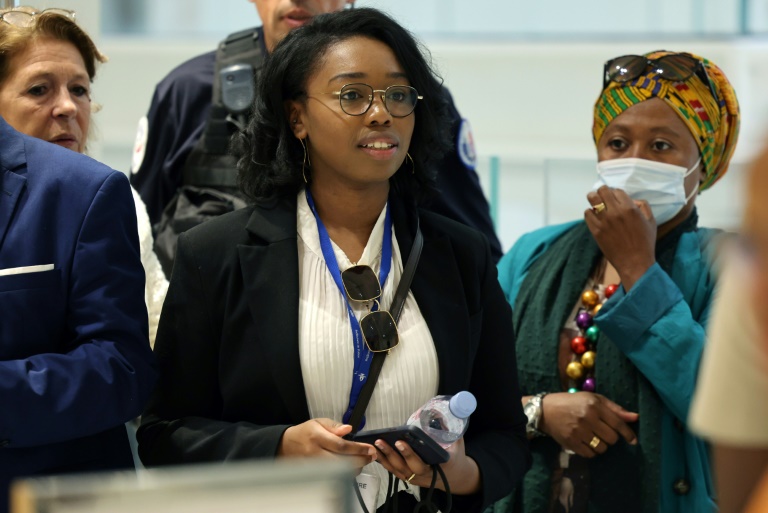
A woman who was just 12 when she survived the 2009 Yemenia Airways crash in the Comoros islands that killed all 152 others onboard described Monday the terrifying moments leading up to her plunge into the ocean and subsequent miraculous rescue, in the French trial against the airline.

Bahia Bakari, now 25, has sat through several hearings with her father but had not testified or spoken to journalists attending the trial that opened this month.

“I didn’t see how I was going to get through this,” Bakari told the court of her hours spent in the water holding on to a piece of debris, with “the taste of jet fuel” in her mouth.

Bakari and her mother left Paris on June 29, 2009, for her grandfather’s wedding in the Comoros, changing planes in the Yemeni capital of Sanaa for the final leg of the trip.

“It was a smaller plane, there were flies inside and it smelled strongly like a bathroom,” she said, but “the flight went normally” — until the beginning of the landing descent.

During the night-time approach of Yemenia Flight 626 to Moroni, the capital of the Comoros islands that lie between Mozambique and Madagascar, the Airbus A310 jet plunged into the Indian Ocean with its engines running at full throttle.

“I started to feel the turbulence, but nobody was reacting much, so I told myself it must be normal,” Bakari said as over 100 family members or friends of the victims listened in silence.

Suddenly “I felt something like an electric shock go through my body”, she told the court.

– ‘Couldn’t see anyone’ –

“There’s a black hole between the moment when I was seated in the plane and the moment I found myself in the water.”

France’s overseas territory of Mayotte is part of the Comoros archipelago, and 66 French citizens were among the 142 passengers and 11 crew members aboard.

Investigators and experts found there was nothing wrong with the aircraft, blaming instead “inappropriate actions by the crew during the approach to Moroni airport, leading to them losing control”.

No one from Yemenia Airlines has appeared at the trial, where prosecutors have accused the company of pilot training programmes “riddled with gaps” and of continuing to fly to Moroni at night despite its non-functioning landing lights.

Yemenia is charged with involuntary homicide and injuries. The company’s lawyers have denied any wrongdoing.

Bakari, regaining consciousness in choppy waters, recalled waiting for hours in the water, trying to climb atop the largest piece of debris she could reach, but without the strength to succeed.

“I realised that voices were calling for help in Comorian, and I cried out a bit but without much hope, because there’s was nothing but water around me and I couldn’t see anyone,” she said.

“I ended up falling asleep while holding onto the plane debris,” and while she could see the coast when she woke up, “the water was really choppy.”

– ‘Hardest thing’ –

It was thinking of her “incredibly protective” mother that helped her to hold on until she was rescued by a boat after a dozen hours in the water.

Initially she was convinced “that I was the only one who fell” and that the other passengers had arrived safely, before a psychologist at the hospital told her she was the only survivor.

“The hardest thing for me has been dealing with the grief for my mother, I was very close to her,” Bakari said, her voice breaking and tears flowing for the first time during her testimony. 

The Yemeni national airline, whose representatives said they could not attend the trial amid the long-running civil war in their country, faces a maximum fine of 225,000 euros ($240,000).

“It’s really a shame. Even if the current management wasn’t in charge at the time, it’s still their company. And I and these families would have liked them to listen to us,” Bakari told reporters after leaving the courtroom.

“Because often we talk about the little girl who survived, but this was first and foremost a tragedy.”

Pfizer Covid vaccine for under-fives effective with three doses

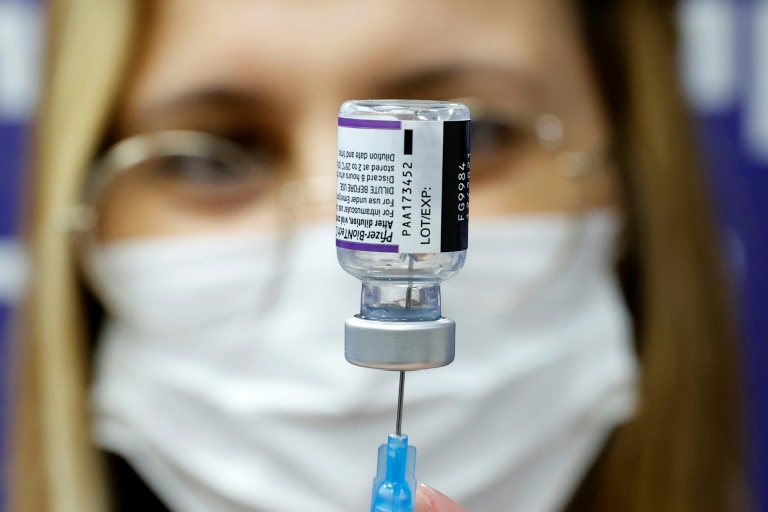
The Pfizer-BioNTech Covid vaccine is safe and effective when given as three doses to children under five years, the companies said Monday, welcome news for parents of the only age group not yet eligible for immunization in most countries.

The announcement comes as the US Food and Drug Administration (FDA) is planning highly-anticipated meetings in the coming weeks to weigh authorization. 

In a clinical trial, Pfizer-BioNTech evaluated three doses, given at three micrograms, and found the vaccine evoked a strong immune response in children aged from six months through four years.

Side effects were similar in the vaccine and placebo groups.

Vaccine efficacy was 80.3 percent, according to a preliminary estimate — though this was based on very low numbers and may change significantly by the time of the final estimate.

“We are pleased that our formulation for the youngest children, which we carefully selected to be one-tenth of the dose strength for adults, was well tolerated and produced a strong immune response,” said Pfizer CEO Albert Bourla in a statement.

“We look forward to soon completing our submissions to regulators globally with the hope of making this vaccine available to younger children as quickly as possible, subject to regulatory authorization,” he added.

The FDA has tentatively scheduled three dates in June where experts will meet and likely decide whether to authorize the Pfizer Covid vaccine for under-fives and the Moderna vaccine for under-sixes, which is given as two shots of 25 micrograms.

The agency was originally set to evaluate the Pfizer vaccine given as two doses in February, but data showed it did not provoke a strong enough immune response in children aged two to four. The FDA then asked to see data for a third shot.

– Results welcomed –

In the latest study, 1,678 children received a third dose at a time when Omicron was the predominant variant.

An analysis of a subset of participants showed antibody levels were similar to 16- to 25-year-olds who were given the full strength vaccine at two doses.

No new adverse events were identified, and the majority of side effects were mild or moderate.

Three doses of the vaccine “appear to be very safe and highly effective in preventing not only severe disease, hospitalization, and death from Covid, but even symptomatic Covid at a time when Omicron was the dominant variant,” Celine Gounder, editor-at-large for public health at Kaiser Health News told AFP.

“However, we know that protection against SARS-CoV-2 infection and milder symptomatic disease wanes over time,” added Gounder, an infectious disease specialist and epidemiologist.

“Pfizer is reporting follow-up data only out to seven days after the third dose of vaccine. It’s too early to say how the three-dose series would perform out to several months or a year.”

Jeremy Faust, of Brigham and Women’s Hospital Department of Emergency Medicine, told AFP: “My first impression is very positive. These numbers are exactly the kinds of signals we wanted to see.”

“I wish the two-dose series had worked for Pfizer-BioNTech. It didn’t. But the three-dose series appears to have given these very young children the protection we want them to have,” the doctor added. 

If and when both Pfizer’s and Moderna’s vaccines are authorized, parents will have to consider whether they want their children to receive Moderna’s two dose vaccine — which will offer faster protection — or Pfizer’s three doses — which will take longer to be effective but may ultimately be more protective.

As with adults, the first two doses of Pfizer’s vaccine are given to under-fives three weeks apart, but then the third is given two months after the second. 

Severe disease from Covid is very rare among under-fives but can occur, with 477 US deaths in this age group since the start of the pandemic, or about 0.1 percent of all deaths.

Children can also contract a rare post-viral condition called multisystem inflammatory syndrome in children (MIS-C), which has affected some 8,210 US children and killed 68. 

Like adults, some children who get Covid may go on to develop long Covid, with new, ongoing or returning symptoms, including brain fog and fatigue.

Four million people hit by floods in Bangladesh: UN

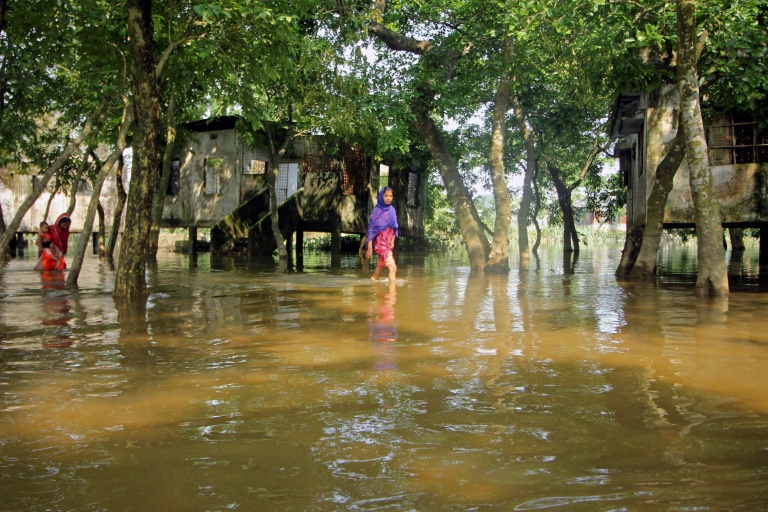
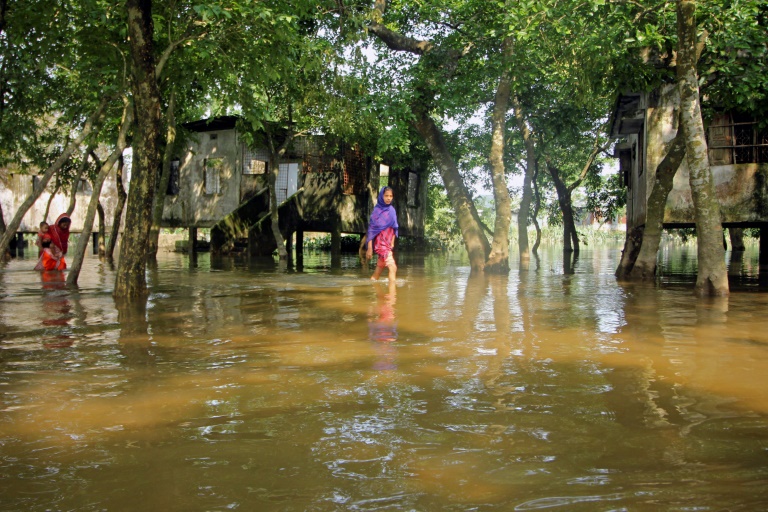
At least four million people have been affected by the worst floods in Bangladesh’s northeast for nearly two decades, the United Nations said Monday.

The Bangladeshi government said the floods, which began last week, had submerged 70 percent of Sylhet district in the northeast and 60 percent of Sunamganj district, leaving at least 10 people dead and about two million marooned.

Heavy rains and a rush of water from upstream in India’s northeast swelled rivers in Bangladesh, with two main border rivers, the Surma and Kushiara, breaching a major embankment and inundating hundreds of villages.

Arifuzzaman Bhuiyan, the head of the state-run Flood Forecasting and Warning Centre, said the two rivers hit their highest levels since records began in the 1970s. 

“It is one of the worst floods in the history of the country’s northeast,” he said. “The water level in the two rivers hit some 1.75 metres (5.7 feet) above their danger level at the height of the floods last week.”

The United Nations Children Fund put the extent of the damage even higher with “over four million people” in five districts in the country’s northeast affected by the floods.  

“The damage to lives, homes and schools is heartbreaking. In this disaster, as in most others, children are the most vulnerable,” said Sheldon Yett, UNICEF Representative to Bangladesh. 

Bangladesh has shut all schools and colleges in the region. 

At least 350 schools have been turned into shelters with more than 8,500 flood-hit people seeking refuge in them, along with their cattle and goats.

But Netai De Sarker, a senior disaster management official, said the flood situation had improved, with water receding from the northern areas, although 1.23 million people were still stranded as of Monday. 

He said the government has sent 140 medical teams to treat flood-affected people and to help prevent any outbreak of water-borne diseases.

Floods are a regular menace to millions of people in low-lying Bangladesh and neighbouring northeast India, but many experts say that climate change is increasing their frequency, ferocity and unpredictability.

Four million people hit by floods in Bangladesh: UN

At least four million people have been affected by the worst floods in Bangladesh’s northeast for nearly two decades, the United Nations said Monday.

The Bangladeshi government said the floods, which began last week, had submerged 70 percent of Sylhet district in the northeast and 60 percent of Sunamganj district, leaving at least 10 people dead and about two million marooned.

Heavy rains and a rush of water from upstream in India’s northeast swelled rivers in Bangladesh, with two main border rivers, the Surma and Kushiara, breaching a major embankment and inundating hundreds of villages.

Arifuzzaman Bhuiyan, the head of the state-run Flood Forecasting and Warning Centre, said the two rivers hit their highest levels since records began in the 1970s. 

“It is one of the worst floods in the history of the country’s northeast,” he said. “The water level in the two rivers hit some 1.75 metres (5.7 feet) above their danger level at the height of the floods last week.”

The United Nations Children Fund put the extent of the damage even higher with “over four million people” in five districts in the country’s northeast affected by the floods.  

“The damage to lives, homes and schools is heartbreaking. In this disaster, as in most others, children are the most vulnerable,” said Sheldon Yett, UNICEF Representative to Bangladesh. 

Bangladesh has shut all schools and colleges in the region. 

At least 350 schools have been turned into shelters with more than 8,500 flood-hit people seeking refuge in them, along with their cattle and goats.

But Netai De Sarker, a senior disaster management official, said the flood situation had improved, with water receding from the northern areas, although 1.23 million people were still stranded as of Monday. 

He said the government has sent 140 medical teams to treat flood-affected people and to help prevent any outbreak of water-borne diseases.

Floods are a regular menace to millions of people in low-lying Bangladesh and neighbouring northeast India, but many experts say that climate change is increasing their frequency, ferocity and unpredictability.

Euro rallies as ECB signals end to negative rates

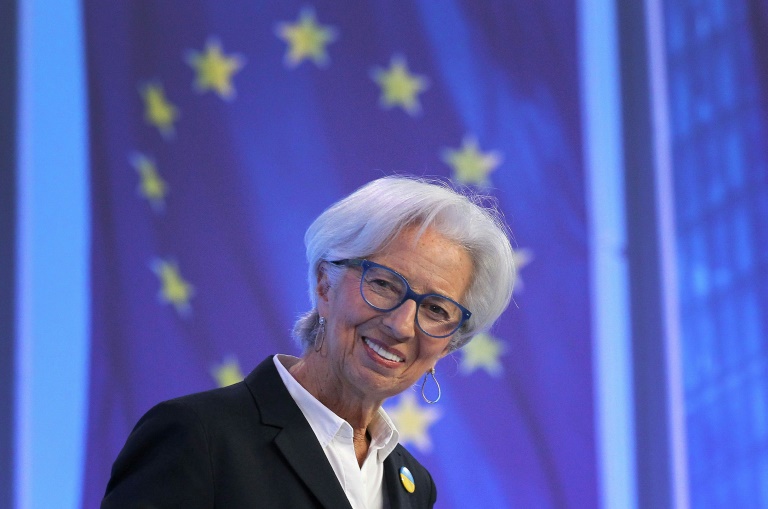
The euro jumped one percent versus the dollar Monday after European Central Bank chief Christine Lagarde signalled the end of negative interest rates.

The euro struck a one-month high at $1.0688 after Lagarde said the central bank would probably draw a line under the era of negative interest rates by September owing to soaring eurozone inflation.

“That’s something that we were waiting for, for so long,” noted Swissquote analyst Ipek Ozkardeskaya.

“Lagarde is finally showing that the (inflation) situation is serious in Europe as well,” she told AFP.

Central banks around the world are increasing interest rates to tackle the highest inflation in decades but so far, the ECB has refused to follow the likes of the Federal Reserve and Bank of England in hiking borrowing costs from record-low levels.

Eurozone inflation soared by an all-time high 7.5 percent in April. 

The surge has been driven by soaring energy and food prices, as economies reopen from pandemic lockdowns and following Russia’s invasion of Ukraine.

Investors will be looking to the release on Wednesday of minutes from the last Federal Reserve meeting for clues on the pace of future interest rate hikes by the US central bank.

Oil prices jumped more than one percent Monday before turning lower.

Elsewhere, stock markets mostly climbed after US President Joe Biden said he was considering lifting some trade tariffs imposed on China by predecessor Donald Trump.

Tariffs on hundreds of billions of dollars of Chinese imports are due to expire in July, and Biden has faced growing calls to get rid of the punitive duties to help combat the highest US inflation in more than four decades.

Biden’s comments Monday came during a visit to Tokyo.

The president added that while a US recession was not inevitable, he acknowledged the economic pain felt by American consumers over soaring inflation.

Ending the tariffs could help cut roaring US inflation by making imports cheaper.

Biden also announced that 13 countries had joined a new, US-led Asia-Pacific trade initiative.

– Key figures at around 1330 GMT –

Euro/dollar: UP at $1.0654 from $1.0564

Pound/dollar: UP at $1.2561 from $1.2497

Euro/pound: UP at 84.79 pence from 84.50 pence

Dollar/yen: DOWN at 127.71 yen from 127.86 yen on Friday

London – FTSE 100: UP 1.2 percent at 7,478.11 points

Frankfurt – DAX: UP 0.7 percent at 14,074.94

Paris – CAC 40: UP less than 0.1 percent at 6,286.99

EURO STOXX 50: UP 0.6 percent at 3,585.50

New York – Dow: UP 0.9 percent at 31,535.75

Tokyo – Nikkei 225: UP 1.0 percent at 27,001.52 (close)

Hong Kong – Hang Seng Index: DOWN 1.2 percent at 20,470.06 (close)

Shanghai – Composite: FLAT at 3,146.86 (close)

Brent North Sea crude: DOWN 0.2 percent at $112.32 per barrel

West Texas Intermediate: DOWN 0.3 percent at $109.96 per barrel

burs-rl/jj

Close Bitnami banner
Bitnami