World

Iraq sandstorm grounds flights, sends 1,000 to hospitals

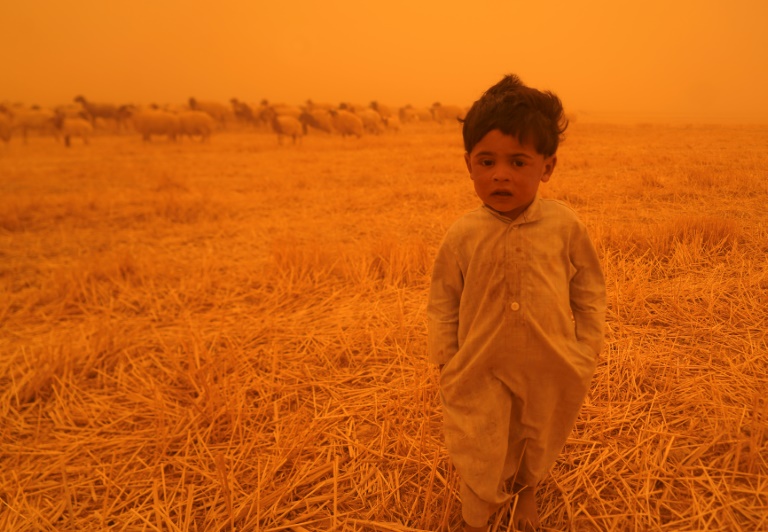
Iraq closed public buildings and temporarily shut airports Monday as another sandstorm — the ninth since mid-April — hit the country.

More than 1,000 people were hospitalised across the nation with respiratory problems, health ministry spokesman Seif al-Badr told AFP.

Flights were also grounded in neighbouring Kuwait for a second time this month, as the region grapples with the increasingly frequent weather phenomenon.

The Iraqi capital Baghdad was enveloped in a giant dust cloud that left usually traffic-choked streets largely deserted and bathed in an eery orange light, AFP correspondents said.

Prime Minister Mustafa al-Kadhemi ordered all work to cease in state-run institutions, except for health and security services, citing “poor climatic conditions and the arrival of violent sandstorms”. 

Air traffic was suspended at the international airports in Baghdad, Arbil and Najaf, before flights resumed at Baghdad and Arbil.

Iraq is ranked as one of the world’s five most vulnerable nations to climate change and desertification.  

The environment ministry has warned that over the next two decades Iraq could endure an average of 272 days of sandstorms per year, rising to above 300 by 2050. 

Iraq’s previous two sandstorms sent nearly 10,000 people to hospital with respiratory problems and killed one person.

– More trees needed –

The Middle East has always been battered by sandstorms, but they have become more frequent and intense in recent years.

The trend is associated with rising temperatures and water scarcity, the overuse and damming of rivers as well as overgrazing and deforestation.

Oil-rich Iraq is known in Arabic as the land of the two rivers, the Tigris and Euphrates, where the ancient civilisations of Mesopotamia flourished.

Iraq’s environment ministry has said the increased sandstorms could be countered with more vegetation cover including trees that act as windbreaks.

A major duststorm last week swept across the region, reaching Saudi Arabia, Kuwait, Iran and the United Arab Emirates.

It left more than 1,200 people hospitalised in Riyadh alone. In Dubai, the world’s tallest building was engulfed in a cloud of dust.

Experts predict the phenomenon will worsen as climate change warps regional weather patterns, further dries out and degrades soils and speeds up desertification across much of the Middle East.
lk/tgg/jsa/fz

Greece says blocks hundreds of migrants from crossing Aegean

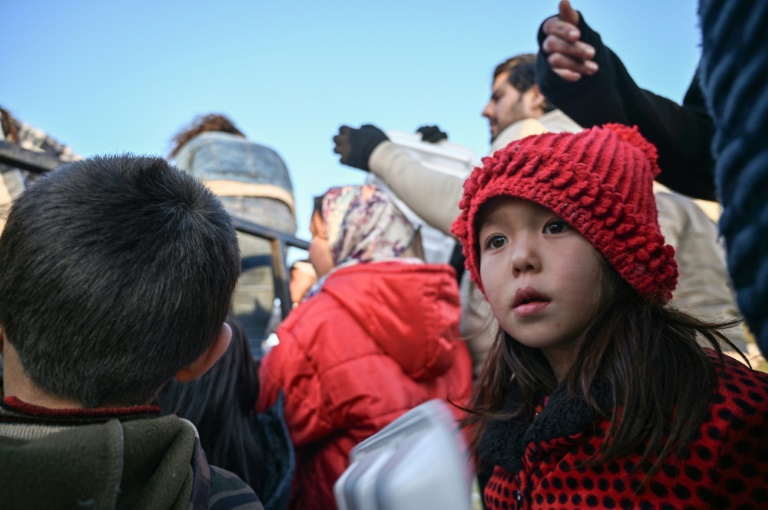
Greece said on Monday it had prevented around 600 migrants from crossing the Aegean Sea into its territorial waters from neighbouring Turkey, in the largest attempted entry this year.

A spokesman for the Greek coastguard said five sail boats and four dinghies had set off from the Turkish coast early in the morning.

“Greek patrol vessels were able to quickly locate the vessels and inform the Turkish coastguard,” the spokesman told AFP.

A coastguard statement said its boats had used “visual and sound signals” to keep the asylum seekers out of Greek territorial waters.

All the vessels either headed back or were intercepted by the Turkish coastguard, he added.

“All the incidents occurred inside Turkish territorial waters” near the Greek islands of Chios and Samos, he said.

A migration ministry source said migration flows to the Greek islands in the first four months of 2022 were nearly 30 percent higher than in the same period last year.

Over 3,000 asylum seekers have arrived in Greece so far this year, including over 1,100 last month, according to data from the migration ministry data.

There is also heightened migrant activity on Greece’s land border with Turkey because the water levels is low on the River Evros that divides the two countries, a border official said on Monday.

According to the latest ministry statistics, from April, there are more than 2,300 asylum seekers in camps on the Greek islands of Lesbos, Samos, Chios, Kos and Leros, all near Turkey.

New camps funded by the European Union were recently completed in Samos, Leros and Kos. Others on Lesbos and Chios are to follow.

Greece regularly blames Turkey for not taking sufficient action to curb people smugglers who send out migrants in unsafe boats and dinghies from its shores, in breach of a 2016 accord with the EU.

Greece is a member of the 27-nation bloc but Turkey is not.

Greece’s tough border controls have been dogged by accusations from rights groups that the Greek coastguard has been engaging in illegally forcing migrants to return to Turkey.

Athens has always denied that its security forces engage in illegal pushbacks.

In March, Greece’s national transparency authority said a four-month investigation found no evidence of such practices.

EU border agency Frontex has also repeatedly been accused by rights groups of illegally returning migrants across EU borders.

Frontex head Fabrice Leggeri resigned last month amid an investigation by the European anti-fraud office OLAF, reportedly into alleged mismanagement.

Ukraine jails Russian soldier for life at war crimes trial

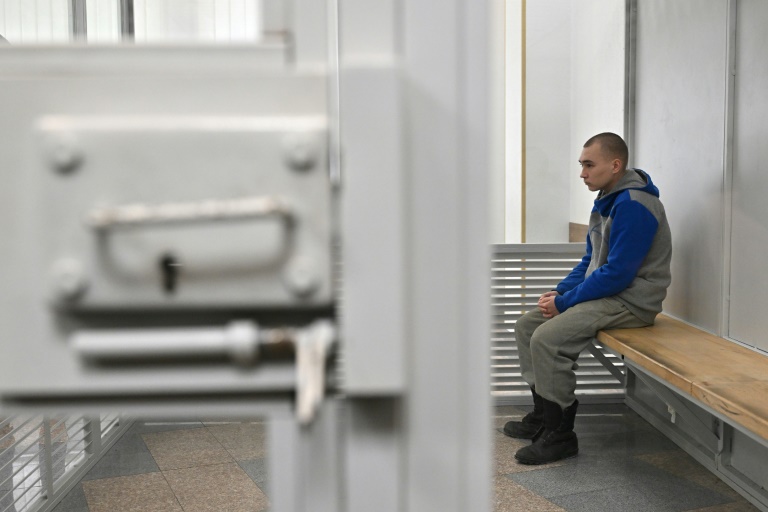
A Kyiv court on Monday found a 21-year-old Russian soldier who killed a civilian guilty of war crimes and handed him a life sentence, in the first verdict against Moscow’s forces since their invasion.

“The court has found that (Vadim) Shishimarin is guilty and sentences him to life imprisonment,” judge Sergiy Agafonov said.

The Russian sergeant admitted in court to killing 62-year-old Oleksandr Shelipov during the first days of the Kremlin’s offensive in north-east Ukraine.

He was also found guilty of premeditated murder. “The murder was committed with direct intent,” judge Agafonov said.

“Shishimarin violated the laws and customs of war.”

The soldier told the court last week that he shot Shelipov under pressure from another soldier as they tried to retreat back to Russia in a stolen car on February 28th, the fourth day of Moscow’s invasion.

Shishimarin apologised and asked Shelipov’s widow for forgiveness.

The landmark ruling is expected to be followed by others, with Ukraine opening thousands of war crimes cases since Russian President Vladimir Putin sent in his troops. 

The youthful serviceman looked on from the glass defence box as the verdict was read out in Ukrainian. An interpreter translated for him into Russian.

Shishimarin’s lawyer Viktor Ovsyannikov said he will appeal the verdict.

“This is the most severe sentence and any level-headed person would challenge it,” Ovsyannikov, said, adding: “I will ask for the cancellation of the court’s verdict”.

He said that “you can feel societal pressure” on the court’s decision. 

But prosecutor Andriy Syniuk said the ruling was fair.

“I consider the verdict to be lawful and justified,” he told reporters, saying he was “completely satisfied” with the outcome.

Rights organisations have expressed hope that Ukraine’s trials against Russian soldiers will be impartial and transparent.

The Kremlin said before the sentencing Monday that while it was “concerned” over Shishimarin’s fate, it was unable provide on-the-ground assistance because there is no Russian diplomatic presence in Ukraine.

“That doesn’t mean we won’t try through other channels. The fate of every Russian citizen is of paramount importance to us,” Kremlin spokesman Dmitry Peskov told reporters. 

Zelensky tells Davos: send us weapons, stop Russia trade

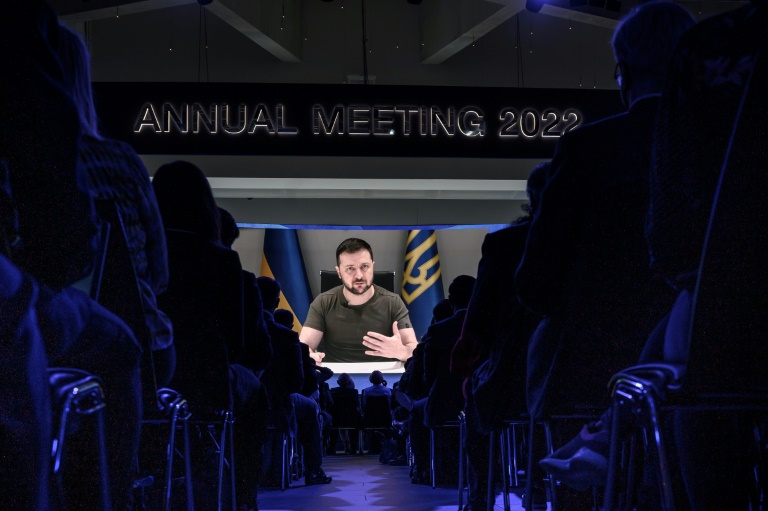
Ukrainian President Volodymyr Zelensky used the Davos summit Monday to appeal for more weapons and “maximum” sanctions against Russia, lamenting that tens of thousands of lives would have been saved had countries acted faster.

Appearing by video link, Zelensky delivered the headline speech to the first World Economic Forum to be held in the Swiss Alps in more than two years after the Covid pandemic derailed the event.

The conflict shows “that support to the country under attack is more valuable the sooner it is provided: weapons, funding, political support and sanctions against Russia,” said Zelensky, who received a standing ovation.

“If we would have received them by 100 percent of ours needs at once back in February, the result would have been tens of thousands of lives saved,” said Zelensky, flanked by Ukrainian flags and wearing an olive-green T-shirt.

“This is why Ukraine needs all the weapons that we ask for, not just the ones that have been provided,” he said, adding that 87 people were killed in a May 17 Russian strike on a military base in northern Ukraine.

Anastasia Radina, a Ukrainian lawmaker, told AFP that her country needs “NATO-style” weapons including tanks and ground-based air defence systems.

“What we are looking for most importantly are fighter jets and this has been the most difficult discussion,” she said. 

“Three months into the war, and tens of thousands lives lost, we are still at the point of discussing if we need fighter jets. Frankly speaking this is outrageous.”

Ukraine is receiving howitzers “but that is not yet enough,” she said.

– End all Russia trade –

Zelensky called for an oil embargo on Russia, punitive measures against all its banks and the shunning of its IT sector, adding that all foreign companies should leave the country.

“There should not be any trade with Russia,” he told the gathering.

“I believe there are still no such sanctions against Russia — and there should be.”

While the United States, Britain and Canada have moved to ban Russian oil and gas, the European Union has been divided over imposing similar measures. EU members such as Germany and Hungary are heavily dependent on energy supplies from Russia.

WEF Klaus Schwab praised Zelensky for his “courageous leadership” and said Davos participants were eager to hear how they could assist Ukraine “because everybody is affected by what’s happening in your country.”

The war is dominating the four-day meeting of the world’s business and political elites, with Ukraine sending a strong contingent of officials, including the foreign minister, to plead for more aid.

Russian business and political leaders, who used to participate in debates and mingle with other A-listers at champagne parties, were barred by organisers from attending this year’s gathering over the war.

The Ukrainians have transformed the “Russia House” in Davos –- normally used by the Russian delegation — into the “Russia War Crimes House” to promote their cause.

More than 50 heads of state or government are among the 2,500 delegates at the WEF under the title “History at a Turning Point”.

Some of the biggest names include Germany’s new chancellor, Olaf Scholz, European Union chief Ursula von der Leyen, NATO head Jens Stoltenberg and US climate envoy John Kerry.

– ‘Bonanza’ for billionaires –

When the WEF last took place in Davos in January 2020, the coronavirus was just brewing in China before morphing into a devastating pandemic.

A Davos forum took place virtually last year, with Russian President Vladimir Putin among the speakers.

While the summit is back, it lacks its usual snowy backdrop after the Omicron variant forced this year’s January meeting to be postponed until now. Instead, rain is forecast all week.

Climate change and concerns about the economic recovery from the pandemic are also at the forefront of the Davos talks.

Inflation has become a major concern as energy and food prices have soared further since Russia invaded Ukraine, raising fears of hunger in countries dependent on wheat from the region.

Global charity Oxfam warned that 263 million people could sink into extreme poverty this year, at a rate of one million every 33 hours.

By contrast, 573 new billionaires have emerged during the pandemic, or one every 30 hours.

“Billionaires are arriving in Davos to celebrate an incredible surge in their fortunes,” Oxfam executive director Gabriela Bucher said in a statement.

“The pandemic and now the steep increases in food and energy prices have, simply put, been a bonanza for them,” Bucher said.

Zelensky tells Davos: send us weapons, stop Russia trade

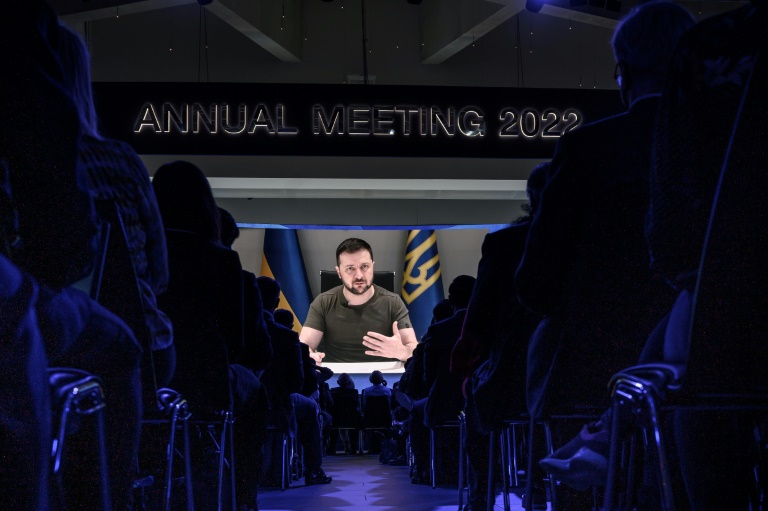
Ukrainian President Volodymyr Zelensky used the Davos summit Monday to appeal for more weapons and “maximum” sanctions against Russia, lamenting that tens of thousands of lives would have been saved had countries acted faster.

Appearing by video link, Zelensky delivered the headline speech to the first World Economic Forum to be held in the Swiss Alps in more than two years after the Covid pandemic derailed the event.

The conflict shows “that support to the country under attack is more valuable the sooner it is provided: weapons, funding, political support and sanctions against Russia,” said Zelensky, who received a standing ovation.

“If we would have received them by 100 percent of ours needs at once back in February, the result would have been tens of thousands of lives saved,” said Zelensky, flanked by Ukrainian flags and wearing an olive-green T-shirt.

“This is why Ukraine needs all the weapons that we ask for, not just the ones that have been provided,” he said, adding that 87 people were killed in a May 17 Russian strike on a military base in northern Ukraine.

Anastasia Radina, a Ukrainian lawmaker, told AFP that her country needs “NATO-style” weapons including tanks and ground-based air defence systems.

“What we are looking for most importantly are fighter jets and this has been the most difficult discussion,” she said. 

“Three months into the war, and tens of thousands lives lost, we are still at the point of discussing if we need fighter jets. Frankly speaking this is outrageous.”

Ukraine is receiving howitzers “but that is not yet enough,” she said.

– End all Russia trade –

Zelensky called for an oil embargo on Russia, punitive measures against all its banks and the shunning of its IT sector, adding that all foreign companies should leave the country.

“There should not be any trade with Russia,” he told the gathering.

“I believe there are still no such sanctions against Russia — and there should be.”

While the United States, Britain and Canada have moved to ban Russian oil and gas, the European Union has been divided over imposing similar measures. EU members such as Germany and Hungary are heavily dependent on energy supplies from Russia.

WEF Klaus Schwab praised Zelensky for his “courageous leadership” and said Davos participants were eager to hear how they could assist Ukraine “because everybody is affected by what’s happening in your country.”

The war is dominating the four-day meeting of the world’s business and political elites, with Ukraine sending a strong contingent of officials, including the foreign minister, to plead for more aid.

Russian business and political leaders, who used to participate in debates and mingle with other A-listers at champagne parties, were barred by organisers from attending this year’s gathering over the war.

The Ukrainians have transformed the “Russia House” in Davos –- normally used by the Russian delegation — into the “Russia War Crimes House” to promote their cause.

More than 50 heads of state or government are among the 2,500 delegates at the WEF under the title “History at a Turning Point”.

Some of the biggest names include Germany’s new chancellor, Olaf Scholz, European Union chief Ursula von der Leyen, NATO head Jens Stoltenberg and US climate envoy John Kerry.

– ‘Bonanza’ for billionaires –

When the WEF last took place in Davos in January 2020, the coronavirus was just brewing in China before morphing into a devastating pandemic.

A Davos forum took place virtually last year, with Russian President Vladimir Putin among the speakers.

While the summit is back, it lacks its usual snowy backdrop after the Omicron variant forced this year’s January meeting to be postponed until now. Instead, rain is forecast all week.

Climate change and concerns about the economic recovery from the pandemic are also at the forefront of the Davos talks.

Inflation has become a major concern as energy and food prices have soared further since Russia invaded Ukraine, raising fears of hunger in countries dependent on wheat from the region.

Global charity Oxfam warned that 263 million people could sink into extreme poverty this year, at a rate of one million every 33 hours.

By contrast, 573 new billionaires have emerged during the pandemic, or one every 30 hours.

“Billionaires are arriving in Davos to celebrate an incredible surge in their fortunes,” Oxfam executive director Gabriela Bucher said in a statement.

“The pandemic and now the steep increases in food and energy prices have, simply put, been a bonanza for them,” Bucher said.

Sole survivor relives 2009 Yemenia Airways crash at French trial

A woman who aged 12 survived the 2009 Yemenia Airways crash in the Comoros islands that killed all 152 others onboard described Monday the terrifying moments leading up to her plunge into the ocean and subsequent miraculous rescue, in the French trial against the airline.

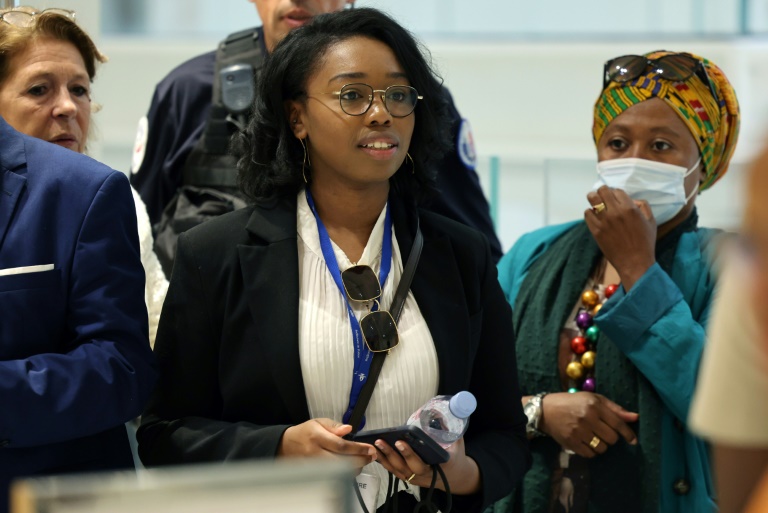
Bahia Bakari, now 25, has sat through several hearings with her father but had not testified or spoken to journalists attending the trial that opened this month.

“I didn’t see how I was going to get through this,” Bakari told the court of her hours spent in the water holding on to a piece of debris, with “the taste of jet fuel” in her mouth.

Bakari and her mother left Paris on June 29, 2009, for a vacation in the Comoros, changing planes in the Yemeni capital of Sanaa for the final leg of the trip.

“It was a smaller plane, there were flies inside and it smelled strongly like a bathroom,” she said, but “the flight went normally” — until the beginning of the landing descent.

During the night-time approach of Flight Yemenia 626 to Moroni, the capital of the Comoros islands that lie between Mozambique and Madagascar, the Airbus A310 jet plunged into the Indian Ocean with its engines running at full throttle.

“I started to feel the turbulence, but nobody was reacting much, so I told myself it must be normal,” Bakari said as over 100 family members or friends of the victims listened in silence.

Suddenly “I felt something like an electric shock go through my body.”

– ‘Couldn’t see anyone’ –

“There’s a black hole between the moment when I was seated in the plane and the moment I found myself in the water.”

France’s overseas territory of Mayotte is part of the Comoros archipelago, and 66 French citizens were among the 142 passengers and 11 crew members aboard.

Investigators and experts found there was nothing wrong with the aircraft, blaming instead “inappropriate actions by the crew during the approach to Moroni airport, leading to them losing control.”

No one from Yemenia Airlines has appeared at the trial, where prosecutors have accused the company of pilot training programmes “riddled with gaps” and of continuing to fly to Moroni at night despite its non-functioning landing lights.

The company’s lawyers have denied any wrongdoing. Yemenia is charged with involuntary homicide and injuries.

Bakari, regaining consciousness in choppy waters, recalled waiting for hours in the water, trying to climb atop the largest piece of debris she could reach, but without the strength to succeed.

“I realised that voices were calling for help in Comorian, and I cried out a bit but without much hope, because there’s was nothing but water around me and I couldn’t see anyone,” she said.

“I ended up falling asleep while holding onto the plane debris,” and while she could see the coast when she woke up, “the water was really choppy.”

– ‘Hardest thing’ –

It was by thinking of her “incredibly protective” mother that allowed her to hold on until she was rescued by a boat after a dozen hours in the water.

Initially she was convinced “that I was the only one who fell” and that the other passengers had arrived safely, before a psychologist at the hospital told her she was the only survivor.

“The hardest thing for me has been dealing with the grief for my mother, I was very close to her,” Bakari said, her voice breaking and tears flowing for the first time during her testimony. 

The Yemeni national airline, whose representatives say they will not be in the dock due to the country’s still-raging civil war, faces a maximum fine of 225,000 euros ($240,000) for involuntary homicide and injuries.

Although the plane’s black boxes were found weeks after the crash, France accused the Comoros government of dragging its feet in the investigation, while victims’ families accused Yemen of lobbying to hinder a trial.

Around 560 people have joined the suit as plaintiffs, many of them from the region around Marseille in southern France, home to many of the victims.

A video feed to the southern port city has been set up for their benefit, allowing them to follow part of the proceedings.

Iran warns it will 'avenge' killing of Guards colonel

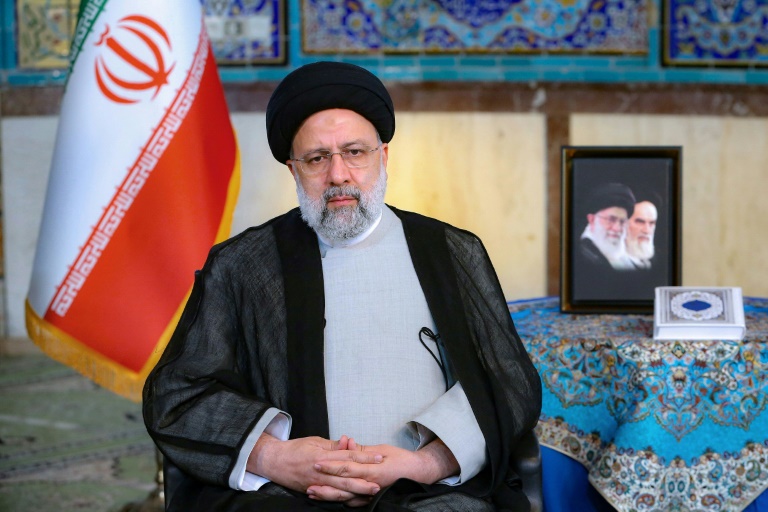
Iran will avenge the killing of a Revolutionary Guards colonel who was shot dead in Tehran, President Ebrahim Raisi warned on Monday. 

Assailants on motorcycles on Sunday hit Colonel Sayyad Khodai with five bullets as he sat in his car outside his home.

Iran blamed “elements linked to the global arrogance” — the Islamic republic’s term for its arch enemy the United States and US allies including Israel.

It was the most high-profile killing inside Iran since the November 2020 murder of top nuclear scientist Mohsen Fakhrizadeh.

Raisi said: “I insist on the serious pursuit (of the killers) by security officials, and I have no doubt that the blood of this great martyr will be avenged.

“There is no doubt that the hand of global arrogance can be seen in this crime,” he added, echoing the Guards’ assertion, before he travelled to Oman where he was to meet Sultan Haitham bin Tariq.

A memorial service for Khodai was scheduled in Tehran at 5:00 pm local time (1230 GMT) on Monday. 

The funeral will take place at 8:00 am (0330 GMT) on Tuesday in Imam Hossein Square in central Tehran, the Islamic Revolutionary Guards Corp said in a statement. 

The ideological arm of Iran’s military, the Guards described Khodai as a “defender of the sanctuary”, a term used for those who work on behalf of Iran in Syria or Iraq.

Iran maintains significant political influence in both countries and has backed President Bashar al-Assad’s regime in Syria’s grinding civil war.  

State television noted that Khodai was “known” in Syria, where Iran has acknowledged deploying “military advisers”. 

– ‘Criminal act’ –

The official news agency IRNA said Khodai was killed by five bullets as he returned home Sunday at around 4:00 pm.

The agency published pictures showing a man slumped over in the driver’s seat of a white car, with blood around the collar of his blue shirt and on his right arm. He was strapped in with his seat belt, and the front window on the passenger side had been shot out.

The Fars news agency reported that the state prosecutor had visited the scene of the killing and ordered the “quick identification and arrest of the authors of this criminal act”.

The Guards said they had arrested several “thugs linked to the intelligence agency of the Zionist regime,” as Iran calls its enemy Israel.

A statement said the suspects had been involved in a series of crimes, including “robberies, kidnappings and vandalism”.

“The dimensions of this assassination are being investigated,” said the spokesman for the joint chiefs of staff of the Iranian armed forces, General Abolfazl Shakarji.

Khodai’s killing came as negotiations between Iran and world powers to restore a frayed 2015 nuclear deal have stalled since March.

One of the main sticking points is Tehran’s demand to remove the Guards from a US terrorism list — a request rejected by Washington.

The 2015 agreement gave Iran sanctions relief in exchange for curbs on its nuclear programme to prevent Tehran from developing an atomic bomb — something it has always denied wanting to do.

But the nuclear agreement was left hanging by a thread after then US president Donald Trump pulled out of it unilaterally in 2018 and reimposed biting economic sanctions on Tehran, prompting Iran to begin rolling back on its own commitments.

Kim Jong Un carries coffin at N. Korean military officer's funeral

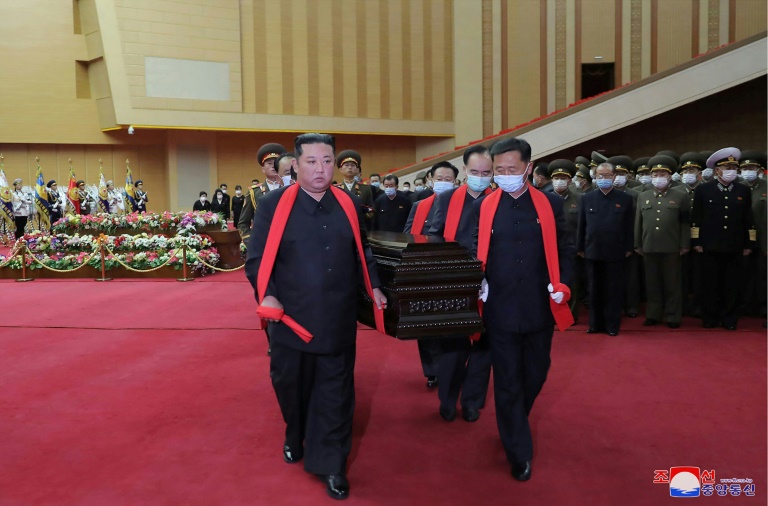
A maskless Kim Jong Un was one of the pallbearers at the state funeral for a top military officer, North Korean state media reported Monday, days after Pyongyang claimed its Covid-19 outbreak was now under control.

Kim on Sunday attended the funeral of Hyon Chol Hae, a Korean People’s Army marshal and reportedly Kim’s mentor, preparing him for leadership before his father and predecessor Kim Jong Il died in 2011. 

The official Korean Central News Agency released photos of Kim, not wearing a face mask, hoisting up Hyon’s casket along with other regime officials, who were masked.

The North Korean leader has put himself front and centre of his country’s Covid response, blaming lazy state officials for worsening the Omicron variant-fuelled outbreak. 

Over the weekend, KCNA said the epidemic was now “being stably controlled”, and reported the death toll “sharply decreased day by day”.

Experts question the official claim and tally, given that the impoverished country has one of the world’s worst healthcare systems and no Covid-19 drugs or mass testing ability.

It has not vaccinated any of its roughly 25 million people, having rejected jabs offered by the World Health Organization.

North Korea announced its first coronavirus case on May 12, despite a two-year blockade maintained since the start of the pandemic.

Pyongyang reported 167,650 “fever” cases on Monday via KCNA, a notable drop from the peak of around 390,000 reported about a week before.

It reported one more death and claimed the fatality rate for the “fever” was 0.002 percent. 

State media reports do not specify how many of the cases and deaths have tested positive for the coronavirus.

Pyongyang has so far not responded to an offer of help from Seoul, according to South Korea’s unification ministry.

During his visit to Seoul at the weekend, US President Joe Biden said Washington had also offered Covid-19 vaccines to Pyongyang but “got no response”.

Despite the virus outbreak, new satellite imagery has indicated North Korea has resumed construction at a long-dormant nuclear reactor.

The United States and South Korea have both warned that Kim is poised to conduct another nuclear test, which would be the country’s seventh.

Biden warns China against invading Taiwan, vows US military defence

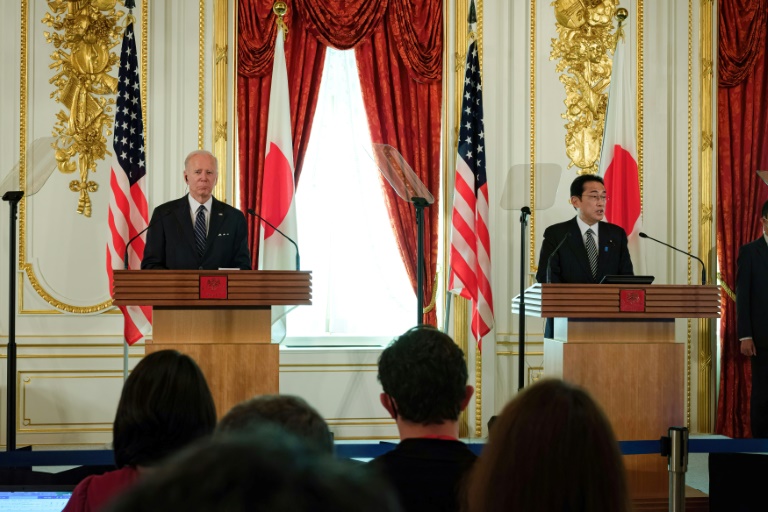
President Joe Biden vowed Monday that US forces would defend Taiwan militarily if China attempted to take control of the self-ruled island by force, warning Beijing was already “flirting with danger”.

The remarks, made in Tokyo where he is meeting with Japan’s prime minister ahead of a regional summit Tuesday, were Biden’s strongest to date on the issue and come amid rising tensions over China’s growing economic and military power.

Washington and allies like Japan have framed their tough response to Russia’s invasion of Ukraine as a warning to others, especially China, against unilateral military action.

Biden hammered that message home after talks with Japanese Prime Minister Fumio Kishida in which the pair agreed to monitor Chinese naval activity and joint Chinese-Russia exercises.

Biden then went further. Asked if Washington was willing to get involved militarily to defend Taiwan, he replied: “Yes.”

“That’s the commitment we made,” he added. 

“We agreed with the One China policy, we signed on to it… but the idea that it can be taken by force is just not appropriate, it would dislocate the entire region and would be another action similar to Ukraine,” Biden said.

Biden directly linked the fates of Ukraine and Taiwan, saying Western sanctions on Russia must exact a “long-term price” because otherwise “what signal does that send to China about the cost of attempting to take Taiwan by force?”

He warned Beijing was already “flirting with danger right now by flying so close and all the manoeuvres undertaken” — referring to a growing number of Chinese sorties, naval exercises and other power projections in the Taiwan Straits.

In Beijing, foreign ministry spokesman Wang Wenbin swiftly responded, declaring that “no one should underestimate the firm resolve, staunch will and strong ability of the Chinese people in defending national sovereignty and territorial integrity.”

“China has no room for compromise or concession,” the spokesman said.

– ‘Policy has not changed’ –

Like most nations, the United States diplomatically recognises Beijing over Taiwan. But it also maintains de facto diplomatic ties with the self-ruled, democratic island.

For decades it has maintained a policy of “strategic ambiguity” in which it never makes clear what it would do in the event of an invasion while agreeing to help Taiwan build its defences against attack from Beijing.

The policy was designed both to keep Beijing from declaring war and also to stop Taiwan from formally declaring independence.

Biden’s remarks Monday overshadowed his rollout of a new, 13-nation regional trade framework as well as Tuesday’s meeting of the Quad group. 

The White House said that Biden was not diverging from the official “One China” policy, which includes the commitment to “provide Taiwan with the military means to defend itself”.

“Our policy has not changed,” the official said.

But Beijing’s growing sabre-rattling on the issue, as well as Russia’s Ukraine invasion, is shaking up the status quo.

Among those augmenting diplomatic support for Taipei is Japan, which has regularly warned China against “unilateral” attempts to change the impasse.

Kishida called for stability in the Taiwan Strait and said Tokyo was committed to boosting its defence spending, a sensitive subject in a country with constitutional limits on its military.

“Japan will fundamentally strengthen its defence capacity, and to back that up will significantly increase its defence spending,” Kishida said at a joint press conference with Biden.

“We don’t rule out any options, including (acquiring) the capacity to counter-attack,” he added.

– Asia trade grouping launched –

Biden is in Japan on the second leg of an Asia trip intended to reinforce regional ties and show Washington remains committed to the region despite its heavy involvement with the crisis in Ukraine.

He finished his hectic day by joining Kishida and the prime minister’s wife in an upscale Tokyo restaurant set in a peaceful garden and serving sushi and other traditional food.

Earlier, he announced Monday that 13 countries have joined a new, US-led Asia-Pacific trade initiative touted as a counterweight to China’s aggressive expansion.

And on Tuesday, Biden meets with fellow Quad leaders from Japan, Australia and India.

He arrived in Tokyo on Sunday after stopping in Seoul for talks with newly elected President Yoon Suk-yeol.

While there, Biden said he was willing to meet Kim Jong Un if the leader-for-life is “sincere”, despite the threat of a possible North Korean nuclear test hanging over the Asian tour.

Hundreds of endangered baby giant turtles released into Cambodian river

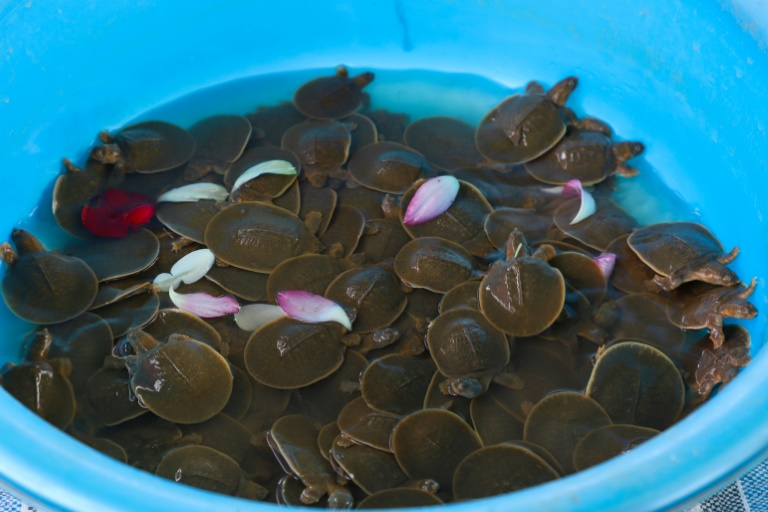
Hundreds of critically endangered baby giant turtles were released into Cambodia’s Mekong River to mark World Turtle Day on Monday.

Cantor’s giant softshell turtles have all but vanished across their former territory in Vietnam and Thailand thanks to poaching and illegal trade, and were only rediscovered in the Southeast Asian country in 2007.

The Wildlife Conservation Society coordinated the release of 580 hatchlings, which can grow to a length of up to 200cm (78 inches) and mainly live buried in the sand and the water, surfacing only twice a day to breathe.

Monks blessed the baby reptiles — also known as “frog-faced turtles” for their distinctive appearance — before helping conservationists and eager children send the stout-nosed snappers into the Mekong’s muddy waters.

The creatures are among a batch of 982 turtles rescued as eggs — to protect them from the dangers which threaten the species’ numbers — carefully incubated, hatched, and then released.

Ken Sereyrotha, country program director for WCS Cambodia, said significant progress had been made in protecting the animal in the country but more work was needed.

“This species is being threatened by illegal hunting and trafficking,” he said.

The WCS and Cambodia’s department of fisheries conservation of fisheries administration has found and rescued more than 2,000 eggs this year — with the teams hopeful the remainder will eventually hatch.

Ouk Vibol, director of the fisheries department, urged local stakeholders to continue the conversation work, and promised that “those who still trade protected species will face legal action.”

Last year, the teams managed to nurture and then release around 1,300 hatchlings into the wild.

Close Bitnami banner
Bitnami