World

UK fines US AI firm £7.5m over mass image collection

Britain announced Monday it had fined US facial recognition company Clearview AI Inc more than £7.5 million ($9.4 million, 8.8 million euros) for amassing online images of people without their knowledge.

The UK’s data watchdog also ordered the company to stop obtaining personal data of UK residents available on the internet and to delete the data of UK residents from its systems.

The action by the Information Commissioner’s Office (ICO) follows a joint investigation with the Office of the Australian Information Commissioner.

Clearview AI Inc has a database of more than 20 billion images of people’s faces culled from the internet and social media platforms without telling people how their information was being collected.

The company’s customers — including the police — can then upload an image of a person to an app, which checks its database for a match.

“Clearview AI Inc has collected multiple images of people all over the world, including in the UK, from a variety of websites and social media platforms, creating a database with more than 20 billion images,” said UK Information Commissioner John Edwards.

“The company not only enables identification of those people, but effectively monitors their behaviour and offers it as a commercial service. That is unacceptable.”

The ICO found that Clearview AI Inc breached UK data protection laws by failing to use the information of people in Britain in a “fair and transparent” way and for failing to prevent the data being retained indefinitely.

Earlier this month Clearview AI agreed to limit access to its controversial facial recognition database in the United States, settling a lawsuit filed by privacy advocates, according to a court filing.

Biden says 'extra efforts' not needed against monkeypox

The United States has enough vaccines to deal with a potential outbreak of monkeypox and “extra efforts” are not needed to prevent its spread, President Joe Biden said on Monday.

Biden was asked if Americans could expect to see weeks-long quarantines for people infected with monkeypox after several cases were detected this month in North America and Europe.

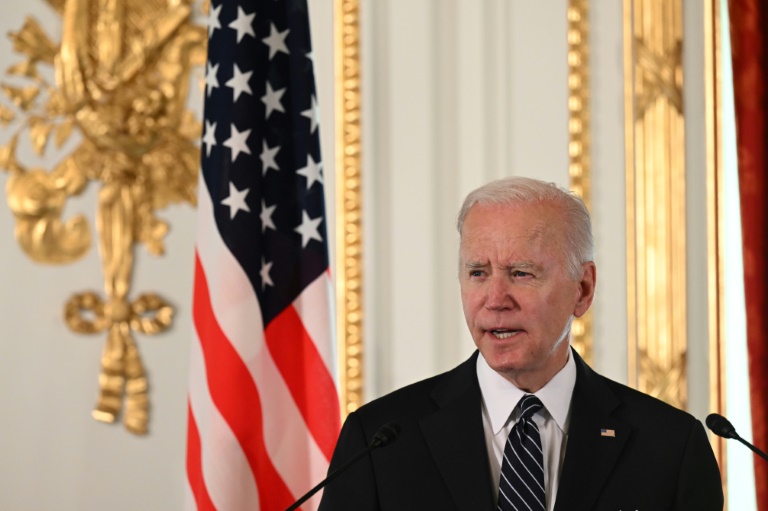
“No, I don’t think so. Look, we’ve had this monkeypox in larger numbers in the past,” he said at a press conference in Tokyo after talks with Japanese Prime Minister Fumio Kishida.

“Number two, we have vaccines to take care of it. Number three, thus far, there doesn’t seem to be the need for any kind of extra efforts beyond what’s going on.”

Monkeypox, which is not usually fatal, can cause a fever, muscle aches, swollen lymph nodes, chills, exhaustion and a chickenpox-like rash on the hands and face. 

The virus, which is endemic in parts of Africa, can be transmitted through contact with skin lesions or droplets of bodily fluid from an infected person.

Biden, who is on his maiden trip to Asia as president, said Sunday in South Korea that people should be on guard against the disease, warning it has the potential for a “consequential” impact if it were to spread further.

On Monday, he reiterated his call for people to be careful, but said the situation did not warrant the same emergency response seen worldwide during the coronavirus pandemic.

“I just don’t think it rises to the level of the kind of concern that existed with Covid-19,” he said, adding that he believes the United States has enough smallpox vaccine stockpiled.

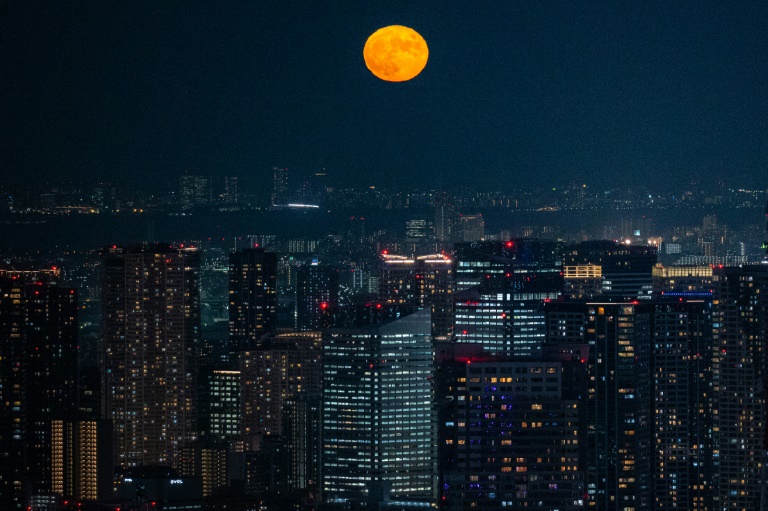
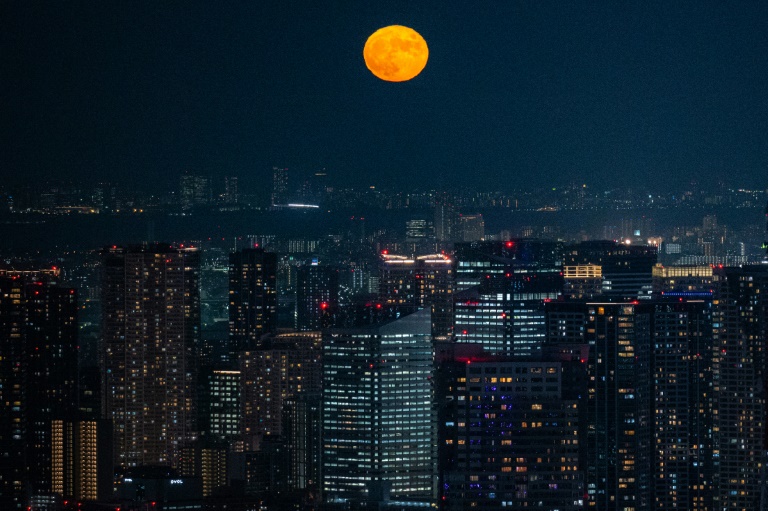
Fly me to the Moon: US, Japan aim for lunar landing

Japan and the United States said Monday they want to put the first Japanese astronaut on the Moon as the allies deepen cooperation on space projects.

No non-American has ever touched down on the lunar surface, and Japan has previously said it hopes to achieve a Moon landing by the end of this decade.

President Joe Biden, after his first face-to-face meeting with Japan’s Prime Minister Fumio Kishida in Tokyo, said the nations will work together in the US-led Artemis programme to send humans to the Moon, and later to Mars.

Biden said he was “excited” about the collaboration, including on the Gateway facility, which will orbit the Moon and provide support for future missions.

“I’m excited (about) the work we’ll do together on the Gateway Station around the Moon, and look forward to the first Japanese astronaut joining us on the mission to the lunar surface under the Artemis programme,” he said at a joint press conference.

Japan’s domestic space programme focuses on satellites and probes, so Japanese astronauts have turned to the US and Russia to travel to the International Space Station.

But space agency JAXA is looking to revitalise its ranks, last year launching its first recruitment of new astronauts in 13 years.

It lifted the requirement that applicants have a science degree and urged women to apply, because all seven of the nation’s current astronauts are men.

Fly me to the Moon: US, Japan aim for lunar landing

Japan and the United States said Monday they want to put the first Japanese astronaut on the Moon as the allies deepen cooperation on space projects.

No non-American has ever touched down on the lunar surface, and Japan has previously said it hopes to achieve a Moon landing by the end of this decade.

President Joe Biden, after his first face-to-face meeting with Japan’s Prime Minister Fumio Kishida in Tokyo, said the nations will work together in the US-led Artemis programme to send humans to the Moon, and later to Mars.

Biden said he was “excited” about the collaboration, including on the Gateway facility, which will orbit the Moon and provide support for future missions.

“I’m excited (about) the work we’ll do together on the Gateway Station around the Moon, and look forward to the first Japanese astronaut joining us on the mission to the lunar surface under the Artemis programme,” he said at a joint press conference.

Japan’s domestic space programme focuses on satellites and probes, so Japanese astronauts have turned to the US and Russia to travel to the International Space Station.

But space agency JAXA is looking to revitalise its ranks, last year launching its first recruitment of new astronauts in 13 years.

It lifted the requirement that applicants have a science degree and urged women to apply, because all seven of the nation’s current astronauts are men.

Philippines' Marcos in nuclear plant revival talks with S.Korea

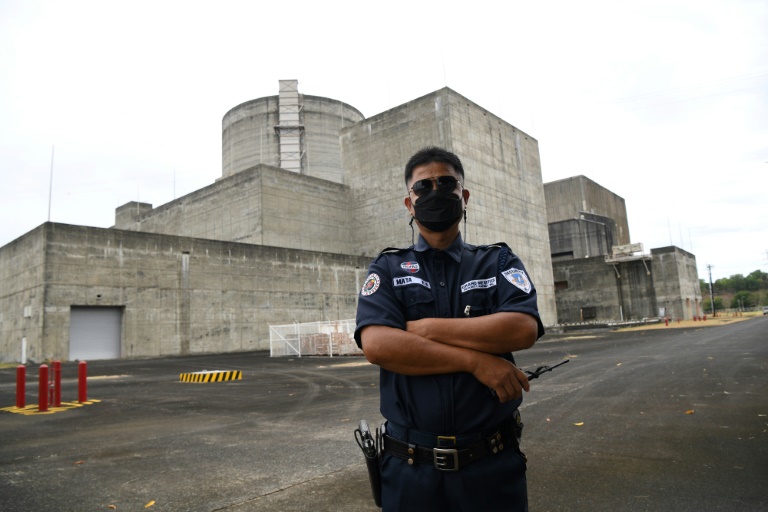
Philippine president-elect Ferdinand Marcos signalled his determination to adopt nuclear power Monday, holding talks with South Korea’s envoy on possibly reviving a mothballed $2.2 billion plant built during his father’s dictatorship.

The 620-megawatt Bataan Nuclear Power Plant was left dormant after the elder Marcos was toppled in 1986.

In the run-up to the May 9 presidential election, Marcos Junior spoke about the need for nuclear power to address exorbitant electricity costs in the country.

He left open the possibility of resuscitating his father’s failed venture — an idea he is now pushing ahead of his June 30 inauguration.

Marcos said he met South Korean Ambassador to Manila Kim Inchul on Monday to discuss a proposal on reviving the Bataan plant. 

“Can we continue with it or do we need to build a new one? What are the things that we will have to do?” Marcos told a news conference after the meeting.

“So we revived the discussions on it, although they have come before. We will now study their recommendations and their findings, and we will see if we can still apply,” he added.

Studies by South Korean and Russian experts showed it was possible to get the plant working again, Energy Secretary Alfonso Cusi told a Senate hearing in 2020.

But upgrading an ageing facility fitted with outdated analogue technology could take at least four years and cost another $1 billion.

There are also question marks on its design and location.

A monument to the greed and graft of the elder Marcos’s era, the plant sits 80 kilometres (50 miles) west of Manila, near several volcanoes in a part of the Philippines regularly shaken by earthquakes.

“If we are going to industrialise post-pandemic, we are going to go through rapid industrialisation, then the power sector must be ready for that,” Marcos said.

Building a new power plant from scratch would take three to seven years, he added.

Outgoing President Rodrigo Duterte issued an executive order earlier this year making nuclear power part of the country’s planned energy mix.

The Philippines — regularly affected by electricity outages — relies on imported carbon-belching coal for more than half of its power generation.

Supporters of nuclear power say the technology offers a cleaner option to help meet demand.

But critics argue that renewable sources, such as wind and solar, are cheaper and safer to produce in a country hit by earthquakes, typhoons and volcanic eruptions.

Blessings counted after losing all on Ukrainian front

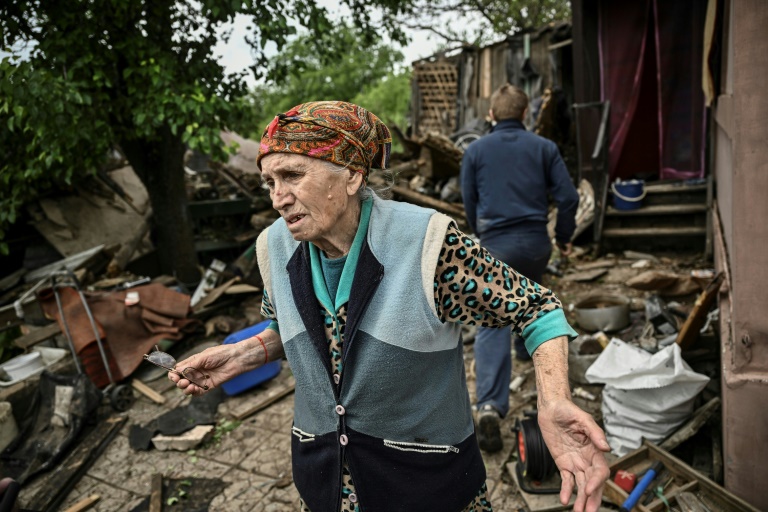
The willowy Ukrainian grandmother was praying for God to spare her life when a missile imploded her kitchen and cratered her vegetable garden.

Maria Mayashlapak scanned the devastation and counted her blessings — a response shared by countless others who have lost almost everything but their lives three months into Russia’s invasion.

“I was reciting my morning prayer for God to keep me from getting hurt,” the 82-year-old recalled next to the splintered remains of her cottage kitchen in Ukraine’s eastern city of Bakhmut.

The family’s mewing kitten was still trapped somewhere in the rubble and the once-leafy backyard resembled an open-pit mine.

The half of the house still standing looked in danger of either caving or sliding into the muddy crater left by the missile.

Rows of trees stood bowing with their crowns blown off by the force of the morning blast.

More rumblings on the horizon signalled the slow but steady pace of Russia’s advance deep into the inner reaches of the Donbas war zone.

“I looked up from my prayers and heard a frightening sound,” the grandmother said.

“Every day I pray to God asking to avoid injuries. God heard me. God is watching over me.”

– ‘Under aerial attack’ –

Mayashlapak’s relief is making life difficult for Bakhmut’s deputy mayor Maksim Sutkovoi.

The 40-year-old was theoretically meant to be pulling civilians out from a series of towns in the Bakhmut area that have come within range of Russian fire in the past week.

But he stood with his hands in his pockets on a deserted square selected as the daily gathering point for evacuees.

“People do not want to leave,” Sutkovoi said next to a half-empty bus waiting to take civilians to more peaceful parts of Ukraine.

“We have reached the point where we are making evacuation mandatory,” added Bakhmut military administration chief Sergiy Kalyan.

The two local leaders estimate that 100,000 of the district’s 220,000 residents — many of them living along a north-south road now under Russian assault — were still clinging on to their homes.

Those staying behind say the missile strikes and bombings start every morning around sunrise and continue until lunch.

“Thankfully the Russian artillery has not reached us yet,” Kalyan said next to the evacuation bus.

“But otherwise we are under aerial attack.”

– ‘Survivors’ –

Taxi driver Maksim Taran stared at a couch protruding from the sheared off section of a building that once held his apartment and expressed many of the same emotions as the grandmother on the other side of town.

The 33-year-old said his father was meant to have been sleeping on that couch the night something crashed through the five-story apartment complex.

The entire middle section of it collapsed.

No one was injured because most of the block’s 200 residents had already moved out.

But Taran was back at the site three days later to determine which of the remaining apartments he could still use.

“My father is alive because he got delayed on the road,” Taran said with his gaze fixed on the protruding couch.

“I am probably more relieved than anything else. We lost property. That can be restored.”

His neighbour Roman Ognev wrapped his arm around the taxi driver’s shoulder and broke out into a merry laugh.

“We are survivors,” the 51-year-old businessman said.

– Tightening noose –

Bakhmut’s fall would give the Russians control of a crucial junction that now serves as an impromptu command centre for much of the Ukrainian war effort.

Its roads offer a direct route to all sections of the front as well as Kramatorsk — the government’s increasingly besieged administrative centre for the east.

The Russians have been battling for days to cut off Bakhmut’s link to the twin industrial cities of Lysychansk and Severodonetsk to its north.

Long stretches of that road are now shrouded by plumes of noxious smoke rising over burning oil refineries and destroyed Ukrainian military outposts.

The highways heading south are being shelled by local forces that have been fighting a Russian-backed insurgency since 2014.

The noose is tightening and the Ukrainian forces fortifying their positions in the surrounding forests are digging in for a fierce defence.

So are Bakhmut’s remaining residents.

“We set our alarms for 6:00 am because that is the time to head to the bunker,” Ognev said outside the ruined apartment block.

“And then we go back up and get a few more hours of sleep.”

US unveils Asia-Pacific trade framework, but questions remain

US President Joe Biden launched a new Asia-Pacific trade initiative Monday in Tokyo, with 13 countries including India and Japan signed up, although questions about the pact’s effectiveness remain.

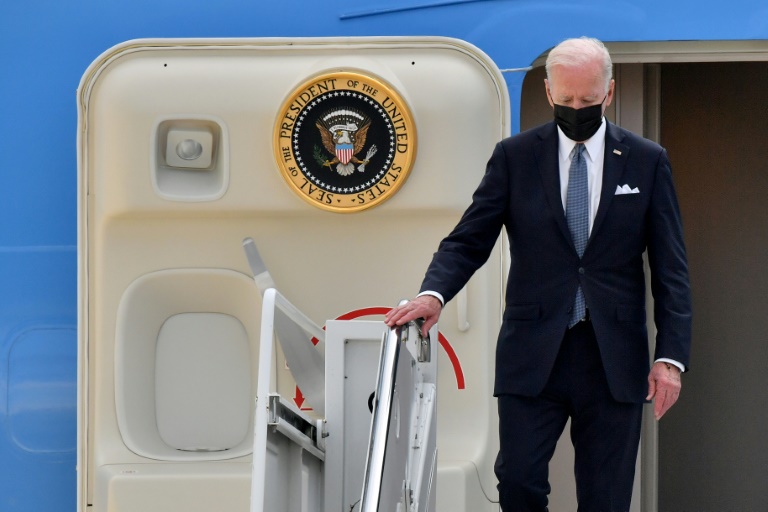
Biden formally unveiled the Indo-Pacific Economic Framework for Prosperity, or IPEF, on his second day in Japan, where he held talks with Prime Minister Fumio Kishida ahead of a regional Quad summit on Tuesday.

“I believe we’ll win the competition of the 21st century together,” he said at the launch, attended in person by Kishida and Indian Prime Minister Narendra Modi, and virtually by representatives from the other countries.

Unlike traditional trade blocs, there is no plan for IPEF members to negotiate tariffs and ease market access — a tool that has become increasingly unpalatable to US voters fearful of seeing homegrown manufacturing undermined.

Instead, the programme foresees integrating partners through agreed standards in four main areas: the digital economy, supply chains, clean energy infrastructure and anti-corruption measures.

The starting list of members in addition to the United States is Australia, Brunei, India, Indonesia, Japan, Malaysia, New Zealand, the Philippines, Singapore, South Korea, Thailand and Vietnam.

The countries touted IPEF as a framework for what will ultimately become a tight-knit group of trading nations.

“We share a commitment to a free, open, fair, inclusive, interconnected, resilient, secure, and prosperous Indo-Pacific region,” they said in a joint statement.

“Deepening economic engagement among partners is crucial for continued growth, peace, and prosperity.”

– Rebuilding alliances –

Together, the participants account for about 40 percent of global GDP and “there are other countries that could conceivably join us,” Biden’s national security adviser, Jake Sullivan, told reporters.

Biden has pushed to rapidly rebuild strategic military and trade alliances weakened under his predecessor Donald Trump since taking office in 2021.

IPEF is intended to offer US allies an alternative to China’s growing commercial presence across the Asia-Pacific.

However, there is no political will in Washington for returning to a tariffs-based Asia trade deal following Trump’s 2017 withdrawal from the Trans-Pacific Partnership — a huge trading bloc that was revived under a new name in 2018, without US membership.

While the TPP reduces trade barriers for members, US Secretary of Commerce Gina Raimondo emphasised to reporters that IPEF was not designed to go down the same route.

The “framework is intentionally designed not to be a same old, same old traditional trade agreement,” she said.

Even so, Japan’s Kishida said there is a desire for US involvement in the larger pact abandoned by Trump.

The country welcomes the new framework and will “participate and cooperate”, he said, but “from a strategic standpoint, Japan hopes that the United States will return to the TPP”.

– No Taiwan –

China has criticised IPEF as an attempt to create a closed club. Sullivan rejected this, saying “it is by design and definition an open platform.”

Taiwan, the self-governing democracy that China claims sovereignty over, has pointedly not been brought into the initial line-up — despite being an important link in supply chains for microchips.

Sullivan said nevertheless that the United States is “looking to deepen our economic partnership with Taiwan, including on high-technology issues, including on semiconductors and supply chains”.

This will happen, however, only “on a bilateral basis”.

From the start, the US initiative faced scepticism.

Without offering increased access to the huge US market, it is unclear what enforcement mechanisms could be applied to promote the proposed integration.

But Raimondo said IPEF would be a powerful force, suggesting that if it had been in place before the Covid-19 pandemic the United States would have “experienced much less disruption” in the subsequent supply chain crisis.

And more broadly, the US trade-boosting initiative is welcomed by businesses that “increasingly look for alternatives to China”, she said.


US unveils Asia-Pacific trade framework, but questions remain

US President Joe Biden launched a new Asia-Pacific trade initiative Monday in Tokyo, with 13 countries including India and Japan signed up, although questions about the pact’s effectiveness remain.

Biden formally unveiled the Indo-Pacific Economic Framework for Prosperity, or IPEF, on his second day in Japan, where he held talks with Prime Minister Fumio Kishida ahead of a regional Quad summit on Tuesday.

“I believe we’ll win the competition of the 21st century together,” he said at the launch, attended in person by Kishida and Indian Prime Minister Narendra Modi, and virtually by representatives from the other countries.

Unlike traditional trade blocs, there is no plan for IPEF members to negotiate tariffs and ease market access — a tool that has become increasingly unpalatable to US voters fearful of seeing homegrown manufacturing undermined.

Instead, the programme foresees integrating partners through agreed standards in four main areas: the digital economy, supply chains, clean energy infrastructure and anti-corruption measures.

The starting list of members in addition to the United States is Australia, Brunei, India, Indonesia, Japan, Malaysia, New Zealand, the Philippines, Singapore, South Korea, Thailand and Vietnam.

The countries touted IPEF as a framework for what will ultimately become a tight-knit group of trading nations.

“We share a commitment to a free, open, fair, inclusive, interconnected, resilient, secure, and prosperous Indo-Pacific region,” they said in a joint statement.

“Deepening economic engagement among partners is crucial for continued growth, peace, and prosperity.”

– Rebuilding alliances –

Together, the participants account for about 40 percent of global GDP and “there are other countries that could conceivably join us,” Biden’s national security adviser, Jake Sullivan, told reporters.

Biden has pushed to rapidly rebuild strategic military and trade alliances weakened under his predecessor Donald Trump since taking office in 2021.

IPEF is intended to offer US allies an alternative to China’s growing commercial presence across the Asia-Pacific.

However, there is no political will in Washington for returning to a tariffs-based Asia trade deal following Trump’s 2017 withdrawal from the Trans-Pacific Partnership — a huge trading bloc that was revived under a new name in 2018, without US membership.

While the TPP reduces trade barriers for members, US Secretary of Commerce Gina Raimondo emphasised to reporters that IPEF was not designed to go down the same route.

The “framework is intentionally designed not to be a same old, same old traditional trade agreement,” she said.

Even so, Japan’s Kishida said there is a desire for US involvement in the larger pact abandoned by Trump.

The country welcomes the new framework and will “participate and cooperate”, he said, but “from a strategic standpoint, Japan hopes that the United States will return to the TPP”.

– No Taiwan –

China has criticised IPEF as an attempt to create a closed club. Sullivan rejected this, saying “it is by design and definition an open platform.”

Taiwan, the self-governing democracy that China claims sovereignty over, has pointedly not been brought into the initial line-up — despite being an important link in supply chains for microchips.

Sullivan said nevertheless that the United States is “looking to deepen our economic partnership with Taiwan, including on high-technology issues, including on semiconductors and supply chains”.

This will happen, however, only “on a bilateral basis”.

From the start, the US initiative faced scepticism.

Without offering increased access to the huge US market, it is unclear what enforcement mechanisms could be applied to promote the proposed integration.

But Raimondo said IPEF would be a powerful force, suggesting that if it had been in place before the Covid-19 pandemic the United States would have “experienced much less disruption” in the subsequent supply chain crisis.

And more broadly, the US trade-boosting initiative is welcomed by businesses that “increasingly look for alternatives to China”, she said.
UN human rights chief begins contentious China visit

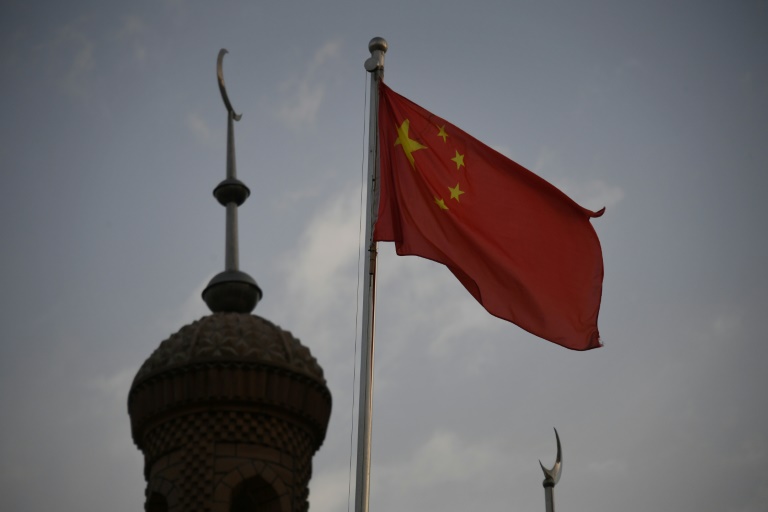
The UN human rights chief began a six-day trip to China on Monday that will include the remote Xinjiang region, stirring fears over access and the propaganda value the visit offers to the Chinese Communist Party.

The tour by Michelle Bachelet marks the first by the UN’s top rights official in nearly two decades and comes as Beijing stands accused of widespread abuses of Muslims in far-western Xinjiang.

The ruling Communist Party is alleged to have detained over one million Uyghurs and other Muslim minorities there under a years-long security crackdown the United States calls a “genocide”.

China vociferously denies the accusations, calling them “the lie of the century”.

Bachelet conducted virtual meetings with the heads of around 70 diplomatic missions in China on Monday, according to diplomatic sources in Beijing, who said she gave assurances over her access to detention centres and rights defenders.

Later in the week, she is due to travel to the Xinjiang cities of Urumqi and Kashgar as well as the southern city of Guangzhou.

Welcoming Bachelet’s visit, foreign ministry spokesman Wang Wenbin said her trip takes place in a “closed-loop” due to the pandemic and both sides agreed not to have reporters trail the visit.

She is expected to meet Chinese leaders and “have extensive exchanges with people from various sectors,” Wang said, without giving more details.

UN officials have been locked in negotiations with the Chinese government since 2018 in a bid to secure “unfettered, meaningful access” to Xinjiang.

But fears have swirled of a whitewash offering a tightly-controlled glimpse into life in the region, which China says it has pacified with “re-education centres” and uplifted with an economic rejuvenation drive.

– Access or cover-up? –

The United States led criticism ahead of her trip, saying it was “deeply concerned” that Bachelet had failed to secure guarantees on what she can see.

“We have no expectation that the PRC will grant the necessary access required to conduct a complete, unmanipulated assessment of the human rights environment in Xinjiang,” State Department spokesman Ned Price told reporters, referring to the People’s Republic of China.

Instead of a thorough probe into alleged abuses, rights advocates also fear Bachelet is in store for a stage-managed tour.

Her visit will be “a running battle against Chinese government efforts to cover up the truth,” said Agnes Callamard, secretary general of Amnesty International.

“The UN must take steps to mitigate against this and resist being used to support blatant propaganda.”

The last such visit, in 2005, came when Beijing was keen to soften its global image as it prepared to host the 2008 Olympic Games — but much has changed since then.

President Xi Jinping has become the most authoritarian Chinese leader in a generation and is working on securing an unprecedented third term at the end of this year.

In addition to mass detentions, Chinese authorities have waged a campaign of forced labour, coerced sterilisation and the destruction of Uyghur cultural heritage in Xinjiang, researchers and campaigners say.

Chinese state media has given muted coverage of the visit so far.

But an article on Sunday by state news agency Xinhua lauded the country’s “remarkable achievements in respecting and protecting human rights”.

A more combative article on CGTN — the English-language arm of China’s state broadcaster — blasted what it called the West’s “false Xinjiang narrative” and questioned the basis of allegations.

Asian markets rise as Biden 'considers' lifting China tariffs

Asian stocks rose Monday after US President Joe Biden said he was considering lifting some Trump-era trade tariffs imposed on China, although concerns over inflation and growth weighed on sentiment.

Tariffs on hundreds of billions of dollars of Chinese imports are due to expire in July, and Biden has faced growing calls to get rid of the punitive duties to help combat the highest US inflation in more than four decades.

Biden’s comments Monday during a visit to Tokyo come after Treasury Secretary Janet Yellen last week said some of the duties imposed by former president Donald Trump “seem to impose more harm on consumers and businesses” and do little to address real issues posed by the Asian giant.

The president also said a recession in the United States was not inevitable but acknowledged the economic pain felt by American consumers, saying “this is going to take some time”.

Ending the tariffs could help cut roaring US inflation by making imports cheaper.

Biden also announced that 13 countries had joined a new, US-led Asia-Pacific trade initiative, although there are questions about the pact’s effectiveness.

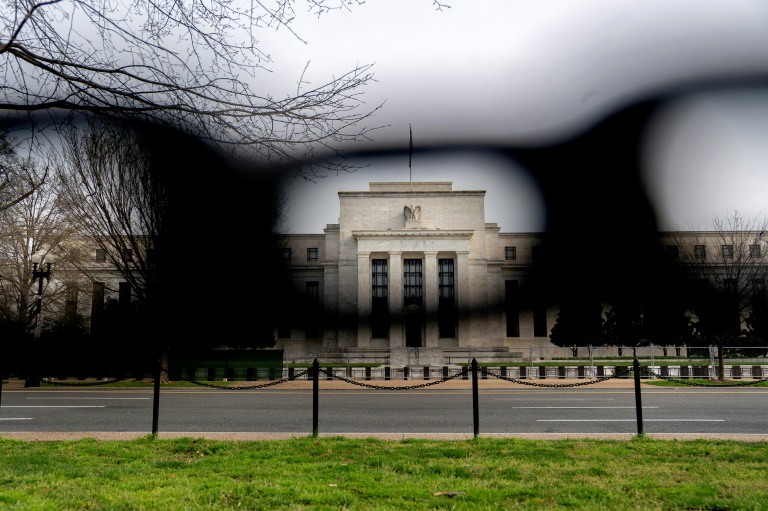
Investors will be looking to the release on Wednesday of notes from the latest Federal Reserve committee meeting for clues on further rate hikes by the US central bank.

Trade was cautious in Asia after Wall Street briefly dipped into a bear market Friday, with the S&P 500 index down about 19 percent from its January high. 

Tokyo closed 1.0 percent higher, while Shanghai ended flat. Hong Kong fell 1.2 and Singapore was down 0.6 percent but most other Asian markets saw gains, with Seoul, Bangkok, Taipei and Mumbai in the green.

Sydney ended marginally higher following a weekend election that saw the centre-left Labor party end a decade of conservative rule.

The new government of Prime Minister Anthony Albanese is expected to undertake some policy shifts, particularly on climate change, but economists said they were unlikely to upset growth forecasts.

An interest rate cut by Beijing did little to cheer Chinese markets, with investors concerned about continuing Covid restrictions that are hurting the world’s second-largest economy and snarling international supply chains.

European markets opened higher despite lingering concerns over inflation, with London up 0.8 percent, Frankfurt 1.4 percent higher and Paris adding 0.7 percent.

Downcast earning reports from retailers have also heightened market uncertainty at a time of rising interest rates, surging energy prices and Russia’s ongoing war in Ukraine, which is driving commodity prices higher.

“As macro-economic concerns stemming from aggressive monetary tightening, the Russia-Ukraine conflict and China’s stringent Covid lockdowns persist, we anticipate great volatility in the market,” Louise Dudley, portfolio manager global equities at Federated Hermes, said in a note, Bloomberg News reported.

Oil was higher, with US crude benchmark WTI up 0.9 percent and Brent gaining 1.0 percent.

The invasion of Ukraine has shaken up the global market and the outlook for key producer Russia, which has been largely shunned by Western countries.

“Concerns over demand destruction appear to be limiting the upside, while threats of oil embargoes are keeping a floor under the downside,” said Michael Hewson, chief market analyst at CMC Markets.

– Key figures at around 0730 GMT –

Tokyo – Nikkei 225: UP 1.0 percent at 27,001.52 (close)

Hong Kong – Hang Seng Index: DOWN 1.2 percent at 20,470.06 (close)

Shanghai – Composite: FLAT at 3,146.86 (close)

Dollar/yen: DOWN at 127.67 yen from 127.86 yen on Friday

Euro/dollar: UP at $1.0605 from $1.0564

Pound/dollar: UP at $1.2572 from $1.2497

Euro/pound: DOWN at 84.36 pence from 84.50 pence

West Texas Intermediate: UP 0.9 percent at $111.27 per barrel

Brent North Sea crude: UP 1.0 percent at $113.70 per barrel

New York – Dow: FLAT at 31,261.90 (close)

London – FTSE 100: UP 0.8 percent at 7,447.31

Close Bitnami banner
Bitnami