World

Iran warns it will 'avenge' killing of Guards colonel

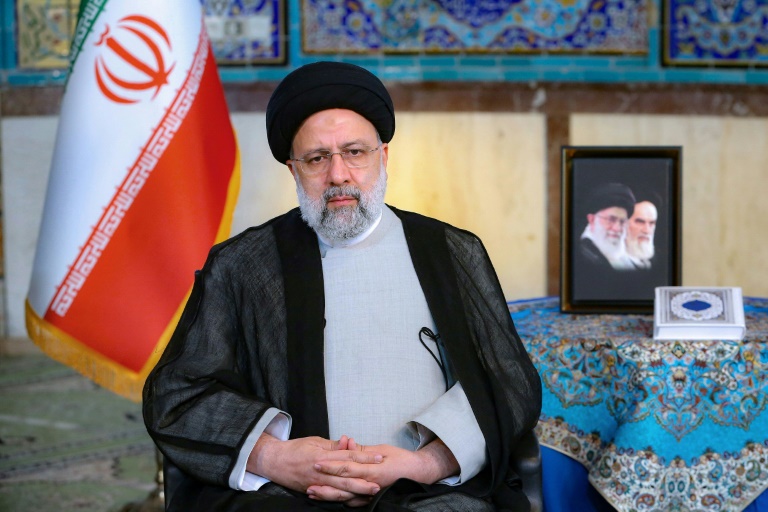
Iran will avenge the killing of a Revolutionary Guards colonel who was shot dead in Tehran, President Ebrahim Raisi warned on Monday. 

Assailants on motorcycles on Sunday hit Colonel Sayyad Khodai with five bullets as he sat in his car outside his Tehran home. 

Iran blamed “elements linked to the global arrogance”, its term for its arch enemy the United States and Washington’s allies including Israel.

It was the most high-profile killing inside Iran since the November 2020 murder of top nuclear scientist Mohsen Fakhrizadeh.

Raisi said: “I insist on the serious pursuit (of the killers) by security officials, and I have no doubt that the blood of this great martyr will be avenged.

“There is no doubt that the hand of global arrogance can be seen in this crime,” he added, echoing the Guards’ assertion the previous day.

He was speaking just ahead of visiting Oman, where he was to meet Sultan Haitham bin Tariq.

A memorial service for Khodai was scheduled in Tehran at 5:00 pm local time (1230 GMT), though it was not yet clear where or when he would be buried.

The Islamic Revolutionary Guard Corps — the ideological arm of Iran’s military — described Khodai as a “defender of the sanctuary”, a term used for those who work on behalf of the Islamic republic in Syria or Iraq.

Iran maintains significant political influence in both countries and has backed President Bashar al-Assad’s regime in Syria’s grinding civil war.  

State television noted that Khodai was “known” in Syria, where Iran has acknowledged deploying “military advisers”. 

– ‘Criminal act’ –

The official news agency IRNA said Khodai was killed by five bullets as he returned home at around 4:00 pm on Sunday (1130 GMT).

The agency published pictures showing a man slumped over in the driver’s seat of a white car, with blood around the collar of his blue shirt and on his right arm. He was strapped in with his seat belt, and the front window on the passenger side had been shot out.

The Fars news agency reported that the state prosecutor had visited the scene of the killing and ordered the “quick identification and arrest of the authors of this criminal act”.

The Guards said they had arrested several “thugs linked to the intelligence agency of the Zionist regime,” as Iran calls its enemy Israel.

A statement said the suspects had been involved in a series of crimes, including “robberies, kidnappings and vandalism”.

“The dimensions of this assassination are being investigated,” said the spokesman for the joint chiefs of staff of the Iranian armed forces, General Abolfazl Shakarji.

Khodai’s killing came as negotiations between Iran and world powers to restore a frayed 2015 nuclear deal have stalled since March.

One of the main sticking points is Tehran’s demand to remove the Guards from a US terrorism list — a request rejected by Washington.

The 2015 agreement gave Iran sanctions relief in exchange for curbs on its nuclear programme to prevent Tehran from developing an atomic bomb — something it has always denied wanting to do.

But the nuclear agreement was left hanging by a thread after then US president Donald Trump pulled out of it unilaterally in 2018 and reimposed biting economic sanctions on Tehran, prompting Iran to begin rolling back on its own commitments.

Getting away with murder in Pakistan

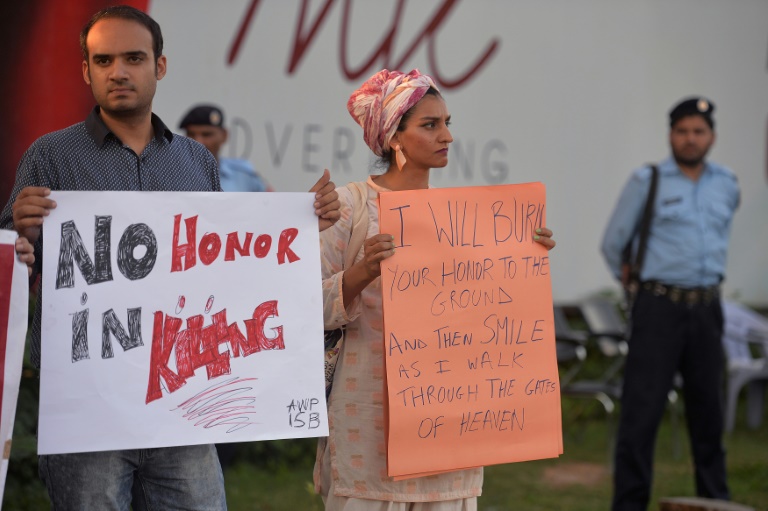
When social media star Qandeel Baloch was strangled by her brother for unapologetically challenging Pakistan’s attitudes towards women, activists fought for her murder to trigger a new era of justice over so-called “honour” killings.

Her killer’s release in February, less than three years into a life sentence, has instead underlined how the country’s legal system still allows for men to abuse, rape and murder women with impunity.

In Pakistan, overlapping legal systems riddled with loopholes and a deeply patriarchal society combine to ensure women survivors of violence are unlikely to get justice, activists, lawyers and survivors told AFP.

“The whole process from the moment a crime is committed against a woman to registering it with the police — and then the court procedure — is structured in such a way that justice remains elusive,” said Nayab Gohar Jan, a prominent rights activist.

“Add to that societal pressures and stigmas, and you can see the odds are clearly stacked against them.”

Much of Pakistani society operates under an “honour” code where women can be killed for bringing “shame” on their families by acts such as interacting with men or marrying someone they choose themselves. 

More than 470 cases of “honour” killings were reported to police in 2021, according to the Human Rights Commission of Pakistan (HRCP), though many cases go unreported by families who collude with the killers — often male relatives.

Pakistan ranked 153 out 156 countries on the World Economic Forum’s Global Gender Gap index in 2021, which noted stark disparities in access to justice, education and employment.

– Biased courts –

Baloch both captivated and scandalised Pakistan with her short skirts and provocative dancing on Facebook.

Her murder in 2016 was arguably Pakistan’s most high-profile case of an “honour” killing.

Days after killing her, Muhammad Waseem defiantly told journalists that he strangled his sister because of her “intolerable” behaviour.

The government responded to public outrage with new laws against such crimes, including — crucially — a ban on victims’ families being allowed to pardon relatives or reach out-of-court “blood money” settlements.

Waseem was convicted and sentenced to life in jail, but his lawyers found a loophole.

They successfully argued on appeal that the murder could not be classed as an “honour” killing –- rendering the legal changes inapplicable, and allowing for his mother to pardon him.

That decision is being challenged by the state.

Lawyers and activists blamed patriarchal mindsets within the justice system and a lack of women lawyers and judges for allowing “honour” killing verdicts to be overturned.

Pakistani courts are dominated by men, with less than a fifth of judges and only 12 percent of prosecutors being women, the HRCP says.

Lawyer Nida Usman Chaudhary, who founded a collective for women jurists, said male judges often show bias in their interpretation of the honour killing laws. 

“You’ve had the Supreme Court literally coming up with case law after case law where they developed an entire defence… to give impunity to the person who is accused,” she told AFP.

– Victim-blaming –

Khadija Siddiqi, who was stabbed 23 times and left for dead by her ex-boyfriend, said her legal case was “delayed so much that we were actually on the verge of giving up”.

Her attacker was convicted of attempted murder, acquitted on appeal, reconvicted, and then freed early for good behaviour. 

Like many instances of violence against women, Siddiqi’s case was dominated by a culture of victim-blaming, pervasive throughout the police, the courts and the wider community, she told AFP.

Allegations of domestic abuse are often viewed as a family matter, and victims of gender-based crimes are treated with suspicion. 

Victim-blaming attitudes go to the very top.

Last year, former prime minister Imran Khan repeatedly linked a rise in sexual assaults to women wearing “very few clothes”.

In 2020, a provincial police chief publicly admonished a gang-rape victim for driving at night without a male companion.

“I was made to feel I had done something wrong and I got what I deserved,” said Siddiqi.

Social media’s power to challenge the indolence of the justice system is growing, but often limited to high-profile cases.

Last year, Noor Mukadam, the daughter of a former ambassador, was kidnapped, raped and beheaded by her boyfriend in Islamabad.

In February, a court sentenced Zahir Jaffer to death, in a trial that was exceptional for its pace, concluding just eight months after his arrest.

The case garnered huge attention, in part because of the brutal nature of the murder and the pair’s elite status, but also because her friends were able to mobilise without fear of a backlash.

“We built the pressure… and used (social media) as a tactic,” said Shafaq Zaidi, a friend of Mukadam who helped lead the campaign.

Days before Mukadam was killed, at the other end of the country Quratulain Baloch was tortured and murdered, but her case garnered little attention.

Her husband, who denies killing her, was only formally charged in March.

“As the verdict in the Noor Mukadam case was read out, Quratulain’s murder trial hadn’t even begun. Why has there not been the same urgency here?” bristled Sanaullah Buledi, her brother.

– Local retribution –

In Muslim-majority Pakistan, a British common law-based system uses interpretations of Islamic law, particularly in cases dealing with gender-based violence and family disputes.

In rural areas, women victims often do not get the opportunity for a trial at all.

Justice can be meted out through village councils comprising local elders –- always men –- that operate extrajudicially and often order abuse against women as a means of upholding “honour”.

Although supported by many Pakistanis for their swiftness, these tribunals offer no means of appeal.

The country’s powerful religious clergy has also been responsible for quashing reform.

Last year, the Council of Islamic Ideology –- a body that previously proposed legislation allowing husbands to “lightly” beat their wives — struck down a tough new law against gender-based violence.

The appointment of the first female justice to the 17-member Supreme Court earlier this was welcomed as important step in improving the quality of justice for women. 

Ayesha Malik was a Lahore High Court judge when she banned an invasive “two-finger virginity test” for rape survivors last year.

Tough new anti-rape laws have also been introduced, though their impact has yet to be seen.

For those who have gone through the system, however, the toll remains high.

“There were times when I would wish the ground would just open up and I’d hide myself there, away from the gaze of the men in court,” said Siddiqi, the survivor. 

US unveils Asia-Pacific trade framework, but questions remain

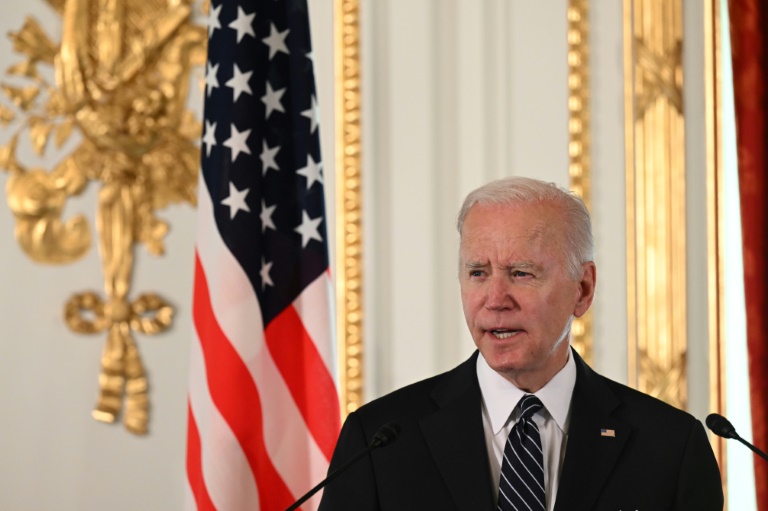
President Joe Biden launched a new Asia-Pacific trade initiative Monday in Tokyo, with 13 countries including India and Japan signing up, although questions about the pact’s effectiveness remain.

Biden formally unveiled the Indo-Pacific Economic Framework for Prosperity, or IPEF, on his second day in Japan, where he is also holding talks with Prime Minister Fumio Kishida before joining a regional Quad summit on Tuesday.

“This framework is a commitment to working with our close friends and partners in the region on challenges that matter most to ensuring economic competitiveness in the 21st century,” he said.

Unlike traditional trade blocs, there is no plan for IPEF members to negotiate tariffs and ease market access — a tool that has become increasingly unpalatable to US voters fearful of seeing homegrown manufacturing undermined.

Instead, the programme foresees integrating partners through agreed standards in four main areas: the digital economy, supply chains, clean energy infrastructure and anti-corruption measures.

The starting list of members in addition to the United States is Australia, Brunei, India, Indonesia, Japan, Malaysia, New Zealand, the Philippines, Singapore, South Korea, Thailand and Vietnam.

The countries touted IPEF as a framework for what will ultimately become a tight-knit group of trading nations.

“We share a commitment to a free, open, fair, inclusive, interconnected, resilient, secure, and prosperous Indo-Pacific region,” they said in a joint statement.

“Deepening economic engagement among partners is crucial for continued growth, peace, and prosperity.”

– Rebuilding alliances –

Together, the participants account for about 40 percent of global GDP and “there are other countries that could conceivably join us,” Biden’s national security adviser, Jake Sullivan, told reporters.

Biden has pushed to rapidly rebuild strategic military and trade alliances weakened under his predecessor Donald Trump since taking office in 2021.

IPEF is intended to offer US allies an alternative to China’s growing commercial presence across the Asia-Pacific.

However, there is no political will in Washington for returning to a tariffs-based Asia trade deal following Trump’s 2017 withdrawal from the Trans-Pacific Partnership — a huge trading bloc that was revived under a new name in 2018, without US membership.

While the TPP reduces trade barriers for members, US Secretary of Commerce Gina Raimondo emphasised to reporters that IPEF was not designed to go down the same route.

The “framework is intentionally designed not to be a same old, same old traditional trade agreement,” she said.

Even so, Japan’s Kishida said there is still an appetite for US involvement in the larger pact abandoned by Trump.

The country welcomes the new framework and will “participate and cooperate”, he said, but “from a strategic standpoint, Japan hopes that the United States will return to the TPP”.

– No Taiwan –

China has criticised IPEF as an attempt to create a closed club. Sullivan rejected this, saying “it is by design and definition an open platform.”

Taiwan, the self-governing democracy that China claims sovereignty over, has pointedly not been brought into the initial line-up — despite being an important link in supply chains for microchips.

Sullivan said nevertheless that the United States is “looking to deepen our economic partnership with Taiwan, including on high-technology issues, including on semiconductors and supply chains”.

This will happen, however, only “on a bilateral basis”.

The United States faces skepticism, given the lack of incentives to go along with IPEF’s plan for smoother integration.

Without offering increased access to the huge US market, it is unclear what enforcement mechanisms could be applied.

But Raimondo said that if IPEF had been in place before the Covid-19 pandemic triggered mass economic shutdowns, the United States would have “experienced much less disruption”.

And more broadly, the US trade-boosting initiative is welcomed by businesses that “increasingly look for alternatives to China”, she said.

US unveils Asia-Pacific trade framework, but questions remain

President Joe Biden launched a new Asia-Pacific trade initiative Monday in Tokyo, with 13 countries including India and Japan signing up, although questions about the pact’s effectiveness remain.

Biden formally unveiled the Indo-Pacific Economic Framework for Prosperity, or IPEF, on his second day in Japan, where he is also holding talks with Prime Minister Fumio Kishida before joining a regional Quad summit on Tuesday.

“This framework is a commitment to working with our close friends and partners in the region on challenges that matter most to ensuring economic competitiveness in the 21st century,” he said.

Unlike traditional trade blocs, there is no plan for IPEF members to negotiate tariffs and ease market access — a tool that has become increasingly unpalatable to US voters fearful of seeing homegrown manufacturing undermined.

Instead, the programme foresees integrating partners through agreed standards in four main areas: the digital economy, supply chains, clean energy infrastructure and anti-corruption measures.

The starting list of members in addition to the United States is Australia, Brunei, India, Indonesia, Japan, Malaysia, New Zealand, the Philippines, Singapore, South Korea, Thailand and Vietnam.

The countries touted IPEF as a framework for what will ultimately become a tight-knit group of trading nations.

“We share a commitment to a free, open, fair, inclusive, interconnected, resilient, secure, and prosperous Indo-Pacific region,” they said in a joint statement.

“Deepening economic engagement among partners is crucial for continued growth, peace, and prosperity.”

– Rebuilding alliances –

Together, the participants account for about 40 percent of global GDP and “there are other countries that could conceivably join us,” Biden’s national security adviser, Jake Sullivan, told reporters.

Biden has pushed to rapidly rebuild strategic military and trade alliances weakened under his predecessor Donald Trump since taking office in 2021.

IPEF is intended to offer US allies an alternative to China’s growing commercial presence across the Asia-Pacific.

However, there is no political will in Washington for returning to a tariffs-based Asia trade deal following Trump’s 2017 withdrawal from the Trans-Pacific Partnership — a huge trading bloc that was revived under a new name in 2018, without US membership.

While the TPP reduces trade barriers for members, US Secretary of Commerce Gina Raimondo emphasised to reporters that IPEF was not designed to go down the same route.

The “framework is intentionally designed not to be a same old, same old traditional trade agreement,” she said.

Even so, Japan’s Kishida said there is still an appetite for US involvement in the larger pact abandoned by Trump.

The country welcomes the new framework and will “participate and cooperate”, he said, but “from a strategic standpoint, Japan hopes that the United States will return to the TPP”.

– No Taiwan –

China has criticised IPEF as an attempt to create a closed club. Sullivan rejected this, saying “it is by design and definition an open platform.”

Taiwan, the self-governing democracy that China claims sovereignty over, has pointedly not been brought into the initial line-up — despite being an important link in supply chains for microchips.

Sullivan said nevertheless that the United States is “looking to deepen our economic partnership with Taiwan, including on high-technology issues, including on semiconductors and supply chains”.

This will happen, however, only “on a bilateral basis”.

The United States faces skepticism, given the lack of incentives to go along with IPEF’s plan for smoother integration.

Without offering increased access to the huge US market, it is unclear what enforcement mechanisms could be applied.

But Raimondo said that if IPEF had been in place before the Covid-19 pandemic triggered mass economic shutdowns, the United States would have “experienced much less disruption”.

And more broadly, the US trade-boosting initiative is welcomed by businesses that “increasingly look for alternatives to China”, she said.

Biden vows military defence of Taiwan if China invades

President Joe Biden vowed Monday that US forces would defend Taiwan militarily if China attempted to take control of the self-ruled island by force, warning Beijing was already “flirting with danger”.

The remarks, made in Tokyo where he is meeting with Japan’s prime minister ahead of a summit Tuesday, were Biden’s strongest to date on the issue and come with rising tensions in the region over China’s growing economic and military power.

Washington and allies like Japan have framed their tough response to Russia’s invasion of Ukraine as a warning to others, particularly China, about the consequences of unilateral military action.

Biden hammered that message home after talks with Japanese Prime Minister Fumio Kishida, in which the pair agreed to monitor Chinese naval activity and joint Chinese-Russia exercises.

Asked if Washington was willing to get involved militarily to defend Taiwan, Biden replied simply: “Yes.”

“That’s the commitment we made,” he added. 

“We agreed with the One China policy, we signed on to it… but the idea that it can be taken by force is just not appropriate, it would dislocate the entire region and would be another action similar to Ukraine,” Biden said.

He warned Beijing was already “flirting with danger right now by flying so close and all the manoeuvres undertaken”, in reference to a growing number of Chinese sorties, naval exercises and construction in the region, viewed as a projection of its growing power.

The US leader, who has led an international effort to impose punishing sanctions on Russia over its invasion of Ukraine, said President Vladimir Putin had to pay a “long-term price”, otherwise it would send the wrong message.

“What signal does that send to China about the cost of attempting to take Taiwan by force?” he said.

Like most nations, the United States diplomatically recognises Beijing but also maintains de facto diplomatic ties with Taipei. 

For decades it has maintained a policy of “strategic ambiguity” in which it never makes clear what it would do in the event of an invasion.

The policy was designed both to keep Beijing from declaring war and also to stop Taiwan formally declaring independence.

– ‘Policy has not changed’ –

A White House official said after Biden’s remarks that they did not constitute a divergence from Washington’s “One China” policy and its commitment to “provide Taiwan with the military means to defend itself”.

“Our policy has not changed,” the official said.

China’s Communist Party has never controlled self-ruled Taiwan but it views the island as part of its territory and has vowed to one day seize it, by force if needed.

Beijing’s growing sabre-rattling on the issue has prompted increasing diplomatic support for Taipei, including from Japan, which has regularly warned China against “unilateral attempts to change the status quo by force”.

Kishida called for stability in the Taiwan Strait and said Tokyo was committed to boosting its defence spending, a sensitive subject in a country with constitutional limits on its military.

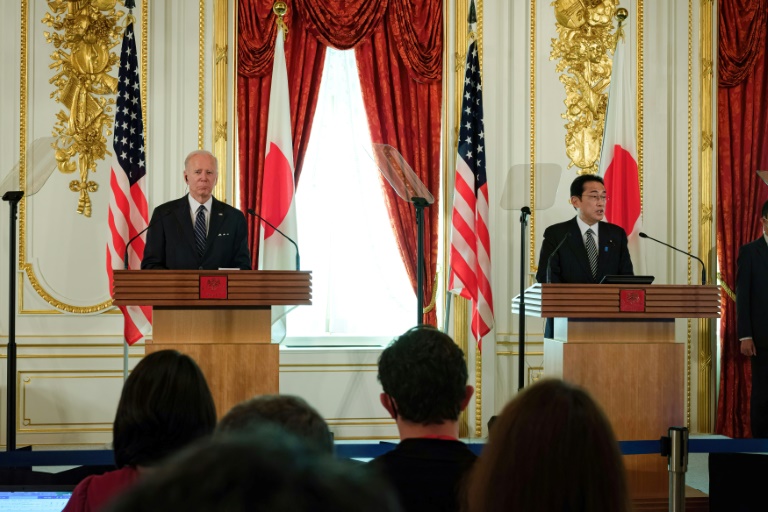
“Japan will fundamentally strengthen its defence capacity, and to back that up will significantly increase its defence spending,” Kishida said at a joint press conference with Biden.

“We don’t rule out any options, including (acquiring) the capacity to counter-attack,” he added.

Biden is in Japan on the second leg of an Asia trip intended to reinforce regional ties and show Washington remains committed to the region despite its involvement with the crisis in Ukraine.

He announced Monday that 13 countries have joined a new, US-led Asia-Pacific trade initiative touted as a counterweight to China’s aggressive expansion in the region.

The initiative is expected to be formally rolled out later Monday, but faces some scepticism because there is no plan for members to negotiate tariffs and ease market access.

On Tuesday, Biden meets with the leaders of Japan, Australia and India, the so-called Quad grouping, also hoping to rally partners against China’s growing economic and military clout.

Biden arrived in Tokyo on Sunday after stopping in Seoul for talks with newly elected President Yoon Suk-yeol.

While there, Biden said he was willing to meet Kim Jong Un if the leader-for-life is “sincere”, despite the threat of a possible North Korean nuclear test hanging over the Asian tour.

Iran will 'avenge' killing of Guards colonel: president

Iran will avenge the killing of a Revolutionary Guards colonel who was shot dead in Tehran, President Ebrahim Raisi warned on Monday. 

Colonel Sayyad Khodai was killed Sunday outside his home by assailants on motorcycles. Iran blamed “elements linked to the global arrogance”, its term for the United States and Washington’s allies including Israel.

It was the most high-profile killing inside Iran since the November 2020 murder of top nuclear scientist Mohsen Fakhrizadeh.

Raisi said: “I insist on the serious pursuit (of the killers) by security officials, and I have no doubt that the blood of this great martyr will be avenged.

“There is no doubt that the hand of global arrogance can be seen in this crime,” he added, echoing what the Guards said the previous day.

He was speaking just ahead of visiting Oman, where he was to meet Sultan Haitham. 

Khodai’s funeral was due to take place in Tehran at 5:00 pm local time (1230 GMT).

The Islamic Revolutionary Guard Corps — the ideological arm of Iran’s military — described Khodai as a “defender of the sanctuary”, a term used for those who work on behalf of the Islamic republic in Syria or Iraq.

Iran maintains significant political influence in both countries, notably having backed President Bashar al-Assad’s regime in Syria’s grinding civil war.  

State television noted that Khodai was “known” in Syria, where Iran has acknowledged deploying “military advisers”. 

– Five bullets –

The official news agency IRNA said Khodai was killed by five bullets as he returned home at around 4:00 pm on Sunday (1130 GMT).

The agency published pictures showing a man slumped over in the driver’s seat of a white car, with blood around the collar of his blue shirt and on his right arm. He was strapped in with his seat belt, and the front window on the passenger side had been shot out.

The Fars news agency reported that the state prosecutor had visited the scene of the killing and ordered the “quick identification and arrest of the authors of this criminal act”.

The Guards said they had arrested several “thugs linked to the intelligence agency of the Zionist regime,” as Iran calls its enemy Israel.

A statement said the suspects had been involved in a series of crimes, including “robberies, kidnappings and vandalism”.

Khodai’s killing came as negotiations between Iran and world powers to restore a frayed 2015 nuclear deal have stalled since March.

One of the main sticking points is Tehran’s demand to remove the Guards from a US terrorism list — a request rejected by Washington.

The 2015 agreement gave Iran sanctions relief in exchange for curbs on its nuclear programme to prevent Tehran from developing an atomic bomb — something it has always denied wanting to do.

But the nuclear agreement was left hanging by a thread after then US president Donald Trump pulled out of it unilaterally in 2018 and reimposed biting economic sanctions on Tehran, prompting Iran to begin rolling back on its own commitments.

Chinese province of nearly 100 million to Covid test every two days

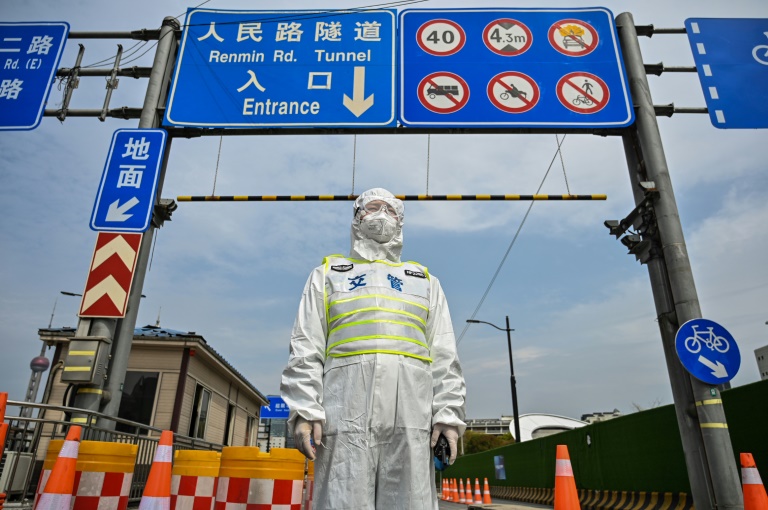
The Chinese province of Henan has ordered its nearly 100 million people to take a Covid test every two days, an unprecedented step as the country grapples with an Omicron-fuelled surge. 

China has persisted with its zero-Covid policy, imposing hard lockdowns and movement restrictions on several cities even as much of the world has transitioned to living with the coronavirus.

The curbs, including stay-at-home orders in economic engine Shanghai and creeping restrictions across Beijing, have inflicted a heavy economic toll.

To avoid a similar city-wide lockdown, local governments are adopting high-frequency testing to detect cases more swiftly and potentially isolate clusters without ordering entire populations to stay indoors.

“Residents of (Henan) province and other personnel there should complete nucleic acid sampling at least once every 48 hours,” according to an article posted Sunday on the local government’s website.

The testing will begin in Henan’s provincial capital of Zhengzhou before the end of May, authorities said, according to the report, to help with “identifying potential risks” quickly.

Residents who do not comply will have problems scanning the codes needed to enter public places or take transport, the report added.

Other provincial capitals — such as Shijiazhuang in the northern province of Hebei — have also rolled out similar measures, with Shijiazhuang saying it would start weekly Covid tests for its 11 million people on Monday.

Analysts have cautioned that frequent mass testing comes at a high cost to an already faltering economy.

If similar mandates are expanded to all of mainland China, it could cost between 0.9 percent and 2.3 percent of China’s gross domestic product, said Nomura analysts in a report this month.

Key business hub Shanghai has been almost entirely sealed off for around two months, snarling supply chains, while China’s capital Beijing has banned dining out and ordered millions to work from home.

Retail sales and factory output slumped to their lowest levels in around two years last month, reflecting the fallout from China’s zero-Covid policy.

UN human rights chief begins contentious China visit

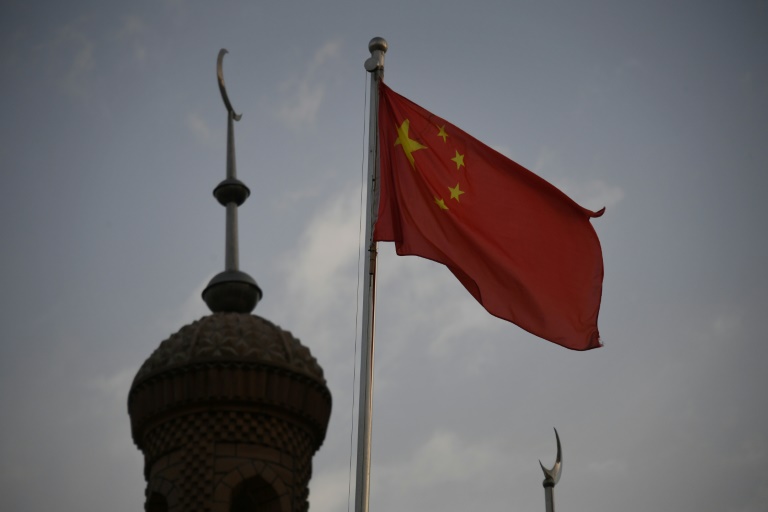
The UN human rights chief began a six-day trip to China on Monday that will include the remote Xinjiang region, stirring fears over access and the propaganda value the visit offers to the Chinese Communist Party.

The tour by Michelle Bachelet marks the first by the UN’s top rights official in nearly two decades and comes as Beijing stands accused of widespread abuses of Muslims in far-western Xinjiang.

The ruling Communist Party is alleged to have detained over one million Uyghurs and other Muslim minorities there under a years-long security crackdown the United States calls a “genocide”.

China vociferously denies the accusations, calling them “the lie of the century”.

Bachelet conducted virtual meetings with the heads of around 70 diplomatic missions in China on Monday, according to diplomatic sources in Beijing, who said she gave assurances over her access to detention centres and rights defenders.

Later in the week, she is due to travel to the Xinjiang cities of Urumqi and Kashgar as well as the southern city of Guangzhou.

UN officials have been locked in negotiations with the Chinese government since 2018 in a bid to secure “unfettered, meaningful access” to Xinjiang.

But fears have swirled of a whitewash offering a tightly-controlled glimpse into life in the province, which China says it has pacified with “re-education centres” and uplifted with an economic rejuvenation drive.

– Access or cover-up? –

The United States led the criticism ahead of her trip, saying it was “deeply concerned” that Bachelet had failed to secure guarantees on what she can see.

“We have no expectation that the PRC will grant the necessary access required to conduct a complete, unmanipulated assessment of the human rights environment in Xinjiang,” State Department spokesman Ned Price told reporters, using the acronym for the People’s Republic of China.

Instead of a thorough probe into alleged abuses, rights advocates also fear Bachelet is in store for a stage-managed tour.

Her visit will be “a running battle against Chinese government efforts to cover up the truth,” said Agnes Callamard, secretary general of Amnesty International.

“The UN must take steps to mitigate against this and resist being used to support blatant propaganda.”

The last such visit, in 2005, came when Beijing was keen to soften its global image as it prepared to host the 2008 Olympic Games — but much has changed since then.

President Xi Jinping has become the most authoritarian Chinese leader in a generation and is working on securing an unprecedented third term at the end of this year.

In addition to mass detentions, Chinese authorities have waged a campaign of forced labour, coerced sterilisation and the destruction of Uyghur cultural heritage in Xinjiang, researchers and campaigners say.

Chinese state media has given muted coverage of the visit so far.

But an article on Sunday by state news agency Xinhua lauded the country’s “remarkable achievements in respecting and protecting human rights”.

A more combative article on CGTN — the English-language arm of China’s state broadcaster — blasted what it called the West’s “false Xinjiang narrative” and questioned the basis of the allegations.

War crimes verdict looms as Russian offensive intensifies

With a verdict due Monday in the conflict’s first war crimes trial, Moscow’s offensive in eastern Ukraine is only intensifying, with the city of Severodonetsk under “round-the-clock” bombardment as Russian troops attempt its encirclement.

The trial in Kyiv — seen as a public test of the Ukrainian judicial system’s independence — comes as international institutions conduct their own investigations into alleged abuses that have turned cities like Bucha and Mariupol into watchwords for destruction.

Polish President Andrzej Duda, whose country is a vital staging area for Western arms shipments and host to millions of the war’s refugees, on Sunday pointed to the devastation in those cities as a reason for why “business as usual” with Russia was no longer possible.

“An honest world cannot return to business as usual while forgetting the crimes, the aggression, the fundamental rights that have been trampled on,” he told Ukraine’s parliament.

US President Joe Biden echoed Duda’s firm tone Monday, telling a Tokyo press conference Russia had to “pay a long-term price” for its “barbarism in Ukraine” in terms of sanctions imposed by the United States and its allies.

Three months after launching an invasion that failed in its initial goal of capturing Kyiv, Moscow’s forces are now squarely focused on securing and expanding their gains in the Donbas region and on Ukraine’s southern coast.

But as its relentless offensive continues, Russia’s lead negotiator said Sunday that Moscow was willing to resume negotiations with Ukraine, which it blames for “freezing” earlier talks. 

Any talks, however, will not include concessions of land, according to Ukrainian President Volodymyr Zelensky’s chief of staff Andriy Yermak, who tweeted the war must end with “complete restoration of (Ukraine’s) territorial integrity”.

– War crimes verdict –

On Monday, Zelensky will continue his drive to rally Western support for his country’s cause, targeting the world’s political and business elite gathering in the Swiss mountain resort of Davos for the World Economic Forum. 

As Ukraine’s president addresses the forum’s attendees via videoconference, a panel of judges in Kyiv will be determining the fate of Russian Sergeant Vadim Shishimarin in the conflict’s first war crimes trial.

The shaven-headed 21-year-old from Siberia has admitted to killing a 62-year-old civilian in the early stages of the invasion, but told the court he was pressured into an act for which he was “truly sorry”.

“I was nervous about what was going on. I didn’t want to kill,” he said from the glass defence box, wearing a grey and blue hoodie, as the trial concluded Friday.

Shishimarin’s lawyer has argued for an acquittal, saying his client was carrying out what he perceived to be a direct order that he initially disobeyed.

Prosecutors, who have asked for a life sentence, said he was “well aware” he was executing a “criminal order”.

– ‘Scorched-earth tactics’ –

In the eastern city of Severodonetsk, a focus of recent fighting, regional governor Sergiy Gaiday said Russian forces attempting its encirclement were “using scorched-earth tactics, deliberately destroying” the city.

Gaiday said Russia was drawing forces from a vast area — those withdrawn from the Kharkiv region, others involved in Mariupol’s siege, pro-Russian separatist militias, and even troops freshly mobilised from Siberia — and concentrating their firepower on the Donetsk and Lugansk regions. 

At least seven civilians were killed and eight others wounded in Sunday’s bombardment of the Donetsk region, according to the Ukrainian army’s Facebook page.

Shelling and missile strikes also continued to pound Kharkiv in the north, as well as Mykolaiv and Zaporizhzhia in the south, Ukrainian officials said.

With the nation under relentless assault, Ukraine’s parliament on Sunday voted to extend martial law through August 23.

Millions of ordinary Ukrainians, meanwhile, face a daily struggle to survive.

“There is no work, no food, no water,” said Angela Kopytsa, 52, breaking down into tears as she spoke to AFP reporters on a Russian-organised tour of captured Mariupol.

Kopytsa said her home had been destroyed during the fighting in the port and that “children at maternity wards were dying of hunger”. 

Once-bustling Mariupol, which has been without electricity since early March, has now been reduced to a wasteland of charred buildings

– Davos snubs Moscow –

Thousands of miles away, Monday’s meeting in Davos is expected to be dominated by the political and economic fallout from Russia’s invasion of Ukraine. 

Russian business and political leaders, who once participated in debates and mingled with other A-listers at champagne parties, have been barred from this year’s gathering — dubbed “History at a Turning Point” — over the war.

Zelensky is due to confer with Davos delegates via videoconference to mark the opening of the Ukraine House Davos, a forum for Kyiv and its international backers.

And a strong Ukrainian contingent, including the foreign minister, has made the journey to plead their case.

“The major request to the whole world here is: do not stop backing Ukraine,” Ukrainian lawmaker Ivanna Klympush-Tsintsadze told reporters on the eve of the summit.

More than 50 heads of state or government will be among the 2,500 delegates, ranging from business leaders to academics and civil society figures.

burs-dc/har/bbk/sw/caw/cwl

Seven killed after fire engulfs Philippine ferry

At least seven people were killed and scores plucked to safety in the Philippines on Monday after a fire ripped through a ferry and forced passengers to jump overboard, the coast guard and witnesses said.

The blaze broke out on the Mercraft 2 at around 6:30 am (2230 GMT Sunday) as it carried 134 passengers and crew from Polillo Island to Real in Quezon province on the main island of Luzon.

Seven people died and 127 were rescued, Philippine Coast Guard spokesman Commodore Armando Balilo said after the last missing were found.

The fibreglass fast craft boat, which had a 186-person capacity, was about a kilometre from Real when it caught fire. 

“We heard an explosion,” said Kycel Pineda, 18, who was travelling on another ferry.

“When we saw the boat, it was already engulfed by fire and passengers were already floating in the sea,” the high school student added.

Thick black smoke billowed from the Mercraft as flames tore through the entire vessel, photos shared by the coast guard showed.

People with life rings and life vests were in the water. Some were rescued by other ferries or clambered into inflatable boats.

The fire appears to have started in the engine room, Balilo said. A team of investigators was preparing to look into the cause. 

“We were able to rescue 40 survivors,” said Captain Brunette Azagra, whose passenger vessel was 500 metres from the Mercraft when the fire broke out. Two bodies were also pulled from the water, he added.

“They were lucky, because we also came from Polillo. They overtook us, but we were just nearby,” Azagra told a local radio station, describing sea conditions as “quite good”.

Twenty-four people were injured, including the captain of the ferry, according to the coast guard.

Speaking from the hospital where the injured were being treated, Real town disaster officer Ricky Poblete said the seven dead had drowned.

Photos posted on the coast guard’s Facebook page showed a survivor lying on a stretcher being carried off a ferry.

Another lay on the deck of a boat and appeared to be receiving treatment.

The Philippines, an archipelago of more than 7,000 islands, is plagued by poor sea transport, with its badly regulated boats and ships prone to overcrowding and accidents. 

The fire on the Mercraft was under control and the burned-out wreckage towed to shore. 

Close Bitnami banner
Bitnami