World

Global elites return to Davos under Ukraine storm

The Davos summit of global political and business elites returns Monday after a Covid-induced two-year break to face another momentous crisis: Russia’s invasion of Ukraine.

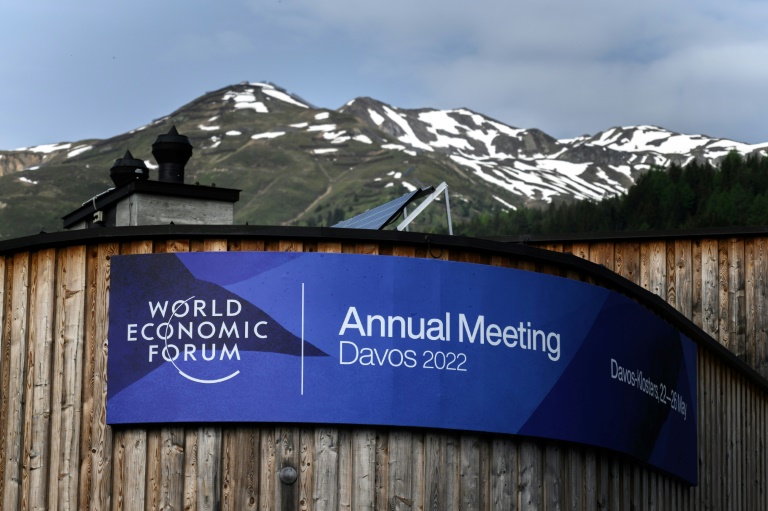
The theme of the World Economic Forum, “History at a Turning Point”, sets the tone for the four-day meeting in the glitzy Swiss mountain resort that will be dominated by the political and economic fallout from the conflict.

When the WEF last took place in Davos in January 2020, the coronavirus was just brewing in China before morphing into a devastating pandemic.

A Davos forum took place virtually last year, with Russian President Vladimir Putin among the speakers.

Russian business and political leaders, who used to participate in debates and mingle with other A-listers at champagne parties, were barred by organisers from attending this year’s gathering over the war.

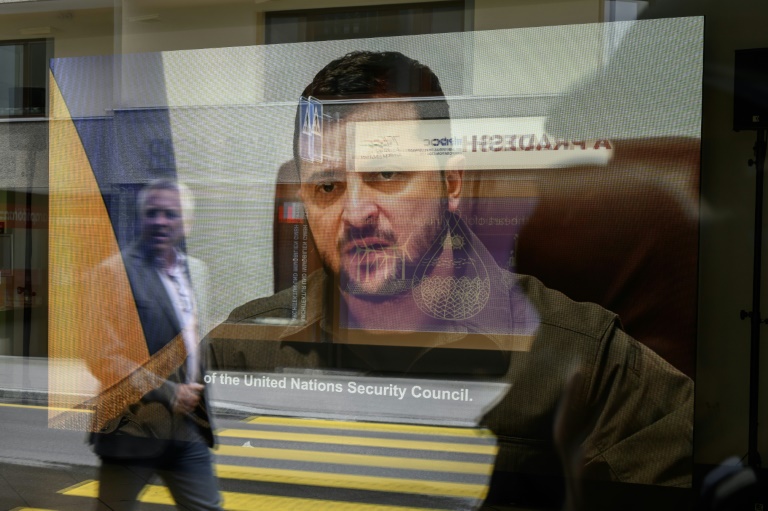
Ukrainians, meanwhile, have deployed a strong contingent, including the foreign minister, to plead their case, with President Volodymyr Zelensky scheduled to address the forum via videolink on Monday.

“The major request to the whole world here is: do not stop backing Ukraine,” Ukrainian lawmaker Ivanna Klympush Tsintsadze told reporters on the eve of the summit.

Another lawmaker, Anastasia Radina, appealed for NATO-style heavy weaponry to “win the war”.

“We actually need weapons more than we need anything else,” she said.

The Ukrainians have transformed the “Russia House” in Davos –- normally used by the Russian delegation — into the “Russia War Crimes House” to promote their cause.

WEF founder Klaus Schwab said last week that Davos would do what it can to support Ukraine and its recovery.

“Russia’s aggression on the country will be seen in future history books as the breakdown of the post-World War II and post-Cold War order,” he said.

More than 50 heads of state or government will be among the 2,500 delegates, ranging from business leaders to academics and civil society figures.

Some of the biggest names include Germany’s new chancellor, Olaf Scholz, European Union chief Ursula von der Leyen, NATO head Jens Stoltenberg and US climate envoy John Kerry.

– ‘Bonanza’ for billionaires –

While the summit is back, it lacks its usual snowy backdrop as the Omicron variant forced this year’s January meeting to be postponed until now. Instead, rain is forecast all week.

Climate change and concerns about the economic recovery from the pandemic are also at the forefront of the Davos talks.

Inflation has become a major concern as energy and food prices have soared further since Russia invaded Ukraine, raising fears of hunger in countries dependent on wheat from the region.

Global charity Oxfam warned Monday that 263 million people could sink into extreme poverty this year, at a rate of one million every 33 hours.

By contrast, 573 new billionaires have emerged during the pandemic, or one every 30 hours, Oxfam said as it called for taxes on the rich.

“Billionaires are arriving in Davos to celebrate an incredible surge in their fortunes,” Oxfam executive director Gabriela Bucher said in a statement.

“The pandemic and now the steep increases in food and energy prices have, simply put, been a bonanza for them,” Bucher said.

“Meanwhile, decades of progress on extreme poverty are now in reverse and millions of people are facing impossible rises in the cost of simply staying alive,” she said.
Global elites return to Davos under Ukraine storm

The Davos summit of global political and business elites returns Monday after a Covid-induced two-year break to face another momentous crisis: Russia’s invasion of Ukraine.

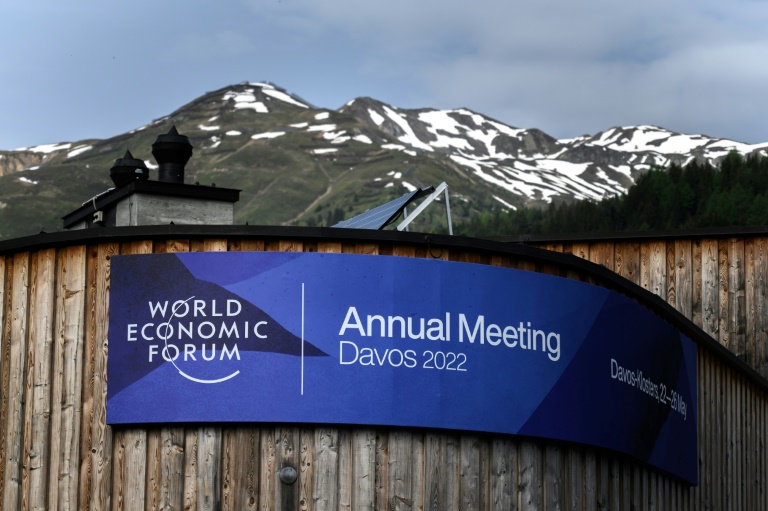
The theme of the World Economic Forum, “History at a Turning Point”, sets the tone for the four-day meeting in the glitzy Swiss mountain resort that will be dominated by the political and economic fallout from the conflict.

When the WEF last took place in Davos in January 2020, the coronavirus was just brewing in China before morphing into a devastating pandemic.

A Davos forum took place virtually last year, with Russian President Vladimir Putin among the speakers.

Russian business and political leaders, who used to participate in debates and mingle with other A-listers at champagne parties, were barred by organisers from attending this year’s gathering over the war.

Ukrainians, meanwhile, have deployed a strong contingent, including the foreign minister, to plead their case, with President Volodymyr Zelensky scheduled to address the forum via videolink on Monday.

“The major request to the whole world here is: do not stop backing Ukraine,” Ukrainian lawmaker Ivanna Klympush Tsintsadze told reporters on the eve of the summit.

Another lawmaker, Anastasia Radina, appealed for NATO-style heavy weaponry to “win the war”.

“We actually need weapons more than we need anything else,” she said.

The Ukrainians have transformed the “Russia House” in Davos –- normally used by the Russian delegation — into the “Russia War Crimes House” to promote their cause.

WEF founder Klaus Schwab said last week that Davos would do what it can to support Ukraine and its recovery.

“Russia’s aggression on the country will be seen in future history books as the breakdown of the post-World War II and post-Cold War order,” he said.

More than 50 heads of state or government will be among the 2,500 delegates, ranging from business leaders to academics and civil society figures.

Some of the biggest names include Germany’s new chancellor, Olaf Scholz, European Union chief Ursula von der Leyen, NATO head Jens Stoltenberg and US climate envoy John Kerry.

– ‘Bonanza’ for billionaires –

While the summit is back, it lacks its usual snowy backdrop as the Omicron variant forced this year’s January meeting to be postponed until now. Instead, rain is forecast all week.

Climate change and concerns about the economic recovery from the pandemic are also at the forefront of the Davos talks.

Inflation has become a major concern as energy and food prices have soared further since Russia invaded Ukraine, raising fears of hunger in countries dependent on wheat from the region.

Global charity Oxfam warned Monday that 263 million people could sink into extreme poverty this year, at a rate of one million every 33 hours.

By contrast, 573 new billionaires have emerged during the pandemic, or one every 30 hours, Oxfam said as it called for taxes on the rich.

“Billionaires are arriving in Davos to celebrate an incredible surge in their fortunes,” Oxfam executive director Gabriela Bucher said in a statement.

“The pandemic and now the steep increases in food and energy prices have, simply put, been a bonanza for them,” Bucher said.

“Meanwhile, decades of progress on extreme poverty are now in reverse and millions of people are facing impossible rises in the cost of simply staying alive,” she said.
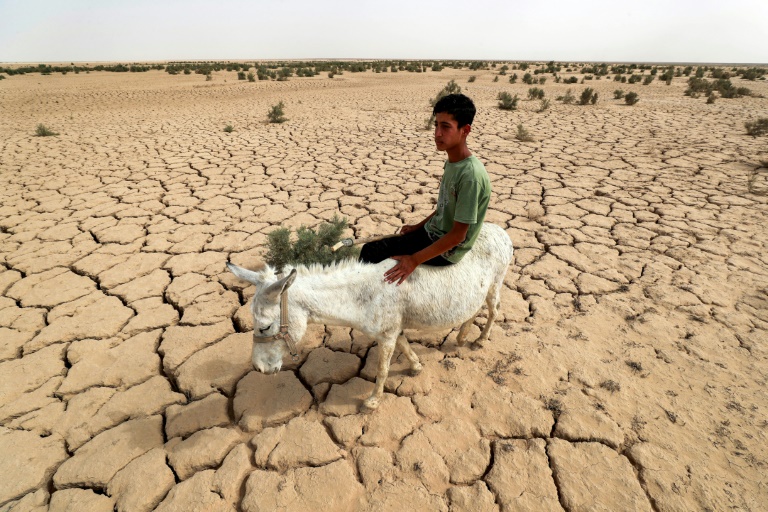
Key Iraq irrigation reservoir close to drying out

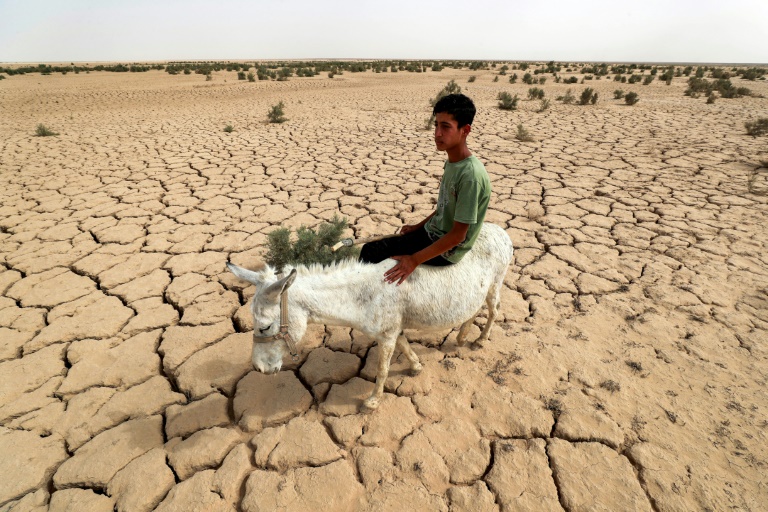
Iraq’s Lake Hamrin, a once-vast reservoir northeast of Baghdad that is the sole source of water for irrigation across Diyala province, has nearly dried out, a senior official said Friday.

Successive years of low rainfall and a sharp reduction in the flow of water down the Sirwan River from neighbouring Iran have reduced much of the lake to a dust bowl, the official told AFP.

“There has been a sharp reduction in the water level — reserves currently stand at 130 million cubic metres against two billion cubic metres normally,” said Aoun Dhiab, a senior adviser in the water ministry.

Dhiab said a number of factors were to blame including the prolonged drought and Iranian dam construction and river diversion projects upstream.

Dhiab said it was not the first time water levels had fallen so low. “In 2009, the lake dried out completely. There was just a stream.” 

He said the impact on surrounding farmland should not be underestimated.

“There are no other sources of water in the province — the volume arriving in Lake Hamrin is the volume used in the province.”

He said the government had asked Iran to increase the flow of water across the border. Otherwise all that could be done was to pray for higher rainfall next year.

The problem is not exclusive to Diyala province. The World Bank predicts that without major changes, Iraq will have lost 20 percent of its water resources by 2050.

The country is classified as one of five most vulnerable to climate change effects and desertification. Water shortages have led this year to reduced quotas for rice and wheat farmers.

Iraq’s upstream neighbours Iran, Turkey and Syria experience similar shortfalls, meaning that its appeals for help generally fall unheaded. 

Key Iraq irrigation reservoir close to drying out

Iraq’s Lake Hamrin, a once-vast reservoir northeast of Baghdad that is the sole source of water for irrigation across Diyala province, has nearly dried out, a senior official said Friday.

Successive years of low rainfall and a sharp reduction in the flow of water down the Sirwan River from neighbouring Iran have reduced much of the lake to a dust bowl, the official told AFP.

“There has been a sharp reduction in the water level — reserves currently stand at 130 million cubic metres against two billion cubic metres normally,” said Aoun Dhiab, a senior adviser in the water ministry.

Dhiab said a number of factors were to blame including the prolonged drought and Iranian dam construction and river diversion projects upstream.

Dhiab said it was not the first time water levels had fallen so low. “In 2009, the lake dried out completely. There was just a stream.” 

He said the impact on surrounding farmland should not be underestimated.

“There are no other sources of water in the province — the volume arriving in Lake Hamrin is the volume used in the province.”

He said the government had asked Iran to increase the flow of water across the border. Otherwise all that could be done was to pray for higher rainfall next year.

The problem is not exclusive to Diyala province. The World Bank predicts that without major changes, Iraq will have lost 20 percent of its water resources by 2050.

The country is classified as one of five most vulnerable to climate change effects and desertification. Water shortages have led this year to reduced quotas for rice and wheat farmers.

Iraq’s upstream neighbours Iran, Turkey and Syria experience similar shortfalls, meaning that its appeals for help generally fall unheaded. 

US flight brings tons of needed baby formula from Germany

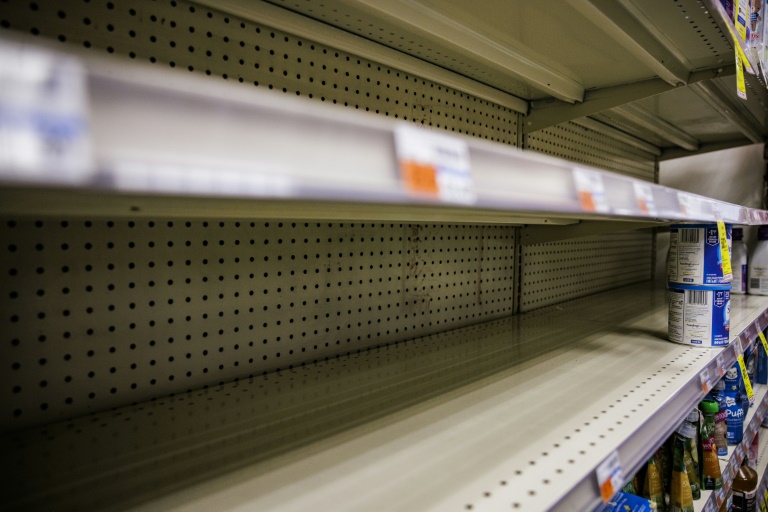
A US military plane bringing several tons of much-needed baby formula from Germany landed Sunday at an airport in Indiana as authorities scramble to address a critical shortage.

Scarcity of medical-grade baby formula caused by production problems and supply-chain issues has created grave problems for thousands of parents whose infants rely on it, sending them in frantic searches for the product.

The cargo plane took off from the US air base at Ramstein, Germany, carrying more than 70,000 pounds of powdered formula, the White House said. 

President Joe Biden posted about the flight on Twitter from Japan, where he is on a five-day Asia trip.

“Our team is working around the clock to get safe formula to everyone who needs it,” he said.

Biden tweeted an update later Sunday, saying more formula was on its way to the United States via a second shipment. 

“We have secured a second flight to transport Nestle specialty infant formula to Pennsylvania,” the president posted. 

“The flight and trucking will take place in the coming days, and I will continue to keep you updated,” he said.

The first shipment will cover about 15 percent of the immediate need, presidential economics advisor Brian Deese said on CNN.

He added there are “more flights in train that will be coming in early this week” as part of what the administration has dubbed “Operation Fly Formula.”

The formula was flown to Indiana because it is a hub for Nestle, a major domestic producer. It will be quality-tested at a nearby lab before being distributed.

The formula shortage has been developing for months, aggravated not only by supply-chain issues linked to the Covid-19 pandemic but by the closing of the largest US formula-making plant, a Michigan factory owned by Abbott Laboratories, amid concerns that contamination may have led to the deaths of two infants.

“We had a manufacturer that wasn’t following the rules, and that was making formula that had the risk of making babies sick,” Deese said. “So we have to take action.”

Another problem, he said, was that US formula production had become concentrated among just three companies. 

“We’re going to have to work” on ways to increase competition, he said.

Abbott’s CEO, Robert Ford, apologized to consumers in a Washington Post op-ed Sunday, saying: “We’re sorry to every family we’ve let down since our voluntary recall exacerbated our nation’s baby formula shortage.”

Deese was asked separately about growing concerns that the US economy — hit by high inflation, supply chain troubles and the war in Ukraine — may be headed toward a recession. 

“Well, there are always risks,” he said.

“But there’s also no doubt that the United States is in a better position than any other major country around the world to address inflation without giving up all the economic gains that we have had.”

The US inflation rate hit a 40-year high of 8.5 percent in March, but slowed slightly in April to 8.3 percent.

Iran says Guards colonel shot dead in Tehran attack

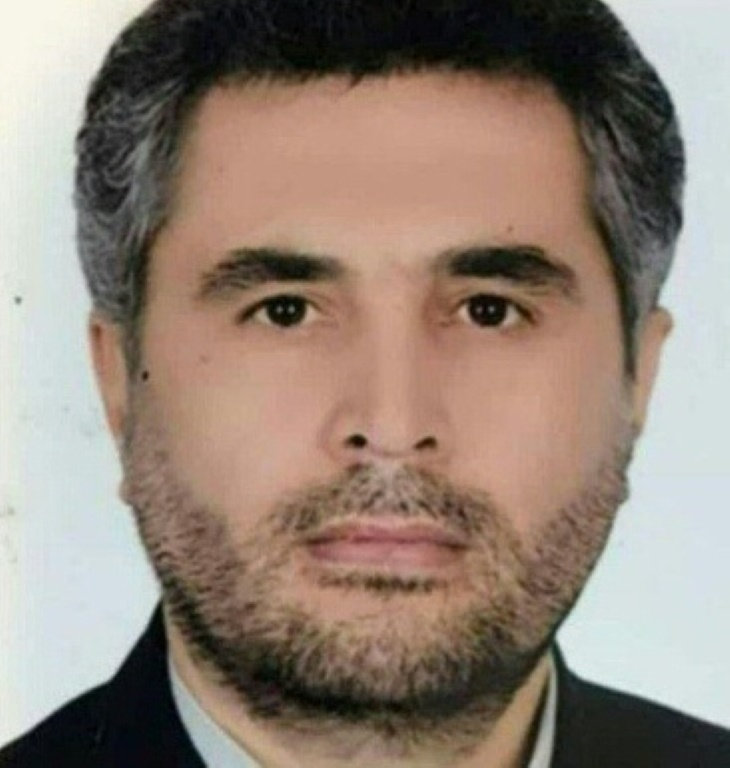
An Iranian Revolutionary Guards colonel was shot dead outside his Tehran home on Sunday, the Guards said, blaming his “assassination” on assailants linked to the United States and its allies.

The killing of Colonel Sayyad Khodai is the most high profile murder inside Iran since the November 2020 killing of top nuclear scientist Mohsen Fakhrizadeh.

Iran had accused Israel of masterminding the attack on Fakhrizadeh’s convoy near Tehran, and later identified him as a deputy defence minister.

On Sunday, Iran’s Islamic Revolutionary Guards Corps said that “elements linked to global arrogance” — a reference to the US and its allies, including Israel — were responsible for the “terrorist act” that claimed Khodai’s life.

In a statement posted on their website, the Guards said Khodai “was assassinated in an armed attack carried out by two motorcyclists on Mojahedin-e Eslam street in Tehran”, outside his home.

The Guards — the ideological arm of Iran’s military — described Khodai as a “defender of the sanctuary”, a term used for anyone who works on behalf of the Islamic republic in Syria or Iraq.

Iran wields considerable influence in Iraq, home to key Shiite holy shrines, where it says it has “military advisors” tasked with training foreign “volunteers”.

Revered general Qasem Soleimani, who headed the Quds Force, the foreign operations arm of the Revolutionary Guards, was killed in a US drone attack in the Iraqi capital Baghdad in January 2020.

The Islamic republic is also a major ally of Syrian President Bashar al-Assad and has backed his government in that country’s 11-year civil war. Tehran says it has deployed forces in Syria at the invitation of Damascus, but only as advisors.

State television said that Khodai was “well-known” in Syria, without elaborating.

– Five bullets –

The official news agency IRNA said Khodai was killed by five bullets as he returned home at around 4:00 pm (1130 GMT).

The agency published pictures showing a man slumped over in the driver’s seat of a white car, with blood around the collar of his blue shirt and on his right upper arm.

He is strapped in with his seat belt and the front window on the passenger side has been shot out.

Foreign ministry spokesman Saeed Khatibzadeh deplored the killing of Khodai.

“This inhuman crime was perpetrated by terrorist elements linked to global arrogance,” he said in a statement, denouncing “the silence of countries that pretend to fight against terrorism”.

The Guards said they launched an investigation to identify the “aggressor or aggressors”.

The Fars news agency reported that the state prosecutor visited the scene of the killing and ordered the “quick identification and arrest of the authors of this criminal act”.

Hours earlier on Sunday, the Guards said they had arrested a gang of “thugs linked to the intelligence agency of the Zionist regime (Israel)”.

A statement said the suspects were involved in a series of crimes, including “robberies, kidnappings and vandalism”.

Khodai’s killing came as negotiations between Iran and world powers to restore a 2015 nuclear deal have stalled since March.

One of the main sticking points is Tehran’s demand to remove the Guards from a US terrorism list — a request rejected by Washington.

The 2015 agreement gave Iran sanctions relief in exchange for curbs on its nuclear programme to prevent Tehran from developing an atomic bomb — something it has always denied wanting to do.

But it fell apart after US president Donald Trump pulled out of the deal unilaterally in 2018 and reimposed biting economic sanctions on Tehran, prompting Iran to begin rolling back on its own commitments.

Polish president offers full support for Ukraine EU bid

Poland’s president on Sunday pledged full support for Ukraine’s EU membership bid, saying those who “shed their blood” for Europe must be respected.

Andrzej Duda’s comments contrasted with the reservations of EU heavyweights France and Germany, who have warned Ukraine’s application would not be fast-tracked despite Russia’s invasion.

France’s Europe minister on Sunday said it could take “15 or 20 years” before Ukraine joined the bloc.

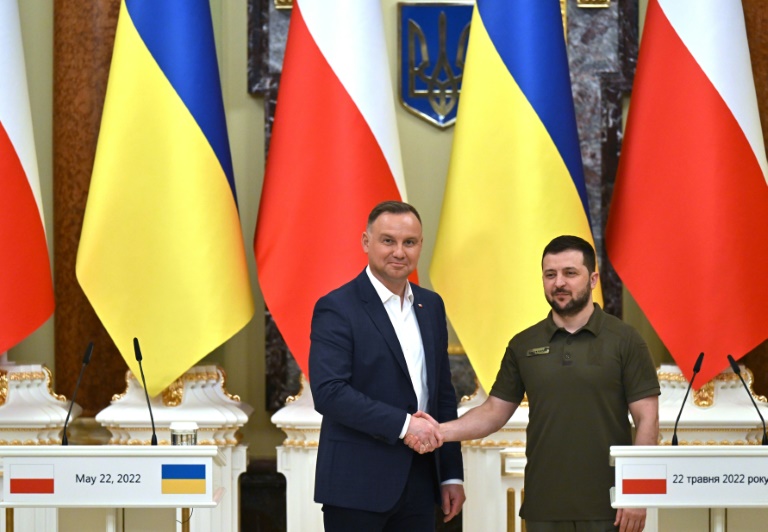
Speaking at a joint news conference with Ukrainian President Volodymyr Zelensky, Duda said those who “shed their blood” to belong to Europe must be respected, “even if the situation is complicated, even if there are doubts”.

“I have no doubt that the European Union will make such a gesture,” he added, saying the European Council’s decision on Ukraine’s candidate status on June 24 would be “extremely important, above all psychologically and politically”.

Addressing the Ukrainian parliament in Kyiv, Duda said he would not let up his efforts as long as Ukraine remained outside the bloc and that a successful membership bid would be thanks to Warsaw.

Poland has welcomed by far the highest number of Ukrainian refugees and has been Kyiv’s main supporter within the European Union.

In contrast, Ukrainian Foreign Minister Dmytro Kuleba on Thursday denounced the “second-class treatment” Kyiv has received from some EU countries. 

– End to ‘business as usual’ –

Duda also said “business as usual” with Russia was impossible after the alleged mass killings of Ukrainian civilians and war crimes blamed on Moscow’s forces.

Hundreds of civilian bodies have been found in towns near Kyiv previously occupied by Russian troops such as Bucha and Borodianka.

The southeastern port city of Mariupol lies in ruins after a weeks-long Russian siege that Ukrainian authorities say killed at least 20,000 civilians.

“After Bucha, Borodianka, Mariupol, there cannot be ‘business as usual’ with Russia,” Duda told the Ukrainian parliament, in the first such speech by a foreign head of state since war began on February 24.

“An honest world cannot return to business as usual while forgetting the crimes, the aggression, the fundamental rights that have been trampled on,” the Polish head of state added.

Duda expressed regret that some European countries have asked Ukraine to “accept certain demands” from Russian President Vladimir Putin for their economic interests or political ambitions.

Speaking in the presence of Zelensky and interrupted by several standing ovations, he warned that the most minor concession of Ukrainian territory or sovereignty would be a “big blow” for Ukraine and the West.

“Only Ukraine has the right to decide its future… There cannot be negotiations or decisions taken behind Ukraine’s back,” Duda said, lauding the country for defending Europe against a “barbarian invasion and the new Russian imperialism”. 

Zelensky thanked Duda for “his visit, his support and his true friendship” in an Instagram post.

Russia presses Donbas as Ukraine takes centre stage at Davos

Russian forces pursued their bombardment of frontline Ukrainian cities on Sunday, seeking to gain military momentum as Kyiv’s diplomatic counter-offensive targeted the world’s business and political elite gathering in Davos.

Shelling and missile strikes hit Kharkiv in the north, and Mykolaiv and Zaporizhzhia in the south, while eight civilians were killed on the eastern front in the Donbas, Ukrainian officials said.

Three months after launching their invasion, Moscow’s forces are focused on securing and expanding their gains in the Donbas region and on Ukraine’s southern coast.

Ukraine’s parliament voted on Sunday to extend martial law for a further three months through to August 23.

Kyiv, meanwhile, is rallying international support and receiving Western weapons supplies, even if EU powers are struggling to agree on expanding sanctions to Russia’s huge energy exports.

Poland’s President Andrzej Duda addressed the Ukrainian parliament and met President Volodymyr Zelensky, a day ahead of the Ukrainian leader’s Davos videoconference.

“After Bucha, Borodianka, Mariupol, there cannot be business as usual with Russia,” Duda told Ukrainian MPs, citing towns and cities where Russian forces have been accused of atrocities against civilians.

“An honest world cannot return to business as usual while forgetting the crimes, the aggression, the fundamental rights that have been trampled on,” he added.

The World Economic Forum brings together the world’s business and political elite in the Swiss mountain resort of Davos, and this year’s gathering will put Ukraine’s crisis centre stage.

– Davos snubs Moscow –

Zelensky is due to hold a videoconference with delegates Monday evening to mark the opening of Ukraine House Davos, a forum for Kyiv and its international backers.

In March, Davos organisers cut ties with Russian firms and officials, and announced that anyone under international sanctions would not be welcome at the event.

Western nations have rallied behind Ukraine’s defence of its territories, led by the United States — which just approved a $40-billion war chest for Kyiv — and neighbours such as Poland.

But some European countries that are dependent on Russian oil supplies, including Hungary, are resisting calls for an embargo on crude — and major EU economic powers like Germany remain huge gas importers.

Duda stressed that Poland and Ukraine have a “common future within the European Union” and warned against some European countries attempting to compromise with Russian or take decisions “behind Ukraine’s back”. 

But some EU members are reticent on Kyiv’s ambitions to join the bloc. France’s President Emmanuel Macron has suggested creating a “European political community” as a kind of antechamber to full membership.

Zelensky has dismissed this idea.

“We don’t need such compromises,” he said Saturday during a news conference with visiting Portuguese Prime Minister Antonio Costa.

“Because, believe me, it will not be compromise with Ukraine in Europe, it will be another compromise between Europe and Russia.”

France’s minister for European affairs, Clement Beaune, said Sunday that Macron’s proposed European community was not an alternative to full membership, but warned that the process of joining the EU would take “15 to 20 years”.

“We have to be honest. If you say Ukraine is going to join the EU in six months, or a year or two, you’re lying,” he told Radio J. “It’s probably in 15 or 20 years, it takes a long time.”

Kyiv, while rejecting any concessions — and fighting to regain territory lost since Moscow began its offensive in late February — has already accepted that talks with Russia will come. 

“There are things that can only be reached at the negotiating table,” Zelensky told Ukrainians Saturday.

The war, he said, “will be bloody, there will be fighting, but it will only definitively end through diplomacy”.

After just over 12 weeks of fierce fighting, Ukrainian forces have halted Russian attempts to seize Kyiv and the northern city of Kharkiv, but they are under intense pressure in the eastern Donbas region.

Moscow’s army has flattened and seized the Black Sea port of Mariupol and subjected Ukrainian troops and towns in the east to relentless ground and artillery attacks.

“There is no work, no food, no water,” said Angela Kopytsa, 52, breaking down into tears as she spoke to AFP reporters on a Russian-organised tour of Mariupol.

– Incessant fighting –

Kopytsa said both her home and life had been destroyed during the fighting in the port and that “children at maternity wards were dying of hunger”. 

The once-bustling Azov Sea port city has been without electricity since early March and has now been reduced to a wasteland, the carcasses of charred buildings standing amid the lush greenery of tree-lined streets and parks.

The incessant fighting of the previous weeks has died down, and the Russian army and its separatist allies now patrol the streets.

Elena Ilyina, who used to teach at a university in Mariupol, sobbed as she told AFP about her life, saying her apartment had been destroyed and she now lives with her daughter.

“I have nothing left,” the 55-year-old said. “I’d like to live in my apartment, in peace, go to work and talk to my children.”

burs-dc/har

'Business as usual' with Russia impossible: Polish president

Poland’s president on Sunday said “business as usual” with Russia was impossible after the alleged mass killings of Ukrainian civilians and war crimes blamed on Moscow’s forces.

Hundreds of civilian bodies have been found in towns near Kyiv previously occupied by Russian troops such as Bucha and Borodianka.

The southeastern port city of Mariupol lies in ruins after a weeks-long Russian siege that Ukrainian authorities say killed at least 20,000 civilians.

“After Bucha, Borodianka, Mariupol, there cannot be ‘business as usual’ with Russia,” Polish President Andrzej Duda told the Ukrainian parliament in Kyiv, in the first such speech by a foreign head of state since war began on February 24.

“An honest world cannot return to business as usual while forgetting the crimes, the aggression, the fundamental rights that have been trampled on,” he added.

Duda expressed regret that some European countries have asked Ukraine to “accept certain demands” from Russian President Vladimir Putin for their economic interests or political ambitions.

Speaking in the presence of Ukrainian President Volodymyr Zelensky, he warned that the most minor concession of Ukrainian territory or sovereignty would be a “big blow” for Ukraine and the West.

“Only Ukraine has the right to decide its future… There cannot be negotiations or decisions taken behind Ukraine’s back,” Duda said, lauding the country for defending Europe against a “barbarian invasion and the new Russian imperialism”. 

Duda also underlined “a historic union” between Poland and Ukraine, speaking of the countries’ “common future within the European Union” and saying a successful Ukrainian membership bid would be thanks to Warsaw.

Ukraine has applied to join the 27-nation bloc, but leaders including French President Emmanuel Macron and German Chancellor Olaf Scholz have said the process will take time.

Zelensky thanked Duda for “his visit, his support and his true friendship” in an Instagram post.

Afghan women TV presenters vow to fight after order to cover faces

Women television presenters on Afghanistan’s leading news channels on Sunday vowed to speak up for their rights after being forced by Taliban authorities to cover their faces on air.

Since seizing power last year, the Taliban have imposed a slew of restrictions on civil society, especially on women and girls to comply with the group’s austere brand of Islam.

This month Afghanistan’s supreme leader Hibatullah Akhundzada issued a diktat for women to cover up fully in public, including their faces, ideally with the traditional burqa.

The feared Ministry for Promotion of Virtue and Prevention of Vice ordered women television presenters to follow suit.

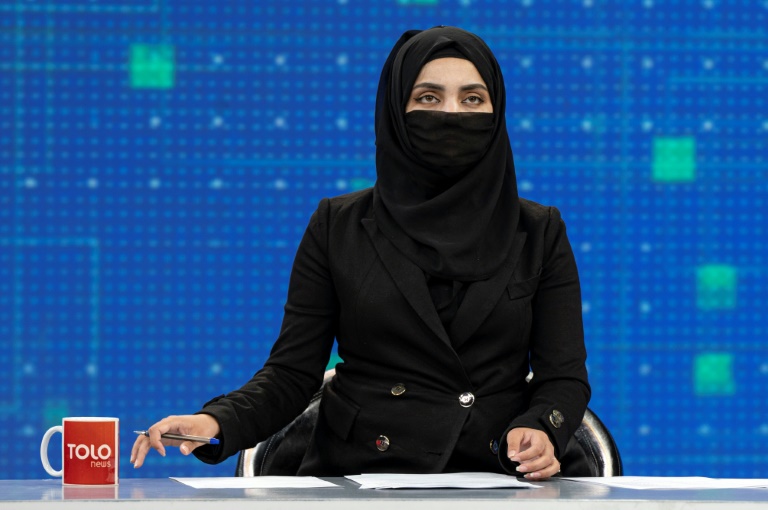
After defying the order a day earlier, presenters on Sunday wore full hijabs and veils that left only their eyes on view across leading channels including TOLOnews, Ariana Television, Shamshad TV and 1TV.

“Today, they have imposed a mask on us, but we will continue our struggle using our voice,” Sonia Niazi, a presenter for TOLOnews, told AFP after presenting a bulletin.

“I will never ever cry because of this order, but I will be the voice for other Afghan girls.”

The diktat was an attempt to push women journalists to quit their jobs, Niazi said.

“It is like stripping off your identity,” she added.

“Despite this we want to raise our voice … We will come to work until the Islamic Emirate removes us from public space or forces us to sit at home.”

– ‘Not by choice but force’ –

Lima Spesaly, a presenter with news network 1TV, said it was difficult working under the Taliban government but she was ready for a fight.

“We will continue our struggle until our last breath,” Spesaly told AFP, minutes before going on air.

TOLOnews director Khpolwak Sapai said the channel had been compelled to make its women presenters follow the order.

“I was called on the telephone yesterday and was told in strict words to do it. So, it is not by choice but by force,” Sapai said.

Women presenters were previously only required to wear a headscarf.

During the day, male journalists and employees at TOLOnews wore face masks at the channel’s offices in Kabul in solidarity with the women presenters.

Other female employees continued to work with their faces visible.

Later in the evening, male presenters on both TOLOnews and 1TV went on air wearing black masks as a protest to the Taliban’s order against women presenters.

– ‘Threat’ –

Ministry spokesman Mohammad Akif Sadeq Mohajir said authorities appreciated that broadcasters had observed the dress code.

“We are happy with the media channels that they implemented this responsibility in a good manner,” he told AFP.

Mohajir said authorities were not against women presenters.

“We have no intention of removing them from the public scene or sidelining them, or stripping them of their right to work,” he said.

The supreme leader’s decree ordered authorities to fire women government employees if they fail to follow the dress code.

Men working in government also risk suspension if their wives or daughters do not comply.

“It is a threat to girls because no girl wants her husband, father or brother to be punished because of her actions,” said Niazi.

Authorities have also warned that media managers and the male guardians of women presenters would also be liable for penalties if the order was not observed.

During two decades of US-led military intervention in Afghanistan, women and girls made marginal gains in the deeply patriarchal nation.

Soon after resuming control, the Taliban promised a softer version of the harsh Islamist rule that characterised their first stint in power from 1996 to 2001.

But they have since barred women from travelling alone and prevented teenage girls from attending secondary schools.

In the 20 years after the Taliban were ousted from office in 2001, many women in the conservative countryside continued to wear a burqa.

But most Afghan women, including television presenters, opted for the Islamic headscarf.

Television channels have already stopped showing dramas and soap operas featuring women, on the order of Taliban authorities.

Close Bitnami banner
Bitnami