World

Hundreds protest return of Spain ex-king Juan Carlos

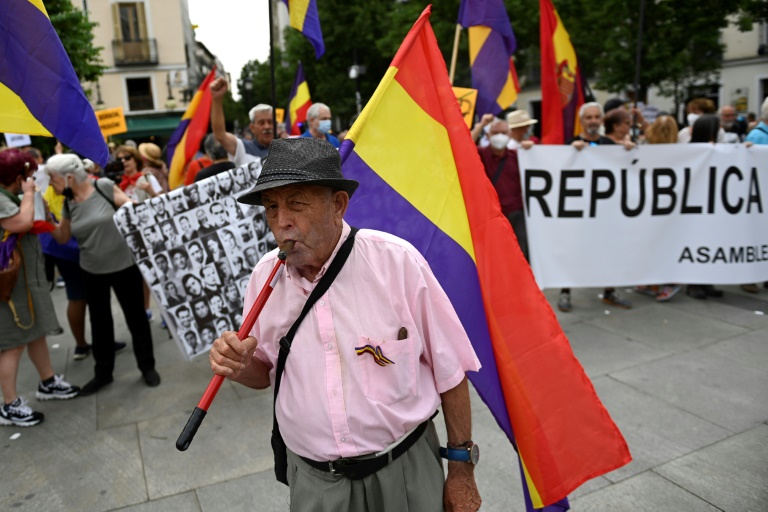
Hundreds of protesters demonstrated in Madrid on Sunday against tarnished former king Juan Carlos I, whose visit to Spain after almost two years of self-imposed exile in the UAE has sparked criticism.

Holding signs reading “Justice” and “The Bourbon in prison”, the demonstrators gathered near the Spanish capital’s royal palace. A government spokesman put their number at 300.

Juan Carlos this week returned to Spain for the first time since August 2020 to attend a regatta, after investigations into alleged corruption and money laundering were shelved in March.

The 84-year-old was admired for his role in Spain’s democratic transition following the death of dictator Francisco Franco in 1975, but revelations about the opaque origins of his fortune have tarnished his reputation among many Spaniards.

The former monarch is due to visit his son King Felipe VI in Madrid on Monday before returning to the Emirati capital Abu Dhabi, his new permanent residence.

Socialist Prime Minister Pedro Sanchez’s government still expects “explanations” from Juan Carlos, who abdicated in favour of Felipe in 2014. Media reports say the government opposes his staying at the Zarzuela Palace, Felipe’s official residence.

But in the northwestern port of Sanxenxo, where Juan Carlos competed in the regatta this weekend, dozens of onlookers welcomed him, shouting “Long live the king, long live Spain!”.

US flight brings tons of needed baby formula from Germany

A US military plane bringing several tons of much-needed baby formula from Germany landed Sunday at an airport in Indiana as authorities scramble to address a critical shortage.

Scarcity of medical-grade baby formula caused by production problems and supply-chain issues has created grave problems for thousands of parents whose infants, allergic to cow’s milk protein, rely on it, sending them in frantic searches for the product.

The cargo plane took off from the US air base at Ramstein, Germany, carrying more than 70,000 pounds of powdered formula, the White House said. 

President Joe Biden posted about the flight on Twitter from Japan, where he is on a five-day Asia trip.

“Our team is working around the clock to get safe formula to everyone who needs it,” he said.

The initial shipment will cover about 15 percent of the immediate need, presidential economics advisor Brian Deese said on CNN.

He added there are “more flights in train that will be coming in early this week” as part of what the administration has dubbed “Operation Fly Formula.”

The formula was flown to Indiana because it is a hub for Nestle, a major domestic producer. It will be quality-tested at a nearby lab before being distributed.

The formula shortage has been developing for months, aggravated not only by supply-chain issues linked to the Covid-19 pandemic but by the closing of the nation’s largest formula-making plant, a Michigan factory owned by Abbott Laboratories, amid concerns that contamination may have led to the deaths of two infants.

“We had a manufacturer that wasn’t following the rules, and that was making formula that had the risk of making babies sick,” Deese said. “So we have to take action.”

Another problem, he said, was that US formula production had become concentrated among just three companies. 

“We’re going to have to work” on ways to increase competition, he said.

Abbott’s CEO, Robert Ford, apologized to consumers in a Washington Post op-ed Sunday, saying: “We’re sorry to every family we’ve let down since our voluntary recall exacerbated our nation’s baby formula shortage.”

Deese was asked separately about growing concerns that the US economy — hit by high inflation, supply chain troubles and the war in Ukraine — may be headed toward a recession. 

“Well, there are always risks,” he said.

“But there’s also no doubt that the United States is in a better position than any other major country around the world to address inflation without giving up all the economic gains that we have had.”

The US inflation rate hit a 40-year high of 8.5 percent in March, but slowed slightly in April to 8.3 percent.

Ukraine war, pandemic push colour WHO international meet

The Ukraine war, with disease and destruction following in its wake, loomed large Sunday as the WHO convened countries to address a still raging pandemic and a vast array of other global health challenges. 

“Where war goes, hunger and disease follow shortly behind,” World Health Organization chief Tedros Adhanom Ghebreyesus warned on the opening day of the UN agency’s main annual assembly.

The assembly, due to run through Saturday, marks the first time the WHO is convening its 194 member states for their first largely in-person gathering since Covid-19 surfaced in late 2019.

Tedros warned important work at the assembly to address a long line of global health emergencies and challenges, including the Covid-19 crisis, could not succeed “in a divided world”.

“We face a formidable convergence of disease, drought, famine and war, fuelled by climate change, inequity and geopolitical rivalry,” he warned.

The former Ethiopian health minister said he was viewing the ravages in Ukraine through a personal lens: “I am a child of war”.

In Ukraine and elsewhere, he said, it is clear peace “is a prerequisite for health”.

“We must choose health for peace, and peace, peace, peace.”

– Healthcare under attack –

But it was war that dominated the high-level speeches on the first day of the assembly.

“The consequences of this war are devastating, to health, to populations, to health facilities and to health personnel,” French President Emmanuel Macron said in a video address.

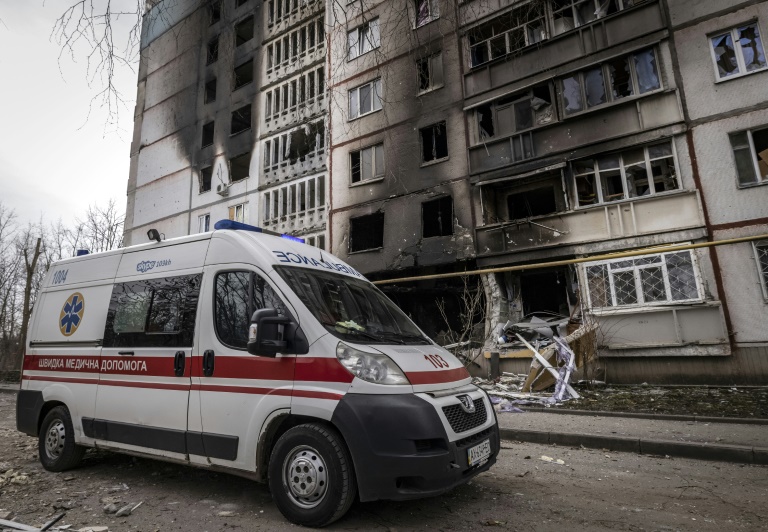
He called on all member states to support a resolution to be presented by Ukraine and discussed by the assembly Tuesday, which harshly condemns Russia’s invasion, especially its more than 200 attacks on healthcare, including hospitals and ambulances, in Ukraine. 

The resolution will also voice alarm at the “health emergency in Ukraine”, and highlight the dire impacts beyond its borders, including how disrupted grain exports are deepening a global food security crisis.

But while Russia has been shunned and pushed out of other international bodies over its invasion, no such sanctions are foreseen at the World Health Assembly.

“There’s not a call to kick them out,” a Western diplomat told AFP, acknowledging the sanctions permitted under WHO rules are “very weak”.

The Ukraine conflict is far from the only health emergency up for discussion this week, with decisions expected on a range of important issues, including on reforms towards strengthening pandemic preparedness. 

“This meeting is a historic opportunity to strengthen universal architecture for security and health,” Dominican Republic President Luis Abinader Corona told the assembly. 

– Second term for Tedros –

Among the decisions expected at the assembly is Tedros’s reappointment to a second five-year term.

His first term was turbulent, as he helped steer the global response to the pandemic and grappled with other crises, including a sexual abuse scandal involving WHO staff in the Democratic Republic of Congo.

But while he has faced his share of criticism, he has received broad backing and is running unopposed, guaranteeing him a second term.

There will be no shortage of challenges going forward, with the Covid-19 pandemic still raging and demands for dramatic reforms of the entire global health system to help avert similar threats going forward.

And new health menaces already loom, including hepatitis of mysterious origin that has made children in many countries ill, and swelling numbers of monkeypox cases far from Central and West Africa where the disease is normally concentrated.

– Money makeover –

One of the major reforms up for discussion involves the WHO budget, with countries expected to greenlight a plan to boost secure and flexible funding to ensure the organisation can respond quickly to global health threats.

The WHO’s two-year budget for 2020-21 ticked in at $5.8 billion, but only 16 percent of that came from regular membership fees.

The idea is to gradually raise the membership fee portion to 50 percent over nearly a decade, while WHO will be expected to implement reforms, including towards more transparency on its financing and hiring.

The remainder came from voluntary contributions that are heavily earmarked by countries for particular projects.

“There is no greater return on investment than health,” UN chief Antonio Guterres told the assembly in a video address.

– Too slow –

The Covid pandemic laid bare major deficiencies in the global health system, and countries last year agreed numerous changes were needed to better prepare the world to face future pandemic threats.

Amendments are being considered to the International Health Regulations — a set of legally binding international laws governing how countries respond to acute public health risks.

And negotiations are underway towards a new “legal instrument” — possibly a treaty — aimed at streamlining the global approach to pandemic preparedness and response.

But experts warn the reform process is moving too slowly.

Former New Zealand prime minister Helen Clark, who co-chaired an expert panel on pandemic preparedness, warned reporters last week little had yet changed.

“At its current pace, an effective system is still years away, when a pandemic threat could occur at any time.”

Ex-minister projected to win first Bangkok governor election in decade

A former minister ousted in Thailand’s 2014 military coup was projected to win by a landslide in Bangkok’s first election for governor in almost a decade on Sunday.

Around four million people were eligible to vote in the first major poll since the country was rocked by huge youth-led protests in 2020 demanding reform to the once-untouchable monarchy.

But daily life rather than politics dominated campaigning in the Thai capital, with candidates promising to clear up the congested, polluted and noisy megapolis home to 10 million.

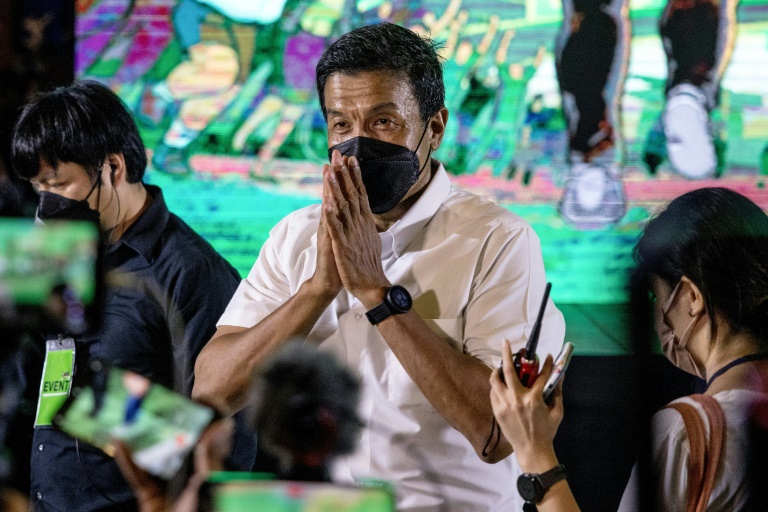
“I am ready to be governor for everyone,” independent frontrunner Chadchart Sittipunt said late Sunday, while emphasising he would wait for the final result from the electoral commission before declaring victory.

Local media reported that counting so far put the former transport minister in the lead with 1.2 million votes with 90 percent of ballots counted, following a turnout of roughly 60 percent.

“It does not matter if you voted for me or not, I have to serve everyone,” Chadchart told supporters.

During his campaign the 55-year-old promised to tackle the capital’s notorious traffic and made numerous green pledges while insisting voters wanted a change from entrenched political divisions.

Political analyst Napisa Waitoolkiat at Naresuan University’s faculty of social sciences said Chadchart’s success signalled young people and the middle class were “fed up”.

“This is a message from Bangkokians, and particularly the new generation. They want a new leader who can revamp and change Bangkok,” she said.

A record 30 candidates ran for the top job, eight years after a coup saw local elections scrapped and the city run by government-appointed leaders.

By Sunday evening, all of the leading candidates had conceded defeat to Chadchart.

Incumbent Aswin Kwanmuang, a former police general backed by Prime Minister Prayut Chan-O-Cha, said he would “accept what the people decide”.

Left-wing candidate Wiroj Lakkhanaadisorn, of the Move Forward party, said he believed Chadchart had won.

“It shows that the public are not happy with the government’s performance,” he told Thai broadcaster Channel 3.

Polling centres opened across the city at 8 am (0100 GMT) and closed at 5 pm with temperature checks and Covid-19 restrictions in place.

The winner will be formally announced in the coming days, as the results must be ratified by the electoral commission.

Turtles freed in Tunisia with tracking monitor

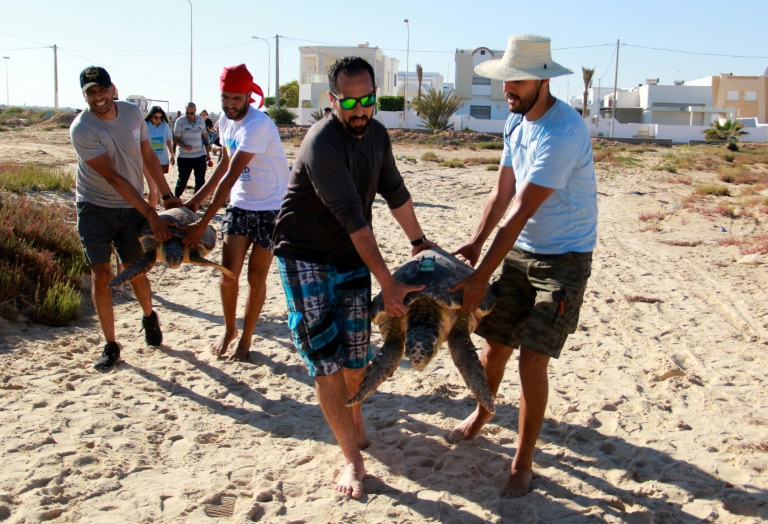
Three rescued loggerhead turtles were released into the Mediterranean off Tunisia on Sunday, one with a tracking beacon glued to its shell to help researchers better protect the threatened species.

The main risks to sea turtles in Tunisia are linked to fisheries, since they become entangled in nets — including the three that were released into the wild.

The migratory species, which can live to as old as 45, are listed as “vulnerable” in the Red List of threatened species of the International Union for Conservation of Nature (IUCN).

The turtles’ release was watched by a crowd of some 50 people, many of them children, carried out by a specialised care centre in Tunisia’s eastern port of Sfax.

Some 35 turtles have been cared for at the centre in the past year as part of the Mediterranean-wide Life Med Turtle project.

Environmental activists helped carry the heavy turtles down the beach, before the animals crawled the final distance towards the sea.

All of them were tagged, but one of them also had a phone-sized tracking beacon glued to its hard shell, which will track its progress as it moves across the sea.

“This beacon, given to us by the University of Primorska in Slovenia, will allow us to follow this turtle in its movements,” said Imed Jribi, a science professor from the University of Sfax and a coordinator of the Life Med Turtle project.

“Identifying wintering, grazing and migration routes plays an important role in protecting this endangered species,” Jribi said.

As well as loggerhead turtles, two other turtle species are found in the Mediterranean, the green and leatherback turtle.

Afghan women TV presenters vow to fight after order to cover faces

Women television presenters on Afghanistan’s leading news channels on Sunday vowed to speak up for their rights after being forced by Taliban authorities to cover their faces on air.

Since seizing power last year, the Taliban have imposed a slew of restrictions on civil society, especially on women and girls to comply with the group’s austere brand of Islam.

This month Afghanistan’s supreme leader Hibatullah Akhundzada issued a diktat for women to cover up fully in public, including their faces, ideally with the traditional burqa.

The feared Ministry for Promotion of Virtue and Prevention of Vice ordered women television presenters to follow suit.

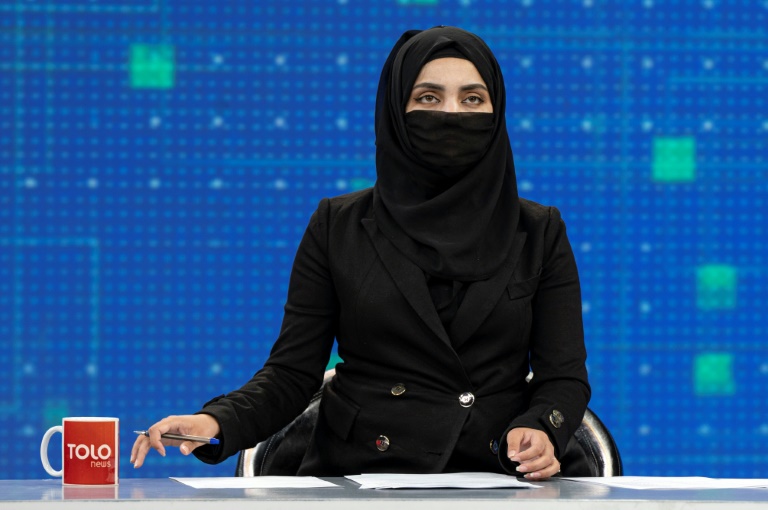
After defying the order a day earlier, presenters on Sunday wore full hijabs and veils that left only their eyes on view across leading channels including TOLOnews, Ariana Television, Shamshad TV and 1TV.

“Today, they have imposed a mask on us, but we will continue our struggle using our voice,” Sonia Niazi, a presenter for TOLOnews, told AFP after presenting a bulletin.

“I will never ever cry because of this order, but I will be the voice for other Afghan girls.”

The diktat was an attempt to push women journalists to quit their jobs, Niazi said.

“It is like stripping off your identity,” she added.

“Despite this we want to raise our voice… We will come to work until the Islamic Emirate removes us from public space or forces us to sit at home.”

– ‘Not by choice but force’ –

Lima Spesaly, a presenter with news network 1TV, said it was difficult working under the Taliban government but she was ready for a fight.

“We will continue our struggle until our last breath,” Spesaly told AFP, minutes before going on air.

TOLOnews director Khpolwak Sapai said the channel had been compelled to make its women presenters follow the order.

“I was called on the telephone yesterday and was told in strict words to do it. So, it is not by choice but by force,” Sapai said.

Women presenters were previously only required to wear a headscarf.

Male journalists and employees at TOLOnews on Sunday wore face masks at the channel’s offices in Kabul in solidarity with the women presenters.

Other female employees continued to work with their faces visible.

– ‘Threat’ –

Ministry spokesman Mohammad Akif Sadeq Mohajir said authorities appreciated that broadcasters had observed the dress code.

“We are happy with the media channels that they implemented this responsibility in a good manner,” he told AFP.

Mohajir said authorities were not against women presenters.

“We have no intention of removing them from the public scene or sidelining them, or stripping them of their right to work,” he said.

The supreme leader’s decree ordered authorities to fire women government employees if they fail to follow the dress code.

Men working in government also risk suspension if their wives or daughters do not comply.

“It is a threat to girls because no girl wants her husband, father or brother to be punished because of her actions,” said Niazi.

During two decades of US-led military intervention in Afghanistan, women and girls made marginal gains in the deeply patriarchal nation.

Soon after resuming control, the Taliban promised a softer version of the harsh Islamist rule that characterised their first stint in power from 1996 to 2001.

But they have since barred women from travelling alone and prevented teenage girls from attending secondary schools.

In the 20 years after the Taliban were ousted from office in 2001, many women in the conservative countryside continued to wear a burqa.

But most Afghan women, including television presenters, opted for the Islamic headscarf.

Television channels have already stopped showing dramas and soap operas featuring women, on the order of Taliban authorities.

UN praises 'potential' of Syria prisoner amnesty

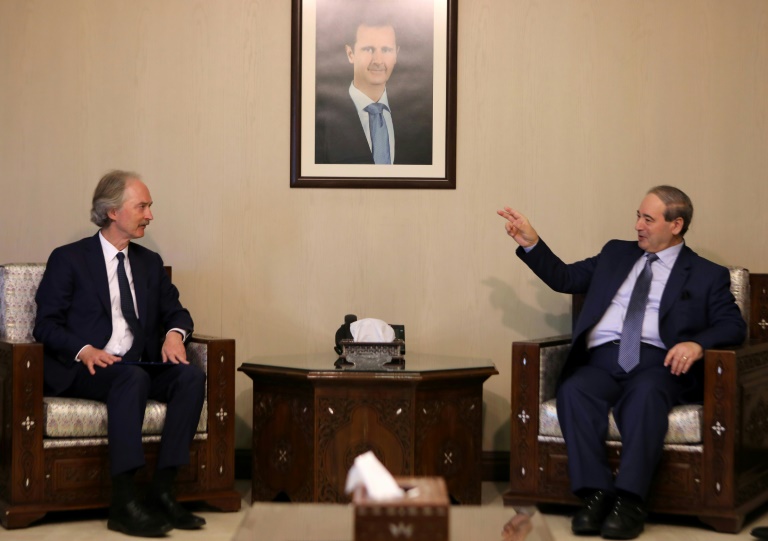
UN special envoy Geir Pedersen on Sunday welcomed a general amnesty aimed at freeing thousands of Syrians convicted on terrorism charges.

President Bashar al-Assad has decreed several amnesties during the country’s devastating 11-year war, but the latest in April was the most comprehensive related to terrorism charges since the conflict began, rights activists said. 

Pedersen, speaking to reporters in Damascus after a meeting with Syrian Foreign Minister Faisal Mekdad, said he had been briefed “in quite some detail” on the latest measure.

“I am very much looking forward to being kept informed on the progress on the implementation for that amnesty”, Pedersen said before talks on a new constitution for Syria are to resume in Geneva.

“That amnesty has potential, and we are looking forward to see how it develops,” Pedersen said.

The April decree granted a general amnesty to detainees convicted of terrorism charges except cases that led to the death of a person.

Syria’s Justice Ministry has said hundreds of inmates had been released, and a military official, Ahmad Touzan, told local media this week that the amnesty would cover thousands, including those who are wanted but not detained.

Touzan refused to disclose the number of inmates freed, saying “numbers are changing by the hour.”

The Syrian Observatory for Human Rights war monitor, which relies on a large network of sources inside Syria, says around 1,142 inmates have so far been released across the country under the amnesty, with hundreds more expected.

In the next few days Syria’s warring parties are to hold the latest round of constitutional talks in Switzerland, under a process that began in 2019.

It is hoped the talks can pave the way towards a broader political process.

Pedersen said he is “hopeful that this will be a positive meeting that can help bring us forward so that we can start to see… some confidence building measures,” Pedersen said.

Syria’s civil war erupted in 2011 after the violent repression of protests demanding regime change.

It quickly spiralled into a complex conflict that pulled in numerous actors, including jihadist groups and foreign powers. The war has left around half a million people dead and displaced millions.

Throughout the war, the UN has been striving to nurture a political resolution.

PM-elect Albanese vows to repair Australia's image overseas

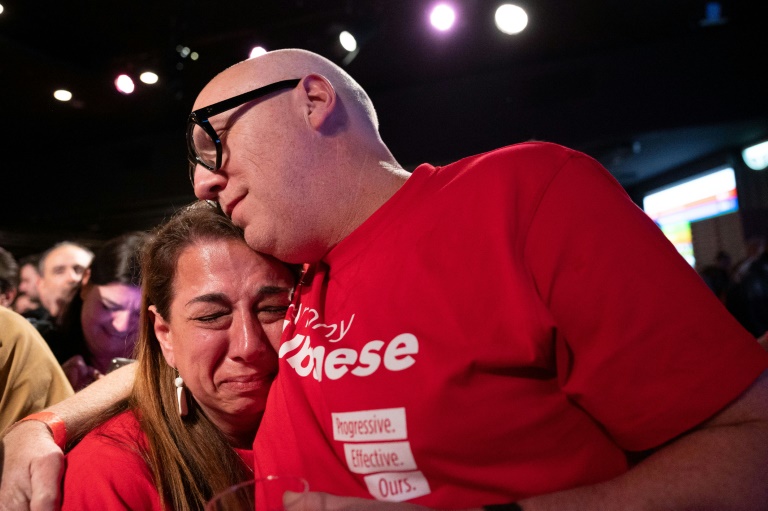
Incoming prime minister Anthony Albanese vowed to end Australia’s reputation as a climate laggard and reset relations with the rest of the world Sunday, as he raced to form a government in time for a key Tokyo summit.

Fresh from an electoral victory that ended a decade of conservative rule, Albanese signalled an era of fairer, greener and less pugilistic politics for Australia.

“I want to change the country,” the 59-year-old centre-left leader said. “I want to change the way that politics operates in this country.”

It is still unclear whether Albanese’s Labor Party will win enough parliamentary seats to form an outright majority, or whether he will have to turn to independents or smaller parties for support.

But “Albo” and key ministers are expected to be sworn in on Monday to be able to attend a summit with Japanese, Indian and US leaders — the so-called Quad.

Albanese said the summit was “an absolute priority” for Australia and an opportunity “to send a message to the world”.

He said partners overseas can expect wholesale changes “particularly with regard to climate change and our engagement with the world on those issues”.

In recent years, images of smouldering eucalypt forests, smog-enveloped cities and blanched-out coral reefs have made Australia a poster child for climate-fuelled destruction.

Under conservative leadership, the country — already one of the world’s largest gas and coal exporters — has also become synonymous with playing the spoiler at international climate talks.

Albanese has vowed to adopt more ambitious emissions reduction targets and make the sun-kissed continent-nation a renewable energy superpower.

After the summit and bilateral meetings with Quad leaders on Tuesday, Albanese said he would return to Australia on Wednesday.

“Then we’ll get down to business,” he said.

US President Joe Biden called Albanese to congratulate him.

“President Biden expressed deep appreciation for… (Albanese’s) early commitment to the alliance, reflected in his decision to travel almost immediately to Tokyo to attend the Quad Summit,” the White House said in a statement.

Notable among the foreign leaders who have welcomed Albanese’s election are the ones from Australia’s Pacific Island neighbours, whose very existence is threatened by rising sea levels.

“Of your many promises to support the Pacific, none is more welcome than your plan to put the climate first –– our people’s shared future depends on it,” said Fijian Prime Minister Frank Bainimarama.

Others will be watching closely to see if Albanese’s premiership brings a less hawkish tone on China, and whether ministerial meetings with Beijing resume after a more than two-year hiatus.

– Political earthquake –

Official results showed Labor expected to win 75 seats — almost within reach of the 76 required for a majority in the 151-seat lower house. A handful of other races are still too close to call. 

But it is already clear that the vote was a political earthquake in Australia. 

For many Australians, the election was a referendum on polarising outgoing prime minister Scott Morrison.

His tumultuous tenure saw the country smashed by bushfires, droughts, floods and a pandemic, all of which shattered usually happy-go-lucky Australia’s sense of security and their faith in government. 

Morrison drew revulsion for playing down the role of climate change in Australia’s ever-worsening disasters and insisting “I don’t hold a hose, mate” when asked to justify holidaying overseas during the bushfire crisis.

“Being in Hawaii when half the country is burning to the ground was probably not a wise decision,” said Dean Bergin, a 32-year-old investment fund manager.

“Anyone with half a brain can see that. It’s the opposite of leadership.”

Voters responded at the ballot box with a sharp rebuke of his Liberal-National coalition — ousting top ministers from parliament and virtually expelling the party from major cities.

“I am very, very happy,” said Kathy Hopkins, a 60-year-old disability support worker in Sydney’s beachside suburb of Clovelly, part of what was considered an ultra-safe conservative seat.

– Election wipeout –

For Morrison’s conservative allies, the defeat is already spurring a battle for the soul of the party.

A leadership contest is informally underway, with moderates blaming the loss on a drift to the right.

Speaking at his Pentecostal church on Sunday, Morrison tearfully told the congregation his time in the top job had “been a very difficult walk”. 

“God calls us” to duty he said, pausing repeatedly to compose himself.

The 54-year-old then pulled out his phone to conclude his speech with a Bible verse.

“Do not rejoice over me, enemy of mine. Though I fall, I will rise. Though I live in darkness, the Lord is alive for me,” he said.

Bangladesh floods recede but millions still marooned

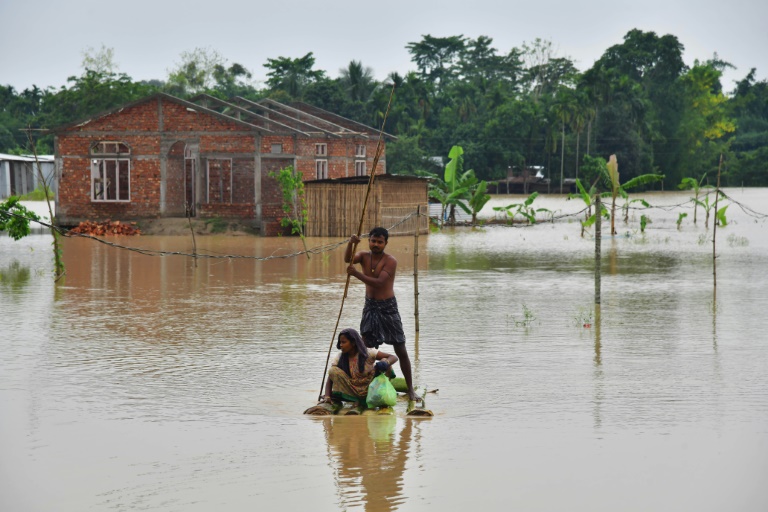
North-east Bangladesh’s worst floods in nearly 20 years began receding on Sunday, but rescue workers were struggling to help millions marooned by extreme weather across the region that has killed around 60 people.

Floods are a regular menace to millions of people in low-lying Bangladesh and neighbouring northeast India, but many experts say that climate change is increasing the frequency, ferocity and unpredictability.

In the past week after heavy rains in India, floodwater breached a major embankment in Bangladesh’s Sylhet region, affecting around two million people, swamping dozens of villages and killing at least 10.

Arifuzzman Bhuiyan, head of the state-run Flood Forecasting and Warning Centre, told AFP that the floods had hit some 70 percent of Sylhet district and about 60 percent of neighbouring Sunamganj.

“It is one of the worst floods in the region,” he told AFP.

But he said the situation would improve further in the next few days after heavy rains stopped.

Police said that a scuffle broke out in the rural town of Companyganj on Saturday as authorities stepped up relief operations for the roughly two million people hit.    

“There were more flood-affected people than the estimated relief packs. At one point everyone started to snatch relief goods when police dispersed the crowd,” local police chief Sukanto Chakrobarti told AFP. 

Mozibur Rahman, head of Sylhet district, said that the embankment washed away along the Bangladesh-India border was yet to be repaired.

“It is impossible to fix the embankment unless waterflow from India plunges. The inundation scenario in Sylhet city has improved. But outer towns are still underwater,” Rahman said.

“We are trying to send relief and have opened hundreds of shelters for the flood-hit people.”

Mofizul Islam, a resident of Sylhet city where floodwaters were slowly subsiding, said that he fell off his motorbike after he hit a pothole hidden under the water on Sunday.

“It is very risky for the people who are going out today,” Islam told AFP.

– 50 dead in India –

Over the border in India, around 50 people have been killed in days of flooding, landslides and thunderstorms, according to local disaster management authorities.

In the north-eastern state of Assam, authorities said on Sunday that the death toll from the floods had reached 18.

According to the Assam State Disaster Management Authority (ASDMA), almost 3,250 villages were partially or fully submerged.

ASDMA officials said the situation had improved slightly but that it remained critical in some districts. 

According to their estimate, more than 92,000 people were in relief camps.

The state and national rescue forces, helped by the army, were working to rescue people from villages and distribute food, clean drinking water and other essentials, as well as to clear roads.

West of Assam, at least 33 people were killed in Bihar state in thunderstorms on Thursday.  

Bihar, in common with other parts of northern India and Pakistan, has been suffering an intense heatwave, with temperatures reaching 40 degrees Celsius (104 degrees Fahrenheit).  

Bangladesh floods recede but millions still marooned

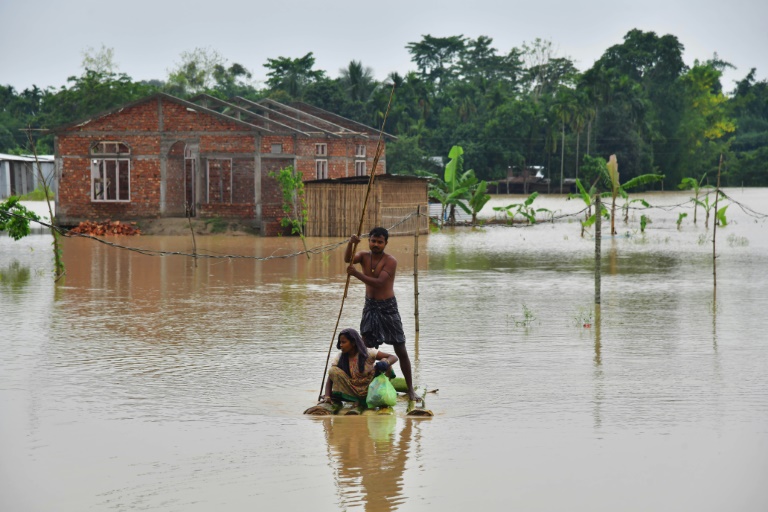
North-east Bangladesh’s worst floods in nearly 20 years began receding on Sunday, but rescue workers were struggling to help millions marooned by extreme weather across the region that has killed around 60 people.

Floods are a regular menace to millions of people in low-lying Bangladesh and neighbouring northeast India, but many experts say that climate change is increasing the frequency, ferocity and unpredictability.

In the past week after heavy rains in India, floodwater breached a major embankment in Bangladesh’s Sylhet region, affecting around two million people, swamping dozens of villages and killing at least 10.

Arifuzzman Bhuiyan, head of the state-run Flood Forecasting and Warning Centre, told AFP that the floods had hit some 70 percent of Sylhet district and about 60 percent of neighbouring Sunamganj.

“It is one of the worst floods in the region,” he told AFP.

But he said the situation would improve further in the next few days after heavy rains stopped.

Police said that a scuffle broke out in the rural town of Companyganj on Saturday as authorities stepped up relief operations for the roughly two million people hit.    

“There were more flood-affected people than the estimated relief packs. At one point everyone started to snatch relief goods when police dispersed the crowd,” local police chief Sukanto Chakrobarti told AFP. 

Mozibur Rahman, head of Sylhet district, said that the embankment washed away along the Bangladesh-India border was yet to be repaired.

“It is impossible to fix the embankment unless waterflow from India plunges. The inundation scenario in Sylhet city has improved. But outer towns are still underwater,” Rahman said.

“We are trying to send relief and have opened hundreds of shelters for the flood-hit people.”

Mofizul Islam, a resident of Sylhet city where floodwaters were slowly subsiding, said that he fell off his motorbike after he hit a pothole hidden under the water on Sunday.

“It is very risky for the people who are going out today,” Islam told AFP.

– 50 dead in India –

Over the border in India, around 50 people have been killed in days of flooding, landslides and thunderstorms, according to local disaster management authorities.

In the north-eastern state of Assam, authorities said on Sunday that the death toll from the floods had reached 18.

According to the Assam State Disaster Management Authority (ASDMA), almost 3,250 villages were partially or fully submerged.

ASDMA officials said the situation had improved slightly but that it remained critical in some districts. 

According to their estimate, more than 92,000 people were in relief camps.

The state and national rescue forces, helped by the army, were working to rescue people from villages and distribute food, clean drinking water and other essentials, as well as to clear roads.

West of Assam, at least 33 people were killed in Bihar state in thunderstorms on Thursday.  

Bihar, in common with other parts of northern India and Pakistan, has been suffering an intense heatwave, with temperatures reaching 40 degrees Celsius (104 degrees Fahrenheit).  

Close Bitnami banner
Bitnami