World

Cannes favourite returns to show horror of 'human animals'

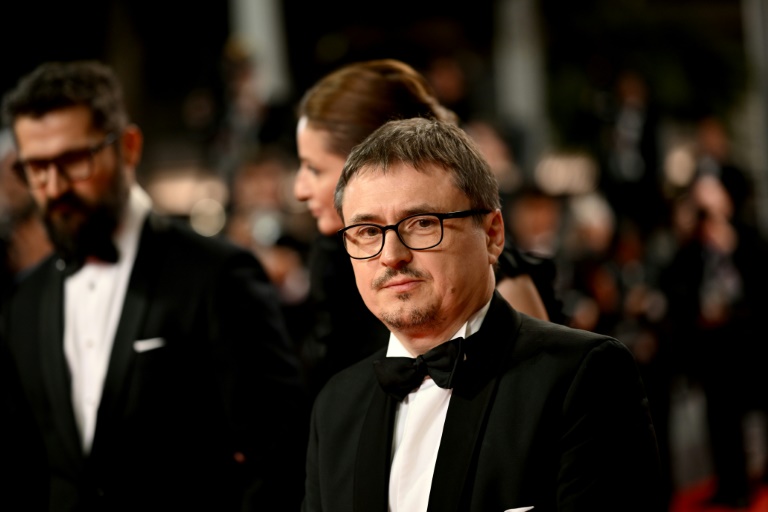
One of eastern Europe’s most acclaimed film-makers, Romania’s Cristian Mungiu, is back at the Cannes Film Festival with a dark tale about how little it takes for people to turn on their neighbours.

His wrenching Ceausescu-era drama about illegal abortion “4 Months, 3 Weeks and 2 Days” clinched the top prize at the world’s top cinema showcase in 2007.

Mungiu also won best screenplay for 2012’s “Beyond the Hills” and best director for “Graduation” in 2016. 

His new film, “RMN”, again sees him in the race for the Palme d’Or, and the 54-year-old told AFP  it explores the collapse of hopes for a new era of peace following the end of the Cold War.

“I try to speak about human nature and about the state of the world today and about this feeling that we have today that things are not going in the right direction,” he said.

“Things are coming to some sort of an end and everybody feels this anxiety,” not least over the war raging in Ukraine, he said.

– ‘Capable of anything’ –

RMN is the Romanian abbreviation for an MRI which Mungiu said when scanning the brain can reveal fascinating secrets of how human beings are wired.

The film explores the anxieties of a multi-ethnic community in Transylvania, a historical crossroads of migration and competing empires which has left Romanian, Hungarian and German speakers living side-by-side to this day.

It is inspired by a story widely covered by Romanian media in 2020, when a village in Transylvania rose up against the local bakery for hiring two Sri Lankans.

In the film the foreign men are recruited to a bread factory reliant on EU grants and offering minimum-wage jobs that long went unfilled because the salary was too low for locals.

A manager tries to look after the dislocated Sri Lankans, who don’t speak any of the local languages and are struggling to integrate.

A violent attack leads to confrontations with the police, the village priest and finally a town meeting in which hysterical fears about the outsiders are aired.

Mungiu said he aimed to hold up a mirror to the “instincts and cruelty which is deep inside us as human animals and to see that people who are neighbours today are capable of anything tomorrow — raping, killing and torturing somebody else simply because somebody told me this is the enemy”.

– ‘A movement’ –

The film won warm reviews, with The Guardian saying it was “seriously engaged with the dysfunction and unhappiness in  Europe that goes unreported and unacknowledged”.

US movie website IndieWire called it another “moral thriller” from Mungiu that pulls “harder and harder at the tension between complex socioeconomic forces and the simple human emotions they inspire”. 

Mungiu is part of Romania’s New Wave of film-makers tracking the realities of the post-communist transition who have scooped up prizes at international festivals for the past two decades.

He admitted at Cannes that those acclaimed movies have been far less popular at home.

“(Romanians) don’t really like what we do — they don’t really understand why somebody likes it somewhere else,” he said.

“But for us it’s really important that we managed to create some sort of a movement which is now complex enough — there are quite diverse film-makers expressing themselves. 

“At some point I think it will be acknowledged as something good that we did also for the culture of Romania.”

The Palme d’Or will be awarded on May 28.
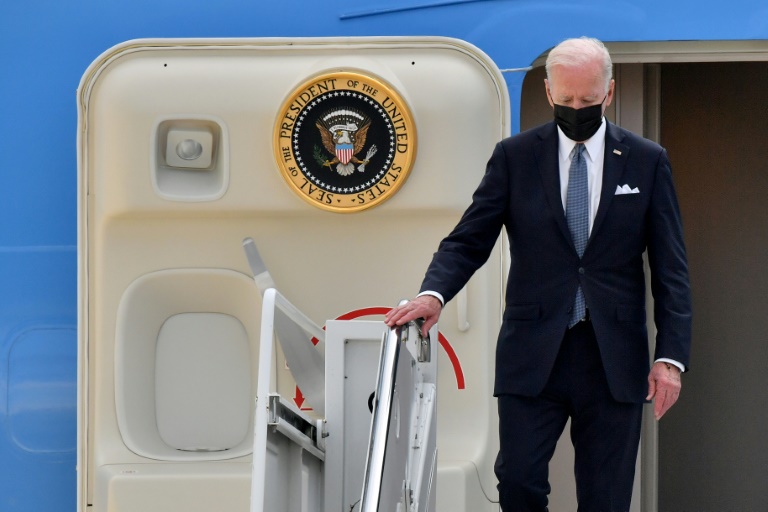
Biden arrives in Japan with no response on outreach to North Korea

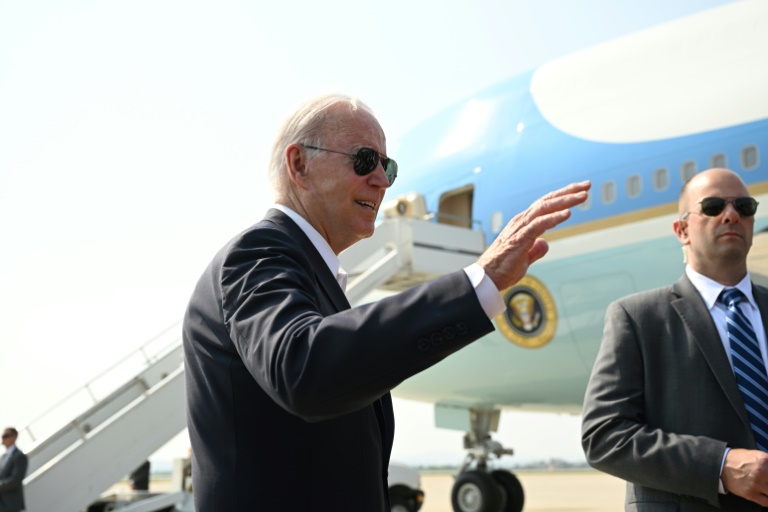
President Joe Biden arrived Sunday in Japan for the second leg of an Asia trip underlining US commitment to the region but overshadowed by concern that North Korea will test a nuclear weapon after ignoring Washington’s attempt at outreach.

Biden, making his first trip to Asia as president, flew from South Korea into Yokota Air Base outside Tokyo, where he will meet with Japan’s Prime Minister Fumio Kishida and emperor on Monday, as well as unveiling a US-led multilateral trade initiative.

On Tuesday, he reinforces the theme of American leadership in the Asia-Pacific by joining the leaders of Australia, India and Japan for a summit of the Quad group.

The trip, which comes as rival China is experiencing significant economic disruption due to Covid outbreaks, has been touted by Washington as a display of US determination to maintain its commercial and military edge across the region.

But hanging over every step of Biden’s tour is fear that unpredictable North Korea will test a nuclear-capable missile or a bomb.

Speculation that this might even happen while Biden was just across the border in Seoul did not materialise. However, US National Security Advisor Jake Sullivan told reporters that the threat remains.

Echoing Biden’s earlier statement that the United States is “prepared for anything North Korea does”, Sullivan said the dictatorship has a choice.

“If North Korea acts, we’ll be prepared to respond. If North Korea doesn’t act, North Korea has the opportunity, as we’ve said repeatedly, to come to the table.”

Pyongyang has so far declined to answer US appeals for dialogue, officials say, even ignoring offers of help to combat a sudden mass outbreak of Covid-19, according to Biden.

And while in Seoul, Biden confirmed he was prepared to meet with Kim Jong Un if the leader-for-life is “sincere”, but Sullivan said that remains far off.

“We’re not even at step one yet,” he said.

Symbolising the apparent one-way conversation, Biden said the only message he has right now for Kim would consist of a single word: “Hello. Period,” he said.

– Military exercises –

Biden spent two days with South Korea’s new President Yoon Suk-yeol, with beefing up the military defence against North Korea high on the agenda.

They issued a statement on Saturday saying that “considering the evolving threat” from Pyongyang, they were looking at expanding the “scope and scale” of joint US-South Korean military exercises.

Joint exercises had been scaled back due to Covid and for Biden and Yoon’s predecessors, Donald Trump and Moon Jae-in, to embark on a round of high-profile but ultimately unsuccessful diplomacy with North Korea.

In contrast to the dovish Moon, Yoon said he and Biden discussed possible “joint drills to prepare for a nuclear attack” and called for more US assets to be deployed to the region.

Any build-up of forces or expansion of joint military exercises would likely enrage Pyongyang, which views the drills as rehearsals for an invasion.

North Korea has conducted a blitz of sanctions-busting weapons tests this year, including firing an intercontinental ballistic missile at full range for the first time since 2017, with satellite imagery indicating a nuclear test is looming.

But its weapons testing schedule may also be affected by a raging Covid-19 outbreak.

More than 2.6 million cases of what the regime calls “fever” have been reported since the Omicron variant was first detected in April, state media said Sunday.

– Economic ties –

Before heading to Japan on Sunday, Biden met with the chairman of Hyundai to celebrate a decision by the South Korean auto giant to invest $5.5 billion in an electric vehicle plant in the southern US state of Georgia.

He also met US and South Korean troops alongside Yoon, a schedule that a senior White House official said was able to “reflect the truly integrated nature” of the countries’ economic and military alliance.

Biden is also emphasising a broader, almost existential aspect to his trip, saying that Asia is a key battleground in the global “competition between democracies and autocracies”.

“We talked in some length about the need for us to make this larger than just the United States, Japan, and Korea, but the entire Pacific and the South Pacific and Indo-Pacific. I think this is an opportunity,” Biden said after meeting Yoon.

While China is the main US rival in that struggle, Biden illustrated the acute challenge from Russia when he signed a $40 billion aid bill late Saturday to help Ukraine fight the invasion by Moscow’s forces.

Afghan women TV presenters cover faces on air

Women presenters on Afghanistan’s leading news channels went on air Sunday with their faces covered, a day after defying a Taliban order to conceal their appearance on television.

Since seizing power last year, the Taliban have imposed a slew of restrictions on civil society, many focused on reining in the rights of women and girls to comply with the group’s austere brand of Islam.

Earlier this month, Afghanistan’s supreme leader Hibatullah Akhundzada issued a diktat for women to cover up fully in public, including their faces, ideally with the traditional burqa.

The feared Ministry for Promotion of Virtue and Prevention of Vice ordered women TV presenters to follow suit from Saturday.

But the presenters defied the order and went on air with their faces visible, only to fall in line with the directive on Sunday.

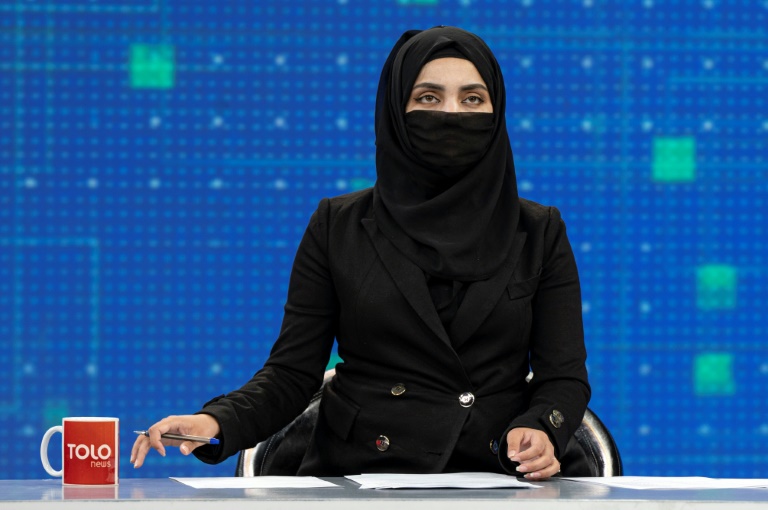
Wearing full hijabs and face-covering veils that left only their eyes in view, women presenters and reporters aired morning news bulletins across leading channels like TOLOnews, Ariana Television, Shamshad TV and 1TV.

“We resisted and were against wearing a mask,” Sonia Niazi, a presenter with TOLOnews, told AFP.

“But TOLOnews was pressured and told that any female presenter who appeared on screen without covering her face must be given some other job or simply removed,” she said.

“TOLOnews was compelled and we were forced to wear it.”

Women presenters were previously only required to wear a headscarf.

TOLOnews director Khpolwak Sapai said the channel was “forced” to make its staff follow the order.

“We were told ‘You are forced to do it. You must do it. There is no other way’,” Sapai told AFP.

“I was called on the telephone yesterday and was told in strict words to do it. So, it is not by choice but by force that we are doing it.”

– ‘Not against women presenters’ –

On Sunday, male journalists and employees of TOLOnews wore face masks in the channel’s offices in Kabul in solidarity with women presenters, an AFP correspondent reported.

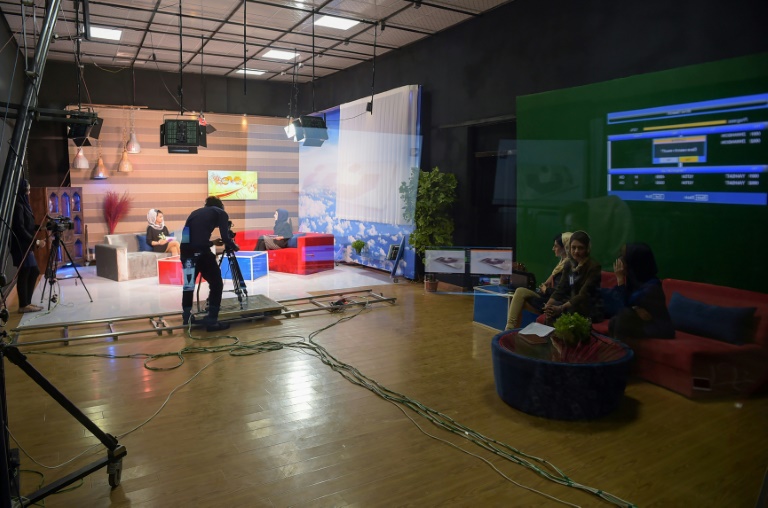
Other women employees of the channel continued to work with their faces visible.

Ministry spokesman Mohammad Akif Sadeq Mohajir said authorities appreciated that media channels had observed the dress code.

“We are happy with the media channels that they implemented this responsibility in a good manner,” he told AFP.

Mohajir also said that the authorities were not against women presenters working in the channels.

“We have no intention of removing them from the public scene or sidelining them or stripping them of their right to work,” he said.

Akhundzada’s decree orders authorities to fire women government employees if they fail to follow the dress code.

Men working in government also risk suspension if their wives or daughters fail to comply.

Authorities have also said that media managers and guardians of defiant women presenters would be liable for penalties if the diktat was not observed.

During two decades of US-led military intervention in Afghanistan, women and girls made marginal gains in the deeply patriarchal nation.

Soon after resuming control, the Taliban promised a softer version of the harsh Islamist rule that characterised their first stint in power from 1996 to 2001.

Since the takeover, however, women have been banned from travelling alone and teenage girls barred from secondary schools.

In the 20 years after the Taliban were ousted from office in 2001, many women in the conservative countryside continued to wear a burqa.

But most Afghan women, including TV presenters, opted for the Islamic headscarf.

Television channels have already stopped showing dramas and soap operas featuring women on the order of Taliban authorities.

Biden greets Kim, but says US 'prepared' for North Korea weapons test

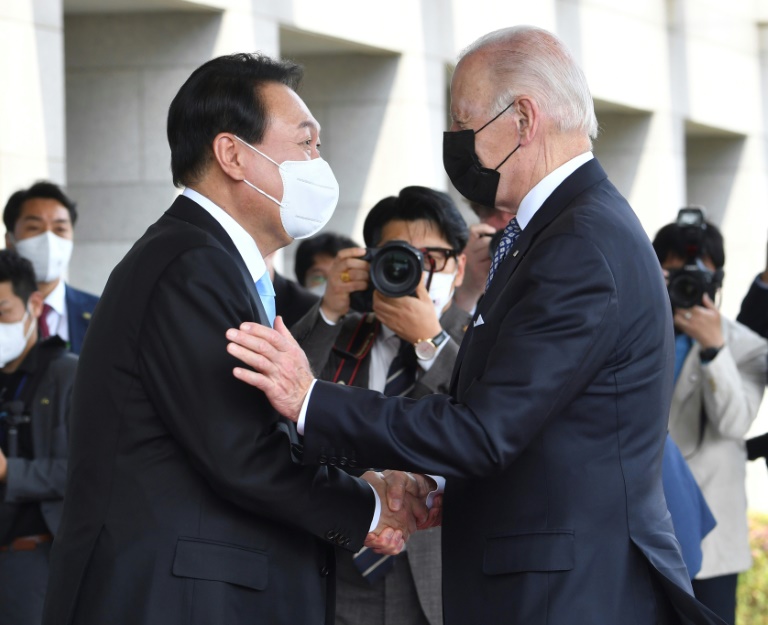
Before President Joe Biden left South Korea for Japan Sunday, he offered a brief message to Kim Jong Un, whose nuclear sabre-rattling has risked overshadowing the US leader’s first Asia trip: “Hello. Period.”

He offered the succinct greeting when reporters asked whether he had anything to say to North Korea’s leader, highlighting his administration’s openness to dialogue with Pyongyang, even as they look to ramp up joint military exercises with South Korea.

Biden said that he was “not concerned” about the risks of a fresh weapons test while he was in the region — something US officials have warned of repeatedly — saying: “We are prepared for anything North Korea does.”

He has spent two days with South Korea’s newly elected President Yoon Suk-yeol, with the pair saying Saturday that “considering the evolving threat” from Pyongyang, they were looking at expanding the “scope and scale” of joint military exercises.

North Korea has conducted a blitz of sanctions-busting weapons tests this year, including firing an intercontinental ballistic missile at full range for the first time since 2017, with satellite imagery indicating a nuclear test is looming.

Joint exercises had been scaled back due to Covid and in order for Biden and Yoon’s predecessors, Donald Trump and Moon Jae-in, to embark on a round of high-profile but ultimately unsuccessful diplomacy with North Korea.

In contrast to the dovish Moon, Yoon said he and Biden discussed possible “joint drills to prepare for a nuclear attack” and called for more tactical US assets to be deployed to the region.

Any build-up of forces or expansion of joint military exercises would likely enrage Pyongyang, which views the drills as rehearsals for invasion.

North Korea’s weapons testing schedule may also be affected by a raging Covid-19 outbreak.

More than 2.6 million cases of “fever” have been reported since the Omicron coronavirus variant was first detected in April, state media said Sunday.

Biden and Yoon extended an offer of help to North Korea, which has an unvaccinated population and a crumbling healthcare system, saying in a statement they were “willing to work with the international community to provide assistance”.

Biden added that he would not exclude a meeting with Kim if the North Korean leader were “sincere”.

“We’ve offered vaccines, not only to North Korea but to China as well and we’re prepared to do that immediately,” Biden said at a press conference with Yoon. “We’ve got no response.”

– Economic ties –

Early Sunday, Biden met with the chairman of Hyundai to celebrate a decision by the South Korean auto giant to invest $5.5 billion in an electric vehicle plant in the southern US state of Georgia.

He also met US and South Korean troops alongside Yoon, a schedule that a senior White House official said was able to “reflect the truly integrated nature” of the countries’ economic and military alliance.

Biden has used his visit to call for the allies to deepen ties, saying at a press conference with Yoon that Asia was a key battleground in the global “competition between democracies and autocracies”.

“We talked in some length about the need for us to make this larger than just the United States, Japan, and Korea, but the entire Pacific and the South Pacific and Indo-Pacific. I think this is an opportunity,” Biden said.

While China is the main US rival in that struggle, Biden illustrated the acute challenge from Russia when he signed a $40 billion aid bill late Saturday to help Ukraine fight the invasion by Moscow’s forces.

The bill, passed earlier by Congress, was flown to Seoul so that Biden could make it law without having to wait for his return to Washington next Tuesday.

In Japan, Biden will meet with Prime Minister Fumio Kishida and Emperor Naruhito on Monday ahead of Tuesday’s Quad summit, bringing together the leaders of Australia, India, Japan and the United States.

Also on Monday, Biden will unveil a major new US initiative for regional trade, the Indo-Pacific Economic Framework for Prosperity. 

Afghan women TV presenters cover faces on air

Women presenters on Afghanistan’s leading news channels went on air Sunday with their faces covered, a day after defying a Taliban order to conceal their appearance on television.

Since seizing power last year, the Taliban have imposed a slew of restrictions on civil society, many focused on reining in the rights of women and girls to comply with the group’s austere brand of Islam.

Earlier this month, Afghanistan’s supreme leader Hibatullah Akhundzada issued a diktat for women to cover up fully in public, including their faces, ideally with the traditional burqa.

The feared Ministry for Promotion of Virtue and Prevention of Vice ordered women TV presenters to follow suit from Saturday.

But women presenters defied the order and went on air with their faces visible, only to fall in line with the directive on Sunday.

Wearing full hijabs and face-covering veils that left only their eyes in view, women presenters and reporters aired morning news bulletins across leading channels like TOLOnews, Ariana Television, Shamshad TV and 1TV.

“We resisted and were against wearing a mask,” Sonia Niazi, a presenter with TOLOnews, told AFP.

“But TOLOnews was pressured and told that any female presenter who appeared on screen without covering her face must be given some other job or simply removed,” she said.

“TOLOnews was compelled and we were forced to wear it.”

Women presenters had previously only been required to wear a headscarf.

Ministry spokesman Mohammad Akif Sadeq Mohajir said authorities had no plans to force female presenters out of their jobs.

“We have no intention of removing them from the public scene or sidelining them or stripping them of their right to work,” Mohajir told AFP.

“We are happy with the media channels that they implemented this responsibility in a good manner.”

Akhundzada’s decree orders authorities to fire women government employees if they fail to follow the new dress code.

Men working in government also risk suspension if their wives or daughters fail to comply.

Authorities have also said that media managers and guardians of defiant women presenters would be liable for penalties if the diktat was not observed.

During two decades of US-led military intervention in Afghanistan, women and girls made marginal gains in the deeply patriarchal nation.

Soon after resuming control, the Taliban promised a softer version of the harsh Islamist rule that characterised their first stint in power from 1996 to 2001.

Since the takeover, however, women have been banned from travelling alone and teenage girls barred from secondary schools.

In the 20 years after the Taliban were ousted from office in 2001, many women in the conservative countryside continued to wear a burqa.

But most Afghan women, including TV presenters, opted for the Islamic headscarf.

Television channels have already stopped showing dramas and soap operas featuring women on the order of Taliban authorities.

'Nothing left': Mariupol picks up pieces after ferocious fighting

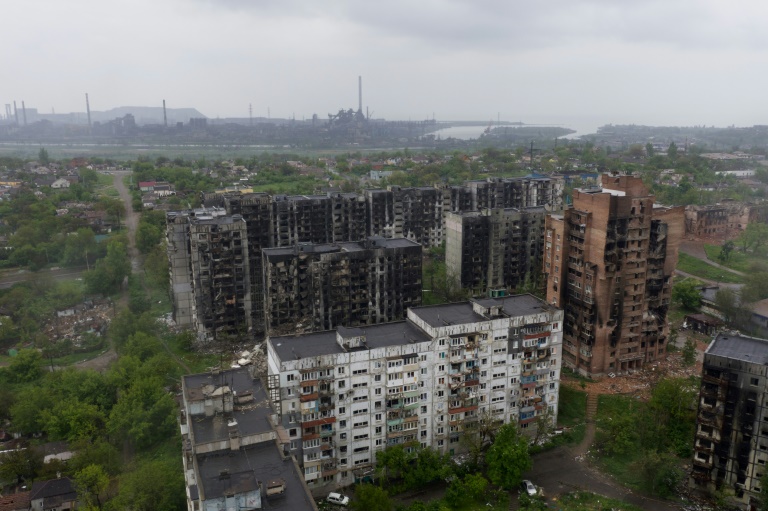
The carcasses of charred buildings stand amid the lush greenery in what remains of the once bustling Ukrainian port city of Mariupol. 

After weeks of siege and strikes much of the city on the coast of the Sea of Azov has been reduced to a wasteland.

As the last Ukrainian troops in the town surrendered to the Russians at the bombed-out Azovstal steel plant, passers-by mourned their fate.

Angela Kopytsa, a 52-year-old with bleached hair, said she saw no future for herself in Mariupol.

“There is no work, no food, no water,” she said, adding that both her home and life had been “destroyed”.

The city has lived without electricity since early March.

Kopytsa breaks into tears as she recounts how during the hostilities she had to share morsels of food with her children and grandson and how “children at maternity wards were dying of hunger”.

“What future?” she said in Russian. “I have no hope for anything.”

Three months of fighting in Mariupol have sent hundreds of thousands of people running for their lives and caused untold suffering and death. 

Russia has pledged to rebuild the southeastern city and turn it into a seaside resort.

– ‘Nothing left’ –

AFP journalists travelled to Mariupol as part of a press tour organised by the Russian army but members of the media were not allowed to approach the huge Azovstal steel plant, which has become a symbol of fierce Ukrainian resistance.

The incessant fighting of the previous weeks has died down, and the Russian army and its separatist allies now patrol the streets in the devastated city which had a population of more than half a million people before the start of the hostilities.

Elena Ilyina, who used to teach at a university in Mariupol, sobs as she tells AFP about her life, saying her apartment has been destroyed and she now lives with her daughter.

“I have nothing left,” said the 55-year-old, adding that even the clothes she wears have been given to her by “sympathetic people”.

Ilyina said she wants to have her old life back.

“I’d like to live in my apartment, in peace, go to work and talk to my children,” she said, her voice breaking.

During the media visit, the Russian army also took the journalists to a local zoo where animals including bears and lions were kept in cages but appeared healthy.

– ‘We adapt, we survive’ – 

Oksana Krishtafovich, 41, used to be a cook in a local restaurant but now works at the zoo, feeding animals and milking cows. 

“The restaurant where I worked was destroyed. Now they are my customers,” she said, carrying a bowl to the raccoons.

She admitted that the city “lacks everything” but appeared stoic. “We adapt, we survive,” she said.

Sergei Pugach, who spent 30 years working at Azovstal, one of the city’s main employers, is now a guard at the zoo.

In February, he had only two months to go before retirement. Then Russian President Vladimir Putin sent troops to Ukraine.

Today Pugach does not know if he will ever receive his pension but does not complain.

“The Ukrainians are not lazy,” he said, noting that as soon as the fighting stopped “people crawled out of the basements and everyone is now looking for work.

“Some are already working.”

Biden says 'hi' to North Korea's Kim, despite weapons test fears

President Joe Biden had a short message for North Korea’s Kim Jong Un: “Hello. Period.” he told reporters Sunday in Seoul, before heading to Japan for the second leg of his Asia trip which has been overshadowed by fears of a nuclear test by Pyongyang.

Biden is leaving South Korea, after spending two days with newly elected President Yoon Suk-yeol, with the pair discussing possibly expanding joint military exercises to counter Kim Jong Un’s sabre-rattling.

His goal to reinforce US leadership across Asia has been dogged  by fears the unpredictable, nuclear-armed North could conduct a weapons test while Biden is in the region, but on his last day in Seoul, he told reporters he had a short message for Kim: “Hello. Period.”

He said he was “not concerned” about Pyongyang’s possible weapons test, saying: “We are prepared for anything North Korea does.”

Early Sunday, Biden met with the chairman of Hyundai to celebrate a decision by the auto giant to invest $5.5 billion in an electric vehicle plant in the southern US state of Georgia.

He will also meet US and South Korean troops with Yoon, a schedule that a senior White House official said was able to “reflect the truly integrated nature” of the countries’ economic and military alliance.

Biden has used his visit to call for the democratic allies to deepen ties, saying at a joint press conference with Yoon that Asia was a key battleground in the global “competition between democracies and autocracies”.

“We talked in some length about the need for us to make this larger than just the United States, Japan, and Korea, but the entire Pacific and the South Pacific and Indo-Pacific. I think this is an opportunity,” Biden said.

While China is the main US rival in that struggle, Biden illustrated the acute challenge from Russia when he signed a $40 billion aid bill late Saturday to help Ukraine fight the invasion by Moscow’s forces.

The bill, passed earlier by Congress, was flown to Seoul so that Biden could make it law without having to wait for his return to Washington late next Tuesday.

In Japan, Biden will meet with Prime Minister Fumio Kishida and Emperor Naruhito on Monday ahead of Tuesday’s Quad summit, bringing together the leaders of Australia, India, Japan and the United States.

Also on Monday, Biden will unveil a major new US initiative for regional trade, the Indo-Pacific Economic Framework for Prosperity. 

– North Korea threat –

Biden and Yoon said in a statement Saturday that “considering the evolving threat” from North Korea, they “agree to initiate discussions to expand the scope and scale of combined military exercises and training on and around the Korean peninsula”.

The possible beefing up of joint US-South Korean military exercises comes in response to North Korea’s blitz of sanctions-busting weapons tests this year.

Joint exercises had been scaled back due to Covid and in order for Biden and Yoon’s predecessors, Donald Trump and Moon Jae-in, to embark on a round of high-profile but ultimately unsuccessful diplomacy with the North.

In contrast to the dovish Moon, Yoon said he and Biden discussed possible “joint drills to prepare for a nuclear attack” and called for more tactical US assets to be deployed to the region.

Any build-up of forces or expansion of US-South Korea joint military exercises would likely enrage Pyongyang, which views the joint drills as rehearsals for invasion.

Meanwhile, Biden and Yoon extended an offer of help to Pyongyang, which has recently announced it is in the midst of a Covid-19 outbreak — a rare admission of internal troubles.

The US-South Korea statement said the two presidents “express concern over the recent Covid-19 outbreak” and “are willing to work with the international community to provide assistance” to North Korea.

On Sunday, North Korean state media said 2.6 million people had been sick with “fever” with 67 deaths — which they claimed was a fatality rate of just 0.003 percent, despite an unvaccinated population where malnutrition is widespread.

Biden, while adding that he would not exclude a meeting with Kim if he were “sincere”, indicated the difficulty of dealing with the unpredictable dictator.

“We’ve offered vaccines, not only to North Korea but to China as well and we’re prepared to do that immediately,” Biden said at a press conference with Yoon. “We’ve got no response.”

Moldova wine industry's EU focus pays off

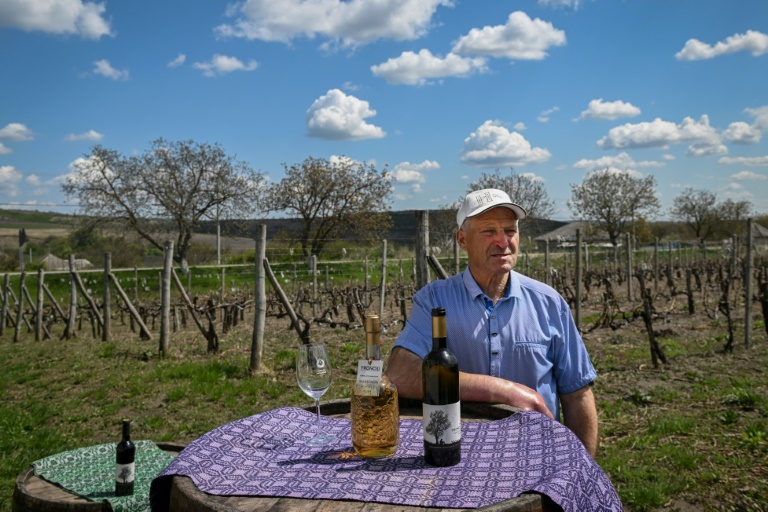
In the small Moldovan village of Pereni, Nicolae Tronciu gazes at his vineyard, with its buds ready to bloom.

The 71-year-old launched his current brand four years ago, selling it to Europe rather than Russia, traditionally his country’s biggest customer — a move that is paying off amid the war in Ukraine.

“Most of my production goes to Europe, especially to our Romanian brothers,” Tronciu told AFP at his vineyard, about 50 kilometres (30 miles) away from the Ukrainian border.

Moldova — a small former Soviet republic of some 2.6 million people nestled between Ukraine and Romania, and among the world’s 20 largest wine producers — has long sought closer ties with Europe.

This has now mitigated the war’s impact as the industry struggles with rising prices for raw materials and a lack of Ukrainian consumers.

– ‘Freedom blend’ –

“The Russian market was our traditional market… In the EU you can charge higher prices for wine, but there the focus is on quality,” Tronciu said.

His family has been making wine for four generations, and he hopes to turn over his business to his sons working abroad.

He makes no secret of where his preferences stand.

“Geographically and as a person I’m pro-European, yes,” he said.

Moldova seeking stronger Europe ties has angered Moscow and resulted in two Russian embargoes in 2006 and 2013.

Those pushed the country further West with the EU liberalising its market for Moldovan wines and sealing a bilateral free trade agreement with Chisinau in 2014.

The transformation has been radical — Russia accounted for only 10 percent of Moldovan wine exports in 2021, down from 80 percent in the early 2000s, according to figures from the Moldovan Ministry of Agriculture.

Moldova exported more than 120 million litres to European countries last year, compared to 8.6 million litres to Russia.

“Before the 2006 (Russian) embargo, the country did not know the term ‘market diversification’… Today, it exports nearly 68 million bottles each year to more than 70 countries,” senior agriculture ministry official Sergiu Gherciu told AFP.

Moldova’s top wine maker Purcari has even taken a direct political stance against Russia’s influence with a wine called “Freedom Blend”, launched in 2014 and made from three grape varieties from Georgia, Ukraine and Moldova.

“This wine is a symbol of these countries which are de facto fighting for their freedom,” Purcari chief operating officer Eugen Comendant said.

After Russia invaded Ukraine in February, the company helped Ukrainian refugees — offering them free accommodation — and sponsored an anti-war banner in the Romanian capital Bucharest, where Purcari is listed on the stock exchange.

– Expensive raw materials –

Comendant said the war’s impact was “close to zero” in terms of Russians no longer purchasing Purcari wines.

There are currently no trade restrictions on wine between the two countries, but the war has made transport difficult and international sanctions make it difficult for Russia to conduct international trade.

But the Ukrainian market, which was in full development and represented four percent of the company’s sales, collapsed.

The war blocking the southern Ukrainian port of Odessa has also caused “major logistical problems and complicates our exports to Asia,” Comendant added.

In March, the Moldovan government said more than 750,000 euros ($790,000) worth of wine were blocked in the Ukrainian port. 

But the main challenge for Moldova’s wine producers lies with rising production costs, which are expected to soar by 50 percent this year, according to Gherciu.

Tronciu, who sells between eight and ten tonnes of wine every year, said all the raw materials have gotten more expensive. 

“Pesticide, fuel, gas, even the iron wire we use” for the grapevines, he said.

He also deplored a lack of tourists, who he used to welcome.

“Most of them were Ukrainians, but also a few Russians,” he said in his now empty tasting room.

Moldova wine industry's EU focus pays off

In the small Moldovan village of Pereni, Nicolae Tronciu gazes at his vineyard, with its buds ready to bloom.

The 71-year-old launched his current brand four years ago, selling it to Europe rather than Russia, traditionally his country’s biggest customer — a move that is paying off amid the war in Ukraine.

“Most of my production goes to Europe, especially to our Romanian brothers,” Tronciu told AFP at his vineyard, about 50 kilometres (30 miles) away from the Ukrainian border.

Moldova — a small former Soviet republic of some 2.6 million people nestled between Ukraine and Romania, and among the world’s 20 largest wine producers — has long sought closer ties with Europe.

This has now mitigated the war’s impact as the industry struggles with rising prices for raw materials and a lack of Ukrainian consumers.

– ‘Freedom blend’ –

“The Russian market was our traditional market… In the EU you can charge higher prices for wine, but there the focus is on quality,” Tronciu said.

His family has been making wine for four generations, and he hopes to turn over his business to his sons working abroad.

He makes no secret of where his preferences stand.

“Geographically and as a person I’m pro-European, yes,” he said.

Moldova seeking stronger Europe ties has angered Moscow and resulted in two Russian embargoes in 2006 and 2013.

Those pushed the country further West with the EU liberalising its market for Moldovan wines and sealing a bilateral free trade agreement with Chisinau in 2014.

The transformation has been radical — Russia accounted for only 10 percent of Moldovan wine exports in 2021, down from 80 percent in the early 2000s, according to figures from the Moldovan Ministry of Agriculture.

Moldova exported more than 120 million litres to European countries last year, compared to 8.6 million litres to Russia.

“Before the 2006 (Russian) embargo, the country did not know the term ‘market diversification’… Today, it exports nearly 68 million bottles each year to more than 70 countries,” senior agriculture ministry official Sergiu Gherciu told AFP.

Moldova’s top wine maker Purcari has even taken a direct political stance against Russia’s influence with a wine called “Freedom Blend”, launched in 2014 and made from three grape varieties from Georgia, Ukraine and Moldova.

“This wine is a symbol of these countries which are de facto fighting for their freedom,” Purcari chief operating officer Eugen Comendant said.

After Russia invaded Ukraine in February, the company helped Ukrainian refugees — offering them free accommodation — and sponsored an anti-war banner in the Romanian capital Bucharest, where Purcari is listed on the stock exchange.

– Expensive raw materials –

Comendant said the war’s impact was “close to zero” in terms of Russians no longer purchasing Purcari wines.

There are currently no trade restrictions on wine between the two countries, but the war has made transport difficult and international sanctions make it difficult for Russia to conduct international trade.

But the Ukrainian market, which was in full development and represented four percent of the company’s sales, collapsed.

The war blocking the southern Ukrainian port of Odessa has also caused “major logistical problems and complicates our exports to Asia,” Comendant added.

In March, the Moldovan government said more than 750,000 euros ($790,000) worth of wine were blocked in the Ukrainian port. 

But the main challenge for Moldova’s wine producers lies with rising production costs, which are expected to soar by 50 percent this year, according to Gherciu.

Tronciu, who sells between eight and ten tonnes of wine every year, said all the raw materials have gotten more expensive. 

“Pesticide, fuel, gas, even the iron wire we use” for the grapevines, he said.

He also deplored a lack of tourists, who he used to welcome.

“Most of them were Ukrainians, but also a few Russians,” he said in his now empty tasting room.

Rich Lebanese buy 'island passports' as crisis bites

Fearing visa hassles could cost him his job in Dubai while an economic collapse had dashed any homecoming options, Lebanese executive Jad splurged around $135,000 on a new citizenship for himself and his wife.

Within a month of making the payment last year, the 43-year-old businessman received a small package in his mailbox.

Inside were two navy blue passports from the Caribbean island nation of Saint Kitts and Nevis — his ticket to visa-free access to more than 150 countries, including in Europe.

This was a major upgrade from the Lebanese passport, which is ranked among the worst in the world and has become nearly impossible to renew because the cash-strapped state is running out of stocks.

“Three years ago, I would not have imagined I would buy a passport,” said Jad, who had previously grappled with lengthy visa procedures for business trips.

“But now because of the situation in Lebanon — and because we can afford it — we finally did it,” he said, asking for his full name to be withheld for privacy reasons.

A Saint Kitts passport ranks 25th in the world while Lebanon languishes at 103rd on the Henley passport index for freedom of travel.

With a population of under 55,000, it started selling citizenships a year after gaining independence in 1983.

Citizenship by investment schemes have become a booming business internationally, attracting the well-to-do from volatile countries like Iraq, Yemen and Syria.

Some EU member states, including Bulgaria, Cyprus and Malta, have also operated “golden passport” schemes, but they have run into opposition from the European Commission over the back door they offer to EU citizenship.

Wealthy Lebanese, mostly living in Gulf or African nations, are now among those hunting for passports that offer easier travel and a safety net from the economic crisis at home.

– ‘Nice country’ –

Commonwealth Caribbean nations are particularly attractive because of their long-standing schemes offering citizenship within months in exchange for a lump sum.

Applicants are not even required to visit.

When Jad first went to Paris as a Kittitian, officers at passport control told him: “You come from a nice country.”

“But actually I have never been there,” he said.

Jad’s Lebanese friends in the Gulf were also shopping for “island passports” or investing in real estate in Greece and Portugal to obtain residency as part of so-called “golden visa” schemes, he said.

“This is not just a trend. It’s a solution.”

Lebanese expatriates in Gulf Arab states have long borne the brunt of political bickering and rifts between their capitals.

Last year, several Gulf countries cut diplomatic ties with Beirut for months after a Lebanese minister criticised a Saudi-led military intervention in Yemen.

Kuwait limited the number of visas granted to Lebanese, and many in the diaspora worried other Gulf states would follow suit.

“That made me think: I have a problem here, I don’t want to jeopardise my work in the Gulf,” said Dubai-based businessman Marielli Bou Harb.

The 35-year-old bought Saint Kitts passports for his family of four last year, encouraged by a hefty discount as the Covid-19 pandemic beleaguered the island nation’s tourism-dependent economy.

A single passport usually costs around $150,000, a sum funnelled into a sustainable growth fund for the country, which only installed traffic lights in its capital Basseterre in 2018.

Other Caribbean islands including Antigua and Barbuda, Dominica, Grenada and Saint Lucia also sell passports.

– ‘Buying their freedom’ –

Few people can afford such a purchase in Lebanon, a country in an economic crisis that has seen the currency nosedive, banks freeze deposits and most of the population fall into poverty.

Yet demand for foreign citizenship has spurred a boom in passport consultancy, with firms advertising on social media, billboards and even inside Beirut’s airport.

Among them is Global Pass, converted in 2020 from a real estate company after Lebanese started complaining of higher visa rejection rates.

“Our business has grown by at least 40 percent from 2020 to 2021,” said founder Ziad Karkaji.

Even international firms are raking in a profit.

Jose Charo, who heads the Beirut office of Swiss-based Passport Legacy, said Lebanese now account for one-quarter of the company’s clientele.

Their number has grown fivefold due to the economic crisis that was made worse by a devastating explosion at Beirut’s port in 2020, Charo said.

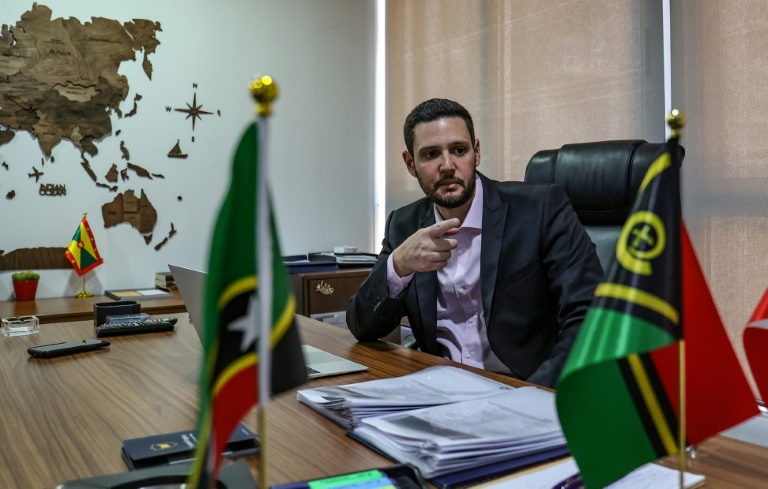
Having Grenadian citizenship makes applying for a US investor visa easier for businesspeople, he said, while those looking to retire or settle abroad can invest around a quarter of a million dollars in Greece or Portugal to secure permanent residency.

“The industry will keep on growing, unfortunately for this country but fortunately for us,” Charo said.

“They are buying their freedom.”

Close Bitnami banner
Bitnami