World

Manufacturers getting to grips with airless tyres

Airless tyres that never go flat or need to be inflated: It’s a decades-long dream that manufacturers hope to turn into a reality soon, but for truck drivers first.

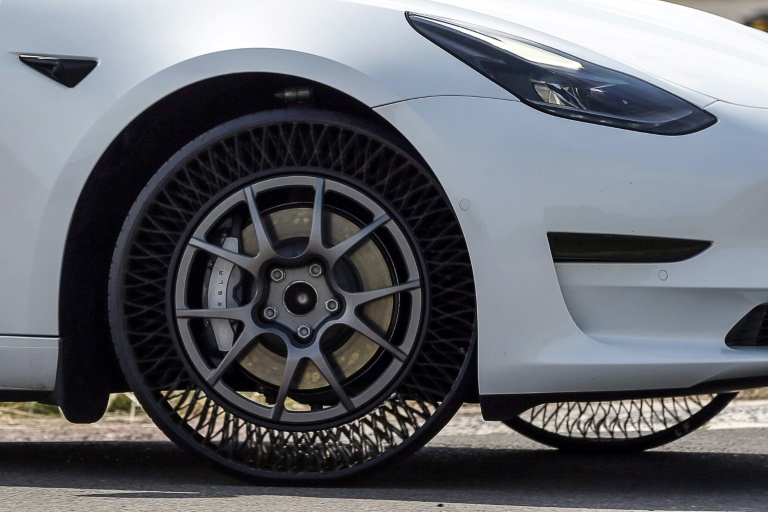
The challenges that the technology faces were put on display at a Goodyear test track in Luxembourg, where a group of journalists put a Tesla equipped with airless tyres through its paces.

Instead of being filled with air, the tyres have a web of spokes that keep the wheels firm and give them a see-through look.

The thin layer of rubber gripping the asphalt has a gargantuan physical challenge to meet: supporting the weight of the car and absorbing shocks as well as standard pneumatic tyres for thousands and thousands of kilometres.

That challenge is being overcome: the tyre’s rubber and plastic structure resisted the huge stress as the car banked into the track’s tight turns.

The ride is smooth but the grip is not as good as on conventional tyres — and they are noisier.

The tyres were tested for 120,000 kilometres (75,000 miles) at speeds of up to 160 kph in both scorching temperatures as well as snow, said Michael Rachita, who heads up Goodyear’s efforts to develop airless tyres.

“The most obvious advantage is that it’s puncture proof,” said Rachita.

“It will never run flat, you could drive over any nail and expect not to lose performance,” he added.

Rachita said airless tyres will also be maintenance free for drivers as they will never need to check and adjust air pressure.

He said a second generation of airless tyres that are lighter, quieter and roll better are in the works.

– Gradual transition seen –

Michelin has released the Tweel, but it is for construction vehicles rather than cars where the demands in terms of driving performance are much greater.

The French firm has also unveiled the Uptis which it is developing with US car manufacturer General Motors, and which it hopes can make the jump from auto shows to showrooms next year.

Its researchers are working on a cocktail of fibreglass and resin to hold the rubber onto the honeycomb structure of the new tyre. 

But Michelin’s CEO Florent Menegaux doesn’t expect airless tyres to squeeze out regular tyres anytime soon.

“We’re going continue to have air tyres for several decades,” he said.

Goodyear, which submitted its first patent on airless tyre technology in 1982, has recently put its food down on the accelerator in terms of research and development.

The US firm aims to have a maintenance-free and long-lasting airless tyre for cars by the end of the decade.

It already has an early version for shuttle buses and automated delivery vehicles on university campuses.

Bridgestone also hopes to have an airless tyre ready within a decade, having already tested early versions on utility vehicles.

Other manufacturers are more sceptical that airless tyres will ever offer comparable shock absorption as traditional tyres and the noise can be reduced sufficiently.

“They aren’t a viable solution and I don’t expect they will become one,” a Continental researcher, Gerrit Bolz, said at a tyre convention in 2017.

– Environmental benefits, economic concerns –

But independent researcher Ulf Sandberg at the Swedish National Road and Transport Research Institute, which is working on an airless tyre for trucks, believes they will eventually become a viable alternative.

“I believe that sooner or later airless tyres could take over,” he told AFP.

“If rolling resistance is reduced by 50 percent, it would increase the range of vehicles by 25 percent, and could be extremely valuable” for car manufacturers, particularly for electric vehicles where range is a key concern.

Airless tyres could prove to be environmentally beneficial as they could last the entire lifetime of most vehicles and could then be recycled or retreaded for a second life.

But manufacturers may not be burning rubber to bring airless tyres to market because they also pose threats to their business model, said Sandberg.

A switch to airless tyres would strand the manufacturing equipment used for pneumatic tyres, a heavy cost for the companies to bear.

Given the longevity of the airless tyres, companies would be making less of them.

Goodyear’s vice president for product development in Europe, Xavier Fraipont, acknowledged that airless tyres requires a “rethinking our business model, of rethinking our manufacturing”.

Yet the possibility of gaining a lead on competitors or being left behind by an affordable and high-performing airless tyre for the consumer market keeps their research rolling forward.
Bitter harvest for Indian farmers after wheat export ban

When New Delhi banned wheat exports as prices soared over Russia’s invasion of Ukraine it provoked consternation abroad and drove the cereal even higher. 

Now Indian farmers and traders are fuming they have been denied a windfall as domestic prices have plummeted. 

India is the world’s second-biggest wheat producer, but the government — itself the country’s biggest buyer of the crop — said it chose to protect food security for its mammoth population despite inflation concerns.

The move — along with dwindling global supplies from Russia and Ukraine, both among the world’s top five wheat exporters — sent prices to all-time highs on commodity exchanges in Chicago and Europe.

But at Asia’s largest grain market in Khanna, in India’s breadbasket state of Punjab, values went the other way.

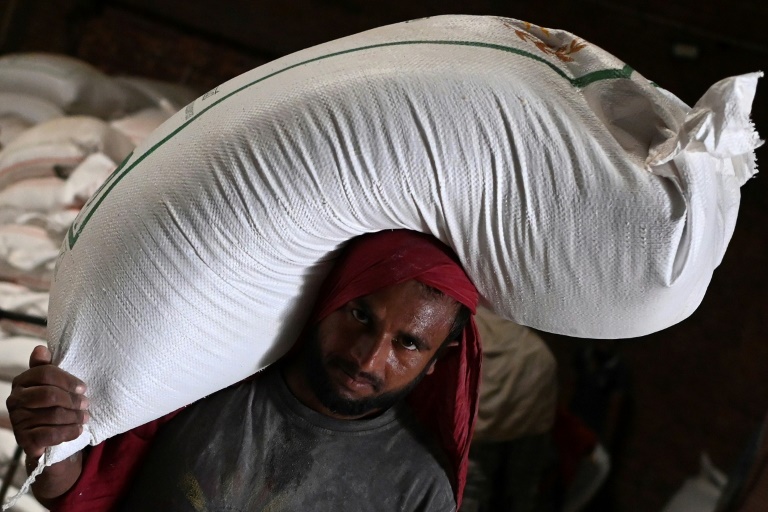
Every year, thousands of farmers from the wheat-growing region sell their produce at the facility, which is dominated by a dozen giant storage sheds, each the size of a football pitch.

From 2,300 rupees (about $30) per 100 kilograms of wheat before the export ban, prices slumped to 2,015 rupees — the government-set minimum price at which it buys grain for its vast public distribution system.

India’s hundreds of millions of small farmers eke out a borderline existence, subject to the vagaries of the weather, and some in Punjab were already reeling from production losses due to a severe heatwave.

The price fall represents the difference between a bumper payout and heartache, they say.

Farmer Navtej Singh saved half his 60-tonne wheat harvest to sell during the lean season, when prices normally rise, and is aghast at the government’s decision.

Now he is scrambling to sell his remaining stock.

“This ban has come as a shock,” he told AFP. “The price has dropped to the lowest and doesn’t even cover our expenses. I can’t even wait for a day.”

The authorities had not consulted anyone and had acted “selfishly”, he said. 

“We were already hit with production losses this year, and the ban order has made our life difficult.”

– ‘Feed the world’ –

Before the war in Ukraine and the heatwave, India’s wheat production of 109 million tonnes in 2021 and seven million tonnes of exports had both been expected to rise this year.

Prime Minister Narendra Modi last month even offered to help plug the global wheat deficit and “feed the world”.

But extreme weather conditions are becoming more frequent in a phenomenon experts say is driven by climate change. After producers in Punjab were hit by a heatwave, the national harvest came in at four million tonnes less than expected.

Now federal and state authorities are cutting procurement for the public distribution system, which provides free and highly subsidised grains to nearly 800 million people, as food security schemes set up during the coronavirus pandemic are cut back. 

Even so, retail wheat flour prices are at a 12-year high, and Manish Pajni, head of the Punjab government’s grain procurement department in Khanna, has backed the ban, saying wholesale rates could have gone as high as 3,000 rupees without it.

But trader Raj Sood said the government should have adopted a wait and watch policy before abruptly halting exports and causing market turmoil.

“The market was already under stress from the harvest crisis and, without a thought, the government came up with the ban,” he said.

“No doubt the major losses will be incurred by big exporters like Cargill, ITC and Glencore, but small traders and farmers will also be impacted.”

And many businessmen in Khanna say the measure will only have a temporary effect as the rules of supply and demand are unavoidable.

Flour mill owner Divender Verma usually obtains his raw materials from government stocks but said they were running at their minimum. 

“This time we do not hope they can provide for us. So the scenario for wheat is tight,” Verma told AFP. 

Private suppliers will inevitably charge more, he added — further driving up prices for bread and other wheat products.

Bitter harvest for Indian farmers after wheat export ban

When New Delhi banned wheat exports as prices soared over Russia’s invasion of Ukraine it provoked consternation abroad and drove the cereal even higher. 

Now Indian farmers and traders are fuming they have been denied a windfall as domestic prices have plummeted. 

India is the world’s second-biggest wheat producer, but the government — itself the country’s biggest buyer of the crop — said it chose to protect food security for its mammoth population despite inflation concerns.

The move — along with dwindling global supplies from Russia and Ukraine, both among the world’s top five wheat exporters — sent prices to all-time highs on commodity exchanges in Chicago and Europe.

But at Asia’s largest grain market in Khanna, in India’s breadbasket state of Punjab, values went the other way.

Every year, thousands of farmers from the wheat-growing region sell their produce at the facility, which is dominated by a dozen giant storage sheds, each the size of a football pitch.

From 2,300 rupees (about $30) per 100 kilograms of wheat before the export ban, prices slumped to 2,015 rupees — the government-set minimum price at which it buys grain for its vast public distribution system.

India’s hundreds of millions of small farmers eke out a borderline existence, subject to the vagaries of the weather, and some in Punjab were already reeling from production losses due to a severe heatwave.

The price fall represents the difference between a bumper payout and heartache, they say.

Farmer Navtej Singh saved half his 60-tonne wheat harvest to sell during the lean season, when prices normally rise, and is aghast at the government’s decision.

Now he is scrambling to sell his remaining stock.

“This ban has come as a shock,” he told AFP. “The price has dropped to the lowest and doesn’t even cover our expenses. I can’t even wait for a day.”

The authorities had not consulted anyone and had acted “selfishly”, he said. 

“We were already hit with production losses this year, and the ban order has made our life difficult.”

– ‘Feed the world’ –

Before the war in Ukraine and the heatwave, India’s wheat production of 109 million tonnes in 2021 and seven million tonnes of exports had both been expected to rise this year.

Prime Minister Narendra Modi last month even offered to help plug the global wheat deficit and “feed the world”.

But extreme weather conditions are becoming more frequent in a phenomenon experts say is driven by climate change. After producers in Punjab were hit by a heatwave, the national harvest came in at four million tonnes less than expected.

Now federal and state authorities are cutting procurement for the public distribution system, which provides free and highly subsidised grains to nearly 800 million people, as food security schemes set up during the coronavirus pandemic are cut back. 

Even so, retail wheat flour prices are at a 12-year high, and Manish Pajni, head of the Punjab government’s grain procurement department in Khanna, has backed the ban, saying wholesale rates could have gone as high as 3,000 rupees without it.

But trader Raj Sood said the government should have adopted a wait and watch policy before abruptly halting exports and causing market turmoil.

“The market was already under stress from the harvest crisis and, without a thought, the government came up with the ban,” he said.

“No doubt the major losses will be incurred by big exporters like Cargill, ITC and Glencore, but small traders and farmers will also be impacted.”

And many businessmen in Khanna say the measure will only have a temporary effect as the rules of supply and demand are unavoidable.

Flour mill owner Divender Verma usually obtains his raw materials from government stocks but said they were running at their minimum. 

“This time we do not hope they can provide for us. So the scenario for wheat is tight,” Verma told AFP. 

Private suppliers will inevitably charge more, he added — further driving up prices for bread and other wheat products.

'Enormously risky': How NFTs lost their lustre

A slew of celebrity endorsements helped inflate a multi-billion dollar bubble around digital tokens over the past year, but cryptocurrencies are crashing and some fear NFTs could be next.

NFTs are tokens linked to digital images, “collectable” items, avatars in games or property and objects in the burgeoning virtual world of the metaverse.

The likes of Paris Hilton, Gwyneth Paltrow and Serena Williams have boasted about owning NFTs and many under-30s have been enticed to gamble for the chance of making a quick profit.

But the whole sector is suffering a rout at the moment with all the major cryptocurrencies slumping in value, and the signs for NFTs are mixed at best.

The number of NFTs traded in the first quarter of this year slumped by almost 50 percent compared to the previous quarter, according to analysis firm Non-Fungible.

They reckoned the market was digesting the vast amount of NFTs created last year, with the resale market just getting off the ground.

Monitoring firm CryptoSlam reported a dramatic tail-off in May, with just $31 million spent on art and collectibles in the week to May 15, the lowest figure all year.

A symbol of the struggle is the forlorn attempt to re-sell an NFT of Twitter founder Jack Dorsey’s first tweet.

Dorsey managed to sell the NFT for almost $3 million last year but the new owner cannot find anyone willing to pay more than $20,000.

– The year of scams –

Molly White, a prominent critic of the crypto sphere, told AFP there were many possible reasons for the downturn.

“It could be a general decrease in hype, it could be fear of scams after so many high-profile ones, or it could be people tightening their belts,” she said.

The reputation of the industry has been hammered for much of the year.

The main exchange, OpenSea, admitted in January that more than 80 percent of the NFTs created with its free tool were fraudulent — many of them copies of other NFTs or famous artworks reproduced without permission.

“There’s a bit of everything on OpenSea,” said Olivier Lerner, co-author of the book “NFT Mine d’Or” (NFT Gold Mine).

“It’s a huge site and it’s not curated, so you really have no idea what you’re buying.”

LooksRare, an NFT exchange that overtook OpenSea for volume of sales this year, got into similar problems as its rival.

As many as 95 percent of the transactions on its platform were found to be fake, according to CryptoSlam.

Users were selling NFTs to themselves because LooksRare was offering tokens with every transaction — no matter what you were buying.

And the amounts lost to scams this year have been eye-watering.

The owners of Axie Infinity, a game played by millions in the Philippines and elsewhere and a key driver of the NFT market, managed to lose more than $500 million in a single swindle.

– ‘Like the lottery’ –

“As soon as you have a new technology, you immediately have fraudsters circling,” lawyer Eric Barbry told AFP.

He pointed out that the NFT market had no dedicated regulation so law enforcement agencies are left to cobble together a response using existing frameworks.

Molly White said strong regulation could help eliminate the extreme speculation but that could, in turn, rob NFTs of their major appeal — that they can bring quick profits.

“I think less hype would be a good thing — in its current form, NFT trading is enormously risky and probably unwise for the average person,” she said.

NFTs are often likened to the traditional art market because they have no inherent utility and their prices fluctuated wildly depending on trends and hype.

But Olivier Lerner suggested a different comparison.

“It’s like the lottery,” he said of those seeking big profits from NFTs. “You play, but you never win.” 

Ukraine's Zelensky warns only diplomacy can end war

Ukrainian President Volodymyr Zelensky has warned only a diplomatic breakthrough rather than an outright military victory can end Russia’s war on his country, while pushing its case for EU membership.

Zelensky also appealed for more military aid, even as US President Joe Biden formally signed off on a $40-billion package of aid for the Ukrainian war effort.

And he insisted Saturday that his war-ravaged country should be a full candidate to join the EU, rejecting a suggestion from France’s President Emmanuel Macron and some other EU leaders that a sort of associated political community be created as a waiting zone for a membership bid.

“We don’t need such compromises,” Zelensky said during a joint news conference with visiting Portuguese Prime Minister Antonio Costa.

“Because, believe me, it will not be compromise with Ukraine in Europe, it will be another compromise between Europe and Russia.”

Speaking on Ukrainian television Saturday, Zelensky said: “There are things that can only be reached at the negotiating table.”

The war “will be bloody, there will be fighting but will only definitively end through diplomacy”.

“Discussions between Ukraine and Russia will decidedly take place. Under what format I don’t know,” he added.

But he promised that the result would be “fair” for Ukraine.

– Cruise missile ‘strike’ –

After just over 12 weeks of fierce fighting, Ukrainian forces have halted Russian attempts to seize Kyiv and the northern city of Kharkiv, but they are under intense pressure in the eastern Donbas region.

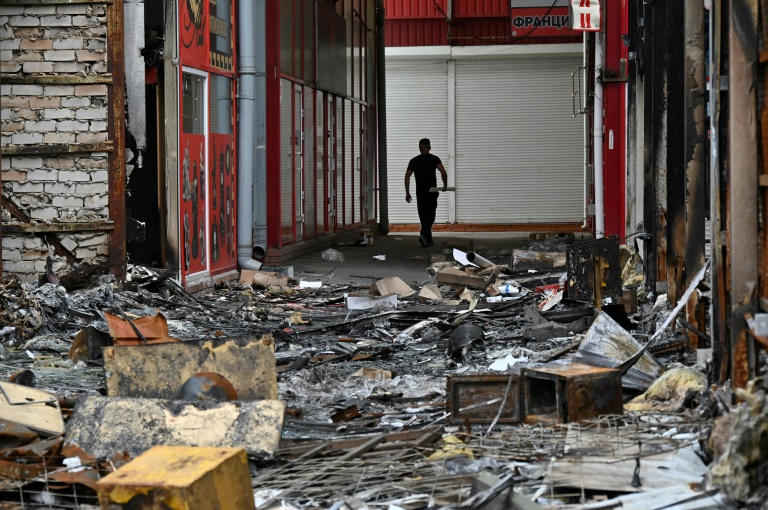
Moscow’s army has flattened and seized the Black Sea port of Mariupol and subjected Ukrainian troops and towns in the east to relentless ground and artillery attacks.

On Saturday, Russia’s defence ministry claimed to have struck with cruise missiles a large stockpile of weapons supplied by the West in the country’s northwest Zhytomyr region.

“Long-range, high-precision Kalibr missiles, launched from the sea, destroyed a large consignment of weapons and military equipment supplied by the United States and European countries,” the ministry said. The strike has yet to be independently confirmed.

– Russia cuts Finland’s gas-

Zelensky’s Western allies have shipped a steady stream of modern weaponry to his forces and imposed sweeping sanctions on the Russian economy and President Vladimir Putin’s inner circle.  

The Kremlin has responded by disrupting European energy supplies.

On Saturday, Russian energy giant Gazprom said it had halted supplies to neighbouring Finland as it had not received the ruble payments it was due.

Helsinki had refused to pay its bill in rubles, which Moscow had demanded in a bid to side-step financial sanctions.

In 2021, Gazprom supplied about two-thirds of the country’s gas consumption but only eight percent of its total energy use.

Gasum, Finland’s state-owned energy company, said it would use other sources, such as the Balticconnector pipeline, which links Finland to fellow EU member Estonia.

Moscow cut off gas to Poland and Bulgaria last month, a move the European Union denounced as “blackmail”.

The row over Finland’s gas bill comes just days after the country joined neighbouring Sweden in breaking their historical military non-alignment and applying to join NATO.

Moscow has warned Finland that joining NATO would be “a grave mistake with far-reaching consequences”, and Defence Minister Sergei Shoigu has said it will respond by building military bases in western Russia.

But both Finland and Sweden are now apparently on the fast track to join the military alliance, with Biden this week offering “full, total, complete backing” to their bids.

All 30 existing NATO members must agree, however, and Turkey has condemned Sweden’s alleged tolerance for the presence of exiled Kurdistan Workers’ Party (PKK) militants

– Dogged resistance –

On the ground in Ukraine, the fighting remains fiercest in the eastern region of Donbas, a Russian-speaking area partially controlled by pro-Kremlin separatists since 2014.

In Severodonetsk, a frontline city now at risk of encirclement, 12 people were killed and another 40 wounded by Russian shelling, said regional governor Sergiy Gaiday.

“The Russians are using artillery day and night,” he said.

In the neighbouring Donetsk region, governor Pavlo Kyrylenko said on Telegram on Saturday that seven civilians had been killed and 10 wounded.

Further north in Kharkiv, just 50 kilometres from the border with Russia, new networks of trenches and checkpoints have cropped up as the city prepares to defend against a fresh assault.

“When we were here on the 24th of February there were no positions at all,” says “Doctor”, a medic with the National Guard, referring to the day the Russians invaded.

“But now we have trenches, we have well-protected zones, so for them, it would be impossibly hard to capture (this position).” 

On the roads leading out of the city — some of which have been closed off — civilians help soldiers fill sandbags for the checkpoints.

“We have a problem, we are at war,” jokes a soldier as he checks a vehicle and turns it back.

-Prisoner swap mooted-

On Friday, Moscow declared its bloody, months-long battle for the Azovstal steelworks in Mariupol at an end.

Russian defence ministry spokesman Igor Konashenko said 2,439 Ukrainian personnel had surrendered at the plant since May 16, the final 500 on Friday.

Ukraine hopes to exchange the surrendering soldiers for Russian prisoners. But in Donetsk, pro-Kremlin authorities have threatened to put some of them on trial.

A Russian negotiator on Saturday said Moscow would consider exchanging prisoners from Ukraine’s far-right Azov battalion for Viktor Medvedchuk, a wealthy Ukrainian businessman known for his close ties to Putin.

“We are going to study the possibility,” said Leonid Slutsky, a senior member of Russia’s negotiating team, speaking from the separatist city of Donetsk, the RIA Novosti news agency reported.

Medvedchuk, 67, is a politician and one of Ukraine’s richest people. He escaped from house arrest after Russia invaded in February but was re-arrested in mid-April.

burs-jj/har/cwl/mtp

For Iraqis back from Syria, life on hold in 'rehabilitation' camp

Awatef Massud is longing to reunite with her Iraqi family after years spent in Syria, but first she must do time in a vetting camp to ensure she has no links to jihadists.

The 35-year-old mother of five fled to neighbouring Syria in 2014 to escape violence at home after the Islamic State group swept across swathes of Syria and Iraq.

For four months now, since her return to Iraq, she has been living in the Jadaa camp, a compound near the northern city of Mosul presented by the authorities as a “rehabilitation” centre for those coming back from Syria.

All the returnees were transferred from Al-Hol camp in northeastern Syria, which houses displaced families but also relatives of IS jihadists, including foreign nationals.

Massud is adamant that her husband was killed by IS. But she admits that her in-laws “were once part of the (jihadist) group”.

“We left (Iraq) because of the terrorism. They (IS) made us leave our houses, they forced those who refused to join them to leave,” she said.

Massud spent three years in Al-Hol with her five children.

Two of them are now with her in Jadaa, where they attend a public school, while the other three stayed behind with her in-laws at Al-Hol.

“I am waiting for their return so that I can reunite with my family” in the western Anbar region, she said.

More than 450 families live in Jadaa, a sprawling camp lined with blue tarp tents, where visitors must present an official permit to security guards before they are allowed in.

The camp is located south of Mosul, once an IS bastion before the group was defeated in 2017.

– ‘Shame’ –

Some of the women questioned by AFP acknowledged links to IS, through their husbands or a relative, but others denied having had anything to do with the jihadist group.

As they await processing, the families try to keep a semblance of a normal life with the help of activities sponsored by UN agencies and NGOs.

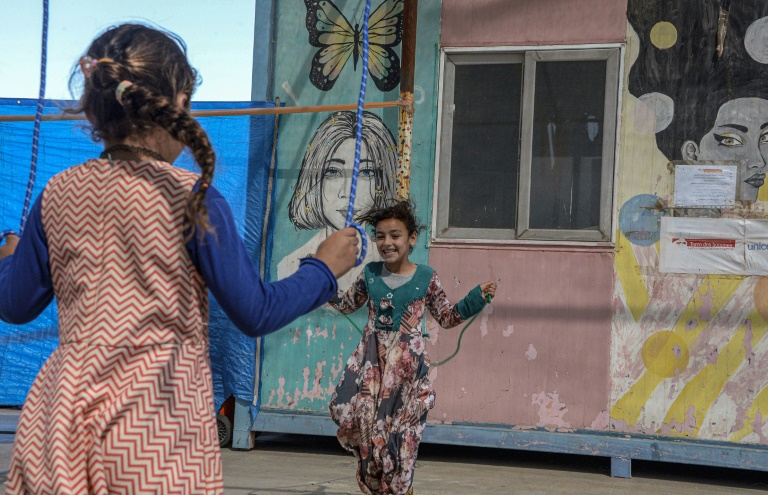
Some women learn to sew while teenage girls attend classes about puberty. Younger boys and girls mingle in a small playground.

Camp administrator Khaled Abdel Karim told AFP that only “a very limited” number of families at Jadaa had been influenced by IS ideology.

“This camp was not set up to detain or isolate the families, it is a transit stop,” said Abdel Karim.

Experts, he said, help families overcome the “shame linked to IS”, while others assist them with preparing the documents they need to get through the vetting process and resume life outside the compound.

“Through our daily contacts, we see that our activities are not being rejected,” the official told AFP.

“When it comes to the mixing between men and women, or the type of clothes they wear, there is nothing to signal extremist thinking,” he added.

Until they are allowed to go back home, Jadaa residents receive family visits four times a month. But before they can return to their hometowns, tribal elders must hold council and give their approval.

“Families with perceived affiliation to (IS)… often find their return blocked by security actors, experience community rejection and stigmatisation, and are at high risk of revenge attacks and violence,” a World Bank report released in January said.

“At the same time, it is common for people living in the area of return to fear that the return of families they believe supported or continue to support (IS)… will destabilise their communities and create new risks for security and social relations,” it added.

– ‘No future left’ –

Around 30,000 Iraqis, including 20,000 children, remain stranded at Al-Hol, according to Iraq’s ministry of immigration.

Earlier this month, Iraqi Foreign Minister Fuad Hussein said his country was determined to repatriate all the families stuck in the Syrian camp after “security checks” are completed.

But he also urged the international community to help Iraq set up “re-integration programmes” for Jadaa’s residents, most of who are women and children.

Over the past several months, more than 100 families have been able to leave Jadaa and reunite with their families in Iraq.

Shaima Ali, 41, is among those still waiting for that day.

But her greatest fear is that residents of her hometown in the Qaim border region with Syria will reject her.

“They say we’re a part of IS. It’s true my husband was a member of the group. But that was him, not me,” she said.

“If only I could get out” of the camp, said Ali, who lived for five years in Syria.

“I’ve got no future left, perhaps, but I’ve got two daughters and I want a future for them.”

Bangkok votes for new governor for first time in decade

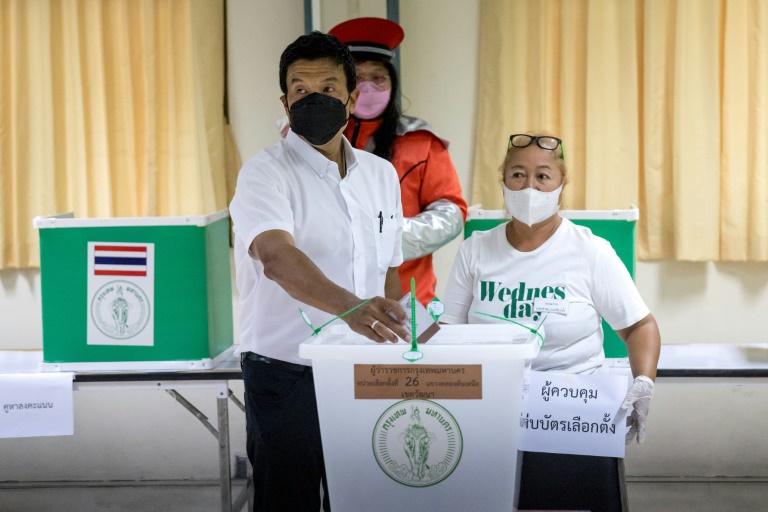
Bangkok went to the polls Sunday in its first governor election in almost a decade, with the ballot viewed as an indicator for a national vote expected within a year.

Around four million people are eligible to vote in the first major poll since Thailand’s huge youth-led street protests in 2020 demanding political change and reform to the once-untouchable monarchy.

But daily life rather than politics has dominated the candidates’ campaigns, with the leading contenders promising to clear up the congested, polluted and noisy megapolis home to 10 million.

Polling centres opened across Bangkok at 8:00 am (0100 GMT) — closing at 5:00 pm — with temperature checks and Covid-19 restrictions at each voting station.

“I am not excited about the election. It will hardly change Bangkok, but I vote for a person who I think can change Bangkok, though a little bit. I do hope this candidate will make some change,” said 28-year-old Nat, who gave only his nickname, after he voted.

A record 30 candidates are in the running for the top job, throwing their names into the hat eight years after the 2014 coup saw local elections scrapped and the city run by government-appointed leaders.

First thing Sunday morning, frontrunner and independent candidate Chadchart Sittipunt was seen riding his bike to his local polling station to cast his ballot.

The ex-transport minister in the government ousted in the last coup has promised to tackle the city’s notorious traffic, as well as making numerous green pledges, and insisted voters want a change from the entrenched political divisions.

He is facing off against incumbent Aswin Kwanmuang, a former police general backed by Prime Minister Prayut Chan-O-Cha, who has also promised to fix the city’s perennial flooding issues.

But his poor record on the issue — after just under six years as governor — saw him endure criticism after parts of Bangkok flooded earlier this week following heavy rains.

Political analyst Thitinan Pongsudhirak of Chulalongkorn University said the outcome would give some idea of the capital’s willingness to back candidates of the royalist and military establishment that dominates Thai politics.

“Bangkok is not Thailand, but the Bangkok governor election this time will be a bellwether for bigger polls to come,” he told AFP this week.

Results are not formally expected until late Sunday evening and will have to be ratified by the country’s electoral commission.

Wallaby great Pocock poised to become an Australian senator

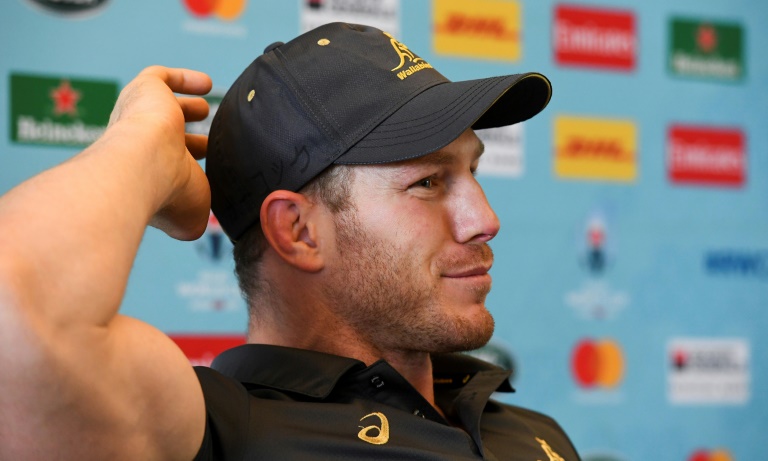
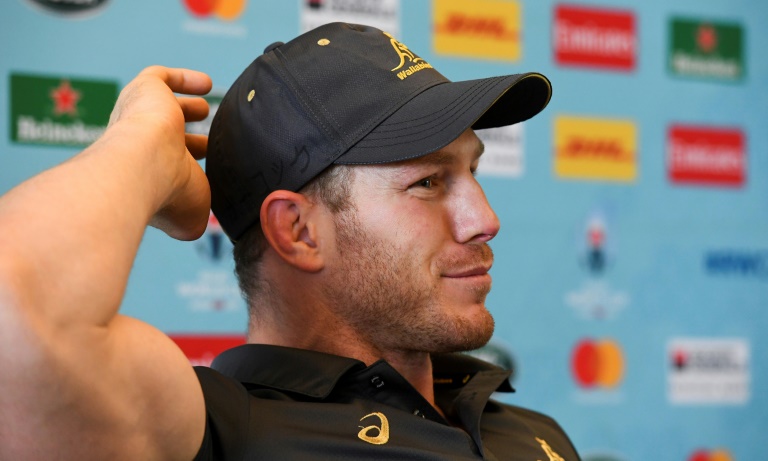
Wallaby great and environmental activist David Pocock was poised to win a seat in the Australian Senate Sunday and become the first independent to hold the role for the national capital Canberra.

The former flanker, who earned 78 caps for Australia before retiring in 2019, is on the verge of unseating Liberal senator Zed Seselja, state broadcaster ABC reported, although votes continued to be counted.

The 34-year-old ran as an independent in the Australian Capital Territory (ACT), which includes Canberra, where he played for seven years with the Brumbies Super Rugby team.

“We’ve clearly shaken up politics in the ACT,” he said in thanking his supporters.

The Zimbabwe-born Pocock stood on a campaign of more action on climate change, improving integrity of the political class, helping poorer Canberrans and standing up for women’s rights.

Outspoken during his playing career on issues such as LGBTQ rights and climate change, he always rejected barbs from critics that athletes should stick to sports.

He was arrested in 2014 for chaining himself to a digger in a protest against a coal mine being opened in a forest in New South Wales.

Pocock announced his move into politics last December, saying he wanted to use his platform for positive change.

“Now, more than ever, we need political courage,” he said then.

The Senate, parliament’s upper house which reviews legislation put forward by lawmakers in the lower house, has 76 representatives, 12 from each of the country’s six states and two from the its two territories.

Both ACT senators have always come from the ranks of the two major parties — centre-left Labor and the conservative Liberals — making Pocock’s impact all the more impressive.

ABC said Labor’s Katy Gallagher was set to retain the other seat in the ACT.

Wallaby great Pocock poised to become an Australian senator

Wallaby great and environmental activist David Pocock was poised to win a seat in the Australian Senate Sunday and become the first independent to hold the role for the national capital Canberra.

The former flanker, who earned 78 caps for Australia before retiring in 2019, is on the verge of unseating Liberal senator Zed Seselja, state broadcaster ABC reported, although votes continued to be counted.

The 34-year-old ran as an independent in the Australian Capital Territory (ACT), which includes Canberra, where he played for seven years with the Brumbies Super Rugby team.

“We’ve clearly shaken up politics in the ACT,” he said in thanking his supporters.

The Zimbabwe-born Pocock stood on a campaign of more action on climate change, improving integrity of the political class, helping poorer Canberrans and standing up for women’s rights.

Outspoken during his playing career on issues such as LGBTQ rights and climate change, he always rejected barbs from critics that athletes should stick to sports.

He was arrested in 2014 for chaining himself to a digger in a protest against a coal mine being opened in a forest in New South Wales.

Pocock announced his move into politics last December, saying he wanted to use his platform for positive change.

“Now, more than ever, we need political courage,” he said then.

The Senate, parliament’s upper house which reviews legislation put forward by lawmakers in the lower house, has 76 representatives, 12 from each of the country’s six states and two from the its two territories.

Both ACT senators have always come from the ranks of the two major parties — centre-left Labor and the conservative Liberals — making Pocock’s impact all the more impressive.

ABC said Labor’s Katy Gallagher was set to retain the other seat in the ACT.

Ukraine war, pandemic push to colour WHO international meet

The Ukraine war looms large as the World Health Organization opens its main annual assembly Sunday, threatening to overshadow efforts on other health crises and a reform push aimed at preventing future pandemics.

The UN health agency will kick off its 75th World Health Assembly Sunday afternoon, convening its 194 member states for their first largely in-person gathering since Covid-19 surfaced in late 2019.

The agenda will remain focused on the continuing coronavirus crisis and efforts to avert future pandemics.

But the war raging in Ukraine and rebukes of Russia for its invasion are expected to take centre stage.

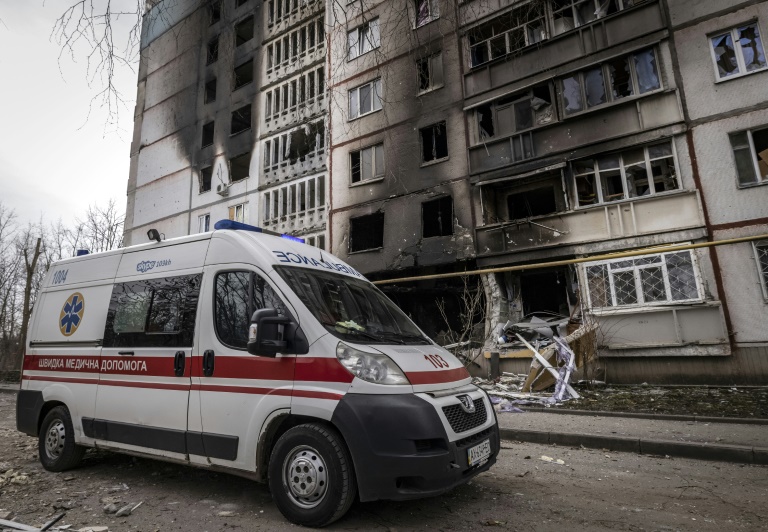
Kyiv and its allies will present a resolution during the assembly harshly condemning Russia’s invasion, and especially its more than 200 attacks on healthcare, including hospitals and ambulances, in Ukraine. 

It is also to voice alarm at the “health emergency in Ukraine”, and highlight the dire impacts beyond its borders, including how disrupted grain exports are deepening a global food security crisis.

“The Ukraine war is having a systemic impact on international organisations”, a European diplomat told AFP, pointing to the “considerable amounts of time (spent) looking at the consequences for health in Ukraine, in Europe and in the world”.

But while Russia has been shunned and pushed out of other international bodies over its invasion, no such sanctions are foreseen at the World Health Assembly.

“There’s not a call to kick them out,” a Western diplomat told AFP, acknowledging that the sanctions permitted under WHO rules are “very weak”.

Moscow meanwhile flatly rejected rumours that it was planning to leave the WHO, insisting in a tweet Friday that they were “simply not true”.

– Second term for Tedros –

The conflict is far from the only issue on this week’s packed agenda.

Among other things, the assembly is expected to reappoint WHO chief Tedros Adhanom Ghebreyesus to a second five-year term.

His first term was turbulent, as he helped steer the global response to the pandemic and grappled with a range of other crises, including a sexual abuse scandal involving WHO staff in the Democratic Republic of Congo.

But while the former Ethiopian health minister has faced his share of criticism, he has received broad backing and is running unopposed, guaranteeing him a second term.

There will be no shortage of challenges, with the Covid-19 pandemic still raging and demands for dramatic reforms of the entire global health system to help avert similar threats going forward.

And new health menaces are already looming, including hepatitis of mysterious origin that has been sickening children in many countries, and swelling numbers of monkeypox cases far from Central and West Africa where the disease is normally concentrated.

– Money makeover –

One of the major reforms up for discussion involves the WHO budget, with countries expected to greenlight a plan to boost secure and flexible funding to ensure the organisation can respond quickly to global health threats.

The WHO’s two-year budget for 2020-21 ticked in at $5.8 billion, but only 16 percent of that came from regular membership fees.

The remainder came from voluntary contributions that are heavily earmarked by countries for particular projects.

The idea is to gradually raise the membership fee portion to 50 percent over nearly a decade, while WHO will be expected to implement a string of reforms, including towards more transparency on its financing and hiring.

“It will be important for WHO to implement reforms quickly,” US Ambassador to the United Nations in Geneva Sheba Crocker said.

– Too slow –

The Covid pandemic laid bare major deficiencies in the global health system, and countries last year agreed numerous changes were needed to better prepare the world to face future pandemic threats.

Amendments are being considered to the International Health Regulations — a set of legally binding international laws governing how countries respond to acute public health risks.

And negotiations are underway towards a new “legal instrument” — possibly a treaty — aimed at streamlining the global approach to pandemic preparedness and response.

But experts warn the reform process is moving too slowly.

Former New Zealand prime minister Helen Clark, who co-chaired an expert panel on pandemic preparedness, warned reporters that little had yet changed.

“At its current pace, an effective system is still years away, when a pandemic threat could occur at any time.”

Close Bitnami banner
Bitnami