World

Mechanics, hairdressers… Ukraine recruits train for attack

“Hold on to the rope, look at me,” the instructor says, coaxing 28-year-old lawyer Iryna Gorobiyovska who is nervously about to abseil down a building.

Brimming with motivation but lacking experience, the Ukrainian, whose nom de guerre is Bunny, ends up sliding, somewhat awkwardly, to the ground.

Like thousands of others, she signed up to the territorial defence unit, a support force to the regular Ukrainian army, immediately after Russia invaded.

Open to all nationals, the only requirement is being aged between 18 and 60.

Some members already have military experience acquired after Moscow’s annexation of Crimea in 2014 and in the conflict with pro-Russian separatists in eastern Ukraine that began the same year.

They immediately deployed to the war effort, but many others, like Gorobiyovska, did not know how to handle a weapon or apply a tourniquet.

While the capital Kyiv was under siege by Russian forces earlier in the war, they mostly helped build barricades or hand out humanitarian aid.

Russian soldiers are now focused on the south and eastern regions of Ukraine, but — anticipating a drawn-out conflict — Kyiv has stepped up the training of its new recruits so they are ready to face the enemy if and when needed.

– Taught ‘how to attack’ –

Training sessions have been held every week since March, says Mykhailo Shcherbina, deputy director of defence affairs for the Department of Municipal Security at Kyiv City State Administration.

He says that between 8,000 and 10,000 people have been trained since March.

“It’s a crime to send people who aren’t prepared to a frontline. Everyone has to be trained even (to a) minimum,” he tells AFP.

It’s all the more crucial now, he adds, as after largely defensive operations, Ukrainian forces have begun going more on the offensive, such as in the area around the northern city of Kharkiv.

“And we have to teach people how to attack, how to liberate the cities,” he says.

–  ‘Defend my country’ – 

Deep in the forest, away from the capital, an old hut formerly used by the Pioneers, the Soviet version of the Scouts, is now a training ground.

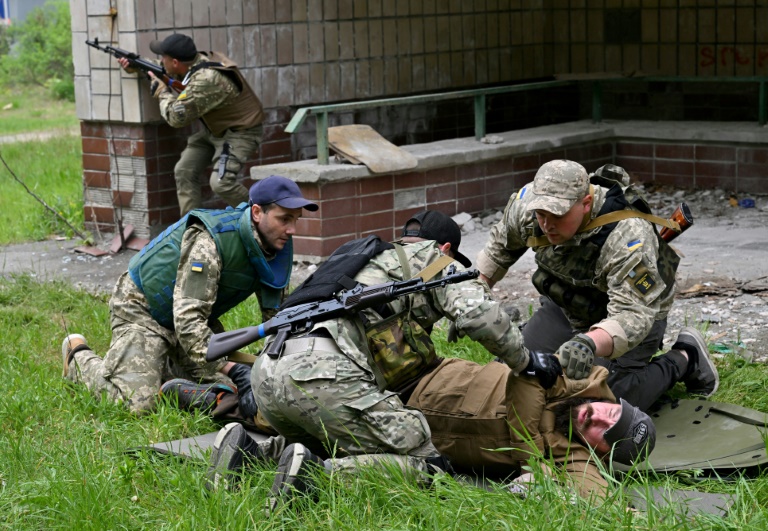
Over five days, mechanics, construction workers, hairdressers and the likes are put through their paces, learning how to navigate a minefield, evacuate the wounded under fire, shoot an automatic weapon — or escape through the window of a multi-storey building.

It’s the latter that causes difficulty for Gorobiyovska.

“It was so scary because I didn’t understand what should I do,” says the woman with khaki painted fingernails afterwards.

“I agree to defend my country. But I hope I won’t have to climb down from a high storey” to do it, she adds.

In another training exercise, the recruits must take back a site held by the enemy.

Advancing in single file, their weapons trained as they pass open areas, a small group enters an abandoned building.

“Contact”, “contact,” one of them shouts out amid the crackling of weapon fire — in this case, their amunition is small white plastic pellets.

“Our task is to teach them to do fighting correctly in buildings, to know how to clear them and annihilate the enemy,” an instructor, who declines to give his name, says.

“And remain alive.”

– ‘A chance’ – 

Konstantin, a 27-year-old municipal employee, knows the stakes only too well.

He joined the territorial defence unit after fighting got close to his home in March, he says.

“I couldn’t not do anything, so I joined the territorial defence to protect my town, my country,” he explains.

He acknowledges however: “If I’d gone straight to the frontline, I wouldn’t have survived.”

Now, having undergone his training, he believes he “has a chance”.

Nevertheless the baby-faced young man wonders how he’ll react when on the ground in a real-life situation.

“Training is training, but when you see real blood it’s different. Is it going to stop me in my tracks, or give me a rush of adrenaline?” he says.

Doctor Demian Popov, 53, tries to provide the recruits with methods of overcoming battle stress and teaches them about post-traumatic stress disorder and the role of intuition in battle.

He says that despite them being highly motivated “there is no methodology to find out who will leave the battle and who will not”.

“It will be known only when the person will get there if he/she can fight or not,” he adds.
Millions stranded, dozens dead as flooding hits Bangladesh and India

Heavy rains have caused widespread flooding in parts of Bangladesh and India, leaving millions stranded and at least 57 dead, officials said Saturday.

In Bangladesh, about two million people have been marooned by the worst floods in the country’s northeast for nearly two decades.

At least 100 villages at Zakiganj were inundated after floodwater rushing from India’s northeast breached a major embankment on the Barak River, said Mosharraf Hossain, the chief government administrator of the Sylhet region.

“Some two million people have been stranded by floods so far,” he told AFP, adding that at least 10 people have been killed this week.

Many parts of Bangladesh and neighbouring regions in India are prone to flooding, and experts say that climate change is increasing the likelihood of extreme weather events around the world. 

Every extra degree of global warming increases the amount of water in the atmosphere by about seven percent, with inevitable effects on rainfall.

At least 47 people have been killed in India this week in days of flooding, landslides and thunderstorms, according to local disaster management authorities.

In Assam state, which borders Bangladesh, at least 14 people have died in landslides and floods.

Assam authorities said Saturday more than 850,000 people in about 3,200 villages have been affected by the floods, triggered by torrential rains that submerged swathes of farmland and damaged thousands of homes.  

Nearly 90,000 people have been moved to state-run relief shelters as water levels in rivers run high and large swathes of land remain submerged in most districts.

West of Assam, at least 33 people were killed in Bihar state in thunderstorms on Thursday. 

More than three dozen people were injured in the unseasonal weather events that damaged hundreds of hectares of standing crops and thousands of fruit trees.      

Bihar has also suffered an intense heatwave this week, with temperatures reaching 40 degrees Celsius (104 degrees Fahrenheit).  

– ‘Blessing and curse’ –

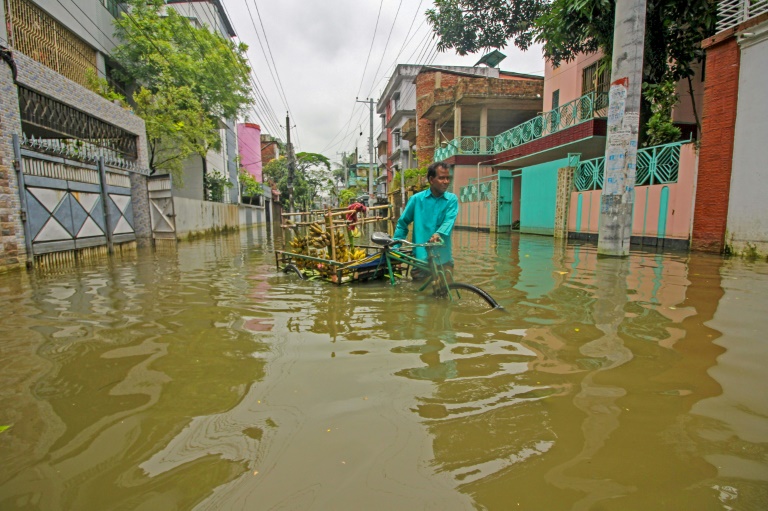
In Bangladesh’s Zakiganj, people were seen fishing on submerged roads and some residents took their cattle to flood shelters.

Bus driver Shamim Ahmed, 50, told AFP: “My house is under waist deep water. There is no drinking water, we are harvesting rain water. 

“Rain is simultaneously a blessing and a curse for us now.”

All the furniture in widow Lalila Begum’s home was ruined, she said, but she and her two daughters were staying put, hoping the waters would recede within a day or two. 

“My two daughters and I put one bed on another and are living on top of it,” she said. “There’s scarcity of food. We’re sharing one person’s food and one meal a day.”

Floodwater has entered many parts of Sylhet city, the largest in the northeast, where another official told AFP about 50,000 families had been without power for days.

Hossain, the chief administrator, said the flooding was driven by both rains and the onrush of water from across the border in Assam.

But officials said the broken embankment on the border at Zakiganj could only be fixed once the water level dropped. 

strs-burs/dva

Australia's voters end decade of conservative rule

Australia’s conservative Prime Minister Scott Morrison conceded election defeat Saturday, hours after voters issued a stinging rebuke of his party’s inaction on climate change.

Morrison acknowledged a “difficult” and “humbling” day for his Liberal party, which has governed Australia for the last decade.

“Tonight I have spoken to the leader of the opposition and the incoming prime minister, Anthony Albanese, and I have congratulated him on his election victory,” he told supporters in Sydney.

With almost half the votes counted, Albanese’s centre-left Labor was assured of forming the largest party in parliament, but had yet to secure an outright majority.

The balance of power could yet rest with a string of climate-focused independent candidates who routed Morrison’s Liberals in a string of once-safe conservative urban seats.

The so-called “teals” — mostly highly qualified women — ran on pro-environment, anti-corruption and pro-gender equality tickets.

Their success came after three years marked by a pandemic and climate-worsened bushfires, drought and floods that upended life for millions of Australians.

“People are saying the climate crisis is something they want action on,” said an elated Australian Greens leader Adam Bandt.

“We have just had three years of drought, and then fires and now floods and then floods again. And people can see it, that this is happening and it’s unfolding.”

– ‘Fair dinkum’ –

Albanese has vowed to end Australia’s “climate wars”, adopt more ambitious emissions targets and introduce a federal corruption watchdog — all key demands of the teals.

But he has refused calls to phase out coal use, or to block the opening of new coal mines.

He may now have to cut deals with independents demanding deeper commitments that would risk the ire of the pro-coal and mining union factions of his party.

Earlier Saturday, Albanese asked voters to give his centre-left party a “crack” at running the country, and urged people to spurn a “divisive” prime minister.

Australians “want someone who is fair dinkum, someone who will ‘fess up if they make a mistake,” said the Labor leader.

Speaking in Adelaide during a four-state election-eve blitz, Albanese welled up as he reflected on his personal journey — from the son of a single mum living in Sydney public housing to the threshold of the highest office in the land.

“It says a lot about this country,” he said Friday, voice cracking with emotion. “That someone from those beginnings… can stand before you today, hoping to be elected prime minister of this country tomorrow.”

Albanese often notes he would be the first Australian with a non-Anglo or Celtic surname to be prime minister.

Voting is compulsory, enforced with a Aus$20 (US$14) fine but also rewarded at many booths that fired up barbecues to offer people a “democracy sausage”.

The election decides who controls the House of Representatives, the Senate and who lives in the prime minister’s “Lodge”.

More than seven million people cast early or postal ballots, according to the Australian Electoral Commission.

Palestinian militant teen killed by Israelis in West Bank clash

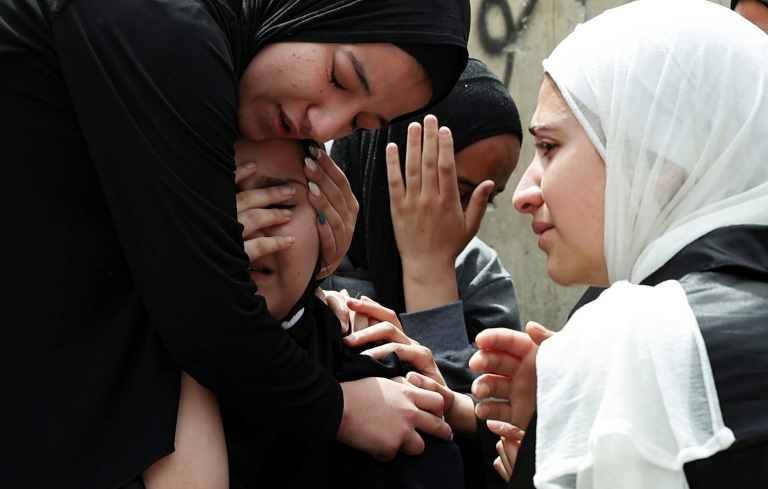
Israeli forces shot dead a Palestinian teenage militant when clashes broke out during a Saturday raid in the flashpoint Jenin area of the occupied West Bank, Palestinian sources and the army said.

“A 17-year-old boy was killed… by the Israeli occupation’s bullets during its aggression on Jenin,” the Palestinian health ministry said in a statement after the latest deadly violence.

It added that an 18-year-old was critically wounded. The official Palestinian news agency Wafa identified the dead teenager as Amjad al-Fayed.

A hub of armed Palestinian groups, the Jenin area in the northern West Bank has been repeatedly raided by Israeli forces since a wave of anti-Israeli attacks in late March. Many of the perpetrators came from there.

The Israeli army said that during “operational activity” near Kafr Dan, a village northwest of Jenin, “a number of suspects shot live fire at… soldiers from a passing vehicle.

“The suspects also hurled Molotov cocktails and an explosive device toward the soldiers,” it said in a statement.

“The soldiers responded with live fire toward the suspects,” it added. “Hits were identified.”

The Palestinian Islamic Jihad claimed Fayed as a member and a “son”, praising him in a statement for confronting the Israeli soldiers with gunfire and explosive devices. 

The Israeli forces “were exposed and confronted with valor by our battalion’s” fighters, Islamic Jihad said in a statement, “and thwarted their insidious scheme.”

At Fayed’s funeral in the Jenin refugee camp, armed members of the militant group carried his coffin.

Palestinian prime minister Mohammed Shtayyeh condemned Fayed’s killing, stressing in remarks relayed by Wafa that “the international community should hold Israel accountable for its acts”.

The Jenin-area operations to track down suspects, and clashes with Palestinians, have often turned deadly for both sides.

Al Jazeera journalist Shireen Abu Akleh, a Palestinian-American, died when she was shot in the head near the Jenin refugee camp on May 11 while covering an Israeli raid.

In other overnight operations at a variety of locations throughout the West Bank, Israeli forces arrested nine Palestinian suspects and confiscated weapons as part of “counter-terrorism activities”, the army said in a Saturday statement.

Israel captured the West Bank from Jordan during the 1967 Six-Day War and controls all entry points to the territory.

About 475,000 Israelis live in West Bank settlements, considered illegal under international law, alongside 2.9 million Palestinians.

A wave of anti-Israel attacks since March 22 in Israel left 18 people, mostly Israeli civilians, killed by several Palestinian and Israeli Arab attackers, some of whom died in the violence.

Clashes since then with Israeli security forces in the West Bank and in east Jerusalem have left 34 Palestinians, including Abu Akleh, dead as well as an Israeli commando.

Sicily judge weighs trial of migrant rescue NGOs

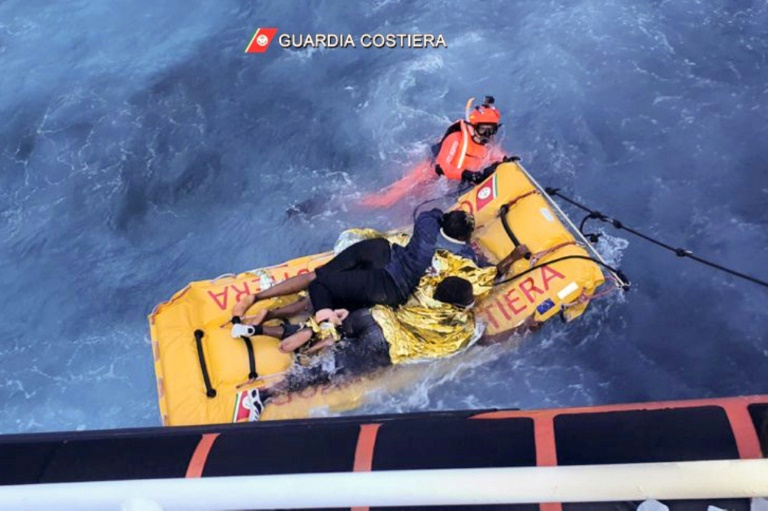
Charities running migrant rescue ships in the Mediterranean faced a pre-trial hearing in Sicily Saturday over alleged collusion with people traffickers after a controversial probe that involved mass wiretapping.

Twenty-one suspects, including crew members of Doctors Without Borders (MSF), Save the Children and German NGO Jugend Rettet rescue ships, are accused of “aiding and abetting unauthorised entry into Italy” in 2016 and 2017.

“Our crews rescued over 14,000 people in distress from unseaworthy and overcrowded boats… and are now facing 20 years in prison,” Kathrin Schmidt, who sailed with Jugend Rettet’s ship Iuventa, said ahead of the hearing.

Trapani judge Samuele Corso must rule whether or not to proceed to trial after a five-year investigation mired in controversy for the mass wiretapping of charity workers, lawyers and journalists in what critics say is a politically motivated bid to stop sea rescues.

Italy has long been on the front line of seaborne migration from Africa to Europe, with a record 180,000 arrivals in 2016, dropping to 120,000 in 2017.

It has registered some 17,000 arrivals so far this year, according to the interior ministry.

Prosecutor Brunella Sardoni told AFP she expected the preliminary hearings process to last “several months, considering the complexity” of a case file with some 30,000 pages and hundreds of CDs.

Corso set the date for the next hearing as June 7.

Supporters of the rescue charities held a sit-in at the port in Trapani featuring large paper boats bearing the date and location of shipwrecks, and the number of victims.

The charities are accused of coordinating their actions with smugglers just off Libya, returning inflatable dinghies and boats to them to be reused, and picking up people whose lives had not been in danger.

– ‘World’s deadliest’ crossing –

The rescuers say anyone attempting the central Mediterranean crossing to Europe — the “world’s deadliest” according to the UN — on rickety boats or unseaworthy dinghies is at risk, and should be saved.

At least 12,000 people have drowned on this route since 2014. Many shipwrecks go unrecorded.

The charities also deny ever communicating with smugglers, who are sometimes armed and can be spotted loitering near rescues in the hope of retrieving valuable engines from migrant boats.

Save the Children told AFP it “strongly rejects” the accusations, as did MSF, which slammed a “period of criminalisation of humanitarian aid” it hoped would soon end.

The Iuventa was impounded in 2017 shortly after Jugend Rettet and others refused to sign a new and contentious interior ministry “code of conduct” accord, and as the European Union scaled up surveillance and policing in the Mediterranean.

“Despite the fact that mobile phones and computers were seized and analysed, not a single contact with Libyan smugglers… has been found,” said Nicola Canestrini, lawyer for the Iuventa crew members.

Pre-trial hearings are held behind closed doors, but representatives from the European Center for Constitutional and Human Rights (ECCHR) and Amnesty International have requested the judge allow them to sit in for transparency.

ECCHR senior legal advisor Allison West has condemned “improper investigative practices” in the investigation, led by a prosecutors’ office more used to exposing Mafia crimes.

– Ex-cop sent allegations –

The probe was launched after ex-policeman Pietro Gallo, working as a security contractor on Save the Children’s Vos Hestia ship, sent allegations against the charities in October 2016 to Italy’s secret services, Canestrini told AFP.

He and a fellow ex-policeman also sent them to the head of the anti-immigration League party, Matteo Salvini, before reporting their suspicions to the police.

Gallo has since said in an interview that he regrets it. Asked if he ever saw any contact between the charities and traffickers, he replied “no, never”.

The damage was done. Police placed an undercover agent on the Vos Hestia in May 2017, who would provide information including elements used to charge the four Iuventa crew members, Canestrini said. Those included alleged hand signals between the crew and smugglers.

Iuventa’s case has been studied by Forensic Architecture, an agency based at Goldsmiths, University of London, which uses advanced reconstruction techniques to investigate police, military and state facts.

It discredited the police theories for all three Iuventa rescues in question.

Two million stranded as worst floods in decades hit Bangladesh's northeast

Rivers in Bangladesh have burst their banks and caused the worst floods in the country’s northeast for nearly two decades, with about two million people marooned by rising waters, officials said Saturday.

Floodwater rushing from India’s northeast breached a major embankment on the Barak River, inundating at least 100 villages at Zakiganj in Bangladesh, said Mosharraf Hossain, the chief government administrator of the Sylhet region.

“Some two million people have been stranded by floods so far,” he told AFP, adding that at least 10 people have been killed this week.

Many parts of Bangladesh are prone to flooding, and experts say that climate change is increasing the likelihood of extreme weather events around the world. 

Every extra degree of global warming increases the amount of water in the atmosphere by about seven percent, with inevitable effects on rainfall.

In Zakiganj bus driver Shamim Ahmed, 50, told AFP: “My house is under waist deep water. There is no drinking water, we are harvesting rain water. 

“Rain is simultaneously a blessing and a curse for us now.”

People were seen fishing on submerged roads and some residents took their cattle to flood shelters.

All the furniture in widow Lalila Begum’s home was ruined, she said, but she and her two daughters were staying put, hoping the waters would recede within a day or two. 

“My two daughters and I put one bed on another and are living on top of it,” she said. “There’s scarcity of food. We’re sharing one person’s food and one meal a day.”

Floodwater has entered many parts of Sylhet city, the largest in the northeast, where another official told AFP about 50,000 families had been without power for days.

Hossain, the chief administrator, said the flooding was driven by both rains and the onrush of water from across the border in the Indian state of Assam.

But officials said the broken embankment on the border at Zakiganj could only be fixed once the water level dropped. 

Women TV presenters defy Taliban order to cover faces on air

Women presenters on Afghanistan’s leading TV channels went on air Saturday without covering their faces, defying a Taliban order that they conceal their appearance to comply with the group’s austere brand of Islam.

Since surging back to power last year the Taliban have imposed a slew of restrictions on civil society, many focused on reining in the rights of women and girls.

Earlier this month Afghanistan’s supreme leader Hibatullah Akhundzada issued a diktat for women to cover up fully in public, including their faces, ideally with the traditional burqa.

The feared Ministry for Promotion of Virtue and Prevention of Vice ordered women TV presenters to follow suit by Saturday.

Previously they had only been required to wear a headscarf.

But broadcasters TOLOnews, Shamshad TV and 1TV all aired live programmes Saturday with women presenters’ faces visible.

“Our female colleagues are concerned that if they cover their faces, the next thing they will be told is to stop working,” said Shamshad TV head of news Abid Ehsas.

“This is the reason they have not observed the order so far,” he told AFP, adding the channel had requested further discussions with the Taliban on the issue.

Taliban orders such as this have caused many female journalists to leave Afghanistan since the hardline Islamists stormed back to power, a woman presenter said.

“Their latest order has broken the hearts of women presenters and many now think they have no future in this country,” she said, requesting not to be named.

“I’m thinking of leaving the country. Decrees like this will force many professionals to leave.”

– ‘Implement the order’ –

Mohammad Sadeq Akif Mohajir, spokesman for the vice ministry, said the women presenters were violating the Taliban directive.

“If they don’t comply we will talk to the managers and guardians of the presenters,” he told AFP.

“Anyone who lives under a particular system and government has to obey the laws and orders of that system, so they must implement the order,” he said.

The Taliban have demanded that women government employees be fired if they fail to follow the new dress code.

Men working in government also risk suspension if their wives or daughters fail to comply.

Mohajir said media managers and the male guardians of defiant women presenters would also be liable for penalties if the order was not observed.

During two decades of US-led military intervention in Afghanistan, women and girls made marginal gains in the deeply patriarchal nation.

Soon after they took over, the Taliban promised a softer version of the harsh Islamist rule that characterised their first stint in power from 1996 to 2001.

Since the takeover, however, women have been banned from travelling alone and teenage girls barred from secondary schools.

In the 20 years after the Taliban were ousted from office in 2001, many women in the conservative countryside continued to wear a burqa.

But most Afghan women, including TV presenters, opted for the Islamic headscarf.

Television channels have already stopped showing dramas and soap operas featuring women, following orders from Taliban authorities.

Ukraine warns only talks can end war as Russia cuts Finland gas

Ukraine’s President Volodymyr Zelensky warned Saturday that only a diplomatic breakthrough rather than an outright military victory could end Russia’s war on his country, as Moscow cut gas supplies to Finland.

“There are things that can only be reached at the negotiating table,” Zelensky said, just as Russia claimed its long-range missiles had destroyed a shipment of Western arms destined for Ukraine’s troops.

After just over 12 weeks of fierce fighting, Ukrainian forces have halted Russian attempts to seize Kyiv and the northern city of Kharkiv, but are under renewed and intense pressure in the eastern Donbas region.

Moscow’s army have flattened and seized the southeastern port city of Mariupol and subjected Ukrainian troops and towns in the east to a remorseless ground and artillery attack.

Zelensky’s Western allies have shipped modern weaponry to his forces and imposed sweeping sanctions on the Russian economy and President Vladimir Putin’s inner circle.  

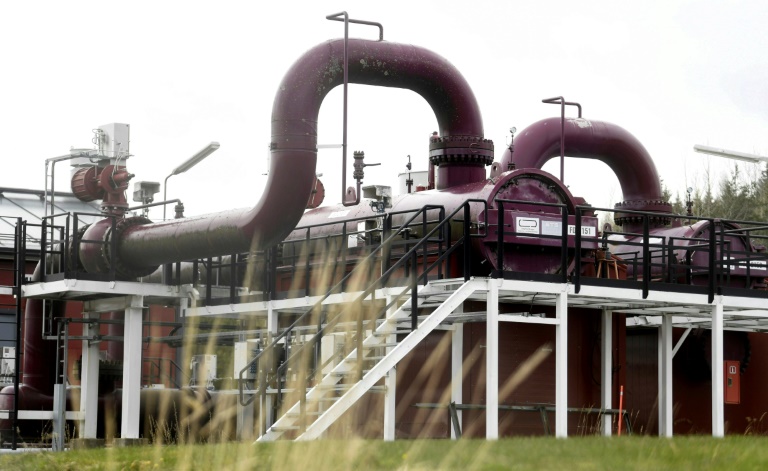
But the Kremlin has responded by disrupting European energy supplies, and on Saturday cut off gas shipments to Finland, which angered Moscow by applying to join the NATO alliance. 

– ‘It will be bloody’ –

Against this backdrop, Zelensky told Ukrainian television the war would end “through diplomacy”.

The conflict, he warned, “will be bloody, there will be fighting but will only definitively end through diplomacy” — promising only that the result would be “fair” for Ukraine.

“Discussions between Ukraine and Russia will decidedly take place. Under what format I don’t know — with intermediaries, without them, in a broader group, at presidential level,” he said.

In order to side-step financial sanctions and force European energy clients to prop up his central bank, Putin has demanded that importers from “unfriendly countries” pay for gas in rubles.

Russian energy giant Gazprom said it had halted supplies to neighbouring Finland as it had not received ruble payments from Finland’s state-owned energy company Gasum by the end of Friday.

Gazprom supplied 1.49 billion cubic metres of natural gas to Finland in 2021, about two thirds of the country’s gas consumption but only eight percent of its total energy use. 

Gasum said it would make up for the shortfall from other sources, through the Balticconnector pipeline, which links Finland to Estonia, a fellow European Union member.

Moscow cut off gas to Poland and Bulgaria last month in a move the European Union described as “blackmail”, but importers in some other EU countries more dependent on Russian gas plan to open ruble accounts with Gazprom’s bank.

Finland and neighbouring Sweden this week broke their historical military non-alignment and applied to join NATO, after public support for the alliance soared following Russia’s invasion of Ukraine.

– ‘Grave mistake’ –

Moscow has warned Finland that joining NATO would be “a grave mistake with far-reaching consequences” and Defence Minister Sergei Shoigu said it would respond by building military bases in western Russia.

But both Finland and Sweden are now apparently on the fast track to join the military alliance, with US President Joe Biden this week offering “full, total, complete backing” to their bids.

All 30 existing NATO members must agree on any new entrants, and Turkey has condemned Sweden’s alleged toleration of Kurdish militants, but diplomats are confident of avoiding a veto.

On the ground in Ukraine, the fighting is fiercest in the eastern region of Donbas, a Russian-speaking area that has been partially controlled by pro-Kremlin separatists since 2014.

“They completely ruined Rubizhne, Vonokvakha, just as they did Mariupol,” Zelensky said Friday, adding that the Russians were “trying to do the same with Severodonetsk and many other cities”.

In Severodonetsk, a frontline city now at risk of encirclement, 12 people were killed and another 40 wounded by Russian shelling, the regional governor said.

– ‘End of the operation’ –

Zelensky described the bombardment of Severodonetsk as “brutal and absolutely pointless”, as residents cowering in basements described an unending ordeal of terror.

The city forms part of the last pocket of Ukrainian resistance in Lugansk, which along with the neighbouring region of Donetsk comprises the Donbas war zone.

The Russian defence ministry, meanwhile, claimed it had destroyed a large shipment of US and European weapons in a long-range missile strike targeting the Malin railway station west of Kyiv in the Zhytomyr region. 

There was no Ukrainian or independent confirmation of the success of the strike. 

On Friday, Moscow said the battle for the Azovstal steelworks in Mariupol — a symbol of Ukraine’s dogged resistance since Putin launched the invasion on February 24 — was now over.

Russian defence ministry spokesman Igor Konashenko said 2,439 Ukrainian personnel had surrendered at the steelworks since May 16, the final 500 on Friday.

Ukraine hopes to exchange the surrendering Azovstal soldiers for Russian prisoners. But in Donetsk, pro-Kremlin authorities are threatening to put some of them on trial. 

Biden has cast the Ukraine war as part of a US-led struggle pitting democracy against authoritarianism.

The US Congress this week approved a $40-billion (38-billion-euro) aid package, including funds to enhance Ukraine’s armoured vehicle fleet and air defence system.

And, meeting in Germany, G7 industrialised nations pledged $19.8 billion to shore up Ukraine’s shattered public finances.

– Underground living –

While the invasion has ebbed around the northeastern city of Kharkiv, it remains in Russian artillery range, and hundreds of people are refusing to leave the relative safety of its metro system.

“We’re tired. You can see what home comforts that we have,” said Kateryna Talpa, 35, pointing to mattresses and sheets on the ground, and some food in a cardboard box.

She and her husband Yuriy are doing their best to cope in the Soviet-era station called “Heroes of Labour”, alongside their cats Marek and Sima.

“They got used to it,” Talpa said.

burs-dc/ach 

'Putin destroyed everything,' says Odessa mayor

Once derided as a Kremlin sympathiser, Odessa’s Mayor Gennady Trukhanov likes to collect his thoughts before delving into his feelings about Russia and President Vladimir Putin. 

“The Russians are on our soil today and they are bombing our cities, killing our people and our soldiers. Our people are dying,” the mayor of the southern Ukrainian port city told AFP. 

“It is hard for me to speak of any kind of future friendship or relationship. I can’t imagine that,” the mayor added, his steel-blue eyes flashing as he rails against Russian air strikes, the Black Sea blockade and the millions of tonnes of grain trapped in his ports. 

“Putin destroyed everything,” he fumed.

Before the war, the 57-year-old Odessa native carved out a polarising career in Ukraine’s raucous political scene as a one-time member of former president Viktor Yanukovych’s Kremlin-backed party that was overthrown by a popular uprising in 2014. 

But even as unrest rattled Ukraine and anti-Russian sentiment surged, Trukhanov continued to rise through the ranks and was elected mayor of Odessa only months after Yanukovych was ousted and violent clashes over the fallout rattled the port city. 

But now, with thousands dead and millions displaced in the wake of Russia’s invasion, the mayor bristles at the mention of Moscow. 

With Russian troops just 120 miles away, Trukhanov oversees the defence of the country’s most valuable port amid a suffocating Russian naval blockade that has unleashed economic catastrophe in Ukraine and threatens famine elsewhere if Odessa’s bountiful stocks of grain remain landlocked. 

“They are not only destroying our cities and killing our residents, they are also triggering an economic collapse,” the mayor said.

– ‘Occupiers and invaders’ –

The war with Russia has been particularly painful for Odessa, even as the city has avoided the brutal ground fighting ongoing across swathes of eastern and southern Ukraine. 

Founded during the reign of Catherine the Great, the city — with its baroque architecture and sandy beaches — became emblematic of the glory days of the Russian empire and was later one of the most valuable ports during the Soviet era.  

And as Ukraine gained independence, Odessa maintained its deep economic, familial, and cultural ties with Russia along with its own share of accusations in recent years of harbouring pro-Kremlin sympathies. 

But the sentiment is changing. 

On Friday, a member of Odessa’s city council unveiled a proposal to replace the city’s streets named after Russian cities and historical figures and be given new names honouring US President Joe Biden and British Prime Minister Boris Johnson.  

As Trukhanov points out, the centuries of goodwill that once flourished between the cosmopolitan port and Russia is being undercut with every new airstrike.  

“With their rockets they think that they are spreading panic and fear among the residents of Odessa,” Trukhanov said. 

“In fact, they raise the degree of hatred of Odessa residents toward the occupiers and invaders even higher.”

– ‘It’s a crime’ –

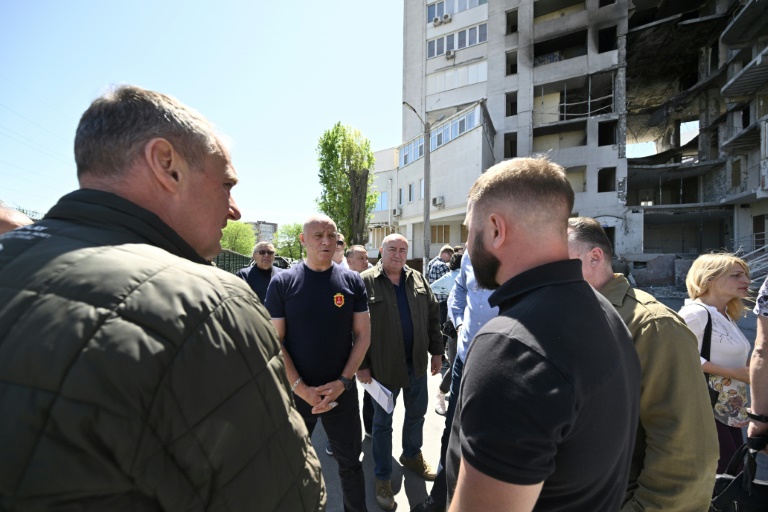
In between meetings on Friday, Trukhanov careened through Odessa’s grinding traffic in his black Range Rover to visit the scene of a recent air strike, where he sought to reassure residents.

Hands clasped, Trukhanov nodded as locals from the area peppered the mayor with a slew of questions about rebuilding efforts and potential reimbursements. 

“It’s a crime,” said resident Igor Shpagin, 55, while surveying the four-storey hole a Russian strike punched through his apartment building during the Orthodox Easter weekend last month.  

“What can we do, this is a war between politicians,” added retired police officer Groza Alexander, whose family survived the attack.  

The timings of certain strikes have been particularly galling for Odessa residents. 

On May 9 amid the festivities to celebrate the victory over Nazi Germany in Moscow, Putin laid flowers in front of a monument honouring the Soviet Union’s “hero cities”, including Odessa. 

Hours later, a barrage of Russian missiles rained down on Odessa. 

“What do you expect from someone who bombs children? People are dying every day here,” said Alexandra Kaseyenko, a 29-year-old Odessa resident. “It’s shocking for a lot of people. We used to be brothers.”

Trukhanov shares the dismay at the staggering turn of events. 

Russians and Ukrainians together helped defeat Nazi Germany during World War II, the mayor explained. 

“No one could have imagined that in 2022 our people — Ukrainian refugees — would be hiding in Germany from Russian missiles,” he said. 

Biden, Yoon signal expanded military drills due to N. Korea 'threat'

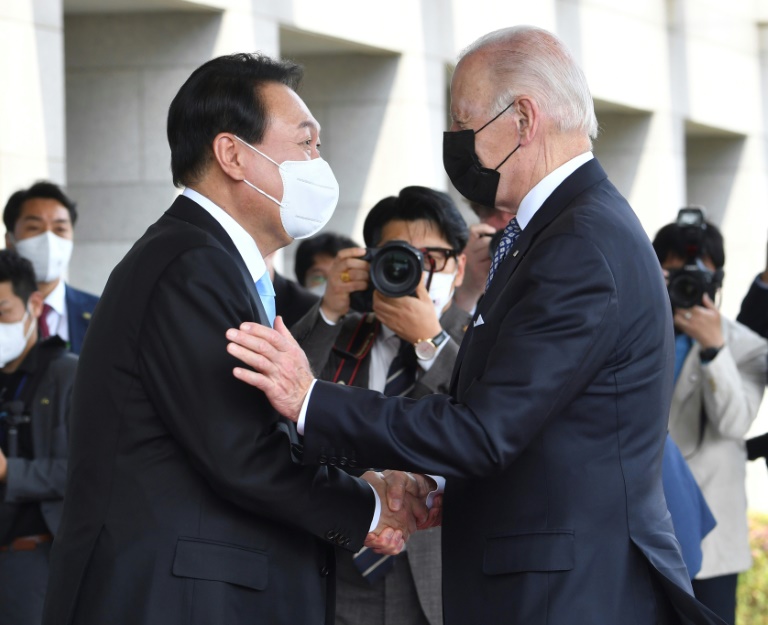
US President Joe Biden and South Korea’s new President Yoon Suk-yeol signalled Saturday an expanded military presence in response to the “threat” from North Korea, while also offering to help the isolated regime face a Covid-19 outbreak.

After meeting in Seoul on Biden’s first trip to Asia as president, the two leaders said in a statement that “considering the evolving threat posed by” North Korea, they “agree to initiate discussions to expand the scope and scale of combined military exercises and training on and around the Korean peninsula”.

The possible beefing up of joint exercises comes in response to North Korea’s growing belligerance, with a blitz of sanctions-busting weapons tests this year as fears grow that Kim Jong Un will order a nuclear test while Biden is in Asia.

Biden and Yoon also extended an offer of help to Pyongyang, which has recently announced it is in the midst of a Covid-19 outbreak, a rare admission of internal troubles.

The US-South Korea statement said the two presidents “express concern over the recent Covid-19 outbreak” and “are willing to work with the international community to provide assistance” to North Korea to help fight the virus.

On Saturday, North Korean state media reported nearly 2.5 million people had been sick with “fever” with 66 deaths as the country “intensified” its anti-epidemic campaign.

Biden, while adding that he would not exclude a meeting with Kim if he were “sincere”, indicated the difficulty of dealing with the unpredictable dictator.

“We’ve offered vaccines, not only to North Korea but to China as well and we’re prepared to do that immediately,” Biden said at a press conference with Yoon. “We’ve got no response.”

For his part, Yoon stressed that the offer of Covid aid was according to “humanitarian principles, separate from political and military issues”.

Elected on a strongly pro-US message, Yoon emphasised the need to reinforce South Korea’s defences.

According to Yoon, he and Biden “discussed whether we’d need to come up with various types of joint drills to prepare for a nuclear attack”.

Talks are also ongoing on ways to “coordinate with the US on the timely deployment of strategic assets when needed”, he said, reaffirming commitment to North Korea’s “complete denuclearization”.

The strategic assets should include “fighter jets and missiles in a departure from the past when we only thought about the nuclear umbrella for deterrence”, he said.

Any such deployments, or a ramping up of US-South Korea joint military exercises, is likely to enrage Pyongyang, which views the drills as rehearsals for invasion.

– Biden-Yoon ‘personal relationship’ –

Biden began his day by paying respects at Seoul National Cemetery, where soldiers killed defending South Korea, including many who fought alongside US troops in the Korean War, are buried.

He then held closed-door talks with Yoon ahead of the joint press conference and a state dinner.

A US official said that in addition to tensions over North Korea and the US-led campaign to punish Russia for invading Ukraine, Biden’s main focus Saturday was establishing “a strong personal relationship” with Yoon, who is less than two weeks into his presidency.

Like Japan, where Biden flies on Sunday, South Korea is seen as a key player in US strategy to contain China and maintain what Washington calls the “free and open Indo-Pacific”.

Biden’s Asia trip “is about demonstrating unity and resolve and strengthening the coordination between our closest allies”, a senior US official told reporters on condition of anonymity. 

In Japan, Biden will meet with Prime Minister Fumio Kishida and the emperor.

On Monday, he will unveil a major new US initiative for regional trade, the Indo-Pacific Economic Framework for Prosperity. A day later, he will join a regional summit of the Quad — a grouping of Australia, India, Japan and the United States.

– Cutting-edge investments –

On arrival Friday in South Korea, Biden accompanied Yoon on a tour of a massive Samsung semiconductor factory.

The microchips are a vital component in almost every piece of sophisticated modern technology, and South Korea and the United States need to work to “keep our supply chains resilient, reliable and secure”, Biden said.

For the US leader, whose Democratic Party fears a possible trouncing in midterm elections in November, snarled supply chains are an acute domestic political challenge, with Americans increasingly frustrated over rising prices and setbacks in the post-Covid pandemic recovery.

Biden emphasised Samsung’s decision to build a new semiconductor plant in Texas, opening in 2024.

In the southern US state of Georgia, the governor on Friday announced that South Korean auto giant Hyundai will build a $5.5 billion plant to produce electric vehicles and batteries.

Close Bitnami banner
Bitnami