World

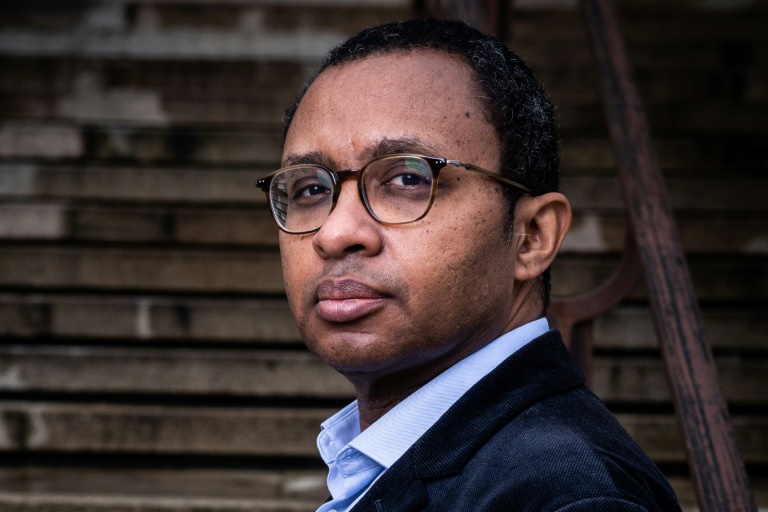
Race relations expert is France's surprise new education minister

Pap Ndiaye, a historian specialising in race relations, emerged as the surprise choice for French education minister on Friday and came under immediate attack from the far-right.

Whereas most of the top ministerial posts announced in President Emmanuel Macron’s new cabinet on Friday went according to script, Ndiaye’s nomination blindsided most observers.

His appointment carries on a tradition for Macron of taking prominent French personalities from outside politics to lead major ministries. 

Ndiaye is a respected academic with an international profile, specialising in the social history of the United States and minorities, who was named to lead the Museum of the History of Immigration last year.

In his first public comments, the child of French and Senegalese parents called himself a “pure product of republican meritocracy of which school is the main pillar”.

He acknowledged that he was “perhaps a symbol, one of meritocracy, but also perhaps of diversity”.

“I don’t take pride in it, but rather a sense of the duty and responsibilities which are now mine,” he said.

– Break from predecessor –

As a left-winger, Ndiaye represents a decisive break with his rightwing predecessor Jean-Michel Blanquer and the two men’s views on race and discrimination are sharply at odds.

Blanquer has criticised the import of increasingly popular social science theories from the United States which seek to explain the impact of race and gender on poverty.

Blanquer has also been an outspoken critic of the Black Lives Matter movement and so-called “wokeism” which he has described as a threat to France’s democracy.

Ndiaye said he would start in his new job “with humility, with modesty, and with all of my energy and intelligent goodwill”. 

But he came under immediate attack from far-right politicians who see anti-racism activists as soiling France’s image by seeking to highlight colonial crimes or discrimination.

Veteran anti-immigration politician Marine Le Pen called his elevation “the last step in the deconstruction of our country, its values and its future”.

The head of her party, Jordan Bardella, called him “a racialist activist and anti-cop”.

“Emmanuel Macron said he was going to deconstruct French history. Pap Ndiaye will take care of it,” commented fellow far-right politician Eric Zemmour.

– Historian –

Born outside Paris, Ndiaye was for many years a professor at the elite Sciences Po university in Paris.

“In the field of history, he is someone who has been innovative and able to show a new way of understanding the past,” said historian Pascal Blanchard.

“He’s a teacher who knows what it’s like to be in front of a class of students,” he told AFP.

“In a diverse society, it is important to have someone who is attentive to diversity.”

Ndiaye first gained national prominence with his 2008 work “The Black Condition, an essay on a French minority”.

“My objective was to provide arguments and knowledge as robust as possible to young people who lack solid references,” he told AFP in March 2021, when he took over at the immigration museum.

“It seemed to me that it was part of my role as a teacher to offer these foundations,” he said.

He said at the time that his appointment at the museum should open “the field of possibilities” to young “non-whites”, while emphasising that his appointment was due to a long career as an academic.

“I am not blind to, and don’t turn my back on, questions of symbol. I also apply the same to the colour of my skin.”

In 2019, he was a consultant for an exhibition at the Musee d’Orsay in Paris on black models, and in 2020 he co-authored a report on diversity at the Paris Opera.

His sister is the prominent French novelist and playwright Marie Ndiaye.

Some on the French left reacted with astonishment that the celebrated historian of social change was now in the government.

“I am amazed. I did not see him in there at all,” said Alexis Corbiere of the far-left France Unbowed party.

He said the “media stunt” would not defuse anger within the French education system.

SNES-FSU, the main secondary school teachers’ union, welcomed the appointment of Ndiaye “as a break with Jean-Michel Blanquer in more ways than one”.

But it also warned that education “is not governed solely by symbols” and that rapid responses were needed “particularly in terms of wages”.

slb-kp-adm-sl-sjw-adp/ah
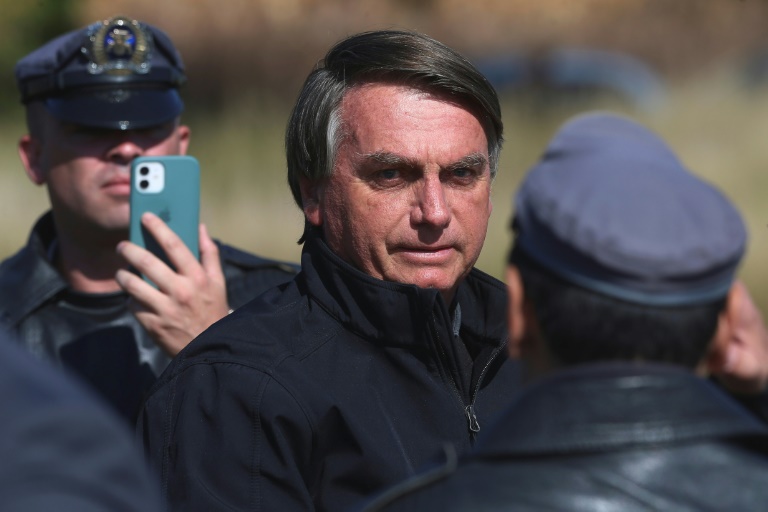
Musk, Bolsonaro talk free speech, deforestation in Brazil

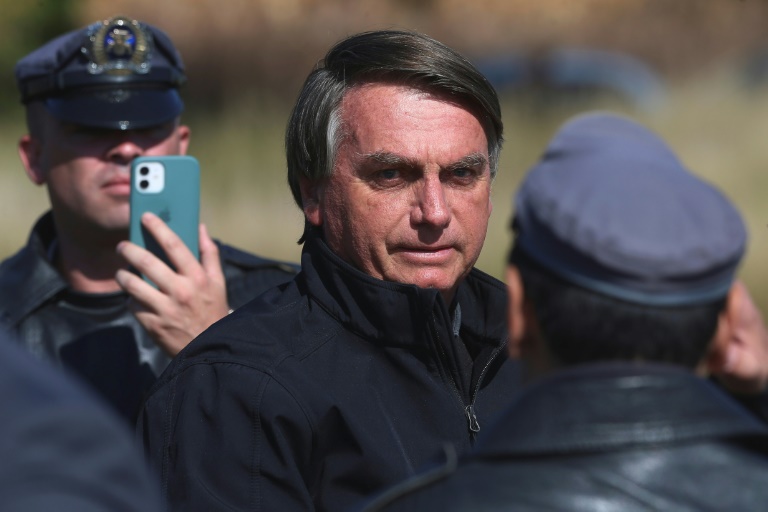
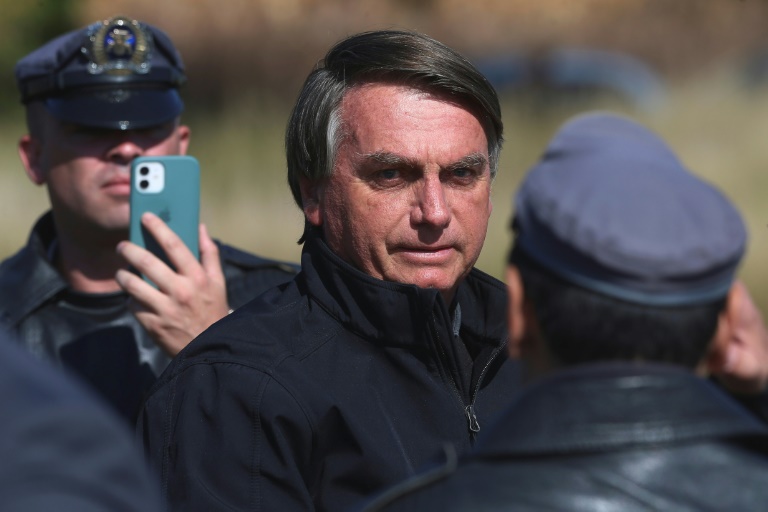
Billionaire Elon Musk jetted into Brazil Friday to meet far-right President Jair Bolsonaro and unveil a project to link thousands of Amazonian schools to the internet and expand satellite monitoring of the rainforest.

The two men met at a luxury hotel in Porto Feliz, some 100 kilometers (60 miles) outside Sao Paulo, with executives of several Brazilian companies present. 

“Super excited to be in Brazil for launch of Starlink for 19,000 unconnected schools in rural areas & environmental monitoring of Amazon!” tweeted Musk of the project. 

In comments made at the meeting, snippets of which were shared on social media, the CEO of SpaceX and Tesla said the project would be “really good” for “deforestation… for education (and), environmental reasons.”

No further details were released of the deal, and journalists were kept at a distance from the meeting venue.

Amazon destruction has risen sharply under the government of Bolsonaro, who is accused of promoting impunity for gold miners, farmers and timber traffickers who illegally clear the rainforest.

The president, however, claimed Friday the new project would reveal the “truth” about the state of the Amazon: “the exuberance of this region, how it is preserved by us.”

Experts point out there are already projects in place to monitor Brazilian deforestation.

“What is missing is action, not monitoring,” said Tasso Azevedo, coordinator of Mapbiomas — a consortium of NGOs, universities and startups that does exactly such work with satellite images.

– Free speech? –

Bolsonaro told Musk his announcement last month of a $44 billion bid for Twitter had come as a “ray of hope.”

The offer has since been suspended, with Musk demanding proof of the number of Twitter spam accounts.

Bolsonaro has had several social media posts deleted over the years amid accusations that he uses fake news as a political weapon, and has welcomed Musk’s statements on loosening restrictions in the name of free expression.

The billionaire had vowed, among other things, to reinstate the account of ex-president Donald Trump — a political idol of Bolsonaro’s.

“Musk has become in recent weeks a kind of hero of Bolsonarism,” said Oliver Stuenkel, an international relations expert at Sao Paulo’s Getulio Vargas foundation.

“His possible acquisition of Twitter was seen as good news because it would supposedly end the restrictions” ahead elections in October.

Bolsonaro, who will seek re-election, is lagging behind leftist Luiz Inacio Lula da Silva in opinion polls.

Bolsonaro tweeted a photograph of him and Musk shaking hands, and said they had also discussed “the use of technology… in the realization of Brazil’s economic potential.”

The meeting was kept under wraps until just hours before it happened.

– High-speed internet- 

Musk is listed by Forbes as the world’s wealthiest person, with a fortune of more than $200 billion.

“Since we are going to connect the Amazon, we brought one of the largest entrepreneurs in the world to help us in this mission,” tweeted Communications Minister Fabio Faria, who met Musk in Texas last November.

At the time, the government announced it was negotiating with SpaceX for satellite access.

SpaceX has thousands of Starlink satellites in orbit to provide high-speed internet, especially to areas underserved by fixed and mobile networks. 

Many more launches are planned to expand the service that has more than 100,000 subscribers worldwide.

Friday’s meeting came hours after Musk rejected allegations on Twitter that he had groped a flight attendant and exposed himself to her six years ago.

Musk tweeted that the latest “attacks” on him were related to his plans to “restore free speech to Twitter & vote Republican.”

Musk, Bolsonaro talk free speech, deforestation in Brazil

Billionaire Elon Musk jetted into Brazil Friday to meet far-right President Jair Bolsonaro and unveil a project to link thousands of Amazonian schools to the internet and expand satellite monitoring of the rainforest.

The two men met at a luxury hotel in Porto Feliz, some 100 kilometers (60 miles) outside Sao Paulo, with executives of several Brazilian companies present. 

“Super excited to be in Brazil for launch of Starlink for 19,000 unconnected schools in rural areas & environmental monitoring of Amazon!” tweeted Musk of the project. 

In comments made at the meeting, snippets of which were shared on social media, the CEO of SpaceX and Tesla said the project would be “really good” for “deforestation… for education (and), environmental reasons.”

No further details were released of the deal, and journalists were kept at a distance from the meeting venue.

Amazon destruction has risen sharply under the government of Bolsonaro, who is accused of promoting impunity for gold miners, farmers and timber traffickers who illegally clear the rainforest.

The president, however, claimed Friday the new project would reveal the “truth” about the state of the Amazon: “the exuberance of this region, how it is preserved by us.”

Experts point out there are already projects in place to monitor Brazilian deforestation.

“What is missing is action, not monitoring,” said Tasso Azevedo, coordinator of Mapbiomas — a consortium of NGOs, universities and startups that does exactly such work with satellite images.

– Free speech? –

Bolsonaro told Musk his announcement last month of a $44 billion bid for Twitter had come as a “ray of hope.”

The offer has since been suspended, with Musk demanding proof of the number of Twitter spam accounts.

Bolsonaro has had several social media posts deleted over the years amid accusations that he uses fake news as a political weapon, and has welcomed Musk’s statements on loosening restrictions in the name of free expression.

The billionaire had vowed, among other things, to reinstate the account of ex-president Donald Trump — a political idol of Bolsonaro’s.

“Musk has become in recent weeks a kind of hero of Bolsonarism,” said Oliver Stuenkel, an international relations expert at Sao Paulo’s Getulio Vargas foundation.

“His possible acquisition of Twitter was seen as good news because it would supposedly end the restrictions” ahead elections in October.

Bolsonaro, who will seek re-election, is lagging behind leftist Luiz Inacio Lula da Silva in opinion polls.

Bolsonaro tweeted a photograph of him and Musk shaking hands, and said they had also discussed “the use of technology… in the realization of Brazil’s economic potential.”

The meeting was kept under wraps until just hours before it happened.

– High-speed internet- 

Musk is listed by Forbes as the world’s wealthiest person, with a fortune of more than $200 billion.

“Since we are going to connect the Amazon, we brought one of the largest entrepreneurs in the world to help us in this mission,” tweeted Communications Minister Fabio Faria, who met Musk in Texas last November.

At the time, the government announced it was negotiating with SpaceX for satellite access.

SpaceX has thousands of Starlink satellites in orbit to provide high-speed internet, especially to areas underserved by fixed and mobile networks. 

Many more launches are planned to expand the service that has more than 100,000 subscribers worldwide.

Friday’s meeting came hours after Musk rejected allegations on Twitter that he had groped a flight attendant and exposed himself to her six years ago.

Musk tweeted that the latest “attacks” on him were related to his plans to “restore free speech to Twitter & vote Republican.”

Musk, Bolsonaro talk free speech, deforestation in Brazil

Billionaire Elon Musk jetted into Brazil Friday to meet far-right President Jair Bolsonaro and unveil a project to link thousands of Amazonian schools to the internet and expand satellite monitoring of the rainforest.

The two men met at a luxury hotel in Porto Feliz, some 100 kilometers (60 miles) outside Sao Paulo, with executives of several Brazilian companies present. 

“Super excited to be in Brazil for launch of Starlink for 19,000 unconnected schools in rural areas & environmental monitoring of Amazon!” tweeted Musk of the project. 

In comments made at the meeting, snippets of which were shared on social media, the CEO of SpaceX and Tesla said the project would be “really good” for “deforestation… for education (and), environmental reasons.”

No further details were released of the deal, and journalists were kept at a distance from the meeting venue.

Amazon destruction has risen sharply under the government of Bolsonaro, who is accused of promoting impunity for gold miners, farmers and timber traffickers who illegally clear the rainforest.

The president, however, claimed Friday the new project would reveal the “truth” about the state of the Amazon: “the exuberance of this region, how it is preserved by us.”

Experts point out there are already projects in place to monitor Brazilian deforestation.

“What is missing is action, not monitoring,” said Tasso Azevedo, coordinator of Mapbiomas — a consortium of NGOs, universities and startups that does exactly such work with satellite images.

– Free speech? –

Bolsonaro told Musk his announcement last month of a $44 billion bid for Twitter had come as a “ray of hope.”

The offer has since been suspended, with Musk demanding proof of the number of Twitter spam accounts.

Bolsonaro has had several social media posts deleted over the years amid accusations that he uses fake news as a political weapon, and has welcomed Musk’s statements on loosening restrictions in the name of free expression.

The billionaire had vowed, among other things, to reinstate the account of ex-president Donald Trump — a political idol of Bolsonaro’s.

“Musk has become in recent weeks a kind of hero of Bolsonarism,” said Oliver Stuenkel, an international relations expert at Sao Paulo’s Getulio Vargas foundation.

“His possible acquisition of Twitter was seen as good news because it would supposedly end the restrictions” ahead elections in October.

Bolsonaro, who will seek re-election, is lagging behind leftist Luiz Inacio Lula da Silva in opinion polls.

Bolsonaro tweeted a photograph of him and Musk shaking hands, and said they had also discussed “the use of technology… in the realization of Brazil’s economic potential.”

The meeting was kept under wraps until just hours before it happened.

– High-speed internet- 

Musk is listed by Forbes as the world’s wealthiest person, with a fortune of more than $200 billion.

“Since we are going to connect the Amazon, we brought one of the largest entrepreneurs in the world to help us in this mission,” tweeted Communications Minister Fabio Faria, who met Musk in Texas last November.

At the time, the government announced it was negotiating with SpaceX for satellite access.

SpaceX has thousands of Starlink satellites in orbit to provide high-speed internet, especially to areas underserved by fixed and mobile networks. 

Many more launches are planned to expand the service that has more than 100,000 subscribers worldwide.

Friday’s meeting came hours after Musk rejected allegations on Twitter that he had groped a flight attendant and exposed himself to her six years ago.

Musk tweeted that the latest “attacks” on him were related to his plans to “restore free speech to Twitter & vote Republican.”

US leads criticism of UN rights chief for China trip

The UN rights chief came under fire Friday for announcing a visit next week to China’s Xinjiang, with the United States saying she was failing to stand up for the region’s Uyghur community.

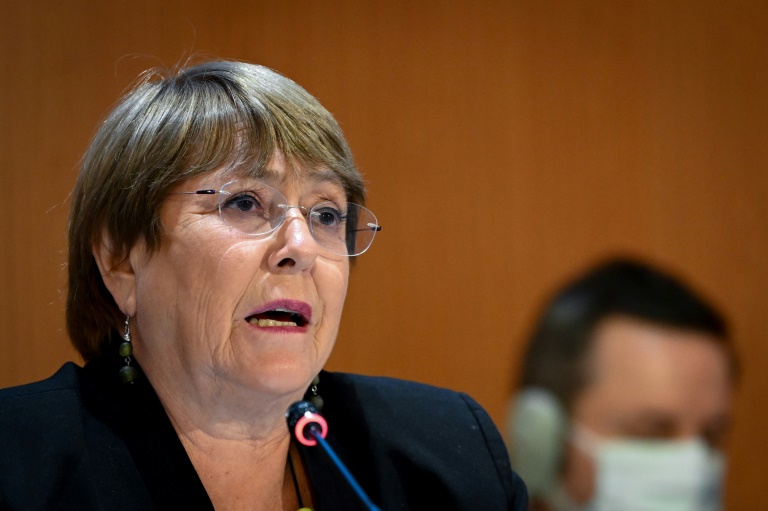
After years of requesting “meaningful and unfettered” access to far-western Xinjiang, Michelle Bachelet will finally lead a six-day mission to China starting Monday, her office said.

The visit, at the invitation of Beijing, marks the first trip to China by a UN rights chief since Louise Arbour went there in 2005.

The United States, in forceful criticism, said it was “deeply concerned” that Bachelet, a former president of Chile, was going ahead without guarantees on what she can see.

“We have no expectation that the PRC will grant the necessary access required to conduct a complete, unmanipulated assessment of the human rights environment in Xinjiang,” State Department spokesman Ned Price told reporters, using the acronym for the People’s Republic of China.

Price also voiced alarm that Bachelet has not released a long-anticipated report on Xinjiang, where the United States and several other Western nations say Beijing is carrying out “genocide” against the Uyghurs and other mostly Muslim, Turkic-speaking people.

“Despite frequent assurances by her office that the report would be released in short order, it remains unavailable to us and we call on the high commissioner to release the report without delay and not to wait for the visit,” Price said.

Her “continued silence in the face of indisputable evidence of atrocities in Xinjiang and other human rights violations and abuses throughout the PRC is deeply concerning,” he said, saying Bachelet should be a leading voice on human rights.

– Meeting officials, students –

Bachelet herself has been demanding access to all regions of China since she took office in 2018.

She has repeatedly voiced concern about allegations of widespread abuses in Xinjiang but has been criticised for not taking a strong enough stance.

Rights campaigners accuse the ruling Communist Party of widespread abuses in the name of security, saying at least one million mostly Muslim people have been incarcerated in “re-education camps” in a bid to forcibly integrate them into China’s Han majority.

Beijing has vociferously denied genocide allegations, calling them the “lie of the century” and arguing that its policies have countered extremism and improved livelihoods.

In March, the UN rights office announced an agreement had finally been reached on arranging a visit.

Bachelet will meet “a number of high-level officials at the national and local levels”, her office said Friday, adding that she would “also meet with civil society organisations, business representatives, academics, and deliver a lecture to students at Guangzhou University.” 

An advance team was sent to China several weeks ago to prepare the visit, and has completed a lengthy quarantine in the country, currently in the grip of fresh Covid outbreaks.

Bachelet, who will not need to quarantine, is not travelling to Beijing due to Covid restrictions but will go to Kashgar and Urumqi in Xinjiang. 

– ‘Legacy’ at stake –

Despite Bachelet’s demands for unfettered access, rights groups noted that the terms of the visit have not been disclosed.

They have voiced concern that Chinese authorities, who have always insisted they were only interested in a “friendly visit”, could manipulate the trip.

“It defies credibility that the Chinese government will allow the high commissioner to see anything they don’t want her to see, or allow human rights defenders, victims and their families to speak to her safely, unsupervised and without fear of reprisal,” Sophie Richardson, the China director of Human Rights Watch, said in a statement.

The trip is not without risk for Bachelet, who is nearing the end of her four-year term and has not indicated whether she will seek a second mandate.

A spokeswoman for Bachelet said Tuesday that the long-delayed report on Xinjiang would not be released before her trip and that there was no clear timing for making it public.

Richardson said: “Bachelet’s legacy as high commissioner will be measured by her willingness to hold a powerful state accountable for crimes against humanity committed on her watch.”

Lebanon cabinet passes financial recovery plan during last session

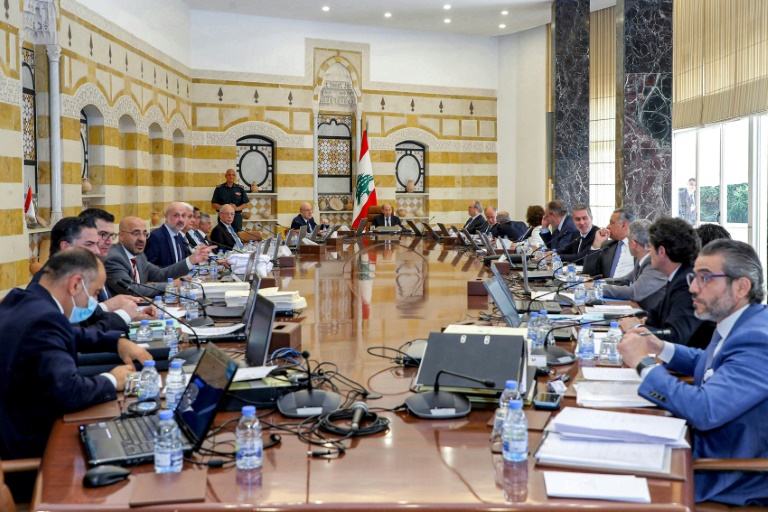
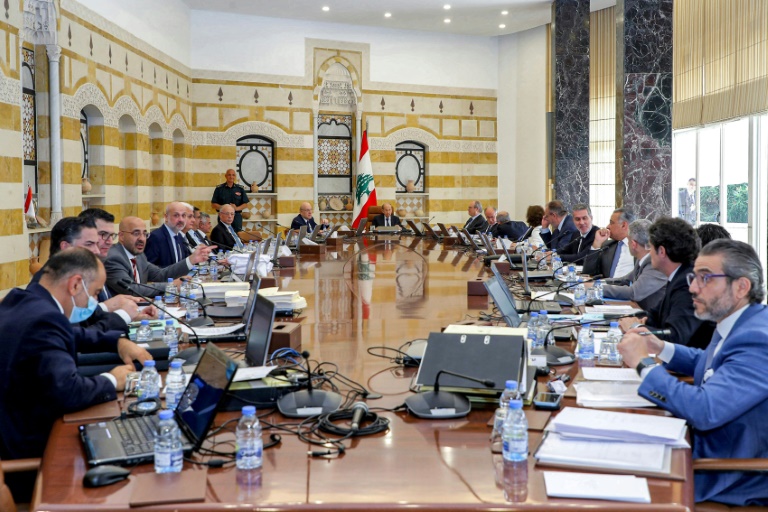
The cabinet of bankrupt Lebanon, at its final session on Friday, passed a financial recovery plan needed to secure international aid, but its implementation will depend on the fractious incoming parliament.

The session came five days after Lebanon held its first election since an economic crisis, widely blamed on corruption and negligence by the ruling elite, dragged the country to the brink of becoming a failed state.

“Any delay in implementing the financial recovery plan will be very costly to Lebanese,” Prime Minister Najib Mikati said at a press conference after cabinet met.

The International Monetary Fund and Lebanon in April struck a conditional deal for $3 billion in aid. Enacting reforms, including a financial recovery plan, is one of many prerequisites for the package, and analysts have expressed scepticism that the reforms can take place.

It will be up to the new government and parliament to implement the plan approved by the outgoing cabinet.

The financial plan passed by ministers includes restructuring and recapitalising the banking system, and protecting small depositors “as much as possible”, according to an official five-page document seen by AFP.

Sunday’s election yielded a polarised and fragmented legislature likely prone to the kind of deadlock that has characterised Lebanese politics for decades.

This could complicate the formation of a new government and delay implementation of the reforms.

Lebanon has been battered by triple-digit inflation, soaring poverty rates and the collapse of its currency since a 2020 debt default.

In a move adding to the economic pain, cabinet also raised telecom prices. Starting July, the internet bill of Lebanon residents will more than double, as will mobile phone bills.

Telecommunications Minister Johnny Corm warned Thursday the cash-strapped sector might collapse if there were no hikes, because current prices were set according to pre-inflation rates. 

The outgoing Lebanese cabinet will continue to function with limited caretaker powers until a new one is formed, a process that could take months.

“I call on elected lawmakers to expedite the formation of a new government,” Mikati said.

Also on Friday, Saudi Arabia’s de facto ruler Crown Prince Mohammed bin Salman and French President Emmanuel Macron reiterated their call for “structural reforms” in Lebanon.

“They reaffirmed the need to implement the structural reforms necessary for the country’s recovery, as expected by the Lebanese population and the international community,” the French presidency announced after a telephone conversation between the two leaders.

Macron and Salman also “reaffirmed their willingness to continue their coordination to support the Lebanese population”.

Lebanon cabinet passes financial recovery plan during last session

The cabinet of bankrupt Lebanon, at its final session on Friday, passed a financial recovery plan needed to secure international aid, but its implementation will depend on the fractious incoming parliament.

The session came five days after Lebanon held its first election since an economic crisis, widely blamed on corruption and negligence by the ruling elite, dragged the country to the brink of becoming a failed state.

“Any delay in implementing the financial recovery plan will be very costly to Lebanese,” Prime Minister Najib Mikati said at a press conference after cabinet met.

The International Monetary Fund and Lebanon in April struck a conditional deal for $3 billion in aid. Enacting reforms, including a financial recovery plan, is one of many prerequisites for the package, and analysts have expressed scepticism that the reforms can take place.

It will be up to the new government and parliament to implement the plan approved by the outgoing cabinet.

The financial plan passed by ministers includes restructuring and recapitalising the banking system, and protecting small depositors “as much as possible”, according to an official five-page document seen by AFP.

Sunday’s election yielded a polarised and fragmented legislature likely prone to the kind of deadlock that has characterised Lebanese politics for decades.

This could complicate the formation of a new government and delay implementation of the reforms.

Lebanon has been battered by triple-digit inflation, soaring poverty rates and the collapse of its currency since a 2020 debt default.

In a move adding to the economic pain, cabinet also raised telecom prices. Starting July, the internet bill of Lebanon residents will more than double, as will mobile phone bills.

Telecommunications Minister Johnny Corm warned Thursday the cash-strapped sector might collapse if there were no hikes, because current prices were set according to pre-inflation rates. 

The outgoing Lebanese cabinet will continue to function with limited caretaker powers until a new one is formed, a process that could take months.

“I call on elected lawmakers to expedite the formation of a new government,” Mikati said.

Also on Friday, Saudi Arabia’s de facto ruler Crown Prince Mohammed bin Salman and French President Emmanuel Macron reiterated their call for “structural reforms” in Lebanon.

“They reaffirmed the need to implement the structural reforms necessary for the country’s recovery, as expected by the Lebanese population and the international community,” the French presidency announced after a telephone conversation between the two leaders.

Macron and Salman also “reaffirmed their willingness to continue their coordination to support the Lebanese population”.

Macron names new foreign, defence ministers in cabinet shake-up

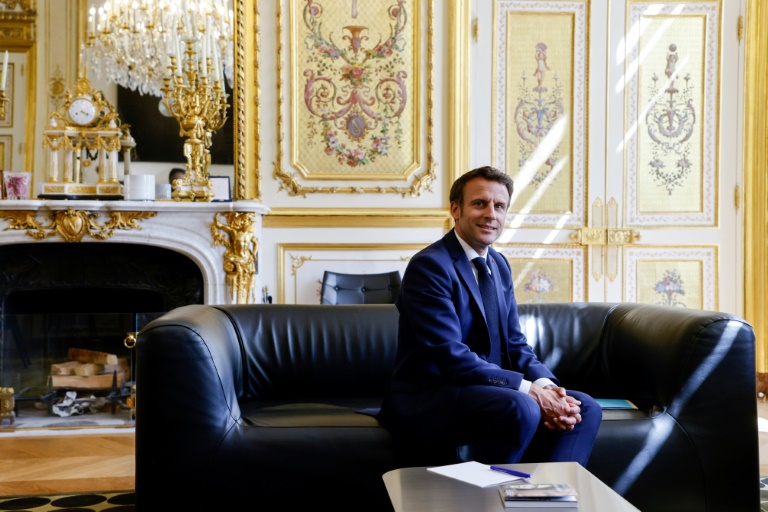
French President Emmanuel Macron named new foreign and defence ministers on Friday as part of a government re-shuffle intended to create fresh momentum ahead of parliamentary elections next month. 

France’s ambassador to London, Catherine Colonna, was picked as foreign minister, making her only the second woman to hold the prestigious job. 

Sebastien Lecornu, former minister for overseas territories, was promoted to the defence ministry, Macron’s chief of staff Alexis Kohler announced at the presidential palace.

Macron decided to shuffle the portfolios despite the conflict in Ukraine, Europe’s biggest since World War II. 

“It’s a government that is equal (in terms of gender) and balanced in terms of people who were already ministers and new figures,” Prime Minister Elizabeth Borne told reporters.

Macron needs a parliamentary majority in polls next month in order to push through his domestic reform agenda which includes welfare and pension changes, as well as tax cuts.

The biggest surprise came in the education ministry where renowned left-wing academic Pap Ndiaye, an expert on colonialism and race relations, will take over from right-winger Jean-Michel Blanquer.

Ndiaye first gained national prominence with his 2008 work “The Black Condition, an essay on a French minority” and is an outspoken critic of racism and discrimination.

In his first public comments, he acknowledged that he was “perhaps a symbol, one of meritocracy, but also perhaps of diversity”.

“I don’t take pride in it, but rather a sense of the duty and responsibilities which are now mine,” he said.

Far-right leader Marine Le Pen called his elevation “the last step in the deconstruction of our country, its values and its future”.

– Delays –

On Monday, Macron named Borne to the post of prime minister, the first time a woman has held France’s top cabinet job in more than 30 years and only the second time in history.

Opposition figures had accused the president of deliberately delaying naming a new cabinet, almost four weeks since his re-election on April 24, when he defeated far-right leader Le Pen. 

The issue has been the subject of feverish media speculation in recent days, overshadowing the parliamentary campaign and drowning out opposition parties.

Macron’s centrist LREM party, allied with the centrist MoDem and centre-right Horizons among others, is expected to face its biggest challenge from a rejuvenated left-wing next month.

Head of the France Unbowed party, Jean-Luc Melenchon, is eyeing a comeback in the parliamentary elections on June 12 and 19 after finishing third in the presidential polls.

Melenchon has persuaded the Socialist, Communist and Greens parties to enter an alliance under his leadership that unites the left around a common platform for the first time in decades.

He said the new government represented “neither audacity nor renewal. All dull and grey”.

“In one month everything will change,” he added.

– Recruits –

As with previous Macron governments, the cabinet is evenly split between men and women, but has a new emphasis on environmental protection which has been named as a policy priority.

The cabinet features separate ministers for “ecological transition” as well “energy transition”, with campaign groups such as Greenpeace urging Macron to match his rhetoric with actions.

The president has also continued his habit of attracting talent from opposition parties, with senior Republicans party MP Damien Abad named as minister for solidarity, autonomy and handicapped people. 

Abad, 42, is the son of a miner from Nimes in southern France and became the first handicapped MP to be elected in 2012.

He has arthrogryposis, a rare condition that affects the joints. 

Elsewhere in the government, Economy Minister Bruno Le Maire and hard-line Interior Minister Gerald Darmanin both remain in their positions.

– Veteran ambassador –

New foreign minister Colonna is a veteran ambassador, former government spokeswoman under late president Jacques Chirac and one-time minister of European affairs.

She has served as French envoy in London at a particularly rocky time for Franco-British relations due to tensions over Brexit, fishing rights and immigration.

In a highly unusual step, she was summoned by the British government in October 2021 as Paris and London clashed over fishing rights in the Channel.

“I wanted to thank everyone who understood we are friends of this country and will keep working for a better future,” she wrote on Twitter in a valedictory message on Friday. 

She will replace veteran Foreign Affairs Minister Jean-Yves Le Drian, while Lecornu takes over defence from Florence Parly.

France has promised to step up its weapons supplies to Ukraine which include Milan anti-tank missiles as well as Caesar howitzers. 

War in Ukraine: Latest developments

Here are the latest developments in the war in Ukraine:

– Russia homes in on Lugansk –

Russian Defence Minister Sergei Shoigu says Moscow is nearing full control of the separatist region of Lugansk in eastern Ukraine.

“The liberation of the Lugansk People’s Republic is nearing completion,” Shoigu says.  

After some 2,000 Ukrainian soldiers surrendered at the besieged Azovstal steel plant in the port city of Mariupol, now under Moscow’s control, Kyiv orders its remaining troops holed up there to lay down their arms after nearly three months of desperate resistance.

– ‘Hell’ in Donbas –

The renewed Russian offensive in Donbas has turned the eastern Ukrainian region into “hell”, President Volodymyr Zelensky says.

“In Donbas, the occupiers are trying to increase pressure,” he says.

In his nightly address, he adds: “There’s hell, and that’s not an exaggeration.”

– New Russian bases –

Shoigu also says Moscow will create new military bases in western Russia in response to the expansion of NATO. 

“By the end of the year, 12 military units and divisions will be established in the Western Military District,” Shoigu tells a meeting. 

– Soldier’s lawyer urges acquittal –

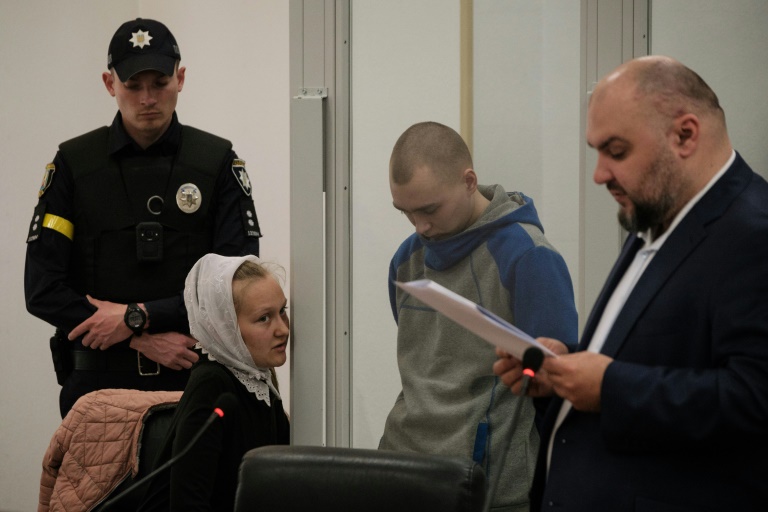
The lawyer for the first Russian soldier on trial in Kyiv says his client is “not guilty” of premeditated murder and war crimes, urging his acquittal, even though he has admitted to killing a civilian.

Sergeant Vadim Shishimarin, at the centre of the first war crimes trial held over the conflict, has said he is “truly sorry” and asked the widow of the Ukrainian civilian he killed for forgiveness.

Ukrainian prosecutors have requested he be given a life sentence.

– German no to EU fund –

Germany’s finance minister is ruling out any joint EU borrowing to help cover the massive cost of rebuilding war-scarred Ukraine, after the idea was floated by top European officials.

After chairing G7 talks in Germany that saw countries pledge nearly $20 billion (19 billion euros) in aid to Ukraine, Christian Lindner said there would be no repeat of the EU’s landmark post-pandemic recovery fund, known as “Next Generation”, that is being financed by common debt.

– Turkey ‘determined’ to block NATO bids –

President Recep Tayyip Erdogan says he is talking to Western leaders about Turkey’s objections to NATO membership for Sweden and Finland, whom he accuses of sheltering Kurdish separatists. 

Russia’s war in Ukraine has shifted political opinion in both Nordic countries in favour of joining the Western military alliance. 

“We cannot say ‘yes’ to (Sweden and Finland)… joining NATO, a security organisation,” Erdogan said.

– Russia to cut gas to Finland –

Russian supply of natural gas to Finland is to be cut on Saturday morning, Finnish and Russian energy companies say, after the country refused to pay supplier Gazprom in rubles.

“We have been carefully preparing for this situation,” Finland’s Gasum CEO Mika Wiljanen says. “There will be no disruptions in the gas transmission network.”

– Strike on cultural centre –

Zelensky says Russian strikes gutted a cultural centre in eastern Ukraine and wounded eight people, including a child.

In a statement on social media, Zelensky says that Russian strikes had targeted “the newly-renovated House of Culture”, in the town of Lozova, in the eastern region of Kharkiv.

burs-qan-cdw/jmy/ah

Key Iraq irrigation reservoir close to drying out

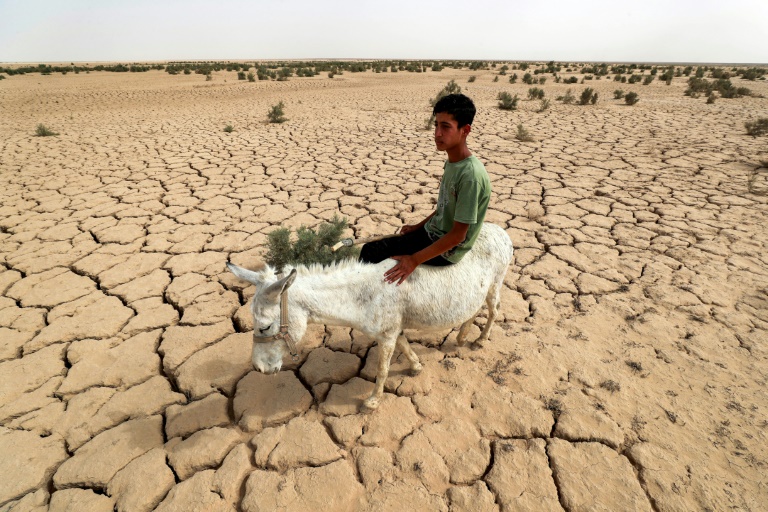
Iraq’s Lake Hamrin, a once-vast reservoir northeast of Baghdad that is the sole source of water for irrigation across Diyala province, has nearly dried out, a senior official said Friday.

Successive years of low rainfall and a sharp reduction in the flow of water down the Sirwan River from neighbouring Iran have reduced much of the lake to a dust bowl, the official told AFP.

“There has been a sharp reduction in the water level — reserves currently stand at 130 million cubic metres against two billion cubic metres normally,” said Aoun Dhiab, a senior adviser in the water ministry.

Dhiab said a number of factors were to blame including the prolonged drought and Iranian dam construction and river diversion projects upstream.

Dhiab said it was not the first time water levels had fallen so low. “In 2009, the lake dried out completely. There was just a stream.” 

He said the impact on surrounding farmland should not be underestimated.

“There are no other sources of water in the province — the volume arriving in Lake Hamrin is the volume used in the province.”

He said the government had asked Iran to increase the flow of water across the border. Otherwise all that could be done was to pray for higher rainfall next year.

The problem is not exclusive to Diyala province. The World Bank predicts that without major changes, Iraq will have lost 20 percent of its water resources by 2020.

The country is classified as one of five most vulnerable to climate change effects and desertification. Water shortages have led this year to reduced quotas for rice and wheat farmers.

Iraq’s upstream neighbours Iran, Turkey and Syria experience similar shortfalls, meaning that its appeals for help generally fall unheaded. 

Close Bitnami banner
Bitnami