World

Key Iraq irrigation reservoir close to drying out

Iraq’s Lake Hamrin, a once-vast reservoir northeast of Baghdad that is the sole source of water for irrigation across Diyala province, has nearly dried out, a senior official said Friday.

Successive years of low rainfall and a sharp reduction in the flow of water down the Sirwan River from neighbouring Iran have reduced much of the lake to a dust bowl, the official told AFP.

“There has been a sharp reduction in the water level — reserves currently stand at 130 million cubic metres against two billion cubic metres normally,” said Aoun Dhiab, a senior adviser in the water ministry.

Dhiab said a number of factors were to blame including the prolonged drought and Iranian dam construction and river diversion projects upstream.

Dhiab said it was not the first time water levels had fallen so low. “In 2009, the lake dried out completely. There was just a stream.” 

He said the impact on surrounding farmland should not be underestimated.

“There are no other sources of water in the province — the volume arriving in Lake Hamrin is the volume used in the province.”

He said the government had asked Iran to increase the flow of water across the border. Otherwise all that could be done was to pray for higher rainfall next year.

The problem is not exclusive to Diyala province. The World Bank predicts that without major changes, Iraq will have lost 20 percent of its water resources by 2020.

The country is classified as one of five most vulnerable to climate change effects and desertification. Water shortages have led this year to reduced quotas for rice and wheat farmers.

Iraq’s upstream neighbours Iran, Turkey and Syria experience similar shortfalls, meaning that its appeals for help generally fall unheaded. 

Boeing's Starliner approaching ISS in high-stakes test mission

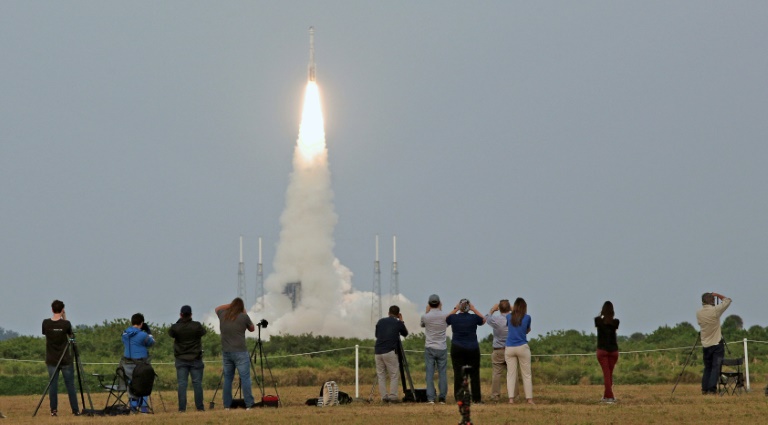
Boeing’s Starliner capsule was preparing to dock with the International Space Station Friday, in a high-stakes uncrewed test flight key to reviving the US aerospace giant’s reputation after a series of failures.

The spaceship blasted off from the Kennedy Space Center in Florida on Thursday evening, and is now set to rendezvous with the ISS at 7:10 pm Eastern Time (2310 GMT), as part of a mission to prove it is capable of providing safe rides for NASA astronauts.

Starliner encountered some propulsion problems early in its journey, with two thrusters responsible for placing it in a stable orbit failing for unclear reasons — though officials insisted everything remained on track.

“Overall, the spacecraft is doing really well,” Steve Sitch, program manager for  NASA’s Commercial Crew Program told reporters at a post-launch press conference, in which he nonetheless flagged anomalies that engineers are working to understand.

One of 12 orbital maneuvering and attitude control (OMAC) thrusters located on Starliner’s aft side failed after one second, at which point a second thruster kicked in and took over, but also cut out after 25 seconds. 

The ship’s software then engaged a third thruster that completed the necessary burn. 

The OMAC thrusters are set to be used to bring Starliner closer to the ISS, and to help de-orbit the spacecraft near the end of the mission.

“We’ll go look at the data and try to understand what happened. And then from a redundancy perspective, can we recover those thrusters?” said Sitch.

Starliner’s success is key to repairing Boeing’s frayed reputation after its first launch, back in 2019, failed to dock with the ISS due to software bugs — one that led to it burning too much fuel to reach its destination, and another that could have destroyed the vehicle during re-entry. 

A second try was scheduled in August 2021, but the capsule was rolled back from the launchpad to address sticky valves that weren’t opening as they should, and the vessel was eventually sent back to the factory for fixes.

NASA is looking to certify Starliner as a second “taxi” service for its astronauts to the space station — a role that Elon Musk’s SpaceX has provided since succeeding in a test mission for its Dragon capsule in 2020.

– Seeking redemption –

Both companies were awarded fixed-price contracts — $4.2 billion to Boeing, and $2.6 billion to SpaceX — in 2014, shortly after the end of the Space Shuttle program, during a time when the United States was left reliant on Russian Soyuz rockets for rides to the orbital outpost. 

Boeing, with its hundred-year history, was considered by many as the sure shot, while then-upstart SpaceX was less proven. 

In reality, it was SpaceX that rocketed ahead, and recently sent its fourth routine crew to the research platform — while Boeing’s development delays have cost the company hundreds of millions of dollars.

Starliner should dock with the ISS about 24 hours after launch, and deliver more than 800 pounds of cargo.

Its sole passenger is a mannequin named Rosie the Rocketeer — a play on the World War II campaign icon Rosie the Riveter — whose job is to collect flight data with her sensors in order to learn what human astronauts would experience.

“We are a little jealous of Rosie,” NASA astronaut Mike Fincke, who is expected to be among the first crew selected for a manned demonstration mission should OFT-2 succeed, said at a press conference this week.

The gumdrop-shaped capsule will spend about five days in space, then undock and return to Earth on May 25, using giant parachutes to land in the desert of the western United States. 

NASA sees a second provider to low Earth orbit as a vital backup, should SpaceX encounter problems. 

Boeing's Starliner approaching ISS in high-stakes test mission

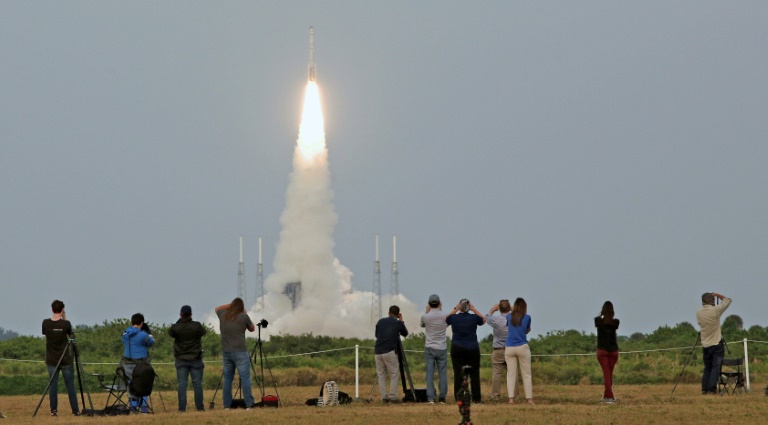
Boeing’s Starliner capsule was preparing to dock with the International Space Station Friday, in a high-stakes uncrewed test flight key to reviving the US aerospace giant’s reputation after a series of failures.

The spaceship blasted off from the Kennedy Space Center in Florida on Thursday evening, and is now set to rendezvous with the ISS at 7:10 pm Eastern Time (2310 GMT), as part of a mission to prove it is capable of providing safe rides for NASA astronauts.

Starliner encountered some propulsion problems early in its journey, with two thrusters responsible for placing it in a stable orbit failing for unclear reasons — though officials insisted everything remained on track.

“Overall, the spacecraft is doing really well,” Steve Sitch, program manager for  NASA’s Commercial Crew Program told reporters at a post-launch press conference, in which he nonetheless flagged anomalies that engineers are working to understand.

One of 12 orbital maneuvering and attitude control (OMAC) thrusters located on Starliner’s aft side failed after one second, at which point a second thruster kicked in and took over, but also cut out after 25 seconds. 

The ship’s software then engaged a third thruster that completed the necessary burn. 

The OMAC thrusters are set to be used to bring Starliner closer to the ISS, and to help de-orbit the spacecraft near the end of the mission.

“We’ll go look at the data and try to understand what happened. And then from a redundancy perspective, can we recover those thrusters?” said Sitch.

Starliner’s success is key to repairing Boeing’s frayed reputation after its first launch, back in 2019, failed to dock with the ISS due to software bugs — one that led to it burning too much fuel to reach its destination, and another that could have destroyed the vehicle during re-entry. 

A second try was scheduled in August 2021, but the capsule was rolled back from the launchpad to address sticky valves that weren’t opening as they should, and the vessel was eventually sent back to the factory for fixes.

NASA is looking to certify Starliner as a second “taxi” service for its astronauts to the space station — a role that Elon Musk’s SpaceX has provided since succeeding in a test mission for its Dragon capsule in 2020.

– Seeking redemption –

Both companies were awarded fixed-price contracts — $4.2 billion to Boeing, and $2.6 billion to SpaceX — in 2014, shortly after the end of the Space Shuttle program, during a time when the United States was left reliant on Russian Soyuz rockets for rides to the orbital outpost. 

Boeing, with its hundred-year history, was considered by many as the sure shot, while then-upstart SpaceX was less proven. 

In reality, it was SpaceX that rocketed ahead, and recently sent its fourth routine crew to the research platform — while Boeing’s development delays have cost the company hundreds of millions of dollars.

Starliner should dock with the ISS about 24 hours after launch, and deliver more than 800 pounds of cargo.

Its sole passenger is a mannequin named Rosie the Rocketeer — a play on the World War II campaign icon Rosie the Riveter — whose job is to collect flight data with her sensors in order to learn what human astronauts would experience.

“We are a little jealous of Rosie,” NASA astronaut Mike Fincke, who is expected to be among the first crew selected for a manned demonstration mission should OFT-2 succeed, said at a press conference this week.

The gumdrop-shaped capsule will spend about five days in space, then undock and return to Earth on May 25, using giant parachutes to land in the desert of the western United States. 

NASA sees a second provider to low Earth orbit as a vital backup, should SpaceX encounter problems. 

Macron names new foreign, defence ministers in cabinet shake-up

French President Emmanuel Macron named new foreign and defence ministers on Friday as part of a government re-shuffle intended to create fresh momentum ahead of parliamentary elections next month. 

France’s ambassador to London, Catherine Colonna, was picked as foreign minister, making her only the second woman to hold the prestigious job. 

Sebastien Lecornu, former minister for overseas territories, was promoted to the defence ministry, Macron’s chief of staff Alexis Kohler announced at the presidential palace.

The changes amid Russia’s invasion of Ukraine are likely to raise eyebrows, though Macron has taken the lead role in managing France’s response to the invasion.

The newly re-elected head of state needs a parliamentary majority in polls next month in order to push through his domestic reform agenda which includes welfare and pension changes, as well as tax cuts.

The biggest surprise came in the education ministry where renowned left-wing academic Pap Ndiaye, an expert on colonialism and race relations, will take over from right-winger Jean-Michel Blanquer.

Ndiaye first gained national prominence with his 2008 work “The Black Condition, an essay on a French minority”.

Far-right leader Marine Le Pen called his elevation “the last step in the deconstruction of our country, its values and its future”.

– Delays –

Macron on Monday named former labour minister Elizabeth Borne as prime minister, the first time a woman has held France’s top cabinet job in more than 30 years and only the second time in history.

Opposition figures had accused the president of deliberately delaying naming a new cabinet, almost four weeks since his re-election on April 24, when he defeated far-right leader Le Pen. 

The issue has been the subject of feverish media coverage in recent days, overshadowing the parliamentary campaign and drowning out opposition parties.

Macron’s centrist LREM party, allied with the centrist MoDem and centre-right Horizons among others, is expected to face its biggest challenge from a rejuvenated left-wing next month.

Head of the France Unbowed party, Jean-Luc Melenchon, is eyeing a comeback in the parliamentary elections on June 12 and 19 after finishing third in the presidential polls.

Melenchon has persuaded the Socialist, Communist and Greens parties to enter an alliance under his leadership that unites the left around a common platform for the first time in decades.

He said the new government represented “neither audacity nor renewal. All dull and grey”.

“In one month everything will change,” he added.

– Recruits –

As with previous Macron governments, the cabinet is evenly split between men and women, but has a new emphasis on environmental protection which has been named as a policy priority.

The cabinet will feature separate ministers for “ecological transition” as well “energy transition”, with campaign groups such as Greenpeace urging Macron to match his rhetoric with actions.

The president has also continued his habit of attracting talent from opposition parties, with senior Republicans party MP Damien Abad named as minister for solidarity, autonomy and handicapped people. 

Abad, 42, is the son of a miner from Nimes in southern France and became the first handicapped MP to be elected in 2012.

He has arthrogryposis, a rare condition that affects the joints. 

Elsewhere in the government, Economy Minister Bruno Le Maire and hard-line Interior Minister Gerald Darmanin both remain in their positions.

– Veteran ambassador –

New foreign minister Colonna is a veteran ambassador, former government spokeswoman under late president Jacques Chirac and one-time minister of European affairs.

She has served as French envoy in London at a particularly rocky time for Franco-British relations due to tensions over Brexit, fishing rights and immigration.

In a highly unusual step, she was summoned by the British government in October 2021 as Paris and London clashed over fishing rights in the Channel.

“I wanted to thank everyone who understood we are friends of this country and will keep working for a better future,” she wrote on Twitter in a valedictory message on Friday. 

She will replace veteran Foreign Affairs Minister Jean-Yves Le Drian, while Lecornu takes over defence from Florence Parly.

France has promised to step up its weapons supplies to Ukraine which include Milan anti-tank missiles as well as Caesar howitzers. 

US drops 'foreign terrorist' designation from Israeli, Basque, Egyptian groups

The US State Department on Friday removed its longstanding official “foreign terrorist organization” label from Israeli, Basque, Egyptian, Palestinian and Japanese extremist groups, but all will remain under a separate, broader terror designation.

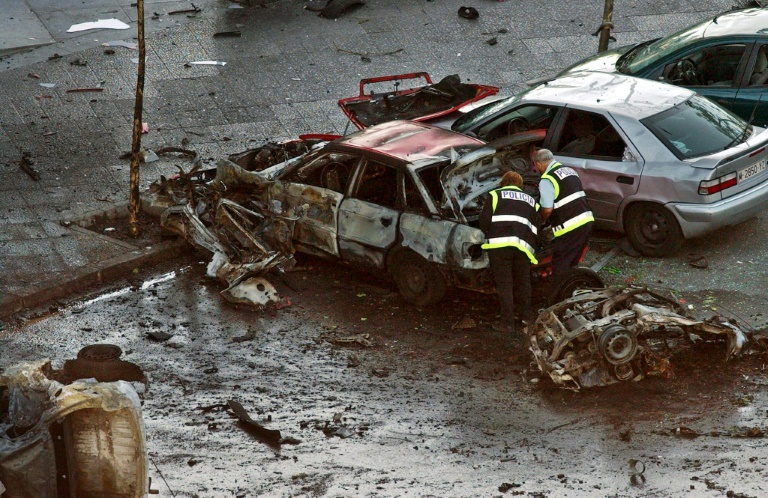
Removed from the FTO blacklist were Kahane Chai, a Jewish extremist group linked to late rabbi Meir Kahane; the Palestinian jihadist group Mujahidin Shura Council in the Environs of Jerusalem; and Euskadi Ta Askatasuna, or ETA, a Basque separatist group that operated in Spain and France.

Japan’s Aum Shinrikyo cult, which launched a deadly sarin attack in Tokyo’s subway in 1995, and Gamaa Islamiya, the militant group led by the blind cleric Omar Abdel Rahman, who died in a US prison in 2017, were also dropped from the department’s official list of foreign terrorist organizations.

The FTO designation had allowed to the United States to take strong unilateral moves against a group’s members and associates, seizing assets, blocking travel to the United States, deportation, and — significantly — jailing for up to 20 years anyone found providing “material support” for them.

None of the five are seen as currently active organizations and the State Department must review FTO designations every five years to see if they remain warranted.

“Our review of these five FTO designations determined that, as defined by the INA, the five organizations are no longer engaged in terrorism or terrorist activity and do not retain the capability and intent to do so,” the department said in a statement.

The revocations “recognize the success Egypt, Israel, Japan, and Spain have had in defusing the threat of terrorism by these groups,” it said.  

Kahane Chai, which grew out of Kahane’s Kach movement, was designated an FTO in 1997, three years after its supporter Baruch Goldstein massacred 29 Palestinians in the occupied West Bank city of Hebron.

The group’s founder, an advocate of expulsion of Arabs from Israel, was assassinated in New York in 1990.

ETA was blamed for killing hundreds in attacks as the group sought an independent Basque homeland over four decades. Eight years declaring after a ceasefire in 2010, it dissolved itself.

The Mujahidin Shura Council was blacklisted for its role in rocket attacks in Israel over 2010-2013.

Gamaa Islamiya group was built around Abdel Rahman, a radical Islamist and US resident who allegedly inspired the deadly 1993 bombing of New York’s World Trade Center.

He was convicted in 1995 over several bomb plots and sentenced to life in prison.

Removal of the FTO label does not drop the five groups from the US Treasury’s blacklist.

They remain designated as Specially Designated Global Terrorists (SDGT) entities, which allows the government to continue to hold seized assets and take control of others tied to the groups.

China rate cut boosts Asian, European stocks

Asian and European stocks rebounded Friday on China’s interest rate cut, but US equities continued to slump on fears that sky-high inflation will spark a global downturn.

“Markets have been looking for an excuse to bounce, and a China rate cut provided the reason,” IG analyst Chris Beauchamp told AFP.

China’s central bank announced it would lower its five-year loan prime rate — a key interest rate governing how lenders base their mortgage rates — to 4.45 percent from 4.6 percent.

The news comes in contrast to other major central banks — like the US Federal Reserve and the Bank of England — that are raising borrowing costs to combat rocketing consumer prices.

“It isn’t much when set against the broader (rate) tightening we are seeing globally, but equities do look a bit stretched to the downside in the short term,” Beauchamp added.

The Chinese move sparked optimism among traders that it could boost the world’s second-largest economy from its Covid-induced stupor.

“The rate cut announced by the PBOC (People’s Bank of China) is obviously good news and is clearly targeted at revitalising the ailing property market which continues to suffer due to the crackdown last year and Covid lockdowns this,” said Craig Erlam, senior market analyst at OANDA.

“This could help to revive a hugely important part of the economy,” he added, but “whether it’s enough to help China hit its 5.5 percent growth target this year is another thing.” 

Asian stocks closed with gains, as did Europe’s main markets although those faded as the day wore on. 

Wall Street opened higher, but then sank lower in morning trading. 

“Stocks remain on a shaky footing,” said market analyst Fawad Razaqzada at City Index and FOREX.com.

He said investors are worried about inflation, interest rate hikes, low economic growth, stagflation, and recession.

“Perhaps most importantly for stocks, the Fed is not there to provide cushion, like before,” he added, as the US central bank is raising interest rates to get to grips with inflation.

– Rollercoaster ride –

Markets had taken a beating Thursday on intensifying recession worries.

Wall Street has faced the brunt of selling, suffering its worst batterings in two years over the past couple of sessions.

Downcast earning reports from retailers have heightened market uncertainty at a time of rising interest rates, surging energy prices, China’s Covid lockdowns and Russia’s ongoing war on Ukraine.

“It has been a rollercoaster ride for markets this week after Thursday’s bloodbath when US equities suffered their worse session since 2020 with that negativity reverberating across global stock markets,” said Victoria Scholar, head of investment at trading firm Interactive Investor.

Major stock indices have lost huge portions of their value in recent months, with the tech-heavy Nasdaq Composite down 30 percent from the peak it set in November, while the blue-chip Dow is off 15.9 percent.

In Europe, both Paris and Frankfurt stocks are down between 14 and 15 percent, while London’s main index has shed a modest 3.9 percent.

– Key figures at around 1530 GMT –

New York – Dow: DOWN 0.7 percent at 31,026.51 points

EURO STOXX 50: UP 0.5 percent at 3,657.03

London – FTSE 100: UP 1.2 percent at 7,389.98 (close)

Frankfurt – DAX: UP 0.7 percent at 13,981.91 (close)

Paris – CAC 40: UP 0.2 percent at 6,285.24 (close)

Hong Kong – Hang Seng Index: UP 3.0 percent at 20,717.24 (close)

Shanghai – Composite: UP 1.6 percent at 3,146.57 (close)

Tokyo – Nikkei 225: UP 1.3 percent at 26,739.03 (close)

Brent North Sea crude: UP 0.4 percent at $112.52 per barrel

West Texas Intermediate: UP 0.4 percent at $112.65 per barrel

Euro/dollar: DOWN at $1.0555 from $1.0588

Pound/dollar: UP at $1.2475 from $1.2467

Euro/pound: DOWN at 84.61 pence from 84.93 pence

Dollar/yen: UP at 127.88 yen from 127.79

burs-rl/pvh

Ukraine orders end to defence of Mariupol

Ukraine on Friday ordered its last troops holed up in Mariupol’s besieged Azovstal steelworks to lay down their arms after nearly three months of desperate resistance against a ferocious Russian assault.

Russia’s flattening of the strategic port city has drawn multiple accusations of war crimes, including a deadly attack on a maternity ward, and Ukraine has begun a reckoning for captured Russian troops.

The first post-invasion trial of a Russian soldier for war crimes neared its climax in Kyiv, after 21-year-old sergeant Vadim Shishimarin admitted to killing an unarmed civilian early in the offensive. The verdict is due on Monday.

Shishimarin told the court on Friday that he was “truly sorry”. But his lawyer said in closing arguments that the young soldier was “not guilty” of premeditated murder and war crimes.

While Ukrainian forces fended off the Russian offensive around Kyiv, helped by a steady infusion of Western arms, both eastern Ukraine and Mariupol in the south have borne the brunt of a remorseless ground and artillery attack.

“Russian occupation forces are conducting intense fire along the entire line of contact and trying to hit artillery deep into the defences of Ukrainian troops,” Ukrainian defence ministry spokesman Oleksandr Motuzyanyk told reporters.

The fighting is fiercest in the eastern region of Donbas, a Russian-speaking area that has been partially controlled by pro-Kremlin separatists since 2014.

“In Donbas, the occupiers are trying to increase pressure,” President Volodymyr Zelensky said in his nightly video address late on Thursday. “There’s hell — and that’s not an exaggeration.”

In the eastern city of Severodonetsk, 12 people were also killed and another 40 wounded by Russian shelling, the regional governor said.

– Burial with honours –

Zelensky described the bombardment of Severodonetsk as “brutal and absolutely pointless”, as residents cowering in basements described an unending ordeal of terror.

The city forms part of the last pocket of Ukrainian resistance in Lugansk, which along with the neighbouring region of Donetsk comprises the Donbas war zone.

Russian Defence Minister Sergei Shoigu said his forces’ campaign in Lugansk was “nearing completion”.

Also apparently complete is the capture of the Azovstal steelworks, a totemic symbol of Ukraine’s dogged resistance since Russian President Vladimir Putin launched the invasion on February 24.

A total of 1,908 Ukrainian troops have surrendered this week at the steelworks, according to Russia’s defence ministry, after releasing a video showing bedraggled defenders being taken into captivity.

Ukraine’s Azov battalion commander Denys Prokopenko said only the dead remained.

“The higher military command has given the order to save the lives of the soldiers of our garrison and to stop defending the city,” he said in a video on Telegram.

“I now hope that soon, the families and all of Ukraine will be able to bury their fighters with honours.”

Ukraine wants to exchange the surrendering Azovstal soldiers for Russian prisoners. But in Donetsk, the pro-Kremlin authorities are in turn threatening to put some of them on trial.

The International Committee of the Red Cross urged both sides to grant it access to prisoners of war and civilian internees, “wherever they are held”. 

“Many more families need answers,” it said in a statement. 

In Washington, Pentagon spokesman John Kirby said all prisoners of war should “be treated in accordance with the Geneva Convention and the law of war”.

US President Joe Biden has cast the Ukraine war as part of a US-led struggle pitting democracy against authoritarianism.

The US Congress approved a $40-billion (38-billion-euro) aid package, including funds to enhance Ukraine’s armoured vehicle fleet and air defence system.

– Underground living –

And meeting in Germany, G7 industrialised nations pledged $19.8 billion to shore up Ukraine’s shattered public finances.

Biden offered “full, total, complete backing” to Finland and Sweden in their bid to join the NATO military alliance, when he welcomed their leaders to the White House on Thursday.

But all 30 existing NATO members need to agree on any new entrants, and Turkey has condemned the historically non-aligned Nordic neighbours’ alleged toleration of Kurdish militants.

Shoigu said the Kremlin would respond to any NATO expansion by creating more military bases in western Russia.

Russia’s own expansion in Ukraine has ebbed around the northeastern city of Kharkiv, its troops forced to retreat from a rearguard offensive by defending forces.

But Kharkiv remains in Russia artillery range, and hundreds of people are refusing to leave the relative safety of its metro system.

“We’re tired. You can see what home comforts that we have,” said Kateryna Talpa, 35, pointing to mattresses and sheets on the ground, and some food in a cardboard box.

She and her husband Yuriy are doing their best to cope in the Soviet-era station called “Heroes of Labour”, alongside their cats Marek and Sima.

“They got used to it,” Talpa said.

burs-jit/har 

Syria lambasts Erdogan plan to return million refugees

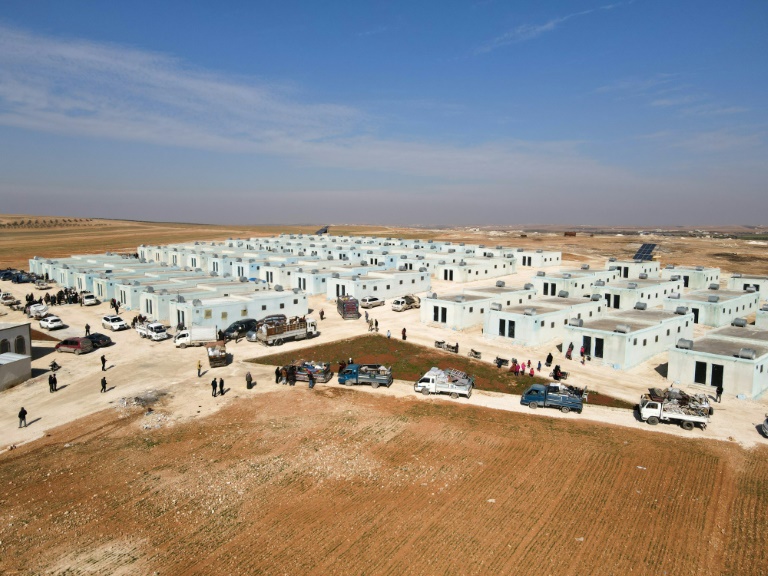
Syrian authorities on Friday rejected plans by Turkey to return one million Syrian refugees to a “safe zone” on the border, state media reported.

Turkish President Recep Tayyip Erdogan in early May said Ankara was aiming to encourage one million Syrian refugees to return to their country by building them housing and local infrastructure there.

Turkey is today home to more than 3.6 million Syrian refugees, who fled after a civil war broke out in 2011 in Turkey’s southern neighbour. 

Erdogan’s “cheap statements” reveal his regime’s “aggressive games against Syria and the unity of its land and people,” the Syrian Ministry of Foreign Affairs said in a statement on the official news agency SANA.

Erdogan is facing rising public anger over the refugees’ presence and is wary of the issue dominating elections next year.

He said around 500,000 Syrians have returned to “safe zones” on the Turkey-Syria border since 2016.

These are controlled by Ankara-backed groups. The areas are designed to keep Syrians displaced by war from crossing into Turkish territory, and to allow it to send back others who already did.

“The government of the Syrian Arab Republic absolutely rejects such games,” the ministry said, calling on countries not to finance the Turkish projects and to stop supporting Ankara.

“The main objective is colonialism… The so-called safe zone is in fact ethnic cleansing,” the ministry said.

Ankara has periodically carried out military strikes on a Kurdish-administered zone in northeastern Syria, where groups it considers terrorists are based. 

The conflict in Syria has killed nearly 500,000 people since it started in 2011 with the brutal repression of peaceful demonstrations.

Israeli firm hopes AI can curb drownings

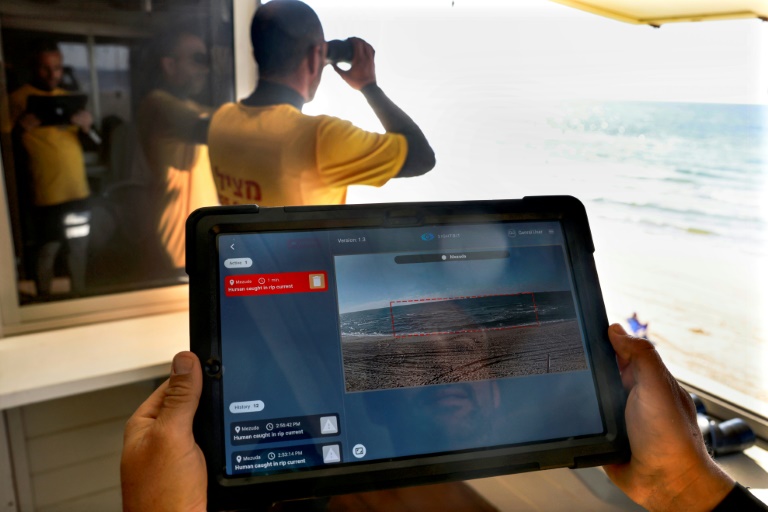
An Israeli city is testing whether an artificial intelligence programme that detects drowning threats can help save lives off its beaches.

The programme, developed by a company called SightBit, uses information collected from surveillance cameras to determine who is in the water — an adult or child, for example — if they are moving or limp, and the current’s movement at that location.

If a threat is determined, the programme sends an alert to a tablet held by the user — a lifeguard, in this case — with urgent instructions to act.

SightBit’s chief executive Netanel Eliav told AFP that he developed the technology after identifying a shortfall in how closed-circuit footage was being applied to boost safety in the water.

The programme has been in use for more than a year in Ashdod, a city on Israel’s Mediterranean coast that chose to deploy SightBit technology in an area at a distance from the nearest lifeguard.

“We chose to locate the technology in areas away from the lifeguard towers, so the additional ‘eyes’ there help the lifeguards very much,” said Arie Turjeman, director of Ashdod’s coast division.

Eliav voiced confidence that SightBit can “save lives”, in a country that sees dozens of drowning deaths a year. 

According to official figures, last year 29 people died during Israel’s March to October beach season, 22 of them in the Mediterranean, and 21 in areas with no lifeguard services.

Thirty-two people drowned during the 2020 season and 27 in 2019.

Elon Musk in Brazil to launch plan to survey and connect Amazon

Billionaire Elon Musk arrived in Brazil Friday, announcing a project to bring internet access to schools in the Amazon and improve satellite monitoring of the rainforest.

The world’s richest man touched down in a private jet at an airfield outside Sao Paolo, according to the G1 news portal.

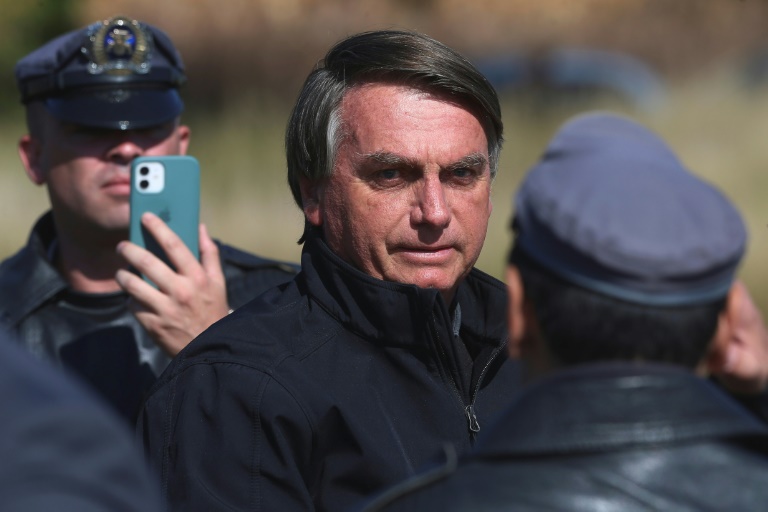
Mush was set to meet Brazil’s far-right President Jair Bolsonaro at a luxury hotel in Porto Feliz, some 100 kilometers (60 miles) outside Sao Paulo, according to the O Globo newspaper.

“Super excited to be in Brazil for launch of Starlink for 19,000 unconnected schools in rural areas & environmental monitoring of Amazon!” tweeted Musk, CEO of SpaceX and Tesla.

Communications Minister Fabio Faria, who met Musk in Texas last November, tweeted the businessman was visiting “to discuss Connectivity and Protection of the Amazon with the Brazilian government.” 

He added: “Since we are going to connect the Amazon, we brought one of the largest entrepreneurs in the world to help us in this mission.”

A large security detail kept journalists at a distance from the hotel where the meeting was to take place. An AFP reporter saw two helicopters land nearby.

– ‘A very important person’ –

On Thursday, Bolsonaro announced he would have a meeting “with a very important person who is recognized throughout the world.”

“He is coming to offer his help for our Amazon,” the president said in his weekly social media broadcast, without naming Musk.

The Amazon is a hot topic in Brazil, with deforestation rising sharply under the government of Bolsonaro — which is accused of promoting impunity for gold miners, farmers and timber traffickers who illegally clear the rainforest.

The Brazilian government said in November it was negotiating with SpaceX to secure satellite internet in the Amazon rainforest and boost detection of illegal deforestation.

In a bid to provide high-speed internet around the world, especially to areas underserved by fixed and mobile networks, Musk’s SpaceX company has placed thousands of Starlink satellites into orbit, with many more launches planned.

The service has more than 100,000 subscribers worldwide.

Musk attracted renewed worldwide attention when he announced last month that he planned to buy Twitter in a deal worth $44 billion dollars.

His comments on loosening restrictions in the name of free expression were welcomed by many supporters of Bolsonaro, who is accused of using fake news as a political weapon and has had several social media posts deleted.

O Globo said Faria and Defense Minister Paulo Sergio Nogueira would attend the Musk-Bolsonaro meeting, along with 13 business leaders including bosses of the country’s main telecommunications companies. 

The meeting comes hours after Musk rejected allegations on Twitter that he groped and exposed himself to a flight attendant six years ago.

Close Bitnami banner
Bitnami