World

Elon Musk in Brazil to launch plan to survey and connect Amazon

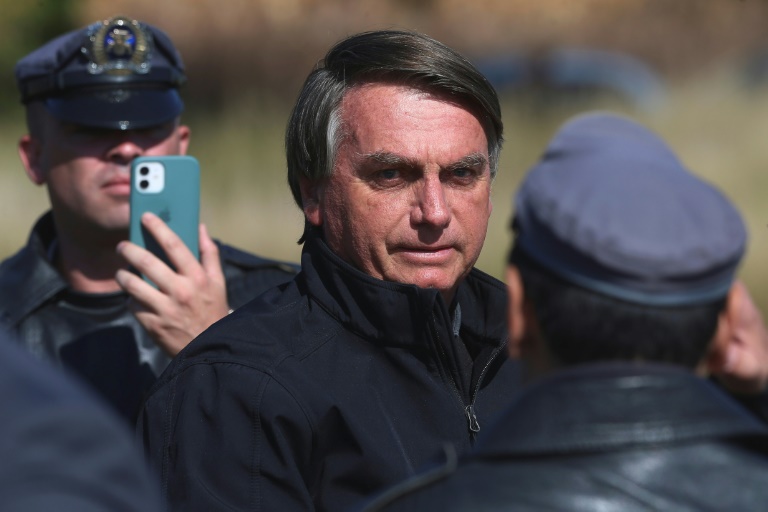
Billionaire Elon Musk arrived in Brazil Friday, announcing a project to bring internet access to schools in the Amazon and improve satellite monitoring of the rainforest.

The world’s richest man touched down in a private jet at an airfield outside Sao Paolo, according to the G1 news portal.

Mush was set to meet Brazil’s far-right President Jair Bolsonaro at a luxury hotel in Porto Feliz, some 100 kilometers (60 miles) outside Sao Paulo, according to the O Globo newspaper.

“Super excited to be in Brazil for launch of Starlink for 19,000 unconnected schools in rural areas & environmental monitoring of Amazon!” tweeted Musk, CEO of SpaceX and Tesla.

Communications Minister Fabio Faria, who met Musk in Texas last November, tweeted the businessman was visiting “to discuss Connectivity and Protection of the Amazon with the Brazilian government.” 

He added: “Since we are going to connect the Amazon, we brought one of the largest entrepreneurs in the world to help us in this mission.”

A large security detail kept journalists at a distance from the hotel where the meeting was to take place. An AFP reporter saw two helicopters land nearby.

– ‘A very important person’ –

On Thursday, Bolsonaro announced he would have a meeting “with a very important person who is recognized throughout the world.”

“He is coming to offer his help for our Amazon,” the president said in his weekly social media broadcast, without naming Musk.

The Amazon is a hot topic in Brazil, with deforestation rising sharply under the government of Bolsonaro — which is accused of promoting impunity for gold miners, farmers and timber traffickers who illegally clear the rainforest.

The Brazilian government said in November it was negotiating with SpaceX to secure satellite internet in the Amazon rainforest and boost detection of illegal deforestation.

In a bid to provide high-speed internet around the world, especially to areas underserved by fixed and mobile networks, Musk’s SpaceX company has placed thousands of Starlink satellites into orbit, with many more launches planned.

The service has more than 100,000 subscribers worldwide.

Musk attracted renewed worldwide attention when he announced last month that he planned to buy Twitter in a deal worth $44 billion dollars.

His comments on loosening restrictions in the name of free expression were welcomed by many supporters of Bolsonaro, who is accused of using fake news as a political weapon and has had several social media posts deleted.

O Globo said Faria and Defense Minister Paulo Sergio Nogueira would attend the Musk-Bolsonaro meeting, along with 13 business leaders including bosses of the country’s main telecommunications companies. 

The meeting comes hours after Musk rejected allegations on Twitter that he groped and exposed himself to a flight attendant six years ago.
Elon Musk in Brazil to launch plan to survey and connect Amazon

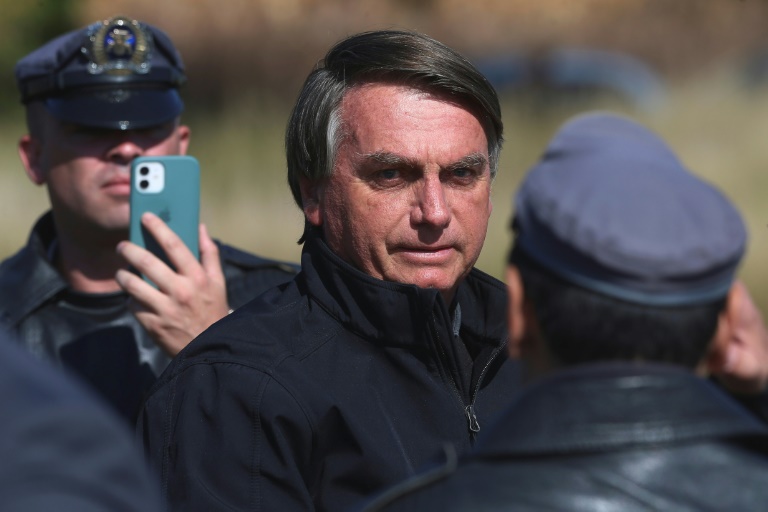
Billionaire Elon Musk arrived in Brazil Friday, announcing a project to bring internet access to schools in the Amazon and improve satellite monitoring of the rainforest.

The world’s richest man touched down in a private jet at an airfield outside Sao Paolo, according to the G1 news portal.

Mush was set to meet Brazil’s far-right President Jair Bolsonaro at a luxury hotel in Porto Feliz, some 100 kilometers (60 miles) outside Sao Paulo, according to the O Globo newspaper.

“Super excited to be in Brazil for launch of Starlink for 19,000 unconnected schools in rural areas & environmental monitoring of Amazon!” tweeted Musk, CEO of SpaceX and Tesla.

Communications Minister Fabio Faria, who met Musk in Texas last November, tweeted the businessman was visiting “to discuss Connectivity and Protection of the Amazon with the Brazilian government.” 

He added: “Since we are going to connect the Amazon, we brought one of the largest entrepreneurs in the world to help us in this mission.”

A large security detail kept journalists at a distance from the hotel where the meeting was to take place. An AFP reporter saw two helicopters land nearby.

– ‘A very important person’ –

On Thursday, Bolsonaro announced he would have a meeting “with a very important person who is recognized throughout the world.”

“He is coming to offer his help for our Amazon,” the president said in his weekly social media broadcast, without naming Musk.

The Amazon is a hot topic in Brazil, with deforestation rising sharply under the government of Bolsonaro — which is accused of promoting impunity for gold miners, farmers and timber traffickers who illegally clear the rainforest.

The Brazilian government said in November it was negotiating with SpaceX to secure satellite internet in the Amazon rainforest and boost detection of illegal deforestation.

In a bid to provide high-speed internet around the world, especially to areas underserved by fixed and mobile networks, Musk’s SpaceX company has placed thousands of Starlink satellites into orbit, with many more launches planned.

The service has more than 100,000 subscribers worldwide.

Musk attracted renewed worldwide attention when he announced last month that he planned to buy Twitter in a deal worth $44 billion dollars.

His comments on loosening restrictions in the name of free expression were welcomed by many supporters of Bolsonaro, who is accused of using fake news as a political weapon and has had several social media posts deleted.

O Globo said Faria and Defense Minister Paulo Sergio Nogueira would attend the Musk-Bolsonaro meeting, along with 13 business leaders including bosses of the country’s main telecommunications companies. 

The meeting comes hours after Musk rejected allegations on Twitter that he groped and exposed himself to a flight attendant six years ago.
Biden begins South Korea trip at Samsung factory, flagging supply chain woes

President Joe Biden arrived in South Korea Friday on his first Asia trip as US leader, aiming to cement economic and security ties with regional allies despite growing fears of a North Korean nuclear test.

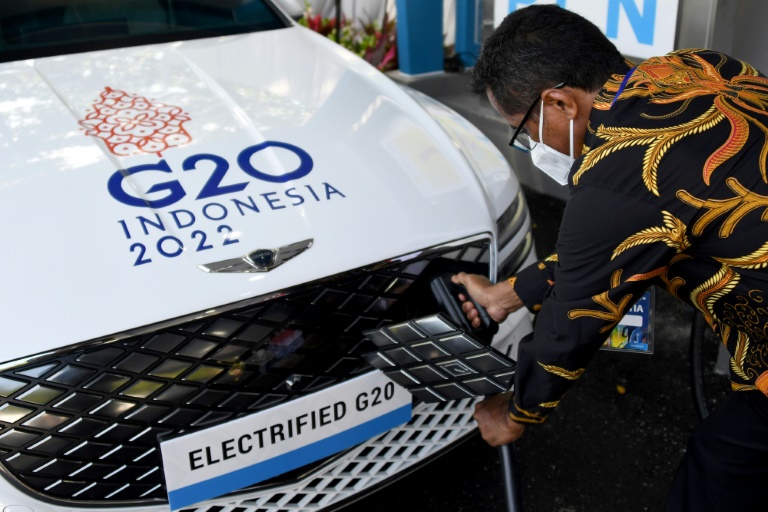
His first stop was a massive Samsung semiconductor factory, where he received a warm welcome from South Korea’s new President Yoon Suk-yeol, with global supply chain issues topping the agenda.

Biden, in his first remarks since arriving in South Korea at the start of a trip meant to demonstrate US resolve to lead in Asia, said the two countries’ alliance was “a lynchpin of peace, stability and prosperity” in the world.

Speaking at the factory in Pyeongtaek alongside Yoon, Biden described the advanced semiconductors manufactured there as “a wonder of innovation” and crucial to the world’s economy.

The tiny, smart wafers “enable our modern lives” and are “the key to propelling us into the next era of humanity’s technological development”, he added.

Semiconductors — the microchips essential to most modern devices from phones to cars and high-tech weapons — are at the heart of a global supply chain slowdown that threatens to disrupt the world’s post-Covid economic recovery.

South Korea and the United States need to work to “keep our supply chains resilient, reliable and secure”, Biden said.

“Putin’s brutal, unprovoked war in Ukraine has further spotlighted the need to secure our critical supply chain,” he said.

The US needs to ensure “our economic and our national security are not dependent on countries that don’t share our values,” he added.

– Don’t forget to vote –

For the US leader, whose Democratic Party fears a possible trouncing in midterm elections this year, the issue is also an acute domestic political challenge, with Americans increasingly frustrated over rising prices and stuttering economic reopening.

Ahead of the speech, Biden toured the huge Samsung plant, taking in lengthy presentations from staff clad in hazmat suits on the equipment used to produce semiconductors.

After a briefing from a US representative from a California company working with Samsung, Biden quipped: “Don’t forget to vote Peter”.

Samsung employs about 20,000 people within the United States and work is underway to build a new semiconductor plant in Texas, opening in 2024.

South Korea is a semiconductor powerhouse, supplying about 70 percent of chips globally, President Yoon said in his speech, asking Biden to take a “special interest” in South Korean chip firms.

Biden’s visit could help the two allies forge a new “economic and security alliance based on advanced technology and supply-chain cooperation”, Yoon said.

“Semiconductors became something akin to a strategic commodity now,” Vladimir Tikhonov, professor of Korean studies at the University of Oslo, told AFP.

China is trying to reduce reliance on US-influenced Dutch and Taiwanese suppliers, and the United States is trying to rebuild its domestic industry, he said.

Biden “needs Samsung’s collaboration in this regard”, he added.

– North Korea test? –

Biden wants the trip to boost a years-long US pivot to Asia, where rising Chinese commercial and military power is undercutting Washington’s dominance — but it risks being overshadowed by North Korea.

There is a “real risk of some kind of provocation”, US National Security Advisor Jake Sullivan said, with South Korean intelligence also warning that Pyongyang had recently completed preparations for a nuclear test.

Security issues were not top of the agenda Friday, but the fact that Biden is visiting Seoul first on his Asia tour indicates that Washington is looking to re-focus on the Korean Peninsula, Soo Kim, a former CIA analyst, told AFP.

“Should Kim proceed with a test during Biden’s visit, he will effectively be helping the two countries find greater justification to work together on the North Korea issue,” she said.

Biden heads to Japan from South Korea on Sunday. He will also join a regional summit of the Quad — a grouping of Australia, India, Japan and the United States — while in Tokyo.

Even so, the whole point of Biden’s Asia tour is China, Katharine Moon, a political science professor at Wellesley College, told AFP.

“It’s an effort to strengthen economic and security relationships with the Asia-Pacific region and block China’s growing influence,” she said.

The US is hoping the united Western response to Russia’s almost three-month-long invasion of Ukraine will give Beijing pause on its Taiwan ambitions.

US National Security Advisor Jake Sullivan said the trip is not to confront China on the trip but to highlight that the West and its Asian partners will not be divided and weakened.

But China said Friday that the US should “build an open and inclusive circle of friends in the Asia-Pacific, instead of assembling closed and exclusive small cliques.”

G20 failing to update carbon-cutting pledges: report

Nations in the G20 group of major economies have yet to strengthen greenhouse gas reduction goals despite agreeing to revisit their plans ahead of critical UN climate talks in November, according to an analysis by leading research NGOs seen exclusively by AFP.

At the Glasgow COP26 climate summit last year countries pledged to review inadequate plans for cutting carbon pollution this decade ahead of the COP27 conference.

Without a sharp reduction in emissions before 2030, the Paris Agreement target of capping global warming at 1.5 degrees Celsius would likely be breached, the UN’s Intergovernmental Panel on Climate Change (IPCC) has warned.

The world has warmed nearly 1.2C so far — enough to usher in a crescendo of deadly heatwaves, floods and storm surges made worse by rising seas.

Current pledges registered under the 2015 treaty, if fulfilled, would still see temperatures rise a catastrophic 2.8C, potentially triggering runaway warming, where natural processes would add massive amounts of carbon into the atmosphere.

The G20 accounts for three-quarters of all human-caused emissions, which means the planet’s future is largely in its hands.

Two G20 nations — India and Turkey — have failed to update their original carbon cutting plans submitted in 2015, as required under the Paris Agreement. 

Neither has non-G20 member Egypt, which will host the COP27 climate summit in November.

Australia, Brazil, Indonesia and Mexico submitted revised 2030 targets that did nothing to further reduce emissions, according to the joint analysis from the World Resources Institute, the Energy and Climate Intelligence Unit and the E3G non-profit groups.

– ‘Now or never’ –

Russia, Saudi Arabia and China — which accounted for a third of global emissions last year — did offer enhanced plans, “but there is still considerable scope to improve their commitments this year beyond their current policies,” the report concluded.

The remaining G20 countries, including the United States and major European economies, raised their ambitions in 2021 but are still not on track to meet their earlier targets.

“None of the G20 are doing enough to keep hopes of limiting warming to 1.5C alive,” said Tom Evans, a researcher at E3G.

“So far this year, they seem to have completely forgotten the promise they made at COP26 just six months ago to strengthen their 2030 climate targets.”

A rapid rise in fossil fuel prices following Russia’s invasion of Ukraine coupled with the declining cost of renewables could help speed the shift away from carbon-intensive energy, the report said. 

And on the sidelines of the UN climate talks in Glasgow, many nations made pledges to halt forest loss by 2030, cut methane emissions, end financing for fossil fuels, and hasten the phase-out of coal use.

Combined, these voluntary measures could potentially help cap global temperature rise at 2C, according to peer-reviewed studies. 

But all fall outside international mechanisms for measuring and verifying compliance.

“It is now or never if we want to limit global warming to 1.5C,” said Jim Skea, co-chair of a landmark IPCC report which set out options for slashing greenhouse gas emissions last month.

“Without immediate and deep emissions reductions across all sectors, it will be impossible.” 

Spain's ex-king attends regatta on brief visit home

Spain’s former king attended a regatta in the northwestern Galicia region Friday on a controversial first trip home after nearly two years in exile following a string of financial scandals.

Although prosecutors have closed their probes into Juan Carlos I’s affairs, revelations about the murky origins of his fortune have done irreparable damage to a figure once revered for his role in Spain’s democratic transition after decades of dictatorship. 

Pulling up to the sailing club in the resort town of Sanxenxo, the 84-year-old — who flew in from Abu Dhabi on Thursday evening — was greeted by dozens of well-wishers, and a crowd of journalists. 

As he got out of the car wearing a white top, cream gilet and salmon slacks and began shaking hands with supporters, there were cries of “Long live the king!” 

But there were also a few cries of dissent with one man shouting “scoundrel” — a possible reference to the financial scandals that prompted Juan Carlos to move to Abu Dhabi in self-imposed exile in August 2020. 

Hobbling along with his cane and holding onto the arm of an aide, the ex-monarch beamed as he greeted the crew of his yacht, the “Bribon” — Spanish for “rascal”. 

The six-metre (20-foot) racing yacht is the same vessel with which he and his crew won the world sailing title in 2017 and 2019. 

It was unclear whether he would be joining them aboard for the race. He has not sailed for some three years, Spain’s RTVE public television said.

The former monarch will stay with a close friend in Sanxenxo until Monday when he travels to Madrid for a brief visit with his wife Sofia, his son King Felipe VI and other family members. 

He will leave for Abu Dhabi later on Monday, the palace said. 

News of the disgraced former king’s impending arrival sparked a backlash earlier this week. 

“There is no longer any legal or judicial reason to stop the king emeritus from travelling to Spain but there are a wealth of ethical grounds that explain the commotion this has caused,” an El Pais editorial said on Thursday. 

Also Thursday, Deputy Prime Minister Nadia Calvino said “there’s no doubt we need some explanations” while the hard-left Podemos, the junior partner in Spain’s coalition government, expressed outrage at the visit. 

“Anyone returning to Spain with a record like king Juan Carlos I would be arrested and prosecuted as soon as they crossed the border” it tweeted. 

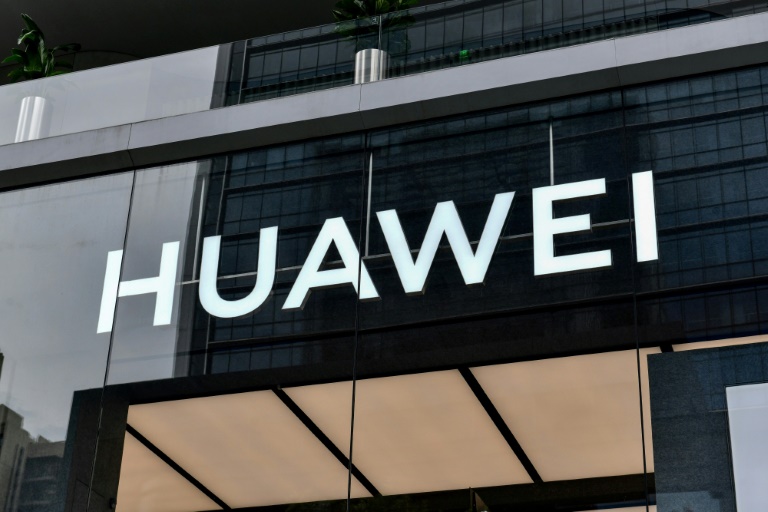
Beijing, Huawei condemn Canada 5G ban as 'groundless' and 'political'

Beijing hit out Friday at Canada for banning two Chinese telecoms giants from Canadian 5G networks, calling Ottawa’s security concerns “groundless”, while Huawei said barring its services was a “political decision”.

Canada’s long-awaited measure on Thursday follows the United States and other key allies, and comes on the heels of a diplomatic row between Ottawa and Beijing over the detention of a senior Huawei executive on a US warrant, which has now been resolved.

The United States has warned of the security implications of giving Chinese tech companies access to telecommunications infrastructure that could be used for state espionage.

Along with Huawei, Chinese telecoms firm ZTE was also banned.

Both Huawei and Beijing have rejected the US security allegations.

“China is firmly opposed to this and will conduct a comprehensive and serious assessment,” foreign ministry spokesman Wang Wenbin told reporters in response to the 5G block. 

“The Canadian side has excluded these Chinese companies from the Canadian market under the pretext of groundless security risks and without any solid evidence.” 

He added that Beijing would “take all necessary measures” to protect Chinese companies.

“This move runs counter to market economy principles and free trade rules,” he said, accusing the Canadian government of “seriously damaging the legitimate rights and interests of Chinese companies.”

Huawei called the ban “an unfortunate political decision” that cannot be justified on national security grounds.

“Huawei Canada is disappointed by the Canadian government’s decision,” the company’s Canadian subsidiary said in an email to AFP. “This is an unfortunate political decision that has nothing to do with cyber security or any of the technologies in question.”

It said that Huawei hardware and software has been “routinely and closely scrutinised” by the Canadian government and its security agencies, and to date there have been “zero security incidents caused by Huawei equipment”.

Canada had been reviewing the 5G technology and network access for several years, repeatedly delaying a decision that was first expected in 2019.

It remained silent on the telecoms issue after China jailed two Canadians — diplomat Michael Kovrig and businessman Michael Spavor — in what observers believed was in retaliation for the arrest of Huawei chief financial officer Meng Wangzhou in Vancouver in December 2018 at the request of the United States.

All three were released in September 2021 after Meng reached a deal with US prosecutors on the fraud charges, ending her extradition fight.

But Canadian Industry Minister Francois-Philippe Champagne made the 5G announcement on Thursday, citing the “intention to prohibit the inclusion of Huawei and ZTE products and services in Canada’s telecommunication systems”.

Champagne said Canadian telecommunications companies “will not be permitted to include in their networks products or services that put our national security at risk”.

“Providers who already have this equipment installed will be required to cease its use and remove it,” he said.

– ‘Hostile actors’ –

Huawei already supplies some Canadian telecommunications firms with 4G equipment.

Most, if not all, had held off using Huawei in their fifth-generation (5G) wireless networks that deliver speedier online connections with greater data capacity. Others have looked to other suppliers while Ottawa hemmed and hawed.

Canadian Public Safety Minister Marco Mendicino warned Thursday of “many hostile actors who are ready to exploit vulnerabilities” in telecom networks.

The United States, Australia, Britain, New Zealand, Japan and Sweden have already blocked or restricted the use of Huawei technology in their 5G networks.

The US government considers Huawei a potential security threat due to the background of its founder and CEO Ren Zhengfei, a former Chinese army engineer who is Meng’s father.

The US State Department on Friday welcomed Canada’s decision.

Concerns about Huawei escalated as the firm rose to become the world leader in telecoms networking equipment and one of the top smartphone manufacturers. 

Beijing also passed a law in 2017 obliging Chinese companies to assist the government in matters of national security.

The decision could prove to be “a major expense for Canada,” Kendra Schaefer, tech policy researcher at consultancy Trivium China, told AFP.

“Not only have local telecom providers already invested… in Huawei equipment, but additionally they are going to go back and have to rip out everything they’ve already installed,” she added.

Beijing, Huawei condemn Canada 5G ban as 'groundless' and 'political'

Beijing hit out Friday at Canada for banning two Chinese telecoms giants from Canadian 5G networks, calling Ottawa’s security concerns “groundless”, while Huawei said barring its services was a “political decision”.

Canada’s long-awaited measure on Thursday follows the United States and other key allies, and comes on the heels of a diplomatic row between Ottawa and Beijing over the detention of a senior Huawei executive on a US warrant, which has now been resolved.

The United States has warned of the security implications of giving Chinese tech companies access to telecommunications infrastructure that could be used for state espionage.

Along with Huawei, Chinese telecoms firm ZTE was also banned.

Both Huawei and Beijing have rejected the US security allegations.

“China is firmly opposed to this and will conduct a comprehensive and serious assessment,” foreign ministry spokesman Wang Wenbin told reporters in response to the 5G block. 

“The Canadian side has excluded these Chinese companies from the Canadian market under the pretext of groundless security risks and without any solid evidence.” 

He added that Beijing would “take all necessary measures” to protect Chinese companies.

“This move runs counter to market economy principles and free trade rules,” he said, accusing the Canadian government of “seriously damaging the legitimate rights and interests of Chinese companies.”

Huawei called the ban “an unfortunate political decision” that cannot be justified on national security grounds.

“Huawei Canada is disappointed by the Canadian government’s decision,” the company’s Canadian subsidiary said in an email to AFP. “This is an unfortunate political decision that has nothing to do with cyber security or any of the technologies in question.”

It said that Huawei hardware and software has been “routinely and closely scrutinised” by the Canadian government and its security agencies, and to date there have been “zero security incidents caused by Huawei equipment”.

Canada had been reviewing the 5G technology and network access for several years, repeatedly delaying a decision that was first expected in 2019.

It remained silent on the telecoms issue after China jailed two Canadians — diplomat Michael Kovrig and businessman Michael Spavor — in what observers believed was in retaliation for the arrest of Huawei chief financial officer Meng Wangzhou in Vancouver in December 2018 at the request of the United States.

All three were released in September 2021 after Meng reached a deal with US prosecutors on the fraud charges, ending her extradition fight.

But Canadian Industry Minister Francois-Philippe Champagne made the 5G announcement on Thursday, citing the “intention to prohibit the inclusion of Huawei and ZTE products and services in Canada’s telecommunication systems”.

Champagne said Canadian telecommunications companies “will not be permitted to include in their networks products or services that put our national security at risk”.

“Providers who already have this equipment installed will be required to cease its use and remove it,” he said.

– ‘Hostile actors’ –

Huawei already supplies some Canadian telecommunications firms with 4G equipment.

Most, if not all, had held off using Huawei in their fifth-generation (5G) wireless networks that deliver speedier online connections with greater data capacity. Others have looked to other suppliers while Ottawa hemmed and hawed.

Canadian Public Safety Minister Marco Mendicino warned Thursday of “many hostile actors who are ready to exploit vulnerabilities” in telecom networks.

The United States, Australia, Britain, New Zealand, Japan and Sweden have already blocked or restricted the use of Huawei technology in their 5G networks.

The US government considers Huawei a potential security threat due to the background of its founder and CEO Ren Zhengfei, a former Chinese army engineer who is Meng’s father.

The US State Department on Friday welcomed Canada’s decision.

Concerns about Huawei escalated as the firm rose to become the world leader in telecoms networking equipment and one of the top smartphone manufacturers. 

Beijing also passed a law in 2017 obliging Chinese companies to assist the government in matters of national security.

The decision could prove to be “a major expense for Canada,” Kendra Schaefer, tech policy researcher at consultancy Trivium China, told AFP.

“Not only have local telecom providers already invested… in Huawei equipment, but additionally they are going to go back and have to rip out everything they’ve already installed,” she added.

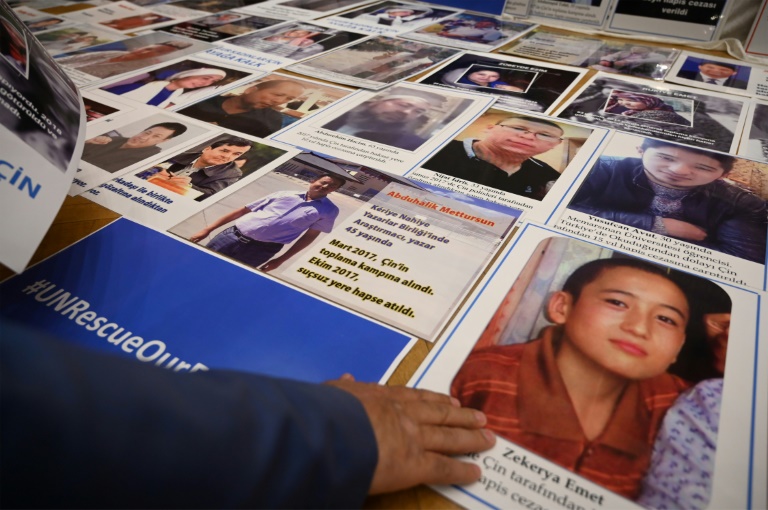
UN rights chief begins landmark China trip from Monday

The UN rights chief will travel to China’s Xinjiang region next week for a visit under intense international scrutiny after demands for her to call out abuses against its Uyghur minority.

After years of requesting “meaningful and unfettered” access to far-western Xinjiang, Michelle Bachelet will finally stage a six-day mission to China starting Monday, her office said.

The visit, at the invitation of Beijing, has been widely anticipated and marks the first trip to China by a UN rights chief since Louise Arbour went there in 2005.

Bachelet herself has been demanding access to all regions of China since she took office in 2018.

She has repeatedly voiced concern about allegations of widespread abuses in Xinjiang but has been criticised for not taking a strong enough stance.

The visit comes as rights groups pile pressure on her office to release a long-postponed report on the situation in the region.

Beijing has waged a years-long crackdown in the province in the name of stamping out terrorism and developing one of its poorest regions.

– ‘Genocide’ –

But rights campaigners accuse the ruling Communist Party of widespread abuses in the name of security, saying at least one million mostly Muslim minorities have been incarcerated in “re-education camps”.

The US government and lawmakers in a number of other Western countries have labelled China’s treatment of the Uyghur minority in Xinjiang “genocide”.

Beijing has vociferously denied the allegations, calling them the “lie of the century” and arguing that its policies have countered extremism and improved livelihoods.

In March, the UN rights office announced an agreement had finally been reached on arranging a visit.

Bachelet will meet “a number of high-level officials at the national and local levels”, her office said Friday, adding that she would “also meet with civil society organisations, business representatives, academics, and deliver a lecture to students at Guangzhou University.” 

An advance team was sent to China several weeks ago to prepare the visit, and has completed a lengthy quarantine in the country, currently in the grip of fresh Covid outbreaks.

Bachelet, who will not need to quarantine, is not travelling to Beijing due to Covid restrictions but will go to Kashgar and Urumqi in Xinjiang. 

– ‘Legacy’ at stake –

Despite Bachelet’s demands for “unfettered” access, rights groups said the terms of the visit have not been disclosed.

They have voiced concern that Chinese authorities, who have always insisted they were only interested in a “friendly visit”, could manipulate the trip.

“It defies credibility that the Chinese government will allow the high commissioner to see anything they don’t want her to see, or allow human rights defenders, victims and their families to speak to her safely, unsupervised and without fear of reprisal,” Sophie Richardson, Human Rights Watch (HRW) China director said in a statement.

The trip, which comes as Bachelet’s four-year mandate nears a close with no indication yet on whether she plans to seek a second term, is not without risk for the former president of Chile.

Rights groups, diplomats and others have made no secret they expect her to take a strong stand.

They are also demanding her office release its long-delayed report on the situation in Xinjiang. 

But a spokeswoman for Bachelet said Tuesday it would not be released before her trip, and that there was no clear timing for making it public.

HRW’s Richardson said: “Bachelet’s legacy as high commissioner will be measured by her willingness to hold a powerful state accountable for crimes against humanity committed on her watch.”

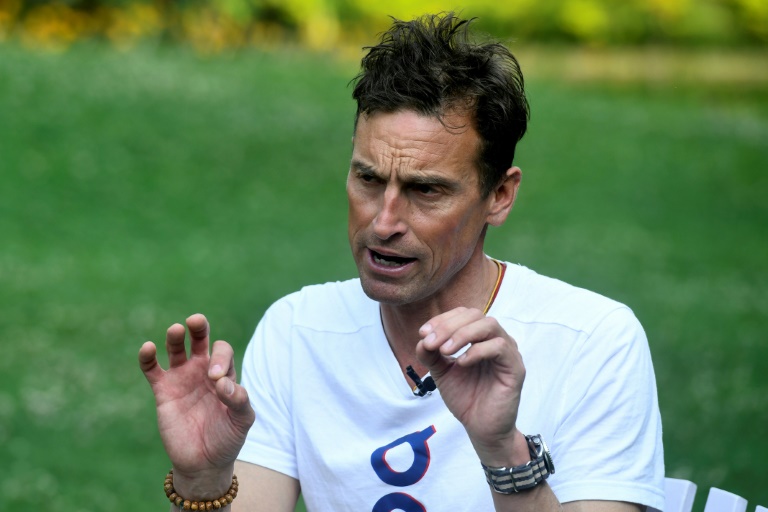
'Not that amazing', says record-breaking Everest climber

British climber Kenton Cool made headlines around the world this week for reaching the summit of Mount Everest for the 16th time, the most of any non-Nepali climber — but says his title is largely meaningless. 

Mountain guide Cool, 48, first climbed Everest in 2004 and has since had an expedition almost every year taking clients up the world’s highest peak.

His 15th summit last year tied him with American Dave Hahn for the most summits by a non-Nepali climber, and his latest ascent gave him the title alone. 

But he told AFP he was “surprised” by the attention. 

“In reality, it’s not that amazing,” he said. “I’m really surprised by the interest in my 16th ascent, considering that so many of the Sherpas have so many more ascents.”

Nepali guides — usually ethnic Sherpas from the valleys around Everest — are considered the backbone of the climbing industry in the Himalayas for bearing huge risks to carry equipment and food, fix ropes and repair ladders.

Most of them have multiple Everest summits under their belt — Cool’s own long-time Nepali climbing partner Dorje Gyalgen Sherpa made it to the summit with him, for his 20th ascent.

And this month, Nepali climber Kami Rita Sherpa extended his record as the person with the most Everest summits with 26 ascents as he opened the route for other climbers. 

“People go ‘it’s a world record’, it’s not a world record,” Cool said Thursday. 

“It’s just that I happen to hold the non-Sherpa record, for whatever that is worth, which in my mind, (is) not very much.”

Still, he added that every summit was magical. 

“It’s work, it is how earn my money, I am an Everest guide. But more than that I love Nepal… and I love the mountains, it has been very kind to me over the years.”

The climber had been told he would not walk again unaided after a rock-climbing accident in 1996 that broke both his heel bones, but his mountaineering career has confounded predictions.   

In 2013, he and Dorje Gyalgen Sherpa became the first people to complete the Everest triple crown, comprising Everest, Lhotse and Nuptse, in one push without returning to base camp.

Long under the shadow as supporters of foreign climbers, Nepali mountaineers are slowly being recognised in their own right.

Last year, a team of Nepali climbers made the first winter ascent of the world’s second-highest peak K2 — the notoriously challenging 8,611-metre (28,251-feet) “savage mountain” of Pakistan.

“In the past, Nepali climbers climbed only for the sake of work,” said Ang Tsering Sherpa of Nepal Mountaineering Association. “But the younger generation is educated, many climb by choice and are being recognised better.”  

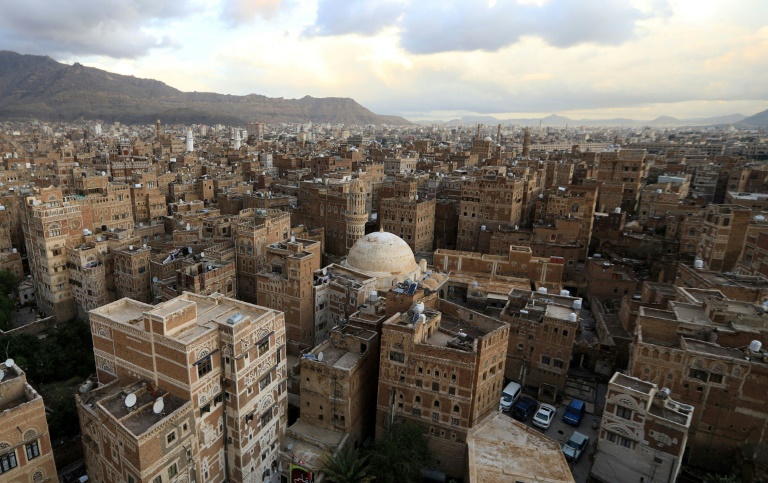
Amnesty urges Yemen rebels to free journalists on death row

Amnesty International has urged Yemen’s Huthi rebels to free four journalists facing the death penalty for “espionage” in the war-torn country, ahead of an appeal court hearing on Sunday. 

The four, Abdul Khaleq Amran, Tawfiq al-Mansouri, Harith Hamid and Akram al-Walidi were arrested in June 2015 in Yemen’s rebel-held capital Sanaa.

“Yemen’s Huthi de facto authorities must quash the death sentences and order the immediate release of four Yemeni journalists who are facing execution following a grossly unfair trial,” the rights group said in a statement on Friday. 

The Iran-backed Huthis seized Sanaa from the internationally recognised government in 2014, prompting the intervention of a Saudi-led military coalition to support the government.

In April 2020, a Huthi court sentenced the four journalists to death on charges of “treason and spying for foreign states”. 

“This has been a sham of a trial since the beginning and has borne a terrible toll on the men and their families,” said Amnesty’s Middle East and North Africa deputy director Lynn Maalouf, according to the statement. 

One of the detained men, Mansouri, is in a “critical health condition” with heart and other ailments, Amnesty said.

“Pending their overdue release, the journalists must be provided with urgent medical care — the denial of medical treatment for the seriously ill is an act of cruelty which amounts to torture and other ill-treatment,” the statement said.

At the time of their trial, Amnesty criticised their sentencing on “trumped-up charges”, while Reporters Without Borders called the verdict “totally unacceptable”.

Their arrest was motivated by their reporting on “human rights violations committed by Huthi forces,” the International Federation of Journalists and the Yemeni Journalists’ Syndicate have said.

An appeal will be heard by the Specialised Criminal Appeals Division in Sanaa on Sunday.

Hundreds of thousands of Yemenis have lost their lives and millions been displaced during the war, in what the United Nations has called the world’s worst humanitarian crisis.

Close Bitnami banner
Bitnami