World

Ukraine orders end to defence of Mariupol

Ukraine on Friday ordered its remaining troops holed up in Mariupol’s besieged Azovstal steelworks to lay down their arms after nearly three months of desperate resistance.

Russia’s flattening of the strategic port city has drawn multiple accusations of war crimes, including a deadly attack on a maternity ward, and Ukraine has begun a reckoning for captured Russian troops.

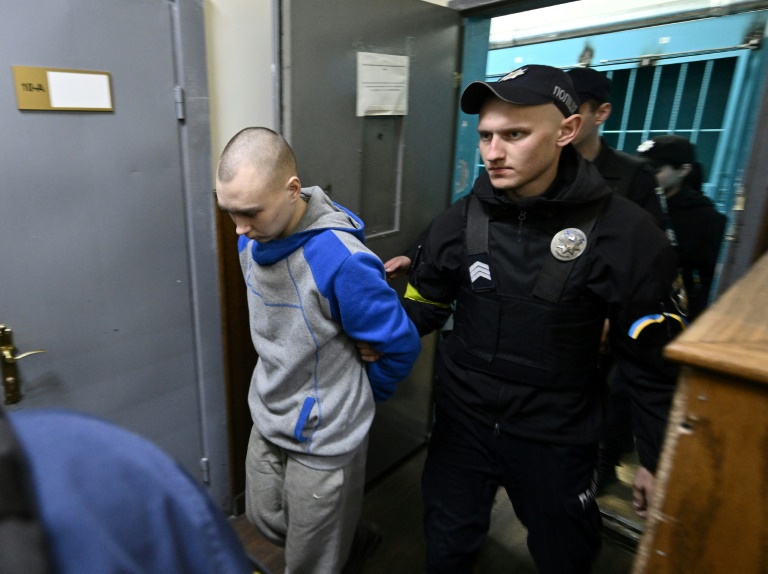
The first post-invasion trial of a Russian soldier for war crimes neared its closely watched climax in Kyiv, after 21-year-old sergeant Vadim Shishimarin admitted to killing an unarmed civilian early in the offensive. The verdict is due on May 23. 

Shishimarin told the court on Friday that he was “truly sorry” but his lawyer said in closing arguments that the young soldier was “not guilty” of premeditated murder and war crimes.

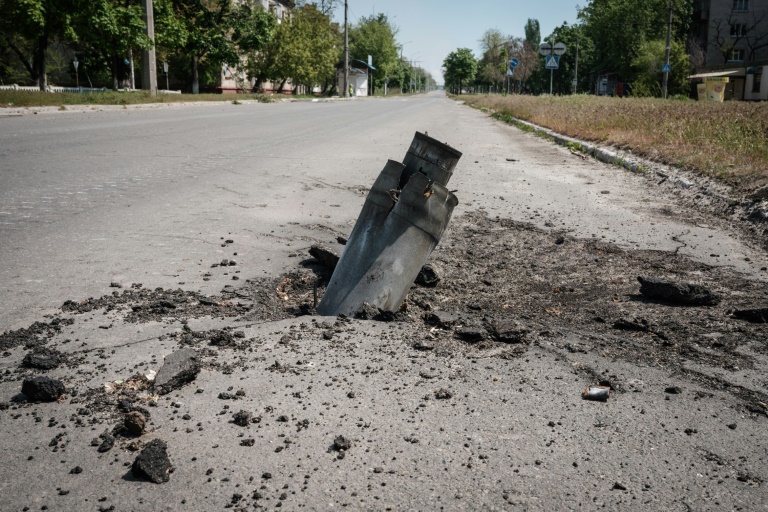
While Ukrainian forces fended off the Russian offensive around Kyiv, helped by a large infusion of Western arms, both eastern Ukraine and Mariupol in the south have borne the brunt of a ferocious ground and artillery attack.

President Volodymyr Zelensky’s government received a fresh boost as the US Congress approved a $40-billion (38-billion-euro) aid package, including funds to enhance Ukraine’s armoured vehicle fleet and air defence system.

And meeting in Germany, G7 industrialised nations pledged $19.8 billion to shore up Ukraine’s shattered public finances.

Ukraine sorely needs enhanced capability to fend off the kind of onslaught Russia is waging in the eastern region of Donbas, a Russian-speaking area that has been partially controlled by pro-Kremlin separatists since 2014.

“In Donbas, the occupiers are trying to increase pressure,” Zelensky said in his nightly video address late on Thursday. “There’s hell — and that’s not an exaggeration.”

In the eastern city of Severodonetsk, 12 people were killed and another 40 wounded by Russian shelling, the regional governor said.

– Burial with honours –

Zelensky described the bombardment of Severodonetsk as “brutal and absolutely pointless”, as residents cowering in basements described an unending ordeal of terror.

The city forms part of the last pocket of Ukrainian resistance in Lugansk, which along with the neighbouring region of Donetsk comprises the Donbas war zone.

Russian Defence Minister Sergei Shoigu said his forces’ campaign in Lugansk was “nearing completion”.

Also apparently complete is the capture of the Azovstal steelworks, a totemic symbol of Ukraine’s dogged resistance since Russian President Vladimir Putin launched the invasion on February 24 to remove a Western-leaning, “Nazi” threat on his borders.

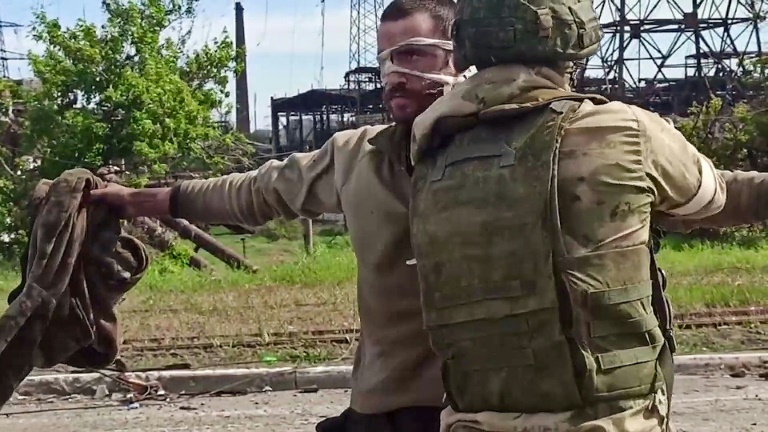
Russia released a video appearing to show exhausted Ukrainian soldiers trudging out of the sprawling steel plant, after weeks during which the besieged defenders and civilians huddled in tunnels, enduring shortages of food, water and medicine.

“The higher military command has given the order to save the lives of the soldiers of our garrison and to stop defending the city,” Azov battalion commander Denys Prokopenko said in a video on Telegram.

He said efforts continued to remove killed fighters from the plant.

“I now hope that soon, the families and all of Ukraine will be able to bury their fighters with honours,” he said.

Ukraine is hoping to exchange the surrendering Azovstal soldiers for Russian prisoners. But in Donetsk, the pro-Kremlin authorities are in turn threatening to put some of them on trial.

“Our expectation is … that all prisoners of war will be treated in accordance with the Geneva Convention and the law of war,” Pentagon spokesman John Kirby said in Washington.

US President Joe Biden has cast the Ukraine war as part of a great US-led struggle of democracy against authoritarianism.

Biden offered “full, total, complete backing” to Finland and Sweden in their bid to join the NATO military alliance, when he gave their leaders a red-carpet welcome at the White House on Thursday.

– ‘We’re not idiots’ –

But all 30 existing NATO members need to agree on any new entrants and Turkey has condemned the historically non-aligned Nordic neighbours’ alleged toleration of Kurdish militants.

Shoigu said the Kremlin would respond to any NATO expansion by creating more military bases in western Russia.

As well as redrawing the security map of Europe, the conflict has sent shockwaves through the global economy, especially in energy and food markets.

Russia and Ukraine produce 30 percent of the world’s wheat supply and the war has sent food prices surging. Russia is also a major exporter of fertiliser.

United Nations Secretary-General Antonio Guterres warned the war could trigger years of “famine” in poorer parts of the world.

Washington urged Russia to allow exports of Ukrainian grain held up at Black Sea ports.

But former Russian president Dmitry Medvedev blamed the West.

“On the one hand, insane sanctions are being imposed against us. On the other hand, they are demanding food supplies,” he said. “Things don’t work like that. We’re not idiots.” 

burs-jit/gil
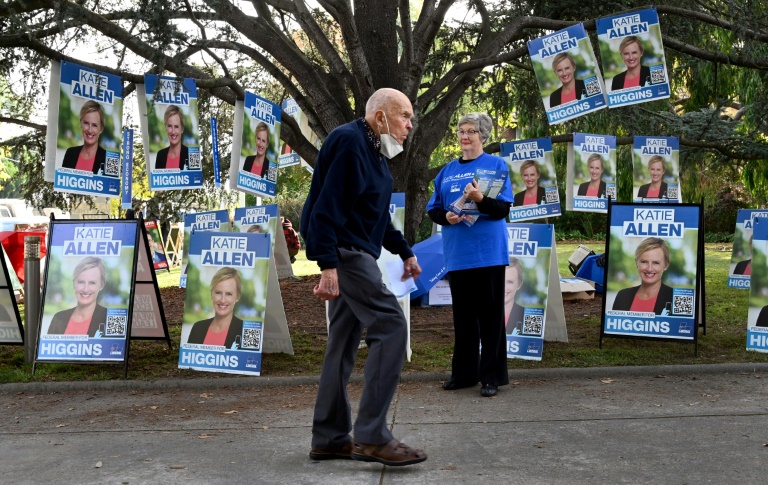
Candidates criss-cross Australia on eve of 'close' election

Anthony Albanese, the centre-left frontrunner to become Australia’s next prime minister, predicted a “close” result in Saturday’s election, as he barnstormed the country in a bid to end a decade of conservative rule.

Wrapping a four-state pre-election blitz, Albanese closed his campaign saying Australians “want some honesty in politics” and were “over” soundbites offered by Prime Minister Scott Morrison.

More than 17 million Australians are registered to vote in an election that will decide who controls the House of Representatives, the Senate and whether Morrison gets three more years in the prime minister’s “Lodge”.

Two final polls put Labor six points ahead of Morrison’s Liberal-led coalition, but with the race narrowing and neither party assured of an outright victory.

More than seven million people have already cast early or postal ballots, according to the Australian Electoral Commission.

Albanese said a Labor victory would bring “transformative” environmental policy that would “end the climate wars” that have made Australia a global laggard in tackling carbon emissions.

Speaking in Adelaide, Albanese welled up as he reflected on his personal journey — from the son of a single mum living in Sydney public housing to the threshold of the highest office in the land.

“It says a lot about this country,” he said, voice cracking with emotion. “That someone from those beginnings… can stand before you today, hoping to be elected prime minister of this country tomorrow.”

If elected, Albanese notes he would be the first Australian with a non-Anglo or Celtic surname to be prime minister.

But he is up against a tough campaigner in incumbent Morrison, who defied the polls three years ago in what he termed a “miracle” election.

Speaking in Western Australia, Morrison admitted his compatriots go into election day “fatigued and tired” having endured three years of bushfires, droughts, floods and the pandemic.

“I understand that frustration,” he said, while pounding out the same message that defied the odds last time: Labor cannot be trusted on the economy.

– ‘Not up to the job’ –

Morrison has characterised Albanese as a “loose unit” because of his high-profile gaffes, notably forgetting the national jobless rate when quizzed by reporters.

“This is the sort of stuff that prime ministers need to know,” Morrison said in an interview Friday as he campaigned in Western Australia.

“We have seen that he is not up to the job and it’s bigger than him.”

Morrison boasted of new data showing Australia’s unemployment rate fell to a 48-year low of 3.9 percent in April as an “extraordinary achievement” that showed his plan was working.

Both sides are trying to woo voters fretting about the rising cost of living, with annual inflation shooting up to 5.1 percent and wages failing to keep up in real terms.

In a country scarred by ever-fiercer natural disasters, Labor is promising to do more to help the environment.

Morrison has resisted calls to cut carbon emissions faster by 2030 and supports mining and burning coal into the distant future to boost the economy.

In wealthy suburban areas, many voters are being wooed by a band of more than 20 independent candidates, mostly women, offering conservative policies coupled with strong action on climate change.

Albanese has also promised strong action on corruption — after Morrison failed to deliver a promised federal anti-graft watchdog. 

He has branded Morrison’s administration the “least open, least fair dinkum government in Australian political history”.

– Covid-19 voting fix –

In the final days before the vote, Morrison’s economic warnings appear to have whittled down the polling lead enjoyed by Labor. 

But all surveys still show Morrison’s coalition lagging.

An Ipsos poll released late Thursday and a YouGov/Newspoll released Friday gave Labor a 53-47 percent lead over the coalition on a two-party preferred basis.

Registered voters are required by law to cast a ballot to avoid an Aus$20 (US$14) fine.

But in the first Australian federal vote since Covid-19 spread across the world, election officials rushed through a last-minute change in the rules to allow more infected people to cast a vote by telephone.

Besides the economy, the six-week election campaign has focused heavily on trust.

Morrison’s honesty has been questioned by his own allies and even French President Emmanuel Macron, who felt deceived by Australia’s decision to abandon a lucrative French submarine contract.

– ‘Bulldozer’ –

Morrison has admitted he can be a “bulldozer”, saying: “I know there are things that are going to have to change with the way I do things.”

Albanese, in turn, has been criticised for a stumbling performance when questioned on the details of policy by reporters.

The election campaign has also delivered lighter moments.

Three days before the vote, Morrison barrelled into a young boy, sending both crashing to the ground during a friendly children’s football game in Tasmania.

The following day, Australia’s employment minister, Stuart Robert, appeared to deflect blame for the incident from the prime minister: “There was a high five afterwards, so it was just an error from both of them,” he said.

Biden begins Asia trip in S. Korea, under North nuclear shadow

US President Joe Biden arrived in South Korea Friday, his first Asia trip as US leader, aiming to cement ties with regional security allies despite growing fears of a North Korean nuclear test.

Biden wants the trip to boost a years-long US pivot to Asia, where rising Chinese commercial and military power is undercutting Washington’s dominance.

He received a warm welcome from South Korea’s new President Yoon Suk-yeol, but there is growing concern that North Korea’s unpredictable leadership could conduct a nuclear test while he is in the region.

There is a “real risk of some kind of provocation”, US National Security Advisor Jake Sullivan said, as South Korean intelligence warned this week that Pyongyang had completed preparations for a nuclear test.

Biden, in his first remarks since arriving in South Korea at the start of a trip meant to demonstrate US resolve to lead in Asia, said the two countries’ alliance was “a lynchpin of peace, stability and prosperity” in the world.

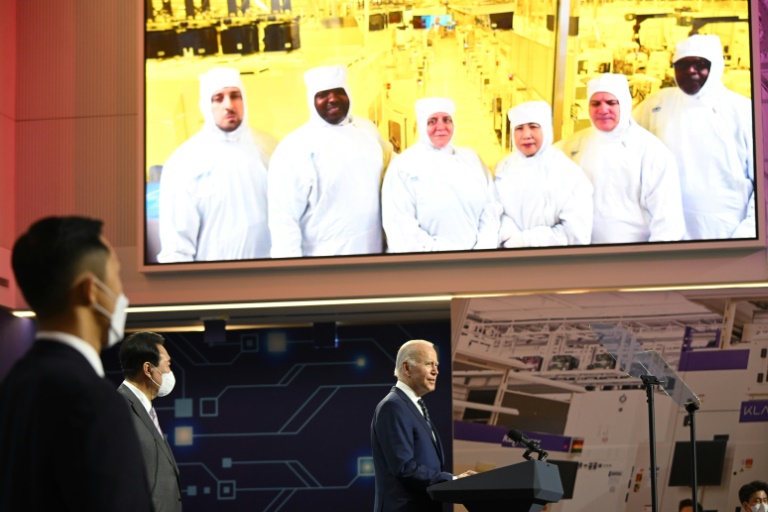
Speaking at a huge Samsung semiconductor factory in Pyeongtaek, alongside Yoon, Biden described the advanced chips manufactured there as “a wonder of innovation” and crucial to the world’s economy.

The tiny, smart wafers “enable our modern lives” and are “the key to propelling us into the next era of humanity’s technological development”, he added.

– ‘Don’t forget to vote’ –

Semiconductors — the microchips essential to most modern devices from phones to cars and high-tech weapons — are at the heart of a global supply chain slowdown that threatens to disrupt the world’s post-Covid economic recovery.

South Korea and the United States need to work to “keep our supply chains resilient, reliable and secure”, Biden said.

For the US leader, whose Democratic Party faces a severe pounding in midterm elections this year, the issue is also an acute domestic political challenge, with Americans increasingly frustrated over rising prices and stuttering economic reopening.

Ahead of the speech, Biden toured the huge Samsung plant, taking in lengthy presentations from staff clad in hazmat suits on the equipment used to produce semiconductors.

After a briefing from a US representative from a California company working with Samsung, Biden quipped: “Don’t forget to vote Peter.”

Samsung employs about 20,000 people within the United States and work is underway to build a new semiconductor plant in Texas, opening in 2024.

South Korea is a semiconductor powerhouse, supplying about 70 percent of chips globally, Yoon said in his speech.

Biden’s visit could help the two allies forge a new “economic and security alliance based on advanced technology and supply-chain cooperation”, Yoon said.

“Semiconductors became something akin to a strategic commodity now,” Vladimir Tikhonov, professor of Korean studies at the University of Oslo, told AFP. 

China is trying to reduce reliance on US-influenced Dutch and Taiwanese suppliers, and the United States is trying to rebuild its domestic industry, he said.

Biden “needs Samsung’s collaboration in this regard”, he added.

– North Korea nukes –

Security issues were not top of the agenda Friday, but the fact that Biden is visiting Seoul first on his Asia tour indicates that Washington is looking to re-focus on the Korean Peninsula, Soo Kim, a former CIA analyst, told AFP.

Both Seoul and Washington may be looking to “bridge the policy gap” and plan how the security allies could better coordinate to address challenges in the region and beyond, Kim, now with the RAND Corporation, said.

Biden heads to Japan from South Korea on Sunday. He will hold talks with the leaders of both countries, as well as joining a regional summit of the Quad — a grouping of Australia, India, Japan and the United States — while in Tokyo.

Sullivan said ahead of the trip that Biden is bound for Asia with “the wind at our back” after successful US leadership in the Western response to President Vladimir Putin’s now almost three-month-long invasion of Ukraine.

The high military, diplomatic and economic cost imposed on Russia is seen in Washington as a cautionary tale for China, given Beijing’s stated ambitions to gain control over democratic Taiwan, even if that means going to war.

Sullivan said the administration wants not so much to confront China on the trip as to use Biden’s diplomacy to show that the West and its Asian partners will not be divided and weakened.

“We hope that the US will match its words with its deeds,” Wang Wenbin, a spokesman for China’s foreign ministry, said Friday.

The United States should “work with other countries in the region to promote unity and cooperation in Asia-Pacific, instead of plotting division and confrontation”, he added.

Stock markets rebound on China rate cut

Asian and European stocks rebounded Friday on China’s interest rate cut, after sinking the previous day on fears that sky-high inflation would spark a global downturn.

“Markets have been looking for an excuse to bounce, and a China rate cut provided the reason,” IG analyst Chris Beauchamp told AFP.

“It isn’t much when set against the broader (rate) tightening we are seeing globally, but equities do look a bit stretched to the downside in the short term.”

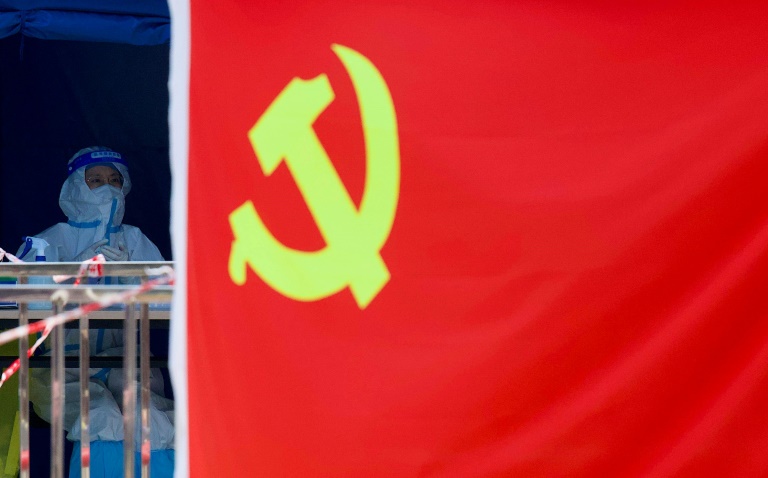
China’s central bank announced it would lower its five-year loan prime rate — a key interest rate governing how lenders base their mortgage rates — to 4.45 percent from 4.6 percent.

That injected optimism among traders that it could boost the world’s second-largest economy from Covid-induced stupor.

The news comes in contrast to other major central banks — like the US Federal Reserve and the Bank of England — that are raising borrowing costs to combat rocketing consumer prices.

European equities were buoyed Friday also by a surprise jump in UK retail sales last month, despite the nation’s inflation striking a 40-year peak of nine percent.

“European markets are staging gains to round up a hectic week for markets,” said Victoria Scholar, head of investment at trading firm Interactive Investor.

Markets had taken a beating Thursday on intensifying recession worries.

Wall Street has faced the brunt of selling, suffering its worst batterings in two years over the past couple of sessions.

Downcast earning reports from retailers have heightened market uncertainty at a time of rising interest rates, surging energy prices, China’s Covid lockdowns and Russia’s ongoing war on Ukraine.

– Rollercoaster ride –

“It has been a rollercoaster ride for markets this week after Thursday’s bloodbath when US equities suffered their worse session since 2020 with that negativity reverberating across global stock markets,” added Scholar.

World oil prices edged lower as traders paused for breath at the end of a volatile trading week.

In Paris, EDF shares rose two percent to 8.46 euros despite announcing even more delays and vast cost over-runs for its planned giant nuclear plant in southwest England.

The French energy giant revealed Thursday that the cost will balloon to as much as £26 billion — and not begin generating electricity until June 2027.

Hinkley Point C, which aims to provide seven percent of Britain’s total power needs, had previously been expected to cost up to £23 billion with a start-up date of one year earlier.

EDF said in its statement that there would be no additional cost to British consumers.

– Key figures at around 1100 GMT –

London – FTSE 100: UP 1.9 percent at 7,437.83 points

Frankfurt – DAX: UP 1.8 percent at 14,133.45

Paris – CAC 40: UP 1.4 percent at 6,358.04

EURO STOXX 50: UP 1.6 percent at 3,700.34

Hong Kong – Hang Seng Index: UP 3.0 percent at 20,717.24 (close)

Shanghai – Composite: UP 1.6 percent at 3,146.57 (close)

Tokyo – Nikkei 225: UP 1.3 percent at 26,739.03 (close)

New York – Dow: DOWN 0.8 percent at 31,253.13 (close)

Brent North Sea crude: DOWN 0.2 percent at $111.77 per barrel

West Texas Intermediate: DOWN 0.3 percent at $111.84 per barrel

Euro/dollar: DOWN at $1.0579 from $1.0588

Pound/dollar: UP at $1.2471 from $1.2467

Euro/pound: DOWN at 84.84 pence from 84.93 pence

Dollar/yen: UP at 127.90 yen from 127.79

burs-rfj/bcp/lth

Hungary's neutral war stance puts off Ukraine refugees

Like Kristina Novytska, most Ukrainian refugees in Hungary are keen to leave the country, whose nationalist leader’s neutral stance on the war is an exception in the EU.

“I like Hungary so much… but I also saw how the Hungarian government thinks about us,” Novytska told AFP at The Workshop, a shelter for refugees run by a Budapest resident.

The 39-year-old fashion designer fled Kyiv with her two-year-old daughter soon after Russia invaded Ukraine and now wants to look for work in an English-speaking country. 

Despite Hungarian government claims of providing for hundreds of thousands of refugees, only an estimated 10 to 20 percent of Ukrainians stay more than a few days, according to relief organisations.

Personal networks abroad, language and job prospects are key in refugees’ decisions where to go, aid organisations say.

But nationalist Prime Minister Viktor Orban’s neutral stance on the war, as well as his moves to dismantle the system supporting asylum seekers and refugees are additional push factors.

– ‘Uncomfortable’ –

“It’s as if the government would like refugees in general to avoid Hungary,” said Viktoria Horvath of Migration Aid, which runs a help desk in the government-run BOK aid centre in Budapest. 

In the vast centres, dozens of volunteer staff outnumber refugees by far.

United Nations data estimates that more than 620,000 Ukrainian refugees have crossed into Hungary since the invasion on February 24.

But according to official Hungarian data, only around 20,000 have applied for “temporary protection” that grants them access to the local health and social insurance systems.

In the days after the invasion, Orban described Hungary as “a good friend of Ukraine” and said his government would help Ukrainians — contrary to its usual anti-refugee stance that has seen the country push back on asylum seekers, mostly from the Middle East and Africa.

At the same time, Orban, who has sought close ties with Vladimir Putin in recent years, has avoided naming the Russian leader as being responsible for the war.

Orban has sent aid to Ukraine, but he has refused to send weapons, saying it could draw Hungary into the conflict.

This “stay out” approach is seen as having propelled him to a fourth straight term in office in another landslide win last month.

His stance has not won him praise among the leadership in Kyiv. 

Ukrainian President Volodymyr Zelensky told Orban in a video message in March that “once and for all, you should decide who you are with”.

Hitting back during an election day victory speech on April 3, Orban described Zelensky as an opponent, a remark met by cheers from his supporters.

Most recently, Orban has said he would not be able to support an EU oil embargo, citing Hungary’s dependence on Russian imports.

“Ukrainians do tend to feel uncomfortable here,” said Anya Yelina, a university dance and choreography teacher from Kyiv, who came to Hungary in early March. 

“The problem is that Orban is pro-Russian, and everyone among the refugees is talking about it constantly,” added the 25-year-old, whose brother has worked in Hungary for three years but now also wants to leave.

– ‘Demolished’ asylum system –

Some of the animosity is rooted in the two countries’ recent history.

Budapest has in recent years complained about what it sees as discrimination of a large Hungarian minority in western Ukraine, discouraging them to speak their language.

Since the invasion, pro-Russian narratives relativising Moscow’s aggression have also been prominent on Hungary’s heavily pro-Orban public media.

“There are millions of people (in Hungary) watching TV channels or reading news that are actually following the Kremlin line,” Patrik Szicherle, an analyst, told AFP.

In a poll last month, market researcher Ipsos found that 67 percent of Hungarians agree that “the problems of Ukraine are none of our business, and we should not interfere”. 

It was among the highest of the 27 countries polled, and well above the average of 39 percent. 

Unlike in nearby Poland or the Czech Republic, there have also been no large solidarity rallies against Russia’s invasion.

The problem for Ukrainian refugees is also institutional. 

Hungary “demolished” its asylum system in recent years, which makes it harder for Ukrainians to integrate, according to Aniko Bakonyi of the Hungarian Helsinki Committee, a refugee rights group.

Since 2015, fences were built on Hungary’s southern borders, and refugee camps shuttered.

Police are also obliged by law to physically “push back” migrants across the borders, while asylum seekers since 2020 can only submit applications at embassies abroad.

“The open border with Ukraine and humanitarian aid is the right way, but refugees need to see a perspective, and a holistic system of services to integrate in a new home,” Bakonyi said. 

Bear cubs rescued from wildlife trade in Vietnam

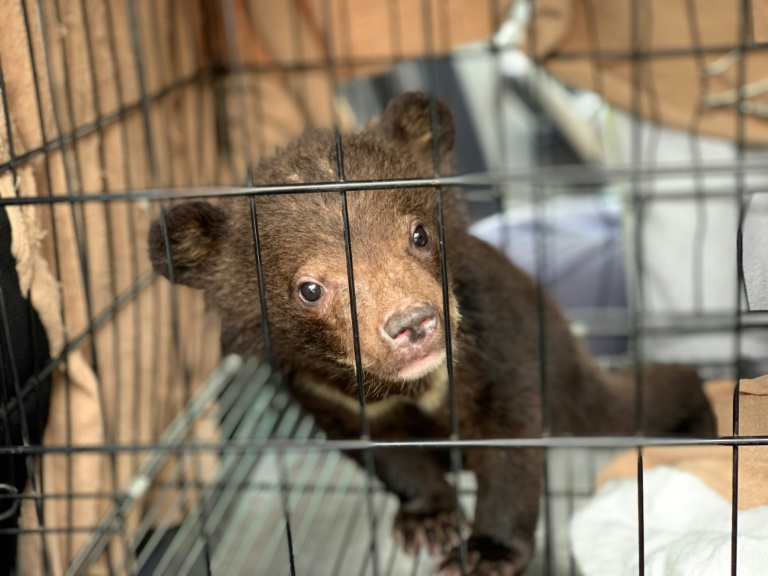
Two bear cubs are starting a new life in a sanctuary in Vietnam after being rescued from the illegal wildlife trade, an animal welfare group said Friday.

The two sisters, named Be and Em, were confiscated by authorities from a man who admitted catching them in a cardamom field with a plan to sell them, the Four Paws organisation said.

Communist Vietnam is a major hub for the illegal trade in wild animals, and bears are kept to drain the bile from their gall bladders for use in traditional medicine.

The rescued cubs have been taken to a sanctuary in Vietnam run by Four Paws, where they will be reared and spend the rest of their lives.

They cannot be returned to nature because there are no safe places for bears in Vietnam and no projects to reintroduce them to the wild.

“At the moment they mostly eat, play, and sleep but we can already see their individual personalities showing,” Emily Lloyd, Animal Manager at the sanctuary, said in the Four Paws statement.

“Be is very playful and confident, while Em for now is more reserved but nonetheless curious.”

Four Paws said the sanctuary has hand-raised five bears rescued from similar circumstances in recent years.

Vietnam has passed laws to try to curb the wildlife trade but enforcement is patchy and Four Paws said the bear bile business was “flourishing”.

Ukraine slams Russian attacks on Donbas 'hell'

Incessant bombardment has turned Ukraine’s Donbas region into “hell”, President Volodymyr Zelensky said, as the first post-invasion trial of a Russian soldier for war crimes neared its closely watched climax Friday.

Zelensky’s government received a fresh boost as the US Congress approved a $40 billion aid package, including funds to enhance Ukraine’s armoured vehicle fleet and air defence system.

Ukraine sorely needs enhanced capability to fend off the kind of onslaught Russia is waging in the eastern region of Donbas, a Russian-speaking area that has been partially controlled by pro-Kremlin separatists since 2014.

“In Donbas, the occupiers are trying to increase pressure,” Zelensky said in his nightly video address late Thursday. “There’s hell, and that’s not an exaggeration.”

In the eastern city of Severodonetsk, 12 people were killed and another 40 wounded by Russian shelling, the regional governor said.

Zelensky described the bombardment of Severodonetsk as “brutal and absolutely pointless”, as residents cowering in basements described an unending ordeal of terror.

The city forms part of the last pocket of Ukrainian resistance in Lugansk, the smaller of two regions comprising the Donbas war zone.

Russian Defence Minister Sergei Shoigu said his forces’ campaign in Lugansk was “nearing completion”.

Indiscriminate bombardment and cold-blooded targeting of civilians feature heavily in a growing charge-sheet of alleged war crimes conducted by Russians in Ukraine.

– ‘Truly sorry’ –

Vadim Shishimarin, the first Russian soldier to face trial in Kyiv, has admitted to killing an unarmed civilian and told the court on Friday that he was “truly sorry”. 

But Shishimarin’s lawyer Viktor Ovsyannikov said in closing arguments that the 21-year-old sergeant was “not guilty” of premeditated murder and war crimes.

“I ask you to acquit my client,” Ovsyannikov told the judges, who are expected to deliver their verdict on Monday. Shishimarin faces a possible life sentence.

The Russian shot dead Oleksandr Shelipov, 62, four days into the invasion, purportedly to avoid the civilian giving away his unit’s position after they had stolen a car. 

In Donetsk, the pro-Kremlin authorities are in turn threatening to put on trial some of the Ukrainian soldiers who held out for weeks in dire conditions at the Azovstal steel plant in the southern port city of Mariupol.

Ukraine is hoping instead to exchange the Azovstal soldiers for Russian prisoners.

A total of 1,908 Ukrainian troops have surrendered this week at the steelworks, according to Moscow, signalling the effective end of what Kyiv had called a “heroic” resistance.

Russia released a video appearing to show exhausted Ukrainian soldiers trudging out of the sprawling plant, after a siege forced the defenders and civilians to huddle in tunnels, enduring shortages of food, water and medicine.

“Our expectation is… that all prisoners of war will be treated in accordance with the Geneva Convention and the law of war,” Pentagon spokesman John Kirby said in Washington.

US President Joe Biden has cast the Ukraine war as part of a great US-led struggle of democracy against authoritarianism.

Biden offered “full, total, complete backing” to Finland and Sweden in their bid to join NATO, as he gave their leaders a red-carpet welcome at the White House on Thursday.

– ‘We’re not idiots’ –

But all 30 existing NATO members need to agree on any new entrants, and Turkey has condemned the historically non-aligned Nordic neighbours’ alleged toleration of Kurdish militants.

The United States and NATO’s chief expressed confidence of overcoming Turkish objections. And in Finland, one brewery has already crafted a special NATO beer.

It tastes of “security, with a hint of freedom”, brewer Petteri Vanttinen said.

Shoigu said the Kremlin would respond to any NATO expansion by creating more military bases in western Russia.

As well as redrawing the security map of Europe, the conflict has sent shockwaves through the global economy, especially in energy and food markets.

Russia and Ukraine produce 30 percent of the world’s wheat supply and the war has sent food prices surging. Russia is also a major exporter of fertiliser.

UN Secretary-General Antonio Guterres warned the war could trigger a years-long “famine” in poorer parts of the world.

Washington called on Russia to allow exports of Ukrainian grain held up at Black Sea ports.

But Russia’s former president Dmitry Medvedev blamed the West.

“On the one hand, insane sanctions are being imposed against us, on the other hand, they are demanding food supplies,” he said. “Things don’t work like that, we’re not idiots.” 

burs-jit/ach 

War in Ukraine: Latest developments

Here are the latest developments in the war in Ukraine:

– ‘Hell’ in Donbas –

The renewed Russian offensive in Donbas has turned the eastern Ukrainian region into “hell”, President Volodymyr Zelensky says.

“In Donbas, the occupiers are trying to increase pressure,” Zelensky says in his nightly address.

“There’s hell, and that’s not an exaggeration.”

Moscow’s forces are trying to take complete control of Donbas, a Russian-speaking area that has been partially controlled since 2014 by pro-Kremlin separatists.

– Russia homes in on Lugansk –

Russian Defence Minister Sergei Shoigu says Moscow is nearing full control of the separatist region of Lugansk in eastern Ukraine.

“The liberation of the Lugansk People’s Republic is nearing completion,” Shoigu says.  

He adds that 1,908 Ukrainian soldiers have surrendered at the besieged Azovstal steel plant in the port city of Mariupol, which is under Moscow’s control

– New Russian bases –

Shoigu also says Moscow will create new military bases in western Russia in response to the expansion of NATO. 

“By the end of the year, 12 military units and divisions will be established in the Western Military District,” Shoigu tells a meeting. 

– Soldier’s lawyer urges acquittal –

The lawyer for the first Russian soldier on trial in Kyiv says his client is “not guilty” of premeditated murder and war crimes, urging his acquittal, even though he has admitted to killing a civilian.

Shishimarinm, at the centre of the first war crimes trial held over the conflict, has said he is “truly sorry” and asked the widow of the Ukrainian civilian he killed for forgiveness.

Ukrainian prosecutors have requested he be given a life sentence.

– ‘Brutal’ bombardment of Severodonetsk –

The governor of the eastern Lugansk region says at least 12 people have been killed and 40 injured in Russian shelling of the city of Severodonetsk.

Severodonetsk has been the target of sustained bombardment in recent days as Russian forces attempt to capture the easternmost city still in Ukrainian hands.

– US Congress approves $40-billion aid package –

Congress approves a new $40-billion aid package for Ukraine, the latest tranche of US assistance for Kyiv in its fight against Russia’s invasion.

It is roundly approved by the Senate after being adopted by the House of Representatives last week.

– Turkey ‘determined’ to block NATO bids –

Turkish President Recep Tayyip Erdogan says he is “determined” to block Sweden and Finland’s bids to join NATO, calling Stockholm in particular a “complete terror haven”. 

Sweden and Finland applied for NATO membership, renouncing decades of military non-alignment, over fears they could be future targets of Russian aggression.

US President Joe Biden meets Finnish counterpart Sauli Niinisto and Sweden’s Prime Minister Magdalena Andersson in Washington to tell them their countries “meet every NATO requirement”.

– US, Russia generals speak –

Top US General Mark Milley speaks by telephone with his Russian counterpart General Valery Gerasimov, the Pentagon says, their first discussion since Russian forces invaded Ukraine in February.

Milley, the chairman of the Joint Chiefs of Staff, and Gerasimov, chief of the Russian General Staff, discuss “several security-related issues of concern”, according to a US JCS spokesman.

burs-qan/cdw/jv

UK finance minister makes rich list for first time

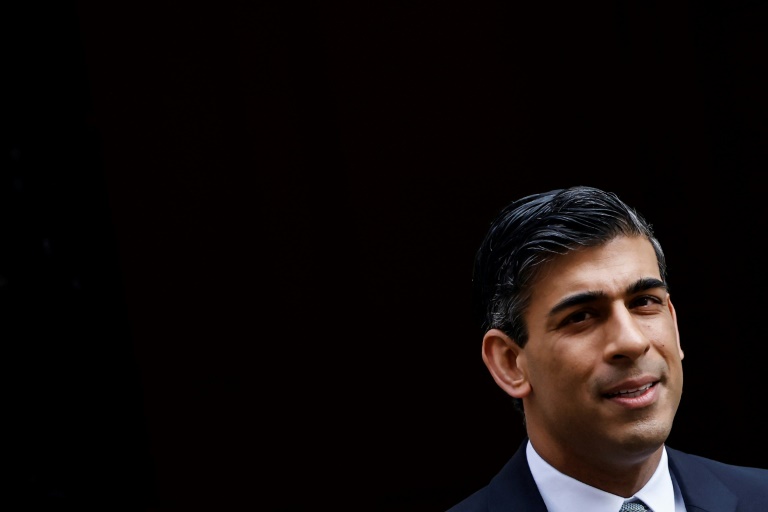
Finance minister Rishi Sunak became Friday the first high-profile British politician to make the Sunday Times Rich List, weeks after his family’s tax arrangements attracted controversy and amid a cost-of-living crisis.

Sunak and his Indian wife Akshata Murty, whose father co-founded the IT behemoth Infosys, made the annual list for the first time with their joint £730 million ($911 million, 861 million euros) fortune.

The bulk of their wealth is believed to come from Murty’s £690-million stake in Infosys, but Sunak also had a highly lucrative career in finance before entering politics in 2015.

The listing, which started in 1989, this year estimates the minimum wealth of Britain’s 250 richest people or families, and features far fewer Russian billionaires due to Western sanctions following the invasion of Ukraine.

Sunak’s inclusion comes a month after it was revealed that his wife was sheltered from paying tax on foreign earnings to his Treasury department after claiming so-called non-domiciled status.

The “non-dom” scheme has become controversial in recent years, particularly now that Britons face tax rises and the cost-of-living crisis, with some opposition parties calling for its abolition.

It has been estimated Murty’s non-dom status could have saved her £20 million in taxes on dividends from her shares in Infosys.

Soon after the revelations emerged, she announced she would start paying UK tax on “all worldwide income”, noting that she did not want her tax affairs to be a “distraction” for her husband.

Sunak has also faced persistent criticism for doing too little to help hard-pressed Britons as his once-rosy prospects of succeeding Prime Minister Boris Johnson have ebbed rapidly.

Critics have accused him of hypocrisy for raising taxes on people as various prices surge, while his own family has seen millions of pounds in Infosys dividends shielded from his own Exchequer.

Just this week, he warned in a keynote speech to business leaders that Britons faced a “tough” few months ahead, with inflation confirmed as the highest rate in decades at nine percent.

The Sunday Times’ list calculates identifiable wealth — land, property, racehorses, art or significant shares in publicly quoted companies — but is unable to measure bank account balances and small shareholdings in private equity portfolios.

Sri and Gopi Hinduja, who run the Mumbai-based conglomerate Hinduja Group, topped the latest ranking after their wealth grew by more than £11 billion to £28.47 billion.

Entrepreneur James Dyson and his family climbed to second with a wealth estimate of £23 billion.

However, one billionaire who headed in the opposite direction was Roman Abramovich.

The Russian former owner of Chelsea Football Club dropped from eighth to 28th after his finances plummeted from £12.2 billion last year to £6 billion this year in the wake of Western sanctions.

Crisis-hit Sri Lanka expands cabinet, but no finance minister

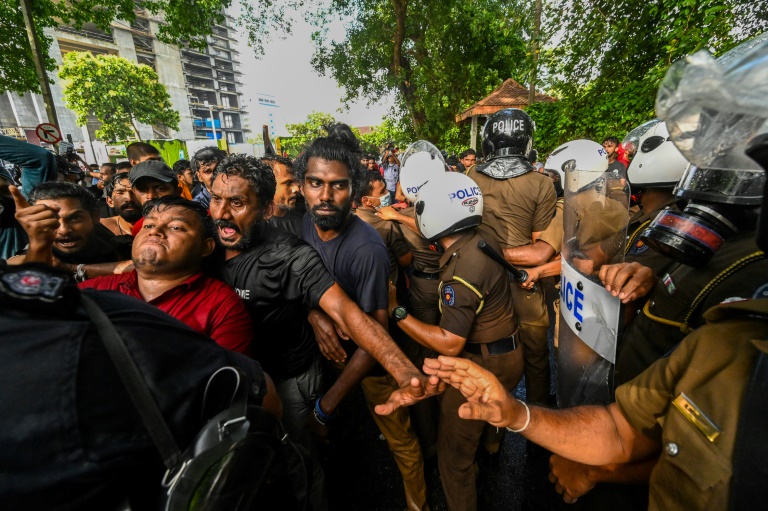
Cash-strapped Sri Lanka appointed nine more ministers Friday to an “all-party government” tasked with trying to steer the country out of its economic crisis, but the crucial finance portfolio remains vacant.

Prime Minister Ranil Wickremesinghe took over earlier this month after Mahinda Rajapaksa, the president’s elder brother, resigned as escalating protests blamed his administration for leading Sri Lanka’s economy to the brink of collapse. 

Wickremesinghe had pledged to put together a cross-party coalition after the previous cabinet was dissolved.

The new ministers — for health, education and justice, among others — were sworn in before President Gotabaya Rajapaksa at his tightly-guarded official residence in Colombo, the government said in a brief statement.

Two legislators from the main opposition SJB party broke ranks to join the new government. 

Another opposition party, the Sri Lanka Freedom Party, agreed to support President Rajapaksa and was given one portfolio on Friday.

The finance position — which will bring with it responsibility for leading negotiations with the International Monetary Fund over a bail-out — remains vacant. 

But the new prime minister’s office told AFP that someone would be appointed next week. 

The delay in getting a finance minister could hinder the IMF negotiations, the central bank chief warned on Thursday.

Sri Lanka is facing its worst-ever shortage of foreign exchange with the government unable to finance even the most essential imports such as food, fuel and medicines.

The country of 22 million people has been enduring severe economic hardships for months. 

Consumers have been unable to access petrol, diesel and cooking gas while staple food has been rationed. The country is also facing record inflation and lengthy daily electricity blackouts.

The government shut offices and schools on Friday as the petrol shortage crippled transport across the country.

But officials said the government had managed to raise the $53 million necessary to pay for a petrol shipment which arrived at the Colombo port this week.

Retail pumping stations could be supplied over the weekend, officials said.

The Central Bank of Sri Lanka announced Thursday that it will not be able to resume foreign debt repayments for at least another six months until the country’s external debt of $51-billion is restructured.

Close Bitnami banner
Bitnami