World

Nearly 60 mn people internally displaced worldwide in 2021

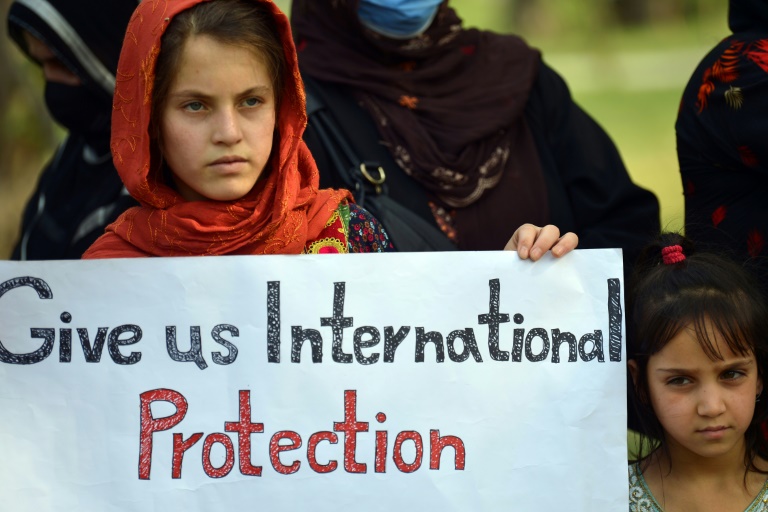
Conflicts and natural disasters forced tens of millions to flee within their own country last year, pushing the number of internally displaced people to a record high, monitors said Thursday.

Some 59.1 million people were registered as internally displaced worldwide in 2021 — an all-time record expected to be broken again this year amid mass displacement inside war-torn Ukraine.

Around 38 million new internal displacements were reported in 2021, with some people forced to flee multiple times during the year, according to a joint report by the Internal Displacement Monitoring Centre (IDMC) and the Norwegian Refugee Council (NRC).

That marks the second-highest annual number of new internal displacements in a decade after 2020, which saw record-breaking movement due to a string of natural disasters.

Last year, new internal displacements from conflict surged to 14.4 million — marking a 50-percent jump from 2020 and more than doubling since 2012, the report showed.

– ‘World is falling apart’ –

And global internal displacement figures are only expected to grow this year, driven in particular by the war in Ukraine.

More than eight million people have already been displaced within the war-ravaged country since Russia’s full-scale invasion began on February 24, in addition to the more than six million who have fled Ukraine as refugees. 

“2022 is looking bleak,” IDMC director Alexandra Bilak told reporters.

The record numbers seen in 2021, she said, marked “a tragic indictment really on the state of the world and on peace-building efforts in particular”.

NRC chief Jan Egeland agreed, warning: “It has never been as bad as this.”

“The world is falling apart,” he told reporters. 

“The situation today is phenomenally worse than even our record figure suggests.”

In 2021, sub-Saharan Africa counted the most internal movements, with more than five million displacements reported in Ethiopia alone, as the country grappled with the raging and expanding Tigray conflict and a devastating drought.

That marks the highest figure ever registered for a single country.

– ‘Titanic shift’ needed –

Unprecedented displacement numbers were also recorded last year in the Democratic Republic of Congo and Afghanistan, where the Taliban’s return to power, along with drought, saw many flee their homes.

In Myanmar, where the military junta seized power in a February coup last year, displacement numbers also reached a record high, the report found.

The Middle East and North Africa region recorded its lowest number of new displacements in a decade, as the conflicts in Syria, Libya and Iraq de-escalated somewhat, but the overall number of displaced people in the region remained high.

Syria, where civil war has been raging for more than 11 years, still accounted for the world’s highest number of people living in internal displacement due to conflict — 6.7 million — at the end of 2021.

That was followed by the DR Congo at 5.3 million, Colombia at 5.2 million, and Afghanistan and Yemen at 4.3 million.

Despite the hike in conflict-related displacement, natural disasters continued to account for most new internal displacement, spurring 23.7 million such movements in 2021.

A full 94 percent of those were attributed to weather and climate-related disasters, like cyclones, monsoon rains, floods and droughts.

Experts say that climate change is increasing the intensity and frequency of such extreme weather events.

China, the Philippines and India were hardest hit, together accounting for around 70 percent of all disaster-related displacements last year. 

Increasingly, conflict and disasters collide, creating a “complex quagmire of problems”, Egeland said, worsening risks and often forcing people to flee several times.

In places like Mozambique, Myanmar, Somalia and South Sudan, overlapping crises impact food security and heighten the vulnerabilities of millions.

“We need a titanic shift in thinking from world leaders on how to prevent and resolve conflicts to end this soaring human suffering,” Egeland said.
Biden set for first Asia trip with N. Korea nuclear fears looming

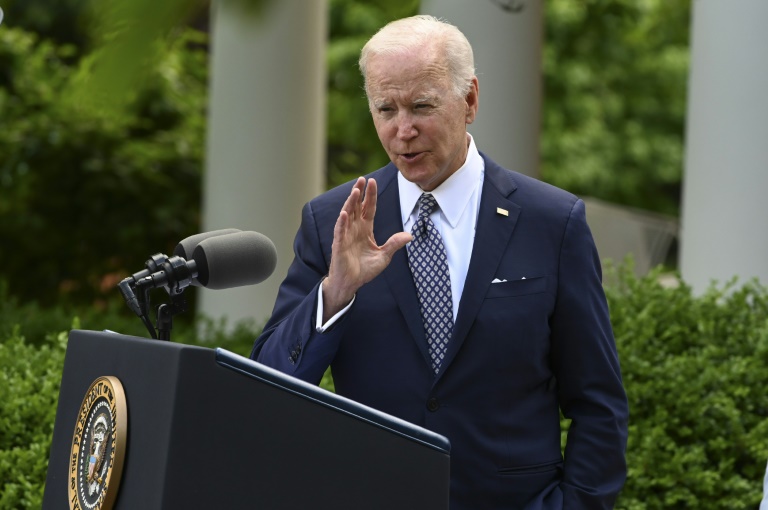
President Joe Biden leaves Thursday for South Korea and Japan to cement US leadership in Asia at a time when the White House’s attention has been pulled back to Russia and Europe — and amid fears of North Korean nuclear tests overshadowing the trip.

The visits are being touted as proof that the United States is building on recent moves to cement its years-long pivot to Asia, where rising Chinese commercial and military power is undercutting decades of US dominance.

But highlighting competing demands from two sides of the world, Biden will meet at the White House with the leaders of Finland and Sweden to celebrate their applications for joining NATO before he boards Air Force One for Seoul.

The Democrat is headed to South Korea, then Japan on Sunday to hold summits with the leaders of both countries, as well as joining a regional summit of the Quad — a grouping of Australia, India, Japan, and the United States — while in Tokyo.

During the first leg, he will visit US and South Korean troops, but will not make the traditional presidential trek to the fortified frontier known as the DMZ between South and North Korea, the White House said.

National Security Advisor Jake Sullivan insisted there was no “tension” between the European and Asian issues, calling them “mutually reinforcing.”

“There’s something quite evocative about going from meeting with the president of Finland and the prime minister of Sweden to reinforce the momentum behind the NATO alliance and the free world’s response to Ukraine, then getting on a plane and flying out to the Indo-Pacific,” Sullivan said.

– Taiwan lessons? –

Briefing reporters on Wednesday, Sullivan said Biden is bound for Asia with “the wind at our back” after successful US leadership in the Western response to President Vladimir Putin’s now almost three-month-long invasion of neighboring Ukraine.

The high military, diplomatic and economic cost imposed on Russia is seen in Washington as a cautionary tale for China to absorb, given its stated ambitions to gain control over democratic-ruled Taiwan, even if that means going to war.

Earlier this month, CIA Director William Burns said Beijing is watching “carefully.”

“I think they’ve been struck by the way in which particularly the transatlantic alliance has come together to impose economic costs on Russia as a result of that aggression,” he said.

Sullivan said the administration wants not so much to confront China on the trip as to use Biden’s diplomacy to show that the West and its Asian partners will not be divided and weakened.

He pointed to cooperation from South Korea and Japan, among others, in the sanctions regime against Russia led by European powers and the United States. He also referred to Britain’s role in the recently created security partnership AUKUS.

This “powerful message” will be “heard in Beijing,” Sullivan said, “but it’s not a negative message and it’s not targeted at any one country.”

– North Korean ‘provocations?’ –

Officials say North Korea’s nuclear weapons program is a wild card on the trip.

Sullivan said it was possible that North Korea, which has defied UN sanctions in conducting an array of nuclear-capable missile tests this year, could use Biden’s visit to stage “provocations.”

This could mean “further missile tests, long-range missile tests or a nuclear test, or frankly both, in the days leading into, on or after the president’s trip to the region,” he said.

The Biden administration is prepared to “make both short and longer-term adjustments to our military posture” in response.

Sullivan said the situation was being “closely” coordinated with South Korea and Japan and that he had also spoken about the issue with his Chinese counterpart on Wednesday.

Green ministers outshine Scholz as stars of German government

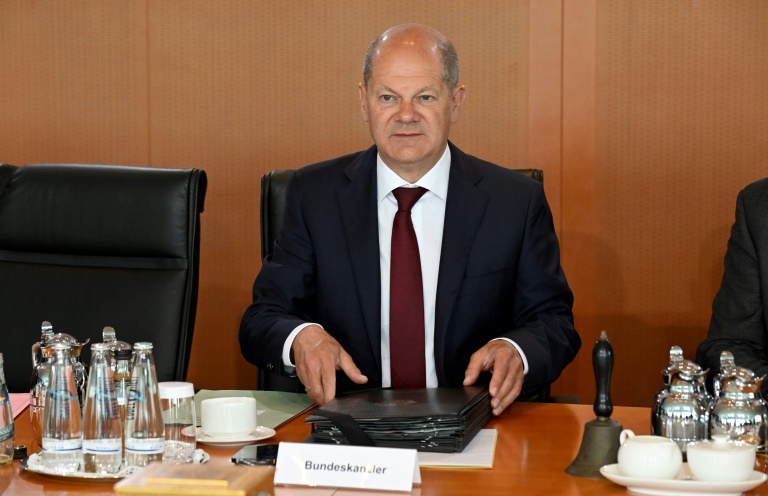
Eclipsed by two Green party ministers over his response to the war in Ukraine, Chancellor Olaf Scholz is battling to wrest back public approval — starting with a speech to parliament on Thursday.

Scholz, whose Social Democrats (SPD) are in power with the Greens and the liberal FDP, has faced a barrage of criticism over his perceived weak response to the war, including his hesitancy over sending heavy weapons to Ukraine.

Meanwhile, Green party Foreign Minister Annalena Baerbock and Economy Minister Robert Habeck have impressed with their more vocal approach, topping a recent survey of the country’s most popular politicians. 

Scholz’s party suffered a crushing defeat in a key regional election at the weekend, losing to the conservative CDU with its worst-ever result in Germany’s most populous state of North Rhine-Westphalia.

The Greens, meanwhile, almost tripled their score compared with five years ago to finish in third place and look almost certain to be part of the next regional government.

Der Spiegel magazine called the result a “personal defeat” for Scholz after he was heavily involved in the election campaign, appearing on posters and at rallies.

Already famous for his lack of charisma before he became chancellor, Scholz now appears to be paying the price for dragging his feet in dealing with Moscow over fears of escalating the crisis.

In a bid to win back the public, Scholz has in recent days given lengthy television interviews.

On Thursday, he will be explaining his policy to lawmakers ahead of the EU summit at the end of May. 

– Sitting tight –

In a devastating reading of Scholz’s outings so far, the weekly Focus assessed that “his language is poor, his facial expressions monotone and his body language too understated.”

According to Der Spiegel, the chancellor’s communications strategy seems to revolve around one mantra: “Repeat, repeat, repeat.”

Other media have accused him of stubbornly sticking to the same plan and ignoring what is going on around him.

“His party is plummeting, but the chancellor feels that he has done everything right… Doubts and questions rain down on him, but Olaf simply sits tight,” said Der Spiegel.

Scholz’s spokesman Steffen Hebestreit has defended the chancellor, suggesting that the public value his calm demeanour and would find it “inauthentic” if he tried to turn himself into Barack Obama.

But for political scientist Ursula Muench, Scholz does not come across as calm and measured but rather “imprecise” compared with his colleagues from the Green party.

Scholz has also not been helped by the fact that Defence Minister and fellow SPD politician Christine Lambrecht is currently caught up in a storm of criticism for allowing her son to accompany her on a government helicopter on their way to a family vacation.

– ‘Strong moral underpinning’ –

Baerbock, meanwhile, has turned around her public image after a series of blunders during the 2021 election campaign, coming across as clearer and more decisive than Scholz in her response to the Ukraine crisis.

The 41-year-old former trampolinist has become the face of Germany at international summits, from the G7 to NATO, and in early May became the first German minister to visit Kyiv.

Habeck, meanwhile, has impressed with his dedication to weaning Germany off Russian energy. 

And their meteoric rise is all the more surprising given the Green party’s traditional positioning as a pacifist party opposed to sending weapons to conflict zones.

For the first time in their 42-year history, according to Der Spiegel, the Greens are being judged not on “expectations and promises” but on their performance in government.

“The strong moral underpinning of the Greens’ policies and the fact they openly struggle with their own principles comes across as approachable and therefore very credible,” according to Muench.

“Of course, this increases their clout compared with the chancellor.”

She therefore predicts an “increase in tensions” between the Greens, the SPD and the FDP, with life not expected to get easier for Scholz any time soon.

US backs Nordic NATO bids, Ukraine tries Russian for war crime

US President Joe Biden will host the leaders of Finland and Sweden on Thursday to discuss their NATO membership bids, while Ukraine said no military option was left to rescue the soldiers still inside a steel plant besieged by Russian forces.

Moscow’s troops have been accused of widespread atrocities against civilians during their devastating campaign, and Ukraine began its first war crimes trial of the conflict on Wednesday with a Russian soldier pleading guilty.

The brutality of the invasion that began on February 24 shook Sweden and Finland, and the neighbours — after decades of military non-alignment — decided to seek NATO membership despite warnings from the Kremlin.

“I warmly welcome and strongly support the historic applications from Finland and Sweden for membership in NATO,” Biden said in a statement Wednesday, offering US support against any “aggression” while their bids are considered.

Biden will meet President Sauli Niinisto of Finland and Sweden’s Prime Minister Magdalena Andersson in Washington on Thursday for consultations.

Their bids face stiff resistance from NATO member Turkey, which accuses the two nations of harbouring anti-Turkish extremists.

But Western allies remain optimistic they can overcome Ankara’s objections.

In an effort to lower the diplomatic heat, US Secretary of State Antony Blinken met with Turkey’s Foreign Minister Mevlut Cavusoglu at the United Nations, who called the face-to-face discussion “extremely positive”.

Applications for entry into the alliance require the approval of all members.

For now, several including Britain have offered security guarantees to Finland and Sweden to guard against any Russian aggression.

British Prime Minister Boris Johnson said these applications would not have been expected recently “but Putin’s appalling ambitions have transformed the geopolitical contours of our continent”.

– ‘Catastrophic mistakes’ –

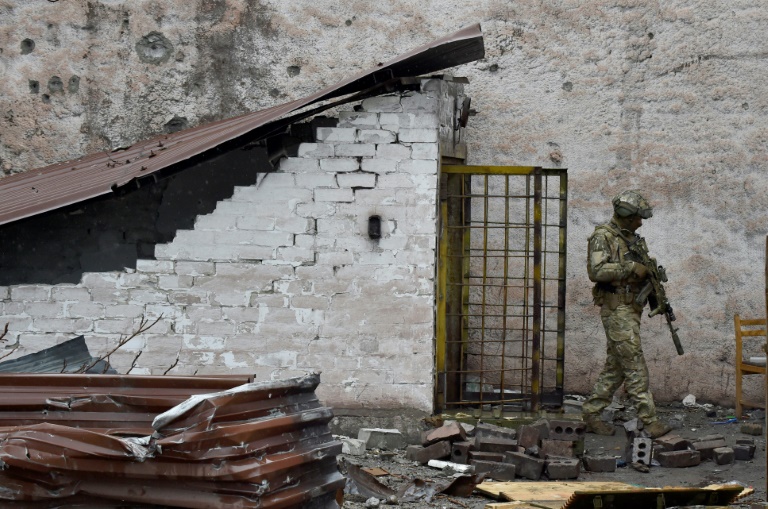
On the ground, in the ruined port city of Mariupol, more than 1,000 Ukrainian soldiers including senior commanders remained inside the besieged Azovstal steel plant, a pro-Russian separatist leader said.

Moscow said 959 of the troops had surrendered this week.

Ukraine’s defence ministry pledged to do “everything necessary” to rescue those still in the sprawling plant’s tunnels but admitted there was no military option available.

Those who have left the heavily shelled plant were taken into Russian captivity, including 80 who were seriously wounded, Russia’s defence ministry said.

The defence ministry in Kyiv said it was hoping for an “exchange procedure… to repatriate these Ukrainian heroes as quickly as possible”.

But their fate was unclear, with Kremlin spokesman Dmitry Peskov refusing to say whether they would be treated as criminals or prisoners of war.

Mariupol has been devastated by Russian attacks, and a US official alleged Moscow’s forces of committing atrocities in the city.

“Some Russian officials recognise that despite claiming to be ‘liberators’ of… Mariupol, Russian forces are carrying out grievous abuses… including beating and electrocuting city officials,” the official said.

Ukraine’s President Volodymyr Zelensky hit out at Moscow in his nightly address to the nation, calling the invasion an “absolute failure”.

“They are afraid to acknowledge that catastrophic mistakes were made at the highest military and state level,” Zelensky said.

Despite their last-ditch resistance in places such as Mariupol and the successful defence of Kyiv, Ukrainian forces are retreating across swathes of the eastern front.

The losses often come after weeks of battles over towns and small cities that get pulverised by the time the Russians surround them in a slow-moving wave.

“I tell everyone that there is no reason to worry when the banging is from outgoing fire,” Volodymyr Netymenko said as he packed up his sister’s belongings before evacuating her from the burning village of Sydorove in eastern Ukraine.

“But when it is incoming, it is time to run. And things have been flying at us pretty hard for the past two or three days.”

In the Russian region of Kursk, one person died and others were injured in an attack on a village on the border with Ukraine, the local governor said Thursday.

“Another enemy attack on Tyotkino, which took place at dawn unfortunately ended in tragedy,” Roman Starovoyt said on Telegram.

Authorities in Russian border regions have repeatedly accused Ukrainian forces of launching attacks.

– ‘Clear signal’ on war crimes –

The conflict has sparked a massive exodus of more than six million Ukrainians, many bearing accounts of torture, sexual violence and indiscriminate destruction.

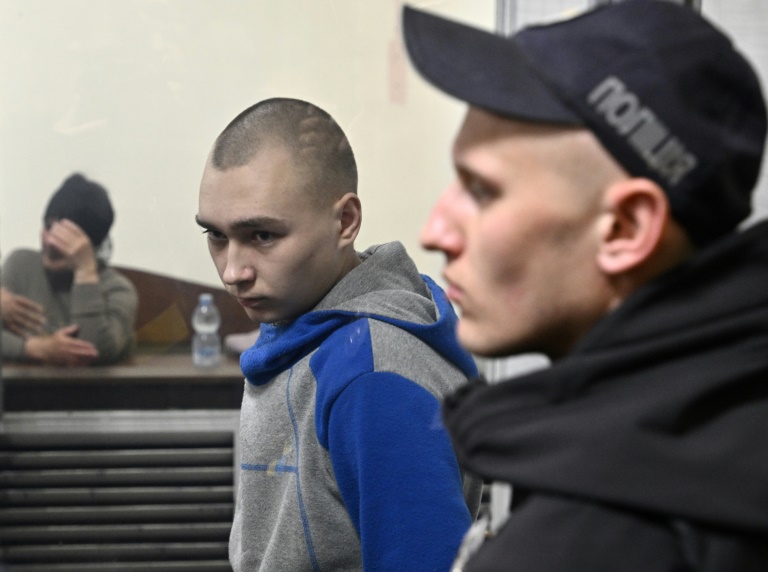
Ukraine’s first trial for war crimes — expected to be the first of many linked to the Russian invasion — began in a cramped Kyiv courtroom on Wednesday.

Vadim Shishimarin, a shaven-headed Russian sergeant from Irkutsk in Siberia, pleaded guilty to a war crime and faces a life sentence.

Shishimarin admitted to shooting dead an unarmed 62-year-old man in Ukraine’s Sumy region four days into the invasion.

“By this first trial, we are sending a clear signal that every perpetrator, every person who ordered or assisted in the commission of crimes in Ukraine shall not avoid responsibility,” prosecutor general Iryna Venediktova said.

Russia’s government has no information on the soldier, Kremlin spokesman Peskov said, adding that many such cases reported by Ukraine are “simply fake or staged”.

The International Criminal Court is deploying its largest-ever field team to Ukraine, with 42 investigators, forensic experts and support staff to gather evidence of alleged war crimes.

– Global food crisis –

In another step affirming US support for Ukraine, the American embassy in Kyiv reopened on Wednesday after three months.

The Kremlin meanwhile intensified a tit-for-tat round of diplomatic expulsions against European countries, ordering dozens of personnel from France, Italy and Spain to leave.

The Russian invasion has blown a hole in Ukraine’s finances, as tax revenue has dropped sharply, leaving it with a shortfall of around $5 billion a month.

Finance ministers from G7 nations will meet in Germany on Thursday to try and find a solution for Kyiv’s budget troubles.

The conflict’s economic impact has cascaded across the world, fuelling a global food crisis that has pushed up prices, especially in developing nations.

Russia and Ukraine produce 30 percent of the global wheat supply.

UN Secretary-General Antonio Guterres said Wednesday that the conflict “threatens to tip tens of millions of people over the edge into food insecurity”.

“Malnutrition, mass hunger and famine” could follow “in a crisis that could last for years,” Guterres warned as he and others urged Russia to release Ukrainian grain exports.

burs-qan/dhc

War in Ukraine: Latest developments

Here are the latest developments in the war in Ukraine:

– More than 1,000 Mariupol fighters remain: separatist –

More than 1,000 Ukrainian soldiers including senior commanders, remain inside the besieged Azovstal steel plant in the southern port city of Mariupol, says Denis Pushilin, a pro-Russian separatist leader.

Russia says 959 Ukrainian soldiers have surrendered at the plant, including 80 wounded, since Monday.

It says the injured are being treated in a hospital in Ukraine’s eastern Donetsk region, which is controlled by pro-Russian rebels.

Ukraine’s defence ministry says it will do “everything necessary” to rescue the personnel still in the plant’s tunnels.

Kyiv says it hopes to exchange Azovstal fighters for Russian soldiers it is holding.

Mariupol has been devastated by Russian attacks, and a US official says invading forces have carried out atrocities during their attempt to take the city.

“Some Russian officials recognize that despite claiming to be ‘liberators’ of… Mariupol, Russian forces are carrying out grievous abuses in the city, including beating and electrocuting city officials,” the official says.

– Biden to meet leaders of Finland, Sweden –

US President Joe Biden will meet President Sauli Niinisto of Finland and Sweden’s Prime Minister Magdalena Andersson in Washington on Thursday after offering strong backing for the Nordic nations’ NATO membership applications.

Following the Russian invasion of Ukraine, Sweden and Finland jettisoned decades of military non-alignment, despite warnings from the Kremlin.

Finland, which shares a 1,300-kilometre (800-mile) border with Russia, and Sweden fear they could be future targets of aggression by Moscow. Public support in the two countries for NATO membership skyrocketed after the Ukraine invasion.

Their applications face strong resistance from NATO member Turkey, which accuses the two nations of harbouring anti-Turkish extremists.

But Western allies remain optimistic they can overcome Ankara’s objections.

Several other NATO allies, most notably Britain, have offered security assurances to Finland and Sweden while their applications are considered.

– Russian soldier pleads guilty to war crimes – 

A 21-year-old Russian soldier pleads guilty to killing an unarmed Ukrainian civilian at a war crimes trial in Kyiv, in the first such case to go to court since the start of the invasion.

Vadim Shishimarin from Irkutsk in Siberia admits to gunning down the 62-year-old man near the central village of Chupakhivka to prevent him from reporting a carjacking by fleeing Russian troops.

He faces possible life imprisonment for war crimes and premeditated murder after the case is heard by a district court in Kyiv.

– One dead in attack on Russian village –

One person died and others were injured in southwestern Russia after an attack in a village on the border with Ukraine, the governor of Kursk region says. 

“Another enemy attack on Tyotkino, which took place at dawn unfortunately ended in tragedy,” Roman Starovoyt says on Telegram.

– G7 to meet on Ukraine budget crisis –

Finance ministers from G7 nations hope to find a solution to Ukraine’s budget troubles at a meeting in Germany on Thursday.

G7 partners have to “assure Ukraine’s solvency within the next days, few weeks”, German Finance Minister Christian Lindner tells the daily Die Welt ahead of the meeting.

The war has blown a hole in Ukraine’s finances, as tax revenue has dropped sharply, leaving it with a shortfall of around $5 billion a month.

– Moscow expels dozens of diplomats –

Russia expels dozens of French, Italian and Spanish diplomats in tit-for-tat responses to the expulsion of Russian diplomats over the Ukraine conflict.

The foreign ministry says 27 Spanish, 24 Italian and 34 French diplomats have been declared “persona non grata”.

All three countries condemn the move. Italian Prime Minister Mario Draghi calls it a “hostile act” that will make it more difficult to find a peaceful resolution to the conflict.

Russia says it is also closing the Moscow offices of the Canadian Broadcasting Corporation in retaliation for Ottawa’s ban on Russian state media outlet RT.

– UN warning on global food crisis –

The United Nations warns that a growing global food crisis, exacerbated by the Russian invasion of Ukraine, could last years if it goes unchecked.

Russia and Ukraine produce 30 percent of the global wheat supply.

UN Secretary-General Antonio Guterres says the war “threatens to tip tens of millions of people over the edge into food insecurity”.

What could follow would be “malnutrition, mass hunger and famine, in a crisis that could last for years”, Gutteres says, urging Russia to release Ukrainian grain exports.

– US reopens Kyiv embassy –

The United States reopens its embassy in Kyiv after closing it for three months due to the Russian invasion of Ukraine, the State Department says.

“The Ukrainian people, with our security assistance, have defended their homeland in the face of Russia’s unconscionable invasion, and, as a result, the Stars and Stripes are flying over the embassy once again,” Secretary of State Antony Blinken says in a statement.

– Russian fire intensifies in northern Ukraine –

Russian forces have intensified artillery fire on Ukrainian border settlements around the city of Sumy to the north and close to the Russian border and Chernihiv to the east of the capital over the past few weeks, the Ukrainian army is reported as saying by the Institute for the Study of War.

The shelling comes despite the Russian military having scaled back its offensive in the north to focus on the eastern Donbas region.

burs-qan/je

US backs Nordic NATO bids, Ukraine tries Russian for war crime

US President Joe Biden will host the leaders of Finland and Sweden on Thursday to discuss their NATO membership bids, while Ukraine said no military option was left to rescue the soldiers still inside a steel plant besieged by Russian forces.

Moscow’s troops have been accused of widespread atrocities against civilians during their devastating campaign, and Ukraine began its first war crimes trial of the conflict on Wednesday with a Russian soldier pleading guilty.

The brutality of the invasion that began on February 24 shook Sweden and Finland, and the neighbours — neutral for decades — decided to seek NATO membership despite warnings from the Kremlin.

“I warmly welcome and strongly support the historic applications from Finland and Sweden for membership in NATO,” Biden said in a statement Wednesday, offering US support against any “aggression” while their bids are considered.

Biden will meet President Sauli Niinisto of Finland and Sweden’s Prime Minister Magdalena Andersson in Washington on Thursday for consultations.

Their bids face stiff resistance from NATO member Turkey, which accuses the two nations of harbouring anti-Turkish extremists.

But Western allies remain optimistic they can overcome Ankara’s objections.

In an effort to lower the diplomatic heat, US Secretary of State Antony Blinken met with Turkey’s Foreign Minister Mevlut Cavusoglu at the United Nations, who called the face-to-face discussion “extremely positive”.

Applications for entry into the alliance require the approval of all members.

For now, several including Britain have offered security guarantees to Finland and Sweden to guard against any Russian aggression.

British Prime Minister Boris Johnson said these applications would not have been expected recently “but Putin’s appalling ambitions have transformed the geopolitical contours of our continent”.

– ‘Catastrophic mistakes’ –

On the ground, in the ruined port city of Mariupol, more than 1,000 Ukrainian soldiers including senior commanders remained inside the besieged Azovstal steel plant, a pro-Russian separatist leader said.

Moscow said 959 of the troops had surrendered this week.

Ukraine’s defence ministry pledged to do “everything necessary” to rescue those still in the sprawling plant’s tunnels but admitted there was no military option available.

Those who have left the heavily shelled plant were taken into Russian captivity, including 80 who were seriously wounded, Russia’s defence ministry said.

The defence ministry in Kyiv said it was hoping for an “exchange procedure… to repatriate these Ukrainian heroes as quickly as possible”.

But their fate was unclear, with Kremlin spokesman Dmitry Peskov refusing to say whether they would be treated as criminals or prisoners of war.

Ukraine’s President Volodymyr Zelensky hit out at Moscow in his nightly address to the nation, calling the invasion an “absolute failure”.

“They are afraid to acknowledge that catastrophic mistakes were made at the highest military and state level,” Zelensky said.

Despite their last-ditch resistance in places such as Mariupol and the successful defence of Kyiv, Ukrainian forces are retreating across swathes of the eastern front.

The losses often come after weeks of battles over towns and small cities that get pulverised by the time the Russians surround them in a slow-moving wave.

“I tell everyone that there is no reason to worry when the banging is from outgoing fire,” Volodymyr Netymenko said as he packed up his sister’s belongings before evacuating her from the burning village of Sydorove in eastern Ukraine.

“But when it is incoming, it is time to run. And things have been flying at us pretty hard for the past two or three days.”

– ‘Clear signal’ on war crimes –

The conflict has sparked a massive exodus of more than six million Ukrainians, many bearing accounts of torture, sexual violence and indiscriminate destruction.

Ukraine’s first trial for war crimes — expected to be the first of many linked to the Russian invasion — began in a cramped Kyiv courtroom on Wednesday.

Vadim Shishimarin, a shaven-headed Russian sergeant from Irkutsk in Siberia, pleaded guilty to a war crime and faces a life sentence.

Shishimarin admitted to shooting dead an unarmed 62-year-old man in Ukraine’s Sumy region four days into the invasion.

“By this first trial, we are sending a clear signal that every perpetrator, every person who ordered or assisted in the commission of crimes in Ukraine shall not avoid responsibility,” prosecutor general Iryna Venediktova said.

Russia’s government has no information on the soldier, Kremlin spokesman Peskov said, adding that many such cases reported by Ukraine are “simply fake or staged”.

The International Criminal Court is deploying its largest-ever field team to Ukraine, with 42 investigators, forensic experts and support staff to gather evidence of alleged war crimes.

– Global food crisis –

In another step affirming US support for Ukraine, the American embassy in Kyiv reopened on Wednesday after three months.

The Kremlin meanwhile intensified a tit-for-tat round of diplomatic expulsions against European countries, ordering dozens of personnel from France, Italy and Spain to leave.

The Russian invasion has blown a hole in Ukraine’s finances, as tax revenue has dropped sharply, leaving it with a shortfall of around $5 billion a month.

Finance ministers from G7 nations will meet in Germany on Thursday to try and find a solution for Kyiv’s budget troubles.

The conflict’s economic impact has cascaded across the world, fuelling a global food crisis that has pushed up prices, especially in developing nations.

Russia and Ukraine produce 30 percent of the global wheat supply.

UN Secretary-General Antonio Guterres said Wednesday that the conflict “threatens to tip tens of millions of people over the edge into food insecurity”.

“Malnutrition, mass hunger and famine” could follow “in a crisis that could last for years,” Guterres warned as he and others urged Russia to release Ukrainian grain exports.

burs-qan/dhc

Rare monkeypox outbreaks detected in N.America, Europe

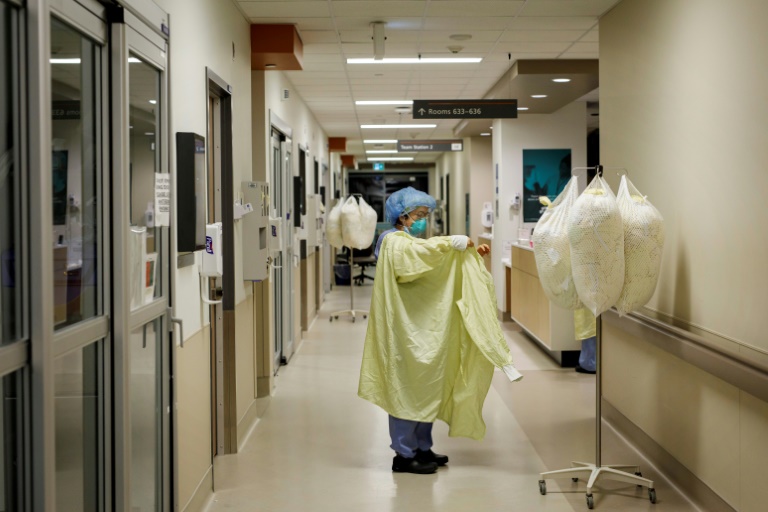
Health authorities in North America and Europe have detected dozens of suspected or confirmed cases of monkeypox since early May, sparking concern the disease endemic in parts of Africa is spreading.

Canada was the latest country to report it was investigating more than a dozen suspected cases of monkeypox, after Spain and Portugal detected more than 40 possible and verified cases. 

Britain has confirmed nine cases since May 6, and the United States verified its first on Wednesday, saying a man in the eastern state of Massachusetts had tested positive for the virus after visiting Canada.

The illness, from which most people recover within several weeks and has only been fatal in rare cases, has infected thousands of people in parts of Central and Western Africa in recent years but is rare in Europe and North Africa.

The World Health Organization (WHO) said on Tuesday it was coordinating with UK and European health officials over the new outbreaks.

“We really need to better understand the extent of monkeypox in endemic countries… to really understand how much is circulating and the risk that it poses for people who are living there, as well as the risk of exportation,” infectious disease epidemiologist Dr. Maria Van Kerkhove said at a WHO press conference on Tuesday on global health issues.

The first case in Britain was someone who had traveled from Nigeria, though later cases were possibly through community transmission, the UK Health Security Agency (UKHSA) said in a statement.

“These latest cases, together with reports of cases in countries across Europe, confirms our initial concerns that there could be spread of monkeypox within our communities,” said UKHSA Chief Medical Adviser Dr. Susan Hopkins.

The WHO said it was also investigating that many cases reported were people identifying as gay, bisexual or men who have sex with men. 

“We are seeing transmission among men having sex with men,” said WHO Assistant Director-General Dr. Soce Fall at the press conference.

“This is new information we need to investigate properly to understand better the dynamic of local transmission in the UK and some other countries.”

– ‘No risk to the public’ –

The UKHSA noted that monkeypox has not previously been characterized as a sexually transmitted disease, underscoring that “it can be passed on by direct contact during sex.”

“Anyone, regardless of sexual orientation, can spread monkeypox through contact with body fluids, monkeypox sores, or shared items (such as clothing and bedding) that have been contaminated with fluids or sores of a person with monkeypox,” a US Centers for Disease Control and Prevention (CDC) statement said Wednesday, adding that household disinfectants can kill the virus on surfaces.

The illness often starts with flu-like symptoms such as fever, muscle ache and swollen lymph nodes before causing a chickenpox-like rash on the face and body, the US agency explained.

The Massachusetts Department of Health, said that the case there — the first confirmed this year in the United States — occurred in a patient who had recently traveled to Canada and “poses no risk to the public, and the individual is hospitalized and in good condition.”

Health authorities in Canada’s Quebec province announced they were investigating at least 13 suspected cases of monkeypox, the public broadcaster CBC reported Wednesday.

The cases were flagged to Montreal authorities after diagnoses were made in several clinics specializing in sexually transmitted and blood-borne infections.

The Public Health Agency of Canada (PHAC) told CBC it had called on “public health authorities and laboratory partners across Canada to be alert for and investigate any potential cases.”

According to the CDC, there were no reported cases of monkeypox for 40 years before it re-emerged in Nigeria in 2017.

burs-sw/des

'Historic' equal pay deal for US men and women footballers

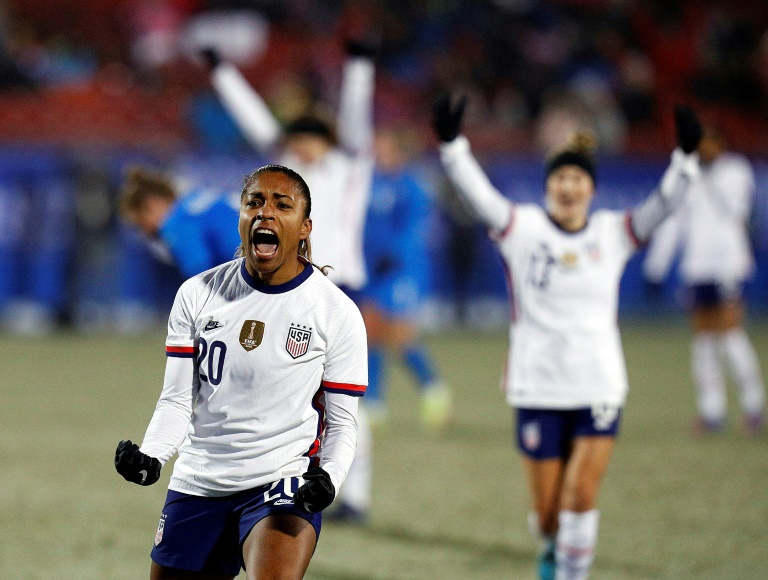
The US men’s and women’s national soccer teams will receive equal pay under new contracts that feature an unprecedented split of World Cup prize money, the US Soccer Federation announced Wednesday.

“This is a truly historic moment,” US Soccer president Cindy Parlow Cone said. “These agreements have changed the game forever here in the United States and have the potential to change the game around the world.”

The landmark collective bargaining agreements (CBAs) reached between the federation and its senior national teams will see US Soccer distribute millions of dollars more to its top players through increased match pay and sharing of revenues from ticket sales as well as sponsorship and broadcast deals.

But the revolutionary feature is the stipulation that players from both teams pool and share the otherwise unequal prize money paid by global governing body FIFA for participation in their respective World Cups.

Equalizing World Cup pay had been a major stumbling block given the huge discrepancy in FIFA’s payouts for the men’s and women’s events.

FIFA awarded France $38 million for winning the 2018 men’s World Cup but only $4 million to the United States for their 2019 Women’s World Cup triumph. 

The US men meanwhile received $9 million in prize money at the last World Cup they played in, in 2014, just for reaching the last 16.

The men’s team in 2018 — last placed in the World Cup in Russia — also received double the prize money of the women’s team in 2019 when they were champions.

FIFA has announced that the total bonus pool for this year’s men’s World Cup in Qatar will be $400 million, while the bonuses for the women’s tournament in Australia in 2023 will be $60 million.

In reconciling that discrepancy with the new agreements, US Soccer is living up to it’s “One Nation, One Team” tagline, said US forward Midge Purce, who was a member of the bargaining committee for the women’s players’ association.

“I think we set a new standard of value for women in the workforce,” Purce said. “I don’t know when or how or where this will unfold, and what it will trigger next, exactly, but I do think it will inspire a lot and push a lot of individuals and groups to push further on this.”

For non-World Cup tournaments, such as those organized by regional governing body CONCACAF, US players from “both teams will earn an equal amount of the total prize money paid when both teams participate in the same competition.”

Players on both teams will also receive equal pay — up to $18,000 for a win — for international matches organized by US Soccer. 

“The accomplishments in this CBA are a testament to the incredible efforts of WNT players on and off the field,” said US women’s captain Becky Sauerbrunn, president of the women’s union.

However, Cone acknowledged that “no matter how you look at it, the men are giving up money to make this equal, and so I think the men’s team and the men’s players’ association should be applauded.”

“This is a big deal,” tweeted President Joe Biden of the agreement on Thursday night.

“I’m proud of you for never giving up and I commend @ussoccer (US Soccer Federation) for agreeing to do the right thing,” he added.

Center-back Walker Zimmerman, a member of the men’s players’ association bargaining committee, admitted the negotiations involved some “tough conversations” but said that ultimately the men were proud to “come alongside” the women’s team.

– ‘We achieved it’ –

“They said equal pay for men and women was not possible, but that did not stop us and we went ahead and achieved it,” Zimmerman said.

In February, the US national women’s team won a $24 million payout and a promise of equal pay in a major settlement with US Soccer, that was contingent on a new collective bargaining agreement.

The question of World Cup prize money had formed a prominent part of the lawsuit, which was filed in 2019 and accused the federation of “stubbornly refusing” to pay its men and women’s players equally.

Women’s star Megan Rapinoe, who has forged a reputation as an unflinching advocate for several causes including equal pay and conditions for her and teammates, said in February that the settlement marked a moment in which “US Soccer changed for the better.”

The United States women have won four Women’s World Cup titles and four Olympic gold medals. They are chasing an unprecedented third consecutive Women’s World Cup crown after hoisting trophies in 2015 at Canada and 2019 in France.

Asian markets plunge after Wall St battering

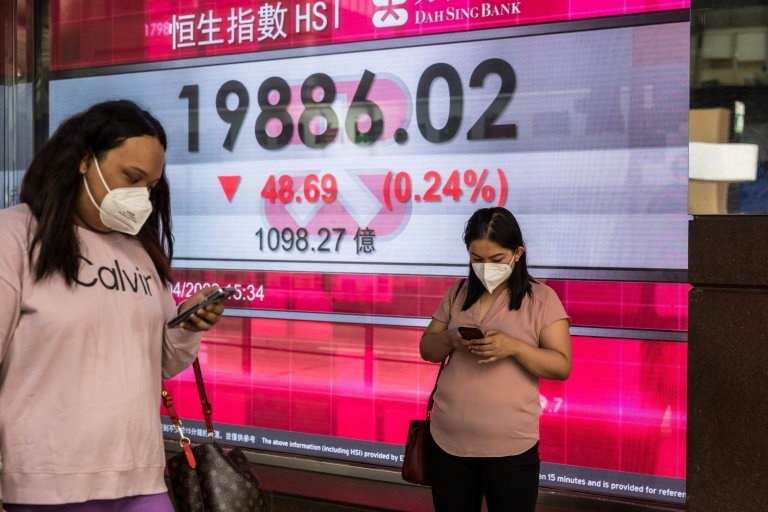
Asian markets posted big early losses Thursday, after Wall Street suffered one of its worst batterings in two years in the previous session.

Downcast earnings reports from retailers had exacerbated worries about consumer resilience and corporate profitability Wednesday, sparking a rough day’s trade.

On Thursday morning, Hong Kong was down by more than three percent, while Tokyo was down by about 2.5 percent.

Among the biggest losers in Hong Kong was Chinese tech giant Tencent, whose stocks fell more than eight percent on lacklustre first-quarter results.

Elsewhere in the region, Australia posted its lowest jobless rate in 48 years, in a potential boost to Prime Minister Scott Morrison two days ahead of tightly contested federal elections.

The unemployment rate dipped to 3.9 percent, the official statistics body said, the lowest rate since 1974.

But stocks in Sydney were still down, as were those in Singapore, Shanghai, Seoul and Taipei, though Jakarta was up by more than two percent.

Stephen Innes at SPI Asset Management called Wednesday’s losses “the most significant daily decline since June 2020”.

“The weakness came as Target’s quarterly earnings added fuel to the recession risk narrative,” he added.

Target, the North American-focused big-box retailer, plunged around 25 percent after earnings missed expectations despite higher sales.

The company pointed to the hit from higher operating costs in results that echoed those of bigger rival Walmart.

The retailers said profits were under pressure and some consumers were avoiding discretionary purchases as prices for food, gasoline and other household staples rise.

All three major US indices dove, with the Dow sinking more than 1,150 points or 3.6 percent, and the Nasdaq plunging 4.7 percent.

European bourses were also down.

“The big falls in shares of these retails… highlights the damage inflation is inflicting on the sector’s profit margins,” said Fawad Razaqzada at City Index.

“What’s more, consumers are getting squeezed as well and if they now start to cut back on spending then retailers could suffer even further,” he added.

In some of his most hawkish remarks to date, Federal Reserve Chair Jerome Powell said Tuesday that the US central bank would raise interest rates until there is “clear and convincing” evidence that inflation is in retreat. 

— Bloomberg News contributed to this report —

– Key figures at around 0215 GMT –

Hong Kong – Hang Seng Index: DOWN 3.07 percent at 20,009.68 

Shanghai – Composite: DOWN 0.89 percent at 3,058.44 

Tokyo – Nikkei 225: DOWN 2.63 percent at 26,202.70 (break)

Brent North Sea crude: UP 1.08 percent at $110.19 per barrel

West Texas Intermediate: UP 0.62 percent at $110.21 per barrel

Euro/dollar: DOWN at $1.0487 from $1.0533

Pound/dollar: DOWN at $1.2349 from $1.2476

Euro/pound: UP at 84.93 pence from 84.43 pence

Dollar/yen: DOWN at 128.54 yen from 129.18 yen

New York – Dow: DOWN 3.6 percent at 31,490.07 (close)

London – FTSE 100: DOWN 1.1 percent at 7,438.09 (close)

US midterms and the strange demise of the political center

A giant Donald Trump mural on the front lawn. An anti-Biden rap video. A TV ad featuring an assault rifle and a vow to do “whatever it takes” to restore America to its “former glory.”

It isn’t campaigning as Lincoln or Kennedy knew it, but it worked for midwestern underdog candidate J.R. Majewski, and analysts worry it could be a glimpse of future US primary election seasons in a country that is losing its moderate political center.

Establishment Republicans in Majewski’s northwest Ohio swing district — where he is vying to win a US House seat in November’s midterm elections — spent six-figure sums trying to get more moderate rivals nominated.

But the Trump-backed air force veteran and conspiracy theorist won anyway, seeing off more favored state lawmakers after being endorsed by Paul Gosar, a far-right congressman.

In South Carolina, another Trump-endorsed hopeful, Katie Arrington, has called for disbanding the US Department of Education, President Joe Biden’s impeachment and the arrest of government Covid-19 advisor Anthony Fauci.

She is challenging first-term Republican congresswoman Nancy Mace, who is out of favor with Trump after blaming him for the 2021 US Capitol assault.

The races are early fronts in a battle already playing out in Republican and Democratic primary contests across America, as establishment politicians find their hopes of representing their parties in the midterms threatened by more extreme challengers.

In Pennsylvania, state senator and election denier Doug Mastriano, who helped Trump try to overturn the state’s 2020 results that favored Biden, swatted away several less controversial Republicans Tuesday to win the party’s nomination for governor.

But Trump, whose status as political kingmaker is being tested, also experienced setbacks Tuesday including in Idaho, where his favorite gubernatorial candidate Janice McGeachin, who reportedly said this month that “Christ will reign in the state,” lost to the incumbent.

In coming weeks Republican moderates, pragmatists and compromisers will face Trump-backed culture warriors in several races, in Illinois, Michigan, Minnesota, South Carolina and Washington.

– ‘Winner-take-all’ –

Across the aisle, Pennsylvania state congresswoman and community organizer Summer Lee, who identifies as a “Democratic Socialist,” was narrowly leading the field after Tuesday’s primary to replace retiring moderate Mike Doyle.

She is backed by Justice Democrats, the group that sponsored leftist New York congresswoman Alexandria Ocasio-Cortez’s first campaign and is sending a new generation of leftist legislators to Washington.

Ocasio-Cortez is the most prominent member of the so-called “Squad” — a group of staunchly progressive Democrats poised for gains in seats and influence in November despite the party’s likely loss of the House of Representatives.

As many as six Squad-aligned candidates have realistic chances of winning House seats this cycle, against more middle-of-the-road Democrats.

The numbers sound small, but lawmakers on the fringes tend to have outsized influence on political discourse because they make all the noise and attract attention.

The Common Ground Committee, which campaigns to reduce incivility in politics, says it observed a coarsening of public discourse following 2008’s global financial meltdown.

“There seems to be an increasing level of vitriol generated by a ‘winner-take-all’ attitude in Congress that actively discourages working with those across the aisle and is exacerbated by the highly polarized cable news media,” co-founder Bruce Bond told AFP. 

“Many things have come together to encourage polarization and people need to stop supporting it.”

– ‘Bell-shaped curve’ –

A Pew Research Center analysis found Democrats and Republicans are further apart today than at any time in the past 50 years.

In 1972, 144 House Republicans were less conservative than the most conservative Democrat, and 52 House Democrats were less liberal than the most liberal Republican, according to the analysis. 

But that common ground began to shrink, and since 2002, there has been no overlap at all. In the Senate, that overlap ended in 2004.

“The polarization has changed American public opinion from a bell-shaped curve — where most voters and the parties were in the center — to a bimodal curve with the center of the two parties drifting apart and ideologically purifying,” political scientist David Schultz told AFP.

The professor, who teaches at Minnesota liberal arts college Hamline University, believes economic restructuring, race, social issues and technology are driving the diversification — with Trump “merely the personification of trends already occurring.”

Progressive political consultant Zee Cohen-Sanchez blames the cash that has flooded politics in recent years, incentivizing candidates to carve out controversial positions that gain attention and funding.

“Because our elections have become astronomically expensive, people seek to make fast money rather than raising money from everyday Americans,” Cohen-Sanchez said. 

“That’s where things get dangerous.”

Close Bitnami banner
Bitnami