World

US to fly in baby formula on military contracted planes

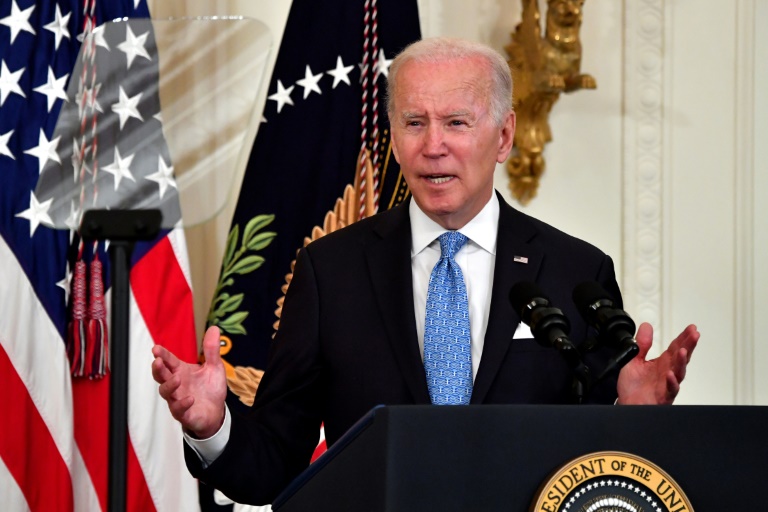
The US government will fly in baby formula on commercial planes contracted by the military in an airlift aimed at easing the major shortage plaguing the country, the White House said on Wednesday.

The lack of formula — the result of a perfect storm of supply chain issues and a massive recall — is leaving parents increasingly desperate, and has become a political headache for President Joe Biden as midterm elections loom.

The Department of Defense “will use its contracts with commercial air cargo lines, as it did to move materials during the early months of the Covid pandemic, to transport products from manufacturing facilities abroad that have met Food and Drug Administration (FDA) safety standards,” the White House said.

“Bypassing regular air freighting routes will speed up the importation and distribution of formula and serve as an immediate support as manufacturers continue to ramp up production,” it said, dubbing the effort “Operation Fly Formula.”

Biden has also invoked the Defense Production Act to give baby formula manufacturers first priority in supplies.

“Directing firms to prioritize and allocate the production of key infant formula inputs will help increase production and speed up in supply chains,” the White House said.

Initially caused by supply chain blockages and a lack of production workers due to the pandemic, the shortage was exacerbated in February when, after the death of two infants, manufacturer Abbott announced a “voluntary recall” for formula made at its factory in Michigan and shut down that location.

A subsequent investigation cleared the formula, and the FDA reached an agreement on Monday with Abott to resume production. But it will take weeks to get the critical product back on store shelves.

– Bridging the gap –

Biden wrote in a letter to the heads of the Departments of Agriculture and Health and Human Services that imports of formula “will serve as a bridge to this ramped up production.”

“I request that you work expeditiously to identify any and all avenues to speed the importation of safe infant formula into the United States and onto store shelves,” the president wrote.

The shortage has left many parents frantic and fearful their infants may starve. Formula is a necessity for many families, particularly in low-income households in which mothers have to return to work almost immediately after giving birth and cannot breastfeed.

A further issue is that prices for the formula that remains have skyrocketed.

The desperation of parents is highlighted on social media, where posts shared hundreds of thousands of times urge people to make formula at home — a move pediatricians warn against.

“It won’t meet your baby’s essential nutritional needs, can be very dangerous to their growth and development, and can even make your baby sick,” Tanya Altmann, author of several parenting books and founder of Calabasas Pediatrics in California, told AFP.

The formula shortage also has political consequences, with the Republican opposition — which has set its sights on wresting back control of Congress in November’s midterm elections — seizing on the issue to berate Biden and the Democrats.

The United States relies on domestic producers for 98 percent of the baby formula it consumes. The average out-of-stock rate for the key product hit 43 percent earlier this month, according to Datasembly, which collected information from more than 11,000 retailers.
US to fly in baby formula on military contracted planes

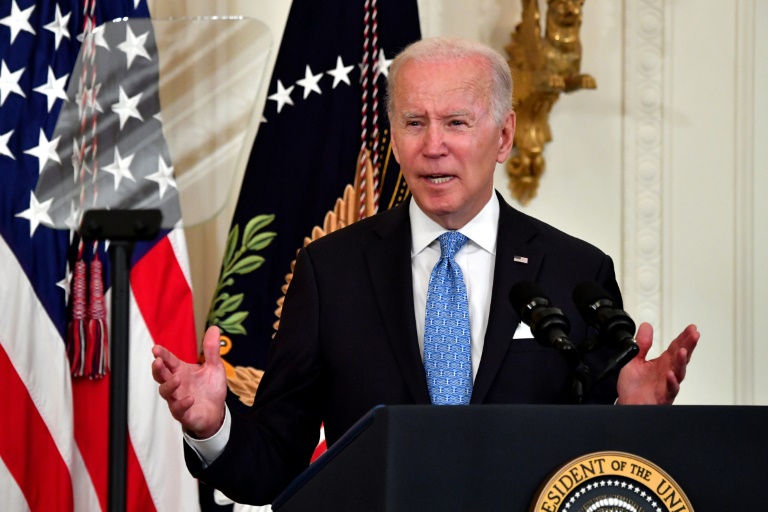
The US government will fly in baby formula on commercial planes contracted by the military in an airlift aimed at easing the major shortage plaguing the country, the White House said on Wednesday.

The lack of formula — the result of a perfect storm of supply chain issues and a massive recall — is leaving parents increasingly desperate, and has become a political headache for President Joe Biden as midterm elections loom.

The Department of Defense “will use its contracts with commercial air cargo lines, as it did to move materials during the early months of the Covid pandemic, to transport products from manufacturing facilities abroad that have met Food and Drug Administration (FDA) safety standards,” the White House said.

“Bypassing regular air freighting routes will speed up the importation and distribution of formula and serve as an immediate support as manufacturers continue to ramp up production,” it said, dubbing the effort “Operation Fly Formula.”

Biden has also invoked the Defense Production Act to give baby formula manufacturers first priority in supplies.

“Directing firms to prioritize and allocate the production of key infant formula inputs will help increase production and speed up in supply chains,” the White House said.

Initially caused by supply chain blockages and a lack of production workers due to the pandemic, the shortage was exacerbated in February when, after the death of two infants, manufacturer Abbott announced a “voluntary recall” for formula made at its factory in Michigan and shut down that location.

A subsequent investigation cleared the formula, and the FDA reached an agreement on Monday with Abott to resume production. But it will take weeks to get the critical product back on store shelves.

– Bridging the gap –

Biden wrote in a letter to the heads of the Departments of Agriculture and Health and Human Services that imports of formula “will serve as a bridge to this ramped up production.”

“I request that you work expeditiously to identify any and all avenues to speed the importation of safe infant formula into the United States and onto store shelves,” the president wrote.

The shortage has left many parents frantic and fearful their infants may starve. Formula is a necessity for many families, particularly in low-income households in which mothers have to return to work almost immediately after giving birth and cannot breastfeed.

A further issue is that prices for the formula that remains have skyrocketed.

The desperation of parents is highlighted on social media, where posts shared hundreds of thousands of times urge people to make formula at home — a move pediatricians warn against.

“It won’t meet your baby’s essential nutritional needs, can be very dangerous to their growth and development, and can even make your baby sick,” Tanya Altmann, author of several parenting books and founder of Calabasas Pediatrics in California, told AFP.

The formula shortage also has political consequences, with the Republican opposition — which has set its sights on wresting back control of Congress in November’s midterm elections — seizing on the issue to berate Biden and the Democrats.

The United States relies on domestic producers for 98 percent of the baby formula it consumes. The average out-of-stock rate for the key product hit 43 percent earlier this month, according to Datasembly, which collected information from more than 11,000 retailers.

With a few dozen men, guerrilla group sows fear in Paraguay

With a few dozen fighters, the Paraguayan People’s Army (EPP) guerrilla group has held residents of a central province in a grip of fear for the past 14 years.

It has long been dismissed by the government as a trifling group — a kind of family affair — but for the residents of Concepcion, a cattle-raising province, the EPP is no joke.

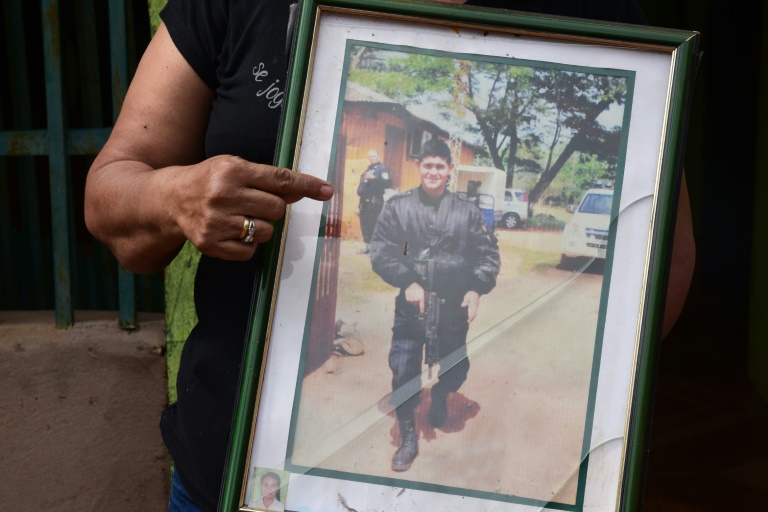
“They say they want to help the poor, that they are pro-poor. But they hurt the poor,” said Obdulia Florenciano, 52, whose policeman son Edelio Morinigo has been held by the EPP since 2014.

“We are not rich, we are poor. We are workers, we are humble. They took away the son of a poor family,” she said through her tears, showing AFP a photo of her son — dubbed a “prisoner of war” by the EPP — in uniform.

The guerrilla group, created with the stated goal of fighting the oligarchy and promoting much-needed agrarian reform in the country’s poorest regions, rules with fear in the Concepcion region some 400 kilometers (249 miles) north of the capital Asuncion.

The department holds some 300,000 of Paraguay’s 7.4 million people.

There are few paved roads in this sparsely-populated tropical region, but plenty of cows. And drug traffickers.

– Who is a hitman? –

On the main road leading to the porous border with Brazil, soldiers man checkpoints with large billboards nearby offering a reward for information about the whereabouts of EPP leaders.

Armored vehicles and helicopters provide backup.

“We practically live together (with drug dealers and guerrillas) and we don’t realize it,” said Domingo Savio Ovelar, the parish priest for the town of Yby-Yua.

“Here we cannot distinguish who is a drug trafficker, who is a hitman,” he said.

“There is permanent anxiety. We never know what we will wake up to.”

In its 14 years of existence, 74 killings of soldiers, police and civilians in Concepcion have been laid at the EPP’s door.

It has kidnapped 13 people over the same period, and still holds three.

Yet security sources says the group’s manpower is modest: a few dozen armed men.

A “generous” estimate, said Juan Martens, a criminologist at the National University of Asuncion who argued the group posed no “real threat” on a national scale.

– ‘We bury comrades’ –

They may be few, but they are deadly, said Colonel Luis Apezteguia, who commands a force of a thousand men in the area.

“They say that we do nothing, that the EPP is an invention. But in the meantime, we bury comrades, we take wounded people to hospital,” he lamented.

Last month, three soldiers were wounded by an explosive device, and last year, three others died.

Other than Morinigo, the EPP holds 73-year-old Felix Urbieta, taken from his farm in 2016, and former Paraguayan vice-president Oscar Denis, captive since September 2020.

Denis’s daughter, Beatriz, told AFP: “I would accept anything to have Dad back. I will negotiate anything.”

A few months ago, the family collected the equivalent of $2 million in food — at the EPP’s request, she said — to be distributed among poor villagers.

But to no avail. No word from her father.

“Every time a hostage has been able to return home, it was not because the government found them. It was because a ransom was paid,” Denis said.

The EPP has proposed an exchange of the hostages for its top two leaders Alcides Oviedo, 52, and Carmen Villalba, 50, both prisoners in Asuncion.

Villalba’s brother Osvaldo leads the EPP in her absence.

In 2010, documents uncovered by the Paraguayan authorities revealed links between the EPP and the since-disbanded Revolutionary Armed Forces of Colombia.

The Paraguayan government recently sought support from Colombia in intelligence and military training to combat the EPP.

In an unforeseen way, this could mean the beginning of the end for the guerrilla group.

“The Concepcion region has become a strategic place for drug traffickers, and the EPP disturbs them, because it attracts the presence of the state,” said Martens.

“If the government does not eliminate them, the narcos will take care of them, and have already started. And they are much more powerful.”

Landlocked Paraguay — nestled between Brazil, Bolivia and Argentina — has become an important launchpad for drugs headed for Europe.

Earlier this month, the country’s anti-drug prosecutor Marcelo Pecci was shot dead execution-style Tuesday while honeymooning on a Colombian Caribbean island.

'Transmitting violence': Livestream video's dark side

A gunman’s livestream of a mass killing in New York state was taken down in a matter of minutes — but even that was not fast enough to prevent those images from becoming effectively impossible to erase from the internet.

Posting horrific clips like those is not barred by US speech laws, experts told AFP, so the decision on whether to keep them online is largely left up to individual tech companies.

But even the sites that want them taken down say they struggle to do so, since once unleashed onto the internet, the videos can be edited and shared again and again.

In the case of the Buffalo shooting that killed 10 African Americans at a grocery store on Saturday, it’s particularly chilling because writings attributed to the suspect noted he was in part inspired by another mass shooter’s livestream.

“If (companies) are going to commit to live streaming, you are committed to transmitting a certain number of rapes, murders, suicides and other types of crimes,” said Mary Anne Franks, a professor at University of Miami school of law.

“That’s just what comes with that territory,” she added.

The live feed of the killing on Amazon’s Twitch platform was pulled down within two minutes, the company said –- far quicker than the 17 minutes New Zealand mosque shooter Brenton Tarrant’s attack was streamed on Facebook in 2019.

Social media firms say they fight hard to keep these types of images off their platforms, with automated and manual efforts by workers to squelch video of the Buffalo attack and similar horrors. 

But the images can be edited, titles or names changed and then re-posted on sites that are happy to have the traffic that others have decided is beyond their limit.

One tweet on Wednesday cited the Buffalo suspect’s name, 18-year-old Payton Gendron, and included a link to a video about the attack, but did not show the killing.

However, once on the site viewers were offered additional videos, including one showing over 90 seconds of the attack and which said it had nearly 1,800 views since Sunday.

Websites don’t have to allow this type of video but American law is mostly silent on prohibiting them.

“There is nothing illegal in the US about posting a video of the (Buffalo) livestream. It doesn’t really fall into a category of speech that is unprotected,” said Ari Cohn, who is free speech counsel at think tank TechFreedom.

– ‘Life and death consequences’ –

Once a crime like a mass shooting is broadcast on a major platform it can take various routes to perpetual life online, including being recorded by people watching it live.

A spokesperson for Facebook parent Meta said new versions of videos, which are created to dodge being removed, then become part of a whack-a-mole effort to hunt down the clips.

The same problem is seen at other platforms like Twitter, which has a policy of removing the accounts of mass attackers “and may also remove tweets disseminating manifestos or other content produced by perpetrators,” it says. 

Meta’s vice president of integrity Guy Rosen told journalists in a briefing Tuesday the firm has to tread a fine line because too broad of a filter could end up unintentionally taking down the wrong kind of content.

Live broadcasts are one of the areas where social media platforms face accusations of fanning violence and hatred, and law professor Franks said it’s not likely wise to offer that capability to the general public.

“The bigger problem here is when tech companies make these decisions for the public… that this is a tool that is useful in ways that will outweigh its disadvantages,” she added.

New York’s Attorney General Letitia James announced Wednesday a probe of various tech companies over the attack, including Twitch.

The general lack of up-to-date social media policies on the national level in the United States has also contributed to the problems associated with live videos online.

US states have crafted their own policies, which can reflect the heavy partisan divides along what should be allowed online.

Texas, for example, has enacted a controversial social media law that bars larger sites from “discriminating against expression,” which has been heavily criticized for being so broad that it interferes with content moderation.

“The recent tragedy (in Buffalo) underscores that this is not just about partisan point scoring,” Matt Schruers, president of the Computer & Communications Industry Association, told a panel discussion about the law this week. 

“There are life and death consequences to tying the industry’s hands to respond to bad actors on the internet,” he added.

'Transmitting violence': Livestream video's dark side

A gunman’s livestream of a mass killing in New York state was taken down in a matter of minutes — but even that was not fast enough to prevent those images from becoming effectively impossible to erase from the internet.

Posting horrific clips like those is not barred by US speech laws, experts told AFP, so the decision on whether to keep them online is largely left up to individual tech companies.

But even the sites that want them taken down say they struggle to do so, since once unleashed onto the internet, the videos can be edited and shared again and again.

In the case of the Buffalo shooting that killed 10 African Americans at a grocery store on Saturday, it’s particularly chilling because writings attributed to the suspect noted he was in part inspired by another mass shooter’s livestream.

“If (companies) are going to commit to live streaming, you are committed to transmitting a certain number of rapes, murders, suicides and other types of crimes,” said Mary Anne Franks, a professor at University of Miami school of law.

“That’s just what comes with that territory,” she added.

The live feed of the killing on Amazon’s Twitch platform was pulled down within two minutes, the company said –- far quicker than the 17 minutes New Zealand mosque shooter Brenton Tarrant’s attack was streamed on Facebook in 2019.

Social media firms say they fight hard to keep these types of images off their platforms, with automated and manual efforts by workers to squelch video of the Buffalo attack and similar horrors. 

But the images can be edited, titles or names changed and then re-posted on sites that are happy to have the traffic that others have decided is beyond their limit.

One tweet on Wednesday cited the Buffalo suspect’s name, 18-year-old Payton Gendron, and included a link to a video about the attack, but did not show the killing.

However, once on the site viewers were offered additional videos, including one showing over 90 seconds of the attack and which said it had nearly 1,800 views since Sunday.

Websites don’t have to allow this type of video but American law is mostly silent on prohibiting them.

“There is nothing illegal in the US about posting a video of the (Buffalo) livestream. It doesn’t really fall into a category of speech that is unprotected,” said Ari Cohn, who is free speech counsel at think tank TechFreedom.

– ‘Life and death consequences’ –

Once a crime like a mass shooting is broadcast on a major platform it can take various routes to perpetual life online, including being recorded by people watching it live.

A spokesperson for Facebook parent Meta said new versions of videos, which are created to dodge being removed, then become part of a whack-a-mole effort to hunt down the clips.

The same problem is seen at other platforms like Twitter, which has a policy of removing the accounts of mass attackers “and may also remove tweets disseminating manifestos or other content produced by perpetrators,” it says. 

Meta’s vice president of integrity Guy Rosen told journalists in a briefing Tuesday the firm has to tread a fine line because too broad of a filter could end up unintentionally taking down the wrong kind of content.

Live broadcasts are one of the areas where social media platforms face accusations of fanning violence and hatred, and law professor Franks said it’s not likely wise to offer that capability to the general public.

“The bigger problem here is when tech companies make these decisions for the public… that this is a tool that is useful in ways that will outweigh its disadvantages,” she added.

New York’s Attorney General Letitia James announced Wednesday a probe of various tech companies over the attack, including Twitch.

The general lack of up-to-date social media policies on the national level in the United States has also contributed to the problems associated with live videos online.

US states have crafted their own policies, which can reflect the heavy partisan divides along what should be allowed online.

Texas, for example, has enacted a controversial social media law that bars larger sites from “discriminating against expression,” which has been heavily criticized for being so broad that it interferes with content moderation.

“The recent tragedy (in Buffalo) underscores that this is not just about partisan point scoring,” Matt Schruers, president of the Computer & Communications Industry Association, told a panel discussion about the law this week. 

“There are life and death consequences to tying the industry’s hands to respond to bad actors on the internet,” he added.

What a waste: US campaigner wears his trash for a month

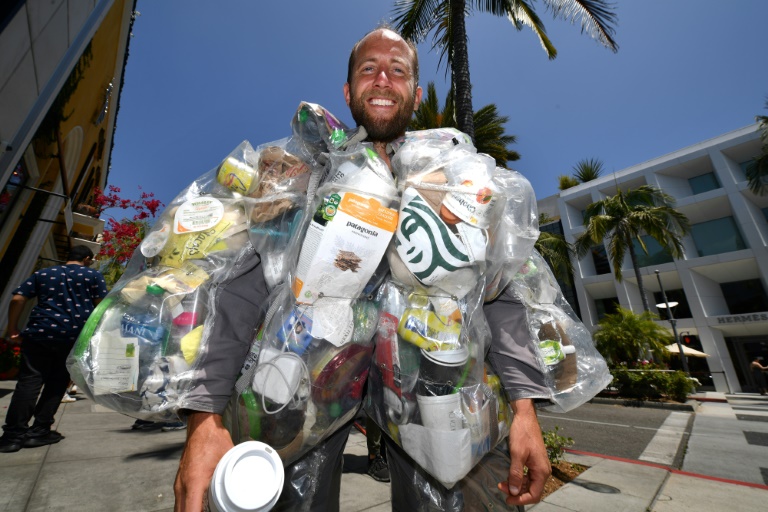
We all know someone with a rubbish fashion sense, but Rob Greenfield is proud to be wearing garbage — it’s all part of a plan to show just how much trash we unthinkingly throw away every month.

The campaigner is wandering the streets of Los Angeles and surrounding cities in a specially designed suit that holds all of the junk he has produced over the last few weeks.

“For most of us, trash is out of sight, out of mind,” he told AFP on the swanky shopping streets of Beverly Hills.

“We throw it in the garbage can and it goes away and we never think about it again. I wanted to create a visual that helps people to really see how much our trash adds up.”

With just a few days left to go in his challenge, Greenfield is wearing around 62 pounds (28 kilograms) of rubbish generated from the drinks, snacks and meals he has consumed.

All of it is packed in his clear plastic suit, with specially constructed pockets on the arms, legs and back.

The legs are already bulging with cans that clatter and restrict his ability to walk, adding to the overall impression of a robot made of junk.

“It was about day 12 that I started to really feel the burden of consumerism,” he said, noting that the average person in the US creates around five pounds of waste per day.

“I really started to feel the weight and see the visual and just say ‘wow, it’s astounding how much our trash really adds up’.”

Greenfield, who prides himself on living a minimalist life with only a handful of possessions, no bank account and no driving license, is no stranger to stunts aimed at raising awareness of environmental issues.

In 2019, he fed himself for a whole year on food he grew and harvested himself.

But for the purpose of the trash suit, he decided to put aside the asceticism and consume like the average American for 30 days.

The sight of a man wearing garbage as he wanders through upmarket parts of one of America’s most avowedly consumerist cities raises some eyebrows, but, he says, most people are interested in learning more.

“There are some people who think I’m someone who’s experiencing homelessness or that I have a mental health issue, but for the most part, people have just been very positive.

“People can understand this message and it helps me to really reach people from all walks of life.”

Smiley and discreet: the sociologist marrying Brazil's Lula

Rosangela da Silva is a smiley, politically active member of Brazil’s Workers’ Party, but the new wife of presidential hopeful Luiz Inacio Lula da Silva remains discreet when it comes to her private life.

Sociologist Da Silva and Lula, Brazil’s president from 2003 to 2010, were due to be married in a ceremony on Wednesday evening, the details of which were kept top-secret.

Pictures of the couple kissing and cuddling regularly go viral on social media but Da Silva will be brought into a new limelight if veteran socialist Lula returns to the presidency in elections later this year and makes her Brazil’s first lady.

“I’m in love as if I were 20 years old, as if it were my first girlfriend,” said Lula, 76, about his 55-year-old partner, nicknamed “Janja,” who is credited with giving the political icon a new lease on life.

Lula was left distraught when his wife of more than 30 years, with whom he had four children, Marisa Leticia, died in 2017.

He had also lost his first wife, Maria de Lourdes, to hepatitis, in 1971.

“When you lose your wife, you think, well, my life has no more meaning. Then suddenly this person appears who makes you feel like you want to live again,” Lula said in a recent interview with Time magazine.

“We will get married calmly and I will have a happy campaign,” said the former metal worker and trade unionist who is set for a fiery election battle against far-right incumbent Jair Bolsonaro in October.

Born in Sao Paulo, Da Silva has a degree in sociology from Parana University in the southern city of Curitiba, where Lula was jailed between April 2018 and November 2019 on controversial corruption charges.

She joined the Workers’ Party (PT) in 1983, two years after it was co-founded by Lula. She then worked for almost 20 years in the state energy company Itaipu Binacional.

– ‘Cuddle you forever’ –

Brazilian media say the couple have known each other for decades but Lula’s press service insists their amorous relationship began only at the end of 2017, during an event with left-wing artists.

The relationship was only made public in May 2019, more than a year after Lula was incarcerated.

“Lula is in love and the first thing he will want to do when he leaves prison is get married,” one of his lawyers said following a prison visit.

Even so, it has taken him two and a half years since his liberation to tie the knot, at a private ceremony for 200 guests in Sao Paulo that is shrouded in secrecy.

During Lula’s incarceration, Da Silva would often tweet about the pain of their forced separation.

“All I want is to be able to wrap my arms around you and cuddle you forever,” she wrote on the day Lula turned 74.

In November 2019, just after his liberation, they shared a kiss in front of masses of supporters outside the prison in Curitiba that had been his home for 18 months.

“I want to introduce you to someone I have already spoken about but whom some of you don’t know: my future spouse,” said an emotional Lula.

– ‘Very politicized’ –

Since Lula’s corruption conviction was annulled by the Supreme Court and he was again eligible to stand for election, Da Silva has accompanied him on his many trips, including to Mexico and Europe.

Lula has suggested that, as first lady, Da Silva could play a role in food security programs, in a country where the Covid-19 pandemic has led to increased hunger.

Although highly active on social media for the Lula campaign, Da Silva is very discreet when it comes to her personal life, of which little is known.

According to Veja magazine, she was married for more than 10 years before her relationship with Lula, although she does not have any children.

Da Silva “is very politicized, she has a good political mind and is very feminist,” Lula said in September, during an interview with rapper Mano Brown’s podcast.

UN urges Ukraine grain release, World Bank pledges extra $12 bn

The UN warned Wednesday that a growing global food crisis could last years if it goes unchecked, as the World Bank announced an additional $12 billion in funding to mitigate its “devastating effects.”

Food insecurity is soaring due to warming temperatures, the coronavirus pandemic and Russia’s invasion of Ukraine, which has led to critical shortages of grains and fertilizer.

At a major United Nations meeting in New York on global food security, Secretary-General Antonio Guterres said the war “threatens to tip tens of millions of people over the edge into food insecurity.”

He said what could follow would be “malnutrition, mass hunger and famine, in a crisis that could last for years,” as he and others urged Russia to release Ukrainian grain exports.

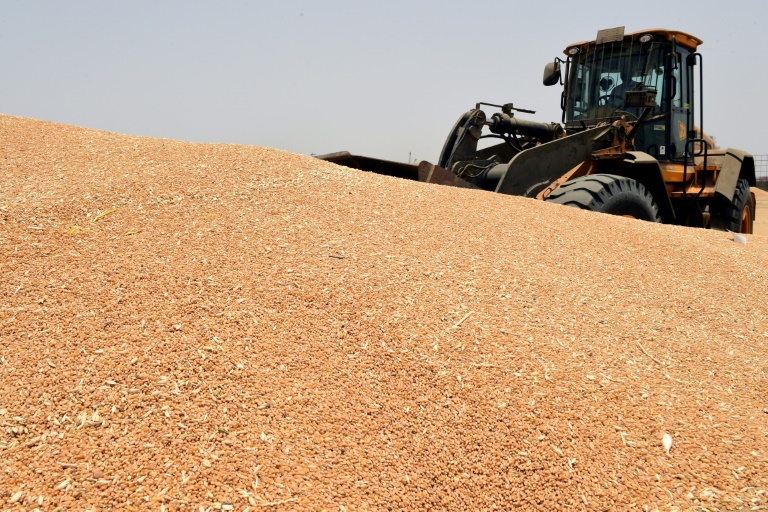
Russia and Ukraine alone produce 30 percent of the global wheat supply.

Moscow’s invasion of Ukraine and international economic sanctions on Russia have disrupted supplies of fertilizer, wheat and other commodities from both countries, pushing up prices for food and fuel, especially in developing nations.

Before the invasion in February, Ukraine was seen as the world’s bread basket, exporting 4.5 million tonnes of agricultural produce per month through its ports — 12 percent of the planet’s wheat, 15 percent of its corn and half of its sunflower oil.

But with the ports of Odessa, Chornomorsk and others cut off from the world by Russian warships, the supply can only travel on congested land routes that are far less efficient.

“Let’s be clear: there is no effective solution to the food crisis without reintegrating Ukraine’s food production,” Guterres said.

“Russia must permit the safe and secure export of grain stored in Ukrainian ports.”

US Secretary of State Antony Blinken, who chaired the summit, and World Food Programme head David Beasley echoed the call.

“The world is on fire. We have solutions. We need to act and we need to act now,” implored Beasley.

Russia is the world’s top supplier of key fertilizers and gas.

The fertilizers are not subject to the Western sanctions, but sales have been disrupted by measures taken against the Russian financial system while Moscow has also restricted exports, diplomats say.

Guterres also said Russian food and fertilizers “must have full and unrestricted access to world markets.”

– Ukraine only ‘latest shock’ –

Food insecurity had begun to spike even before Moscow, which was not invited to Wednesday’s UN meet, invaded its neighbor on February 24.

In just two years, the number of severely food insecure people has doubled — from 135 million pre-pandemic to 276 million today, according to the UN.

More than half a million people are living in famine conditions, an increase of more than 500 percent since 2016, the world body says.

The World Bank’s announcement will bring total available funding for projects over the next 15 months to $30 billion.

The new funding will help boost food and fertilizer production, facilitate greater trade and support vulnerable households and producers, the World Bank said.

The bank previously announced $18.7 billion in funding for projects linked to “food and nutrition security issues” for Africa and the Middle East, Eastern Europe and Central Asia, and South Asia.

Washington welcomed the decision, which is part of a joint action plan by multilateral lenders and regional development banks to address the food crisis.

The Treasury Department described Russia’s war as “the latest global shock that is exacerbating the sharp increase in both acute and chronic food insecurity in recent years” as it applauded institutions for working swiftly to address the issues.

India over the weekend banned wheat exports, which sent prices for the grain soaring.

The ban was announced Saturday in the face of falling production caused primarily by an extreme heatwave.

“Countries should make concerted efforts to increase the supply of energy and fertilizer, help farmers increase plantings and crop yields, and remove policies that block exports and imports, divert food to biofuel, or encourage unnecessary storage,” said World Bank President David Malpass.

UN urges Ukraine grain release, World Bank pledges extra $12 bn

The UN warned Wednesday that a growing global food crisis could last years if it goes unchecked, as the World Bank announced an additional $12 billion in funding to mitigate its “devastating effects.”

Food insecurity is soaring due to warming temperatures, the coronavirus pandemic and Russia’s invasion of Ukraine, which has led to critical shortages of grains and fertilizer.

At a major United Nations meeting in New York on global food security, Secretary-General Antonio Guterres said the war “threatens to tip tens of millions of people over the edge into food insecurity.”

He said what could follow would be “malnutrition, mass hunger and famine, in a crisis that could last for years,” as he and others urged Russia to release Ukrainian grain exports.

Russia and Ukraine alone produce 30 percent of the global wheat supply.

Moscow’s invasion of Ukraine and international economic sanctions on Russia have disrupted supplies of fertilizer, wheat and other commodities from both countries, pushing up prices for food and fuel, especially in developing nations.

Before the invasion in February, Ukraine was seen as the world’s bread basket, exporting 4.5 million tonnes of agricultural produce per month through its ports — 12 percent of the planet’s wheat, 15 percent of its corn and half of its sunflower oil.

But with the ports of Odessa, Chornomorsk and others cut off from the world by Russian warships, the supply can only travel on congested land routes that are far less efficient.

“Let’s be clear: there is no effective solution to the food crisis without reintegrating Ukraine’s food production,” Guterres said.

“Russia must permit the safe and secure export of grain stored in Ukrainian ports.”

US Secretary of State Antony Blinken, who chaired the summit, and World Food Programme head David Beasley echoed the call.

“The world is on fire. We have solutions. We need to act and we need to act now,” implored Beasley.

Russia is the world’s top supplier of key fertilizers and gas.

The fertilizers are not subject to the Western sanctions, but sales have been disrupted by measures taken against the Russian financial system while Moscow has also restricted exports, diplomats say.

Guterres also said Russian food and fertilizers “must have full and unrestricted access to world markets.”

– Ukraine only ‘latest shock’ –

Food insecurity had begun to spike even before Moscow, which was not invited to Wednesday’s UN meet, invaded its neighbor on February 24.

In just two years, the number of severely food insecure people has doubled — from 135 million pre-pandemic to 276 million today, according to the UN.

More than half a million people are living in famine conditions, an increase of more than 500 percent since 2016, the world body says.

The World Bank’s announcement will bring total available funding for projects over the next 15 months to $30 billion.

The new funding will help boost food and fertilizer production, facilitate greater trade and support vulnerable households and producers, the World Bank said.

The bank previously announced $18.7 billion in funding for projects linked to “food and nutrition security issues” for Africa and the Middle East, Eastern Europe and Central Asia, and South Asia.

Washington welcomed the decision, which is part of a joint action plan by multilateral lenders and regional development banks to address the food crisis.

The Treasury Department described Russia’s war as “the latest global shock that is exacerbating the sharp increase in both acute and chronic food insecurity in recent years” as it applauded institutions for working swiftly to address the issues.

India over the weekend banned wheat exports, which sent prices for the grain soaring.

The ban was announced Saturday in the face of falling production caused primarily by an extreme heatwave.

“Countries should make concerted efforts to increase the supply of energy and fertilizer, help farmers increase plantings and crop yields, and remove policies that block exports and imports, divert food to biofuel, or encourage unnecessary storage,” said World Bank President David Malpass.

Pee pals: Dolphins taste friends' urine to know they're around

Think about people you know, and how you could tell they were around even if you couldn’t see them: perhaps their voice, or a favored perfume.

For bottlenose dolphins, it’s the taste of urine and signature whistles that allow them to recognize their friends at a distance, according to a study published Wednesday in Science Advances. 

“Dolphins keep their mouths open and sample urine longer from familiar individuals than unfamiliar ones,” first author Jason Bruck of the Stephen F. Austin State University in Texas wrote in an email to AFP.

“This is important because dolphins are the first vertebrate ever shown to have social recognition through taste alone.”

The team, which included Sam Walmsley and Vincent Janik from the University of St Andrews, wrote that the use of taste could be highly beneficial in the open ocean because urine plumes persist for a while after an animal has left. 

This alerts dolphins to the recent presence of that individual even if it had not signaled its presence vocally.

The question of whether animals can attach “labels” to their friends in their minds has been difficult to answer.

Bottlenose dolphins, which use signature whistles to selectively address specific individuals, and can remember these for over 20 years, were thus an interesting test case.

To investigate, the team presented eight dolphins with urine samples from familiar and unfamiliar individuals, finding they spent around three times as long sampling urine from those they knew.

Genital inspection, in which a dolphin uses its jaw to touch the genitals of another individual, is common in their social interactions, providing a good opportunity to learn the taste of others’ urine. 

For the purposes of this study, the dolphins were trained to provide urine samples on demand in exchange for food.

Dolphins do not have olfactory bulbs, leaving the team certain it was taste and not smell at play.

For the second part of the experiment, the team paired urine samples with recordings of signature whistles played via underwater speakers, corresponding to either the same dolphin that provided the urine sample, or a mismatched sample.

Dolphins remained close to the speaker longer when the vocalizations matched the urine samples — potentially indicating that the two congruent lines of evidence together evoked more interest.

“It is not every day that scientists find evidence of ‘noun’-like use of signals in a non-human vocal system. That’s pretty exciting,” Bruck told AFP.

Dolphins have rich social worlds, he added, and it may be “just as advantageous for a dolphin to recognize alliance members as it is for them to recognize potential antagonists.”

– Obesity connection? –

The team suggested that lipids were likely responsible for individual chemical signatures.

“Given the recognition skills revealed in our study, we think that it is likely that dolphins can also extract other information from urine, such as reproductive state, or use pheromones to influence each other’s behavior,” they wrote.

In a surprising twist, the research could have implications for human obesity: the same gene that allows dolphins to identify lipids in urine is present in humans, where it helps people know when they have had enough to eat. 

Studying the gene in dolphins could therefore improve understanding of how it works in people.

The work could also have other implications: human-caused pollution such as oil spills or other chemical runoff may impede the dolphins’ ability to signal one another, thus doing even more harm than previously thought, said Bruck.

Close Bitnami banner
Bitnami