World

Japan urges China to play 'responsible' role on Ukraine crisis

Japan’s foreign minister on Wednesday urged Beijing to “play a responsible role” over Russia’s invasion of Ukraine in his first talks with his Chinese counterpart in six months.

Japan has joined Western allies in implementing tough sanctions against Russia over the Ukraine crisis, while Beijing has declined to condemn Moscow’s invasion.

Foreign Minister Yoshimasa Hayashi told his Chinese counterpart Wang Yi that Russia’s invasion “is a clear violation of the UN Charter and other international laws,” Japan’s foreign ministry said in a statement.

He “urged China to play a responsible role in maintaining international peace and security,” it added.

The talks were the first between the two foreign ministers since November, according to Japan, coming as concerns ramp up about geopolitical tensions.

China and Russia are perceived to be stepping up coordination, with Beijing pointedly refusing to join the outcry over Moscow’s invasion, though it has pledged not to circumvent sanctions over the war.

The talks come as US President Joe Biden is set to arrive in Japan this week after a stop in Seoul.

He will hold bilateral talks with Prime Minister Fumio Kishida and attend a meeting of the Quad grouping that includes Australia and India. 

The grouping has been seen as intended to pressure China as it builds its economic and military weight in the region.

China’s foreign ministry hit back after the talks on Wednesday, saying it hopes Japan “will learn from the lessons of history, focus on regional peace and stability, and act cautiously”.

“Bilateral cooperation between Japan and the United States should not provoke confrontation between camps, let alone harm China’s sovereignty, security and development interests,” it said in a statement.

Japan views Beijing’s growing military assertiveness with concern, and Hayashi raised issues including islands disputed between the countries and the situation in the East and South China Seas in talks with Wang.

But China is also Tokyo’s largest trading partner and Japan is keen to avoid being drawn into disputes between Beijing and Washington.

Hayashi said both China and Japan “should say what needs to be said and engage in dialogue”, warning that bilateral ties “face various difficulties and that public opinion in Japan is extremely severe towards China.”

Kosovo veterans jailed for war crimes witness intimidation

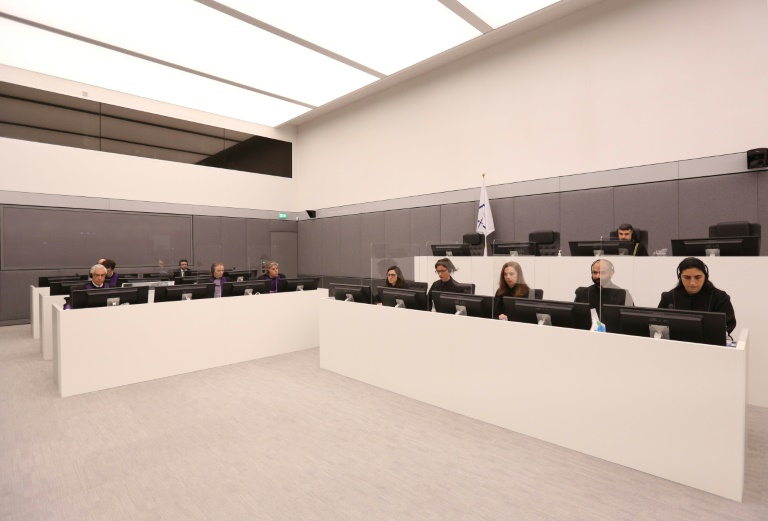
A war crimes court in The Hague jailed two Kosovo former separatist fighters to four-and-a-half years on Wednesday for intimidating witnesses, in its first verdict over Kosovo’s 1990s independence war from Serbia.

Hysni Gucati and Nasim Haradinaj, the head and the deputy head of a group of veterans from the Kosovo Liberation Army (KLA), were found guilty of revealing the details of hundreds of witnesses after receiving classified files from the court.

The two men, who were arrested in September 2022, called witnesses “traitors, spies and collaborators” in a bid to scare them off testifying to the Netherlands-based Kosovo Specialist Chambers, the court found.

“This judgment clearly paints those acts for what they are: criminal and not patriotic,” presiding judge Charles Smith said as he handed down the sentences at the high-security court.

“The message of the accused to these witnesses was: now that everyone knows who you are, no one can protect you.”

The time the men have already served in detention since their arrest will be deducted from the sentence, Smith said. They were also fined 100 euros each.

Gucati and Haradinaj, who had denied the charges, listened to the judgment through headphones and stood to be sentenced.

They were found guilty on five counts including intimidating witnesses and violating the secrecy of the court and cleared of one charge of “retaliation”.

The Kosovo Specialist Chambers operates under Kosovo law but is based in the Netherlands to shield witnesses from intimidation in Kosovo, where former KLA commanders have long dominated political life.

The court has issued war crimes charges against several senior members of the KLA, an ethnic Albanian guerrilla group that waged a 1998-99 independence struggle against Serbia.

They include Kosovo’s former president Hashim Thaci, who resigned after being indicted.

– ‘Traitors, spies, collaborators’ –

Gucati and Haradinaj were arrested by heavily armed EU police in a raid on the veterans’ headquarters Pristina in September 2020 and sent to The Hague for trial.

The veterans’ association said it had received anonymous packages of the court’s confidential files including information about protected witnesses and upcoming indictments.

Judges said Gucati and Haradinaj received three batches of classified information from the court and revealed them during three press conferences between September 7 and 25, 2020.

They also handed out the information to journalists and gave interviews, the judges said. 

“These acts took place in a climate of witness intimidation,” judge Smith said.

“The accused referred to witnesses and potential witnesses using derogatory and threatening language, calling them traitors, spies, collaborators.”

The court is investigating claims that the Kosovo rebels waged a campaign of revenge attacks on Serbs, Roma and ethnic Albanian rivals during and after the war.

Thaci — the rebels’ former political chief — was accused by prosecutors of being “criminally responsible for nearly 100 murders”.

He pleaded not guilty when he appeared in court in November 2020.

Another former commander, Salih Mustafa, compared the court to Nazi Germany’s Gestapo secret police when he appeared in the dock in September last year.

Many KLA veterans fiercely oppose the tribunal’s mandate, defending their “just” liberation war against Belgrade’s oppression of Kosovo’s ethnic Albanian population.

The conflict left 13,000 people dead, mainly ethnic Albanians, and saw several top Serbian politicians and generals later jailed for war crimes.

Tensions between Belgrade and Pristina have remained high.

Serbia as well as its powerful allies China and Russia still do not recognise Kosovo’s 2008 independence declaration, which has been recognised by more than 100 countries.

War in Ukraine: Latest developments

Here are the latest developments in the war in Ukraine:

– Finland, Sweden submit NATO bids –

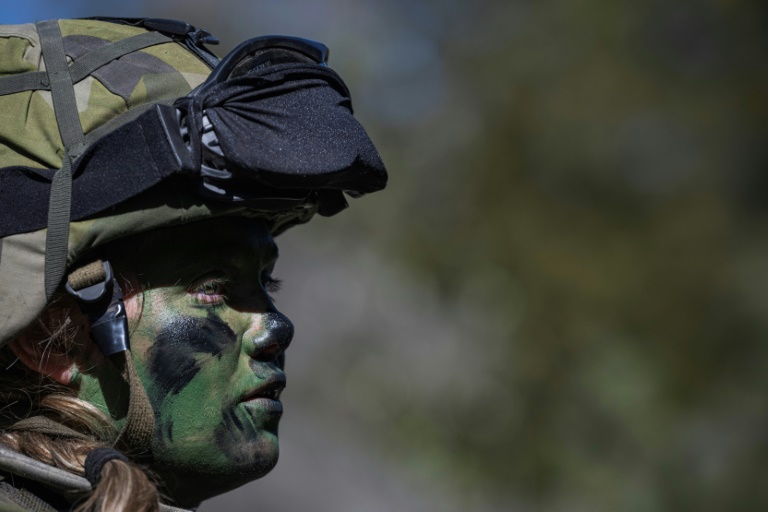
Finland and Sweden submit their highly anticipated bids to join NATO, sealing their decision to jettison decades of military non-alignment, despite threats of reprisals from Moscow.

NATO chief Jens Stoltenberg calls the move a “historic step”. He has promised to welcome them “with open arms” despite Turkey’s threat to veto their membership over its claim that the Nordic neighbours harbour members of armed groups opposed to Ankara.

NATO ambassadors are expected to discuss the applications on Wednesday.

Finland, which shares a 1,300-kilometre (800-mile) border with Russia, and Sweden fear they could be future targets of Russian aggression following Moscow’s invasion of Ukraine. Public support in the two countries for NATO membership skyrocketed after the war began.

– 959 Mariupol fighters have surrendered: Russia –

Russia says that a total of 959 Ukrainian soldiers have surrendered at the besieged Azovstal steel plant in the Russian-occupied port city of Mariupol, including 80 wounded.

The defence ministry in Moscow said that a further 694 fighters had surrendered in the past 24 hours after a first group of 265 laid down arms and left the plant on Monday.

It said that the injured are being treated in a hospital in a part of the eastern Donetsk region controlled by pro-Russian rebels.

It is unclear if any troops are continuing to hold out at the sprawling steel mill, which has become a symbol of resistance to Russia’s invasion of Ukraine.

Ukraine, which had yet to confirm the second wave of departures, says it hopes to exchange Azovstal troops taken prisoner for Russian soldiers it is holding.

– First war crimes trial – 

A 21-year-old Russian soldier accused of killing an unarmed Ukrainian civilian on his bicycle is due to go on trial in Kyiv for war crimes, in the first such case to go to court since the start of the offensive.

Vadim Shishimarin from Irkutsk in Siberia is accused of gunning down the 62-year-old man near the central village of Chupakhiva to prevent him reporting a carjacking by fleeing Russian troops.

He faces possible life imprisonment on charges of war crimes and premeditated murder. In a video shot in custody he said he was ordered to shoot the cyclist, who has not been named.

“By this first trial, we are sending a clear signal that every perpetrator, every person who ordered or assisted in the commission of crimes in Ukraine shall not avoid responsibility,” prosecutor general Iryna Venediktova said. 

– Peace talks on hold –

Ukraine says that peace talks to end the war have been suspended, blaming Moscow for failing to find areas for compromise.

“The negotiation process is on hold,” Mykhaylo Podolyak, a presidential aide is cited as saying in a statement issued by the presidency.

The two sides reported progress at talks in Istanbul in late March but have stalled since the discovery of hundreds of bodies of civilians allegedly massacred by Russian forces around Kyiv.

– ICC sends investigators –

The International Criminal Court says it is sending a team of 42 investigators, forensic experts and support staff to Ukraine to probe war crimes and crimes against humanity.

ICC prosecutor Karim Khan says it is the largest ever deployment of investigators by the court since its establishment.

– Zelensky calls Cannes –

Ukrainian President Volodymyr Zelensky makes a surprise video address to the opening ceremony of the Cannes Film Festival in France.

“In the end, hatred will disappear and dictators will die,” he tells the audience who give him a standing ovation.

The Ukrainian leader also addressed the Grammys in  April.

burs-cb/spm

Pollution behind 1 in 6 global deaths in 2019: study

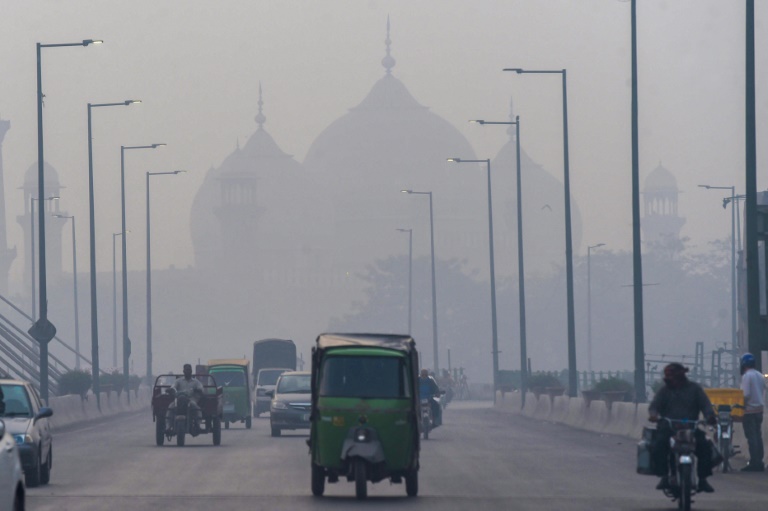
Pollution caused some 9 million people to die prematurely in 2019, according to a new global report published Wednesday, with experts raising alarm over increasing deaths from breathing outside air and the “horrifying” toll of lead poisoning.    

Human-created waste in the air, water and soil rarely kills people immediately, but causes instead heart disease, cancer, respiratory problems, diarrhoea and other serious illnesses.  

The Lancet Commission on pollution and health said the impact from pollution on global health remains “much greater than that of war, terrorism, malaria, HIV, tuberculosis, drugs and alcohol”. 

Pollution is an “existential threat to human health and planetary health, and jeopardises the sustainability of modern societies,” it added.

In general, the review found, air pollution — accounting for a total of 6.7 million deaths globally in 2019 — was “entwined” with climate change because the main source of both problems is burning fossil fuels and biofuels.  

“If we can’t manage to grow in a clean and green way, we’re doing something terribly wrong,” said the report’s lead author Richard Fuller, of the Global Alliance on Health and Pollution, adding that chemical pollution also harms biodiversity — another major global threat. 

“These things are terribly connected and strategies to deal with one have ripple effects all the way through,” he said.

Overall, one in six premature deaths globally — or nine million — were caused by pollution, a figure unchanged since the last assessment in 2015. 

Researchers noted a reduction in mortality linked to indoor air pollution, unsafe drinking water and inadequate sanitation, with major improvements seen in Africa.  

But early deaths associated with industrialisation — outdoor air and chemical pollution — are on the rise, particularly in southern and eastern Asia. 

Ambient air pollution caused some 4.5 million deaths in 2019, according to the study, published in Lancet Planetary Health, compared with 4.2 million in 2015 and just 2.9 million in 2000. 

Chemical pollution is also increasing, with lead poisoning alone causing 900,000 deaths. Even that, the report warned, is likely a “substantial undercount” in light of new research suggesting there is no safe level of exposure.

– Harmful to children –

Algeria banned lead in petrol in 2021, the last country to do so. 

But people continue to be exposed to the toxic substance, largely due to unregulated recycling of lead-acid batteries and e-waste. Contaminated culinary spices are also a culprit.   

“The fact that lead is getting worse, mostly in poorer countries, and ramping up in terms of the number of deaths, is horrifying,” said Fuller.

Heart disease is the cause of almost all early deaths from exposure to lead, which hardens arteries, said Fuller. 

But elevated lead levels in blood — estimated to affect hundreds of millions of children — also harm brain development and are linked to serious losses of cognitive function. 

The report said lead is also linked to a spike in behavioural disorders and diminished economic productivity, with global economic losses estimated at almost $1 trillion annually. 

In Africa, economic losses from lead-related IQ loss are equivalent to about four percent of gross domestic product, while in Asia it amounts to two percent. 

– Silent killer –

Overall, excess deaths due to pollution have led to economic losses totalling $4.6 trillion in 2019, or around six percent of global economic output, researchers said.

Low- and middle-income countries are by far the most affected, with more than 90 percent of deaths in these regions.

There is also increasing evidence of pollution crossing national boundaries in wind, water and the food chain.  

Wealthier nations that have reduced domestic outdoor air pollution effectively “displace” it overseas to countries with higher levels of manufacturing, the report said.

Prevailing global winds transport air pollution from east Asia to North America, from North America to Europe, and from Europe to the Arctic and central Asia. 

Meanwhile, cereals, seafood, chocolate and vegetables produced for export in developing countries can be contaminated as a result of soil and water polluted with lead, arsenic, cadmium, mercury and pesticides. 

This “increasingly threatens global food safety”, the report said, adding that “toxic metals found in infant formula and baby foods are of particular concern.”

Fuller said the threat of pollution — particularly air and lead pollution — is underappreciated, with more attention focused on the health implications of microplastics. 

“We can show a million people dying from lead pollution right now — more than die from malaria, more than die from HIV — and that’s not even discussed,” he said.

Asian markets mixed after US retail data boosts Wall Street

Asian stocks were mixed Wednesday following a strong start in some markets, which took the lead from Wall Street where traders were cheered by brisk US retail sales data.

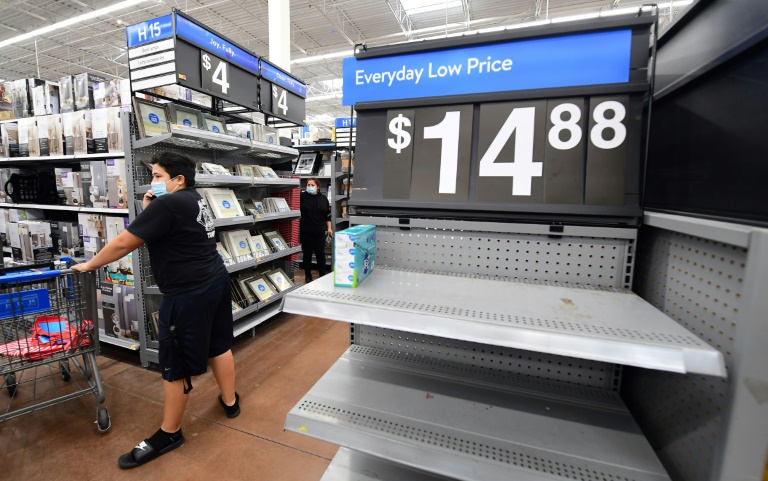
The US Federal Reserve’s tightening of monetary policy to contain surging inflation has sent jolts through global markets, deepening the apprehensions of investors already roiled by China’s Covid-19 lockdowns and the Russian invasion of Ukraine.

But there was some good news out of the United States, with data showing increased spending by Americans in April. Retail sales rose 0.9 percent — partly boosted by a rebound in auto purchases.

“The economy is slowing but the consumer still looks good and that means the economy is still positioned to avoid a recession,” said Edward Moya of OANDA. 

Industrial production also rose in April — “another sign the economy isn’t falling apart just yet”, he added.

Wall Street closed with gains, with the tech-rich Nasdaq jumping nearly three percent.

Tokyo, Sydney and Singapore stayed up in Wednesday’s trade thanks to the bounce in New York, while Hong Kong and Shanghai between red and green. 

The US consumer data added to the boost earlier this week from China, where authorities said Shanghai — the economic engine of the world’s second-largest economy — will “gradually reopen” businesses.

Most of the city’s 25 million people were placed under lockdown for weeks as authorities battled a major virus outbreak.

Millions were still confined to their homes Wednesday as confusion abounded over official statements about achieving zero Covid cases.

But just the indication of an easing was enough to cheer markets, which have been rattled by concerns about the impact of China’s lockdowns on the global economy — especially with snarled supply chains.

Communist leaders also held a rare meeting Tuesday with tech executives to express support for a sector Beijing had cracked down on before Covid started inflicting economic wounds. 

“Although investors are aware that there won’t be many punitive measures for tech from now, Covid concerns will continue to depress valuations across the board,” Hou Anyang, fund manager at Frontsea Asset Management, told Bloomberg.

– Fed inflation plans –

Central banks around the world are concerned about skyrocketing prices, and on Tuesday Federal Reserve Chair Jerome Powell said there needs to be “clear” evidence that inflation is coming down before efforts to cool the economy can be pulled back.

He acknowledged that it may be a “bumpy” ride that would inflict some pain.

His comments were in line with market expectations, said Stephen Innes of SPI Asset Management. 

“Still, the debate is evolving among the active trading community from recessionary capitulation mode to one that is short and not a particularly deep recession,” he said. 

“So while this is a tacit acceptance that the Fed is in catch-up mode and is prepared to constrain demand to get inflation down, they are unlikely to do it in a jackhammer fashion.”

Across the Atlantic, Britain’s annual inflation rate surged to a 40-year high at 9.0 percent for April, according to a statement from the Office for National Statistics on Wednesday. 

London slid at the open, while Frankfurt and Paris wavered.

Bank of England governor Andrew Bailey warned earlier in the week of “apocalyptic” food costs fuelled by the war in Ukraine, a major wheat and cooking oil producer.

– Key figures at around 0830 GMT –

Hong Kong – Hang Seng Index: UP 0.2 percent at 20,644.28 (close)

Shanghai – Composite: DOWN 0.3 percent at 3,085.98 (close)

London – FTSE 100: DOWN 0.2 percent at 7,505.88

Tokyo – Nikkei 225: UP 0.9 percent at 26,911.20 (close)

Brent North Sea crude: UP 1.5 percent at $113.57 per barrel

West Texas Intermediate: UP 1.9 percent at $114.52 per barrel

Euro/dollar: DOWN at $1.0497 from $1.0550 at 2030 GMT Tuesday

Pound/dollar: DOWN at $1.2382 from $1.2486

Euro/pound: UP at 84.77 pence from 84.47 pence 

Dollar/yen: DOWN at 129.16 yen from 129.37 yen

New York – Dow: UP 1.3 percent at 32,654.59 (close)

Climate change indicators hit record highs in 2021: UN

Four key climate change indicators all set new record highs in 2021, the United Nations said Wednesday, warning that the global energy system was driving humanity towards catastrophe.

Greenhouse gas concentrations, sea level rise, ocean heat and ocean acidification all set new records last year, the UN’s World Meteorological Organization (WMO) said in its “State of the Global Climate in 2021” report.

The annual overview is “a dismal litany of humanity’s failure to tackle climate disruption”, UN chief Antonio Guterres said.

“The global energy system is broken and bringing us ever closer to climate catastrophe.

“We must end fossil fuel pollution and accelerate the renewable energy transition before we incinerate our only home.”

The WMO said human activity was causing planetary-scale changes on land, in the ocean and in the atmosphere, with harmful and long-lasting ramifications for ecosystems.

– Record heat –

The report confirmed that the past seven years were the top seven hottest years on record.

Back-to-back La Nina events at the start and end of 2021 had a cooling effect on global temperatures last year.

Even so, it was still one of the warmest years ever recorded, with the average global temperature in 2021 about 1.11 degrees Celsius above the pre-industrial level.

The 2015 Paris Agreement on climate change saw countries agree to cap global warming at “well below” 2C above average levels measured between 1850 and 1900 — and 1.5C if possible.

“Our climate is changing before our eyes,” said WMO chief Petteri Taalas.

“The heat trapped by human-induced greenhouse gases will warm the planet for many generations to come. Sea level rise, ocean heat and acidification will continue for hundreds of years unless means to remove carbon from the atmosphere are invented.”

– ‘Consistent picture of warming world’ –

Four key indicators of climate change “build a consistent picture of a warming world that touches all parts of the Earth system”, the report said.

Greenhouse gas concentrations reached a new global high in 2020, when the concentration of carbon dioxide (CO2) reached 413.2 parts per million (ppm) globally, or 149 percent of the pre-industrial level.

Data indicate that they continued to increase in 2021 and early 2022, with monthly average CO2 at Mona Loa in Hawaii reaching 416.45 ppm in April 2020, 419.05 ppm in April 2021, and 420.23 ppm in April 2022, the report said.

Global mean sea level reached a new record high in 2021, rising an average of 4.5 millimetres per year throughout 2013 to 2021, the report said.

GMSL rose by 2.1 mm per year between 1993 and 2002, with the increase between the two time periods “mostly due to the accelerated loss of ice mass from the ice sheets”, it said.

– Signs in the seas –

Ocean heat hit a record high last year, exceeding the 2020 value, the report said. 

And it is expected that the upper 2,000 metres of the ocean will continue to warm in the future — “a change which is irreversible on centennial to millennial timescales”, said the WMO, adding that the warmth was penetrating to ever deeper levels.

The ocean absorbs around 23 percent of the annual emissions of human-caused CO2 into the atmosphere. While this slows the rise of atmospheric CO2 concentrations, CO2 reacts with seawater and leads to ocean acidification.

The UN’s Intergovernmental Panel on Climate Change concluded with “very high confidence” that open ocean surface acidity is at the highest “for at least 26,000 years”.

Meanwhile the report said the Antarctic ozone hole reached an “unusually deep and large” maximum area of 24.8 million square kilometres in 2021, driven by a strong and stable polar vortex.

Guterres proposed five actions to jump-start the transition to renewable energy “before it’s too late”.

Among them, he suggested ending fossil fuel subsidies, tripling investments in renewable energy and making renewable energy technologies, such as battery storage, freely-available global public goods.

“If we act together, the renewable energy transformation can be the peace project of the 21st century,” Guterres said.

Finland, Sweden apply to join NATO as first Ukraine war crimes trial begins

Finland and Sweden on Wednesday submitted a joint application to join NATO as Russia’s invasion of Ukraine forces a dramatic reappraisal of security in Europe.

The reversal of the Nordic countries’ longstanding policy of non-alignment came as the war nears its third month and Ukraine strives to evacuate the last of its soldiers holed up at the Azovstal steelworks in Mariupol. 

Azovstal has become emblematic of the fierce Ukrainian resistance that has forced Russian President Vladimir Putin to reorient his military goals after a devastating campaign strewn with alleged war crimes.

In Ukraine’s capital Kyiv, the first war crimes trial of a Russian soldier since the invasion began was set to get under way at 1100 GMT.

“By this first trial, we are sending a clear signal that every perpetrator, every person who ordered or assisted in the commission of crimes in Ukraine shall not avoid responsibility,” prosecutor general Iryna Venediktova said. 

At NATO headquarters in Brussels, alliance chief Jens Stoltenberg formally received the applications from the Finnish and Swedish ambassadors, calling them “an historic step”.

“All allies agree on the importance of NATO enlargement. We all agree that we must stand together and we all agree that this is an historic moment which we must seize,” he said.

The membership push could represent the most significant expansion of NATO in decades, doubling its border with Russia, and Putin has warned it may trigger a response from Moscow. 

But the applications face resistance from NATO member Turkey, which has threatened to block them over accusations the Nordic neighbours act as safe havens for armed groups opposed to Ankara. 

Western allies remain optimistic they can overcome Turkey’s objections and for now, several including Britain have offered security guarantees to Finland and Sweden to guard against any Russian aggression.

– Mediators for Azovstal –

On the ground, in the ruined port city of Mariupol, a unit of soldiers had been holding out in Azovstal’s underground maze of tunnels, but Moscow said Wednesday that 959 of the troops had surrendered this week.

Kyiv’s defence ministry said it would do “everything necessary” to rescue the undisclosed number of personnel still in the steelworks, but admitted there was no military option available.

“The evacuation mission continues, it is overseen by our military and intelligence,” Ukrainian President Volodymyr Zelensky said in his nightly address. 

“The most influential international mediators are involved.”

Zelensky’s aide, Oleksiy Arestovich, said he would not comment further while the operation was ongoing. “Everything is too fragile there and one careless word can destroy everything,” he said. 

Those who have left Azovstal were taken into Russian captivity, including 51 who were heavily wounded, the Russian defence ministry said.

The ministry, which published images showing soldiers on stretchers, said the injured were transported to a hospital in the eastern Donetsk region controlled by pro-Kremlin rebels.

The defence ministry in Kyiv said it was hoping for an “exchange procedure… to repatriate these Ukrainian heroes as quickly as possible”.

But their fate was unclear, with Kremlin spokesman Dmitry Peskov refusing to say whether they would be treated as criminals or prisoners of war.

Putin had “guaranteed that they would be treated according to the relevant international laws”, Peskov said.

– ‘My war is not over’ –

Despite their last-ditch resistance in places such as Mariupol, and their successful defence of Kyiv, Ukrainian forces are retreating across swathes of the eastern front.

White smoke from burning fields marks the pace of Russia’s advance around the village of Sydorove, on the approaches to the militarily important city of Slovyansk and Ukraine’s eastern administrative centre in Kramatorsk.

Army volunteer Yaroslava, 51, sat on a slab of concrete jutting out from the remains of a school in Sydorove where her husband’s unit had set up camp before it was hit by a Russian strike.

She stared at a spot where rescuers and de-miners had spotted a motionless hand reaching out from the rubble.

“We had settled in London before the war but felt like we had no choice but to come back,” Yaroslava said.

“My two sons have just signed three-year contracts with the army. We will fight. We will still fight,” she said without moving her eyes. 

“My war is not over.”

The war crimes trial in Kyiv, expected to be followed by several others, will test the Ukrainian justice system at a time when international bodies are also conducting their own investigations.

Vadim Shishimarin, 21, from Irkutsk in Siberia, is accused of shooting an unarmed 62-year-old man in Ukraine’s Sumy region on February 28 — four days into the invasion.

Shishimarin faces a possible life sentence. Prosecutors said he was commanding a unit in a tank division when his convoy came under attack.

He and four other soldiers stole a car and encountered the man on a bicycle, shooting him in cold blood, according to the prosecutors.

The International Criminal Court said Tuesday it was deploying its largest-ever field team to Ukraine, with 42 investigators, forensic experts and support staff being sent into the field to gather evidence of alleged atrocities.

The US State Department also announced it was creating a special unit to research, document and publicise Russian war crimes.

The Conflict Observatory will “capture, analyse, and make widely available evidence of Russia-perpetrated war crimes and other atrocities in Ukraine”, the department said Tuesday.

Casino mogul Wynn sued for acting as agent for China

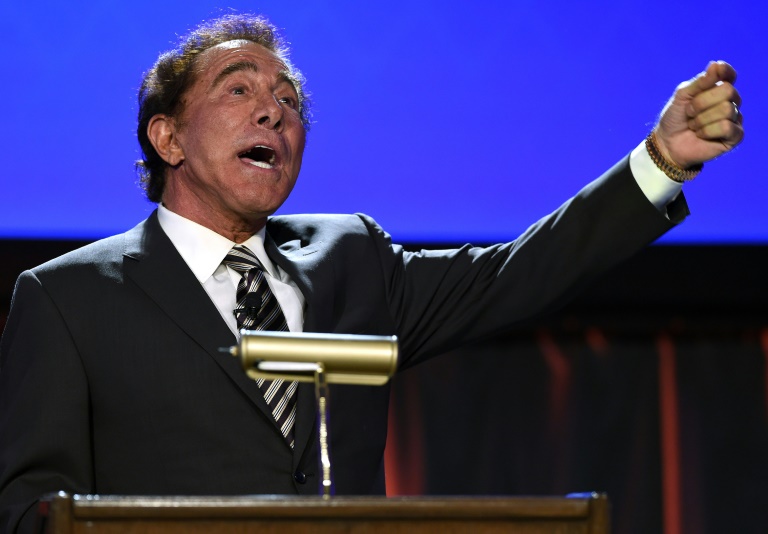
The US Justice Department sued Las Vegas and Macau casino mogul Steve Wynn Tuesday to force him to register officially as an agent for the Chinese government.

Wynn, the founder and former chief executive of Wynn Resorts, acted on behalf of Beijing in 2017 when he met with president Donald Trump and senior administration officials in a Chinese effort to gain custody over exiled tycoon Guo Wengui, the department said.

Guo was wanted in China for financial fraud and other allegations, but was close to Trump advisor Steve Bannon, supporting Bannon’s media business and other activities, and had asked for political asylum in the United States.

The Justice Department said that in June and August 2017, Wynn contacted Trump and had dinner with the president to convey Beijing’s request that the US cancel Guo’s visa or have him otherwise removed from the country.

“Wynn engaged in these efforts at the request of Sun Lijun, then-vice minister of the MPS,” the Justice Department said, referring to China’s Ministry of Public Security.

Besides raising it with Trump, Wynn, who was a former Republican Party finance chairman, also had “multiple discussions” with senior White House and National Security Council officials “about organizing a meeting with Sun and other PRC government officials” on the issue, it said.

At the time Wynn’s company owned and operated three casinos in Macau, Asia’s largest gambling hub.

The Justice Department alleges that Wynn carried out Sun’s requests “out of a desire to protect his business interests in Macau.”

It says that Wynn was advised that he had to register as a lobbyist for China under the Foreign Agents Registration Act, but refused to do so.

Asked about the department’s move at a regular press briefing on Wednesday, Beijing said Washington was “deliberately hyping the threat of China.”

“We hope the US can abandon a Cold War and zero-sum-game mentality, stop making China an issue, and stop throwing dirty water at China,” said foreign ministry spokesman Wang Wenbin.

Wynn was enlisted in the lobbying effort partly by another wealthy US businessman, Trump friend and former top Republican fundraiser, Elliott Broidy. 

In 2020, Broidy pleaded guilty to violating the Foreign Agents Registration Act and forfeited $6.6 million in a plea deal.

Wynn, 80, was forced to step down as CEO of Wynn Resorts in 2018 amid sexual misconduct allegations.

In September, three companies owned by Guo were ordered by the US Securities and Exchange Commission to pay $539 million in penalties to settle charges over illegal cryptocurrency sales.

Climate-stricken world needs renewables Marshall Plan: UN chief

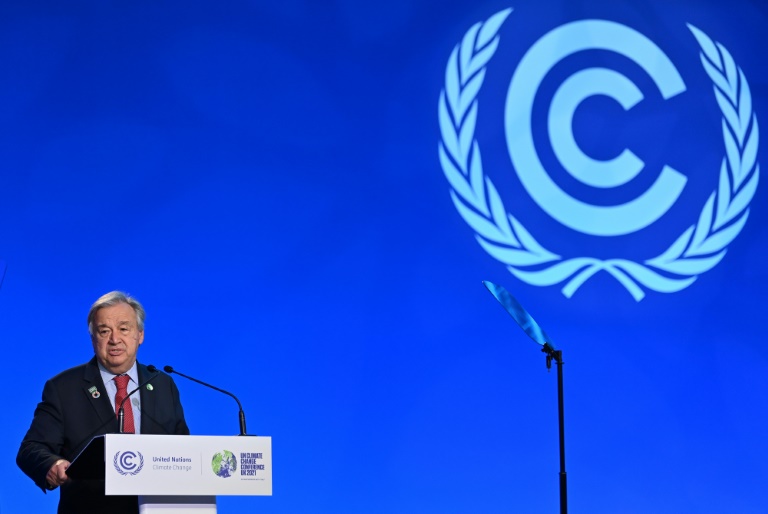
UN chief Antonio Guterres on Wednesday outlined what amounts to a global Marshall Plan for ushering in a world powered by renewable energy rather than coal, gas and oil.

To avoid catastrophic climate change, humanity must “end fossil fuel pollution and accelerate the renewable energy transition, before we incinerate our only home,” he said in prerecorded remarks timed to coincide with the release of a major UN state-of-climate report.

Renewable technologies should be treated as freely available “global public goods”, unconstrained by intellectual property, he said.

One option might be so-called patent pooling, as has been done by major drug companies to speed the delivery of life-saving drugs for HIV/AIDS and tuberculosis, noted a senior UN official who asked not to be named.  

“The Secretary-General believes that the conversation around intellectual property should happen because we are in a crisis,” the UN official said. 

“If we have a ready solution, why not relax intellectual property rules so that solution can help us solve this crisis?”

Guterres singled out battery storage, calling for an international coalition of industry, tech companies and financial institutions, led by governments, to “fast-track innovation and deployment”.

Solar and wind are the fastest growing clean energy technologies, but storing renewable electricity that can only be generated when the sun is shining or the wind blowing has been a persistent bottleneck for even more rapid rollout.

– Not fast enough –

It was unclear whether Guterres envisions a new oversight body or favours working through existing structures, such as the 86-nation International Solar Alliance or the G20 group of major economies.

The UN chief’s five-point plan to “jump-start” a renewables boom also called for scaling-up and diversifying the supply of critical components and raw materials, such as rare Earth metals.

Currently, lithium — crucial to the manufacture of electric vehicle batteries — is sourced from a handful of countries, with China controlling 80 percent of global refining, according to BloombergNEF.

Transitioning to clean energy will also require far greater supplies of copper, silicon, nickel, cobalt and other elements that are scarce and/or in high demand.

Europe alone is estimated to need 35 times more lithium than it uses today over the next three decades.

Expanding renewable capacity is forecast to account for almost 95 percent of the increase in global electricity through 2026, according to the International Energy Agency (IEA). 

But projected growth is not nearly fast enough to ensure the Paris Agreement target of capping global warming at 1.5 degrees Celsius above preindustrial levels.

Currently, solar and wind energy only account for eight percent of global electricity generation. Adding hydro and other renewable sources pushes the total up to 30 percent, with coal and gas still dominant overall.

– $11 million –

Guterres also said governments must cut red tape and streamline approvals for solar and wind projects.

The IEA has identified the issuing of permits and grid integration as major barriers to accelerating renewables deployment. 

“In Europe, it takes eight years for a wind project to be approved,” the UN official said. 

“In the United States, I understand that it can take as much as a decade at the federal level alone, where one needs to go through about 28 federal agencies.”

The UN Secretary-General also called for an end to approximately half-a-trillion dollars in fossil fuel subsidies, roughly two-thirds of which go to consumers and the rest directly to industry.

“Every minute of every day, coal, oil and gas receive roughly $11 million in subsidies,” Guterres said. 

“While people suffer from high prices at the pump, the oil and gas industry is raking in billions from a distorted market,” he added. “This scandal must stop.”

Finally, Guterres challenged private and public finance to scale up investment in solar and wind to at least $4 trillion a year, more than triple current levels.

Development banks and finance institutions should align their lending portfolios with the Paris treaty temperature targets by 2024, he said. 

Albania's Soviet-era sub awaits its fate, refusing to sink

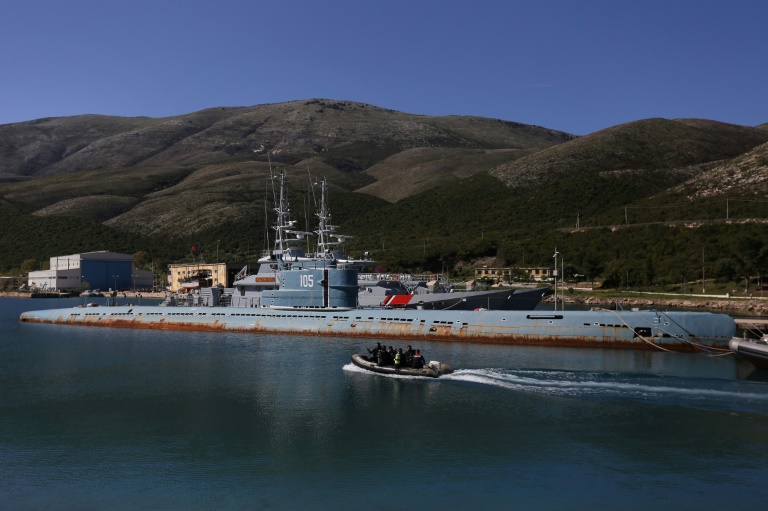
Retired sergeant Neim Shehaj spends his days repairing a Soviet-era submarine, a witness to Albania’s tumultuous communist past that is now rusting, half-submerged, at an Adriatic naval base.

The fate of the Cold War submarine at the Pashaliman base — from where Moscow once hoped to control the Mediterranean — hangs in the balance as authorities remain undecided over what to do.

“This submarine is like a church to me… I arrived here as a young sailor and now my hair is grey,” Shehaj, 63, who served on it for about three decades, tells AFP.

If the submarine is not taken out of the sea soon “it risks sinking to the bottom, and all its history with it”, he warns.

The vessel was part of the so-called Project 613 consisting of the first submarines that the Soviet Union built after World War II. 

It is the only remaining one out of 12 that Moscow deployed at the Pashaliman base in Vlora Bay in the late 1950s when Albania and the USSR were still close allies.

“From there I could control the Mediterranean to Gibraltar,” retired submarine commander Jak Gjergji recalls Soviet leader Nikita Khrushchev as saying in 1959 during a visit to the base.

Khrushchev hoped to install long-range missiles, warships and an airport at the base in Albania’s southwest.

– ‘Tore it with rage’ – 

But Albania’s paranoid communist dictator Enver Hoxha eventually broke off close ties with the USSR, accusing Moscow of deviating from true Marxism.

That complicated matters for the mixed Albanian-Russian submarine crews.

“The sailors of the two countries no longer spoke to each other and incidents were frequent,” recalls the 87-year-old Gjergji.

“When a Russian sailor wanted to raise (his country’s) red flag with the hammer and sickle, an Albanian one immediately tore it with rage.”

After the 1961 split between Tirana and Moscow, the latter recalled eight submarines.

In 1997 almost a decade after the fall of communism, as unrest swept Albania after several bogus savings schemes collapsed, the base was looted and submarines were stripped of their weapons, engines and even the sailors’ beds.

The authorities dismantled three of the four remaining submarines and sold them for metal in 2009.

Just one survived — thanks to literature.

Albania’s most famous writer Ismail Kadare in his 1973 novel “The Winter of Great Solitude”, about the break between Moscow and Tirana, arbitrarily assigned the submarine the number 105.

– Saved by a novel –

“This is the only number that came to my mind while I was writing” the novel, Kadare tells AFP.

“Ever since, the submarine is known by this number. It is also thanks to this number… that it is alive today!”

Through the book, the sub’s historical notoriety and cultural significance took on symbolic value.

Its fame was further cemented when a film based on the novel was made, for which the number 105 was painted on the submarine and still remains.

But its survival is also largely down to the determination of Shehaj, who for years has been refurbishing the 76-metre (250-foot) submarine, its electrical network, ventilation system, command post and torpedo room.

He tends to the tiniest of details, while also filling holes in the hull to stop the submarine from sinking for good. 

“The authorities have to decide quickly what to do with it, the risks are major, the sea water accelerates the corrosion considerably,” the 63-year-old warns.

The culture ministry, which pledged for years to restore the submarine, told AFP that it would “forward the file” to the defence ministry, which could include it in a future Cold War museum.

– Submarine tunnel –

Albania embraced the West after the fall of communism in 1990, joined NATO and aspires to join the European Union.

The base has been of “great importance since antiquity due to its geostrategic position… all maritime traffic in the Adriatic Sea but also in the Mediterranean can be controlled” from it, flotilla commander Sabri Gjinollari says.

At the nearby base of Porto Palermo, an abandoned vast anti-atomic submarine tunnel, dug into the rock in the late 1960s, was intended for Chinese missile boats that never arrived.

Hoxha broke ties with Beijing in 1978 and the tunnel, accessed by AFP, was used for a while as a shelter for submarines and other vessels.

Now, a giant red star painted on a dilapidated wall is the only hint of its past under communism.

Some would also like the site, in one of the most beautiful corners of the Albanian coast, to be turned into a museum.

But, the base commander Shkelqim Shytaj disagrees.

“We would prefer it to be used by the army, even in a reduced capacity.”

Close Bitnami banner
Bitnami