World

War in Ukraine: Latest developments

Here are the latest developments in the war in Ukraine:

– Finland, Sweden submit NATO bids –

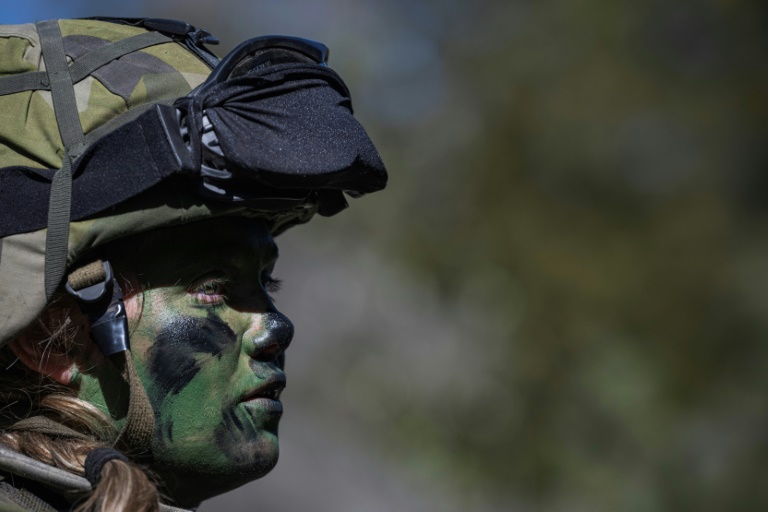
Finland and Sweden submit their highly anticipated bids to join NATO, sealing their decision to jettison decades of military non-alignment, despite threats of reprisals from Moscow.

NATO chief Jens Stoltenberg calls the move a “historic step”. He has promised to welcome them “with open arms” despite Turkey’s threat to veto their membership over its claim that the Nordic neighbours harbour members of armed groups opposed to Ankara.

NATO ambassadors are expected to discuss the applications on Wednesday.

Finland, which shares a 1,300-kilometre (800-mile) border with Russia, and Sweden fear they could be future targets of Russian aggression following Moscow’s invasion of Ukraine. Public support in the two countries for NATO membership skyrocketed after the war began.

– First war crimes trial – 

A 21-year-old Russian soldier accused of killing an unarmed Ukrainian civilian on his bicycle is due to go on trial in Kyiv for war crimes, in the first such case to go to court since the start of the offensive.

Vadim Shishimarin from Irkutsk in Siberia is accused of gunning down the 62-year-old man near the central village of Chupakhiva to prevent him reporting a carjacking by fleeing Russian troops.

He faces possible life imprisonment on charges of war crimes and premeditated murder. In a video shot in custody he said he was ordered to shoot the cyclist, who has not been named.

“By this first trial, we are sending a clear signal that every perpetrator, every person who ordered or assisted in the commission of crimes in Ukraine shall not avoid responsibility,” prosecutor general Iryna Venediktova said. 

– Kyiv seeks way out for last Mariupol fighters –

Ukrainian President Volodymyr Zelensky says negotiations are continuing with Russia over the fate of the last soldiers holed up at the Azovstal steelworks in the southeastern city of Mariupol.

“The most influential international mediators are involved,” he says in his nightly address to the nation.

On Tuesday, Moscow said that 265 of the fighters who had been holding out at the besieged plant for weeks had surrendered and that 51, who were badly injured, were being treated in a hospital in a part of the eastern Donetsk region controlled by pro-Russian rebels.

It is unclear how many troops remain inside the plant, which became a symbol of Ukrainian resistance to the invasion.

– Peace talks on hold –

Ukraine says that peace talks to end the war have been suspended, blaming Moscow for failing to find areas for compromise.

“The negotiation process is on hold,” Mykhaylo Podolyak, a presidential aide is cited as saying in a statement issued by the presidency.

The two sides reported progress at talks in Istanbul in late March but have stalled since the discovery of hundreds of bodies of civilians allegedly massacred by Russian forces around Kyiv.

– ICC sends investigators –

The International Criminal Court says it is sending a team of 42 investigators, forensic experts and support staff to Ukraine to probe war crimes and crimes against humanity.

ICC prosecutor Karim Khan says it is the largest ever deployment of investigators by the court since its establishment.

– Zelensky calls Cannes –

Ukrainian President Volodymyr Zelensky makes a surprise video address to the opening ceremony of the Cannes Film Festival in France.

“In the end, hatred will disappear and dictators will die,” he tells the audience who give him a standing ovation.

The Ukrainian leader also addressed the Grammys in  April.

burs-cb/spm
UK inflation jumps to 40-year peak

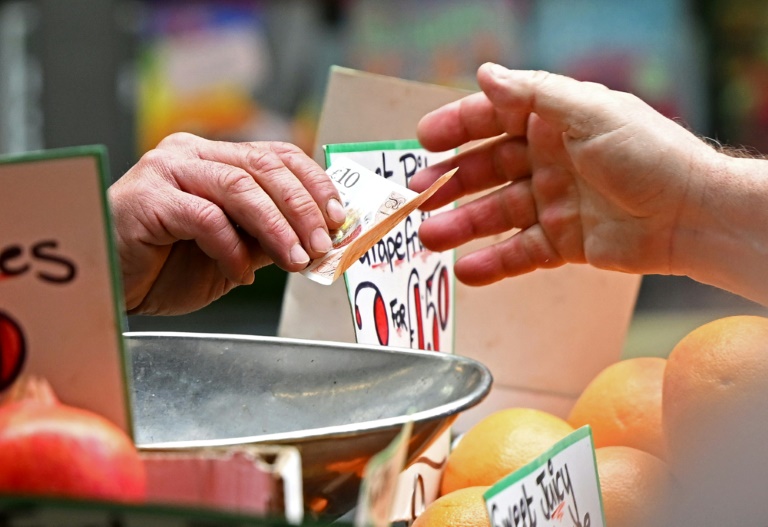
Britain’s annual inflation rate surged to a 40-year high last month on rocketing energy costs, official data showed Wednesday, sparking opposition calls for the government to announce an emergency budget to combat a cost-of-living crisis.

Consumer prices index inflation hit 9.0 percent in April from 7.0 percent in March, the Office for National Statistics said in a statement.

The ONS estimated that April was the highest level since 1982, and the fastest rate since the current data series began in 1989.

Nations across the world are plagued by decades-high inflation as the Ukraine conflict pushes up energy and food prices, in turn forcing the Bank of England, the US Federal Reserve and others to ramp up interest rates.

The squeeze on UK household budgets tightened further in April due to tax hikes, while wages are failing to keep pace with inflation.

– ‘Global challenges’ –

“Countries around the world are dealing with rising inflation,” said British finance minister Rishi Sunak.

“Today’s inflation numbers are driven by the energy price cap rise in April, which in turn is driven by higher global energy prices.

“We cannot protect people completely from these global challenges but are providing significant support where we can, and stand ready to take further action.”

The main opposition Labour party, however, wants an emergency budget to help Britons cope with the cost-of-living crunch.

Labour finance spokeswoman Rachel Reeves described the inflation data as “a huge worry for families already stretched”.

“Today, Labour force a vote for an emergency budget and for a plan for growth.”

Labour is also calling for a windfall tax on the energy sector, which has been boosted as gas and oil prices rocketed on supply worries following key producer Russia’s invasion of Ukraine.

– ‘Apocalyptic’ –

Bank of England governor Andrew Bailey on Monday warned of an “apocalyptic” situation surrounding runaway food costs — which he said were fuelled by major wheat and cooking oil producer Ukraine finding itself unable to export its goods.

Addressing British MPs, Bailey spoke also of a “very real income shock” coming from surging energy and food prices.

Britain risks falling into recession with inflation expected to top 10 percent by the end of the year, the BoE warned earlier this month.

It came as the central bank hiked its main interest rate by a quarter-point to one percent to tackle inflation.

That was the fourth straight increase by the BoE, while its key rate now stands at the highest level since 2009.

– Energy cap –

UK consumer prices leapt in April after a cap on domestic gas and electricity was hiked due to spiking wholesale energy costs.

“Inflation rose steeply in April, driven by the sharp climb in electricity and gas prices as the higher price cap came into effect,” added ONS chief economist Grant Fitzner.

“Around three-quarters of the increase in the annual rate this month came from utility bills.”

Official data showed Tuesday that Britain’s unemployment rate has fallen further to a near five-decade low, but the value of wages continues to erode as inflation soars.

The economy shrank in March on fallout from soaring consumer prices, data showed last week, increasing the prospect of the country falling into recession.

Raised rates have lifted borrowing costs for consumers and businesses, further impacting spending.

Italy marks 30-year anniversary of murder of anti-mafia judge Falcone

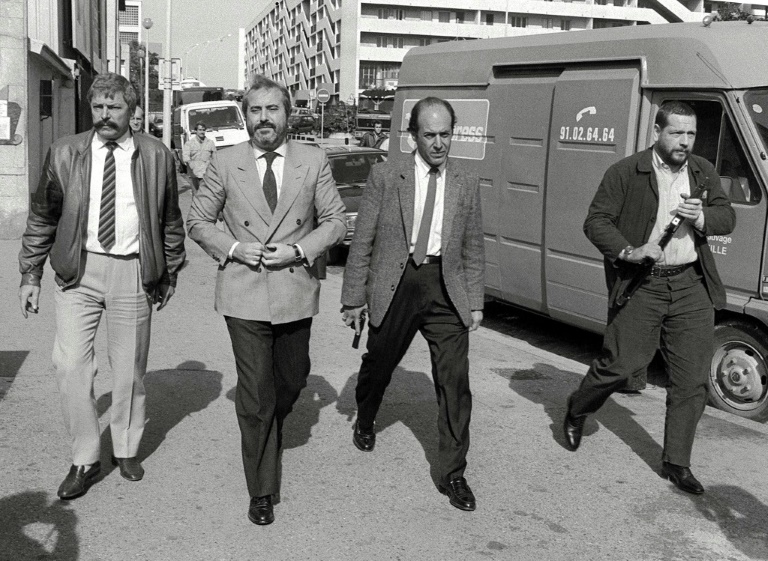
Thirty years ago, the Sicilian mafia killed judge Giovanni Falcone with a bomb so powerful it was registered by experts monitoring volcanic tremors from Etna on the other side of the island.

The explosion, which ripped through a stretch of motorway near Palermo at 5:56 pm on May 23, 1992 sent shockwaves across Italy, but also signalled the start of the mafia’s decline.

Anti-mafia prosecuting magistrate Falcone, his wife, and three members of his police escort were killed.

The mob used a skateboard to place a 500-kilogramme (1,100-pound) charge of TNT and ammonium nitrate in a tunnel under the motorway which linked the airport to the centre of Palermo.

Falcone, driving a white Fiat Croma, was returning from Rome for the weekend.

At a look-out point on the hill above, a mobster nicknamed “The Pig” pressed the remote control button as the judge’s three-car convoy passed.

The blast ripped through the asphalt, shredding bodies and metal, and flinging the lead car several hundred metres.

The three policemen on board were killed instantly.

Falcone, whose wife was sitting beside him, had slowed seconds before the explosion and the car slammed into a concrete guard rail.

His chauffeur, who was sitting in the back, survived, as did the three agents in the convoy’s rear.

A “garden of memory” now stands on the site of the attack. Oil from olive trees that grow there is used by Sicilian churches for anointing children during baptisms and confirmations.

– ‘Mafia massacre’ –

Falcone posed a real threat to the Cosa Nostra, an organised crime group made famous by “The Godfather” trilogy and which boasted access to the highest levels of Italian power.

It was he who gathered evidence from the first mafia informants for a groundbreaking trial in which hundreds of mobsters were convicted in 1987.

And at the time of the attack, he headed the justice ministry’s criminal affairs department in Rome and was working on a package of anti-mafia laws.

His murder woke the nation up. The Repubblica daily attacked the “mafia massacre” in its headline the next day, with a photo of the famous mustachioed magistrate, while thousands of people in Palermo protested in the streets.

All eyes turned to fellow anti-mafia magistrate Paolo Borsellino, Falcone’s close friend and colleague, who gave an interview at the start of July saying the “extreme danger” he was in would not stop him doing his job.

On July 19, just 57 days after his friend, Borsellino was also killed in a car bomb attack, along with five members of his escort. Only his driver survived.

Amid national outrage, the state threw everything it had at hunting down Cosa Nostra boss Salvatore (Toto) Riina, who was involved in dozens of murders during a reign of terror lasting over 20 years.

Riina was arrested on January 15, 1993, in a car in Palermo.

– The truth? –

The murders of Falcone and Borsellino “in the long term turned out to be a very bad business for Cosa Nostra, whose management team was decapitated by arrests and informants’ confessions”, Vincenzo Ceruso, author of several books on the mafia, told AFP.

Dozens of people have been convicted for their roles in the assassinations.

But Roberto di Bella, now an anti-mafia judge at the Catania juvenile court in Sicily, said that while “the majority of the perpetrators have been tried and convicted”, there remained “a part that is still not clear”.

Survivors insist there are still bits of the puzzle missing and point to Falcone’s belief there could be “possible points of convergence between the leaders of Cosa Nostra and the shadowy centres of power”.

“We still don’t have the truth about who really ordered the murder of Giovanni Falcone, because I don’t believe that ignorant people like Toto Riina could have organised an attack as sophisticated as that in Capaci,” Angelo Corbo, one of the surviving bodyguards, said in a documentary.

He said he was not alone in believing there were “men in suits and ties” among the mobsters.

However, an investigation into possible “hidden orchestrators” of the Capaci attack was thrown out in 2013.

“There is no evidence of the existence of external backers. There is no doubt that these are mafia acts,” author Ceruso said.

Sony brings zero-carbon goal forward 10 years to 2040

Japanese giant Sony brought forward its deadline for reaching carbon neutrality by a decade on Wednesday, saying it is now targeting net-zero emissions across its business by 2040.

The electronics and entertainment firm said the decision was taken “as climate change risks become more apparent and serious worldwide, and the transition to a decarbonised society has become an urgent issue”.

Climate campaigners praised the move, but raised doubts over an element of how Sony aims to reach the goal — investing in new technology that removes carbon from the atmosphere or converts it into a less harmful compound.

Sony said it wants its own factories to be carbon neutral by 2030, also a decade earlier than its previous goal, and plans to reach that by increasing use of renewable power and energy-saving.

Eliminating emissions from areas “such as products, supply chains, and logistics”, however, is to be achieved in part by investing in start-ups focused on carbon removal and projects that encourage carbon absorption with so-called augmented ecosystems.

But that technology remains unproven, said Eri Watanabe, senior finance campaigner at Japanese climate group 350.org.

Sony’s announcement “is a positive signal that the company is serious about tackling climate change”, but these removal methods are “unproven, and (it is) uncertain if it can contribute to the decarbonisation pathway”, she said.

She said Sony could influence other Japanese firms to upgrade their climate targets but urged the company not to rely “on unproven technologies to reduce its emissions.”

UN climate experts say humanity has fewer than three years to halt the rise of planet-warming carbon emissions, and less than a decade to slash them by nearly half to have a shot at capping global warming at a target 1.5 degrees Celsius.

Japan, which is highly dependent on imported fossil fuels, aims to become carbon neutral by 2050. The country is the world’s sixth-biggest carbon emitter if the EU is counted as one bloc, according to European Commission data.

Sony brings zero-carbon goal forward 10 years to 2040

Japanese giant Sony brought forward its deadline for reaching carbon neutrality by a decade on Wednesday, saying it is now targeting net-zero emissions across its business by 2040.

The electronics and entertainment firm said the decision was taken “as climate change risks become more apparent and serious worldwide, and the transition to a decarbonised society has become an urgent issue”.

Climate campaigners praised the move, but raised doubts over an element of how Sony aims to reach the goal — investing in new technology that removes carbon from the atmosphere or converts it into a less harmful compound.

Sony said it wants its own factories to be carbon neutral by 2030, also a decade earlier than its previous goal, and plans to reach that by increasing use of renewable power and energy-saving.

Eliminating emissions from areas “such as products, supply chains, and logistics”, however, is to be achieved in part by investing in start-ups focused on carbon removal and projects that encourage carbon absorption with so-called augmented ecosystems.

But that technology remains unproven, said Eri Watanabe, senior finance campaigner at Japanese climate group 350.org.

Sony’s announcement “is a positive signal that the company is serious about tackling climate change”, but these removal methods are “unproven, and (it is) uncertain if it can contribute to the decarbonisation pathway”, she said.

She said Sony could influence other Japanese firms to upgrade their climate targets but urged the company not to rely “on unproven technologies to reduce its emissions.”

UN climate experts say humanity has fewer than three years to halt the rise of planet-warming carbon emissions, and less than a decade to slash them by nearly half to have a shot at capping global warming at a target 1.5 degrees Celsius.

Japan, which is highly dependent on imported fossil fuels, aims to become carbon neutral by 2050. The country is the world’s sixth-biggest carbon emitter if the EU is counted as one bloc, according to European Commission data.

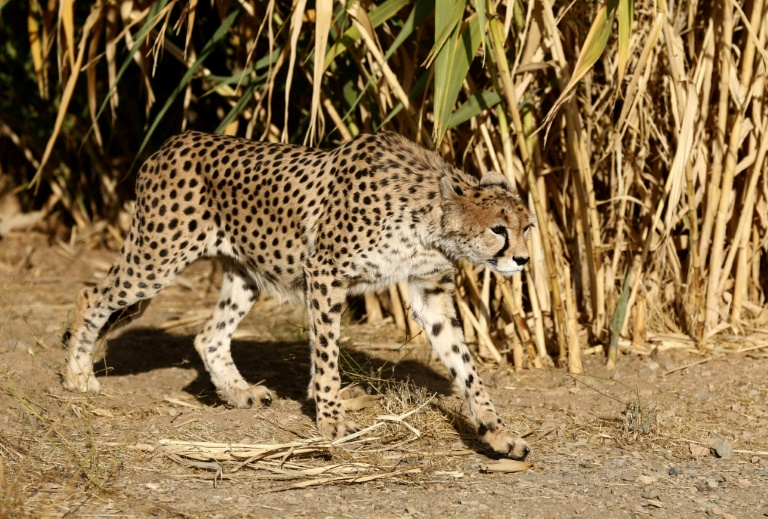
Second endangered cheetah cub dies in Iran: state media

The second of three Asiatic cheetah cubs born in captivity in Iran has died in a blow to conservation efforts for the critically endangered subspecies, state media reported Wednesday.

“The cause of death of the cub is being investigated and the result will be announced after the post mortem,” environment department official Hassan Akbari told state news agency IRNA.

The announcement came just two weeks after a first cub from the litter died.

The cause of death was established as congenital malformation of the left lung, an environment department statement said.

The cubs were born in the Touran Wildlife Refuge by caesarean section on May 1, in what the department said was the first birth of an Asiatic cheetah in captivity.

The world’s fastest land animal, capable of speeds of up to 120 kilometres (75 miles) per hour, cheetahs once stalked habitats from the eastern borders of India to the Atlantic coast of Senegal.

They are still found in parts of southern Africa, but have practically disappeared from North Africa and Asia.

The Asiatic subspecies -– Acinonyx jubatus venaticus — is critically endangered, according to the International Union for Conservation of Nature.

Iran is the last country in the world where the Asiatic cheetah can be found in the wild. Authorities launched a United Nations-supported protection programme in 2001.

In January, deputy environment minister Hassan Akbari said only a dozen individuals were left in the wild — down from an estimated 100 in 2010.

Their situation “is extremely critical”, Akbari said, adding that animals had been lost to drought, hunters and car accidents.

Second endangered cheetah cub dies in Iran: state media

The second of three Asiatic cheetah cubs born in captivity in Iran has died in a blow to conservation efforts for the critically endangered subspecies, state media reported Wednesday.

“The cause of death of the cub is being investigated and the result will be announced after the post mortem,” environment department official Hassan Akbari told state news agency IRNA.

The announcement came just two weeks after a first cub from the litter died.

The cause of death was established as congenital malformation of the left lung, an environment department statement said.

The cubs were born in the Touran Wildlife Refuge by caesarean section on May 1, in what the department said was the first birth of an Asiatic cheetah in captivity.

The world’s fastest land animal, capable of speeds of up to 120 kilometres (75 miles) per hour, cheetahs once stalked habitats from the eastern borders of India to the Atlantic coast of Senegal.

They are still found in parts of southern Africa, but have practically disappeared from North Africa and Asia.

The Asiatic subspecies -– Acinonyx jubatus venaticus — is critically endangered, according to the International Union for Conservation of Nature.

Iran is the last country in the world where the Asiatic cheetah can be found in the wild. Authorities launched a United Nations-supported protection programme in 2001.

In January, deputy environment minister Hassan Akbari said only a dozen individuals were left in the wild — down from an estimated 100 in 2010.

Their situation “is extremely critical”, Akbari said, adding that animals had been lost to drought, hunters and car accidents.

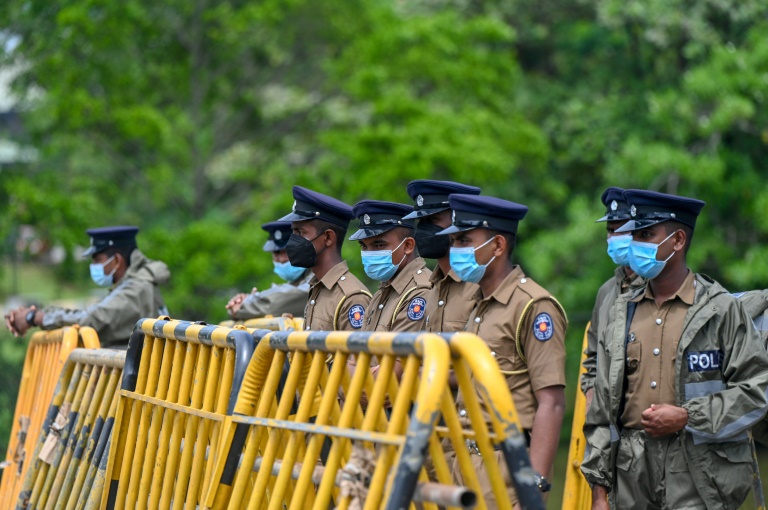
Sri Lankan police arrests ruling party MPs over mob violence

Sri Lankan police arrested two ruling party lawmakers for allegedly instigating mob violence that plunged the country into days of unrest and left nine people dead last week, officials said Wednesday.

The members of parliament, both from President Gotabaya Rajapaksa’s party, were questioned by criminal investigators on Tuesday evening and detained overnight, a police official said, speaking on condition of anonymity.

“There is direct evidence against the two MPs and that is why they were arrested,” the official said.

Sanath Nishantha and Milan Jayathilake were among 22 politicians — including former prime minister Mahinda Rajapaksa and his son Namal — whose passports were impounded last week following allegations that they instigated violence.

On May 9, thousands of ruling party supporters who were bussed into the capital attacked a peaceful demonstration by anti-government protesters demanding President Rajapaksa resign over an economic crisis that has paralysed the country.

Then-Prime Minister Mahinda Rajapaksa — the president’s elder brother — resigned shortly after the mob attack sparked retaliatory violence and arson, with more than 70 ruling party leaders’ homes destroyed.

More than 225 people were hospitalised from the violence, according to health officials.

Police say they have arrested about 500 people in connection with the violence and retaliation.

– Cabinet formation –

Thousands continue to demonstrate outside the president’s seafront office in Colombo, demanding he resign over an economic crisis that has resulted in acute shortages of food, fuel and essential medicines. 

The shortages have been accompanied by record inflation and lengthy blackouts, bringing severe hardships to Sri Lankans, who are experiencing the country’s worst financial crisis since independence from Britain in 1948.

Ranil Wickremesinghe was appointed as prime minister last week.

Wickremesinghe has the crucial support of two main opposition parties to form a “unity government” aimed at pulling the country out of the crisis, but had yet to form a full cabinet.

Four ministers were appointed on Saturday. Official sources said Wickremesinghe was still in talks with potential coalition partners to finalise his cabinet.  

The prime minister was expected to also take on the crucial finance portfolio for ongoing bailout talks with the International Monetary Fund.

Energy Minister Kanchana Wijesekera said the energy crisis was worse than initially feared.

“We will not be able to supply petrol in the next two days and I appeal to motorists not to queue up,” Wijesekera said in parliament.

He said the government managed to raise 53 million dollars for a petrol tanker that was already at the Colombo port and was awaiting full payment before unloading.

“It will be Saturday or Sunday before we can distribute petrol, but we have a reserve for essential services like ambulances,” Wijesekera said.

The foreign exchange crisis has also led to shortages of 14 essential drugs, including anti-rabies vaccines.

Japan urges China to play 'responsible' role on Ukraine crisis

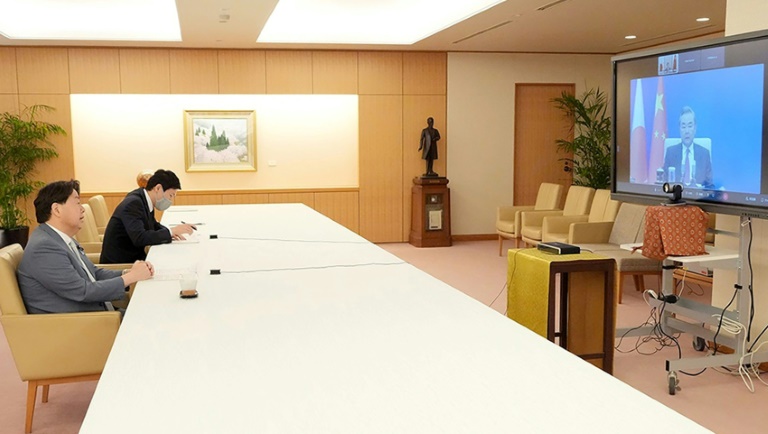
Japan’s foreign minister on Wednesday urged Beijing to “play a responsible role” on Russia’s invasion of Ukraine in his first talks with his Chinese counterpart in six months.

Japan has joined Western allies on tough sanctions against Russia over the Ukraine crisis, while Beijing has declined to condemn Moscow’s invasion.

Foreign Minister Yoshimasa Hayashi told his Chinese counterpart Wang Yi that Russia’s invasion “is a clear violation of the UN Charter and other international laws,” Japan’s foreign ministry said in a statement.

He “urged China to play a responsible role in maintaining international peace and security,” it added.

The talks are the first between the two foreign ministers since November, according to Japan’s foreign ministry, coming as concerns ramp up about geopolitical tensions.

China and Russia are perceived to be stepping up coordination, with Beijing pointedly refusing to join the outcry over Moscow’s invasion though it has pledged not to circumvent sanctions over the war.

The talks come as US President Joe Biden is set to arrive in Japan this week after a stop in Seoul.

He will hold bilateral talks with Prime Minister Fumio Kishida and attend a meeting of the Quad grouping that includes Australia and India. 

The grouping has been seen as intended to pressure China as it builds its economic and military weight in the region.

Japan views Beijing’s growing military assertiveness with concern, and Hayashi raised issues including islands disputed between the countries and the situation in the East and South China Seas in talks with Wang.

But China is also Tokyo’s largest trading partner and Japan is keen to avoid being drawn into disputes between Beijing and Washington.

Hayashi said both China and Japan “should say what needs to be said and engage in dialogue”, warning that bilateral ties “face various difficulties and that public opinion in Japan is extremely severe towards China.”

Conservatives tipped to lose in Australian nail-biter election

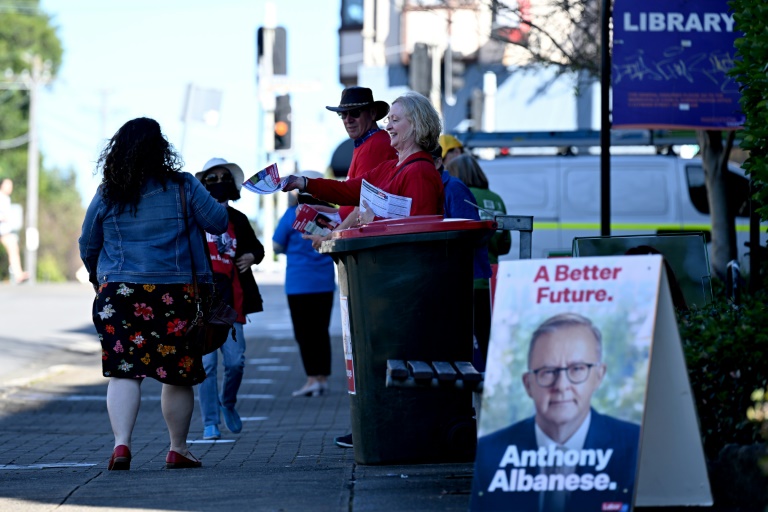
Australians punch drunk after three crisis-ridden years of fire, flood and plague will go to the polls on Saturday, in a tight race narrowly tipped to end a decade of conservative rule.

Opinion polls have consistently shown centre-left Labor ahead, suggesting a government led by veteran party lawmaker Anthony Albanese that would be more climate-friendly and less antagonistic toward China.

But pugilistic Prime Minister Scott Morrison, who leads a conservative coalition, appears to be rapidly closing the gap as election day approaches.

The often-acrimonious campaign has been marked by fears about soaring prices, divisions over Morrison’s leadership and anxiousness about tougher days to come.

The last three years have seen Australia’s once-envied way of life upended by back-to-back bushfires, droughts, the Covid-19 pandemic and several “once-in-a-century” floods.

Australians — usually some of the world’s most optimistic voters — have grown markedly more dissatisfied with their lives, more pessimistic about their future and more turned off by traditional political parties, according to polling by Ipsos.

For many Aussies, their unofficial mantra of gung-ho optimism — “she’ll be right” — suddenly seems a bit wrong.

“It has been a very difficult period for the country,” said Mark Kenny, a professor at the Australian National University.

“There’s a fair bit of dissatisfaction with this government, and the prime minister’s standing has been called into question quite a lot.”

Surveys show the malaise is pronounced among women and younger voters, who face the prospect of being poorer than their parents while inheriting a country at the pointy end of climate change and located in an increasingly tough neighbourhood.

– Lurching from crisis to crisis –

Just over 17 million Australians are registered to go to the polls on Saturday, electing 151 representatives to the lower house and just over half the members of the Senate.

Voting is compulsory and voters rank the candidates in order of preference, adding extra layers of unpredictability to the outcome.

Fifty-four-year-old Morrison is hoping for a repeat of his 2019 “miracle” come-from-behind election victory. But he will have to overcome the collective trauma of the last three years.

Within months of his shock victory, the “Black Summer” bushfires would cut through the east of the country, burning an area the size of Finland and choking Brisbane, Sydney and Melbourne in a miasma of acrid smoke for weeks on end.

Morrison’s decision to take a family holiday to Hawaii in the middle of the crisis was widely pilloried, as was his downplaying of the affair by saying “I don’t hold a hose, mate.”

No sooner had the fires ended than the Covid-19 pandemic began. 

Morrison’s popularity initially surged as Australians watched the horrors unfolding in China, Italy and elsewhere from a state of Covid-free normalcy on Bondi and other beaches.

The turning point was the lengthy delay in rolling out vaccines, despite Morrison’s promises that Australia was at the “front of the queue”, said Ben Raue of The Tally Room, a popular political blog.

The delay prolonged lockdowns in major cities and a two-year-long border closure — splitting families and gaining Australia a reputation for being a “hermit state” isolated from the rest of the world.

“That was the point when Morrison went from being a little bit behind, to being quite a long way behind” in the polls, said Raue.

“They’ve never really recovered since then. They’ve had some better polls and some worse polls, but they’ve pretty much never been ahead.”

– Playground taunts –

Albanese, a 59-year-old veteran Labor lawmaker, has tried to make the election a referendum on Morrison’s performance.

His own “small target” campaign has given Morrison and Australia’s partisan media few policies to shoot at, but also left voters guessing at what an Albanese-led government might bring.

The contest has been rough and tumble, highly personal and at times bordering on juvenile.

The Liberal party has splashed adverts claiming “it won’t be easy with Albanese”, and has repeatedly suggested he is dangerous and a “loose unit” on the economy.

Labor has hit back, imploring Australians to “fire the liar”.

Around a third of voters are expected to look beyond traditional left and right parties as their first preference.

They can choose from an array of populists, the far-right and centrist independent candidates angered by the Liberals’ pro-coal stance on climate.

“There’s an absolute sense that Liberal voters who sit near the centre, who are perhaps economic conservatives and social progressives, that they’ve been left in the wilderness,” Zoe Daniel, an independent candidate challenging one Melbourne constituency, told AFP.

– From flip-flops to bootstraps –

In the latter stages of the campaign, the focus has turned to the soaring cost of living in what was already one of the world’s most expensive places to live.

Despite presiding over a record deficit, the first recession in a generation and sclerotic wage growth, Morrison’s ability to reinvent his image and reframe the debate has kept his party well within touching distance.

One poll commissioned by The Sydney Morning Herald on Wednesday predicted a Labor win, but put his re-election within the margin of error.

There is a perception Morrison’s attacks on Albanese’s “dangerous” economic plan may be starting to stick. 

“I think there’s a sense of change in this country. The question is, has the opposition done enough to convince people that change is a safe option?” said Kenny.

Close Bitnami banner
Bitnami