World

Morocco 'breathing again' as tourists back after Covid shutdown

Moroccan snake-charmer Youssef watched as long-absent tourists again thronged Marrakesh’s famous Jamaa El-Fna square, ending a long pause forced by the Covid pandemic.

“We’re breathing again,” he said.

The ancient southern city, famous for its views of graceful red buildings set against palm trees and snow-capped mountains, has long drawn visitors including celebrities from Madonna to Yves Saint Laurent.

But it was particularly hard hit by a two-year collapse in tourism that saw arrivals to the North African kingdom plummet to just a third last year from 2019.

For Youssef, taking a break from playing his oboe-like “ghaita” pipe before the seemingly mesmerised serpent, “it’s such a pleasure to be back here after these slow, painful months”.

Tourism — which accounts for some seven percent of Morocco’s economy and creates hundreds of thousands of formal and informal jobs — was battered by Morocco’s tight restrictions during the pandemic.

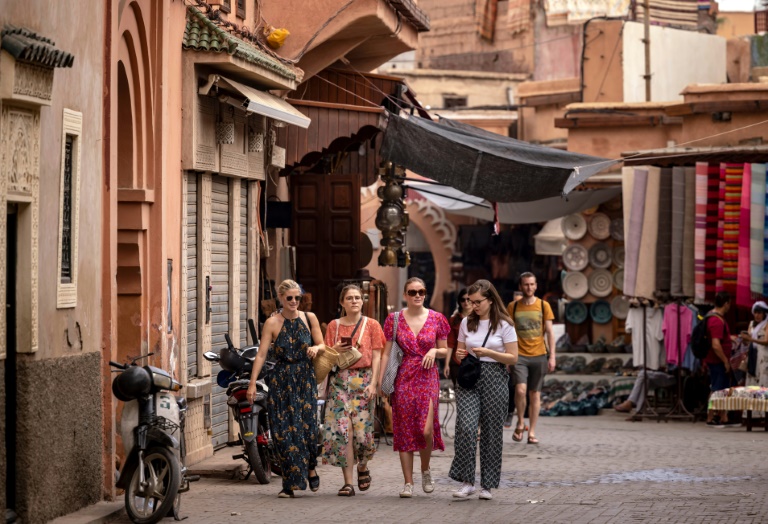
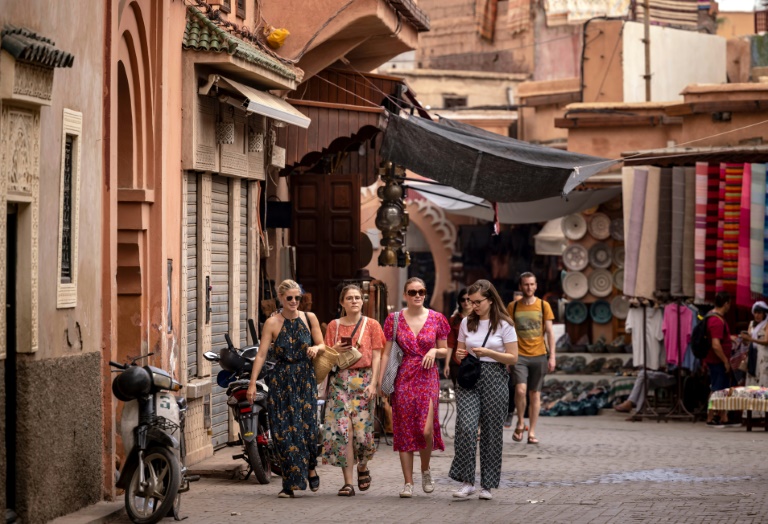
Today, Marrakesh residents see signs of hope again as tourists have returned to the UNESCO-listed old city’s narrow alleys.

Cafe terraces are full and foreigners browse shops and market stalls for traditional clothing, furniture and souvenirs.

“We’re not back to pre-pandemic levels but the situation has been improving over the past month,” said salesman Abdellah Bouazri, after serving an Argentinian customer in a Boca Juniors football top.

Bouazri, 35, said the coronavirus had forced him to temporarily abandon his shop and find alternative work as a security guard.

The father of two was one of many in the beleaguered industry forced to find an alternative income — including many informal workers without contracts or social security.

But he said he was optimistic about the future: “It has been hard, but today I’m delighted to be going back to my real job.”

– ‘Recovery incomplete’ –

Morocco this week reopened land borders with the Spanish enclaves of Ceuta and Melilla, two years after they were shut due to Covid and a major diplomatic row.

That was the latest step in a slow recovery for the tourism sector, backed by the government which has launched a two billion dirham (190 million euro) support fund, on top of 95 million euros it released to prop up hotels.

“The recovery might be underway, but it’s incomplete,” said the FNIH national hotels federation’s chief Lahcen Zelmat.

According to the tourism ministry, Morocco last year earned some 3.2 billion euros in tourism revenue — less than half the figure for the year before the pandemic. 

But revenue in the first quarter was up by 80 percent on last year, according to official figures, and the finance ministry predicts a “more favourable outlook for 2022”.

That was reflected in the steady flow of tourists outside the Medersa Ben Youssef, a 16th-century Koranic school in Marrakesh.

“This place is magical — I’m impressed by all the detail,” said Nick, a 29-year-old Londoner visiting for the first time. “Since Covid I’ve been missing exploring new cultures.”

Nearby, other visitors queued up to the Yves Saint Laurent museum, one of the city’s top tourist spots.

“The museum was a must,” said Coco, a Chinese student living in Germany. “We consider ourselves very lucky to be able to travel again, and we’re really charmed.”

Morocco 'breathing again' as tourists back after Covid shutdown

Moroccan snake-charmer Youssef watched as long-absent tourists again thronged Marrakesh’s famous Jamaa El-Fna square, ending a long pause forced by the Covid pandemic.

“We’re breathing again,” he said.

The ancient southern city, famous for its views of graceful red buildings set against palm trees and snow-capped mountains, has long drawn visitors including celebrities from Madonna to Yves Saint Laurent.

But it was particularly hard hit by a two-year collapse in tourism that saw arrivals to the North African kingdom plummet to just a third last year from 2019.

For Youssef, taking a break from playing his oboe-like “ghaita” pipe before the seemingly mesmerised serpent, “it’s such a pleasure to be back here after these slow, painful months”.

Tourism — which accounts for some seven percent of Morocco’s economy and creates hundreds of thousands of formal and informal jobs — was battered by Morocco’s tight restrictions during the pandemic.

Today, Marrakesh residents see signs of hope again as tourists have returned to the UNESCO-listed old city’s narrow alleys.

Cafe terraces are full and foreigners browse shops and market stalls for traditional clothing, furniture and souvenirs.

“We’re not back to pre-pandemic levels but the situation has been improving over the past month,” said salesman Abdellah Bouazri, after serving an Argentinian customer in a Boca Juniors football top.

Bouazri, 35, said the coronavirus had forced him to temporarily abandon his shop and find alternative work as a security guard.

The father of two was one of many in the beleaguered industry forced to find an alternative income — including many informal workers without contracts or social security.

But he said he was optimistic about the future: “It has been hard, but today I’m delighted to be going back to my real job.”

– ‘Recovery incomplete’ –

Morocco this week reopened land borders with the Spanish enclaves of Ceuta and Melilla, two years after they were shut due to Covid and a major diplomatic row.

That was the latest step in a slow recovery for the tourism sector, backed by the government which has launched a two billion dirham (190 million euro) support fund, on top of 95 million euros it released to prop up hotels.

“The recovery might be underway, but it’s incomplete,” said the FNIH national hotels federation’s chief Lahcen Zelmat.

According to the tourism ministry, Morocco last year earned some 3.2 billion euros in tourism revenue — less than half the figure for the year before the pandemic. 

But revenue in the first quarter was up by 80 percent on last year, according to official figures, and the finance ministry predicts a “more favourable outlook for 2022”.

That was reflected in the steady flow of tourists outside the Medersa Ben Youssef, a 16th-century Koranic school in Marrakesh.

“This place is magical — I’m impressed by all the detail,” said Nick, a 29-year-old Londoner visiting for the first time. “Since Covid I’ve been missing exploring new cultures.”

Nearby, other visitors queued up to the Yves Saint Laurent museum, one of the city’s top tourist spots.

“The museum was a must,” said Coco, a Chinese student living in Germany. “We consider ourselves very lucky to be able to travel again, and we’re really charmed.”

More than 100,000 people officially missing in Mexico

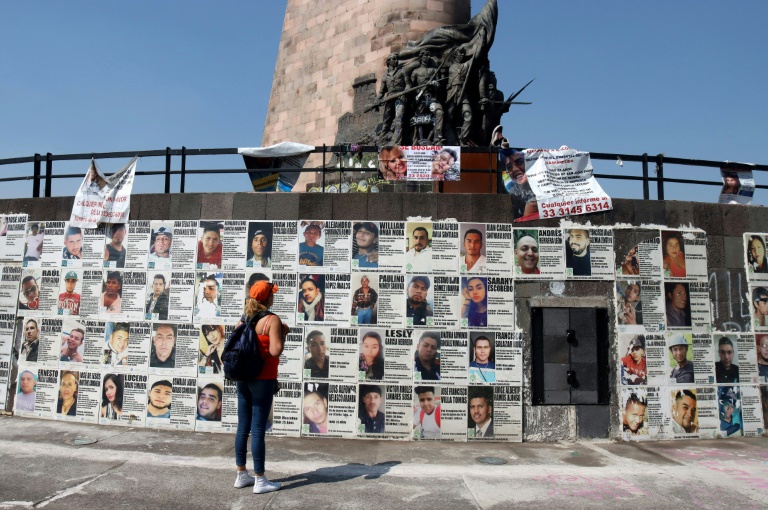
More than 100,000 people are now listed as missing in violence-wracked Mexico, a grim milestone that the United Nations rights chief on Tuesday called “a tragedy of enormous proportions.”

Rights groups appealed for urgent action to tackle disappearances that have skyrocketed during years of spiraling drug-related violence.

The National Registry of Missing Persons, which has been tracking disappearances since 1964, said that as of Monday, the whereabouts of 100,099 people were unknown. About 75 percent are men.

The Movement for Our Disappeared warned that the figure was “certainly well below the number” of actual cases, calling for the government to deal with the crisis “in a comprehensive and immediate manner.”

UN High Commissioner for Human Rights Michelle Bachelet said the disappearances represented a “human tragedy of enormous proportions.”

“No effort should be spared to put an end to these human rights violations and abuses of extraordinary breadth, and to vindicate victims’ rights to truth, justice, reparation and guarantees of non-repetition,” she added.

Only 35 of the disappearances recorded have led to convictions — a “staggering rate of impunity” that is “mostly attributable to the lack of effective investigations,” Bachelet’s office said.

– ‘Pattern of impunity’ –

The UN Committee on Enforced Disappearances and the Working Group on Enforced or Involuntary Disappearances described the situation as “heart-breaking.”

Enforced disappearances are a daily occurrence in Mexico, “reflecting a chronic pattern of impunity,” they added.

The UN committee, which is made up of independent experts, warned in April that Mexico was facing an “alarming trend of rising enforced disappearances.”

Organized crime groups were mainly responsible for these disappearances, “with varying degrees of participation, acquiescence or omission by public servants,” it said.

The committee’s report was rejected by Mexican President Andres Manuel Lopez Obrador, who said his government would not tolerate impunity or corruption.

Frustration at slow progress in official investigations has led families of the disappeared, especially mothers, to form groups that search for clandestine graves using picks and shovels.

The crisis is fueled by the state’s apathy, said Cecilia Flores, the leader of one such group in the northwestern state of Sonora who is looking for her sons Alejandro and Marco Antonio.

“If the authorities did their job, not so many would have disappeared,” she told AFP.

“For them, a disappeared person is one less criminal and one more statistic,” Flores said.

– ‘Staggering number’ –

Authorities say some 37,000 unidentified bodies are being held in forensic services, though civil organizations warn the number could be much higher.

Authorities are working to consolidate a database of the disappeared with genetic samples, though many corpses have been buried without being identified because morgues are overflowing.

The International Committee of the Red Cross described the 100,000 missing as “a staggering number that underscores the immediate need to strengthen prevention, search, and identification mechanisms for those who are missing and their families.”

However, it recognized “important progress” made by Mexico in some areas including identifying the dead and easing the pain of families of the missing. 

“The first few hours are the most important,” said Marlene Herbig, head of the ICRC’s missing persons program in Mexico.

“When someone disappears, their relatives have the right to know what has happened. Knowing the fate of disappeared persons is primarily a humanitarian act.”

The first reported disappearances in Mexico date back to the authorities’ so-called “dirty war” against leftist movements from the 1960s to 1980s.

Mexico has also registered over 340,000 deaths — mostly attributed to organized crime groups — since 2006, when a major anti-drug military offensive was launched.

Extreme temperatures compound poverty in Pakistan's hottest city

By the time Pakistani schoolboy Saeed Ali arrived at hospital in one of the world’s hottest cities, his body was shutting down from heatstroke.

The 12-year-old collapsed after walking home from school under the burning sun, his day spent sweltering in a classroom with no fans.

“A rickshaw driver had to carry my son here. He couldn’t even walk,” the boy’s mother Shaheela Jamali told AFP from his bedside.

Jacobabad in Pakistan’s arid Sindh province is in the grip of the latest heatwave to hit South Asia -– peaking at 51 degrees Celsius (124 Fahrenheit) at the weekend.

Canals in the city — a vital source of irrigation for nearby farms — have run dry, with a smattering of stagnant water barely visible around strewn rubbish.

Experts say the searing weather is in line with projections for global warming.

The city is on the “front line of climate change”, said its deputy commissioner Abdul Hafeez Siyal. “The overall quality of life here is suffering.”

Most of the one million people in Jacobabad and surrounding villages live in acute poverty, with water shortages and power cuts compromising their ability to beat the heat.

It leaves residents facing desperate dilemmas.  

Doctors said Saeed was in a critical condition, but his mother –- driven by a desire to escape poverty –- said he would return to school next week.

“We don’t want them to grow up to be labourers,” Jamali told AFP, her son listless and tearful at her side.

Heatstroke –- when the body becomes so overheated it can no longer cool itself –- can cause symptoms from lightheadedness and nausea to organ swelling, unconsciousness, and even death.

Nurse Bashir Ahmed, who treated Saeed at a new heatstroke clinic run by local NGO Community Development Foundation, said the number of patients arriving in a serious condition was rising.

“Previously, the heat would be at its peak in June and July, but now it’s arriving in May,” Ahmed said.

Labourers forced to toil in the sun are among the most vulnerable.

Brick kiln workers ply their trade alongside furnaces that can reach up to 1,000 degrees Celsius.

“The severe heat makes us feel like throwing up sometimes, but if I can’t work, I can’t earn,” said Rasheed Rind, who started on the site as a child.

– ‘Water mafias’ –

Life in Jacobabad is dominated by attempts to cope with the heat.

“It’s like fire burning all around. What we need the most is electricity and water,” said blacksmith Shafi Mohammad.

Power shortages mean only six hours of electricity a day in rural areas and 12 in the city.

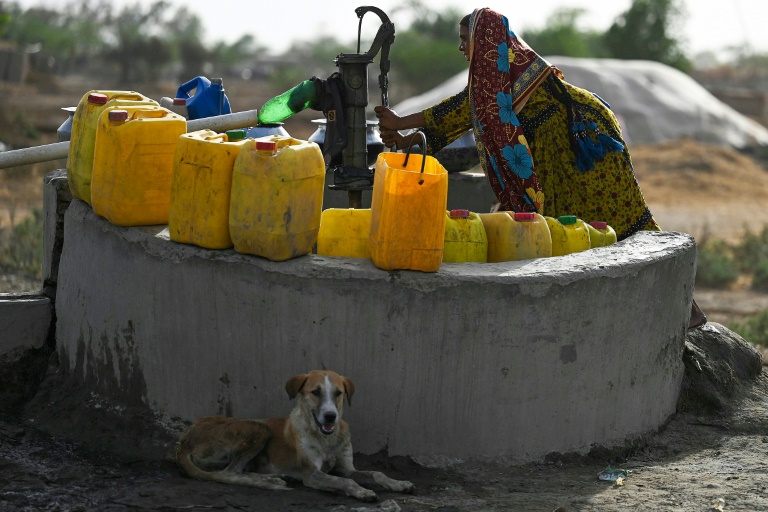
Access to drinking water is unreliable and unaffordable due to scarcity across Pakistan and major infrastructure problems.

Khairun Nissa gave birth during the heatwave, her last days of pregnancy spent wilting under a single ceiling fan shared between her family of 13.

Her two-day-old son now occupies her spot under its feeble breeze.

“Of course I’m worried about him in this heat, but I know God will provide for us,” said Nissa. 

Outside their three-room brick home, where the stench of rotting rubbish and stagnant water hangs in the air, a government-installed water tap runs dry.

But local “water mafias” are filling the supply gap.

They have tapped into government reserves to funnel water to their own distribution points where cans are filled and transported by donkey cart to be sold at 20 rupees (25 cents) per 20 litres.

“If our water plants weren’t here, there would be major difficulties for the people of Jacobabad,” said Zafar Ullah Lashari, who operates an unlicensed, unregulated water supply.

– ‘Nothing we can do’ –

In a farming village on the outskirts of the city, women wake up at 3am to pump drinking water all day from a well –- but it is never enough.

“We prefer our cattle to have clean drinking water first, because our livelihood depends on them,” said Abdul Sattar, who raises buffaloes for milk and sale at market.

There is no compromise on this, even when children suffer skin conditions and diarrhoea.

“It is a difficult choice but if the cattle die, how would the children eat?” he said.

Pakistan is the eighth most vulnerable country to extreme weather caused by climate change, according to the Global Climate Risk Index compiled by environmental NGO Germanwatch.

Floods, droughts and cyclones in recent years have killed and displaced thousands, destroyed livelihoods and damaged infrastructure. 

Many people choose to leave Jacobabad in the hottest months, leaving some villages half empty.

Sharaf Khatoon shares a makeshift camp in the city with up to 100 people surviving on a few meagre rupees that male family members earn through menial labour.

They usually relocate the camp in the hottest months, 300 kilometres away to Quetta, where temperatures are up to 20 degrees Celsius cooler. 

But this year they will leave late, struggling to save the money for the journey. 

“We have headaches, unusual heartbeats, skin problems, but there is nothing we can do about it,” said Khatoon.

Professor Nausheen H. Anwar, who studies urban planning in hot cities, said authorities need to look beyond emergency responses and think long term.

“Taking heatwaves seriously is important, but sustained chronic heat exposure is particularly critical,” she said.

“It’s exacerbated in places like Jacobabad by the degradation of infrastructure and access to water and electricity which compromises people’s capacity to cope.”

– ‘Battlefield’ –

Along a dried up canal filled with rubbish, hundreds of boys and a handful of girls in Jacobabad pour into a school for their end-of-year exams.

They gather around a hand pump to gulp down water, exhausted even before the day begins.

“The biggest issue we face is not having basic facilities — that’s why we experience more difficulties,” said headteacher Rashid Ahmed Khalhoro.

“We try to keep the children’s morale high but the heat impacts their mental and physical health.”

With extreme temperatures arriving earlier in the year, he appealed to the government to bring forward summer vacations, which normally begin in June.

A few classrooms have fans, though most do not. When the electricity is cut just an hour into the school day, everyone swelters in semi-darkness.

Some rooms become so unbearable that children are moved into corridors, with youngsters frequently fainting.

“We suffocate in the heat. We sweat profusely and our clothes get drenched,” said 15-year-old Ali Raza.

The boys told AFP they suffered from headaches and frequent diarrhoea but refused to skip lessons.

Khalhoro said his students are determined to break out of poverty and find jobs where they can escape the heat. 

“They are prepared as though they are on a battlefield, with the motivation that they must achieve something.”

Japan 1st-quarter GDP shrank as Omicron wave hit

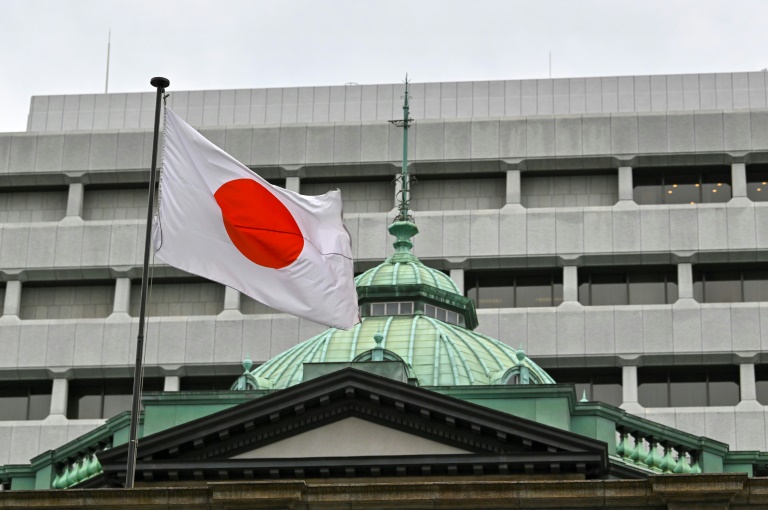
Japan’s economy shrank slightly in the first quarter of 2022, official data showed Wednesday, hit by Covid-19 restrictions and higher prices.

The world’s third-largest economy shrank 0.2 percent quarter-on-quarter in the January-March period, slightly less than the market expectations of a 0.4 percent contraction.

It followed a modest rebound in the final three months of 2021 that proved short-lived after Japan put Covid restrictions in place as an outbreak fuelled by the Omicron coronavirus variant took hold in January.

Growth was also hit by the rising cost of imports with energy prices surging and the yen falling to its lowest level against the dollar in 20 years.

Economists expect the economy to recover again in the April-June quarter now that virus restrictions have been lifted, but caution there are some caveats.

“We see three headwinds to this expected recovery,” said UBS economists Masamichi Adachi and Go Kurihara in a note ahead of the GDP data release.

“First is a rise in food and energy prices. Second is a drag from the lockdown in China,” and third is the risk of a potential resurgence in virus infections, they said.

Others point to ongoing uncertainties linked to “tensions in international relations and military conflicts”, according to a survey among economists conducted by the Japan Center for Economic Research.

During the current earnings season, major Japanese firms such as Sony and Nissan have offered cautious forecasts because of the uncertainty, particularly over supply chain disruption and the effect of Covid lockdowns in China.

Wednesday’s data showed the economy’s rebound in the last quarter of 2021 was 0.9 percent, slightly weaker than an initial estimate of 1.1 percent growth.

– Rising prices –

Japan is battling a series of economic headwinds linked to the pandemic and Russia’s invasion of Ukraine, which has sent energy costs soaring.

The yen has also slumped against the dollar, with a widening gap between Japan’s ultra-loose monetary policy and tightening in the United States as the Federal Reserve attempts to combat inflation.

Rising energy prices and other hikes are squeezing Japanese consumers and businesses, with household spending dipping 2.3 percent in March from a year earlier.

Analysts have warned that the pace of nominal wage increases in Japan is unlikely to track rising prices, dampening spending appetites.

Last month, the government unveiled a 6.2 trillion yen (around $48 billion) economic package that included handouts for low-income families to help cushion the impact of rising prices and energy costs.

Looking ahead, “net trade will boost growth over the coming months as supply shortages ease and the weak yen boosts exports and softens demand for imports,” Tom Learmouth, Capital Economics economist, said in a note.

“With coronavirus cases continuing to fall and nearly 60 percent of the population triple-jabbed, another round of restrictions looks unlikely for now.”

“However, we expect GDP growth to disappoint across 2022 due to the hit to household income from higher inflation and signs that elderly consumers remain wary of catching the virus,” he added.

Japan has seen a smaller Covid outbreak than many countries, although cases surged because of the highly transmissible Omicron variant.

The country has recorded around 30,050 deaths despite avoiding harsh lockdowns.

End of the line nears for NASA InSight Mars lander

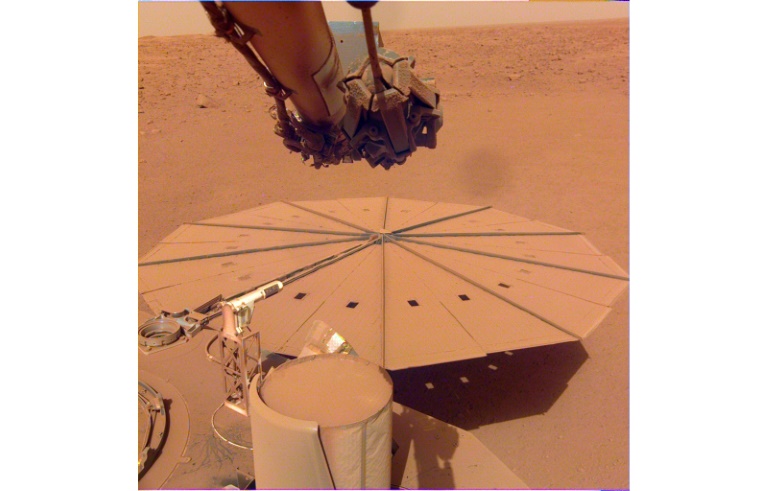
After some four years probing Mars’ interior, NASA’s InSight lander will likely retire this summer as accumulated dust on its solar panels saps its power. 

The lander will, however, leave behind a legacy of data that will be tapped by scientists around the world for years to come, helping to improve our understanding of planet formation, NASA said, while announcing on Tuesday the imminent end to InSight’s science operations. 

Equiped with an ultra-sensitive seismometer, InSight recorded more than 1,300 “marsquakes,” including a magnitude 5 quake on May 4, the largest so far. 

But around July, the seismometer will be turned off. 

The lander’s energy level will then be checked about once a day, and some pictures may still be taken. Then by the end of 2022, the mission will be completely stopped.

The cause: the accumulation over months of Martian dust on the lander’s two solar panels, each measuring about seven feet (2.2 meters) wide. 

InSight, which is already running on only a tenth of the energy it had at the beginning, will soon find its batteries drained.

The speed at which dust accumulated corresponded more or less to what had been estimated by NASA.

The lander got a new lease on life around a year ago, when its robotic arm was put to new and unplanned use to remove some dust from the solar panels, extending the mission.  

The maneuver — employed six times successfully — saw the arm use dust itself to clear the panels, as it scooped up some martian soil and gently dropped onto the robot so the dirt was blown across the solar panels, clearing parts of their surface.

Adding something to the lander specifically to clean the panels was forgone due to costs, explained Bruce Banerdt of NASA’s Jet Propulsion Laboratory, during a press conference Tuesday.

Such a mechanism would leave “less to put into the science instruments,” he said.

– ‘Treasure trove’ –

InSight, one of four missions currently on the Red Planet — along with the US rovers Perseverance and Curiosity, and China’s Zhurong — arrived on Mars in November 2018.

Its seismometer, made in France, has since paved the way for great advances.

“The interior was kind of just a giant question mark,” said Banerdt, who has worked on the InSight mission for more than a decade.

But thanks to InSight, “we’ve been able to map out the inside of Mars for the very first time in history.”

Seismic waves, varying based on the materials they pass through, offer a picture of the interior of the planet.

For example, scientists were able to confirm that the core of Mars is liquid and to determine the thickness of the Martian crust — less dense than previously thought and likely consisting of three layers.

The magnitude 5 quake in early May was much larger than all those previously recorded and close to what scientists thought would be the maximum on Mars, though it would not be considered a huge tremor on Earth.

“This quake is really going to be a treasure trove of scientific information when we get our teeth into it,” Banerdt said.

Earthquakes are in particular caused by plate tectonics, he explained. But, they can also be triggered when the Earth’s crust moves due to temperature anomalies caused by its mantle. 

It is this type of vibration that scientists think they are dealing with on Mars.

Not all of InSight’s scientific operations have gone smoothly, however, such as when its heat probe had trouble being successfully buried below the surface to take the planet’s temperature because of the composition of the soil where the robot landed.

Regardless, in light of the seismometer’s success, NASA is considering using the technique elsewhere in the future, said Lori Glaze, director of NASA’s Planetary Science Division.

“We’d really like to set up a complete network on the moon to really understand what’s going on there.”

Russia says hundreds of Ukrainians surrender at Azovstal, Kyiv urges swap

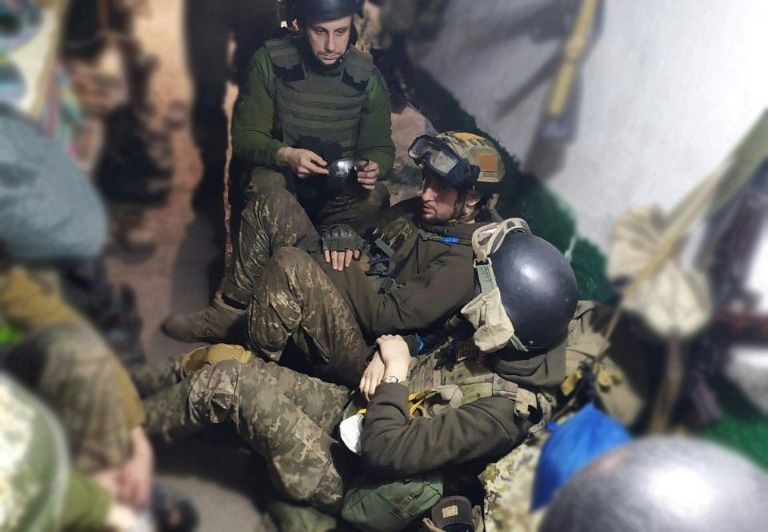
Hundreds of Ukrainian soldiers who held off Russian fighters at the besieged Azovstal steelworks in Mariupol have surrendered, Moscow said Tuesday, as Kyiv called for an immediate prisoner swap.

The strategic port city fell to Russian forces last month, but a relentless Ukrainian military unit held out in the maze of tunnels under the plant, hailed as heroes and celebrated for stalling Moscow’s invasion.

On Tuesday, 265 of them were taken into Russian captivity, including 51 who were heavily wounded, the Russian defence ministry said.

The ministry, which published images showing soldiers on stretchers, said the injured were transported to a hospital in the eastern Donetsk region controlled by pro-Kremlin rebels.

The defence ministry in Kyiv said it was hoping for an “exchange procedure… to repatriate these Ukrainian heroes as quickly as possible”.

The government would do “everything necessary” to rescue the undisclosed number of personnel still holed up in the Soviet-era bunkers, the ministry said, but admitted there was no military option available.

The fate of the captured Ukrainians was unclear Tuesday, with Kremlin spokesman Dmitry Peskov refusing to say whether they would be treated as criminals or prisoners of war.

President Vladimir Putin “guaranteed that they would be treated according to the relevant international laws,” Peskov said.

Trust between the two sides is in short supply, with Kyiv saying negotiations on ending the three-month conflict were on hold, blaming Moscow for a refusal to compromise.

Russian forces stand accused of committing war crimes during a conflict that has left thousands dead and forced millions to flee their homes.

These include the summary killing of civilians in places like Bucha, a small town outside of Kyiv, where AFP reporters witnessed bodies abandoned in the streets by retreating Russian invaders.

The International Criminal Court said Tuesday it was deploying its largest-ever field team to Ukraine, with 42 investigators, forensic experts and support staff being sent into the field to gather evidence of alleged crimes.

And the US State Department also announced it was creating a special unit to research, document and publicise Russian war crimes.

The Conflict Observatory will “capture, analyse, and make widely available evidence of Russia-perpetrated war crimes and other atrocities in Ukraine,” the department said.

– NATO membership –

Moscow’s invasion has galvanised a broad coalition of western nations, with Europe and the United States supplying weapons and support to Ukraine, but it has also sparked fears among countries on Russia’s periphery about where Putin will set his sights next.

Finland and Sweden will on Wednesday formally submit a joint application to become members of NATO, the US-led western military alliance established to hold back Soviet Russia.

The application comes after lawmakers in Finland — which shares a 1,300-kilometre (800-mile) border with Russia — voted overwhelmingly in favour of joining the bloc.

Although both countries have long cooperated with NATO, they have spent decades formally unaligned.

Russia’s invasion of Ukraine has galvanised public support for membership, which would guarantee an overwhelming military response from NATO members if Finland is attacked.

The two bids must be unanimously approved by the alliance’s 30 nations, but Turkish President Recep Tayyip Erdogan has objected, accusing the Nordic nations of harbouring terror groups sympathetic to Kurdish separatists.

US Secretary of State Antony Blinken has voiced confidence the bids will succeed and is due to meet Turkey’s foreign minister in Washington Wednesday.

– ‘Trying to stay alive’ –

The defence of Azovstal has symbolized Ukraine’s plucky resistance against a much larger invading force, with Kyiv’s troops holding out longer than many expected, fortified by weapons and cash from Western allies.

But the defence has not been without its price: whole villages have been razed, and their inhabitants left with nothing.

In Ruska Lozova, just north of Kharkiv, Rostislav Stepanenko told AFP how he had gone back to collect some belongings but returned empty-handed and stunned by the incessant artillery fire.

Asked what he did for a living, he joked he was “trying to stay alive”.

In a phone call Tuesday, French President Emmanuel Macron told his Ukrainian counterpart Volodymyr Zelensky that arms deliveries from Paris would “increase in intensity” in the coming weeks.

Zelensky said the two leaders also discussed fuel supplies to Ukraine, ways to export Ukrainian agricultural products and Kyiv’s application to join the European Union, which Macron has said could take decades.

– Strategic shift –

Russia’s strategy has shifted considerably since its initial invasion, when troops tried to encircle Kyiv, in what was thought to be an attempt to decapitate the democratically elected government.

Ukrainian officials say Russian troops are now withdrawing from around Kharkiv, the country’s second-largest city.

Forces are instead being deployed around the eastern region of Donbas, where Moscow-backed separatists have been fighting a guerilla war for years.

Targets include Severodonetsk, the easternmost city held by Ukrainian forces, the capture of which would give the Kremlin de facto control of Lugansk, one of two regions — along with Donetsk — that comprise Donbas.

Russia’s attempt to surround Severodonetsk has been repelled, with Ukrainian forces blowing up railway bridges to slow the advance.

But the city was being shelled ceaselessly, with at least 10 people killed in fresh Russian strikes Monday, according to regional authorities.

Meanwhile, the West’ campaign to isolate Russia economically continued to stutter, with a European Union plan to ban Russian oil imports stimied by EU-member Hungary.

Putin said Tuesday that Europe risked “economic suicide” if it turned off the taps.

Global oil prices have swung wildly in recent months, and inflation is rising in many parts of the world, partly because of the war in Ukraine.

burs-hg/amz/md

In rare hearing, Pentagon reports rise in UFOs in past 20 years

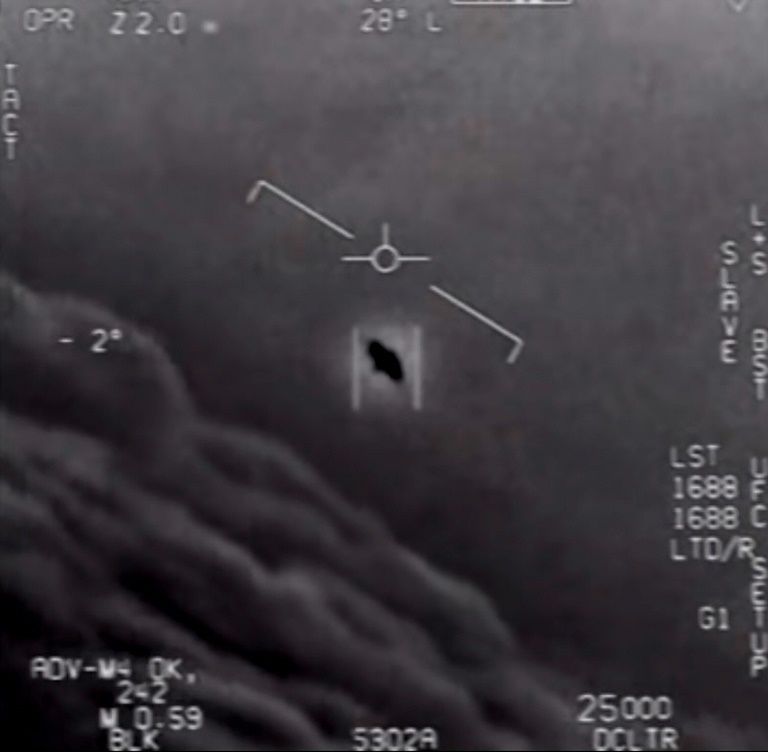
An increasing number of unidentified flying objects have been reported in the sky over the past 20 years, a top US defense official told lawmakers Tuesday in the first public hearing on UFOs in half a century.

“Since the early 2000s we have seen an increasing number of unauthorized and/or unidentified aircraft or objects in military controlled training areas and training ranges and other designated airspace,” Scott Bray, deputy director of Naval intelligence, told a House security panel.

Bray attributed the rise to efforts by the US military to “destigmatize the act of reporting sights and encounters” as well as to technological advances. 

However, he said the Pentagon had detected nothing “that would suggest it’s anything non-terrestrial in origin” behind these phenomena.

On the other hand, Brey also did not definitively rule out that possibility. 

“We’ve made no assumptions about what this is or isn’t,” Bray said.

In June 2021, US intelligence had already claimed in a long-awaited report that there was no evidence of the existence of extraterrestrials in the skies, while acknowledging that they had no explanation for dozens of phenomena observed by military pilots. 

Some could be explained by the presence of drones or birds creating confusion in the radar systems of the US military. 

Others could stem from tests of military equipment or technologies carried out by other powers, such as China or Russia. 

The US military and intelligence are primarily interested in determining whether these aerial objects may be linked to threats against the United States.

“Unidentified Aerial Phenomena are a potential national security threat. And they need to be treated that way,” said Democratic Representative Andre Carson of Indiana, who was chairing the panel holding the hearing. 

Musk says no Twitter deal without clarity on spam accounts

Billionaire Elon Musk said Tuesday his bid to buy Twitter won’t proceed unless he gets proof of the number of spam accounts plaguing the platform, adding more uncertainty to his roller-coaster pursuit of the social media giant.

This latest twist to his $44 billion move to acquire the key platform sparked speculation over whether the world’s richest person was trying to shrink the price tag or even back away from the deal.

Hours after Musk’s early morning tweet over bots, Twitter insisted the deal push through, and without delay.

“Twitter is committed to completing the transaction on the agreed price and terms as promptly as practicable,” the company wrote in a statement accompanying a filing to US regulators.

Musk last week tweeted his bid for the company was “temporarily on hold,” pending questions over its estimates of the number of fake accounts, or bots.

Then early Tuesday he pushed for more information, writing to his almost 94 million followers on the social network: “Yesterday, Twitter’s CEO publicly refused to show proof of <5%.” 

“This deal cannot move forward until he does,” he added.

Twitter chief executive Parag Agrawal has said the platform suspends more than a half-million seemingly bogus accounts daily, usually before they are even seen, and locks millions more weekly that fail checks to make sure they are controlled by humans and not by software.

Internal measures show that fewer than five percent of accounts active on any given day at Twitter are spam, but that analysis cannot be replicated externally due to the need to keep user data private, Agrawal contended.

Musk posted that the real number of bots may be four times what Twitter claims and “could be *much* higher,” and has said he would make getting rid of them a priority if he owned the platform.

“So how do advertisers know what they’re getting for their money?” Musk tweeted in a subsequent response about the need to prove Twitter users are real people.

“This is fundamental to the financial health of Twitter.”

– ‘Under pressure’ –

The process used to estimate how many accounts are bots has been shared with Musk, Agrawal insisted.

According to an estimate published Friday by software firm SparkToro, 19.42 percent of Twitter accounts are fake or spam, but the company acknowledges its methodology for determining bots is likely different from that used by Twitter.

SparkToro has a tool on its website that shows more than 70 percent of Musk’s followers are fake accounts. 

“It appears the spam/bot issue is cascading and clearly making the Twitter deal a confusing one,” Wedbush analyst Dan Ives said in a note to investors.

“The bot issue at the end of the day… feels more to us like the ‘dog ate the homework’ excuse to bail on the Twitter deal or talk down a lower price.”

Another tech watcher, Grady Booch, tweeted to Musk that it “Seems like you have buyers remorse.”

After sliding ahead of the market bell, shares of Twitter closed up nearly 2.5 percent on Tuesday.

Meanwhile in a filing to the Securities and Exchange Commission, Twitter urged its shareholders to vote in favor of Musk’s buyout for $54.20 per share in cash, at an upcoming special meeting.

The filing also noted Musk discussed the company’s business and products with Agrawal over the course of three days, just prior to making his buyout proposal. 

Musk has described his motivation as stemming from a desire to ensure freedom of speech on the platform and to boost monetization of a website that is massively influential but has struggled to attain profitable growth.

He has also said he favored lifting the ban on Donald Trump, who was kicked off the platform in January 2021 over concerns the ex-president could incite violence.

burs-jm/ec

Casino mogul Wynn sued for acting as agent for China

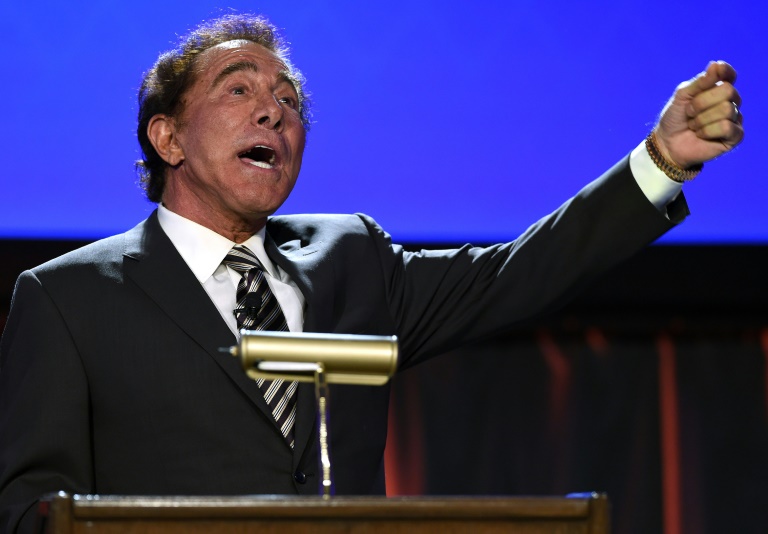
The US Justice Department sued Las Vegas and Macau casino mogul Steve Wynn Tuesday to force him to register officially as an agent for the Chinese government.

Wynn, the founder and former chief executive of Wynn Resorts, acted on behalf of Beijing in 2017 when he met with president Donald Trump and senior administration officials in a Chinese effort to gain custody over exiled tycoon Guo Wengui, the department said.

Guo was wanted in China for financial fraud and other allegations, but was close to Trump advisor Steve Bannon, supporting Bannon’s media business and other activities, and had asked for political asylum in the United States.

The Justice Department said that in June and August 2017, Wynn contacted Trump and had dinner with the president to convey Beijing’s request that the US cancel Guo’s visa or have him otherwise removed from the country.

“Wynn engaged in these efforts at the request of Sun Lijun, then-vice minister of the MPS,” the Justice Department said, referring to China’s Ministry of Public Security.

Besides raising it with Trump, Wynn, who was a former Republican Party finance chairman,  also had “multiple discussions” with senior White House and National Security Council officials “about organizing a meeting with Sun and other PRC government officials” on the issue, it said. 

At the time Wynn’s company owned and operated three casinos in Macau, Asia’s largest gambling Mecca.

The Justice Department alleges that Wynn carried out Sun’s requests “out of a desire to protect his business interests in Macau.”

It says that Wynn was advised that he had to register as a lobbyist for China under the Foreign Agents Registration Act, but refused to do so.

Wyne was enlisted in the lobbying effort partly by another wealthy US businessman, Trump friend and former top Republican fundraiser, Elliott Broidy. 

In 2020, Broidy pleaded guilty to violating the Foreign Agents Registration Act and forfeited $6.6 million in a plea deal.

Wynn, 80, was forced to step down as CEO of Wynn Resorts in 2018 amid sexual misconduct allegations.

In September, three companies owned by Guo were ordered by the US Securities and Exchange Commission to pay $539 million in penalties to settle charges over illegal cryptocurrency sales.

Close Bitnami banner
Bitnami