World

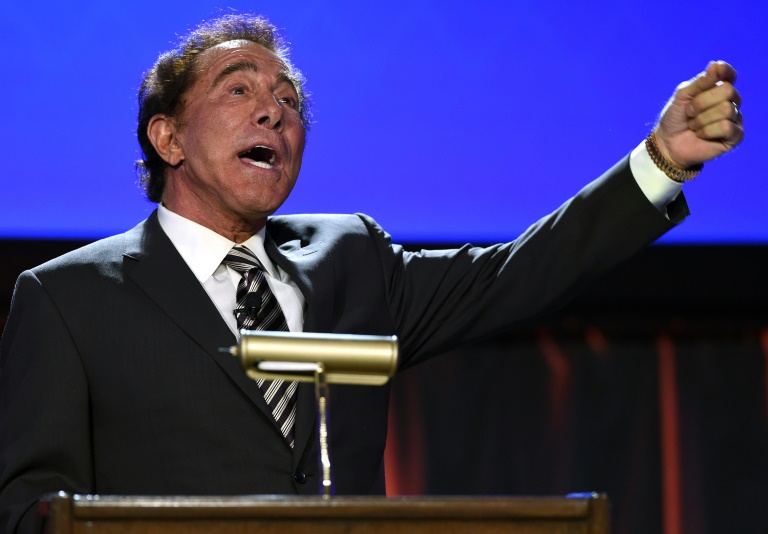
Casino mogul Wynn sued for acting as agent for China

The US Justice Department sued Las Vegas and Macau casino mogul Steve Wynn Tuesday to force him to register officially as an agent for the Chinese government.

Wynn, the founder and former chief executive of Wynn Resorts, acted on behalf of Beijing in 2017 when he met with president Donald Trump and senior administration officials in a Chinese effort to gain custody over exiled tycoon Guo Wengui, the department said.

Guo was wanted in China for financial fraud and other allegations, but was close to Trump advisor Steve Bannon, supporting Bannon’s media business and other activities, and had asked for political asylum in the United States.

The Justice Department said that in June and August 2017, Wynn contacted Trump and had dinner with the president to convey Beijing’s request that the US cancel Guo’s visa or have him otherwise removed from the country.

“Wynn engaged in these efforts at the request of Sun Lijun, then-vice minister of the MPS,” the Justice Department said, referring to China’s Ministry of Public Security.

Besides raising it with Trump, Wynn, who was a former Republican Party finance chairman,  also had “multiple discussions” with senior White House and National Security Council officials “about organizing a meeting with Sun and other PRC government officials” on the issue, it said. 

At the time Wynn’s company owned and operated three casinos in Macau, Asia’s largest gambling Mecca.

The Justice Department alleges that Wynn carried out Sun’s requests “out of a desire to protect his business interests in Macau.”

It says that Wynn was advised that he had to register as a lobbyist for China under the Foreign Agents Registration Act, but refused to do so.

Wyne was enlisted in the lobbying effort partly by another wealthy US businessman, Trump friend and former top Republican fundraiser, Elliott Broidy. 

In 2020, Broidy pleaded guilty to violating the Foreign Agents Registration Act and forfeited $6.6 million in a plea deal.

Wynn, 80, was forced to step down as CEO of Wynn Resorts in 2018 amid sexual misconduct allegations.

In September, three companies owned by Guo were ordered by the US Securities and Exchange Commission to pay $539 million in penalties to settle charges over illegal cryptocurrency sales.

Pollution behind 1 in 6 global deaths in 2019: study

Pollution caused some 9 million people to die prematurely in 2019, according to a new global report published Wednesday, with experts raising alarm over increasing deaths from breathing outside air and the “horrifying” toll of lead poisoning.    

Human-created waste in the air, water and soil rarely kills people immediately, but causes instead heart disease, cancer, respiratory problems, diarrhoea and other serious illnesses.  

The Lancet Commission on pollution and health said the impact from pollution on global health remains “much greater than that of war, terrorism, malaria, HIV, tuberculosis, drugs and alcohol”. 

Pollution is an “existential threat to human health and planetary health, and jeopardises the sustainability of modern societies,” it added.

In general, the review found, air pollution — accounting for a total of 6.7 million deaths globally in 2019 — was “entwined” with climate change because the main source of both problems is burning fossil fuels and biofuels.  

“If we can’t manage to grow in a clean and green way, we’re doing something terribly wrong,” said the report’s lead author Richard Fuller, of the Global Alliance on Health and Pollution, adding that chemical pollution also harms biodiversity — another major global threat. 

“These things are terribly connected and strategies to deal with one have ripple effects all the way through,” he said.

Overall, one in six premature deaths globally — or nine million — were caused by pollution, a figure unchanged since the last assessment in 2015. 

Researchers noted a reduction in mortality linked to indoor air pollution, unsafe drinking water and inadequate sanitation, with major improvements seen in Africa.  

But early deaths associated with industrialisation — outdoor air and chemical pollution — are on the rise, particularly in southern and eastern Asia. 

Ambient air pollution caused some 4.5 million deaths in 2019, according to the study, published in Lancet Planetary Health, compared with 4.2 million in 2015 and just 2.9 million in 2000. 

Chemical pollution is also increasing, with lead poisoning alone causing 900,000 deaths. Even that, the report warned, is likely a “substantial undercount” in light of new research suggesting there is no safe level of exposure.

– Harmful to children –

Algeria banned lead in petrol in 2021, the last country to do so. 

But people continue to be exposed to the toxic substance, largely due to unregulated recycling of lead-acid batteries and e-waste. Contaminated culinary spices are also a culprit.   

“The fact that lead is getting worse, mostly in poorer countries, and ramping up in terms of the number of deaths, is horrifying,” said Fuller.

Heart disease is the cause of almost all early deaths from exposure to lead, which hardens arteries, said Fuller. 

But elevated lead levels in blood — estimated to affect hundreds of millions of children — also harm brain development and are linked to serious losses of cognitive function. 

The report said lead is also linked to a spike in behavioural disorders and diminished economic productivity, with global economic losses estimated at almost $1 trillion annually. 

In Africa, economic losses from lead-related IQ loss are equivalent to about four percent of gross domestic product, while in Asia it amounts to two percent. 

– Silent killer –

Overall, excess deaths due to pollution have led to economic losses totalling $4.6 trillion in 2019, or around six percent of global economic output, researchers said.

Low- and middle-income countries are by far the most affected, with more than 90 percent of deaths in these regions.

There is also increasing evidence of pollution crossing national boundaries in wind, water and the food chain.  

Wealthier nations that have reduced domestic outdoor air pollution effectively “displace” it overseas to countries with higher levels of manufacturing, the report said.

Prevailing global winds transport air pollution from east Asia to North America, from North America to Europe, and from Europe to the Arctic and central Asia. 

Meanwhile, cereals, seafood, chocolate and vegetables produced for export in developing countries can be contaminated as a result of soil and water polluted with lead, arsenic, cadmium, mercury and pesticides. 

This “increasingly threatens global food safety”, the report said, adding that “toxic metals found in infant formula and baby foods are of particular concern.”

Fuller said the threat of pollution — particularly air and lead pollution — is underappreciated, with more attention focused on the health implications of microplastics. 

“We can show a million people dying from lead pollution right now — more than die from malaria, more than die from HIV — and that’s not even discussed,” he said.

Guatemala's leader to skip Americas Summit after US sanctions

Guatemala’s President Alejandro Giammattei said Tuesday he will skip next month’s Summit of the Americas in Los Angeles, after Washington sanctioned his top prosecutor over allegations of corruption.

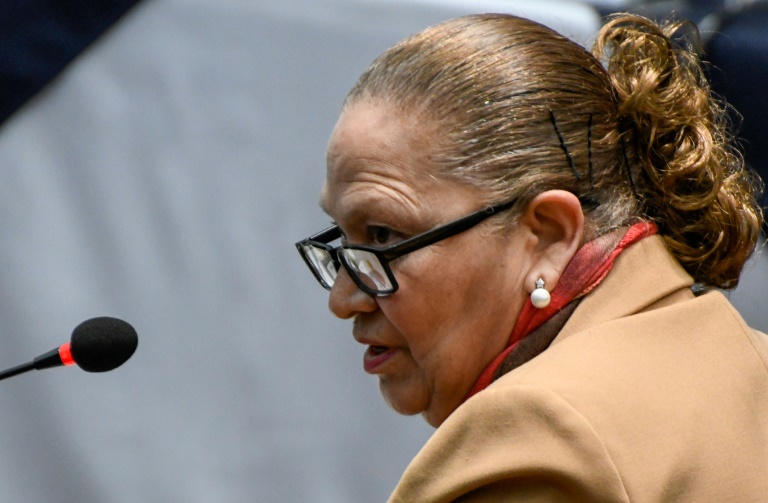
The United States officially designated Guatemalan Attorney General Consuelo Porras for “significant corruption” Monday, just hours after she was reappointed for a second four-year term.

Speaking on Tuesday during an event at the Mexican embassy in Guatemala, Giammattei said he did not expect to be invited to the summit.

“In any case, I sent word that I’m not going,” he said.

“As long as I am president this country will be respected and its sovereignty will be respected.”

Earlier in the day, Porras blasted the US move, saying she will not bow to pressure from Washington.

“The attorney general and head of the public ministry does not accept any kind of interference nor pressure and will continue working in an objective and impartial manner ensuring strict compliance with the law,” her office said on Twitter.

It added that the “public ministry is an autonomous institution that is not subordinate to any international entity.”

Last year, the US said it had “lost confidence” in Porras after she sacked Guatemala’s top anti-corruption prosecutor Francisco Sandoval.

Sandoval, who fled to the United States after being fired, claimed he had encountered numerous obstacles in his work and had been prevented from investigating Giammattei without Porras’s permission.

Critics say Sandoval’s replacement is a defender of corruption and persecutor of the opposition.

Porras has had at least six anti-corruption prosecutors arrested on charges ranging from obstruction of justice to abuse of authority.

The prosecutors were fired amid ongoing investigations of politicians charged with graft, and claimed their treatment was revenge from those in power.

Giammattei said on Monday that Porras’s reappointment was supported unanimously by the commission tasked with vetting candidates for the position of attorney general.

The European Union said in a statement that the reappointment of Porras “raises concerns about the commitment of the Guatemalan authorities to tackle corruption and safeguard the independence of the judiciary.”

The EU said the Public Ministry’s legal action against judges, lawyers and prosecutors involved in investigating corruption “forms part of a wider pattern of intimidation and harassment that has led over 20 justice operators to leave the country.”

Participation in the Summit of Americans has already caused some controversy.

Rumors have been swirling that Washington will not invite Cuba, Venezuela and Nicaragua to the conference, with the presidents of Mexico and Bolivia announcing they would only attend as long as there are no exclusions.

Biden attacks white supremacist 'poison' after racist shooting

President Joe Biden on Tuesday called out what he branded the “poison” of white supremacist ideology behind a deadly mass shooting in Buffalo, New York, and said that racism is being stoked for political gain.

Speaking in the city where a white teen is accused of murdering 10 African Americans in a neighborhood supermarket, Biden said, “What happened here is simple and straightforward: terrorism, terrorism. Domestic terrorism.”

“White supremacy is a poison running through our body politic and it’s been allowed to fester right in front of our eyes,” Biden said, condemning “those who spread the lie for power, for political gain and for profit.”

In a searing speech that also called for restrictions on ownership of assault-style rifles, Biden listed the victims, fighting tears as he recounted how one of the dead, named as 53-year-old Andre Mackniel, had been buying a birthday cake for his three-year-old son when the gunman entered the store.

Biden’s harshest comments were directed at what he described as the “perverse ideology” of white supremacists that police say inspired the shooter.

In a manifesto, the alleged mass killer referred to the so-called “replacement theory,” which claims the existence of a leftist plot to overwhelm the white population with non-white immigrants.

Biden described “a hate that through the media and politics (and) the internet has radicalized angry, alienated, lost and isolated individuals into falsely believing that they will be replaced — that’s the word, replaced — by ‘the other.'”

“No more. I mean no more. We need to say as clearly and forcefully as we can that the ideology of white supremacy has no place in America,” he said to applause.

– ‘Soul of the nation’ –

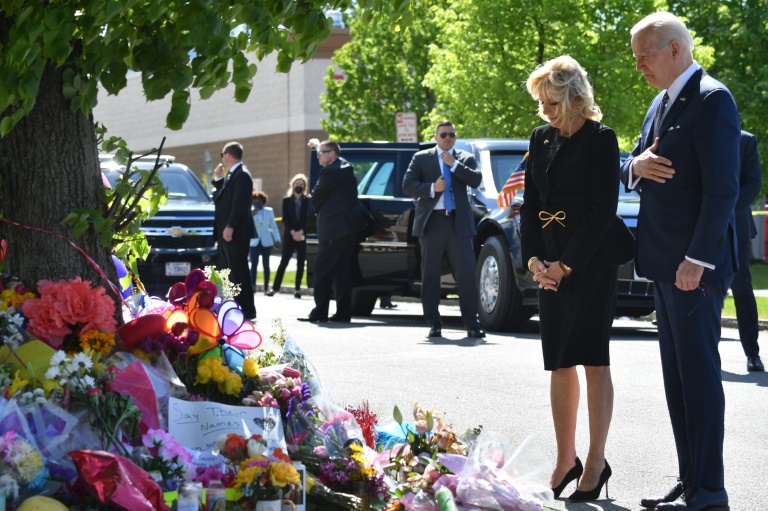
Earlier Tuesday, Biden and his wife, Jill Biden, laid a bouquet at a makeshift memorial outside the supermarket where the slaughter took place.

A strong breeze tugged at balloons and flowers piled under a tree while the Bidens paid their respects, the president making the sign of the cross before giving way to a delegation of elected officials laying their own bouquets.

Biden then went into private meetings with relatives of the victims and first responders.

Payton Gendron, the 18-year-old murder suspect, planned the shooting for months, and scoped out the location ahead of time, according to a stream of posts attributed to him on social media sites.

Gendron first wrote about killing Black people in December and decided to target the Buffalo store based on its large surrounding African American population, according to US media analysis of hundreds of pages of messages.

The so-called replacement plot allegedly motivating Gendron is a conspiracy theory that, like bizarre QAnon beliefs, has spread from the furthest fringes of society to surprisingly mainstream areas — most notably Tucker Carlson’s enormously influential nightly talk show on Fox News.

– ‘They don’t understand America’ –

The White House has steadfastly refused to join some who directly blame Carlson and several prominent Republicans for promoting the theory and, by extension, bearing responsibility for white supremacist violence.

However, Biden’s strong comments in Buffalo left little doubt that he was referring not just to the actual shooter but the powerful voices spreading the ideology.

He recalled that he had left retirement to take on Donald Trump in the 2020 presidential election after being shocked that Trump refused to clearly condemn neo-Nazis demonstrating in Charlottesville, Virginia.

“Democracy is in a danger like it hasn’t been in my lifetime,” he said. “Hate and fear have been given too much oxygen by those who pretend to love America. They don’t understand America.

“Now’s the time for people of all races, of every background, to speak up as a majority of America and reject white supremacy,” he said. “We can’t allow them to destroy the soul of the nation.”

Later, Biden was asked by reporters about Carlson and the Republican members of Congress who have echoed supremacist language.

Biden did not name names but said “anybody who echoes a replacement (theory) is to blame,” even if “not for this particular crime.”

“It’s wrong. It’s just simply wrong,” he said.

At a White House event, Vice President Kamala Harris, who is the first Black and Asian person ever to hold the office, also made pointed remarks, saying there were “people in incredible position of power…, people with the biggest pulpits spreading this kind of hate.”

The 'bots' at heart of Twitter buyout row

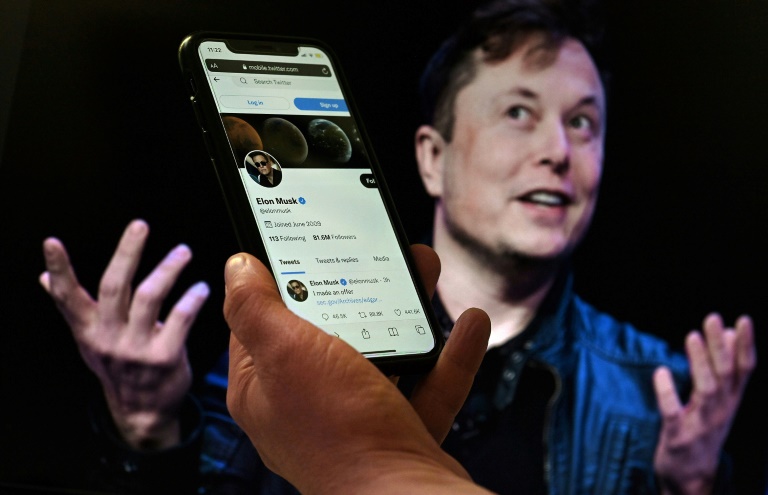
Elon Musk’s pausing of his bid to buy Twitter due to questions over “bots” has put the artificially-operated accounts at the heart of the proposed deal’s latest controversy.

The software is so commonplace and can be such a problem that tech giants such as Meta, Google and Twitter have teams devoted to banishing bots and cybersecurity firms sell defenses against them.

Here’s a closer look at bots:

– Human or software? –

At a basic level, “bots” are software programs that interact with online platforms, or their users, pretending to be real people, said Tamer Hassan, co-founder and chief of cybersecurity firm HUMAN.

Malicious bots have become sophisticated and are among this decade’s top cyber threats, said Hassan, whose firm specializes in distinguishing people from software online.

The term bots at Twitter is often used to describe fake accounts, powered by some version of artificial intelligence, that can fire off posts and even react to what is posted by others, said independent analyst Rob Enderle.

– Tickets and turmoil –

Bots are used in more than three quarters of security and fraud incidents that happen online, from spreading socially divisive posts to snapping up hot concert tickets and hacking, Hassan told AFP.

“The question is, what would you do if you could look like a million humans?” Hassan asked rhetorically.

“Across all social media platforms, bots can be used to spread content to influence people’s opinions, garner reactions and can even result in cybercrime.”

Bots can be used on social media to widely spread false news, direct users to misinformation, steer people to specious websites and make bogus posts seem popular using shares or “likes.”

Bots on social media can also sucker people into financial scams, Hassan added.

“Social media platforms have had bots for a long time,” analyst Enderle said. “Bots have been connected to attempts to influence the US election and shape opinions about Russia’s war on Ukraine.”

– The deal with Twitter –

Twitter makes its money from ads, and marketers pay for reaching people, not software.

“Advertising to bots isn’t going to have a good close rate because bots don’t buy products,” Enderle noted.

If advertisers are paying Twitter fees based on how many people see ads, and those numbers are inflated due to bots in the online audience, they are being overcharged, Enderle added.

If Twitter has way more bots than it is letting on, its revenue could plunge when those accounts are exposed and closed.

Twitter chief executive Parag Agrawal has said that fewer than five percent of accounts active on any given day at Twitter are bots, but that analysis cannot be replicated externally due to the need to keep user data private.

Musk posted that the real number of bots may be four times higher and has said he would make getting rid of them a priority if he owned the platform.

Twitter has rules about automated actions by accounts, including barring software from posting about hot topics, firing off spam, attempting to influence online conversations, and operating across multiple accounts.

Bots are a known social media problem, and having Musk make it a sticking point this late in the acquisition process appears to likely be “a vehicle to escape the purchase or get a lower price,” Enderle said.

Mideast sandstorms snarl traffic, close schools, harm health

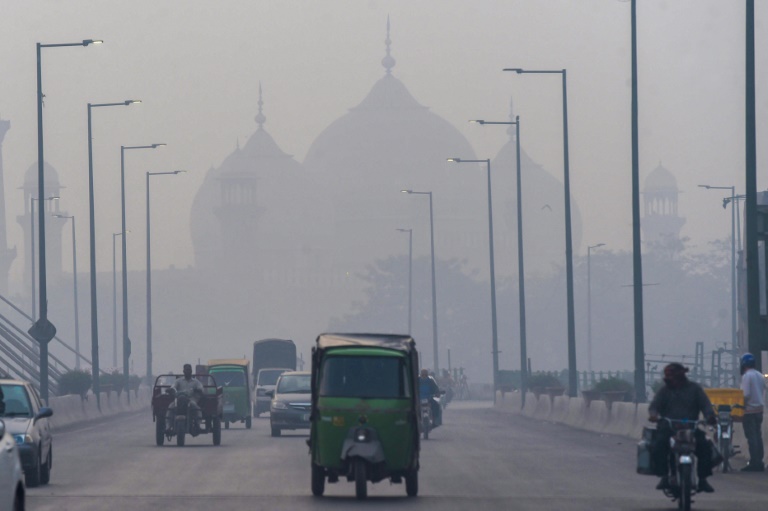
Sandstorms across the Middle East have delayed flights, closed schools and hospitalised thousands — a phenomenon experts say could worsen as climate change warps regional weather patterns. 

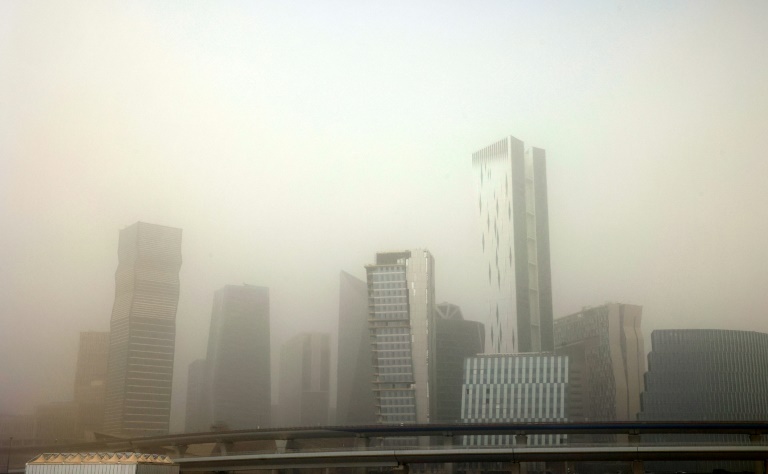
Saudi Arabia on Tuesday became the latest country blanketed with dust that slowed traffic and made iconic towers in the capital difficult to see from more than a few hundred metres (yards) away.

Emergency rooms in Riyadh hospitals had received some 1,285 people suffering from respiratory problems over 24 hours as a result of the sandstorm, the state-run Al-Ekhbariya channel reported.

Electronic signs along Riyadh’s highways warned drivers to reduce their speed because of the lower visibility, even as life largely went on as usual in the kingdom. 

The national meteorology centre predicted that “surface dusty winds” originating in the east and bringing a thick grey haze would continue west towards the Muslim holy cities of Mecca and Medina.

Other countries have been grappling with the problem for longer: Neighbouring Iraq has experienced eight sandstorms since mid-April, fuelled by soil degradation, intense droughts and low rainfall linked to climate change. 

The country’s latest sandstorm on Monday enveloped the capital Baghdad in an orange glow, sent at least 4,000 people to hospital with breathing problems and led to the closure of airports, schools and public offices across the country. 

Iran announced that it, too, was closing government offices and schools Tuesday, citing “unhealthy weather” conditions and sandstorms. 

Average airborne concentration of the finest and most hazardous particles (PM2.5) was at 163 microgrammes per cubic metre Tuesday in Tehran, according to a government website.

That is more than six times the World Health Organization’s recommended maximum of 25 microgrammes per cubic metre.

In Kuwait, meanwhile, air traffic at the main airport was suspended for an hour and a half due to a dust storm Monday, and marine traffic in all three ports remained suspended as of Tuesday afternoon. 

Kuwait’s ministry of education said classes were suspended on Tuesday but would resume the following day. 

– Response needed ‘urgently’ –

The Middle East has always been battered by dust and sandstorms, but they have become more frequent and intense in recent years. 

The trend is associated with overgrazing and deforestation, overuse of river water and more dams. 

Unseasonable masses of dry, cold air help explain the recent proliferation of sandstorms in eastern Syria and Iraq and “their transmission to the Arabian Peninsula”, Hassan Abdallah from the WASM meteorological centre in Jordan told AFP. 

By the time the sandstorms reach Saudi Arabia they tend to be less intense, he added. 

Sandstorms are worsening regionally because of factors including low water levels in the Tigris and Euphrates rivers, large fluctuations in annual rainfall and disintegrating soil, he said. 

As for how to mitigate them, Abdallah advised planting more trees and “addressing the low level of the Tigris and Euphrates rivers urgently”.

In central Riyadh on Tuesday, sand layered cars and buildings, and residents struggled to keep it out of their homes. 

“Working outside is very difficult because of the dirt,” a Pakistani construction worker who gave his name as Kalimullah told AFP as he installed tiles. 

“I try to wash my face from time to time,” the 30-year-old added, wrapping a piece of cloth around it to block the sand. 

Saudi office worker Abdullah Al-Otaibi, 39, said he was grateful he works indoors. 

“Dust storms are part of our culture and we are used to it, but some of them are severe,” he said, rubbing his eyes as he hurried inside.

bur-ht-rcb/dm/fz 

US consumers remain resilient even as prices rise

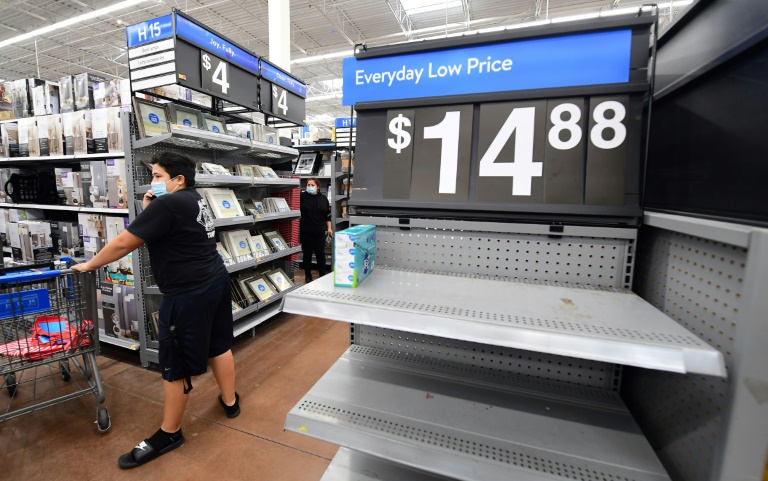
US consumers continued to increase spending in April, remaining resilient in the face of accelerating inflation, but retail giant Walmart still saw a big hit to its bottom line due to rising costs, according to reports released Tuesday.

Home Depot, however, benefitted from the ongoing spending spree, reporting higher profits and a better outlook for the year.

The reports come amid rising fears of recession in the wake of a 40-year peak in inflation that has prompted the Federal Reserve to raise borrowing costs aggressively to cool the economy and tamp down price pressures.

The healthy US consumer has underpinned the strong recovery in the world’s largest economy following the slowdown in the early months of the Covid-19 pandemic, but the surge in demand also has strained supply chains and helped push inflation to its fastest rate since the early 1980s.

Fed Chair Jerome Powell said Tuesday the central bank wants to see slowing growth and “clear” evidence inflation is coming down before it pulls back on efforts to cool the economy, and acknowledged that it may be a “bumpy” ride that would inflict some pain.

Consumers haven’t pulled back yet, and US retail sales rose 0.9 percent in April, boosted by a rebound in auto sales and increases in other categories, including electronics, home furnishings and restaurants, according to Commerce Department data. 

The report “is encouraging because it shows consumers are taking higher prices in stride and remain resilient,” said Jack Kleinhenz, chief economist of the National Retail Federation.

But prices continue to rise, and the cost of gas at the pump hit a record in May as the war in Ukraine pushes oil prices higher.

“Consumers’ tolerance to high inflation will continue to be tested and the renewed spike in gasoline prices, along with tighter financial conditions, will weigh on households’ willingness to spend on big-ticket items,” said Kathy Bostjancic, a chief US economist at Oxford Economics.

The Fed has gone to battle to try to cool price pressures, announcing earlier this month the biggest interest rate increase since 2000.

Powell said reducing inflation is critical, which means bringing down red-hot demand more in line with supply, and additional sharp rate hikes are “on the table” in June and July.

“What we need is to see… growth moving down from the very high levels that we saw last year, moving down to a level that’s still positive,” Powell said at an event with The Wall Street Journal.

And if that doesn’t happen, “then we’ll have to consider moving more aggressively,” he said.

– Labor, fuel costs rise –

Walmart executives pointed to a series of cost hits that converged in the quarter ending April 30, as the retail giant reported a 25 percent drop in profits to $2.1 billion — $1.30 a share, below the $1.48 expected by analysts — as revenues rose 2.4 percent to $141.6 billion.

Walmart raised its full-year sales forecast slightly but lowered its profit forecast. It now expects earnings per share to fall one percent after previously projecting an increase in the mid-single digits.

The company cited higher labor costs and a spike in energy costs when the Russian invasion of Ukraine sent oil prices soaring.

Another obstacle was a March fire that destroyed a warehouse in Indianapolis, Indiana.

Walmart US President John Furner said the company is seeing a “wide range” of responses from shoppers to the rise in prices.

While there is continued strong demand for pricey items such as game consoles and outdoor grills, he said some consumers are moving away from brand names in favor of Walmart’s own branded goods, which are lower-priced. 

“We need to do more to control costs, to make sure we can provide good value for our customers,” Furner said on an earnings conference call.

– Investing in homes –

In contrast, Home Depot raised its outlook after reporting that first-quarter profits rose two percent to $4.2 billion on a four percent increase in revenues, as executives with the home-improvement chain said consumers appeared to take higher prices in stride.

The spending has been propelled by a strong trend toward increased investment as homes increase in value, according to Chief Financial Officer Richard McPhail.

Walmart shares plunged 11.4 percent, while fellow Dow member Home Depot rose 1.7 percent.

Pentagon finds no wrongdoing in 2019 Syria strike that killed civilians

An investigation into a 2019 strike by US forces in Syria that killed numerous civilians found no violations of policy or wanton negligence, the Pentagon said Tuesday.

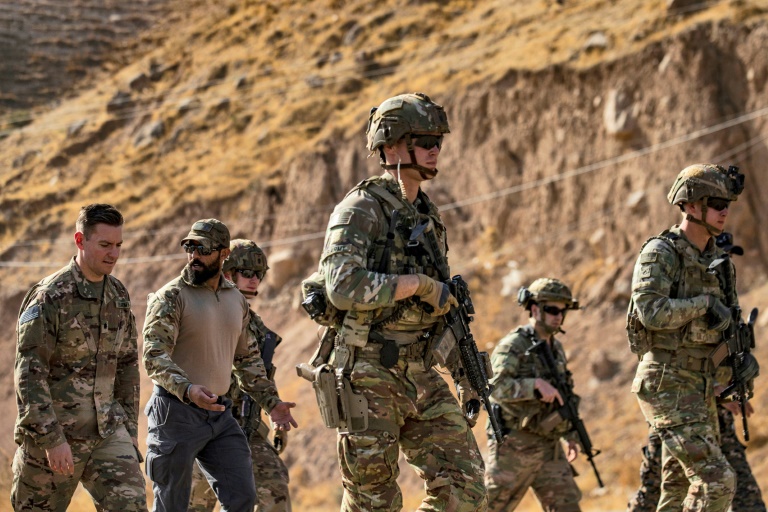
The internal US Army investigation focused on an operation by a special US force operating in Syria which launched an airstrike on an Islamic State bastion in Baghouz on March 18, 2019.

The investigation was sparked last year after the New York Times reported that in the original strike the US military had covered up dozens of non-combatant deaths.

The Times report said that 70 people, many of them women and children, had been killed in the strike.

The Times report said a US legal officer “flagged the strike as a possible war crime” and that “at nearly every step, the military made moves that concealed the catastrophic strike.” 

But the final report of the investigation rejected that conclusion Tuesday.

It said that the US ground force commander for the anti-Islamic State coalition received a request for air strike support from Syrian Democratic Forces fighting the extremists.

The commander “received confirmation that no civilians were in the strike area” and authorized the strike.

However, they later found out there were civilians at the location.

“No Rules of Engagement or Law of War violations occurred,” the investigation said.

In addition, the commander “did not deliberately or with wanton disregard cause civilian casualties,” it said.

The report said that “administrative deficiencies” delayed US military reporting on the strike, giving the impression that it was being covered up.

The Times cited an initial assessment of the incident saying that about 70 civilians could have been killed.

Pentagon Spokesman John Kirby said that 53 combatants were killed, 51 of them adult males and one child, while four civilians died, one woman and three children.

Another 15 civilians, 11 women and four children, were wounded, he said.

Asked if anyone was being punished for the civilian deaths, Kirby said the investigation did not find the need to hold any individuals accountable.

The probe “did not find that anybody acted outside the law of war, that there was no malicious intent,” Kirby said.

“While we don’t always get everything right, we do try to improve. We do try to be as transparent as we can about what we learn,” he said.

More than 100,000 people officially missing in Mexico

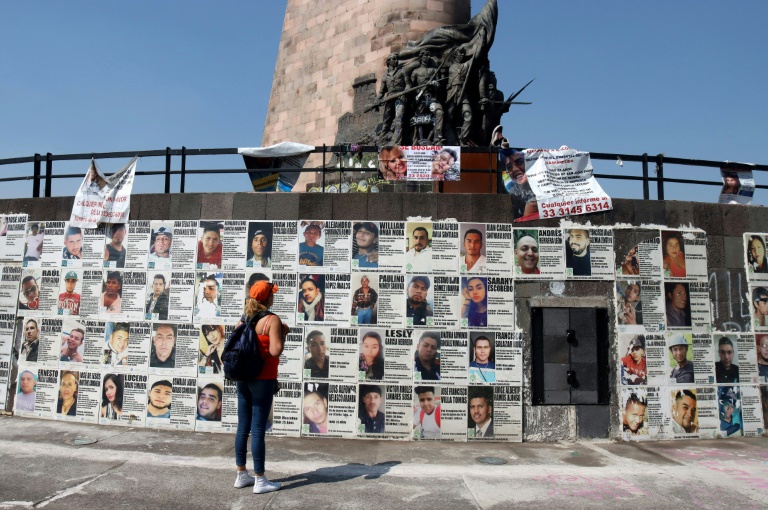
More than 100,000 people are now listed as missing in violence-wracked Mexico, a grim milestone that the United Nations rights chief on Tuesday called “a tragedy of enormous proportions.”

Rights groups appealed for urgent action to tackle disappearances that have skyrocketed during years of spiraling drug-related violence.

The National Registry of Missing Persons, which has been tracking disappearances since 1964, said that as of Monday the whereabouts of 100,012 people were unknown. About 75 percent are men.

The Movement for Our Disappeared warned that the figure was “certainly well below the number” of actual cases, calling for the government to deal with the crisis “in a comprehensive and immediate manner.”

UN High Commissioner for Human Rights Michelle Bachelet said the disappearances represented a “human tragedy of enormous proportions.”

“No effort should be spared to put an end to these human rights violations and abuses of extraordinary breadth, and to vindicate victims’ rights to truth, justice, reparation and guarantees of non-repetition,” she added.

Only 35 of the disappearances recorded have led to convictions — a “staggering rate of impunity” that is “mostly attributable to the lack of effective investigations,” Bachelet’s office said.

– ‘Pattern of impunity’ –

The UN Committee on Enforced Disappearances and the Working Group on Enforced or Involuntary Disappearances described the situation as “heart-breaking.”

Enforced disappearances are a daily occurrence in Mexico, “reflecting a chronic pattern of impunity,” they added.

The UN committee, which is made up of independent experts, warned in April that Mexico was facing an “alarming trend of rising enforced disappearances.”

Organized crime groups were mainly responsible for these disappearances, “with varying degrees of participation, acquiescence or omission by public servants,” it said.

The committee’s report was rejected by Mexican President Andres Manuel Lopez Obrador, who said his government would not tolerate impunity or corruption.

Frustration at slow progress in official investigations has led families of the disappeared, especially mothers, to form groups that search for clandestine graves using picks and shovels.

The crisis is fueled by the state’s apathy, said Cecilia Flores, the leader of one such group in the northwestern state of Sonora who is looking for her sons Alejandro and Marco Antonio.

“If the authorities did their job, not so many would have disappeared,” she told AFP.

“For them, a disappeared person is one less criminal and one more statistic,” Flores said.

– ‘Staggering number’ –

Authorities say some 37,000 unidentified bodies are being held in forensic services, though civil organizations warn the number could be much higher.

Authorities are working to consolidate a database of the disappeared with genetic samples, though many corpses have been buried without being identified because morgues are overflowing.

The International Committee of the Red Cross described the 100,000 missing as “a staggering number that underscores the immediate need to strengthen prevention, search, and identification mechanisms for those who are missing and their families.”

However, it recognized “important progress” made by Mexico in some areas including identifying the dead and easing the pain of families of the missing. 

“The first few hours are the most important,” said Marlene Herbig, head of the ICRC’s missing persons program in Mexico.

“When someone disappears, their relatives have the right to know what has happened. Knowing the fate of disappeared persons is primarily a humanitarian act.”

The first reported disappearances in Mexico date back to the authorities’ so-called “dirty war” against leftist movements from the 1960s to 1980s.

Mexico has also registered over 340,000 deaths — mostly attributed to organized crime groups — since 2006, when a major anti-drug military offensive was launched.

US eases some sanctions on Venezuela to encourage political talks: official

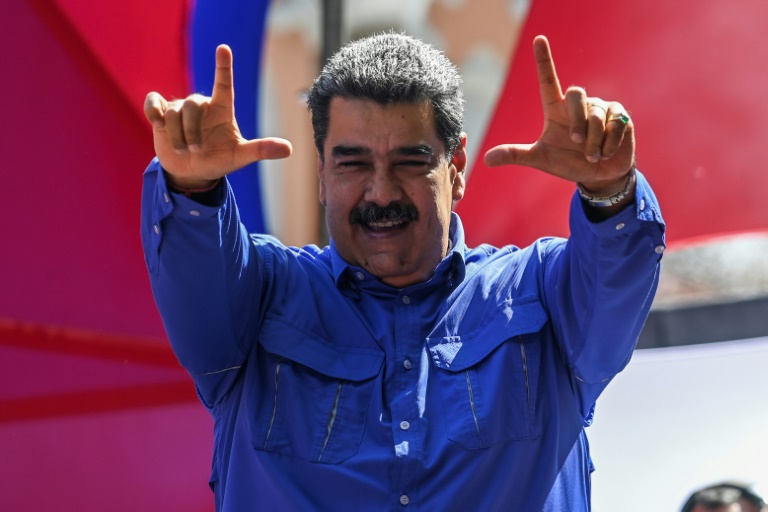
The United States is easing some of its tough sanctions on Venezuela in order to encourage political dialogue between President Nicolas Maduro’s regime and its opponents, a senior official said Tuesday. 

“The United States is undertaking a number of measures at the request of the Venezuelan interim government and the Unity platform of opposition parties negotiating with the Venezuelan regime, to support their decision to return to the negotiating table in Mexico City,” the US official said.

One action permits US oil firm Chevron to negotiate with the state oil company PDVSA on the terms of any future activities in Venezuela, the official said.

The official said another action to ease sanctions would be announced imminently.

After a political stalemate of three years that has seen economic and social conditions in Venezuela drastically deteriorate, Washington wants to encourage Maduro’s regime to negotiate with his opponents.

They include opposition parties and the “interim government” led by Juan Guaido, which is recognized by nearly 60 countries, including the United States, as the legitimate government since 2019.

Despite international support, Guaido’s side has not been able to oust Maduro from power.

The official said the easing of sanctions is being done at the request of the Guaido-led interim government and is directly tied to an agreement of both sides to return the talks, “which they should be announcing very shortly.”

“The United States supports a peaceful and negotiated outcome to the Venezuelan political and economic and humanitarian crisis,” said the official, who spoke on condition of anonymity.

– Tentative overture –

Venezuelan talks had been stalled since October, when the US took into custody Colombian businessman Alex Saab, who was accused of laundering money for Maduro’s regime.

But in March two US officials visited Venezuela and shortly afterward Caracas released two detained Americans, raising hopes for a thaw in relations between the two sides and a resumption of domestic political talks.

The US official stressed that the easing of sanctions would not permit Chevron to actually reach an agreement with PDVSA or undertake work inside or on behalf of Venezuela, where the oil sector has been hampered by international sanctions.

“Very clearly, none of these alleviations of pressure would lead to an increase in revenue for the regime,” the official said.

“We are going to calibrate our sanctions policy accordingly to increase pressure or alleviate pressure on the basis of ambitious concrete and irreversible outcomes that empower the Venezuelan people to determine the future of their country through democratic elections,” the official added.

Democratic Senator Bob Menendez,  chairman of the Senate Foreign Relations Committee, strongly criticized the overture to Caracas.

“Giving Maduro a handful of undeserved handouts just so his regime will promise to sit down at a negotiating table is a strategy destined to fail,” Menendez said in a statement.

US concessions “ignore the cold, hard facts about the Maduro regime and its history of abusing negotiations to strengthen its political position,” he said.

Close Bitnami banner
Bitnami