World

Mideast sandstorms snarl traffic, close schools, harm health

Sandstorms across the Middle East have delayed flights, closed schools and hospitalised thousands — a phenomenon experts say could worsen as climate change warps regional weather patterns. 

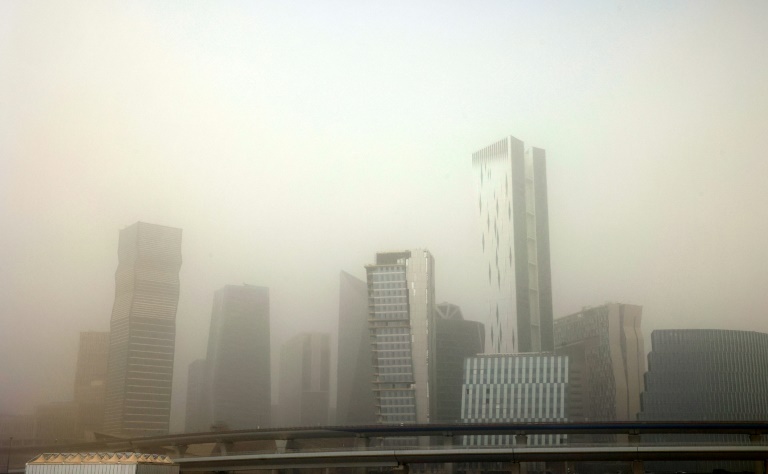
Saudi Arabia on Tuesday became the latest country blanketed with dust that slowed traffic and made iconic towers in the capital difficult to see from more than a few hundred metres (yards) away.

Emergency rooms in Riyadh hospitals had received some 1,285 people suffering from respiratory problems over 24 hours as a result of the sandstorm, the state-run Al-Ekhbariya channel reported.

Electronic signs along Riyadh’s highways warned drivers to reduce their speed because of the lower visibility, even as life largely went on as usual in the kingdom. 

The national meteorology centre predicted that “surface dusty winds” originating in the east and bringing a thick grey haze would continue west towards the Muslim holy cities of Mecca and Medina.

Other countries have been grappling with the problem for longer: Neighbouring Iraq has experienced eight sandstorms since mid-April, fuelled by soil degradation, intense droughts and low rainfall linked to climate change. 

The country’s latest sandstorm on Monday enveloped the capital Baghdad in an orange glow, sent at least 4,000 people to hospital with breathing problems and led to the closure of airports, schools and public offices across the country. 

Iran announced that it, too, was closing government offices and schools Tuesday, citing “unhealthy weather” conditions and sandstorms. 

Average airborne concentration of the finest and most hazardous particles (PM2.5) was at 163 microgrammes per cubic metre Tuesday in Tehran, according to a government website.

That is more than six times the World Health Organization’s recommended maximum of 25 microgrammes per cubic metre.

In Kuwait, meanwhile, air traffic at the main airport was suspended for an hour and a half due to a dust storm Monday, and marine traffic in all three ports remained suspended as of Tuesday afternoon. 

Kuwait’s ministry of education said classes were suspended on Tuesday but would resume the following day. 

– Response needed ‘urgently’ –

The Middle East has always been battered by dust and sandstorms, but they have become more frequent and intense in recent years. 

The trend is associated with overgrazing and deforestation, overuse of river water and more dams. 

Unseasonable masses of dry, cold air help explain the recent proliferation of sandstorms in eastern Syria and Iraq and “their transmission to the Arabian Peninsula”, Hassan Abdallah from the WASM meteorological centre in Jordan told AFP. 

By the time the sandstorms reach Saudi Arabia they tend to be less intense, he added. 

Sandstorms are worsening regionally because of factors including low water levels in the Tigris and Euphrates rivers, large fluctuations in annual rainfall and disintegrating soil, he said. 

As for how to mitigate them, Abdallah advised planting more trees and “addressing the low level of the Tigris and Euphrates rivers urgently”.

In central Riyadh on Tuesday, sand layered cars and buildings, and residents struggled to keep it out of their homes. 

“Working outside is very difficult because of the dirt,” a Pakistani construction worker who gave his name as Kalimullah told AFP as he installed tiles. 

“I try to wash my face from time to time,” the 30-year-old added, wrapping a piece of cloth around it to block the sand. 

Saudi office worker Abdullah Al-Otaibi, 39, said he was grateful he works indoors. 

“Dust storms are part of our culture and we are used to it, but some of them are severe,” he said, rubbing his eyes as he hurried inside.
bur-ht-rcb/dm/fz 

Flight data shows China Eastern jet deliberately crashed: report

US investigators believe someone on board deliberately crashed a China Eastern flight in March, the Wall Street Journal reported Tuesday, in what was China’s deadliest air disaster in decades.

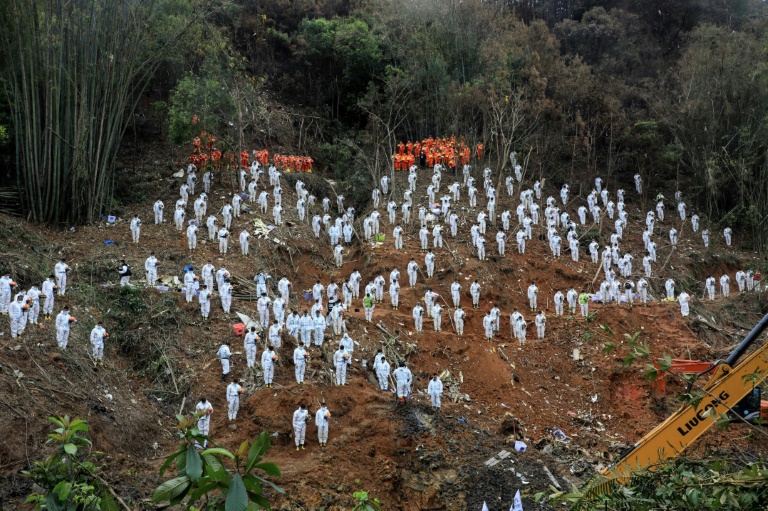
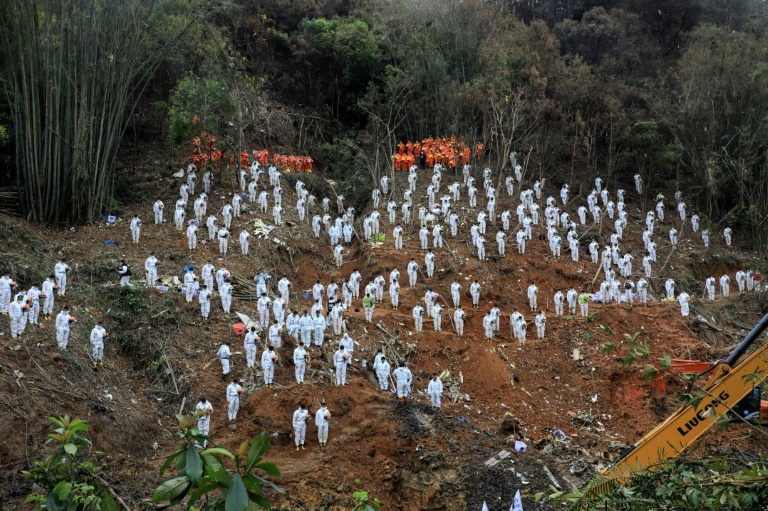
China Eastern flight MU5375 was travelling from Kunming to Guangzhou on March 21 when it inexplicably plunged from an altitude of 29,000 feet into a mountainside, killing all 132 people on board.

So-called black box flight data recorders recovered from the site were sent to the United States for analysis. 

That data shows that someone — possibly a pilot or someone who had forced their way into the cockpit — input orders to send the Boeing 737-800 into a nosedive, according to Wall Street Journal, which cited people familiar with the probe. 

“The plane did what it was told to do by someone in the cockpit,” the Journal quoted “a person who is familiar with American officials’ preliminary assessment” as saying. 

US officials believe their conclusion is backed up by the fact that Chinese investigators have so far not indicated any problems with the aircraft or flight controls that could have caused the crash and would need to be addressed in future flights, the newspaper said. 

Both the US National Transportation Safety Board and Boeing declined to comment on the investigation to AFP Tuesday. 

According to a report from Boeing, investigators found no evidence of “anything abnormal,” China’s Civil Aviation Administration (CAAC) said in April.

In a statement, the CAAC said staff had met safety requirements before takeoff, the plane was not carrying dangerous goods and did not appear to have run into inclement weather, though the agency said a full investigation could take years.

In the immediate aftermath of the crash, China’s ruling Communist Party moved quickly to control information, revving up its censorship machine as media outlets and local residents raced to the crash site.

It has maintained its tight grip over the narrative, with the preliminary probe leaving key questions unanswered.

After the fatal descent near the southern city of Wuzhou, authorities swiftly cordoned off a huge area and China’s internet regulator announced it had scrubbed vast amounts of “illegal information” on the crash from China’s tightly controlled web.

A social media hashtag bearing the plane’s flight number appeared to be censored.

The crash was China’s deadliest in around 30 years and dented the country’s otherwise enviable flight safety record.

Flight data shows China Eastern jet deliberately crashed: report

US investigators believe someone on board deliberately crashed a China Eastern flight in March, the Wall Street Journal reported Tuesday, in what was China’s deadliest air disaster in decades.

China Eastern flight MU5375 was travelling from Kunming to Guangzhou on March 21 when it inexplicably plunged from an altitude of 29,000 feet into a mountainside, killing all 132 people on board.

So-called black box flight data recorders recovered from the site were sent to the United States for analysis. 

That data shows that someone — possibly a pilot or someone who had forced their way into the cockpit — input orders to send the Boeing 737-800 into a nosedive, according to Wall Street Journal, which cited people familiar with the probe. 

“The plane did what it was told to do by someone in the cockpit,” the Journal quoted “a person who is familiar with American officials’ preliminary assessment” as saying. 

US officials believe their conclusion is backed up by the fact that Chinese investigators have so far not indicated any problems with the aircraft or flight controls that could have caused the crash and would need to be addressed in future flights, the newspaper said. 

Both the US National Transportation Safety Board and Boeing declined to comment on the investigation to AFP Tuesday. 

According to a report from Boeing, investigators found no evidence of “anything abnormal,” China’s Civil Aviation Administration (CAAC) said in April.

In a statement, the CAAC said staff had met safety requirements before takeoff, the plane was not carrying dangerous goods and did not appear to have run into inclement weather, though the agency said a full investigation could take years.

In the immediate aftermath of the crash, China’s ruling Communist Party moved quickly to control information, revving up its censorship machine as media outlets and local residents raced to the crash site.

It has maintained its tight grip over the narrative, with the preliminary probe leaving key questions unanswered.

After the fatal descent near the southern city of Wuzhou, authorities swiftly cordoned off a huge area and China’s internet regulator announced it had scrubbed vast amounts of “illegal information” on the crash from China’s tightly controlled web.

A social media hashtag bearing the plane’s flight number appeared to be censored.

The crash was China’s deadliest in around 30 years and dented the country’s otherwise enviable flight safety record.

Retail data shows US consumer resilience as costs hit Walmart

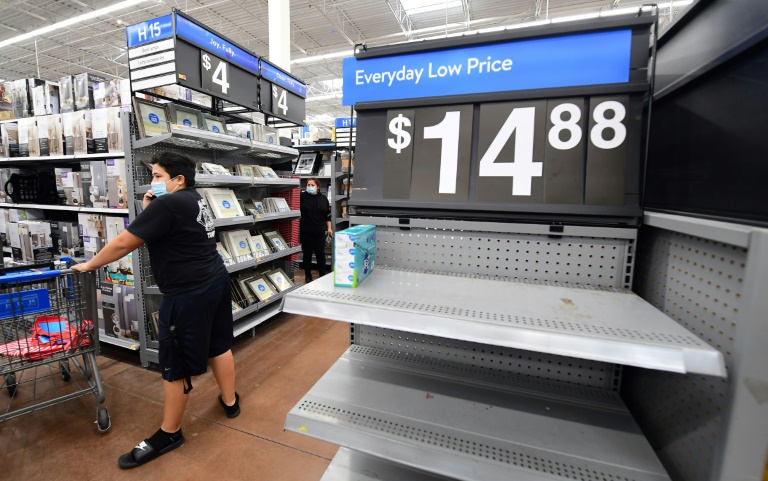
Walmart reported a drop in profits Tuesday as higher operating costs dented its bottom line, while April data showed another increase in US consumer spending in spite of rising prices.

Walmart shares tumbled following the report, which comes amid rising recession worries in the wake of a 40-year peak in inflation that has prompted monetary tightening from the Federal Reserve.

Tuesday’s batch of earnings and economic data offered a mixed reading on the US consumer overall, with April retail sales still coming in at a healthy level and Home Depot shares rising following better-than-expected results.

Walmart US President John Furner said the company is seeing a “wide range” of responses from shoppers to the rise in prices.

Furner pointed to continued strong demand for pricey items such as game consoles and outdoor grills. At the same time, other consumers are moving away from brands for lunch meats, dairy and other goods in favor of Walmart’s own branded goods, which are lower-priced. 

“We need to do more to control costs, to make sure we can provide good value for our customers,” Furner said on an earnings conference call.

The healthy US consumer has underpinned the strong recovery in the world’s largest economy following the slowdown during the Covid-19 pandemic, but the surge in demand also has strained supply chains and helped push inflation to its fastest rate since the early 1980s.

US retail sales rose 0.9 percent in April, boosted by a rebound in auto sales and increases in other categories, including electronics, home furnishings and restaurants, according to Commerce Department data. 

“Looking ahead, consumers’ tolerance to high inflation will continue to be tested and the renewed spike in gasoline prices, along with tighter financial conditions, will weigh on households’ willingness to spend on big-ticket items,” said Kathy Bostjancic, a chief US economist at Oxford Economics.

– Labor, fuel costs rise –

Walmart reported a 25 percent drop in profits to $2.1 billion for the quarter ending April 30. That translated into $1.30 per share, below the $1.48 expected by analysts.

Revenues rose 2.4 percent to $141.6 billion.

Walmart raised its full-year sales forecast slightly but lowered its profit forecast. It now expects earnings per share to fall one percent after previously projecting an increase in the mid-single digits.

Executives pointed to a series of cost hits that converged during the period. 

The company was overstaffed for part of the quarter due to the unexpectedly speedy return of workers who were afflicted by the Omicron variant of Covid-19, resulting in higher labor costs.

Walmart was also affected by a spike in energy costs when the Russian invasion of Ukraine sent oil prices soaring.

Another obstacle was a March fire that destroyed a warehouse in Indianapolis, Indiana that employed more than 1,000 people. Nobody was injured in the episode, but Walmart had to replace goods and route items through neighboring infrastructure, adding cost.

Walmart Chief Executive Doug McMillon said the company’s vast array of goods can help in an inflationary environment because it is able to offset higher prices for food and other staples with lower prices elsewhere in the store.

“Customers are even more price sensitive now,” he said. “So when you bring something down in sporting goods or hardware, one of these other category, they notice even more than they would have noticed before and that makes the elasticity impact a bit different than it would be otherwise.”

– Investing in homes –

Walmart’s results stood in contrast to Home Depot, which raised its outlook after reporting that first-quarter profits rose 2 percent to $4.2 billion on a four percent increase in revenues to $38.9 billion.

Executives with the home-improvement chain saw higher sales resulting largely from cost inflation that consumers appeared to take in stride.

Propelling the spending is a strong historic trend that shows increased investment as homes increase in value, according to Chief Financial Officer Richard McPhail, who also said most of the company’s customers already have mortgages and aren’t affected by rising interest rates.

“The homeowner has never had a balance sheet that looks like this,” McPhail said. “They’ve seen the price appreciation and they have the means to spend.”

Walmart shares plunged 11.4 percent to $131.37 in afternoon trading, while fellow Dow member Home Depot rose 1.4 percent to $300.12.

Biden attacks white supremacist 'poison' after racist shooting

President Joe Biden on Tuesday called out what he branded the “poison” of white supremacist ideology behind a deadly mass shooting in Buffalo, New York, and said that racism is being stoked for political gain.

Speaking in the city where a white teen is accused of murdering 10 African Americans in a neighborhood supermarket, Biden said: “What happened here is simple and straightforward terrorism. Domestic terrorism.”

“White supremacy is a poison running through our body politic and it’s been allowed to fester right in front of our eyes,” Biden said, condemning “those who spread the lie for power, for political gain and for profit.”

In a searing speech that also called for restrictions on ownership of assault-style rifles, Biden listed the victims, fighting tears as he recounted how one of the dead, named as 53-year-old Andre Mackniel, had been buying a birthday cake for his three-year-old son when the gunman entered the store.

Biden’s harshest comments were directed at what he described as the “perverse ideology” of white supremacists that police say inspired the shooter.

In a manifesto, the alleged mass killer referred to the so-called “replacement theory” which claims the existence of a leftist plot to overwhelm the white population with non-white immigrants.

Biden described “a hate that through the media and politics (and) the internet has radicalized angry, alienated, lost and isolated individuals into falsely believing that they will be replaced — that’s the word, replaced — by ‘the other.'”

“No more. I mean no more. We need to say as clearly and forcefully as we can that the ideology of white supremacy has no place in America,” he said to applause.

– ‘Soul of the nation’ –

Payton Gendron, the 18-year-old murder suspect, planned the shooting for months — and scoped out the location ahead of time, according to a stream of posts attributed to him on social media sites.

Gendron first wrote about killing Black people in December and decided to target the Buffalo store based on its large surrounding African American population, according to US media analysis of hundreds of pages of messages.

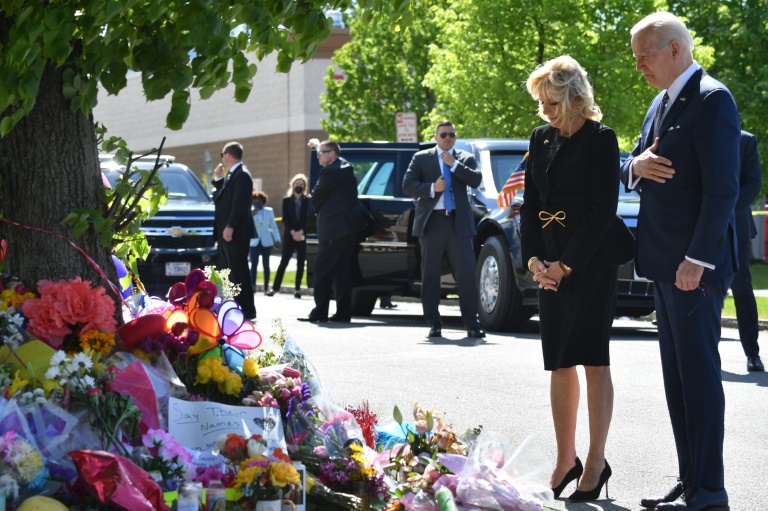
Earlier Tuesday, Biden and his wife Jill Biden laid a bouquet at a makeshift memorial outside the supermarket where the slaughter took place.

A strong breeze tugged at balloons and flowers piled under a tree while the Bidens paid their respects, the president making the sign of the cross before giving way to a delegation of elected officials laying their own bouquets.

Biden then went into private meetings with relatives of the victims and first responders, where the White House said he was offering “condolences and comfort.”

The replacement narrative is a conspiracy theory that, like bizarre QAnon beliefs, has spread from the furthest fringes of society to surprisingly mainstream areas — most notably Tucker Carlson’s enormously influential nightly talk show on Fox News.

The White House has steadfastly refused to join some who directly blame Carlson and several prominent Republicans for promoting the theory and, by extension, bearing responsibility for violent white supremacist attacks.

However, Biden’s strong comments in Buffalo left little doubt that he was referring not just to the actual shooter but the powerful voices spreading the ideology.

“Democracy is in a danger like it hasn’t been in my lifetime,” he said. “Hate and fear have been given too much oxygen by those who pretend to love America. They don’t understand America.”

“Now’s the time for people of all races, of every background, to speak up as a majority of America and reject white supremacy,” he said. “We can’t allow them to destroy the soul of the nation.”

Eagles of Death Metal testify at Paris attacks trial

Members of American band Eagles of Death Metal testified Tuesday at the trial for the November 2015 attacks on Paris which saw gunmen attack the Bataclan concert hall while the rockers were playing.

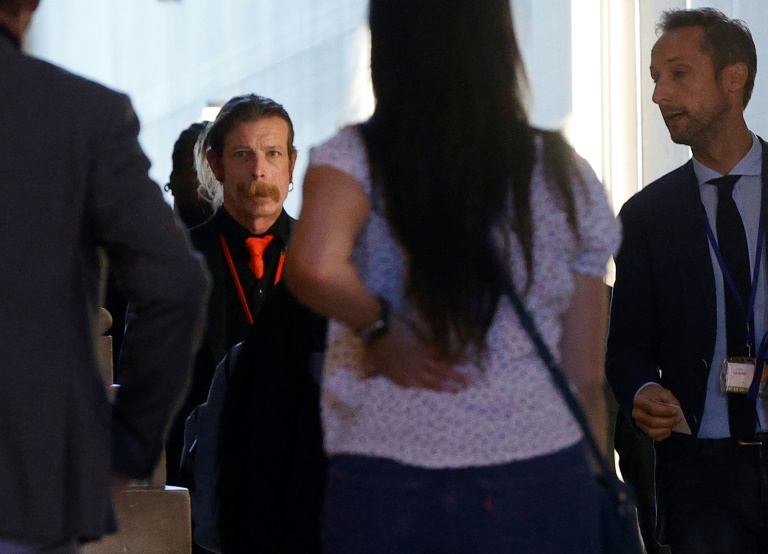
Frontman Jesse Hughes and guitarist Eden Galindo arrived at the court complex in central Paris dressed in black suits before going on to describe how their gig six and half years ago changed their lives forever. 

Hughes told reporters outside that he had finally forgiven the Islamic State extremists who killed 90 people at the concert during the worst terror attack on France in modern history.

“I’m a Christian and everyone can be lost and everyone needs to find the way and most of the gentlemen in there do, so I forgive them and I hope that they find the peace of God themselves,” the 49-year-old told reporters.

France’s biggest-ever criminal trial is hearing evidence against the only surviving member of the suicide team that targeted restaurants, bars, the national sports stadium and the Bataclan, leaving 130 people dead in total. 

Salah Abdeslam, who was arrested in Belgium after five months on the run, has explained how he abandoned plans to blow himself up and has apologised to victims.

His tearful appeal for forgiveness last month contrasted with his defiance at the start of the trial when he refused to acknowledge the authority of the judge or answer questions.

Nearly 20 others are answering charges ranging from providing logistical support to planning the attacks, as well as supplying weapons.

Verdicts are expected on June 29.

– ‘Worked through it’ –

Hughes told the court that he recognised the sound of gunfire instantly when the three gunmen with suicide vests burst in mid-show and said he “knew death was upon us”.

“Nearly 90 of my friends were murdered in front of us,” he said, referring to the fans killed.

He fled the scene in a taxi with his girlfriend to the local police station, only later learning that the band’s merchandising manager, Nick Alexander, was among the deceased. 

But he said the attackers had not succeeded in their goal of depriving people of the joy they feel from listening to music.

“You can’t kill rock’n’roll,” he said, quoting fellow rocker Ozzy Osbourne.

After his brief appearance in the witness box, he embraced emotional witnesses and victims who were following proceedings during the packed hearing, ending up in tears himself.

“I have a great family of friends as the result of this. Quite possibly some of the most beautiful things I have ever seen has been the result of this,” he told reporters after the hearing.

Galindo, 52, told the court the hard-rockers were enjoying a “great show” and he at first thought the gunfire was a sound system malfunction.

After describing his personal struggles since the attacks, he said he thought about the victims and their families every day.

“I’ll never be the same,” he said.

Hughes, who was a supporter of former US president Donald Trump, is a controversial figure in France after suggesting in the aftermath of the attacks that Muslim security staff were involved and that Muslims were celebrating outside the venue.

He was barred from the Bataclan re-opening concert in 2016 as a result.

He later apologised for his remarks and withdrew them, saying he had been struggling from nightmares and mental health problems at the time.

“Of course, I was waiting for this testimony and I was happy to see someone who is finally trying to find a certain form of inner peace, and it was a dignified testimony today,” Olivier Laplaud, a survivor of the attack, told AFP. 

Asked why he was now ready to forgive the attackers, Hughes told reporters: “I was never out of the mood of forgiveness. But I’ve just worked through it.”

Musk says no Twitter deal without clarity on spam accounts

Billionaire Elon Musk said Tuesday his bid to buy Twitter won’t proceed unless he gets proof of the number of spam accounts plaguing the platform, adding more uncertainty to his roller-coaster pursuit of the social media giant.

This latest twist to his $44 billion move to acquire the key platform sparked speculation over whether the world’s richest person was trying to shrink the price tag or even back away from the deal.

Hours after Musk’s early morning tweet over bots, Twitter insisted the deal push through and without delay.

“Twitter is committed to completing the transaction on the agreed price and terms as promptly as practicable,” the company wrote in a statement accompanying a filing to US regulators.

Musk last week tweeted his bid for the company was “temporarily on hold,” pending questions over its estimates of the number of fake accounts, or bots.

Then early Tuesday he pushed for more information, writing to his almost 94 million followers on the social network: “Yesterday, Twitter’s CEO publicly refused to show proof of <5%.” 

“This deal cannot move forward until he does,” he added.

Twitter chief executive Parag Agrawal has said the platform suspends more than a half-million seemingly bogus accounts daily, usually before they are even seen, and locks millions more weekly that fail checks to make sure they are controlled by humans and not by software.

Internal measures show that fewer than five percent of accounts active on any given day at Twitter are spam, but that analysis cannot be replicated externally due to the need to keep user data private, Agrawal contended.

Musk posted that the real number of bots may be four times what Twitter claims and “could be *much* higher,” and has said he would make getting rid of them a priority if he owned the platform.

“So how do advertisers know what they’re getting for their money?” Musk tweeted in a subsequent response about the need to prove Twitter users are real people.

“This is fundamental to the financial health of Twitter.”

– ‘Under pressure’ –

The process used to estimate how many accounts are bots has been shared with Musk, Agrawal insisted.

According to an estimate published Friday by software firm SparkToro, 19.42 percent of Twitter accounts are fake or spam, but the company acknowledges its methodology for determining bots is likely different from that used by Twitter. 

SparkToro has a tool on its website that shows more than 70 percent of Musk’s followers are fake accounts. 

“It appears the spam/bot issue is cascading and clearly making the Twitter deal a confusing one,” Wedbush analyst Dan Ives said in a note to investors.

“The bot issue at the end of the day… feels more to us like the ‘dog ate the homework’ excuse to bail on the Twitter deal or talk down a lower price.”

Twitter shares “will be under pressure this morning again as the chances of a deal ultimately getting done is not looking good now,” Ives said, adding it is “likely a 60%+ chance from our view Musk ultimately walks from the deal and pays the breakup fee.”

Another tech watcher, Grady Booch, tweeted to Musk that it “Seems like you have buyers remorse”.  

After sliding ahead of the market bell, shares of Twitter were up slightly in Tuesday trading.

Meanwhile in a filing to the Securities and Exchange Commission, Twitter urged its shareholders to vote in favor of Musk’s buyout for $54.20 per share in cash, at an upcoming special meeting.

Musk has described his motivation as stemming from a desire to ensure freedom of speech on the platform and to boost monetization of a website that is massively influential but has struggled to attain profitable growth.

He has also said he favored lifting the ban on Donald Trump, who was kicked off the platform in January 2021 over concerns the ex-president could incite violence.

burs-oho/jm/mlm

UK unveils radical rewrite of EU pact for N. Ireland

The UK government on Tuesday unveiled a plan to drastically overhaul post-Brexit trade rules in Northern Ireland, arguing the changes are needed to end political paralysis in the divided territory.

But the European Union, defending the so-called Northern Ireland Protocol and the integrity of its vast single market, vowed reprisals if Britain pushes ahead with its unilateral plans.

London said it would introduce legislation reforming the protocol “in the coming weeks” — unless Brussels caves on its refusal to renegotiate the pact.

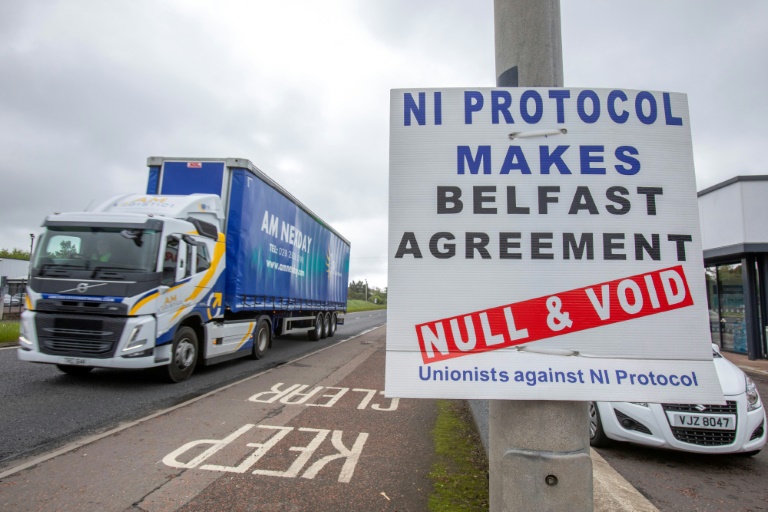
The protocol was agreed as part of Britain’s Brexit divorce deal with the European Union, recognising Northern Ireland’s status as a fragile, post-conflict territory that shares the UK’s new land border with the European Union.

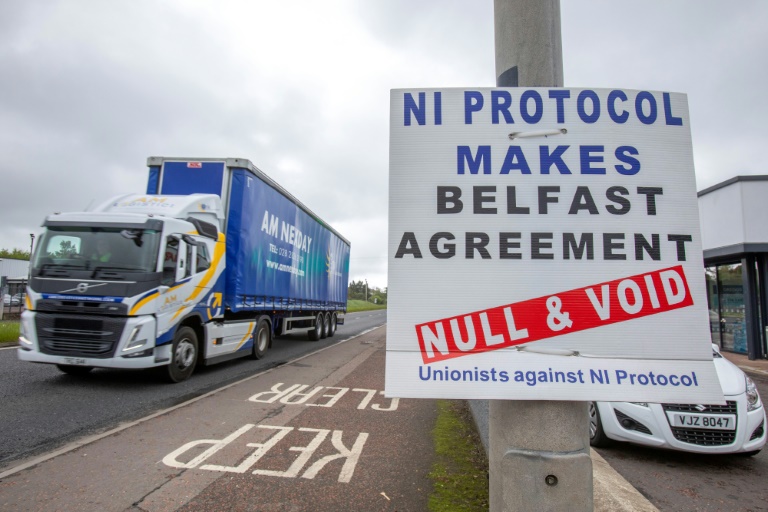
Its requirement for checks on goods arriving from England, Scotland and Wales has infuriated pro-UK unionists in Northern Ireland. 

They claim the protocol is undermining their place within the UK, and are refusing to join a new power-sharing government in Belfast following elections this month.

The UK plan would scrap most of the checks, but the government denied it was trashing international law by abrogating a key element of the Brexit deal agreed by Prime Minister Boris Johnson in 2019.

“I think the higher duty of the UK government in international law is to the (1998) Good Friday Agreement and the peace process,” Johnson told reporters.

“We don’t want to nix it (the protocol), we want to fix it, and we will work with our EU partners to do it,” he said.

– ‘Rogue state’ –

But the EU issued no hint of compromise, after warning that any UK violation of the Brexit pact could see it hit back with swingeing tariffs.

“Unilateral actions contradicting an international agreement are not acceptable,” European Commission Vice-President Maros Sefcovic said.

The UK plan “raises significant concerns”, he added, warning that the EU “will need to respond with all measures at its disposal” if London goes ahead.

Irish Foreign Minister Simon Coveney called the UK step “damaging to trust”.

Johnson, however, said a trade war was unlikely — and the UK can ill-afford one, at a time when its people are grappling with the worst inflationary crisis in a generation.

“But what we have to fix is the problems with the Northern Ireland political situation, where you can’t get the executive up and running,” he said, a day after visiting Belfast for talks with Northern Ireland’s main parties.

The largest pro-British party, the Democratic Unionist Party (DUP), says it will not share power with pro-Irish rivals Sinn Fein until the protocol is reworked.

Its line has hardened since Sinn Fein won a historic victory in elections to the Northern Ireland Assembly two weeks ago, which entitled the party to the role of first minister in a joint regional government with the DUP. 

In the London parliament, DUP leader Jeffrey Donaldson said the UK government’s announcement was a “good start” that could help restore the Belfast executive. But he insisted progress on an actual bill was needed in “days, not weeks”.

For her part, Sinn Fein leader Mary Lou McDonald accused Britain of acting like a “rogue state”.

– US ire – 

Keeping the border open with neighbouring Ireland, an EU member, was mandated in the Good Friday Agreement, given the frontier was a frequent flashpoint during three decades of violence in Northern Ireland until 1998.

But it means checks have to be done elsewhere, to prevent goods getting into the EU single market and customs union by the back door via Northern Ireland.

Under the new plan, the UK intends unilaterally to create a “green channel” for British traders to send goods to Northern Ireland without making any customs declaration to the EU.

The EU would have access to more real-time UK data on the flow of goods, and only businesses intending to trade into the single market via Ireland would be required to make declarations.

The EU would need to trust the UK to monitor the flow, and UK Foreign Secretary Liz Truss vowed “robust penalties” for any companies seeking to abuse the new system. 

The plan would also seek to end oversight of the protocol by the European Court of Justice — another red line for Brussels.

Britain also risks antagonising the United States, which helped broker the Good Friday Agreement.

Democratic Congressman Bill Keating, speaking on Britain’s Times Radio from Washington, said any UK action on the protocol should not resort to “breaking international law”. 

If the bill goes ahead, British hopes for a post-Brexit trade deal with the US “will be scuttled in the process”, he added.

UK unveils radical rewrite of EU pact for N. Ireland

The UK government on Tuesday unveiled a plan to drastically overhaul post-Brexit trade rules in Northern Ireland, arguing the changes are needed to end political paralysis in the divided territory.

But the European Union, defending the so-called Northern Ireland Protocol and the integrity of its vast single market, vowed reprisals if Britain pushes ahead with its unilateral plans.

London said it would introduce legislation reforming the protocol “in the coming weeks” — unless Brussels caves on its refusal to renegotiate the pact.

The protocol was agreed as part of Britain’s Brexit divorce deal with the European Union, recognising Northern Ireland’s status as a fragile, post-conflict territory that shares the UK’s new land border with the European Union.

Its requirement for checks on goods arriving from England, Scotland and Wales has infuriated pro-UK unionists in Northern Ireland. 

They claim the protocol is undermining their place within the UK, and are refusing to join a new power-sharing government in Belfast following elections this month.

The UK plan would scrap most of the checks, but the government denied it was trashing international law by abrogating a key element of the Brexit deal agreed by Prime Minister Boris Johnson in 2019.

“I think the higher duty of the UK government in international law is to the (1998) Good Friday Agreement and the peace process,” Johnson told reporters.

“We don’t want to nix it (the protocol), we want to fix it, and we will work with our EU partners to do it,” he said.

– ‘Rogue state’ –

But the EU issued no hint of compromise, after warning that any UK violation of the Brexit pact could see it hit back with swingeing tariffs.

“Unilateral actions contradicting an international agreement are not acceptable,” European Commission Vice-President Maros Sefcovic said.

The UK plan “raises significant concerns”, he added, warning that the EU “will need to respond with all measures at its disposal” if London goes ahead.

Irish Foreign Minister Simon Coveney called the UK step “damaging to trust”.

Johnson, however, said a trade war was unlikely — and the UK can ill-afford one, at a time when its people are grappling with the worst inflationary crisis in a generation.

“But what we have to fix is the problems with the Northern Ireland political situation, where you can’t get the executive up and running,” he said, a day after visiting Belfast for talks with Northern Ireland’s main parties.

The largest pro-British party, the Democratic Unionist Party (DUP), says it will not share power with pro-Irish rivals Sinn Fein until the protocol is reworked.

Its line has hardened since Sinn Fein won a historic victory in elections to the Northern Ireland Assembly two weeks ago, which entitled the party to the role of first minister in a joint regional government with the DUP. 

In the London parliament, DUP leader Jeffrey Donaldson said the UK government’s announcement was a “good start” that could help restore the Belfast executive. But he insisted progress on an actual bill was needed in “days, not weeks”.

For her part, Sinn Fein leader Mary Lou McDonald accused Britain of acting like a “rogue state”.

– US ire – 

Keeping the border open with neighbouring Ireland, an EU member, was mandated in the Good Friday Agreement, given the frontier was a frequent flashpoint during three decades of violence in Northern Ireland until 1998.

But it means checks have to be done elsewhere, to prevent goods getting into the EU single market and customs union by the back door via Northern Ireland.

Under the new plan, the UK intends unilaterally to create a “green channel” for British traders to send goods to Northern Ireland without making any customs declaration to the EU.

The EU would have access to more real-time UK data on the flow of goods, and only businesses intending to trade into the single market via Ireland would be required to make declarations.

The EU would need to trust the UK to monitor the flow, and UK Foreign Secretary Liz Truss vowed “robust penalties” for any companies seeking to abuse the new system. 

The plan would also seek to end oversight of the protocol by the European Court of Justice — another red line for Brussels.

Britain also risks antagonising the United States, which helped broker the Good Friday Agreement.

Democratic Congressman Bill Keating, speaking on Britain’s Times Radio from Washington, said any UK action on the protocol should not resort to “breaking international law”. 

If the bill goes ahead, British hopes for a post-Brexit trade deal with the US “will be scuttled in the process”, he added.

Libya capital rocked by battle as rival PM vies for power

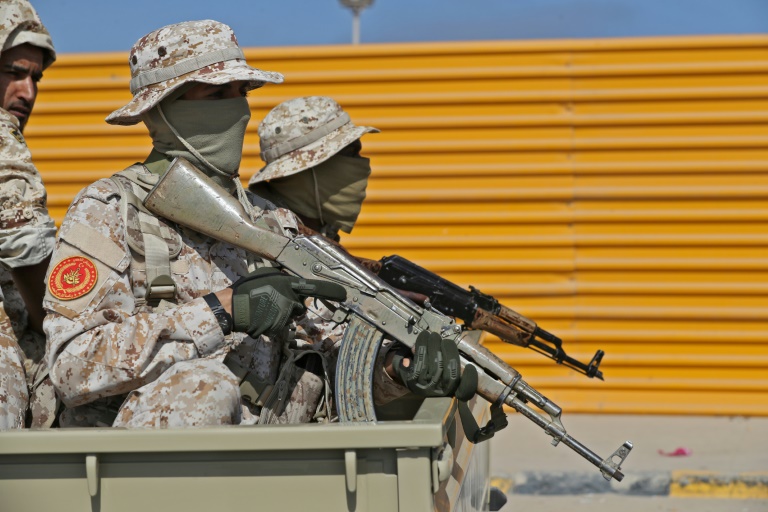
Gunfire rocked Libya’s capital for several hours on Tuesday as a rival prime minister attempted to oust interim premier Abdulhamid Dbeibah, threatening another escalation in the war-torn country.

Fathi Bashagha landed in Tripoli in the early hours of Tuesday and tried to take it by force, sparking pre-dawn clashes between armed groups supporting him and those backing Dbeibah.

Libya has had two opposing adminstrations and prime ministers since February, the latest trouble in the oil-rich North African nation since the chaos that followed a 2011 revolt that toppled dictator Moamer Kadhafi.

Hours after landing, Bashagha left citing the “security and safety of citizens”, as the United Nations, European Union and United States appealed for calm.

There were no immediate reports of casualties from the fighting, but AFP correspondents saw burned-out cars and military convoys later on Tuesday morning.

Dbeibah, based in Tripoli in the west, was appointed under a troubled UN-led peace process early last year to lead a transition to elections set for December, but the vote was indefinitely postponed.

In February, parliament based in Tobruk in the east appointed rival premier and former interior ministry Fathi Bashagha to take his place, arguing that Dbeibah’s mandate had ended.

Dbeibah has refused to hand over power except to an elected administration.

Both men come from the western city of Misrata and are backed by different armed groups in the capital.

– ‘Only the first act’? –

Bashagha’s press service had announced overnight “the arrival of the prime minister of the Libyan government, Mr Fathi Bashagha, accompanied by several ministers, in the capital Tripoli to begin his work there”.

But his arrival sparked a battle that raised fears of a return to the all-out conflict that gripped the capital when forces aligned with eastern military chief Khalifa Haftar attacked in 2019-20.

Several hours later, Bashagha’s camp announced that he and his ministers had “left Tripoli to preserve the security and safety of citizens”.

Dbeibah’s defence ministry said it would respond “with an iron fist” to anyone “attacking security and the safety of citizens”.

Dbeibah was later seen meeting the public in the streets of the capital.

Libya expert Emadeddin Badi said Bashagha’s move had been “a failed attempt at a fait accompli”.

Bashagha had “lost a large proportion of his constituency in his hometown of Misrata, tarnished his anti-crime brand and now tanked his popular support”, he added. 

“It will be difficult to pick up the pieces after this,” Badi said.

But Anas El Gomati, of Libyan think tank the Sadeq Institute, said it was “likely that this is only the first act”.

On the international stage, “there is no bandwidth to deal with Libya in light of the conflict in Ukraine,” he said.

The UN’s top in-country official, Stephanie Williams, urged all sides to maintain calm and avoid “inflammatory rhetoric”.

– ‘Very grave’ –

Pro-Bashagha armed groups had already deployed in March on the edges of the capital, raising fears that a fragile ceasefire in place since October 2020 could collapse.

The creation of two governments echoes Libya’s troubled period of rival administrations between 2014 and 2021, when the nation was ripped apart by civil war.

The revolt that toppled Kadhafi plunged the vast but sparsely populated country into violence as armed groups vied for control and a string of interim governments came and went.

Many militia forces have been integrated into the state, partly to access a share in the country’s vast oil wealth, and rights groups have accused all sides of abuses.

Bashagha is backed by Haftar, who led a failed bid to seize Tripoli in 2019-20 and is widely hated in the capital.

EU foreign affairs chief Josep Borrell said Tuesday the situation was “very grave”. 

“We were expecting something like this to happen, because in Libya we had not elections but we have two governments,” he said. “And sooner or later, when there are two governments, they clash.”

The US embassy urged “all armed groups to refrain from violence and for political leaders to recognise that seizing or retaining power through violence will only hurt the people of Libya”.

Close Bitnami banner
Bitnami