World

Sweden, Finland to submit NATO membership bid Wednesday

Finland and Sweden will submit their bids to join NATO together Wednesday, the two Nordic countries announced, despite Turkey’s threat to block the military alliance’s expansion.

“I’m happy we have taken the same path and we can do it together,” Swedish Prime Minister Magdalena Andersson said Tuesday during a joint press conference with Finnish President Sauli Niinisto.

Finland, which shares a 1,300-kilometre (800-mile) border with Russia, and Sweden have been rattled by Russia’s invasion of Ukraine.

Their applications will jettison decades of military non-alignment to join the alliance as a defence against feared aggression from Russia.

Russian President Vladimir Putin warned Monday NATO’s expansion may trigger a response from Moscow.

But the main obstacle to their membership comes from within the alliance despite NATO Secretary General Jens Stoltenberg repeatedly insisting the two countries would be welcomed “with open arms”.

Turkey has accused Sweden and Finland of acting as a hotbed for terrorist groups and its president insists Ankara will not approve expansion.

Any membership bid must be unanimously approved by NATO’s 30 members.

Niinisto said Tuesday he was “optimistic” Finland and Sweden would be able to secure Turkey’s support.

Andersson and Niinisto are to meet US President Joe Biden in Washington Thursday to discuss their historic bids.

EU foreign affairs chief Josep Borrell said the bloc offered the bids its “full support” after a meeting of EU defence ministers in Brussels.

“This will increase the number of member states that are also members of NATO. And this will strengthen and increase the cooperation and the security in Europe,” he said.

This was “an important geopolitical change”, he noted.

– Rising public support –

After a marathon debate lasting a day-and-a-half, 188 out of 200 Finnish lawmakers voted in favour of NATO membership, a dramatic reversal of Finland’s military non-alignment policy dating back more than 75 years.

“Our security environment has fundamentally changed,” Finnish Prime Minister Sanna Marin told parliament Monday at the start of the debate.

“The only country that threatens European security, and is now openly waging a war of aggression, is Russia,” she said.

Finland spent more than a century as part of the Russian empire until it gained independence in 1917. It was then invaded by the Soviet Union in 1939. 

Finns put up a fierce fight during the bloody Winter War, but were ultimately forced to cede a huge stretch of their eastern Karelia province in a peace treaty with Moscow.

According to public opinion polls, more than three-quarters of Finns want to join the alliance, almost three times as many as before the war in Ukraine began on February 24.

Swedish public support has also risen dramatically, albeit more modestly than in Finland, at around 50 percent.

Swedish Foreign Minister Ann Linde signed the application letter Tuesday.

The turnaround is also dramatic in Sweden, which remained neutral throughout World War II and has stayed out of military alliances for more than 200 years.

– Turkish objections –

Ankara has thrown a spanner in the works with its last-minute objections.

Turkey’s President Recep Tayyip Erdogan has accused Helsinki and Stockholm of harbouring militants from the Kurdistan Workers’ Party (PKK).

The PKK has waged a decades-long insurgency against the Turkish state.

Sweden has also suspended any arms sales to Turkey since 2019 over Ankara’s military operation in neighbouring Syria.

“We will not say ‘yes’ to those (countries) who apply sanctions to Turkey to join NATO,” Erdogan said Monday, adding: “Neither of the countries has a clear stance against terror organisations.”

Diplomatic sources told AFP that Turkey blocked a NATO declaration Monday in favour of Sweden and Finland’s membership.

Sweden and Finland have sent delegations to Turkey to meet with Turkish officials.

“Sweden is delighted to work with Turkey in NATO and this cooperation can be part of our bilateral relations,” Sweden’s Andersson said, emphasising that Stockholm “is committed to fighting against all types of terrorism”.
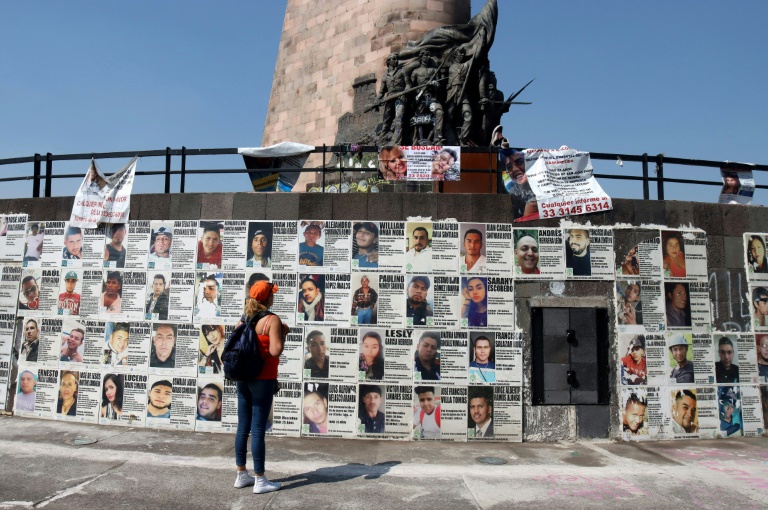
More than 100,000 people officially missing in Mexico

More than 100,000 people are now listed as missing in violence-wracked Mexico — a grim milestone that the United Nations rights chief on Tuesday called “a tragedy of enormous proportions.”

The country’s National Registry of Missing Persons, which has been tracking disappearances since 1964, said that as of Monday the whereabouts of 100,012 people were unknown. About 75 percent are men.

Disappearances have skyrocketed in the wake of mounting drug violence that has plagued the country for 16 years.

The Movement for Our Disappeared warned that the figure was “certainly well below the number” of actual cases, calling for the government to deal with the crisis “in a comprehensive and immediate manner.”

UN High Commissioner for Human Rights Michelle Bachelet said the disappearances represented a “human tragedy of enormous proportions.”

“No effort should be spared to put an end to these human rights violations and abuses of extraordinary breadth, and to vindicate victims’ rights to truth, justice, reparation and guarantees of non-repetition,” she added.

Only 35 of the disappearances recorded have led to convictions — a “staggering rate of impunity” that is “mostly attributable to the lack of effective investigations,” Bachelet’s office said.

The UN Committee on Enforced Disappearances and the Working Group on Enforced or Involuntary Disappearances described the situation as “heart-breaking.”

“We also note that, in many cases, disappearances go unreported, and thus the scale of this tragedy may even go beyond what is currently registered,” they added.

The UN committee, which is made up of independent experts, warned in April that Mexico was facing an “alarming trend of rising enforced disappearances.”

Organized crime groups were mainly responsible for these disappearances, “with varying degrees of participation, acquiescence or omission by public servants,” it said.

– ‘Staggering number’ –

Frustration at slow progress in official investigations has led families of the disappeared, especially mothers, to form groups that search for clandestine graves hoping to find their relatives.

Mexico’s government has reported around 37,000 unidentified bodies are being held in forensic services, though civil organizations warn the number could be much higher.

Authorities are working to consolidate a database of the disappeared with genetic samples, though many corpses have been buried without being identified due to the country’s overflowing morgues.

The International Committee of the Red Cross described the 100,000 missing as “a staggering number that underscores the immediate need to strengthen prevention, search, and identification mechanisms for those who are missing and their families.”

However, it recognized “important progress” made by Mexico in some areas including identifying the dead and easing the pain of families of the missing. 

“The first few hours are the most important,” said Marlene Herbig, head of the ICRC’s missing persons program in Mexico.

“When someone disappears, their relatives have the right to know what has happened. Knowing the fate of disappeared persons is primarily a humanitarian act.”

The first reported disappearances in Mexico date back to the authorities’ so-called “dirty war” against leftist movements from the 1960s to 1980s.

Mexico has also registered over 340,000 deaths — mostly attributed to organized crime groups — since 2006, when a major anti-drug military offensive was launched.

Hezbollah lose ground, reformists surge in Lebanon polls

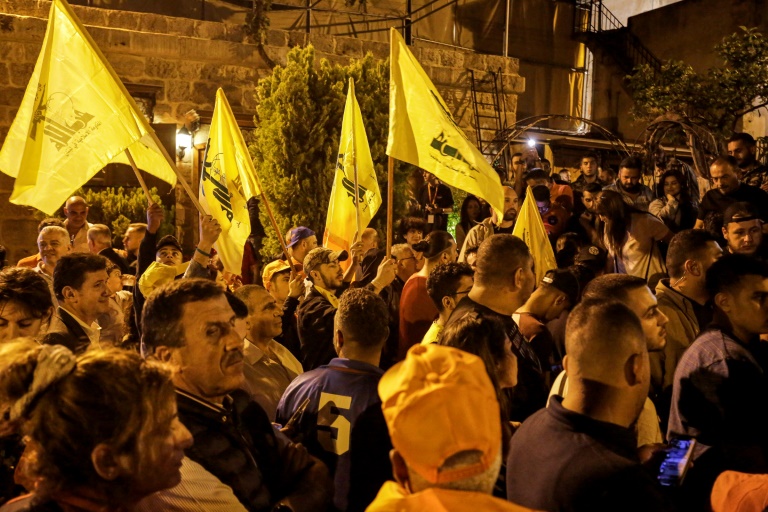
Shiite group Hezbollah and its allies lost their majority in Lebanon’s parliament, official results showed Tuesday, while independents achieved a surprise breakthrough.

Full results announced by the interior ministry two days after the election revealed that no bloc will control the 128-seat assembly, a deadlock observers fear could usher in a tense period of political jostling.

The polls, the first since Lebanon was ravaged by its worst ever economic crisis and a cataclysmic explosion at Beirut port in 2020, were seen as a prerequisite for a crucial IMF bailout.

The Iranian-backed Hezbollah and its main allies had the support of around 70 lawmakers in the outgoing parliament but will now fall just short of the 65 seats needed to retain a majority.

Their strongest opponents in parliament will be led by the Christian Lebanese Forces party of former warlord Samir Geagea, that raked in several new seats on the back of a virulent anti-Hezbollah campaign.

New reformist faces who entered the legislative race on the values of a 2019 anti-establishment uprising made a stronger showing that many had predicted.

At least 13 independents who backed the 2019 protest movement won seats. Twelve of them will sit in parliament for the first time.

Together with other non-aligned MPs who have sometimes supported the now-defunct protest movement’s demands, they could find themselves in a kingmaking position but they would need the kind of unity they failed to achieve during the campaign.

– Breakthrough –

Only eight women were voted into parliament.

One of the most notable victories notched up by independents was the election in southern Lebanon of Elias Jradeh and Firas Hamdan for seats that Hezbollah and its allies had not lost in three decades.

“We will cooperate with all the winners who share the same political orientation and we have to put together a common workplan,” Hamdan told AFP.

“There’s a lot of work to be done and a new type of political performance that should be demonstrated,” he said.

Another major satisfaction for those described in Lebanon as the “thawra” (revolution, in Arabic) candidates, was the defeat of several reviled MPs loyal to the Syrian government of Bashar al-Assad.

In what was interpreted by independents as a gesture of spite by Hezbollah, a group of youths on scooters descended on Martyrs Square overnight and burned down the “revolution fist”.

The temporary monument had become a visual symbol of the secular protests that swept Lebanon in October 2019 and had raised hopes of democratic change.

The movement lost momentum as Lebanon’s ruling cartel of sectarian political barons bided their time and one of the sharpest economic downturns of our time muffled popular discontent.

The parliamentary elections were a first major test for those in the protest camp who chose to enter the political fray.

Hezbollah and its ally Amal retained all 27 parliament seats reserved for Shiite lawmakers but the Christian bloc led by President Michel Aoun and other coalition partners lost a little ground.

– Crisis ahead? –

The main issue that polarises parliament is Hezbollah’s right to keep an arsenal that is often described as equivalent to or better than the state’s.

Some see it as a historical right and the best defence for the small Mediterranean country while others consider Hezbollah’s weapons to be the root of all of Lebanon’s ills.

Sami Nader, an analyst with the Levant Institute for Strategic Affairs, said that Hezbollah had suffered symbolic losses but was sceptical the polls could yield radical changes.

“Hezbollah and the Iranian axis took a blow but will this pave way for change in Lebanon? I have doubts,” he told AFP.

The formation of a government, the election of parliament’s speaker and the presidential election could all be very contentious and lead to protracted political crises.

Speaker Nabih Berri has held his job since 1992.

President Michel Aoun, the world’s third oldest head of state, had long planned for his son-in-law Gebran Bassil to take over but the Lebanese Forces’ surge in the polls could disrupt that scenario.

Lebanon shares power among its religious communities, and politics is often treated as a family business. By convention, the president is a Maronite Christian, the premier a Sunni Muslim, and the parliamentary speaker a Shiite.

Despite a turnout of 41 percent on Sunday, the UN envoy to Lebanon said “the elections were a vital expression of Lebanon’s citizen engagement, which should serve to strengthen the country’s institutions.”

United Airlines says regulators approved return of Boeing 777s

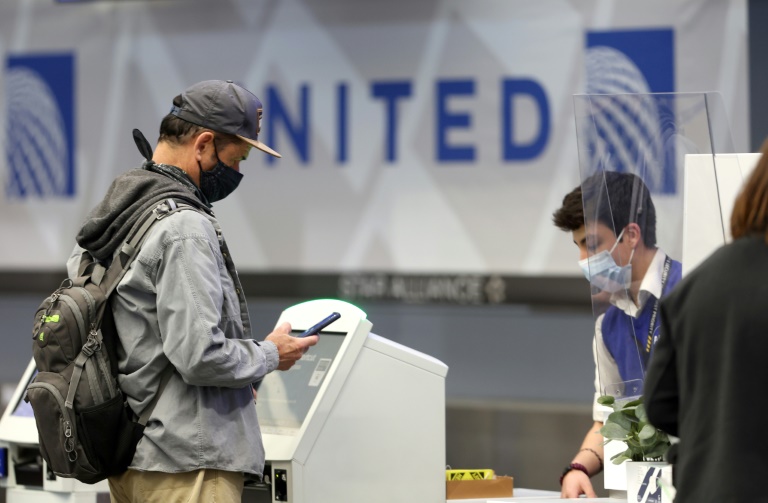
US air safety regulators have cleared United Airlines to resume service on more than 50 Boeing 777 planes that were grounded over engine issues, a United executive said Tuesday.

The news — confirmed by the Federal Aviation Administration — comes as United and other airlines prepare for a heavy summer travel season.

The jets have been grounded since February 2021, when a United Airlines plane scattered debris over suburban Denver after an engine failure. The jet landed safely, but the FAA issued an emergency order requiring inspection of the engines made by Pratt & Whitney.  

On Monday night, the FAA “issued final paperwork” on United’s fleet of 52 Boeing 777 aircraft, accounting for about 10 percent of the carrier’s capacity, said Andrew Nocella, chief commercial officer at United.

“It’s a pretty significant step up change in our capacity,” Nocella said at a Bank of America investor conference.

He said he expects the first 777s to be restored to the flight schedule starting May 26 with most of the planes back in service by July.

In an email to AFP, the FAA said it “approved the service bulletins” to make “necessary changes” to the planes.  

United shares jumped 6.8 percent to $46.50 shortly after midday.

Markets rally eyeing China reopening

Global stock markets rallied Tuesday on hopes that China will ease its weeks-long Covid lockdown and gradually reopen businesses.

European exchanges closed higher and Wall Street’s main indices also rose in mid-day trading, spurred by a nearly one-percent rise in April retail sales.

“We’ve seen a much more positive vibe around European equity markets today, with reports out of Asia suggesting that China might be close to looking to ease some of its Covid restrictions, as case rates come down,” Michael Hewson, chief market analyst at CMC Markets UK, said.

“This hope appears to be helping to power some buying interest, and is also pushing up metals, as well as oil prices, with Brent crude at six-week highs,” he added.

Much of Shanghai, China’s economic hub and a city of 25 million, has been under lockdown since April as Beijing attempts to stamp out an Omicron-fuelled virus surge under its strict zero-Covid policy.

The impact of Beijing’s zero-Covid strategy on the world’s second-largest economy was revealed Monday when official data showed that retail sales and industrial production in April on-year had slumped to their lowest levels in more than two years.

World markets have also been roiled by surging inflation, spiralling oil and wheat prices and Russia’s war in Ukraine — leaving investors jittery.

Wheat prices hit a record high in the European market Tuesday at 434.25 euros after the world’s second producer India announced an export ban due to falling output caused by climate change. 

Oil was another area of concern. 

“Oil prices have hit their highest levels since early March as Europe continues to work towards a Russian embargo and China looks to ease Covid restrictions,” said Craig Erlam, another market analyst at OANDA. 

“The question becomes just how much further they’ll go and how uncomfortable it’s going to get,” he said.

Analyst Fawad Razaqzada at City Index was bullish on the demand for oil despite rising prices.

“Demand did fall briefly when China went into a lockdown but now with Shanghai emerging from lockdowns and other cities are likely to follow suit, demand should remain elevated,” he said.

“Unless the OPEC and its allies ramp up production and fast, it is difficult to see how prices can go down meaningfully,” he added.

The British pound was the best performing G10 currency on Tuesday as traders bet that soaring UK inflation, lifted in part by wage rises, will see more monetary policy tightening by the Bank of England.

There are rising concerns that ongoing rapid interest rate rises by the BoE and other central banks including the Federal Reserve to curb decades-high inflation will push the economy into a downturn.

On the corporate front Tuesday, India’s insurance giant LIC slumped on its market debut following the country’s biggest-ever initial public offering, closing nearly eight percent below the IPO price.

Prime Minister Narendra Modi’s government raised $2.7 billion by selling 3.5 percent of Life Insurance Corporation of India. But it was forced to cut back the offer from a planned five percent after markets turned volatile.

Elsewhere, Elon Musk said his planned purchase of Twitter would not go ahead unless he was assured that fewer than five percent of accounts on the platform were fake.

The Tesla owner has bid $44 billion for the social media platform.

– Key figures at around 1530 GMT –

New York – Dow: UP 0.8 percent at 32,482.75 points 

EURO STOXX 50: UP 1.3 percent at 3,734.36 

London – FTSE 100: UP 0.7 percent at 7,518.35 (close)

Frankfurt – DAX: UP 1.6 percent at 14,185.94 (close)

Paris – CAC 40: UP 1.3 percent at 6,430.19 (close)

Hong Kong – Hang Seng Index: UP 3.3 percent at 20,602.52 (close) 

Shanghai – Composite: UP 0.7 percent at 3,093.70 (close)

Tokyo – Nikkei 225: UP 0.4 percent at 26,659.75 (close)

Brent North Sea crude: UP 0.6 percent at $114.91 per barrel

West Texas Intermediate: UP 0.5 percent at $114.75 per barrel

Euro/dollar: UP 0.9 percent at $1.0532 from $1.0436 at 2030 GMT Monday

Pound/dollar: UP 1.2 percent at $1.2478 from $1.2323

Euro/pound: DOWN at 84.44 pence from 84.67 pence 

Dollar/yen: UP at 129.29 yen from 129.08 yen

UK unveils radical rewrite of EU pact for N. Ireland

The UK government on Tuesday unveiled a plan to drastically overhaul post-Brexit trade rules in Northern Ireland, arguing the changes are needed to end political paralysis in the divided territory.

But the European Union, defending the so-called Northern Ireland Protocol and the integrity of its vast single market, vowed reprisals if Britain pushes ahead with its unilateral plans.

London said it would introduce legislation reforming the protocol “in the coming weeks” — unless Brussels caves on its refusal to renegotiate the pact.

The protocol was agreed as part of Britain’s Brexit divorce deal with the European Union, recognising Northern Ireland’s status as a fragile, post-conflict territory that shares the UK’s new land border with the European Union.

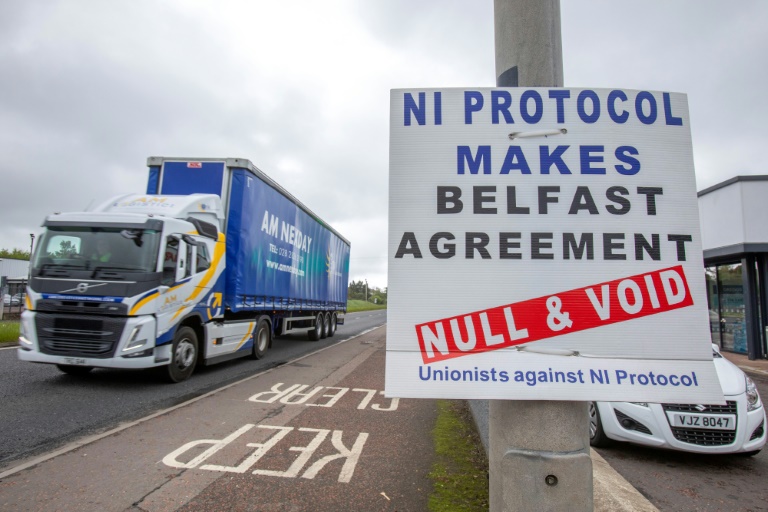
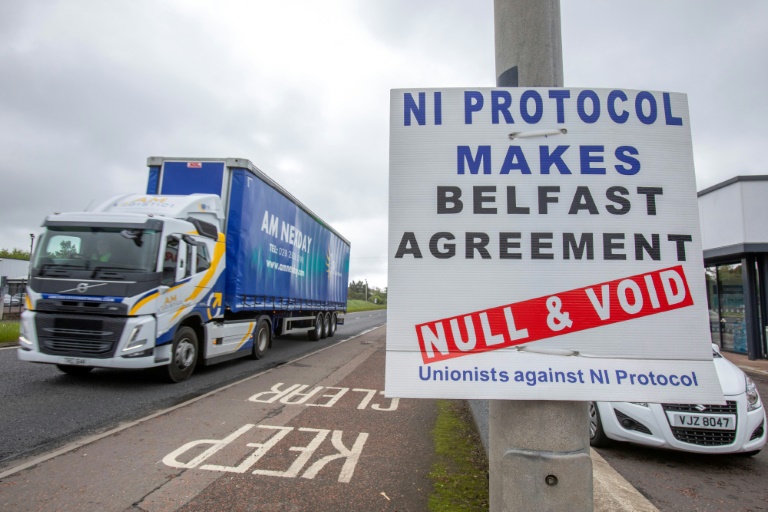
Its requirement for checks on goods arriving from England, Scotland and Wales has infuriated pro-UK unionists in Northern Ireland. 

They claim the protocol is undermining their place within the UK, and are refusing to join a new power-sharing government in Belfast following elections this month.

The UK plan would scrap most of the checks, but the government denied it was trashing international law by abrogating a key element of the Brexit deal agreed by Prime Minister Boris Johnson in 2019.

“I think the higher duty of the UK government in international law is to the (1998) Good Friday Agreement and the peace process,” Johnson told reporters.

“We don’t want to nix it (the protocol), we want to fix it, and we will work with our EU partners to do it,” he said.

– ‘Rogue state’ –

But the EU issued no hint of compromise, after warning that any UK violation of the Brexit pact could see it hit back with swingeing tariffs.

“Unilateral actions contradicting an international agreement are not acceptable,” European Commission Vice-President Maros Sefcovic said.

The UK plan “raises significant concerns”, he added, warning that the EU “will need to respond with all measures at its disposal” if London goes ahead.

Irish Foreign Minister Simon Coveney called the UK step “damaging to trust”.

Johnson, however, said a trade war was unlikely — and the UK can ill-afford one, at a time when its people are grappling with the worst inflationary crisis in a generation.

“But what we have to fix is the problems with the Northern Ireland political situation, where you can’t get the executive up and running,” he said, a day after visiting Belfast for talks with Northern Ireland’s main parties.

The largest pro-British party, the Democratic Unionist Party (DUP), says it will not share power with pro-Irish rivals Sinn Fein until the protocol is reworked.

Its line has hardened since Sinn Fein won a historic victory in elections to the Northern Ireland Assembly two weeks ago, which entitled the party to the role of first minister in a joint regional government with the DUP. 

In the London parliament, DUP leader Jeffrey Donaldson said the UK government’s announcement was a “good start” that could help restore the Belfast executive. But he insisted progress on an actual bill was needed in “days, not weeks”.

For her part, Sinn Fein leader Mary Lou McDonald accused Britain of acting like a “rogue state”.

– US ire – 

Keeping the border open with neighbouring Ireland, an EU member, was mandated in the Good Friday Agreement, given the frontier was a frequent flashpoint during three decades of violence in Northern Ireland until 1998.

But it means checks have to be done elsewhere, to prevent goods getting into the EU single market and customs union by the back door via Northern Ireland.

Under the new plan, the UK intends unilaterally to create a “green channel” for British traders to send goods to Northern Ireland without making any customs declaration to the EU.

The EU would have access to more real-time UK data on the flow of goods, and only businesses intending to trade into the single market via Ireland would be required to make declarations.

The EU would need to trust the UK to monitor the flow, and UK Foreign Secretary Liz Truss vowed “robust penalties” for any companies seeking to abuse the new system. 

The plan would also seek to end oversight of the protocol by the European Court of Justice — another red line for Brussels.

Britain also risks antagonising the United States, which helped broker the Good Friday Agreement.

Democratic Congressman Bill Keating, speaking on Britain’s Times Radio from Washington, said any UK action on the protocol should not resort to “breaking international law”. 

If the bill goes ahead, British hopes for a post-Brexit trade deal with the US “will be scuttled in the process”, he added.

UK unveils radical rewrite of EU pact for N. Ireland

The UK government on Tuesday unveiled a plan to drastically overhaul post-Brexit trade rules in Northern Ireland, arguing the changes are needed to end political paralysis in the divided territory.

But the European Union, defending the so-called Northern Ireland Protocol and the integrity of its vast single market, vowed reprisals if Britain pushes ahead with its unilateral plans.

London said it would introduce legislation reforming the protocol “in the coming weeks” — unless Brussels caves on its refusal to renegotiate the pact.

The protocol was agreed as part of Britain’s Brexit divorce deal with the European Union, recognising Northern Ireland’s status as a fragile, post-conflict territory that shares the UK’s new land border with the European Union.

Its requirement for checks on goods arriving from England, Scotland and Wales has infuriated pro-UK unionists in Northern Ireland. 

They claim the protocol is undermining their place within the UK, and are refusing to join a new power-sharing government in Belfast following elections this month.

The UK plan would scrap most of the checks, but the government denied it was trashing international law by abrogating a key element of the Brexit deal agreed by Prime Minister Boris Johnson in 2019.

“I think the higher duty of the UK government in international law is to the (1998) Good Friday Agreement and the peace process,” Johnson told reporters.

“We don’t want to nix it (the protocol), we want to fix it, and we will work with our EU partners to do it,” he said.

– ‘Rogue state’ –

But the EU issued no hint of compromise, after warning that any UK violation of the Brexit pact could see it hit back with swingeing tariffs.

“Unilateral actions contradicting an international agreement are not acceptable,” European Commission Vice-President Maros Sefcovic said.

The UK plan “raises significant concerns”, he added, warning that the EU “will need to respond with all measures at its disposal” if London goes ahead.

Irish Foreign Minister Simon Coveney called the UK step “damaging to trust”.

Johnson, however, said a trade war was unlikely — and the UK can ill-afford one, at a time when its people are grappling with the worst inflationary crisis in a generation.

“But what we have to fix is the problems with the Northern Ireland political situation, where you can’t get the executive up and running,” he said, a day after visiting Belfast for talks with Northern Ireland’s main parties.

The largest pro-British party, the Democratic Unionist Party (DUP), says it will not share power with pro-Irish rivals Sinn Fein until the protocol is reworked.

Its line has hardened since Sinn Fein won a historic victory in elections to the Northern Ireland Assembly two weeks ago, which entitled the party to the role of first minister in a joint regional government with the DUP. 

In the London parliament, DUP leader Jeffrey Donaldson said the UK government’s announcement was a “good start” that could help restore the Belfast executive. But he insisted progress on an actual bill was needed in “days, not weeks”.

For her part, Sinn Fein leader Mary Lou McDonald accused Britain of acting like a “rogue state”.

– US ire – 

Keeping the border open with neighbouring Ireland, an EU member, was mandated in the Good Friday Agreement, given the frontier was a frequent flashpoint during three decades of violence in Northern Ireland until 1998.

But it means checks have to be done elsewhere, to prevent goods getting into the EU single market and customs union by the back door via Northern Ireland.

Under the new plan, the UK intends unilaterally to create a “green channel” for British traders to send goods to Northern Ireland without making any customs declaration to the EU.

The EU would have access to more real-time UK data on the flow of goods, and only businesses intending to trade into the single market via Ireland would be required to make declarations.

The EU would need to trust the UK to monitor the flow, and UK Foreign Secretary Liz Truss vowed “robust penalties” for any companies seeking to abuse the new system. 

The plan would also seek to end oversight of the protocol by the European Court of Justice — another red line for Brussels.

Britain also risks antagonising the United States, which helped broker the Good Friday Agreement.

Democratic Congressman Bill Keating, speaking on Britain’s Times Radio from Washington, said any UK action on the protocol should not resort to “breaking international law”. 

If the bill goes ahead, British hopes for a post-Brexit trade deal with the US “will be scuttled in the process”, he added.

Jamestown, cradle of America, threatened by rising seas

The waters rose overnight and by morning formed a shallow pond over the grassy field covering a cemetery in Jamestown, one of the founding sites of the American nation.

Curators — their feet wet from the water — say it is just the latest in a seemingly endless series of flooding at the first permanent English settlement in North America, a location that was also home to Native American tribes for thousands of years.

Sandbags and tarps provide some protection from the elements, but curators warn that time is running out for Jamestown, which is increasingly under threat from rising sea levels and extreme weather as climate change takes its toll.

“All of the archeological resources that we haven’t had a chance to investigate yet could be destroyed,” said Michael Lavin, director of collections at Jamestown Rediscovery Foundation, the association in charge of the site in the US state of Virginia.

Earlier this month, the National Trust for Historic Preservation, a leading heritage institution, placed Jamestown on its 2022 list of the country’s 11 most endangered historic sites.

– ‘Need to do something’ –

“We need to do something, and we need to do it now,” said Lavin, fording a flooded path to get to his office.

David Givens, director of archeology, has like his colleague worked here for more than 20 years.

“For most of our lives, this is a dry area,” he said.

The flooding today has risen by a meter (yard), a level that will be the norm by the end of the century, according to average projections.

“This is a perfect example of sea level rise, climate change and how it’s affecting us,” said the archeologist.

Sea levels at the mouth of the James River have already risen 18 inches (45 centimeters) since 1927. 

Worries run high, given that the site is a distillation of so much American history: in addition to the English settlers, it was home to native American tribes for 12,000 years and, in 1619, was the first place that African slaves were brought in Britain’s North American territories.

– Bones ‘like sponges’ –

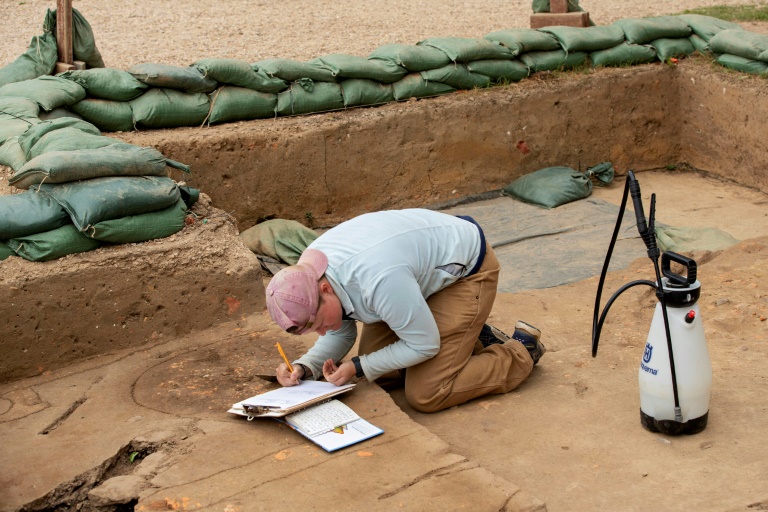
At the foot of the old church, archeologist Caitlin Delmas scrapes at the ground with her trowel, surrounded by the sandbags and tarps that are deployed with each downpour. 

“That’s also a lot of added stress, because you have to make sure that everything’s staying dry,” she said.

In 2013, a study of the bones of a young woman found here made it possible to confirm that she had been the victim of cannibalism during a famine the colonists suffered during the winter of 1609-1610. 

But such rare discoveries may never be made again: Delmas said recently unearthed bones were “like sponges,” and cannot be analyzed due to too much alternation between being dry and wet.

Givens said it is “almost like in war, like a trench and sandbags, because it’s a constant fight for us.”

“Over time, those archaeology sites will be inaccessible, they’ll be eroded from saltwater, inundation,” he said, adding: “That’s I think what scares me most.”

Marcy Rockman, a pioneer in the study of the impact of climate change on cultural resources in US national parks, said cultural heritage sites “have always been affected by storms and wind and rain.”

“But it’s more that those forces are accelerating. They’re intensifying. They’re recombining in new ways. They’re coming at different times of the year” due to climate change, she said.

In the wide estuary facing Jamestown, a handful of barges are bringing blocks of granite, waiting for more favorable weather to come and reinforce the existing sea wall that was built at the beginning of the 20th century to protect the site from the erosion. 

The project, costing more than $2 million, is only a first step: studies are being launched into the flooding, and “it’s going to cost tens of millions of dollars,” said Lavin. 

In Jamestown, the ebb tide has relieved the flooding a little, leaving fish splashing above the old cemetery that has never been properly excavated, and which will soon turn into a swamp if nothing is done. 

“Human remains are our data recorders for the past,” said Givens. “There’s some urgency to studying that.”

Katherine Malone-France, head of conservation at the National Trust for Historic Preservation, said in her Washington office that the clock is ticking.

“We have a five year window at Jamestown to begin to seriously mitigate the impacts of climate change,” she said. “It’s urgent.”

Allianz to pay $6bn to settle US securities fraud cases

Insurance giant Allianz will pay $6 billion in restitution and fines over a multi-billion fraudulent scheme that hit American teachers, clergy and other investors, US regulators announced Tuesday.

Allianz Global Investors US, a US unit of the German financial firm, admitted to violating US securities laws with its “Structured Alpha” scheme which dates to at least January 2016 and was exposed with the stock market downturn in March 2020, said the US Securities and Exchange Commission.

Allianz Global, as well as two of three portfolio managers named in the complaint, also agreed to plead guilty in a parallel criminal case, the SEC said.

The agency said Allianz and the three portfolio managers doctored key financial figures to make losses look smaller than they were. 

But when Covid-19 struck the United States in March 2020, the pandemic-induced market crash showed Allianz had misled investors about risk, and “the fund suffered catastrophic losses and investors lost billions,” the SEC said.

Allianz Global agreed to pay about $1 billion in penalties and disgorgement, while the company and its German parent will pay over $5 billion in restitution to victims, the statement said.

“The victims of this misconduct include teachers, clergy, bus drivers, and engineers, whose pensions are invested in institutional funds to support their retirement,” said SEC Chair Gary Gensler, who lamented “a recent string of cases in which derivatives and complex products have harmed investors across market sectors.”

Two of the three Allianz Global officials named in the case, co-lead portfolio manager Trevor Taylor and portfolio manager Stephen Bond-Nelson, have agreed to plead guilty in the case. The government is also charging lead portfolio manager Gregoire Tournant. 

Eagles of Death Metal testify at France attack trial

The frontman for the American rock band Eagles of Death Metal testified Tuesday at the trial for the November 2015 attacks on Paris which saw gunmen attack the Bataclan concert hall while the band was playing.

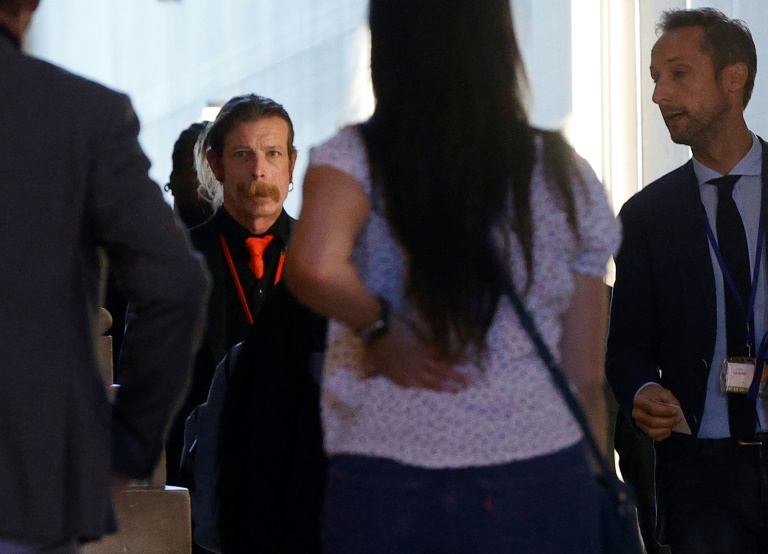
A sombre Jesse Hughes arrived at the court in central Paris dressed in a black suit and red tie.

Referring to his religious faith, which he also mentioned during his testimony, Hughes said that he had forgiven the Islamist gunmen who killed 90 people at his band’s concert.

“I’m a Christian and everyone can be lost and everyone needs to find the way and most of the gentlemen in there do, so I forgive them and I hope that they find the peace of God themselves,” he told reporters.

France’s biggest-ever criminal trial is hearing evidence against the only surviving member of the Islamic State suicide team that attacked restaurants, bars, the Bataclan and the national sports stadium. 

Main defendant Salah Abdeslam, who was arrested in Belgium after five months on the run, has explained how he abandoned plans to blow himself up and has apologised to victims.

His tearful appeal for forgiveness last month contrasted with his defiance at the start of the trial when he refused to recognise the authority of the judge or answer questions.

Nearly 20 others are answering charges ranging from providing logistical support to planning the attacks, as well as supplying weapons.

– ‘Worked through it’ –

Hughes told the court that he recognised the sound of gunfire instantly when the three gunmen with suicide vests burst in mid-show — and said his life had changed forever following the attack.

But he said the attackers had not succeeded in their goal of depriving people of the joy they feel from listening to music.

“You can’t kill rock’n’roll,” he said, quoting fellow rocker Ozzy Osbourne.

After his brief appearance in the witness box, he embraced fellow witnesses and victims who were following proceedings at the court complex in central Paris, ending up in tears himself.

The right-wing rocker, who was a supporter of US President Donald Trump, caused dismay in France in the aftermath of the attacks by suggesting that Muslim security staff were involved and that Muslims were celebrating outside the venue.

Hughes was barred from the Bataclan re-opening concert in 2016 as a result.

He later apologised for his remarks and withdrew them, saying he had been struggling from nightmares and mental health problems.

Despite his experience at the Bataclan, Hughes is also an outspoken pro-gun advocate in the United States. 

Asked why he was now ready to forgive the attackers, he told reporters: “I was never out of the mood of forgiveness. But I’ve just worked through it.”

Close Bitnami banner
Bitnami