World

Stocks rally as Shanghai reopening cheers markets

Hong Kong led a rally across stock markets Tuesday on hopes that China’s economic hub Shanghai will ease its weeks-long lockdown and gradually reopen businesses.

European exchanges were all strongly higher in afternoon trading and Wall Street’s main indices also snapped higher at the open.

“Hopes that the Shanghai lockdowns will ease, along with the ensuing supply chain disruptions, have been enough to lift” equities, said OANDA analyst Jeffrey Halley.

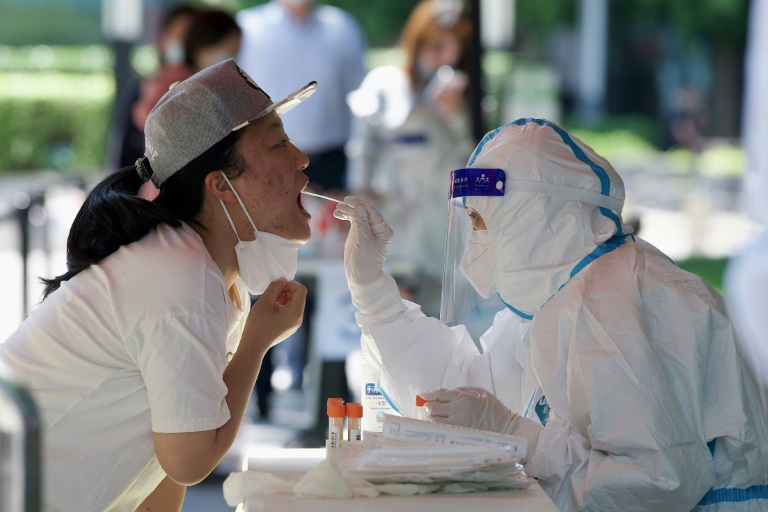
Much of the city of 25 million has been under lockdown since April as Beijing attempts to stamp out an Omicron-fuelled virus surge under its strict zero-Covid policy.

Tuesday’s rally coincides with the third day in a row that Shanghai has recorded no Covid-19 cases outside of its quarantine facilities.

The impact of Beijing’s zero-Covid strategy on the world’s second-largest economy was revealed Monday when official data showed that retail sales and industrial production in April on-year had slumped to their lowest levels in more than two years.

World markets have also been roiled by surging inflation, surging oil and wheat prices and Russia’s war in Ukraine — leaving investors jittery.

Wheat prices hit a record high in the European market Tuesday at 434.25 euros after the world’s second producer India announced an export ban due to falling output caused by climate change. 

Oil was another area of concern. 

“Oil prices have hit their highest levels since early March as Europe continues to work towards a Russian embargo and China looks to ease Covid restrictions,” said Craig Erlam, another market analyst at Oanda. 

“The question becomes just how much further they’ll go and how uncomfortable it’s going to get,” he said, adding that this was “both from an economic and monetary policy standpoint”.

Analyst Fawad Razaqzada was bullish on the demand for oil despite rising prices.

“Demand did fall briefly when China went into a lockdown but now with Shanghai emerging from lockdowns and other cities are likely to follow suit, demand should remain elevated,” he said.

“Unless the OPEC and its allies ramp up production and fast, it is difficult to see how prices can go down meaningfully,” he added.

The British pound on Tuesday rallied more than one percent versus the dollar as traders bet that soaring UK inflation, lifted in part by wage rises, will see more monetary policy tightening by the Bank of England.

There are rising concerns that ongoing rapid interest rate rises by the BoE and other central banks including the Federal Reserve to curb decades-high inflation will push the economy into a downturn.

On the corporate front Tuesday, India’s insurance giant LIC slumped on its market debut following the country’s biggest-ever initial public offering, closing nearly eight percent below the IPO price.

Prime Minister Narendra Modi’s government raised $2.7 billion by selling 3.5 percent of Life Insurance Corporation of India as his administration seeks to sell off state assets to bolster tattered public finances.

But it was forced to cut back the offer from a planned five percent after markets turned volatile following Russia’s invasion of Ukraine and China’s Covid lockdowns.

Elsewhere, Elon Musk said his planned purchase of Twitter would not go ahead unless he was assured that fewer than five percent of accounts on the platform were fake.

The Tesla owner has bid $44 billion for the social media platform.

– Key figures at around 1330 GMT –

London – FTSE 100: UP 0.9 percent at 7,532.96 points

Frankfurt – DAX: UP 1.5 percent at 14,179.21

Paris – CAC 40: UP 1.3 percent at 6,427.49 

EURO STOXX 50: UP 1.5 percent at 3,741.44

New York – Dow: UP 1.1 percent at 32,569.43 

Hong Kong – Hang Seng Index: UP 3.3 percent at 20,602.52 (close) 

Shanghai – Composite: UP 0.7 percent at 3,093.70 (close)

Tokyo – Nikkei 225: UP 0.4 percent at 26,659.75 (close)

Brent North Sea crude: UP 0.2 percent at $114.50 per barrel

West Texas Intermediate: UP 0.2 percent at $ 114.47 per barrel

Euro/dollar: UP at $1.0532 from $1.0436 at 2030 GMT Monday

Pound/dollar: DOWN at $1.262 from $1.2323

Euro/pound: DOWN at 84.52 pence from 84.67 pence

Dollar/yen: UP at 129.66 from 129.08 yen
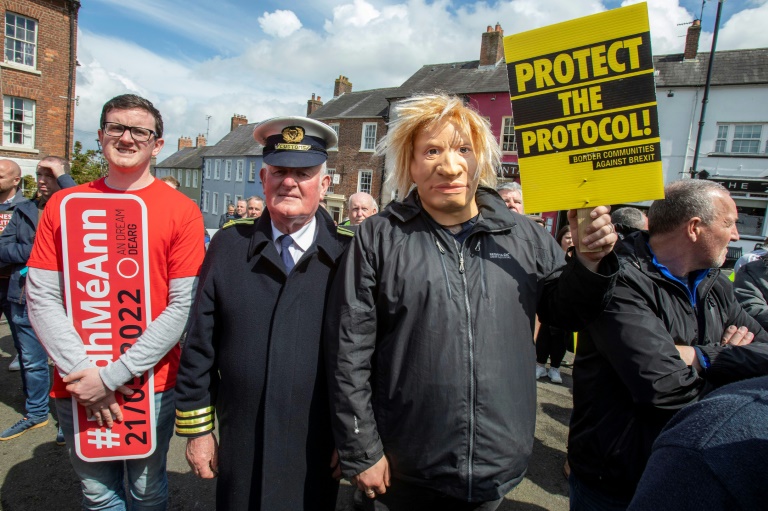
UK unveils radical overhaul of EU trade deal in N. Ireland

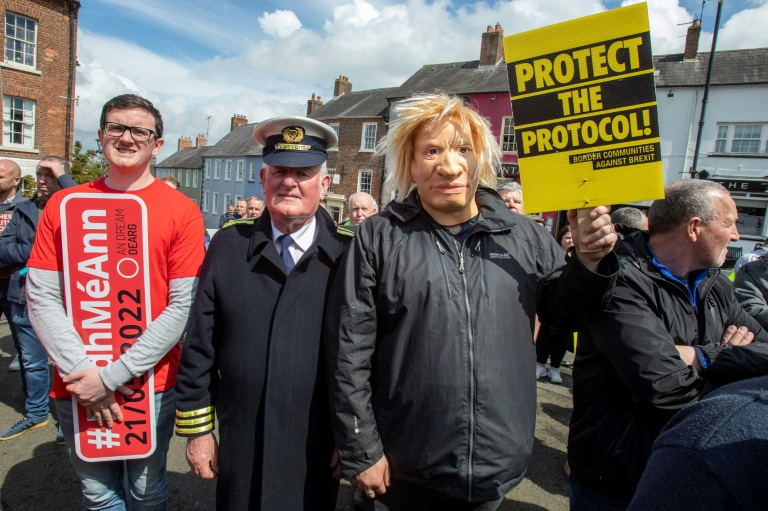
The UK government on Tuesday announced its intention to drastically overhaul post-Brexit trade rules in Northern Ireland, arguing the plan was needed to end political paralysis in the territory but risking a trade war with the EU.

The government said it would introduce legislation reforming the so-called Northern Ireland Protocol “in the coming weeks” — unless Brussels caves on its insistence that the pact cannot be rewritten.

The protocol was agreed as part of Britain’s Brexit divorce deal with the European Union, recognising Northern Ireland’s status as a fragile, post-conflict territory that shared the UK’s new land border with an EU member.

Its requirement for checks on goods arriving from England, Scotland and Wales has infuriated pro-UK unionists in Northern Ireland. 

They claim the protocol is undermining their place within the UK and are refusing to join a new post-election power-sharing government in Belfast.

The UK plan would scrap most of the checks, but the government denied it was trashing international law by effectively abrogating a key element of the Brexit deal agreed by Prime Minister Boris Johnson in 2019.

“I think the higher duty of the UK government in international law is to the (1998) Good Friday Agreement and the peace process,” Johnson told reporters.

“We don’t want to nix it (the protocol), we want to fix it, and we will work with our EU partners to do it,” he said.

– ‘Rogue state’ –

But the EU issued no hint that renegotiating the protocol was in the offing, after warning that any UK violation of the Brexit pact could see it hit back with swingeing tariffs.

“The protocol is an international agreement signed by the EU and the UK. Unilateral actions contradicting an international agreement are not acceptable,” European Commission Vice-President Maros Sefcovic said.

The UK plan “raises significant concerns”, he added, warning that the EU “will need to respond with all measures at its disposal” if London goes ahead.

Irish Foreign Minister Simon Coveney said he “deeply” regretted the UK step, which he called “damaging to trust”.

Johnson, however, said a trade war was unlikely at a time when the UK public was grappling with the worst inflationary crisis in a generation.

“But what we have to fix is the problems with the Northern Ireland political situation, where you can’t get the executive up and running,” he said, a day after visiting Belfast for talks with Northern Ireland’s main parties.

The largest pro-British party, the Democratic Unionist Party (DUP), says it will not share power with pro-Irish rivals Sinn Fein until the protocol is reworked.

Its hard line came nearly two weeks after Sinn Fein won a historic victory in elections to the Northern Ireland Assembly, which entitled the party to the role of first minister in a joint regional government with the DUP. 

In the London parliament, DUP leader Jeffrey Donaldson said the UK government’s announcement was a “good start” that could help restore the Belfast executive. But he insisted progress on an actual bill was needed in “days, not weeks”.

For her part, Sinn Fein leader Mary Lou McDonald accused Britain of acting like a “rogue state”. 

– Green or red – 

Keeping the border open with neighbouring Ireland, an EU member, was mandated in the Good Friday Agreement, given the frontier was a frequent flashpoint during three decades of violence in Northern Ireland until 1998.

But it means checks on have to be done elsewhere, to prevent goods getting into the EU single market and customs union by the back door via Northern Ireland.

Under the new plan, the UK intends unilaterally to create a “green channel” for British traders to send goods to Northern Ireland without making any customs declaration to the EU.

The EU would have access to more real-time UK data on the flow of goods, and only businesses intending to trade into the single market via Ireland would be required to make declarations.

The EU would need to trust the UK to monitor the flow, and UK Foreign Secretary Liz Truss vowed “robust penalties” for any companies seeking to abuse the new system. 

The UK plan would also harmonise tax policy between Great Britain and Northern Ireland, which has been unable to benefit from recent tax breaks announced in London given its position in the EU single market.

And it would seek to end oversight of the protocol by the European Court of Justice — another red line for Brussels.

The bill would remove regulatory barriers to goods made to UK standards being sold in Northern Ireland, with businesses able to choose between meeting UK or EU standards in a new “dual regulatory regime”.

UK unveils radical overhaul of EU trade deal in N. Ireland

The UK government on Tuesday announced its intention to drastically overhaul post-Brexit trade rules in Northern Ireland, arguing the plan was needed to end political paralysis in the territory but risking a trade war with the EU.

The government said it would introduce legislation reforming the so-called Northern Ireland Protocol “in the coming weeks” — unless Brussels caves on its insistence that the pact cannot be rewritten.

The protocol was agreed as part of Britain’s Brexit divorce deal with the European Union, recognising Northern Ireland’s status as a fragile, post-conflict territory that shared the UK’s new land border with an EU member.

Its requirement for checks on goods arriving from England, Scotland and Wales has infuriated pro-UK unionists in Northern Ireland. 

They claim the protocol is undermining their place within the UK and are refusing to join a new post-election power-sharing government in Belfast.

The UK plan would scrap most of the checks, but the government denied it was trashing international law by effectively abrogating a key element of the Brexit deal agreed by Prime Minister Boris Johnson in 2019.

“I think the higher duty of the UK government in international law is to the (1998) Good Friday Agreement and the peace process,” Johnson told reporters.

“We don’t want to nix it (the protocol), we want to fix it, and we will work with our EU partners to do it,” he said.

– ‘Rogue state’ –

But the EU issued no hint that renegotiating the protocol was in the offing, after warning that any UK violation of the Brexit pact could see it hit back with swingeing tariffs.

“The protocol is an international agreement signed by the EU and the UK. Unilateral actions contradicting an international agreement are not acceptable,” European Commission Vice-President Maros Sefcovic said.

The UK plan “raises significant concerns”, he added, warning that the EU “will need to respond with all measures at its disposal” if London goes ahead.

Irish Foreign Minister Simon Coveney said he “deeply” regretted the UK step, which he called “damaging to trust”.

Johnson, however, said a trade war was unlikely at a time when the UK public was grappling with the worst inflationary crisis in a generation.

“But what we have to fix is the problems with the Northern Ireland political situation, where you can’t get the executive up and running,” he said, a day after visiting Belfast for talks with Northern Ireland’s main parties.

The largest pro-British party, the Democratic Unionist Party (DUP), says it will not share power with pro-Irish rivals Sinn Fein until the protocol is reworked.

Its hard line came nearly two weeks after Sinn Fein won a historic victory in elections to the Northern Ireland Assembly, which entitled the party to the role of first minister in a joint regional government with the DUP. 

In the London parliament, DUP leader Jeffrey Donaldson said the UK government’s announcement was a “good start” that could help restore the Belfast executive. But he insisted progress on an actual bill was needed in “days, not weeks”.

For her part, Sinn Fein leader Mary Lou McDonald accused Britain of acting like a “rogue state”. 

– Green or red – 

Keeping the border open with neighbouring Ireland, an EU member, was mandated in the Good Friday Agreement, given the frontier was a frequent flashpoint during three decades of violence in Northern Ireland until 1998.

But it means checks on have to be done elsewhere, to prevent goods getting into the EU single market and customs union by the back door via Northern Ireland.

Under the new plan, the UK intends unilaterally to create a “green channel” for British traders to send goods to Northern Ireland without making any customs declaration to the EU.

The EU would have access to more real-time UK data on the flow of goods, and only businesses intending to trade into the single market via Ireland would be required to make declarations.

The EU would need to trust the UK to monitor the flow, and UK Foreign Secretary Liz Truss vowed “robust penalties” for any companies seeking to abuse the new system. 

The UK plan would also harmonise tax policy between Great Britain and Northern Ireland, which has been unable to benefit from recent tax breaks announced in London given its position in the EU single market.

And it would seek to end oversight of the protocol by the European Court of Justice — another red line for Brussels.

The bill would remove regulatory barriers to goods made to UK standards being sold in Northern Ireland, with businesses able to choose between meeting UK or EU standards in a new “dual regulatory regime”.

Russia says hundreds of Ukrainians surrender at Azovstal

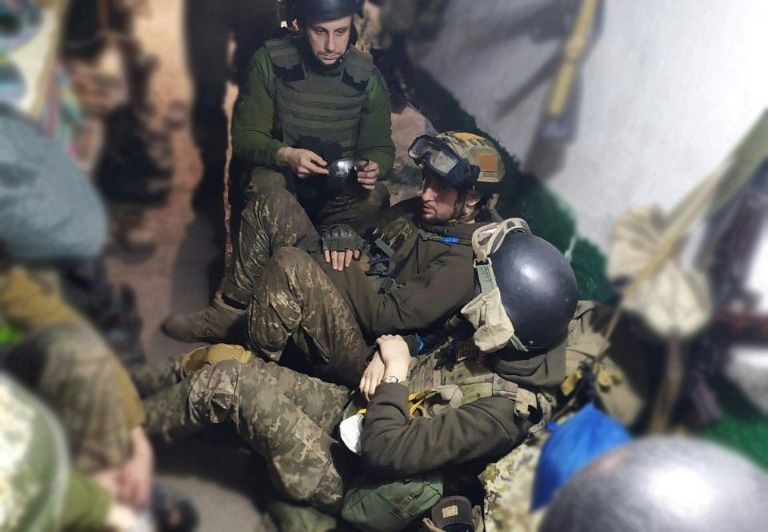
Russia said Tuesday that 265 Ukrainian soldiers had surrendered after staging a last stand at the besieged Azovstal steelworks in Mariupol, prompting Kyiv to call for a prisoner exchange.

Moscow claimed control of the strategic port city of Mariupol last month after a weeks-long siege, but hundreds of Ukrainian soldiers remained holed up in underground tunnels beneath the huge Azovstal industrial zone.

“Over the past 24 hours, 265 militants laid down their arms and surrendered, including 51 heavily wounded,” the Russian defence ministry said.

It added that those needing medical help were taken to a hospital in a part of the eastern Donetsk region controlled by pro-Kremlin rebels.

The ministry published images showing wounded soldiers being carried on stretchers, some being searched and others being boarded onto buses.

Elsewhere, lawmakers in Finland — which shares a 1,300-kilometre (800-mile) border with Russia — voted overwhelmingly in favour of joining the NATO military alliance.

It paves the way for a joint application with Sweden to be submitted in the coming days, amid fears they could be next after Russia’s invasion of Ukraine, which has killed thousands and sent millions fleeing.

– ICC deployment –

Ukraine earlier said 264 fighters from Azovstal were evacuated to Russia-controlled territory, including 53 wounded.

On Tuesday, the defence ministry expressed hope of an “exchange procedure… to repatriate these Ukrainian heroes as quickly as possible”.

For those still in Azovstal, it said it was doing “everything necessary for their rescue”, although it said a military intervention was not possible.

The fate of the soldiers remains unclear and is likely to cause concern in Ukraine, which has accused Moscow of war crimes during the conflict.

The International Criminal Court said Tuesday it was deploying its largest-ever field team to Ukraine, comprising 42 investigators, forensic experts and support staff.

In Moscow, Kremlin spokesman Dmitry Peskov did not answer questions about whether the Azovstal soldiers would be treated as war criminals or prisoners of war.

President Vladimir Putin “guaranteed that they would be treated according to the relevant international laws,” he said.

Separately, the speaker of Russia’s lower house of parliament, Vyacheslav Volodin, said that “Nazi criminals should not be subject to a prisoner exchange”. 

He did not mention Azovstal in particular, but Moscow has on numerous occasions said that members of the Azov Battalion — considered “Nazi” by Russian authorities — are among those trapped at the steelworks. 

– Changed course of war –

Ukraine hailed the soldiers’ contribution to the wider fight following Russia’s invasion on February 24.

Holding the steelworks had delayed the transfer of 20,000 Russian troops to other parts of Ukraine and stopped Moscow from quickly capturing the southern city of Zaporizhzhia, the army said.

“Azovstal defenders ruined Russia’s plan to capture the east of Ukraine… This completely changed the course of the war,” tweeted presidential aide Mykhaylo Podolyak.

“83 days of Mariupol defence will go down in history as the Thermopylae of the 21st century,” he said, referring to the famous last stand by the Spartans against the Persians in 480 BCE.

Despite the resources of its giant neighbour, Ukraine has managed to repel the Russian army for longer than many expected, fortified by weapons and cash from Western allies.

After circling the capital Kyiv in the early weeks of the war, Moscow has focused increasingly on the eastern region of Donbas, bordering Russia.

Ukrainian officials say Russian troops are withdrawing from around Kharkiv, the country’s second-largest city, to be redeployed to Donbas, and Kyiv on Monday claimed control of territory on the border.

– Trying to stay alive –

But the area around Kharkiv has been under constant attack and Kyiv’s gains have come at a high cost, with villages gutted and destroyed by bombs.

In Ruska Lozova, just north of Kharkiv, Rostislav Stepanenko recounted to AFP how he survived shelling in his village, caught in the firing line between Russian and Ukrainian forces.

He had gone back to collect some belongings but returned empty-handed and stunned by the incessant artillery fire.

Asked what he did for a living, he joked that he was “trying to stay alive”.

And his age? “Hopefully, I will be 54, but today I wouldn’t expect that,” he said with a nervous smile.

– ‘Shelling without stopping’ –

In his nightly address on Monday, Ukrainian President Volodymyr Zelensky reported “constant attacks in those areas where Russia is still trying to advance”, adding that Severodonetsk and other cities in Donbas remained the main targets.

Taking Severodonetsk, the easternmost city held by Ukrainian forces, would grant the Kremlin de facto control of Lugansk, one of two regions — along with Donetsk — that comprise Donbas.

Russia’s attempt to completely encircle Severodonetsk has been repelled, with Ukrainian forces blowing up railway bridges to slow their advance.

But Lugansk regional governor Sergiy Gaiday has said it was being shelled “without stopping” and early Tuesday said two buildings at the city’s general hospital had been hit overnight.

“We have 10 dead and three wounded in the region,” he wrote on Telegram. 

Elsewhere, eight people were killed and 12 injured in Russian strikes on the village of Desna, in northeastern Chernigiv region, where a Ukrainian military base is located, emergency services said.

To the west, an official from Lviv’s Regional Military Administration said a military infrastructure facility “almost on the border with Poland” had been hit.

– NATO bids ‘no direct threat’ –

Fearful of Russian aggression, Sweden and Finland are poised to give up decades of military non-alignment and join NATO.

Russian President Vladimir Putin said on Monday the move posed “no direct threat for us… but the expansion of military infrastructure to these territories will certainly provoke our response”. 

Putin’s reaction was more moderate than comments made earlier on Monday by deputy foreign minister Sergei Ryabkov, who had called the expansion a “grave mistake with far-reaching consequences”. 

The bids must be unanimously approved by the alliance’s 30 nations, and Turkish President Recep Tayyip Erdogan on Monday voiced his objection.

He accused Finland and Sweden of harbouring terror groups, including outlawed Kurdish militants.

But US Secretary of State Antony Blinken voiced confidence that the bids would succeed.

He is due to meet Turkey’s foreign minister in Washington on Wednesday, while US President Joe Biden will host the leaders of Finland and Sweden on Thursday.

The Nordic countries have also sent delegations to Turkey to meet with Turkish officials, and Finnish President Sauli Niinisto said Tuesday he was “optimistic” about securing Ankara’s support.

Germany, meanwhile, said it would ramp up its military collaboration with the two Nordic countries, especially in the Baltic Sea.

burs-ar/spm

Walmart profits hit by costs as some consumers shift behavior

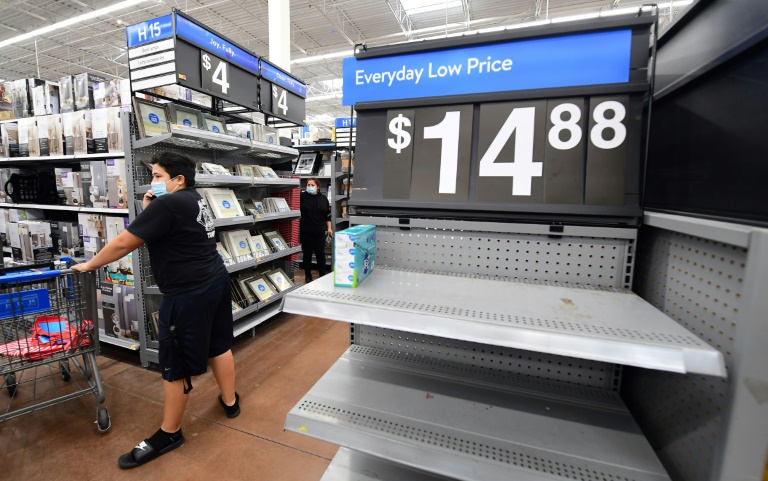
Walmart reported a drop in profits Tuesday due to higher costs for labor, food and fuel as it pointed to some consumers shifting away from discretionary items amid high inflation.

Shares tumbled following the report, with profits lagging expectations as Walmart executives described a series of cost hits that converged during the period.

The company was overstaffed for part of the quarter due to the unexpectedly speedy return of workers who were afflicted by the Omicron variant of Covid-19, resulting in higher labor costs.

Walmart was also affected by a spike in energy costs when the Russian invasion of Ukraine sent oil prices soaring.

Another obstacle was a March fire that destroyed a warehouse in Indianapolis, Indiana that employed more than 1,000 people. Nobody was injured in the episode, but Walmart had to replace goods and route items through neighboring infrastructure, adding cost.

Walmart reported a 25 percent drop in profits to $2.1 billion for the quarter ending April 30. That translated into $1.30 per share, below the $1.48 expected by analysts.

Revenues rose 2.4 percent to $141.6 billion.

Walmart raised its full-year sales forecast slightly but lowered its profit forecast. It now expects earnings per share to fall one percent after previously projecting an increase in the mid-single digits.

Chief Executive Doug McMillon acknowledged on a conference call with analysts that the results were “a disappointment to us,” but said, “We’re looking forward to putting it behind us and having a strong year.”

Walmart’s revenue at its massive US namesake stores rose on average just three percent, versus a 5.6 percent jump in the quarter that ended in January, a benchmark known as comparable sales. E-commerce sales growth has also leveled off compared with earlier in the pandemic.

Executives said strong demand for pricey items such as game consoles suggest that some consumers are not cutting back due to inflation.

But other shoppers have shifted behavior as rising prices for gasoline and other necessities pressure consumers, resulting in some people steering more money to staples such as groceries and away from discretionary items such as apparel. 

As a result, Walmart has been adding more promotions in general merchandise, where inventories have risen significantly from a year ago.

Another shift is in the move away from brands for lunch meats, dairy and other goods in favor of Walmart’s own branded goods, which are lower-priced. 

Walmart US President John Furner said the company planned to redouble efforts with food suppliers to limit future price increases.

“We need to do more to control costs, to make sure we can provide good value for our customers,” Furner said on the call.

Walmart shares fell 8.0 percent to $136.32 in early trading.

Experts warn arms for Ukraine could end up in wrong hands

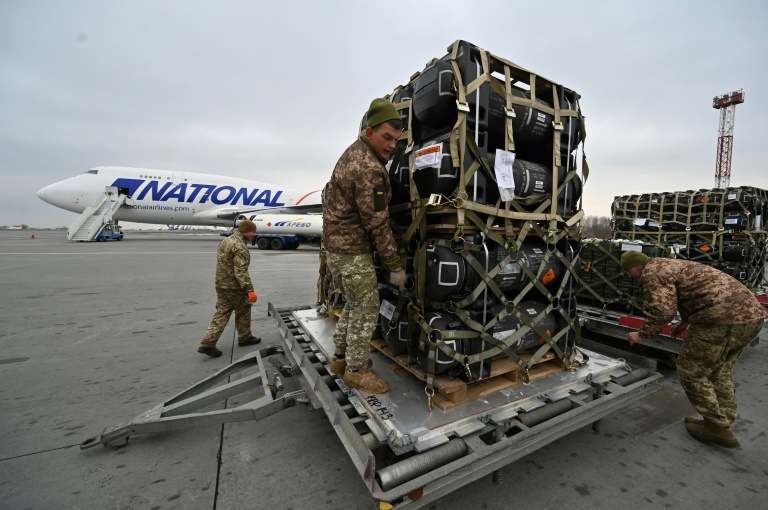
Western countries have been ramping up weapons and ammunition shipments to Ukraine as Kyiv fights off a Russian invasion, but arms trade experts warn some of the lethal assistance could end up falling into the wrong hands.

Ukraine in particular has a history as a hub of the arms trade during the 1990s, setting off alarm bells for those who study illicit flows.

“There are very significant risks associated to the proliferation of weapons in Ukraine at the moment, in particular regarding small arms and light weapons,” said Nils Duquet, a researcher and director of the Flemish Peace Institute.

Western nations, above all the US, have announced successive shipments of both light and heavy weapons for Kyiv’s forces since Russian troops crossed the Ukrainian border on February 24.

Washington alone has delivered or promised military gear including hundreds of Switchblade kamikaze drones, 7,000 assault rifles with 50 million rounds of ammunition, laser-guided missiles and radar systems to detect enemy drones and incoming artillery fire.

“While the response to provide more weapons to Ukraine is understandable…, it would be prudent to consider the immediate and long-term security implications,” the US-based Stimson Center think-tank said in March.

“We’ve seen time and time again how arms aimed at aiding an ally in one conflict have found their way to the frontlines of unforeseen battlefields, often in the hands of groups at odds with US interests or those of civilians,” it added, pointing especially to small arms.

– ‘Overwhelming challenge’ –

Following the collapse of the Soviet Union, many weapons stockpiled in Ukraine were shipped off to other countries and conflict zones around the world.

That looting of the country’s arms supplies resumed following Russia’s 2014 annexation of the Ukrainian Black Sea peninsula of Crimea and the seizure of two regions in the east of Ukraine by pro-Moscow separatists.

According to the Small Arms Survey (SAS) by the Geneva-based Institute of International and Development Studies, 300,000 light weapons were stolen or lost between 2013 and 2015, with just 4,000 retrieved since then.

Rather than being shipped abroad as in the 1990s, most of these ended up on the black market within Ukraine, the SAS found.

“The unresolved conflict in the eastern part of the country and general anxiety towards local security conditions” could explain increased demand for weapons among ordinary people, SAS researcher Matt Schroeder said.

Looking ahead, “collecting these weapons and disposing of them properly would be an overwhelming challenge for any government, let alone one that is still fighting an existential threat,” he added.

– ‘Bank robberies with Javelins’ –

Even before the current conflict, the US military’s inspector general in 2020 questioned the level of surveillance of weapons sent to Ukraine.

Annie Shiel of the Center for Civilians in Conflict (Civic) warned that “there has been very little transparency around what risk mitigation or monitoring steps the US and other countries sending weapons to Ukraine have taken, if any… to ensure the protection of civilians”.

The aid group has called for deliveries to be tied to human rights commitments and for the arms to be tracked after they are handed over.

Other experts see the task of following arms through conflict zones as all but impossible.

“It’s an illusion to think that in a context of war you can actually have control of weapons there. We know that many weapons will not return to the official forces but they will remain in the region for many years,” said Nils Duquet.

“Look at Yugoslavia, success has been made but these weapons are still being smuggled in all parts of Europe,” he added, predicting similar outcomes for Ukraine.

One senior French military officer evoked a lurid possible outcome.

“We’ll be laughing on the other side of our faces once we’re seeing bank robberies with Javelins,” he said, referring to the US-made anti-tank missiles.

Mideast sandstorms snarl traffic, close schools, harm health

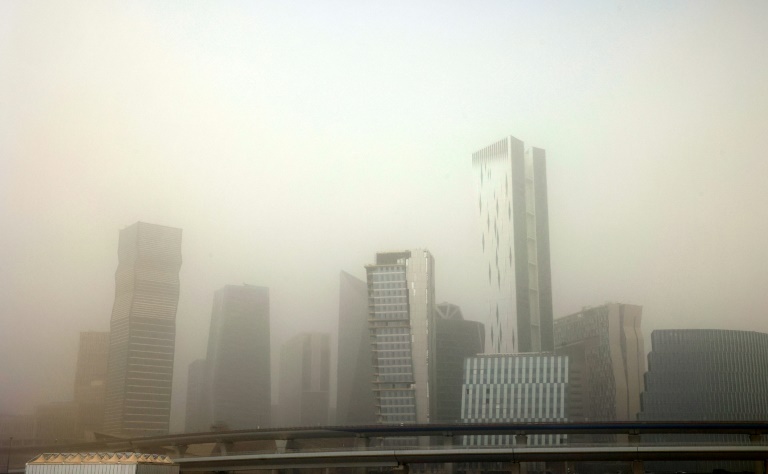
Sandstorms across the Middle East have delayed flights, closed schools and hospitalised thousands — a phenomenon experts say could worsen as climate change warps regional weather patterns. 

Saudi Arabia on Tuesday became the latest country blanketed with dust that slowed traffic and made iconic towers in the capital difficult to see from more than a few hundred metres (yards) away.

Electronic signs along Riyadh’s highways warned drivers to reduce their speed because of the lower visibility, even as life largely went on as usual in the kingdom. 

The national meteorology centre predicted that “surface dusty winds” originating in the east and bringing a thick grey haze would continue west towards the Muslim holy cities of Mecca and Medina.

Other countries have been grappling with the problem for longer: Neighbouring Iraq has experienced eight sandstorms since mid-April, fuelled by soil degradation, intense droughts and low rainfall linked to climate change. 

The country’s latest sandstorm on Monday enveloped the capital Baghdad in an orange glow, sent at least 4,000 people to hospital with breathing problems and led to the closure of airports, schools and public offices across the country. 

Iran announced that it, too, was closing government offices and schools Tuesday, citing “unhealthy weather” conditions and sandstorms. 

Average airborne concentration of the finest and most hazardous particles (PM2.5) was at 163 microgrammes per cubic metre Tuesday in Tehran, according to a government website.

That is more than six times the World Health Organisation’s recommended maximum of 25 microgrammes per cubic metre.

In Kuwait, meanwhile, air traffic at the main airport was suspended for an hour and a half due to a dust storm Monday, and marine traffic in all three ports remained suspended as of Tuesday afternoon. 

Kuwait’s ministry of education said classes were suspended on Tuesday but would resume the following day. 

– Response needed ‘urgently’ –

The Middle East has always been battered by dust and sandstorms, but they have become more frequent and intense in recent years. 

The trend is associated with overgrazing and deforestation, overuse of river water and more dams. 

Unseasonable masses of dry, cold air help explain the recent proliferation of sandstorms in eastern Syria and Iraq and “their transmission to the Arabian Peninsula”, Hassan Abdallah from the WASM meteorological centre in Jordan told AFP. 

By the time the sandstorms reach Saudi Arabia they tend to be less intense, he added. 

Sandstorms are worsening regionally because of factors including low water levels in the Tigris and Euphrates rivers, large fluctuations in annual rainfall and disintegrating soil, he said. 

As for how to mitigate them, Abdallah advised planting more trees and “addressing the low level of the Tigris and Euphrates rivers urgently”.

In central Riyadh on Tuesday, sand layered cars and buildings, and residents struggled to keep it out of their homes. 

“Working outside is very difficult because of the dirt,” a Pakistani construction worker who gave his name as Kalimullah told AFP as he installed tiles. 

“I try to wash my face from time to time,” the 30-year-old added, wrapping a piece of cloth around his face to block the sand. 

Saudi office worker Abdullah Al-Otaibi, 39, said he was grateful he works indoors. 

“Dust storms are part of our culture and we are used to it, but some of them are severe,” he said, rubbing his eyes as he hurried inside.

bur-ht-rcb/dm/fz 

Musk says no Twitter deal without clarity on spam accounts

Billionaire Elon Musk said Tuesday that his purchase of Twitter would not go ahead unless he was given assurances on the bots he says plague the platform, further complicating his acrimonious bid for the social media giant.

The chief of SpaceX as well as Tesla, Musk is currently listed by Forbes as the world’s wealthiest person, with a fortune of about $230 billion, much of it in Tesla stock.

Seen by his champions as an iconoclastic genius and by his critics as erratic and power-hungry, Musk surprised many investors in April with news that he wanted to purchase Twitter.

But his $44 billion bid for the company is now “temporarily on hold,” pending questions over its estimates of the number of fake accounts, or bots.

“Yesterday, Twitter’s CEO publicly refused to show proof of <5%,” tweeted Musk, who has almost 94 million followers on the social network. 

“This deal cannot move forward until he does.”

Twitter chief executive Parag Agrawal has said the platform suspends more than a half-million seemingly bogus accounts daily, usually before they are even seen, and locks millions more weekly that fail checks to make sure they are controlled by humans and not by software.

Internal measures show that fewer than five percent of accounts active on any given day at Twitter are spam, but that analysis cannot be replicated externally due to the need to keep user data private, Agrawal contended.

Musk — who posted that the real number of bots may be four times what Twitter claims and “could be *much* higher,” and has said he would make getting rid of them a priority if he owned the platform — responded to that tweet by Agrawal with a poo emoji.

“So how do advertisers know what they’re getting for their money?” Musk tweeted in a subsequent response about the need to prove Twitter users are real people.

“This is fundamental to the financial health of Twitter.”

– ‘Under pressure’ –

The process used to estimate how many accounts are bots has been shared with Musk, Agrawal insisted.

According to an estimate published Friday by software firm SparkToro, 19.42 percent of Twitter accounts are fake or spam, but the company acknowledges its methodology for determining bots is likely different from that used by Twitter. 

SparkToro has a tool on its website that shows more than 70 percent of Musk’s followers are fake accounts. 

“It appears the spam/bot issue is cascading and clearly making the Twitter deal a confusing one,” Wedbush analyst Dan Ives said in a note to investors.

“The bot issue at the end of the day was known by the New York City cab driver and feels more to us like the ‘dog ate the homework’ excuse to bail on the Twitter deal or talk down a lower price.”

Twitter shares “will be under pressure this morning again as the chances of a deal ultimately getting done is not looking good now,” Ives said, adding it is “likely a 60%+ chance from our view Musk ultimately walks from the deal and pays the breakup fee.”

Shares of Twitter were down roughly 2.4 percent early Tuesday in pre-market trading.

Meanwhile, in a filing to Wall Street regulator the Securities and Exchange Commission, Twitter urged its shareholders to vote in favor of Musk’s buyout for $54.20 per share in cash, at an upcoming special meeting.

Musk has described his motivation as stemming from a desire to ensure freedom of speech on the platform and to boost monetization of a website that is massively influential but has struggled to attain profitable growth.

He has also said he favored lifting the ban on Donald Trump, who was kicked off the platform in January 2021 shortly after the then-US president’s efforts to overturn his election defeat led to the January 6 assault on the US Capitol.

burs-oho/mlm/wd

Hezbollah lose ground, reformists surge in Lebanon polls

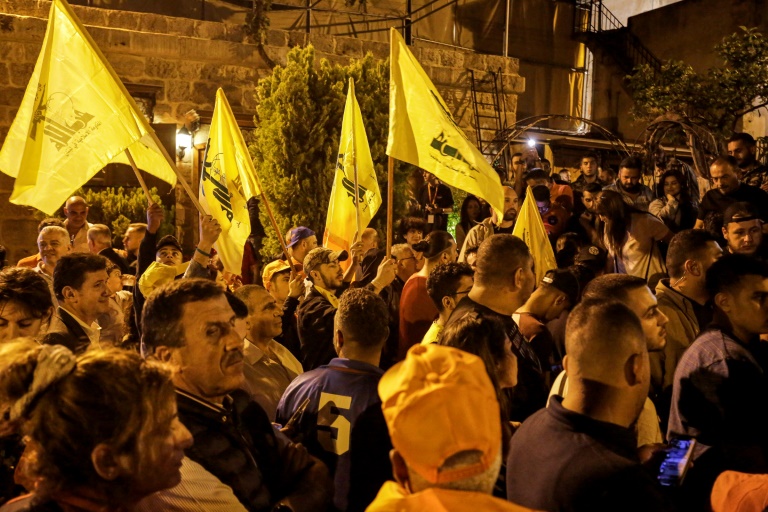
Shiite group Hezbollah and its allies lost their majority in Lebanon’s parliament, official results showed Tuesday, while independents achieved a surprise breakthrough.

Full results announced by the interior ministry two days after the election revealed that no bloc will control the 128-seat assembly, a deadlock observers fear could usher in a tense period of political jostling.

The polls, the first since Lebanon was ravaged by its worst ever economic crisis and a cataclysmic explosion at Beirut port in 2020, were seen as a prerequisite for a crucial IMF bailout.

The Iranian-backed Hezbollah and its main allies had the support of around 70 lawmakers in the outgoing parliament but will now fall just short of the 65 seats needed to retain a majority.

Their strongest opponents in parliament will be led by the Christian Lebanese Forces party of former warlord Samir Geagea, that raked in several new seats on the back of a virulent anti-Hezbollah campaign.

New reformist faces who entered the legislative race on the values of a 2019 anti-establishment uprising made a stronger showing that many had predicted.

At least 13 independents who backed the 2019 protest movement won seats. Twelve of them will sit in parliament for the first time.

Together with other non-aligned MPs who have sometimes supported the now-defunct protest movement’s demands, they could find themselves in a kingmaking position but they would need the kind of unity they failed to achieve during the campaign.

– Breakthrough –

Analyst Ziad Majed said that the economic context could play in favour of reformists who will for the first time be pushing from within parliament, not just as outsiders.

“This will create political and popular pressure for reformists and forces of change to cooperate,” he said.

Only eight women were voted into parliament.

One of the most notable victories notched up by independents was the election in southern Lebanon of Elias Jradeh and Firas Hamdan for seats that Hezbollah and its allies had not lost in three decades.

Another major satisfaction for those described in Lebanon as the “thawra” (revolution, in Arabic) candidates, was the defeat of several reviled MPs loyal to the Syrian government of Bashar al-Assad.

In what was interpreted by independents as a gesture of spite by Hezbollah, a group of youths on scooters descended on Martyrs Square overnight and burned down the “revolution fist”.

The temporary monument had become a visual symbol of the secular protests that swept Lebanon in October 2019 and had raised hopes of democratic change.

The movement lost momentum as Lebanon’s ruling cartel of sectarian political barons bided their time and one of the sharpest economic downturns of our time muffled popular discontent.

The parliamentary elections were a first major test for those in the protest camp who chose to enter the political fray.

Hezbollah and its ally Amal retained all 27 parliament seats reserved for Shiite lawmakers but the Christian bloc led by President Michel Aoun and other coalition partners lost a little ground.

– Crisis ahead? –

The main issue that polarises parliament is Hezbollah’s right to keep an arsenal that is often described as equivalent to or better than the state’s.

Some see it as a historical right and the best defence for the small Mediterranean country while others consider Hezbollah’s weapons to be the root of all of Lebanon’s ills.

Sami Nader, an analyst with the Levant Institute for Strategic Affairs, said that Hezbollah had suffered symbolic losses but was sceptical the polls could yield radical changes.

“Hezbollah and the Iranian axis took a blow but will this pave way for change in Lebanon? I have doubts,” he told AFP.

The formation of a government, the election of parliament’s speaker and the presidential election could all be very contentious and lead to protracted political crises.

Speaker Nabih Berri has held his job since 1992.

President Michel Aoun, the world’s third oldest head of state, had long planned for his son-in-law Gebran Bassil to take over but the Lebanese Forces’ surge in the polls could disrupt that scenario.

Lebanon shares power among its religious communities, and politics is often treated as a family business. By convention, the president is a Maronite Christian, the premier a Sunni Muslim, and the parliamentary speaker a Shiite.

Despite a turnout of 41 percent on Sunday, the UN envoy to Lebanon said “the elections were a vital expression of Lebanon’s citizen engagement, which should serve to strengthen the country’s institutions.”

Vodafone calls up surging annual profit

British telecoms giant Vodafone on Tuesday logged surging annual net profit on rising sales and sliding tax, one day after revealing that an Emirati firm has become its biggest investor.

Profit after tax jumped to almost 2.1 billion euros ($2.2 billion) in the financial year to March, Vodafone said in a results statement.

That compared with a profit of 112 million euros in its previous annual report, when its performance was severely disrupted by fallout from the Covid pandemic.

Revenues swelled four percent to 45.6 billion euros this time around on strong growth in Africa and Europe.

“We delivered a good financial performance in the year with growth in revenues, profits and cash flows,” said chief executive Nick Read.

“Whilst we are not immune to the macroeconomic challenges in Europe and Africa, we are positioned well to manage them and we expect to deliver a resilient financial performance in the year ahead.”

Vodafone shares flatlined at 120 pence in London midday deals.

The stock had rallied Monday on news that state-controlled Emirates Telecommunications Group Company had become its biggest shareholder.

The group — known also as Etisalat or “e&” and whose majority stake holder is the United Arab Emirates government — has bought almost ten percent of Vodafone for $4.4 billion.

It stressed it would not launch a takeover.

The UAE group decided to invest in Vodafone to gain significant exposure to a global leader in connectivity and digital services.

Read, Vodafone’s CEO since 2018, is reportedly faces increasing criticism over his leadership.

British media reports suggest that activist investor fund Cevian Capital has built up a Vodafone stake and wants to force a sale of assets.

Vodafone in 2021 floated its European mast division Vantage Towers in Frankfurt, in a partial initial public offering that enabled it to slash debt.

Close Bitnami banner
Bitnami