World

Kremlin critic Navalny appeals jail sentence

Jailed Kremlin critic Alexei Navalny on Tuesday opened an appeal process for a nine-year prison sentence he was handed in March on charges that he and his allies say are politically motivated.

After a brief start to the hearing on Tuesday morning, the court said it would resume the process on May 24 following a request to postpone from Navalny. 

His hearing comes as Russian authorities seek to silence remaining government critics and Moscow pushes on with its military campaign in neighbouring Ukraine, with thousands killed and some 10 million displaced.

A vocal critic of Russian President Vladimir Putin, Navalny in late March had his jail time extended to nine years after he was found guilty of embezzlement and contempt of court. 

He is already serving two-and-a-half years in a prison some 100 kilometres (60 miles) east of Moscow for violating parole on old fraud charges.

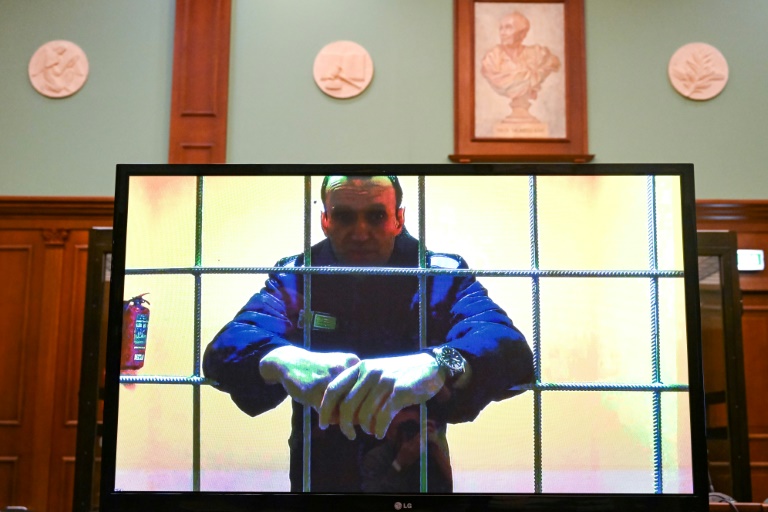
On Tuesday, Navalny joined a hearing at a Moscow court via video-link from behind bars at his prison colony to appeal the extension of his jail term. 

Wearing a black prisoner uniform, Navalny asked the judge to postpone the hearing by a week so he can have a family meeting before being moved to a different colony, an AFP journalist reported. 

“If you confirm the sentence, I will be moved to a regime colony and transferred out of here. In that case my visit will be cancelled,” he said.

He also requested extra time to listen to the audio recording of his verdict. 

If his new sentence comes into force, the 45-year-old opposition politician will be transferred to a strict-regime penal colony, which will place him in much harsher conditions, including allowing fewer family visits.

The new sentence would replace the old one — which he was handed in February last year — meaning Navalny would remain behind bars for another eight years.

– Declared ‘extremist’ –

As part of the new charges, investigators accused Navalny of stealing for personal use several million dollars’ worth of donations that were given to his political organisations.

Navalny rose to prominence as an anti-corruption blogger and, before his imprisonment, mobilised anti-government protests across Russia.

In 2018, he campaigned as a presidential candidate but was eventually barred from running in the election that saw Putin secure a fourth term in power. 

In his absence, Navalny’s team continues publishing investigations into the wealth of Russia’s elites that have garnered millions of views on YouTube. 

In 2020, Navalny narrowly survived a poisoning attack with Novichok, a Soviet-designed military-grade nerve agent. Despite accusations from Navalny, the Kremlin denied any involvement.

He was arrested on his return from treatment in Germany last year, sparking widespread condemnation abroad, as well as sanctions from Western capitals.

After his arrest, Navalny’s political organisations across the country were declared “extremist” and shut down.

Navalny’s key allies have since fled Russia and several are wanted by Russian authorities on criminal charges.

Russia has recently ramped up pressure on independent media and non-governmental organisations, declaring many “foreign agents”, while others have stopped operating for fear of prosecution. 

In an effort to further control the information available to its domestic audience, authorities have blocked access to the popular social networks Instagram, Facebook and Twitter and taken legal action against tech giant Meta, accusing it of spreading “calls to kill” Russians. 
UK unemployment dips but wages hit by inflation

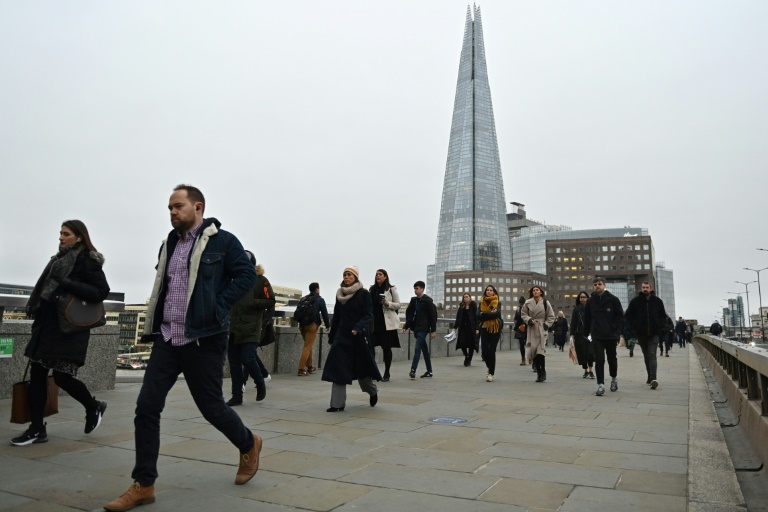
Britain’s unemployment rate has fallen further to a near five-decade low, official data showed Tuesday, but the value of wages continues to erode as inflation soars.

The unemployment rate eased to 3.7 percent in the three months to the end of March, the Office for National Statistics (ONS) said in a statement, sending the pound rising against the dollar on expectations of another interest rate hike.

That was the lowest level in more than 47 years and compared with a rate of 3.8 percent in the quarter to the end of February.

Bank of England (BoE) governor Andrew Bailey on Monday warned that fallout from surging prices driven by the Ukraine war would cause unemployment to increase.

He described as “apocalyptic” the situation surrounding soaring food costs — which he said were fuelled by major wheat and cooking oil producer Ukraine finding itself unable to export its goods.

Addressing British MPs, Bailey spoke also of a “very real income shock” coming from surging energy and food prices.

While average wages are rising in the UK, the ONS on Tuesday said they continued to sink in real terms as Britain, like other countries, faces runaway inflation.

The pound on Tuesday rallied 1.3 percent to $1.2480 as traders bet that soaring inflation, lifted in part by UK wage rises, would force the BoE to raise interest rates further, despite growing fears of recession.

“There continued to be a mixed picture for the labour market,” said Darren Morgan, ONS director of economic statistics.

Total employment remained below its pre-pandemic level, with job vacancies at a record-high of almost 1.3 million at the end of April.

“Indeed, with the latest fall in unemployment to its lowest rate since 1974, there were actually fewer unemployed people than job vacancies for the first time since records began,” Morgan said.

While companies struggle to fill posts after the pandemic caused people to change careers, Morgan noted that since the outbreak of Covid, about half a million more people in the UK “have completely disengaged from the labour market”.

For those in work, regular earnings excluding bonuses were “falling sharply in real terms”, he added.

– ‘Unemployment to rise’ –

Bailey on Monday said “the main driver of inflation and what brings it down is the very big, real income shock which is coming from outside forces and, particularly, energy prices and global goods prices. 

“That will have an impact on domestic demand and it will dampen activity, and I’m afraid it looks like it will increase unemployment.”

He described inflation fallout from the war in Ukraine as “a major worry” for Britain and the developing world.

“Sorry for being apocalyptic but that is a major concern,” Bailey said.

He spoke after official data last week showed Britain’s economy shrank in March on fallout from soaring inflation, increasing the prospect of the country falling into recession.

Earlier this month, the BoE warned that Britain risks falling into recession with UK inflation expected to top 10 percent, a four-decade high, by the end of the year.

It came as the central bank raised its main interest rate by a quarter-point to one percent to tackle rocketing prices.

That was the fourth straight increase by the BoE, while its key rate now stands at the highest level since the global financial crisis in 2009.

Raised rates have lifted borrowing costs for consumers and businesses, further impacting spending.

Ukraine's key IT sector booming despite Russian invasion

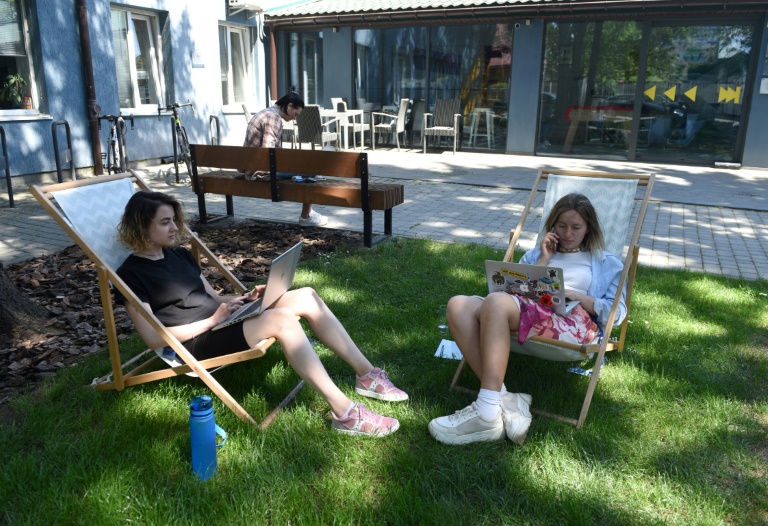
Ukraine’s IT sector is booming despite the Russian invasion. Workers with stickers on their laptops recline on beach chairs outside a warehouse for start-ups in the west Ukraine city of Lviv giving off major Silicon Valley vibes.

But the atmosphere inside is different.

Through the glass doors of the complex, young Ukrainians zig-zag between stacks of bulletproof vests and cardboard boxes filled with helmets ready for the front.

They are part of Ukraine’s burgeoning tech sector which was forced to adapt after Russia’s invasion and has become key to supporting the war effort.

“Most tech companies had developed contingency plans” in case of war said Stepan Veselovskiy, the head of the “IT Cluster Lviv” community.

He told AFP that companies transferred servers to secure locations and established back-up systems outside the country before Russia invaded on February 24.

When Russian bombing started, IT companies shut offices in the capital Kyiv and eastern city of Kharkiv and engineers found refuge in western Ukraine or Poland next door.

Veselovskiy said there were already around 500 tech companies in Lviv before the war but now estimates that 80 percent of the sector is in the western city. 

One is Infopulse, which provides various digital services to mainly European customers.

It brought 300 of its 2,300 employees to Lviv, where it has offices in one of the city’s few buildings equipped with a bunker.

There are bunk beds and stable internet underground so employees can continue working in the event of an air raid.

There are also generators in case Russian forces target power stations and terminals for Elon Musk’s Starlink internet service.

“Even in the most drastic conditions, business can continue,” regional manager Ivan Korzhov said. 

They can even thrive. 

– Tech army –

Since the start of the war, Infopulse has gained four new customers and in April — the second month of the Russian invasion — it created 25 new jobs in Ukraine.

It is not the only tech company in Ukraine to do so. 

Veselovskiy says February — when Russia attacked — was a historically good month for Ukraine’s tech sector and its estimated 200,000 employees. 

“It slowed down a bit in March, but we are very optimistic for the future because the war doesn’t stop us from growing,” he said.

This is a stark contrast to other industries, battered by the invasion. Exports for traditional sectors such as steel and agriculture have collapsed.

But the tech sector, naturally, has not been affected by the destruction of bridges, roads or the blocking of ports. 

It has, according to Veselovskiy, made more than $2 billion since the start of the war and has become the country’s leading exporter. 

“It’s a good thing for Ukraine because we generate income in dollars every month when the country really needs it,” Korzhov said.

“We pay our taxes and give a lot of money” to the government. 

The IT Cluster Lviv has already allocated $2 million, mainly to buy equipment for Ukrainian soldiers.

That’s how its offices ended up looking like an army depot.

The sector has also offered its brightest to help the military.

Softserve — one of Ukraine’s biggest tech companies — has worked on the military’s websites for free and IT Cluster Lviv modernised one of the military’s command centres.

Infopulse also participates in a joint project by the Ukrainian army and the ministry of digital transformation.

“Specialists in tech and cybersecurity work with the government on the information front,” its regional manager Korzhov said. 

He then repeated a popular slogan in Ukraine: “We are not waiting for peace, but for victory.”

Musk says no Twitter deal without clarity on spam accounts

Billionaire Elon Musk said Tuesday that his purchase of Twitter would not go ahead unless he was given assurances on the bots that he says plague the platform, further complicating his acrimonious bid for the social media giant.

The chief of SpaceX as well as Tesla, Musk is currently listed by Forbes as the world’s wealthiest person, with a fortune of about $230 billion, much of it in Tesla stock.

Seen by his champions as an iconoclastic genius and by his critics as an erratic megalomaniac, Musk surprised many investors in April with news that he wanted to purchase Twitter.

But his $44 billion bid for Twitter is now “temporarily on hold,” pending questions over the social media company’s estimates of the number of fake accounts, or “bots.”

“Yesterday, Twitter’s CEO publicly refused to show proof of <5%,” tweeted Musk, who has almost 94 million followers on the social network. 

“This deal cannot move forward until he does.”

Twitter chief executive Parag Agrawal has said the platform suspends more than a half-million seemingly bogus accounts daily, usually before they are even seen, and locks millions more weekly that fail checks to make sure they are controlled by humans and not by software.

Internal measures show that fewer than five percent of accounts active on any given day at Twitter are spam, but that analysis can’t be replicated externally due to the need to keep user data private, Agrawal contended.

Musk, who has said bots plague Twitter and that he would make getting rid of them a priority if he owned the platform, responded to that tweet by Agrawal with a poo emoji.

“So how do advertisers know what they’re getting for their money?” Musk tweeted in a subsequent response about the need to prove Twitter users are real people.

“This is fundamental to the financial health of Twitter.”

The process used to estimate how many accounts are bots has been shared with Musk, Agrawal insisted.

“It appears the spam/bot issue is cascading and clearly making the Twitter deal a confusing one,” Wedbush analyst Dan Ives said in a note to investors.

“The bot issue at the end of the day was known by the New York City cab driver and feels more to us like the ‘dog ate the homework’ excuse to bail on the Twitter deal or talk down a lower price.”

Musk has described his motivation as stemming from a desire to ensure freedom of speech on the platform and to boost monetization of a website that is massively influential but has struggled to attain profitable growth.

He has also said he favored lifting the ban on Donald Trump, who was kicked off the platform in January 2021 shortly after the former US president’s efforts to overturn his election defeat led to the January 6 assault on the US Capitol.

burs-oho/je

US urges India to reverse ban on wheat exports

The United States hopes India will reverse its ban on wheat exports, Washington’s top diplomat to the United Nations said Monday, warning the move would worsen global shortages of the commodity.

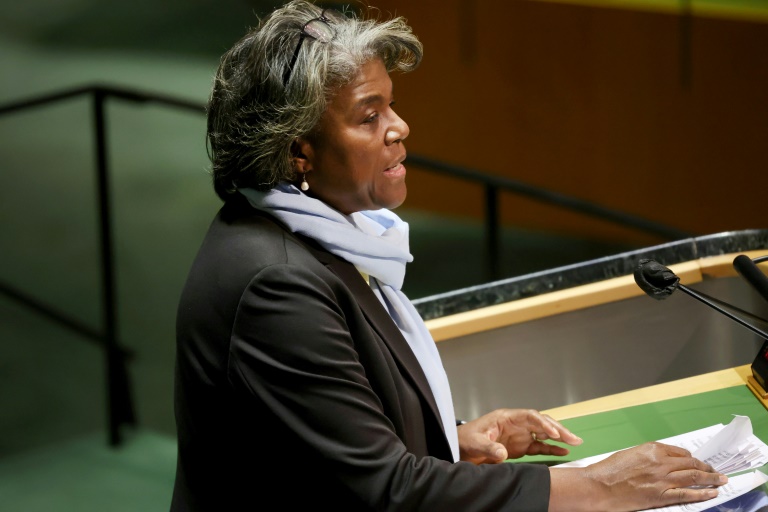
“We’re encouraging countries not to restrict exports because we think any restrictions on exports will exacerbate the food shortages,” Linda Thomas-Greenfield said during a ministerial gathering on food security ahead of a meeting of the UN Security Council.

The UN meeting — to be chaired by US Secretary of State Antony Blinken — will include Vellamvelly Muraleedharan, India’s minister of state for external affairs. 

India holds a non-permanent seat on the UN Security Council.

“We hope that (India) can, as they hear the concerns being raised by other countries, that they would reconsider that position,” Thomas-Greenfield said.

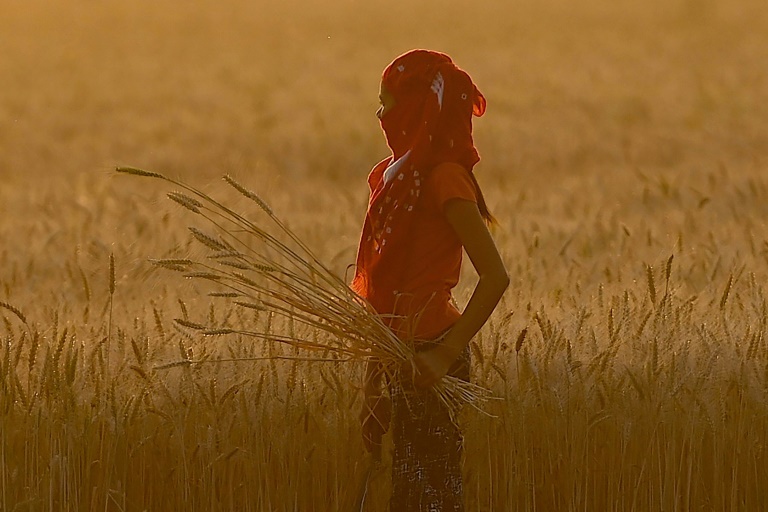
India, the world’s second-largest producer of wheat, on Saturday announced it would ban exports without special authorisation from the government in the face of falling production caused primarily by an extreme heatwave. 

New Delhi — which had previously pledged to supply wheat to countries once dependent on exports from Ukraine — said it wanted to ensure “food security” for India’s 1.4 billion people.

Blinken is on Wednesday set to hold another UN meeting also related to food security.

That session aims to “bring countries together to look at what countries might be able to help fill the gap” in wheat supplies caused by Russia’s invasion of Ukraine — two major exporters of the commodity, said Thomas-Greenfield.

The talks would also identify “countries who need the support from countries who can fill the gap,” she added.

The United States could be included in these countries, she said, adding that discussions were already underway with American farmers on the topic.

Wheat prices hit a record high in the European market Monday in the wake of India’s decision.

US urges India to reverse ban on wheat exports

The United States hopes India will reverse its ban on wheat exports, Washington’s top diplomat to the United Nations said Monday, warning the move would worsen global shortages of the commodity.

“We’re encouraging countries not to restrict exports because we think any restrictions on exports will exacerbate the food shortages,” Linda Thomas-Greenfield said during a ministerial gathering on food security ahead of a meeting of the UN Security Council.

The UN meeting — to be chaired by US Secretary of State Antony Blinken — will include Vellamvelly Muraleedharan, India’s minister of state for external affairs. 

India holds a non-permanent seat on the UN Security Council.

“We hope that (India) can, as they hear the concerns being raised by other countries, that they would reconsider that position,” Thomas-Greenfield said.

India, the world’s second-largest producer of wheat, on Saturday announced it would ban exports without special authorisation from the government in the face of falling production caused primarily by an extreme heatwave. 

New Delhi — which had previously pledged to supply wheat to countries once dependent on exports from Ukraine — said it wanted to ensure “food security” for India’s 1.4 billion people.

Blinken is on Wednesday set to hold another UN meeting also related to food security.

That session aims to “bring countries together to look at what countries might be able to help fill the gap” in wheat supplies caused by Russia’s invasion of Ukraine — two major exporters of the commodity, said Thomas-Greenfield.

The talks would also identify “countries who need the support from countries who can fill the gap,” she added.

The United States could be included in these countries, she said, adding that discussions were already underway with American farmers on the topic.

Wheat prices hit a record high in the European market Monday in the wake of India’s decision.

Waiting for the water train in scorching India

Afroz misses school every day to spend hours waiting with a handcart full of containers for a special train bringing precious water to people suffering a heatwave in India’s desert state of Rajasthan.

Temperatures often exceed 45 degrees Celsius (113 Fahrenheit) here, but this year the heat came early in what many experts say is more proof of climate change making life unbearable for India’s 1.4 billion people.

“It’s always been very hot here and we have always struggled for water,” Afroz, 13, told AFP as he waited in Pali district for the second time that day for the special train.

“But I don’t remember filling up containers in April.”

For more than three weeks now, the 40-wagon train — carrying some 2 million litres — has been the only source of water for thousands of people in the district.

– Untreated –

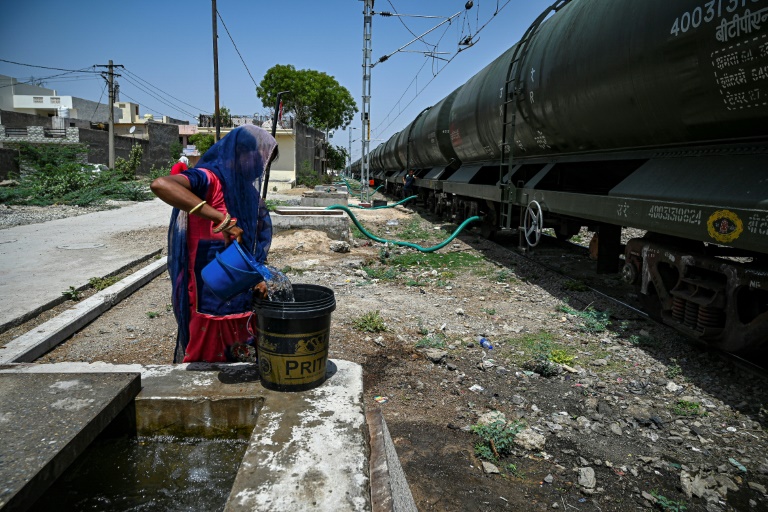
Every day, dozens of people — mostly women and children — jostle with blue plastic jerry cans and metal pots to fill from hoses gushing water out of the army-green train into an underground tank.

Water has been dispatched by train to Pali before, but according to local railway officials, the shortage this year was already critical in April so they started early.

The wagons — filled in Jodhpur, around 65 kilometres (40 miles) away — are first emptied into cement storage tanks, from which the water is sent to a treatment plant for filtering and distribution.

But for Afroz’s family and many others like them, life is easier if they fill directly from the storage tanks, despite the water being untreated.

That their children skip school at times to ensure there is water in the house is what hits the families the most.

“I can’t ask the breadwinner of the family to help me. Otherwise, we’ll be struggling for both food and water,” Afroz’s mother Noor Jahan said as she filled up an aluminium pot.

“It is affecting my child’s education, but what do I do? I cannot carry all these containers on my own,” she told AFP.

– Cracked feet –

Hundreds of millions of people in South Asia have been sweltering in an early summer heatwave in recent weeks, with India seeing its warmest March on record.

In India and Pakistan, “more intense heat waves of longer durations and occurring at a higher frequency are projected”, the Intergovernmental Panel on Climate Change (IPCC) said in a recent landmark report.

The “cascading impacts” of heatwaves on agricultural output, water, energy supplies and other sectors are already apparent, World Meteorological Organization chief Petteri Taalas said this month.

On Friday, India banned wheat exports — needed to help fill a supply gap due to the Ukraine war — in part due to the heat wilting crops.

Together, high humidity and heat can create “wet-bulb temperatures” so vicious that sweating no longer cools people down, potentially killing a healthy adult within hours.

“I have already made three trips from my house in the last one hour. And I’m the only one who can do it,” said Laxmi, another woman collecting water, pointing to cracks on her feet.

“We have no direct water to our homes and it is so hot. What are we supposed to do if something happens to us while we walk up and down to fetch water?”

– ‘Extreme depletion’ –

In 2019, Prime Minister Narendra Modi launched an ambitious Jal Jeevan (Water Life) Mission, promising a functional tap connection to all households in rural India by 2024.

But less than 50 percent of the population has access to safely managed drinking water, according to UNICEF, with two-thirds of India’s 718 districts affected by “extreme water depletion”.

A little further from Pali, 68-year-old Shivaram walked on the cracked bottom of a dried-out pond in Bandai village, his bright-pink turban protecting his head from the scorching sun.

The pond — which was the main source of water for both residents and their animals – has been dry for almost two years because of low rainfall. The shells of dead turtles litter the cracked mud.

“Farmers have been severely impacted,” Shivaram said. “Some of our animals have died too.” 

UK to unveil unilateral plans for post-Brexit trade in N.Ireland

Britain will detail Tuesday how it plans to overhaul post-Brexit trade rules in Northern Ireland which have sparked a political crisis in the province, amid fears it is risking a UK-EU trade war.

Foreign Secretary Liz Truss will “set out the rationale for our approach” in a statement to MPs in parliament, according to Prime Minister Boris Johnson’s spokesman.

The UK government is yet to confirm what that entails, but media reports have said it is planning legislation allowing London to unilaterally override some of the rules around Northern Irish trade.

London wants to rewrite the so-called Northern Ireland protocol, which it agreed as part of its 2019 divorce deal with the European Union, amid trading frictions since it came into force last year.

The arrangements, which mandate checks on goods arriving into Northern Ireland from England, Scotland and Wales, have angered the province’s unionists who claim they undermine its place within the UK.

Secretary of State for Northern Ireland Brandon Lewis said Tuesday that the protocol “doesn’t work for business, it doesn’t work for anybody in Northern Ireland”.

He told Sky News that problems should be solved “preferably by agreement with the European Union” but “we will do what we need to do to ensure that products can move to Northern Ireland in the way they should be able to… from Great Britain as part of the United Kingdom’s internal market.”

The largest pro-British party, the Democratic Unionist Party (DUP), is currently refusing to resume power-sharing in Belfast with pro-Irish rivals Sinn Fein until the protocol is reworked.

Its stance comes nearly two weeks after Sinn Fein won a historic first victory in elections for the devolved Stormont assembly, which entitle the party to the role of first minister in a joint executive with the DUP. 

– ‘Legislative solution’ –

The impasse threatens to leave Northern Ireland, which suffered three decades of sectarian conflict until a 1998 accord largely ended the violence, without a government.

Johnson is adamant the current situation risks peace and stability in Northern Ireland and that his government has the right to act if the EU refuses to meet its demands.

“We don’t want to scrap it, but we think it can be fixed,” he told reporters during a visit Monday to Northern Ireland to meet its political leaders.

Reports say the mooted draft law, which will allow UK ministers to selectively disapply parts of the protocol, may not be tabled yet and would in any case take months to progress through parliament.

That could prove insufficient to persuade unionists to resume power-sharing in Northern Ireland, with the DUP saying Monday it needed “decisive action” not “the tabling of legislation”.

– ‘Keep their word’ –

The EU, which has been in discussions for months with the UK over improving the implementation of the protocol, has insisted it cannot be renegotiated.

European leaders have warned London against taking unilateral steps, and suggested it could jeopardise their entire Brexit deal, resulting in punitive tariffs and an effective trade war.

“This is an international treaty, it’s international law, we can’t just pretend it doesn’t exist,” Ireland’s Foreign Minister Simon Coveney said Monday in Brussels.

Johnson’s government says that checks on goods heading to Northern Ireland from England, Scotland and Wales are undermining peace in the province, with unionist protests already turning violent in the past 18 months.

The separate trading arrangements, which bind the province to many European rules, were agreed because it has the UK’s only land border with the EU. 

Keeping the border open with neighbouring Ireland, an EU member, was mandated in the Good Friday Agreement, given the frontier was a frequent flashpoint for violence.

But it means checks have to be done elsewhere, to prevent goods getting into the EU single market and customs union by the back door via Northern Ireland.

The United States, which was a guarantor of the Good Friday Agreement, has expressed alarm at suggestions the UK could scrap the protocol.

Wheat-laden trucks, ships stranded at Indian port

Hundreds of thousands of tonnes of wheat were stranded at a major port in India on Tuesday after New Delhi’s surprise ban on exports over inflation and food security worries.

India, the world’s second-largest grower of wheat, last week ordered that traders could not enter into new export deals without government approval.

The snap announcement has led to chaos at the port in Kandla, in Gujarat, where about 4,000 trucks are stuck in queues outside, according to the port operator.

Four ships partially loaded with about 80,000 tonnes of wheat are also docked at the facility.

Port officials said trucks that arrived before May 13, when the government announced the export ban, would be allowed to unload the grain onto ships waiting to take it to countries including Egypt and South Korea under prior agreements.

“However, those wheat-laden trucks that arrived at the port after May 13 will have to return with the commodity,” said Om Prakash Dadlani, spokesman for operator Deendayal Port Trust.

The Gandhidham Chamber of Commerce estimated that about 400,000 tonnes of wheat from Punjab, Haryana, Madhya Pradesh and other wheat-growing states were stranded.

Between 500 and 700 warehouses near the port were “full of wheat for export”, said Teja Kangad, president of the chamber.

The government should have given prior notice before announcing the ban, he said. 

“This has led to a chaotic situation where the truckers and traders are left uncertain of what will happen to the goods. Also, wheat being a perishable commodity, it can’t be kept in the open for long,” Kangad told AFP.

The wheat ban has drawn criticism from the Group of Seven nations worried about protectionism as inflation soars in the wake of the Ukraine war.

India had previously said it was ready to help fill some of the supply shortages caused by Russia’s February invasion of Ukraine, which had accounted for 12 percent of global exports.

While India is a small exporter, its assurances of supplies from its large buffer stocks had provided some support to global prices and soothed fears of major shortages. 

India’s wheat production has been hit by searing temperatures — the country recorded its warmest March on record — prompting the government to predict output would fall at least five percent this year from 109 million tonnes in 2021.  

Wheat prices surged to a record high on Monday, jumping to 435 euros ($453) per tonne as the European market opened.

Thailand's economy rebounds after Covid battering

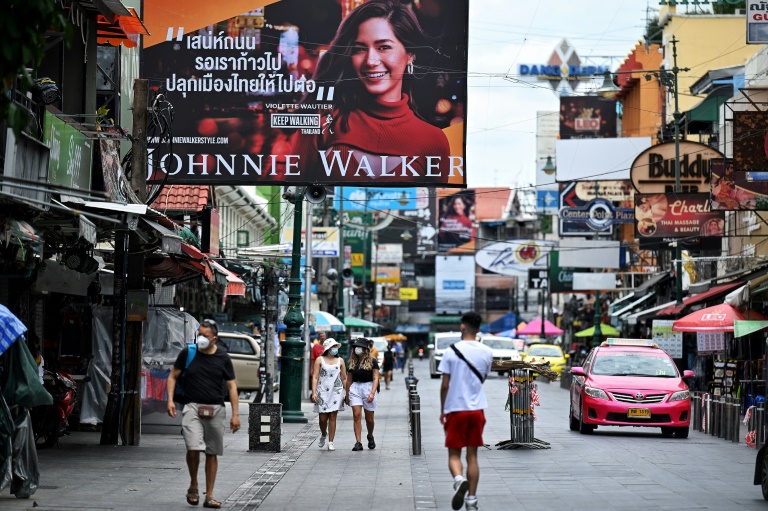
Thailand’s economy grew 2.2 percent in the first quarter as exports and tourism rebounded after the relaxation of pandemic restrictions, the country’s main economic agency said Tuesday.

During the pandemic, Southeast Asia’s second-largest economy suffered its worst economic performance since the 1997 Asian financial crisis, with visitor numbers crashing from roughly 40 million annually.

But this month the tourism-dependent kingdom dropped almost all restrictions for fully vaccinated visitors, including the need for Covid-19 tests to travel.

“The export sector is good… the tourism industry is getting better due to the relaxation of entry requirements for tourists,” National Economic and Social Development Council secretary general Danucha Pichayanan said.

The agency said the economy grew by 2.2 percent in January to March compared with the same period last year, and by 1.1 percent compared with the previous quarter.

The figures are a stark turnaround from the depths of the pandemic, which saw the economy contract by 6.1 percent in 2020.

The agency said global market volatility from Russia’s invasion of Ukraine, and a slowdown in China’s economy thanks to virus lockdowns across various cities, were affecting the pace of the kingdom’s economic recovery.

Ukraine is a key exporter of fertiliser and the war has reduced supply in Thailand.

The Thai government has sought to ease the shortage by sourcing fertiliser from Saudi Arabia.

The agency also raised its inflation forecasts this year to between 4.2-5.2 percent, up from the earlier range of 1.5-2.5 percent.

Danucha attributed the inflation increase to rising energy prices.

The country has a weekly average of more than 6,500 daily new coronavirus infections, although testing is limited.

Close Bitnami banner
Bitnami