World

Chile redeploys army to restive southern region

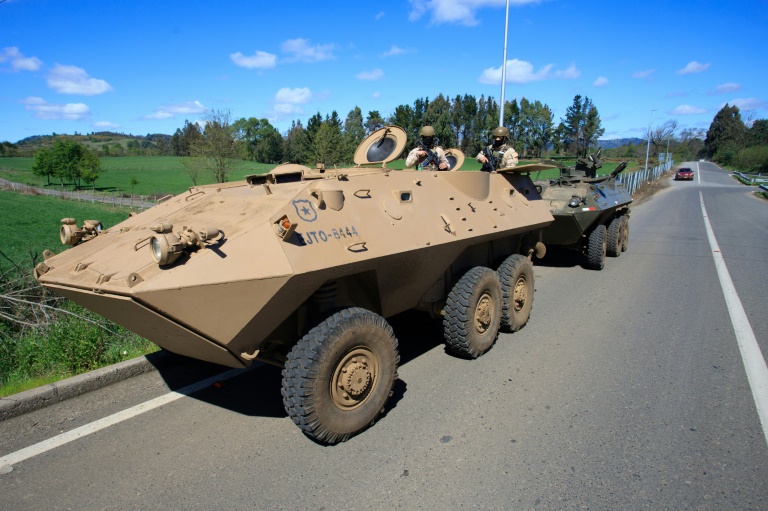
Chile ordered the redeployment of its military to the Araucania region in the south of the country Monday, in the face of mounting violence linked to territorial claims by the Mapuche indigenous group.

“We have decided to use all tools to guarantee security,” said interior minister Izkia Siches after announcing the move.

Soldiers were deployed to Araucania and to towns in the neighboring Biobio region in October last year on the orders of conservative then-president Sebastian Pinera.

New leader Gabriel Boric promised to withdraw the soldiers while campaigning for the presidency earlier this year and the process began on March 27.

But after attempting in vain to win approval from Congress for an “intermediate” deployment — and in the face of a surge in arson — he was forced to reimpose emergency measures.

Siches said the government would pursue a policy of dialogue with the Mapuche community and continue its land purchases in the area while maintaining the state of emergency.

Some communities in southern Chile have for decades demanded the return of lands they argue belong to them by virtue of ancestral rights — lands which are mainly held by forestry companies and farmers.

Radical indigenous groups have claimed responsibility for some attacks in the area, though there are also reports of vigilante groups dedicated to lumber theft and petty crime operating in the region.

Young, poor and from minorities: the Russian troops killed in Ukraine

The bulk of the thousands of Russian soldiers killed in Moscow’s onslaught against Ukraine are very young, have poor backgrounds and many are from ethnic minority groups, observers say.

There has been close attention on the numbers of Russian generals and high-ranking officers killed since the invasion launched by President Vladimir Putin on February 24, which has proved far more costly than the Kremlin wished.

But with observers believing the Russian toll could now be exceeding the 15,000 Soviet soldiers killed during the 1979-1989 occupation of Afghanistan, the losses among Russian rank-and-file soldiers have been devastating.

Russia has been remarkably tight-lipped on the number of its soldiers killed, giving a toll of 498 soldiers killed on March 2 and updating this to 1,351 on March 25, with no more information since.

Ukraine puts the toll of Russian soldiers at 27,000 and while most Western sources find this high, they also give figures many times higher than the Russian estimates.

“Russia has now likely suffered losses of one third of the ground combat force it committed in February,” the British defence ministry said Sunday, indicating that some 50,000 Russian soldiers had been killed or wounded.

In a rare nod to the potential significance of the losses, though without going into any numbers, Putin paid tribute to those killed at Russia’s Victory Day commemorations on May 9.

“We bow in front of our comrades in arms who died courageously in a just fight, for Russia. The death of every soldier and officer is a cause of grief for us and an irreplaceable loss for loved ones,” he said, announcing a package of measures to help the families of those wounded or killed.

– ‘Remember them’ –

The Russian-language website Mediazona said it had been able to confirm the deaths of 2,099 Russian soldiers in action up to May 6 from open sources alone.

It said that the largest proportion of those killed where age was mentioned was among 21- to 23-year-olds, and 74 had not even reached the age of 20.

A regional breakdown showed most of the dead came from the south of Russia, including the mainly Muslim Northern Caucasus region, as well as central Siberia. 

Only a handful of deaths were recorded of soldiers from Moscow and the second-largest city, Saint Petersburg, which are considerably more affluent than the rest of Russia.

The largest numbers of confirmed deaths (135) were of soldiers from the Muslim Northern Caucasus region of Dagestan followed by Buryatia, home to the Mongol Buryat ethnic group, in Siberia (98).

“The largest number of soldiers and officers within the ground troops comes from the small towns and villages of Russia. It is related to socio-economic and, consequently, educational stratification,” Pavel Luzin, a commentator for the Riddle Russia online news site, told AFP.

“The requirements for military service in the ground troops are relatively low, and the best and educated soldiers and future officers go to other branches of the Russian armed forces like air and space forces, strategic rocket forces and navy,” he added.

Local media and Telegram channels in Dagestan, which for years battled an Islamist insurgency and is one of Russia’s poorest regions, have been filled with images of grieving relatives receiving condolences from state officials.

In one example, Kamil Iziiev, head of the Buynaksky district of Dagestan, on May 6 posted a video on his Telegram channel showing him giving posthumous state awards to families of five inhabitants of Dagestan killed in the war, accepted by wives and mothers wearing the Muslim headscarf.

“You have to live on as mothers of children whose fathers heroically gave up their lives. Dear relatives, I ask you to remember that a person is alive so long as they are remembered. So let’s remember these guys,” he said.

The very first Russian soldier officially confirmed by Moscow to have been killed was Nurmagomed Gadzhimagomedov, a young Dagestani who state media said died while saving fellow troops. He was posthumously decorated by Putin with the Hero of Russia award on March 4.

His death prompted Putin to publicly pay tribute to the role played by non-Russian ethnic groups in Moscow’s assault, saying he was “proud of being part of this world, this powerful, strong and multinational people of Russia.”

– ‘Hidden resistance’ –

The Soviet invasion of Afghanistan sparked a national trauma –- chronicled in Nobel prize-winning author Svetlana Alexievich’s harrowing oral history “Boys in Zinc,” named after the lining of the coffins in which the young soldiers came back –- and contributed to the collapse of the USSR.

The draconian censorship measures imposed by Moscow in the Ukraine conflict –- which mean that what the Kremlin terms a “special military operation” cannot even be called a war in Russia –- have kept dissent to a minimum, with few daring to express alarm over the losses.

A rare voice has been that of Natalia Poklonskaya, a former prosecutor in the Ukrainian peninsula of Crimea who became a Russian MP and Russian official after the annexation.

Taking issue with the use of the letter ‘Z’ by the Russian authorities as a propaganda image, she said it “symbolised a tragedy for both Russia and Ukraine. Why? Because Russian soldiers are being killed.”

Luzin said the lack of open signs of protest in provincial Russia and ethnic minority regions over the losses did not mean that there would be no reaction in the future.

“But their reaction will not be an open resistance but a hidden one — they will start to avoid conscription and contract military service,” he said.

Japan to trial group tours in move to ease Covid border rules

Japan will trial small group tours with travellers from the US, Australia, Thailand and Singapore from this month, the government said on Tuesday, as it experiments with easing strict Covid border rules.

The country’s borders have been closed to almost all arrivals since the spring of 2020 in response to the coronavirus pandemic. 

Authorities only recently began allowing some students and business visitors to enter.

There are no plans to lift border restrictions fully, as other countries have done, with the trial involving only tourists from the four countries who join package tours with predetermined itineraries, according to the Japan Tourism Agency.

“Japanese travel companies will organise the tours and local guides will accompany them,” an agency official told AFP.

Participants will have to be triple-vaccinated against Covid and have private medical insurance.

There will be no change to the current testing requirements for entering Japan, with visitors having to submit a negative Covid test taken 72 hours before departure and to test again upon arrival.

The agency is currently discussing the plan with regions that are expected to be of interest to foreign tourists, the official said. 

How many tourists will be able to join each tour is yet to be decided.

The trial was initially planned late last year, but was put on hold when the Omicron variant spread. 

Japanese Prime Minister Fumio Kishida has said he wants to ease border control measures, but moves are expected to proceed slowly, with strong public support for the current restrictions.

A daily cap on people entering the country will reportedly be doubled to 20,000 next month, though the tour groups are not expected to be counted in the figure, local media said.

Japan welcomed a record 31.9 million foreign visitors in 2019 and had been on track to achieve its goal of 40 million in 2020 before the pandemic hit.

China's zero-Covid policy to hit Asia aviation recovery: IATA

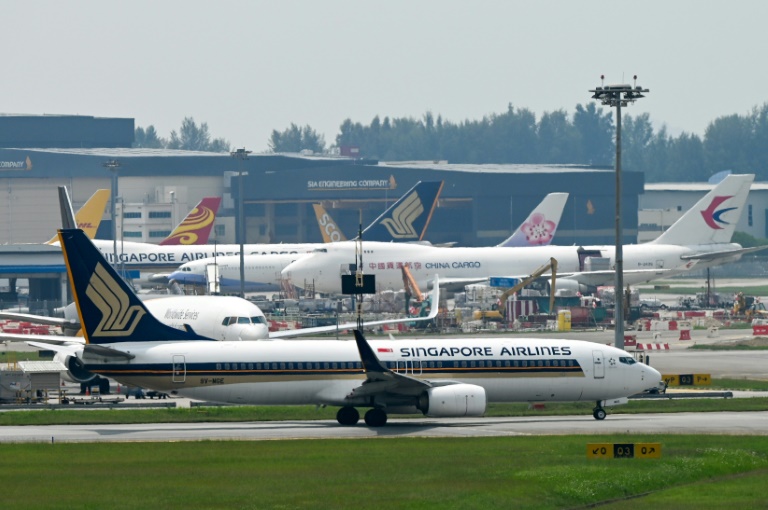
China’s zero-Covid policy will hold back a full air travel recovery in the Asia-Pacific region, a top airline industry group warned Tuesday, adding to calls for Beijing to ease its hardline stance.

The world’s second-biggest economy is seeking to stamp out the coronavirus entirely, with rapid lockdowns and mass testing, and the measures have hammered both domestic and international air travel.

The aviation sector’s recovery in Asia was already relatively slow, and Willie Walsh, the International Air Transport Association (IATA) chief, warned Beijing’s approach made the picture bleaker.

“It has been a brutal two years for airlines. But we are seeing signs of recovery now,” he told an aviation conference in Singapore.

“Unfortunately, (the) Asia-Pacific region will lag this recovery as China continues to pursue zero-Covid.”

In 2021 in Asia, international travel was only seven percent of what it was in 2019, compared with a worldwide figure of 25 percent, he said. 

While the picture had improved at the start of this year, there was still a “long way to go”, he added.

China’s decision to stick with zero-Covid has put it at odds with many Asian governments, which have started reopening borders and dropping quarantine and testing requirements in recent months.

“The science supports these initiatives,” Walsh told the Changi Aviation Summit, attended by top industry officials. 

IATA is “convinced that this science supports the removal of testing and quarantine for unvaccinated travellers from areas of high population immunity, including many parts of this region,” he said.

China, the last major economy still closed off to the world, is facing mounting calls to drop the zero-Covid policy which has left millions in Shanghai locked down for weeks. 

Last week, the World Health Organization said the approach was unsustainable. 

Indian insurance giant slumps after country's biggest-ever IPO

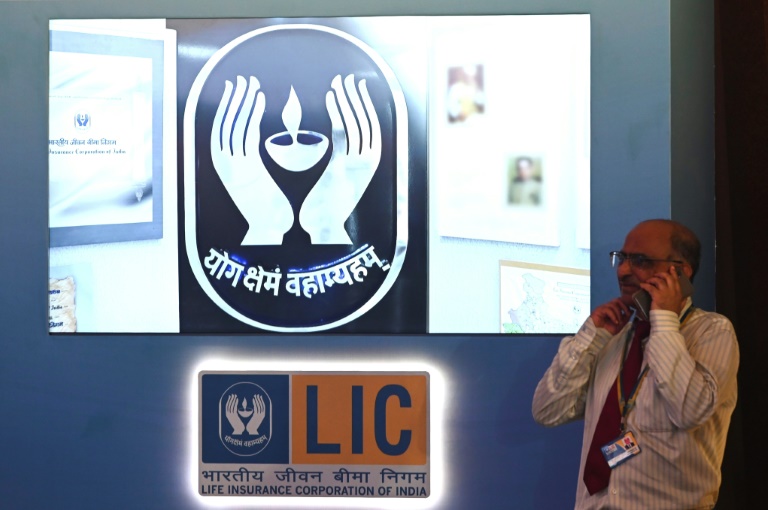
Indian state-owned insurance giant LIC slumped on its market debut Tuesday following the country’s biggest-ever initial public offering, opening seven percent below the offer price.

Prime Minister Narendra Modi’s government raised $2.7 billion by selling 3.5 percent of Life Insurance Corporation of India as his administration seeks to privatise state assets to plug a gaping budget deficit. 

But it was forced to cut back the offer from a planned five percent after markets turned volatile following Russia’s invasion of Ukraine and China’s Covid lockdowns.

The offer price of 949 rupees had valued LIC at $77 billion, but it opened Tuesday on Mumbai’s exchange trading seven percent lower. The share price dropped to 9.4 percent down, before recovering slightly.

The muted debut could test the appetite of new shareholders for further flotations of nationalised companies as Modi seeks to sell off state assets to plug an estimated 16.6 trillion rupee ($213.5 billion) fiscal deficit.

The IPO saw enthusiastic participation from small investors and was oversubscribed nearly three times during the six-day application period.

But foreign investors have withdrawn a net 1.71 trillion rupees ($22 billion) from Indian equities so far this year, stock exchange data showed, as the US monetary policy tightening further roiled sentiment.

– Synonymous with life insurance –

Founded in 1956 by nationalising and combining more than 240 firms, LIC was for decades synonymous with life insurance in post-independence India, until the entry of private companies in 2000.

It continues to lead the pack with a 61 percent share of the market in India, with its army of 1.3 million “LIC agents” giving it huge reach, particularly in remote rural areas.

But LIC’s market share has declined steadily in the face of competition from net-savvy private insurers offering specialised products.

The firm warned in its regulatory filing that “there can be no assurance that our corporation will not lose further market share” to private companies.

The IPO followed a years-long effort by bankers and bureaucrats to appraise the mammoth insurer and prepare it for listing.

LIC is also India’s largest asset manager, with 39.55 trillion rupees under management as of September 30, including significant stakes in Indian blue chips such as Reliance and Infosys.

LIC’s real estate assets include vast offices at prime urban Indian locations, including a 15-storey office in Chennai that was once the country’s tallest building.

The firm is also believed to own a large collection of rare and valuable artwork that includes paintings by MF Husain — known as the Pablo Picasso of India — although the value of these holdings has not been made public.

Rescue mission under way at Azovstal as hundreds evacuated

Ukrainian authorities said a rescue mission to extract the last defenders of the Azovstal steelworks in Mariupol was under way on Tuesday, after hundreds of soldiers were evacuated in an earlier operation.

The factory complex had become a symbol of resistance, with around 600 soldiers holed up in underground tunnels and bunkers fighting a rear-guard battle to prevent Russian troops taking full control of the strategically located port city.

On Monday more than 260 fighters were evacuated through humanitarian corridors to areas under Russian and Moscow-backed separatists’ control, with Ukraine’s defence ministry saying a further “exchange procedure” would take place later.

“As for the defenders who still remain on the territory of Azovstal, all necessary rescue measures are being taken by our state,” the ministry said in a Telegram message. 

“Thanks to the defenders of Mariupol, Ukraine received vital time to accumulate reserves, regroup and mobilise forces and receive assistance from allies,” it added.

The Ukrainian army said in a Facebook statement that holding the steelworks had delayed the transfer of 20,000 Russian troops to other parts of Ukraine, and stopped Moscow from quickly capturing the southern city of Zaporizhzhia.

Despite the resources of its giant neighbour, Ukraine has managed to repel the Russian army for longer than many expected, fortified by weapons and cash from Western allies.

The latest example of this came Monday, when Ukraine’s defence ministry announced its troops had regained control of territory on the Russian border near the country’s second-largest city of Kharkiv.

The area has been under constant attack, and Kyiv’s gains have come at a high cost, with villages gutted and destroyed by bombs.

Trembling, Rostislav Stepanenko struggled to light a cigarette as he recounted to AFP how he survived shelling in his village, caught in the firing line between Russian and Ukrainian forces just north of Kharkiv.

He had gone back to collect some belongings but returned empty-handed and stunned by the incessant artillery fire.

The 53-year-old joked that his profession was “trying to stay alive”.

– ‘Shelling without stopping’ –

Ukrainian officials say that Russian troops are withdrawing from around Kharkiv and being transferred to Donbas, an eastern area near the Russian border which has become Moscow’s new military focus.

“The armed forces of Ukraine are repelling constant attacks in those areas where Russia is still trying to advance,” President Volodymyr Zelensky said in his nightly address.

“Severodonetsk and other cities in Donbas remain the main targets for the occupiers.”

Taking Severodonetsk, the easternmost city held by Ukraine, would grant the Kremlin de facto control of Lugansk, one of two regions — along with Donetsk — that comprise Donbas.

Lugansk governor Sergiy Gaiday has said Russian troops were striking the city “without stopping”, and early Tuesday he said two buildings of the city’s general hospital had been hit overnight.

“We have ten dead and three wounded in the region,” he wrote on Telegram. 

Severodonetsk’s mayor has said the city is almost surrounded by Russian troops and pro-Kremlin separatists. 

But Russia’s attempt to completely encircle it has been repelled with heavy equipment losses, while Russian-occupied railway bridges were blown up, Ukrainian officials said.

Russian shelling continued across the whole country overnight, with air sirens heard throughout Ukraine in the early hours of Tuesday.

In the western city of Lviv, an official from the Regional Military Administration said a military infrastructure facility “almost on the border with Poland” had been hit.

The army’s southern operational command said Odessa and Mykolaiv had been struck, and that there had been victims in both cities. 

In a Facebook post, it accused Russian forces of using indiscriminate cluster munitions in the centre of Mykolaiv. 

– NATO ‘no direct threat’ –

With Moscow showing no sign of relenting nearly three months into its invasion, Finland and Sweden are poised to give up decades of military non-alignment by joining the NATO military alliance. 

Russian President Vladimir Putin said the move poses “no direct threat for us… but the expansion of military infrastructure to these territories will certainly provoke our response.” 

Putin’s reaction was more moderate than comments earlier Monday from deputy foreign minister Sergei Ryabkov, who had called the expansion a “grave mistake with far-reaching consequences”. 

The move is not a done deal in any case, with Turkish President Recep Tayyip Erdogan on Monday confirming his country’s intention to block the applications, accusing Finland and Sweden of harbouring terror groups, including outlawed Kurdish militants.

Any membership bid must be unanimously approved by NATO’s 30 nations.

But US Secretary of State Antony Blinken voiced confidence Sunday that Sweden and Finland would join NATO despite Turkey’s opposition.

Turkish Foreign Minister Mevlut Cavusoglu will meet Blinken in Washington on Wednesday, where Ankara’s objections are expected to figure high on the agenda.

– ‘Time is running out’ –

European Union foreign ministers met Monday to discuss their own attempt to up the pressure on Russia by imposing unprecedented economic sanctions, including a ban on Russian oil. 

The proposal has so far been blocked by Hungary over the cost.

“We are unhappy with the fact that the oil embargo is not there,” Ukraine’s top diplomat Dmytro Kuleba said afterwards.

“It’s clear who’s holding up the issue. But time is running out because every day Russia keeps making money and investing this money into the war.”

The war meanwhile is taking its toll on the continent’s growth. The European Commission sharply cut its eurozone forecast for 2022 to 2.7 percent, blaming skyrocketing energy prices.

Separately, French automaker Renault has handed over its Russian assets to Moscow, while US fast food giant McDonald’s announced it would be pulling out, citing the “humanitarian crisis caused by the war”.

Shanghai says 'zero-Covid' achieved but millions still in lockdown

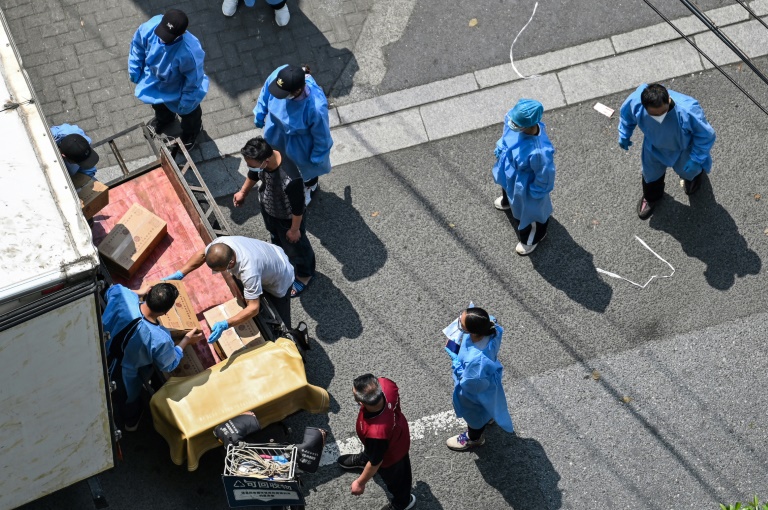
Shanghai on Tuesday declared it had achieved “zero-Covid” across all its districts, sparking derision on social media as millions in China’s biggest city remained under lockdown.

Confronted with its worst outbreak since the beginning of the pandemic, China — the last major economy still closed off to the world — put the city of 25 million under heavy restrictions in early April.

The government’s insistence on squashing the Omicron variant-driven outbreak prompted rare protests and angry scuffles with authorities as Shanghai residents reject the prolonged confinement and food shortages.

“All 16 districts of Shanghai have already achieved zero-Covid at the community level,” Shanghai health commission official Zhao Dandan told reporters on Tuesday.

That means none of the over 1,000 new infections recorded on Tuesday was detected outside of quarantined areas, city authorities said.

Vice mayor Chen Tong said Sunday that the city would gradually reopen businesses starting this week, without giving specifics.

But millions in Shanghai were still unable to leave their residential compounds on Tuesday.

More than 3.8 million people officially were still under the strictest forms of lockdown in the city, according to official figures.

China’s strategy to achieve zero Covid cases includes strict border closures, length quarantines, mass testing and rapid, targeted lockdowns.

Social media erupted in disbelief at the gap between official statements and the reality of life under an enduring lockdown.

“Since society has reached Covid-zero, why are people in Songjiang district still only allowed to go out once every two days?” a blogger on the Twitter-like Weibo asked.

“Is this a parallel universe Shanghai?” asked another.

In some areas of the city, restrictions have even been quietly tightened in recent days. 

Live video broadcast Tuesday by Chinese media showed crowds gathering at Shanghai’s Hongqiao Railway Station as train services leaving the city resumed.

People are only allowed to leave Shanghai after receiving permission and taking multiple Covid tests.

China has shown no sign of giving up its protracted struggle to maintain zero Covid cases, despite the mounting economic costs of miserable retail, house and car sales and climbing unemployment.

Beijing is mass testing residents almost every day after a surge in cases — counted in the dozens each day but still enough to prompt tight restrictions on movement and association.

Millions of people in the capital have been ordered to work from home and transport services have been suspended as people feared a repeat of Shanghai’s lockdown chaos.

Fear and hope under fire in Ukrainian village near Russian border

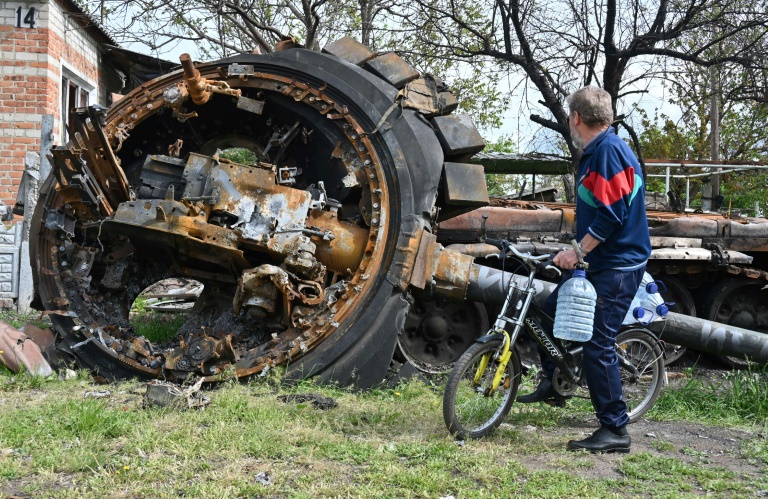
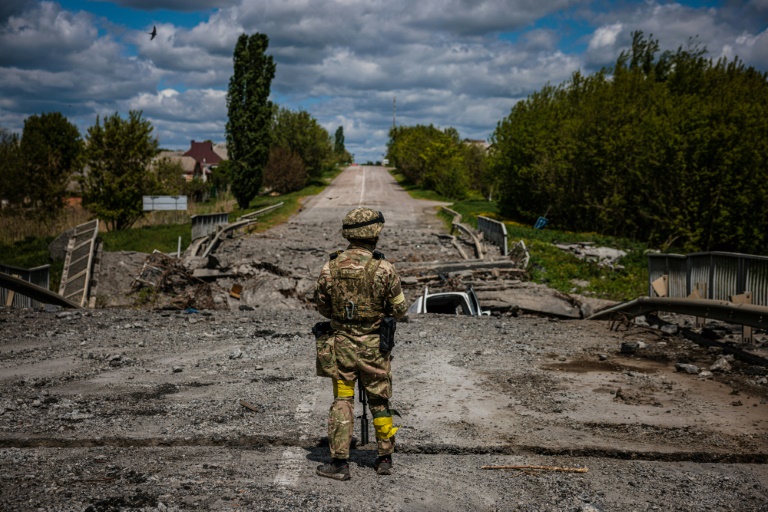
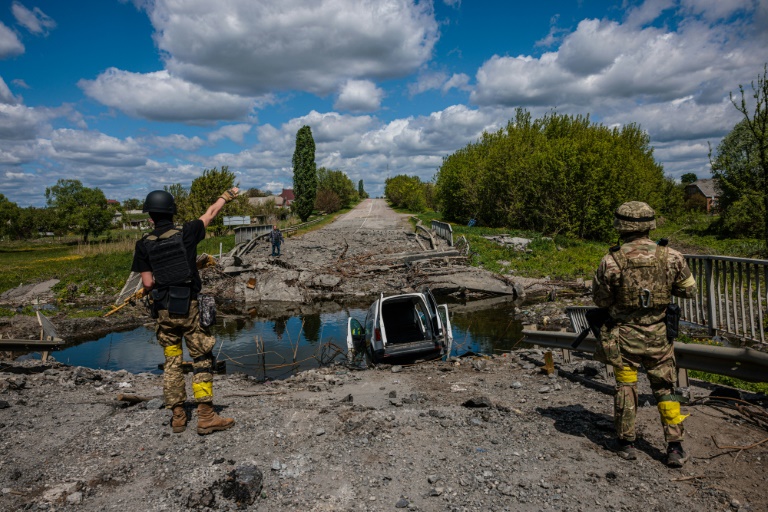
Waving his arms in a state of agitation, a man asks Ukrainian soldiers if he can safely cross the remains of a destroyed bridge in the village of Ruska Lozova near the Russian border.

The village, about 18 kilometres (11 miles) from the frontier and just north of Ukraine’s second city Kharkiv, was recaptured by Kyiv’s forces in late April after being under Russian control for two months.

Trembling, Rostislav Stepanenko struggles to light a cigarette as he recounts how he survived devastating shelling in his village a few kilometres away, caught in the firing line between Russian and Ukrainian forces.

He had gone back to collect some belongings but returned empty-handed and stunned by the incessant artillery fire.

He said a shell struck a neighbour’s house and blew out his home’s windows.

“I did not care if I would be killed on the way (back) or in my house,” he said, so he decided to risk the journey out.

The 53-year-old joked that his profession was “trying to stay alive”.

“Hopefully, I will be 54, but today I wouldn’t expect that,” he said with a nervous smile.

Exchanges of intense artillery fire can be heard from Ruska Lozova and reverberate through people’s bodies.

An occasional shell falls a stone’s throw from the village, which has already suffered substantial damage, with homes gutted and trees destroyed by the bombs.

Nicolai, 69, said he had a narrow escape during an attack a few days ago.

“I was cutting the grass in the backyard when the missile hit my house and the car,” he said, his gold teeth glinting.

His 90-year-old mother refused to leave the village and convinced him to stay with her.

A neighbour still delivers them food and they have enough supplies of canned meat and potatoes to get them through the bombardment that has now lasted more than two weeks.

“I just want the peaceful sky above my head — and my children to live in a free world.”

– ‘Everything is destroyed –

A green 4X4 full of soldiers races down one of the village’s dirt roads. A few minutes later, a civilian SUV leads a troop transport vehicle towards the “contact zone” a few hundred metres away.

The Ukrainian forces seem to be taking advantage of a Russian pullback from the area as Moscow transfers troops from Kharkiv to the eastern Lugansk region.

Ukraine has said it has retaken control of part of its border area with Russia. The defence ministry published a video showing armed soldiers by a border post painted in the blue and yellow colours of Ukraine.

On a road near Ruska Lozova, a sign points towards Belgorod, a Russian city about 50 kilometres away.

Sergiy, a young soldier whose first name has been changed, said he would push the Ukrainian counter-offensive to Russia “with pleasure”.

But the little soft toy with large blue eyes he wears on his bulletproof vest is not only to bring good luck.

“It’s a gift from my ex-girlfriend. I put it on so they will be able to recognise me if I get blown up,” he explained with a morbid chuckle.

In peaceful times, Moscow holidaymakers would travel this road to spend their summers on the Black Sea beaches of Crimea.

Now, a retired couple who had taken refuge in Kharkiv drove back to the village to search their house for “linen and clothing to change, documents, we forgot to take the documents last time”.

“It is scary to see, the village was beautiful… and now everything is destroyed,” said Semion, 70. “People have also died.”

“Nobody was expecting that the war would start. I saw that he (Vladimir Putin) was abnormal 10 years ago. He is not human, I think. How could civilians be killed like that?” he said, mimicking machinegun fire.

“Even if we are elders, we are ready to take up arms and protect the village.”

Spain, Morocco reopen land borders after two-year closure

Morocco and Spain have reopened the land borders between the north African country and the Spanish enclaves of Ceuta and Melilla, two years after they were shut due to Covid restrictions and a major diplomatic row.

The enclaves on the Mediterranean coast in northern Morocco have the European Union’s only land borders with Africa.

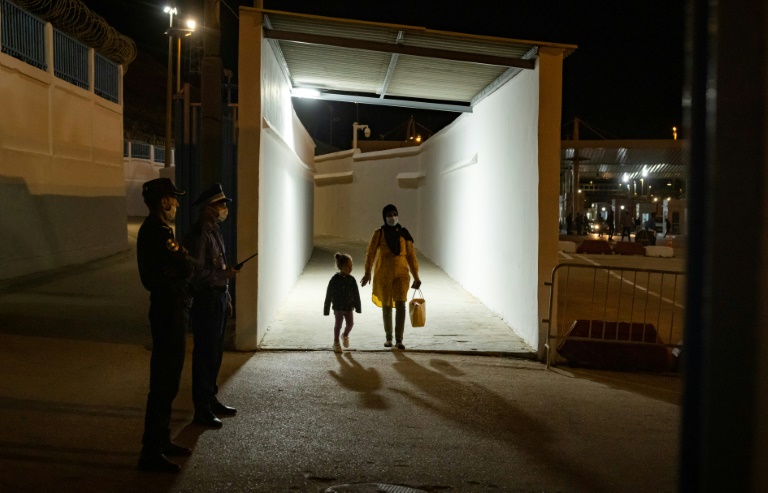
The gates opened shortly after 11:00 pm local time (2200 GMT) on Monday night, letting dozens of cars and queues of pedestrians pass in both directions.

At the Fnideq border post, smiles lit up the faces of the travellers crossing to see their families on the Moroccan side.

“I was stuck for two years in Ceuta, I’m very happy to be back home,” said Nourredine.

“I am happy that Morocco and Spain have restored their relations, it allows us to see our families,” said one man in his sixties.

The reopening of the borders of the two enclaves initially remains limited to residents of Europe’s open-borders Schengen area and their family members.

It will be expanded to cross-border workers after May 31.

The local economies on both sides of the borders depend on the crossing of people and goods.

The Ceuta and Melilla crossings were closed during the first wave of the coronavirus pandemic in March 2020.

The borders became the focus of a major dispute last year, when Madrid allowed the leader of a Western Saharan independence movement to be treated for Covid-19 in a Spanish hospital.

Ten thousand migrants surged across the Moroccan border into Ceuta as local border forces looked the other way, a move widely seen as a punitive gesture by Rabat. 

In March this year, Spain moved to end the diplomatic crisis with Morocco by changing its decades-long stance of neutrality and backing the kingdom’s autonomy plan for the Western Sahara, which Rabat insists must remain under its sovereignty.

Maritime travel between the two countries resumed on April 12.

Following their reconciliation, Morocco and Spain have committed to strengthening cooperation on irregular migration.

Morocco, which is one of Spain’s major trade partners, plays a significant role in controlling flows of migrants towards Europe. 

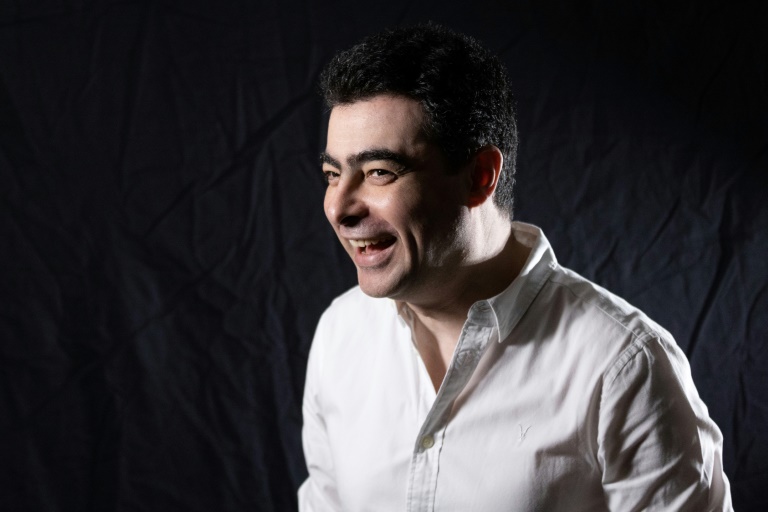
Egypt composer's star rises with 'Moon Knight' fame

For nearly 30 years, his music has made its way to every young Egyptian’s ringtone — but it’s the country’s ancient history that recently propelled composer Hesham Nazih to the realm of superheroes.

Following his career-defining score for the Pharaohs’ Golden Parade last year — a grandiose spectacle that saw 22 mummies transferred across Cairo to a new museum — Nazih was tapped to write the music for Marvel Studios’ latest series, “Moon Knight”.

The six-episode saga starring Oscar Isaac tells the story of a superhero who draws his powers from an ancient Egyptian god.

“Ancient Egyptian civilisation is extremely appealing for any composer, whether Egyptian or not,” the 50-year-old composer told AFP from his studio in Cairo.

But while drawing inspiration from ancient heritage was “not an artistic goal” in and of itself for the musician, it has allowed him to realise his dream of transcending national boundaries.

– Drawing on heritage –

In April 2021, all eyes were on the globally streamed procession of mummies through the capital, when Egyptian soprano Amira Selim, clad in a full-length gown adorned with Pharaonic motifs, took the stage with a haunting performance of the Hymn of Isis.

The ode, the lyrics to which were taken from texts in the “Book of the Dead”, was sung in phonetic ancient Egyptian and featured an arrangement of traditional folk instruments along with a classical orchestra, cementing the composer’s genre-shattering prowess.

The result was a media fervour that took Nazih himself by surprise, with the piece being shared widely both in Egypt and abroad.

“The audience’s reaction was very moving,” he told AFP, adding that the parade “holds a special place in my heart” as it showcased the talents of Egyptian artists.

Riding the ancient Egypt high, the virtuoso was selected to compose the score for Marvel’s Moon Knight, marking his first foray into Hollywood.

Helmed by Egyptian director Mohamed Diab, the series has proven massively popular among his compatriots — despite there being no way to legally stream the show there yet — due in no small part to Diab’s insistence on the production being an Egyptian affair.

In addition to a cast and crew that brings together the likes of Egyptian-Palestinian actress May Calamawy and Egyptian editor Ahmed Hafez, the series soundtrack has been peppered with popular Arabic songs, ranging from golden-era classics to modern electro street music known as mahraganat.

“I’m still processing all of it. Moon Knight is a whole other level for me,” the composer said. “I was seeing reactions from so many different audiences and cultures.”

But Nazih’s latest experimentations with ancient Egypt weren’t the first time he has drawn from Egyptian heritage.

For the 2014 thriller series “The Seven Commandments”, Nazih wove in spiritual Sufi chants, to massive success. The soundtrack was a hit on social media, achieving a long-held dream for the musician.

When he was nine, he explained, he stopped halfway down a street in Alexandria to watch a Sufi ritual in a small mosque, and was haunted by the “majesty” of the scene.

Decades later, he was finally able to channel it into a composition.

– No formal training –

“Music doesn’t communicate information, it’s pure emotion,” according to Nazih, and it was emotion that took him from a career as an engineer to creating more than 40 soundtracks for film and TV over the past three decades.

Having first felt the impact of a great score as a child, he has been chasing that high ever since. “I knew then that I wanted to go into this field, to make people feel what I felt,” he said.

His music has defined famous films including 2003’s “Sahar El Layali” (“Sleepless Nights” in Arabic), which was almost tipped as Egypt’s submission for an Academy Award for the Best Foreign Language Film that year.

In 2019, Nazih scored “Al-Fil al-Azraq 2” (“The Blue Elephant 2”), Egyptian cinema’s highest ever grossing film, earning 100 million pounds ($5.4 million).

Over his career, he says he has seen the once-stringent boundaries between music and film begin to dissolve.

“Film composers aren’t recognised as true filmmakers by directors because they’re musicians, but they’re not recognised as musicians by their peers because they belong to the world of cinema,” he said.

But things might be changing. In 2018, Nazih was the first musician to receive the Faten Hamama prize at the Cairo International Film Festival, which is awarded to renowned figures in cinema, but had previously only ever gone to directors and actors.

Three years later, he was also recognised in the musical world, winning a lifetime achievement award at the Cairo Opera House Arabic Music Festival.

Close Bitnami banner
Bitnami