World

Sudan sanctuary offers haven for exotic birds

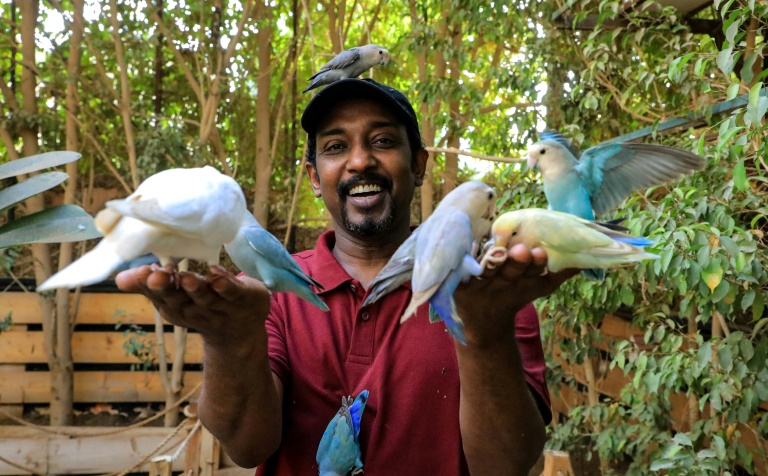
Tucked away east of Sudan’s capital Khartoum, a sanctuary of lush green vegetation has been a haven for dozens of exotic birds from far and wide.

“I have a passion for birds,” said Akram Yehia, owner of the Marshall Nature Reserve which covers 400 square metres (4,300 square feet).

“I wanted to create an ideal environment that simulates their natural habitat.”

Yehia, 45, set up the huge caged aviary in his house’s front yard four years ago, and has handcrafted dozens of birdhouses.

He created a habitat of trees, adding a garden pond and mist nozzles for cooling off against Sudan’s scorching heat.

Over 100 birds of 13 different species currently inhabit the reserve.

Ring-necked parakeet, rosella birds, as well as Meyers and red-rumped parrots flit across branches and compete over birdhouses in the reserve.

“I have trained and tamed them over the years so they won’t attack each another,” he said. 

Yehia says his favourite is an African grey parrot who answers to the name “Kuku” and has a knack for mimicking human sounds and movements as well.

Sudanese and foreign visitors are allowed to drop in for two to three hours a day only.

“It’s only limited time so we don’t disturb their habitat,” said Yehia. 

Business, however, has been impacted since an October military coup that has triggered regular mass protests met by a violent crackdown. 

Visits often get called off on protest days as streets are blocked, making it hard to move around the capital. 

“The tear gas fired during the protests is very dangerous for the birds,” Yehia said.

“I know people living closer to large protest sites and who’ve lost all the birds they own.” 

Yehia has also been grappling with increasing expenses in Sudan, where the local currency has plummeted against the dollar, and food and fuel prices have soared.

“I want to expand the reserve but it’s very expensive now,” he said. 

To visitors, the reserve is a welcome break from the hustle and bustle of Khartoum.

“I never knew that such a place exists in Khartoum,” said Anna Shcherbakova, a visitor from Ukraine. 

A local visitor, Hossameddine Sidahmed, said he hopes the reserve expands and grows “even more beautiful”.
Asian stocks up after Wall Street dip on China's Covid-bruised data

Asian stocks rose Tuesday despite a lukewarm lead from Wall Street after weak Chinese economic data showed the deep cuts of Beijing’s zero-Covid policy and added to inflation worries.

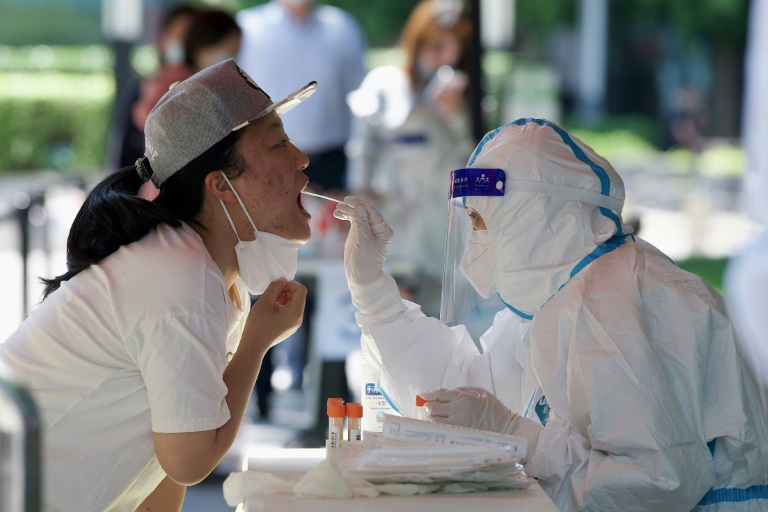
China has persisted in its strict zero-Covid policy to stamp out an Omicron-fuelled wave, ordering lockdowns in various cities and shuttering factories and ports. 

The impact of this strategy on the world’s second-largest economy was revealed Monday when official data showed that retail sales and industrial production in April on-year had slumped to their lowest levels in more than two years.

World markets have also been roiled by surging inflation and Russia’s war in Ukraine — leaving investors jittery.

“Markets remain in fight or flight mode while rolling the dice on recession odds,” Stephen Innes of SPI Asset Management said.

“Investors’ hopes remain elevated that yesterday’s worse than expected Chinese outruns could prove to be a ‘whatever it takes’ moment, and local policymakers will step hard on the stimulus pedal.”

Authorities in Shanghai — China’s biggest city — over the weekend announced they will reopen in stages, news that provided some cheer to Asian markets.

China also announced measures to help young people find jobs — as the urban unemployment rate rose to its highest in over two years — while officials have lowered the mortgage rate for first-time homebuyers.

On Tuesday, Asia markets opened higher with Hong Kong leading the way — the Hang Sang Index rose more than two percent.

– Commodities concerns –

In commodities trade, wheat prices soared to a record after major producer India banned its export because of a heatwave hitting production.

New Delhi said the move was needed to protect the food security of its 1.4 billion people in the face of lower production and steep global prices.

Global wheat prices had already surged on tight supply concerns since Russia’s February invasion of agricultural powerhouse Ukraine, which previously accounted for 12 percent of world exports.

By Monday’s close of the Euronext market, the price of wheat jumped to 438.25 euros ($456.68) per tonne, breaking the previous closing record of 422.40 struck on March 7, according to trader Damien Vercambre at grains brokerage Inter-Courtage. 

Oil also jumped overnight, and by Tuesday morning US crude benchmark WTI traded at nearly $114 a barrel. 

“The EU’s rising tensions with Russia and the resulting uncertainties over the bloc’s oil-and-gas supply remain front-and-centre,” Vandana Hari, founder of Vanda Insights in Singapore, told Bloomberg. 

“Having said that, with a $10 jump since last Tuesday, it’s hard to see much more upside in crude unless events take a sudden turn for the worse.”

– Key figures at around 0230 GMT –

Hong Kong – Hang Seng Index: UP 2.1 percent at 20,375.29 

Shanghai – Composite: UP 0.2 percent at 3,080.78 

Tokyo – Nikkei 225: UP 0.2 percent at 26,601.03 (break)

Brent North Sea crude: DOWN 0.2 percent at $114.04 per barrel

West Texas Intermediate: DOWN 0.3 percent at $113.87 per barrel

Euro/dollar: UP at $1.0440 from $1.0436 at 2030 GMT Monday

Pound/dollar: UP at $1.2334 from $1.2323

Euro/pound: DOWN at 84.63 pence from 84.67 pence

Dollar/yen: UP at 129.21 yen from 129.08 yen

New York – Dow: UP 0.1 percent at 32,223.42 (close)

London – FTSE 100: UP 0.6 percent at 7,464.80 (close)

— Bloomberg News contributed to this story —

US designates Guatemalan AG for 'significant corruption'

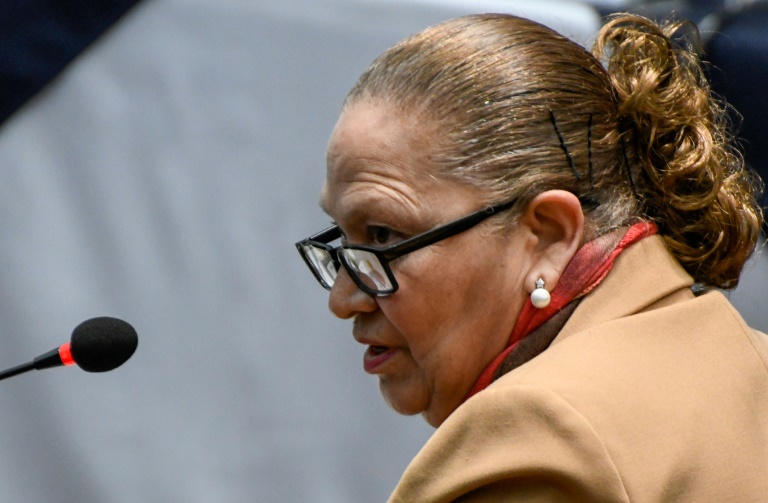
The United States officially designated Guatemalan Attorney General Consuelo Porras for “significant corruption” Monday, just hours after she was reappointed for a second four-year term.

US Attorney General Antony Blinken called out Porras’ “pattern of obstruction” in corruption investigations in a statement announcing the designation. 

“During her tenure, Porras repeatedly obstructed and undermined anticorruption investigations in Guatemala to protect her political allies and gain undue political favor,” Blinken said.

Her husband, Gilberto de Jesus Porres de Paz, was also included in the designation, Blinken said. 

Her tenure as Guatemalan attorney general was renewed earlier Monday, with President Alejandro Giammattei saying Porras was “a professional who meets all the constitutional requirements.”

Porras had already been added to a list of corrupt and undemocratic actors last year, with the United States saying it had “lost confidence” in Porras after she sacked the country’s top anti-corruption prosecutor.

Critics say his replacement is a defender of corruption and persecutor of the opposition.

Porras has had at least six anti-corruption prosecutors arrested on charges ranging from obstruction of justice to abuse of authority.

Earlier this month, another resigned following “pressure and threats.”

The prosecutors were fired amid ongoing investigations of politicians charged with graft and claimed their treatment was “revenge” from those in power.

But Giammattei said Porras received the unanimous support of a commission tasked with vetting candidates for the position of attorney general.

Porras, in turn, vowed to do her work without being influenced by “bias or ideology” and with a focus on “the fight against corruption.”

She complained of “constant attacks” from “people seeking biased justice.”

US announces easing visa, family remittance restrictions for Cuba

The United States said Monday it is easing restrictions imposed during former president Donald Trump’s administration on travel to Cuba and on the sending of family remittances between the United States and the communist island.

“The Cuban people are confronting an unprecedented humanitarian crisis and our policy will continue to focus on empowering the Cuban people to help them create a future free from repression and economic suffering,” the State Department said.

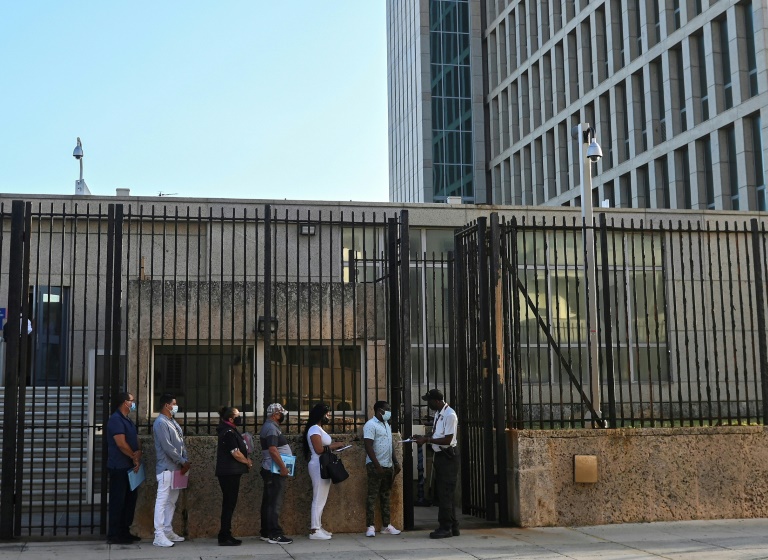
The loosening of the embargo on Cuba will see increased visa processing, including at the Havana consulate, but with most visas still handled at the US embassy in Guyana.

The statement said it will “facilitate educational connections” between the two countries, as well as support for professional research including “support for expanded internet access and remittance process companies.”

To boost the flow of remittances, the US government will lift the current limit of $1,000 per quarter for each sender, and also allow non-family remittances to “support independent Cuban entrepreneurs.”

It said it would increase the number of flights permitted between the US and the Caribbean island, and serving cities other than the capital Havana. It will also allow certain group visits, which are currently forbidden.

Cuba’s foreign minister, Bruno Rodriguez, tweeted that the move was “a small step in the right direction,” but emphasized that it does “not modify the embargo” in place since 1962. 

“Neither the objectives nor the main instruments of the United States’ policy against Cuba, which is a failure, are changing,” he wrote.

US Senator Bob Menendez, chairman of the Senate Foreign Relations Committee and a member of President Joe Biden’s Democratic Party, denounced the lifting of some restrictions, saying that the Cuban regime “continues its ruthless persecution of countless Cubans from all walks of life” following unprecedented street protests last year.

The easing of travel “risks sending the wrong message to the wrong people, at the wrong time and for all the wrong reasons,” he said in a statement. “Those who still believe that increasing travel will breed democracy in Cuba are simply in a state of denial. For decades, the world has been traveling to Cuba and nothing has changed.”

Republican Senator Marco Rubio, who is of Cuban heritage, also slammed the announcement, saying on Twitter that the Cuban regime “threatened Biden with mass migration and have sympathizers inside the administration.”

He said “the result is today we see the first steps back to the failed Obama policy on Cuba,” referring to former president Barack Obama’s thaw in relations with Havana, including a visit there in 2016.

Biden is seeking to tread a fine line between helping ordinary Cubans and encouraging democratic developments while not allowing the Communist regime to benefit from any easing of restrictions.

A senior administration official said Monday it was a “coincidence” that the announcement came just after Mexico said it would boycott the next Summit of the Americas in Los Angeles following Cuba’s complaints of being excluded from the meeting.

“The measures today are practical steps that we are taking to address the humanitarian situation and to respond to the needs of the Cuban people,” the official said.

The thaw comes in the wake of a series of mysterious illnesses suffered by US personnel and family members in Cuba in what has come to be known as “Havana Syndrome.”

US officials say they have yet to determine exactly what happened in the incidents but a senior official told reporters that there is an “appropriate security posture.”

North Korean military ramps up Covid response as outbreak grows

North Korean military medics ramped up the distribution of medicines to fight a growing coronavirus outbreak, state media said on Tuesday, with the number of reported cases of “fever” nearing 1.5 million.

Leader Kim Jong Un has ordered nationwide lockdowns to try and slow the spread of the disease through the unvaccinated population, and deployed the military after what he has called a botched response to the outbreak.

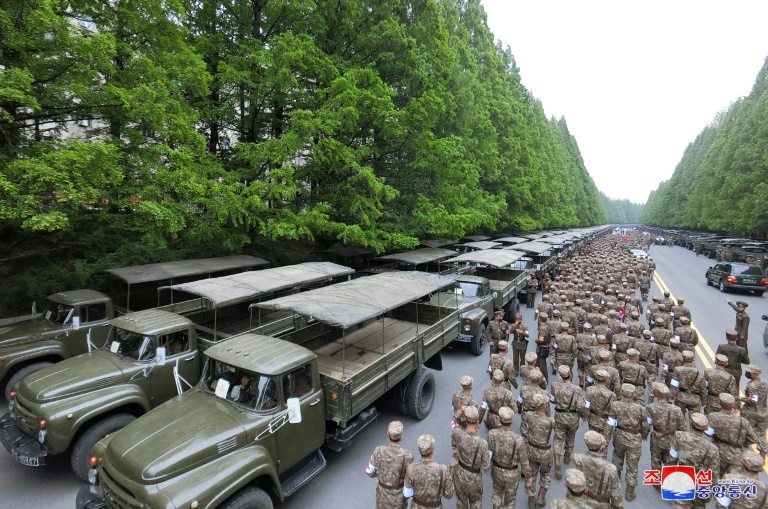
Hundreds of personnel in camouflage uniforms from the Korean People’s Army medical units were seen rallying in the capital Pyongyang in photos released by the official Korean Central News Agency (KCNA).

The military “urgently deployed its powerful forces to all pharmacies in Pyongyang City and began to supply medicines under the 24-hour service system”, KCNA said.

One KCNA photo showed soldiers walking next to a long line of green trucks. 

Kim had strongly criticised healthcare officials for their failure to keep pharmacies open.

North Korea’s leader has put himself front and centre of the country’s Covid response since its first case was announced last week, saying the outbreak is causing “great upheaval”.

Authorities had reported more than 1.48 million cases of “fever” as of Monday evening, KCNA said, with the death toll at 56.

“At least 663,910 are under medical treatment,” the agency said.

Authorities have stepped up media awareness campaigns and pharmaceutical factories have increased the production of medicines, KCNA reported.

– No response to South Korea –

North Korea has one of the world’s worst healthcare systems, with poorly-equipped hospitals, few intensive care units, and no Covid treatment drugs or mass testing ability, experts say.

“Most North Koreans are chronically malnourished and unvaccinated, there are barely any medicines left in the country, and the health infrastructure is incapable to deal with this pandemic,” Lina Yoon, senior Korea researcher at Human Rights Watch, said in a statement.

She urged the international community to offer medicines, vaccines and infrastructure to North Korea.

Pyongyang has so far not responded to an offer of help from Seoul, according to South Korea’s unification ministry.

South Korea’s new president Yoon Suk-yeol has taken a hawkish stance on his country’s nuclear-armed neighbour, but told lawmakers Monday that he would “not hold back” on aid — if Pyongyang accepts.

Despite the Covid crisis, new satellite imagery has indicated North Korea has resumed construction at a long-dormant nuclear reactor.

The United States and South Korea have warned that Kim is preparing to conduct another nuclear test — the country’s seventh.

Kremlin critic Navalny appeals against nine-year jail sentence

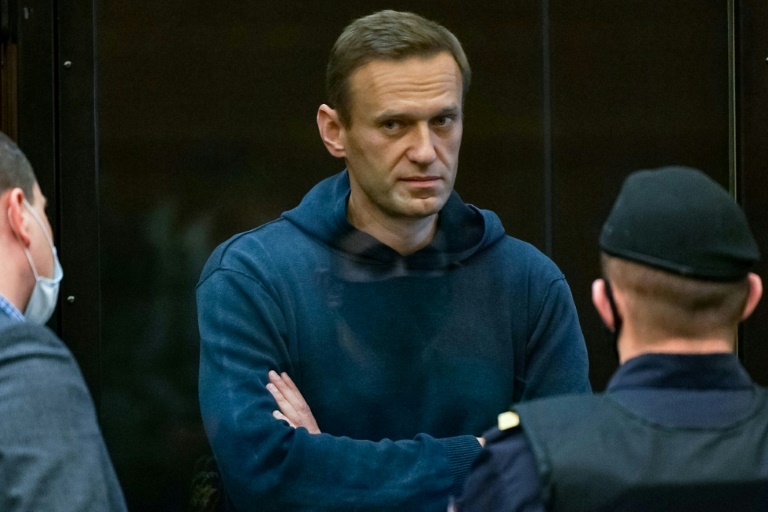
Jailed Kremlin critic Alexei Navalny was due on Tuesday to appeal a nine-year prison sentence he was handed in March on charges that he and his allies say are politically motivated.

His hearing comes as Russian authorities seek to silence remaining government critics and Moscow pushes on with its military campaign in neighbouring Ukraine, with thousands killed and some 10 million displaced.

A vocal critic of Russian President Vladimir Putin, Navalny in late March had his jail time extended to nine years after he was found guilty of embezzlement and contempt of court. 

He is already serving two-and-a-half years in a prison some 100 kilometres (60 miles) east of Moscow for violating parole on old fraud charges.

On Tuesday, he will appeal the extension of his jail term, joining the hearing at a Moscow court via video link from his prison colony.

If his new sentence comes into force, the 45-year-old opposition politician will be transferred to a strict-regime penal colony, which will place him in much harsher conditions.

The new sentence will replace the old one — that he was handed in February last year — meaning Navalny will remain behind bars for another eight years. 

– Declared ‘extremist’ –

As part of the new charges, investigators accused Navalny of stealing for personal use several million dollars’ worth of donations that were given to his political organisations.

Navalny rose to prominence as an anti-corruption blogger and, before his imprisonment, mobilised anti-government protests across Russia.

In 2018, he campaigned as a presidential candidate but was eventually barred from running in the election that saw Putin secure a fourth term in power. 

In his absence, Navalny’s team continues publishing investigations into the wealth of Russia’s elites that have garnered millions of views on YouTube. 

In 2020, Navalny narrowly survived a poisoning attack with Novichok, a Soviet-designed military-grade nerve agent. Despite accusations from Navalny, the Kremlin denied any involvement.

He was arrested on his return from rehabilitation in Germany last year, sparking widespread condemnation abroad, as well as sanctions from Western capitals.

After his arrest, Navalny’s political organisations across the country were declared “extremist” and shut down, while key aides have fled Russia.

Navalny’s key allies have since fled the country, several of them are wanted by Russian authorities on criminal charges.

Russia has recently ramped up pressure on independent media and non-governmental organisations, declaring many “foreign agents”, while others have stopped operating for fear of prosecution. 

In an effort to further control the information available to its domestic audience, authorities have blocked access to the popular social networks Instagram, Facebook and Twitter and taken legal action against tech giant Meta, accusing it of spreading “calls to kill” Russians. 

Indonesians celebrate Vesak at world's largest Buddhist temple

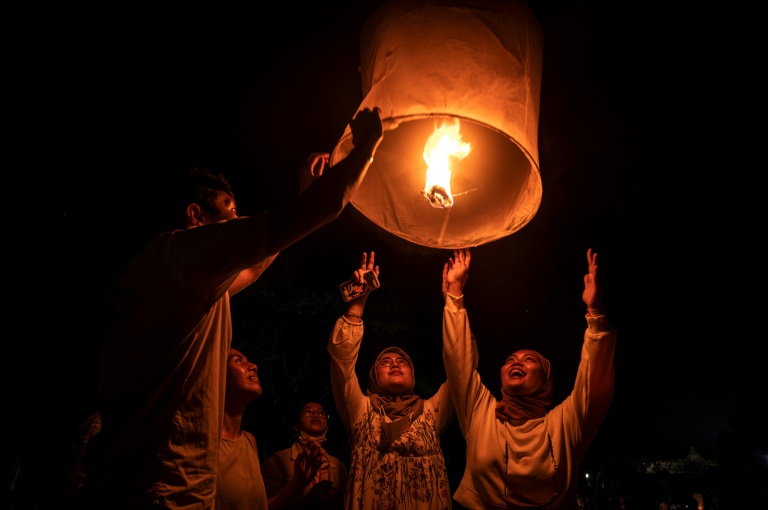
Hundreds of lanterns were released into the sky by Indonesian Buddhists celebrating Vesak day at the temple of Borobudur for the first time since the coronavirus pandemic hit the country.

More than a thousand Buddhists from across the archipelago gathered at the largest Buddhist temple in the world, situated in Magelang, Central Java, to commemorate the birth, enlightenment and death of Buddha Siddharta Gautama. 

Celebrations on Monday night included prayers and meditation, collecting holy water and the release of flying lanterns symbolising the letting go of negativity. 

“This is the first time we were able to hold the celebration since the pandemic started, since we are still in the middle of the pandemic, we limited the number of participants to only 1,200 people,” Eric Fernardo, the spokesman for the event, told AFP on Monday. 

Only those who received an invitation and a double dose of a Covid-19 vaccine were allowed to enter the sprawling complex of Borobudur to join the ceremonies.

Before the pandemic, the event was usually attended by more than 20,000 people from across the Muslim-majority country and other places. 

“After two years of not being able to celebrate Vesak Day here, now we finally can, even though not exactly like before the pandemic as there still are restrictions, but I’m so happy”, Christina, a 20-year-old Buddhist who goes by one name, told AFP.

“We can still feel the enthusiasm and excitement, even though the number of attendees are limited,” added the student from Jakarta, the Indonesian capital.

Despite the restrictions and stringent health protocols, monks and worshippers reverently followed the three-day procession and ceremonies, including the ritual to collect holy water from the pristine springs at Jumprit in nearby Temanggung district. 

The procession and the countdown to Vesak, just before midnight on Monday, were also livestreamed for those who did not have an invitation to attend the event.

Indonesian Buddhists account for less than one percent of the country’s more than 270 million people.

Built in the ninth century, the Borobudur Temple was abandoned when the Hindu kingdoms of Java island declined and a majority of Javanese began to convert to Islam.

Buried under volcanic ash and hidden in the jungle, the temple’s existence was largely forgotten until the 19th century. It has undergone a major restoration and is today a UNESCO world heritage site.  

White House hits back after Bezos knocks Biden on economy

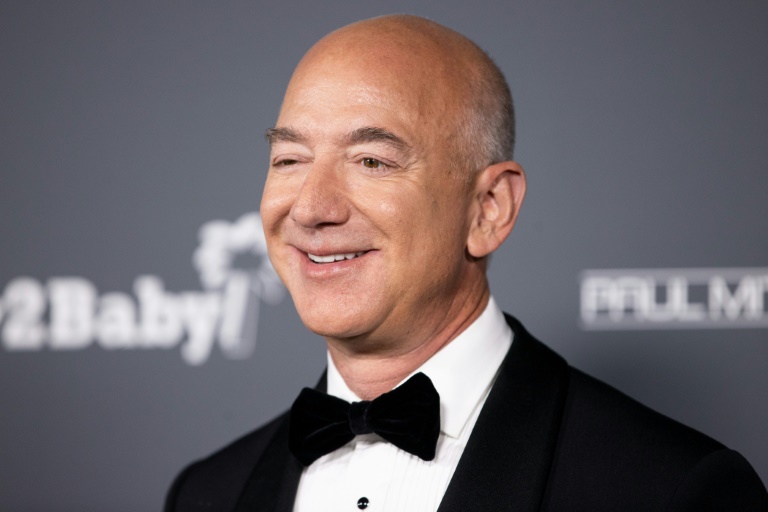
The White House on Monday uncharacteristically lashed out at Amazon founder Jeff Bezos, after he openly criticized the Biden administration’s fiscal and economic policies on Twitter.

“It doesn’t require a huge leap to figure out why one of the wealthiest individuals on Earth opposes an economic agenda for the middle class,” said Andrew Bates, deputy press secretary.

“It’s also unsurprising that this tweet comes after the president met with labor organizers, including Amazon employees,” he added.

Bates was referring to President Joe Biden’s recent White House meeting with Christian Smalls, the president of the Amazon Labor Union, which caused a shock in early April when it became the company’s first labor union in the United States.

The White House released a video of the meeting, during which Biden hugged Smalls, who wore a jacket with the slogan “Eat the rich” emblazoned on it.

“You’re trouble man,” Biden told Smalls, adding: “I like you, you’re my kind of trouble.”

In recent days, Bezos criticized Biden in in several posts on Twitter.

The US president has recently encouraged increasing taxes on wealthy corporations as a means of fighting rampant US inflation, an idea which seemed to irk the Amazon billionaire.

“Raising corp taxes is fine to discuss. Taming inflation is critical to discuss. Mushing them together is just misdirection,” Bezos tweeted.

Additionally, referencing Biden’s social spending Build Back Better bill, which stalled in Congress, Bezos criticized the administration for having “tried hard to inject even more stimulus into an already over-heated, inflationary economy.”

US accuses Venezuela doctor of selling ransomware to cybercriminals

A French-Venezuelan cardiologist was accused Monday by the US of selling ransomware to cybercriminals and instructing them on how to extort money from the victims they hacked. 

The Brooklyn district attorney’s office said Moises Luis Zagala, 55, who lives in the Venezuelan city of Ciudad Bolivar, “not only created and sold ransomware products to hackers, but also trained them in their use.” 

It said the French-Venezuelan doctor “sold the tools for conducting ransomware attacks, trained the attackers about how to extort victims, and then boasted about successful attacks, including by malicious actors associated with the government of Iran.”

The ransomware would encrypt information on the computers that had been hacked, then the attackers would demand money to decrypt it. 

One of the first products developed by Zagala was a data hijacking program called “Jigsaw v. 2”, which had a “doomsday” counter that kept track of the times the user had tried to destroy it.

“If the user kills the ransomware too many times, then it’s clear he won’t pay so better erase the whole hard drive,” Zagala instructed his clients, according to the US authorities.

In early 2019, Zagala began advertising his new tool on the web, a “Private Ransomware Builder” which he named “Thanos” after the Marvel Comics villain responsible for destroying the half of life in the universe, as well as Thanatos in Greek mythology, associated with death. 

The “multi-tasking doctor,” as the Brooklyn DA described him, allowed criminals to either buy the program — and create their own customized ransom notes — or to join an “affiliate program” to gain access to the program in exchange for a share of the ill-gotten gains, which could be paid in cryptocurrency or regular cash. 

His preferred aliases were “Aesculapius,” referring to the ancient Greek god of medicine, and “Nosophoros,” which means “sickness” in Greek.

Zagala allegedly boasted in specialized hacker forums that the Thanos program was practically undetectable by antivirus programs and that once the encryption was finished the program would self-delete, making it almost impossible for the victim to be able to detect it and retrieve their documents. 

Zagala even asked his clients “if you have time and it’s not too much trouble” to rate their experience online.  

If found guilty, he could be sentenced to 10 years in jail.

Major US baby formula producer agrees with regulators on restarting production

Amid a US shortage of baby formula, officials announced Monday a previously closed manufacturer would re-open and encouraged foreign companies to apply to import their products — although it will take weeks to see more stock back on store shelves.

A “consent decree” agreement between the Food and Drug Administration (FDA) and major formula manufacturer Abbott outlines steps needed to restart production at the company’s plant in Michigan, which was shut down due to a recall, Abbott said in a statement.

“Once the FDA confirms the initial requirements for start-up have been met, Abbott could restart the site within two weeks,” the statement said.

However, the company cautioned that “from the time Abbott restarts the site, it will take six to eight weeks before product is available on shelves.”

Abbott, which produces the popular Similac brand used by millions of American families, announced a voluntary recall on February 17 after the death of two babies.

In a separate move, the FDA also said Monday it plans to accept applications from international baby formula manufacturers “who don’t normally distribute their infant formula products in the US,” FDA Commissioner Robert Califf said in a statement. 

Currently, the United States produces about 98 percent of the formula it consumes.

– Import applications –

The FDA plans to work to quickly review such applications, especially ones that come from “countries that have health and safety inspection systems similar” to the United States, according to a senior White House official. 

The process would also prioritize applications showing “clear quality and safety and nutritional adequacy,” a different senior administration official added. 

According to Califf, foreign-made baby formula could appear on US shelves within “weeks.” 

The Biden administration was also reaching out to US manufacturers to offer help with logistical challenges, such as shipping, the officials said. 

US families have grown increasingly desperate for formula amid a perfect storm of supply chain issues and the massive recall.

The average out-of-stock rate for baby formula hit 43 percent earlier this month, according to Datasembly, which collected information from more than 11,000 retailers.

Abbott’s agreement with the FDA to restart production at the plant in Sturgis, Michigan also needs to be reviewed by a federal court after the Justice Department filed a complaint on Monday.

The complaint says the facility “failed to comply with regulations designed to ensure the quality and safety of infant formula, including protection against the risk of contamination from bacteria.”

“The actions we are announcing today will help to safely increase the supply of baby formula for families,” US Attorney General Merrick Garland said in a statement.

Robert Ford, chairman and chief executive officer of Abbott said he regretted the situation and that the company already had begun “working to implement improvements and take corrective action.”

“We know millions of parents and caregivers depend on us and we’re deeply sorry that our voluntary recall worsened the nationwide formula shortage,” he said in the statement.

The FDA and White House officials reiterated Monday that parents who are concerned about running out of baby formula should talk to their child’s doctor, and that it is not safe to water down existing formula or to make your own at home. 

The scarcity is the latest crisis to confound President Joe Biden’s push to get the US economy on sound footing amid the highest inflation in four decades and the ongoing global supply chain bottlenecks.

Close Bitnami banner
Bitnami