World

Ukrainian soldiers evacuated from Mariupol steelworks

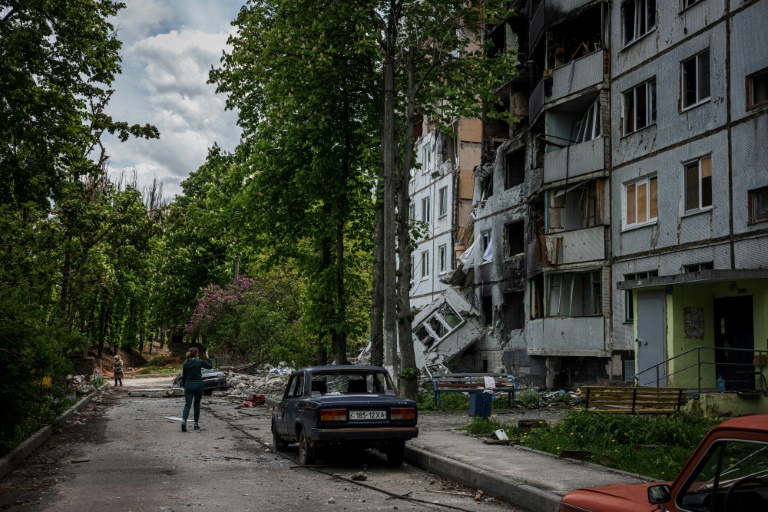
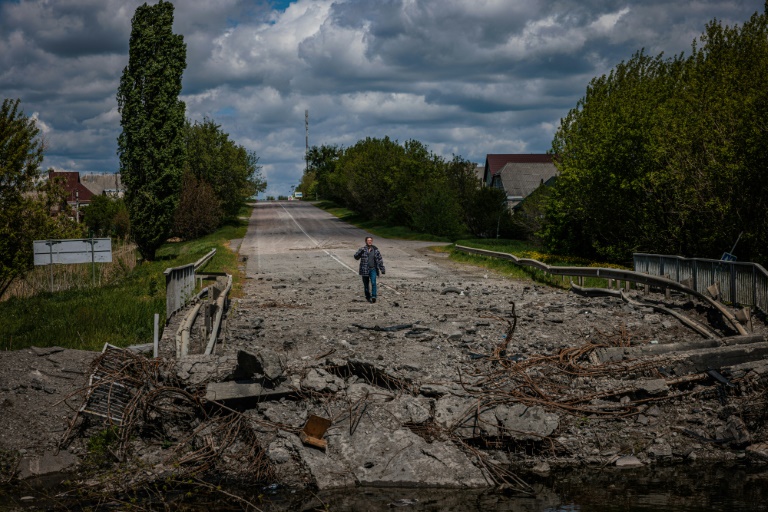
Hundreds of Ukrainian soldiers have been evacuated from the besieged Azovstal steelworks — the last holdout of troops defending the southern port city of Mariupol — Kyiv said on Monday.

The plant had become a symbol of resistance, with around 600 soldiers holed up in underground tunnels and bunkers fighting a rear-guard battle to prevent Russian troops taking full control of the strategically located city.

But on Monday Ukraine’s Deputy Defence Minister Ganna Malyar said more than 260 had been moved through humanitarian corridors to areas under Moscow and Russia-backed separatists’ control.

“An exchange procedure will be carried out for their further return home,” Malyar said.

The Ukrainian army said the soldiers in Mariupol had “performed their combat task” and now the main goal was to “save the lives of personnel”.

By holding the steelworks, they stopped Russian forces from rapidly capturing the southern city of Zaporizhzhia, a statement on Facebook said.

Despite the resources of its giant neighbour, Ukraine has managed to repel the Russian army for longer than many expected, fortified by weapons and cash from Western allies.

The latest example of this came Monday, when Ukraine’s defence ministry announced its troops had regained control of territory on the Russian border near the country’s second-largest city of Kharkiv, which has been under constant attack.

– Eastern assault –

Since failing to take Kyiv in the early weeks of the war, Moscow has switched its focus to Donbas, a region near the Russian border that is home to pro-Russian separatists.

Presidential adviser Oleksiy Arestovich told local television Sunday that Russian troops were being redeployed to take Severodonetsk, the easternmost city still held by Ukraine.

Its occupation would grant the Kremlin de facto control of Lugansk, one of two regions — along with Donetsk — that comprise Donbas.

But Russia’s attempt to encircle the city of 100,000 has been repelled with heavy equipment losses, while Russian-occupied railway bridges were blown up, Ukrainian officials said.

Russia continued strikes on Lugansk, killing two people and wounding nine during shelling of a Severodonetsk hospital, the Ukrainian presidency said Monday.

A further 10 people were killed by Russian strikes on Severodonetsk, according to the local governor.

Police in neighbouring Donetsk said six civilians were killed and 12 wounded in Russian shelling over the past 24 hours.

Six million refugees have fled Ukraine since the war began, and another eight million have been internally displaced, according to UN agencies. 

– NATO ‘no direct threat’ –

With Moscow showing no sign of relenting nearly three months into its invasion, Finland and Sweden are poised to give up decades of military non-alignment by joining the NATO military alliance. 

Swedish Prime Minister Magdalena Andersson confirmed on Monday her country would apply to join the alliance, a day after Finland — which shares a 1,300-kilometre (800-mile) border with Russia — said the same.

Russian President Vladimir Putin said the move poses “no direct threat for us… but the expansion of military infrastructure to these territories will certainly provoke our response.” 

The Russian leader’s reaction was more moderate than comments earlier Monday from deputy foreign minister Sergei Ryabkov, who called the expansion a “grave mistake with far-reaching consequences”. 

The move is not a done deal in any case, with Turkish President Recep Tayyip Erdogan on Monday confirming his country’s intention to block the applications, accusing Finland and Sweden of harbouring terror groups, including outlawed Kurdish militants.

Sweden and Finland have failed to respond positively to Turkey’s 33 extradition requests over the past five years, justice ministry sources told the official Anadolu news agency on Monday.

Any membership bid must be unanimously approved by NATO’s 30 nations. 

But US Secretary of State Antony Blinken voiced confidence Sunday that Sweden and Finland would join NATO despite Turkey’s opposition.

Turkish Foreign Minister Mevlut Cavusoglu will meet Blinken in Washington on Wednesday, where Ankara’s objections are expected to figure high on the agenda.

– ‘Time is running out’ –

Meanwhile EU foreign ministers met in Brussels to discuss a ban on Russian oil — proposed as part of an unprecedented economic sanctions on Moscow but being blocked by Hungary over the economic cost.

“We are unhappy with the fact that the oil embargo is not there,” Ukraine’s top diplomat Dmytro Kuleba said afterwards.

“It’s clear who’s holding up the issue. But time is running out because every day Russia keeps making money and investing this money into the war.”

The war meanwhile is taking its toll on the continent’s growth. The European Commission sharply cut its eurozone forecast for 2022 to 2.7 percent, blaming skyrocketing energy prices.

Separately, French automaker Renault has handed over its Russian assets to Moscow, while US fast food giant McDonald’s announced it would be pulling out, citing the “humanitarian crisis caused by the war.”
Macron names first French female PM in three decades

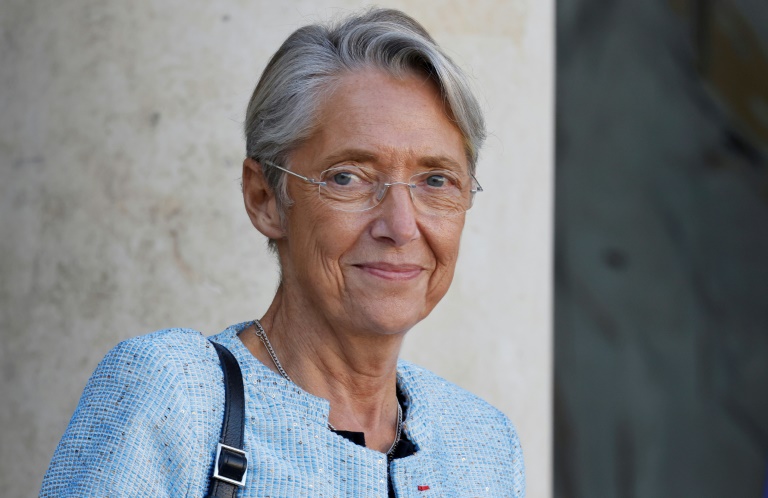
President Emmanuel Macron on Monday named Labour Minister Elisabeth Borne as prime minister to lead his ambitious reform plans, the first woman to head the French government in over 30 years.

Outgoing French Prime Minister Jean Castex earlier handed his resignation to the president, part of a widely expected reshuffle to make way for a new government following Macron’s re-election in April and ahead of legislative elections in June.

The centrist Macron will need a legislative majority to push through his domestic agenda following his re-election, with a new left-wing alliance and the far-right threatening to block his programme.

The last woman premier, Edith Cresson, briefly headed the cabinet from May 1991 to April 1992 under president Francois Mitterrand.

Ending weeks of speculation, the Elysee confirmed Borne’s nomination in a statement and she then headed to the Matignon residence of the premier in Paris for the handover with Castex.

“Nothing can stop the fight for the place of women in our society,” she said at the handover, dedicating her appointment to “all the little girls” who should “realise their dreams”.

A former environment minister, Borne also notably urged a “quicker and stronger” reaction to the “climatic and ecological challenge”.

In a tweet addressed to “Madam Prime Minister”, Macron set out their priorities.

“Ecology, health, education, full employment, democratic revival, Europe and security. Together, with the new government, we will continue to act tirelessly for French people,” he said.

– ‘High time’ –

Borne, 61, is seen as an able technocrat who can negotiate prudently with unions, as the president embarks on a new package of social reforms that notably include a rise in the retirement age which risks sparking protests.

A French presidential official, who asked not to be named, described Borne as a woman of “conviction, action and realisation”, noting her “capacity to carry out reforms”.

“It was high time there was another woman,” Cresson, who knows Borne personally, told BFMTV.

“She is a remarkable person, with great experience in the public and private sectors… She’s a very good choice because she’s a remarkable person, not because she’s a woman,” she added.

She expressed amazement that it had taken France — which has never had a female head of state — so long to have another woman prime minister.

“France is very behind — not the French population but the political class,” added Cresson, who was the target of numerous sexist attacks during her time in office.

– ‘Inability to unite’ –

Macron, 44, registered a solid victory in April 24 presidential polls against far-right leader Marine Le Pen, winning by 59 to 41 percent.

Le Pen and defeated hard-left leader Jean-Luc Melenchon are both eyeing comebacks in the parliamentary elections on June 12 and 19 that would give them the ability to thwart Macron.

Melenchon recently persuaded the Socialist, Communist and Greens parties to enter an alliance under his leadership that unites the left around a common platform for the first time in decades. 

Macron’s rivals were less complimentary about Borne, whose appointment Le Pen said showed the president’s “inability to unite and his desire to pursue his policy of contempt”.

Melenchon scoffed at the idea that Borne had come from the left, describing her as “among the harshest figures of social abuse” in France’s ruling elite.

Castex had intended to resign immediately after the presidential election in line with French tradition, but was persuaded by Macron to stay on while he lined up a replacement.

The bespectacled 56-year-old from rural southwest France has a no-frills style and a strong regional accent which has endeared him to many French people.

He will mostly be remembered for his management of the latter stages of the Covid-19 pandemic but also windmill arm gestures and a habit of forgetting where he had placed his glasses.

“For nearly two years, he worked with passion and commitment in the service of France,” said Macron in a farewell tweet to Castex, who has made clear he has no plans for higher office.

McDonald's to exit Russia, sell business in country

American fast-food giant McDonald’s said Monday it will exit Russia in the wake of the Ukraine invasion, ending a more than three-decade run begun in the hopeful period near the end of the Cold War.

The restaurant chain, which launched in Moscow in January 1990 to great fanfare almost two years before the Soviet Union was dissolved, characterized the withdrawal as difficult but necessary.

“The humanitarian crisis caused by the war in Ukraine, and the precipitating unpredictable operating environment, have led McDonald’s to conclude that continued ownership of the business in Russia is no longer tenable, nor is it consistent with McDonald’s values,” the company said in a statement.

The chain is looking to sell “its entire portfolio of McDonald’s restaurants in Russia to a local buyer.”

The burger giant is one of numerous foreign firms that have pulled out of the country or suspended operations following Moscow’s invasion of Ukraine in late February.

Earlier on Monday, French automaker Renault announced it had handed over its Russian assets to the government, marking the first major nationalization since the onset of Western sanctions against Moscow’s military campaign.

Russia’s President Vladimir Putin ordered troops into pro-Western Ukraine on February 24, triggering unprecedented sanctions and sparking an exodus of foreign corporations including H&M, Starbucks and Ikea.

In March, citing “unspeakable suffering to innocent people,” McDonald’s closed all of its 850 restaurants in the country, where it says it employs 62,000 workers.

But on Monday the “Big Mac” maker went a step further, saying the company “is pursuing the sale of its entire portfolio of McDonald’s restaurants in Russia to a local buyer.”

After the sale, the restaurants would no longer be able to use the McDonald’s name, logo, branding or menu, though the company will retain its trademark in the country, it said.

Russia currently accounts for nine percent of the company’s revenue and three percent of its operating profit.

McDonald’s expects a one-time charge of $1.2 billion to $1.4 billion to write off the investment.

– A ‘new era’ –

The withdrawal offers a stark contrast to the optimism that surrounded the arrival of the quintessentially American brand in Russia in the waning days of the Cold War.

The company began discussing Russian business at the 1976 Olympics in Canada where McDonald’s let Russian athletes use the “Big Mac Bus” in a sign of good will.

That led to 14 years of negotiations, “culminating in the glorious day in January of 1990 when the first McDonald’s opened to so much hope and excitement in Pushkin Square,” recalled McDonald’s Chief Executive Chris Kempczinski in a message to employees.

“In the history of McDonald’s, it was one of our proudest and most exciting milestones,” Kempczinski said. “After nearly half a century of Cold War animosity, the image of the Golden Arches shining above Pushkin Square heralded for many, on both sides of the Iron Curtain, the beginning of a new era.”

In the subsequent decades, McDonald’s operations in Russia expanded far beyond Moscow as the company invested billions of dollars and grew its supply chain.

But Kempczinski said the Russia investment was no longer viable in terms of business, or consistent with company values. 

Still, he closed his message on a hopeful note, saying, “let us not end by saying, ‘goodbye’… (but) ‘Until we meet again.'”

The company’s decision to divest “underlines a view that relations with Russia will not soon be normalized,” said Neil Saunders, a retail expert at GlobalData.

The conditions of the exit, including the financial challenges facing prospective Russian buyers means “it is unlikely the sale price will be anywhere near the pre-invasion book value of the business,” said Saunders, adding that the departure “will leave a hole” in McDonald’s growth plans “that is not easily filled in the near-term.”

Shares of McDonald’s fell 0.4 percent to $244.04.

US shaken by racist mass shooting, weekend of gun violence

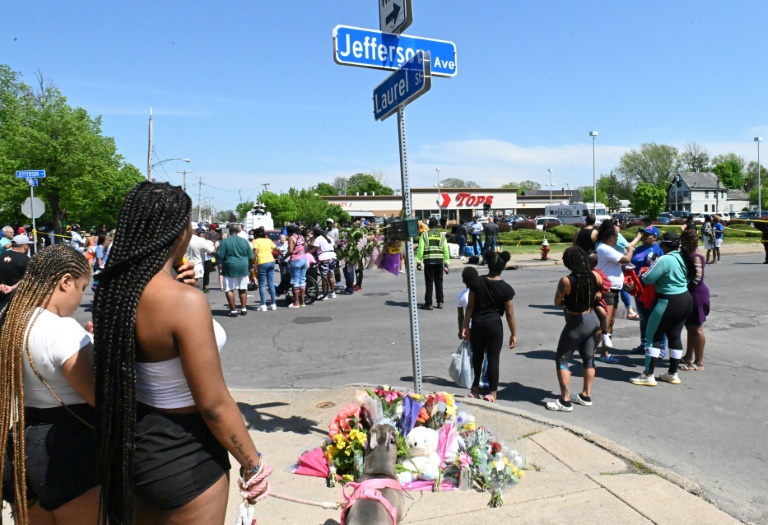
The racist mass shooting at a supermarket in New York state dominated a bloody weekend of gun violence across the United States, a scourge that has increased since the pandemic began.

While the murder of 10 Black people by an alleged white supremacist teenager in Buffalo captured news headlines, smaller incidents elsewhere embodied how common public shootings have become in America.

One person was killed and five others wounded in a shooting Sunday near Los Angeles, where a Chinese immigrant padlocked a church and opened fire on its Taiwanese American congregation in an apparent hate attack.

More than 45,000 Americans died from guns — slightly over half by suicide — in 2021, up from just over 39,000 in 2019, according to the Gun Violence Archive website.

As of May 16, some 7,000 people have already died from homicide shootings or unintentional gunshots in the United States this year, with shootings in public places an almost daily occurrence.

There have been 202 mass shootings, defined as an incident in which four or more people are injured or killed, already in 2022, according to the archive. 

Experts say the rise in gun crime is being fueled by social dislocation caused by the pandemic and the proliferation of so-called “ghost guns” which can be assembled at home and are virtually impossible to trace.

“Unless the United States really works on getting a consistent process in place to regulate, license and monitor gun ownership, you’re going to continue to have these types of incidents and they will increase,” Keith Taylor, a gun violence expert at John Jay College of Criminal Justice in New York, told AFP.

Also this past weekend, two people were killed and three injured when a gunfight broke out at a flea market in Houston, Texas, on Sunday.

At least 33 people were shot, five fatally, in Chicago while another five were killed in separate shootings in St. Louis, Missouri. 

And the Milwaukee Bucks canceled a party after 20 people were wounded in shootings outside their arena Friday.

“One weekend in America,” tweeted New Jersey governor Phil Murphy, before listing the weekend’s spate of shootings.

“It is well past time for outrage and action. It is well past time for Congress to step up and pass real nationwide gun safety legislation,” he wrote.

– ‘Hate crime’ –

But facing a powerful pro-gun lobby, past congressional efforts at tightening the nation’s gun laws have generally fallen short — even after horrific shootings motivated by racial hatred.

Under pressure to clamp down on the violence, President Joe Biden will visit Buffalo on Tuesday to “grieve with the community that lost 10 lives in a senseless and horrific mass shooting.”

On the eve of Biden’s visit, officials released more details about 18-year-old suspect Payton Gendron.

They say he drove more than 200 miles (322 kilometers) from his home to the predominantly Black area surrounding Tops Friendly Market in Buffalo to kill as many African Americans as he could.

Buffalo Police Commissioner Joseph Gramaglia told reporters that Gendron had scoped out the site in March.

“There was evidence that was uncovered that he had plans, had he gotten out of here, to continue his rampage and continue shooting people. He’d even spoken about possibly going to another store,” Gramaglia earlier told CNN.

Wearing heavy body armor and wielding an AR-15 assault rifle, Gendron livestreamed the shooting on Twitch before the site removed it within two minutes.

Media reports linked the shooter to a 180-page manifesto that described a white supremacist ideology and laid out a plan to target a mainly Black neighborhood.

Gendron pleaded not guilty Saturday to a single count of first-degree murder. He is on suicide watch in detention. 

The tragedy evoked memories of recent US history’s most devastating attacks, including a white man’s 2015 massacre of nine worshippers in a predominantly Black South Carolina church, and the 2019 attack by a white man in Texas that claimed 23 lives, most of them Latino.

“The killings are being investigated as a racist hate crime,” said the Erie County district attorney, John Flynn.

Twitter defends anti-bot efforts, Musk replies with poo emoji

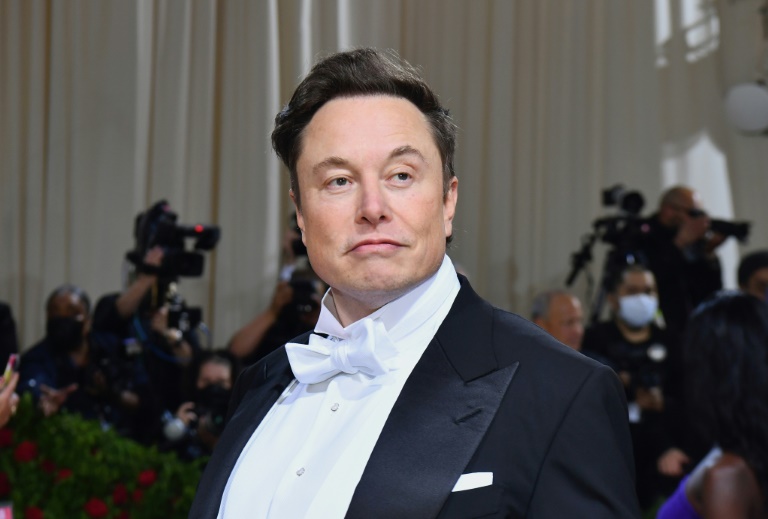
Twitter’s chief on Monday defended the messaging platform’s battle against “bots” that aspiring buyer Elon Musk says vex the platform, only to have the billionaire respond with a poo emoji.

The exchange played out in tweets as Musk’s $44 billion buy of Twitter remained “temporarily on hold,” pending questions over the social media company’s estimates of the number of fake accounts, or “bots.”

“It appears the spam/bot issue is cascading and clearly making the Twitter deal a confusing one,” Wedbush analyst Dan Ives said in a note to investors.

“The bot issue at the end of the day was known by the New York City cab driver and feels more to us like the ‘dog ate the homework’ excuse to bail on the Twitter deal or talk down a lower price.”

Twitter chief executive Parag Agrawal said the platform suspends more than a half-million seemingly bogus accounts daily, usually before they are even seen, and locks millions more weekly that fail checks to make sure they are controlled by humans and not by software.

Internal measures show that fewer than five percent of accounts active on any given day at Twitter are spam, but that analysis can’t be replicated externally due to the need to keep user data private, Agrawal contended.

Musk, who has said bots plague Twitter and that he would make getting rid of them a priority if he owned the platform, responded to that tweet by Agrawal with a poo emoji.

“So how do advertisers know what they’re getting for their money?” Musk tweeted in a subsequent response about the need to prove Twitter users are real people.

“This is fundamental to the financial health of Twitter.”

The process used to estimate how many accounts are bots has been shared with Musk, Agrawal said.

The chief of SpaceX as well as Tesla, Musk is currently listed by Forbes as the world’s wealthiest person, with a fortune of some $230 billion, much of it in Tesla stock.

Seen by his champions as an iconoclastic genius and by his critics as an erratic megalomaniac, Musk surprised many investors in April with his pursuit of Twitter.

Musk has described his motivation as stemming from a desire to ensure freedom of speech on the platform and to boost monetization of an Internet site that is influential in media and political circles but has struggled to attain profitable growth.

Musk said he favored lifting the ban on Donald Trump, who was kicked off the platform in January 2021 shortly after the former US president’s efforts to overturn his election defeat led to the January 6 assault on the US Capitol.

US carrier JetBlue launches hostile takeover of Spirit Airlines

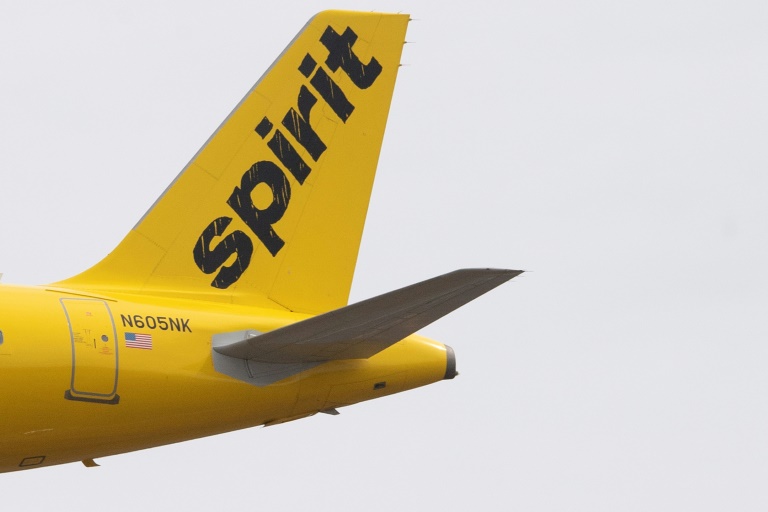
Low-cost US carrier JetBlue Airlines announced on Monday a hostile takeover bid for its rival Spirit Airlines, which had rejected a previous offer in favor of a merger with Frontier.

Earlier this month, Spirit reiterated its support for a deal with Frontier Airlines, saying the $3.6 billion JetBlue offer involved excessive regulatory risk.

It said the US Justice Department’s challenge of JetBlue’s alliance with American Airlines raised the odds that a takeover of Spirit might get blocked.

JetBlue called the antitrust concerns a “smokescreen” and said the deal with Frontier will face similar regulatory scrutiny.

“They based their rejection on unsupportable claims that are easily refuted,” JetBlue Chief Executive Officer Robin Hayes said in a letter to Spirit shareholders.

“The Spirit Board of Directors has failed to act in the best interests of their shareholders by refusing to engage constructively on our clearly superior proposal,” he said.

The company offered a cash buyout of Spirit at $30 a share — adding that it was prepared to return to its original offer of $33 if Spirit agreed to return to the negotiating table.

JetBlue launched a “Vote No” campaign asking Spirit shareholders to reject the proposed merger with Frontier at a meeting June 10.

“JetBlue offers more value — a significant premium in cash — more certainty, and more benefits for all stakeholders,” Hayes said.

“We are confident we can address any regulatory concerns the Spirit Board, regulators or courts may have.”

– Airline competition –

Asked about the competing deals, US Transportation Secretary Pete Buttigieg said competition in the industry is critical.

It “needs to be demonstrated that this would not have a negative effect on competition in order to meet those legal hurdles,” he said on CNBC.

Amid growing concentration in the airline sector, he said it is up to the Justice Department do decide “where you draw the line.”

In early February, budget carriers Spirit and Frontier announced they were combining to create a competitive low-cost carrier that aims to test the dominance of larger rivals.

The merger would create the nation’s fifth-largest airline by seat capacity, behind American, United, Delta and Southwest.

But in April, JetBlue challenged the deal, offering a similar argument about challenging larger US carriers.

Spirit shares jumped 13.5 percent, while JetBlue fell 6.1 percent. Frontier rose 5.9 percent.

bur-leg-hs-jmb/caw

Biden announces new plan to ease housing shortage, lower costs

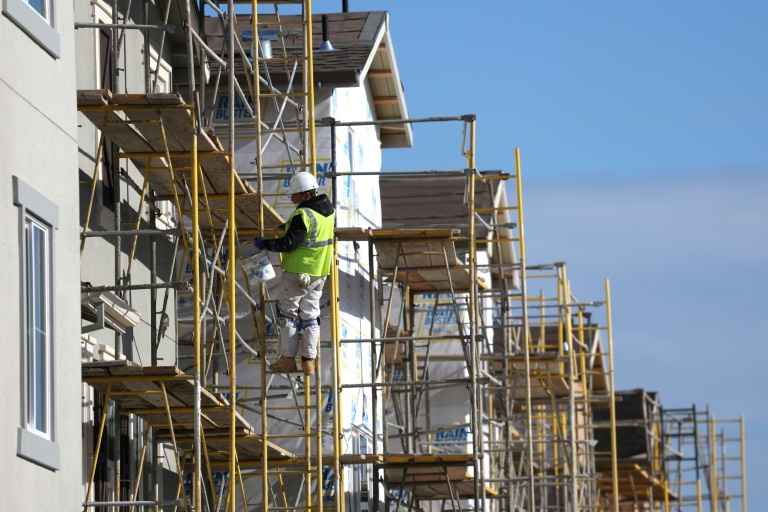
Faced with a shortage of homes that has driven up prices and rents, President Joe Biden’s White House on Monday unveiled a plan to improve housing supply and affordability.

Consumer prices are rising at their fastest pace since the early 1980s — nearly a third of which is due to housing costs — and Biden has said tackling US inflation is his key priority.

The new plan aims to provide access to credit for homebuilders and buyers, especially low-income families, and assistance to renters, while easing supply constraints for building materials and construction workers.

It also will take steps to discourage the recent trend of investors snapping up many of the available homes, while encouraging state and local authorities to ease zoning restrictions to allow more density, especially multifamily buildings.

“This is the most comprehensive all of government effort to close the housing supply shortfall in history,” the White House said in a statement, noting that fewer new homes were built in the decade following the 2008 recession than in any decade since the 1960s.

The problem has been exacerbated since the start of the Covid-19 pandemic as record low mortgage rates and massive government stimulus created a surge in homebuying, while supplies of lumber and other materials were disrupted by the pandemic.

The Case-Schiller Home Price Index showed home prices surged nearly 20 percent in the 12 months ended in February.

And the rapid recovery also created a shortage of workers at all levels.

“Rising housing costs have burdened families of all incomes, with a particular impact on low- and moderate-income families, and people and communities of color,” the White House said.

The Housing Supply Action Plan aims to “help close America’s housing supply shortfall in five years.”

The announcement won praise from the private sector.

“We agree with the White House that the key to resolving our nation’s housing affordability challenges is to build more homes,” said Jerry Konter, chairman of the National Association of Home Builders (NAHB) 

He praised the efforts on “the long-term headwinds, like supply chain bottlenecks and chronic construction labor shortages” that are holding back housing production. 

French city approves Muslim swimsuit in controversial change

The French city of Grenoble on Monday authorised the wearing of the so-called “burkini” by Muslim women in state-run swimming pools, reigniting one of France’s most contentious debates on religous dress.

The all-in-one swimsuit, used by some Muslim women to cover their bodies and hair while bathing, has become a controversial talking point during the holiday season in recent years.

Seen as a symbol of creeping Islamism by its critics and an affront to France’s secular traditions, many right-wingers and some feminists would like to ban it outright.

It is prohibited in most state-run pools — for hygiene, not religious reasons — where strict swimwear rules apply to all, including men who are required to wear tight-fitting trunks. 

The move applies across the board, meaning men will able to wear long shorts and women can also bathe topless in the Alpine city’s pools.

Grenoble’s mayor, Eric Piolle, one of the country’s highest profile Green politicians who leads a broad left-wing coalition at the city council, has championed the move but run into a fierce campaign of opposition.

He managed to rally enough votes at a city council meeting to approve the measure, despite not having the support of his own EELV party which distanced itself from the measure.

It was carried by the slimmest of margins with 29 votes for, 27 against and 2 abstentions after two-and-a-half hours of tense debates.

“All we want is for women and men to be able to dress how they want,” Piolle told broadcaster RMC Monday.

Opponents see it differently, including the influential conservative head of the wider Auvergne-Rhone-Alpes region, Laurent Wauquiez, who has promised to withdraw funding from the city.

“I am convinced that what Mr Piolle is defending is a dreadful dead-end for our country,” Wauquiez said at the beginning of May, accusing him of “doing deals with political Islam” to “buy votes”.

At the council meeting the former right-wing mayor Alain Carignon urged a local referendum on the issue.

“You can’t force through such a sensitive subject. You have no legitimacy, you weren’t elected for that,” he said.

– ‘Harm to Republican values’ – 

The regional spat has put the burkini back in the headlines nationally, animating French talk shows and the political class ahead of parliamentary elections next month.

The issue of how people dress for the pool touches on highly sensitive topics in France, including fears about the influence of Islam and threats to the country’s cherished secularism.

“It seems to me that [mayor Piolle] doesn’t realise the harm he is doing to our Republican values,” Prisca Thevenot, a spokeswoman for President Emmanuel Macron’s party, told Radio J on Monday.

“This would be breaking with the rules to respond to political desires based on religion,” she added.

Attempts by several local mayors in the south of France to ban the burkini on Mediterranean beaches in the summer of 2016 kicked off the first firestorm around the bathing suit. 

The rules, introduced after a string of terror attacks in France, were eventually struck down as discriminatory.

Three years later, a group of women in Grenoble caused a splash by forcing their way into a pool with burkinis, leading the prime minister at the time to insist that the rules should be followed.

French sports brand Decathlon also found itself at the centre of a similar row in 2019 when it announced plans to sell a “sports hijab” enabling Muslim women to cover their hair while running.

Grenoble is not be the first to change its rules, however. 

The northwestern city of Rennes quietly updated its pool code in 2019 to allow burkinis and other types of swimwear.

The debate about the burkini comes as French Muslim women footballers are battling to overturn a ban on the wearing of religious symbols during competitive matches. 

The French Football Federation currently prevents players from playing while wearing “ostentatious” religious symbols such as the Muslim hijab or the Jewish kippa. 

A women’s collective known as “les Hijabeuses” launched a legal challenge to the rules in November last year.

War in Ukraine: Latest developments

Here are the latest developments in the war in Ukraine:

– Sweden announces NATO bid –

A day after Finland, Sweden announces it too will apply for NATO membership in light of Russia’s invasion of Ukraine.

The move marks a dramatic break with the two countries’ decades-long policy of military non-alignment.

On Monday, the parliaments in Stockholm and Helsinki begin debating their respective NATO bids.

Russian President Vladimir Putin says their decision to seek NATO protection poses “no direct threat” to Russia.

But he warns any move to expand NATO’s military infrastructure to the Nordic states will “certainly provoke our response”.

And Turkish President Recep Tayyip Erdogan confirms Turkey’s opposition to NATO membership for Finland and Sweden, again accusing them of failing to take a clear stance against terrorism.

– Injured Mariupol troops to be evacuated –

Russia says it has agreed to allow injured soldiers holed up at the besieged Azovstal steel plant in the port city of Mariupol to be evacuated.

“An agreement was reached with representatives of the Ukrainian military blocked at Azovstal in Mariupol to evacuate the wounded,” its defence ministry said, adding it will observe a ceasefire while they are taken to safety.

Ukraine, which has for weeks been trying to negotiate safe passage out of the steel mill for injured troops, had yet to confirm the evacuation plan.

The Azovstal plant has become a symbol of resistance, with hundreds of troops continuing to fight on there even after the rest of the city had fallen to Russian forces.

– McDonald’s quits Russia –

Two months after closing its restaurants in Russia over the war in Ukraine, American fast-food giant McDonald’s announces it is pulling out of the country altogether.

McDonald’s cites the “humanitarian crisis caused by the war” and an “unpredictable operating environment” for its decision and says it is looking to sell its Russian business.

McDonald’s closed all its 850 restaurants in Russia in March but said at the time it would keep its 62,000 employees there on its payroll.

Other multinationals to have pulled out of Russia since February include H&M, Starbucks and Ikea.

– Ten killed in eastern city –

At least ten people are killed in the latest shelling in Severodonetsk in the east of Ukraine, as the city is almost surrounded by Russian troops, the Lugansk region governor Sergiy Gaiday says.

Russian troops “are shelling Severodonetsk without stopping”, Gaiday says in a statement on Telegram.

– Belarus could ‘slow’ Ukraine troops – 

Britain’s military intelligence warns that gains by Ukrainian forces in the east of the country, where they have driven Russian forces back from the city of Kharkiv, could be slowed by Russia’s ally Belarus, which is mobilising special forces along Ukraine’s northern border.

“The presence of Belarusian forces near the border will likely fix Ukrainian troops, so they cannot deploy in support of operations in the Donbas,” Britain’s defence ministry writes in a note.

burs-cb-jmy/imm

Colombian rebels announce election ceasefire

Colombia’s last recognized rebel group on Monday announced a 10-day ceasefire to allow presidential elections this month to pass off peacefully.

Colombians head to the ballot box on May 29 for a first election round with leftist former guerrilla Gustavo Petro favored to win.

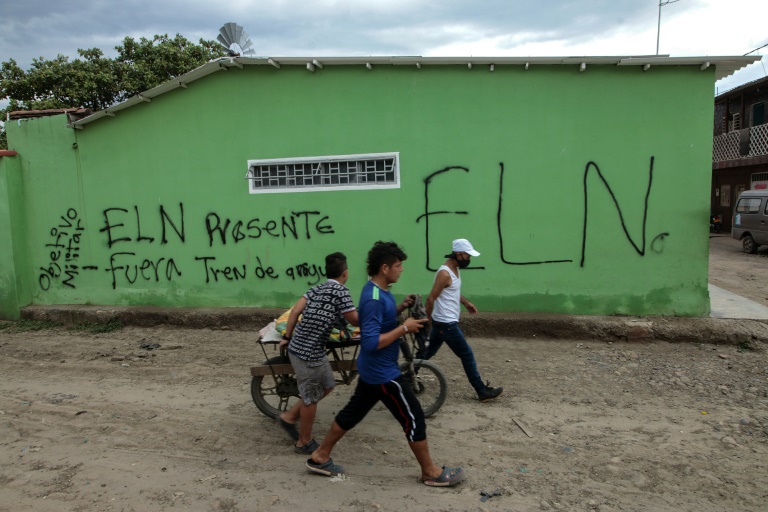
“We are declaring a ceasefire from 0:00 on May 25 until 24:00 on June 3, so that those that want to vote can do so in peace,” the Marxist National Liberation Army (ELN) said in a statement.

The ceasefire would include a halt to actions against Colombia’s security forces but the ELN added: “we reserve the right to defend ourselves if attacked.”

Defense Minister Diego Molano, however, said the ELN’s move was inspired purely by a wish to “position itself for future dialogue” with the new government.

“Security (in Colombia) is assured by the security forces,” he insisted.

After the Revolutionary Armed Forces of Colombia (FARC) signed a peace deal with the state in 2016, the ELN became the violence-ridden South American country’s last rebel group.

Former president Juan Manuel Santos had been in negotiations with the ELN to also make peace but his right-wing successor Ivan Duque put an end to the talks following a car bomb attack on a police academy in Bogota claimed by the Marxist guerrillas that killed at least 20 people.

The ELN had also called a six-day truce in March during legislative elections and presidential primaries.

Formed in 1964 in the wake of the Cuban communist revolution, the ELN counts about 2,500 fighters and an extensive support network in urban centers, mostly on the border with Venezuela and along the Pacific coast.

It is largely funded through drug trafficking, and continues fighting over territory and resources in parts of Colombia with FARC dissidents, rightwing paramilitary forces and narco cartels.

Following the election, Petro is expected to face a run-off vote on June 19 against right-wing candidate Federico Gutierrez.

Petro was formerly a member of the 19th of April Movement (M-19), an urban left-wing nationalist guerrilla group that laid down arms in 1990.

After that he entered politics and served as mayor of Bogota from 2012 to 2015, before becoming a senator.

Petro has vowed to negotiate with rebels if elected president, whereas Gutierrez has promised a frontal assault against the ELN.

Colombia is the world’s largest producer and exporter of cocaine.

Close Bitnami banner
Bitnami