World

War in Ukraine: Latest developments

Here are the latest developments in the war in Ukraine:

– Eurovision win lifts spirits –

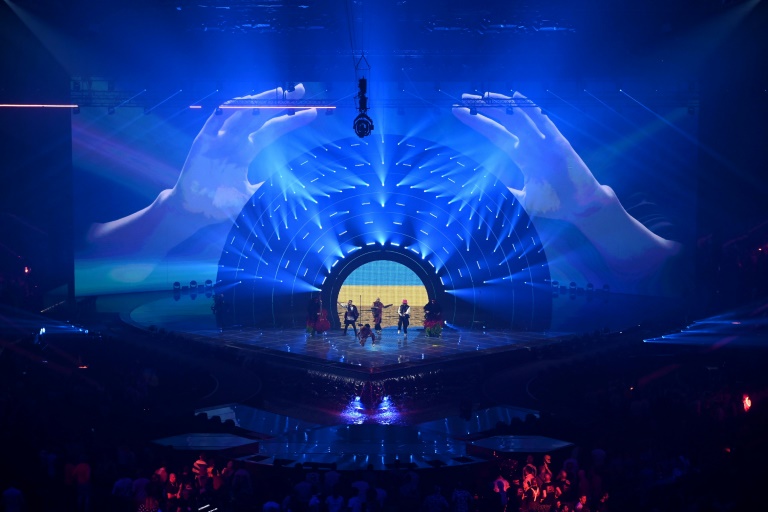
Ukrainians receive a much-needed boost as a folk rap lullaby won the Eurovision song contest. 

“Stefania”, which beat out a host of over-the-top acts at the quirky annual musical event, was written by frontman Oleh Psiuk as a tribute to his mother before the war — but its nostalgic lyrics have taken on outsized meaning because of the conflict.

“Please help Ukraine and Mariupol! Help Azоvstal right now,” Psiuk says in English from the stage, referring to the port city’s underground steelworks where Ukrainian soldiers are surrounded by Russian forces.

– ‘Very difficult’ situation in east Ukraine –

Ukraine President Volodymr Zelensky warns that the military situation in Ukraine’s southeastern Donbas region is “very difficult”.

Russia, which invaded Ukraine on February 24, has increasingly turned its attention to the country’s south and east since the end of March, after failing to take the capital Kyiv.

Western analysts believe President Vladimir Putin has his sights on annexing southern and eastern Ukraine in the months ahead but his troops have appeared to be encountering stiff resistance.

– Finland to apply for NATO membership –

Finland will apply for NATO membership, the Nordic country’s president and prime minister announces, as a result of Russia’s invasion of Ukraine.

“Today, the President of the Republic and the Government’s Foreign Policy Committee have jointly agreed that Finland will apply for NATO membership, after consulting parliament. This is a historic day. A new era is opening”, President Sauli Niinisto and premier Sanna Marin says.

– NATO talks ‘on track’ –

Talks to overcome Turkey’s misgivings about the anticipated NATO membership bids of Finland and Sweden are on a “good track”, Croatia says, as several members of the alliance eye swift accession for the Nordic states.

Turkey says it is ready to discuss Finland and Sweden’s plans to join NATO, despite accusing them of harbouring “terrorist organisations”. 

Moscow’s invasion of Ukraine on February 24 has swung political and public opinion in Finland and neighbouring Sweden in favour of NATO membership as a deterrent against Russian aggression.

– Putin warns Finland over neutrality –

President Putin tells his Finnish counterpart Sauli Niinisto that Finland scrapping its military neutrality would be a “mistake” since there is no threat to Finland’s security,” the Kremlin says in a statement after a phone call between the two leaders.

– Zelensky urges support to prevent world famine –

President Zelensky warns that the war in his country risked triggering global food shortages as he calls for more international backing.

“Now support for Ukraine — and especially with weapons — means working to prevent global famine,” Zelensky says.

“The sooner we liberate our land and guarantee Ukraine’s security, the sooner the normal state of the food market can be restored,” he adds.

Before the invasion, Ukraine exported 4.5 million tonnes of agricultural produce per month through its ports -– 12 percent of the planet’s wheat, 15 percent of its corn and half of its sunflower oil.

burs-jwp/yad
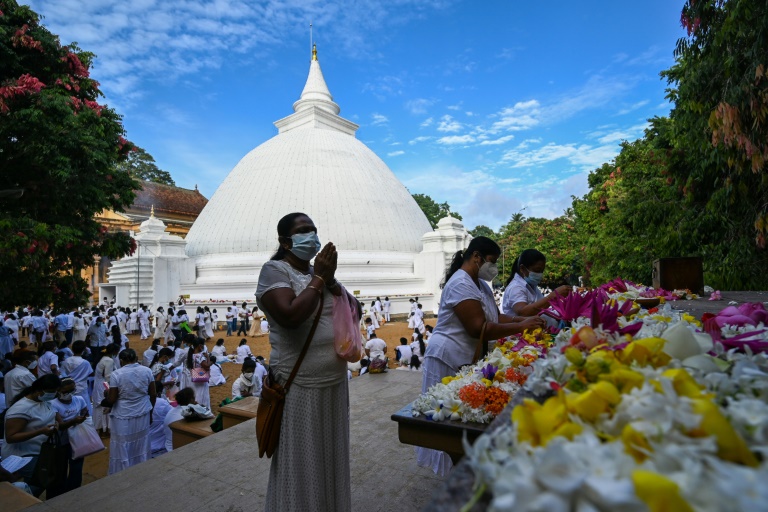
Crisis-hit Sri Lanka lifts curfew for Buddhist festival

Sri Lankan authorities lifted a nationwide curfew on Sunday for an important Buddhist festival, but celebrations were muted as the island nation’s new premier struggled to find his footing and tackle a worsening economic crisis.

A countrywide stay-home order has been in place for most of the week after mob violence left nine dead and over 225 wounded, sparked by attacks on peaceful demonstrators by government loyalists.

Protesters across the Buddhist-majority nation have for weeks demanded the resignation of President Gotabaya Rajapaksa over Sri Lanka’s worst-ever economic crisis.

Shortages of food, fuel and medicines, along with record inflation and lengthy blackouts, have brought severe hardships to the country’s 22 million people.

Sunday marks Vesak, the most important religious event on Sri Lanka’s calendar, which celebrates Buddha’s birth, enlightenment and death.

The government has declared a two-day holiday and announced it was lifting the curfew for the day without saying when or whether it would be reimposed.

But the ongoing crisis prompted the government to cancel its plans to celebrate the festival, which had been scheduled at a temple in the island’s south.

“Given the economic situation of the government and other constraints, we are not having this year’s state festival at the Kuragala temple as planned,” a Buddhist Affairs ministry official told AFP.

The official said Buddhists were free to hold their own celebrations, including the mass meditation and Buddhist sermons traditionally organised during the festival. 

Worshippers usually set up soup kitchens, lanterns and “pandal” bamboo stages bearing large paintings depicting stories from Buddha’s life.

But Sri Lanka has been unable to properly stage Vesak for years, with the Easter Sunday attacks dampening celebrations in 2019 and the last two years affected by the coronavirus pandemic.

“Everybody knows that it is Lord Buddha’s special day today,” said Chamila Perera, a housewife in the capital Colombo.

“We are hoping good things will happen,” she told AFP. “But I’m feeling very sad.”

Newly appointed Prime Minister Ranil Wickremesinghe is struggling to form a unity government ahead of Tuesday’s parliamentary session, the first since he took office.

Opposition leader Sajith Premadasa has already formally rejected an overture to join the new administration.

“The demand from the streets is that President Rajapaksa should step down,” Premadasa said. “We will not join any government with him in it.”

But he added that his party would not block legitimate “solutions to the economic problems” in parliament.

Rajapaksa on Saturday appointed four new ministers, all from his own Sri Lanka Podujana Peramuna (SLPP) party, but the all-important finance ministry remains vacant.

Official sources said the new prime minister could take the finance portfolio to spearhead ongoing negotiations with the International Monetary Fund for an urgent bailout.

– ‘They are all the same’ –

Wickremesinghe, a veteran politician who was sworn in as prime minister for a sixth time on Thursday, has already met with diplomats from Britain, the United States, Japan, China and India to seek financial aid.

He said last week that shortages will get worse in the coming weeks, with reserves of useable foreign exchange needed to import essential goods falling below $50 million.

His appointment has so far failed to quell public anger at the government for bringing Sri Lanka to the brink of economic collapse. 

“All these people are hand-in-glove,” Fareena, a resident of the capital Colombo, said of the new premier. 

“When one goes, they bring another one of their guys in,” she told AFP. “But to us, they are all the same.”

Long queues stretched outside the few fuel stations that were still open on Sunday as motorists waited for rationed petrol. 

Heavily armed troops are patrolling the streets with a state of emergency still in effect.

New UAE president meets Macron as world leaders stream in

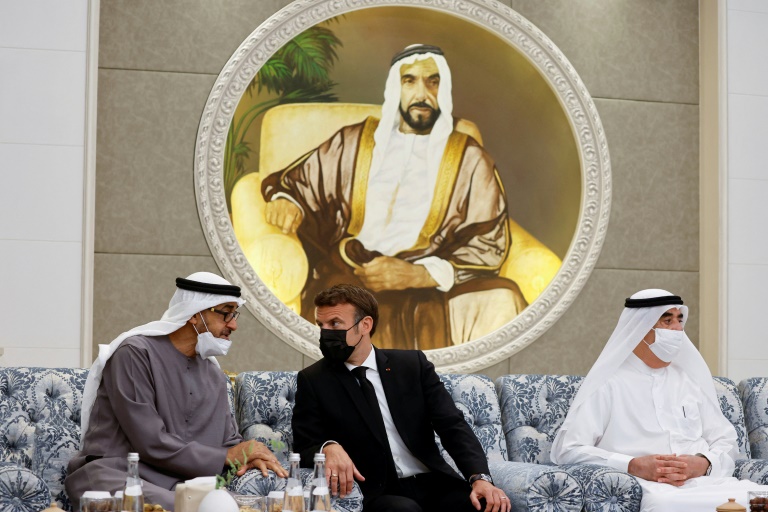
The UAE’s new president, Sheikh Mohamed bin Zayed Al Nahyan, held talks Sunday with French counterpart Emmanuel Macron as world leaders streamed in to the oil-rich Gulf state to pay tribute to his late predecessor.

Macron, on his first foreign trip since his second term started last week, expressed his condolences to the leader dubbed “MBZ” following the death of his half-brother Sheikh Khalifa on Friday after a long illness.

Macron, the first Western leader to pay his respects, will be followed by British Prime Minister Boris Johnson, US Vice President Kamala Harris and Secretary of State Antony Blinken, Israel’s president and the king of Spain, among a long list of dignitaries.

The United Arab Emirates has begun wielding increased influence in the Middle East and further afield due to its wealth, oil resources and strategic location.

MBZ has been quietly running the country since 2014 when Sheikh Khalifa, his 73-year-old half-brother, was sidelined by a stroke. The cause of his death was not announced.

Presidents and monarchs from Egypt, Iraq, Jordan, Oman and Tunisia and Sudan’s de facto ruler were among the leaders to offer their condolences on Saturday.

On Sunday, Qatar’s emir, Bahrain’s king and the Palestinian, German and Indonesian presidents were among more than 20 senior officials expected.

Macron, in his talks with Sheikh Mohamed, 61, expressed his “sincere condolences to his family and the people” over Sheikh Khalifa’s death, according to the French presidential office.

“The United Arab Emirates are a strategic partner for France, a fact that is borne out by the degree of our cooperation in areas as varied as defence, culture and education,” it added.

– Flags at half-mast –

Flags are at half-mast around the country, which is observing 40 days of mourning for Sheikh Khalifa who took over after the death of his father, founding president Sheikh Zayed bin Sultan, in 2004.

Sheikh Mohamed was chosen to head the government of the desert state in a unanimous vote Saturday by leaders of the country’s seven emirates, as had been widely expected.

MBZ’s close ally, Saudi Arabia’s de facto leader Crown Prince Mohammed bin Salman, called to congratulate the new president and India’s Prime Minister Narendra Modi tweeted to commend his “dynamic and visionary leadership”.

Blinken and Harris were due Monday for a visit that could help repair ties strained since President Joe Biden replaced Donald Trump in the White House.

The two sides have been at odds over Abu Dhabi’s refusal to condemn Russia’s invasion of Ukraine and Washington’s reopening of nuclear talks with Iran, long accused by Gulf states of creating regional chaos. 

Both Macron and Johnson were making their second visits to Abu Dhabi in recent months. Johnson’s visit in March failed to convince the UAE and Saudi Arabia to pump more oil after Russia’s war in Ukraine sent markets into turmoil.

The wealthy UAE has emerged as a leader of a reshaped Middle East, forging ties with Israel and joining a Saudi-led war against Iran-backed rebels in Yemen. 

The UAE signed a 14-billion-euro contract for 80 Rafale warplanes during Macron’s previous visit in December.

Lebanon votes in first election since crisis

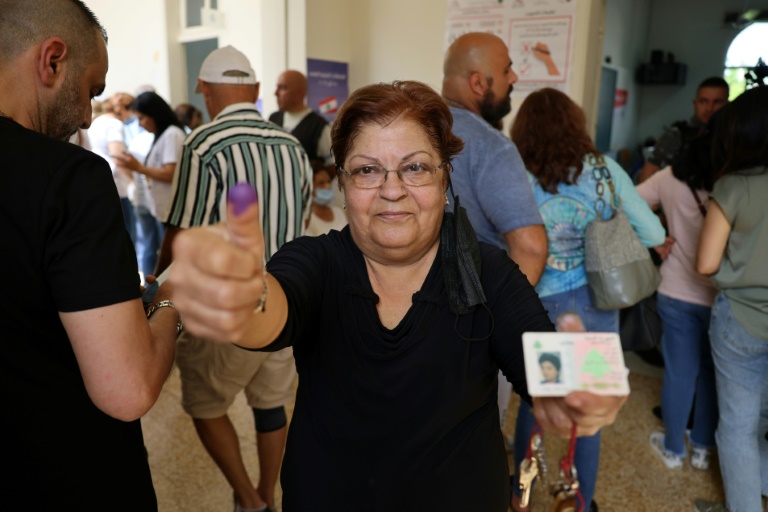
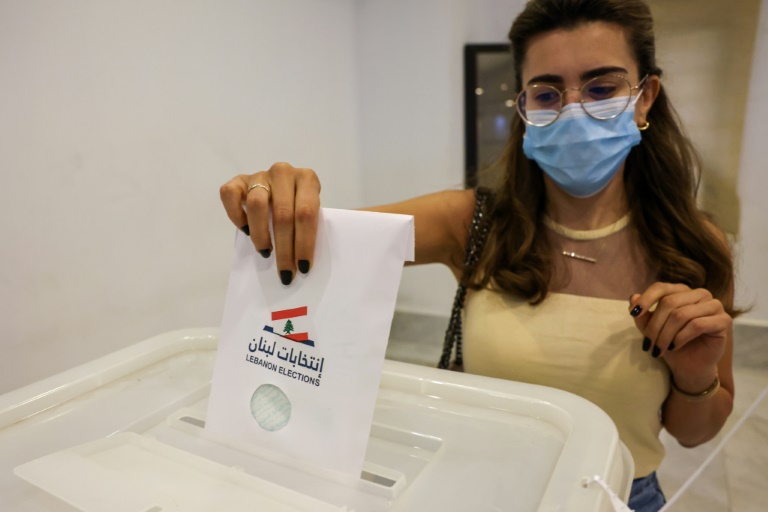
Lebanon voted Sunday in its first election since multiple crises dragged it to the brink of failed statehood, a major test for new opposition groups bent on removing the ruling elite.

Observers have warned not to expect any seismic shift, with every lever of power firmly in the hands of traditional sectarian parties and an electoral system rigged in their favour.

After an underwhelming campaign stifled by the nation’s all-consuming economic turmoil, queues of voters started forming when polling stations opened at 7:00 am (0400 GMT).

The army deployed across the country to secure a parliamentary election Lebanon’s donors have stressed was a pre-requisite for financial aid crucial to rescue it from bankruptcy.

A new generation of independent candidates and parties are hoping to kindle the change that an unprecedented anti-corruption uprising in 2019 failed to deliver.

“I am with change because we tried this current political class before and now is the time to bring in new faces,” Nayla, a 28-year-old who only gave her first name, said after casting her vote in Beirut.

Independents can hope for more than the lone seat they clinched in 2018 but most of parliament’s 128 seats will remain in the clutches of a political elite blamed for the country’s woes.

The outgoing chamber was dominated by the Iran-backed Shiite movement Hezbollah and its two main allies: the Shiite Amal party of speaker Nabih Berri who has held the job since 1992, and the Christian Free Patriotic Movement of President Michel Aoun.

“It seems almost impossible to imagine Lebanon voting for more of the same — and yet that appears to be the likeliest outcome,” said Sam Heller, an analyst with the Century Foundation.

Lebanon was mutilated by an August 2020 blast at the Beirut port that went down as one of the largest non-nuclear explosions in history and deepened one of the most spectacular economic downturns of our time.

– Corruption –

The Lebanese pound has lost 95 percent of its value, people’s savings are blocked in banks, minimum wage won’t buy a tank of petrol and mains electricity comes on only two hours a day.

Despite assurances from the interior ministry that  polling stations would be powered on election day, local media reported power cuts in some centres.

Videos shared online showed people sporting their candidate’s colours and shepherding voters into polling booths, continuing a decades-old trend of vote buying.

More than 80 percent of Lebanon’s population is now considered poor by the United Nations, with the most desperate increasingly attempting perilous boat crossings to flee to Europe.

Once described as the Switzerland of the Middle East, Lebanon ranked second-to-last behind Afghanistan in the latest World Happiness Index released in March.

Despite international pressure to reform Lebanese politics, the corruption that sank the country is still rife, including in the electoral process.

At one candidate’s rally in the northern city of Tripoli, some well-wishers disappointed by the lack of cash handouts made off with the plastic chairs.

– Low hopes –

While Sunday’s election might not topple their reviled leadership, some Lebanese see the vote as an important test for the principles that arose during the October 2019 uprising.

For Marianne Vodolian, a spokesperson for families of victims of the cataclysmic August 2020 explosion that disfigured Beirut and killed more than 200 people, voting is a sacred duty.

“We are against the regime that ruled us for 30 years, robbed us and blew us up,” said the 32-year-old.

“The elections are an opportunity to change the system and hold it accountable in a way that makes this country liveable,” Vodolian said.

Top political barons have stalled an investigation into the explosion — two of the main suspects are even running for a seat — and legal proceedings against the Central Bank governor over financial crimes are equally floundering.

One of the most notable changes in the electoral landscape is the absence of former prime minister Saad Hariri, which leaves parts of the Sunni vote up for grabs by new players.

Saudi Aramco says Q1 profits jump 82% as oil prices surge

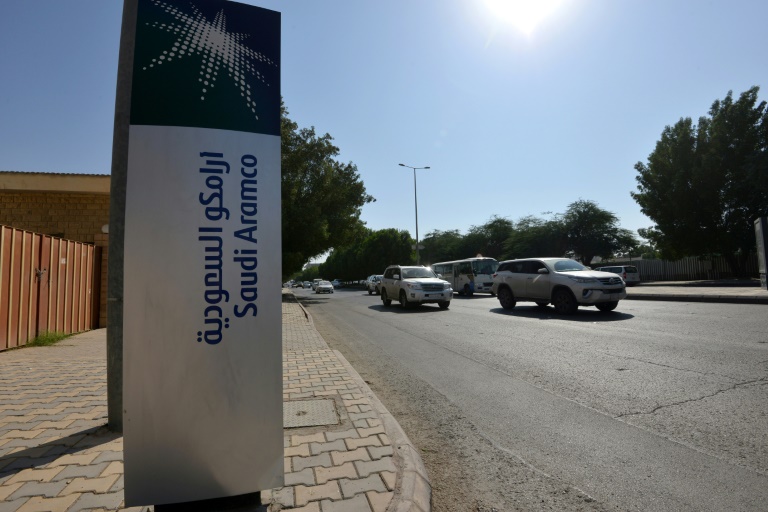
Saudi Aramco on Sunday posted an 82-percent jump in first quarter profits, buoyed by a global surge in oil prices that has made it the world’s most valuable company. 

The announcement continued a string of recent positive economic news for Saudi Arabia, where a booming oil sector is fuelling the fastest growth rate in a decade. 

Aramco’s net income of $39.5 billion was up from $21.7 billion compared with the same period in 2021, “primarily driven by higher crude oil prices and volumes sold, and improved downstream margins,” it said in a press release. 

The latest financial results were published four days after Aramco dethroned Apple as the world’s most valuable company, with shares worth $2.42 trillion compared to Apple’s $2.37 trillion. 

In March, Aramco reported a 124 percent net annual profit increase for 2021. 

But the firm, the kingdom’s “crown jewel” and primary source of government revenue, has faced security challenges from the war which involves a Saudi-led military coalition against Yemen’s Huthi rebels who have repeatedly targeted the kingdom, including Aramco sites.

A two-month truce in the war has generally been holding since it started in April, but in 2019 Huthi-claimed aerial assaults on two Aramco facilities in eastern Saudi Arabia temporarily knocked out half of the kingdom’s crude production. 

A March attack by the Huthis on facilities of the largely state-owned firm caused a “temporary” drop in production. 

The net income for the first quarter was a record for Aramco since its initial public offering in 2019.

Also on Sunday, Aramco announced it was issuing 20 billion bonus shares to shareholders — one share for every 10 shares already owned. 

A dividend of $18.8 billion will be paid in the second quarter, it said. 

“Against the backdrop of increased volatility in global markets, we remain focused on helping meet the world’s demand for energy that is reliable, affordable and increasingly sustainable,” Aramco president and CEO Amin Nasser said. 

– Oil-fuelled boom –

In early May, Saudi Arabia reported its fastest economic growth rate in a decade, as a booming oil sector fuelled a 9.6 percent rise in the first quarter over the same period of 2021.

The world’s biggest oil exporter has resisted US entreaties to raise output in an attempt to rein in prices that have spiked since the Ukraine war began. 

As the war got underway, Saudi Arabia and the United Arab Emirates stressed their commitment to the OPEC+ oil alliance, which Riyadh and Moscow lead, underscoring Riyadh’s and Abu Dhabi’s increasing independence from long-standing ally Washington. 

Saudi Arabia’s GDP is expected to grow by 7.6 percent in 2022, the International Monetary Fund said in April.

Saudi Arabia has sought both to open up and diversify its oil-reliant economy, especially since Mohammed bin Salman’s appointment as crown prince in 2017. 

Aramco floated 1.7 percent of its shares on the Saudi bourse in December 2019, generating $29.4 billion in the world’s biggest initial public offering. 

In February, the kingdom shifted four percent of Aramco shares, worth $80 billion, to the country’s sovereign wealth fund — a move analysts saw as a possible prelude to further opening up the oil giant.

Saudi Aramco says Q1 profits jump 82% as oil prices surge

Saudi Aramco on Sunday posted an 82-percent jump in first quarter profits, buoyed by a global surge in oil prices that has made it the world’s most valuable company. 

The announcement continued a string of recent positive economic news for Saudi Arabia, where a booming oil sector is fuelling the fastest growth rate in a decade. 

Aramco’s net income of $39.5 billion was up from $21.7 billion compared with the same period in 2021, “primarily driven by higher crude oil prices and volumes sold, and improved downstream margins,” it said in a press release. 

The latest financial results were published four days after Aramco dethroned Apple as the world’s most valuable company, with shares worth $2.42 trillion compared to Apple’s $2.37 trillion. 

In March, Aramco reported a 124 percent net annual profit increase for 2021. 

But the firm, the kingdom’s “crown jewel” and primary source of government revenue, has faced security challenges from the war which involves a Saudi-led military coalition against Yemen’s Huthi rebels who have repeatedly targeted the kingdom, including Aramco sites.

A two-month truce in the war has generally been holding since it started in April, but in 2019 Huthi-claimed aerial assaults on two Aramco facilities in eastern Saudi Arabia temporarily knocked out half of the kingdom’s crude production. 

A March attack by the Huthis on facilities of the largely state-owned firm caused a “temporary” drop in production. 

The net income for the first quarter was a record for Aramco since its initial public offering in 2019.

Also on Sunday, Aramco announced it was issuing 20 billion bonus shares to shareholders — one share for every 10 shares already owned. 

A dividend of $18.8 billion will be paid in the second quarter, it said. 

“Against the backdrop of increased volatility in global markets, we remain focused on helping meet the world’s demand for energy that is reliable, affordable and increasingly sustainable,” Aramco president and CEO Amin Nasser said. 

– Oil-fuelled boom –

In early May, Saudi Arabia reported its fastest economic growth rate in a decade, as a booming oil sector fuelled a 9.6 percent rise in the first quarter over the same period of 2021.

The world’s biggest oil exporter has resisted US entreaties to raise output in an attempt to rein in prices that have spiked since the Ukraine war began. 

As the war got underway, Saudi Arabia and the United Arab Emirates stressed their commitment to the OPEC+ oil alliance, which Riyadh and Moscow lead, underscoring Riyadh’s and Abu Dhabi’s increasing independence from long-standing ally Washington. 

Saudi Arabia’s GDP is expected to grow by 7.6 percent in 2022, the International Monetary Fund said in April.

Saudi Arabia has sought both to open up and diversify its oil-reliant economy, especially since Mohammed bin Salman’s appointment as crown prince in 2017. 

Aramco floated 1.7 percent of its shares on the Saudi bourse in December 2019, generating $29.4 billion in the world’s biggest initial public offering. 

In February, the kingdom shifted four percent of Aramco shares, worth $80 billion, to the country’s sovereign wealth fund — a move analysts saw as a possible prelude to further opening up the oil giant.

Crisis-hit Sri Lanka lifts curfew for Buddhist festival

Sri Lankan authorities lifted a nationwide curfew Sunday for an important Buddhist festival, but celebrations were muted as the island nation’s new premier struggled to find his footing and tackle a worsening economic crisis.

A countrywide stay-home order has been in place for most of the week after mob violence left nine dead and over 225 wounded, sparked by attacks on peaceful demonstrators by government loyalists.

Protesters across the Buddhist-majority nation have for weeks demanded the resignation of President Gotabaya Rajapaksa over Sri Lanka’s worst-ever economic crisis.

Shortages of food, fuel and medicines, along with record inflation and lengthy blackouts, have brought severe hardships to the country’s 22 million people.

Sunday marks Vesak, the most important religious event on Sri Lanka’s calendar, which celebrates Buddha’s birth, enlightenment and death.

The government has declared a two-day holiday and announced it was lifting the curfew for the day without saying when or whether it would be reimposed.

But the ongoing crisis prompted the government to cancel its plans to celebrate the festival, which had been scheduled at a temple in the island’s south.

“Given the economic situation of the government and other constraints, we are not having this year’s state festival at the Kuragala temple as planned,” a Buddhist Affairs ministry official told AFP.

The official said Buddhists were free to hold their own celebrations, including the mass meditation and Buddhist sermons traditionally held during the festival. 

Worshippers traditionally set up soup kitchens, lanterns and “pandal” bamboo stages bearing large paintings depicting stories from Buddha’s life.

But Sri Lanka has been unable to properly stage Vesak for years, with the Easter Sunday attacks dampening celebrations in 2019 and the last two years affected by the coronavirus pandemic.

This year’s event has been scaled down due to political instability brought on by the economic crisis.

Newly appointed Prime Minister Ranil Wickremesinghe is struggling to form a unity government ahead of Tuesday’s parliamentary session, the first since he took office.

Opposition leader Sajith Premadasa has already formally rejected an overture to join the new administration.

“The demand from the streets is that President Rajapaksa should step down,” Premadasa said. “We will not join any government with him in it.”

But he added that his party would not block legitimate “solutions to the economic problems” in parliament.

Rajapaksa on Saturday appointed four new ministers, all from his own Sri Lanka Podujana Peramuna (SLPP) party, but the all-important finance ministry remains vacant.

Official sources said the new prime minister could take the finance portfolio to spearhead ongoing negotiations with the International Monetary Fund for an urgent bailout.

– ‘They are all the same’ –

Wickremesinghe, a veteran politician who was sworn in as prime minister for a sixth time on Thursday, has already met with diplomats from Britain, the United States, Japan, China and India to seek financial aid.

He said last week that shortages will get worse in coming weeks, with reserves of useable foreign exchange needed to import essential goods falling below $50 million.

His appointment has so far failed to quell public anger at the government for bringing Sri Lanka to the brink of economic collapse. 

“All these people are hand-in-glove,” Fareena, a resident of the capital Colombo, said of the new premier. 

“When one goes, they bring another one of their guys in,” she told AFP. “But to us, they are all the same.”

Long queues stretched outside the few fuel stations that were still open on Sunday as motorists waited for rationed petrol. 

Heavily armed troops are patrolling the streets with a state of emergency still in effect.

Covid-hit Shanghai announces gradual reopening of businesses

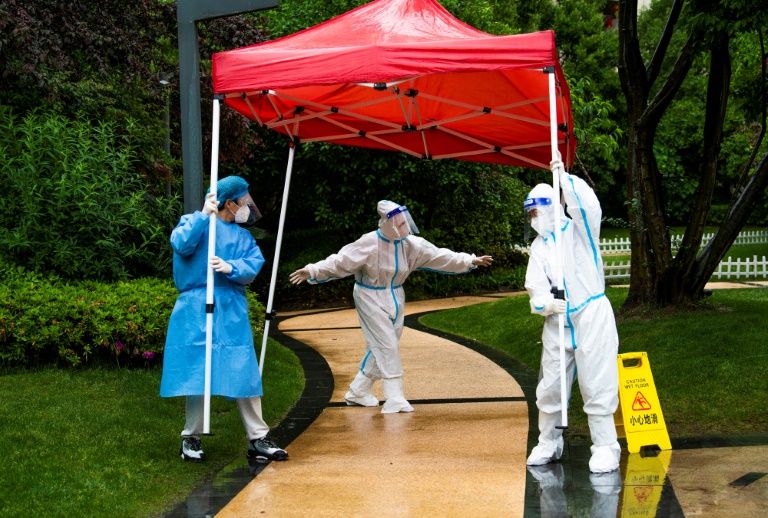
Shanghai announced a gradual reopening from Monday of businesses, though it remains unclear when the millions of people still locked down in China’s economic capital will finally be allowed out of their homes.

Confronted with its worst Covid-19 outbreak since the beginning of the pandemic, China — the last major economy still closed off to the world — put the city of 25 million under heavy restrictions in early April.

The rigid strategy to root out virus cases at all costs has wreaked havoc on supply chains, crushed small businesses and imperilled the country’s economic goals. 

For many Shanghai residents, some of whom were already confined to their homes even before April, the frustrations have included problems with food supplies, access to non-Covid medical care and spartan quarantine centres, and many are venting their anger online.

Shanghai vice mayor Chen Tong on Sunday announced a reopening of businesses “in stages” from May 16.

Chen however did not specify if he was referring to a gradual resumption of activity in the city or if it was conditional on certain health criteria.

Under China’s zero-Covid strategy, any lifting of restrictions is generally conditional on seeing no new positive cases for three days, outside of quarantine centres. 

Shanghai authorities were aiming for this goal by mid-May.

Infections appear to be on the decline, with 1,369 new cases reported on Sunday in Shanghai, way down from more than 25,000 at the end of April.

In some areas of the city, however, restrictions have been tightened in recent days.

Some 1,200 kilometres (750 miles) north, residents of Beijing fear they could face a similar lockdown after more than a thousand cases were recorded in the capital since the end of April.

Beijing has repeatedly tested its residents and locked down buildings with positive cases and closed metro stations and non-essential businesses in certain neighbourhoods.

In an attempt to curb the outbreak, Fangshan district in the southwest of Beijing, which has 1.3 million residents, suspended taxi services from Saturday. 

Apart from a few neighbourhoods which are under restrictions, the vast majority of Beijing’s 22 million inhabitants can still leave their homes. 

But many public places are closed and residents are forced to work from home, especially in the populous Chaoyang district, where many multinationals are based.

Lebanon votes in first election since crisis

Lebanon voted Sunday in its first election since multiple crises dragged it to the brink of failed statehood, a major test for new opposition groups bent on removing the ruling elite.

Observers have warned not to expect any seismic shift, with every lever of power firmly in the hands of traditional sectarian parties and an electoral system rigged in their favour.

After an underwhelming campaign stifled by the nation’s all-consuming economic turmoil, 3.9 million Lebanese were eligible to vote when polling stations opened at 7:00 am (0400 GMT).

The army deployed across the country to secure an election Lebanon’s donors have stressed was a pre-requisite for financial aid crucial to rescuing the country from bankruptcy.

A new generation of independent candidates and parties are hoping to kindle the change that an unprecedented anti-corruption uprising in 2019 failed to deliver.

“I am with change because we tried this current political class before and now is the time to bring in new faces,” Nayla, a 28-year-old who only gave her first name, told AFP after casting her vote in Beirut.

Independents can hope for more than the lone seat they clinched in 2018 but most of parliament’s 128 seats will remain in the clutches of the very political class that is blamed for the country’s woes.

The outgoing chamber was dominated by the Iran-backed Shiite movement Hezbollah and its two main allies: the Shiite Amal party of Speaker Nabih Berri and the Christian Free Patriotic Movement of President Michel Aoun.

“It seems almost impossible to imagine Lebanon voting for more of the same — and yet that appears to be the likeliest outcome,” said Sam Heller, an analyst with the Century Foundation.

Since the last election, the country was mutilated by an August 2020 blast at the Beirut port that went down as one of the largest non-nuclear explosions in history and deepened one of the most spectacular economic downturns of our time.

– Corruption –

The Lebanese pound has lost 95 percent of its value, people’s savings are blocked in banks, minimum wage won’t buy a tank of petrol and mains electricity comes on only two hours a day.

More than 80 percent of the population is now considered poor by the United Nations, with the most desperate increasingly attempting perilous boat crossings to flee to Europe.

Once described as the Switzerland of the Middle East, Lebanon ranked second-to-last behind Afghanistan in the latest World Happiness Index released in March.

Numbed by the daily hardships of the economic crisis, many registered voters have seemed indifferent to an election that they doubted would even be held until a few days ago.

Despite international pressure to reform Lebanese politics, the corruption that sank the country is still rife, including in the electoral process.

The crisis has only widened the gap in purchasing power between the politicians who buy votes and the electorate that sells them.

At one candidate’s rally in the northern city of Tripoli, some well-wishers disappointed by the lack of cash handouts made off with the plastic chairs.

– Low hopes –

While Sunday’s election might not topple their reviled leadership, some Lebanese see the vote as an important test for the principles that arose during the October 2019 uprising.

For Marianne Vodolian, the cataclysmic August 2020 explosion that disfigured Beirut and killed more than 200 people makes voting an even more sacred duty.

“We are against the regime that ruled us for 30 years, robbed us and blew us up,” said the 32-year-old, a spokesperson for the families of blast victims.

Opposition parties, many of which emanated from the now-defunct protest movement supporting secular and democratic change, have struggled to mount a united challenge but could secure a stronger voice in parliament nonetheless.

“The elections are an opportunity to change the system and hold it accountable in a way that makes this country liveable,” Vodolian said.

Top political barons have stalled an investigation into the explosion — two of the main suspects are even running for a seat — and legal proceedings against the Central Bank governor over financial crimes are equally floundering.

One of the most notable changes in the electoral landscape is the absence of former prime minister Saad Hariri, which leaves parts of the Sunni vote up for grabs by new players.

Russian radio voices sow fear in Ukraine war zone

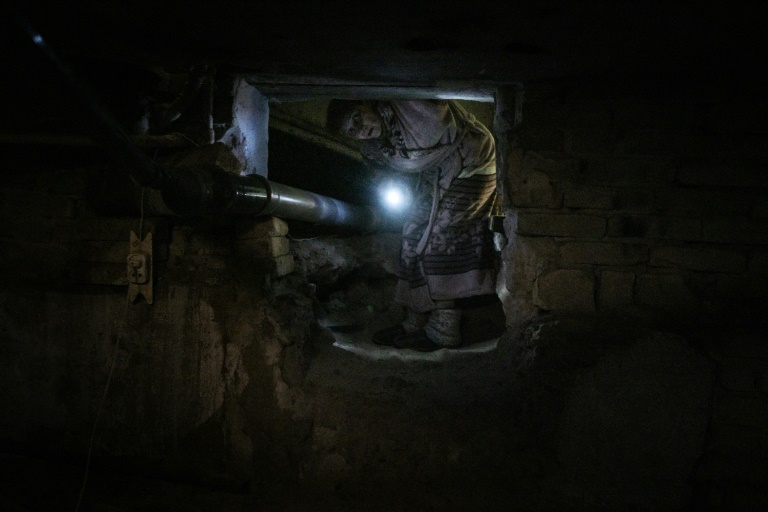
The portable radio in the dark cellar of the rocket-damaged kindergarten was transmitting news in Russian over whistling airwaves about the Kremlin’s military triumphs in Ukraine.

The six frightened women and lone man cowering in the heart of the east Ukrainian war zone had no idea whether to believe the monotone voice — or who was actually patrolling the streets of the besieged city of Lysychansk above their heads.

All they knew was that their building was hit a few days earlier by a Grad volley that left the tail end of one of the unexploded rockets sticking out of the pavement at a sharp angle just steps from the back door.

Their feverish fears vacillated between the idea that their shelter’s lone entrance might get blocked by falling debris and that the Kremlin’s forces might come knocking unannounced.

“The Russians on the radio just said that they have captured Bakhmut. Is that true?” Natalia Georgiyevna anxiously asked about a city 30 miles (50 kilometres) to the southwest that remains under full Ukrainian control.

“We do not really know anything,” her neighbour Viktoria Viktorovna added from a corner cot positioned just outside the beam of light illuminating a lone patch of the dank cellar.

“I guess we still have the Ukrainians here, no?”

– Mysterious voices –

Nearly three months of war have transformed this coal mining city of 100,000 mostly Russian speakers into a wasteland that lacks everything from water and power to cell phone service.

Most people who crawl out of their shelters during afternoon lulls in fighting make a beeline for the city’s lone natural spring to stock up on water that they must boil to make safe to drink.

Some of the women in the kindergarten basement — so frightened they only divulge their patronymics instead of their last names for fear of being discovered and punished — said they had not ventured outside for two months.

This paralysing isolation is being compounded by haunting Russian and Ukrainian radio broadcasts that appear over random airwaves and present contradictory news.

The unidentified voices fade in and out and occasionally simply disappear.

“The Russians are saying they are winning and the Ukrainians are saying they are,” Natalia Georgiyevna said.

“When we still had the internet, we could watch the news. But now… I have no idea who these voices are or where they come from.”

– Information vacuum –

The concept of warring sides filling information vacuums with propaganda is not new.

Radio was a powerful Western weapon against the Soviet Union in the Cold War era that Moscow tried to jam.

Russia has been transmitting its take on the news across eastern Ukraine throughout an eight-year insurgency that preceded the Kremlin’s all-out invasion on February 24.

The Lysychansk broadcasts are adding to a heightened sense of paranoia that appears to reign across the utterly lawless streets of an expansive industrial zone teetering on the edge of the east Ukrainian front for weeks.

The Russians are closing in from three directions on Lysychansk’s sister city of Severodonetsk to the north.

The Ukrainians are fighting with all their might to keep the Russians from pushing south of a strategic river splitting the two cities.

This has left people such as coalminer Oleg Zaitsev worrying as much about the identity of the armed men whizzing around in battered cars as the shells randomly falling from the sky.

“I am mostly afraid that some stranger might drive up to me and ask for my papers. You never know these days whose side they are on,” the 53-year-old said on his way back to his basement.

“They could be the Russians, and who knows what happens to you then.”

– Urban conflict – 

Residents said the Grad volley at the start of the week appeared to be aimed at a grade school on the opposite side of the yard that housed one of the Ukrainian units defending the city.

The controversial topic of military men occupying civilian buildings in times of urban conflict is every-present in the propaganda war being waged over Ukraine.

Some locals seethe at the idea. Others say Ukraine has no other choice because Russia was the one that brought war onto its cities.

Cellar dweller Yevghen Polchikha seemed less concerned about the morality of housing soldiers in schools than he was about the possibility of the Grad rocket still sticking out of the ground blowing up.

“It is just lying there,” the 58-year-old said. “Our kindergarten seems sturdy enough. But you just never know.”

Close Bitnami banner
Bitnami