World

Charlo knocks out Castano to claim undisputed crown

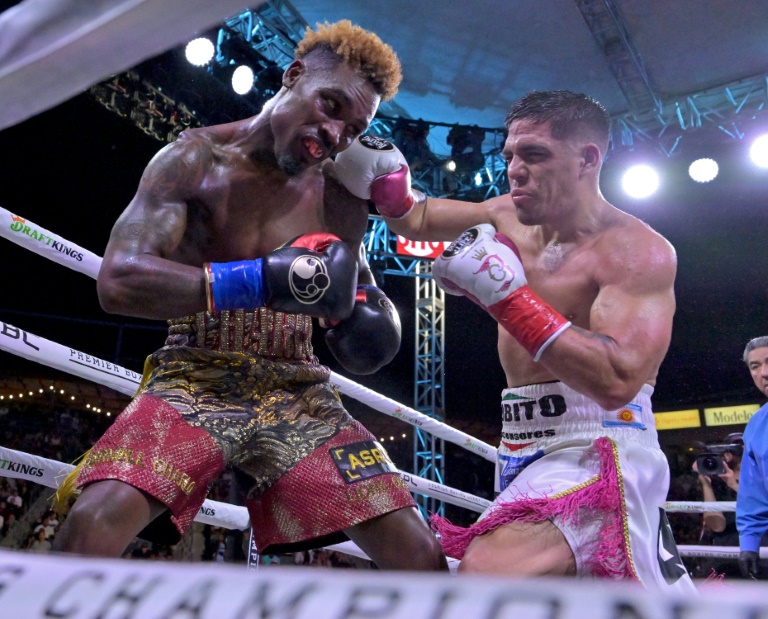
Jermell Charlo knocked out Argentina’s Brian Castano to become the first undisputed super welterweight champion in history on Saturday.

Charlo, who fought to a controversial draw against Castano last year, battered the South American into submission in the 10th round of a classic battle in Los Angeles.

Charlo, the reigning WBC, WBC and IBF champion, earned Castano’s WBO belt with the win at the open-air Dignity Health Sports Park arena.

The 31-year-old Charlo sent Castano to the canvas twice in the 10th round just as he had begun to get on top of a hard-fought battle that saw the two men share the opening rounds.

A crunching right hook to the body stunned Castano and Charlo followed with a left hook to the head that sent the previously undefeated Argentinian crumpling to the canvas.

With Castano unsteady on his feet, Charlo moved in for the kill. 

A powerful left jerked Castano’s head back violently and another punishing left to the body sent him to the deck for the final time.

“This is unbelievable,” Charlo said. “I gave it my all and that was the end result of it. This was nerve-wracking. It felt like my first fight, where you get nervous. I had ants in my pants.

“I knew Castano was going to give it his all, and I trained very hard. I was in great shape,” added Charlo, who improves to 35-1-1 (19 knockouts).

– Exclusive club –

Charlo’s win elevates him to an exclusive club of fighters. He is only the seventh boxer to hold all four belts from the major sanctioning bodies — WBC, WBA, IBF and WBO –- at the same time.

The six men to do it before are Bernard Hopkins (middleweight), Jermain Taylor (middleweight), Terence Crawford (super lightweight), Oleksandr Usyk (cruiserweight), Josh Taylor (super lightweight) and Saul ‘Canelo’ Alvarez (super middleweight).

Charlo and Castano’s first clash in Texas last July ended in a split decision draw, with one judge scoring it 117-111 for Charlo, another 114-113 for Castano, and the other 114-114.

On Saturday, it looked as if both men were unwilling to risk leaving it to the judge’s cards again in a fight that erupted from the opening bell.

Both boxers landed heavy shots in the first six rounds, with very little to choose between either man.

But Castano appeared to tire noticeably in the seventh round, and Charlo’s crisper punches began to take their toll.

“I listened to my corner this time,” Charlo said. “I saw that he was wearing down a little bit and I was breaking him down. I just saw my punches being more effective.”

Charlo repeatedly landed solid shots in the eighth and ninth, but Castano was never totally out of contention, still causing problems with his stinging right hand.

The end came quickly in the 10th, however, after Castano was knocked to the floor with a brutal Charlo combination. 

The Argentine did well to get back to his feet but was unable to respond when Charlo unleashed a final combination that sent him to the canvas once more.

“I was pretty sure he was going to get back up because it was only the first knockdown — but I knew it was over,” Charlo said afterward.

Castano, meanwhile, paid tribute to his victorious opponent.

“Everything that happened in the ring tonight, we showed that we are warriors,” he said. “That’s the main thing. We have to feed our families.

“We both were fighting back-and-forth. It was power back-and-forth and then his right hand came over and stopped the fight. He’s a champion. He hit me. He got me. But I’m okay.”
Ten killed in 'racially motivated' shooting at US grocery store

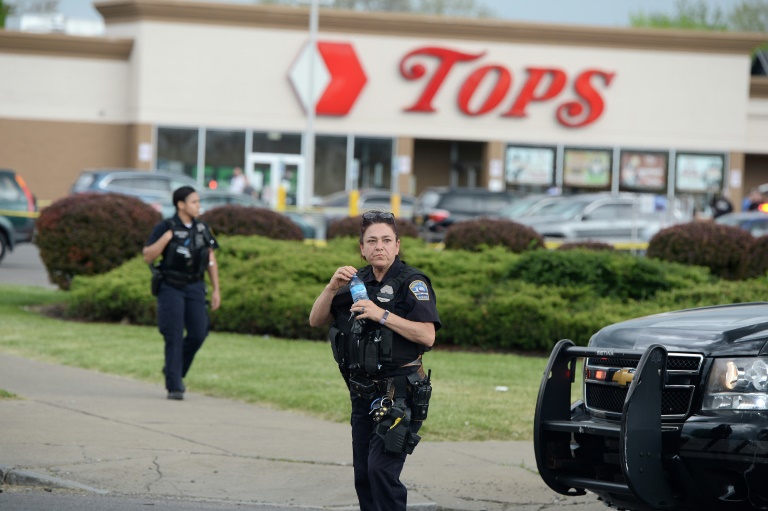
A heavily armed 18-year-old white man shot 10 people dead on Saturday at a Buffalo, New York grocery store in a “racially motivated” attack that he live-streamed on camera, authorities said.

The gunman, who was wearing body armor and a helmet, was arrested after the massacre, Buffalo Police Commissioner Joseph Gramaglia told a news conference.

Gramaglia put the toll at 10 dead and three wounded. Eleven of the victims were African Americans.

The gunman shot four people in the parking lot of the Tops supermarket, three of them fatally, then went inside and continued firing, Gramaglia said.

Among those killed inside the store was a retired police officer working as an armed security guard.

The guard “engaged the suspect, fired multiple shots,” but the gunman shot him, Gramaglia said.

He added that when police arrived, the shooter put the gun to his neck, but was talked down and surrendered.

Stephen Belongia, special agent in charge of the FBI’s Buffalo field office, told the news conference that the shooting is being investigated as a hate crime.

“We are investigating this incident as both a hate crime and a case of racially motivated violent extremism,” Belongia said.

Erie County Sheriff John Garcia described the attack as “pure evil.”

“It was straight up racially motivated hate crime from somebody outside of our community,” he said.

When asked what information led authorities to term the attack a hate crime, Erie County District Attorney John Flynn said they had evidence indicating “racial animosity,” but declined to elaborate.

– ‘Manifesto’ –

US media outlets have reported officials are investigating a detailed “manifesto” posted online before the shooting, in which the suspect outlines his plans and racial motivations for the attack.

Quoting from the manifesto, the New York Times reported the suspect had been “inspired” by white supremacist acts of violence, including the massacre of 51 Muslims in Christchurch, New Zealand in March 2019.

A semi-automatic weapon used in Saturday’s shooting also had a racial epithet written on it as well as the number 14 — a reference to a white supremacist phrase — according to local daily The Buffalo News, citing a local official.

District Attorney Flynn said in the press conference that the shooter used an “assault weapon” — a term that can apply to types of rifles and shotguns in New York — but did not specify which kind.

Flynn’s office said in a tweet Saturday night that the suspect — identified as Payton Gendron of Conklin, New York — had been arraigned on a charge of first-degree murder, which carries a sentence of life without parole. He is being held without bail.

Asked during the earlier press conference if the shooter could face the death penalty at the federal level, the US attorney for the Western District of New York, Trini Ross, said: “All options are on the table as we go forward with the investigation.”

– ‘Day of great pain’ –

Byron Brown, the mayor of Buffalo — which is located in western New York State, along the US border with Canada — said the shooter “traveled hours from outside this community to perpetrate this crime.”

“This is a day of great pain for our community,” Brown said.

White House Press Secretary Karine Jean-Pierre said US President Joe Biden had been briefed on the “horrific shooting.”

In a statement, Biden thanked police and first responders and denounced the attack. 

“Any act of domestic terrorism, including an act perpetrated in the name of a repugnant white nationalist ideology, is antithetical to everything we stand for in America,” he said.

Senate Majority Leader Chuck Schumer, the senior US senator from New York, said in a tweet: “We are standing with the people of Buffalo.”

The governor of New York, Kathy Hochul, described the killings as a “horrific white supremacist shooting” in a tweet that also praised the grocery store security guard as “a true hero.”

A spokesperson for streaming service Twitch confirmed to AFP that the shooter used the service to broadcast the attack.

“We have investigated and confirmed that we removed the stream less than two minutes after the violence started,” the spokesperson said, adding: “We are taking all appropriate action, including monitoring for any accounts rebroadcasting this content.”

– Wave of gun violence –

The Buffalo shooting follows other recent instances of racially motivated mass killings in the United States.

In 2019, a white gunman traveled hours across the state of Texas and killed 23 people at a Walmart in El Paso, where the vast majority of the population is Hispanic.

Four years earlier, in Charleston, South Carolina, a white man opened fire in an African American church, killing nine.

In both instances, the men posted hate-filled manifestos online before their shooting rampages.

Despite recurring mass-casualty shootings and a nationwide wave of gun violence, multiple initiatives to reform gun regulations have failed in the US Congress, leaving states and local councils to enact their own restrictions.

The United States suffered 19,350 firearm homicides in 2020, up nearly 35 percent compared to 2019, the Centers for Disease Control and Prevention (CDC) said in its latest data.

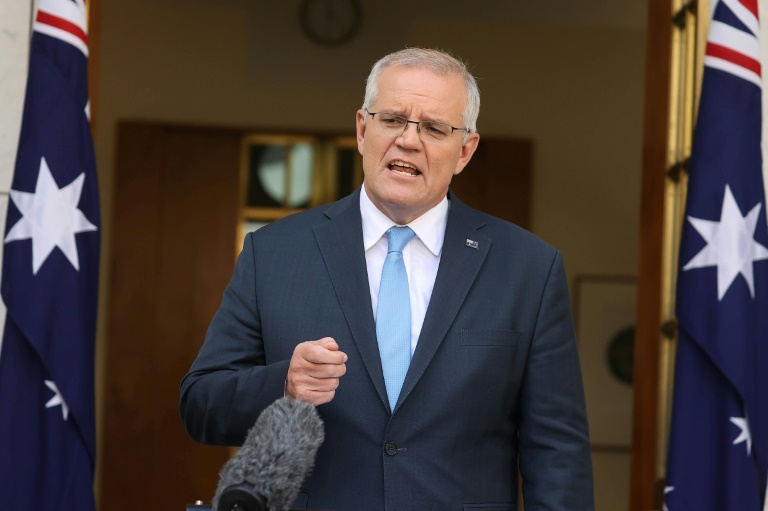
Australia PM makes final push for re-election

Australia’s conservative prime minister sounded the gun on the last lap of a bitterly-fought election campaign Sunday, admitting “not everything went to plan” during the country’s pandemic response.

At an official launch of his party’s election campaign ahead of the May 21 vote, conservative Scott Morrison acknowledged missteps during the crisis but declared “Australia has prevailed” 

In reality, the election campaign has been underway for months — if not years — but the event offered Morrison a chance to rally the party base and appeal to voters who appear set to boot him out after three tumultuous years in office.

According to the latest opinion polls, the centre-left Labor party, led by Anthony Albanese is expected to win Saturday’s vote.

But both sides know an upset is still possible.

Morrison’s tenure has been beset by a rolling series of crises, from climate-fuelled droughts, bushfires and floods to the global Covid-19 pandemic.

“It has been one of the most challenging times we have ever known,” Morrison said, while insisting the country was now “heading in the right direction.” 

The 54-year-old from Sydney’s affluent Eastern Suburbs has come under fire for a glacial vaccine rollout that helped make sure Australia’s borders were shut for the better part of two years.

He is also facing anger over the government’s handling of natural disasters and reluctance to pivot away from fossil fuels. 

Polls consistently show around 70 percent of Australians want more action on climate change, but Morrison has repeatedly rejected calls for ambitious climate targets or scaling back the country’s vast coal mining industry.

Seeking to make the election a choice rather than a referendum on his leadership, Morrison has painted the Labor party as “loose units” on the economy and an Albanese premiership as an “experiment.”

To sweeten the deal, Morrison also announced plans to allow first-time buyers to use their pension savings to purchase a home. 

That policy is likely to be popular among young Australians struggling to get access to a turbocharged property market but is also likely to stoke home price inflation further. 

Lebanon votes in first election since crisis

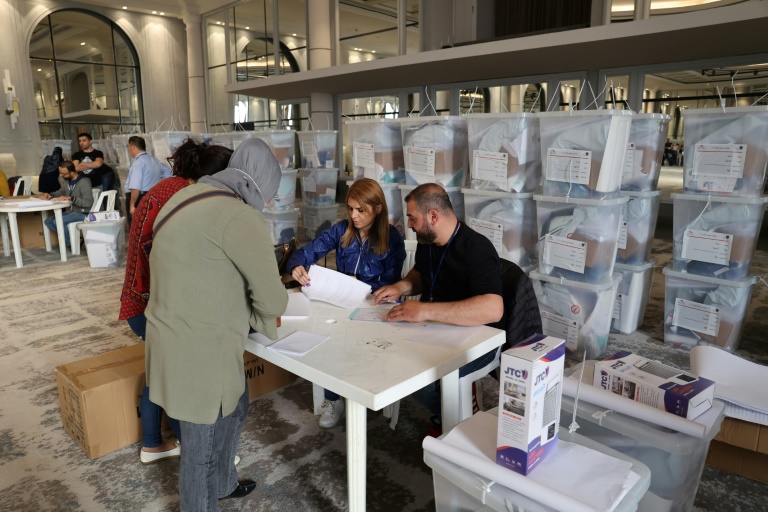
Lebanon voted Sunday in its first election since multiple crises dragged it to the brink of failed statehood, with the ruling elite expected to comfortably weather public anger.

The parliamentary election is a first test for opposition movements spawned by an unprecedented anti-establishment uprising in 2019 that briefly raised hopes of regime change in Lebanon.

Yet observers have warned not to expect any seismic shift, with every lever of power firmly in the hands of traditional sectarian parties and an electoral system rigged in their favour.

After an underwhelming campaign stifled by the nation’s all-consuming economic predicament, 3.9 million Lebanese were eligible to vote when polling stations opened at 7:00 am (0400 GMT).

The army deployed across the country to secure an election Lebanon’s donors have stressed was a pre-requisite for crucial financial rescue measures.

Independents can hope for more than the lone seat they clinched in 2018 but most of parliament’s 128 seats will remain in the clutches of the very political class that is blamed for the country’s woes.

The outgoing chamber was dominated by the Iran-backed Shiite movement Hezbollah and its two main allies: the Shiite Amal party of Speaker Nabih Berri and the Christian Free Patriotic Movement of President Michel Aoun.

“It seems almost impossible to imagine Lebanon voting for more of the same — and yet that appears to be the likeliest outcome,” said Sam Heller, an analyst with the Century Foundation.

Since the last election, the country was mutilated by an August 2020 blast at the Beirut port that went down as one of the largest non-nuclear explosions in history and deepened one of the most spectacular economic downturns of our time.

– Corruption –

The Lebanese pound has lost 95 percent of its value, people’s savings are blocked in banks, minimum wage won’t buy a tank of petrol and mains electricity comes on only two hours a day.

More than 80 percent of the population is now considered poor by the United Nations, with the most desperate increasingly attempting perilous boat crossings to flee to Europe.

Once described as the Switzerland of the Middle East, Lebanon ranked second-to-last behind Afghanistan in the latest World Happiness Index released in March.

Numbed by the daily hardships of the economic crisis, many registered voters have seemed indifferent to an election that they doubted would even be held until a few days ago.

Despite international pressure to reform Lebanese politics, the corruption that sank the country is still rife, including in the electoral process.

The crisis has only widened the gap in purchasing power between the politicians who buy votes and the electorate that sells them.

At one candidate’s rally in the northern city of Tripoli, some well-wishers disappointed by the lack of cash handouts made off with the plastic chairs.

– Low hopes –

While Sunday’s election might not topple their reviled leadership, some Lebanese see the vote as an important test for the principles that arose during the October 2019 uprising.

For Marianne Vodolian, the cataclysmic August 2020 explosion that disfigured Beirut and killed more than 200 people makes voting an even more sacred duty.

“We are against the regime that ruled us for 30 years, robbed us and blew us up,” said the 32-year-old, a spokesperson for the families of blast victims.

Opposition parties, many of which emanated from the now-defunct protest movement supporting secular and democratic change, have struggled to mount a united challenge but could secure a stronger voice in parliament nonetheless.

“The elections are an opportunity to change the system and hold it accountable in a way that makes this country liveable,” Vodolian said.

Top political barons have stalled an investigation into the explosion — two of the main suspects are even running for a seat — and legal proceedings against the Central Bank governor over financial crimes are equally floundering.

One of the most notable changes in the electoral landscape is the absence of former prime minister Saad Hariri, which leaves parts of the Sunni vote up for grabs by new players.

Fierce fighting in Ukraine's east but Eurovision win lifts spirits

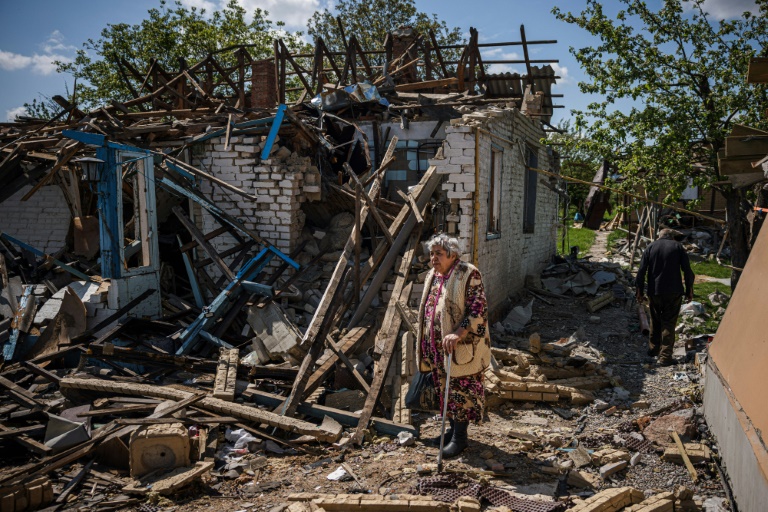
Ukraine’s forces were fighting off a fierce Russian onslaught on the east of the country Sunday, after a Eurovision victory gave the country a much-needed boost of morale.

President Volodymr Zelensky warned on Saturday that the war in his country risked triggering global food shortages, adding that the situation in Ukraine’s Donbas is “very difficult”.

Russia, which invaded Ukraine on February 24, has increasingly turned its attention to the country’s east since the end of March, after failing to take the capital Kyiv.

Western analysts believe President Vladimir Putin has his sights on annexing southern and eastern Ukraine in the months ahead but his troops have appeared to be encountering stiff resistance.

Russia’s war in Ukraine is increasingly shifting the balance of power in Europe, with Finland and Sweden poised to jettison decades of military non-alignment to join NATO as a defence against feared further aggression from Moscow.

Helsinki is set to formally announce its bid for membership on Sunday.

But as a conflict that has displaced millions dragged towards its third month, Ukrainians were offered a much-needed boost of optimism as a rap lullaby combining folk and modern hip-hop rhythms won the Eurovision song contest. 

“Stefania”, which beat out a host of over-the-top acts at the quirky annual musical event, was written by frontman Oleh Psiuk as a tribute to his mother before the war — but its nostalgic lyrics have taken on outsized meaning because of the conflict.

“Please help Ukraine and Mariupol! Help Azоvstal right now,” Psiuk said in English from the stage, referring to the port city’s underground steelworks where Ukrainian soldiers are surrounded by Russian forces.

There was also optimism from Kyiv’s head of military intelligence, who told the UK’s Sky News on Saturday that the war could reach a “breaking point” by August and end in defeat for Russia before the end of the year.

Major General Kyrylo Budanov told the news network that he was “optimistic” about the current trajectory of the conflict.

– ‘Heavy fighting’ – 

On the ground, the governor of the eastern Lugansk region, Serhiy Gaidai, said Ukrainian forces had prevented Russian attempts to cross a river and encircle the city of Severodonetsk.

“There’s heavy fighting on the border with Donetsk region,” Gaidai said, reporting major Russian losses of equipment and personnel.

“From interceptions (of phone calls), we understand that a whole (Russian) battalion has refused to attack, because they see what’s happening.”

Aerial images showed dozens of destroyed armoured vehicles on the river bank and wrecked pontoon bridges.

UK military intelligence also said Russian forces had sustained heavy losses as they attempted the river crossing.

The highly risky manoeuvre reflected “the pressure the Russian commanders are under to make progress in their operations in eastern Ukraine”, it added.

But Moscow’s forces had “failed to make any significant advances despite concentrating forces in this area”, it said.

In Washington, a senior US defence official said most of the activity was now in the Donbas area.

Kharkiv regional governor Oleh Synegubov meanwhile said in a video on Telegram that Ukrainian forces were counter-attacking in the direction of the northeastern city of Izium.

And the Ukrainian General Staff said troops had managed to push Russian troops out of Kharkiv, a priority target for Moscow.

“The enemy’s main efforts are focused on ensuring the withdrawal of its units from the city of Kharkiv,” a spokesman said. 

On Friday, Zelensky said his troops would fight to recapture all occupied territory, and those under siege, including in the devastated southern port city of Mariupol.

There, the last defenders of the city are holed up in a warren of underground tunnels and bunkers at the vast Azovstal steelworks under heavy bombardment.

The United Nations and Red Cross helped to evacuate women, children and the elderly from the plant whey there were sheltering earlier this month.

Petro Andryushchenko, an advisor to the mayor of the city, said on Telegram that a “huge convoy” of 500 to a thousand cars had arrived in the city of Zaporizhia.

“Finally, we are waiting for our relatives from Mariupol at home,” he said.

– Balance of power –

Poised to join NATO are Sweden and Finland, whose grid operator said Russia halted electricity supplies overnight.

Finnish officials said power supplied by Sweden had made up for the losses.

Ahead of talks with NATO members in Berlin, Finnish Foreign Minister Pekka Haavisto said he was “confident that in the end we will find a solution and Finland (and) Sweden will become members of NATO”.

Earlier, in a phone call initiated by Helsinki, President Sauli Niinisto had a “direct and straightforward” conversation with Putin.

“Avoiding tensions was considered important,” Niinisto’s office said.

Putin, however, told him that Finland joining NATO would be a “mistake”, insisting that Russia posed “no threat to Finland’s security”, the Kremlin said.

Ukraine’s Zelensky also met with a delegation of senior US lawmakers Saturday, with Senate Republican leader Mitch McConnell reaffirming Washington’s support for the country.

“The Ukrainians are fighting bravely against a deranged invader and have already succeeded beyond skeptics’ wildest dreams,” McConnell said in a statement.

“They are willing and determined to keep fighting to victory.” 

– Food crisis –

The war is also having deep ripple effects on the global economy, with wheat prices soaring in the wake of the invasion.

“Now support for Ukraine — and especially with weapons — means working to prevent global famine,” Zelensky said in his address. 

“The sooner we liberate our land and guarantee Ukraine’s security, the sooner the normal state of the food market can be restored,” he said.

Before the invasion, Ukraine exported 4.5 million tonnes of agricultural produce per month through its ports -– 12 percent of the planet’s wheat, 15 percent of its corn and half of its sunflower oil.

But with the ports of Odessa, Chornomorsk and others cut off from the world by Russian warships, the supply can only travel on congested land routes that are much less efficient.

India had previously said it was ready to help fill some of the supply shortages caused by the war.

But on Saturday the country banned wheat exports without government approval, drawing sharp criticism from the G7’s agriculture ministers meeting in Germany, who said that such measures “would worsen the crisis”.

G7 ministers urged countries not to take restrictive action that could pile further stress on the produce markets.

They “spoke out against export stops and call as well for markets to be kept open”, said German Agriculture Minister Cem Ozdemir, whose nation holds the rotating presidency of the group.

Cartoon alien aims to ease World Cup culture shock in Qatar

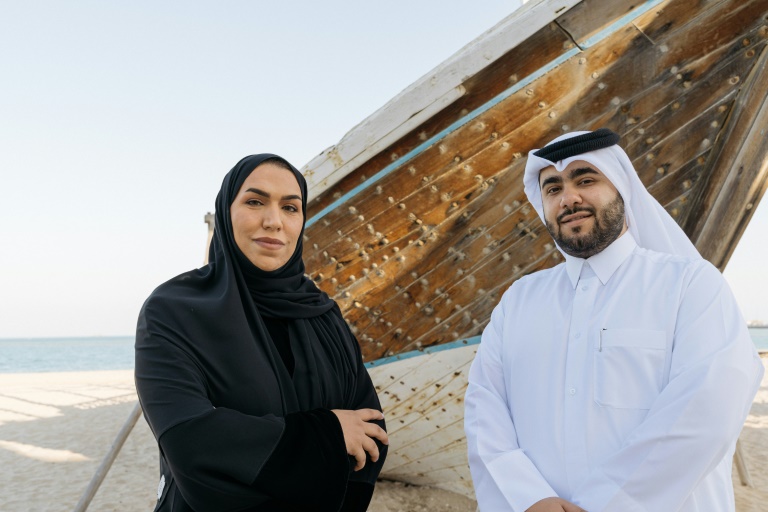
A cartoon series on an alien who crash-lands in World Cup host Qatar aims to ease a culture clash between more than a million foreign football fans and the conservative state’s residents.

Like the arriving fans, Kawkabani, star of the series launched by Qatar’s first animation studio, has to learn Arabic pronunciation, how to drink coffee — and to discover that Qataris prepare way too much food for their guests.

Creators Hossein Heydar and Amal al-Shammari also want Qataris to get the message that they will have to make cultural concessions to the beer-drinking, good-time-seeking masses who converge on their country in November and December.

The first two 10-minute episodes of “Kawkabani” — which means “The Planet Person” in Arabic — have already been launched on YouTube by their company, Nefaish Animation. 

“As an animation studio, we looked at content in the region, even in Qatar, and we felt there was a lack of content that represents Qatari culture,” said Shammari, Nefaish’s creative director.

Arabic words were sometimes garbled and costumes not always quite right.

“We felt like we need a studio in Qatar that pays attention to all these details and represents Qatari culture in the right way,” he said.

Tiny Qatar’s triumph in securing the right to host the World Cup gives it the opportunity to show off its traditions and customs. 

“We want to explain a lot of things and share our culture with the visitors,” said Shammari, who wrote the script.

Nefaish only hired artists from the Middle East with knowledge of Arabic culture, added Heydar, in charge of animation.

Besides Kawkabani, the series has three main Qatari characters representing what the creators consider to be the main strands of the 270,000-strong indigenous community, which lives alongside more than 2.5 million foreign workers.

– Coffee culture –

Faisal is a traditional bedouin, the community that used to inhabit the desert.

“You know they’re more proud of their culture, and then they sometimes overreact,” said Shammari.

But “they would support you no matter what. They’ll always be there for you.”

Saad, another of the Qatari characters, is a more “modern” city dweller. “He is open to different cultures, he’s open to people, he wants to be a businessman,” said the writer.

As for Khalifa, he represents the growing mixed community in Qatar. A vegan, his mother is British and father Qatari.

Each of the five episodes in the first series — translated into English, French, Spanish, Hindi, Mandarin Chinese and Japanese on YouTube — shows the Qatari way of life, especially food and drink.

Kawkabani runs into trouble for not knowing the right-handed gesture used to indicate having drunk too much coffee.

But the series also pokes fun at Qataris.

With up to 1.4 million visitors expected in Qatar for the World Cup, Shammari said the cartoon sought “to explain to Qataris that there must be acceptance of these cultures… and help them (visitors) coexist or understand the Qatari culture as well”.

Kawkabani was part-financed by Qatar’s World Cup organisers, the Supreme Committee for Delivery and Legacy, as well as the Doha Film Institute and telecoms giant Vodafone.

While the first programmes do not touch on controversial issues such as rights of migrant workers and women, Heydar insisted there had been complete artistic freedom.

“This is our show and the sponsors were very supportive and they gave us all the freedom to create it the way we see it,” he said.

The pair already plan two more series of Kawkabani alongside other projects to highlight Arab culture. 

“Our heritage is full of stories, is full of characters, full of heroes and we want to showcase them from Qatar or from the Arabic region to the whole world,” he said.

Swiss vote on 'Netflix' law, organ donations and Frontex

Switzerland votes on Sunday on whether streaming services should cough up money to boost Swiss film-making — and whether everyone should automatically become an organ donor unless they say otherwise.

Under the wealthy Alpine nation’s direct democracy system, voters are called to the polls four times a year to decide on specific topics, according to popular demand.

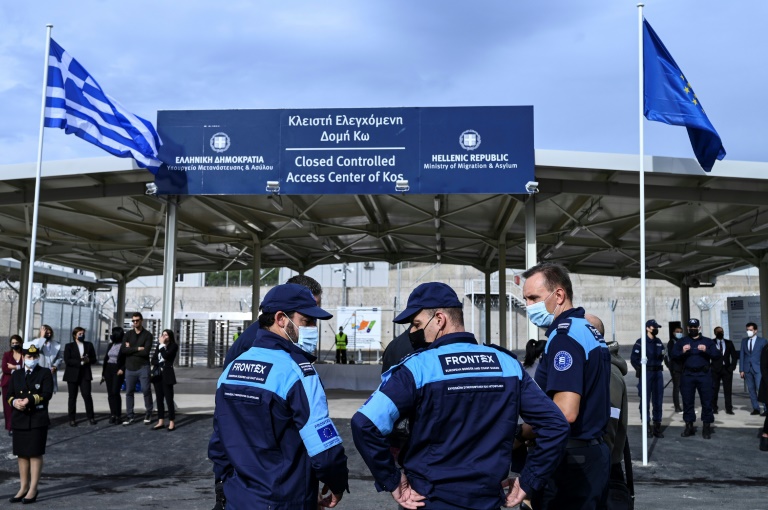
Besides streaming services and organ donation, the Swiss are voting on whether to join in the planned expansion of the European border agency Frontex, providing more money and staff to protect the continent’s Schengen open-borders zone.

The polls close at midday (1000 GMT), with most ballots having already been sent in by post over the past four weeks.

Vote projections should come within an hour, with the results due later Sunday.

– Lex Netflix –

The so-called “Lex Netflix” vote is on an amendment to the Film Production Act adopted by parliament last October.

Since 2007, domestic television broadcasters have been obliged to invest four percent of their turnover in Swiss film-making.

The law change is intended to catch up with the dramatic shift in how audiovisual content is now consumed, with global streaming platforms like Netflix, Disney+ and Blue now making hundreds of millions of dollars in Switzerland each year.

Furthermore, the platforms will be required to ensure that European-made films or series make up at least 30 percent of the content available in Switzerland, as in the neighbouring European Union.

Right-leaning opponents collected enough signatures to take the change to a referendum.

If the challenge fails, streaming services would have to submit to the four-percent rule.

The referendum looks set to pass by a narrow margin, according to recent opinion polls, although opposition has been growing.

– Transplant laws –

The vote on changing the organ donation laws would see everyone become a potential donor after death unless they have expressly opted out. 

Currently, transplants are only possible if the donor consented before they died.

The government and parliament want to change the law to a “presumed consent” model — as used in a number of other European countries. 

Relatives would still have the right of refusal if they suspected that the deceased would not have wanted to be an organ donor. 

A group of opponents, backed by the populist and religious right, gathered enough signatures to force a referendum. 

Polls show around 60 percent support changing the law.

At the end of 2021, more than 1,400 patients were awaiting transplant organs in Switzerland, a country of around 8.6 million people.  

But 72 people died in 2021 while on the waiting list, according to the Swisstransplant organisation.

– Frontexit? –

Ties between Brussels and Bern have been strained since May 2021 when non-EU Switzerland suddenly decided to end years of discussion towards a broad cooperation agreement with the bloc.

The Frontex vote could add to the unease.

Under Europe’s expansion plan, Frontex would have a permanent contingent of 10,000 border guards and coast guards.

Switzerland would nearly triple its financial contribution to Frontex to 61 million Swiss francs ($61 million, 58 million euros) annually.

Migrant support organisations, backed by left-leaning political parties, collected enough signatures to force a referendum.

The government has warned if voters reject the expansion, Switzerland risks automatic exclusion from the Schengen area.

Opinion polls indicate 69 percent of Swiss voters back expanding Frontex.

In February, the Swiss voted to tighten their notoriously lax tobacco laws by banning virtually all advertising of the hazardous products.

Voters also rejected banning all animal testing, and providing additional state funding to media companies.

Iraq's prized rice crop threatened by drought

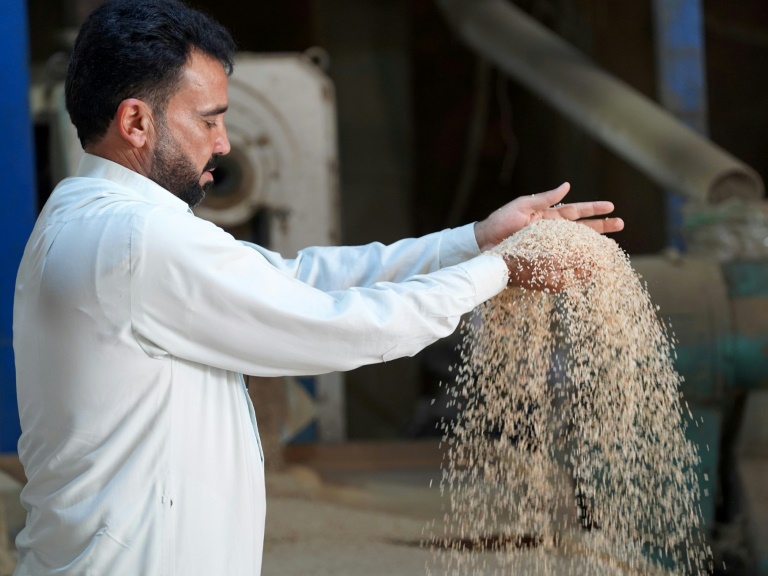
Drought is threatening the Iraqi tradition of growing amber rice, the aromatic basis of rich lamb and other dishes, and a key element in a struggling economy.

The long-grained variety of rice takes its name from its distinctive scent, which is similar to that of amber resin. It is used in Iraqi meals including sumptuous lamb qouzi, mansaf and stuffed vegetables.

But after three years of drought and declining rainfall, Iraq’s amber rice production will be only symbolic in 2022, forcing consumers to seek out imported varieties and leaving farmers pondering their future.

“We live off this land,” Abu Rassul says, standing near a small canal that in normal times irrigates his two hectares (five acres) near Al-Abassiya village in the central province of Najaf.

“Since I was a child I have planted amber rice,” says the farmer in his 70s, his face wrinkled and unshaven, dressed in a dazzling white dishdasha robe.

“Water enables us to plant every year.”

Except for this one.

Normally, rice fields planted in mid-May should stay submerged all summer until October — but that’s a luxury Iraq can no longer allow.

The country’s available water reserves “are well below our critical level of 18 billion cubic metres (4.8 trillion gallons)”, Shaker Fayez Kadhim, Najaf’s water resources manager, told AFP.

Rice drains between 10 and 12 billion cubic metres during its cultivation period of about five months, so it is “difficult to grow rice in Najaf or other provinces because of the high level of water it needs”, Kadhim said.

Previously, more than 70 percent of the amber crop was grown in Diwaniyah and neighbouring Najaf provinces.

In early May, officials limited total rice crop areas to 1,000 hectares (2,471 acres), in Najaf and Diwaniyah only, according to the agriculture ministry.

The normal quota is 35 times that.

Water shortages have also led to reduced quotas for wheat farmers.

The country’s annual rice production had been 300,000 tonnes (tons), according to Mohammed Chasseb, a senior official in the ministry’s planning department.

Iraq is known in Arabic as the “country of the two rivers” — the Tigris and the Euphrates. But despite those two legendary water sources, the supply of water has been declining for years and the country is classified as one of five most vulnerable to climate change effects and desertification.

The consequences are dire: depleted rivers, more intense sandstorms, declining crop yields — all of which add to the multiple challenges the country faces after decades of war and insurgency.

– Fearing the worst –

The Tigris and Euphrates, and their tributaries, originate in Turkey and Syria as well as Iran, which dams them upstream. This reduces the flow as they enter Iraq.

Kadhim says the Euphrates has dropped to about one-third of its normal level. He wants “political action” to get more water flowing.

Ahmed Hassoun, 51, president of the Najaf farmers’ association, fears the worst.

“There is a risk of seeing rice cultivation disappear for lack of water,” he said, blaming authorities.

“We know Iraq will have a shortage of rain in the coming years,” said Hassoun, an agricultural engineer. Despite that, nothing has been done to “modernise the irrigation system”, he complains.

But agriculture is not the only sector where the infrastructure needs upgrading in a country grappling with corruption and a financial crisis after decades of war.

Hassoun lamented that Iraq has become “a market for all its neighbours”, a reference to the deluge of Iranian and Turkish agricultural product imports.

Last year, Iraq’s own agricultural sector contracted by 17.5 percent “following severe droughts, energy outages, and the rising global price of inputs”, according to the World Bank.

That is significant in a country highly dependent on oil income but that wants to diversify its economy.

According to the World Food Programme, agriculture is the second-largest contributor to Iraq’s GDP, after oil, and employs about 20 percent of the workforce.

“We want the state to take an interest in farmers,” says Jassem Zaher, who is in his 60s and also exclusively farms amber rice.

“We don’t have other crops. It’s the farmers’ livelihood.”

Iraq's prized rice crop threatened by drought

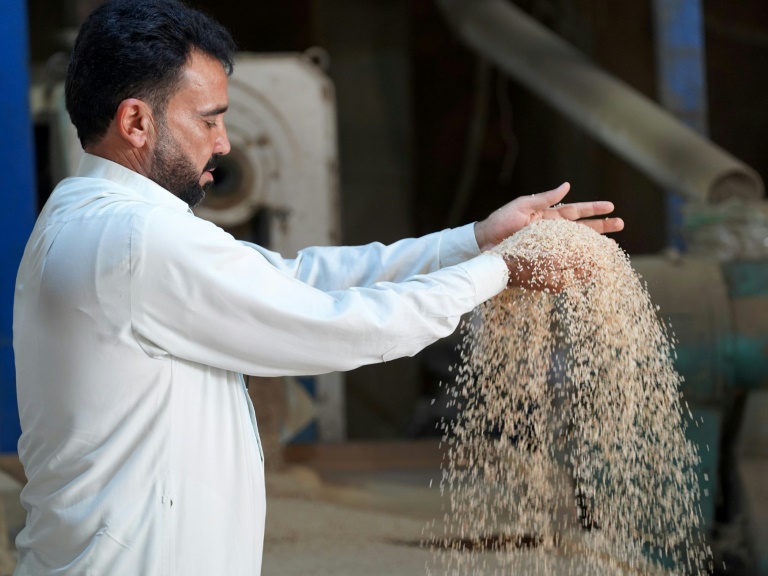
Drought is threatening the Iraqi tradition of growing amber rice, the aromatic basis of rich lamb and other dishes, and a key element in a struggling economy.

The long-grained variety of rice takes its name from its distinctive scent, which is similar to that of amber resin. It is used in Iraqi meals including sumptuous lamb qouzi, mansaf and stuffed vegetables.

But after three years of drought and declining rainfall, Iraq’s amber rice production will be only symbolic in 2022, forcing consumers to seek out imported varieties and leaving farmers pondering their future.

“We live off this land,” Abu Rassul says, standing near a small canal that in normal times irrigates his two hectares (five acres) near Al-Abassiya village in the central province of Najaf.

“Since I was a child I have planted amber rice,” says the farmer in his 70s, his face wrinkled and unshaven, dressed in a dazzling white dishdasha robe.

“Water enables us to plant every year.”

Except for this one.

Normally, rice fields planted in mid-May should stay submerged all summer until October — but that’s a luxury Iraq can no longer allow.

The country’s available water reserves “are well below our critical level of 18 billion cubic metres (4.8 trillion gallons)”, Shaker Fayez Kadhim, Najaf’s water resources manager, told AFP.

Rice drains between 10 and 12 billion cubic metres during its cultivation period of about five months, so it is “difficult to grow rice in Najaf or other provinces because of the high level of water it needs”, Kadhim said.

Previously, more than 70 percent of the amber crop was grown in Diwaniyah and neighbouring Najaf provinces.

In early May, officials limited total rice crop areas to 1,000 hectares (2,471 acres), in Najaf and Diwaniyah only, according to the agriculture ministry.

The normal quota is 35 times that.

Water shortages have also led to reduced quotas for wheat farmers.

The country’s annual rice production had been 300,000 tonnes (tons), according to Mohammed Chasseb, a senior official in the ministry’s planning department.

Iraq is known in Arabic as the “country of the two rivers” — the Tigris and the Euphrates. But despite those two legendary water sources, the supply of water has been declining for years and the country is classified as one of five most vulnerable to climate change effects and desertification.

The consequences are dire: depleted rivers, more intense sandstorms, declining crop yields — all of which add to the multiple challenges the country faces after decades of war and insurgency.

– Fearing the worst –

The Tigris and Euphrates, and their tributaries, originate in Turkey and Syria as well as Iran, which dams them upstream. This reduces the flow as they enter Iraq.

Kadhim says the Euphrates has dropped to about one-third of its normal level. He wants “political action” to get more water flowing.

Ahmed Hassoun, 51, president of the Najaf farmers’ association, fears the worst.

“There is a risk of seeing rice cultivation disappear for lack of water,” he said, blaming authorities.

“We know Iraq will have a shortage of rain in the coming years,” said Hassoun, an agricultural engineer. Despite that, nothing has been done to “modernise the irrigation system”, he complains.

But agriculture is not the only sector where the infrastructure needs upgrading in a country grappling with corruption and a financial crisis after decades of war.

Hassoun lamented that Iraq has become “a market for all its neighbours”, a reference to the deluge of Iranian and Turkish agricultural product imports.

Last year, Iraq’s own agricultural sector contracted by 17.5 percent “following severe droughts, energy outages, and the rising global price of inputs”, according to the World Bank.

That is significant in a country highly dependent on oil income but that wants to diversify its economy.

According to the World Food Programme, agriculture is the second-largest contributor to Iraq’s GDP, after oil, and employs about 20 percent of the workforce.

“We want the state to take an interest in farmers,” says Jassem Zaher, who is in his 60s and also exclusively farms amber rice.

“We don’t have other crops. It’s the farmers’ livelihood.”

Tech titans curb hiring in a 'challenging macro environment'

From e-commerce colossus Amazon to social networking star Facebook, US tech firms that once grew with abandon have reined in hiring to endure tumultuous times.

Internet giants that saw business boom during the pandemic have taken a hit from inflation, war, supply-line trouble and people returning to pre-Covid lifestyles.

Corporate belt-tightening was a common theme as big tech firms reported earnings from the first three months of this year.

Facebook parent Meta told analysts that hiring goals were being adjusted as it continued to look to a bright future.

“We regularly re-evaluate our talent pipeline according to our business needs, and in light of the expense guidance given for this earnings period, we are slowing its growth accordingly,” a Meta spokesperson told AFP.

“However, we will continue to grow our workforce to ensure we focus on long-term impact.”

Seattle-based Amazon,  the second largest employer in the United States, revealed that its ranks are overly plump after ending last year with more than twice as many workers as it had in 2019.

As the spread of the Omicron variant of Covid-19 slowed during the first quarter of this year and workers returned from time off, Amazon “quickly went from being understaffed to overstaffed,” chief financial officer Brian Olsavsky told analysts.

Twitter confirmed that it has flat-out suspended hiring, and even showed a few senior executives the exit, as it faces a takeover by Elon Musk, the richest person on the planet.

Musk sent mixed messages Friday about his proposed Twitter acquisition.

In an early-morning tweet, Musk said the $44 billion takeover was “temporarily on hold,” pending questions over the social media company’s estimates of the number of fake accounts or “bots.”

Two hours later, the unpredictable Tesla chief executive tweeted that he was “still committed to acquisition.”

“Our industry is in a very challenging macro environment — right now,” Twitter chief executive Parag Agrawal said Friday in a tweet.

“I won’t use the deal as an excuse to avoid making important decisions for the health of the company, nor will any leader at Twitter.”

At ride-share pioneer Uber, CEO Dara Khosrowshahi said they will “treat hiring as a privilege,” according to an email to employees seen by CNBC.

While big tech players have steered clear of budget-driven layoffs, such is not the case for stock trading platform Robinhood or Cameo, an app that sells custom video messages from celebrities.

Robinhood said in April that it will cut nearly 350 positions, about 9 percent of its workforce. Cameo terminated the contracts of 80 employees recently, according to news website The Information.

– Reasons behind the cuts –

Reasons for hiring curbs, freezes or cuts vary.

Meta, for example, put some blame on a tweak Apple made to software running its popular mobile devices that stymies the gathering of user data to target ads more effectively.

Uber, meanwhile, reported it was hit with a big loss in the first three months of the year, despite a rebound in its ride-share business.

The loss was due almost entirely to revaluation of its stakes in Grab and Didi in Asia and US-based autonomous driving firm Aurora, the earnings report said.

A common factor for many internet firms, though, was that brisk hiring done while demand was spiking during the pandemic has led to overweight staffing in leaner times.

“Many tech companies have been fulfilling this demand with notable growth in digital services, and as such, recruited and grew their business notably during the past two years,” said Terry Kramer, an assistant professor at the UCLA business school.

“A reasonable part of what we’re seeing now I believe is the normal maturity of technology adoption – where companies can’t/don’t need to continue growing at the same rate.”

Another factor weighing heavily is inflation, which has driven up costs overall and tightened consumer budgets.

The US central bank has been steadily raising interest rates this year, making it more expensive for companies to borrow money.

On Wall Street, an S&P 500 index comprising tech sector stocks has fallen more than 22 percent since the start of the year, and the tech-heavy Nasdaq is down slightly more overall.

Wedbush analyst Daniel Ives advised investors not to fear a recurrence of the epic Dot-com crash of the late 1990s.

“This is not a Dot-com Bubble 2.0,” Ives said in a note to investors.

“It’s a massive overcorrection in a higher rate environment that will cause a bifurcated tech tape, with clear haves and have-nots.”

Close Bitnami banner
Bitnami