World

US rate hikes strain Hong Kong's virus-weakened economy

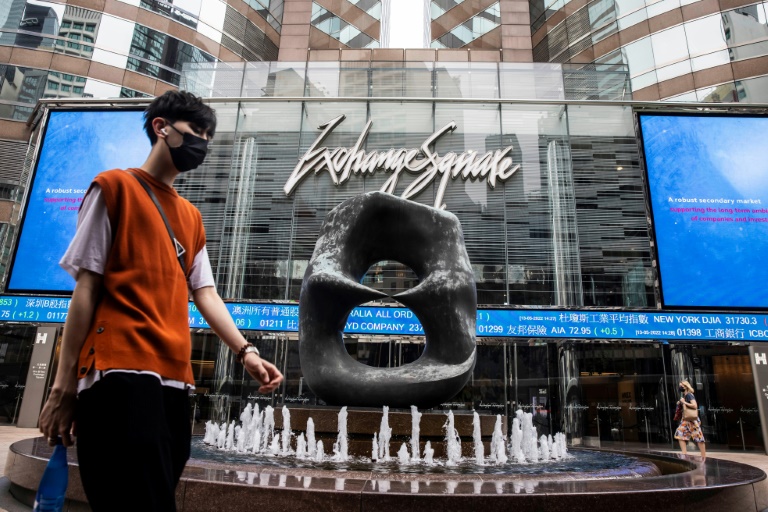
Recent rate hikes from the Federal Reserve have come at a bad time for Hong Kong which, thanks to its US dollar peg, must follow suit despite its own flagging economy.

Hong Kong has pegged its currency to the US dollar since 1983, which has helped the city weather economic storms such as the 1997 Asian financial crisis and underpinned its status as a major global finance hub.

But it also means Hong Kong has little choice but to follow the Fed’s latest round of hawkish rate hikes -– the biggest of its kind in 22 years.

“The Covid outbreak in Hong Kong and in mainland China is already hurting growth,” senior economist at Oxford Economics Lloyd Chan told AFP.

“The last thing that Hong Kong needs now is a rising interest rate.”

The city on Friday revised its 2022 GDP growth forecast down to between one and two percent, after a worse-than-expected four percent drop in the first quarter.

Financial Secretary Paul Chan wrote last week that Hong Kong was now facing a reversal of the low interest rate environment it had enjoyed for more than a decade.

“As the economy has not yet fully recovered from the epidemic, we have to pay attention to the impact of interest rate hike… (on) people and small and medium enterprises,” he wrote on his official website.

– Impact on housing market –

Hong Kong banks have so far kept their best lending rates steady, but they will feel the squeeze in three to six months, analysts say.

“The interest rate may increase quicker than in the past, given the faster pace from the Fed and also the change in the overall background risk sentiment in the world,” economist Gary Ng of Natixis told AFP.

Homebuyers whose mortgages are linked to the Hong Kong interbank offered rate (HIBOR) will be the first to feel the heat, said economist Heron Lim at Moody’s Analytics.

“This usually has a downward effect on housing prices, (which) should shrink in 2022 and into 2023 as well, especially if there’s low demand from mainland Chinese investors,” Lim told AFP.

The Hong Kong government on Friday said it expected signs of revival later this year following the relaxation of coronavirus curbs that ground the economy to a halt in the first quarter.

But the rate hikes could dampen a domestic rebound as the higher burden shouldered by homebuyers will eat into their consumption power.

Small and medium-sized businesses also potentially face a “really tough time” if the rising rates coincide with a Covid resurgence, economist Samuel Tse of DBS Bank told AFP.

Hong Kong is still hewing to a lighter version of China’s zero-Covid model that has taken a toll on businesses in the city.

– Dollar peg ‘defensible’ –

Hong Kong allows its currency to trade within a range of 7.75-7.85 to the greenback. 

Capital outflows and intense selling of the Hong Kong dollar in recent months have pushed it to the weak end of that trading band.

Last week, the Hong Kong Monetary Authority (HKMA)spent HK$8.53 billion ($1.08 billion) in three attempts to prop up the local currency, the first intervention since 2019.

Some commentators have begun questioning the sustainability of the peg, citing pressures of the pandemic and geopolitical tensions between China and the United States.

Responding to a Bloomberg op-ed, HKMA deputy chief executive Edmond Lau said earlier this month that the US dollar peg was a “highly robust and transparent system” and “highly resilient”.

“Hong Kong’s monetary base is fully backed by US dollar assets,” Lau wrote, adding that the government had ample fiscal reserves and no net debt.

All four analysts who spoke with AFP agreed that Hong Kong would hold on to the peg despite changes in the global economy.

“Although the foreign reserve has dropped from $500 billion to around $460 billion, it is still a relatively high level which should be enough to defend the Hong Kong dollar,” said Tse of DBS.

Lim at Moody’s said the HKMA war chest ensured the peg was “very defensible”, adding that the arrangement had policy value as Hong Kong remained an international gateway to China’s economy.

Ng of Nataxis noted that there has not been any selloff or panic offloading of Hong Kong dollar-related assets, which he said bodes well for the future of the peg.

“But in the medium or long run,” he added, “it depends on whether this currency stability still has benefits that outweigh the costs, such as the divergence… between China and the US.”
US rate hikes strain Hong Kong's virus-weakened economy

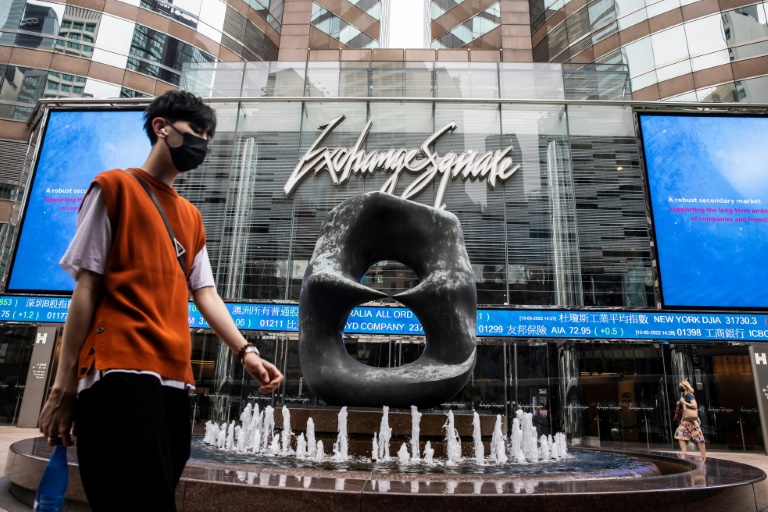
Recent rate hikes from the Federal Reserve have come at a bad time for Hong Kong which, thanks to its US dollar peg, must follow suit despite its own flagging economy.

Hong Kong has pegged its currency to the US dollar since 1983, which has helped the city weather economic storms such as the 1997 Asian financial crisis and underpinned its status as a major global finance hub.

But it also means Hong Kong has little choice but to follow the Fed’s latest round of hawkish rate hikes -– the biggest of its kind in 22 years.

“The Covid outbreak in Hong Kong and in mainland China is already hurting growth,” senior economist at Oxford Economics Lloyd Chan told AFP.

“The last thing that Hong Kong needs now is a rising interest rate.”

The city on Friday revised its 2022 GDP growth forecast down to between one and two percent, after a worse-than-expected four percent drop in the first quarter.

Financial Secretary Paul Chan wrote last week that Hong Kong was now facing a reversal of the low interest rate environment it had enjoyed for more than a decade.

“As the economy has not yet fully recovered from the epidemic, we have to pay attention to the impact of interest rate hike… (on) people and small and medium enterprises,” he wrote on his official website.

– Impact on housing market –

Hong Kong banks have so far kept their best lending rates steady, but they will feel the squeeze in three to six months, analysts say.

“The interest rate may increase quicker than in the past, given the faster pace from the Fed and also the change in the overall background risk sentiment in the world,” economist Gary Ng of Natixis told AFP.

Homebuyers whose mortgages are linked to the Hong Kong interbank offered rate (HIBOR) will be the first to feel the heat, said economist Heron Lim at Moody’s Analytics.

“This usually has a downward effect on housing prices, (which) should shrink in 2022 and into 2023 as well, especially if there’s low demand from mainland Chinese investors,” Lim told AFP.

The Hong Kong government on Friday said it expected signs of revival later this year following the relaxation of coronavirus curbs that ground the economy to a halt in the first quarter.

But the rate hikes could dampen a domestic rebound as the higher burden shouldered by homebuyers will eat into their consumption power.

Small and medium-sized businesses also potentially face a “really tough time” if the rising rates coincide with a Covid resurgence, economist Samuel Tse of DBS Bank told AFP.

Hong Kong is still hewing to a lighter version of China’s zero-Covid model that has taken a toll on businesses in the city.

– Dollar peg ‘defensible’ –

Hong Kong allows its currency to trade within a range of 7.75-7.85 to the greenback. 

Capital outflows and intense selling of the Hong Kong dollar in recent months have pushed it to the weak end of that trading band.

Last week, the Hong Kong Monetary Authority (HKMA)spent HK$8.53 billion ($1.08 billion) in three attempts to prop up the local currency, the first intervention since 2019.

Some commentators have begun questioning the sustainability of the peg, citing pressures of the pandemic and geopolitical tensions between China and the United States.

Responding to a Bloomberg op-ed, HKMA deputy chief executive Edmond Lau said earlier this month that the US dollar peg was a “highly robust and transparent system” and “highly resilient”.

“Hong Kong’s monetary base is fully backed by US dollar assets,” Lau wrote, adding that the government had ample fiscal reserves and no net debt.

All four analysts who spoke with AFP agreed that Hong Kong would hold on to the peg despite changes in the global economy.

“Although the foreign reserve has dropped from $500 billion to around $460 billion, it is still a relatively high level which should be enough to defend the Hong Kong dollar,” said Tse of DBS.

Lim at Moody’s said the HKMA war chest ensured the peg was “very defensible”, adding that the arrangement had policy value as Hong Kong remained an international gateway to China’s economy.

Ng of Nataxis noted that there has not been any selloff or panic offloading of Hong Kong dollar-related assets, which he said bodes well for the future of the peg.

“But in the medium or long run,” he added, “it depends on whether this currency stability still has benefits that outweigh the costs, such as the divergence… between China and the US.”
N Korea reports 15 more 'fever' deaths amid Covid outbreak

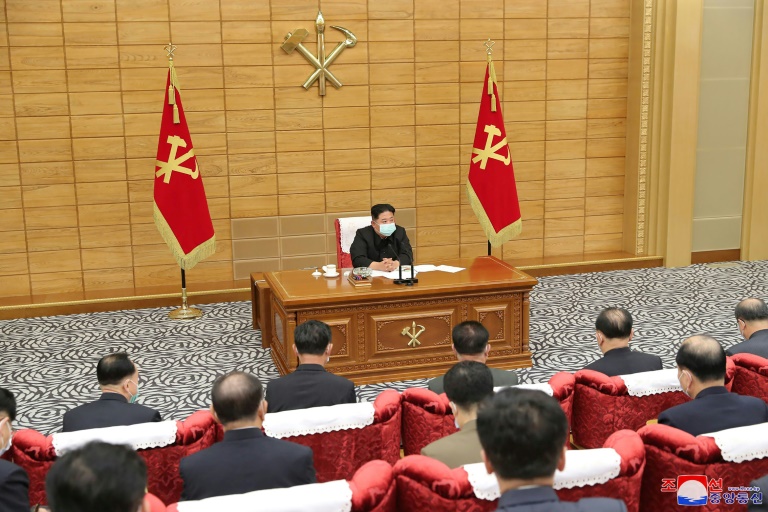
North Korea on Sunday reported 15 additional deaths from “fever”, days after officially confirming its first-ever Covid-19 cases and ordering nationwide lockdowns.

The outbreak, which leader Kim Jong Un has said is causing “great upheaval”, leaves a country with one of the world’s worst healthcare systems on the edge of potential disaster.  

North Korea has no Covid vaccines, antiviral treatment drugs or mass-testing capacity.

While it has maintained a rigid coronavirus blockade since the pandemic’s start, experts have said that massive Omicron outbreaks in neighbouring countries meant it was only a matter of time before Covid snuck in.

Despite activating a “maximum emergency quarantine system” to slow the disease’s spread through its unvaccinated population, Pyongyang is now reporting large numbers of new cases daily.

Official state media KCNA on Sunday said 42 people had died since the outbreak’s beginning, with 820,620 cases and at least 324,550 receiving medical treatment.

The news agency reported that “all provinces, cities and counties of the country have been totally locked down and working units, production units and residential units closed from each other.”

North Korea first revealed the highly contagious Omicron variant had been detected in the capital on Thursday, with Kim ordering nationwide lockdowns after an emergency meeting of the country’s Politburo.

“The spread of malignant disease comes to be a great upheaval in our country,” Kim said Saturday.

— Learning from China —

Sunday’s KCNA report did not specify whether the new cases and deaths tested positive for Covid-19, but experts say the country will struggle to screen and diagnose on this scale.

North Korea’s healthcare system ranked 193 out of 195 countries in a 2021 Johns Hopkins University survey.

Kim has said the country will “actively learn” from China’s pandemic management strategy, according to KCNA.

China, the world’s only major economy still maintaining a zero-Covid policy, is battling multiple Omicron outbreaks — with lockdowns in some major cities, including financial hub Shanghai, sparking increasing public frustration.

North Korea has previously turned down offers of Covid vaccines from China and the World Health Organization’s Covax scheme, but both Beijing and Seoul have issued fresh offers of aid and vaccines since the outbreak was announced. 

Despite the public health crisis, new satellite imagery indicates North Korea has resumed construction at a long-dormant nuclear reactor.

The United States and South Korea have warned that Kim is preparing to conduct another nuclear test — the regime’s seventh — and that it could come any day.

Analysts have warned Kim could speed up nuclear testing plans to distract North Korea’s population from the disastrous coronavirus outbreak.

Discontent simmers as Okinawa marks 50 years since US rule ended

The Japanese island of Okinawa marks 50 years since the end of US rule Sunday, with discontent simmering about the ongoing presence of American troops and fears about growing regional tensions.

The post-World War II US occupation of Japan lasted until 1952, but it took another 20 years for Okinawa, the country’s southernmost prefecture, to regain its sovereignty.     

The anniversary is being marked with official ceremonies, but behind the pleasantries are longstanding concerns for Okinawans about the US troop presence and more recent worries about the threat of a military confrontation involving China.

“I’m not in the mood to celebrate at all,” Okinawan native Jinshiro Motoyama told AFP ahead of the anniversary as he sat outside a Tokyo government building on a week-long hunger strike.

Like many Okinawans, he feels the region bears an unfair burden in hosting the majority of about 55,000 US military personnel in Japan and is protesting to draw attention to the issue.

Okinawa accounts for just 0.6 percent of Japan’s landmass but hosts about 70 percent of all US military bases and facilities.

And that presence has produced a host of issues — from crashes and noise pollution to crimes involving servicemen, including the 1995 gang-rape of a local schoolgirl.

“Only when issues surrounding US bases have been resolved in a way that satisfies Okinawans can we celebrate,” said Motoyama, a 30-year-old graduate student.

A nationwide poll by broadcaster NHK this month found 80 percent of Japanese consider the current disproportionate distribution of US forces “wrong” or “somewhat wrong.”  

Japanese Prime Minister Fumio Kishida, who will be in Okinawa on Sunday to mark the anniversary, acknowledged the discontent in remarks Friday before the parliament.

“The government takes seriously the fact that the burden of hosting bases is weighing on residents in Okinawa,” he said.

“We will have to make a greater effort to reduce this burden,” he added, without providing specifics. 

— ‘Excessive burden’ —

A key flashpoint is the planned relocation of Okinawa’s Marine Corps Air Station Futenma, sometimes dubbed the “world’s most dangerous base” due to its proximity to residential areas.

It is scheduled to move to less-populated Henoko, but many Okinawans want it transferred elsewhere in the country, with 70 percent of local voters rejecting the relocation plan in a non-binding 2019 referendum.

“Residents in the prefecture remain saddled with the excessive burden of hosting the bases,” Okinawa governor Denny Tamaki said in a petition against the relocation submitted to Kishida ahead of the anniversary.

Construction in Henoko has continued nonetheless, with the central government defending it as the “only possible way” to mitigate Futenma’s dangers and maintain the Japan-US alliance’s deterrence.  

US President Joe Biden visits Japan later this month for the first time since taking office, with concerns about China’s growing military assertiveness in the region likely to be on the agenda.

Increasing military activity by Beijing makes Okinawa ever-more important as a base for US and Japanese troops and has left some of the region’s residents fearing they could be caught in a future conflict.

Peru sues Spain's Repsol for $4.5 bn over oil spill

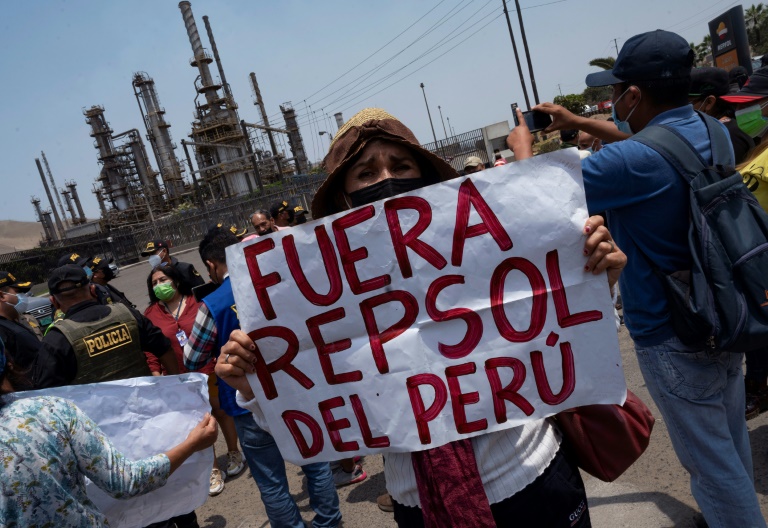
Peru has filed suit against Spanish energy company Repsol over the massive January oil spill that ravaged its coast, seeking $4.5 billion in damages.

The lawsuit was filed before the 27th civil court in Lima against six companies: Repsol (Spain), Mapfre Global Risks (Spain), Mapfre Peru Insurance and Reinsurance Companies (Peru), La Pampilla Refinery (Peru), Transtotal Maritime Agency (Peru) and Fratelli d’amico Armatori (Italy, owner of the tanker involved), Peru’s consumer protection agency said.

“These suits could create precedents for oil spills that cause damage and collective non-material damages due to environmental pollution of coastal areas,” said Julian Palacin, executive director of the National Institute for the Defense of Competition and Protection of Intellectual Property (INDECOPI), in a statement released late Friday.

INDECOPI has sought three billion dollars for environmental damage to Peru’s coast, and another 1.5 billion dollars as compensation to consumers, locals and others affected by the disaster, the suit says. 

Repsol in a statement Saturday rejected the suit as baseless.

“(INDECOPI’s) estimates are lacking the bare minimum needed to support the indicated figures,” the Spanish oil company said, regarding the $4.5 billion sought by Peru.

The spill occurred on January 15 while the Italian-flagged tanker “Mare Doricum” was unloading crude oil at the Repsol-owned La Pampilla refinery in Ventanilla, 30 kilometers north of Lima. 

The oil company attributed the incident to waves caused by a massive volcanic eruption on the island of Tonga, on the other side of the Pacific Ocean, and the Peruvian government described it as an “ecological disaster.”

The oil spill affected more than 700,000 residents, mostly fishermen, and forced the closure of twenty beaches and dozens of businesses in the area.

Finland seeks to reassure Russia about NATO bid

Finland on Saturday sought to allay Moscow’s fears about its bid to join NATO, as fierce fighting raged in Ukraine’s east, slowing a Russian advance.

Wives and parents of Ukrainian fighters trapped in the bowels of a besieged steel plant in the country’s south meanwhile made a desperate appeal to China to help secure their release. 

And the wealthy countries of the G7 vowed to further turn the screw on the Kremlin with fresh sanctions, pledging never to recognise the borders it is attempting to redraw through destructive force. 

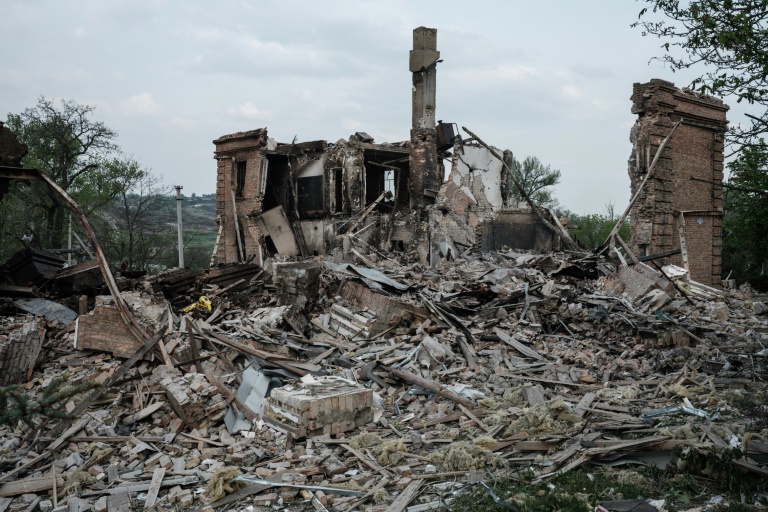
One of Europe’s fiercest conflicts since World War II has seen more than six million people flee for their lives, and according to Kyiv has caused an estimated $90 billion in damage to civilian infrastructure. 

US Defence Secretary Lloyd Austin urged his Russian counterpart Sergei Shoigu to move immediately to implement a ceasefire, in their first talks since before the conflict began on February 24.

But one senior Ukrainian general predicted a turning point in the months ahead, and said the fighting could be over by the end of the year.

In Turin, Italy, a world away from the fighting, a wave of popular support has made Ukraine’s Kalush Orchestra the bookmakers’ favourite to triumph at the world’s biggest live music event — the Eurovision Song Contest.

But even there the war has cast a shadow.

“We have one band member who joined the territorial defence of Kyiv on the third day of the war,” said lead singer Oleh Psiuk.

“We are very worried about him, and we hope to see him safe once we are back.”

– Phone call –

Finland and Sweden are poised to jettison decades of military non-alignment to join NATO as a defence against feared further aggression from Russia. 

Moscow has warned Finland, with whom it shares a 1,300-kilometre (800-mile) border, that it would take “reciprocal steps”. 

Finland’s grid operator said Russia halted electricity supplies overnight, though Finnish officials said power supplied by Sweden had made up for the losses.

Ahead of talks with NATO members in Berlin, Finnish Foreign Minister Pekka Haavisto said he was “confident that in the end we will find a solution and Finland (and) Sweden will become members of NATO”.

Earlier, in a phone call initiated by Helsinki, President Sauli Niinisto had a “direct and straightforward” conversation with Russian president Vladimir Putin.

“Avoiding tensions was considered important,” Niinisto’s office said. 

Putin, however, told him that Finland joining NATO would be a “mistake”, insisting that Russia posed “no threat to Finland’s security”, the Kremlin said.

Finland’s bid to join NATO is expected to be announced this weekend.

– Turkey unhappy –

Finland and Sweden will first have to win over NATO member Turkey on the sidelines of the informal gathering of the alliance’s foreign ministers in Berlin.

Turkish President Recep Tayyip Erdogan on Friday said he opposed their membership bids and accused both countries of harbouring “terrorist organisations”.

Both Nordic countries have sizable Kurdish populations. Ankara has regularly accused Stockholm in particular of harbouring members of the separatist Kurdistan Workers’ Party (PKK), which has been designated a terrorist organisation in the UK, European Union and the United States.

It has also been angered by Sweden’s assertion that the mass killings of Armenians under the Ottoman Empire between 1915 and 1917 constituted genocide. 

But Turkey on Saturday expressed readiness at least to discuss Finnish and Swedish membership.

“A big majority of the Turkish people are against the membership of those countries who are supporting PKK terrorist organisation,” Foreign Minister Mevlut Cavusoglu said upon arrival for the Berlin talks.

He added, however, that “these are the issues that we need to talk, of course, with our NATO allies as well as these countries.”

– Kharkiv withdrawal –

In Ukraine, the government and military said Ukrainian forces were holding back a Russian assault in the strategic eastern Donbas region, stifling Moscow’s attempt to annex the south and east.

Since late March, Russia has increasingly turned its attention to eastern Ukraine after failing to take the capital Kyiv.

The governor of the eastern Lugansk region, Sergiy Gaiday, said Ukrainian forces had prevented Russian attempts to cross a river and encircle the city of Severodonetsk.

Defence and military intelligence officials in London and Washington both said Russian forces had sustained heavy losses as they attempted the river crossing and had failed to make significant progress.

The Ukrainian general staff said troops had managed to push Russian forces out of Ukraine’s second city of Kharkiv in the northeast — a priority target for Moscow.

“The enemy’s main efforts are focused on ensuring the withdrawal of its units from the city of Kharkiv,” a spokesman said. 

Kharkiv regional governor Oleg Synegubov meanwhile said in a video on Telegram that Ukrainian forces were counterattacking in the direction of the northeastern city of Izyum.

Ukraine’s military intelligence chief, Major General Kyrylo Budanov, said the months ahead could prove decisive.

“The breaking point will be in the second part of August,” he told Britain’s Sky News television. 

“Most of the active combat actions will have finished by the end of this year.”

– Appeal to China –

Ukrainian President Volodymyr Zelensky on Saturday met Mitch McConnell, leader of the Republican minority in the US Senate, and a delegation of US senators in Kyiv.

A Democratic contingent led by House speaker Nancy Pelosi had visited Kyiv earlier.

On Friday, Zelensky said his troops would fight to recapture all occupied territory, and those under siege, including in the devastated southern port city of Mariupol.

There, the last defenders of the city are holed up in a warren of underground tunnels and bunkers at the vast Azovstal steelworks under heavy bombardment.

The United Nations and Red Cross helped to evacuate women, children and the elderly from the plant whey there were sheltering earlier this month.

But local officials said around 600 fighters from Ukraine’s Azov regiment were wounded and needed to be brought out for medical treatment.

In Kyiv, five wives and a father of fighters trapped at the plant appealed directly to China’s President Xi Jinping to step in.

“China has a big influence on Russia and on Putin personally. We ask for him to intervene,” said one man, Stavr Vychniak.

burs-phz/har/bbk/wd

Sheikh Mohamed bin Zayed becomes UAE president after brother's death

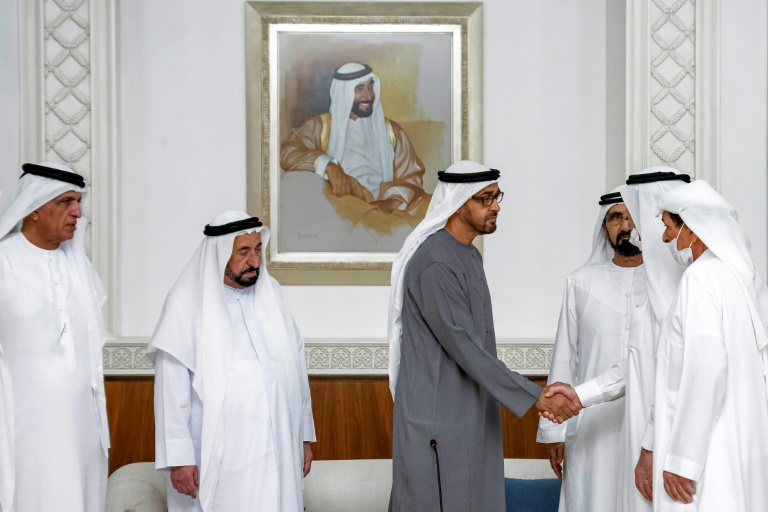
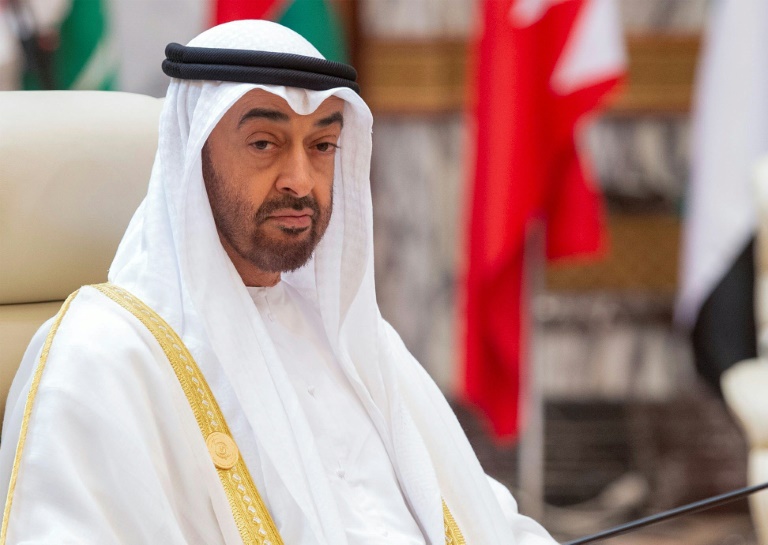
The UAE’s long-time de facto ruler Sheikh Mohamed bin Zayed Al Nahyan was named as president on Saturday, confirming his rise to power a day after the death of former leader Sheikh Khalifa.

The 61-year-old, who has run the oil-rich Gulf state from behind the scenes since his half-brother was sidelined by ill health in 2014, was “unanimously elected” by rulers of the country’s seven emirates, the official WAM news agency said.

His ascension was widely expected. It came after he led funeral prayers and helped carry the body of Sheikh Khalifa, 73, who was buried at Abu Dhabi’s Al Bateen cemetery after a simple ceremony on Friday.

Sheikh Mohamed now takes formal control of the desert country of 10 million — most of them expatriates — whose profile has been steadily rising.

He also succeeded Sheikh Khalifa as ruler of Abu Dhabi, which sits on 90 percent of the United Arab Emirates’ oil wealth.

US President Joe Biden congratulated his “long-time friend” and Russian President Vladimir Putin also welcomed his appointment. Syrian leader Bashar al-Assad, who visited the UAE in March, sent a gushing tribute.

Under the low-key direction of Sheikh Mohamed, the third son of founding president Sheikh Zayed bin Sultan Al Nahyan, the UAE has put a man into space, sent a probe to Mars and opened its first nuclear reactor, while using its oil-funded clout to develop a more assertive foreign policy.

Closely allied with Saudi Arabia, it has emerged as a leader of a reshaped Middle East since the retreat of traditional Arab powers and the reduced involvement of the United States, forging ties with Israel and joining a Saudi-led war against Iran-backed rebels in Yemen. 

– ‘Running the show’ –

As Sheikh Mohamed took office, flags were at half-mast around the UAE and businesses and government offices closed for three days as the country enters a 40-day period of mourning for Sheikh Khalifa, who had ruled since 2004.

Images of the late sheikh stared down from billboards and road signs on major highways. His death drew condolences from Biden, Britain’s Queen Elizabeth, Israel’s Prime Minister Naftali Bennett and Iran, demonstrating the UAE’s diverse allegiances.

France’s President Emmanuel Macron is to travel to Abu Dhabi on Sunday to pay tribute to the late Emirati leader and show support for the new president, his office announced. 

British Prime Minister Boris Johnson will also visit on Sunday, followed by US Vice President Kamala Harris on Monday. Israel’s president and the leaders of Egypt, Jordan, Sudan and Oman are among the others to make the trip. 

The UAE, a former British protectorate, has gone from desert outpost to booming state in its short history, fuelled by its oil wealth and Dubai’s rise as a trading and financial centre.

Sheikh Mohamed, often known as “MBZ”, took a leading role after Sheikh Khalifa retreated from public view in 2014, when he had surgery after a stroke. The cause of his death was not announced.

Sheikh Mohamed, who was crown prince of Abu Dhabi from November 2004, has also been serving as deputy commander of the armed forces and chairman of the Executive Council of Abu Dhabi, which controls the emirate’s substantial finances.

The new president is likely to face greater competition to the UAE’s status as the regional financial hub, particularly from Saudi Arabia, and may toughen its stance on Iran, analysts say.

But “functionally it changes little; MBZ has been running the show almost from the get-go”, tweeted Ryan Bohl, a Middle East analyst at Stratfor Worldview.

sy/th/jsa

After outcry, Israel police to probe actions at journalist's funeral

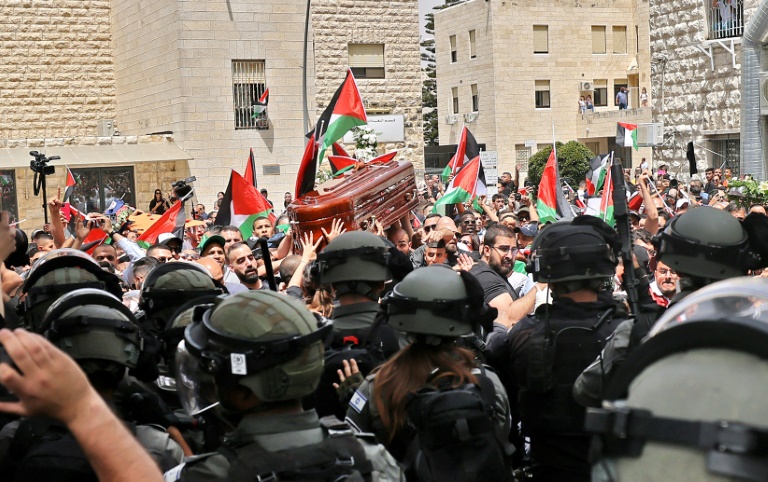
Israel’s police chief on Saturday ordered an investigation into the actions of officers at the funeral of journalist Shireen Abu Akleh, after they charged the procession and beat pallbearers, sparking global outrage.

Thousands of mourners packed Jerusalem’s Old City on Friday for the burial of the 51-year-old Al Jazeera reporter. The Palestinian-American was killed two days earlier during an Israeli raid in the occupied West Bank.

Television footage showed pallbearers struggling to stop Abu Akleh’s casket from falling to the ground as baton-wielding police descended upon them, grabbing Palestinian flags.

“The Israel police commissioner in coordination with the minister of public security has instructed that an investigation be conducted into the incident,” the police said in a statement.

They had coordinated funeral arrangements with the journalist’s family but “rioters tried to sabotage the ceremony and harm the police,” it said.

“As with any operational incident, and certainly an incident in which police officers were exposed to violence by rioters and in which force was subsequently used by the police, the Israel Police will be looking into the events that ensued during the funeral,” it added.

But Antoun Abu Akleh, the slain journalist’s brother, said “there was no agreement between us and the police,” who had asked the family how many people were expected to attend the funeral.

“We gave them the number of participants and the path of the funeral and this is what happened,” he told AFP.

“We told the police that this is a national funeral and not a funeral for the Abu Akleh family, but a funeral for all the Palestinian people.”

– ‘Unnecessary force’ –

Condemnations have poured in, the latest coming on Saturday when Spain’s foreign ministry, in a tweet, called “totally unacceptable” the scenes showing “disproportionate use of violence by the Israeli police” at the funeral.

German Foreign Minister Annalena Baerbock expressed deep shock “that the funeral ceremony could not be held in peace and dignity”.

The foundation of late South African Archbishop Desmond Tutu, a Nobel Peace Prize winner, said the police “attacking pallbearers” was “chillingly reminiscent of the brutality” during funerals of anti-apartheid activists.

On Friday, Secretary of State Antony Blinken said the US was “deeply troubled to see the images of Israeli police intruding into her funeral procession”.

The European Union condemned what it said was “unnecessary force” by the officers.

Abu Akleh, a highly respected reporter, was shot in the head on Wednesday near Jenin refugee camp in the northern West Bank. She was wearing a helmet and a bulletproof vest marked “Press”.

On Saturday, Palestinian President Mahmud Abbas awarded her a posthumous medal at a ceremony in Ramallah. 

Israel’s army said an interim investigation could not determine who fired the fatal bullet, noting stray Palestinian gunfire or Israeli sniper fire aimed at militants were both possible causes.

The Palestinian public prosecution said an initial probe showed “the only origin of the shooting was the Israeli occupation forces”.

– ‘Transparent, impartial’ –

While the two sides traded blame, the UN Security Council in a rare, unanimous statement, condemned the killing and called for “an immediate, thorough, transparent, and impartial investigation,” diplomats said.

Qatar-based Al Jazeera said Israel killed its reporter “deliberately” and “in cold blood”.

The United States, the European Union, the United Nations and others have backed calls for a full investigation into her killing.

Israel has called for a joint probe, which the Palestinian Authority has rejected.

A PA official said on Saturday that the authority would welcome the “participation of all international bodies in the investigation”.

“What happened in her funeral yesterday by the #occupation forces reinforces our position that rejects #Israel’s participation in this investigation,” Hussein al-Sheikh added on Twitter.

Fresh violence erupted Friday in the West Bank, including a raid and clashes around Jenin refugee camp that claimed the life of an Israeli officer.

Tensions were already high after a wave of anti-Israeli attacks that have killed at least 19 people since March 22, including an Arab-Israeli police officer and two Ukrainians.

A total of 32 Palestinians and three Israeli Arabs have died during the same period, according to an AFP tally, among them perpetrators of attacks and those killed by Israeli security forces in West Bank operations.

Biden congratulates Sheikh Mohamed bin Zayed on being elected UAE president

US President Joe Biden congratulated the UAE’s de facto ruler Sheikh Mohamed bin Zayed Al Nahyan on being elected Saturday as the country’s president following his half-brother’s death.

“I congratulate my long-time friend Sheikh Mohamed bin Zayed Al Nahyan on his election as president of the United Arab Emirates,” Biden said in a statement, adding that he looked forward to working with the leader “to further strengthen the bonds between our countries and peoples.”

US Vice President Kamala Harris will travel to the UAE on Monday to lead a presidential delegation “and offer condolences on behalf of the Biden-Harris administration and the American people” on the death of the previous president, Sheikh Khalifa, her office said in a statement Saturday.

In Abu Dhabi, Harris will meet with Sheikh Mohamed and “underscore the strength of the partnership between our countries and our desire to further deepen our ties in the coming months and years,” the statement said.  

The 61-year-old Sheikh Mohamed, a trained soldier, has long been a quiet power behind the throne of Abu Dhabi, analysts say.

He took a leading role after Sheikh Khalifa, his half-brother, retreated from public view in 2014, when he had surgery after a stroke. 

Following Sheikh Khalifa’s death Friday, Sheikh Mohamed was unanimously elected by the Federal Supreme Council, comprising rulers of the UAE’s seven emirates. He has also been named as ruler of Abu Dhabi, which controls most of the country’s oil wealth.

Sheikh Mohamed bin Zayed becomes UAE president after brother's death

The UAE’s long-time de facto ruler Sheikh Mohamed bin Zayed Al Nahyan was named as president on Saturday, confirming his rise to power a day after the death of former leader Sheikh Khalifa.

The 61-year-old, who has run the oil-rich Gulf state from behind the scenes since his half-brother was sidelined by ill health in 2014, was “unanimously elected” by rulers of the country’s seven emirates, the official WAM news agency said.

His ascension was widely expected. It came after he led funeral prayers and helped carry the body of Sheikh Khalifa, 73, who was buried at Abu Dhabi’s Al Bateen cemetery after a simple ceremony on Friday.

Sheikh Mohamed now takes formal control of the desert country of 10 million — most of them expatriates — whose profile has been steadily rising.

He also succeeded Sheikh Khalifa as ruler of Abu Dhabi, which sits on 90 percent of the United Arab Emirates’ oil wealth.

US President Joe Biden congratulated his “long-time friend” and Russian President Vladimir Putin also welcomed his appointment. Syrian leader Bashar al-Assad, who visited the UAE in March, sent a gushing tribute.

Under the low-key direction of Sheikh Mohamed, the third son of founding president Sheikh Zayed bin Sultan Al Nahyan, the UAE has put a man into space, sent a probe to Mars and opened its first nuclear reactor, while using its oil-funded clout to develop a more assertive foreign policy.

Closely allied with Saudi Arabia, it has emerged as a leader of a reshaped Middle East since the retreat of traditional Arab powers and the reduced involvement of the United States, forging ties with Israel and joining a Saudi-led war against Iran-backed militants in Yemen. 

– ‘Running the show’ –

As Sheikh Mohamed took office, flags were at half-mast around the UAE and businesses and government offices closed for three days as the country enters a 40-day period of mourning for Sheikh Khalifa, who had ruled since 2004.

Images of the late sheikh stared down from billboards and road signs on major highways. His death drew condolences from Biden, Britain’s Queen Elizabeth, Israel’s Prime Minister Naftali Bennett and Iran, demonstrating the UAE’s diverse allegiances.

France’s President Emmanuel Macron is to travel to Abu Dhabi on Sunday to pay tribute to the late Emirati leader and show support for the new president, his office announced. 

Egyptian President Abdel Fattah al-Sisi is also headed to the UAE, along with Sudan’s de facto leader Abdel Fattah al-Burhan.

Neighbouring Saudi Arabia has put sports and entertainments on hold and several countries have announced periods of mourning.

Sheikh Mohamed, who is often known as “MBZ” and was named crown prince of Abu Dhabi in November 2004, has also been serving as deputy commander of the armed forces and chairman of the Executive Council of Abu Dhabi, which controls the emirate’s substantial finances. 

The UAE, a former British protectorate, has gone from desert outpost to booming state in its short history, fuelled by its oil wealth and Dubai’s rise as a trading and financial centre.

Sheikh Mohamed took a leading role after Sheikh Khalifa retreated from public view in 2014, when he had surgery after a stroke. The cause of his death was not announced.

The new president is likely to face greater competition to UAE’s status as the regional financial hub, particularly from Saudi Arabia, and may toughen its stance on Iran, analysts say.

But “functionally it changes little; MBZ has been running the show almost from the get-go”, tweeted Ryan Bohl, a Middle East analyst at Stratfor Worldview.

Close Bitnami banner
Bitnami