World

Finland seeks to reassure Russia about NATO bid

Finland on Saturday sought to allay Moscow’s fears about its bid to join NATO, as fierce fighting raged in Ukraine’s east, slowing down a hoped-for Russian advance.

Wives and parents of Ukrainian fighters trapped in the bowels of a besieged steel plant in the country’s south meanwhile made a desperate appeal to China to help secure their release. 

And the G7 vowed to further turn the screw on the Kremlin with fresh sanctions, pledging never to recognise the borders it was attempting to redraw through destructive force. 

One of Europe’s fiercest conflicts since World War II has seen more than six million people flee for their lives, and according to Kyiv has caused an estimated $90 billion in damage to civilian infrastructure. 

US Defence Secretary Lloyd Austin urged his Russian counterpart Sergei Shoigu to move immediately to implement a ceasefire, in their first talks since the conflict began on February 24.

But one senior Ukrainian general predicted a turning point in the months ahead, and that the fighting could be over by the end of the year.

In Turin, Italy, a world away from the fighting, a wave of popular support has made Ukraine’s Kalush Orchestra the bookmakers’ favourite to triumph at the world’s biggest live music event — the Eurovision Song Contest.

But even here the war has cast a shadow.

“We have one band member who joined the territorial defence of Kyiv on the third day of the war,” said lead singer Oleh Psiuk.

“We are very worried about him, and we hope to see him safe once we are back.”

– Phone call –

Finland and Sweden are poised to jettison decades of military non-alignment to join NATO as a defence against feared further aggression from Russia. 

Moscow has warned Finland, with whom it shares a 1,300-kilometre (800-mile) border, that it would take “reciprocal steps”. 

Hours after Finland’s grid operator said Russia had pulled the plug on electricity supplies overnight, President Sauli Niinisto had a “direct and straight-forward” conversation by phone with Vladimir Putin

“Avoiding tensions was considered important,” Niinisto’s office said. “The phone call was initiated by Finland.”

Putin, however, told him that Finland joining NATO would be a “mistake”, insisting that Russia posed “no threat to Finland’s security”, the Kremlin said.

Finland’s bid to join NATO is expected to be announced this weekend.

– Turkey unhappy –

Both Finland and Sweden, which both have sizeable Kurdish populations, will first have to convince NATO member Turkey on the sidelines of an informal gathering of the alliance’s foreign ministers in Berlin.

Turkish President Recep Tayyip Erdogan on Friday said he opposed the bids and accused both countries of harbouring “terrorist organisations”.

Ankara has regularly accused Stockholm in particular of harbouring members of the Kurdistan Workers’ Party (PKK), which has been designated a terrorist organisation in the UK, European Union and the United States.

It has also been angered by Sweden’s recognition as genocide the mass killings of Armenians under the Ottoman Empire between 1915 and 1917, and claims of human rights abuses. 

Both Nordic countries say they were not aware of Turkish misgivings and analysts told AFP that Erdogan may also be playing hardball in an attempt to overturn a US refusal to sell him fighter jets. 

– Kharkiv withdrawal –

In Ukraine, the government and military claimed it was holding back a Russian assault in the strategic eastern Donbas region, stifling Moscow’s attempt to annex the south and east.

Russia, which sent in troops to Ukraine on February 24, has increasingly turned its attention to eastern Ukraine since the end of March, after failing to take the capital Kyiv.

The governor of the eastern Lugansk region, Serhiy Gaidai, said Ukrainian forces had prevented Russian attempts to cross a river and encircle the city of Severodonetsk.

Defence and military intelligence officials in London and Washington both said Russian forces had sustained heavy losses as they attempted the river crossing and had failed to make significant progress.

The Ukrainian General Staff said troops had managed to push Russian troops out of Ukraine’s second city of Kharkiv in the northeast — a priority target for Moscow.

“The enemy’s main efforts are focused on ensuring the withdrawal of its units from the city of Kharkiv,” a spokesman said. 

Kharkiv regional governor Oleh Synegubov meanwhile said in a video on Telegram that Ukrainian forces were counter-attacking in the direction of the northeastern city of Izyum.

Ukraine’s military intelligence chief, Major General Kyrylo Budanov, said the months ahead would be decisive for the course of the war.

“The breaking point will be in the second part of August,” he told Britain’s Sky News television. 

“Most of the active combat actions will have finished by the end of this year.”

– China appeal –

Ukrainian President Volodymyr Zelensky on Saturday met Mitch McConnell, leader of the Republican minority in the US Senate, and a delegation of US senators in Kyiv.

On Friday Zelensky said his troops would fight to recapture all occupied territory, and those under siege, including in the devastated southern port city of Mariupol.

There, the last defenders of the city are holed up in a warren of underground tunnels and bunkers at the vast Azovstal steelworks under heavy bombardment.

The United Nations and Red Cross helped to evacuate women, children and the elderly from the plant whey there were sheltering earlier this month.

But local officials said around 600 fighters from Ukraine’s Azov regiment were wounded and needed to be brought out for medical treatment.

In Kyiv, five wives and a father of fighters trapped at the plant appealed directly to China’s President Xi Jinping to step in.

“China has a big influence on Russia and on Putin personally. We ask for him to intervene,” said one man, Stavr Vychniak.

burs-phz/har
War in Ukraine: Latest developments

Here are the latest developments in the war in Ukraine:

– Intense battles in the east –

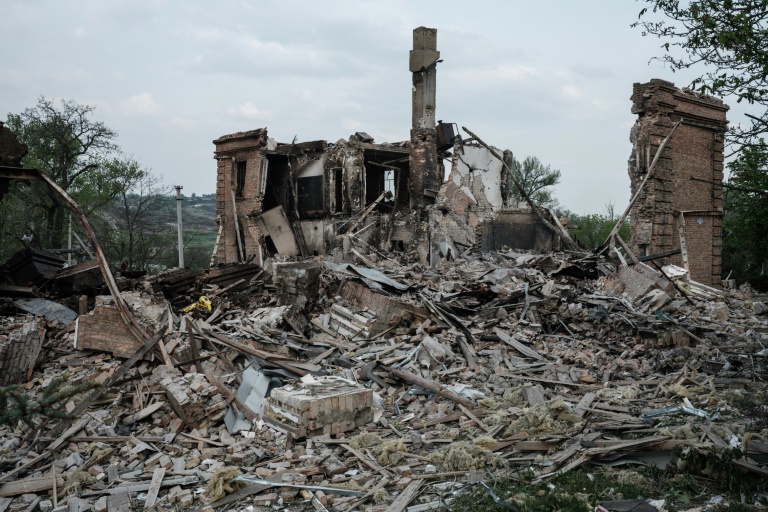
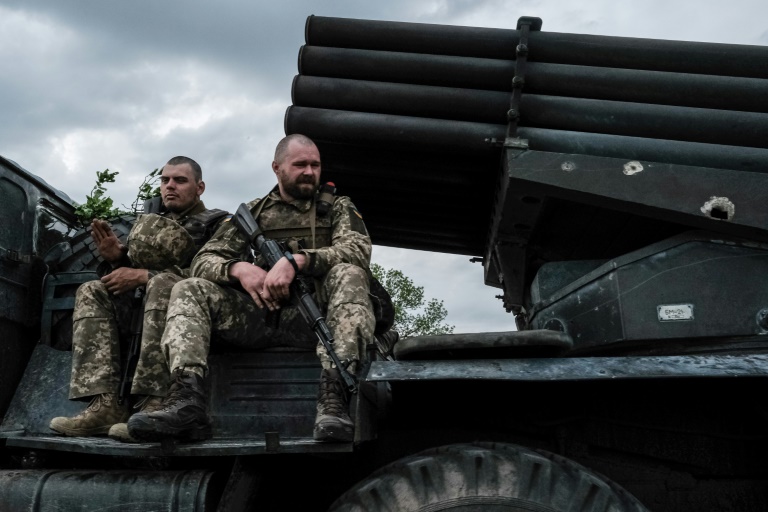
Intense fighting rages in eastern Ukraine’s Donbas region, where Russia has been concentrating its forces without making significant progress.

Ukrainian forces repulsed Russian attempts to cross a river and encircle the city of Severodonetsk, says Serhiy Gaidai, governor of the eastern Luhansk region.

“There’s heavy fighting on the border with Donetsk region, from the side of Popasna,” Gaidai says, reporting heavy losses of equipment and personnel by the Russians.

– Ukraine could win by ‘end of year’ –

The war in Ukraine could reach a “breaking point” by August and end in defeat for Russia before the end of the year, Kyiv’s head of military intelligence tells the UK’s Sky News.

“The breaking point will be in the second part of August,” Major General Kyrylo Budanov tells the news network.

“Most of the active combat actions will have finished by the end of this year.”

– G7 will ‘never’ recognise war borders… –

The Group of Seven industrialised nations say they will never recognise the borders Russia is trying to shift in its war against Ukraine.

“We will never recognise borders Russia has attempted to change by military aggression, and will uphold our engagement in the support of the sovereignty and territorial integrity of Ukraine, including Crimea, and all states,” the G7 foreign ministers say in a statement after three days of talks in northern Germany.

– …vow more sanctions –

The G7 leaders also vow to expand sanctions to include sectors on which Russia is dependent and they warn China against undermining punitive action against Moscow for its invasion of Ukraine.

“We reaffirm our determination to further increase economic and political pressure on Russia, continuing to act in unity,” their statement says, adding that the G7 “will broaden our sanctions measures to include sectors on which Russia has a particular dependence.”

– Putin warns Finland over neutrality –

Russia’s President Vladimir Putin tells his Finnish counterpart Sauli Niinisto that Finland scrapping its military neutrality would be a “mistake”.

“Putin stressed that the end of the traditional policy of military neutrality would be a mistake since there is no threat to Finland’s security,” the Kremlin says in a statement after a phone call between the two leaders.

Helsinki is expected to announce its NATO membership bid on Sunday.

– Russia suspends Finland’s electricity supplies –

Russia suspends electricity supplies to Finland, a Finnish grid operator confirms, as tensions rise over Helsinki’s NATO bid.

“It is at zero at the moment, and that started from midnight as planned,” says Timo Kaukonen, manager for operational planning at Fingrid.

Russian supplier RAO Nordic had warned it would suspend supplies, citing problems with payments, as Helsinki prepares to announce its application for NATO membership.

– Pentagon chief talks to Russian counterpart –

US Defense Secretary Lloyd Austin urges Russian Defence Minister Sergei Shoigu to move immediately to implement a ceasefire in Ukraine, in their first conversation since before the war began, the Pentagon says.

“Secretary Austin urged an immediate ceasefire in Ukraine and emphasised the importance of maintaining lines of communication,” the Pentagon says in a statement.

A senior US defence official dampened expectations that any progress was made. “The call itself didn’t specifically solve any acute issues or lead to a direct change in what the Russians are doing or what they are saying,” the official says.

burs-jwp/pvh

After outcry, Israel police to probe actions at journalist's funeral

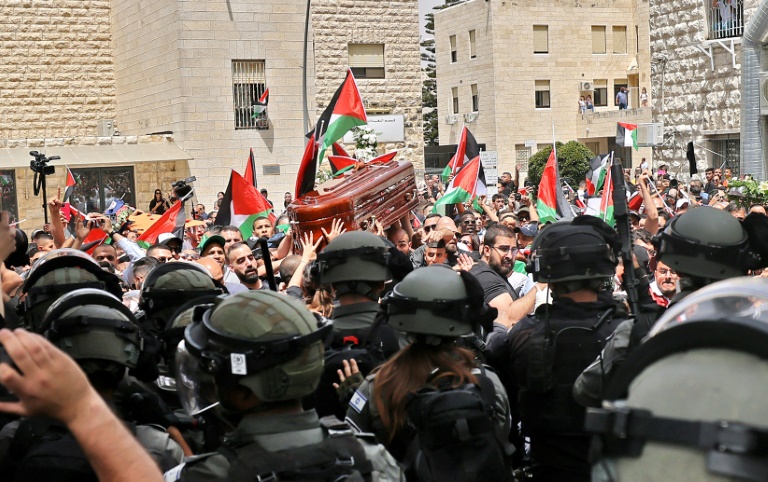
Israel’s police chief on Saturday ordered an investigation into the actions of officers at the funeral of journalist Shireen Abu Akleh, after they charged the procession and beat pallbearers, sparking global outrage.

Thousands of mourners packed Jerusalem’s Old City on Friday for the burial of the 51-year-old Al Jazeera reporter. The Palestinian-American was killed two days earlier during an Israeli raid in the occupied West Bank.

Television footage showed pallbearers struggling to stop Abu Akleh’s casket from falling to the ground as baton-wielding police charged towards them, grabbing Palestinian flags.

“The Israel police commissioner in coordination with the minister of public security has instructed that an investigation be conducted into the incident,” the police said in a statement.

They had coordinated funeral arrangements with the journalist’s family but “rioters tried to sabotage the ceremony and harm the police,” it said.

“As with any operational incident, and certainly an incident in which police officers were exposed to violence by rioters and in which force was subsequently used by the police, the Israel Police will be looking into the events that ensued during the funeral,” it added.

The latest condemnation came Saturday when Spain’s foreign ministry, in a tweet, called “totally unacceptable” the scenes showing “disproportionate use of violence by the Israeli police” at the funeral.

German Foreign Minister Annalena Baerbock expressed deep shock “that the funeral ceremony could not be held in peace and dignity.”

The foundation of late South African Archbishop Desmond Tutu, a Nobel Peace Prize winner, said the police “attacking pallbearers” was “chillingly reminiscent of the brutality” during funerals of anti-apartheid activists.

On Friday, Secretary of State Antony Blinken said the US was “deeply troubled to see the images of Israeli police intruding into her funeral procession”.

The European Union condemned what it said was “unnecessary force” by the officers.

Abu Akleh, a highly respected reporter, was shot in the head on Wednesday near Jenin refugee camp in the northern West Bank. She was wearing a helmet and a bulletproof vest marked “Press”.

On Saturday, Palestinian President Mahmud Abbas awarded her a posthumous medal at a ceremony in Ramallah. 

Israel’s army said an interim investigation could not determine who fired the fatal bullet, noting stray Palestinian gunfire or Israeli sniper fire aimed at militants were both possible causes.

The Palestinian public prosecution said an initial probe showed “the only origin of the shooting was the Israeli occupation forces”.

– ‘Transparent, impartial’ –

While the two sides traded blame, the UN Security Council in a rare, unanimous statement, condemned the killing and called for “an immediate, thorough, transparent, and impartial investigation,” diplomats said.

Qatar-based Al Jazeera said Israel killed its reporter “deliberately” and “in cold blood”.

Friday’s violence came as the body of Abu Akleh, a Christian, left St Joseph’s hospital in Israeli-annexed east Jerusalem.

Thirty-three people were injured, of whom six were hospitalised, according to the Jerusalem Red Crescent. Police said they arrested six people.

The United States, the European Union, the United Nations and others have backed calls for a full investigation into her killing.

Israel has called for a joint probe, which the Palestinian Authority has rejected.

A PA official said on Saturday that the authority would welcome the “participation of all international bodies in the investigation”.

“What happened in her funeral yesterday by the #occupation forces reinforces our position that rejects #Israel’s participation in this investigation,” Hussein al-Sheikh added on Twitter.

Fresh violence erupted Friday in the West Bank, including a raid and clashes around Jenin refugee camp that claimed the life of an Israeli officer.

Tensions were already high after a wave of anti-Israeli attacks that have killed at least 19 people since March 22, including an Arab-Israeli police officer and two Ukrainians.

A total of 32 Palestinians and three Israeli Arabs have died during the same period, according to an AFP tally, among them perpetrators of attacks and those killed by Israeli security forces in West Bank operations.

Finland seeks to reassure Russia about NATO bid

Finland on Saturday sought to allay Moscow’s fears about its bid to join NATO, as fierce fighting raged in Ukraine’s east, slowing down a hoped-for Russian advance.

Wives and parents of Ukrainian fighters trapped in the bowels of a besieged steel plant in the country’s south meanwhile made a desperate appeal to China to help secure their release. 

And the G7 vowed to further turn the screw on the Kremlin with fresh sanctions, pledging never to recognise the borders it was attempting to redraw through destructive force. 

One of Europe’s fiercest conflicts since World War II has seen more than six million people flee for their lives, and according to Kyiv has caused an estimated $90 billion in damage to civilian infrastructure. 

One senior Ukrainian general predicted a turning point in the months ahead, and that the fighting could be over by the end of the year.

In Turin, Italy, a world away from the fighting, Ukraine’s Kalush Orchestra is the bookmakers’ favourite to triumph at the world’s biggest live music event — the Eurovision Song Contest — on a wave of popular support.

But even here the war cast a shadow.

“We have one band member who joined the territorial defence of Kyiv on the third day of the war,” said lead singer Oleh Psiuk.

“We are very worried about him, and we hope to see him safe once we are back.”

– Phone call –

Finland and Sweden are poised to jettison decades of military non-alignment to join NATO as a defence against feared further aggression from Russia.

Moscow has warned Finland, with whom it shares a 1,300-kilometre (800-mile) border, that it would take “reciprocal steps”. 

Hours after Finland’s grid operator said Russia had pulled the plug on electricity supplies overnight, President Sauli Niinisto spoke to his Russian counterpart Vladimir Putin.

“The conversation was direct and straight-forward and it was conducted without aggravations,” Niinisto’s office said.

“Avoiding tensions was considered important. The phone call was initiated by Finland.”

Putin, however, told him that Finland joining NATO would be a “mistake”, insisting that Russia posed “no threat to Finland’s security”, the Kremlin said.

Finland’s bid to join NATO is expected to be announced this weekend.

– Turkey unhappy –

Both Helsinki and Stockholm will first have to convince NATO member Turkey on the sidelines of an informal gathering of the alliance’s foreign ministers in Berlin.

Turkish President Recep Tayyip Erdogan on Friday accused both countries of harbouring “terrorist organisations”. Both Sweden and Finland have sizeable Kurdish communities.

Ankara has regularly accused Stockholm in particular of harbouring members of the Kurdistan Workers’ Party (PKK), which has been designated a terrorist organisation in the UK, European Union and the United States.

It has also been angered by Sweden’s recognition as genocide the mass killings of Armenians under the Ottoman Empire between 1915 and 1917, and claims of human rights abuses. 

Both Nordic countries say they were not aware of Turkish misgivings. Analysts told AFP that Erdogan may also be playing hardball in an attempt to overturn a refusal by Washington to sell him fighter jets. 

– Kharkiv withdrawal –

In Ukraine, the government and military claimed it was holding back a Russian assault in the eastern Donbas region, stifling Moscow’s attempt to annex the south and east.

Russia, which sent in troops to Ukraine on February 24, has increasingly turned its attention to eastern Ukraine since the end of March, after failing to take the capital Kyiv.

The governor of the eastern Lugansk region, Serhiy Gaidai, said Ukrainian forces had prevented Russian attempts to cross a river and encircle the city of Severodonetsk.

Defence and military intelligence officials in London and Washington both said Russian forces had sustained heavy losses as they attempted the river crossing and had failed to make significant progress.

The Ukrainian General Staff said troops had managed to push Russian troops out of the Ukraine’s second city of Kharkiv in the northeast — a priority target for Moscow.

“The enemy’s main efforts are focused on ensuring the withdrawal of its units from the city of Kharkiv,” a spokesman said. 

Kharkiv regional governor Oleh Synegubov meanwhile said in a video on Telegram that Ukrainian forces were counter-attacking in the direction of the northeastern city of Izyum.

Ukraine’s military intelligence chief, Major General Kyrylo Budanov, said the months ahead would be decisive for the course of the war.

“The breaking point will be in the second part of August,” he told Britain’s Sky News television. 

“Most of the active combat actions will have finished by the end of this year.”

– China appeal –

Ukrainian President Volodymyr Zelensky on Friday said his troops would fight to recapture all occupied territory, and those under siege, including in the southern port city of Mariupol.

There, the last defenders of the city are holed up in a warren of underground tunnels and bunkers at the vast Azovstal steelworks under heavy bombardment.

“Very difficult negotiations are under way on the next stage of the evacuation mission — the rescue of the seriously wounded, medics. It is a large number of people,” Zelensky said.

The United Nations and Red Cross helped to evacuate women, children and the elderly from the plant earlier this month.

But local officials said some 600 fighters from Ukraine’s Azov regiment were wounded and needed to be brought out for medical treatment.

In Kyiv, five wives and a father of fighters trapped at the plant appealed directly to China’s President Xi Jinping to step in.

“China has a big influence on Russia and on Putin personally. We ask for him to intervene,” said one man, Stavr Vychniak.

burs-phz/ah

Kim says outbreak causing 'great upheaval' in North Korea

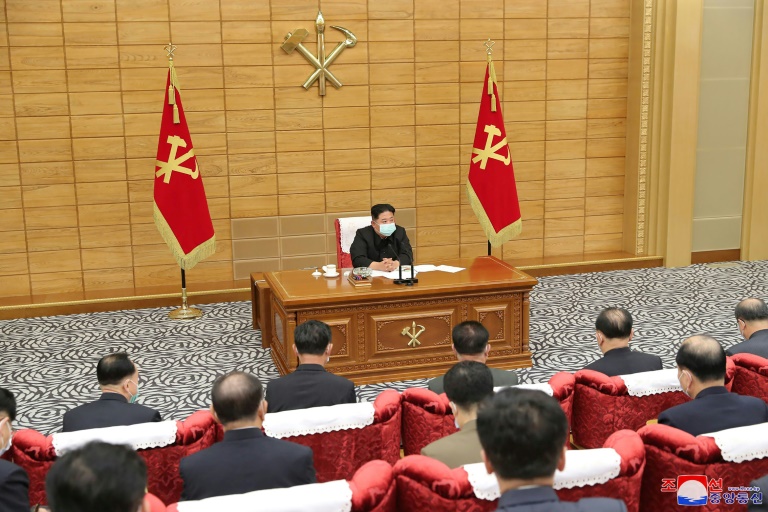
Leader Kim Jong Un says a Covid outbreak is causing ‘great upheaval’ in North Korea, which announced 21 new “fever” deaths Saturday. 

Two days after confirming its first cases of Covid-19, the government said more than half a million people had been sickened nationwide.

Despite activating its “maximum emergency quarantine system” to slow the spread of disease through its unvaccinated population, North Korea is now reporting tens of thousands of new cases daily.

On Friday, “over 174,440 persons had fever, at least 81,430 were fully recovered and 21 died in the country”, the official Korean Central News Agency reported.

North Korea confirmed Thursday that the highly contagious Omicron variant had been detected in the capital Pyongyang, with Kim ordering nationwide lockdowns.

It was the government’s first official admission of Covid cases and marked the failure of a two-year coronavirus blockade maintained at great economic cost since the start of the pandemic.

From late April to May 13, more than 524,440 people have fallen sick with fever, KCNA said, with 27 deaths in total.

The report did not specify whether the new cases and deaths had tested positive for Covid-19, but experts say the country will be struggling to test and diagnose on this scale.

North Korea has said only that one of the first six deaths it announced Friday had tested positive for Covid-19.

“It’s not a stretch to consider these ‘fever’ cases to all be Covid-19, given the North’s lack of testing capacity,” said Cheong Seong-chang of the Sejong Institute.

“The actual number of Covid cases could be higher than the fever figures due to many asymptomatic cases,” he said, adding that the pace of infection was growing “very fast”.

– ‘Great upheaval’ –

Kim said Saturday the “crisis” was causing “great upheaval”, as he oversaw a second Politburo meeting in three days to discuss the situation, KCNA reported.

“The spread of malignant disease comes to be a great upheaval in our country since the founding of the DPRK,” he said, referring to North Korea by its official name.

Kim is putting himself “front and centre” of the country’s Covid response, said Leif-Eric Easley, a professor at Ewha University in Seoul.

“The language he’s used suggests the situation in North Korea is going to get worse before it gets better,” he told AFP.

“Engagers see this rhetoric preparing the way for international assistance, but Kim may be rallying a population on the verge of further sacrifice,” he added.

The meeting of the nation’s top officials discussed medicine distribution and other ways of “minimising the losses in human lives”, KCNA said.

North Korea has a crumbling health system — one of the worst in the world — and no Covid vaccines, antiviral treatment drugs or mass testing capacity, experts say.

But the country will “actively learn” from China’s pandemic management strategy, Kim said, according to KCNA.

China, the world’s only major economy to still maintain a zero-Covid policy, is battling multiple Omicron outbreaks — with some major cities, including financial hub Shanghai, under stay-at-home orders.

North Korea has previously turned down offers of Covid vaccines from China and the World Health Organization’s Covax scheme, but both Beijing and Seoul issued fresh offers of aid and vaccines this week. 

Kim’s comments indicate North Korea “will try getting supplies from China”, said Yang Moo-jin, a professor at the University of North Korean Studies.

It also looks likely Pyongyang “will adopt a Chinese-style anti-virus response of regional lockdowns”, Yang added.

So far, Kim said Saturday, North Korea’s outbreak was not “an uncontrollable spread among regions” but transmission within areas that had been locked down, KCNA said.

– Nuclear activity –

Despite its Covid outbreak, new satellite imagery indicates that North Korea has resumed construction at a long-dormant nuclear reactor.

“I can’t tell you when the reactor will be ready to go, but it is about 10x larger than the existing reactor at Yongbyon,” Jeffrey Lewis of the Middlebury Institute of International Studies wrote in a Twitter thread Saturday.

It would produce 10 times more plutonium for nuclear weapons, he said, adding: “This would make good on Kim’s pledge to increase the number of nuclear weapons.”

The United States and South Korea have warned that Kim is preparing to conduct another nuclear test — which would be the regime’s seventh — and that it could come any day now.

Analysts have warned Kim could speed up his nuclear test plans in a bid to “distract” North Korea’s population from a disastrous Covid-19 outbreak.

After outcry, Israel police to probe actions at journalist's funeral

Israel’s police chief on Saturday ordered an investigation into the actions of officers at the funeral of journalist Shireen Abu Akleh, after they charged the procession and beat pallbearers, sparking global outrage.

Thousands of mourners packed Jerusalem’s Old City on Friday for the burial of the 51-year-old Al Jazeera reporter. The Palestinian-American was killed two days earlier during an Israeli raid in the occupied West Bank.

Television footage showed pallbearers struggling to stop Abu Akleh’s casket from falling to the ground as baton-wielding police charged towards them, grabbing Palestinian flags.

“The Israel Police Commissioner in coordination with the Minister of Public Security has instructed that an investigation be conducted into the incident,” the police said in a statement.

They had coordinated funeral arrangements with the journalist’s family but “rioters tried to sabotage the ceremony and harm the police,” it said.

“As with any operational incident, and certainly an incident in which police officers were exposed to violence by rioters and in which force was subsequently used by the police, the Israel Police will be looking into the events that ensued during the funeral,” it added.

The United States was “deeply troubled to see the images of Israeli police intruding into her funeral procession,” Secretary of State Antony Blinken said on Friday.

The European Union condemned what it said was “unnecessary force” used by the Israeli police.

On Saturday the foundation of late South African Archbishop Desmond Tutu, a Nobel Peace Prize winner, said scenes of Israeli police attacking the pallbearers were “chillingly reminiscent” of what happened during the funerals of anti-apartheid activists.

Israel and the Palestinians traded blame after Abu Akleh was shot in the head on Wednesday near Jenin refugee camp in the northern West Bank. She had been wearing a helmet and a bulletproof vest marked “Press”.

Israel’s army said an interim investigation could not determine who fired the fatal bullet, noting stray Palestinian gunfire or Israeli sniper fire aimed at militants were both possible causes.

The Palestinian public prosecution said an initial probe showed “the only origin of the shooting was the Israeli occupation forces”.

Al Jazeera said Israel killed her “deliberately” and “in cold blood”.

In a rare, unanimous statement, the UN Security Council condemned the killing, calling for “an immediate, thorough, transparent, and impartial investigation,” diplomats said.

– Massive crowds –

Abu Akleh, a Christian, was a highly respected reporter and her funeral drew massive crowds.

As her body left St Joseph’s hospital in Israeli-annexed east Jerusalem, police stormed the mourners who had hoisted Palestinian flags.

Police said about “300 rioters” had arrived at the hospital for the procession and “prevented the family members from loading the coffin onto the hearse to travel to the cemetery — as had been planned and coordinated with the family in advance”.

The police then intervened “to disperse the mob and prevent them from taking the coffin, so that the funeral could proceed as planned”, they said, adding glass bottles and other objects were thrown at officers.

The Jerusalem Red Crescent said 33 people were injured, of whom six were hospitalised. Police said they arrested six people.

Officers then tried briefly to prevent thousands of mourners from following the coffin to the cemetery, but ultimately relented and did not intervene as Palestinian flags were raised, AFP reporters said.

The United States, European Union and United Nations have backed calls for a full investigation into her killing.

Israel has publicly called for a joint probe, which the Palestinian Authority has rejected.

A PA official said on Saturday that the authority would welcome the “participation of all international bodies in the investigation”.

“What happened in her funeral yesterday by the #occupation forces reinforces our position that rejects #Israel’s participation in this investigation,” Hussein al-Sheikh added on Twitter.

She “was the sister of all Palestinians,” her brother Antoun Abu Akleh told AFP.

Fresh violence erupted Friday in the West Bank, including a raid and clashes around Jenin refugee camp that claimed the life of an Israeli officer.

Tensions were already running high after a wave of anti-Israeli attacks that have killed at least 19 people since March 22, including an Arab-Israeli police officer and two Ukrainians.

A total of 32 Palestinians and three Israeli Arabs have died during the same period, according to an AFP tally, among them perpetrators of attacks and those killed by Israeli security forces in West Bank operations.

Sheikh Mohamed bin Zayed elected UAE president after brother's death

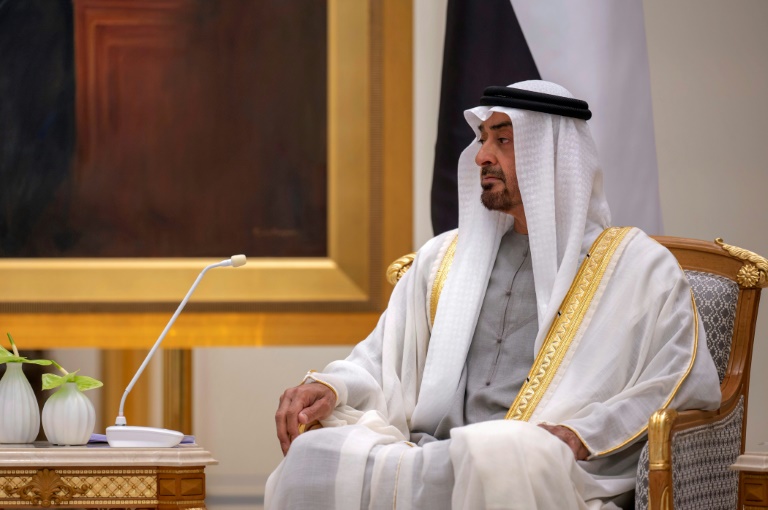
The UAE’s long-time de facto ruler Sheikh Mohamed bin Zayed Al Nahyan was elected as president on Saturday, official media said, a day after the death of former leader Sheikh Khalifa.

The 61-year-old was unanimously elected by the Federal Supreme Council, WAM news agency said, becoming the ruler of the oil-rich country founded by his father in 1971.

Sheikh Mohamed, often known as “MBZ”, met members of the Federal Supreme Council, made up of rulers of the UAE’s seven emirates, as the country enters a period of mourning for his half-brother Sheikh Khalifa.

Sheikh Mohamed’s ascension, which was widely expected, formalises his position as leader of the desert state of 10 million after years of calling the shots while Sheikh Khalifa was sidelined by poor health.

Under his low-key direction, the United Arab Emirates has put a man into space, sent a probe to Mars and opened its first nuclear reactor, while using its oil-funded clout to develop a more assertive foreign policy.

Closely allied with Saudi Arabia, it has emerged as a leader of a reshaped Middle East since the retreat of traditional Arab powers and the reduced involvement of the United States, forging ties with Israel and joining a war against Iran-backed militants in Yemen. 

Russian President Vladimir Putin was quick to offer his congratulations, saying his election would “help reinforce the friendly relations” between the two countries.

Official media had already named Sheikh Mohamed as the ruler of Abu Dhabi, the UAE’s richest emirate, on Friday, inheriting one of the main titles held by Sheikh Khalifa who died at 73.

– ‘Running the show’ –

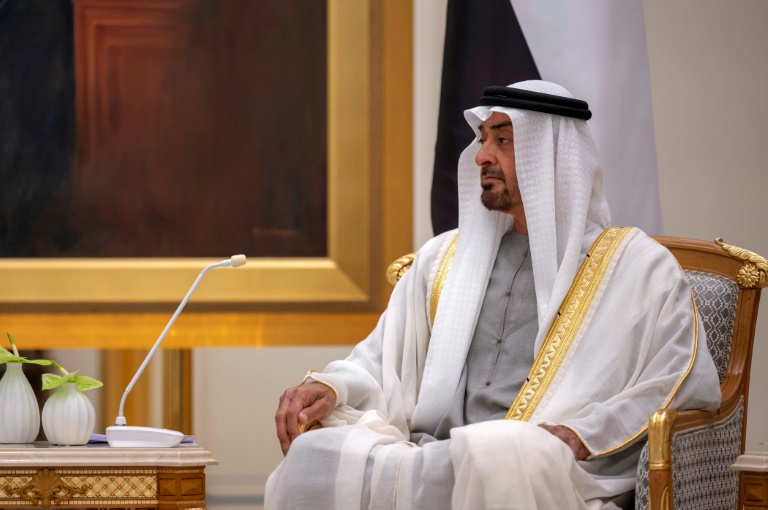
Sheikh Mohamed, wearing a light grey kandura or robe, was a pall-bearer at the funeral prayers for Sheikh Khalifa who was laid to rest in Abu Dhabi’s Al Bateen Cemetery just hours after his death was announced, in accordance with Muslim tradition.

Flags are at half-mast around the UAE and businesses and government offices are closed for three days as the country enters a 40-day period of mourning for Sheikh Khalifa, who had ruled since 2004.

Sheikh Khalifa’s death drew condolences from world leaders, including US President Joe Biden, Britain’s Queen Elizabeth, Israel’s Prime Minister Naftali Bennett and Iran, demonstrating the UAE’s diverse allegiances.

France’s President Emmanuel Macron is to travel to Abu Dhabi on Sunday to pay tribute to the late Emirati leader and show support for the new president, his office announced. Egyptian President Abdel Fattah al-Sisi is also headed to the UAE, along with Sudan’s de facto leader Abdel Fattah al-Burhan.

Neighbouring Saudi Arabia has put sports and entertainments on hold and several countries have announced periods of mourning.

Sheikh Mohamed, who was named crown prince of Abu Dhabi in November 2004, is the third son of Sheikh Zayed bin Sultan Al Nahayan — the revered founder of the UAE.

He has been serving as deputy commander of the armed forces and chairman of the Executive Council of Abu Dhabi, which controls the substantial finances of the emirate which sits on 90 percent of the country’s oil production. 

The UAE, a former British protectorate, has gone from desert outpost to booming state in its short history, fuelled by its oil wealth and Dubai’s rise as a trading and financial centre.

Sheikh Mohamed took a prominent role after Sheikh Khalifa retreated from public view in 2014, when he had surgery after a stroke. The cause of his death was not announced.

The new president is likely to face greater competition to UAE’s status as the regional financial hub, particularly from Saudi Arabia, and may toughen its stance on Iran, analysts say.

But “functionally it changes little; MBZ has been running the show almost from the get go”, tweeted Ryan Bohl, a Middle East analyst at Stratfor Worldview.

War in Ukraine: Latest developments

Here are the latest developments in the war in Ukraine:

– Intense battles in the east –

Intense fighting rages in eastern Ukraine’s Donbas region, where Russia has been concentrating its forces without making significant progress.

Ukrainian forces repulsed Russian attempts to cross a river and encircle the city of Severodonetsk, says Serhiy Gaidai, governor of the eastern Luhansk region.

“There’s heavy fighting on the border with Donetsk region, from the side of Popasna,” Gaidai says, reporting heavy losses of equipment and personnel by the Russians.

– Ukraine could win by ‘end of year’ –

The war in Ukraine could reach a “breaking point” by August and end in defeat for Russia before the end of the year, Kyiv’s head of military intelligence tells the UK’s Sky News.

“The breaking point will be in the second part of August,” Major General Kyrylo Budanov tells the news network.

“Most of the active combat actions will have finished by the end of this year.”

– G7 will ‘never’ recognise war borders… –

The Group of Seven industrialised nations say they will never recognise the borders Russia is trying to shift in its war against Ukraine.

“We will never recognise borders Russia has attempted to change by military aggression, and will uphold our engagement in the support of the sovereignty and territorial integrity of Ukraine, including Crimea, and all states,” the G7 foreign ministers say in a statement after three days of talks in northern Germany.

– …vow more sanctions –

The G7 leaders also vow to expand sanctions to include sectors on which Russia is dependent and they warn China against undermining punitive action against Moscow for its invasion of Ukraine.

“We reaffirm our determination to further increase economic and political pressure on Russia, continuing to act in unity,” their statement says, adding that the G7 “will broaden our sanctions measures to include sectors on which Russia has a particular dependence.”

– Russia suspends Finland’s electricity supplies –

Russia suspends electricity supplies to Finland, a Finnish grid operator confirms, as tensions rise over Helsinki’s NATO bid.

“It is at zero at the moment, and that started from midnight as planned,” says Timo Kaukonen, manager for operational planning at Fingrid.

Russian supplier RAO Nordic had warned it would suspend supplies, citing problems with payments, as Helsinki prepares to announce its application for NATO membership.

– Finland, Sweden discuss NATO bids –

Swedish Prime Minister Magdalena Andersson and Finnish President Sauli Niinisto speak to US President Joe Biden for just over half an hour, about their expected bids to join NATO, the White House says.

Niinisto says on Twitter he explained “Finland’s next steps” towards becoming part of the transatlantic defence group, and that his country “deeply appreciates all the necessary support from the US”.

But the two hitherto non-aligned countries face a potential hurdle from Turkey, whose President Recep Tayyip Erdogan says he does not have a “positive opinion” of them joining the alliance.

– Pentagon chief talks to Russian counterpart –

US Defense Secretary Lloyd Austin urges Russian Defence Minister Sergei Shoigu to move immediately to implement a ceasefire in Ukraine, in their first conversation since before the war began, the Pentagon says.

“Secretary Austin urged an immediate ceasefire in Ukraine and emphasised the importance of maintaining lines of communication,” the Pentagon says in a statement.

A senior US defence official dampened expectations that any progress was made. “The call itself didn’t specifically solve any acute issues or lead to a direct change in what the Russians are doing or what they are saying,” the official says.

burs-jwp/spm

Mohamed bin Zayed, from power behind throne to UAE ruler

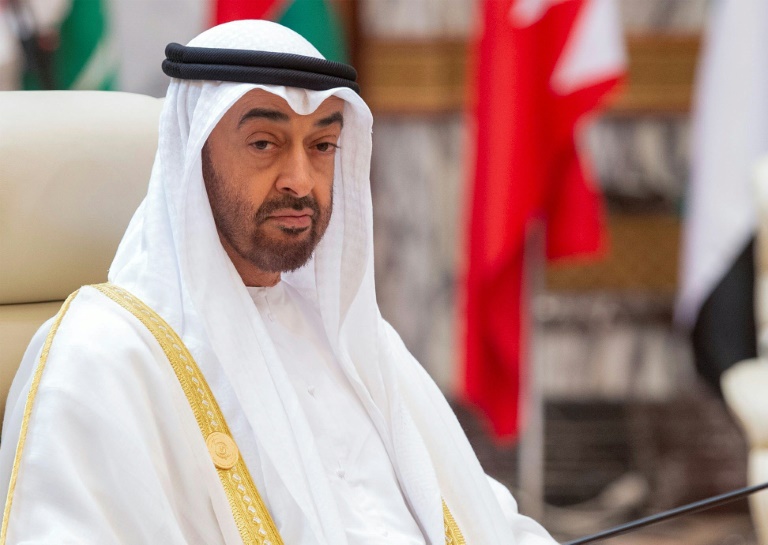
Sheikh Mohamed bin Zayed Al Nahyan, who was elected as UAE president on Saturday, has long been seen as a strongman who has driven the Gulf country’s rise to greater prominence.

A trained soldier and football fan, Sheikh Mohamed has for years been the quiet power behind the throne of Abu Dhabi, the capital of the United Arab Emirates.

The 61-year-old took office, as was widely expected, after the death on Friday of his half-brother Sheikh Khalifa bin Zayed Al Nahyan, who had led the country since 2004.

Sheikh Mohamed was unanimously elected by the Federal Supreme Council, made up of rulers of the UAE’s seven emirates. He has also been named as ruler of Abu Dhabi, which controls most of the country’s oil wealth.

He has long wielded power, however. In a 2009 note to then US president Barack Obama leaked by WikiLeaks, former American ambassador Richard Olson said he was “the man who runs the United Arab Emirates”.

Despite his low profile, and apparent reluctance to speak in public, his ambition has been on display in recent years as the UAE built its profile as a regional player.

He was first Gulf leader to strike a deal normalising relations with Israel, breaking with the decades-old Arab League consensus to isolate Israel until it agrees to the establishment of Palestinian state.

The UAE — a collection of emirates better known for its skyscrapers, palm-shaped islands and opulent mega attractions — has in short order built a nuclear power programme and sent a man to space.

And in July 2020 it joined another elite club by sending a probe to Mars, to mark the 50th anniversary of its unification.

Sheikh Mohamed, who was named crown prince of Abu Dhabi in November 2004, is the third son of Sheikh Zayed bin Sultan Al Nahyan — the founder of the UAE.

He has been serving as deputy commander of the armed forces and chairman of the Executive Council of Abu Dhabi, which controls the emirate’s substantial finances.

– Military muscle –

Born in the capital on March 11, 1961, Sheikh Mohamed was sent to military school in Britain, where he graduated from the famed Royal Military Academy Sandhurst in 1979.

He rapidly rose through the ranks to become air force commander, deputy chief of staff and finally chief of staff in January 1993, and a year later was promoted to the rank of general.

Described by diplomats as Abu Dhabi’s strongman, Sheikh Mohamed has forged links in world capitals, particularly in the West.

He is believed to have taken the decision to deploy troops in Yemen in 2015 as part of a Saudi-led military campaign against Iran-backed Huthi rebels.

The Yemen war marked the first protracted military campaign abroad for the UAE and the first time it had to contend with military casualties, with dozens of Emirati soldiers killed.

The coalition has been denounced for air strikes, including on markets and hospitals, that have caused heavy civilian casualties in Yemen.

The UAE, which largely exited the conflict in 2019, was also accused of running secret prisons across southern Yemen. It denied the accusations.

– Tight grip –

Although Sheikh Mohamed does not often speak in public — he left the November 2017 inaugural speech of the Louvre Abu Dhabi to Dubai ruler Mohammed bin Rashid — his reach cannot be underestimated.

Under his leadership, Abu Dhabi has fostered trade and political ties across the region — including, to a limited extent, with Shiite Iran — but has sided with the US against Tehran’s nuclear programme and with Saudi Arabia on its role in the mainly Sunni Arab world.

Sheikh Mohamed also took the lead on a staunch no-mercy domestic security policy.

Observers believe it was he who masterminded an unprecedented clampdown on Islamists in the UAE, with dozens handed lengthy jail terms over charges of ties to extremists.

At the same time, he crafted for the UAE a reputation of tolerance that contrasts with its conservative neighbours.

In 2017, he announced that Abu Dhabi’s Grand Mosque, also known as Sheikh Zayed Mosque after his father, would be renamed the Mariam Umm Issa (Mary, Mother of Jesus) mosque as a means to “consolidate bonds of humanity between followers of different religions”.

An avid football fan, Sheikh Mohamed is president of the local club in the oasis of Al-Ain, his father’s hometown and the second largest city in Abu Dhabi.

He has also been spotted cycling through the capital in shorts and a helmet.

A keen hunter and a poetry enthusiast, he is married to fellow royal Sheikha Salama bint Hamdan Al Nahyan. The couple has four sons and five daughters.

Sheikh Mohamed bin Zayed elected UAE president after brother's death

The UAE’s long-time de facto ruler Sheikh Mohamed bin Zayed Al Nahyan was elected as president on Saturday, official media said, a day after the death of former leader Sheikh Khalifa.

The 61-year-old was unanimously elected by the Federal Supreme Council, WAM news agency said, becoming the ruler of the oil-rich country founded by his father in 1971.

Sheikh Mohamed, often known as ‘MBZ’, met members of the Federal Supreme Council, made up of rulers of the UAE’s seven emirates, as the country enters a period of mourning for his half-brother Sheikh Khalifa.

Sheikh Mohamed’s ascension, which was widely expected, formalises his position as leader of the desert state of 10 million after years of calling the shots while Sheikh Khalifa was sidelined by poor health.

Under his low-key direction, the United Arab Emirates has put a man in space, sent a probe to Mars and opened its first nuclear reactor, while using its oil-funded clout to develop a more assertive foreign policy.

Closely allied with Saudi Arabia, it has emerged as a leader of a reshaped Middle East since the retreat of traditional Arab powers and the reduced involvement of the United States, forging ties with Israel and joining a war against Iran-backed militants in Yemen. 

Official media had already named Sheikh Mohamed as the ruler of Abu Dhabi, the UAE’s richest emirate, on Friday, inheriting one of the main titles held by Sheikh Khalifa who died at 73.

Sheikh Mohamed, wearing a light grey kandura or robe, was a pall-bearer at the funeral prayers for his elder brother who was laid to rest in Abu Dhabi’s Al Bateen Cemetery just hours after his death was announced, in accordance with Muslim tradition.

– ‘Running the show’ –

Flags are at half-mast around the UAE and businesses and government offices are closed for three days as the country enters a 40-day period of mourning for Sheikh Khalifa, who had ruled since 2004.

Sheikh Khalifa’s death drew condolences from senior figures including US President Joe Biden, Russian President Vladimir Putin, Britain’s Queen Elizabeth, Israel’s Prime Minister Naftali Bennett and Iran, demonstrating the UAE’s diverse allegiances.

France’s President Emmanuel Macron is to travel to Abu Dhabi on Sunday to pay tribute to the late Emirati leader, his office announced.

Neighbouring Saudi Arabia has put sports and entertainments on hold and several countries have announced periods of mourning.

Sheikh Mohamed, who was named crown prince of Abu Dhabi in November 2004, is the third son of Sheikh Zayed bin Sultan Al Nahayan — the revered founder of the UAE.

He has been serving as deputy commander of the armed forces and chairman of the Executive Council of Abu Dhabi, which controls the substantial finances of the emirate which sits on 90 percent of the country’s oil production. 

The UAE, a former British protectorate, has gone from desert outpost to booming state in its short history, fuelled by its oil wealth and Dubai’s rise as a trading and financial centre.

Sheikh Mohamed took a prominent role after Sheikh Khalifa retreated from public view in 2014, when he had surgery after a stroke. The cause of his death was not announced.

The new president is likely to face greater competition to UAE’s status as the regional financial hub, particularly from Saudi Arabia, and may toughen its stance on Iran, analysts say.

But “functionally it changes little; MBZ has been running the show almost from the get go”, tweeted Ryan Bohl, a Middle East analyst at Stratfor Worldview.

Close Bitnami banner
Bitnami