World

China withdraws as 2023 football Asian Cup host due to pandemic

China has withdrawn as the 2023 Asian Cup host due to the coronavirus, football officials said Saturday, with Beijing’s strict zero-Covid strategy dealing another blow to the country’s sporting ambitions.

Authorities in China are pursuing a strategy of stamping out the virus entirely, which includes rapid lockdowns and mass testing, and millions in Shanghai have faced onerous restrictions for more than a month.

But the measures — now rare globally, as most countries shift to living with Covid — have made hosting sporting events a major challenge.

The Olympic-sized Asian Games, due to be staged in September in Hangzhou, had already been postponed last week, and on Saturday the Asian Football Confederation (AFC) said China would not host the Asian Cup.

Chinese football officials had informed the governing body that they would not be able to host the 24-team competition, which was to be staged in 10 cities in June and July next year.

No new host nation was named, with the AFC saying that next steps related to the tournament would be announced in due course. 

“The AFC acknowledges the exceptional circumstances caused by the Covid-19 pandemic, which led to the relinquishment by (China) of its hosting rights,” the governing body said in a statement.

Those involved in organising the tournament had made “this very difficult but necessary decision in the collective interests of” the tournament, it added.

The Asian Cup is staged every four years. Qatar won the last edition in 2019.

It would have been the second time that China had staged the Asian Cup. They hosted it in 2004, when they lost 3-1 to Japan in the final.

– Blow to China’s rulers –

The loss of major sporting events is a blow to the ruling Communist Party, which had burnished its global image with an array of dazzling spectacles such as Beijing’s 2008 Summer and 2022 Winter Olympics

China has also staged tennis and golf tournaments featuring all the world’s leading stars, and a showpiece annual Formula One grand prix.

But with the exception of this year’s Winter Olympics — held in a virus-secure, closed-loop Beijing bubble in February — the world’s most populous nation has cancelled or postponed almost all events since Covid emerged in Wuhan in late 2019.

Experts now believe that the costly and labour-intensive Winter Olympics bubble now appears to have been the exception rather than the rule.

Asian Games organisers have said new dates will be announced “in the near future” for the tournament, which typically attracts more than 10,000 athletes and were scheduled to take place from September 10 to 25. 

Host city Hangzhou lies less than 200 kilometres (120 miles) from Covid-hit Shanghai.

China’s biggest city has for weeks faced a shifting mosaic of lockdowns that have seen some of its 25 million residents scuffle with police and unleash a flood of fury and frustration on social media.

There was panic buying in Beijing last week after rumours spread that the capital could be placed under an onerous lockdown like that in Shanghai. Hundreds of areas across the capital are facing some form of restrictions as cases rise. 
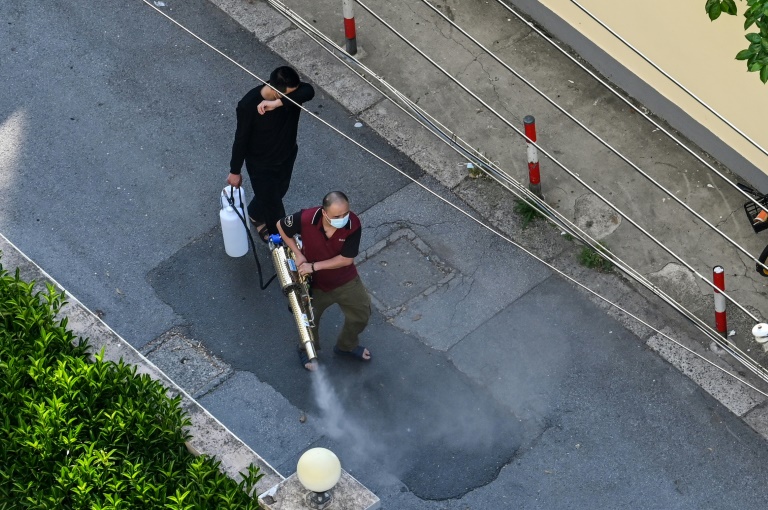
In a haze of disinfectant, China struggles with invisible enemy

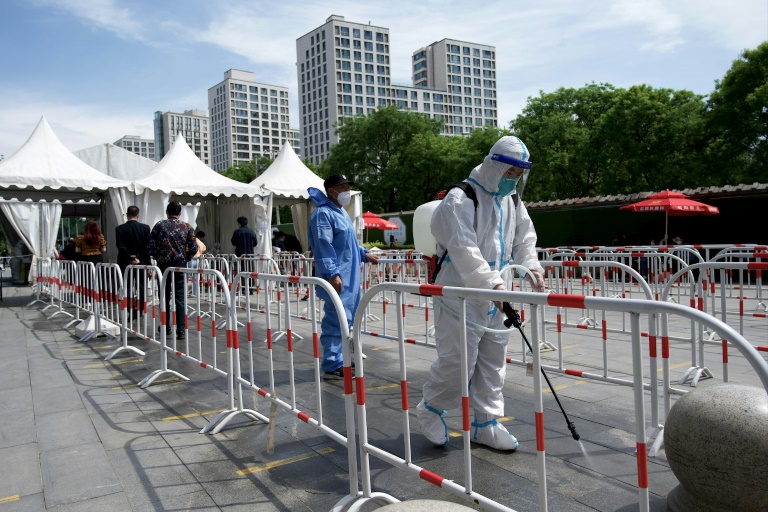
Leaving a fine mist of disinfectant in their wake, China’s hazmat-clad health workers are cleaning homes, roads, parcels and even people — but more than two years into the pandemic, experts say it is a futile measure against Covid-19.

China is tied to a zero-Covid strategy, wielding snap lockdowns, mass testing and lengthy quarantines as part of unrelenting efforts to quash virus outbreaks no matter the cost to the economy or freedoms of its people.

Among its arsenal of virus controls is disinfectant spraying, which a top Shanghai official earlier this month lauded as a key part of a “grand assault” on the virus.

Footage shows legions of “big whites” — as health workers in hazmat suits are referred to in China — spraying apartments with a virus-killing haze after their inhabitants have been taken into state quarantine.

The sight has become one of the most visual expressions of China’s zero-Covid policy, which has taken on a political dimension as President Xi Jinping has pegged the legitimacy of his leadership on protecting Chinese lives from Covid.

Personal possessions and home furnishings lie amid clouds of cleanser, the images show — while in other cases the targets are city streets, walls and parks.

But such labour-intensive campaigns are relatively pointless against a virus that spreads through droplets expelled in coughs and sneezes into the air, experts told AFP.

“Since infection through touching contaminated surfaces is not an important route of transmission, extensive and aggressive use of disinfectant is not necessary,” said Yanzhong Huang, senior fellow at the New York-based Council on Foreign Relations.

Transmission through contaminated surfaces and objects is possible but comparatively rare.

The odds have not deterred China’s disinfectant sprayers.

Shanghai alone had sterilised 13,000 areas as of May 2 under a policy targeting infected people’s homes, apartment blocks and “preventative” disinfection of entire compounds, vice-mayor Liu Duo said.

The city has seethed for weeks under a shifting mosaic of lockdowns that have seen some of its 25 million residents scuffle with police and unleash a flood of fury and frustration on social media.

– Beds, clothes, scooters –

In one social media video verified by AFP, a hazmat-suited health worker brandishing a powerful hose sprays clouds of disinfectant on a resident’s bed, desk and clothes.

Other clips show workers wandering through streets and housing compounds, casually spritzing walls, scooters — and even the ground while residents line up for tests.

One Shanghai resident told AFP his home was sterilised twice after they returned from quarantine, with his family being ordered to wait outside for an hour each time.

Experts struggled to see the necessity of the measure for maintaining public health.

While the virus can transmit through surfaces, “it cannot survive long outside the human body, so it is unnecessary to sterilise outdoor surfaces,” Huang from the Council on Foreign Relations said.

“The widespread use of some chemical disinfectants, such as chlorine disinfectant, could have harmful impacts on human health (and) the environment.”

Leong Hoe Nam, an infectious disease expert at Singapore’s Mount Elizabeth Novena Hospital, said outdoor disinfection was “absolutely pointless.”

“The Chinese phrase is ‘drawing feet on a snake’ — superfluous,” he told AFP.

– Politics of spraying –

China’s refusal to waver on zero-Covid may be driving the zealous use of sterilisers, said Ben Cowling, a professor at the University of Hong Kong’s School of Public Health.

Given the disruptive impact of sudden lockdowns, “one could see a rationale for using every possible approach to reduce transmission,” he told AFP.

Those may include strategies that “might have close to zero effect but might in rare circumstances prevent one infection,” he added.

Leong said the disinfection drive was mostly “a lot of visible intervention that pleases administrators” without doing much to prevent Covid spreading.

But Beijing’s desire to demonstrate its commitment to a flagship policy was perhaps the more important aspect, Huang said.

The move “conjures up the image of a heroic battle against an invisible enemy,” he said.

North Korea reports 21 new deaths as it battles Covid outbreak

North Korea announced 21 new “fever” deaths Saturday and said more than half a million people had been sickened nationwide, two days after confirming its first cases of Covid-19.

Despite activating its “maximum emergency quarantine system” to slow the spread of disease through its unvaccinated population, North Korea is now reporting tens of thousands of new cases daily.

On Friday alone, “over 174,440 persons had fever, at least 81,430 were fully recovered and 21 died in the country”, the official Korean Central News Agency reported.

North Korea confirmed Thursday that the highly contagious Omicron variant had been detected in the capital Pyongyang, with leader Kim Jong Un ordering nationwide lockdowns.

It was the North’s first official admission of Covid cases and marked the failure of a two-year coronavirus blockade maintained at great economic cost since the start of the pandemic.

From late April to May 13, more than 524,440 people have fallen sick with fever, KCNA said, with 27 deaths in total.

The report did not specify whether the new cases and deaths had tested positive for Covid-19, but experts say the country will be struggling to test and diagnose on this scale.

North Korea has said only that one of the first six deaths it announced Friday had tested positive for Covid-19.

“It’s not a stretch to consider these ‘fever’ cases to all be Covid-19, given the North’s lack of testing capacity,” said Cheong Seong-chang of the Sejong Institute.

“The actual number of Covid cases could be higher than the fever figures due to many asymptomatic cases,” he said, adding that the pace of infection was growing “very fast”.

– ‘Great upheaval’ –

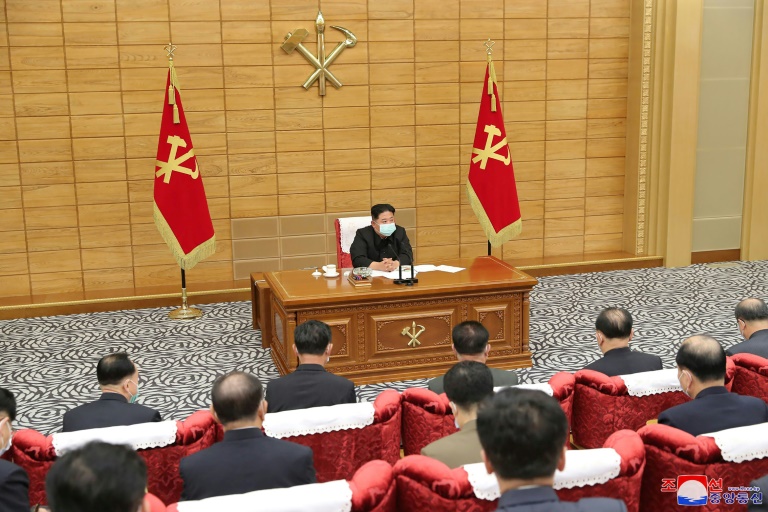
Kim said the outbreak was causing “great upheaval” in North Korea, as he oversaw a second Politburo meeting in three days to discuss the situation.

Kim is putting himself “front and centre” of the country’s Covid response, said Leif-Eric Easley, a professor at Ewha University in Seoul.

“The language he’s used suggests the situation in North Korea is going to get worse before it gets better,” he told AFP.

“Engagers see this rhetoric preparing the way for international assistance, but Kim may be rallying a population on the verge of further sacrifice,” he added.

The meeting of the nation’s top officials discussed medicine distribution and other ways of “minimising the losses in human lives”, KCNA said.

North Korea has a crumbling health system — one of the worst in the world — and no Covid vaccines, antiviral treatment drugs or mass testing capacity, experts say.

But the country will “actively learn” from China’s pandemic management strategy, Kim said, according to KCNA.

China, the world’s only major economy to still maintain a zero-Covid policy, is battling multiple Omicron outbreaks — with some major cities, including financial hub Shanghai, under stay-at-home orders.

North Korea has previously turned down offers of Covid vaccines from China and the World Health Organization’s Covax scheme, but both Beijing and Seoul issued fresh offers of aid and vaccines this week. 

Kim’s comments indicate North Korea “will try getting supplies from China”, said Yang Moo-jin, a professor at the University of North Korean Studies.

It also looks likely Pyongyang “will adopt a Chinese-style anti-virus response of regional lockdowns”, Yang added.

So far, Kim said Saturday, North Korea’s outbreak was not “an uncontrollable spread among regions” but transmission within areas that had been locked down, KCNA said.

– Nuclear activity –

Despite its Covid outbreak, new satellite imagery indicates that North Korea has resumed construction at a long-dormant nuclear reactor.

“I can’t tell you when the reactor will be ready to go, but it is about 10x larger than the existing reactor at Yongbyon,” Jeffrey Lewis of the Middlebury Institute of International Studies wrote in a Twitter thread Saturday.

It would produce 10 times more plutonium for nuclear weapons, he said, adding: “This would make good on Kim’s pledge to increase the number of nuclear weapons.”

The United States and South Korea have warned that Kim is preparing to conduct another nuclear test — which would be the regime’s seventh — and that it could come any day now.

Analysts have warned Kim could speed up his nuclear test plans in a bid to “distract” North Korea’s population from a disastrous Covid-19 outbreak.

Intense fighting in east Ukraine as Europe pledges more military aid

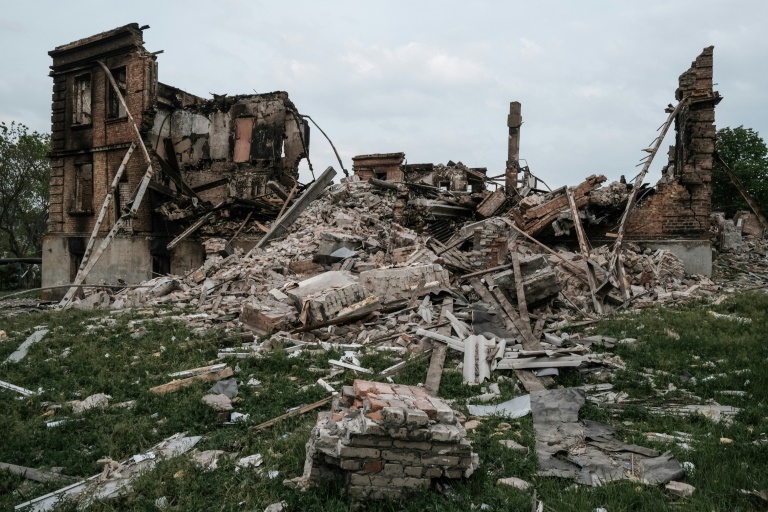
Intense fighting raged in eastern Ukraine’s Donbas region where Russia has been concentrating its forces without making significant progress, while “very difficult negotiations” were under way over the fate of the last besieged defenders in the city of Mariupol.

Europe on Friday pledged another half a billion dollars in military support for Ukraine as it resists the Russian invasion that began on February 24, while Sweden and Finland’s moves towards joining NATO hit multiple obstacles.

At the end of March, after failing to take the capital Kyiv in the face of determined resistance, Russia turned its focus to eastern Ukraine.

Ukrainian forces repulsed Russian attempts to cross a river and encircle the city of Severodonetsk, said Serhiy Gaidai, governor of the eastern Luhansk region.

“There’s heavy fighting on the border with Donetsk region, from the side of Popasna,” Gaidai said, reporting heavy losses of equipment and personnel by the Russians.

“From interceptions (phone calls), we understand that a whole (Russian) battalion has refused to attack, because they see what’s happening.”

Aerial images showed dozens of destroyed armoured vehicles on the river bank and wrecked pontoon bridges.

Britain’s Ministry of Defence said the Russians had sustained heavy losses after Ukrainian forces successfully prevented their attempted river crossing.

“Conducting river crossings in a contested environment is a highly risky manoeuvre and speaks to the pressure the Russian commanders are under to make progress in their operations in eastern Ukraine,” it said.

The ministry added that Russian forces had “failed to make any significant advances despite concentrating forces in this area”.

A senior US defence official said most of the activity was now in the Donbas area, “and essentially, we continue to see the Russians not making any major gains” there.

According to the latest assessment from the US-based Institute for the Study of War, “Russian President Vladimir Putin likely intends to annex occupied southern and eastern Ukraine directly… in the coming months.”

Russia’s hopes of swift gains appear to have been thwarted and Ukraine has even managed to push Russian troops out of the northern city of Kharkiv, which had been a priority target for Moscow.

In Kharkiv region, “the enemy’s main efforts are focused on ensuring the withdrawal of its units from the city of Kharkiv,” said the spokesman for the Ukrainian General Staff.

– ‘Difficult negotiations’ –

“The gradual liberation of the Kharkiv region proves that we will not leave anyone to the enemy,” Ukrainian President Volodymyr Zelensky said in his daily video address Friday.

“Of course, we remember every city and every community that is still under occupation,” he said, with a special mention of the southern port city of Mariupol where the last defenders are holed up in the vast Azovstal steelworks.

“We do not stop trying to save all our people from Mariupol and Azovstal,” Zelensky said.

“Currently, very difficult negotiations are under way on the next stage of the evacuation mission — the rescue of the seriously wounded, medics. It is a large number of people.”

Women, children and the elderly who had taken refuge in the tunnels and bunkers in the Azovstal plant were evacuated at the end of April with the help of the United Nations and Red Cross.

The Ukrainian General Staff said in an update Saturday that Russian forces continued “to blockade our units near the Azovstal plant” and carried out “massive artillery and air strikes”.

From inside the plant, Sviatoslav Palamar, one of the leaders of the Ukrainian Azov regiment, told the online Kyiv Security Forum that there were 600 wounded there and pleaded for help to evacuate them.

“We continue to defend ourselves, and we shall not surrender,” he said.

– Finland, Sweden NATO bids –

At a meeting in Germany of foreign ministers from the Group of Seven nations, European Union foreign policy chief Josep Borrell on Friday promised Ukraine an extra 500 million euros ($520 million), bringing the bloc’s total military aid to two billion euros.

The meeting of G7 ministers, joined by their Ukrainian and Moldovan counterparts, continues Saturday.

An informal meeting of NATO foreign ministers is also scheduled in Berlin on Saturday, where the Swedish and Finnish ministers plan to meet their Turkish counterpart to discuss their potential bids to join the alliance.

That follows Turkish President Recep Tayyip Erdogan expressed opposition to their entry.

US President Joe Biden spoke with Swedish Prime Minister Magdalena Andersson and Finnish President Sauli Niinisto on Friday about the NATO plan.

The White House said it was “working to clarify” Erdogan’s stance on the issue.

Every NATO member’s approval is required to expand the alliance.

And a day after leaders in Helsinki declared their nation must apply to join NATO “without delay”, Russian state energy group Inter RAO said it would suspend electricity supplies to Finland beginning Saturday.

Inter RAO’s subsidiary in the Nordic region blamed the suspension on not having received payment for electricity sold in May.

Russia had warned that it would be forced to take “reciprocal steps” if Finland joined NATO, to “address the resulting threats”.

burs-mtp/qan

Myanmar’s gaming stars face barriers in tough eSports journey

Myanmar’s eSports athletes must battle not only online opponents but also a creaky national infrastructure in their bid to make it in the ferociously competitive world of gaming.

A relative newcomer to the fast-growing electronic sports scene, Myanmar sees eSports as a way of connecting to the outside world, a top gaming official from the country told AFP at the SEA Games in the Vietnamese capital Hanoi.

ESports are a popular choice among many Asian youths seeking the promise of fame and fortune on the digital battleground.

But Myanmar’s budding gaming stars face challenges that are unthinkable for many of their rivals. 

Power outages and internet connection problems are routine obstacles in the developing country where the civilian government of Aung San Suu Kyi was toppled by the army in February 2021.

“Blackouts are a challenging factor,” Myanmar Esports Federation vice president Kaung Myat San said, adding that gamers who do not have back-up generators “will find it difficult”.

Myanmar is plagued by a frail energy grid that particularly stumbles during the hot summer months when electricity use is high, forcing locals to buy costly generators for their power needs.

Another barrier is the country’s internet, which although “getting better” is still slower than other countries, said Kaung.

Gamers can suffer “high ping” — a lag between the player inputting a command and the server responding to it — which can be fatal in a sport where fractions of seconds are the difference between online life and death.

“High ping is an issue for some games, especially to enter international events that are hosted online,” he said, adding that was however “only a small percent”.

He declined to comment if his country’s political troubles were a factor on local eSports performance.

Underlining the fears people have of being seen to criticise the ruling junta, one eSports player at the SEA Games declined to give his name in describing how they sometimes have to hop from one location to another in the middle of the day when the power cuts out.

He said that they usually get about 18 hours of electricity a day.

– ‘Catch up to the world’ –

ESports made its debut at the biennial SEA Games in 2019 and was also set to feature at the Asian Games in China later this year, before those Games were postponed because of Covid. Talk has bubbled away for years about eSports one day making the Olympics.

International gaming competitions meanwhile can draw vast online and in-person audiences and prize pools in the tens of millions of dollars.

The obstacles teams from Myanmar face has not stopped some making their mark in eSports.

The Burmese Ghouls, a professional team, took second place at the Mobile Legends M2 World Championship in January 2021.

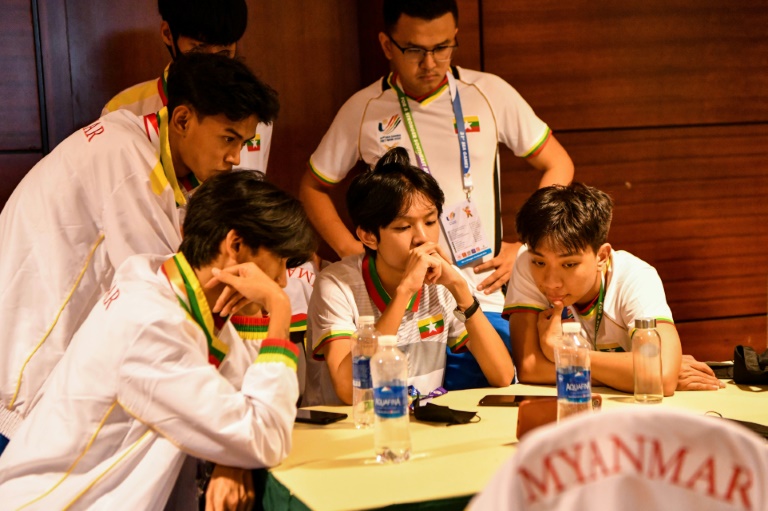
At the SEA Games in Hanoi, a row of Myanmar eSports players furiously tapped at their phones against Singapore in a Friday group-stage match of League of Legends: Wild Rift.

After a 15-minute battle, the Myanmar group bowed out from the brightly lit stage with their second loss of the day after being beaten earlier to Vietnam.

The athletes declined to speak to the media, shying away from queries.

Kaung said despite the defeat, the country’s 29-strong eSports squad still stand a chance at winning medals in two other mobile gaming events in Hanoi.

He is confident about Myanmar’s long-term gaming prospects, but the players need help.

“For our players to overcome these problems, they have to join professional eSports organisations which can support them. Sponsoring them can grow their careers,” he said.

“Through eSports we can catch up to the world.”

North Korea reports 21 new deaths as it battles Covid outbreak

North Korea announced 21 new “fever” deaths Saturday and said more than half a million people had been sickened nationwide, two days after confirming its first-ever cases of Covid-19.

Despite activating its “maximum emergency quarantine system” to slow the spread of disease through its unvaccinated population, North Korea is reporting tens of thousands of new cases daily.

On Friday alone, “over 174,440 persons had fever, at least 81 430 were fully recovered and 21 died in the country,” the official Korean Central News Agency reported.

North Korea confirmed Thursday that the highly-contagious Omicron variant had been detected in the capital Pyongyang, with leader Kim Jong Un ordering nationwide lockdowns.

It was the North’s first official confirmation of Covid cases and marked the failure of a two year long coronavirus blockade maintained at great economic cost since the start of the pandemic.

“The number of fevered persons totalized from late April to May 13 is over 524,440,” KCNA said, with 27 deaths total.

The report did not specify whether the new cases and deaths had all tested positive for Covid-19, but experts say the country will struggle to test and diagnose on this scale.

“It’s not a stretch to consider these ‘fever’ cases to all be Covid-19, given the North’s lack of testing capacity,” said Cheong Seong-chang of the Sejong Institute.

“The actual number of Covid cases could be higher than the fever figures due to many asymptomatic cases,” he said, adding that the pace of infection was growing “very fast”.

– ‘Great upheaval’ –

North Korea held its second Politburo meeting this week, overseen by leader Kim Jong Un, KCNA reported.

“The spread of malignant disease comes to be a great upheaval in our country since the founding of the DPRK along with the worldwide spread of Covid-19,” he said, referring to North Korea by its official name.

The meeting of the country’s top officials discussed “supplying reserve medicines” and other ways of “minimizing the losses in human lives”, KCNA said. 

North Korea has a crumbling health system — one of the worst in the world — and lacks essential medicines and equipment, experts say.

With no Covid vaccines, antiviral treatment drugs or mass testing capacity, North Korea will struggle to handle a massive outbreak, experts warn.

– China Model –

Kim said Saturday that North Korea would follow the Chinese model of disease management.

“It is good to actively learn from the advanced and rich anti-epidemic successes and experience already gained by the Chinese party and people in the struggle against malicious epidemic,” he said, KCNA reported.

China, the world’s only major economy to still maintain a zero-Covid policy, is currently battling multiple Omicron outbreaks — with some major cities, including financial hub Shanghai, under stay-at-home orders.

North Korea has previously turned down offers of Covid vaccines from China, as well as from the World Health Organization’s Covax scheme.

Beijing said Thursday it would be willing to help Pyongyang, and South Korea also announced Friday it could send vaccines to the North — if Kim’s regime would accept them.

Kim’s comments suggest the North “will adopt Chinese-style anti-virus response of regional lockdowns,” said Yang Moo-jin, a professor at the University of North Korean Studies.

They also indicate Kim “will try getting supplies from China, which has also publicly stated its willingness to provide preventive assistance to the North.”

– Nuclear activity –

Despite its Covid outbreak, new satellite imagery indicates that North Korea has resumed construction at a long-dormant nuclear reactor.

“I can’t tell you when the reactor will be ready to go, but it is about 10x larger than the existing reactor at Yongbyon,” Jeffrey Lewis of the Middlebury Institute for International Studies wrote in a Twitter thread Saturday.

As such, it would produce ten times more plutonium for nuclear weapons, he said, adding: “This would make good on Kim’s pledge to increase the number of nuclear weapons.”

The United States and South Korea have warned that Kim is preparing to conduct another nuclear test — which would be the regime’s seventh — and that it could come any day now.

Analysts have warned Kim could speed up his nuclear test plans in a bid to “distract” North Korea’s population from a disastrous Covid-19 outbreak.

NATO membership prospect brings relief for border Finns

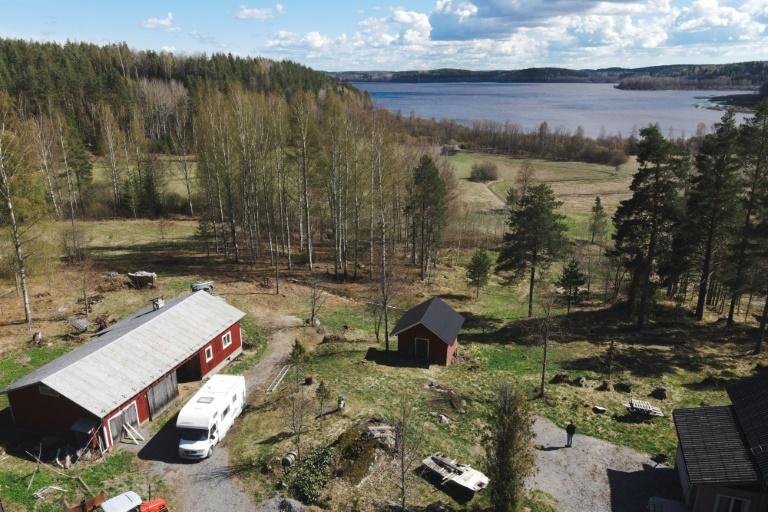
Troubled by the war in Ukraine, Finnish pensioner Martti Kailio, 73, keeps his hunting rifle to hand at his home in Hiivaniemi, overlooking the Russian border on the other side of a lake.

“It makes me so angry that I would be amongst the first volunteers to go out there with a loaded gun, even though I’m not young enough to be a soldier anymore,” he says.

For many Finns living on the eastern border, the prospect of their country applying to join NATO has been greeted with relief. 

“We should have joined earlier. No point in dragging it out anymore”, Kailio says.

Sharing a 1,300-kilometre (800-mile) border with Russia, Finland has in the past stayed out of military alliances.

But after its powerful eastern neighbour invaded Ukraine in February, political and public opinion swung dramatically in favour of membership, with the Finnish president and prime minister on Thursday calling for the country to join NATO “without delay”.

For some Finns, Russia’s assault on Ukraine has brought up painful memories of the 1939 Winter War, when Red Army troops invaded the Nordic country. 

As in Ukraine, the small Finnish army put up a fierce resistance and inflicted heavy losses on the Soviets.

Nevertheless, Finland had to cede vast areas of land to the Soviet Union.

– ‘A necessity’ –

Veli-Matti Rantala, 72, whose farmhouse is just a short walk from the Russian border in Suokumaa, holds a rusty army helmet and tells stories of the battles that took place in the surrounding forests.

“I’m not too worried about the situation anymore, now that we’re joining the Western community, help is coming,” he says. To him, Finland joining the alliance is a “necessity”. 

Living just a few hundred metres from the Russian border in Vainikkala, teacher Jaana Rikkinen, 59, grew up hearing the Russian border guards on the opposite side of the lake. 

Rikkinen, who lost her uncles in the war, also feels “relieved” that Finland is now joining NATO, even though previously she had her doubts about the bloc. 

She recalls how even after the war, there were regular illegal border crossings near her home. 

“It always happened at night. First, you heard the hounds, and then the gunfire,” Rikkinen says, adding that she hoped she only ever heard warning shots.

In 2001, a Russian army deserter crossed the border and broke into a house next door before killing himself after an exchange of fire with police.

Rikkinen fears that if the situation in Russia deteriorates, there might be more people trying to cross the border.

– Trust gone –

Despite the area’s history, the residents have always had plenty to do with those on the other side of the frontier.

“While Russia has always been feared — throughout the ages — in these parts, we have had an everyday interaction with Russians,” Rantala says. 

He says Finns living on the border are very familiar with Russia and many have friends there. 

Before the war, Rikkinen used to go for weekly shopping across the border and weekend trips to Saint Petersburg, and had nothing “negative to say” about Russians. 

But that “trust towards our neighbours is now gone”. 

“The border is shut, and if we went there, we don’t know what could happen,” she says. 

With most livelihoods in Vainikkala linked to Russia, and the train station and border guard employing most of the villagers, Rikkinen fears that the border communities are going to suffer because of the conflict.

“I just hope the war will end,” she says.

Macron starts second term with challenges mounting

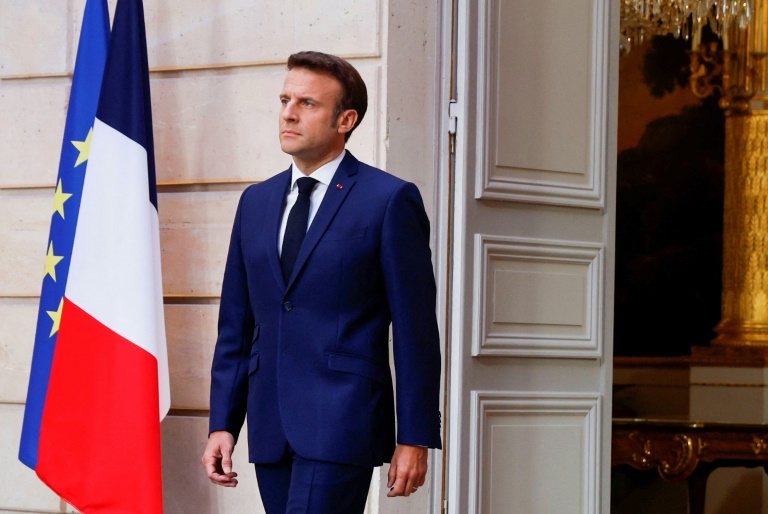
French President Emmanuel Macron formally begins his second term in office on Saturday, maintaining suspense about his new government ahead of parliamentary elections next month that will shape his next five years in power. 

The 44-year-old scored a solid victory in April 24 presidential polls against far-right leader Marine Le Pen, but still needs a majority in parliament to be able to push through his domestic reform agenda.  

The identity of Macron’s new government is expected to set the tone for campaigning, with the president suggesting he intends to name only the second woman prime minister in modern French history.

Speculation has been rife in the French media, with UNESCO Director-General Audrey Azoulay and current Labour Minister Elisabeth Borne seen as possible candidates, but Macron has taken his time to name a replacement for outgoing Premier Jean Castex.

“It’s been decided, but no one knows who it is,” a presidential advisor told AFP on condition of anonymity.

An announcement is expected early next week. 

Macron’s Republic on the Move party has been renamed Renaissance ahead of the parliamentary polls on June 12 and 19, with several centrist and centre-right parties set to compete under the collective pro-Macron banner of “Together”.

France’s splintered left-wing parties have also agreed a tie-up under the leadership of former Trotskyist Jean-Luc Melenchon who has set his sights on a parliamentary majority to thwart Macron’s plans.

“To go from around 60 MPs (in the current parliament) to a majority is highly improbable, but the dynamic created by the new union could mean they make major progress,” Frederic Dabi, head of the Ifop polling group, told AFP this week.

Le Pen’s National Rally and France’s ailing mainstream right-wing party, the Republicans, are also hoping to bounce back from their disappointment in the presidential election by securing significant representation in the 577-seat parliament.

– ‘Combination of challenges’ – 

Macron won re-election with promises to continue his broadly pro-business and pro-EU policies of his first term, with more tax cuts, welfare reform and pledged a new emphasis on environmental protection for the next five years.

The biggest change is expected to be in his style of governing.

The former investment banker repeatedly promised “a new method” that will be less top-down — a move designed to tackle his reputation for elitism and high-handedness.

“For it to work, there needs to be results that are concrete and visible to people,” Bernard Sananes, the head of polling group Elabe, told AFP. “If it’s just about showing you’re listening to people, that’s great but it won’t be enough.”

Others wonder whether the more consultative style is in keeping with the temperament of a president who is known to centralise decision-making and once theorised that French people wanted a king-like figure at the centre of national life. 

His short-term domestic priority is expected to be tackling a cost-of-living crisis that dominated the presidential campaign due to sharp rises in energy prices and other goods linked to product shortages and the war in Ukraine.

In foreign policy, where Macron will have a free hand as president irrespective of the parliamentary result, he has promised to work to deepen the 27-member European Union while managing the fallout from the Ukraine conflict.

Macron has positioned himself as a key link to the Kremlin through his regular talks with Russian President Vladimir Putin, while also authorising weapons deliveries to Ukraine and offering the partly occupied country his full support.

“Rarely has our world and our country been confronted with such a combination of challenges,” Macron said as he was inaugurated for his second term on May 7. 

burs-adp/sjw/raz

Colombia elections: the spectre of political assassination

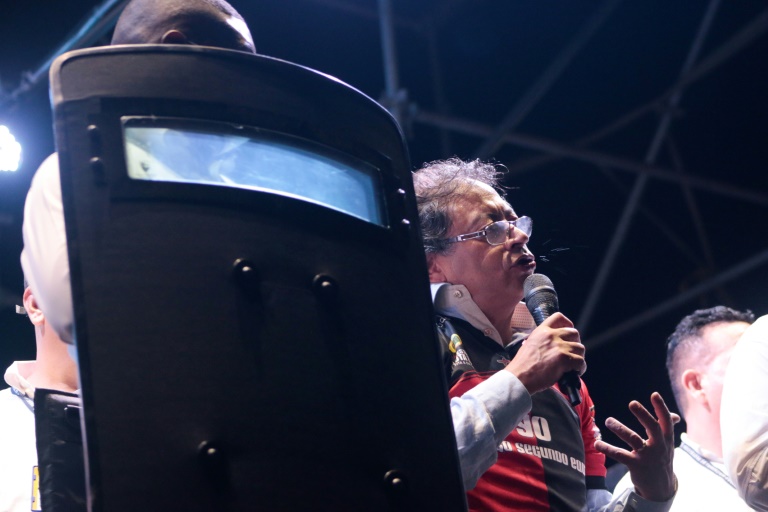
Every time Colombian leftist presidential candidate Gustavo Petro, who leads opinion polls, steps out in public the scene is striking: he is surrounded by a wall of nervous-looking bodyguards brandishing bullet-proof shields.

The spectre of assassination is haunting the electoral campaign in which the left has a real chance of taking power for the first time in a country that has a history of political careers ending in a hail of bullets.

In the 20th century, five presidential candidates were assassinated by opponents, drug traffickers or paramilitaries working in complicity with the state.

Three were from the left or far left, and the other two were liberals.

The country was gripped by more than five decades of conflict between the state and the Revolutionary Armed Forces of Colombia (FARC) that ended with a 2016 peace deal.

And while the level of violence has dropped since then, Colombia remains wracked by a multi-faceted conflict involving drug traffickers and a multitude of armed groups.

– ‘Very high’ risk –

“The spectre of death accompanies us,” Petro told AFP in February. “It does not stop appearing to me like a flash, when I’m in a crowd, when I’m on a platform and there is a full square, someone could shoot from anywhere.”

Earlier this month, the 62-year-old senator, a former left-wing guerrilla, had to call off a public appearance after his team received “first-hand information” about an assassination plot by two paramilitaries.

Two days later he did appear in the northern city of Cucuta behind the bullet-proof shields.

His 60-strong bodyguard has since been beefed up while local security forces have provided extra officers for his numerous trips to provincial areas that have contributed to his successful campaign.

The assassination risk “is very high”, according to Felipe Botero, a political science professor at the Andes University.

“They won’t just (try to) kill Petro the candidate but it is also highly likely they will try to assassinate him if he wins the presidency,” Botero told AFP.

His running mate Francia Marquez, a black environmentalist, has also received threats.

Conservative candidate Federico Gutierrez has spoken of his concern, not just for Petro but also himself, having claimed to have been threatened by the Marxist National Liberation Army (ELN), the last remaining recognized rebel group in the country.

“Take care of Federico Gutierrez,” said former president Alvaro Uribe, who escaped a FARC assassination attempt using explosives in 2002.

– Fear of the left –

In the history of modern Colombia a date that stands out is April 9, 1948 when liberal presidential candidate Jorge Eliecer Gaitan was shot dead on a street in Bogota.

His murder inflamed the city and set off a bloody internal conflict that, more than a half century later, has still not been extinguished.

Four decades later, communist Jaime Pardo Leal (1987), liberal Luis Carlos Galan (1989), and leftists Bernardo Jaramillo and Carlos Pizarro (1990), all presidential hopefuls, were assassinated.

Alexander Gamba, a professor at the Saint Thomas University, says there are three reasons for a “possible” attack on Petro.

Firstly, Colombia has “violence professionals” like the almost two dozen mercenaries who took part in the assassination of Haiti’s president last year.

Secondly, Petro’s opponents have claimed his victory would be “a huge national catastrophe”, which has contributed to an atmosphere in which his assassination would almost be presented as a “patriotic act.”

Lastly, the country has “never had political change” involving the left wing, which conservatives continue to link to the armed rebellion.

“In a country like Colombia, marked by political violence and with the record for the murder of social leaders, we obviously take all threats against Mr Petro seriously,” said Alfonso Prada, one of the candidate’s advisors.

“If we hope to run the country, we need to be capable of looking after our own security,” he added.

For its part, the outgoing government of President Ivan Duque, has said Petro “is one of the best protected people” in the country.

Ukrainians show strength at Deaflympics in Brazil

When Rymma Filimoshkina practiced the hammer throw in the yard near her house in Mariupol at the start of the Ukraine war, her neighbors thought she was throwing a bomb.

But her “weapon” isn’t one of destruction: it just won the 33-year-old deaf athlete a gold medal at the Deaflympics in Brazil.

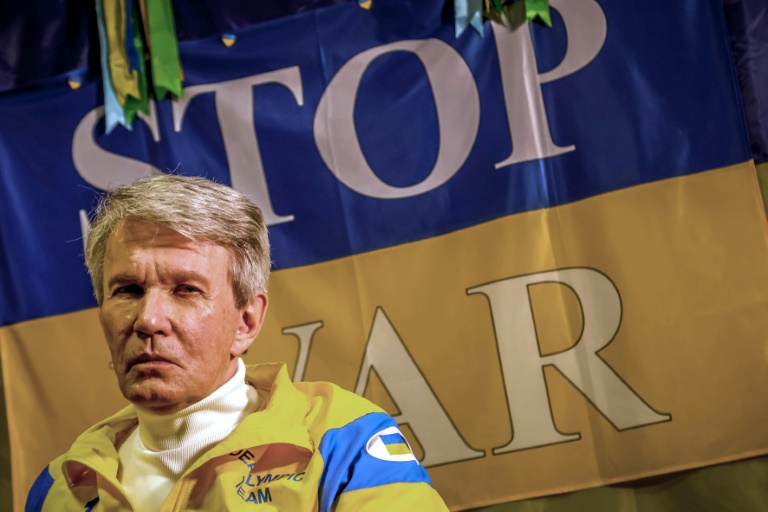
Thousands of kilometers (miles) from the conflict at home, the Ukrainian team is raking in the medals at the Olympics for the deaf, which opened on May 1 and wrap up Sunday in the southern city of Caxias do Sul.

With two days left to go in the Games, Ukraine had a commanding lead in the medal table, with a total of 116 — more than double the second-place United States.

“In this event, we show the world we exist: we are Ukraine, a real powerful, independent and democratic country,” said Valeriy Sushkevych, president of the Ukraine Paralympic committee.

“One soldier called us and said: in between battles, we support you on TV. Your fighting spirit in sports is very important for us,” he told AFP.

– ‘Really want’ peace –

Ukraine has a history of punching above its weight in disabled sport.

Its Paralympic program owes its success to two and a half decades of specialized schools in every region of the country for children with disabilities, who start participating in sporting programs at an early age, Sushkevych says.

Ukraine finished sixth in the medal table at the Summer Paralympics in Tokyo last year, and second at the Winter Paralympics in Beijing in March, just after Russia launched its invasion.

The team’s success at the Deaflympics is symbolically charged: Ukraine had finished second in the medal table at the last three editions of the event — behind Russia, which was banned from all international competitions over the invasion.

“I dedicate these medals to Ukraine. I’m very proud to represent my country,” said a smiling Dmytro Levin, a 24-year-old native of Kharkiv, speaking in sign language after winning two golds and a bronze in orienteering.

“I’m happy to have won this medal for Ukraine. But all I really want is peace,” said 15-year-old Sofia Chernomorova, who won bronze in badminton.

– ‘Didn’t hear the sirens’ –

Filimoshkina said she still remembers the vibrations she felt with every bomb that exploded in Mariupol, the port city devastated by relentless Russian strikes.

“A lot of deaf people died because they didn’t hear the air raid sirens and went outside at the wrong time,” she said.

Her teammate Julia Kysylova, who won silver in the hammer throw, said that for a long time, she was sure they would have to cancel their trip for the Games.

“When the war erupted, it was impossible to train. I spent a month sheltering at home,” said the 25-year-old athlete from Nova Kakhovka, in the hard-hit southern region of Kherson.

She finally managed to flee to Spain, leaving her husband behind.

“It was a miracle we managed to cross the border. The trip took more than two days,” she said.

“After the Games, I hope to go back home and be with my husband,” she added.

“But I don’t know if that will be possible.”

Close Bitnami banner
Bitnami