World

Lack of competition fueled US baby formula shortage

There’s no end in sight to America’s shortage of baby formula — and the crisis has highlighted the lack of competition that has spread to all parts of the US economy, even essential ones such as food for infants.

The problem “is not going to solve itself in a day or week,” Brian Deese, a top White House economic advisor, told CNN Friday.

He was unable to say how long the crisis would last.

Initially caused by supply chain blockages and a lack of production workers due to the pandemic, the shortage was exacerbated in February when, after the death of two infants, manufacturer Abbott announced a “voluntary recall” for formula made at its factory in Michigan and shut down that location.

The shortage has left many parents frantic and fearful their infants may starve. Formula is a necessity for many families, particularly in low-income households where mothers have to return to work almost immediately after giving birth and cannot breastfeed.

A further issue is that prices for the formula that remains have skyrocketed.

An investigation by the US Food and Drug Administration (FDA) cleared Abbott’s formula but made 483 “observations” about the factory, Abbott said in a statement Friday.

“We immediately began implementing corrective actions and subject to FDA approval, we could restart our Sturgis, Mich., site within two weeks,” the company said.

The FDA promised to announce plans next week that would allow, among other things, the import of formula produced overseas.

– ‘Matter of weeks’ –

The FDA currently bans most foreign infant formula, including products made in Europe, not because of health concerns but due to labeling and packaging standards.

“We believe these and other ongoing efforts will help dramatically improve the supply in the US in a matter of weeks,” FDA head Robert Califf said Friday on Twitter.

US President Joe Biden also said it “will be a matter of weeks or less” to start fully refilling shelves.

He said that stock levels in stores had begun to stabilize this week.

According to the data collection agency Datasembly, as of Tuesday, 43 percent of the usual formula supply was out of stock, up 10 percent from the April average.

Deese stressed that safety was key in solving the formula shortage and said that Biden’s administration had been running on all cylinders to try and provide enough supply.

Accused of a wait-and-see attitude or even indifference, the White House unveiled some measures Thursday to tackle the issue, but the scope seemed limited.

Biden said Friday that his administration had intervened as soon as it was aware of the problem, but that they had to “move with caution as well as speed.”

– Just three manufacturers –

“The White House… is considering all sorts of options for helping parents, which is good,” Amanda Starbuck, a research director at the Food & Water Watch group, a food safety NGO, told AFP.

She said the crisis was indicative of the problem with extreme concentration throughout the food production chain.

Three US companies control 95 percent of formula sales, according to Starbuck.

“It matters a little less if… we’re talking about soda or chips. But it matters a lot more when we’re talking about essential things like milk,” she said.

The current situation is the result of a decades-long movement. The concentration has benefited US companies that, in the absence of competition, have been able to agree on prices among themselves, Starbuck explained.

“But the blame is not completely on these companies,” she said. “Why has our government allowed for… just three companies to control so much?”

Not to mention that the companies’ giant size does not make them more efficient.

“It’s not efficient when there’s a single recall that affects every single parent across the country who needs to feed their child,” she said.

Starbuck said it’s time to turn back the clock, even if it means dismantling the huge corporations.

“What we need to do now is pass comprehensive antitrust legislation in order to better scrutinize companies, to break up companies that have gotten so big that they’re abusing their market power,” she said.

Musk sends mixed messages on Twitter deal, pressuring shares

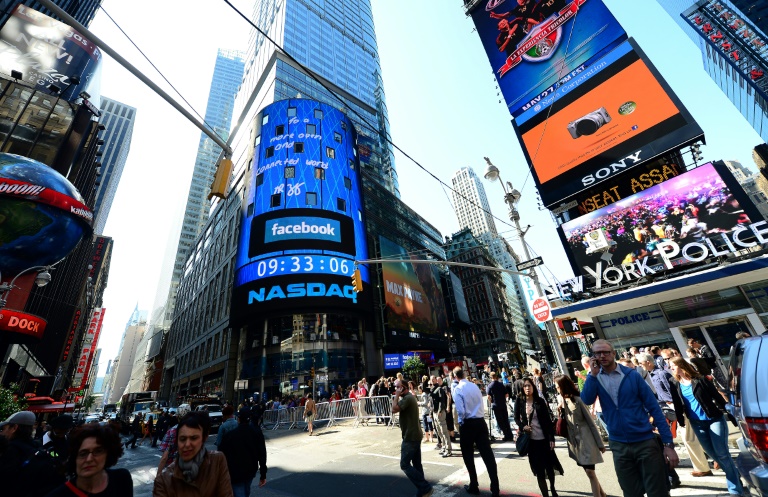
Elon Musk sent mixed messages Friday about his proposed Twitter acquisition, pressuring shares of the microblogging platform amid skepticism on whether the deal will close.

In an early morning tweet, Musk said the $44 billion takeover was “temporarily on hold,” pending questions over the social media company’s estimates of the number of fake accounts or “bots.”

That sent Twitter’s stock plunging 25 percent.

Two hours later, the unpredictable Tesla chief executive added a tweet, saying “Still committed to acquisition.”

Shares recovered a bit, but traded in the red throughout Friday’s session, finishing down nearly 10 percent at $40.72.

While the reliability of user figures is an important benchmark for assessing revenues of Twitter and other social media companies, analysts generally interpreted Musk’s messages as an attempt to pull out of the deal or to try to force a lower price.

“Although we never questioned Musk’s ability to complete such a transaction from a financial perspective, we thought the biggest risk was Elon himself having a change of heart,” CFRA Research’s Angelo Zino said in an analyst’s note.

He said the move gives Musk “leverage” and increases the chance “that he either adjusts his offer price downward or just completely walks away.”

Meanwhile, Chief Executive Parag Agrawal took to the platform to explain moves earlier this week to shake up company leadership and freeze most hiring.

“While I expect the deal to close, we need to be prepared for all scenarios and always do what’s right for Twitter,” Agrawal said. “Im accountable for leading and operating Twitter, and our job is to build a stronger Twitter every day.”

– Skepticism in market –

The chief of SpaceX as well as Tesla, Musk is currently listed by Forbes as the world’s wealthiest person, with a fortune of some $232 billion, much of it in Tesla stock.

Seen by his champions as an iconoclastic genius and by his critics as an erratic megalomaniac, Musk surprised many investors with his pursuit of Twitter.

Musk has described his motivation as stemming from a desire to ensure freedom of speech on the platform and to boost monetization of an Internet site that is influential in media and political circles but has struggled to attain profitable growth.

On Tuesday, Musk said he favored lifting the ban on Donald Trump, who was kicked off the platform in January 2021 shortly after the former US president’s efforts to overturn his election defeat led to the January 6 assault on the US Capitol.

Analysts also have said the site can boost Musk’s other ventures, including Tesla, which so far has grown without following the auto-industry custom of spending heavily on marketing.

But markets have shown skepticism since the April 28 announcement that the Twitter board agreed to sell at $54.20 a share.

The share price has lagged that level, suggesting investors viewed deal closure as not assured, and  has fallen further as the broader tech market retreated this week.

– ‘Horror show’ –

In his first tweet about the deal Friday, Musk linked to an article from May 2 referencing Twitter’s latest filing to US regulators.

The document said an internal review showed Twitter had 229 million “monetizable daily active users” in the first quarter of this year, and just five percent were regarded as false or spam accounts. 

Analyst Dan Ives from Wedbush said the “circus show” was likely to translate into a “Friday 13th horror show.”

“The nature of Musk creating so much uncertainty in a tweet (and not a filing) is very troubling,” he said.

Musk has gotten into hot water with regulators over his tweets in the past, but the Twitter purchase agreement includes a clause specifying that he is free to tweet about the deal provided his posts “do not disparage the company or any of its representatives.”

Market analyst Susannah Streeter of Hargreaves Landsdown said the takeover bid “risks hitting the skids.”

There will be questions “over whether fake accounts are the real reason behind this delaying tactic,” Streeter said, adding that “it may be a strategy to row back on the amount he is prepared to pay to acquire the platform.”

Musk’s potential stewardship of the social media site has hit several bumps since the takeover attempt was made public, and sparked worry from activists, over lifting of the Trump ban as well as the possibility the new owner would open the gates to abusive and misinformative posts.

US media have reported that the transaction is being investigated by regulators, including the Securities and Exchange Commission with which Musk has frequently clashed.

The SEC is probing Musk’s tardy disclosure of his stake in Twitter, according to The Wall Street Journal.

NZ prime minister Ardern tests positive for Covid-19

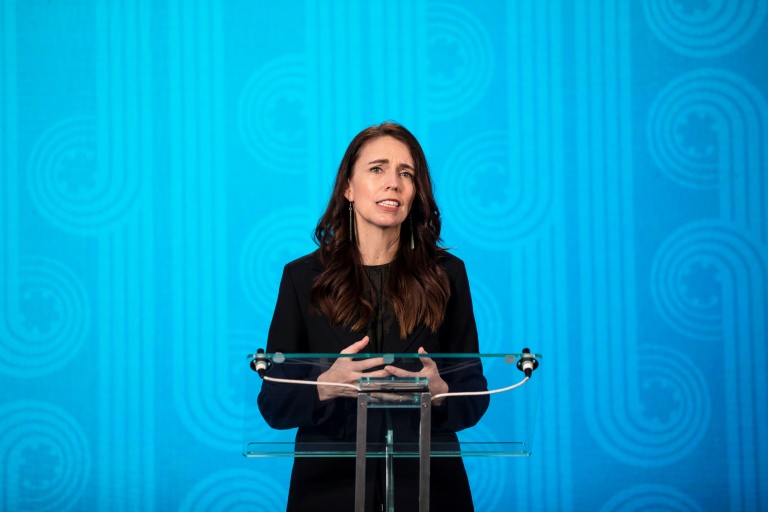
New Zealand Prime Minister Jacinda Ardern, who has overseen her country’s world-leading response to the coronavirus pandemic, has tested positive for Covid-19, her office announced Saturday.

Ardern’s symptoms are moderate and she will isolate at home for seven days, the government said in a statement.

She has already been in isolation since last Sunday, when her partner Clarke Gayford tested positive, and was due to resume her parliamentary duties on Monday.

New Zealand enforced one of the world’s most restrictive approaches to managing the initial Covid-19 outbreak in 2020, and its death toll of 892 remains among the lowest of developed nations.

However, it has experienced an Omicron surge since restrictions were loosened in March, with Ardern’s positive case among more than 50,000 recorded over the last week.

The statement said Ardern’s arrangements for her upcoming trade mission to the United States are unaffected.

Details of the trip are still to be confirmed, although she is scheduled to deliver the commencement address at Harvard University on May 26.

Ardern will not be present in parliament for two high-profile domestic announcements — the release of the government’s emissions reduction plan on Monday and the unveiling of the annual budget on Thursday.

“This is a milestone week for the government and I’m gutted I can’t be there for it,” Ardern said.

“Our emissions reduction plan sets the path to achieve our carbon zero goal and the budget addresses the long-term future and security of New Zealand’s health system.

“But as I said earlier this week, isolating with Covid-19 is a very Kiwi experience this year and my family is no different.”

Ardern shared a photo of her positive test on Instagram.

EU hikes military aid for Ukraine as NATO expansion faces roadblocks

Europe pledged another half billion dollars in military support for Kyiv on Friday as Sweden and Finland’s moves toward joining NATO hit multiple hurdles.

Moscow said it would cut off electricity to Helsinki, and the president of Turkey — a member of the Atlantic alliance whose approval is required to expand it — expressed opposition to the Scandinavian countries becoming part of NATO.

Fighting between Russian and Ukrainian troops continued along the long front in the Donbas with minor gains on both sides, and Ukrainian fighters under siege in a Mariupol steelworks pleaded for help.

US Secretary of Defense Lloyd Austin and Russian Defense Minister Sergei Shoigu meanwhile spoke directly for the first time since before the war began.

But few details emerged from their one-hour call beyond Austin urging Shoigu to implement an immediate ceasefire, according to the Pentagon.

“The call itself didn’t specifically solve any acute issues or lead to a direct change in what the Russians are doing or what they are saying,” a senior US defense official said.

– Power cut –

One day after leaders in Helsinki declared their nation must apply to join NATO “without delay,” Russian state energy group Inter RAO said it would suspend electricity supplies to Finland beginning Saturday.

Inter RAO’s subsidiary in the Nordic region blamed the suspension on not having received payment for electricity sold in May.

Noting that only 10 percent of the country’s electricity comes from neighbouring Russia, the Finnish electricity network operator said it would be able to make do without Russian electricity.

“We’re prepared for this and it won’t be difficult. We can make do with a bit more imports from Sweden and Norway,” said Timo Kaukonen, manager for operational planning at Finnish power firm Fingrid.

– Turkey opposed –

But the cutoff underscored the challenges as both Finland and Sweden prepare for the major geopolitical shift that their joining NATO would represent, after years of proudly staying out of the alliance.

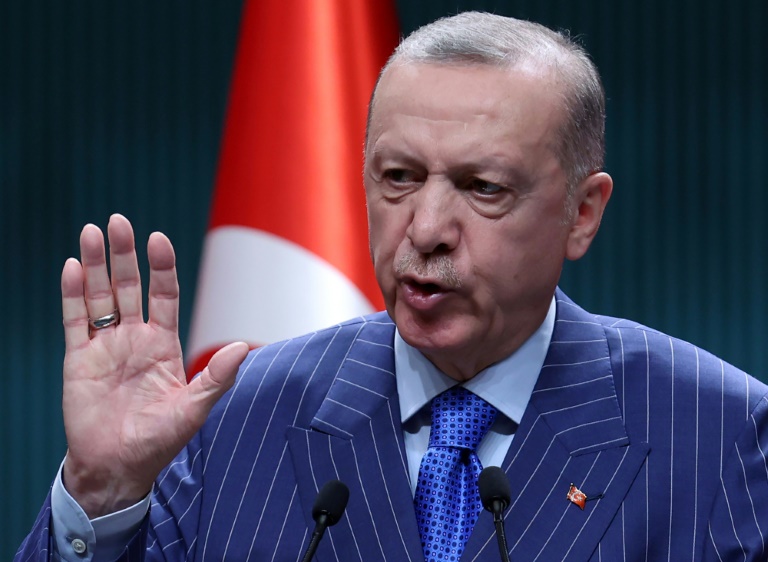
A second hurdle appeared when Turkish President Recep Tayyip Erdogan expressed opposition to Finland and Sweden entering NATO.

“We do not have a positive opinion. Scandinavian countries are like a guesthouse for terror organisations,” Erdogan told journalists, referring to a longstanding complain by Ankara that Scandinavian countries shelter  members of Turkish breakaway and dissident groups.

US President Joe Biden spoke with Swedish Prime Minister Magdalena Andersson and Finnish President Sauli Niinisto Friday on the NATO plan, and the White House said it was “working to clarify” Erdogan’s stance on the issue. 

The Swedish and Finnish foreign ministers planned to meet their Turkish counterpart in Berlin on Saturday to discuss their potential NATO bids.

-More money for Ukraine-

At a meeting of Group of Seven foreign ministers in the German sea resort of Wangels as the war entered its 12th week, European Union foreign policy chief Josep Borrell promised Ukraine an extra 500 million euros ($520 million), bringing the bloc’s total military aid to two billion euros.

In a speech Friday evening, Ukrainian President Volodymyr Zelensky expressed gratitude for Ukraine’s partners “strengthening sanctions against Russia and increasing military and financial assistance to us.”

“This is the only recipe for defending freedom during Russia’s invasion. It is not just expenses for Western countries. It is not about accounting. It’s about the future,” he said.

– War crimes –

A captured  Russian soldier appeared in a court in Kyiv on Friday facing war crimes and murder charges.

Vadim Shishimarin, 21, allegedly gunned down an unarmed 62-year-old civilian who had witnessed a carjacking by fleeing Russian troops.

The trial marks a significant moment in Ukraine, where accounts of murder, torture and rape by Russian forces are multiplying.

In eastern Ukraine, witnesses in the village of Stepanki, near the regional capital of Kharkiv, accused the Russians of shelling a home, killing several people.

They said six people who lived in the house were drinking tea in the courtyard when a tank approached.

“They started going into the house to hide,” said Olga Karpenko, 52. The tank took aim and fired at them as they entered the house.

“Four people died, two were injured. My daughter died from a shrapnel wound in the back of her head,” Karpenko said.

– Call for help from Mariupol –

Russian forces continued to shell the Azovstal steel plant in Mariupol, where around 1,000 Ukrainian fighters remained under siege.

From inside the plant, Sviatoslav Palamar, one of the leaders of the Ukrainian Azov regiment, told the online Kyiv Security Forum that there were 600 wounded there and pleaded for help to evacuate them.

“We continue to defend ourselves, and we shall not surrender,” he said.

He urged the United States and other allies to find a way to help evacuate the wounded. 

“It there is any opportunity, please use it,” he said.

burs/pmh/wd

27 killed in fire in Indian capital

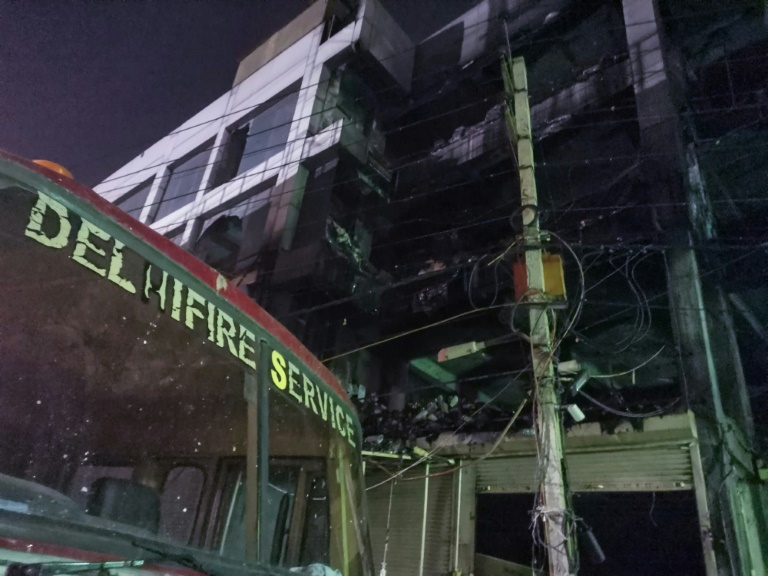
At least 27 people died and dozens more were injured in a massive fire in a building in the Indian capital New Delhi on Friday, emergency services said.

The large fire broke out at a four-storey commercial building in west Delhi in the late afternoon, but its cause was not immediately clear.

“Twenty-seven charred bodies were recovered from the building and almost two dozen injured are undergoing treatment,” Satpal Bharadwaj, who was in charge of operations for the Delhi Fire Service at the scene, told AFP.

Bharadwaj said there were about 70 people in the building when the blaze erupted.

“There was no fire exit and most of the people died due to asphyxiation,” he said, adding that more would be known after autopsies could be conducted.

The official said “almost two dozen” were injured and undergoing treatment, but earlier, deputy chief fire officer Sunil Choudhary told AFP that the number of injured stood at “more than 25 people”.

Choudhary added that some had jumped from the burning building.

Broadcaster NDTV, meanwhile, reported that more than 40 people had sustained burns and were hospitalised.

While Bharadwaj said the cause was still not known, he did say the building was used for “offices and storage for paper packing material.”

NDTV quoted police official Sameer Sharma as saying the building housed the office of a security camera and router manufacturing company.

Several officials said they believed the death toll could rise.

More than 30 fire trucks were at the scene, along with ambulances.

Amit Mahajan, whose cousin and nephew were missing after the fire, told AFP they had been at the building to “train workers”. 

“I have visited all the nearby hospitals but there is no trace of them. We are not sure about their safety or whereabouts,” he said.

– ‘Tragic’ – 

Fires are common in India due to poor building practices, overcrowding and a lack of adherence to safety regulations.

A police officer told AFP on condition of anonymity that one of the office owners has been detained for questioning. 

The officer was unable to explain the reasons for his detention but said that more arrests could follow.

The Indian capital of 20 million people is currently suffering through a heatwave, with temperatures of up to 46 Celsius (115 Fahrenheit) recorded in some places.

Last month, the heatwave caused a huge trash dump to catch fire. It burned for days, adding to the megacity’s deadly air pollution.

Prime Minister Narendra Modi offered his condolences to loved ones of the fire victims via Twitter.

“Extremely saddened by the loss of lives due to a tragic fire in Delhi. My thoughts are with the bereaved families. I wish the injured a speedy recovery,” Modi said.

“Distressed by the tragic fire accident… My condolences to the bereaved families. I wish for speedy recovery of the injured,” President Ram Nath Kovind’s office tweeted.

Delhi Chief Minister Arvind Kejriwal tweeted: “Shocked and pained to know abt this tragic incident. I am constantly in touch (with) officers. Our brave firemen are trying their best to control the fire and save lives.”

– Covid woes –

More than 40 people died in a fire in a factory making school bags and shoes in Delhi in December 2019.

As is often the case, many of the dead were poor migrant workers earning a pittance and sleeping at the factory.

One of India’s worst fires was in 1985 at a school in the northern state of Haryana when 442 people died, 258 of them children.

Fires also compounded India’s woes during the height of the coronavirus pandemic last year, with a series of blazes at hospitals.

Sixteen 16 Covid-19 patients and two nurses were killed in a fire at a hospital in Gujarat state in May 2021. Another fire killed 22 in Mumbai the month before.

US stocks finish bruising week on positive note

Wall Street stocks rebounded Friday after a bruising week beset with worries over inflation, the Ukraine war and the economic outlook.

Following a strong session in Europe and Asia, Wall Street closed the week robustly, with the tech-rich Nasdaq jumping nearly four percent and the S&P 500 pushing back above 4,000 points.

But even with Friday’s rally, all three major US indices posted losses for the week.

Gregori Volokhine of  Meeschaert Financial Services warned “it will take more than one session” to turn around the market, adding that there was no clear news catalyst for Friday’s gains.

Analysts at Briefing.com said the turnaround was largely due to “a sentiment-driven trade wrapped up in the notion that stocks are deeply oversold and due for a bounce.”

Stocks were under pressure for most of the week as fresh data showing elevated US inflation deepened expectations for aggressive action from the Federal Reserve as it tightens monetary policy.

Some analysts cited receding fears about China Covid-19 restrictions as supportive to stocks.

“Global sentiment seems to be getting some relief as China officials suggested that Covid-related lockdowns — which have been another source of uneasiness — may be set to ease,” analysts at Charles Schwab investment bank said.

Oil prices pushed higher Friday after much volatility, reaching around $110 a barrel yet again, with analysts pointing to hopes for a Chinese recovery in demand and the drag on Russian production from a potential European Union ban on crude imports from the country. 

On the corporate front, Twitter fell nearly 10 percent after Tesla Chief Executive Elon Musk said his purchase of the social media company was “temporarily on hold.” 

Analysts generally interpreted Musk’s messages as an attempt to pull out of the deal or to try to force a lower price.

He later tweeted that he was “still committed to acquisition.”

– Key figures at around 2130 GMT –

New York – Dow: UP 1.5 percent at 32,196.66 (close)

New York – S&P 500: UP 2.4 percent at 4,023.89 (close)

New York – Nasdaq: UP 3.8 percent at 11,805.00 (close)

London – FTSE 100: UP 2.6 percent at 7,418.15 (close)

Frankfurt – DAX: UP 2.1 percent at 14,027.93 (close)

Paris – CAC 40: UP 2.5 percent at 6,362.68 (close)

EURO STOXX 50: UP 2.5 percent at 3,703.42 (close)

Hong Kong – Hang Seng Index: UP 2.7 percent at 19,898.77 (close)

Shanghai – Composite: UP 1.0 percent at 3,084.28 (close)  

Tokyo – Nikkei 225: UP 2.6 percent at 26,427.65 (close)

Brent North Sea crude: UP 3.8 percent at $111.55 per barrel

West Texas Intermediate: UP 4.1 percent at $110.49 per barrel

Euro/dollar: UP at $1.0417 from $1.0380 at 2100 GMT Thursday

Pound/dollar: UP at $1.2262 from $1.2202

Euro/pound: DOWN at 84.92 pence from 85.07 pence

Dollar/yen: DOWN at 129.19 yen from 128.34 yen

UAE's ailing President Sheikh Khalifa dies aged 73

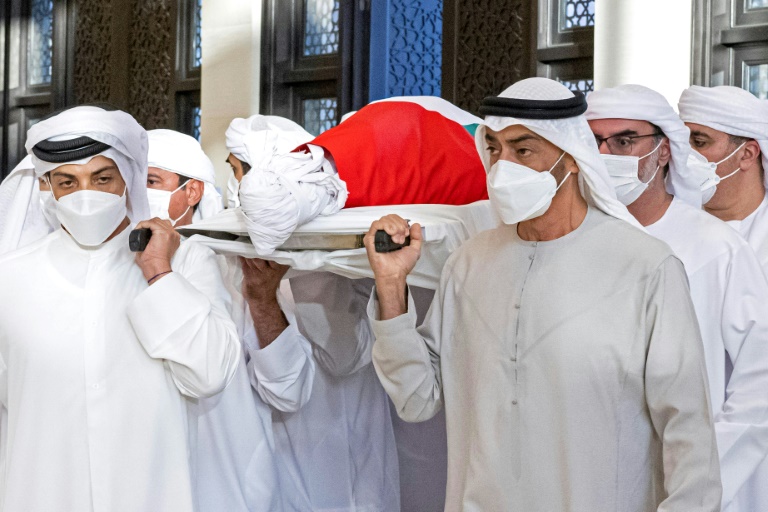
UAE President Sheikh Khalifa bin Zayed Al-Nahyan died Friday aged 73 after a years-long battle with illness, triggering a period of mourning and a handover of power in the oil-rich Gulf state.

Sheikh Khalifa, who was in office during a time of rocketing fortunes for the United Arab Emirates but was rarely seen in public, was laid to rest in Abu Dhabi’s Al Bateen Cemetery just hours after his death was announced, in accordance with Muslim tradition.

Sheikh Khalifa’s funeral prayers were conducted by his expected successor and half-brother Mohamed bin Zayed, who has long been viewed as the country’s de facto ruler.

“The people of the Emirates are united in grief as we mourn the loss of our leader and President, Khalifa bin Zayed,” tweeted Mohamed bin Zayed, often known as “MBZ”.

The most visible testament to Sheikh Khalifa is the world’s tallest building, Dubai’s Burj Khalifa, which was renamed after he bailed out the debt-hit emirate when the global financial crisis struck in 2009.

Flags flew at half-mast above the interior ministry in Abu Dhabi and other landmarks at the start of 40 days of official mourning, with work suspended in the public and private sectors until Tuesday.

Emirati men in traditional dress attended sombre funeral prayers at Abu Dhabi’s enormous, white-marble Sheikh Zayed Grand Mosque, where the imam’s voice brimmed with emotion over the loudspeaker.

As tributes poured in from abroad, US President Joe Biden called Sheikh Khalifa “a true partner and friend of the United States”. Neighbouring Saudi Arabia suspended sports and entertainment events and Oman, Lebanon and Kuwait also ordered three days of mourning.

In a demonstration of the UAE’s diverse allegiances, Russian President Vladimir Putin also paid tribute, as did Iran’s foreign minister and Israeli Prime Minister Naftali Bennett.

Sheikh Khalifa took over as the UAE’s second president in November 2004, succeeding his father as the 16th ruler of Abu Dhabi, the richest of the federation’s seven emirates.

He has made few public appearances since 2014, when he had surgery following a stroke, although he has continued to issue rulings. 

The cause of death was not immediately released.

– Frail figure –

The UAE, a former British protectorate that was founded in 1971, has gone from desert outpost to booming state in its short history, fuelled by its oil wealth and Dubai’s rise as a trading and financial centre.

The Arab world’s second-biggest economy behind Saudi Arabia is now wielding growing political influence, filling a space ceded by traditional powers such as Egypt, Iraq and Syria.

The country of about 10 million also joined military campaigns in Libya and Yemen and broke ranks with much of the Arab world to establish ties with Israel in 2020.

As the changes unfolded, the bearded Sheikh Khalifa had cut a frail figure on his occasional public appearances, while his half-brother hosted world leaders and led diplomatic forays abroad.

Sheikh Khalifa, who had no formal higher education, came to the rescue of Dubai when it was hit by the global financial crisis, extending a multi-billion-dollar lifeline to the emirate.

Dubai’s ruler, UAE Vice President Sheikh Mohammed bin Rashid Al-Maktoum, said the country mourned “with hearts filled with sadness”.

The emir of Qatar — which was blockaded by the UAE, Saudi Arabia and other states in a three-and-a-half-year crisis until January 2021 — offered his condolences, as did British Prime Minister Boris Johnson and French President Emmanuel Macron.

In Saudi Arabia, the UAE’s powerful neighbour and closest ally, King Salman ordered funeral prayers at Mecca’s Great Mosque and the Prophet’s Mosque in Medina.

Saudi’s de facto ruler Crown Prince Mohammed bin Salman, who was regarded as a protege of Mohamed bin Zayed, phoned him with his condolences.   

The official WAM news agency named Mohamed bin Zayed as the new ruler of Abu Dhabi, and said the leaders of the other emirates would meet him at the capital’s Al Mushrif Palace on Saturday.

The leaders of the seven emirates elect the UAE’s president for five-year, renewable terms, according to the country’s constitution.

Turkey opposes NATO membership for Finland, Sweden

President Recep Tayyip Erdogan on Friday said Turkey did not have a “positive opinion” on Finland and Sweden joining NATO, throwing up a potential obstacle for the nations’ membership bid. 

The leader of NATO-member Turkey spoke ahead of expected confirmations from the Nordic nations on Sunday that they will apply to join the Western military alliance. 

Erdogan accused both countries of harbouring “terrorist organisations” in his unfavourable assessment of the membership bids. 

“We do not have a positive opinion,” Erdogan told journalists after Friday prayers in Istanbul. 

“Scandinavian countries are like a guesthouse for terror organisations,” he said.

Turkey has long accused Nordic countries, especially Sweden which has a strong Turkish immigrant community, of harbouring extremist Kurdish groups as well as supporters of Fethullah Gulen, a US-based preacher wanted over a failed 2016 coup.

Erdogan cited a “mistake” made by Turkey’s former rulers who okayed Greece’s NATO membership in 1952.

“We, as Turkey, do not want to make a second mistake on this issue,” he said. 

– Unanimous approval needed –

Moscow’s February 24 invasion of Ukraine has swung political and public opinion in Finland and Sweden in favour of membership as a deterrent against Russian aggression. 

Both countries have long cooperated with NATO and are expected to be able to join the alliance quickly. 

NATO chief Jens Stoltenberg has repeatedly said they would be welcomed “with open arms”.

Turkey’s response is the first dissenting voice against the two Nordic countries’ NATO prospects. 

Sweden’s and Finland’s foreign ministers responded on Friday by saying they were hoping to meet their Turkish counterpart in Berlin at an informal meeting of NATO foreign ministers on Saturday.

“We will then have the opportunity to discuss a potential Swedish NATO application,” Sweden’s foreign minister Ann Linde said in a statement to AFP, also noting the “Turkish government had not delivered this type of message directly to us”. 

Speaking at a Helsinki press conference, Finland’s Pekka Haavisto also said he hoped to meet Turkish Foreign Minister Mevlut Cavusoglu during the weekend to “continue our discussion.”

Stockholm and Helsinki have cranked up their international contacts to seek support for their potential bids. 

Once a country has decided to apply for NATO membership, the alliance’s 30 members must agree unanimously to extend a formal invitation, which is followed by membership negotiations.

The final approval could then take place at a NATO summit in Madrid at the end of June. The 30 member states would then have to ratify the decision.

Turkey, which enjoys good relations with Kyiv and Moscow, has been keen to play a mediating role to end the conflict and has offered to host a leaders’ summit.

Ankara has supplied Ukraine with combat drones but has shied away from slapping sanctions on Russia alongside Western allies.

– ‘Hungary of the EU’ –

Erdogan’s comments may also raise tensions with France, whose President Emmanuel Macron has said NATO was undergoing “brain death” partly due to Turkey’s behaviour.

Macron has made clear he supports Finland’s bid as does the United States.

White House Press Secretary Jen Psaki said on Friday Washington was “working to clarify Turkey’s position”, adding there was “broad support” for the two countries’ joining the alliance.

The Finnish president spoke with Erdogan in April as part of consultations for its NATO bid.

“I thanked President Erdogan for his efforts for peace in Ukraine. Turkey supports Finland’s objectives,” he tweeted at the time. 

Turkey’s position on Sweden and Finland’s NATO membership risks making it look like the “Hungary of the EU”, said Washington Institute fellow Soner Cagaptay. 

Pro-Russia Hungary often breaks from its EU colleagues on a broad range of issues, including rule of law and human rights. 

Cagaptay said Ankara should have negotiated its terror-related concerns behind closed doors with the two countries.  

“The fact that this is done publicly is going to hurt Ankara’s image significantly,” he said.

But Erdogan is “a clever tactician”, said Elisabeth Braw, senior fellow at the American Enterprise Institute.

“He knows that this is an opportunity for Turkey to get something from NATO member states… F-35s, for example,” she said, referring to US defence giant Lockheed Martin’s jets.

burs-fo/raz/ah

Ukraine's key IT sector booming despite Russian invasion

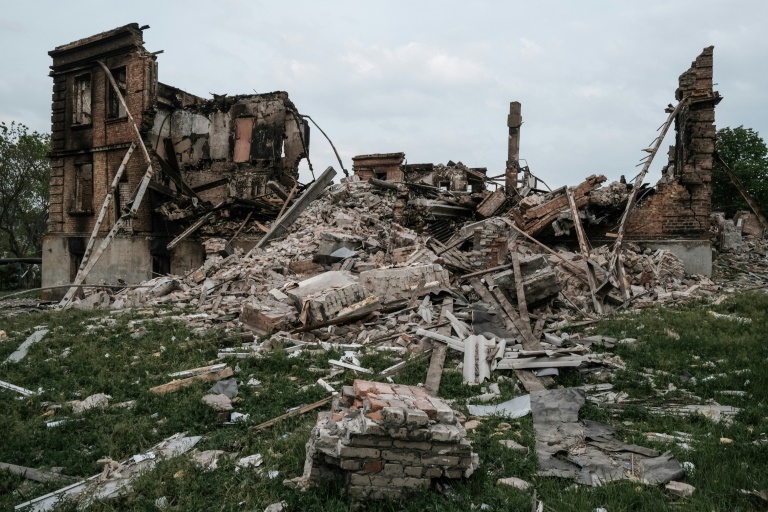
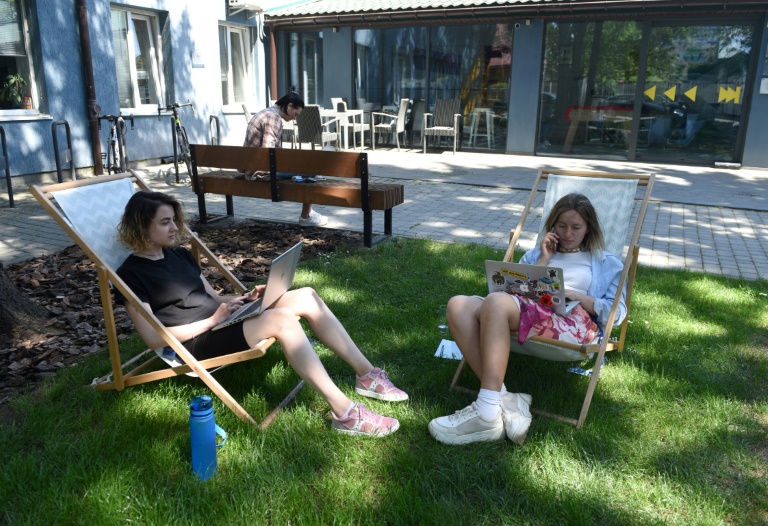
Ukraine’s IT sector is booming despite the Russian invasion. Workers with stickers on their laptops recline on beach chairs outside a warehouse for start-ups in the west Ukraine city of Lviv giving off major Silicon Valley vibes.

But the atmosphere inside is different.

Through the glass doors of the complex, young Ukrainians zig-zag between stacks of bulletproof vests and cardboard boxes filled with helmets ready for the front.

They are part of Ukraine’s burgeoning tech sector which was forced to adapt after Russia’s invasion and has become key to supporting the war effort.

“Most tech companies had developed contingency plans” in case of war said Stepan Veselovskiy, the head of the “IT Cluster Lviv” community.

He told AFP that companies transferred servers to secure locations and established back-up systems outside the country before Russia invaded on February 24.

When Russian bombing started, IT companies shut offices in the capital Kyiv and eastern city of Kharkiv and engineers found refuge in western Ukraine or Poland next door.

Veselovskiy said there were already around 500 tech companies in Lviv before the war but now estimates that 80 percent of the sector is in the western city. 

One is Infopulse, which provides various digital services to mainly European customers.

It brought 300 of its 2,300 employees to Lviv, where it has offices in one of the city’s few buildings equipped with a bunker.

There are bunk beds and stable internet underground so employees to continue working in the event of an air raid.

There are also generators in case Russian forces target power stations and terminals for Elon Musk’s Starlink internet service.

“Even in the most drastic conditions, business can continue,” regional manager Ivan Korzhov said. 

They can even thrive. 

– Tech army –

Since the start of the war, Infopulse has gained four new customers and in April — the second month of the Russian invasion — it created 25 new jobs in Ukraine.

It is not the only tech company in Ukraine to do so. 

Veselovskiy says February — when Russia attacked — was a historically good month for Ukraine’s tech sector and its estimated 200,000 employees. 

“It slowed down a bit in March, but we are very optimistic for the future because the war doesn’t stop us from growing,” he said.

This is a stark contrast to other industries, battered by the invasion. Exports for traditional sectors such as steel and agriculture have collapsed.

But the tech sector, naturally, has not been affected by the destruction of bridges, roads or the blocking of ports. 

It has, according to Veselovskiy, made more than $2 billion since the start of the war and has become the country’s leading exporter. 

“It’s a good thing for Ukraine because we generate income in dollars every month when the country really needs it,” Korzhov said.

“We pay our taxes and give a lot of money” to the government. 

The IT Cluster Kyiv has already allocated $2 million, mainly to buy equipment for Ukrainian soldiers.

That’s how its offices ended up looking like an army depot.

The sector has also offered its brightest to help the military.

Softserve — one of Ukraine’s biggest tech companies — has worked on the military’s websites for free and IT Cluster Kyiv modernised one of the military’s command centres.

Infopulse also participates in a joint project by the Ukrainian army and the ministry of digital transformation.

“Specialists in tech and cybersecurity work with the government on the information front,” its regional manager Korzhov said. 

He then repeated a popular slogan in Ukraine: “We are not waiting for peace, but for victory.”

Mexico president vows justice as report says teen raped and murdered

Mexico’s president on Friday promised justice to the parents of a teenager whose death triggered a public outcry, after an independent forensic report concluded that she was raped and murdered.

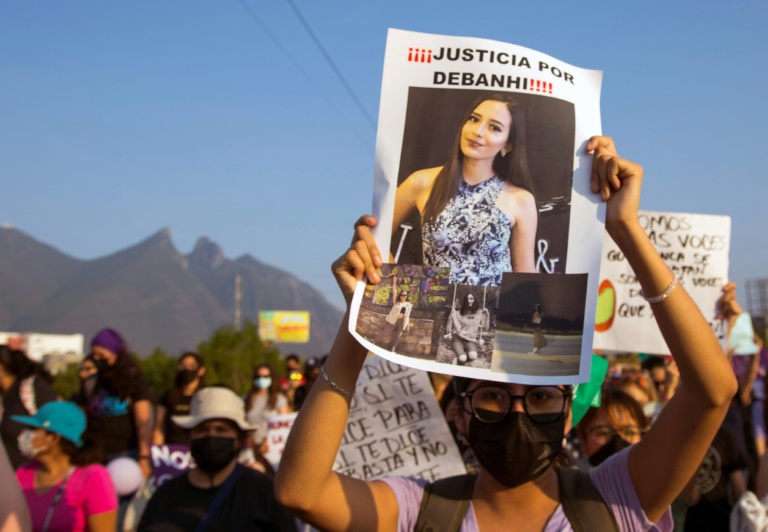
President Andres Manuel Lopez Obrador met with the family of 18-year-old Debanhi Escobar, whose body was found last month in a motel water tank 12 days after she disappeared.

“I spoke with them and made a commitment to help clarify what happened and to ensure that there is no impunity,” Lopez Obrador said in the northern city of Monterrey, where the incident happened.

They are “very good people, a teacher, his wife, and as parents they are very hurt, broken,” he told reporters.

Escobar’s death is now being investigated as femicide, after originally being registered as a disappearance, Deputy Security Minister Ricardo Mejia said.

The forensic report commissioned by the family concluded that the law student suffered “a violent homicidal death,” and her body showed signs of a sexual violence, according to Spanish newspaper El Pais, which obtained the document.

Escobar’s family delivered the document to the state prosecutor’s office on May 2, the daily reported.

The official autopsy report, which has not been published, did not mention signs of sexual violence, according to El Pais.

Previously, prosecutors said that Escobar died of a blow to the head and that they were not ruling anything out, including an accident or murder.

An eerie photo taken on the night that Escobar disappeared showing her standing in the dark by the roadside after an altercation with a taxi driver went viral.

She quickly became a symbol for an angry women’s rights movement in a country where around 10 women are murdered every day.

The attorney general’s office in the northern state of Nuevo Leon, whose capital is Monterrey, dismissed two public prosecutors for “errors” and “omissions” in the case.

Theories about the teenager’s fate have spread on social networks and in some media, encouraged by videos released or leaked by prosecutors.

Her father Mario Escobar said in video posted late Thursday that if the prosecutor’s office was behind the leak of the forensic report to the media, then its heads should resign.

In 2021 alone, Mexico registered 3,751 murders of women, most of which are still unpunished.

Close Bitnami banner
Bitnami