World

EU hikes military aid for Ukraine as Sweden edges to NATO membership

Europe pledged another half billion dollars in military support for Kyiv on Friday and Sweden edged closer to joining NATO as the war in Ukraine entered its 12th week.

At a meeting of the world’s most powerful democracies, European Union foreign policy chief Josep Borrell promised Ukraine an extra 500 million euros ($520 million), bringing the bloc’s total military aid to two billion euros.

“The recipe is clear –- more of the same,” Borrell said.

“More pressure on Russia, with economic sanctions. Continue working on international isolation of Russia. Countering the disinformation about the consequences of the war… And presenting a united front to continue supporting Ukraine.”

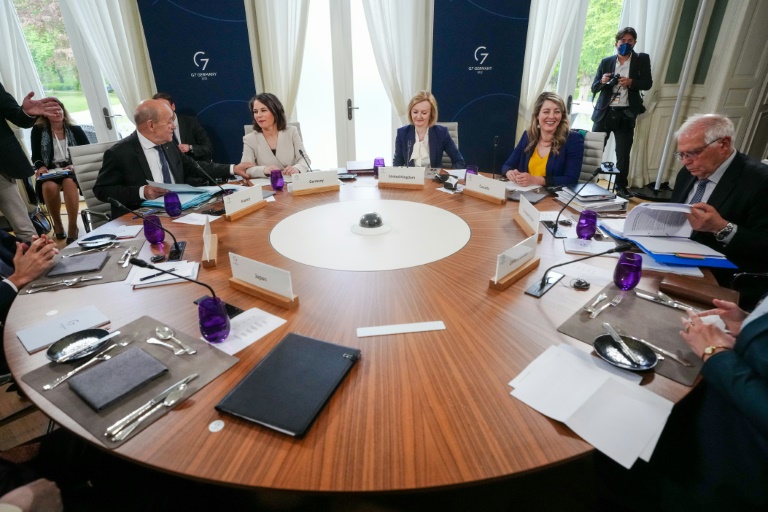
Borrell joined Group of Seven foreign ministers in the German sea resort of Wangels, where they conferred with counterparts from Ukraine and Moldova.

“It is very important at this time that we keep up the pressure on Vladimir Putin by supplying more weapons to Ukraine, by increasing the sanctions,” British Foreign Secretary Liz Truss said.

President Putin invaded Russia’s neighbour on February 24, unleashing a worldwide shock that has resounded in northern and eastern Europe.

Finland’s leaders on Thursday recommended their country ditch a decades-long posture of neutrality and join NATO as soon as possible.

In Sweden, a security policy review by parliamentary parties on Friday highlighted the advantage of becoming a member of the alliance.

“Swedish NATO membership would raise the threshold for military conflicts and thus have a deterrent effect in northern Europe,” it said.

“Within the framework of current cooperation, there is no guarantee that Sweden would be helped if it were the target of a serious threat or attack,” it said.

The report stopped short of offering a concrete recommendation, although expectations are high Sweden will follow Finland when the government announces its decisions in coming days.

But a potential hurdle was thrown up by Turkey, a NATO member.

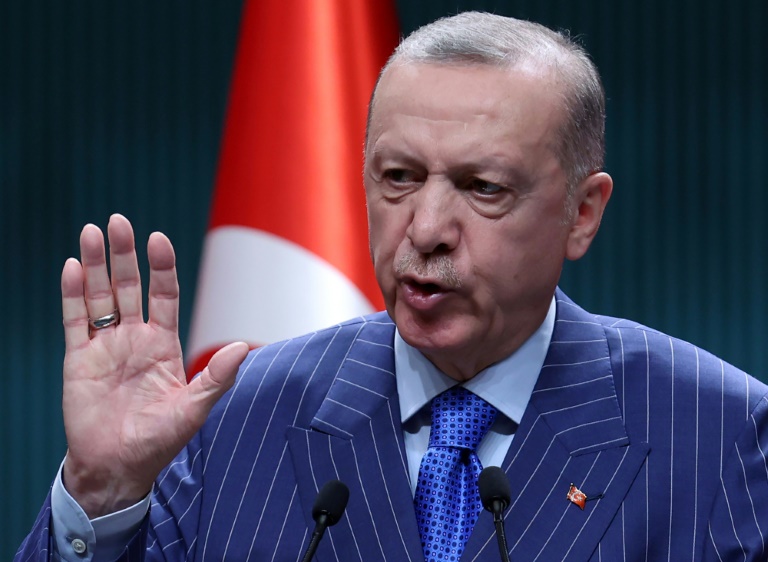
President Recep Tayyip Erdogan, whose country is part of NATO, said he did not have a “positive opinion” on the two countries’ membership.

“Scandinavian countries are like a guesthouse for terror organisations,” he said after Friday prayers in Istanbul.

Turkey has long accused Nordic countries, especially Sweden, of harbouring extremist Kurdish groups and supporters of Fethullah Gulen, a US-based preacher wanted over a failed coup in 2016.

The two countries said they would discuss the issue with Turkey on Saturday at an informal meeting of NATO foreign ministers in Berlin.

– Cruise missiles –

Many analysts see the war as turning into a grinding conflict after expectations of a lightning victory by Russia sputtered out.

After several weeks, Russia abandoned attempts to seize the capital Kyiv as the Ukrainian army defended it fiercely and the West began to pump in billions of dollars’ worth of military support.

Since then, Russia has focused its efforts in the eastern region of Donbas, where it has been supporting ethnic Russian-separatists.

Ukraine’s army said Friday Russian artillery reinforcements had been brought in to shell villages in the northeastern Chernigiv region, near the border with Russia.

Russian troops are trying to establish “full control” over the eastern town of Rubizhne, it said.

Artillery and aviation power are pounding the southern port city of Mariupol, where a number of Ukrainian troops are holding out at a huge steelworks despite a weeks-long siege, it said.

The Russians are now making “massive use” of supersonic anti-ship cruise missiles to target civilian infrastructure, Ukrainian armed forces chief Valery Zaluzhny said on Facebook.

“One of the reasons for the enemy’s transition to this tactic is the refusal to use aviation, which suffers vast losses,” he said.

– War crimes –

A Russian soldier accused of killing a civilian appeared in a court in Kyiv on Friday ahead of the first war crimes trial since the start of the offensive.

Vadim Shishimarin, 21, allegedly gunned down an unarmed 62-year-old civilian who had witnessed a carjacking by fleeing Russian troops.

He faces possible life imprisonment on charges of war crimes and premeditated murder.

The trial marks a significant moment in Ukraine, where accounts of murder, torture and rape by Russian forces are multiplying.

In eastern Ukraine, witnesses who spoke to AFP in the village of Stepanki, near the regional capital of Kharkiv, accused the Russians of shelling a home, killing several people.

They said six people who lived in the house were drinking tea in the courtyard when a tank approached.

“They started going into the house to hide,” said Olga Karpenko, 52, whose daughter was among those killed. The tank took aim and fired at them as they entered the house.

“Four people died, two were injured. My daughter died from a shrapnel wound in the back of her head,” Karpenko said.

The UN Human Rights Council and International Criminal Court (ICC) have decided to launch their own probes into alleged atrocities.

More than six million people have fled Ukraine, more than half of them going to neighbouring Poland, the UN refugee agency says.

– Gas supplies –

Economists meanwhile pored over the impact of a downturn in Russian gas supplies for Europe, where several countries, including economic giant Germany, are heavily dependent on Russian energy.

Russian energy giant Gazprom announced Thursday it would stop supplying gas via the Polish part of the Yamal-Europe pipeline following retaliatory sanctions that Moscow imposed on Western companies.

Gazprom also said gas transiting to Europe via a site in Ukraine had dropped by a third.

Last year, Russian imports accounted for nearly 40 percent of EU gas consumption.

Ole Hvalbye, a specialist with the Scandinavian bank SEB, said the loss through Ukraine amounted to around two percent of European gas consumption, while the Polish pipeline had carried little gas for several months.

The fall “does not scream crisis, but it is a wake-up call for what is to come,” he said.

Ukraine and Poland are major routes for Russian gas to Europe and the two sides have kept flows going despite the conflict.

burs/ri/har
UAE's ailing President Sheikh Khalifa dies aged 73

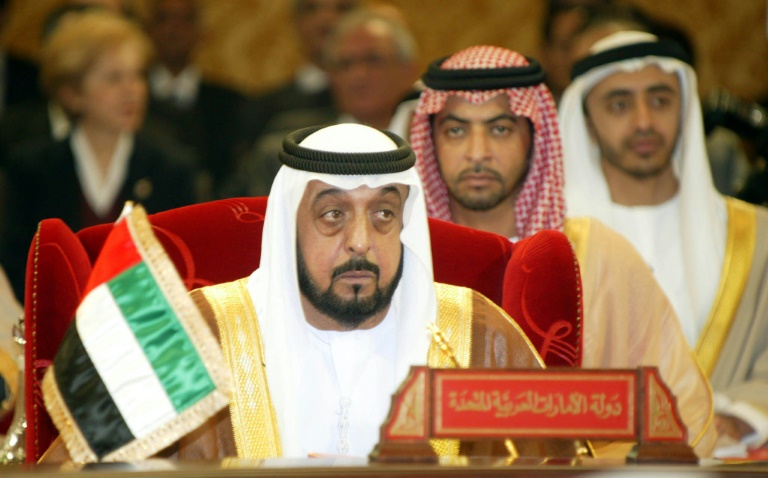
The UAE’s President Sheikh Khalifa bin Zayed Al-Nahyan died Friday aged 73 after a years-long battle with illness, triggering a period of mourning and a handover of power in the oil-rich Gulf state.

Sheikh Khalifa, who was in office during a time of rocketing fortunes for the United Arab Emirates but was rarely seen in public, is likely to be replaced by his half-brother, Abu Dhabi Crown Prince Mohammed bin Zayed, who was already viewed as the country’s de facto ruler.

The most visible testament to Sheikh Khalifa is the world’s tallest building, Dubai’s Burj Khalifa, which was renamed after he bailed out the debt-hit emirate when the global financial crisis struck in 2009.

“The Ministry of Presidential Affairs has mourned to the UAE people, Arab and Islamic nations and the world the death of President His Highness Sheikh Khalifa bin Zayed Al-Nahyan,” the official WAM news agency tweeted.

The ministry announced 40 days of mourning, with flags at half-mast from Friday and work suspended in the public and private sectors for the first three days.

Funeral prayers were set to take place later on Friday.

As condolences poured in from abroad, US President Joe Biden called Sheikh Khalifa “a true partner and friend of the United States”.

Lebanon, Kuwait and neighbouring Oman also ordered three days of mourning.

Sheikh Khalifa took over as the UAE’s second president in November 2004, succeeding his father as the 16th ruler of Abu Dhabi, the richest of the federation’s seven emirates.

He has made few public appearances since 2014, when he had surgery following a stroke, although he has continued to issue rulings. 

The cause of death was not immediately released.

The UAE, a former British protectorate that was founded in 1971, has gone from desert outpost to booming state in its short history, fuelled by its oil wealth and Dubai’s rise as a trading and financial centre.

The Arab world’s second-biggest economy behind Saudi Arabia is now wielding growing political influence, filling a space ceded by traditional powers such as Egypt, Iraq and Syria.

The country of some 10 million also joined military campaigns in Libya and Yemen and broke ranks with much of the Arab world to establish ties with Israel in 2020.

– Frail figure –

The bearded Sheikh Khalifa had cut a frail figure on his occasional public appearances, while his half-brother hosted world leaders and led diplomatic forays abroad.

“The Emirates has lost its virtuous son and leader of the ‘stage of empowerment’ and the trustee of its blessed journey,” Mohammed bin Zayed tweeted.

“His stances, achievements, wisdom, generosity and initiatives are in every corner of the nation… Khalifa bin Zayed, my brother… may God have mercy on you and grant you access to paradise.”

Sheikh Khalifa, who had no formal higher education, led the UAE as Dubai emerged as a tourism and trade hub while Abu Dhabi pumped oil as a key OPEC player.

He came to the rescue of Dubai when it was hit by the global financial crisis, extending a multi-billion-dollar lifeline to the emirate.

Dubai’s ruler, UAE vice president Sheikh Mohammed bin Rashid Al-Maktoum, said the country was mourning “with hearts filled with sadness”.

Israeli Prime Minister Naftali Bennett and Qatari Emir Sheikh Tamim bin Hamad Al-Thani also offered their condolences, along with powerful neighbour Saudi Arabia and India, Egypt, Syria, Pakistan and Ethiopia, among others.

sy/dm/th/lg

Turkey opposes NATO membership for Finland, Sweden

President Recep Tayyip Erdogan on Friday said Turkey did not have a “positive opinion” on Finland and Sweden joining NATO, throwing up a potential obstacle for the nations’ membership bid. 

The leader of NATO-member Turkey spoke ahead of expected confirmations from the Nordic nations on Sunday that they will apply to join the Western military alliance. 

Erdogan accused both countries of harbouring “terrorist organisations” in his unfavourable assessment of the membership bids. 

“We do not have a positive opinion,” Erdogan told journalists after Friday prayers in Istanbul. 

“Scandinavian countries are like a guesthouse for terror organisations,” he said.

Turkey has long accused Nordic countries, especially Sweden which has a strong Turkish immigrant community, of harbouring extremist Kurdish groups as well as supporters of Fethullah Gulen, a US-based preacher wanted over a failed 2016 coup.

Erdogan cited a “mistake” made by Turkey’s former rulers who okayed Greece’s NATO membership in 1952. 

“We, as Turkey, do not want to make a second mistake on this issue,” he said. 

– Unanimous approval needed –

Moscow’s February 24 invasion of Ukraine has swung political and public opinion in Finland and Sweden in favour of membership as a deterrent against Russian aggression. 

Both countries have long cooperated with NATO, and are expected to be able to join the alliance quickly. 

NATO chief Jens Stoltenberg has repeatedly said they would be welcomed “with open arms”.

Turkey’s “not positive” response is the first dissenting voice against the two Nordic countries’ NATO prospects. 

Sweden’s and Finland’s foreign ministers responded on Friday by saying they were hoping to meet their Turkish counterpart in Berlin at an informal meeting of NATO foreign ministers on Saturday.

“We will then have the opportunity to discuss a potential Swedish NATO application,” Sweden’s foreign minister Ann Linde said in a statement to AFP, also noting that the “Turkish government had not delivered this type of message directly to us”. 

Speaking at a Helsinki press conference, Finland’s Peeka Haavisto also said he hoped to meet with Turkish foreign minister Mevlut Cavusoglu during the  weekend to “continue our discussion.”

Stockholm and Helsinki have cranked up their international contacts to seek support for their potential bids. 

Once a country has decided to apply for NATO membership, the 30 members of the alliance must agree unanimously to extend a formal invitation, which is followed by membership negotiations.

The final approval could then take place at a NATO summit in Madrid at the end of June. The 30 member states would then have to ratify the decision.

Turkey, which enjoys good relations with Kyiv and Moscow, has been keen to play a mediating role to end the conflict and has offered to host a leaders’ summit.

Ankara has supplied Ukraine with combat drones, but has shied away from slapping sanctions on Russia alongside Western allies.

– ‘Hungary of the EU’ –

Turkey’s position on Sweden and Finland’s NATO membership risks making it look like the “Hungary of the EU”, said Washington Institute fellow Soner Cagaptay. 

Pro-Russia Hungary often breaks from its EU colleagues on a broad range of issues, including rule of law and human rights. 

Cagaptay said Ankara should have negotiated its terror-related concerns behind closed doors with the two countries.  

“The fact that this is done publicly is going to hurt Ankara’s image significantly,” he said. 

Erdogan’s comments may also raise tensions with France, whose President Emmanuel Macron has said that NATO was undergoing “brain death” partly due to Turkey’s behaviour.

Macron has made clear he supports Finland’s bid.

Finnish President Sauli Niinisto spoke with Erdogan in April as part of consultations for its NATO bid.

“I thanked President Erdogan for his efforts for peace in Ukraine. Turkey supports Finland’s objectives,” he tweeted at the time. 

North Korea confirms first Covid-19 death in 'explosive' outbreak

North Korea confirmed its first Covid-19 death on Friday, saying fever was spreading “explosively” nationwide and tens of thousands of people were being isolated after falling sick.

The insular country only reported its first Covid cases Thursday, saying it was moving into a “maximum emergency epidemic prevention system” after patients in the capital Pyongyang tested positive for the Omicron variant.

North Korea has been under a rigid coronavirus blockade since the start of the pandemic in 2020, but with massive Omicron outbreaks in all neighbouring countries, experts said it was only a matter of time before Covid snuck in.

“A fever whose cause couldn’t be identified explosively spread nationwide from late April,” the official Korean Central News Agency (KCNA) said.

“Six persons died (one of them tested positive for the BA.2 sub-variant of Omicron),” it added.

With its 25 million people unvaccinated, North Korea’s crumbling health infrastructure would struggle to deal with a major outbreak, experts say.

“On May 12 alone, some 18,000 persons with fever occurred nationwide and as of now up to 187,800 people are being isolated and treated,” KCNA said.

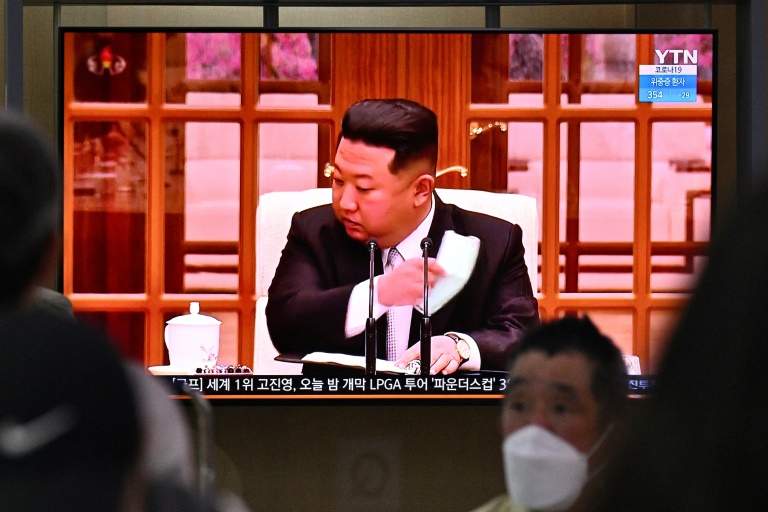
Leader Kim Jong Un — seen wearing a mask on state TV for the first time — oversaw an emergency meeting of the Politburo on Thursday and ordered nationwide lockdowns in a bid to halt the outbreak.

On Friday, KCNA said Kim visited the state emergency epidemic prevention headquarters and “learned about the nationwide spread of Covid-19”.

“It is the most important challenge and supreme task facing our Party to reverse the immediate public health crisis situation at an early date,” KCNA added.

– ‘Major chaos’ –

It is likely the nationwide outbreak is linked to a huge military parade held in Pyongyang on April 25, said Cheong Seong-chang of the Sejong Institute.

North Korea was likely to see “major chaos” due to the spread of Omicron, he added, given the country is reporting nearly 20,000 cases a day.

“If the death toll from Omicron spikes, Pyongyang may have to ask for China’s support,” he said.

Beijing, Pyongyang’s sole major ally and benefactor, said Thursday it was ready to assist North Korea.

But China, the world’s only major economy to still maintain a zero-Covid policy, is itself battling multiple Omicron outbreaks — with some major cities, including financial hub Shanghai, under stay-at-home orders.

North Korea has previously turned down offers of Covid vaccines from China, as well as from the World Health Organization’s Covax scheme.

A WHO representative to North Korea said Friday that the UN agency had supported Pyongyang in developing a Covid response plan early last year.

In South Korea, President Yoon Suk-yeol’s new administration offered to send vaccines to the North — but admitted it had not yet discussed this with Pyongyang.

Kim said Friday the outbreak “shows that there is a vulnerable point in the epidemic prevention system” and called for more lockdowns.

He “said that it is the top priority to block the virus’ spread by actively locking down areas and isolating and treating persons with fever in a responsible manner”, KCNA reported.

Analysts said China’s experience with Omicron indicated lockdowns might not be successful, but with no antiviral treatment or vaccines, North Korea has few other options.

– Nuclear distraction –

North Korea test-fired three short-range ballistic missiles, Seoul said Thursday — shortly after Pyongyang confirmed its first cases of Covid.

After high-profile talks collapsed in 2019, North Korea has doubled down on weapons testing, conducting a blitz of launches this year, including intercontinental ballistic missiles.

Satellite imagery indicates North Korea is preparing to conduct a nuclear test, and the United States has warned this could come as soon as this month.

If Pyongyang needs aid — vaccines and medicine — it might need to delay any test, some analysts said, but others warned the Covid-19 outbreak could hasten things.

“A nuclear test would be a good way to distract the public from the pandemic,” Yang Moo-jin, a professor at the University of North Korean Studies, told AFP.

US baby formula shortage could last for some time: official

The nationwide shortage of baby formula in the United States could last for some time, a top White House economic adviser cautioned on Friday. 

The problem “is not going to solve itself in a day or week,” Brian Deese told CNN. 

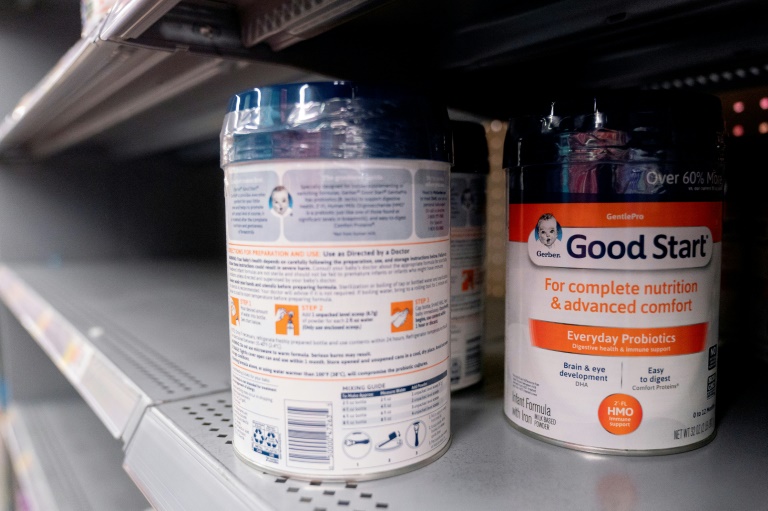
US families have grown increasingly desperate for formula amid a perfect storm of supply issues compounded by a massive recall.

While he would not offer a specific timeline, Deese said, “We are looking at every possible angle that we can to try to address this issue.”

The average out-of-stock rate for baby formula last week hit 43 percent, according to Datasembly, which collected information from more than 11,000 retailers.

The scarcity initially was caused by supply chain problems and labor shortages, but the problem has been worsening since February 17 when manufacturer Abbott announced a “voluntary recall” for formula made at its factory in Michigan after the death of two infants,.

That recall included Similac, a brand used by millions of American families.

A subsequent investigation cleared the formula, but production has yet to resume.

“We’ve got to see how this progresses in real time,” Deese said.

It is the latest crisis to confound President Joe Biden’s push to get the US economy on sound footing amid the highest inflation in four decades and the ongoing global supply chain bottlenecks.

The United States produces about 98 percent of the formula it consumes, and the Biden administration plans to increase imports of the powdered milk.

“The most important step that we can take right now is to give retailers more flexibility on the types of formula that they can sell, and consumers more flexibility for the types that they can buy,” Deese said. 

Officials also are working with manufacturers and he noted that domestic output has been recovering. 

Over the past month “there has been more production of formula than there was in the weeks preceding the recall,” Deese said.

South Asia pummelled by heatwave that hits 50C in Pakistan

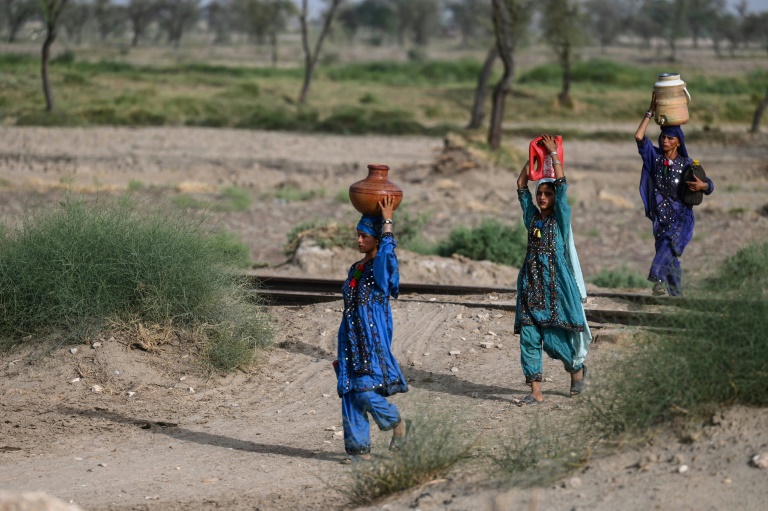
South Asia was in the grip of an extreme heatwave on Friday, with parts of Pakistan reaching a temperature of 50 degrees Celsius as officials warned of acute water shortages and a health threat.

Swathes of Pakistan and neighbouring India have been smothered by high temperatures since April in extreme weather that the World Meteorological Organization has warned is consistent with climate change.

On Friday, the city of Jacobabad in Sindh province hit 50C (122 degrees Fahrenheit), the Pakistan Meteorological Department (PMD) said, with temperatures forecast to remain high until Sunday. 

“It’s like fire burning all around,” said labourer Shafi Mohammad, who is from a village on the outskirts of Jacobabad where residents struggle to find reliable access to drinking water.

Nationwide, the PMD alerted temperatures were between 6C and 9C above normal, with the capital Islamabad — as well as provincial hubs Karachi, Lahore and Peshawar — recording temperatures around 40C on Friday.

“This year we have jumped from winter right into summer,” said PMD chief forecaster Zaheer Ahmad Babar.

Pakistan has endured heightened heatwaves since 2015, he said, especially in upper Sindh province and southern Punjab province.

“The intensity is increasing, and the duration is increasing, and the frequency is increasing,” he told AFP.

Jacobabad nurse Bashir Ahmed says that, for the past six years, heatstroke cases in the city have been diagnosed earlier in the year — starting in May, rather than June or July.

“This is just increasing,” he said.

Far worse may be on the horizon for South Asia as climate change continues apace, top climate scientists have said. 

– ‘Take cover’ –

Punjab province irrigation spokesman Adnan Hassan said the Indus river — Pakistan’s key waterway — had shrunk by 65 per cent “due to a lack of rains and snow” this year.

Sheep have reportedly died from heatstroke and dehydration in the Cholistan Desert of Punjab — Pakistan’s most populous province, which also serves as the national breadbasket.

“There is a real danger of a shortfall in food and crop supply this year in the country should the water shortage persist,” Hassan said.

Pakistan’s climate minister Sherry Rehman this week warned residents in the megacity of Lahore “to take cover for the hottest hours of the day”.

The heatwave has also ravaged India, with temperatures in parts of Rajasthan hitting 48.1C on Thursday and expected to hit 46C in Delhi anytime from Sunday.

Suman Kumari, 19, a student who lives in northwest Delhi, told AFP: “It was so hot today that I felt exhausted and sick while returning from college in a bus. The bus seemed like an oven. With no air conditioning, it was sizzling hot inside,” she said.

Most schools have declared summer holidays from Monday for junior classes.

Heatwaves were also predicted in parts of northwest India including areas of Rajasthan, Madhya Pradesh, Maharashtra and Uttar Pradesh — collectively home to hundreds of millions of people — over the coming days.

But some respite is expected when the southwest monsoon makes its advance into the Andaman Sea and adjoining Bay of Bengal around May 15, said the India Meteorological Department.

As power outages exacerbate heatwaves, India plans to lease abandoned coal pits to private mining companies, a government official said on Friday, in an effort to ramp up production.

Pakistan has also faced severe power outages, with some rural areas getting as few as six hours of electricity a day. 

– Rapid glacier melt –

Home to 220 million — Pakistan says it is responsible for less than one percent of global greenhouse gas emissions.

But it ranks as the nation eighth most affected by extreme weather events, according to a 2021 study by environmental group Germanwatch.

Extreme heat can also trigger cascading disasters that could pummel Pakistan’s generally impoverished population.

The mountainous portions of the country are home to more than 7,000 glaciers, a number larger than any region outside the poles.

Quickly melting glaciers can swell lakes, which then burst their banks and unleash torrents of ice, rock and water in events known as glacial lake outburst floods.

Last weekend a key highway bridge in the Gilgit-Baltistan region was swept away in flash flooding caused by glacier melt.

In April, officials warned there were 33 lakes in Pakistan in danger of unleashing similar dangerous deluges.

Turkey opposes NATO membership for Finland, Sweden

President Recep Tayyip Erdogan on Friday said Turkey did not have a “positive opinion” on Finland and Sweden joining NATO, throwing up a potential obstacle for the nations’ membership bid. 

The leader of NATO-member Turkey spoke ahead of expected confirmations from the Nordic nations on Sunday that they will apply to join the Western military alliance. 

Erdogan accused both countries of harbouring “terrorist organisations” in his unfavourable assessment of the membership bids. 

“We do not have a positive opinion,” Erdogan told journalists after Friday prayers in Istanbul. 

“Scandinavian countries are like a guesthouse for terror organisations,” he said.

Turkey has long accused Nordic countries, in particular Sweden, which has a strong Turkish immigrant community, of harbouring extremist Kurdish groups as well as supporters of Fethullah Gulen, the US-based preacher wanted over the failed 2016 coup.

Erdogan cited a “mistake” made by Turkey’s former rulers who greenlit Greece’s NATO membership in 1952. 

“We, as Turkey, do not want to make a second mistake on this issue,” he said. 

– Needs unanimous support –

Moscow’s February 24 invasion of Ukraine has swung political and public opinion in Finland and Sweden in favour of membership as a deterrent against Russian aggression. 

Both countries have long cooperated with NATO, and are expected to be able to join the alliance quickly. 

NATO chief Jens Stoltenberg has repeatedly said they would be welcomed “with open arms”.

Turkey’s “not positive” response is the first dissenting voice at the prospect of the two Nordic countries’ NATO prospects. 

Stockholm and Helsinki have cranked up their international contacts to seek support for their potential bids. 

Once a country has decided to apply for NATO membership, the 30 members of the alliance must agree unanimously to extend a formal invitation, which is followed by membership negotiations.

The final approval could then take place at a NATO summit in Madrid at the end of June. The 30 member states would then have to ratify the decision.

Turkey, which enjoys good relations with Kyiv and Moscow, has been keen to play a mediating role to end the conflict and has offered to host a leaders’ summit.

Ankara has supplied Ukraine with combat drones, but has shied away from slapping sanctions on Russia alongside Western allies.

– ‘Hungary of the EU’ –

Turkey’s position on Sweden and Finland’s NATO membership risks making it look like the “Hungary of the EU”, said Washington Institute fellow Soner Cagaptay. 

Pro-Russia Hungary often breaks from its EU colleagues on a broad range of issues, including rule of law and human rights. 

Cagaptay said Ankara should have negotiated its terror-related concerns behind closed doors with the two countries.  

“The fact that this is done publicly is going to hurt Ankara’s image significantly,” he said. 

Erdogan’s comments may also raise tensions with France, whose President Emmanuel Macron has said that NATO was undergoing “brain death” partly due to Turkey’s behaviour.

Macron has made clear he supports Finland’s bid.

Finnish President Sauli Niinisto spoke with Erdogan in April as part of consultations for its NATO bid.

“I thanked President Erdogan for his efforts for peace in Ukraine. Turkey supports Finland’s objectives,” he tweeted at the time. 

Turkish Foreign Minister Mevlut Cavusoglu will participate in an informal NATO meeting in Berlin at the weekend, according to the foreign ministry.  

Sri Lanka's new PM struggles to form unity government

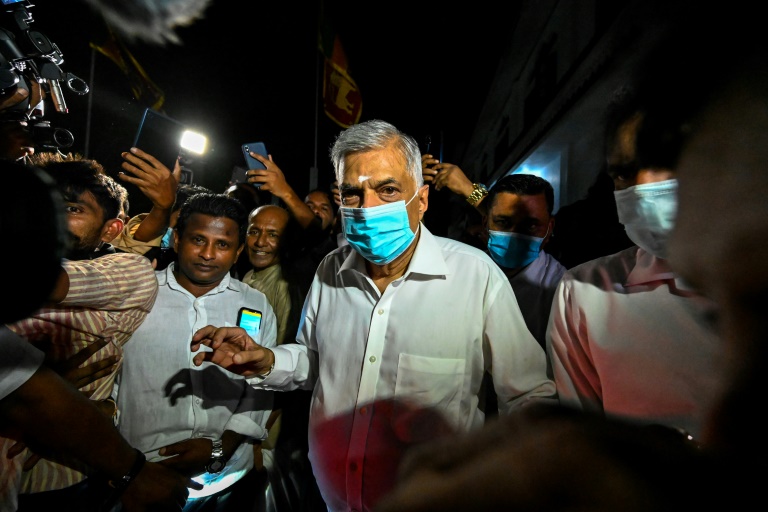
Sri Lanka’s new prime minister struggled Friday to forge a unity government and forestall an imminent economic collapse as opposition lawmakers refused to join his cabinet and demanded fresh elections.

Ranil Wickremesinghe was sworn in late Thursday to navigate his country through the worst downturn in its history as an independent nation, with months of shortages and blackouts inflaming public anger.

The 73-year-old insists he has enough support to govern and approached several legislators to join him, but four opposition parties have already said his premiership lacks legitimacy.

Senior opposition lawmaker Harsha de Silva publicly rejected an offer to take over the finance ministry and said he would instead push for the government’s resignation.

“People are not asking for political games and deals, they want a new system that will safeguard their future,” he said in a statement.

De Silva said he was joining “the people’s struggle” to topple President Gotabaya Rajapaksa and would not support any political settlement that left the leader in place.

Huge public demonstrations have for weeks condemned Rajapaksa over his administration’s mismanagement of the worsening economic crisis.

Hundreds remain outside his seafront office in the capital Colombo at a protest camp that has for the past month campaigned for him to step down.

De Silva is a member of the Samagi Jana Balawegaya (SJB), the largest opposition party in parliament, which had appeared ready to split over whether to support Wickremesinghe.

But the head of the possible splinter faction, Harin Fernando, said Friday he had returned to the fold.

“I will not support Wickremesinghe’s government,” Fernando told AFP.

Three smaller parties have also signalled they will not join any unity government, with the leftist People’s Liberation Front (JVP) demanding fresh elections.

However, the cash-strapped government is unlikely to be able to afford polls, or even print ballots, at a time when a national paper shortage forced schools to postpone exams.

– ‘On with the job’ –

Paikiasothy Saravanamuttu of the Colombo-based Centre for Policy Alternatives think tank said Wickremesinghe would still likely be able to govern with the support of Rajapaksa-allied lawmakers.

“He’ll appoint a cabinet and get on with the job,” Saravanamuttu told AFP.

Sri Lankans have suffered months of severe shortages of food, fuel and medicine — as well as long power cuts — after the country burnt through foreign currency reserves needed to pay for vital imports.

“We need at least three hours every day to stand in queues and fill petrol,” said Mangalanadhan Sachin, a frustrated driver waiting at a gas station in Colombo.

“We don’t eat anything in the day. When we return home, there is no electricity.”

The central bank chief warned this week that the economy was just days from “collapse beyond redemption” unless a new government was urgently appointed.

– ‘Three meals a day’ –

Wickremesinghe warned Thursday that the dire situation could get worse in the coming months and called for international assistance.

“We want to return the nation to a position where our people will once again have three meals a day,” he said.

Mahinda Rajapaksa, the president’s brother, resigned as prime minister on Monday after his supporters attacked peaceful anti-government demonstrators.

At least nine people were killed and more than 200 injured in ensuing clashes, with dozens of Rajapaksa loyalist homes set on fire by furious mobs.

Mahinda has since been banned by a court from leaving the country and has taken refuge at the Trincomalee naval base in Sri Lanka’s east.

Troops have restored order and a nationwide curfew has been in effect for most of the week. 

Foreign diplomats in Colombo were among the first to call on Wickremesinghe after he officially assumed duties on Friday.

Envoys from China, neighbour India and Japan all pledged to continue providing Sri Lanka with assistance through the crisis, the prime minister’s office said.

Wickremesinghe is seen as a pro-West, free-market reformist, potentially making bailout negotiations with the International Monetary Fund and creditor nations smoother.

EU hikes military aid for Ukraine as Sweden edges to NATO membership

Europe pledged another half billion dollars in military support for Kyiv on Friday and Sweden edged closer to joining NATO as the war in Ukraine entered its 12th week.

At a meeting of the world’s most powerful democracies, European Union foreign policy chief Josep Borrell promised Ukraine an extra 500 million euros ($520 million), bringing the bloc’s total military aid to two billion euros.

“The recipe is clear –- more of the same,” Borrell said.

Group of Seven foreign ministers are in the German sea resort of Wangels, where they are discussing the crisis with counterparts from Ukraine and Moldova.

“It is very important at this time that we keep up the pressure on Vladimir Putin by supplying more weapons to Ukraine, by increasing the sanctions,” British Foreign Secretary Liz Truss said.

French Foreign Minister Jean-Yves Le Drian declared the G7 would provide support “over the long term… until Ukraine’s victory.”

President Vladimir Putin invaded Russia’s neighbour on February 24, unleashing a worldwide shock that has been felt especially in northern and eastern Europe.

Finland’s leaders on Thursday recommended their country ditch a decades-long posture of neutrality and join NATO as soon as possible.

In Sweden, a security policy review by parliamentary parties on Friday highlighted the advantage of becoming a member of the alliance.

“Swedish NATO membership would raise the threshold for military conflicts and thus have a deterrent effect in northern Europe,” it said.

“Within the framework of current cooperation, there is no guarantee that Sweden would be helped if it were the target of a serious threat or attack,” it said.

The report stopped short of offering a concrete recommendation, although expectations are high Sweden will follow Finland when the government announces its decisions in coming days.

– Cruise missiles –

Many analysts see the war as turning into a grinding conflict after expectations of a lightning victory by Russia sputtered out.

After several weeks, Russia abandoned attempts to seize the capital Kyiv as the Ukrainian army defended it fiercely and the West began to pump in billions of dollars’ worth of military support.

Since then, Russia has focused its efforts in the eastern region of Donbas, where it has been supporting ethnic Russian-separatists.

Ukraine’s army said Friday Russian artillery reinforcements had been brought in to shell villages in the northeastern Chernigiv region, near the border with Russia.

Russian troops are trying to establish “full control” over the eastern town of Rubizhne, it said.

Artillery and aviation power are pounding the southern port city of Mariupol, where a number of Ukrainian troops are holding out at a huge steelworks despite a weeks-long siege, it said.

The Russians are now making “massive use” of supersonic anti-ship cruise missiles to target civilian infrastructure, Ukrainian armed forces chief Valery Zaluzhny said on Facebook.

“One of the reasons for the enemy’s transition to this tactic is the refusal to use aviation, which suffers vast losses,” he said.

– War crimes –

A Russian soldier accused of killing a civilian appeared in a court in Kyiv on Friday ahead of the first war crimes trial since the start of the offensive.

Vadim Shishimarin, 21, allegedly gunned down an unarmed 62-year-old civilian who had witnessed a carjacking by fleeing Russian troops.

He faces possible life imprisonment on charges of war crimes and premeditated murder.

The trial marks a significant moment in Ukraine, where accounts of murder, torture and rape by Russian forces are multiplying.

In eastern Ukraine, witnesses who spoke to AFP in the village of Stepanki, near the regional capital of Kharkiv, accused the Russians of shelling a home, killing several people.

They said six people who lived in the house were drinking tea in the courtyard when a tank approached.

“They started going into the house to hide,” said Olga Karpenko, 52, whose daughter was among those killed. The tank took aim and fired at them as they entered the house.

“Four people died, two were injured. My daughter died from a shrapnel wound in the back of her head,” Karpenko said.

The UN Human Rights Council voted overwhelmingly on Thursday — in a session boycotted by Russia — to probe allegations of atrocities in the Kyiv, Chernigiv, Kharkiv and Sumy regions.

The International Criminal Court (ICC) in The Hague has already begun its own inquiry, sending investigators to the Kyiv suburb of Bucha.

More than six million people have fled Ukraine, more than half of them going to neighbouring Poland, the UN refugee agency says.

– Gas supplies –

Economists on Friday were poring over the impact of a downturn in Russian gas supplies for Europe, where several countries, including Germany, are heavily dependent on Russian energy.

Russian energy giant Gazprom announced Thursday it would stop supplying gas via the Polish part of the Yamal-Europe pipeline following retaliatory sanctions that Moscow imposed on Western companies.

Gazprom also said gas transiting to Europe via a site in Ukraine had dropped by a third.

Ole Hvalbye, a specialist with the Scandinavian bank SEB, said the loss through Ukraine amounted to around two percent of European gas consumption, while the Polish pipeline had carried little gas for several months.

The fall “does not scream crisis, but it is a wake-up call for what is to come,” he said.

Ukraine and Poland are major supply routes for Russian gas to Europe and the two sides have kept flows going despite the conflict.

Last year, Russian imports accounted for nearly 40 percent of the European Union’s gas consumption.

burs/ri/ah

G7 allies vow to support Ukraine 'until victory'

Leading democracies on Friday pledged unwavering support for Ukraine in its war with Russia while the European Union promised to hike military support for Kyiv by more than half a billion dollars.

Foreign ministers of the Group of Seven (G7) met on the second day of a three-day meeting in the German resort of Wangels, joined by their counterparts from Ukraine and Moldova.

French Foreign Minister Jean-Yves Le Drian said the G7 were “very strongly united” in their will to “continue in the long term to support Ukraine’s fight for its sovereignty until Ukraine’s victory”.

EU foreign policy chief Josep Borrell said the bloc was pledging an extra 500 million euros ($520 million) in military aid.

The cash will raise the EU’s total military aid for Ukraine to two billion euros, he said.

“The recipe is clear –- more of the same,” Borrell said. 

“More pressure on Russia, with economic sanctions. Continue working on international isolation of Russia. Countering the disinformation about the consequences of the war… And presenting a united front to continue supporting Ukraine.”

British Foreign Secretary Liz Truss also called for further support for Ukraine.

“It is very important at this time that we keep up the pressure on Vladimir Putin by supplying more weapons to Ukraine, by increasing the sanctions,” she said.

– Asset grab –

Ukrainian Foreign Minister Dmytro Kuleba praised the G7 nations’ resolve to help Kyiv but also urged them to go further.

“Today I asked G7 countries to adopt legislation and put in place all necessary procedures needed to seize Russian sovereign assets and give them to Ukraine to use this money to rebuild our country,” he said.

Kuleba also urged the EU to ensure that an embargo is placed on Russian oil, warning that an omission of the ban on the bloc’s next package would mean its unity was “broken”.

The war in Ukraine had led to greater unity among Western allies, Kuleba said.

“It is Ukraine who made the G7 strong again. It is our struggle that brought back confidence in the G7 to lead, to shape international affairs and to counter attempts of authoritarian regimes to defeat democracy,” he said.

Moldovan Foreign Minister Nicu Popescu also praised the EU’s role in the crisis and thanked the G7 for their support in helping his country deal with the fallout from the war, including a huge influx of refugees.

“We see that the best way to move forward and to keep peace in our part of the world is to continue with European integration,” he said.

– ‘Repugnant form of war’ –

Separately in the southwestern German city of Stuttgart, agriculture ministers of the G7 as well as their Ukrainian counterpart gathered on Friday to discuss how to head off a looming international food crisis sparked by the war.

Accusing Russia of theft from Ukrainian farmers, German Agriculture Minister Cem Oezdemir said this was “an especially repugnant form of war that Russia is leading, in that it is stealing, robbing, taking for itself grain from eastern Ukraine.”

Russia invaded Ukraine on February 24 but Ukrainian forces managed to push Moscow’s forces back from Kyiv, and the conflict is now well into its third month.

Western countries have supplied Ukraine with weapons, including artillery, anti-aircraft missiles, anti-tank weapons and other powerful material, but Kyiv has been pushing allies for more support.

Le Drian pointed to the global effects of what he called a “lasting conflict… particularly in the area of food security”.

German Foreign Minister Annalena Baerbock had also on Thursday highlighted the growing impact of the war on poorer countries.

“We as the strongest industrialised democracies have a special responsibility” to help poorer nations weather the food and energy squeezes caused by the war, she said.

Close Bitnami banner
Bitnami