World

10 killed in deadliest recent Syria rebel attack

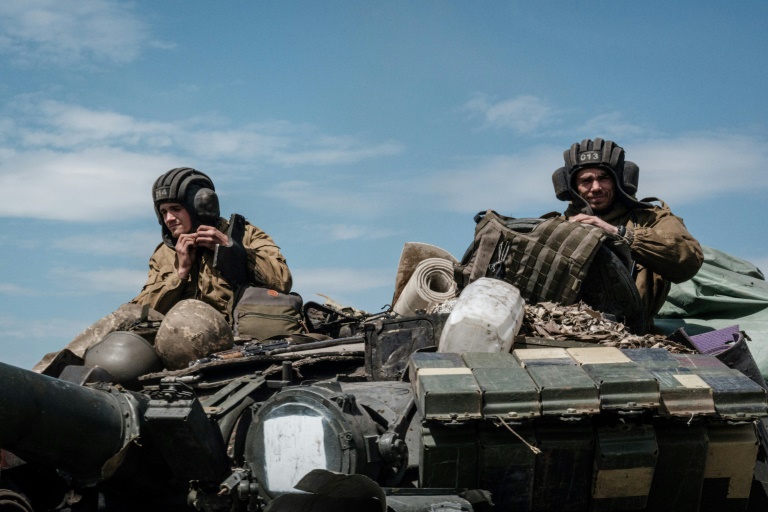
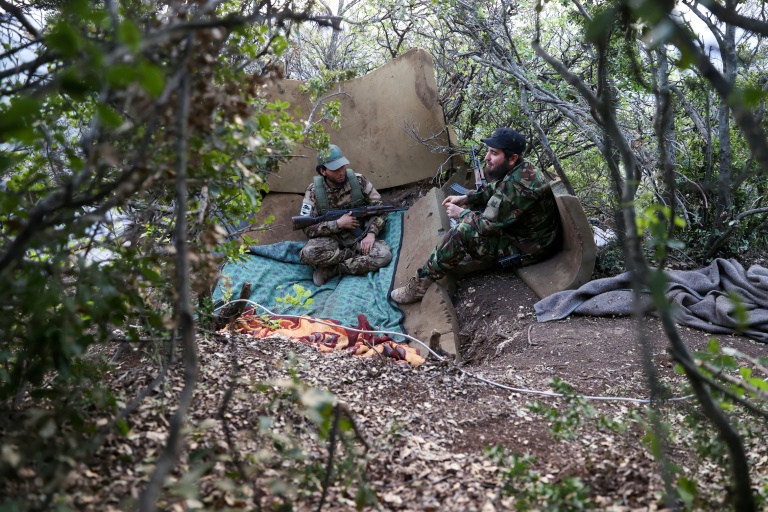
Syrian rebels killed 10 soldiers in northern Syria Friday, in the deadliest such attack since a truce deal reached over two years ago, a war monitor and state media said.

Nine soldiers were also wounded in the attack, Syria’s official news agency SANA reported, quoting a military source.

“Around 9:30 this morning terrorists targeted an army bus” in the west of Aleppo province, SANA said, quoting the source.

The Syrian Observatory for Human Rights had reported earlier on Friday that “pro-regime fighters” died in the assault.

It was not immediately clear whether it was carried out by the area’s dominant jihadist group, Hayat Tahrir al-Sham (HTS), or other rebel forces, the monitor said.

The attackers fired an anti-tank guided missile at a bus carrying pro-regime fighters back to their home villages, Observatory head Rami Abdel Rahman told AFP.

He said six rebel fighters were killed this month in similar attacks conducted by regime soldiers or allied militia.

Friday’s death toll was the heaviest reported in pro-government ranks from a rebel attack since a truce agreement brokered by Russia and Turkey in March 2020.

Before Russia intervened in the Syrian conflict, the regime of President Bashar al-Assad controlled barely a fifth of the national territory.

With Russian and Iranian support, Damascus clawed back much of the ground lost in the early stages of the conflict, which erupted in 2011 when the government brutally repressed pro-democracy protests.

The last pocket of armed opposition to the regime includes large swathes of Idlib province and parts of the neighbouring Aleppo, Hama and Latakia provinces.

HTS, headed by ex-members of Syria’s former Al-Qaeda franchise, is the dominant group in the area but other rebel groups are also active, with varying degrees of Turkish backing.

The 2020 truce deal has held despite sporadic attacks by both sides, including continued Russian air strikes.

Turkey was keen to cement its influence in northern Syria and avert a new phase of fighting in the conflict that could have caused an unprecedented wave of refugees to flood its border.

Turkey is home to more than 3.6 million Syrian refugees and Prime Minister Recep Tayyip Erdogan, facing rising public anger over the issue, has suggested that his government would encourage a million of them to return.

War in Ukraine: Latest developments

Here are the latest developments in the war in Ukraine:

– Sweden moves toward NATO membership –

A security policy review by parties in Sweden’s parliament says NATO membership would reduce the risk of conflict in northern Europe, opening the way to a government decision on whether to apply in the next few days.

A special committee in similarly non-aligned neighbouring Finland will announce a formal decision of whether to join NATO on Sunday after the country’s president and prime minister said they want their country to join the alliance following Russia’s invasion of Ukraine.

President Recep Tayyip Erdogan, however, says Turkey does not have a “positive opinion” on Finland and Sweden joining NATO. 

– G7 ‘strongly united’ –

France says Group of Seven countries are “strongly united” in backing Ukraine until its “victory” against Russia, as Britain urges more weapons for Kyiv to keep up the pressure against President Vladimir Putin.

“It is very important at this time that we keep up the pressure on Vladimir Putin by supplying more weapons to Ukraine, by increasing the sanctions,” British Foreign Secretary Liz Truss says as she arrives for a second day of talks with her G7 counterparts.

– EU pledges extra aid –

EU foreign policy chief Josep Borrell pledges an extra 500 million euros ($520 million) in military aid for Ukraine at the G7 meeting.

The extra cash will raise the EU’s total military aid for Ukraine to two billion euros, he says.

– ‘Seize Russian assets’: Kyiv –

Ukraine’s Foreign Minister Dmytro Kuleba calls on the major industrialised nations to seize and hand over Russian assets to help with rebuilding his war-torn country, as he meets the G7 club in Germany.

And he warns that any omission of an embargo on Russian oil in the EU’s next sanctions package, due to opposition from Hungary, would spell the end of the bloc’s unity, calling it a “critical moment”.

– Russian reinforcements –

Ukraine’s army says Russian artillery reinforcements have been brought in to shell villages in the northeastern Chernigiv region, near the border with Russia.

Russian troops are trying to establish “full control” over the eastern town of Rubizhne, it says.

Artillery and aviation power are pounding the southern port city of Mariupol, where a number of Ukrainian troops are holding out at a huge steelworks despite a weeks-long siege, it says.

– ‘Tens of thousands’ of Ukrainians taken: US – 

The United States accuses Russia of forcibly taking onto territory under its control tens of thousands of Ukrainians, sending them to “filtration camps” where they are subjected to “brutal interrogations”.

The remarks by Michael Carpenter, the US ambassador to the Organization for Security and Co-operation in Europe (OSCE), support allegations by the Ukrainian government which estimates nearly 1.2 million people have been deported into Russia or Russian-controlled territory.

– ‘Shot in the back’ –

Ukrainian prosecutors are investigating a series of war crimes allegedly committed by Russian forces, including the fatal shooting of two unarmed civilians outside Kyiv, CNN reports.

CNN and the BBC release security camera footage showing two Ukrainian civilians shot in the back by Russian soldiers near a car dealership outside of Kyiv on March 16.

One man died on the spot, the other died shortly after. Prosecutors are investigating the attack as a war crime, CNN reports.

– More than six million refugees –

More than six million refugees have fled Ukraine since Russia’s invasion began on February 24, the UN refugee agency says.

A total of 6,029,705 people had fled Ukraine as of May 11, with Poland hosting the largest number. Women and children represent 90 percent of the refugees.

burs-jmy/ach 

Lebanese activists launch mock 'lollar' currency

Lebanese activists Friday rolled out mock banknotes featuring paintings of a gutted central bank or the Beirut port explosion to denounce high-level corruption that has helped to wreck the country.

The collapse of the Lebanese pound and frozen bank accounts have left Lebanon with a confusing currency system, with a multitude of exchange rates applying to various situations in daily life.

The dollars stuck in accounts that citizens can only withdraw in Lebanese pounds at a fraction of their original value are known locally as “lollars”.

With parliamentary elections two days away, the Lebanese Transparency Association (LTA) decided to take the joke to the streets, with a stunt encouraging people to use “lollars” for the day.

The “monetary disobedience” campaign, entitled “Currency of Corruption”, encourages people to print their own “funny money” at home and try to use it as a means of raising awareness.

“We will not adapt to this mockery anymore, we are #NotPayingThePrice,” the LTA said in a statement unveiling the campaign and its hashtag.

The mock banknotes feature paintings by acclaimed Lebanon-based artist Tom Young depicting calamities that have hit Lebanon in recent years, from the deadly August 2020 port blast to forest fires, solid waste pollution and shortages.

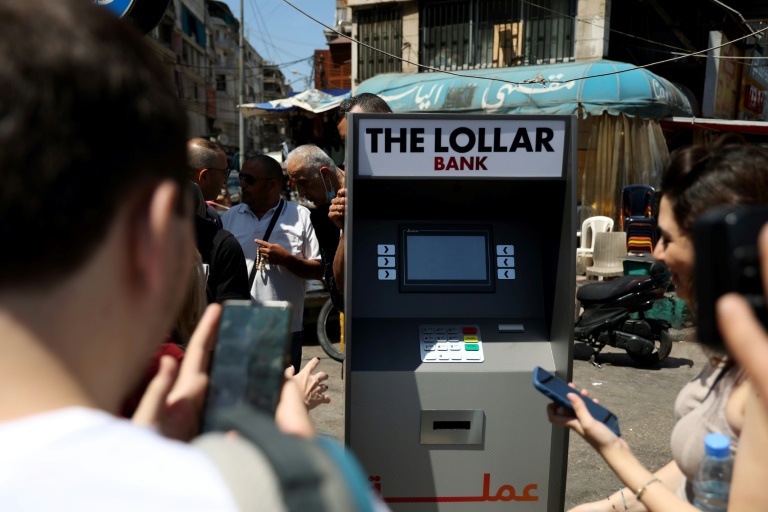
On one of Beirut’s main squares Friday, organisers installed a fake ATM from which passers-by could withdraw “lollars”.

LTA communications officer Hazar Assi said the campaign was aimed at reminding voters that their current plight was to blame on the country’s corrupt hereditary leaders.

“When people vote, they should make a choice based on accountability and rejecting the corruption that is affecting all of our lives,” she said.

Lebanon’s traditional sectarian parties will seek extend their stranglehold on power in parliamentary elections on Sunday but a new generation of independent candidates are hoping for a breakthrough.

The gas 'poker game' between Russia and Europe

The drop in Russian gas flows to the European Union has had no major effect on supplies, but it raises pressure on the region to wean itself from Moscow’s energy.

Here is a look at the issue:

– Heavy dependence –

The EU relies heavily on Russian gas, raising concerns that Moscow could use its export to blackmail the 27-nation bloc.

Last year, the EU received around 155 billion cubic metres of Russian gas, accounting for 45 percent of its imports of the fossil fuel.

While the EU is discussing an embargo on Russian oil, a gas ban is less likely for now as some countries such as Germany, the EU’s economic engine, are heavily reliant on the energy source.

“Of course, the Europeans have been quite bad in this poker game — they showed too openly how scared they were to lose the Russian gas that now, Russia is gaining the upper hand,” said Ipek Ozkardeskaya, analyst at Swissquote Bank.

Ukraine has pleaded with the EU to ban Russian gas, pointing out that it gives Moscow the financial means to press on with its war against its neighbour.

In the first two months following the February 24 invasion, Russia has raked in 63 billion euros ($65.5 billion) in gas exports, including 44 billion euros from the EU, according to the Centre for Research on Energy and Clean Air.

– Low gas flows –

Russian gas flows via Ukraine fell this week.

Ukraine’s pipeline operator GTSOU said it halted gas transport at the Sokhranivka transit point from Wednesday as Russian occupying forces now in control were interfering with operations.

Ukraine urged Russian energy firm Gazprom to increase supplies via another site, Sudzha, but the company said it was impossible to reroute all the supplies through there.

“Roughly one third of Russia’s total Ukrainian transit flows through the Sokhranivka entry point, while the rest (two thirds) passes through the Sudzha station,” said Ole Hvalbye, commodities analyst at SEB bank.

The loss amounts to two percent of Europe’s Russian gas consumption, according to Hvalbye.

“This does not scream crisis, but it is a wake-up call for what is to come,” he said.

Gazprom also announced on Thursday that it would stop sending natural gas via the Polish section of the Yamal-Europe gas pipeline after Moscow imposed retaliatory sanctions against Western energy companies.

The pipeline can carry up to 33 billion cubic meters of gas from fields in Russia’s Yamal peninsula and western Siberia through Belarus and Poland to Germany.

But a market source said the impact is limited as the pipeline had already been carrying low volumes for months.

The move will make “no difference” as long as long-term contracts for Russian gas via other pipelines are fulfilled.

– Russian and Ukrainian intentions –

Some analysts suggest that Ukraine has deliberately disrupted Russian gas flows to Europe in frustration over the EU’s reluctance to impose an embargo on Russia’s energy exports.

Carsten Fritsch, analyst at Commerzbank, said it was “possible” that Ukraine, which relies heavily on Russian oil, is pressuring Hungary to drop its opposition to an EU crude embargo.

While the EU has balked at a gas ban, there are fears that Russia could turn off the taps in retaliation at Western sanctions over the war.

Kaushal Ramesh, senior analyst at the research firm Rystad Energy, said “supplies could be stopped unilaterally by Gazprom”.

“The chances of this happening are slim, but not zero,” Ramesh said.

EU buyers are “not caught completely off guard” as storage levels are currently sufficient to last through “most of 2022, even if Russian flows were to stop instantly”.

But, he added, “the outlook for winter 2022 supply is now a lot more pessimistic”.

– The alternatives –

The EU has set a goal of cutting Russian gas imports by two thirds this year.

Germany says it can make up for the recent drop in Russian deliveries by getting gas from Norway and the Netherlands to stock up before winter.

Europeans are also counting on liquefied natural gas (LNG), which can be shipped by boat from other countries such as Qatar and the United States.

Denmark is looking into possibly raising its own natural gas production in its North Sea fields, while Romania is eyeing legislation to encourage gas extraction in the Black Sea.

Experts say the situation is another argument in favour of speeding up the transition away from fossil fuels.

“The rollout of clean energy solutions alone can lead to a reduction of 101 bcm (101 billion cubic metres of gas), which is equivalent to two thirds of Russian imports, already by 2025,” according to the E3G climate think tank.

The European Biogas Association is also ready to step in, saying it could nearly double its production to 35 billion cubic meters by 2030, equivalent to 20 percent of Russian gas imports.

UAE's ailing President Sheikh Khalifa dies aged 73

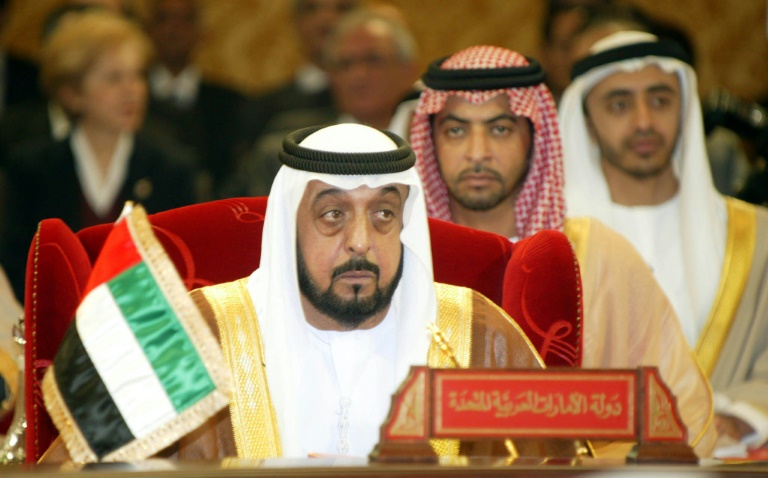
The United Arab Emirates’ President Sheikh Khalifa bin Zayed Al-Nahyan died aged 73 on Friday, state media said, after battling illness for several years.

The president of the oil-rich Gulf state, who was rarely seen in public, is likely to be replaced by his half-brother, Abu Dhabi Crown Prince Mohammed bin Zayed, who was already seen as the UAE’s de facto ruler.

“The Ministry of Presidential Affairs has mourned to the UAE people, Arab and Islamic nations and the world the death of President His Highness Sheikh Khalifa bin Zayed Al-Nahyan,” the official WAM news agency tweeted.

The ministry announced 40 days of mourning, with flags at half-mast from Friday and work suspended in the public and private sectors for the first three days.

Sheikh Khalifa took over as the UAE’s second president in November 2004, succeeding his father as the 16th ruler of Abu Dhabi, the richest of the federation’s seven emirates.

He has rarely been seen in public since 2014, when he had surgery following a stroke, although he has continued to issue rulings. 

The cause of death was not immediately released.

The UAE, a former British protectorate that was founded in 1971, has gone from desert outpost to booming state in its short history, fuelled by its oil wealth and Dubai’s rise as a trading and financial centre.

The Arab world’s second-biggest economy behind Saudi Arabia has also begun to wield growing political influence, filling a space ceded by traditional powers such as Egypt, Iraq and Syria.

The country of some 10 million also joined military campaigns in Libya and Yemen and broke ranks with much of the Arab world to establish ties with Israel in 2020.

– Frail figure –

The bearded Sheikh Khalifa had cut a frail figure on his occasional public appearances, while his half-brother hosted world leaders and led diplomatic forays abroad.

“The Emirates has lost its virtuous son and leader of the ‘stage of empowerment’ and the trustee of its blessed journey,” Mohammed bin Zayed tweeted on Friday.

“His stances, achievements, wisdom, generosity and initiatives are in every corner of the nation… Khalifa bin Zayed, my brother… may God have mercy on you and grant you access to paradise.”

Sheikh Khalifa, who had no formal higher education, led the UAE as Dubai emerged as a tourism and trade hub and Abu Dhabi pumped oil as a key OPEC player.

He came to the rescue of Dubai when it was hit by the global financial crisis in 2009, extending a multi-billion-dollar lifeline to the debt-laden emirate.

Dubai’s ruler, UAE vice president Sheikh Mohammed bin Rashid Al-Maktoum, said the country was mourning “with hearts filled with sadness”.

The US mission to Abu Dhabi called Sheikh Khalifa “a true friend of the United States”, while Israeli Prime Minister Naftali Bennett and Qatari Emir Sheikh Tamim bin Hamad Al-Thani also offered their condolences.

sy/dm/th/lg

Musk says deal to buy Twitter 'temporarily on hold'

Elon Musk said on Friday he was putting a temporary halt on his much-anticipated deal to buy Twitter, sending shares in the social media giant plunging. 

Musk, the world’s richest man and founder of automaker Tesla, had made the eradication of spam accounts and bots one of the centerpieces of his proposed $44 billion takeover of Twitter.

When the deal was announced in late April he said he wanted to make Twitter “better than ever” by “defeating the spam bots and authenticating all humans”.

But on Friday he wrote: “Twitter deal temporarily on hold pending details supporting calculation that spam/fake accounts do indeed represent less than 5% of users.”

Two hours after his first tweet, Musk took to the platform again to say he was “still committed to acquisition”.

Reliable figures for the number of users are seen as vital to judge future revenue streams.

Twitter did not immediately respond to AFP’s request for comment.

– ‘Horror show’ –

In his tweet, Musk linked to an article from May 2 referencing Twitter’s latest filing to US regulators.

The filing said an internal review had concluded Twitter had 229 million “monetizable daily active users” in the first quarter of this year, and just five percent were regarded as false or spam accounts. 

Analyst Dan Ives from Wedbush said the Twitter “circus show” was likely to translate into a “Friday 13th horror show”.

“The nature of Musk creating so much uncertainty in a tweet (and not a filing) is very troubling,” he said.

Wall Street investors were likely to interpret the tweet as an attempt by Musk to pull out of the deal or trying to force a lower price, said Ives.

Market analyst Susannah Streeter of Hargreaves Landsdown said the takeover bid had been bumpy but now “risks hitting the skids”.

Friday’s initial announcement saw Twitter’s shares drop by 20 percent in early electronic trading before Wall Street opened, but Tesla’s stock rose.

– ‘False and misleading’ –

Musk is boss of both Tesla and SpaceX and is estimated to be worth $240 billion, according to Forbes.

But his style of ownership — an in particular his use of Twitter — has frequently landed him in hot water with the authorities.

He has been tangled in legal troubles ever since he tweeted in 2018 that he had enough funds to take Tesla private — a claim that a judge last month decided was “false and misleading”.

His potential stewardship of the social media platform has hit several bumps since the takeover attempt was made public, not least over the future status of Donald Trump.

The former US president was kicked off Twitter and other social networks following the attack on the US Capitol on January 6, 2021.

On Wednesday, Musk said he would be open to lifting a ban on Trump’s account.

Activist groups responded by urging advertisers to boycott the platform if Musk opened the gates to abusive and misinformative posts.

Pakistan parched and pummelled by blistering heatwave

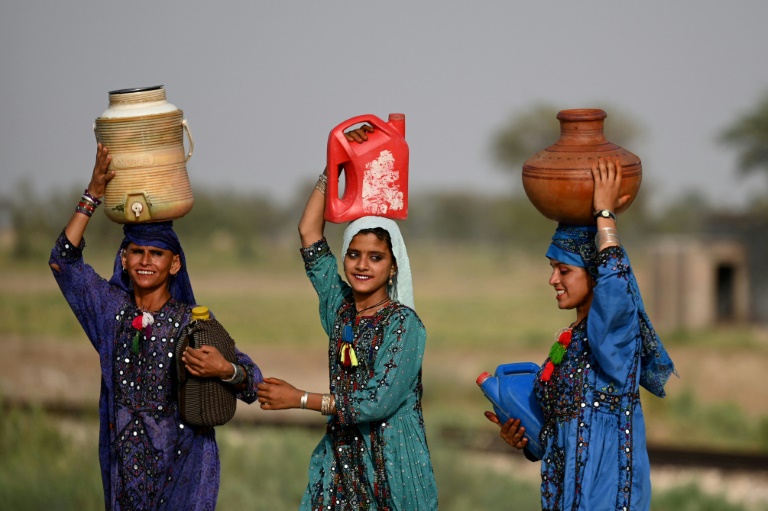
Pakistan was in the grip of a heatwave on Friday, with parts of the nation previously scalded by temperatures of nearly 50 degrees Celsius as officials warned of acute water shortages and a health threat.

Swathes of the country have been smothered by high temperatures since late April, in extreme weather the World Meteorological Organization (WMO) has warned is consistent with climate change.

On Thursday the city of Jacobabad in Sindh province hit 49.5C (121 degrees Fahrenheit), the Pakistan Meteorological Department (PMD) said, with temperatures forecast to remain high until the end of the week.

“It’s like fire burning all around,” said labourer Shafi Mohammad, who is from a village on the outskirts of Jacobabad where residents struggle to find reliable access to drinking water.

Nationwide, the PMD alerted temperatures were between 6C and 9C above normal, with the capital Islamabad — as well as provincial hubs Karachi, Lahore and Peshawar — recording temperatures around 40C on Friday.

“This year we have jumped from winter right into summer,” said PMD chief forecaster Zaheer Ahmad Babar.

Pakistan has endured heightened heatwaves since 2015, he said, focused in upper Sindh province and southern Punjab province.

“The intensity is increasing, and the duration is increasing, and the frequency is increasing,” he told AFP.

Jacobabad nurse Bashir Ahmed says that, for the past six years, heat stroke cases in the city have been diagnosed earlier in the year — starting in May, rather than June or July.

“This is just increasing,” he said.

– ‘Take cover’ –

Punjab province irrigation spokesman Adnan Hassan said the Indus river — Pakistan’s key waterway — had shrunk by 65 per cent “due to a lack of rains and snow” this year.

Sheep have reportedly died from heatstroke and dehydration in the Cholistan Desert of Punjab — Pakistan’s most populous province, which also serves as the national breadbasket.

“There is a real danger of a shortfall in food and crop supply this year in the country should the water shortage persist,” Hassan said.

On Tuesday climate minister Sherry Rehman warned residents in the megacity of Lahore “to take cover for the hottest hours of the day”.

The heatwave has also ravaged India, with temperatures in parts of Rajasthan hitting 48.1C on Thursday.

Pakistan — home to 220 million — says it is responsible for less than one percent of global greenhouse gas emissions.

But it ranks as the nation eighth most affected by extreme weather events, according to a 2021 study by environmental group Germanwatch.

Extreme heat can also trigger cascading disasters that could pummel Pakistan’s generally impoverished population.

The mountainous portions of the country are home to more than 7,000 glaciers, a number larger than any region outside the poles.

Quickly melting glaciers can swell lakes, which then burst their banks and unleash torrents of ice, rock and water in events known as glacial lake outburst floods.

Last weekend a key highway bridge in the Gilgit-Baltistan region was swept away in flash flooding caused by glacier melting.

In April, officials warned there were 33 lakes in Pakistan in danger of unleashing similar dangerous deluges.

In Sweden, misgivings over rushed debate to join NATO

Sweden is widely expected to apply for NATO membership after Russia’s invasion of Ukraine sparked a surge in support, but many Swedes are uncomfortable with how quickly the decision-making process has gone.

The country is set to reverse a decades-old policy of non-alignment in the coming days, in lockstep with its neighbour and longtime security ally Finland which is due to officially announce its bid to join NATO on Sunday.  

But for some, it feels rushed. 

“I think everybody would have wanted more time for this because it’s a huge issue,” Stefan Lofven, Sweden’s Social Democratic prime minister from 2014 to 2021, told AFP.

“At the same time, we know that you don’t always get the time that you would like to have.” 

Part of the reluctance among some comes from the fact that neighbouring Finland has so quickly and overwhelmingly made up its mind in favour of joining the Western military alliance.

Finland, which shares a 1,300-kilometer (800-mile) border with Russia and is Sweden’s closest defence cooperation partner, took a historic first step on Thursday when the president and prime minister came out in favour of joining NATO. 

“I also wish that Finland could have waited. It’s not an ideal situation, in the middle of a blazing war”, former foreign minister Margot Wallstrom, a longtime opponent of membership who has grudgingly opened up to the idea, told AFP.

In a dig at Stockholm’s stance, an image of Mr Bean as a Swedish official copying a Finnish official as he signs a NATO membership application has gone viral on social media.

– ‘Neutral’ identity –

Sweden, which was neutral in World War II, has stayed out of military alliances for more than 200 years, though it has forged closer ties with NATO since the 1990s.

Traditionally opposed to NATO membership, Prime Minister Magdalena Andersson’s Social Democratic Party is expected to announce a historic reversal of its position this weekend, seen as paving the way for an application to join the alliance.

The swift turnaround has led to criticism that Stockholm is rushing through its national debate in order to align itself with Finland’s calendar.

“It’s not Sweden deciding the timeline, it’s Finland, because they share a 1,300-km border with Russia”, said Anders Lindberg, political editorialist at Aftonbladet, an independent social democratic daily.

Sweden is otherwise more accustomed to lengthy government-commissioned inquiries on major issues, aimed at fostering debate and building consensus so that decisions are broadly anchored in society.

In contrast, a security review on the pros and cons of NATO membership prepared by the parties in parliament was pulled together in just a few weeks.

The rapid U-turn is also remarkable given that the country “has built its identity on its neutrality” and military non-alignment, Lindberg added.

Support for NATO membership has soared in both Finland and Sweden since Russia’s invasion of Ukraine. 

But while a record 76 percent of Finns are in favour of joining NATO, Swedish public opinion is more divided, with recent polls indicating that between 50 and 60 percent back the idea.


– ‘Thank you’ Finland –

Security experts say Sweden waited too long to debate NATO membership.

“The Social Democrats in Sweden have always said: ‘We’ll think about this when Finland joins’… because they thought Finland would never join”, Elisabeth Braw, an expert on Nordic countries’ defence at the American Enterprise Institute, told AFP.

At the same time, Finland’s political leaders were a step ahead, leaving the door open for the “NATO option”, or the possibility of joining quickly if needed.

“The responsibility for this situation rests with those people and those structures who have refused to discuss the matter of NATO until very recently”, said Robert Dalsjo, an analyst at the Swedish Defence Research Institute (FOI).

“It’s going to go fast. But it’s going fast because this is a national security matter… We cannot delay forever because some people have not been interested in this matter before”, he said.

For others, Finland has done Sweden — which has historically and not without some arrogance considered itself a “big brother” to its smaller neighbour — a huge favour by speeding up the decision.

“Without Finland, Sweden would never have joined NATO. Thank you, big brother!”, daily Expressen wrote in an editorial Thursday.

Markets rebound after Fed boss calms nerves over rates

Global stock markets rebounded Friday on easing fears about the pace of interest rate rises in the United States that are aimed at bringing down the country’s highest inflation in decades.

European equities were up around 1.5 percent nearing the half-way stage following solid gains in Asia. 

Stocks have suffered sharp losses this week, particularly on Wall Street, as investors seek safety also amid the Ukraine war and Chinese lockdowns.

“Investors are continuing to wrestle with worries over inflation as the oil price climbs back up again and supply concerns resurface amid ongoing geo-political tensions,” noted Susannah Streeter, senior investment and markets analyst at Hargreaves Lansdown.

Stocks have tumbled for much of this week on fears the Federal Reserve was planning to lift US interest rates by 75 basis points at a single meeting.

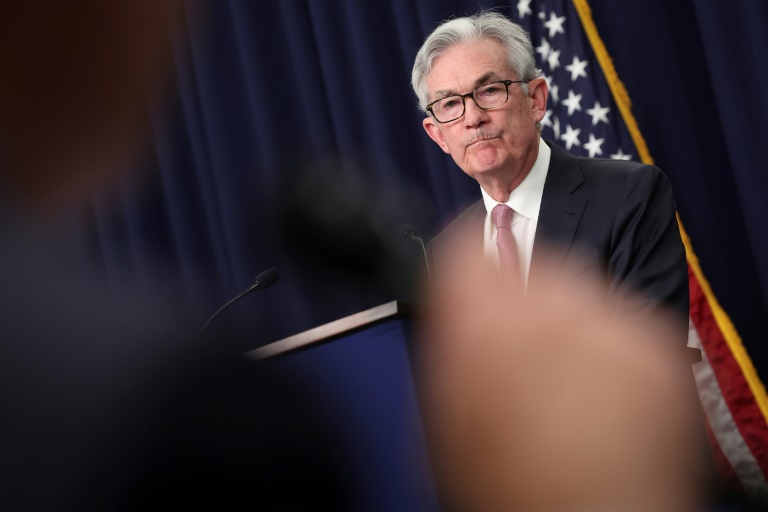
However equities on Friday staged “a relief rally” after Fed boss Jerome Powell calmed nerves over the potential hefty increase, said Jeffrey Halley, analyst at OANDA trading group. 

“The rally today looks more like a technical rebound after a torrid week than a structural turn in sentiment,” he added.

Oil prices climbed Friday after much volatility, while the euro recovered from five-year lows against the dollar.

Bitcoin held above $30,000, a day after the cryptocurrency slumped under $27,000, or lowest level since late 2020.

Its crash this week was fuelled by the collapse of two so-called “stablecoin” cryptocurrencies — TerraUSD and Tether — which proved to be anything but stable, leaving investors panicked. 

On the corporate front Friday, Twitter’s share price plunged after Elon Musk said he was putting a temporary halt on his much-anticipated deal to buy the social media giant. 

“Twitter deal temporarily on hold pending details supporting calculation that spam/fake accounts do indeed represent less than 5% of users,” he wrote on the platform.

Musk, the world’s richest man and founder of automaker Tesla, had made the eradication of spam accounts and bots one of the centrepieces of his proposed $44 billion takeover of Twitter.

Friday’s announcement saw shares drop by 20 percent in early electronic trading before Wall Street opened.

– Key figures at around 1100 GMT –

London – FTSE 100: UP 1.7 percent at 7,352.49 points

Frankfurt – DAX: UP 1.4 percent at 13,931.74

Paris – CAC 40: UP 1.7 percent at 6,312.64

EURO STOXX 50: UP 1.6 percent at 3,670.69

Hong Kong – Hang Seng Index: UP 2.7 percent at 19,898.77 (close)

Shanghai – Composite: UP 0.9 percent at 3,084.28 (close)  

New York – Dow: DOWN 0.3 percent at 31,730.30 (close)

Tokyo – Nikkei 225: UP 2.6 percent at 26,427.65 (close)

Brent North Sea crude: UP 1.9 percent at $109.44 per barrel

West Texas Intermediate: UP 2.0 percent at $108.21 per barrel

Euro/dollar: UP at $1.0386 from $1.0382 at 2100 GMT Thursday

Pound/dollar: DOWN at $1.2191 from $1.2199

Euro/pound: UP at 85.18 pence from 85.08 pence

Dollar/yen: DOWN at 128.90 yen from 129.97 yen

Climate change made deadly S. Africa rains twice as likely

Rainfall that caused catastrophic floods and landslides last month in and around Durban, South Africa, was made twice as likely by global warming, scientists said Friday. 

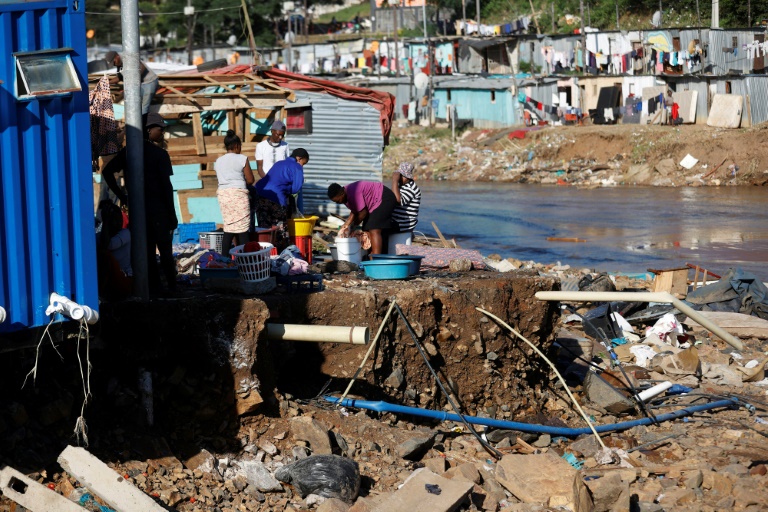
An exceptional downpour — more than 35 centimetres (14 inches) over two days — on April 11-12 claimed hundreds of lives and caused $1.5 billion in damage across the provinces KwaZulu-Natal and Eastern Cape.

Without climate change, rain of this intensity would happen roughly once every 40 years, according to a report from the World Weather Attribution consortium, a global network of scientists that quantify the impact of a warming world on individual extreme weather events.

But an increase in Earth’s average surface temperature of nearly 1.2 degrees Celsius since the late-19th century has shortened that interval to about 20 years.

“The probability of an event such as the rainfall that resulted in this disaster has approximately doubled due to human-induced climate change,” the scientists said in a statement.

As the planet continues to hot up in coming decades, so too will the frequency and intensity of devastating floods caused by these downpours, they warned.

The same is true for heatwaves, droughts, tropical cyclones — also known as hurricanes or typhoons — and wildfires.

Most of the world’s nations have embraced a target of capping global warming at 1.5C, but current greenhouse gas reduction commitments would see temperatures rise far higher.

– Basic physics –

Scientists have long predicted such impacts. In the case of heavy rains, it’s basic physics: every extra degree of global warming increases the amount of water in the atmosphere by about seven percent.

But only recently has an accumulation of climate data and more sophisticated tools made it possible to answer the most obvious of questions: To what extent is a particular weather disaster caused by global warming?

The heatwave, for example, that gripped western North America last June — sending temperatures in Canada to a record 49.6C (121F) — would have been “virtually impossible” without human-induced climate change, the WWA determined.

And record-setting rainfall and flooding last July in Germany and Belgium that left more than 200 dead up was made up to nine times more likely.

Friederike Otto, lead author of the South Africa assessment, said the destruction was a result not just rainfall intensity, but the exposure of human populations.

“Most people who died in the floods lived in informal settlements,” said Otto, a scientist at Imperial College London’s Grantham Institute and a pioneer in the burgeoning field of event attribution studies. 

“So, again, we are seeing how climate change disproportionately impacts the most vulnerable people.”

Early warning systems and urban infrastructure such sewage systems and flood controls are also critical factors.  

The WWA is currently assessing the unprecedented heatwave that scorched large swathes of India and Pakistan during March and April.

Close Bitnami banner
Bitnami