World

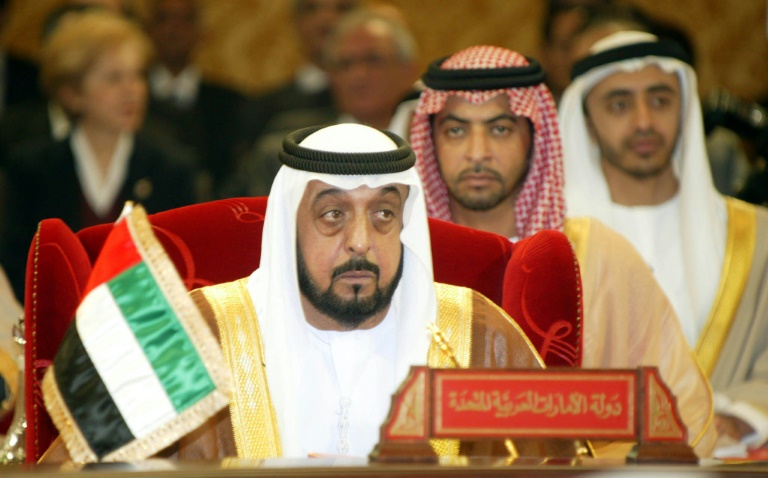
UAE President Sheikh Khalifa has died: official media

The United Arab Emirates’ President Sheikh Khalifa bin Zayed Al-Nahyan died aged 73 on Friday, state media said, after battling illness for several years.

“The Ministry of Presidential Affairs condoles the people of the UAE and the Islamic world… on the passing of Sheikh Khalifa bin Zayed Al-Nahyan on Friday, May 13,” the official WAM news agency said.

The ministry announced 40 days of mourning with flags at half-mast from Friday, with work suspended in the public and private sector for the first three days.

Sheikh Khalifa took over as the UAE’s second president in November 2004, succeeding his father as the 16th ruler of Abu Dhabi, the federation’s richest emirate.

He has rarely been seen in public since 2014, when he had surgery following a stroke, although he has continued to issue rulings.

His brother, Abu Dhabi Crown Prince Mohammed bin Zayed, has been seen as the UAE’s de facto ruler in recent years.

Emirates airline announces 'significantly' lower $1.1 bn annual loss

Emirates airline announced a “significantly reduced” annual loss of $1.1 billion dollars on Friday, five times lower than a year before, as pandemic travel restrictions ease.

Losses came in at 3.9 billion dirhams ($1.1 billion) in the 2021-2022 financial year to March, with revenues up 91 percent, as the airline expanded its global capacity and reinstated flights, Emirates said in a statement.

The Middle East’s largest carrier said it received a capital injection of $954 million from its owner, the government of Dubai, to help it survive the crisis.

“This year, we focussed on restoring our operations quickly and safely wherever pandemic-related restrictions eased across our markets,” said its chairman and chief executive, Sheikh Ahmed bin Saeed Al-Maktoum.

“Business recovery picked up pace particularly in the second half of the year. Robust customer demand drove a huge improvement in our financial performance compared to our unprecedented losses of last year and we built up our strong cash balance.”

In Friday’s statement, it said the Emirates Group — which includes ground-handling firm Dnata — recorded an annual loss of 3.8 billion dirhams ($1.0 billion), but with revenues up by 86 percent and “strong customer demand”.

Over the fiscal year, Emirates carried 19.6 million passengers, up from 6.6 million in the same period of the previous year.

“2021-22 was also a significant year as the UAE marked its 50th anniversary and hosted the world at Expo 2020 Dubai which generated increased global engagement and visitation to the UAE,” Sheikh Ahmed said.

– ‘Recalled and rehired’ –

In the previous year, Emirates posted a $5.5 billion annual loss, its first in more than three decades, after the pandemic devastated the aviation industry. 

Like many other major airlines, it announced heavy layoffs when its fleet was grounded.

In Friday’s statement, it said that as operations ramped up, “employees previously on furlough or made redundant were recalled and rehired, and new recruitment drives were held”.

The group’s total workforce increased by 13 percent to 85,219 employees, it added.

Emirates specialises in long-haul flights, with its fleet solely composed of large Airbus A380 and Boeing 777 aircraft, dozens of which it grounded amid a lack of passenger traffic. 

It added that the group invested $2.2 billion in new aircraft and facilities and received its final five new A380 plane during the financial year.

Emirates is currently flying to 140 destinations, almost its full travel network of 158 destinations in 85 countries before the pandemic.

Tourism has long been an economic mainstay of Dubai, which welcomed more than 16 million visitors in 2019. Before the pandemic, the aim had been to reach 20 million.

After an initial strict lockdown, life in the Gulf emirate — one of the first destinations to welcome visitors again in July 2020 — has returned to largely normal, with restaurants and hotels up and running and beaches open to the public.

The United Arab Emirates, made up of seven emirates including Dubai, has launched an energetic vaccination drive with some of the highest inoculation rates worldwide.

Ukraine finance minister eyes reconstruction as war rages

The war is not over, but Ukraine’s finance minister says the first signs of economic recovery are emerging after Russian troops retreated away from the capital and northern areas.

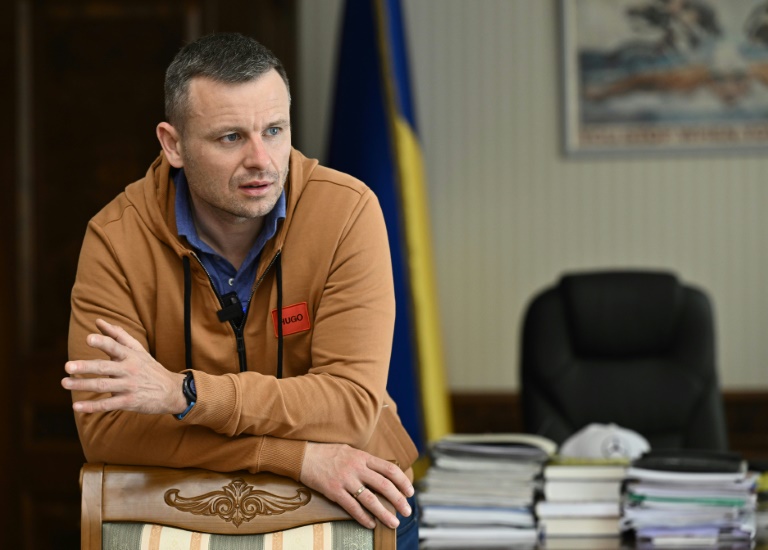
“The war continues but we are not seeing the same level of escalation as we saw in the first two months,” Finance Minister Sergiy Marchenko told AFP in an interview in his Kyiv office, decorated with Ukraine’s blue and yellow flag.

“In the first two months we saw attacks and bombings of large cities,” Marchenko said. “Now the military front has been localised to specific territories.”

Already one of Europe’s poorest countries before the Russian invasion beganon February 24, Ukraine’s economy is now in shambles.

Cities have been levelled by fighting, infrastructure is shattered and over six million people have left Ukraine. A Russian blockade has prevented Ukraine to use its ports to ship its key agricultural exports such as wheat and sunflower oil.

The International Monetary Fund and World Bank have forecast that the Ukrainian economy will shrink by between 35 and 45 percent this year.

Marchenko said gross domestic product could contract by as much as 50 percent, with the overall damage from the conflict totalling $600 billion.

Customs duty revenues fell 70 percent compared to pre-war levels and tax collection dropped 25-30 percent. Exports and imports fell by almost half and inflation topped 16 percent in April from a year ago, Marchenko said.

– ‘A way to survive’ –

After fierce Ukrainian resistance forced Russian troops to pull away from areas outside of Kyiv and from northern Ukraine, many residents have returned to the capital and businesses have reopened.

Ukraine’s central bank has seen “first signs of revival” in April and May, Marchenko said.

“Consumer demand is rising,” said Marchenko, who sported jeans and a mustard-coloured hoodie for the interview as — like other Ukrainian officials — the 41-year-old minister has traded his formal suit for more casual wear during the war.

“As of today, 37 embassies have returned to Kyiv and it gives a signal to citizens to return gradually to Kyiv and renew economic activity,” he added.

With heavy fighting continuing in the country’s east and south, many companies have relocated to western Ukraine to keep their businesses running. 

If no default on the payment of the foreign debt or even its rescheduling is envisaged by Kyiv, “we need $5 billion a month to cover the budget deficit,” the minister said. 

His priority is now to ensure the flow of permanent international financial aid. 

“We are asking for a high level of financial support but the price is also high. This for us is a way to survive,” Marchenko said. 

Facing the Kremlin’s advancing forces, the economist said Kyiv is “now an outpost for democracy” and defeat is not an option. 

“We cannot lose this war and we need the arms, finances and sanctions.”

– ‘Banal robbery’ –

Vast amounts of funds are needed not only for the war effort, but also to rebuild Ukraine. 

President Volodymyr Zelensky has already called for a new Marshall Plan — the US economic aid programme for the reconstruction of Europe after World War II — for his country. 

Marchenko said he backed using Russian assets seized abroad to rebuild Ukraine — an idea floated by several Western countries, including the United States.

He also accused Russian forces of mass “robbery” in Ukraine, saying Russian soldiers have stolen from ordinary people’s homes as well as grain and “other mineral, raw, intellectual resources.”

“We are dealing with bandits who entered the house and are taking away everything they like,” he said, calling it the “banal robbery of a country.” 

Marchenko said it is Ukraine’s critical infrastructure — such as roads, bridges and power supplies — that has suffered most and that needs to be rebuilt first. 

He wants people to return to territories retaken by Kyiv and “start a normal life with electricity, water and gas supplies”.

Emirates airline announces 'significantly' lower $1.1 bn annual loss

Emirates airline announced a “significantly reduced” annual loss of $1.1 billion dollars on Friday, down from $5.5 billion a year earlier, as pandemic travel restrictions ease.

Losses came in at 3.9 billion dirhams ($1.1 billion) in the 2021-2022 financial year to March, with revenues up 91 percent, as the airline expanded its global capacity and reinstated flights, Emirates said in a statement.

The carrier said it received a capital injection of $954 million from its owner, the government of Dubai, to help it survive the crisis.

“This year, we focussed on restoring our operations quickly and safely wherever pandemic-related restrictions eased across our markets,” said its chairman and chief executive, Sheikh Ahmed bin Saeed Al-Maktoum.

“Business recovery picked up pace particularly in the second half of the year. Robust customer demand drove a huge improvement in our financial performance compared to our unprecedented losses of last year and we built up our strong cash balance.”

Over the fiscal year, Emirates carried 19.6 million passengers, up by 197 percent from the same period the previous year.

“2021-22 was also a significant year as the UAE marked its 50th anniversary and hosted the world at Expo 2020 Dubai which generated increased global engagement and visitation to the UAE,” Sheikh Ahmed said.

Tensions high ahead of Al Jazeera journalist's funeral in Jerusalem

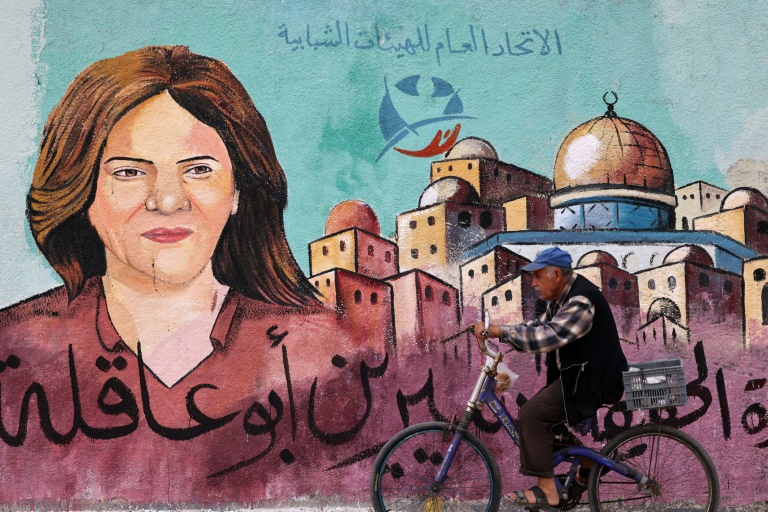
Israel bolstered security in Jerusalem ahead of the funeral on Friday of veteran Al Jazeera journalist Shireen Abu Akleh, two days after she was killed during an Israeli army raid.

Israel and the Palestinians have traded blame over the fatal shooting of the 51-year-old Palestinian-American during clashes in the Jenin refugee camp.

The body of Abu Akleh, a Palestinian Christian born in Israeli-annexed east Jerusalem, was transferred to the holy city from the occupied West Bank.

The funeral procession would begin at a hospital in east Jerusalem, and last respects would be paid at a church in the Old City, Al Jazeera said, with her body set to be buried alongside her parents in a nearby cemetery.

Thousands of mourners are expected to attend the funeral, an Israeli police spokeswoman told AFP.

Roads would be closed for the procession, the spokeswoman said, with extra forces deployed to “ensure the funeral takes place safely and without violence that could endanger participants or others”.

In a sign of Abu Akleh’s prominence, she was given what was described as a full state memorial on Thursday at Palestinian president Mahmud Abbas’s compound in Ramallah.

Thousands lined the route as her coffin, draped in the Palestinian flag, was driven through the West Bank city, where a street is to be renamed in her honour.

Many held flowers, wreaths and pictures of the journalist, who has been widely hailed for her bravery and professionalism.

“Her voice entered every home, and her loss is a wound in our hearts,” said mourner Hadil Hamdan.

– ‘Sister of all Palestinians’ –

The United States, European Union and United Nations have backed calls for a full investigation into what Al Jazeera labelled a deliberate killing “in cold blood”, but the Palestinian Authority has rejected holding a joint probe with Israel.

Immediately after the shooting, Israeli Prime Minister Naftali Bennett had said it was “likely” Abu Akleh was killed by stray Palestinian gunfire.

But hours later, Israeli Defence Minister Benny Gantz said it could have been “the Palestinians who shot her” or fire from “our side”.

While reporting in Jenin, Abu Akleh was wearing a helmet and a bulletproof vest emblazoned with the word “Press”.

She “was the sister of all Palestinians,” her brother Antoun Abu Akleh told AFP.

Israel has also issued a public call for a joint probe, stressing the need for Palestinian authorities to hand over the fatal bullet for forensic examination.

But Abbas said the proposal had been rejected.

“This crime should not go unpunished,” he said during the Ramallah memorial, adding the Palestinian Authority held Israel “completely responsible” for her death.

– New violence –

PA official Hussein al-Sheikh, a close Abbas confidant, said the Palestinian “investigation would be completed independently”.

An initial autopsy and forensic examination were conducted in Nablus in the West Bank hours after her death.

Fresh violence erupted on Friday in the northern West Bank during an Israeli raid on the Jenin refugee camp.

The Palestinian health ministry said 13 Palestinians were wounded in the clashes, one of them seriously.

An AFP photographer at the scene said Israeli forces had surrounded the home of a suspect, besieging two men inside and firing anti-tank grenades at the house in an effort to flush them out.

As the standoff continued, loudspeakers in the camp could be heard calling on others to “go out and stand up to occupation forces”, the photographer added.

The Israeli army said its forces were acting to “apprehend terrorist suspects”, circulating a video of what it said was “Palestinian gunmen near Jenin (firing) recklessly and indiscriminately” during the operation.

In a separate incident near Ramallah, soldiers “identified a suspect throwing a brick at an Israeli car and trying to open its doors near Beit El” settlement, the army said.

“The force called on him to stop and eventually opened fire at the suspect, who was wounded and taken to a hospital,” the army said, noting “a knife and bottle of acid were found on his person.”

Tensions had already risen with a wave of attacks that have killed at least 18 people in Israel since March 22, including an Arab-Israeli police officer and two Ukrainians.

A total of 31 Palestinians and three Israeli Arabs have died during the same period, according to an AFP tally, among them perpetrators of attacks and those killed by Israeli security forces in West Bank operations.

bur-jjm/dv

Trio jailed for Hong Kong's priciest art heist

Three burglars who carried out a record-breaking $637 million art heist in Hong Kong but remained oblivious to the value of their historic haul were jailed Friday, local media reported.

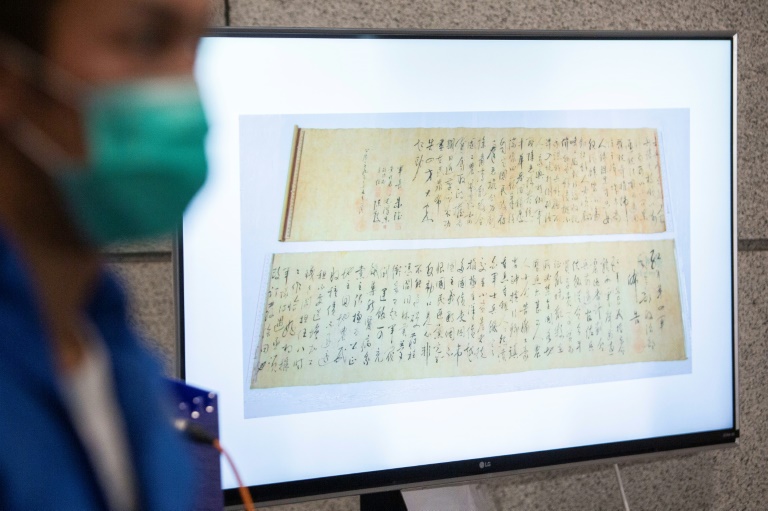
Hong Kong’s art community was rocked by the theft that included a two-metre tall scroll containing a 1929 Politburo report written by Mao Zedong valued at hundreds of millions of dollars — but was sold to an amateur collector for just HK$200 ($25).

When police recovered the parchment a month after it was stolen, they discovered it had been cut in half to make it easier to store by the collector, who also did not realise it was genuine.

The items were lifted in September 2020 from an apartment belonging to Chinese collector Fu Chunxiao in the city’s bustling Kowloon district.

The haul was worth an estimated total of HK$5 billion ($637 million), with Mao’s scroll alone valued at HK$2.3 billion, according to the South China Morning Post (SCMP), making it the city’s biggest heist by value.

Ho Yik-chiu, 46, Ng Wing-lun, 45, and Hui Ping-kei, 48, were jailed for up to two and half years after pleading guilty to being involved in the crime, SCMP reported.

The court heard how the three men were seasoned burglars who had deliberately targeted Fu’s apartment while he was overseas. 

Much of the haul has yet to be recovered. 

A calligraphy letter and handwritten poem by Mao remain missing, as do dozens of sets of highly prized Chinese stamps, the Post reported. 

A collector who received some of the goods alerted the police once he realised the items were stolen.

In new album, Kendrick Lamar delivers introspection and biting social critique

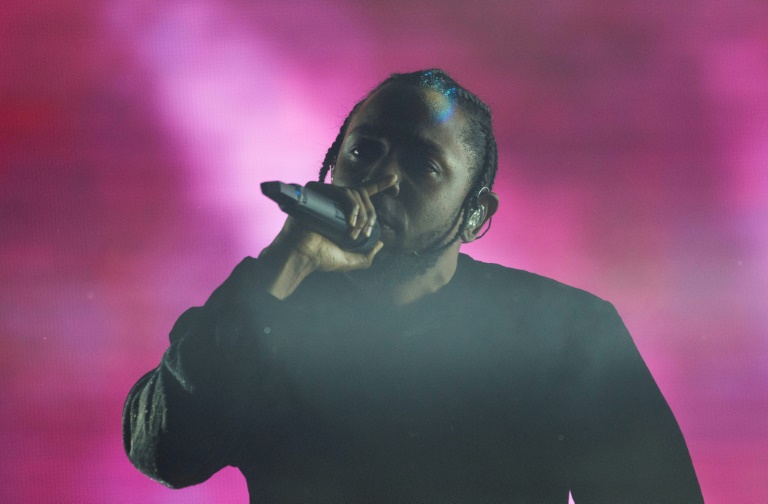
Kendrick Lamar, the rapper whose poignant lyricism has soundtracked the Black Lives Matter movement and compelled many to call him the voice of a generation, dropped his first solo album in five years on Friday.

His long-anticipated fifth studio album “Mr. Morale and the Big Steppers” was released to streaming services overnight, and sees Lamar deliver raw self-reflection set against cutting social criticism.

The record is expected to dominate the charts and place the Pulitzer Prize-winning Lamar once again at the center of the American cultural conversation.

Born in Compton, California, the 34-year-old artist is renowned as one of contemporary music’s most impactful writers, with his verses offering personal insights while taking on systemic issues such as race relations and structural poverty.

Set to jazz-heavy instrumentals, the Grammy-winner’s music has made him a household name and a rare artist whose work is commercially successful but who is not dependent on constantly churning out content. 

“Kendrick is a true lyricist,” said Lakeyta Bonnette-Bailey, a professor at Georgia State University who has written extensively on the relationships between rap, politics and social justice.

“The way that he uses metaphors, the way that he hits on certain beats with certain verse… it’s an entire experience,” she told AFP. 

“He always has something profound to say.”

In 2018 Lamar became the first rapper to win the Pulitzer Prize for music, with the award’s board saying his album “DAMN.” was “unified by its vernacular authenticity and rhythmic dynamism that offers affecting vignettes capturing the complexity of modern African American life.”

– ‘Authenticity’ –

Following that historic win, he curated and contributed a number of songs to the soundtrack for the film “Black Panther,” including his Grammy- and Oscar-nominated collaboration with SZA, “All The Stars.”

Lamar also featured on a number of songs with fellow artists, including his cousin Baby Keem’s latest album.

But his five-year hiatus from producing solo work had some fans speculating about his possible retirement.

Lamar put those rumors to bed last month in announcing his fifth studio record — an 18-track double album that sees the rapper once more turn his socially conscious gaze to our tumultuous era.

Bonnette-Bailey said Lamar had a talent for “letting people inside his mind,” a quality that drew in his listeners.

“(He is) telling stories of his own personal struggles through his music, as well as documenting and telling the story of what is occurring in Black America, or in Compton, or in the whole Black diaspora,” she said.

– ‘Bare my soul’ –

The album’s first track “United In Grief” opens with a choir singing the line “I hope you find some peace of mind in this lifetime,” before Lamar comes in: “I’ve been goin’ through somethin’.”

Throughout the album, Lamar meditates on inner demons, repressed emotions, the struggles of family life and the trappings of fame.

Spoken-word track “We Cry Together,” which features actress Taylour Paige, portrays a fighting couple whose biting words see personal anger transition into structural rage.

“You the reason why strong women fucked up / Why they say it’s a man world / See, you the reason for Trump / You the reason we overlooked, underpaid, underbooked, under shame,” read the lyrics.

In “Auntie Diaries,” Lamar critiques society’s treatment of transgender people, while in “Savior” he warns against turning to celebrities for guidance.

The album’s cover is a photo of Lamar wearing a crown of thorns and holding a young child, while a woman who appears to be his partner Whitney Alford is in the background, holding an infant.

In the raw, soulful track “Mother I Sober,” Lamar lays bare stories of childhood trauma, infidelity and sexual abuse.

That track ends with a woman’s voice telling a child: “You did it, I’m proud of you / You broke a generational curse,” before the same choir that began the album closes the track.

“Before I go in fast asleep / Love me for me,” they sing. 

“I bare my soul and now we’re free.”

Asian stocks up after Fed boss calms nerves over rates

Asian equities were mostly up Friday following a tumultuous trading period on Wall Street, but analysts said the outlook remained bleak as inflation, the Ukraine war and Chinese lockdowns weigh on sentiment.

World markets have been volatile for much of 2022, with investors fretting about supply chain snarls due to China’s Covid curbs and as Europe weighs cutting out Russian oil over Moscow’s invasion.

The Federal Reserve last week announced its largest rate hike since 2000 to slow surging inflation and signalled that similar increases were likely in the coming months — a possibility that sent stocks on a rollercoaster.

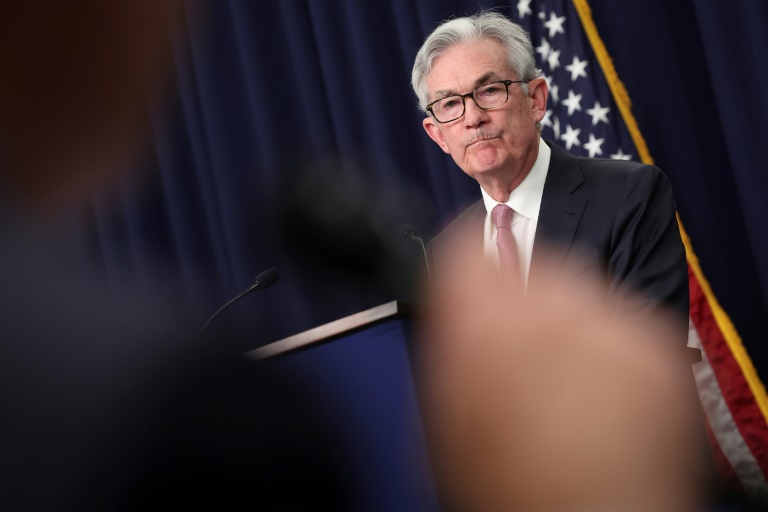
But after Fed chief Jerome Powell on Thursday said the United States was not actively considering a steeper 75-basis-point move, markets experienced a bounce in Asia. 

“Asia-Pacific equities are staging a relief rally today after Wall Street stabilised late in the session as Jerome Powell calmed nerves over potential 0.75 percent rate hikes,” said Jeffrey Halley of OANDA. 

However, he warned that the positive showing should be taken with a grain of salt. 

“Nothing has materially changed in the world from yesterday, and if anything, Russia/Europe risks are increasing,” he said.

“The rally today looks more like a technical rebound after a torrid week than a structural turn in sentiment.”

After a bruising day on Wall Street — with the Dow falling for the sixth straight session — Asian equities were higher Friday. Japan and Hong Kong closed with a two percent bump. 

Frankfurt, London and Paris all opened higher as well, while oil remained up, with the US benchmark crude WTI trading at more than $106 a barrel.

“Such intraday volatility and sentiment flip-flopping is indicative of nervous investors and in itself, a bearish signal,” said Lewis Grant of Federated Hermes Limited. 

“As long as the war continues and macro pressures persist, it is likely that both energy names and value stocks will remain relative safe-havens for fully-invested, long-only equity investors.”

– Crypto seesaw –

Cryptocurrencies also saw great volatility this week. Bitcoin on Thursday tumbled below $27,000 — its lowest level since late 2020 — but by Friday its value was holding steady above $30,000.

Its crash was fuelled by the collapse of two so-called “stablecoin” cryptocurrencies — TerraUSD and Tether — which proved to be anything but stable, leaving investors panicked. 

While the digital currency market had stabilised by Friday, Stephen Innes of SPI Asset Management said “the seven-day moves in some of the ‘other crypto experiments’ on monster volume are insane and increasingly difficult to watch”.

– Key figures at around 0830 GMT –

Hong Kong – Hang Seng Index: UP 2.7 percent at 19,898.77 (close)

Shanghai – Composite: UP 0.9 percent at 3,084.28 (close)  

London – FTSE 100: UP 1.3 percent at 7,331.28

Tokyo – Nikkei 225: UP 2.6 percent at 26,427.65 (close)

West Texas Intermediate: UP 0.7 percent at $106.86 per barrel

Brent North Sea crude: UP 0.9 percent at $108.36 per barrel

Euro/dollar: UP at $1.0404 from $1.0382 at 2100 GMT Thursday

Pound/dollar: UP at $1.2205 from $1.2199

Euro/pound: UP at 85.26 pence from 85.08 pence

Dollar/yen: DOWN at 128.82 yen from 129.97 yen

New York – Dow: DOWN 0.3 percent at 31,730.30 (close)

Russia war crimes allegations mount as Britain urges more weapons for Ukraine

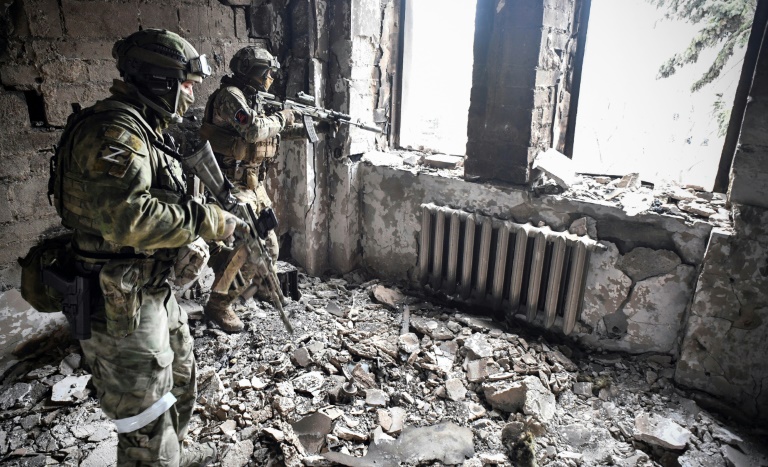
Russia faced mounting accusations of war crimes in Ukraine including forcing thousands of people into interrogation camps, while Britain on Friday urged more weapons for Kyiv to sustain pressure on Moscow.

The Russian invasion has also led to a seismic policy change by Finland, whose leaders said Thursday the previously neutral nation must apply to join NATO “without delay” — triggering a blunt warning of retaliation from the Kremlin.

Throughout the 11-week conflict, Russian forces have been accused of committing atrocities — including the killing of unarmed civilians, torture and rape.

CNN and the BBC on Thursday released what they said was security camera footage showing Russian soldiers with assault rifles shooting two Ukrainian civilians in the back.

The two men appeared unarmed — the footage showed the soldiers frisking them before allowing them to walk away at a business premises on the outskirts of the capital Kyiv.

One man died on the spot, the other shortly after, according to the outlets.

The killings took place on March 16 and are being investigated as a war crime, CNN said. AFP has not independently verified the footage.

Separately, investigators and witnesses interviewed by AFP Thursday accused Russian forces of shelling a residential home in an eastern Ukrainian village from a tank, killing three civilians.

The incident took place on March 27 in the village of Stepanki outside Kharkiv, the Ukrainian prosecutor general’s office said on Telegram.

Local resident Denys, 40, said he saw the barrel of the tank turn towards him.

“Someone said: let’s go hide inside the house,” Denys said.

“I entered last and as soon as I entered, the tank fired. Everything collapsed, I couldn’t see anything.”

The UN Human Rights Council voted 33-2 on Thursday to investigate alleged atrocities by Russian troops in Ukraine.

Ukrainian prosecutors say they have received reports of more than 10,000 alleged crimes.

– G7 ‘very strongly united’ –

Ukrainian forces managed to push Russian forces back from Kyiv in the early phase of the invasion, and its government is now pushing allies for more support.

Britain on Friday urged more weapons for Ukraine to keep up the pressure on Moscow.

“It is very important at this time that we keep up the pressure on (Russian President) Vladimir Putin by supplying more weapons to Ukraine, by increasing the sanctions,” said British Foreign Secretary Liz Truss as she arrived for a second day of talks with her Group of Seven counterparts.

French Foreign Minister Jean-Yves Le Drian said the G7 countries were “very strongly united” in their will to “support Ukraine’s fight for its sovereignty until Ukraine’s victory”.

When launching the invasion, Putin had cited in part what he called the threat from NATO, which has expanded eastwards since the end of the Cold War.

Rather than containing the bloc, however, the war appears to have had the opposite effect.

The leaders of Finland, a declared neutral state in East-West crises for decades, said Thursday their country should join the bloc.

“As a member of NATO, Finland would strengthen the entire defence alliance,” President Sauli Niinisto and Prime Minister Sanna Marin said in a joint statement.

The Russian foreign ministry warned Moscow would be “forced to take reciprocal steps, military-technical and other, to address the resulting threats”.

A special committee will announce Finland’s formal decision on Sunday. Sweden, another neutral state, is widely expected to follow.

– ‘Brutal interrogations’ –

The UN refugee agency said Thursday more than six million people had fled Ukraine, more than half of them going to neighbouring Poland.

Women and children make up 90 percent of the refugees, UNHCR said.

The United States on Thursday accused Russia of forcibly taking tens of thousands of Ukrainians to “filtration camps” in Russia or Russian-controlled territory where they are subjected to “brutal interrogations”.

“These actions amount to war crimes,” said Michael Carpenter, the US ambassador to the Organization for Security and Cooperation in Europe (OSCE).

“We must not allow this evil to stand.”

The remarks backed Kyiv’s allegation that 1.2 million people have been taken to Russia or Russian-controlled areas.

Fighting in Ukraine has been concentrated in the south and east since Russia abandoned attempts to seize the capital.

Ukraine’s presidency said shelling continued throughout Lugansk — part of the Donbas region where its forces are fiercely opposing Russian troops and Kremlin-backed separatists.

Ukrainian President Volodymyr Zelensky said Thursday that Russian forces had destroyed 570 healthcare facilities.

“What for? It’s nonsense. It’s barbarity,” he said.

In the northeastern region of Chernigiv, three people were killed and 12 others wounded early Thursday in a strike on a school in Novgorod-Siversky, the emergency services said. 

In the southern port city of Mariupol, troops at the Azovstal steelworks have been holding out against Russian bombardment for weeks, refusing demands to surrender.

Ukrainian Deputy Prime Minister Iryna Vereshchuk said “difficult talks” were under way on the evacuation of 38 seriously wounded soldiers.

– Russian gas –

The flow of gas from Russia to Europe meanwhile fell, spurring fears for Germany and other economies heavily dependent on that source of energy.

Russian energy giant Gazprom announced it would stop supplying gas via the Polish part of the Yamal-Europe pipeline following retaliatory sanctions that Moscow imposed Wednesday on Western companies.

Gazprom also said gas transiting to Europe via Ukraine had dropped by a third.

Ukraine and Poland are major supply routes for Russian gas to Europe and the two sides have kept flows going despite the conflict.

Europe must end its reliance on Russian gas and cut off Moscow’s “energy oxygen”, Ukrainian Foreign Minister Dmytro Kuleba said Thursday.

Kuleba has been invited to the G7 foreign ministers’ meeting in Germany.

burs-qan/leg

Honda yearly earnings solid despite chip crunch

Japanese auto giant Honda said Friday net profit rose 7.6 percent in the financial year to March, benefiting from strong motorbike sales and a weaker yen.

The company also expects net profit to remain steady in the current financial year, even as the global microchip shortage and virus-related supply chain disruption cause headaches for the car industry.

Honda said annual net profit rose 7.6 percent to 707 billion yen ($5.5 billion) in 2021-22 and issued a forecast of 710 billion yen net profit for the year to March 2023.

Sales last year were up 10.5 percent, it said, “due mainly to increased sales revenue in motorcycle business and financial services business operations as well as positive foreign currency translation effects.”

But “despite shifting to a recovery trend, the economic environment surrounding the company, its consolidated subsidiaries and its affiliates… continued to be difficult due to the impact of (the) semiconductor supply shortage, and increases in raw material costs, among other factors.”

Honda said its factories in Japan and overseas had been forced to suspend or reduce output due to supply chain and staffing issues related to Covid-19.

Toyota, the world’s top-selling carmaker, this week also posted a record full-year net profit, helped by strong sales and a cheaper yen.

The currency has touched 20-year lows against the dollar in recent weeks, inflating the value of Japanese automakers’ overseas profits.  Some analysts believe this will help them offset their current challenges.

In April, Honda said it will invest nearly $40 billion into electric vehicle technology over the next decade as it works towards switching all sales away from traditional fuel cars.

Close Bitnami banner
Bitnami